Friday, August 29, 2025


EU steel chief touts quotas and cooperation on Chinese overcapacity with US
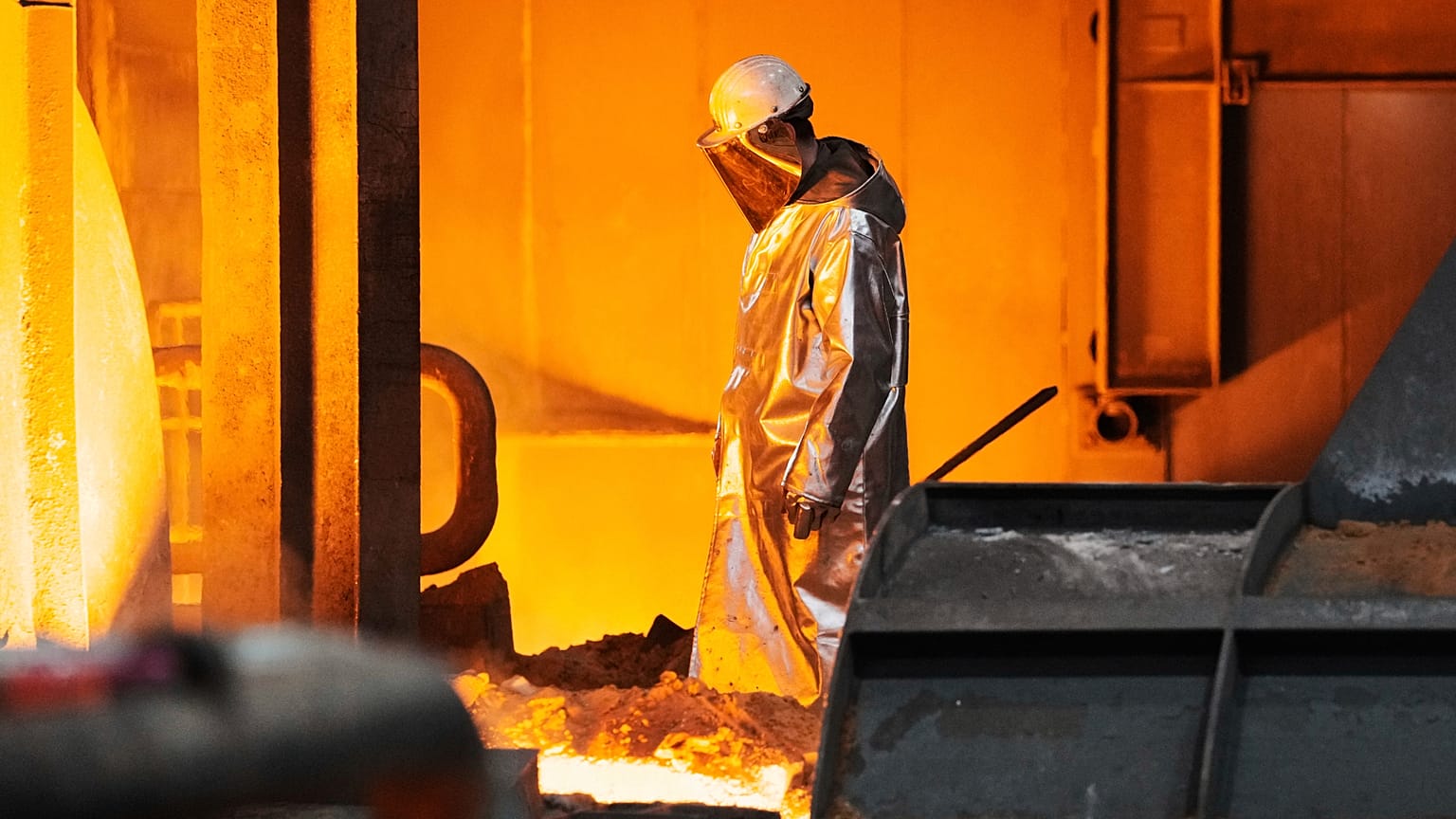
A steel worker is seen during a visit of EU Commissioner for Industrial Strategy Stephane Sejourne at the Thyssenkrupp steelworks in Duisburg, Germany, March 2025.
Copyright AP Photo


By Peggy Corlin
Published on 

According to Axel Eggert, the chief of EUROFER, the European steel lobby, tariff-rate quotas are the best solution to put an end to existing US levies on imports of steel and aluminium. He also believes that the joint fight against Chinese overcapacities should be a shared objective with the US.

The EU should speed negotiation of a tariff-rate quota (TRQ) system with the US to avoid existing exorbitant tariffs of 50% on steel and aluminium, the director general of the European Steel Association, EUROFER, has told Euronews adding that such a deal could also help with cooperation on Chinese overcapacities in the sector.

Such TRQ systems enable specific quantities of steel and aluminium to be imported at a lower or zero tariff rate, with any additional amount subject to a much higher tariff rate.

“Tariff-rate quotas are the only opening we have with the US,” Axel Eggert told Euronews, adding: “They are not perfect, but at least we still can export to the US, whereas now it's completely different.”

The tariff-rate quota system for steel and aluminium was introduced under the Biden administration to replace the 25% tariffs on steel and 10% on aluminium imposed by the first Trump administration. It allowed up to 3.3 million tons of EU steel and 384,000 tons of aluminium into the US tariff-free, with the tariffs applying to any further amounts. However, since his return to office, US President Donald Trump has imposed 25% tariffs on steel and aluminium, which were raised to 50% in June and extended on 19 August to some 400 steel derivatives.

After weeks of tariff disputes targeting all EU industrial products—not just steel and aluminium—the US and the EU reached an agreement setting tariffs on EU goods at 15%, with the notable exception of steel and aluminium.

However, the joint statement does state that the parties “intend to consider the possibility to cooperate on ring-fencing their respective domestic markets from overcapacity, while ensuring secure supply chains between each other, including through tariff-rate quota solutions.”

“We would have hoped that there was a clear obligation for the US to keep the tariff-rate quota which we had before,” Eggert said. “That was our objective and that was also the Commission's objective, but the Commission simply didn't get it.”

EUROFER’s boss also said that the US and EU can make common cause in fighting Chinese overcapacities in the steel sector.

According to OECD figures, there was a global overcapacity of steel of 600 million tons last year, and by next year there should be overcapacities of 720 million tonnes.

“China is subsidising its steel industry,” Eggert said, pointing out that the Asian giant has an excess capacity of more than 500 million tons.

When Trump imposed 25% tariffs on global steel and aluminium in March, it was swallowed by cheap Chinese products, he added, which explains why the US tariffs were then raised to 50%.

The issue of overcapacity was an integral part of the negotiations in recent months between the US and the EU, with the Commission pushing for cooperation between the two sides.

“If you have the two biggest markets in the world, the US and the EU, then you have such market power that you don't let in any steam from companies which produce overcapacity,” Eggert predicts. “Then of course they have to reduce the overcapacities.”

In 2021, the Biden administration and the EU Commission started negotiating an agreement — the Global Arrangement on Sustainable Steel and Aluminium (GASSA) — to fight overcapacities and promote lower-carbon production in the steel and aluminium sectors. But the negotiation was interrupted after Trump returned to power.

“There is a possibility [to bring it back], because the US administration has worked this out in great detail already,” Eggert said, pointing out that one sticking point which remained was the EU’s Carbon Border Adjustment Mechanism (CBAM), which imposes a fee on some polluting goods imported into the EU, which the US opposes.

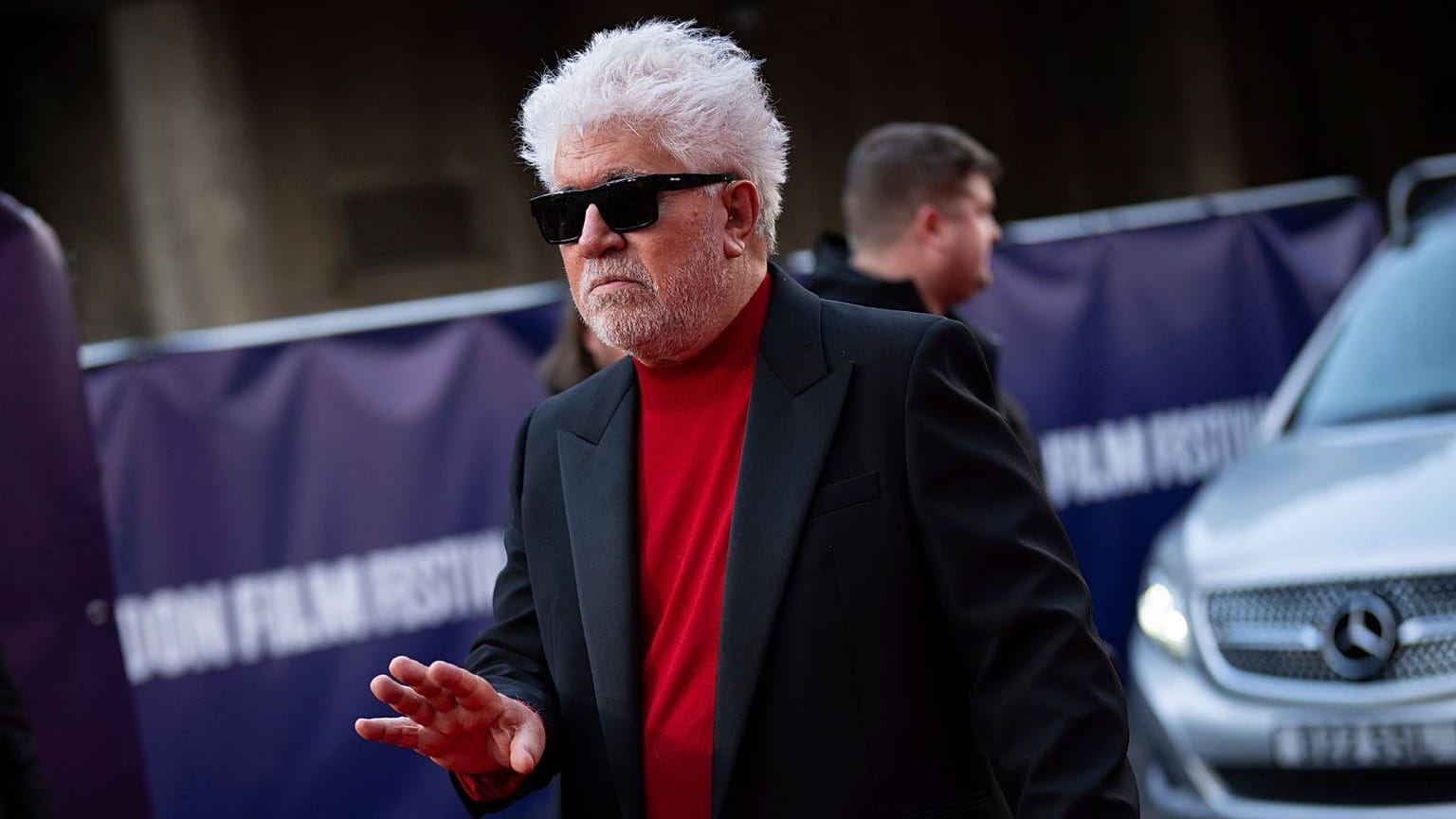
Pedro Almodóvar urges Spanish PM Pedro Sánchez to cut all diplomatic and commercial ties with Israel

Pedro Almodóvar urges Spanish PM Pedro Sánchez to cut all diplomatic and commercial ties with Israel
Copyright AP Photo


By David Mouriquand
Published on 

“I ask our government to sever diplomatic, commercial and all types of relations with the State of Israel as a sign of repulsion against the genocide it is committing against the people of Gaza before the eyes of the entire world,” said Almodóvar.

Oscar-winning Spanish filmmaker Pedro Almodóvar has urged Spanish Prime Minister Pedro Sánchez to cut all diplomatic and commercial ties with Israel over the war in Gaza. 

The director of All About My MotherThe Skin I Live In and the Golden Lion-winning The Room Next Door called the conflict a "genocide" and prompted Sánchez to convince other European leaders to do the same in a video posted on Instagram by his production company El Deseo.

“I ask our government to sever diplomatic, commercial and all types of relations with the State of Israel as a sign of repulsion against the genocide it is committing against the people of Gaza before the eyes of the entire world,” he said.

In May, Almodóvar was one of more than 350 international actors, directors and producers to have signed a letter, published on the first day of the Cannes Film Festival, condemning the killing of Fatma Hassona, the 25-year-old Palestinian photojournalist and protagonist of the documentary Put Your Soul on Your Hand and Walk.   

The letter denounced the genocide in Gaza, and read: "We cannot remain silent while genocide is taking place in Gaza," adding that the creatives were “ashamed of such passivity.” 

Last year, Almodóvar was also among 250 Spanish cultural figures also urging the PM to ban arms trade with Israel. That letter called on the Spanish government to urgently impose a “comprehensive arms embargo” on Israel and said: “History will judge us by our actions at critical moments like this. Let us put an end to this horror.” 

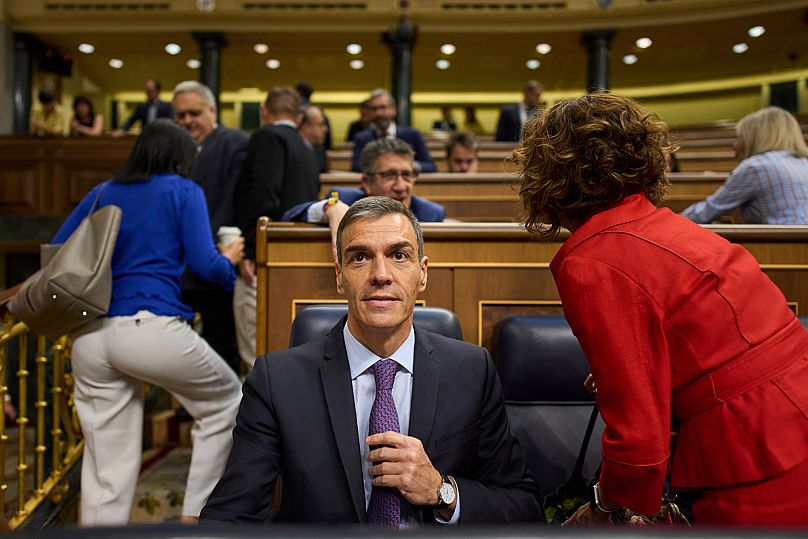
Spanish Prime Minister Pedro Sanchez in the chamber of parliament in Madrid - 9 July 2025
Spanish Prime Minister Pedro Sanchez in the chamber of parliament in Madrid - 9 July 2025 AP Photo

In May 2024, Spain’s government approved the recognition of the State of Palestine. Minister for Foreign Affairs, European Union and Cooperation, José Manuel Albares, described the decision as a "historic milestone" and said that it was a day "when our country says that indifference is unthinkable in the face of suffering, and that peace, solidarity, commitment and trust in humanity are possible". 

However, and despite Pedro Sánchez saying Gaza was in a "catastrophic situation of genocide" in June 2025, Spain has yet to cut off all ties with Israel.

Since Hamas’ attack on Israeli citizens on October 7, 2023, multiple UN human rights experts have stated that Israel’s military actions in Gaza amount to genocide, with the International Court of Justice finding claims of genocide plausible.

Israel has rejected the genocide accusations and maintain that its operations are lawful acts of self-defence.

The Integrated Food Security Phase Classification (IPC), the world's leading authority on food crises, officially announced on 22 August that Gaza City is gripped by famine and that it is likely to spread across the territory without a ceasefire and an end to restrictions on humanitarian aid.


Van Gogh Museum warns of closure unless Dutch state meets €2.5m funding shortfall

THE STATE IS THE MEDICI PRINCE
Van Gogh Museum says it may be forced to close if government doesn’t contribute more money
Copyright Credit: Flickr (mbell1975)


By Theo Farrant
Published on 

The museum is requesting the government provide an extra €2.5 million annually to cover essential upgrades and sustainability measures - stressing that this isn’t just financial support, but a contractual obligation.

Amsterdam's Van Gogh Museum, home to the world’s largest collection of works by Vincent van Gogh, has issued an extraordinary warning: without fresh government funding, it may be forced to shut its doors.

The museum says a shortfall in state support threatens a €104m renovation plan - and with it the safety of the paintings, the well-being of visitors and the future of one of the Netherlands’ most visited cultural landmarks.

“If this situation persists, it will be dangerous for the art and dangerous for our visitors,” Emilie Gordenker, the museum's director, told The New York Times. “This is the last thing we want - but if it comes to that, we would have to close the building.”


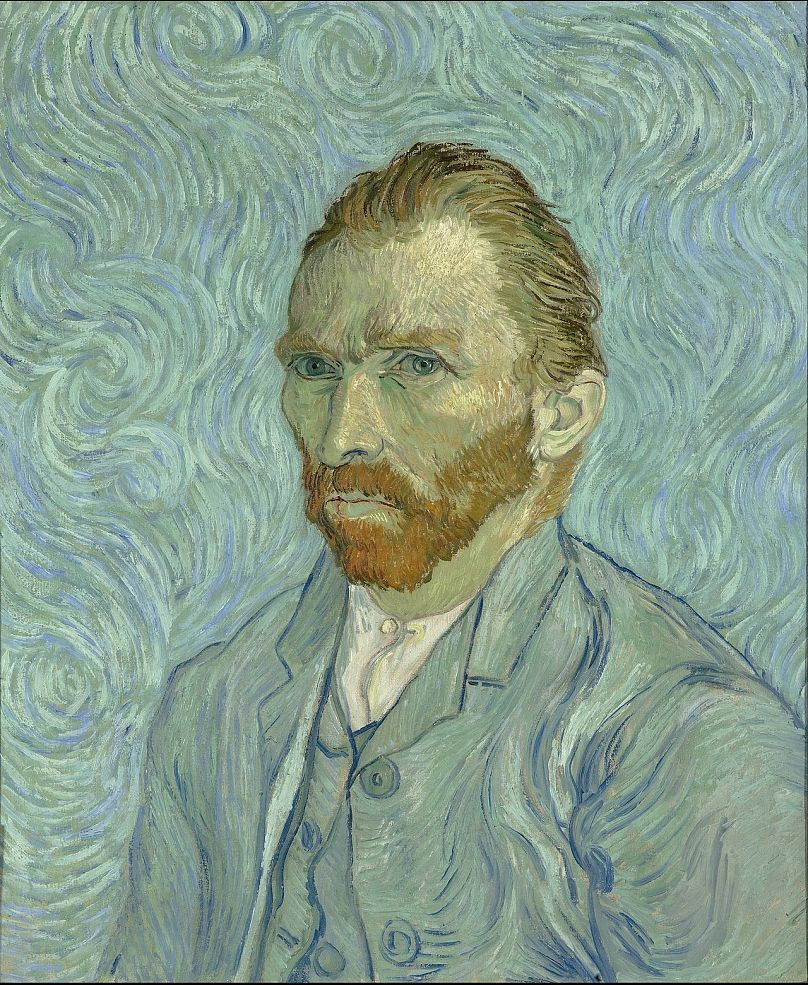
Self-portrait by Vincent van Gogh (1889) Credit: Wikimedia Commons/Musée d'Orsay


The conflict dates back to the genesis of the museum.

After Van Gogh’s death his nephew, V.W. van Gogh - known in the documents as “the Engineer” - placed the family collection into a foundation in 1962, on the condition that the Dutch state create and maintain a museum to keep the art together and accessible to the public.

When the Van Gogh Museum opened in 1973 the promise seemed secure. What followed was nearly half a century of extraordinary public interest: since opening the museum has welcomed almost 57 million in total - and numbers peaked at about 2.6 million in 2017.

In recent years the museum has continued to attract large audiences, reporting roughly 1.8 million visitors in 2024 - making it Amsterdam’s second most-visited museum, after the Rijksmuseum.

In spring this year it staged a landmark joint exhibition with the Stedelijk Museum of the work of Anselm Kiefer - a show titled "Where Have All The Flowers Gone?" that placed the German painter's monumental canvases and installations in dialogue with Van Gogh’s legacy. Later in the year, parts of the programme travelled to London’s Royal Academy, where they remain on display.

But running a successful museum comes at a cost. The building that has coped with those crowds since the early 1970s is showing its age: ventilation and climate control systems are past their useful life, safety, accessibility and sustainability standards have moved on, and new legal obligations on public buildings require costly upgrades.

The Van Gogh Museum has therefore drawn up “Masterplan 2028” - a three-year programme of essential maintenance, technical replacement and sustainability works budgeted at €104m.

The museum says it can cover parts of the project from reserves and by shouldering lost revenue from partial closures, but argues it needs an annual guaranteed state contribution of about €11m to finance the works and to build a long-term maintenance reserve. The ministry currently offers €8.5m a year, leaving an annual shortfall of €2.5m.

The Vincent van Gogh Foundation, which legally owns the collection, has supported the museum’s line, noting that the original 1962 contract places an obligation on the state to provide and maintain suitable housing for the works.

Tesla sales down by 40% in Europe while Chinese BYD triples its sales

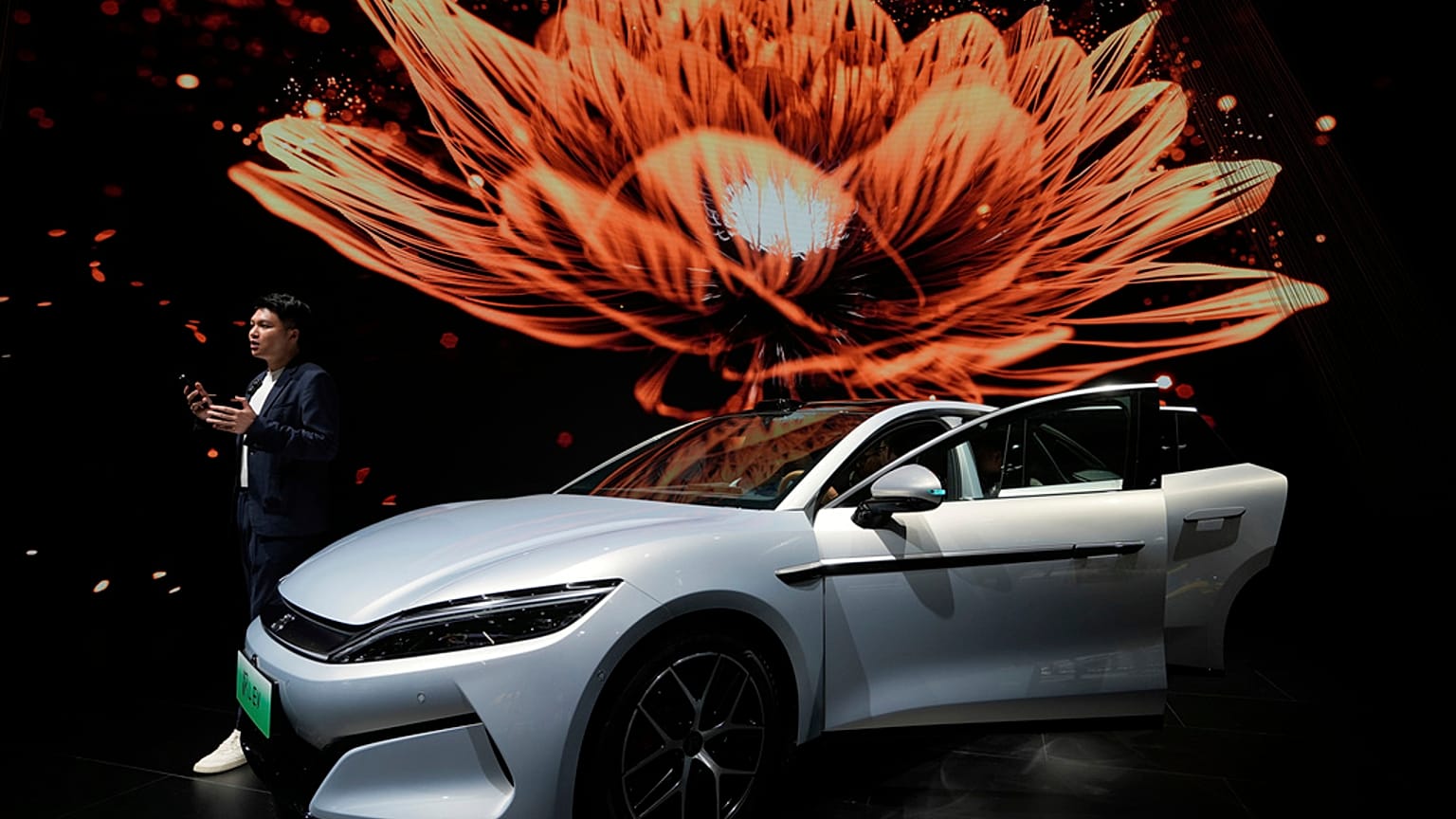
A man talks near the Han L EV model from BYD during the Shanghai auto show on Wednesday, April 23, 2025.
Copyright Ng Han Guan/Copyright 2025 The AP. All rights reserved


By Doloresz Katanich
Published on 

New EU car registrations jumped by 7.4% in July year-on-year. EV sales are increasing, but Tesla is losing momentum in the bloc as Chinese competitor BYD grows in popularity, tripling its sales in the first seven months.

The EV market in the European Union keeps growing, but Tesla, once the poster child of electric vehicle makers, is facing declining sales, according to the European Automobile Manufacturers’ Association’s (ACEA) latest report. 

The Texas-based company has seen its sales drop in the EU at an alarming rate from the moment CEO Elon Musk joined the US President’s political campaign and later taking up a role in his government. 

Between January and July, Tesla sales in the EU dipped by 43.5%, and in July only, the company sold 42.4% fewer cars in the bloc, both compared to the same period in the previous year. 

Meanwhile, Chinese EV makers are mercilessly taking over, the latest rising competitor being BYD, which increased its sales by more than 200% in July and more than 250% during the first seven months in 2025. In July only, BYD secured a market share of 1.1% in the EU, overtaking Tesla’s 0.7%.

Tesla sales still dominated in the January-July period, reaching 1.2% of the overall new car registrations in the EU. However, this is almost half of the 2.1% share the company recorded in the previous year. 

BYD’s market share for the January-July period came in at 0.9%, following a mere 0.3% in 2024. 

Another Chinese brand, state-owned automobile manufacturer SAIC Motor, which includes brands such as IM Motors, Roewe and MG, has seen its car sales gradually rise in Europe. SAIC Motor secured a 1.9% market share between January and July, after its sales jumped by more than 30% during this period. 

Where in Europe did EV sales increase the most?

In the first seven months of 2025, battery electric vehicles accounted for 15.6% of new car registrations in the EU. This compares to just 12.5% in the last year. 

Taking a look at the bloc’s biggest economies, in Germany, EV sales grew by 38.4% between January and July. In Spain, sales in this category jumped by a staggering 89.6%, in Italy, EVs added 29% but in France, EV sales slipped by 4.3% in the same period. In the UK, EV sales increased by 31%.

Overall in the EU, new car registrations declined by 0.7% in the first seven months, compared to the previous year. 

Out of all the categories, hybrid-electric models continue to grow, remaining the most popular choice of power type and securing 34.7% market share.


EU tech chief to 'fight back’ against Trump’s allegations, Commission says

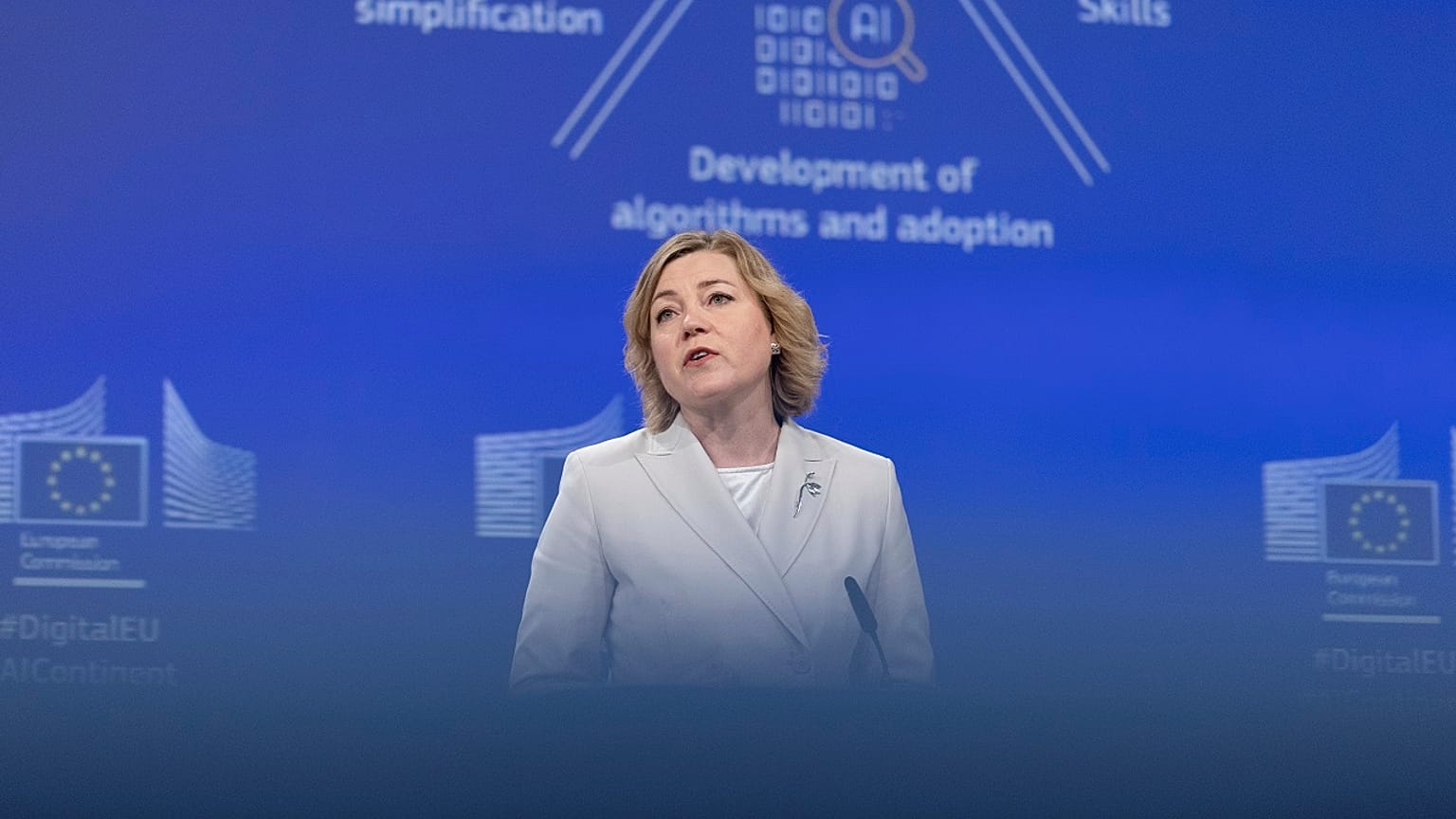
EU Tech Commissioner Henna Virkkunen during a press conference.
Copyright Omar Havana/Copyright 2025 The AP. All rights reserved.

By Cynthia Kroet
Published on 

Lawmakers express criticism about Henna Virkkunen’s absence regarding the recent US government threats.

EU tech chief Henna Virkkunen “will fight back” against unfounded claims regarding EU tech legislation, a spokesperson for the European Commission has said in response to questions raised about her absence in the wake of US threats to impose tariffs on countries that implement legislation targeting tech companies.

“She is the new tech chief – and she will fight back against all unfounded claims, she has done so, she will continue to do it. We will protect our sovereign right,” spokesperson Thomas Regnier told journalists on Thursday. 

The threats made earlier this week by US President Donald Trump – after an EU-US trade deal was reached on 21 August – caught the EU off guard, but the EU executive responded on Tuesday by defending its right to pass legislation free from external pressure.

In May Virkkunen travelled to the US to explain the EU’s technology legislation after the bloc received a lot of criticism from the other side of the Atlantic.  

She has said in the past months that EU tech legislation – including the DSA and the Digital Markets Act (DMA) – is fair and not a censorship tool.

However, US criticism has been ongoing with Secretary of State Marco Rubio warning earlier this month that the EU was pursuing "undue" restrictions on freedom of expression in its efforts to combat hate speech and disinformation.

In response to this week’s threats by Trump, EU lawmaker Alexandra Geese (Germany/Greens-EFA) said in a post on Linkedin that “Europe must also urgently build its own digital infrastructure. And it would be very much appreciated if the Executive Vice-President for Technological Sovereignty of the European Commission could fight for European democracy,” she added.

“There‘s an endless list of things to do to keep Europe and the world free. Start doing it!” Geese said. 

These comments were echoed by Stéphanie Yon-Courtin (France/Renew). “I too am shocked [ …] more by the lack of pugnacity in the European Commission's response than by Trump's attitude.”

Thierry Breton to join US hearing

It’s not the first time that lawmakers criticised Virkkunen’s performance, since she took up the job last December, after being a member of the European Parliament from 2014 to 2024.

In January, a Parliament debate was called after MEPs asked her to act on US tech companies, after Elon Musk, CEO of US messaging app X, intervened in the German election by interviewing the leader of the far-right Alternative for Germany party on his platform

Her predecessor, France’s Thierry Breton, was caught up in several online spats with Musk for saying that the US tech giant should follow EU rules.

Breton, who resigned as Commission President Ursula von der Leyen was preparing to announce the portfolios for the Commissioners for her second term in September, has been invited by the US House of Judiciary Committee to attend a hearing on "Europe's threat to American speech and innovation" next Wednesday. 

Regnier said that “former commissioners do not represent the EU. They are required to not disclose information, and they cannot give statements without prior authorisation.”

He added that the Commission has not been in touch with Breton about the hearing. 


Data shows nearly 1 in 5 young children in England are missing routine vaccination

A little girl receives a vaccine.
Copyright Canva


By Gabriela Galvin
Published on 

The UK data mirrors trends elsewhere in Europe, where routine childhood immunisations have fallen in recent years.

Nearly one in five children in England is not up-to-date on a routine vaccination by the time they are school-aged – a share that has risen in recent years, new government data shows.

The data, which covers April 2024 to March 2025, shows that 18.6 per cent of 5-year-olds had not received a preschool booster jab to protect against serious illnesses such as polio, whooping cough, tetanus, and diphtheria.

That’s up from 13.7 per cent a decade ago, according to the report from the United Kingdom’s Health Security Agency.

Vaccine coverage varies across the country and is lowest in London, the agency said.

“Far too many children will not be fully protected and safe when starting school and are at risk of serious diseases,” Dr Mary Ramsay, the UKHSA’s director of immunisation, said in a statement.

Ramsay cited England’s recent measles outbreak, which sickened more than 700 children and killed one child this year. Health experts have blamed low uptake of the measles, mumps, and rubella vaccine for the increase in cases.

Ramsay said the measles outbreak is the “canary in the coalmine” and a “wake-up call that urgent action is needed to stop the very real risk of other diseases re-emerging”.

The UK data mirrors trends elsewhere in Europe. Other research indicates children are falling behind on routine immunisations for several reasons, including anti-vaccine sentiment, vaccine complacency – when parents do not see a reason to vaccinate their children because they believe the risks are low – and logistical hurdles.

“We know that for some parents it is simply because they are not aware when vaccines are due or because it is not always easy making an appointment for vaccination or attending at a time and a place that is convenient for them,” Helen Bedford, a professor of child public health at University College London, said in a statement.

In a bid to boost immunisation rates, the National Health Service (NHS) England has hosted extra vaccination clinics and catch-up programmes in schools and targeted outreach in local areas with low uptake, the UKHSA said.

Ramsay urged parents to check if their children are up-to-date on their vaccinations and said doctors should take time to speak with parents about any concerns they may have.

“There needs to be a concerted effort in providing these vitally important vaccines, to make time to speak and reassure any parents who may have concerns and make it as easy as possible for their children to get vaccinated,” she said.


AI is increasing cyberattacks worldwide and Europe is one of the hardest hit regions. This is why

Hackers are using AI to increase the rate of cyber attacks in 2025, a new report says
Copyright Canva

By Anna Desmarais
Published on 

Europe is one of the regions hardest hit by cyberattacks in 2025, according to a report from an American cloud security company.

More than 8 million digital attacks hitthe world in the first half of 2025, with Europe being one of the hardest hit continents, according to a new report.  

Most of the attacks created outages that lasted between five and 15 minutes against telecommunications companies in Germany, France, Poland, Russia and Saudi Arabia. 

American cloud security company NETSCOUT found t that European, the Middle Eastern and African (EMEA) countries this year were hit with 3.2 million distributed denial of service (DDoS) schemes, attacks that overwhelm a targeted system, website or network. 

Artificial intelligence (AI) is driving cyberattacks and is , used by states and hacktivists to breach security on various fronts and spread attacks over multiple internet providers (IP) to avoid detection. 

The so-called DDoS attacks are now “precision-guided weapons of geopolitical influence capable of destabilising critical infrastructure,” which brings about an “unprecedented cyber risk” for organisations around the world, the company said in a press release. 

“As hacktivist groups leverage more automation, shared infrastructure, and evolving tactics, organisations must recognise that traditional defences are no longer sufficient,” Richard Hummel, director of threat intelligence at NETSCOUT, said in a press release. 

The report from NETSCOUT comes as AI company Anthropic said in its latest threat report that it stopped an operation in July that used its chatbot Claude to conduct large-scale theft and extortion of personal data unless victims paid ransoms that sometimes exceeded $500,000 ( almost €430,000). 

Malicious versions of ChatGPT being used to mount attacks

Hactivists are using AI assistants or large language models (LLMs) such as WormGPT and FraudGPT to coordinate their attacks, the report said. 

Rakesh Krishnan, a senior threat analyst at Indian company Netenrich, which discovered FraudGPT, describes it as an AI bot sold on the Dark Web that is built exclusively for “offensive purposes,”such as  crafting phishing emails, cracking passwords or using and collecting credit card information without permission. 

It t means a threat actor could draft an email using FraudGPT that sounds like a “short but professional message” to entice the recipient to click on a malicious link. 

Krishnam uses FraudGPT as an example in a blog post, writing a text message that represented the Bank of America, which asked a user to check out an important link to “ensure the security of your online banking account”. 

Daniel Kelley, a security researcher, wrote that WormGPT has many of the same features as FraudGPT but can also conduct business email compromise (BEC) attacks, where cybercriminals impersonate executives to get employees to send them money or data. 

These scams cost businesses “millions” every year, according to Microsoft’s security team, with many small companies unable to financially recover. 

Global events catalyst for spike in attacks

For the report, NETSCOUT collected data from its threat intelligence platform, which monitors “tens of thousands” of active and potential DDoS attacks every day, by testing how websites would react to an attack and collecting data from actual web traffic. 

It also tracks multiple “botnets,” or networks of infected computers that carry out attacks along with DDoS-for-hire services.

EMEA bore just under half of 2025’s DDoS attacks with3.2 million attacks, an 11 per cent decrease compared to the last few months of 2024. 

Global events were also major catalysts for cyberattacks, such as the World Economic Forum Davos conference in Switzerland, which saw more than 1,400 attacks - which is double the amount compared to the same period last year, WEF said.

Italy also sustained many DDoS attacks in February and March that were targeted at regional and local public bodies throughout the country, in response to what the company calls “a series of political discussions”. 

Outside of Europe, escalating regional conflicts between Pakistan and India, as well as between Iran and Israel, saw higher-than-average DDoS attacks. 

For example, the report found that Iran endured more than 15,000 cyberattacks since June 13, with 2,800 happening in just one day, suggesting that the country “is a primary target”.