Friday, August 29, 2025

Russian strikes kill at least 21 in Kyiv in 2nd largest attack since full-scale invasion

A “massive” Russian attack on Kyiv early Thursday killed at least 21 people and wounded dozens more, Ukrainian authorities said. The British Council building was damaged and two missiles struck near the EU mission. “This is another grim reminder of what is at stake. It shows that the Kremlin will stop at nothing to terrorize Ukraine," EU Commission President Ursula von der Leyen said.


Issued on: 28/08/2025 -
By:
FRANCE 24
Video by:
Emerald MAXWELL/
Emmanuelle CHAZE
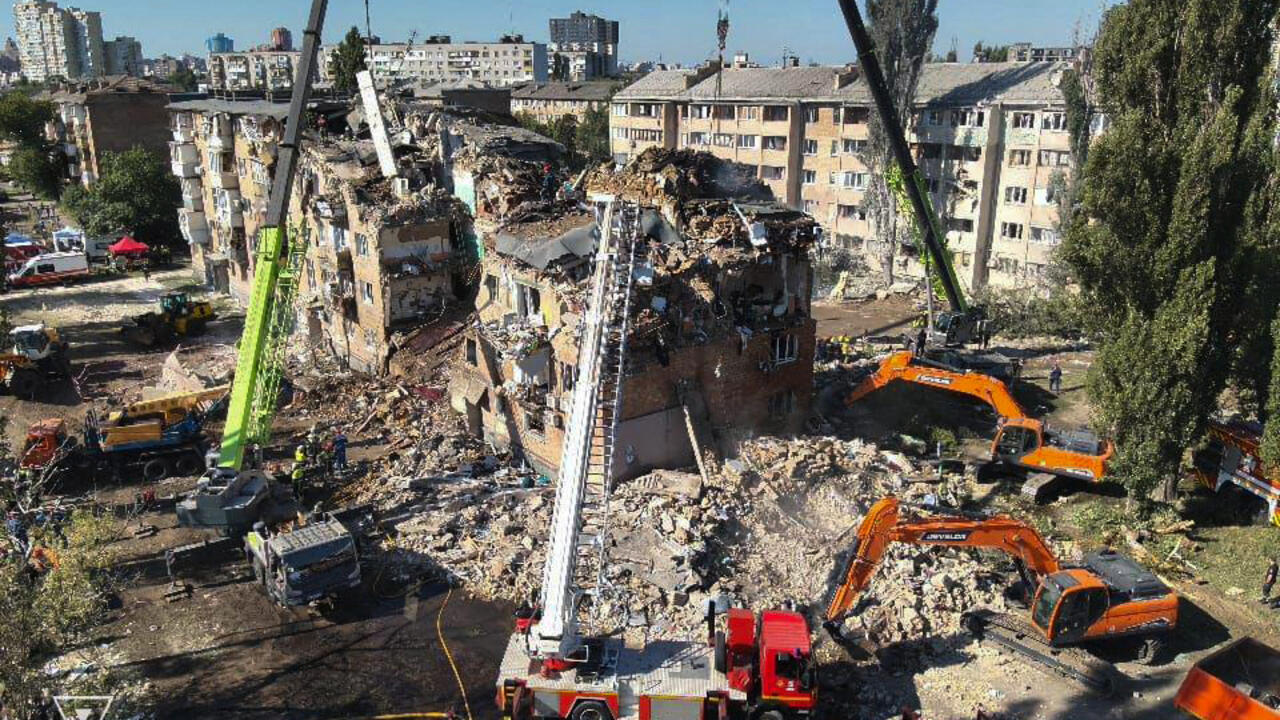

This photograph taken by Ukrainian emergency services shows a building heavily damaged in Kyiv on Thursday, August 28, by deadly Russian strikes. © AFP
07:23


Russia p
ounded Ukraine with deadly missiles and drone strikes early on Thursday in a sweeping attack that the US special envoy on Ukraine said undermined President Donald Trump’s peace efforts.

At least 21 people were killed in the capital, city officials said.

Trump “was not happy about this news, but he was also not surprised”, White House press secretary Karoline Leavitt said, given that the two countries have been at war 3-1/2 years.

Ukraine’s President Volodymyr Zelensky said the strike, the second-largest attack since Russia launched a full-scale invasion in February 2022, was Moscow’s answer to diplomatic efforts to end its war.

US special envoy Keith Kellogg commented on X: “The targets? Not soldiers and weapons but residential areas in Kyiv—blasting civilian trains, the EU & British mission council offices, and innocent civilians.”

The European Union and Britain summoned Russian envoys to protest. There were no reports of casualties at either site. Zelensky said the strikes also damaged a Turkish enterprise and the Azerbaijan embassy.

Read moreHow Russia is building airports to launch Iranian drones at Ukraine

Leavitt told a regular briefing that Trump would have more to say about the strikes later.

“Perhaps both sides of this war are not ready to end it themselves,” she said. “The president wants it to end but the leaders of these two countries need it to end and want it to end.”

The strikes took place less than two weeks after Trump hosted Russian President Vladimir Putin at a summit in Alaska, a meeting the US president hoped would advance his peace efforts.

“Russia chooses ballistics instead of the negotiating table,” Zelensky said on X, calling for new sanctions on Russia. “It chooses to continue killing instead of ending the war.”

Russia said its attack had hit military industrial facilities and air bases, and that Ukraine had attacked Russian targets. The Kremlin said it was still interested in pursuing peace talks.

Moscow has regularly denied targeting civilians. Ukrainian officials say scores of civilians have died in Russian strikes on densely populated areas in recent months, and thousands since the start of the war.

During the attack on Kyiv, explosions rang out as clouds of smoke rose into the night sky. Drones whirred overhead.


© France 24
02:07


Mayor Vitali Klitschko described it as one of the biggest attacks on the city in recent months. At least 63 people were wounded in the hours-long assault, which damaged buildings in all city districts, officials said.

Across the country, Ukraine’s military said Russian attacks struck 13 locations. National grid operator Ukrenergo said energy facilities were hit, causing power cuts.

A push by Ukraine and its allies to end the invasion has yielded little, despite Trump’s meetings this month with Putin then Zelensky.

Russia has stepped up air strikes on Ukrainian towns and cities far behind the front lines and pushed a grinding offensive across much of the east in an effort to pressure Ukraine into giving up territory.


‘Another grim reminder’

“This is another grim reminder of what is at stake. It shows that the Kremlin will stop at nothing to terrorize Ukraine, blindly killing civilians and even targeting the European Union,” EU Commission President Ursula von der Leyen told reporters in Brussels.

She said two missiles had struck near the EU office within 20 seconds of each other.

EU countries would soon come up with a 19th package of sanctions against Russia and were advancing work on how to use frozen Russian assets to help Ukraine, she added.

“We discussed our diplomatic efforts to stop the killings, to end this unprovoked Russian aggression, and to guarantee real security for our people,” Zelensky wrote on X after talks with von der Leyen.

Zelensky also said that he had discussed security guarantees for Ukraine with Turkey’s President Tayyip Erdogan and they would be set out on paper next week.

British Prime Minister Keir Starmer condemned the assault, which he said had damaged the British Council building. “Putin is killing children and civilians and sabotaging hopes of peace,” he wrote on X.

Ukraine’s military said air defences downed 563 of nearly 600 drones and 26 of 31 missiles launched by Russia across the country.

Russia’s defence ministry said Russian air defences destroyed 102 Ukrainian drones overnight in at least seven regions.

Ukraine’s drone force said it had struck the Afipsky and Kuybyshevskyi oil refineries as part of that attack.

(FRANCE 24 with Reuters)


EU summons Russian envoy after mission damaged in Kyiv strike

Brussels (Belgium) (AFP) – The EU summoned Moscow's envoy in Brussels on Thursday after a massive attack on Kyiv killed at least 14 people and damaged the bloc's diplomatic mission in the city.


Issued on: 28/08/2025 - RFI


European Commission chief von der Leyen, 28 August 2025. © Nicolas TUCAT / AFP

European Commission chief Ursula von der Leyen addressed the press in Brussels following the strike, calling it proof "the Kremlin will stop at nothing" and vowing to uphold "maximum pressure" on Russia.

The overnight drone and missile strike "was an attack also on our delegation", the European Commission president said.

"It shows that the Kremlin will stop at nothing to terrorise Ukraine, blindly killing civilians, men, women and children, and even targeting the European Union," she told reporters.

EU foreign policy chief Kaja Kallas announced on X that the bloc was "summoning the Russian envoy in Brussels," warning: "No diplomatic mission should ever be a target."

Von der Leyen said she had spoken with the EU's deputy ambassador on site, and was "relieved that none of our staff were harmed."

But she said the attack struck in "close proximity" to the bloc's diplomatic mission, two missiles hitting within 50 metres of the delegation in the space of 20 seconds.

Cars are seen damaged in front of a destroyed residential building after a Russian missile attack in Kyiv, Ukraine, Thursday, 28 August, 2025. © AP - Efrem Lukatsky

Grim reminder

EU officials shared a picture of the inside of an office with the windows blown out, ceiling partially hanging down and debris scattered on the floor, as well as an aerial view showing an obliterated building in the vicinity.

Commission spokesperson Anitta Hipper told reporters the EU delegation was still "fully operational" and that "our staff will remain present in the country".

But von der Leyen said the damage was "another grim reminder" of the need to keep "maximum pressure on Russia".

"That means tightening our sanctions regime" with a 19th package of measures against Moscow, and "advancing" work on how best to exploit hundreds of billions of euros in frozen Russian assets to support Ukraine, she said.

EU countries are currently using interest earned from the assets to help arm Ukraine and finance its post-war reconstruction, a windfall worth between €2.5 billion and €3 billion a year.

Von der Leyen also announced she would be travelling from Friday to seven countries on the EU's eastern flank "that are strengthening and protecting our external borders, with Russia and Belarus."


EU delegation office in Kyiv severely damaged by shock wave of Russian strike
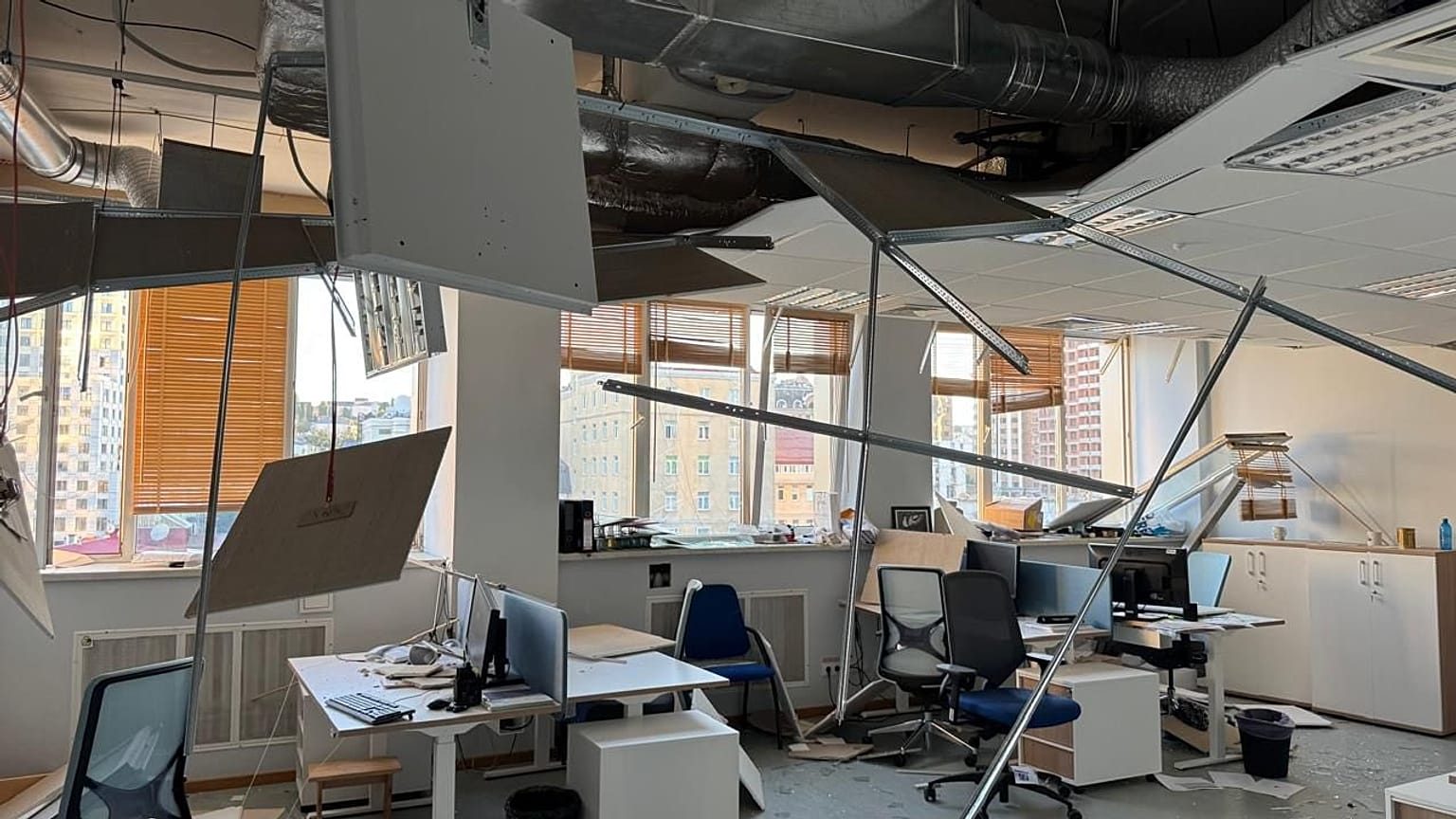
The destruction inside the EU delegation in Kyiv.
Copyright Katarina Mathernova on Twitter.


By Jorge Liboreiro
Published on 

"The EU will not be intimidated," António Costa said in response to the latest Russian attack against Kyiv, which damaged the EU delegation.

The shock wave unleashed by Russia's latest strike against Kyiv has "severely" damaged the delegation of the European Union in the Ukrainian capital, the bloc's ambassador Katarina Mathernova announced on Thursday morning.

The overnight attack of 629 missiles and drones, part of Moscow's campaign of sowing terror and chaos, has killed at least 17 people, including four children, and injured dozens, causing major destruction across the city.

"This is Moscow's true answer to peace efforts," Mathernova said.

Speaking from Brussels, Ursula von der Leyen said she was "outraged" by the assault and confirmed no member of the delegation had been harmed.

Von der Leyen explained that two Russian missiles had hit within 50 metres of the diplomatic building in the span of 20 seconds.

"This is another grim reminder of what is at stake," the president of the European Commission said in a short statement delivered to camera.

"It shows that the Kremlin will stop at nothing to terrorise Ukraine, blindly killing civilians – men, women and children and even targeting the European Union."

António Costa, the president of the European Council, said he was "horrified" by the strike and expressed support for the Ukrainian people and the EU staff.

"The EU will not be intimidated. Russia's aggression only strengthens our resolve to stand with Ukraine and its people," Costa said.

EU leaders, including France's Emmanuel Macron, Spain's Pedro Sánchez, Portugal's Luís Montenegro and Lithuania's Gitanas Nausėda, also condemned the barrage.

The Vienna Convention of 1961 foresees protection for diplomatic and consular premises against intrusion or damage, although it is not uncommon for these buildings to be impacted during wartime. The Kremlin has shown a consistent disinterest in upholding international rules throughout its full-scale invasion of Ukraine.

High Representative Kaja Kallas said the assault was a "choice to escalate and mock the peace efforts", referring to the mission led by US President Donald Trump and backed by European allies. The talks are currently focused on designing security guarantees for Ukraine and securing a face-to-face meeting between Ukrainian President Volodymyr Zelenskyy and Russian President Vladimir Putin, which the latter appears keen to avoid.

In his reaction, Zelenskyy called on the international community to ramp up pressure on Russia to engage in serious negotiations.

"Russia still does not fear the consequences. Russia still takes advantage of the fact that at least part of the world turns a blind eye to murdered children and seeks excuses for Putin," Zelenskyy said.

"It is definitely time for new, tough sanctions against Russia for everything it is doing. All deadlines have already been broken, dozens of opportunities for diplomacy ruined. Russia must feel accountable for every strike, for every day of this war."

Von der Leyen promised to tighten the screws on the Russian war machine with a 19th package of EU sanctions that should be presented "soon". In parallel, she said, the bloc will work on new ways to further mobilise Russia's frozen assets, worth about €210 billion on EU soil, to finance Ukraine's defence capabilities and reconstruction.

The Commission chief will begin on Friday an official trip to the member states bordering Russia and Belarus. "I want to express the EU's full solidarity with them and share the progress we are making in building a strong European defence industry," she said.

Von der Leyen later held separate phone calls with Zelenskyy and Trump.

This article has been updated with more information.
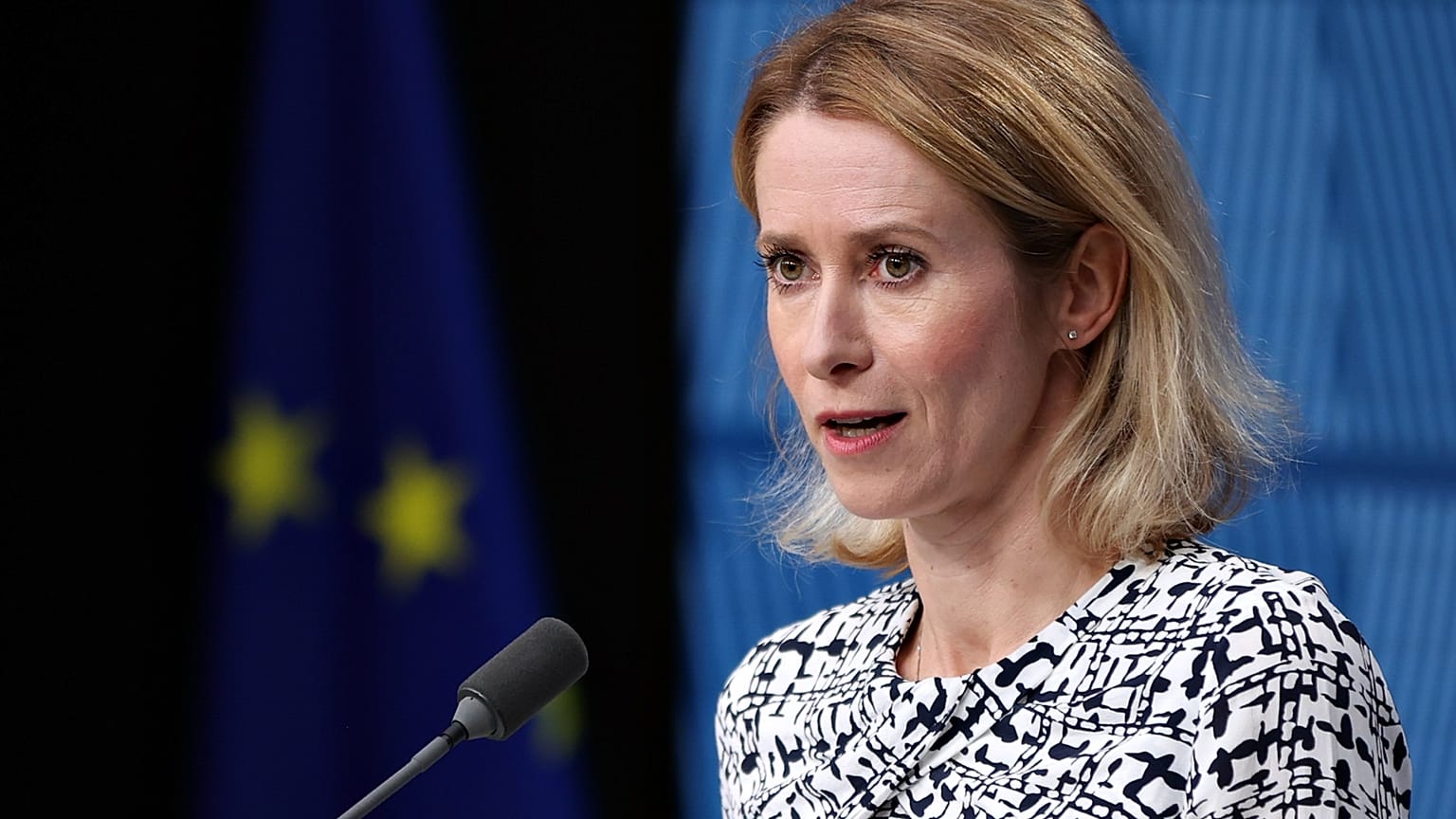

EU summons Russian envoy after strike damaged the bloc's delegation in Kyiv


Copyright European Union, 2025.

By Jorge Liboreiro
Published on 28/08/2025 - 

"No diplomatic mission should ever be a target," High Representative Kaja Kallas said in reaction to Russia's latest barrage of drones and missiles.

The European Union has formally summoned the Russian envoy in Brussels in response to the Russian strike that severely damaged the bloc's delegation in Kyiv.

"No diplomatic mission should ever be a target," High Representative Kaja Kallas said on Thursday as she announced her decision.

The Kremlin's chargé d'affaires to the EU is Karen Malayan. The meeting with Kallas is expected to take place later on Thursday.

The overnight attack of 629 missiles and drones, part of Moscow's campaign of sowing terror and chaos, has killed at least 17 people, including four children, and left dozens injured, causing major destruction across the city.

"While the world seeks a path to peace, Russia responds with missiles," Kallas said.

"The overnight attack on Kyiv shows a deliberate choice to escalate and mock the peace efforts. Russia must stop the killing and negotiate."

Two Russian missiles hit within 50 metres of the EU offices in the span of 20 seconds. The delegation, however, remains "fully operational" and "open", a spokesperson said.

The British Council in Kyiv was also damaged during the barrage, prompting the UK government to summon the Russian ambassador to the country.

The Vienna Convention of 1961 foresees protection for diplomatic and consular premises against intrusion or damage, although it is not uncommon for these buildings to be impacted during wartime. The Kremlin has shown a consistent disinterest in upholding international rules throughout its full-scale invasion of Ukraine.
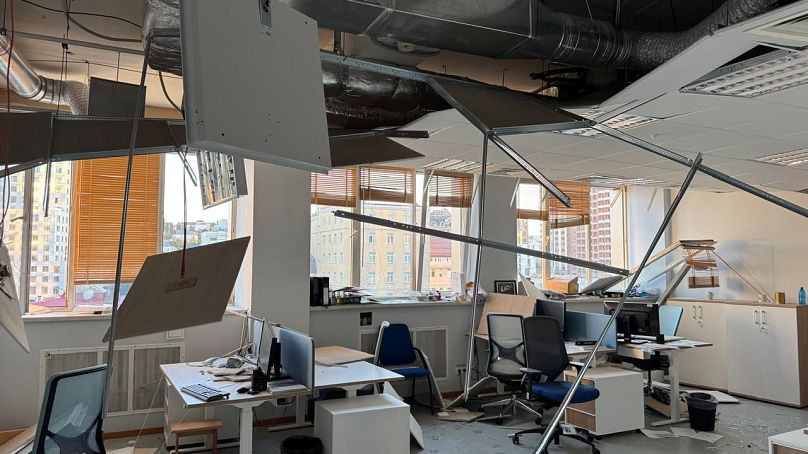
The delegation after the strike. EU delegation in Ukraine.

Separately on Thursday, Ursula von der Leyen said she was "outraged" by the barrage and confirmed no member of the delegation had been harmed.

"This is another grim reminder of what is at stake," the president of the European Commission said in a short statement delivered to camera.

"It shows that the Kremlin will stop at nothing to terrorise Ukraine, blindly killing civilians – men, women and children and even targeting the European Union."

Von der Leyen promised to tighten the screws on the Russian war machine with a 19th package of EU sanctions to be presented "soon".

In parallel, she said, the bloc will work to further mobilise the frozen assets of the Russian Central Bank, worth an estimated €210 billion on EU soil, to finance Ukraine's defence capabilities and reconstruction.

Asked if the Commission was considering confiscation, a radical step the bloc has refrained from taking due to international law constraints, a spokesperson confirmed the work would remain focused on the windfall profits, rather than the money itself.

Von der Leyen later held separate phone calls with Ukrainian President Volodymyr Zelenskyy and US President Donald Trump to discuss the latest wave of strikes.

This article has been updated with more information.


Debunking Trump's account of Russia's


failed bid to seize Kyiv
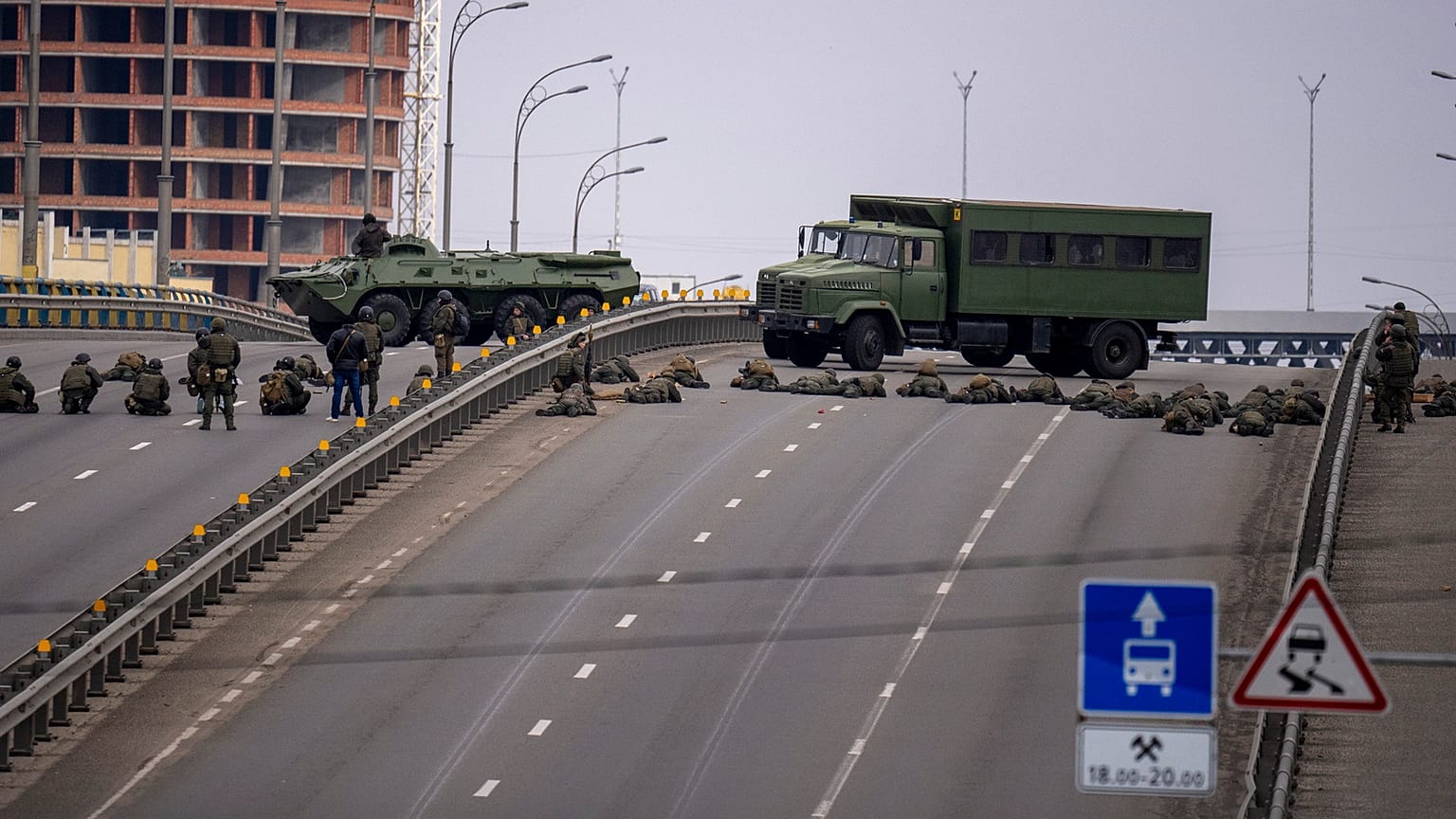


Copyright Emilio Morenatti/Copyright 2019 The AP. All rights reserved


By Mared Gwyn Jones
Published on 28/08/2025 - 


The US President says Russian troops would have captured the Ukrainian capital in hours in February 2022 had troops not got 'stuck in the mud'. War analysts tell a different story.

US President Donald Trump has repeated his claim that Russian troops failed to seize Kyiv during the first weeks of their 2022 invasion because of a decision to cross muddy farmland in a bid to reach the Ukrainian capital.

“They [the Russians] would have been in Kyiv in four hours, going down the highway. But a Russian general made a brilliant decision to go through the farmland instead," Trump said earlier this month.

"And they just had torrential rains, and the rains were so bad and there was mud, and those tanks got stuck in the mud. I don't know who that general is but, knowing Vladimir [Putin], he's probably not around any longer."

Trump made a similar claim in May, saying Putin's forces would have taken Kyiv in "five hours" if they "hadn't got stuck in the mud".

It's one of a raft of misleading or uncorroborated claims that Trump has made about the war in Ukraine since he was inaugurated for a second term to the US presidency in Januar

We fact-checked his claims by analysing expert accounts of what happened during the first days of Russia’s invasion in February 2022.

Our analysis found that Russia's attempts to seize Kyiv were thwarted by a combination of Ukraine's military strategy and logistical and tactical errors on the Russian side.

The mud in the valley of the Irpin River west of Kyiv did obstruct the movement of tanks, but alone would not have thwarted the Russian offensive.

Russian troops used highways to advance towards Kyiv

Expert accounts show that Russian tanks did use highways to advance towards the Ukrainian capital during the first days of the invasion.

According to an analysis by experts at the Modern War Institute, Russia's forces coming from the border with Belarus covered "150km of open road to reach Kyiv's outskirts" during the first phase of the battle.

They add that "many of the Russians had old maps and poor communications between different parts of their convoys" and that "Ukrainians also removed or painted over as many road signs as they could" to confuse the invading tanks.

Their analysis does also specify that the Irpin river to the west of Kyiv did present a "significant obstacle to vehicular movement", but that the eastern side of the capital lacks such natural obstacles.
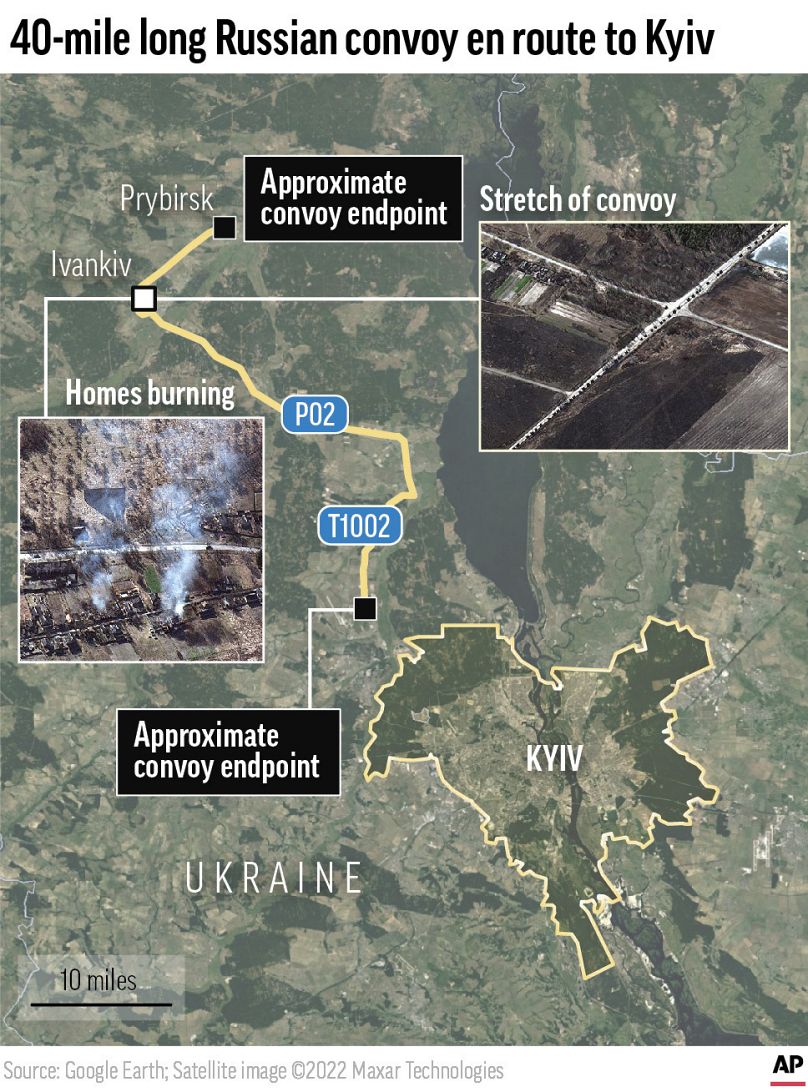

A map shows the approximate start and end points of a 40-mile long Russian military convoy en route to Kyiv, March 1, 2022. Phil Holm/AP

Satellite imagery provided by Maxar Technologies to AP, and analysed by EuroVerify, also clearly shows convoys of Russian tanks advancing on highways towards Kyiv in early March 2022 as Russian troops attempted to encircle the capital.

Moscow failed to gain 'air supremacy'

Russia's failure to capture Kyiv was also largely due to what happened in the air.

Despite being outnumbered in terms of fighter aircraft, Ukrainian forces successfully thwarted Russia's attempt to gain control of Hostomel Airport — a former Soviet air base some 10km north of Kyiv — from the air.

Russian troops could only seize control of the airport once reinforcements came from the Belarusian border. Ukraine had restored full control of the airport by April.

Experts say rapidly seizing the airport had been a critical part of Russia's plan to capture Kyiv.

"Had Russia seized the airfield at Hostomel Airport more quickly (...) it is very likely that Russian forces would have made it into the heart of Kyiv in the opening days of the war," the Modern War Institute explains.

"The Russians had expected to gain air supremacy, but at best they were only able to gain air superiority."

Muddy conditions only partly obstructed Russian advance

There are some grounds to Trump's claims: muddy conditions during Russia's advance towards Kyiv did complicate the attack.

The invasion came during the early spring season, when a phenomenon known as "rasputitsa" in Russia and "bezdorizhzhya" in Ukraine sees melting snow and thawing ice leave roads swamped in mud.

There is credible evidence that invading troops that took off-road routes did get stuck in the mud, partly thwarting some military advances.

Some Ukrainian media reported that Russia abandoned many tanks that had sunk into the mud, which were later recovered by Ukrainian farmers and repurposed for the Ukrainian armed forces.


France to shut part of Marseille youth detention after abuse report

French justice minister Gérald Darmanin on Friday confirmed that part of La Valentine juvenile detention centre in Marseille will be shut after prison watchdogs reported poor conditions for dozens of young inmates.


Issued on: 29/08/2025 - RFI

France's Justice Ministry closed part of a youth detention centre in Marseille due to poor conditions found during a snap inspection by prison watchdogs. © AFP - MICHEL EULER

The decision follows a report from the Controller General of Places of Deprivation of Liberty (CGLPL) submitted on 31 July. Darmanin said he had asked the General Inspectorate of Justice to investigate the site.

"One to two units of the prison will be closed in September for the gradual refurbishment of the cells," said Darmanin.

"This is a very rare recommendation, but I can see no other option than to close in order to reopen in better conditions," Dominique Simonnot, an inspector from the CGLPL, told the French news agency AFP.

A five-person CGLPL team entered La Valentine without warning between 7 and 11 July. The centre holds inmates aged 13 to 18. Inspectors said they found serious breaches of the teenagers’ rights.

The walls of the cells were covered in graffiti that appeared to be written with excrement or blood. Bathrooms had no doors, mattresses were damaged and bedding was sometimes only a piece of foam with no cover or sheet.
'Youths locked up for 23 hours'

Inspectors said some youths were confined to their cells for 23 hours a day because of a lack of guards or teachers.

Phone calls were charged at what they called prohibitive rates. Curtains were banned on cell windows, even during heatwaves in Marseille where summer temperatures often pass 30C. Only the poorest inmates could apply for a free fan.

The CGLPL team also reported complaints about food.

"Due to the serious nature of the conditions of incarceration, urgent measures must be taken to remedy," said Simonnot.

"On the one hand, there is the indignity of the material conditions under which juveniles are being held and, on the other hand, the catastrophic consequences of the absence of prison and educational staff."

'Work carried out'


Darmanin said some repairs had already been made between 2024 and 2025 after inmates damaged the buildings.

Prison authorities said the health unit had not raised concerns about diet. But inspectors criticised a procedure where a minor could be locked in a barred room without water, toilets or seating, and no constant supervision, for 30 minutes to five hours.

"It was an exceptional response to the absence, within the units, of a waiting room enabling minors to be separated in the event of incidents," said Darmanin.

He added that the practice, described as "a local one", was halted on 20 August.

Opened in 2007, La Valentine is one of six centres across France meant to place education at the heart of detention.

But both the CGLPL and the International Prison Observatory warned that staff shortages were leaving teenagers confined for too long and without schooling.

"There are no more teachers, there are no more guards, there's nothing left," said Simonnot. "Those in authority must give the staff the means to meet the needs of detained minors."

(with newswires)

German unemployment tops 3 million, highest for a decade

Frankfurt (Germany) (AFP) – German unemployment topped three million in August for the first time in over a decade, official data showed Friday, in another blow to Europe's struggling top economy.


Issued on: 29/08/2025 - RFI

Volkswagen has been among German companies that have announced job cuts in recent times © Ronny HARTMANN / AFP

The unemployment figure rose by 46,000 month-on-month to hit 3.025 million, the federal employment agency said, the highest level since February 2015.

The country's overall unemployment rate ticked up to 6.4 percent from 6.3 percent in July.

Andrea Nahles, head of the employment agency, said the data reflected weakness among Germany's manufacturers.

"That is an important motor for the Germany economy," she said, but added the sector was currently "weakening".

Battered by high energy costs and increasingly fierce Chinese competition, German manufacturers were struggling even before US President Donald Trump erected new tariff walls.

Over 110,000 jobs have been lost in German industry in the past year alone, a report released Tuesday by consultancy EY said, with about 50,000 of them coming from the car industry.

"It is crucial that we see signs of life from the economy," Nahles said.

The figures will pile pressure on Chancellor Friedrich Merz, who has made fixing the economy, which has shrunk for the past two years, a top priority.

"These numbers need to be politicians' wake-up call," said Thilo Brodtman, head of the VDMA machine-makers' association. "Costs need to go down and rigid rules need to be loosened."

Pointing to plans to spend hundreds of billions on creaking infrastructure in the coming years, Labour Minister Baerbel Bas said the government "stood on the side of employees and industry".

"Security and strong incentives for investment and employment are needed to generate economic growth again and bring momentum to the labour market," she said.

© 2025 AFP


Hope and hate: how migrant influx has changed Germany

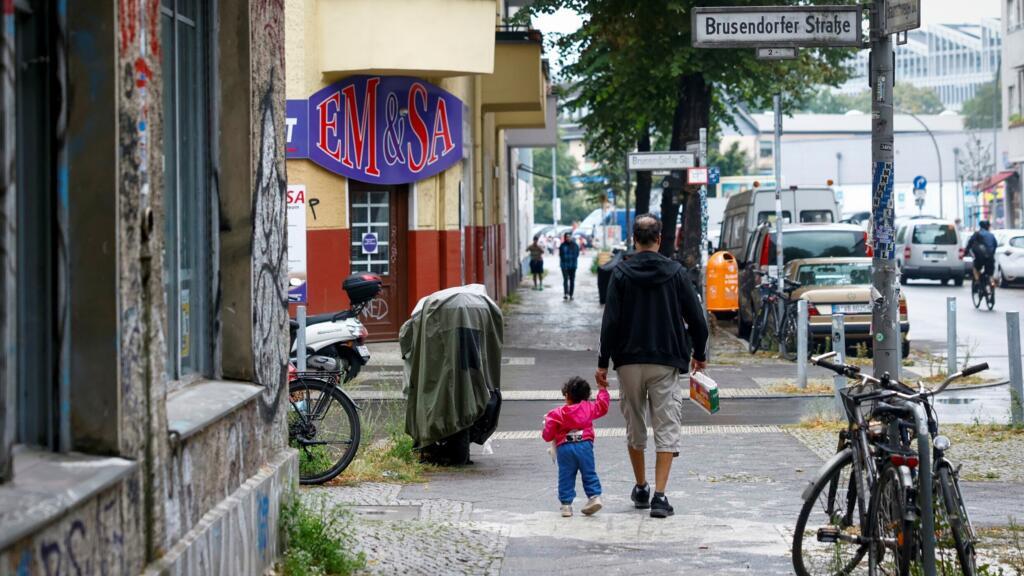
Berlin (AFP) – Men sit outside shisha bars and women in hijabs push strollers past Middle Eastern restaurants and pastry shops in Berlin's Sonnenallee, a wide avenue which has become a symbol of how much Germany has changed in the last decade.


Issued on: 29/08/2025 - RFI
\
Multiracial mixing pot: Berlin's Sonnenalle, home to some of the 2015 wave of migrants © Odd ANDERSEN / AFP


  LONG READ


Many came during the huge migrant influx of 2015, when a million people arrived in a matter of months -- mostly from Syria, Afghanistan and Iraq.

For barber Moustafa Mohmmad, 26, who fled the ruins of Syria's Aleppo, it is a home from home, "a kind of Arab street" where he can find sweets from Damascus and Aleppo-style barbecue.

To others it is a byword for integration gone wrong and disorienting change that has divided the country and helped make the far-right Alternative for Germany (AfD) the second biggest party.

"We can do this," Angela Merkel famously declared on August 31, 2015 as columns of desperate people walked through the Balkans towards Germany.

Civil wars were raging in Syria and Afghanistan, driving the largest wave of refugees since World War II, with the Mediterranean Sea becoming a mass grave.

Four days later the then chancellor took the fateful decision to keep the Austria border open, eventually letting in more than one million asylum seekers.

German volunteers greeted trainloads of new arrivals with water and teddy bears, an outpouring of compassion that was too good to last.

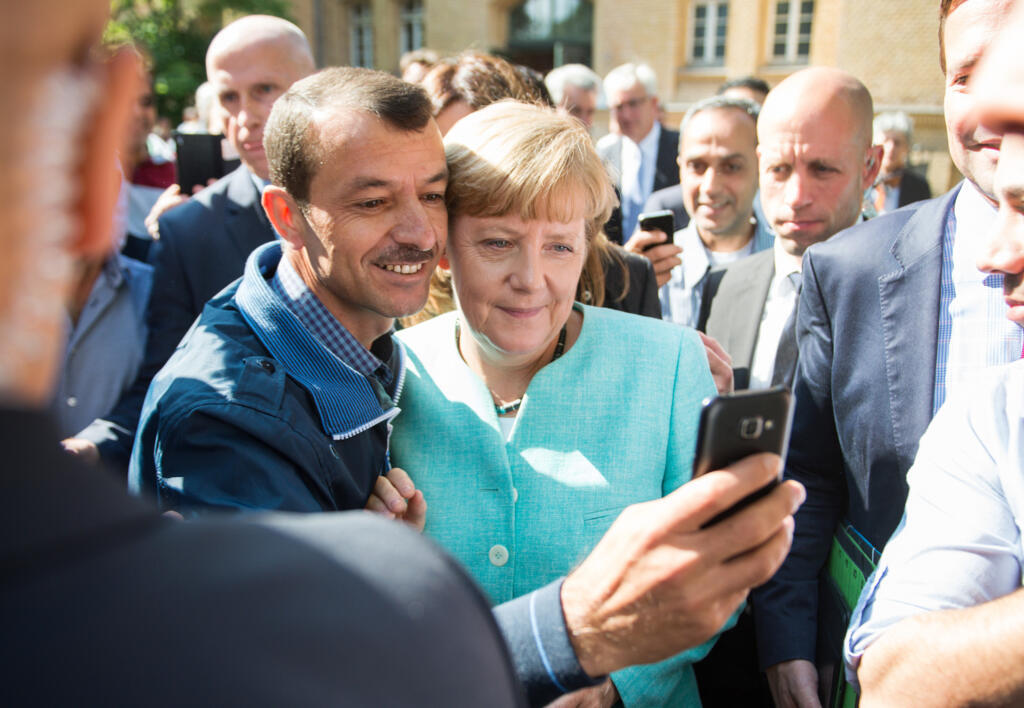
Mutti's big gamble: an asylum seeker takes a selfie with former German leader Angela Merkel in 2015 © BERND VON JUTRCZENKA / DPA/AFP/File

Merkel later wrote that "no phrase has been thrown back at me with quite such virulence" as "wir schaffen das" (We can do this). "No phrase has been so polarising."
Immigration crackdown

Ten years on, many bitterly complain that services, from childcare to housing, have been stretched to breaking point.

Others point to the many migrant success stories, the joys of a more cosmopolitan country, and newcomers plugging gaps in the ageing labour market.

But the country's current leader, Friedrich Merz, is not convinced and has lost little time undoing Merkel's legacy since coming to power in May.

His coalition government has cracked down hard with stricter border controls, tougher residency and citizenship rules and even deported migrants to Taliban-ruled Afghanistan.

Merz insists that strong measures are needed to halt the rise of the AfD and soothe fears inflamed by stabbings and car-ramming attacks blamed on migrants.

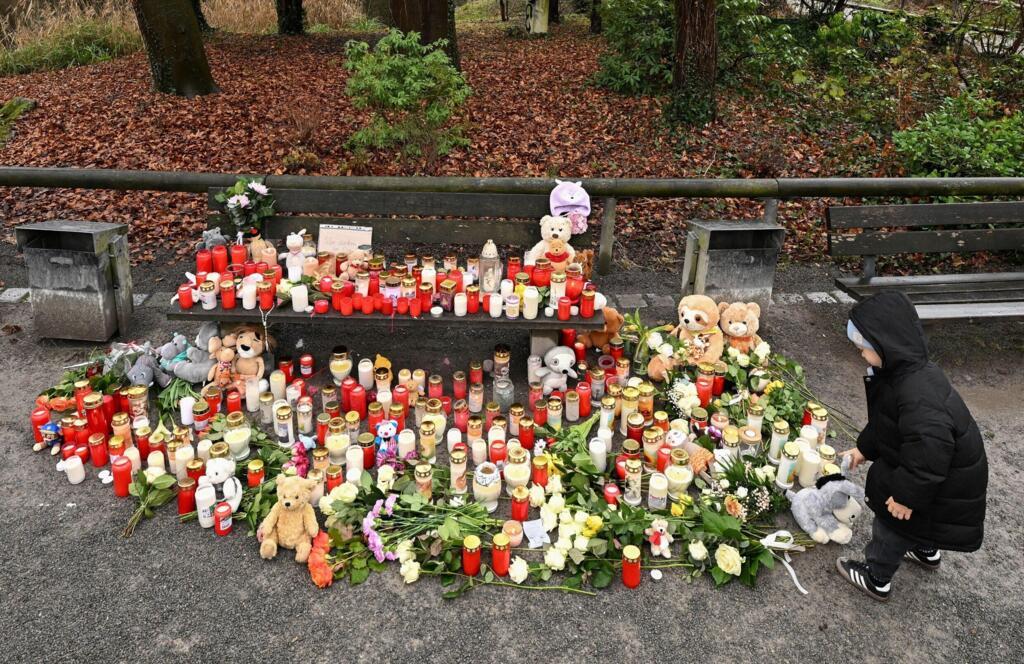
A child at a makeshift memorial for victims of the knife attack in Aschaffenburg, Germany, blamed on an Afghan migrant © Kirill KUDRYAVTSEV / AFP/File

In one especially horrific incident this year in the southern city of Aschaffenburg, a mentally ill Afghan is accused of attacking nursery school children with a knife, killing a two-year-old boy and a German man who tried to protect the toddlers.

Asked recently about Merkel's declaration, Merz said Germany had "clearly not" managed "to do it". "We must control immigration. And we must ensure that those who come to us are well integrated."

'I feel part of community'

Even to virulent critics of immigration, Syrian restaurateur Malakeh Jazmati, 38, ticks most integration boxes.

She came to Berlin in 2015 and quickly started a catering business with her husband. Two years later she was serving food to Merkel.

In 2018 she opened the Malakeh restaurant, among the most beloved of Berlin's new Syrian eateries.

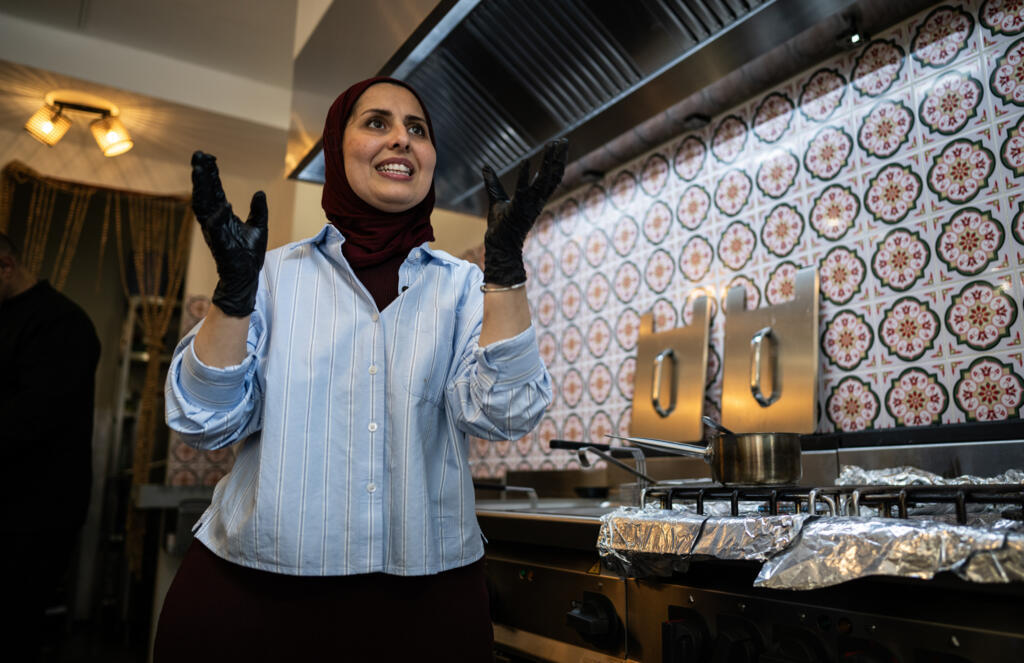
Success story: Syrian Malakeh Jazmati in her Berlin restaurant with her cookbook 
© John MACDOUGALL / AFP

"The German people are open to trying something new," she said, preparing batata harra, a potato appetiser scattered with pomegranate seeds.

Jazmati said her life in Germany is "full of challenges... but also full of happiness.

"It's not easy to live outside your homeland."

While her two German-born sons, aged two and nine, speak German and Arabic, her own attempts to learn the language have been thwarted by her workload and the fact that English is so widely spoken in Berlin.

But Jazmati believes integration also means feeling "part of the community. I have German friends. I pay my taxes. I try to speak German. And I also try a lot of German food," she said with a smile.
Finding work

Germany is now home to more than 25 million people with a "migration background", meaning either they or their parents were born abroad -- some 30 percent of the population. That includes more than a million with Syrian roots.

Arabic words like "yalla" (hurry up) and "habibi" (my love) have entered the vocabulary, particularly among the young.

"Talahon" too, though it is less flattering, a term for thuggish young men sporting designer tracksuits and gold chains.

Middle East culture from rap to theatre is also thriving, with some artists relishing the liberties of cosmopolitan Berlin.

Male Syrian belly dancer 'The Darvish' performs at a festival in a Berlin school © John MACDOUGALL / AFP

Syrian belly dancer The Darvish whipped up the crowd in a gold-tasselled skirt and a red fez at a recent show in the Kreuzberg area.

The dancer -- a figure in the capital's LGBTQ community -- came in the 2015 wave, identifies as non-binary, and wants to connect "Arab and queer culture".

For most Syrians work is more humdrum, with the majority working low-paid jobs in the service, construction and health sectors.

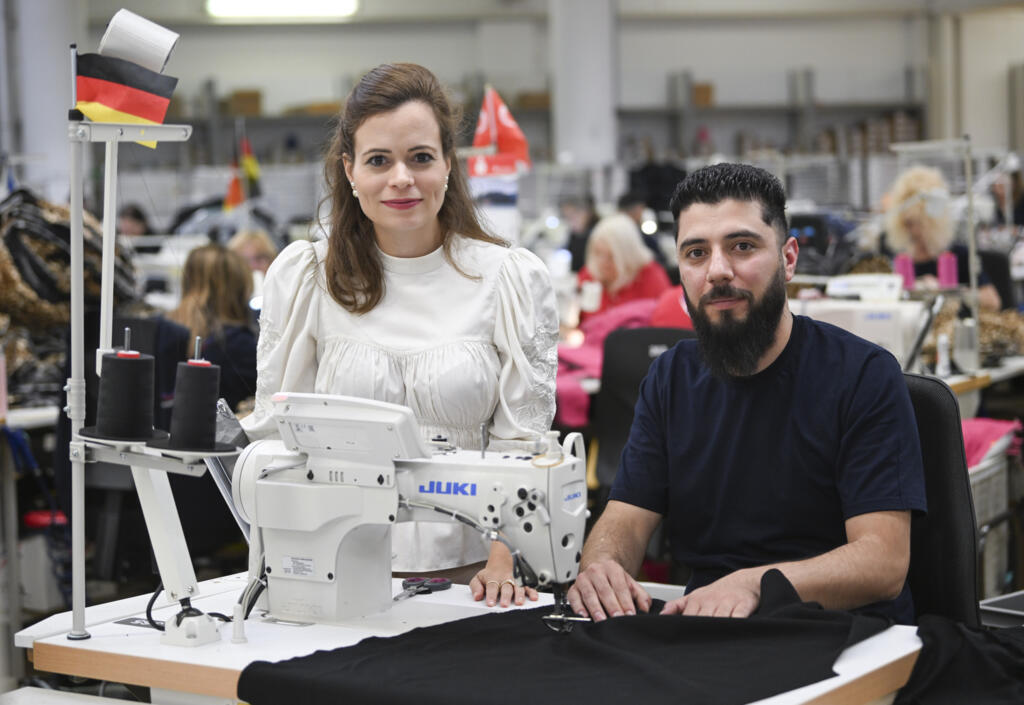
Bonita Grupp has hired almost 70 migrants in her Trigema textile factory in the southern town of Burladingen, offering them housing, German lessons and training.

"Germans simply don't apply for these positions anymore," she said.

Hard at work on his sewing machine, Habash Mustafa, 29, learned to tailor in Aleppo. He arrived in 2015 after crossing the Aegean Sea by boat and the Balkans on foot. He got his German citizenship a few months ago.

Resentment over benefits


Bonita Grupp, CEO of textile group Trigema, with her Syrian worker Habash Mustafa, who has just got his German nationality © THOMAS KIENZLE / AFP

Europe's biggest economy will need migrants more than ever in the years to come, with the German Economic Institute predicting a shortfall of around 768,000 skilled workers in the next two years.

Foreigners already account for 15 percent of healthcare professionals, according to the DKG hospital federation, with the largest number coming from Syria.

When right-wing politicians called for Syrians to go home when Bashar al-Assad's regime fell in December, the alarmed healthcare sector warned it couldn't do without its 5,000 or so Syrian doctors.

At one hospital in Quedlinburg in the central Harz mountains, 37 of the 100 doctors are migrants.

"Without our foreign colleagues, we would no longer be able to function," said Matthias Voth, director of the Harzklinikum Dorothea Christiane Erxleben.

Nearly two thirds of refugees who came in the 2015 wave had jobs by 2022, according to the latest data from the Institute for Employment Research (IAB).

But many migrants have yet to find work. They are four times more likely to be jobless than the rest of the population, with an unemployment rate of 28 percent last year.

Around 44 percent receive social benefits, according to the Federal Employment Agency -- a key vector fuelling resentment.

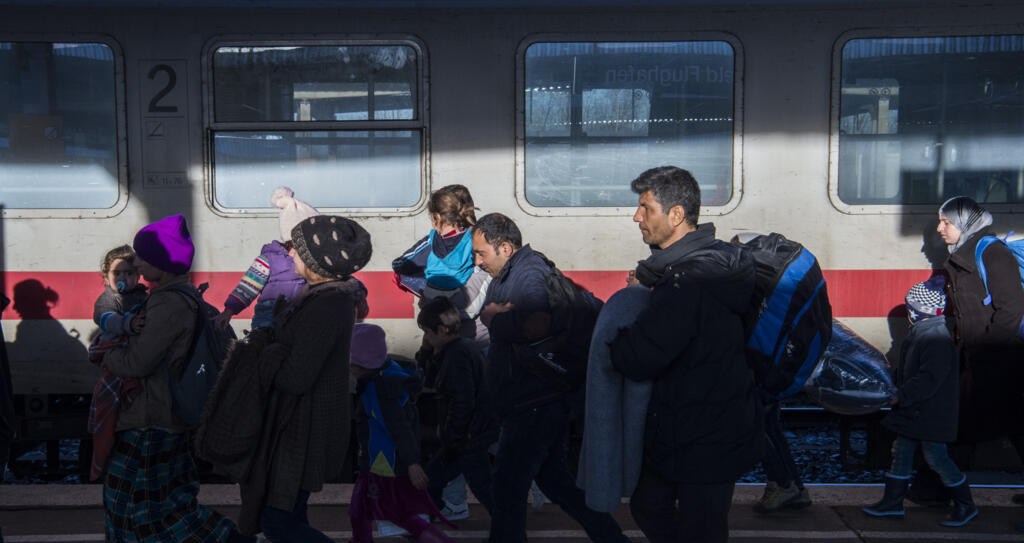
Asylum seekers arrive on a train to Brandenburg in 2015 © John MACDOUGALL / AFP/File

Much of the load falls on local councils that are already stretched. Salzgitter, a steel town south of Hanover that has seen better days, has taken in 10,000 migrants in a decade -- a tenth of its population. Its mayor Frank Klingebiel complained to Merkel, his party leader, that the pressure on public services "could not go on like this".

Most migrants were "women with children entitled to places in nurseries, schools and language courses", he told AFP.

In 2019, Salzgitter got 50 million euros that it used for two schools and three new nurseries, but Klingebiel said this was a "drop in the ocean".

The town now has four primary schools where more than 70 percent of pupils are migrants. Many do not speak German, which poses "exorbitant challenges", the mayor said.

Desire to succeed


Hamburg's Kurt Koerber Gymnasium was also "caught off guard by the suddenness" of the refugee wave, said headteacher Christian Lenz.

The secondary school serves an area where 85 percent of the population are from immigrant backgrounds, and has two "international preparation" classes for new arrivals which Lenz argues ensures a smoother transition.


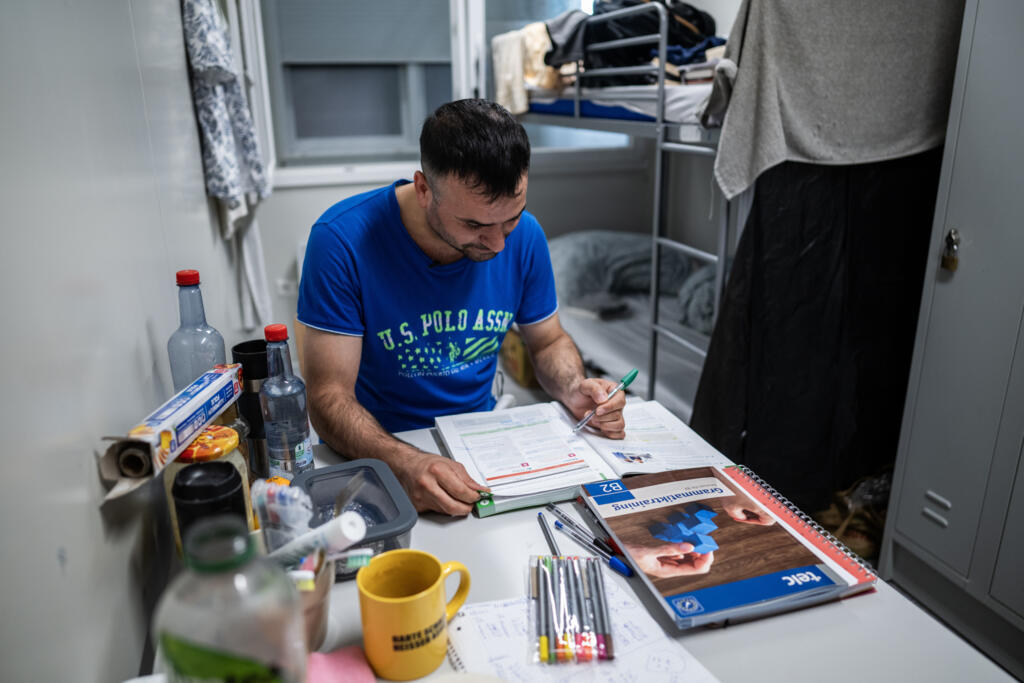
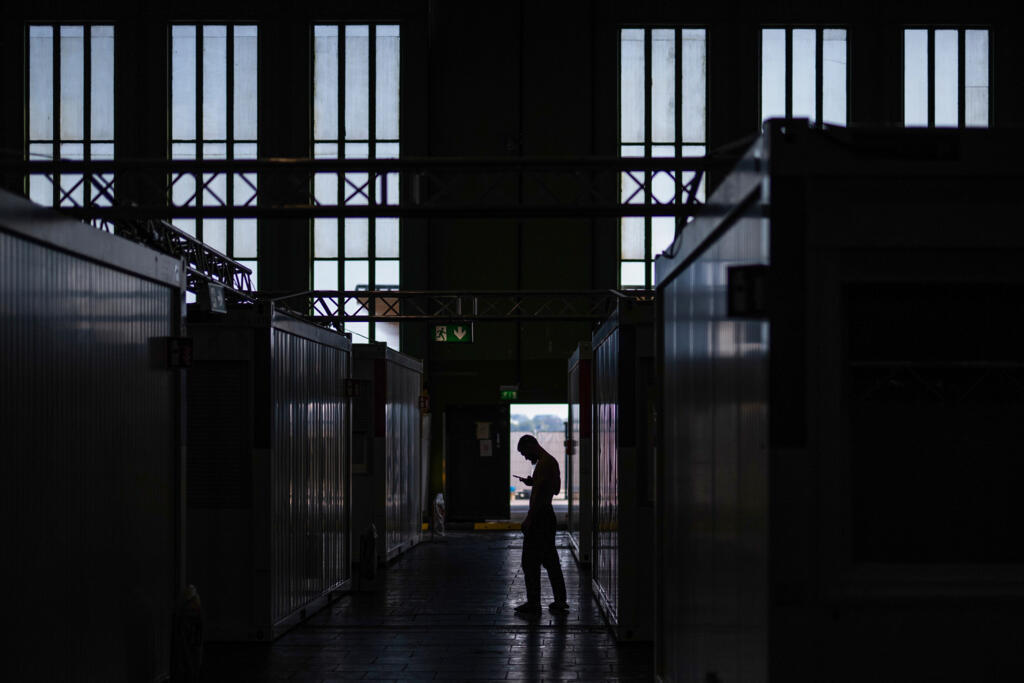
Kurd Faruk Polat, 34, works on his German in his overcrowded shelter in Berlin's former Tempelhof airport © John MACDOUGALL / AFP

Simon Groscurth, headteacher of Berlin's Refik Veseli School, said many migrant children have a "strong desire to perform well", keen to please parents who have sacrificed so much to be there.

Having arrived with no German at all, Syrian student Hala, 16, now even speaks it with her cousins and has "started to forget Arabic a little".

The country's 2,500 mosques -- long dominated Turks -- have also become more diverse, said Syrian imam Anas Abu Laban. In his little mosque in the northeastern town of Parchim, koranic classes are in both German and Arabic as young people born there tend to "understand German better".


Overcrowded shelters

Refugees and asylum seekers live in crowded container facility at Berlin's former Tempelhof airport © John MACDOUGALL / AFP


Most 2015 arrivals have long moved out of emergency accommodation, but many camps remain, filled by later migrants, including from Ukraine.

Some 1,300 people live inside hangars in Berlin's disused Nazi-era Tempelhof airport.

Each prefabricated unit contains four beds, tables and lockers, all packed into 12 square metres (130 square feet).

Tempers can flare in the crowded space.

Faruk Polat, 34, a Kurd from Turkey, who has been there since early 2023, said many residents "do not understand each other" because they speak different languages.

He is desperate to leave. "I spend almost every day on the internet looking for a flat or a room," he told AFP, his face sweaty from the poor ventilation.

Even when their asylum application is granted there is often nowhere to go, said centre director Robert Ziegler.

"Everyone knows that the housing market is very tight which means these people have to stay here longer," he said.


AfD backlash

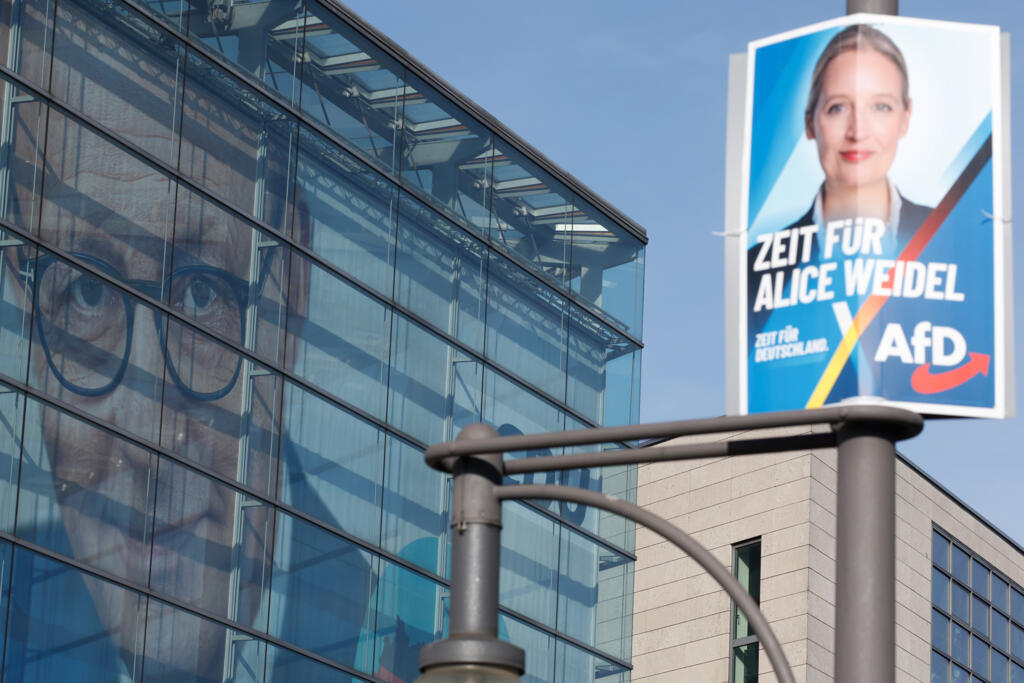
An AfD election poster in Berlin featuring the far-right party's co-leader Alice Weidel © Odd ANDERSEN / AFP


To the AfD -- and the fifth of voters who supported it in February's elections -- Berlin's streets, crowded migrant shelters and multiethnic classrooms are proof the country is doomed. The party now calls for the "remigration" of millions of foreigners.

2015 turbo-charged its rise, particularly after the shock at 1,200 women who reported being sexually assaulted that New Year's Eve in Cologne and other cities by men described as being mostly of Arab or North African origin, according to a final criminal police report cited in German media.

Even worse was to come. At the height of the Islamic State group, a Tunisian man drove a truck through a Berlin Christmas market the following year, killing 13 people and wounding dozens more.


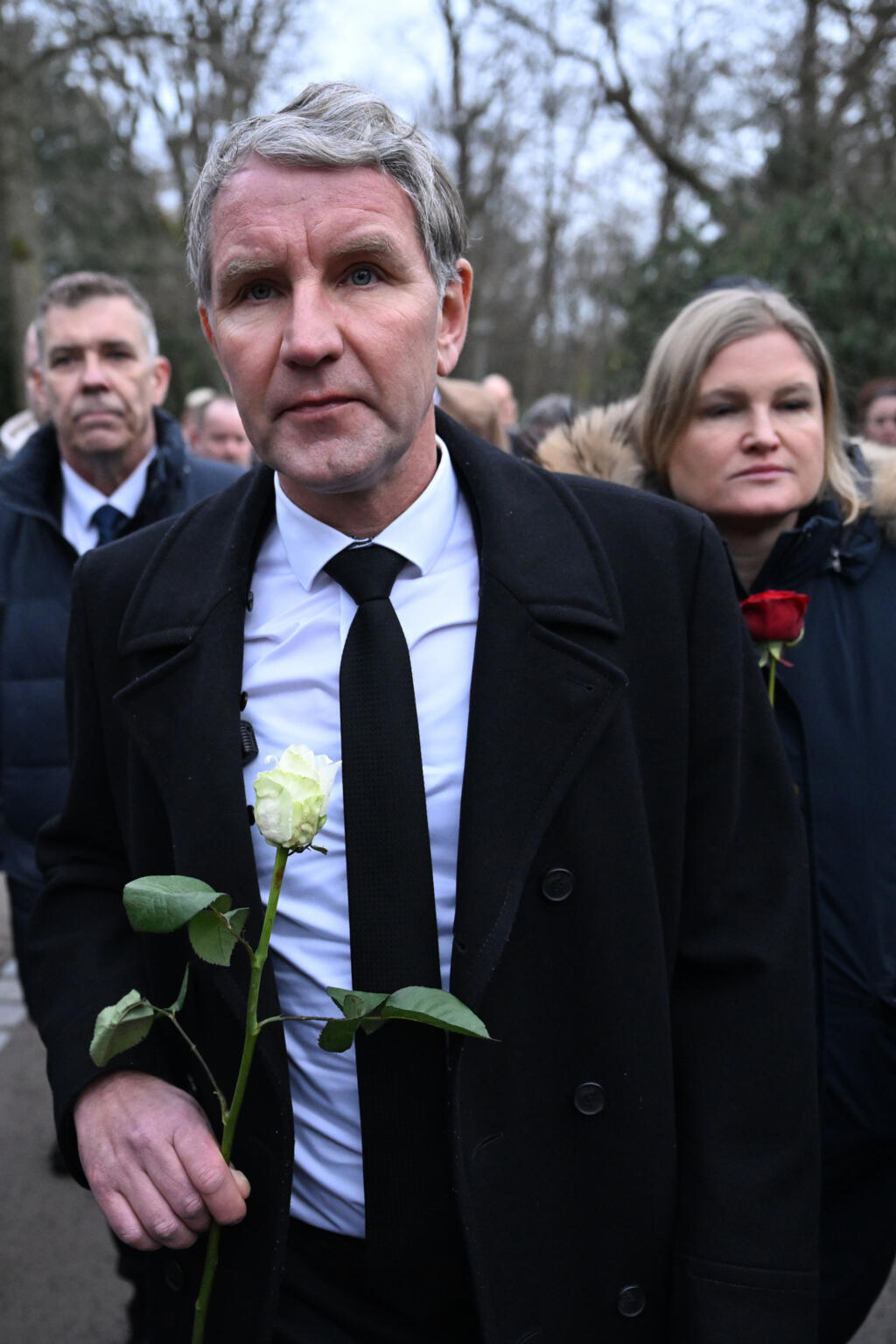
Bjoern Hoecke, who led the far-right AfD to victory in the Thuringia state election last year © Kirill KUDRYAVTSEV / AFP


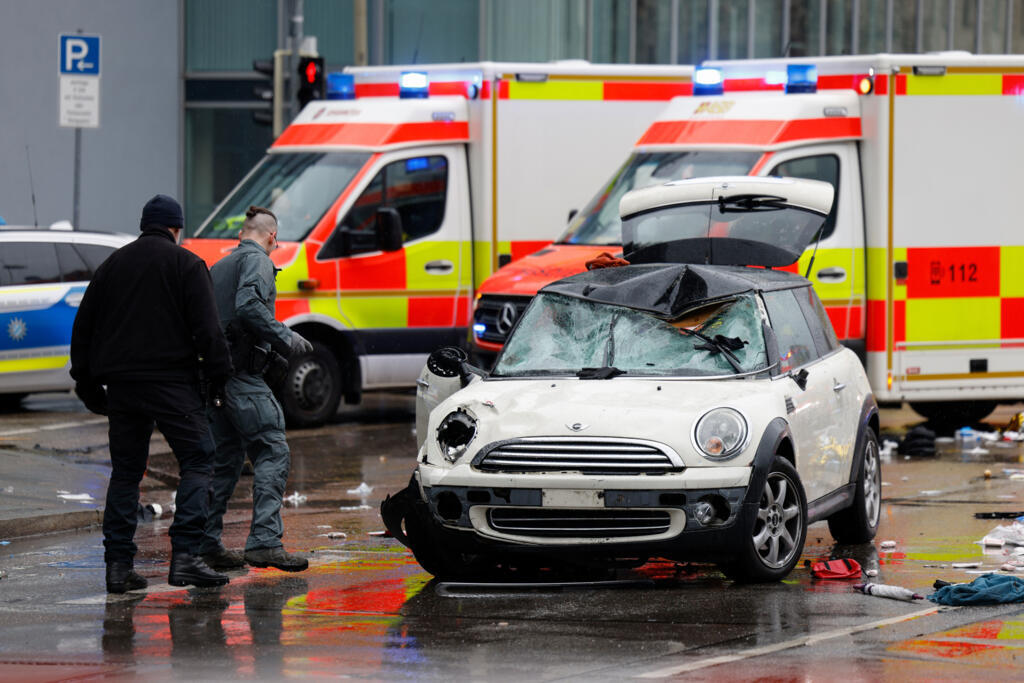
This February's election was dominated by a bitter debate on migration amid a spate of knife and car-ramming attacks in which all the arrested suspects were asylum seekers.

The AfD is especially strong in the ex-communist east, where it won its first regional election last year in Thuringia, which has the second lowest GDP per capita of any German state.

On a recent market day in Arnstadt near the state capital Erfurt, pensioner Monika Wassermann, 66, said she felt there were "too many foreigners".

"Many are hated because they get everything they need, while the Germans have to work hard for it," she said.

Ronny Hupf, 42, working a meat and sausage stall, said he was against migration because of the "violent crimes committed by migrants".

"I've seen other traders being attacked at the market," he said.


'Crime wave'


German police data shows that violent crime has risen by a fifth over the past decade, but experts argue about the causes.

The aftermath of a deadly car-ramming attack in Munich in February, which who people died © Michaela STACHE / AFP/File


Last year 35.4 percent of criminal suspects were foreign nationals, according to the BKA criminal police office, rising to nearly 42 percent when you count crimes such as illegally entering the country.

Syrians top the list by nationality.

However, the idea "we are facing an unprecedented, incomparable, emergency-like situation is an exaggeration", said Frank Neubacher, a professor of criminology at Cologne University.

Migrants are overrepresented because they are more likely to be young, male, living in big cities and to be stopped by the police, he said.

Yet they are also the victims of hate crimes, which jumped by almost a third to around 19,500 last year, the BKA said.

Tareq Alaows, a Syrian refugee who came to Germany in 2015, pulled out of being the Green party's Bundestag candidate in Oberhausen in the industrial Ruhr in 2021 because of the "high threat level".

Return to Syria?

Migrant numbers have also been dropping sharply as the debate has hardened.

Even before the latest restrictions, arrivals fell by 49.5 percent in the first half of this year, according to the Federal Office for Migration and Refugees.

The crackdown has stoked fears and protests. Saeed Saeed, 25, a computer science student from Syria who now lives in Magdeburg, said he felt "unwanted in this country" at a protest in front of the Reichstag this summer.

When he arrived in 2015, he was filled with optimism about building a new life in Germany. But now he said he felt that "things have changed for the worse".

Indeed as many as one in four migrants are considering leaving Germany, according to a January study by the Institute for Employment Research, many reportedly highly skilled.

They cited the political situation, high taxes and bureaucracy among the reasons for their disillusion.
'I am part of this country' : Syrian chef and Berlin restaurant owner Malakeh Jazmati © John MACDOUGALL / AFP

In Berlin's Malakeh restaurant, owner Jazmati returned to Damascus just three weeks after Assad fell.

"Inside me something said I need to come back to Syria," she said, but for now a permanent return was off the cards. Only around 4,000 Syrians have decided to move back, according to research by public broadcaster ARD.

"I have two children" growing up speaking German, Jazmati said. "They don't know anything about Syria... I cannot be selfish and only think about myself."

Her husband got German citizenship last year, and she will apply too when her language skills are good enough.

But she already feels that "even if I don't have German citizenship, I am part of this country".

© 2025 AFP
Modi says India, Japan to 'shape the Asian century'

Tokyo (AFP) – India and Japan will "shape the Asian Century", Prime Minister Narendra Modi said Friday, on a visit expected to secure billions of dollars in Japanese investment and an upgrade to security ties.


Issued on: 29/08/2025 - RFI

Modi's two-day visit -- a stopover before going to China -- will see Japan unveil 10 trillion yen ($68 billion) in investments over the next 10 years, according to media reports © Kazuhiro NOGI / AFP

"India and Japan's partnership is strategic and smart. Powered by economic logic, we have turned shared interests into shared prosperity," Modi told a business forum in Tokyo.

"India is the springboard for Japanese businesses to the Global South. We will shape the Asian Century for stability, growth, and prosperity," Modi said.

Modi's two-day visit -- a stopover before going to China -- will see Japan unveil 10 trillion yen ($68 billion) in investments over the next 10 years, according to media reports.

Bilateral trade is currently worth over $20 billion annually, heavily weighted in Japan's favour.

"Japan and India are strategic partners who share common values such as freedom, democracy, rule of law, having cherished friendship and trust over many years," Japanese Prime Minister Shigeru Isbiba said.

"Our economic relationship is expanding rapidly as Japan's technology and India's talented human resources and its huge market are complementing each other," Ishiba told the forum.

Both countries have been hit by tariffs imposed by US President Donald Trump, with levies of 50 percent on many Indian imports into the United States taking effect this week.

Japan's vital auto sector still faces 25 percent tariffs as a July trade deal cutting them -- as well as additional "reciprocal" levies -- is yet to come into force.

Modi and Ishiba were expected to announce that the number of Indians with specialised skills working or studying in Japan -- which is beset by labour shortages -- will double to 50,000 over the next five years, reports said.

The investments will target fields including artificial intelligence, semiconductors and securing access to critical minerals, with Modi and Ishiba set to tour a chip facility on Saturday.

They will also visit a factory making "shinkansen" bullet trains with a view to Japan assisting in a planned 7,000-kilometre (4,350-mile) high-speed rail network by the centenary of Indian independence in 2047.

A joint project aimed at building a first high-speed link between the western Indian cities of Mumbai and Ahmedabad has been plagued for years with delays and cost overruns.

India and Japan, members of the Quad alliance with the United States and Australia seen as a bulwark against China, were also expected to upgrade their 2008 declaration on security cooperation.

After Japan, Modi was due at a Shanghai Cooperation Organisation summit in China on Sunday and Monday hosted by President Xi Jinping and also attended by Russian leader Vladimir Putin.

Modi's visit is his first to China since 2018.

The two most populous nations are intense rivals competing for influence across South Asia and fought a deadly border clash in 2020.

A thaw began last October when Modi met with Xi for the first time in five years at a summit in Russia.

© 2025 AFP
South Korea's ex-first lady indicted for bribery

Seoul (AFP) – The wife of jailed former South Korean President Yoon Suk Yeol was indicted Friday on charges including bribery, stock-market rigging, and accepting luxury gifts worth more than $50,000, a special prosecution team said.


Issued on: 29/08/2025 - RFI

Kim Keon Hee is indicted on charges including bribery, stock-market rigging, and accepting luxury gifts © JUNG YEON-JE / POOL/AFP/File

Kim Keon Hee and her husband are in jail, with Yoon on trial for insurrection and other charges following his April ouster over a disastrous bid to impose martial law in December.

The 52-year-old ex-first lady has been investigated over an alleged stock manipulation scheme and for accepting gifts from the Unification Church, a sect widely seen as a cult.

Kim was formally indicted Friday on charges of capital markets violations, political funds violations, and bribery, prosecutors said in a statement.

She has been in custody since her arrest on August 12.

Prosecutors say Kim made more than 810 million won (US$ 580,000) through a stock-rigging scheme involving shares of Deutsch Motors, a BMW dealer in South Korea.

She also allegedly accepted gifts worth around 80 million won, including a diamond necklace, from the Unification Church in return for favours.

The former first lady is also accused of colluding with her husband to receive free polling services worth some 270 million won from a political broker.

The prosecution "requested confiscation and preservation of approximately 1.03 billion won in criminal proceeds obtained by the defendant (Kim) through violations," the investigators said.

Her arrest marked a dramatic fall for the ex-first couple after Yoon's failed martial law bid, which saw armed soldiers deployed to parliament but was swiftly blocked by opposition lawmakers.

Kim apologised after the indictment, vowing to make "no excuses" as she goes to trial.

"Just as the moon shines brightest on the darkest night, I too will endure this time by holding on to my truth and heart," she said in a statement.

Special prosecutors on Friday also indicted former prime minister Han Duck-soo, a Yoon appointee, on charges including abetting insurrection and perjury.

Han, "as the authority to black martial law as the nation's highest constitutional institution," but "failed to uphold his constitutional duty", spokeswoman Park Ji-young said.

Han twice served as acting president after martial law before quitting to run in the snap election, where he lost Yoon's conservative People Power Party's nomination.

The presidency went to Lee Jae Myung of the centre-left Democratic Party, who won the election in early June.

© 2025 AFP

Thai court sacks PM Paetongtarn Shinawatra for ‘ethics violations’ over handling of border clash

Thai Prime Minister Paetongtarn Shinawatra was dismissed Friday by the country's Constitutional Court over her handling of a border clash with neighbouring Cambodia. The court said Paetongtarn had violated ethics in what her critics viewed as an overly friendly phone call with Cambodia's former prime minister Hun Sen that was leaked to the press.


Issued on: 29/08/2025
By: FRANCE 24

Thai PM Paetongtarn Shinawatra waves as she arrives at Government House in Bangkok prior to the court's ruling on August 29, 2025. © Lillian Suwanrumpha, AFP

Thailand's Constitutional Court dismissed Prime Minister Paetongtarn Shinawatra from office on Friday for an ethics violation after only a year in power, in another crushing blow to the Shinawatra political dynasty that could usher in a new period of turmoil.

Paetongtarn, who was Thailand's youngest prime minister, becomes the sixth premier from or backed by the billionaire Shinawatra family to be removed by the military or judiciary in a tumultuous two-decade battle for power between the country's warring elites.

In its verdict, the court said Paetongtarn violated ethics in a leaked June telephone call, during which she appeared to kowtow to Cambodia's former leader Hun Sen when both countries were at the brink of an armed border conflict. Fighting erupted weeks later and lasted five days.

Paetongtarn addressed Hun Sen as "uncle" and referred to a Thai military commander as her "opponent", sparking a furious reaction in Thailand, where the armed forces hold huge sway.

Conservative lawmakers accused her of bending the knee to Cambodia and undermining the military, while Paetongtarn's main coalition partner walked out in protest, nearly collapsing her government.

Thailand and Cambodia ceasefire holds as wary displaced villagers return home
© France 24
01:30


The ruling means she immediately loses her job, which she had held for about a year. Paetongtarn was suspended from her duties on July 1 when the court agreed to hear the case against her, and Deputy Prime Minister Phumtham Wechayachai took over her responsibilities.

The cabinet led by Phumtham is expected to stay in place on a caretaker basis until parliament approves a new prime minister. The caretaker cabinet could also dissolve parliament and call a new election.

The decision paves the way for the election by parliament of a new prime minister, a process that could be drawn out, with Paetongtarn's ruling Pheu Thai party losing bargaining power and facing a challenge to shore-up a fragile alliance with a razor-thin majority.

The ruling brings a premature end to the premiership of the daughter and protégé of influential tycoon Thaksin Shinawatra.

'Thailand is an autocracy: The system is loaded against progressive parties'
© France 24
06:58


Paetongtarn, 39, was a political neophyte when she was thrust abruptly into the spotlight after the surprise dismissal of predecessor Srettha Thavisin by the same court a year ago.

Paetongtarn has apologised over the leaked call and said she was trying to avert a war.

She is the fifth premier in 17 years to be removed by the Constitutional Court, underlining its central role in an intractable power struggle between the elected governments of the Shinawatra clan and a nexus of powerful conservatives and royalist generals with far-reaching influence.
Uncertainty ahead

The focus will next shift to who will replace Paetongtarn, with Thaksin expected to be at the heart of a flurry of horse-trading between parties and other power-brokers to try to keep Pheu Thai in charge of the coalition.

There are five people eligible to become prime minister, with only one from Pheu Thai, 77-year-old Chaikasem Nitisiri, a former attorney general with limited cabinet experience, who has maintained a low profile in politics.

Others include former premier Prayuth Chan-ocha, who has retired from politics and led a military coup against the last Pheu Thai government in 2014, and Anutin Charnvirakul, a deputy premier before he withdrew his party from Paetongtarn's coalition over the leaked phone call.

The ruling thrusts Thailand into more political uncertainty at a time of simmering public unease over stalled reforms and a stuttering economy expected by the central bank to grow just 2.3 percent this year.

Any Pheu Thai administration would be a coalition likely to have only a slender majority and could face frequent parliamentary challenges from an opposition with huge public support that is pushing for an early election.

"Appointing a new prime minister ... will be difficult and may take considerable time," said Stithorn Thananithichot, a political scientist at Chulalongkorn University.

"It's not easy for all parties to align their interests," he said. "Pheu Thai will be at a disadvantage."


Paetongtarn Shinawatra: glamorous Thai PM felled by Cambodia row

Bangkok (AFP) – Paetongtarn Shinawatra, scion of Thailand's most enduring and controversial political dynasty, was touted as the youthful, glamorous future of the movement, capable of winning over a new generation of voters.


Issued on: 29/08/2025 - 

Thailand's sacked prime minister Paetongtarn Shinawatra is the third from the Shinawatra clan to be premier © Lillian SUWANRUMPHA / AFP

Now, barely a year after becoming prime minister, she finds herself in a position all too familiar to the Shinawatra family -- kicked out of office early by court order.

The 39-year-old accepted King Maha Vajiralongkorn's command to form a government last August, just two years after she entered politics in the shadow of the clan patriarch and ex-premier Thaksin Shinawatra.

Paetongtarn, Thailand's youngest premier and the third Shinawatra to hold the role, was seen by her Pheu Thai party as someone capable of rejuvenating their ailing image.

But she was suspended by the Constitutional Court in July as it opened a probe into her conduct in a leaked phone call in which she discussed a border spat with former Cambodian leader Hun Sen.

Paetongtarn addressed Hun Sen as "uncle" during the call and denigrated a Thai military commander as tensions rose between the two countries.

It sparked a furious reaction, particularly from conservatives who accused her of kowtowing to Cambodia and undermining the military.

Her critics said it showed her naivety and inexperience in dealing with Hun Sen, one of the region's wiliest political operators.

Throwing her out of office, the Constitutional Court said her actions "led to a loss of trust, prioritising personal interest over national interest".

Rejuvenated image

Paetongtarn helped run the hotel arm of the ultra-rich Shinawatra family's business empire before entering politics in 2022.

She was a near-constant presence on the campaign trail for the 2023 election despite being pregnant, regularly leading rallies in the stifling tropical heat.

She gave birth to a son just two weeks before polling day, hailing the baby as her "secret power" and swiftly getting back to canvassing.

But the vote proved a disappointment as Pheu Thai finished second, a rare reversal for a political movement that had dominated the ballot box for two decades.

It was the first time a Shinawatra party was beaten in a national vote, but they eventually took power in an alliance with pro-military parties formerly opposed to the dynasty.

Paetongtarn did not initially lead the new government but took over after former businessman Srettha Thavisin was kicked out by a court order after an ethics probe last year.

Her father's daughter

Born in Bangkok on August 21, 1986, Paetongtarn is the third and youngest child of Thaksin Shinawatra, a police officer turned telecoms tycoon who revolutionised Thai politics in the early 2000s and won two elections before being ousted in a 2006 coup.

Known in Thailand by her nickname Ung Ing, she grew up in the Thai capital and studied hotel management in Britain.

She married commercial pilot Pidok Sooksawas in 2019, celebrating with two glitzy receptions -- one in Bangkok and one in Hong Kong that was attended by her father, then in self-exile.

The couple have two children who feature regularly in playful photos Paetongtarn posts on her social media accounts, where she has more than a million followers.

Paetongtarn's youth and energy stood out in a Thai political scene long dominated by strait-laced elderly men, her taste for vibrant designer clothes marking a contrast to the staid suits and uniforms of her rivals.

Thailand's pro-royalist, pro-military conservative elite has long disliked Thaksin and suspected him of effectively running Pheu Thai from afar, even while in exile.

His sister Yingluck's arrival in power in 2011 -- before her premiership was scuttled in 2014 by a court ruling, as well as Paetongtarn's elevation to high office later, did little to dampen those suspicions.

It also didn't help that Paetongtarn had described herself in the past as Thaksin's "little girl" and said she drew strength from his support and guidance.

© 2025 AFP

Can cruising be emission-free? Havila Voyages plans the world’s longest climate-neutral cruise

Aerial view of the Havila Capella cruise ferry
Copyright Havila Voyages


By Indrabati Lahiri
Published on 

Havila Voyages is the latest cruise line to work on a more sustainable cruise, as calls for greener cruising increase worldwide.

Norwegian cruise line Havila Voyages has revealed plans to launch what could become the world’s longest climate-neutral cruise as early as this autumn. 

The proposed 12-day voyage will follow the coastal route from Bergen to Kirkenes and back, covering a distance of 9,260 kilometres.  

The climate-neutral cruise is part of a collaboration between Havila Voyages and marine technology provider HAV Group.  The goal is to eventually achieve zero emissions. 

“Right now, we are in the planning phase to test a full round voyage on the coastal route this fall, using biogas in combination with our large battery packs,” Bent Martini, CEO of Havila Voyages, said at the annual Arendalsuka political conference in Norway last week. 

“We are in dialogue with suppliers to secure sufficient volumes to be able to fill the tanks 100 per cent with biogas, and we believe we will succeed.” 

If these plans are successful, the cruise ship in question could sail the entire coastal route from Bergen to Kirkenes and back.

What is a climate-neutral cruise?

Havila Voyages’ says its ships can already sail emission-free for four hours using battery packs. The upcoming test will use a combination of biogas - a renewable fuel derived from organic waste - and battery storage to achieve climate neutrality along the entire route. 

Climate neutral means offsetting or balancing the total greenhouse gas emissions of the voyage, whereas emissions-free would mean no emissions at all from the journey. 

The company aims to make its full 12-day Bergen–Kirkenes–Bergen itinerary emission-free by 2030.

Cruise lines double down on sustainability

Havila Voyages’ initiative comes amid intensifying pressure on the cruise industry to decarbonise. Cruise ships are among the highest-emitting modes of transport, with emissions per passenger kilometre that exceed planes, ferries and trains. 

According to the International Council on Clean Transportation’s global shipping emissions inventory, the world’s biggest and most efficient cruise ships emitted approximately 250 grams of carbon dioxide per passenger-kilometre in 2022. 

A long-haul flight emits around 80 grams of carbon dioxide per passenger-kilometre, a national rail service 41 grams and ferries around 19g. 

This has led to rising calls from governments, passengers and lobby groups for cruise ships to develop more environmentally-friendly solutions. In response, cruise companies are developing new technology in an attempt to clean up their act. 

Norwegian firm, Hurtigruten, is developing a zero-emission cruise ship due to launch in 2030, which will use a 60-megawatt battery pack. 

Similarly, Viking is currently building the world’s first hydrogen-powered cruise ship, called Viking Libra, in partnership with Italian shipyard Fincantieri, which will be delivered late next year.

Martini urged stronger environmental regulation from Norwegian authorities to accelerate the green transition on the Bergen–Kirkenes–Bergen route. 

“If Norwegian authorities are serious about their environmental ambitions, the ships on the coastal route can be a beacon for the green transition in shipping and create synergies for other parts of the industry,” he said. 

“Technology exists, and the opportunities are there. It’s about the willingness to make the necessary investments. With strict environmental requirements from the authorities, those who want to operate the coastal route will be forced to deliver.”