Monday, November 17, 2025

ONLY APPLIES TO AMERIKA

Child gun injury risk spikes when children leave school for the day


New studies by Boston University School of Public Health researchers underscore the critical need for community-level interventions that provide equitable access to safe spaces for youth after school and during the summer


Boston University School of Public Health


In the United States, child firearm violence prevention focuses largely on school shootings, even though the majority of child gun injuries occur outside of schools. A new study led by Boston University School of Public Health (BUSPH) provides additional insight into this gun violence threat, showing that children’s risk of being shot rises as soon as the school day ends.

The risk of child firearm injuries was 45 percent higher during the 2-6 pm afterschool period on school days, compared to non-school days, according to the study, which focused on students at public schools in New York City. This risk nearly tripled in the immediate period at the end of the school day, typically about 2 pm, as students left school grounds and commuted home or to other destinations within their communities. The findings were published in AJPM Focus, the journal of the Association for Prevention Teaching and Research and the American College of Preventive Medicine. 

As child firearm violence continues to rise, despite declines in overall gun violence in the US, the study underscores the need for child gun violence prevention programs and policies to expand beyond school-focused strategies and include community-level interventions.

"School shootings are tragic and traumatic, but they are a rare form of the problem,” says study senior author Dr. Jonathan Jay, associate professor of community health sciences at BUSPH. “Our findings show that the context where children have the greatest risk of being shot is the community, not school. There was no comparable afternoon effect on non-school days, suggesting that this is really about kids leaving school and needing to navigate community spaces to get to home or work or spend time with friends.”

For the study, Dr. Jay, along with lead author Emma Gause, research scientist in the Department of Environmental Health at BUPSH, and colleagues examined data on NYC firearm assaults in NYC and NYC school calendars from 2006-2023, using the 2 pm threshold as the afterschool transition time.

On school days, there were approximately 5.1 child gun injuries during each hour of the 2-6 pm afterschool threshold, compared to only 0.9 child gun injuries in each hour of the school day, and the highest risk occurred in the first 15 minutes after school dismissal. This peak period during the school-to-afterschool transition could represent spillover conflicts that began during school hours, but it more likely represents the non-school-related violence that children are exposed to in their surrounding communities as they leave school grounds. Previous research shows that adults commit the vast majority of child shootings, and that children are most often unintended targets. 

Safe Passage programs, or school-based programs which position staff or volunteers to walk with students on designated routes to and from school, are one step that cities can take to reduce students’ exposure to community violence after (and before) school.

“The adults in these programs should be community members who are unarmed—their job is to keep an eye on what’s happening on the block and help prevent conflicts from escalating,” says Dr. Jay. “Thinking about kids’ school commutes is important because we want walking to be a safe option for every child.”

Concerted efforts should be made to understand the types of community-level resources that children would want to utilize, he says. “Kids need safe places to go, and we haven’t done a good enough job providing safe places where they actually want to spend time. Young people have a range of interests, and just because an adult thinks kids would be interested in a program, doesn’t mean they will be.”

The researchers also emphasize the persistent racial and ethnic disparities in child firearm exposure. In their study, more than 97 percent of the child shooting victims on school days were Black and/or Latinx.

“Gun violence is a daily concern for young people in disinvested neighborhoods that are chronically exposed to this threat,” Dr. Jay says. “This is a racial justice issue as much as it is a public health issue.”

Youth employment is another valuable intervention that provides a safe space for teens after school, as well as economic and educational opportunities, all of which can directly combat the racial and ethnic disparities in youth violence victimization that so often occurs in economically disadvantaged neighborhoods.  

Dr. Jay authored another new study, led by Dr. Patrece Joseph, assistant professor of community health sciences at BUSPH, which examined the benefits of summer youth employment programs (SYEPs) and provided insight that could be applicable to similar programs offered during the school year. Published in Prevention Science, the study found that SYEPs not only reduce youth involvement in crime and violence, but also improve youth educational outcomes, social connections, and community engagement—all of which are critical to ensuring young people thrive, says Dr. Joseph.

“SYEPs provide opportunities for youth with little to no work experience to earn money while gaining important skills like communication, teamwork and time management,” Dr. Joseph says. “Universal programs are critical because they reduce barriers, such as stigma or documentation of low-income status, for youth who may not otherwise participate. Cities should consider expanding opportunities for youth employment during the school year to not only reduce risks for youth-involved firearm violence, but as a way to address limited economic opportunities for youth, which is ultimately a root cause of firearm violence.”

Boston’s SYEP, which includes summer and school-year jobs geared toward all Boston youth ages 14-24, is “a great example of how cities can ensure that these programs are accessible to all children,” she says, adding that there is no income requirement and the application process is designed to reduce barriers for young people applying to jobs. Other cities have also worked to expand the number of jobs offered to youth through partnerships with private funders and local universities. 

“These three strategies—broadening eligibility criteria, streamlining and supporting youth in the application process, and strategic partnerships that expand the number of jobs available to youth—are practical steps cities can take to ensure SYEPs are accessible to all youth,” Dr. Joseph says.

** 

About Boston University School of Public Health 

Founded in 1976, Boston University School of Public Health is one of the top ten ranked schools of public health in the world. It offers master's- and doctoral-level education in public health. The faculty in six departments conduct policy-changing public health research around the world, with the mission of improving the health of populations—especially the disadvantaged, underserved, and vulnerable—locally and globally.


Social media sentiment can predict when people move during crises, improving humanitarian response


By Josh Stowe

University of Notre Dame

 News Release 

Helge-Johannes Marahrens 

image: 

Helge-Johannes Marahrens leverages his computational social science expertise to work on a range of research projects related to globalization and inequality.

view more 

Credit: University of Notre Dame


Forced displacement has surged in recent years, fueling a global crisis. Over the past decade, the number of displaced people worldwide has nearly doubled, according to the United Nations’ refugee agency. In 2024 alone, one in 67 people fled their homes.

A new study co-authored by University of Notre Dame researcher Helge-Johannes Marahrens shows that analyzing social media posts can help experts predict when people will move during crises, supporting faster and more effective aid delivery. The study highlights how powerful computational tools can help address major global challenges to human dignity.

“Traditional data, such as surveys, are extremely difficult to collect during forced migration crises,” said Marahrens, assistant professor of computational social science in Notre Dame’s Keough School of Global Affairs. “As early warning systems evolve, artificial intelligence and new digital data can help improve them. Ultimately this can help strengthen humanitarian responses, saving lives and reducing suffering.”

Providing timely aid to displaced people

The study, published in EPJ Data Science, analyzed three case studies. In Ukraine, 10.6 million people were displaced following Russia’s 2022 invasion. In Sudan, approximately 12.8 million people were displaced following a civil war that broke out in April 2023. And in Venezuela, about 7 million people have been displaced in recent years because of multiple economic crises.

Researchers reviewed almost 2 million social media posts in three languages on X (formerly Twitter). They found that sentiment (positive, negative or neutral) was a more reliable signal for predicting when people were about to move than emotion (joy, anger or fear). Sentiment was particularly helpful at predicting the timing and volume of cross-border movements.

After comparing several approaches for analyzing social media posts, researchers found that pretrained language models provided the most effective early warning. These AI tools are trained on massive amounts of text using deep learning, a method that helps computers learn patterns much like the human brain.

“Our findings will help researchers refine models to predict how people move during conflict or disasters,” Marahrens said.

Social media analysis seems to work best in conflict settings such as Ukraine, Marahrens said, but not as well in economic crises such as the ones Venezuela experienced, which unfolded more slowly.

He cautioned that such analyses can trigger false alarms. They are most valuable as an early trigger for deeper investigation, he said, particularly when combined with traditional data sources such as economic indicators and on-the-ground reports.

Future work could explore connections between sentiment and emotion, focusing on where they connect and diverge, Marahrens said. It could also examine how automated translation services could help researchers analyze more languages. Finally, future research could include data from additional social media networks.

“Together, these improvements could help strengthen these tools,” Marahrens said, “making them more helpful for policymakers and humanitarian organizations that work with displaced people.”

Marahrens, who joined Notre Dame this fall, works on a variety of issues related to globalization and inequality, applying his computational social science expertise to a range of research projects. He is affiliated with the Keough School’s Pulte Institute for Global Development as well as the University’s Lucy Family Institute for Data & Society.

The study received funding from the National Science Foundation and from Georgetown University’s Massive Data Institute.

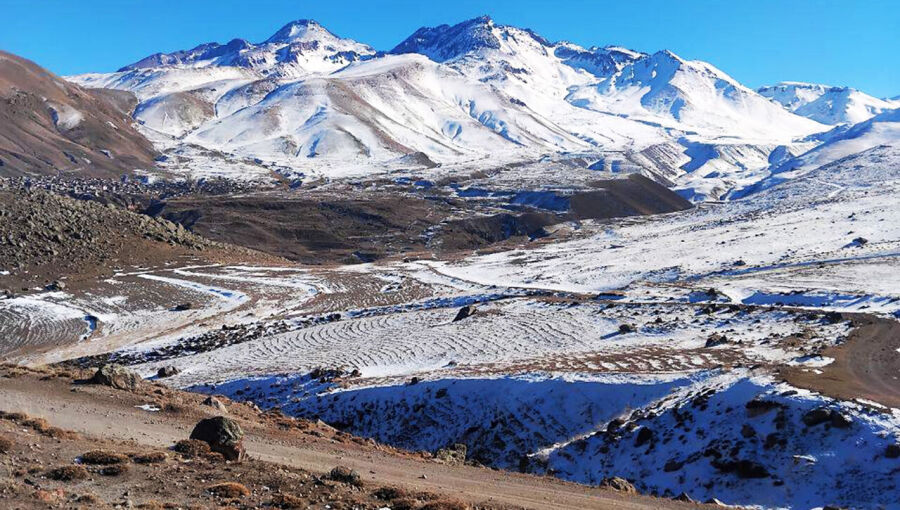
Iran's snow cover plummets 98.6% as water crisis deepens

Iran's snow cover plummets 98.6% as water crisis deepens
Snowfall collapse in Iran / bne IntelliNews
By bnm Tehran bureau November 17, 2025

New satellite data from Iran indicates a dramatic decline in snow cover across the country's highlands, fueling concerns about intensifying water shortages already impacting Tehran and other cities, ISNA reported on November 17.

According to the newly released statistics, the volume of snow recorded across the country is 98.6% lower than the same period in 2024 and 99.8% below the 20‑year average — figures that experts describe as “unprecedented decline.”

The sharp reduction in snowpack directly threatens inflows to dams and rivers, with implications for drinking water supplies in major cities during the summer. Officials warn of possible restrictions, pressure drops and even periodic cuts. Agriculture is also at risk, as diminished surface water could reduce cultivated areas and crop yields.

As surface resources dwindle, reliance on underground aquifers is expected to rise, increasing the danger of land subsidence, falling well discharge and the drying of qanats. Experts caution that reduced snow cover will also leave soils drier, accelerate erosion, create new dust hotspots and disrupt aquatic ecosystems and wildlife habitats.

The depletion of snow reserves severely undermines water sustainability, and if the trend continues, analysts warn of mounting water tensions, constraints on development and even population displacement in some regions.

Iran’s water reserves are already under unprecedented strain. Mohammad Javanbakht, Deputy Energy Minister and head of the Iran Water Resources Management Company, described the state of the country’s dams as “worrying,” noting that many of the main reservoirs supplying drinking water to cities are experiencing record low levels.

He reported that Kamal‑Saleh Dam, the source of Arak’s drinking water, has effectively run dry, while Tehran’s four principal dams have reached conditions unseen in their operational history.

Meanwhile, the Shahid Kazemi Dam in Boukan, which in wet years received more than 1bn cubic metres of inflow, has this year taken in only 307mn cubic metres. The Doosti Dam, a key source for Mashhad, is in a similar state, with its storage volume now below 5%.

Latest figures show that a significant number of dams currently hold only the minimum water required to maintain structural stability — volumes that play no role in supplying households, agriculture or industry.

Iranian scientists have concluded that Iran’s water resources face a precarious situation which, if prolonged, could have far‑reaching consequences for national water security.

They stress that managing the crisis will require meticulous planning, stronger infrastructure and stricter consumption policies. Without decisive action, the looming shortage is expected not only to intensify in the coming year but also to undermine the sustainable provision of drinking water, agriculture and urban development.

Across the country the situation of water resources appears to be heading into dangerous territory, with data from western provinces near Iraq also indicating that drought is the long term projection even during the winter period.

According to a new report by government-linked Tasnim News Agency on November 17 only 30% of Kurdistan province's dam capacity remains filled with water following five consecutive drought periods, the head of the province's Regional Water Company said.

Arash Arianzhad said the province, which spans three river basins, faces severe water stress in drinking water supply. Dam storage has fallen 25 percentage points from 55% in the previous water year, he said.

"After five consecutive drought periods, Kurdistan province unfortunately faces very severe water stress in drinking water supply," Arianzhad said.

The water year began in September, but precipitation has fallen short of requirements, with inflows to dams declining and reservoir volumes at their lowest levels, the Regional Water Company head said.

Rainfall has decreased 30% compared to the previous water year across the province, whilst some areas have experienced drops of 57% to 60%, Arianzhad said. He expressed hope that upcoming precipitation would compensate for some shortfalls.

The Iran-Iraq border town of Baneh faces particular challenges, with the Abbas-Abad and Baneh dams unable to provide 330,000 cubic metres of water for drinking supplies.

A water transfer project from Saqqez's Cheragh-Veys Dam to Baneh operates in three shifts to address the shortage in the shortest time possible, Arianzhad said.


Climate resilience found in traditional Hawaiian fishponds


University of Hawaii at Manoa
Trapping juvenile fish in a fishpond 

image: 

Paepae o Heʻeia staff and volunteers work on methods to trap juvenile fish inside the pond.


view more 

Credit: He’eia NERR


Traditional Hawaiian fishponds (loko iʻa) are emerging as a model for climate resilience, according to a study from the University of Hawaiʻi at Mānoa’s Hawaiʻi Institute of Marine Biology (HIMB). The research, published in npj Ocean Sustainability, revealed Indigenous aquaculture systems effectively shield fish populations from the negative impacts of climate change, demonstrating resilience and bolstering local food security.

"Our study is one of the first in academic literature to compare the temperatures between loko iʻa and the surrounding bay and how these temperature differences may be reflected in potential fish productivity," said lead author Annie Innes-Gold, a recent PhD graduate from UH. “We found that although rising water temperature may lead to declines in fish populations, loko iʻa fish populations were more resilient (fish populations did not decline as much as fish populations in the surrounding estuary) to rising water temperatures than those in the surrounding estuary. This result is likely due to the temperature regulation that the loko iʻa receives from freshwater input, both at the surface and below the ground."

The authors found that the combined benefits of fisheries regulations, nutrient flow restoration, and restocking were found to offset some of the potentially negative effects of warming on fish populations and substantially increase short- and long-term estuarine and loko iʻa fish density.

Ancient tech for modern management

Innes-Gold worked with an interdisciplinary team that included university researchers, resource managers and loko iʻa practitioners.

"These findings highlight how important freshwater inputs are as a source of temperature regulation,” said Innes-Gold. “They also support the importance of biocultural restoration in terms of enhancing fish populations and increasing social-ecological resilience in a changing climate." 

For Hawaiʻi, the findings demonstrate the value that Indigenous knowledge and systems have on guiding modern science.

"Loko iʻa are a system unique to Hawaiʻi, and their restoration can have wide-reaching benefits including cultural preservation, education, healthy ecosystems, food security, and now—from what we found in our study—also climate resilience," said Innes-Gold. 

Behind the study

The team used mathematical modeling to simulate various management and climate change scenarios.

“What’s powerful about this modeling approach is that it allows us to test management scenarios we couldn’t easily experiment with in real life,” said senior author Lisa McManus, who leads the Marine Ecological Theory Lab at HIMB. “Our projections show these combined restoration strategies can substantially increase fish populations even under warming, quantifying how Indigenous systems offer viable climate solutions.”

"Loko iʻa are designed to take advantage of natural ecological processes—their design increases the residence time of nutrient-rich waters, so it makes sense that it would also increase the residence time of cooler freshwater and result in lower temperatures," said Innes-Gold.

More research is being done to further understand how the loko iʻa functions and how it could promote resilience to climate change at sites such as the Heʻeia National Estuarine Research Reserve. The work was funded by Hawaiʻi Sea Grant, the NMFS-Sea Grant Fellowship in Population and Ecosystem Dynamics, and the Heʻeia National Estuarine Research Reserve. 


A hale and mākāha at Heʻeia Fishpond on windward Oʻahu, Hawaiʻi

Credit

Annie Innes-Gold