Wednesday, February 18, 2026


Quantum Computing Can Solve the Hardest Port Scheduling Problems
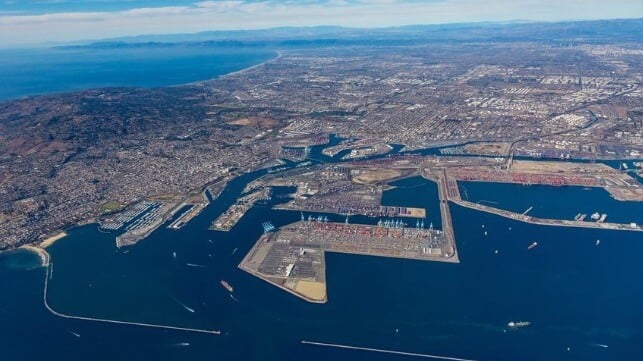
Port of Los Angeles
Courtesy Port of Los Angeles

Published Feb 17, 2026 4:41 PM by Simon Fried


Maritime shipping is inherently a real-time optimization challenge. Vessel schedules shift mid-voyage. Ports operate under tight labor and equipment constraints. Weather, congestion and geopolitical disruption ripple across global networks. Even decisions that appear local to a terminal or fleet propagate across rail, trucking, warehousing and customer delivery commitments.

The industry has responded with better analytics and more computing power. Yet many of the most valuable planning problems remain difficult in a way that can’t be solved by adding more servers. In practice, planners narrow the scope, reduce the number of scenarios and/or accept “good enough” answers because fully exploring the decision space is computationally unrealistic.

This is where quantum computing shines – not as a replacement for classical systems, but as a complementary tool for tackling the hardest optimization bottlenecks in maritime logistics. The near-term reality is hybrid. Classical platforms manage data and workflows. Quantum routines are applied selectively to the most complex, constraint-heavy decisions.

The core challenge is not data volume

Maritime logistics handles vast amounts of data. The harder problem is how quickly the number of possible decisions burgeon as constraints accumulate.

Common maritime problems such as vehicle routing with time windows, multi-depot fleet scheduling, berth allocation, crane sequencing and container loading all fall into this category. Each is manageable in simplified form. Each becomes significantly more complex when real-world constraints are introduced, including tides, labor rules, fuel limits, emissions targets, yard congestion, and downstream intermodal capacity.

As variables increase, the time required to search for optimal solutions grows exponentially. Classical platform decisionmaking tools remain essential, but they impose limits. When disruption occurs, planners frequently face a tradeoff between solution quality and response time.

Quantum computing is directly applicable because it explores optimization landscapes differently. In hybrid workflows, quantum solvers can be used to evaluate candidate solutions or subproblems that are particularly difficult for classical methods, improving decision quality under time pressure.

Where quantum computing maps cleanly to maritime operations

Quantum’s early value in maritime applications comes from problems that share three characteristics: dense constraints, many interacting assets and clear operational costs when decisions are suboptimal.

Drayage route and fleet optimization are prime examples. Vehicle routing with multiple depots and delivery windows extends naturally to feeder coordination, drayage assignment and rail appointment planning. Even small improvements in these areas can reduce fuel use, improve on-time performance and lower operational friction.

Port operations are another strong fit for quantum computing. Berth allocation and crane scheduling directly affect vessel turnaround times and yard congestion. These scheduling problems involve sequencing tasks across constrained resources, a structure that aligns well with quantum optimization formulations.

Container loading and yard utilization also stand out for quantum applicability. Optimizing stowage to reduce wasted capacity while respecting stability, safety and regulatory constraints is computationally demanding, particularly when plans must adapt to late changes.

Example: Replanning under pressure

A container vessel is six hours from berth when conditions change. High winds reduce crane productivity. A yard equipment failure blocks access to key import stacks. At the same time, a rail operator advances its departure cutoff.

In a traditional workflow, planners simplify. They freeze parts of the schedule, reduce constraint sets and re-run heuristics. The resulting plan works, but often increases re-handles, extends truck turn times and/or pushes cargo into dwell.

In a hybrid quantum-classical workflow, the terminal’s digital twin still runs on classical infrastructure. But the hardest subproblem, combined crane, yard, and gate sequencing under the new constraints, is passed to a quantum optimization routine. The output is not a single answer, but a set of high-quality candidate schedules that are then validated against business and safety rules.

Momentum in ports and logistics hubs

Maritime shipping is not waiting for fault-tolerant quantum computers to begin experimentation. Ports and logistics hubs are well suited to early pilots because optimization outcomes can be measured directly in throughput, turn times, and asset utilization.

In Los Angeles, a public initiative at Pier 300 combined quantum computing with AI to optimize terminal operations. In Dubai, logistics leaders such as DP World have publicly acknowledged exploring quantum technologies as part of broader smart trade and digital infrastructure strategies.

The emergence of maritime-focused quantum forums in the UAE further reflects growing ecosystem engagement endeavors. These efforts are not about immediate large-scale deployment, but about building familiarity, technical fluency and realistic expectations.

Why abstraction matters for shipping teams

One of the biggest barriers to quantum adoption is not hardware maturity. It is software accessibility.

Many quantum frameworks still require developers to work at the gate or circuit level, which requires effort and specialized skills. For maritime organizations, this is impractical. Operations teams need to express routing, scheduling and loading constraints in a way that reflects business intent. Model-based approaches address this gap by letting the developer model the problem in an accessible language, then translating the resulting code into a format that a quantum computer can use. This reflects traditional developer practice and helps future-proof early investments.

What maritime technology leaders should do now

Quantum computing will mature incrementally. The most effective strategy today is structured preparation.

First, identify optimization-heavy workflows where current methods consistently rely on simplifications or slow re-optimization cycles. Second, plan explicitly for integration with existing TMS, WMS, ERP and port operating systems. Third, invest in modeling skills rather than gate-level quantum expertise. Finally, leverage partnerships across software providers, cloud platforms and hardware vendors to reduce risk and accelerate learning.

Conclusion

Maritime shipping operates in a world of constant constraints. As networks grow more interconnected, optimization challenges become harder, not easier. That reality makes the sector a natural candidate for quantum-assisted decision-making.

The value proposition is practical: faster replanning under disruption, better asset utilization, and more reliable service commitments. Early initiatives in ports such as Los Angeles and Dubai show that the industry is engaging deliberately and pragmatically.

For maritime leaders, the question is not when quantum computing will replace existing systems. It is how to position your organization so that, as the technology matures, you are ready to apply it where it delivers measurable operational advantage.

Simon Fried is Vice President of Corporate Communications at Classiq.

The opinions expressed herein are the author's and not necessarily those of The Maritime Executive.


 

Understanding the U.S. Coast Guard’s Maritime Cybersecurity Framework

iStock`
iStock

Published Feb 17, 2026 8:23 PM by Kelly Malynn


Cyber incidents in the marine sector are no longer theoretical - they’re a real and accelerating risk.

To address and mitigate this growing threat, the U.S. Coast Guard recently updated its maritime security regulations by passing the Cybersecurity in the Marine Transportation System regulation, which went into effect in July 2025. This rule establishes minimum cybersecurity and reporting requirements for U.S.-flagged vessels, Outer Continental Shelf facilities, and facilities subject to the Maritime Transportation Security Act of 2002 regulations.

This regulation is one of the first to specifically reference vessel security and includes notification requirements that allow for the formal tracking of incidents with potential impact to vessels. The rule makes it abundantly clear that cyber threats must be treated with the same urgency as any others.

Owners and operators of U.S.-flagged vessels, facilities, or Outer Continental Shelf facilities are now required to develop and maintain both a cybersecurity plan and cyber incident response plan. All cybersecurity plans now must include specific account security measures, device security measures, and data security measures. These include enabling automatic account lockout after repeated failed login attempts on all password-protected systems; developing and maintaining a list of all owner or operator-approved hardware, firmware, and software that may be installed on IT or OT systems; and ensuring that logs are securely captured, stored, protected, and accessible to privileged users only.

A staff member must also be assigned the role of Cybersecurity Officer (CySO). The CySO will ensure and facilitate the cybersecurity plan and cyber incident response plan, arrange for inspections and annual audits, make sure adequate training is conducted, and report and record any cybersecurity incidents that impact the vessel.

It’s time for maritime companies to take a closer look at how they handle cybersecurity

With these new requirements now in force, maritime and shipping organizations must examine how they impact vessel safety procedures and protocols. The regulation identifies reportable incidents as anything that disrupts or threatens the safety of a vessel or an organization's operations and requires that such incidents be reported to the National Response Center without delay. Reporting may be complex, time pressured, and complicated, but quantifying and taking proactive steps to address the impact of cyber risk outweighs the challenges of reporting.

Much as seafarers are accustomed to routine fire and man-overboard drills, they now must incorporate cyber drills into maritime safety and preparedness structures. In keeping with the newly mandated cybersecurity posture guidelines, the staff on board a vessel must integrate staff cybersecurity training into their training processes and protocols. New staff members must receive training within five days of gaining access to systems, but no later than within 30 days of hiring. After this initial training, staff members will be required to do annual training.

Thinking about your cybersecurity posture? Start with these key questions.

- Is a third party being contacted if a cyberattack or threat occurs at sea?

- Who is the CySO that will be reporting the incident to the National Response Center?

- How will the ship owner and seafarers on the vessels be supported?

- If the vessel is impacted, has there been sufficient training on how to do a forensic investigation of the logs and restart the system?

- Who are the experts being contacted, and how can the incident be managed?

- If a piece of operating or information technology is no longer dependable, how will an incident then be resolved?

Having third-party vendors lined up before a cyber incident strikes ensures organizations are ready to respond swiftly if vessels are impacted. Real-time support from experienced partners who understand the maritime and cyber sectors can be crucial, not just for restoring systems, but also for conducting forensic investigations to uncover what went wrong.

And before operations resume, the priority should be ensuring a secure environment. Here is also where external partners can play a vital role.

Marine and cyber insurance providers can offer valuable support in managing cyber risk

The new regulatory requirements provide a clear framework for what ship owners must do to prepare for and mitigate a cyber incident onshore and at sea. However, these are uncharted waters for many ship owners and operators. As trusted partners for the maritime industry, insurers are uniquely positioned to help clients navigate and transfer risk.

The insurance industry supports safety improvements by sharing insights from past claims and offering expert guidance. With both internal and third-party cyber claims specialists, insurers can help organizations recover swiftly and effectively after an incident.

Ultimately, insurers can both strengthen internal risk frameworks and actively contribute to the maritime sector’s resilience.

Marine cyber insurance varies widely, so it’s crucial for maritime organizations to ensure their policy terms reflect the level of risk. Some providers offer affirmative cover with clearly defined parameters, while others rely on broad, untested buyback options. Certain products also address cybr exclusions in traditional cargo policies, offering physical damage protection for individual vessels and fleets - filling a key gap in the market.

Stay ahead of regulatory shifts with preparation and the right partners

The U.S. Coast Guard’s cybersecurity regulation marks a shift in how maritime cyber safety is defined and protected, integrating cyber preparedness into the core of maritime operations.

As the sector evolves, the priority is to develop resilient systems, maintain consistent training and reporting practices, and ensure insurance coverage keeps pace with changing risks. Achieving this will require thoughtful planning, adaptable safety procedures, timely reporting and mitigation, and support from the right partners. Taken together, these steps can strengthen safety and operational integrity and help the industry manage increasing digitalization with greater confidence.

Kelly Malynn is senior risk manager at specialist insurer Beazley.


Navigating the Deadlock: Accelleron’s Daniel Bischofberger on Green Fuels

I believe climate change is real, and we should develop and invest in technologies that help now. We shouldn't wait. 

Ship
iStock

Published Feb 11, 2026 1:11 PM by The Maritime Executive


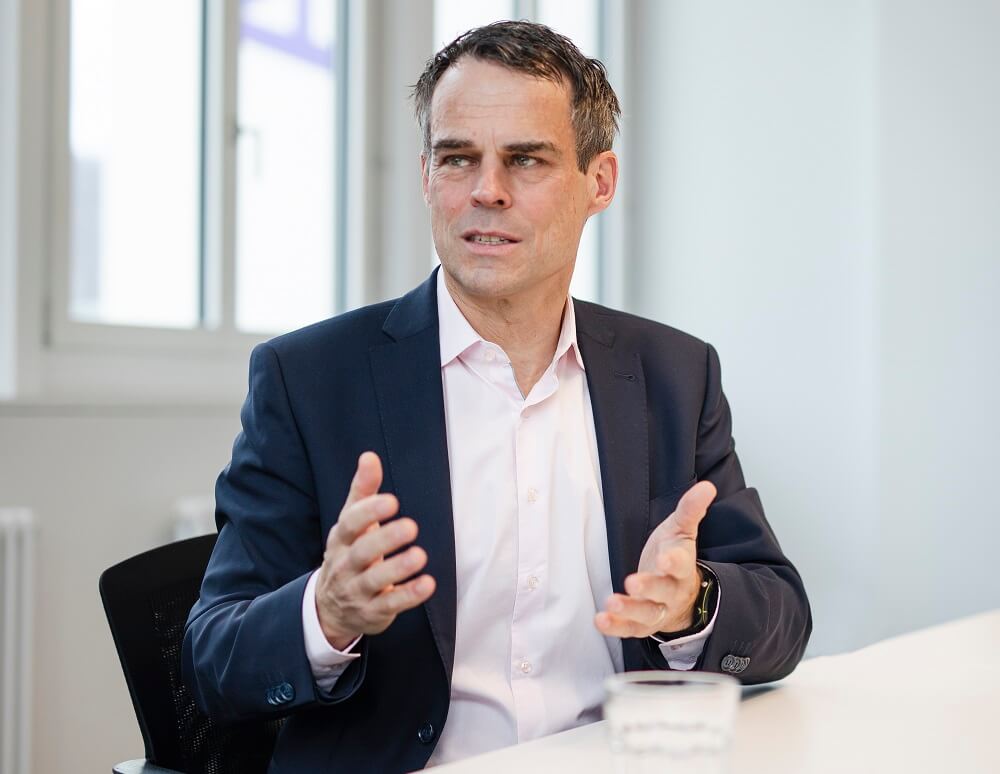
Accelleron, a leading provider of turbocharging, fuel injection, and digital solutions for marine engines and ships, recently released a study on the multifaceted, multi-industry challenges slowing shipping's transition to carbon-neutral fuels. TME recently spoke with CEO Daniel Bischofberger about the current state of marine decarbonization, regional developments in Asia-Pacific, and the path forward for the industry.


Can you describe the current state of shipping's transition to carbon-neutral fuels?

The ships are ready, but the fuel is not. The technology exists – we have ships that can run on methanol, ammonia, and other alternative fuels. The engines are ready, the systems are in place, and there's movement towards hydrogen-based fuels. But these ships aren't able to run on the fuels they were designed for, because the fuels are not yet there.

We're seeing a concerning trend in dual-fuel ships. The dual-fuel portion of the orderbook is decreasing, while the share of conventional petroleum-fueled ships has increased. Within dual-fuel vessels, LNG is now dominant. This shows we're at a deadlock.

What are the key barriers?

Our report identified five interlinked, systemic deadlocks, based on more than 50 interviews with shipowners, ports, bunkering, gas fields, e-fuel developers, and maritime suppliers.

First, there are too many fuels. Between conventional options, LNG, biofuels, methanol, ammonia, and others, investment is diluted. The industry has essentially chosen two long-term pathways – methanol and ammonia – but to scale, it would probably be preferable just to have one clear choice of fuel we want to go after.

Second, production facilities for e-fuels need to be large-scale to be cost-effective. This creates centralized fuel hubs, but we have numerous ports worldwide that need these fuels. Distribution infrastructure becomes a massive challenge.

Third, while there's approximately $3.5 trillion in ESG financing available globally, shipping has only attracted about $14.5 billion. That's a drop in the ocean.

Fourth, regulation doesn't match ambition. The regulatory framework hasn't caught up to the industry's decarbonization goals.

Finally, port infrastructure needs to manage multiple fuel types for bunkering and storage. The investment required is enormous.

How significant is the investment challenge?

For marine alone, fully decarbonizing with hydrogen-based fuels would require 100-150 million tonnes of hydrogen per year – an investment of $2-3 trillion. But shipping isn't alone. Hard-to-decarbonize sectors like aviation, agriculture, cement, steel, chemicals, and power generation need 500-600 million tonnes of hydrogen total, representing about $9 trillion in investment.

The key insight is that no one sector can do this alone. All these industries need production facilities and distribution networks. This is why cross-sector collaboration is essential. We all need production sites and ships to transport fuel to ports, airports, and other facilities. The great thing is that shipping could play the role model, because it’s the only industry that has a global regulator.

What can the industry do during this transition period?

In the meantime, we have a 10-15 year transition period where we can significantly reduce CO2 emissions without waiting for full-scale e-fuels.

Biofuels can help at the beginning, though they're not scalable to the volumes we ultimately need. LNG offers about 30 percent CO2 reduction, though it's not zero emissions. Energy-saving technologies can achieve 35 percent reductions if widely implemented – air lubrication, wind assist devices, improved hull design, propeller optimization, heat recovery systems.

Operational measures matter too: speed optimization, weather routing, and proper maintenance. We offer digital solutions for weather routing where operators can choose between speed and fuel savings. We're also seeing more frequent hull maintenance rather than waiting five years between cleanings.

New ships are more efficient than older vessels, though we can't simply wait for fleet renewal. We need net-zero solutions, and we can't delay.

Are there some regions that are moving faster?

Asia-Pacific is where we're seeing real movement and solutions to the deadlock. Countries like Australia, Japan, Korea, Singapore, and China are moving ahead, driven primarily by government support and funding.

China's motivation is that they want energy security and reduced dependence on fossil fuels. They have abundant renewable energy capacity and can build electrolysis facilities. But it's also an industrial strategy. Just as they dominated wind turbines, photovoltaics, batteries, and rare earths, they want to be a major player in e-fuels because they believe the world needs them for climate goals.

On the production side, Australia and China are moving ahead with ammonia production. We're seeing smaller, modular production facilities being developed – not the massive facilities requiring millions of tons of hydrogen, but smaller 300,000-ton units. There are lots of subsidies, so the prices are not really correlating with the cost.

On the demand side, ports in Singapore, China, and Korea are advancing. They're developing this infrastructure first for uses outside marine. Japan, for example, wants to blend ammonia into the boilers of coal-fired power plants to reduce CO2 emissions. They're combining uses in power generation, agriculture, and marine – exactly the cross-sector approach we've been advocating.

They also have strong trade corridors. The iron ore route from Australia to Singapore and China is ideal – you have production hubs at both ends of the corridor.

What lessons can the global industry learn from Asia-Pacific?

The key lesson is that we don't have to wait for perfect global regulation before moving forward. The Asia-Pacific demonstrates this. However, they can only go so far without a global framework.

We need an IMO net-zero framework that makes fossil fuels more expensive through CO2 taxes while helping alternative fuels become cheaper through scaling and temporary subsidies. Some movement is happening, and we can learn tremendously from the Asia-Pacific region.

How does Accelleron fit into this transition?

We offer turbochargers, fuel injection systems, and digital solutions. Our technology is fuel-agnostic – it works with fossil fuels and alternative fuels alike. Our focus is on efficiency: vessel performance optimization and enabling new fuels.

Efficiency is crucial both today and tomorrow. In a fossil fuel world, it reduces CO2 emissions. In an e-fuel world, it's even more important because e-fuels have poor round-trip efficiency – you put in 100 units of energy and get about 20 units out. Given the massive investment required for hydrogen infrastructure, the best approach is to minimize fuel consumption. Efficiency matters today, tomorrow, and beyond.

What became clear when we started this report – and I come from the power generation and oil and gas sectors – is that nobody is connecting the dots. Aviation only thinks about aviation, power generation only about power. We're trying to change that mindset. Don't fight your own battle alone – join forces and get this done together.

We provide a small but important piece of the decarbonization journey, and through this report, we're using our network to spread information and help people find solutions.

What does the future look like for internal combustion engines in a decarbonized world? Do they have a long-term role?

When Accelleron went public about four years ago as a spin-off from ABB, potential investors questioned why we were listing when we supposedly had only a 10-year shelf life. The European idea at the time was no passenger cars with combustion engines by 2035.

We explained that shipping is hard to decarbonize. You can't fully decarbonize just by going battery-electric. Don't misunderstand – whatever we can electrify, we should, because battery efficiency is far superior to e-fuels. But for shipping, battery-electric has severe limitations.

Consider a large container ship traveling from China to Europe – it requires 40 gigawatt-hours of energy. Switzerland's largest nuclear power plant would need to run for a day and a half just to provide that electricity. With current battery technology, most of the ship's freight capacity would be used up by the weight of the batteries needed to store the energy. The ship would exist only to move and recharge batteries. Plus recharging would take days.

Unless battery weight decreases dramatically – which isn't on the horizon – batteries won't work for long-distance shipping.

Nuclear power is interesting, but it's land-based currently. Moving to ships requires societal acceptance, which takes time. Look at Switzerland – before Fukushima, we were planning new nuclear plants. Now we're reconsidering. Nuclear propulsion needs regulation, crew confidence, and broad acceptance.

We've looked at fuel cells, including turbocharged fuel cells, and we see technical challenges there too. Based on all this, I believe combustion engines will remain relevant well beyond 2050. Aviation and marine each need about 300 million tonnes of fuel annually. But shipping moves 90% of all goods with its 300 million tonnes of fuel, while aviation moves many people but relatively few goods. Shipping is extremely efficient, and combustion engines are highly efficient. They can run on net-zero fuels.

E-fuel costs will come down through scaling and temporary subsidies – probably to two or three times current bunker fuel prices. I think energy should cost something, or it gets wasted.

Will combustion engines with e-fuels be the only solution? No, most likely not. But I believe they'll be the main solution because I don't see viable substitutes at scale.

There will definitely be niche applications for other technologies. Ferries already run on batteries because they're short-distance, lightweight, and have sufficient charging time. There's no silver bullet, but one of the bigger solutions is definitely combustion engines with e-fuels, alongside other technologies.

Given all these challenges, are you optimistic about the industry's path forward?

I am. While global regulation may lag, some regions are moving ahead, and that creates competitive advantages. Countries that move first will benefit.

I believe climate change is real, and we should develop and invest in technologies that help now. We shouldn't wait. The good news is that even in this deadlock, we have solutions available today that can significantly reduce emissions while we work toward the longer-term transition.

The key is not waiting for perfection. Use what's available – wind assist, efficiency technologies, operational improvements, transition fuels. And critically, work across sectors. The hydrogen economy serves multiple industries, and collaboration will get us there faster and more cost-effectively than any sector going it alone.   - TME


Top Putin Aide Threatens EU Ships in Response to Shadow Fleet Boardings

Russia
Nikolai Patrushev, right, in a meeting with Russian President Vladimir Putin, 2017 (file image courtesy of the Kremlin)

Published Feb 17, 2026 9:26 PM by The Maritime Executive


As Europe contemplates stiffer measures against the lightly-regulated, underinsured "shadow fleet" of tankers that carry most of Russia's oil, Russia is threatening to counterpunch. In an interview with outlet Argumenty i Fakty, Kremlin insider Nikolai Patrushev called Western tanker boardings "pirate attacks," and predicted a future in which Europe takes an active, regular role in interdicting Russia-linked tanker traffic. He intimated that Russia's navy is working on ways to "cool the ardor of Western corsairs" who "want to paralyze" the Russian oil economy. 

"The Europeans are deliberately pursuing a scenario of military escalation, testing the limits of our patience and provoking active retaliatory measures. If a peaceful resolution to this situation fails, the blockade will be broken and eliminated by the [Russian] Navy," Patrushev said. "Let's not forget that many ships sail the seas under European flags. We, too, may be interested in what they are transporting and where they are going."

To date, the shadow fleet has been able to operate with relative freedom in and out of Russia's Baltic loading terminals. Often lacking valid insurance, or even a legitimate flag state, the tankers pass through the Kattegat and the North Sea en route to China or India - frequently under the watch of what may be Russian paramilitary forces. On rare occasions involving suspicious activity, these tankers are boarded and searched by EU security forces, but the vast majority - about 240 last year - enter and exit the Baltic without incident. That could change under evolving engagement protocols.

"According to available information . . . attacks on our ships and cargo will become more frequent," Patrushev warned. "If we don't respond firmly, the British, French, and even the Baltic states will soon become so brazen that they will attempt to completely block our country's access to the seas, at least in the Atlantic basin."

Patrushev - a former Soviet intelligence officer who once served alongside Russian President Vladimir Putin in the KGB - said that the Russian Navy would be the best tool for response. "Significant forces must be permanently stationed in key maritime routes, including in regions remote from Russia," he said. "Any attempt at a naval blockade of our country is completely illegal from the standpoint of international law, and the concept of a 'shadow fleet,' which EU representatives brandish at every turn, is a legal fiction."

The proposed European crackdown on the shadow fleet would affect the largest share of Russia-facing tanker tonnage. It would also be an important complement to a proposed EU shutdown of all "legitimate" European maritime services for Russian oil cargoes (currently allowed for consignments priced under $45 per barrel). If every Russian barrel becomes noncompliant for EU shipowners, as is expected soon, the "clean" vessels that currently carry compliant Russian shipments will be forced out of the Russian trade lanes, and the demand for unregulated shadow fleet services will increase. This would drive up shadow fleet traffic to and from Russia - which Europe is now preparing to counter with the possibility of tanker interdictions at sea. 

Escort mission limitations

Russian warships are already providing escorts for key tanker and logistics ship movements in the English Channel and the Baltic, but there is a limit to how much more the Russian Navy can do. 

Patrushev acknowledged that the service is already "under considerable strain." Russia's military actions in Ukraine and Syria have had effects on its navy - including the attrition of the Black Sea Fleet, the closure of the Bosporus to warships, the loss of the Russian base at Tartus, Western sanctions impeding Russian shipbuilding and component imports, and the loss of access to Ukrainian gas turbine engines. 

For recruitment, the navy's manpower availability is limited by the constant need to refill combat roles for fighting in Eastern Ukraine, which is consuming about 1,100 Russian soldiers per day (killed or injured). At least one vessel, the now-defunct carrier Adm. Kuznetsov, has transferred part of its crew to the front lines for ground combat roles.

Patrushev partially addressed this challenge by highlighting the potential of technology to change naval affairs - a "high-tech navy" filled with unmanned vessels of corvette size or larger. 


U.S. Indicts Captain from Fugitive Shadow Tanker Reports NY Times

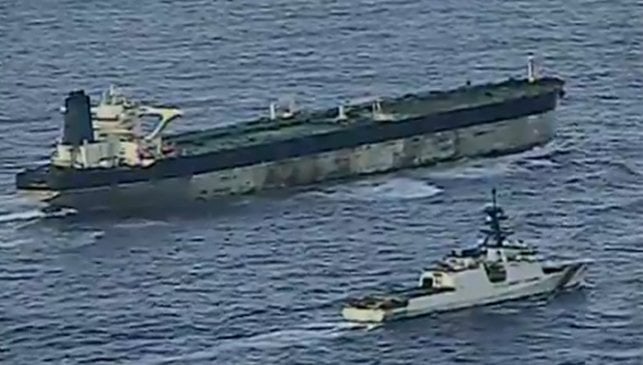
seized shadow fleet tanker
U.S. Coast Guard alongside during the pursuit of the tanker (USCG)

Published Feb 17, 2026 8:42 PM by The Maritime Executive


The captain of the tanker Marinera (Bella 1) has reportedly been officially indicted in the United States, according to a report from The New York Times. The paper writes on February 17 that an indictment was filed last week on February 12, although the White House and the U.S. Department of Justice declined to comment to the reporters from The New York Times.

Avtandil Kalandadze, a Georgian citizen, the Times writes, is being brought up on two charges, but it did not indicate in which court. One of the federal counts is reported to be the use of a false flag, i.e., Guyana, when the U.S. first intercepted the vessel on December 20 in the Caribbean. The second charge relates to disobeying the commands from the U.S. Coast Guard to stop the tanker and allow U.S. forces to board the ship for an inspection.

The Russian media outlet Verstka detailed the chase and seizure with interviews from the crew. It says the U.S. was hailing the tanker daily on the radio, but the crew did not respond. It says the ship’s manager “told the captain to turn around and head into the Atlantic.”

The Coast Guard first encountered the tanker when it was inbound to Venezuela to load a crude oil cargo. The vessel was operating under the false flag and had previously been sanctioned by the United States in June 2024 as the Bella 1 for its involvement with the Iranian oil trade. At the time, the U.S. said the vessel was registered in Panama, but the AMP pointed out that it was removed from Panama’s registry in October 2024. Equasis shows the flag, then went to Guyana and remained listed as such until it moved to Russia while the U.S. was pursuing the tanker. But the vessel never reached a port to make the flag change official.

The U.S. executed a seizure warrant for the tanker on January 7 and then took it to Scotland, where it was reported that it would replenish. The U.S., however, removed the crew from the tanker, and in a last-minute move, the wife of the captain filed with a Scottish court trying to block his removal from Scotland. While the case was in court, the media reported the U.S. removed him from the country overnight between January 26 and 27 by placing him aboard the Coast Guard cutter Munro.

The U.S. is reportedly planning to also indict the chief mate of the tanker, whom it also continues to detain. It is unclear where he is, and his name has not made its way into the media.

The other crew were told they were free to leave, and some returned home, although most of the Ukrainian crew reportedly went to third countries, fearing repercussions if they returned home from a ship that was claiming to be Russian. Verstka reports that five of the crew have agreed to come to the United States to provide evidence in the case against the captain and chief mate.


U.S. Coast Guard Cutter Returns Home After Escorting Two Seized Tankers

Veronica
Boarding of the tanker Veronica (USCG)

Published Feb 17, 2026 5:47 PM by The Maritime Executive


The U.S. Coast Guard cutter Mohawk has completed a rare mission. On Saturday, the cutter returned to her home port in Key West after spending 60 days in U.S. Southern Command, where the crew had the opportunity to escort two seized, sanctioned oil tankers into U.S. custody. 

"Our dedicated crews are the frontline of maritime security," said Cmdr. Taylor Kellogg, commanding officer of Mohawk. "Their vigilance and expertise were instrumental in the successful interdiction and escort of these tankers, preventing illicit oil [profits] from destabilizing the Western Hemisphere. This is a clear demonstration of the Coast Guard’s commitment to enforcing international law."

The action started with the capture of the tanker Centuries. With support from the other armed services, and permission from the flag state, a Coast Guard tactical team boarded the vessel on December 20 and took control. After the boarding, Mohawk provided an escort for Centuries throughout her transit to the anchorage off Galveston, where the VLCC remains. 

Mohawk got a second call shortly after. On January 15, a combined force boarded the Aframax tanker Veronica (Galileo, IMO 9256860) and captured the vessel. Mohawk was tasked with providing an escort once again, and got under way for the Caribbean promptly. Taking over from the boarding team, Mohawk watched over Veronica as the tanker transited to an anchorage off Puerto Rico. Taken together, according to the Coast Guard, the two transits took 17 days and 2,700 nautical miles. 
  
To date, the Coast Guard has contributed to nine tanker boardings in the Caribbean, Atlantic and Indian Ocean, some resulting in vessel capture and others ending in a return to trading. 


Video Shows Containership Hitting and Pushing Two Ferries in Santos Harbor

containership colliding with ferry
Containership is seen hitting and pushing two ferries in Santos harbor

Published Feb 17, 2026 9:41 PM by The Maritime Executive


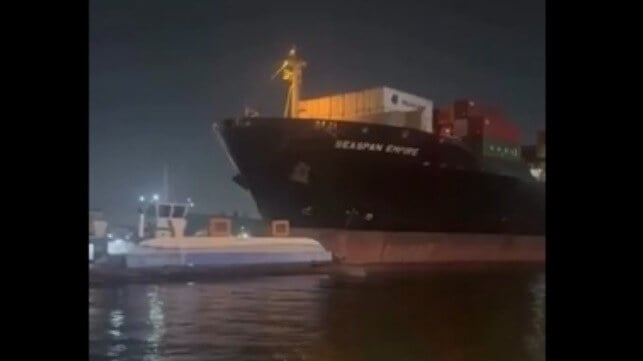
Video is circulating online showing an incident in Santos, Brazil, on Monday, February 16, in which a containership maneuvering in the harbor collided with two ferries and is seen pushing them across the harbor. Onlookers are yelling that the vessels will collide, and then for the crew on the two small ferries to jump into the harbor, as you hear a loud noise as contact is made.

Media reports indicate that at least four crewmembers, the captain and three deckhands, jumped into the harbor. In the video, people are visible swimming in the harbor and are shown being helped up out of the water. Bystanders are throwing a lifering and a life jacket can be seen floating in the harbor. A pilot boat also responded to aid the crewmembers. The reports said there were no serious injuries.


The Singapore-flagged Seaspan Empire (67,447 dwt) was reported to be maneuvering in the harbor when the incident happened at around 9:30 p.m. local time. The containership, which is 294 meters (965 feet) in length with a capacity of 5,100 TEU, was reportedly attempting to maneuver in the busy harbor to reach the Embraoport terminal.

The two ferries were luckily out of service for the evening. Reports indicate that they cross the harbor between Santos and Guarujá and that service has been increased for the celebration of Carnival. One of the ferries was reportedly aiding the other in its maneuver in the harbor, and both only had crew with no cars or passengers aboard.

The containership reportedly has some scrapes on its bow but sustained no serious damage. It was placed in the anchorage for an inspection and later permitted to move to the DP World terminal. The two ferries were secured and are undergoing inspections


Salvors Finish Defueling Grounded Barge at San Juan's Harbor Entrance

Barge
Courtesy USCG

Published Feb 17, 2026 3:26 PM by The Maritime Executive


The U.S. Coast Guard and commercial salvors have completed the removal of the last bits of recoverable fuel from the grounded barge at the entrance to San Juan's harbor, the service confirmed Tuesday. 

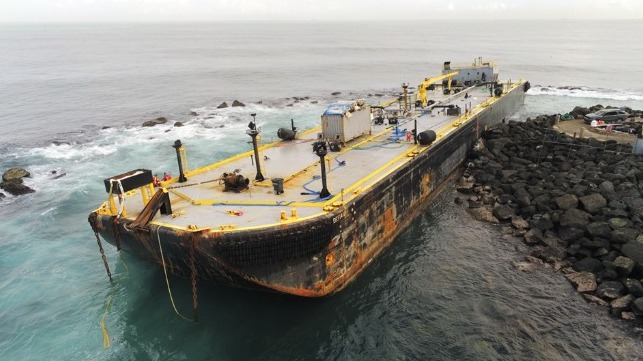
The barge Defiant broke away from its towing vessel on February 9 in foul weather. It ran aground that afternoon at a position next to San Juan's harbor entrance, right at the foot of the El Morro fortress. The barge landed between a manmade breakwater and a riprap revetment, and its hull was in contact with rocks on both ends. 

The barge was used to deliver fuel to the USVI, which is reliant on shipments of refined products for power generation. The power authority for the territory told local media that the transportation provider has secured a replacement barge and that the grounding is not expected to impact the local economy. 

Salvage efforts have been slowed by heavy seasonal swell affecting the north shore of Puerto Rico. The commercial salvor has submitted a plan for removing the tank barge, but it will not be easy; the location is difficult, and five out of the vessel's ten tanks have been breached, the Coast Guard told St. Thomas Source - adding complexity for any potential refloat attempt.

The barge had an estimated 1,000 gallons of leftover fuel in its tanks at the time of grounding, and while the amount of any release is unknown, it is expected to have minimal effects on the environment. 

The Coast Guard has formed a unified command with the barge operator and with local authorities to oversee the response operation. An investigation into the cause of the barge's breakaway and grounding is under way.


HD Hyundai Samho is Making Serious Plans to Install Humanoid Robots

Self-mobile welding robots at work at HD Hyundai (HD Hyundai file image)

Published Feb 17, 2026 7:18 PM by The Maritime Executive


Korean shipbuilder HD Hyundai Samho says that it is studying ways to introduce humanoid robots into its yard, and is examining ROI to figure out where it might make the most sense to use them.

The yard tested out humanoids in a demonstration event last year, using them to move items and carry out welding. An early demonstration trial video showed a humanoid robot interacting with a forklift.  

The yard has assistance from HD Hyundai's own robot division, plus Neura Robotics and LG CNS. The expectation is that the devices will initially be useful for low-level tasks, and that further trials and training evolutions will bring them further up the value chain. The hope is to begin a physical rollout in 2027, and to provide intensive employee training on AI tools in advance. 

Robotics are an essential part of South Korean shipyards' strategy for competing with China, the world leader in shipbuilding. South Korea's domestic labor force is constrained by demographics and by generational preferences, and the nation's yards have turned to immigrant labor from Thailand, Vietnam and elsewhere to make up the gap. As of 2024, about 16 percent of the nation's shipyard workforce were foreign workers, and the overwhelming majority of new hires at Korean shipyards were foreigners with temporary-worker visas - a trend set to continue. Robots are another way to plug the hole in workforce availability, and could help Korean firms expand into the U.S. market, where skilled labor is also scarce. 

Humanoid robots have the advantage of being able to interact with an environment designed for humans, but as a platform, they have technical challenges to overcome. Any mobile device in a shipyard has to navigate changing site layouts, walk on uneven surfaces and survive dust and weather conditions. Alternatively, small single-purpose robots that de-skill the task of welding - but leave the human in the yard - have been tried out at DSME and HD Hyundai, to good effect. A co-bot welding-arm device employs a human worker to carry, place and set up the arm; the arm does the skilled welding while the worker performs another task. An analogous large-scale setup is in production use in HD Hyundai's panel assembly lines, where four-legged, self-mobile robots have found a home in a semi-structured environment with intermittent supervision. 


Union Calls Off Strike at 19 UK North Sea Offshore Platforms

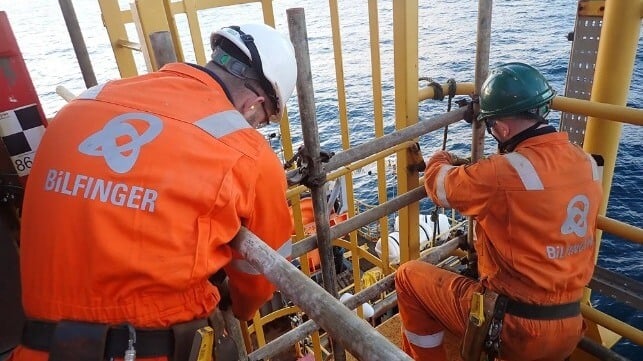
Bilfinger
Press handout photo courtesy Bilfinger

Published Feb 17, 2026 8:23 PM by The Maritime Executive


UK industrial union Unite has called off a brief offshore strike action at rig services provider Bilfinger, which would have affected up to 19 oil fields in the North Sea at the end of this week. 

Bilfinger UK is an engineering and maintenance contractor for the oil, gas, petchem, utility and pharma sectors, among others. Its offshore division supports some of the largest oil companies in the North Sea oil trade, including BP. 

During contract negotiations, the two sides had a disagreement over the terms of members' pension packages. Last week, Unite announced that they had voted overwhelmingly to go on strike in protest. "This is a company that can afford to pay but has chosen not to. We will back our members all the way as they escalate their fight to secure a fair pension settlement," Unite General Secretary Sharon Graham said last week. 

The strike was scheduled to last 48 hours on February 19-20. The platforms potentially affected included half a dozen belonging to BP; three run by CNR; one by Ineos; six by Ithaca Energy; and three by TAQA.  

Bilfinger said that it was ready with protocols to manage any strike disruption, and that safety was its top priority. "Bilfinger UK fully complies with all statutory pension obligations and we have engaged constructively throughout this process," the firm said in a statement.

After the threat of a strike, Bilfinger returned to the negotiating table and proffered a better pension package, including larger company contributions to the retirement plan, Unite said. The union was satisfied and called off the strike, and it is balloting its members to weigh their acceptance of the negotiated deal. The ballot closes February 23. 

"The determination of our members has forced Bilfinger back to the negotiating table. Our members will now decide whether this new offer is enough to bring this dispute to a close," said Paula Buchan, Unite industrial officer, in a brief statement. 

Spotlight on Africa: the race for Africa's critical minerals


SPOTLIGHT ON AFRICA
Issued on: 17/02/2026 
Play - 29:29

In this episode of Spotlight on Africa, we're looking at the race for critical minerals on the continent. In the first week of February, around forty African delegations were invited to Washington DC for a summit dedicated to the issue. The leaders of the Democratic Republic of Congo appear keen to sign deals, but much of the rest of Africa has been calling for better proposals and more robust mechanisms to ensure accountability. So what is happening?

A mining/crushing supervisor at MP Materials displays crushed ore before it is sent to the mill at the MP Materials rare earth mine in Mountain Pass REUTERS - Steve Marcus

The African continent is rich in resources that are critical to the energy transition, as well as to the electronics and high-tech industries. Africa holds vast reserves of coltan, gallium, cobalt, tantalum, lithium, nickel, and many other strategic minerals that sit at the heart of this global competition.

The Trump administration is seeking to counter China's growing dominance over the continent's metals and mining sectors.

DR Congo weighs price of security in minerals deal with US

For the moment, Trump is focused on a US - DRC agreement, which would prioritise American interests in the central African country's supply chain. The DRC sits on vast mineral wealth and is currently engaged in a peace process with Rwanda, brokered by the United States.

DRC takes on Apple: can conflict mineral mining be stopped?

To help us analyse the context of these deals, we are joined today by three guests.

First, Clionadh Raleigh, head of ACLED - the Armed Conflict Location and Event Data Project. We also have Akin Adegoke, Chief Digital Officer at Lotus Bank, who brings experience in driving technology-led, inclusive banking.

And finally, Frédéric Mousseau, Policy Director at the California-based Oakland Institute, who argues that, that under the guise of peace and development, the US–DRC Strategic Partnership Agreement rewrote Congo's laws to favour American mining interests."

Delegates walk through the exhibitors hall at the Cape Town International Convention Center during the 32nd edition of the African Mining Indaba on 10 February , 2026. © AFP - GIANLUIGI GUERCIA

Delegates also gathered at the Cape Town International Convention Centre for the 32nd edition of the African Mining Indaba, the continent's largest conference on the sector.

You'll also hear reactions from people on the ground in the DRC, as well as from leaders in South Africa and Zambia, on what has already been dubbed the new scramble for Africa.

Episode edited by Melissa Chemam and mixed by Erwan Rome.

Spotlight on Africa is produced by Radio France Internationale's English language service.