Wednesday, February 18, 2026

Country-By-Country: Where EU Countries Stand On Trump’s Board Of Peace


By Eddy Wax and Magnus Lund Nielsen

(EurActiv) — Europe is largely opting to stay on the sidelines as Donald Trump convenes his new intergovernmental organisation, the Board of Peace, in Washington for the first time this week.

The inaugural session is expected to focus heavily on Gaza’s post-war governance and reconstruction. The initiative was first floated in September as Washington’s 20-point ceasefire plan for Gaza, but it has since been recast as a broader platform for international conflict resolution.

Across European capitals, the reaction has been cool, with countries opting for observer status and, in many cases, outright scepticism. Only Hungary and Bulgaria have signalled plans to fully join the scheme. Italy, Romania, and Cyprus will attend as observers. Some, including Denmark never received an invite.

The European Commission has likewise stopped short of membership, choosing instead to dispatch Commissioner for Mediterranean Dubravka Šuica, a relatively junior figure within the Berlaymont hierarchy.


Positions of EU countries 

Austria: Unlikely to join. Austrian Chancellor Christian Stocker said his country had no plans to become a member. “There is already an organisation created for such cases, the UN … and I am not in favour of parallel structures”.

Belgium: Not joining, and not invited. Foreign Minister Maxime Prévot was forced to deny claims from the White House that Belgium had signed up last month. National broadcaster RTBFreported that the Americans had confused Belgium with Belarus. Belgium wants the EU to reach a common position on this, Prévot said.

Bulgaria: Looking to join. Caretaker Prime Minister Rossen Jeliazkov sat next to Trump when the initiative was officially launched last month in Switzerland, but the decision is still pendingratification in parliament.  

Croatia: Not joining. Both Prime Minister Andrej Plenković and President Zoran Milanović – normally political rivals – appeared aligned on rejecting the invitation.

Cyprus: Observer status. Both Athens and Nicosia said they have open channels with Israel and the Palestinian Authority.

Czechia: Unlikely to join. Prime Minister Andrej Babiš said Prague wants to coordinate with other EU countries.

Denmark: Not invited. As relations with the US are at a low point after Trump put heavy pressure on Copenhagen and Nuuk to give up Greenland, a semi-autonomous Danish territory, Denmark was the only Scandinavian country not to receive an invitation.  

Estonia: Not invited.

Finland: Not joining. President Alexander Stubb said the board “is a good initiative”, but addedthat Finland wouldn’t join in the current form. “We have a common European policy, and we’ll stick to that,” he told Finnish media Yle last month. 

France: Not joining. France was among the first countries to indicate it would not join, criticising the board’s potential overlap with the UN, incompatibility with its international commitments, and a focus beyond Gaza. 

Germany: Unlikely to join. So far, the German government has responded cautiously to the board. While it broadly supports efforts to achieve peace in Gaza, Foreign Minister Johann Wadephul has repeatedly pointed out that the UN already exists as an established international body to solve conflicts.

Greece: Observer status. Greece initially opposed the board, insisting it be limited to Gaza, fearing UN sidelining and potential challenges to its maritime dispute stance with Turkey. Still, the Greek government said that the board must adhere to UN Security Council resolutions. 

Hungary: Joining. A close ally of Donald Trump, Prime Minister Viktor Orbán said his country would join the initiative as one of the founding members, “because Hungary needs peace in order to continue to grow and develop”.  

Ireland: Not joining. Irish Deputy Prime Minister Simon Harris said last month the initiative raises “very serious red flags.” “Anything that Putin is considering joining with the word peace in it doesn’t sit well,” he said, according to local broadcaster RTE. 

Italy: Observer status. Foreign Minister António Tajani said it was “appropriate” for Rome to participate as an observer at the first meeting on Thursday, as Cyprus had made a similar decision, currently holding the Council’s rotating presidency. “We are Europeans and, following this decision, we deemed it appropriate to send a delegation as observers.”

Latvia: Not invited. 

Lithuania: Not invited and wouldn’t join.

Luxembourg: Not invited, and wouldn’t join. Prime Minister Luc Frieden said his country would probably not take part, even if it had been invited. He complimented the initiative to create peace in Gaza, but said he preferred existing multilateral organisations, like the UN, to deal with the matter, according to local media Paperjam.  

Malta: Undecided. Prime Minister Robert Abela said that his country wasn’t officially invited to join, but the government has received an “informal” invitation. Abela has also criticised the board’s format.

Netherlands: Invited, unclear if it will join. Outgoing Dutch Prime Minister Dick Schoof confirmed last month that his country had received an invitation to join the initiative, but said that any final decision had still not been made. The incoming government, led by Rob Jetten, has yet to make any announcement on the issue.  

Poland: Not joining. While the Polish President Karol Nawrocki, an ally of the conservative opposition party Law and Justice and Trump himself, has signalled support for the initiative, the decision ultimately lies with the government. Prime Minister Donald Tusk has said that Poland will not join “under the current circumstances”. 

Portugal: Will only join if the focus remains on Gaza. The government has yet to accept the invitation, Foreign Minister Paulo Rangel said last month, but his country would be open to joining the initiative “if it is confined to Gaza,” according to local media Publico.

Romania: Observer status. President Nicușor Dan announced on Monday that he will attend the Washington meeting as an observer. 

Slovakia: Declined. Prime Minister Robert Fico’s government will not accept the invitation to join. One reason the government cited is that it couldn’t afford the $1 billion fee to secure permanent membership.

Slovenia: DeclinedPrime Minister Robert Golob declined to participate, saying in late January that it “seriously encroaches on the broader international order” and that its mandate, going beyond Gaza, was too wide.

Spain: Declined. Prime Minister Pedro Sánchez said last month that he rejected the offer, although his country “appreciates the invitation”. He framed the move as a way of staying consistent with Spain’s “commitment to the multilateral order, the UN system and international law.”

Sweden: Not joining. Swedish Prime Minister Ulf Kristersson said he will coordinate with other EU countries, but that his country will not join the initiative as “as the text currently stands,” according to Swedish media Aftonbladet.  

And Brussels?

The European Commission confirmed that Mediterranean Commissioner Dubravka Šuica will travel to Washington for the Gaza talks. “We are not becoming a member,” chief spokesperson Paula Pinho said on Monday. “Šuica will be there in her capacity as commissioner responsible for the Mediterranean, representing our commitment to the implementation of peace in Gaza.”

Pressed on whether the EU would attend as an “observer,” the Commission declined to adopt the term.

Senior EU officials have voiced reservations about the initiative. “We have serious doubts about a number of elements in the charter of the board related to its scope, its governance and its compatibility with the UN Charter,” European Council President António Costa said after the informal gathering of EU leaders last month. 

The’s diplomatic service has raised similar concerns. “The charter … raises a concern under the EU’s constitutional principles,” according to a European External Action Service document seen by Euractiv and drafted last month.

  • Ines Fernández-Pontes, Natália Silenská, Sarantis Michalopoulos, Nicoletta Ionta, and Björn Stritzel contributed reporting. 


France leads backlash against Commissioner Šuica's Board of Peace trip
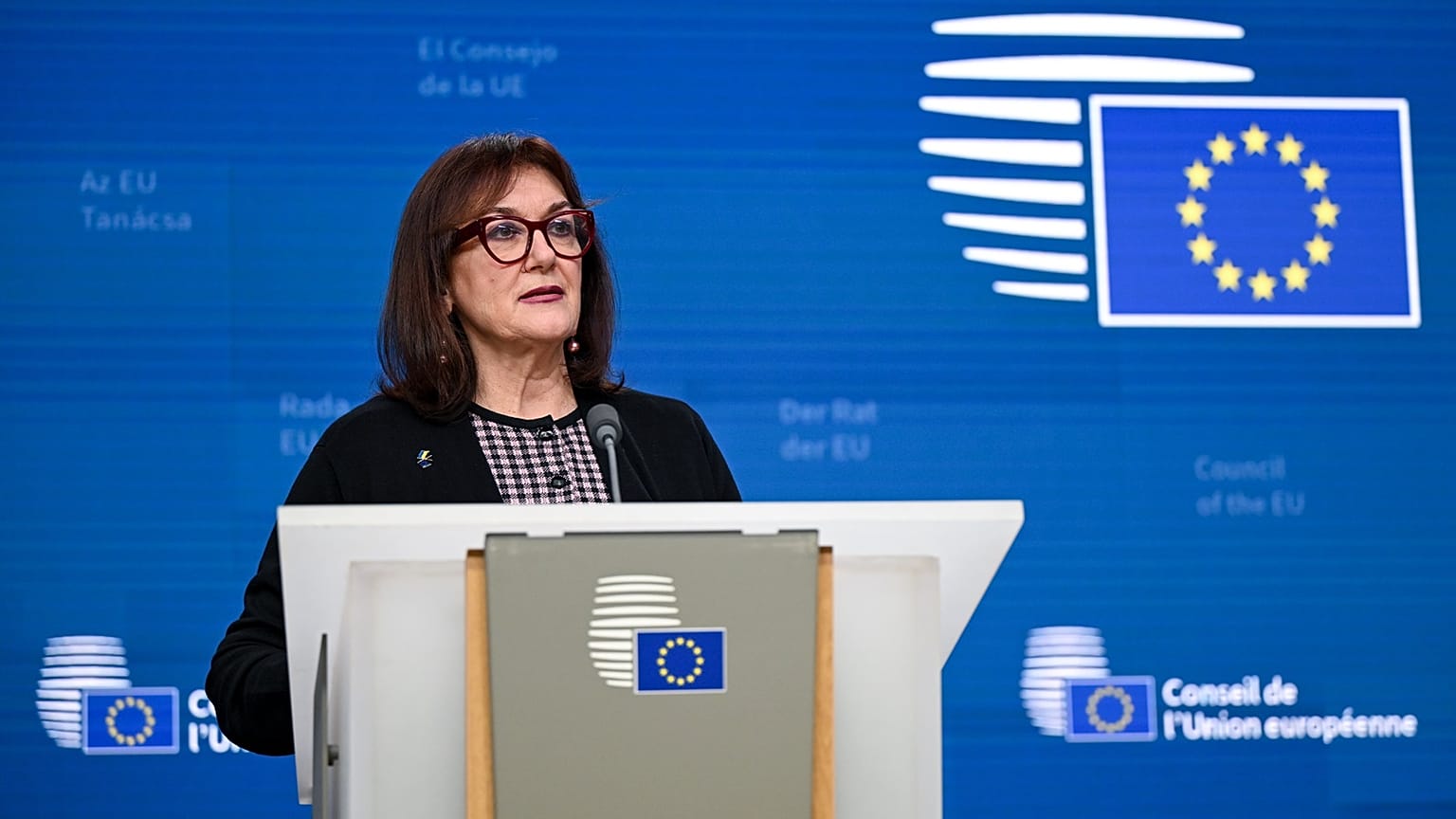
Commissioner Dubravka Šuica
Copyright European Union.

By Maïa de la Baume & Jorge Liboreiro & Mared Gwyn Jones
Published on 

European Commissioner Dubravka Šuica is under fire for attending the first formal gathering of Donald Trump's Board of Peace, whose expansive mandate has raised serious concerns among member states.

The European Commission's surprise decision to dispatch Commissioner for the Mediterranean Dubravka Šuica to the first formal gathering of the Board of Peace in Washington has sparked outrage among several member states, with France leading the charge in voicing both institutional and political objections.

During a meeting of EU ambassadors on Wednesday, critics argued that Šuica's participation, which was not communicated to capitals beforehand, lacks the necessary mandate and risks being interpreted as a collective endorsement of the contentious initiative, several diplomats told Euronews, speaking on condition of anonymity.

"Member states were up in arms" in the meeting, a diplomat said.

Šuica's trip is taking place despite persistent concerns over the Board of Peace inaugurated by US President Donald Trump in January. Initially conceived to guide Gaza's post-war recovery, the board has since vastly expanded its mandate and is now designed as a shadow structure to the United Nations, with Trump as lifelong chairman.

France, Belgium, Spain, Ireland, Slovenia and Portugal were among those who raised strong objections on Wednesday.

Germany also voiced reservations, though more measured.

According to diplomats, France set the tone by arguing that Šuica's attendance was in breach of the EU treaties because the Commission is not entitled to set foreign policy, which is conducted based on unanimous positions agreed by member states.

Critics pointed out that Šuica, as Commissioner for the Mediterranean, is a political representative and therefore her presence in Washington carries substantial weight. The fact that the EU, as an organisation, is not a member of the Board of Peace was also mentioned to discourage Šuica from travelling.

In a statement, a Commission spokesperson defended the decision as a way to remain "closely engaged on all aspects relating to the peace process and the reconstruction in Gaza". The spokesperson insisted the Commission would not join the board.

The backlash was intense but not equally shared inside the room, exposing the stark divisions caused by Trump's bold attempt to challenge the multilateral system.

Hungary and Bulgaria are the only two member states that have expressed their intention to sit on the board permanently. But seven other capitals have signalled their intention to participate as observers in recent days.

Among those attending the formal gathering on Thursday are Hungarian Prime Minister Viktor Orbán, Romanian President Nicușor Dan, as well as senior diplomats from Bulgaria, Cyprus, the Czech Republic, Italy, Greece, Poland and Slovakia.

The Commission has repeatedly raised questions about the board's "scope, governance and compatibility with the UN Charter," of which all 27 member states are signatories, and asked the United States to amend the wording, to no avail.

Still, as the biggest donor of humanitarian aid to the Palestinian people, with a total contribution of €1.65 billion to the territories since the outbreak of the war between Israel and Hamas on 7 October 2023, Brussels does not want to be sidelined in the process.

The debate will continue next week when foreign affairs ministers gather in Brussels. Ministers will be joined by Bulgarian diplomat Nickolay Mladenov, appointed by Trump as High Representative for Gaza and tasked with linking up the Board of Peace with a technocratic Palestinian committee responsible for running its day-to-day business.

 

BEIRUTER: The clash in South Yemen that killed five is a question of statehood

BEIRUTER: The clash in South Yemen that killed five is a question of statehood
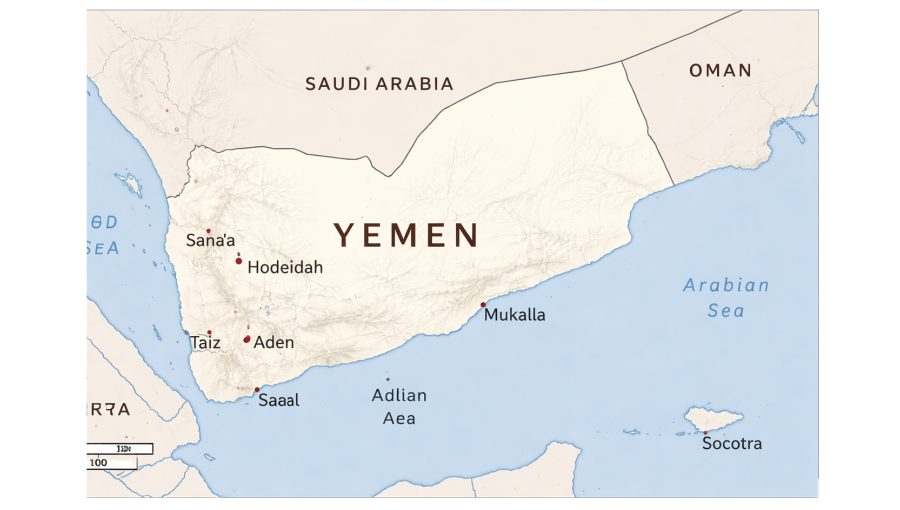
A violence clash the southern Yemeni city of Ataq last week left five dead and dozens injured. It highlights the country is still struggling for a sense of statehood. / bne IntelliNews
By Ziad Moussa in Beirut February 16, 2026

The violence that happened in the Yemeni city of Ataq last week that killed five and injured dozens cannot be reduced to a clash between protesters and security forces, nor to a banned rally or raised slogans. It was a stark reminder that the Southern Issue is no longer a postponed file in Yemen’s crisis agenda — it has become central to it.

Each time southern flags are raised, and the unity flag is taken down, the scene is not merely political provocation, but a declaration of a deep crisis of trust between the state and part of its society.

The recurring mistake over the years has been to treat southern protests as security events to be managed through troop deployments and closed squares. Reality has proven otherwise: every security approach reproduces the problem instead of containing it. The issue is not a protest site; it is a cumulative political sentiment among a broad segment of southerners that the current form of unity no longer guarantees partnership.

For many in the South, the debate is no longer about improving their position within the state but about redefining their relationship with it altogether. Here lies the gravity of the moment. Secession has evolved from an elite political discourse into a social perception shared in the street. When citizens become convinced that their daily hardships — services, security, salaries, and employment — are tied to the very structure of the state, reformist rhetoric loses its persuasive power.

Historically, Yemeni unity was founded on the promise of partnership. Yet the 1994 war left a political wound that was never addressed. Over the years, no governing formula capable of reassuring southerners of real participation in power and wealth has emerged. Gradually, the sense of marginalization transformed from a political position into a political identity. This is why southern commemorations are no longer mere historical remembrance, but recurring moments of mobilization that signal the issue remains unresolved.

At the same time, secession itself may not necessarily end the crisis. The South is politically and regionally diverse, and any future state would face challenges of institution-building, resource distribution, and competing centres of influence. Yet ignoring the growing desire for separation is more dangerous than acknowledging it; denial pushes the issue into the street and toward arms rather than the negotiating table.

What Ataq reveals today is that Yemen faces not only a government problem or an armed-group problem, but a statehood problem: can unity be redefined on the basis of genuine partnership, broad local authority, and meaningful decentralization? Or is time passing while a new political consciousness forms in the South that views independence as a realistic option?

The issue is not a flag raised or lowered, but what the flag represents. States do not preserve unity by force alone, but by consent. And when consent begins to erode, every security incident becomes an undeclared political referendum.

Ataq is not an exception — it is an indicator. If the current approach continues, protests may evolve from political messages into a historical trajectory difficult to reverse.


This article first appeared  in the theBeiruter.com, an IntelliNews media partner.


Palo Alto Networks acquires Israeli cybersecurity startup Koi for $400mn

Palo Alto Networks acquires Israeli cybersecurity startup Koi for $400mn
Tel Aviv skyline / Photo by Shai Pal on Unsplash
By bnm Tel Aviv bureau February 18, 2026

US cybersecurity giant Palo Alto Networks announced its intent to acquire Israeli startup KOI for $400mn.

This comes just a week after Palo Alto acquired another Israeli information security company, CyberArk, for $25bn. The close acquisition of these two Israeli firms appears to have been deliberately planned, given that both companies are focused on tackling the same cybersecurity challenge: protecting AI agents and autonomous tools that operate outside traditional cybersecurity frameworks.

Koi was founded by Amit Assaraf, Idan Dardikman, and Itai Kruk, all of whom are alumni of the IDF’s elite 8200 Intelligence Corps. The company provides an endpoint security platform aimed at tracking, monitoring, and enabling safe software installs, with a focus on AI-powered tools.

"AI agents and tools are the ultimate insiders. They have full access to your systems and data, but operate entirely outside the view of traditional security controls. By acquiring Koi, we will be closing this gap and setting a new standard for endpoint security,” Lee Klarich, Chief Product & Technology Officer, stated in a joint press release.

"We founded Koi to secure the next frontier of risk,” Amit Assaraf, co-founder and CEO of Koi, added. “Joining forces with Palo Alto Networks will allow us to scale our technology to the world's largest organisations, delivering protection that makes work on the modern AI-native endpoint secure by design."

This acquisition marks a rapid exit for Koi’s investors and founders, given the company’s establishment in 2024. Prior to its acquisition by Palo Alto, the company raised a total of $48mn, mostly stemming from a $38mn Series A round in September 2025, Calcalist noted.

This acquisition marks the latest in a rise in Israeli cybersecurity acquisitions. In addition to the purchases of Koi and CyberArk, fellow Israeli firm Wiz was acquired by Google for $32bn, the largest acquisition of an Israeli company in history.

Such market activity demonstrates the resilience of the Israeli tech sector and the economy at large amid regional instability. Israel’s post-war economic recovery already appears to be well underway, with the country posting a 3.1% GDP growth for 2025, beating analysts’ estimates of 2.8% to 2.9%.


Protests erupt across Lebanon after VAT and gasoline price hike

Protests erupt across Lebanon after VAT and gasoline price hike
Concrete Buildings in Beirut / Pexels | Photo by Jo Kassis
By bnm Beirut bureau February 18, 2026

The Lebanese Cabinet's decision to increase gasoline prices and raise the value-added tax has sparked widespread protests and political opposition, with demonstrators blocking major roads in Beirut and other cities.

In response to growing demands for public sector salary increases by workers and unions, the government raised gasoline prices by LBP 300,000 ($3.35) per canister and raised the value-added tax by 1% to 12%.

This decision faced immediate rejection from parties both within and supporting the Cabinet, with Maroun al-Khouli, head of the General Confederation of Lebanese Workers' Unions, alleging that these increases are a direct attack on citizens’ economic rights. Lebanese MP Elias Hankash echoed this position, suggesting that a variety of cost-cutting measures should have been pursued as opposed to such tax and gasoline price hikes.

Protesters blocked the Ring Bridge, Cola Road, Khaldeh Triangle, and portions of Tripoli's Palma Highway before army forces reopened the routes, whilst demonstrations continued into the evening at Riad al-Solh Square in downtown Beirut, Lebanon 24 reported.

The tax increases expose deepening contradictions within Lebanon's governing coalition as electoral considerations increasingly influence policy decisions. Cabinet parties expressed public opposition to the measures yet failed to prevent their implementation, revealing what An-Nahar newspaper described as the government's failure to convince the public of the necessity or select less regressive revenue sources. The timing proved particularly damaging, coinciding with the election season and guaranteeing sustained criticism throughout the government's term.

"This government suffers from a fundamental flaw that allows it to replicate the 'Siniora mentality' without any obstacles," Al-Akhbar wrote, criticising the administration's accountant-focused approach that prioritises financial indicators whilst ignoring social and economic consequences. The newspaper noted that ministers received only brief scenarios outlining financial costs during the session, without a comprehensive analysis of policy implications.

Economist Kamal Hamdan characterised the decisions as a continuation of non-reformist approaches, whereby poorer consumers will finance wage adjustments for other poor and lower-middle-class groups. His assessment highlighted the government's pattern of implementing temporary allowances rather than structural reforms, repeating the subsidy-lifting and consumption tax increases prescribed by the International Monetary Fund since 2004.

While the Lebanese government's decision to implement these latest fiscal changes came after mounting pressure, with protestors blocking the entrance of the Lebanese Parliament during the deliberations on the national budget, these actions exhibit a tone-deafness to the financial plight of ordinary Lebanese citizens. As poverty continues to run rife, an Integrated Food Security Phase Classification (IPC) report found that food insecurity in Lebanon is set to spike. The number of people expected to face a food "crisis" or worse conditions is estimated to be 874,000 between November 2025 and March 2026, including 22,000 in "emergency" status. Projections for April through July 2026 indicate a rise to 961,000, with emergency-level cases surging to 63,000. One such issue begs the question as to why Hankash's approach is not being considered, namely whereby cost-cutting measures are implemented by the state rather than another financial squeeze on the public.

MOSCOW BLOG: Imperialism is back

MOSCOW BLOG: Imperialism is back
2026 sets off with peace talks to end a war in Ukraine and prevent a second one starting in the Middle East. The two conflicts highlight the breakdown of the rules based order and a return to the imperial way of running the world. / bne IntelliNews
By Ben Aris in Berlin February 18, 2026

The Geneva peace talks on ending the war in Ukraine broke up yesterday with no concrete results. There were no announcements nor any readout of what was discussed. However, US envoy Steve Witkoff released an upbeat post on social media saying the talks were “positive”. A report by the Russian news agency TASS contradicted that and said the talks were “very tense.”

Both sides have left to report back to their respective leaders, and the negotiations are expected to resume in the coming days or possibly in the next week or two.

Reading between the lines, my takeout is that these talks are actually going forward and the reason why they are more difficult is because now they're digging into the details of a final agreement.

For me the significant change was that the head of the Russian delegation has been replaced and Vladimir they didn't ski has returned as the head of the Russian delegation. He was the one that thrashed out a final agreement in the 2022 failed Istanbul peace deal. He was also head of delegation at when these talks kicked off in Riyadh in February last year.

The last meeting the Abu Dhabi meeting in January was much more tightly focused on security issues and the delegations on both sides were headed by military figures. Medinsky's return suggests that the brief has been broadened to include everything to fight try and find the final agreements.

Course that's going to be very difficult but that's where we are.

What makes me say this is that the talks are becoming increasingly concrete. For example one of the items in the 27-point peace plan (27PPP) thrashed out at the Moscow meeting on December 3 was a call for presidential elections. In the last month a law has been passed by the Rada in order to allow those elections to happen in wartime dash something that is technically banned by the constitution. And according to reports coming out of Kiev preparations for those elections have begun. At the same time the Kremlin said last week that it would unilaterally suspend all attacks should the Ukrainians go to the polls.

The Abu Dhabi meeting also apparently focused on security issues and there too real progress seems to have been made. Those talks were lead for the first time by Kyrylo Budanov, Ukraine’s former HUR spy master and now the head of the presidential administration, and while we got the same “positive talks” feedback, that time there were believable reports from sources in the Russian side saying they were impressed by Budanov, who they found much easier to deal with and those talks were very “pragmatic.” This was coming from the Russian side, not the US sources, who tend to be very downbeat on progress on most of their comments on the nature and mood of these meetings.

The White House is also being more specific. Last month trump demanded that a deal be reached by June - to give him time to celebrate ahead of the midterm elections, which would obviously be a feather in his cap.

Since then another deadline has been added that both the presidential elections and the referendum on giving up territory - something banned by the Ukrainian constitution - should be held by May 15th. We now have an agenda with concrete deadlines to meet and each of these steps clear the way for a final ceasefire agreement.

Another new data point has surfaced is that yesterday Zelenskiy suggested he meet with Putin in Geneva to talk face-to-face about the territories issue.

This is actually a repeat of the Istanbul deal format where most of the points were agreed however the key issue of territory - at that time who controls and owns Crimea – be put off for a face-to-face meeting between the two presidents.

Now the same thing is being suggested again and this offer to meet face-to-face appears to be serious, insomuch it is the traditional venue for Russo-Western meetings. Putin met former US president Joe Biden in Geneva to sign off on the New START renewal deal in 2021.

There's been some fencing in the last month over a possible presidents meeting. Putin invited Zelenskiy to Moscow – a nonstarter - and Zelenskiy countered with an invitation to Putin to come to Kyiv - also a nonstarter. But now Geneva is being suggested as the venue and that's a serious offer that could happen. (Imagine the media circus that will come with a meeting like that!)

Finally, I take encouragement for the fact that the Abu Dhabi meeting was the first trilateral meeting since the war began, and Trump said that he would not get involved in talks unless it was “very close” to a conclusion.

As an aside, where were the Europeans? They reportedly asked about being included in the Geneva talks, but were politely told to talk to the hand.

Iran US peace talks in Geneva kick off

In parallel to the Ukraine Russia talks, the two US envoys were also in talks with Iran and the White House on averting another war in the Middle East. Busy day.

The US has built up a massive naval Armada in the gulf and is threatening to bomb the crap out of Iran if it doesn't concede to the White House's various demands - led by a denuclearization of the country.

But like the Ukrainian talks, which are coming into an end game, these talks are right at the beginning. However, it's encouraging that they're meeting at all, even if the meeting was dramatic: both sides arrived and put both carrots and sticks on the table.

After the meeting Iran's foreign minister Abbas Araghchi was very upbeat about the progress made, although he admitted they hadn't got further than agreeing on the rules of engagement rather than talking about anything substantial.

At the same time the agenda was very narrow and dealt entirely with Ukraine Iran's 440 kilos of 60% enriched uranium - something that Trump claimed to have bombed to “obliteration” last year when.

The agenda is much more extensive. The US is demanding a long shopping list of must-haves that includes Tehran ending its funding for the various terror groups operating in neighboring countries as well as caps on the number of missiles that Iran has and a 300km limit to their range. Tehran has already made it clear that it's not prepared to put any of that on the table. It's clearly going to be a sticking point.

The direction of these talks are entirely unclear and it remains unclear to what extent Trump will resort to his military threats in order to get his more maximalist demands.

He's under enormous pressure from his Arab allies in the region who are all living in fear of a wider Middle East war breaking out should America attack Iran, as the ayatollahs have threatened to unleash Armageddon on all US military assets throughout the region - and there are multiple US bases in multiple countries. To get an idea of just how bad a conflict might be, our military analyst Patricia Marins took a look at the US-Iran military capabilities and it turns out the two sides are a lot more evenly matched than you would assume. If it comes to blows this would not last weeks, but months, or more.

While the foreign minister was upbeat, the ayatollahs also put a stick on the table and ordered live-fire exercises in the Straits of Hormuz just to make it crystal clear to everyone who wasn't sure what will happen if the US fires a rocket at Iran. As bne IntelliNews reported, Tehran could shut down the straits for months simply by laying a single mine in the main channel. For its part, Trump ordered a second aircraft carrier group into the Gulf.

One ray of hope is that Iran seems to have taken a page out of Putin's playbook and is offering the US significant business deals as part of the settlement talks. It has copious amounts of oil but also minerals and other business deals in aviation and so on. Basically it has a very similar profile to Russia's and therefore will seriously interest the Trump administration

Get used to this because it's the new way of doing business and if you want to deal with the White House then you need to have something really sexy to offer. But if you do then Trump is willing to bargain.

If we go down this road then a settlement seems more likely than not because any business deals that Tehran strikes with the White House necessarily comes with sanction relief and Tehran has made it crystal clear for years that is its number one priority interestingly it would be prepared to sacrifice its burgeoning relationship with Russia should it get significant sanctions release and would shift over to a better relationship with the US.

Imperialism back

Stepping back and 2026 has started with dealing with two major conflicts – one underway and the other about to start – in which the US is playing a central role.

When Biden took over he said: “diplomacy is back.” Now we are into a year of the Trump administration, Secretary of State Marco Rubio made it clear in his Munich Security Conference (MSC) speech last week: “Imperialism is back.”

While he dressed this up in much more consolatory language than JD US Vice President JD Vance did a year earlier at the same venue, if anything Rubio’s message was even more extreme – and unlike the shock and resentment Vance got, Rubio got a standing ovation.

Rubio basically threw the international order out of the window and openly praised the pre-WWII imperialist world order where the West was in charge and invited Europe to “participate” in rebuilding a US-led empire that controls the world. Think I'm being too extreme? Read through Rubio’s 22-minute speech to the Munich Security Conference on St Valentine’s Day again.

This is more than a radical departure from the rules-based international order we have been trying to build for 80 years. I won’t go into detail here, but I'm planning a series of pieces on this topic. The world just took a radical left turn and everyone is scrambling to catch up with what it means.

This article originally appeared in Editor’s Picks, a free daily email digest of bne IntelliNews’ best stories from the last 24 hours. Sign up for free here.

https://to989.infusionsoft.com/app/form/editors-picks-subscribers