Wednesday, March 18, 2026

The End of Childhood


 March 18, 2026

Photograph Source: Photo by Rene Bernal

Donald Trump has always struck me as a repulsive figure. Not only because he is a political symptom of the terminal stage of cancer in American society, but also because for years he served as its television billboard. A man who managed to turn banality and arrogance into a full-fledged ideology.

Long before he would transform himself into a messianic figure for the American right, Trump was the creator of one of the most grotesque pedagogies of modern capitalism: the reality show The Apprentice. It was, in essence, a kind of prototype for the Balkan reality spectacles—only with golden elevators and Manhattan skylines in the background. In this spectacle, a group of hapless contestants competed to sell whatever could be sold—from bananas and plastic trinkets to real estate—simply to avoid the moment when His All-Successful Majesty Trump, seated at an enormous table like a corporate sultan, would cut them down with the famous verdict: “You’re fired!”

One of them has remained particularly vivid in my memory—a man wearing a cowboy hat and carrying that dull, sorrowful look of someone who already suspects he is merely a prop in someone else’s performance. With something close to religious devotion, he explained to Trump that he had never read a single book in his life except Trump’s own—How to Get Rich. Or How to Become Rich. Or perhaps How to Become Trump If You Are Not Trump. Something along those lines. The scene was so perfectly grotesque that it could have served as a textbook illustration of the entire cultural model Trump was selling to America—and to the world.

And that, in truth, was the main reason for my disgust. Not because he is rich—capitalism, after all, is full of wealthy people, and some of them even manage to go through life without turning into caricatures of their own offshore accounts—but because for years he preached one of the most morally grotesque pseudo-philosophies the modern world has managed to produce: the idea that the ordinary person need not think too much, nor ask too many questions about the nature of the order in which he lives. It is enough, according to this doctrine, to learn how to step over one’s fellow human beings more efficiently, more quickly, and more ruthlessly; perhaps then, one day, he too might approach the blessed state of living a life resembling that of Mr. Trump.

And, it must be admitted—he succeeded.

A man whose fortune rested largely upon inherited wealth managed, in America’s self-proclaimed age of “debunking all myths,” to sell himself as a kind of urban mythic hero: an anonymous striver who supposedly began his billionaire career by selling newspapers on the street, then—in the finest tradition of American fairy tales—“borrowed” his first million and built an empire from it. This carefully staged persona soon began parading through popular culture: from cameo appearances in Home Alone to guest spots in television series such as The Fresh Prince of Bel-Air, where he was presented as a kind of benevolent, slightly eccentric, but fundamentally likable billionaire.

And in the finale of that series—if you are obedient enough, agile enough, and ruthless enough—you too might win The Apprentice and fulfill your American dream.

But in truth, Trump—and the entire Trumpist dream, even in its Zionist-evangelical interpretative key—is perhaps best summarized by a single line he delivers while once again playing himself in the film The Little Rascals (1994). Appearing as the father of the wealthy boy Waldo, he utters the following sentence:

“You’re the best son money can buy.”

In that one sentence lies the entire catechism of Trumpist civilization. Everything can be bought. Sons and daughters. Friendships. Elections. Morality. Truth.

Only in real life the matter turned out to be somewhat more… practical. Trump’s long-time business associate Jeffrey Epstein, for instance, did not travel the world—particularly through its poorer regions, and quite notably through parts of the Balkans—buying boys and girls so that someone might adopt them as sons and daughters. No. He bought them as sexual slaves. And, as we now know—and this is no longer some fringe “conspiracy theory,” but a matter surrounded by substantial and well-documented suspicion—also for the various satanic rituals of those who had successfully climbed to the top of the pyramid of the Trumpist dream.

And when all of this is placed in a broader context, the picture becomes even clearer. Through his unconditional support for Benjamin Netanyahu—the director of what has become the near-ritual destruction of tens of thousands of children in Gaza—through spectacular geopolitical acts such as the kidnapping of Venezuela’s president Nicolás Maduro, or the notion that an ancient Iranian civilization might be “disciplined” by bombing—once again over the bodies of children—Trump has accomplished something that no American president before him had managed to do so openly.

He has, in the end, stripped bare the myth of the “American Dream.”

That is to say—a nightmare in which the entire world has been drawn into an endless episode of The Apprentice, where billions of people spend their lives in quiet fear of whether the supreme patron of mass murderers, oligarchs, and pedophiles might one day simply “fire” them from existence. And all of this under the comforting illusion that such a system—a grotesque hybrid of television spectacle and moral sewerage—is in fact the pinnacle of civilization and the only proven recipe for happiness.

Yet, paradoxical as it may sound, there is at least one thing for which Trump deserves a certain grim gratitude: his brutal, almost caricatural honesty. Through his sheer arrogance he has torn away the colorful wrapping in which this system had been packaged for decades—wrapped, above all, in the glittering cellophane of Hollywood popular culture.

For America, in no small measure, won the Cold War thanks precisely to that packaging. Sitcoms about harmonious families, perfectly trimmed suburban lawns, kitchens where apple pies were eternally baking, studio audiences that—when not laughing at some well-worn joke—burst into ecstatic cheers whenever a billionaire appeared on screen, sometimes even Trump himself.

And we all watched it.

And we believed.

Now that we have begun to understand that behind those cheerful television curtains there is, more often than not, a Jeffrey Epstein smiling at our children, it may be time to return to somewhat more serious reading. Frantz Fanon—once a frequent visitor to our own betrayed and ultimately shattered civilization called Yugoslavia—wrote the following lines in The Wretched of the Earth:

Supernatural magical forces reveal themselves to be strangely ‘egotistical.’ The strength of the colonized becomes infinitely small because it has been weakened by alien attributes. He no longer has reason to fight them, for power appears to reside in ominous mythical structures. Clearly, everything unfolds as a permanent conflict on a fantastical plane. Yet in the struggle for liberation, sometimes fragmented into unreal sectors, seized by inexpressible fear but also prone to lose itself in hallucinatory fantasies, the people scatter and reorganize themselves again, until through blood and tears they arrive at very concrete and immediate confrontations.

Perhaps, then, the most important lesson of our time is this: once a shattered civilization parts ways with its illusions, it is granted—perhaps for the second time—a chance to rediscover its dignity.

In that sense, this is the end of childhood—and, in our case, the end of a long and rather embarrassing infantilization.

This does not mean that the world will suddenly cease to be imperfect, harsh, and often nightmarish. What it does mean is that we no longer have the luxury of feigned astonishment—the comforting hope that our “civilized world” has merely taken a tragic wrong turn and will soon reset itself to its original settings.

Growing up, as anyone who has truly gone through it knows, is neither simple nor romantic. Least of all now, when we have finally said to Trump—and to his predecessors and successors who have long occupied our imaginations and our loyalties—what perhaps should have been said much earlier:

“You’re fired.”

Vuk Bačanović edits the Montenegro-based political magazine, Žurnal.


Clarke's. Mysterious World. Arthur C. Clarke's. World of Strange Powers. Fiction. *Across the Sea of Stars. Against the Fall of Night. Childhood's End. The City .....


Iran

The Iranian nuclear bomb: a devastating boomerang


Tuesday 17 March 2026, 
by Houshang Sepehr


In the aftermath of January 2026’s crackdown, voices within and close to the Islamic Republic renewed calls for Iran to complete a nuclear deterrent, claiming the bomb would have prevented the current existential crisis. Houshang Sepehr, exiled Iranian Marxist and editor of Solidarité Socialiste avec les Travailleurs en Iran, challenges this on structural grounds. Drawing on the cases of India, Pakistan, and North Korea, he argues that nuclear deterrence only functions within security architectures backed by a great power patron --- a guarantee Iran never had. Neither Russia nor China was willing to absorb the risks of a nuclearised Islamic Republic contesting US hegemony. The bomb, he concludes, would have deepened Iran’s isolation rather than protecting it.

The Islamic Republic’s security situation has never been so critical. The country is in the grip of a crisis of exceptional gravity. The threat now reaches the highest levels of power and its principal institutions. Even during the darkest hours of the eight-year war against Iraq, the regime had never confronted a crisis of this magnitude.

After the massacres of January 2026, [1] at a time when the United States and its allies were intensifying their military presence around Iran, a familiar assertion resurfaced in the official media: had the Islamic Republic possessed nuclear weapons, it would not now be facing an “existential threat.” This idea is circulated not only by certain regime supporters, but also by circles close to the Islamic Revolutionary Guard Corps (IRGC), [2] by commentators aligned with the official discourse, and even by sections of the left claiming allegiance to the “Axis of Resistance.” Some go so far as to urge the leadership to complete the manufacture of a nuclear weapon without delay.

Yet this narrative belongs less to strategic analysis than to fantasy. It ignores the real history of nuclear proliferation and misunderstands the Islamic Republic’s actual position in the global order. The central question remains: could a nuclear bomb have guaranteed the regime’s security at any point?

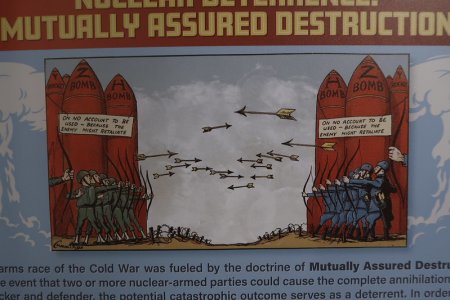
This hypothesis may appear self-evident, but it is wrong. A nuclear weapon cannot enable a state to compensate for its strategic weaknesses through technological power alone. The history of nuclear proliferation, and the theory of international relations, demonstrate that security is never an automatic consequence of possessing the bomb. Proliferation might stabilise certain international relationships --- but only where states are integrated into structures of mutual recognition and institutional balance. Iran is far from that position.

The genuine question, then, is whether nuclear weapons could have guaranteed the Islamic Republic’s security.

Secondary nuclear powers: comparative limits

To address this, the cases of the so-called secondary nuclear powers --- India, Pakistan, and North Korea --- deserve examination. Contrary to the simplistic narratives propagated by certain political commentators, each of these states acquired nuclear weapons under exceptional circumstances. Their weapons programmes developed within the interstices of a specific geopolitical configuration, and within the “containment logic” applied by the great powers.

India, Pakistan, and North Korea are frequently presented as success stories of nuclear proliferation. However, each acquired the bomb within a specific geopolitical context, and with the tolerance or implicit support of major powers:

 India counterbalanced Chinese nuclear power, enjoying strategic latitude tolerated by the Soviet Union;

 Pakistan developed its programme in response to India, with the tacit tolerance of the United States and China, as part of a shared interest in regional balance;

 North Korea was indirectly supported by China as a buffer zone against the United States.

In each of these cases, possession of the bomb forms part of a broader security architecture. It is never an isolated instrument of sovereignty.

The Iranian “third way”: deterrence without a great power protector

The Islamic Republic attempted a different strategy: to obtain the benefits of deterrence without possessing a nuclear patron among the great powers. This “third way” consisted of creating a “nuclear ambiguity” that would allow Tehran to hold itself at the threshold of confrontation without enjoying the guarantees of a protecting power.

Once the Iran—Iraq War had ended, the Iranian regime seriously considered nuclear deterrence as a strategic lever for its survival through the 1990s. However, the post-Cold War global context offered it no patron: Russia was redefining itself, China was integrating into global markets, and no great power had any interest in backing Iran at the price of direct confrontation with the United States.

In 2010, UN Security Council Resolution 1929 confirmed this reality: Beijing and Moscow would no longer assume the role of protector for a militarised Iranian nuclear programme. [3] That vote sent a clear message: neither Beijing nor Moscow would underwrite the Islamic Republic’s militarised nuclear programme. The era in which great powers could use containment logic to manage proliferation was over. And even had that logic returned, Iran did not --- and does not --- occupy a geopolitical position that would allow such a model to apply. To take a more telling example: even the Shah’s government, though it was a US security partner in the Middle East and the Soviet Union’s southern neighbour, was never subject to a containment policy employing nuclear weapons.

Yet even this warning was ignored.

From that point on, the Islamic Republic persisted in a course that neither the United States, nor Europe, nor even Russia or China, was prepared to tolerate: a programme incompatible with non-proliferation policy and with any logic of great-power equilibrium.

Iran today is a regional power of limited means and restricted opportunities. Were it to attempt to use the bomb --- or even to cultivate “nuclear ambiguity” --- to play a role analogous to that of the United States, it would be attempting to implement a “third way” without precedent in history.

It would not be the United States alone resisting such a policy. Russia and China would oppose it too. Their refusal would not be motivated by ethical considerations or international law, but by their own security interests. A secondary power that acquires the bomb and seeks to impose a confrontational dynamic with a first-rank power would destabilise the international order for everyone --- including Beijing and Moscow.

The fantasy of a saving alliance

Over the years, the Islamic Republic has repeatedly sought to place itself under the protection of Russia and China through long-term contracts and military and political cooperation. But these efforts have never produced a genuine strategic security partnership. The reason is simple: neither Russia nor China regards Iran as an actor that would justify a nuclear risk.

This does not mean Iran holds no interest for them. Its presence in their sphere of influence can offer a security advantage. The problem lies elsewhere: the Islamic Republic seeks to associate itself with them in order to play the role of counterweight to the United States and to assert greater influence in the Middle East. This is precisely what leads Moscow and Beijing to conclude that a strategic alliance with Tehran offers them nothing.

China and Russia have many disagreements with Washington, but all three capitals agree on the “special privileges” attached to their status as global powers. None of them wishes to see a secondary actor attempting to challenge that hierarchy. In their eyes, such a situation would be absolutely unacceptable, whatever their rivalries with one another.

Some attribute the failure of Iran’s nuclear strategy to “reformist” Iranian governments --- those of Mohammad Khatami, Hassan Rouhani, and now Masoud Pezeshkian --- supposing them to have been “too accommodating” towards the West. This reflects a fundamental misreading of others’ intentions: Iranian presidents have never had the power to alter the strategic calculations of Moscow or Beijing, nor to secure nuclear protection. Moreover, within Iran’s political system, presidents --- “reformist” or otherwise --- have never exercised decisive control over foreign policy.

Beijing and Moscow regard Iran as useful, but insufficient to justify confrontation with the United States. Even in periods of rivalry, the great powers share an implicit consensus: the global hierarchy must be preserved, and a secondary state such as Iran cannot overturn it by acquiring nuclear weapons.

The structural failure of Iran’s nuclear strategy

No one can know with certainty the state of Supreme Leader Khamenei’s thinking. Perhaps he concluded that a nuclear bomb would have brought the Islamic Republic no security --- neither today, nor ten or twenty years ago. Even under the scenario most favourable to the regime, the bomb would only have marginally delayed a direct confrontation.

Nuclear deterrence functions only when it is credible, recognised, and integrated into a strategic equilibrium. It requires a “diplomacy of credible threat”: possession of a nuclear weapon has value only when accompanied by mechanisms of verification, legitimacy, and international recognition.

Iran possesses none of these elements: no international support, no credible security architecture, no stable internal legitimacy. On the contrary, the programme has reinforced Iran’s isolation, deepened sanctions, and intensified external threats. Even in the best-case scenario, the bomb would have delayed a direct confrontation only marginally. [4]

Conclusion

Iran’s nuclear programme illustrates the structural limits of autonomous deterrence for a secondary state. Proliferation produces stability only when it is embedded in a recognised equilibrium and backed by the great powers. Without this, it is liable to increase the risks of conflict and escalation.

For the Islamic Republic, nuclear weapons were never a protective shield. They proved to be a countdown to crisis --- a colossal investment that weakened the country and increased its vulnerability. The classical theories of deterrence and proliferation confirm that security cannot be decreed: it is built within a system of balances and protections that the clerical regime never managed to achieve.

Footnotes

[1In late December 2025, protests erupted across Iran beginning with a strike by merchants at Tehran’s Grand Bazaar, triggered by the collapse of the rial and spiralling inflation. Within days, demonstrations had spread to more than twenty of Iran’s thirty-one provinces. The state responded with mass arrests and lethal force. On the left and among the Iranian opposition, the events of January 2026 are characterised as a turning point in the crisis of the Islamic Republic. See: Bella Beiraghi, “Iran on fire: rebellion returns to the streets”, ESSF, 5 January 2026. Available at: : https://www.europe-solidaire.org/spip.php?article77590.

[2The Islamic Revolutionary Guard Corps (IRGC; Persian: Sepāh-e Pāsdārān-e Enqelāb-e Eslāmi) is an elite parallel military force established after the 1979 revolution, answerable directly to the Supreme Leader. It controls extensive economic assets and exercises significant political influence alongside the regular Iranian armed forces

[3UN Security Council Resolution 1929, adopted on 9 June 2010, imposed a fourth round of sanctions on Iran over its nuclear programme. Notably, both China and Russia voted in favour, signalling that neither power was prepared to shield Iran’s nuclear ambitions from international pressure. See: UN Security Council, “Resolution 1929 (2010)”, S/RES/1929, 9 June 2010. Available at: https://undocs.org/S/RES/1929(2010). For analysis of the subsequent strategic context, see also: Amos Harel, “With Israel and Iran in a New Balance of Deterrence, a Nuclear Deal Remains the Endgame”, ESSF, 25 June 2025. Available at:https://www.europe-solidaire.org/spip.php?article75442.

[4For background on Iran’s strategic history and the long-term consequences of Western and US intervention, see: Houshang Sepehr, “Operation Ajax: 70 years since the CIA and MI6 joint venture in Iran”, ESSF, 6 December 2023. Available at: https://www.europe-solidaire.org/spip.php?article68902