Wednesday, March 18, 2026

Popular Unrest and Looting


 March 18, 2026

Photograph Source: Fibonacci Blue – CC BY 4.0

On December 1, 2025, the Department of Homeland Security (DHS) initiated “Operating Metro Surge” in Minneapolis, MN.  It deployed personnel from the Immigration and Customs Enforcement (ICE) and Customs and Border Protection (CBP) agencies.

On January 23, 2026, a general strike took place in Minneapolis, MN, involving some 700 business closures and an estimated 15,000 people protesting Metro Surge.

Now, as the fourth month of the Metro Surge is underway, what is most remarkable is that there has been only one reported occurrence of looting.  The only reported cases of looting took place on January 15th when Dept. of Homeland Security (DHS) vehicles were attacked by locals.

This is far different than the response to the protests that occurred following the police killing of George Floyd in May 2020.  In response, Pres. Donald Trump tweeted, “When the looting starts, the shooting starts.”

Such a response was expressed in the 1992 Los Angeles riots that followed the acquittal of four police officers for the beating of Rodney King. The riot led to more than 1,000 buildings being destroyed with damage estimated at $1 billion, while the local “Koreatown” community suffered $850 million worth of damage, half in Korean-owned businesses.

As the ’92 L.A. riots raged, Bill Clinton, then governor of Arkansas, warned: “People are looting because they are not part of the system at all anymore.” He added, “They do not share our values, and their children are growing up in a culture alien from ours: without family, without neighborhood, without church, without support.”

Vicky Osterweil’s study, In Defense of Looting: A Riotous History of Uncivil Action (Hachette, 2020), offers a radical critique of an often strongly criticized mass, popular action. She argues that stealing goods and destroying property are direct, pragmatic strategies of wealth redistribution. She repeatedly claims that such distribution can improve — if only temporarily — the lives of the poor. Going further, she insists that such acts of protest are direct attacks on the common belief in the absolute sanctity of private property and ownership.

Osterweil links looting to social uprisings or riots, noting that they are a “radical and powerful tactic for getting to the roots of the system the movement fights against. The argument is not that all instances of looting increase freedom, are righteous or politically anti-propertarian.” Most pointedly, she argues:

“If protesters hadn’t looted and burnt down that QuikTrip on the second day of protests, would Ferguson [MO] be a point of worldwide attention? It’s impossible to know, but all the non-violent protests against police killings across the country that go unreported seem to indicate the answer is no.”

She notes that the looting and burning of a QuikTrip in Ferguson is but one of a growing number of such acts of protest. She reminds readers that in Brooklyn, NY, the killing of Kimani Gray in 2013 led to the looting of a bodega and a Rite Aid store as well as innumerable similar actions throughout the country over the last decade.

In one of the most illuminating chapters of her book, Osterweil details how in the wake of the riots in Watts, Detroit, and Newark, radical organizations emerged that carried forward the inchoate demands of the looters. For example, in Los Angeles, militants formed the Black Congress; in Newark, the movement formed the Community for Unified Newark (CFUN); and in Detroit, Black nationalists established DRUM (Dodge Revolutionary Union Movement). This process continues as indicated in the formation of Black Visions, led by African American gender nonconforming women, in the wake of George Floyd’s killing.

As the author makes clear, the concept of “looting” has a long history. Its origin in the Sanskrit term “lut” means “to rob” and entered the English language in 1788 as a word for plunder and mayhem.

She insists that the word looting is used to prejudice consideration of unrest as a rational, if enraged, critique of unequal social relations. She contends that invoking the term looting often prevents acknowledgement that such actions represent a revolt of the oppressed.

In Defense of Looting is a reflection on violence as a form of social protest that can lead to social change. She links riots and looting as a tactic to challenge state authority and, especially, policing. She details the history from the 17th-century English night watch through European colonization of North America and the looting of Native Americans of their lands, goods, and lives.

Most of her study is a painful recapitulation of the long, long history of anti-Indigenous and anti-Black oppression that dates from the nation’s very origins. Her focus is on the role of, first, slave patrols and, more recently, the urban police in suppressing Blacks and other people of color in America. She argues that in riots and looting, oppressed people not only gain a political voice and regain their humanity, but actually help one another by sharing the “loot” expropriated and, in some remarkable actions, build viable political organizations.

She discusses the changing role looting has played in the U.S. from Old South plantation society and Jim Crow tyranny to the making of modern urban America. She doesn’t mention how, in 1838, President Martin Van Buren sent 7,000 soldiers to remove Cherokee Natives from their homes in Georgia. The troops forced the Cherokee into stockades while whites looted their homes. By 1840, tens of thousands of Native Americans were driven off and looted of their land.

The fundamental weakness of Osterweil’s otherwise compelling book is its over-determined focus on African American riots and looting. Her historical narrative about Black suffering and the horrendous role of police violence inflicting this suffering is, sadly, all too true. Her narrow focus reinforces the latent racism she is seeking to challenge. The tenor of her well-intentioned study is that only Black and Indigenous people riot.

Her treatment of riots involving white people is woefully inadequate to fully appreciate the place of social struggle and looting in American history. She gives short shrift to 1773 Boston Tea Party, failing to note that Colonial protesters climbed aboard three British ships and dumped 342 chests (45 tons) of tea, worth an estimated $1 million, into Boston Harbor and the “party” was one of the first acts of violent civil disobedience that led to the Revolution.

She also makes no mention of urban working-class riots of the 19th century and the looting that accompanied them. For example, the 1857 New York gang war that pitted the Dead Rabbits against the Bowery Boys was a gang war between immigrant, working-class men and boys that not only led to a citywide battle but widespread looting and pillage.

And then there was the blackout of 1977 that swept New York City. Neighborhoods like Crown Heights and Bushwick were devastated; in Crown Heights, 75 stores on a five-block stretch were looted, and in Bushwick, 35 blocks of Broadway were destroyed, with 134 stores looted and 45 set ablaze. In the Bronx, 50 new Pontiacs were looted from a dealership.

David Rosen is the author of Sex, Sin & Subversion:  The Transformation of 1950s New York’s Forbidden into America’s New Normal (Skyhorse, 2015).  He can be reached at drosennyc@verizon.net; check out www.DavidRosenWrites.com.

Mandatory Conscription Makes War Easier, Not Harder to Fight


 March 18, 2026

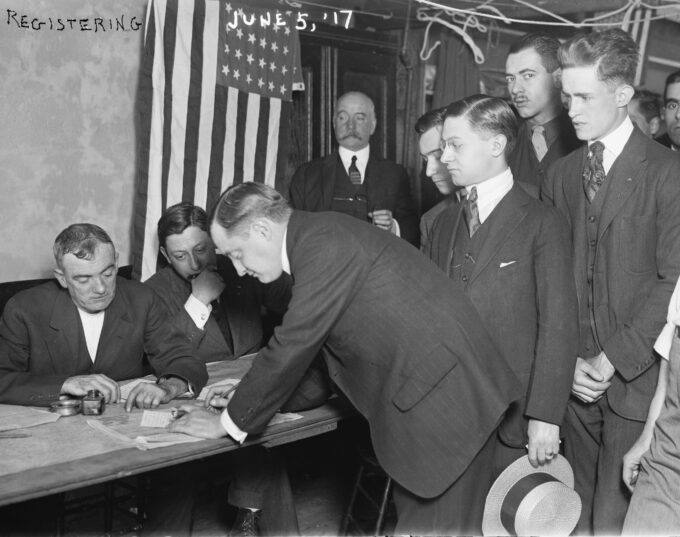
Young men registering for conscription during World War I, New York City, June 5, 1917 – Public Domain

Recently, commentators from various places on the US political spectrum have discussed and even called for the reinstitution of mandatory conscription. Meanwhile, plans are underway to automatically register all eighteen-year-olds via the computer database where their names are stored. In Germany, tens of thousands of young people marched against parliamentary moves towards reinstating mandatory conscription there. Some of those who support conscription do so because they believe that people (including politicians) will oppose wars their government starts if they face the possibility they or their child will be forced into the military to fight those wars. Others demand a return to mandatory conscription because citizens of the nation they live in need to be reminded that living in that nation means they must be an active part of its defense. Of course, both of these arguments require an acceptance that this nation for which the conscripts might give their lives for holds the lives of the conscripts in the same regard as it does those making and profiting from its wars. From where I sit, that’s a mighty hard sell.

An aspect of the argument that a draft would make politicians think twice before allowing a war to take place because politicians’ children might get drafted into the war is not really much of an argument when considered historically. Looking at the last war where US citizens were drafted—the war in Vietnam, it is more than apparent that those draftees who did most of the killing and dying in that war were working class men. If those men were black, they were even more likely to end up as nothing but cannon fodder. According to the Oxford Companion of Military History, “during the height of the U.S. involvement, 1965-69, blacks, who formed 11 percent of the American population, made up 12.6 percent of the soldiers in Vietnam. The majority of these were in the infantry, and although authorities differ on the figures, the percentage of black combat fatalities in that period was a staggering 14.9 percent.” In addition, they accounted for almost 20 percent of all combat-related deaths in Vietnam from 1961-1965 and in 1968, they frequently contributed half of the men in front-line combat units. Meanwhile, men like Donald Trump evaded the draft, just like many other wealthy young men during the Vietnam war and every US war back to the Civil War.

Another part of this same argument is that the US people would be more likely to oppose US involvement in a war if their children were involved. Once again, history tells us something different. To put it as succinctly as possible, this just isn’t true. A military draft existed during the US war in Korea and opposition to that conflict was essentially nonexistent. Same can be said for the 1965 US invasion of the Dominican Republic. Likewise, the same can be said about the US war in Vietnam. While it’s reasonable to argue that the existence of military conscription convinced many young men to oppose the draft and the war, a greater truth is that it was the growing reach of the antiwar movement that made it okay for those resisters to resist, not the other way around. In other words, the existence of the draft didn’t create the antiwar movement; the antiwar movement created the draft resistance movement. In later years, massive movements against the US wars in Iraq were organized and there was no draft, although various politicians did float the possibility of restarting it. Like the movement against the war in Southeast Asia, those movements existed because of determined organizing by numerous groups opposed to the slaughter. Any blame for the failure of those movements to stop the Iraq wars earlier than they did is most likely due manipulation of the antiwar movement by the Democratic party and vacillation among elements in the movement’s leadership.

Those who believe that an apparent lack of concern among US residents about the murder and havoc being wrought in their name in Iran can be reversed by reviving mandatory conscription of young people seem to think that the war machine will do the organizing against the war it is waging. This just isn’t going to happen. In fact, a revival of mandatory conscription is most likely to do the exact opposite. With a considerably greater pool of potential cannon fodder biding their time in barracks and on ships, there is even less to restrain those in the Pentagon, war industry boardrooms, Congress and the White House from expanding their slaughter. If anything is going to stop their wars, it will be a determined and massive movement against their war; a movement that rejects both parties as war parties and organizes with that understanding. A movement that is willing to use means that not only reject the status quo but is willing to overturn it when the moment arrives. Reinstating mandatory conscription does not meet that requirement.

Ron Jacobs is the author of several books, including Daydream Sunset: Sixties Counterculture in the Seventies published by CounterPunch Books. His latest book, titled Reality, Resistance, Rock and Roll is a collection of book reviews written for Counterpunch over the years and is now available. He lives in Vermont. He can be reached at: ronj1955@gmail.com 

“God Help Us, If We Send Troops to the Middle East”


 March 18, 2026

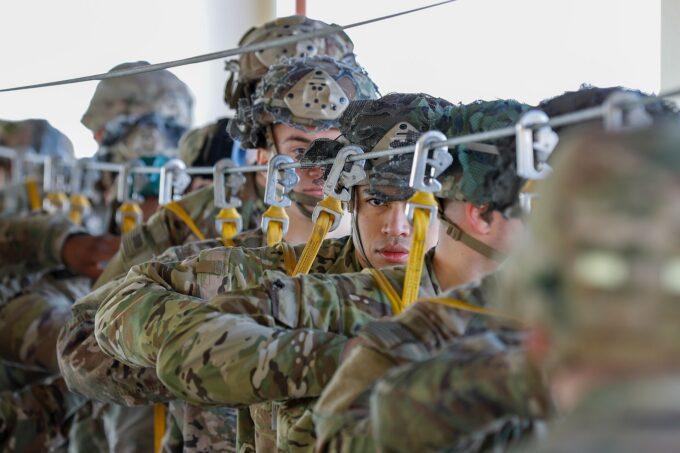
Photograph Source: U.S. Army SETAF-AF by Staff Sgt. Luke Wilson – Public Domain

President Donald J. Trump is ignoring this widely-held sentiment — including among his MAGA supporters — and has just ordered 2500 troops to the Middle East. In so doing, he is risking the survival of millions of civilians throughout the region, our soldiers, and the planet itself.

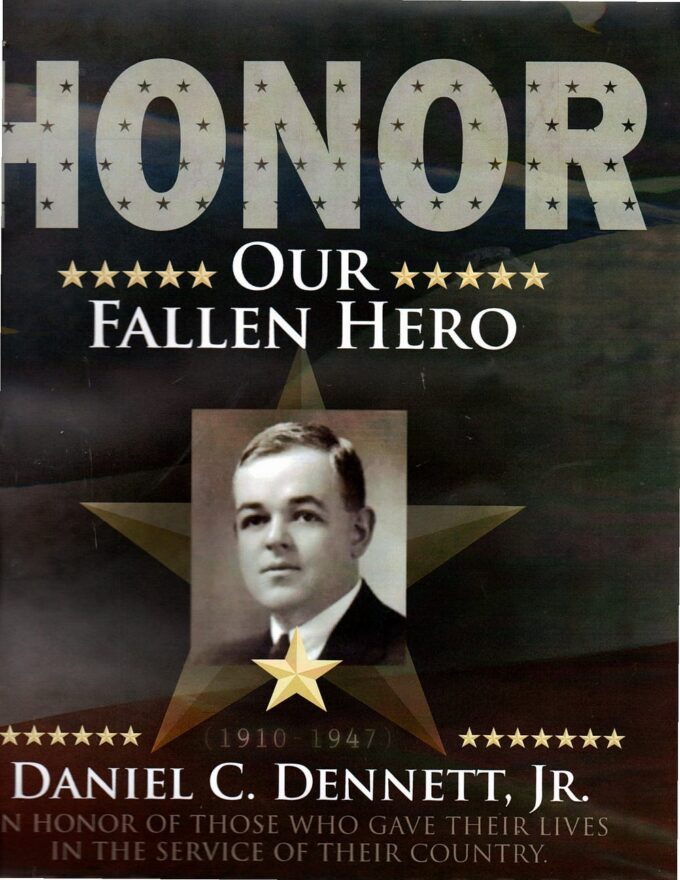
His appalling ignorance about the region, its diverse and ancient history, and the resolve of its inhabitants to say No More Wars — indeed, No Blood for Oil — has emboldened this writer to state plainly that her father uttered this warning over 80 years ago, in 1942, one year before he would be inducted into America’s first civilian-run intelligence agency, the war-time Office of Strategic Services (OSS). His code name was Carat. Prized for his scholarly knowledge of both European and Middle Eastern history, he would soon become America’s first master spy in the Middle East, only to die five years later, in March, 1947, in a mysterious plane crash following a top secret mission to Saudi Arabia.

It is my considered opinion that he was one of America’s first victims of what I call the Great Game for Oil. While not necessarily sharing in this opinion, the CIA in 2019 honored him as their first fallen star at its annual Wall of Honor ceremony at its Langley, Virginia headquarters. (He died before the CIA was created, but was belatedly honored due to the recommendation of a CIA historian.)

It was a tribute I shall never forget, resurrecting my father from obscurity while assuring me that he was now viewed as a role model for CIA officers to follow. But can they, in this Age of Oil?

Spare Us the disgrace

Never one to mince his words, he uttered his warning before an audience at Clark University, where he had been teaching Army personnel courses in the history, geography and economic life of Central and Southern Europe, Iran and the Middle East.

“I pray to God,” he intoned, “that wherever else we may choose to intervene, the United States will be spared the disgrace of intervening in the Near Est. The thought of what the well meaning but ignorant liberals of this country would probably accomplish if set loose to solve the enigma of the Levant is too dreadful even to contemplate. From an unholy mess, may we keep our hands clean and our garments unsoiled.”

How, you may wonder, did he come to this view? What was the enigma of “The Levant” [the region in the Eastern Mediterranean, so named by the French in reference to the rising sun in the East] who ruled there from WWI to WWII. I cannot answer what was in his mind. I was six weeks old when he died. But I have his letters home during the early 1930s when he taught English to Middle Eastern students of many different religions and ethnic backgrounds at the American University of Beirut.

So moved by the experience was he that he abandoned his focus on German language and literature as an undergraduate at Harvard [especially after witnessing a Nazi parade in Berlin that turned his stomach] and focused his graduate studies on Mediterranean History, Greek History, History of the Arabs, History of Islam, modern European history, and a language proficiency in German, French, Italian and Arabic.

Dennett worked on finishing his thesis while tutoring undergraduates at Harvard’s prestigious Elliott House. Invariably, he would lunch with Bernard Cohen, a graduate student in mathematics who was the librarian at Elliot House and was studying Arabic to read original sources on mathematical advances under the Arabs. The two talked politics, practiced their Arabic (with Dennett insisting that Persian was even easier) and shared stories, Dennett regaling Cohen with stories about his experiences in the Middle East. There was one, in particular, that he told more than once, a story about a particularly searing experience he had had while trying to teach Arab students about the virtues of ethical living.

A lesson in intolerance

The course title had been handed to him: “How to Live.” Ribbed by his colleagues, he nonetheless took on the assignment with all the fervor of a good New England Congregationalist liberal. Inevitably, he reached the subject of toleration. First, he gave some shocking examples of Christian intolerance: the Inquisition, the Wars of Religion, the persecution of scientists. From there he went on to Jewish intolerance, citing from the Old Testament. So far, so good — his students enjoyed the exposition. But when he got to Muslim intolerance, he sensed restlessness in the classroom. Suddenly, one of his students stood up, and in a loud and trembling voice, protested his insulting reflections on Islam

Toleration, the student said, is a virtue that is possessed by people who don’t believe or are easy going in their faith, a virtue that only those who are rich and prosperous, strong and confident, unafraid of menaces, could afford. But if you believe, the student went on, and your faith is challenged, if you love your country and see its independence denied, if you have ideals and see them destroyed, then you have two choices: intolerance, or moral extinction.

Dennett accepted the explanation and vowed never to teach toleration again, but the exchange had shaken him profoundly, causing him to question what Westerners should be teaching in their schools to peoples of another culture. After pondering this for years, he had concluded that native political leaders who had been educated in American, British or French schools were far less appreciative of Western sermons on political and moral principles that had no resonance in their lives, than they were of two western gifts “and two alone” which would find ready acceptance: “nationalism — the desire for independence, and western science in all its practical aspects.”

When he entered the OSS in September, 1943, he joined other OSS recruits for espionage training in England by none other than Kim Philby, the notorious double agent who would become the most famous spy of the 20th century.

When my father landed in Beirut, Lebanon, he came with a State Department cover: Cultural attaché. His teachings at AUB had served him well, allowing him to mix easily with influential people in Beirut. The university was recognized by its president as the second most valuable American investment in the Middle East, next to oil.

As for oil, Dennett’s primary mission, as described in his 1943 declassified report titled “Analysis of Work” was to “control the oil [of Saudi Arabia] at all costs.” That meant protecting the route of the newly conceived (but not yet built) Trans-Arabian Pipeline, which would carry Saudi oil across the Arabian peninsula to a Mediterranean terminal point in either (Jewish-controlled) Haifa, Palestine, or (Christian-controlled) Sidon in southern Lebanon.

Muslims were not to be trusted, a fact made clear by an OSS man in Saudi Arabia who reported that American oil men were disparaging U.S. government officials as “towel heads,” i.e. for being too sympathetic with Arabs. In his last letter home, he fretted that the Arab American Oil Co (Aramco) had more influence with the Saudi king than government officials, comparing it to Britain’s colonial British East India Company. He may have been one of the first intelligence officials to discern corporate control of U.S. foreign policy.

My father died two years before Tapline was built and just months before the CIA was created. The man who replaced him was Archie Roosevelt, the 4th son of President Theodore Roosevelt, who would lead the CIA in its first coup — in 1949 — overthrowing Syrian president Shukri al-Quwatly (an Arab nationalist and Muslim) who had opposed Tapline crossing Syria and terminating in the newly created Jewish state of Israel. (Archie and his brother Kermit would also be involved in the 1953 CIA coup that overthrew Iranian president Mohammed Mossadegh, who had nationalized Iran’s oil, replacing him with the Shah of Iran.)

The pipeline would cross Syria’s Golan Heights (now under Israeli control) and terminate in southern Lebanon, less than 100 miles from Israel. Tapline would turn the US into a world power, and heavily-armed Israel would become the pipeline’s primary protector until it was closed in 1992 during the 15-year-old civil war in Lebanon.

My father’s early warnings about the folly of sending troops to the Middle East went unheeded in the interest of “controlling the oil at all costs.” Today, an American-created “unholy mess” is once again in full play, as southern Lebanon is now being pummeled by air strikes and invading Israeli forces and American marines are on their way to fight in Iran.

The information in this essay is documented in my book, Follow the Pipelines: Uncovering the Mystery of a Lost Spy and the Deadly Politics of the Great Game for Oil. My next essay will focus on what’s happening in Lebanon today, as some 100,000 Lebanese civilians are fleeing their homes for safety in what is now being called the Gazafication of Lebanon.

This first appeared on Charlotte Dennett’s Cui Bono? Substack page.

Charlotte Dennett is an investigative journalist. Her most recent book, now out in paperback, is Follow the Pipelines: Uncovering the Mystery of a Lost Spy and the Deadly Politics of the Great Game for Oil.