Saturday, March 28, 2026


VertINGreen unveiled turning indoor green walls into smart, living systems breathing life into buildings


\

The Hebrew University of Jerusalem

Vertical Green Wall in the Lab Used for This Study 

image: 

Vertical Green Wall in the Lab Used for This Study

view more 

Credit: David Helman Lab


Indoor air quality in modern buildings is increasingly difficult to maintain without high energy costs, and while vertical green walls offer a natural solution, their inconsistent performance and complex maintenance have limited widespread use. VertINGreen, developed by researchers, solves this by using AI, remote sensing, and plant data to both predict how green walls will perform before installation and monitor their health in real time, making them a reliable, efficient, and scalable tool for improving air quality and reducing energy consumption.

Step into a modern office tower or hospital, and the air you breathe is often carefully engineered, filtered, circulated, and cooled at a high energy cost. Now imagine those same spaces quietly breathing on their own, supported by living walls of plants that not only beautify interiors, but actively clean the air and reduce energy use.

At the Hebrew University of Jerusalem, researchers have taken a major step toward that vision.

In a new study published in Indoor AirYehuda Yungstein and Dr. David Helman introduce VertINGreen, an innovative web-based platform that transforms vertical green walls from decorative features into intelligent, responsive environmental systems.

Vertical green walls have long captured the imagination of architects and designers. But behind their lush appearance lies a challenge: their performance is unpredictable. Some thrive and improve air quality; others struggle, requiring constant maintenance and offering little measurable benefit.

“Green walls have enormous potential,” the researchers explain, “but until now, we lacked the tools to truly understand and manage how they function indoors.”

VertINGreen changes that by bringing together remote sensing technology and machine learning, turning plant-covered walls into data-rich systems that can be planned with precision and monitored in real time.

The story of VertINGreen begins with nearly 2,000 meticulous measurements of how common indoor plants “breathe”, how they absorb carbon dioxide and release water under different conditions.

From this, the team built powerful predictive models capable of forecasting how a green wall will perform before it is even installed. The system can estimate:

  • How much carbon dioxide the plants will absorb
  • How they will respond to indoor climate conditions
  • And even how they might help reduce energy use by lowering the need for mechanical ventilation

The result is a planning tool that replaces guesswork with confidence.

“For the first time, designers can ask: What will this wall actually do for my building? and get a reliable answer,” says the team.

But VertINGreen doesn’t stop at planning, rather it continues the story long after installation.

Using hyperspectral imaging, the platform can “see” beyond visible light, detecting subtle physiological changes in plants. Combined with machine learning, this allows the system to:

  • Identify early signs of stress
  • Map plant activity across entire walls
  • Detect problems weeks before they are visible to the human eye

In practical terms, this means fewer surprises, lower maintenance costs, and healthier, longer-lasting installations.

Remarkably, the system achieves this using just a handful of spectral bands, making it accessible even with relatively low-cost imaging equipment.

VertINGreen represents more than a technological innovation, it signals a shift in how buildings are conceived.

Instead of relying solely on energy-intensive systems, indoor environments can increasingly integrate living, adaptive components that work in harmony with technology.

By combining accurate planning with early-warning monitoring, VertINGreen offers a complete framework for:

  • Cleaner indoor air
  • Lower energy consumption
  • More resilient green infrastructure

And perhaps most importantly, it makes these benefits practical and scalable.

For Yungstein and Helman, the goal is clear: to bridge the gap between scientific understanding and real-world application.

“VertINGreen allows us to move from inspiration to implementation,” they say. “It gives architects, engineers, and building managers the tools they need to trust and fully utilize nature inside buildings.”

As cities continue to grow upward and inward, innovations like VertINGreen suggest a future where walls do more than divide space—they help sustain it.


From simulation to strategy: climate modeling motivates action at the top


Climate simulation tools can help close the gap between global leaders’ climate knowledge and real-world decision-making, first-of-its-kind-research from the MIT Sloan School of Management and collaborators finds


MIT Sloan School of Management

Climate simulation tools can help close the gap between global leaders’ climate knowledge and real-world decision-making 

image: 

New research by MIT Sloan School of Management finds that global leaders who participate in facilitated engagements using an interactive climate policy simulator, En-ROADS, demonstrated a stronger understanding of climate solutions, felt more personally connected to the issue, and were more likely to take climate-related action or advocate for change in their governments, businesses, organizations, or communities.

view more 

Credit: ARTIS-Ulli Deck


New research by MIT Sloan School of Management finds that global leaders who participate in facilitated engagements using an interactive climate policy simulator, En-ROADS, demonstrated a stronger understanding of climate solutions, felt more personally connected to the issue, and were more likely to take climate-related action or advocate for change in their governments, businesses, organizations, or communities. Most reported that the interactive aspects of simulations enhanced learning compared to conventional, more passive approaches.

Conducted by MIT Sloan faculty and staff members John D. StermanBethany Patten, and Krystal Noiseux, in collaboration with MIT Sloan research affiliates Juliette-Rooney Varga (UMass Lowell), Florian Kapmeier (ESB Business School), and Andrew Jones (Climate Interactive), the research is the first large-scale study to assess impact of the En-ROADS climate solutions simulator — a free, online, system dynamics model co-developed by Climate Interactive and MIT Sloan — on leaders, including Members of Congress, mayors, C-suite leaders, and nonprofit professionals. 

Their paper, “Interactive simulation with En-ROADS spurs climate action among decision-makers,” published in the journal npj Climate Action, comes at a critical time, as the world remains far from meeting climate targets. Current policies are projected to drive roughly 3.3°C of warming by 2100.

What can climate simulations show?


En‑ROADS gives leaders the opportunity to test out how dozens of climate change solutions — like pricing carbon, electrifying transport, and improving agricultural practices — impact dozens of factors, like energy prices, air pollution, drought, and sea level rise. It is built using the best available science, calibrated to and tested against historic data and other models, and updated regularly. Available in 22 languages, and along with its sister model, C-ROADS, En-ROADS has been used by nearly 500,000 people around the world, including about 25,000 leaders through the MIT Climate Pathways Project — a collaborative effort of MIT Climate Policy CenterMIT Sloan Sustainability Initiative, Climate Interactive.

“Responsibility is increasingly falling on community, business, and government leaders to help reduce emissions,” said Rooney‑Varga, the study’s lead author. “But misinformation, greenwashing, and widespread misconceptions about climate solutions often stand in the way of effective action.”

How are leaders using climate change modeling?

The researchers engaged 949 decision-makers—including state representatives, foreign service officers, and executives in the technology, energy, and finance sectors—to participate in facilitated interactive En‑ROADS simulations. Across 37 sessions, facilitators invited leaders to test their climate solution ideas to explore which could have the biggest impact, in time to make a difference. 

Researchers analyzed results from surveys administered before and after the simulation; about 32% of participants completed both. Survey questions included: “How important is the issue of climate change to you personally?” and “How do you feel about being able to contribute personally to addressing climate change?”

The results showed that leaders emerged with a stronger understanding of the scale and urgency of the climate challenge and of high-impact solutions, along with a greater drive to take action. The benefits were similar whether simulations were conducted in person or virtually, and even individuals already engaged in sustainability efforts found value in the experience.

After the simulation, participants also identified low-impact climate solutions more accurately, even when those solutions are strongly favored by public opinion or political leaders, such as tree-planting programs and increasing R&D for new zero-carbon technologies, like nuclear fusion. They also better understood that high-impact policies—such as carbon pricing and improving buildings’ energy efficiency—are among the most effective ways to reduce emissions.

“What really stood out from our results was the emotional impact,” said Kapmeier. “Leaders left the simulations better informed, more motivated, and often more hopeful about the problem.”

The researchers also interviewed participants after the simulations. Interviewees highlighted the importance of social interactions, with a quarter of them describing these interactions as influential in shaping what they learned and how they planned to act. Many said engaging with others made them feel part of a group capable of making a difference, motivating them to share En‑ROADS as a tool for shaping decisions.

What do leaders need to take action on climate change?

“When leaders can explore climate policy options in a safe, simulated environment, they learn for themselves which solutions work and become more motivated to act,” said Sterman. 

Study participants also reported pushing past feelings of overwhelm to take action. Many said they had taken or planned to take steps such as cutting their own carbon emissions, advocating for climate action in personal networks, sharing En‑ROADS with others, and supporting pro-climate decisions in their governments or organizations—from shifting investments toward clean energy to advancing internal carbon pricing and electrifying company fleets.

The study’s findings show that “Expanding the use of En‑ROADS and similar interactive simulations in training sessions, corporate strategy, and public forums could help bridge the gap between climate pledges and real-world implementation,” said Jones.

Chinese scientists highlight benefits of building façade solar panels


Chinese Academy of Sciences Headquarters


A team of Chinese researchers has modeled the potential global benefits of installing solar panels on outside building walls, a concept known as façade-integrated photovoltaics (FIPV). They found that solar panels installed on building façades not only generate substantial electricity but also reduce cooling demand, thereby reducing carbon emissions and improving urban climate adaptation.

The study, conducted by Prof. YAO Ling's team at the Institute of Geographic Sciences and Natural Resources Research of the Chinese Academy of Sciences, was published in Nature Climate Change.

As climate change intensifies heat exposure and extreme weather and increases electricity demand in cities, climate-resilient urban development has become a global priority. Buildings account for a large share of urban energy use and emissions. Solar photovoltaics provide a partial solution but are mainly deployed on rooftops, leaving vast vertical building surfaces largely underused.

In this study, the researchers developed a global model to quantify the energy and climate benefits of FIPV.

Using information on building geometry, exposed area, and meteorological data, the researchers simulated the electricity generation potential of FIPV worldwide. They then evaluated the influence of FIPV on buildings' heating and cooling demand. In addition, they analyzed carbon mitigation and climate adaptation benefits by linking generation–demand interactions on an hourly basis.

Assuming the most plausible deployment scenario, the researchers concluded that FIPV could generate about 732.5 TWh of electricity annually worldwide and reduce building electricity demand by 8.1% on average. They also showed that these combined benefits could translate into meaningful economic and climate gains, with more than 80% of simulated districts showing reductions in net lifetime electricity expenditures.

The study estimated that the reduction in cumulative carbon emissions could reach 37.7 Gt CO2 if FIPV adoption reached its maximum potential by mid-century. To achieve this goal, however, targeted policies, adaptive planning, and locally informed strategies would be required due to variations in urban morphology, climate conditions, building characteristics, and socioeconomic circumstances.


Man's older friend: New study finds dogs lived with humans 5,000 years earlier than thought

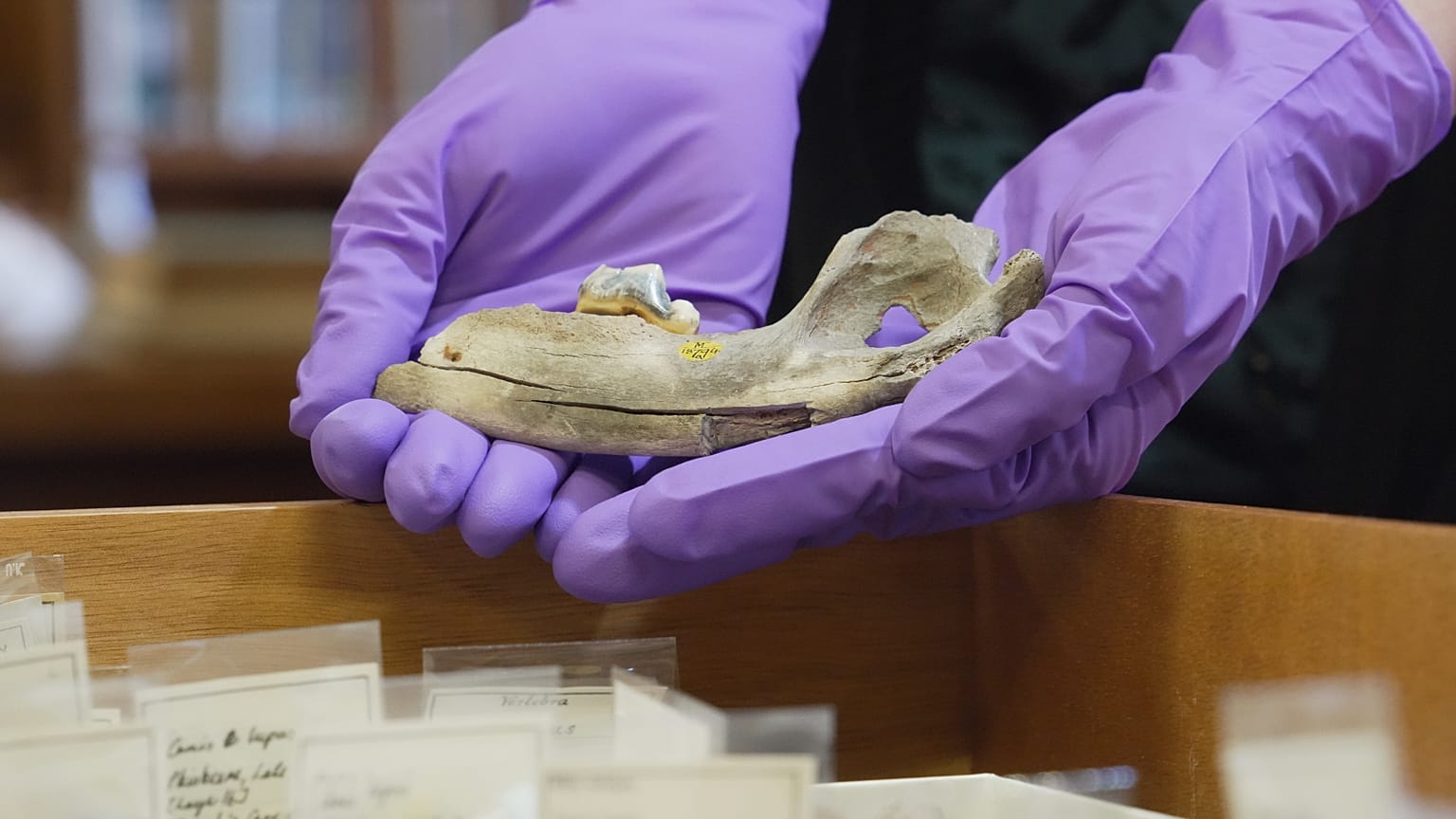
A researcher holds a 14,300 year-old dog jawbone found at Gough's Cave in the United Kingdom, 2026
Copyright AP Photo/Mustakim Hasnath

By Mohammad Shayan Ahmad with AP
Published on 

Ancient DNA has revealed that domestic dogs lived alongside humans more than 15,000 years ago, reframing our understanding of their origins and societal significance.

Dogs have been man's best friend for a very, very long time. Much longer, it turns out, than scientists had previously been able to prove.

Two new separate studies have uncovered the oldest known genetic evidence of domesticated dogs across Europe and Asia. These date back to between 15,800 and 14,000 years ago - roughly 5,000 years earlier than other genetic records suggested.

“This is the earliest clear genetic evidence we have for domestic dogs,” Pontus Skoglund, co-author of one of the studies and a geneticist at the Francis Crick Institute in London, UK, said.

The studies, both published in the journal Nature, analysed ancient DNA from the remains of over 200 dogs and wolves. They identified key remains from sites across Europe and Asia, including Pınarbaşı in central Türkiye and Gough’s Cave in southwest England.

Collectively, their findings reveal a clearer picture of dogs' origin stories - and their integration into human communities.

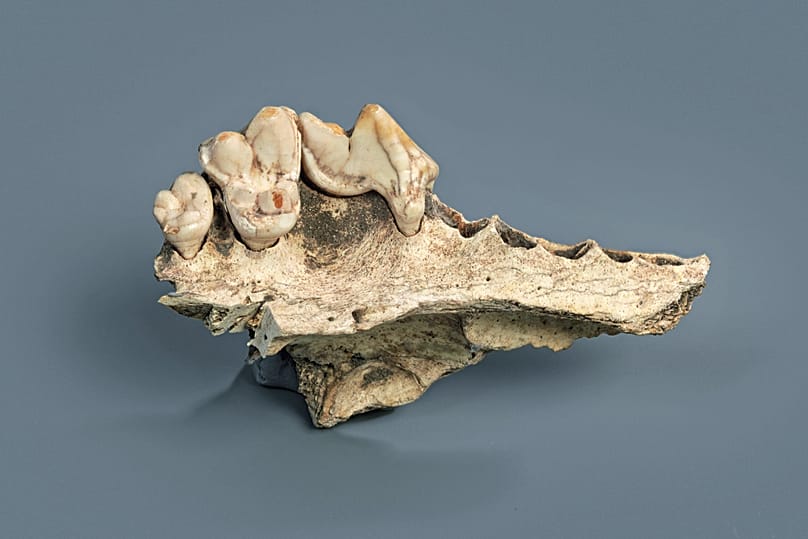
Ancient dog jawbone that was found in the Kesserloch cave in Switzerland
Ancient dog jawbone that was found in the Kesserloch cave in Switzerland Cantonal Archaeological Service of Schaffhausen/ Ivan Ivic via AP Photo

Scientists have long known that dogs descended from grey wolves during the last Ice Age, but the exact timeline of this transition - and how they initially looked - has remained a mystery.

Advancements in studying ancient canine DNA - where scientists isolate the dog-specific bits - is now helping to bring clarity.

The research also highlights that there has always been a unique human-dog bond, with chemical analysis of remains found in Türkiye suggesting that ancient dogs were eating fish - the same diet as nearby humans.

At Gough’s Cave, researchers found a dog jawbone that had been carefully processed after death. Cut marks show the animal was butchered, but the remains were treated in ways similar to human bodies at the site, where bones were also processed and arranged.

This overlap suggests dogs were not treated as ordinary animals, but held a closer, possibly symbolic or social role.

“They are humanity’s best friend, alongside our societies for the last 16,000 years and will continue to in the future,” said Lachie Scarsbrook, a study co-author from the Ludwig Maximilian University of Munich.

Surprise in amber: exotic harvestmen once lived in Europe


Staatliche Naturwissenschaftliche Sammlungen Bayerns
Reconstruction of Balticolasma wunderlichi 

image: 

Reconstruction of Balticolasma wunderlichi 

view more 

Credit: Joschua Knüppe, Palaeoartist


The arachnid was perfectly preserved 35 million years ago in a drop of tree resin—amber fossils are a stroke of luck for science. The newly discovered harvestman originates from Eocene amber deposits in Ukraine and the Baltic region. Paleontologists identified the animal as a previously unknown species from the Ortholasmatinae subfamily. Harvestmen in this group are often characterized by an unusual appearance: their bodies are highly ornamented, with numerous, sometimes lattice-like appendages in the head region. Until now fossil Ortholasmatinae were unknown.

Balticolasma wunderlichi is the name of the first fossil representative of these harvestmen, discovered and described by a research team led by Dr. Christian Bartel of the Bavarian State Collections of Natural History (SNSB) and Prof. Plamen Mitov of Sofia University, Bulgaria. Like their modern relatives, the fossils also exhibit a highly structured body surface and a particularly prominent eye mound. To reveal all the details of their three-dimensional anatomy, the researchers used special x-rays: scans of the harvestman fossils using a computed tomography station of the Helmholtz Center Hereon at the Deutsches-Elektronen Synchrotron (DESY) in Hamburg revealed, among other things, a net-like pattern of fine ridges covering the entire upper body surface, as well as complex mouthparts bearing multiple appendages.

“The discovery of an ortholasmatine harvestman in European amber deposits surprised us. Harvestmen of this group no longer exist in Europe today. Relatives of these animals are currently found only in East Asia as well as in North and Central America. Evidently, 35 million years ago, during the Eocene epoch, these harvestmen were much more widely distributed across the Northern Hemisphere than they are today,” says SNSB paleontologist Dr. Christian Bartel, the study’s lead author. Bartel conducts research at the Bamberg Natural History Museum, one of ten museums comprising the Bavarian State Collections of Natural History (SNSB).

“Baltic amber is known for its great diversity of fossils. It continually reveals species that no longer occur in Europe today. The fact that the new harvestman species was also found in Ukraine shows once again that the harvestman faunas of both regions were likely similar. With this new addition, the number of known harvestman species from Baltic amber rises to 19, and those from the ancient Ukrainian Rovno amber to seven. Six species are found in both regions,” says co-author Dr. Jason Dunlop of the Museum für Naturkunde in Berlin.


3D model of Balticolasma wunderlichi (male).

Credit

Christian Bartel

Fossil Balticolasma wunderlichi (female) from Ukrainian Rovno amber.

Credit

Jonas Damzen