Saturday, March 28, 2026


Iran: Neither intervention nor trivialization
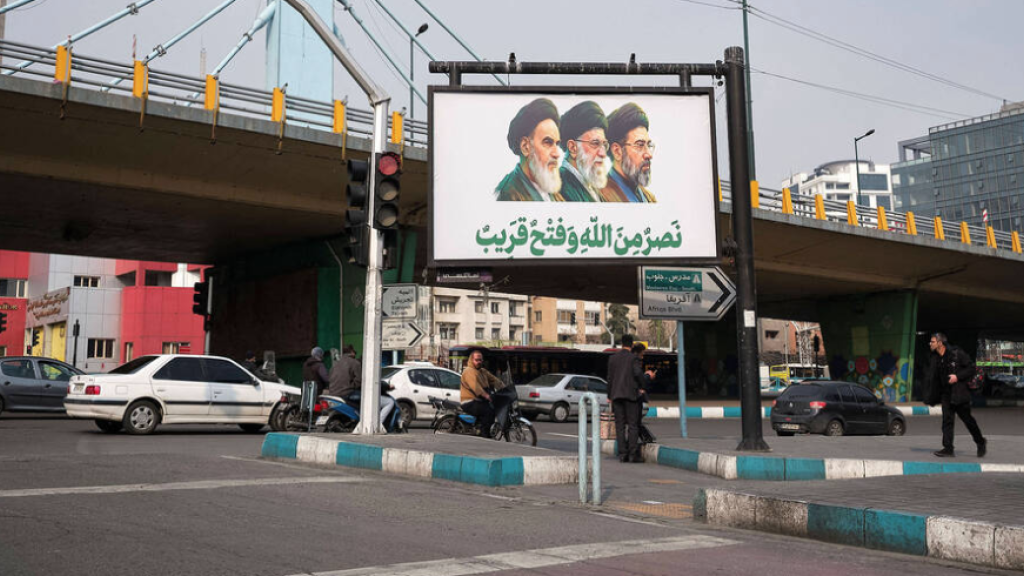

 The propaganda poster at a Tehran crossroads shows the first ‘Supreme Leader’, Ruhollah Khomeini, his successor Ali Khamenei (killed in the early days of the war) and his son Mojtaba Khamenei, who was subsequently appointed to the post (from left to right)

First published at Rosa-Luxemburg-Stiftung.

Today, as Iran is being targeted by military attacks from Israel and the United States, and only a few weeks after the January massacre, a primary force shaping the political landscape remains estisaal: Often used in Persian to describe both a psychological and practical condition, the term refers to the point of convergence between social deadlock and psychological exhaustion. Trapped in a problem with no imaginable solution, one experiences a profound helplessness and desperation marked by frustration and the loss of agency. It describes a situation in which people are confronted with political forces that determine their lives while foreclosing any meaningful possibility of influencing or altering them.

This estisaal emerges from a relentless chain of crises that have defined everyday life in Iran over the past decade: massive inflation, brutal suppression, and mass civilian killings in January 2017 and bloody November 2019; the Islamic Revolutionary Guard’s missile downing of Flight PS752; COVID-19 and catastrophic state policies costing thousands of lives; the Jina uprising's violent repression — killings, blindings, mass arrests of activists; the June 2025 twelve-day war; and finally January's massacre of nearly 30,000 people.

However, this cycle of crisis and the blockage of agency is not produced by the Islamic Republic alone, but also by networks of external powers. Sanctions policies for example — especially the strategy of “maximum pressure” — have been justified as a means to weaken the regime, yet in practice have primarily affected ordinary people, contributing to massive poverty, inflation, more class disparity, and the deterioration of everyday life, often exacerbated by corruption and mismanagement. Today, through direct military intervention — most recently during the twelve-day war and the ongoing attacks — external powers once again reshape the lives of civilians.

Within this dynamic, the Islamic Republic has not only survived but often reproduced itself through the management and instrumentalization of crises, while systematically repressing any attempt by civil society to respond politically. From student movements and labor unions to schoolchildren’s protests, feminist networks, and dadkhahi (justice-seeking) initiatives, nearly every form of collective organization has been criminalized and suppressed — often through imprisonment, and at times through death. Political action is consistently framed as a “national security issue,” leaving civil society trapped between internal repression and external pressure, with little space for meaningful agency.

Thus, society finds itself increasingly empty-handed in the face of estisaal. This condition does not only affect those inside but also extends beyond the borders of Iran and affects the diaspora as well. Iranians abroad experience a constant urge to act in solidarity in all of these states, yet almost every practical path is blocked. Efforts to raise funds for victims of war or repression, to support people on the ground, or even to provide access to communication tools quickly encounter the dense machinery of sanctions and regime surveillance. The mere mention of “Iran” in financial transactions can lead to delays or outright blocks, while the country’s near-total exclusion from the SWIFT network makes the transfer of resources nearly impossible. Even when workarounds are found, they remain vulnerable to state surveillance, exposing recipients to accusations of collaboration with the enemy. During moments of internet shutdown—such as in January or right now—the question becomes even more urgent: how can communication be restored without placing users at further risk?

This condition of enforced impossibility brings into sharp focus a question that now emerges more urgently than ever before: how can a regime that holds a near-monopoly over life and death, and has repeatedly shown no hesitation in massacring protesters, ever be overthrown?

Confronted with this question — rooted in the condition of estisaal — , different political forces have begun to articulate divergent and often conflicting answers: from calls for foreign military intervention to invitation to mass protest, from appealing to the army to join the protestor to a promise of an internal collapse of the forces, from coming back to reformist ideas to change from within to appeals for support from Kurdish armed groups. Among these, one has gained increasing visibility in the recent months.

The pro-military intervention stance

The pro-military intervention stance — most strongly promoted by monarchist forces — has gained increasing visibility in recent months, largely due to its messianic promise of a rapid and decisive resolution. Often articulated through slogans such as “ This is the last battle!” or Donald Trump’s claim that “Help is on the way,” this position frames foreign intervention as a quick and ultimate solution capable of ending suffering and leading Iranians out of estisaal.

This narrative draws on the regime’s long history of violence against civilians to legitimize war as a form of “precision intervention” that could bring about a swift collapse. It suggests that no level of destruction — not even that caused by U.S. or Israeli military action — could exceed the ongoing violence of the Islamic Republic. In this way, accumulated trauma is mobilized to make the idea of foreign intervention appear not only acceptable, but necessary.

Yet this position produces a false sense of agency by projecting scenarios that remain largely disconnected from material realities on the ground. Narratives amplified by figures such as Reza Pahlavi and media outlets like Iran International circulated claims of mass defections of something around 50,000 within the military and state apparatus, alongside expectations of imminent U.S. intervention. These narratives fostered the illusion that security forces would hesitate, that collapse was imminent, and that external support would guarantee protection.

Despite this lack of grounding in actual conditions, such discourses have had real consequences to create a political discourse that manages and shapes life-and-death realities: encouraged by these promises, and assurances of external backing, many people took Pahlavi’s call for demonstrations to the streets on the nights of 8th and 9th of January, believing that the regime’s capacity for repression had weakened. In some cases, entire families participated in protests under the assumption that a decisive shift was underway — only to face the possibly largest massacre of protesters in Iran’s modern history, with a death toll of up to 30,000.

Pahlavi himself later stated, “This is war, and war has casualties,” thereby revealing the extent to which such narratives displace responsibility onto those exposed to its risks. Yet, a part of diaspora led the mass cheering for a foreign military invasion.

More than three weeks into the war, none of the promised scenarios have materialized. There are no visible cracks within the regime’s internal power structure, nor any signs of fragmentation within the security forces.

Intervention without strategy

The killing of Khamenei, even as a very joyful event for most of those who lived under the tyranny of the Islamic Republic, did not bring the regime to collapse. Instead, power was rapidly consolidated, with Mojtaba Khamenei assuming leadership and the state apparatus maintaining continuity. At the same time, the war has been instrumentalized by the regime to intensify repression: armed Basij checkpoints confiscate phones; near-total internet blackout since February 28; police chief Ahmad-Reza Radan warns protesters are now “enemies of the state” with forces’ “hands on the trigger”; nighttime Basij militia chants terrorize streets; state media reports 500 arrested for “spying.”

What this reveals is the absence of any coherent political strategy behind the interventionist position. More than three weeks into the war, it has failed to deliver its promise of a “fast and easy” overthrow. It's now clear that neither Reza Pahlavi, nor Donald Trump, nor Benjamin Netanyahu has any coherent vision beyond the fantasy that “ Iranians would rise up” and the regime would “collapse on its own.”

In this sense, the promise of intervention does not resolve the condition of estisaal, but rather deepens the situation of crisis. It replaces blocked internal agency with an equally illusory external one, offering the appearance of a way out while leaving the underlying structures of power intact.

With the massive destruction of basic infrastructure — such as desalination plants and refineries — caused by the war, over 3,000 people killed, and over three million displaced, a country and society already devastated have been pushed into an even deeper and more acute crisis that would threaten their existence. While immediate in its impact, this destruction will also shape life in the long term, leaving behind a toxic legacy for both people and the environment.

The limits of anti-imperialism

At the same time, the war has also strengthened another front: an anti-imperialist, pro-regime position that calls for putting aside political differences and supporting the state in the face of external war, regardless of one’s stance toward it. This perspective argues that, despite opposition to the Islamic Republic, the government must be defended when confronted with a foreign enemy, since it is not the aggressor in this conflict.

Similar to earlier wartime moments, this position has gained visibility in response to a clearly imperial military intervention. It rejects foreign intervention and correctly identifies the aggression of external powers. The level of violence and destruction of this war — specifically through attacks that have killed civilians, including schoolchildren in Minab — has further reinforced this perspective, exposing how the rhetoric of “targeted strikes” (noghte-zani) often functions as little more than war propaganda.

Yet this position also has significant limitations. By focusing almost exclusively on opposing imperial intervention, it often fails to acknowledge the condition of estisaal and the profound impossibility of living under dictatorship—the misery in which many people in Iran were already living long before the war and will likely continue to endure after it. By downplaying the internal dynamics of authoritarian rule, it struggles to imagine concrete paths out of the current situation and overlooks the dangers faced by a population that must continue to live under an increasingly militarized regime emerging from war.

Opposing intervention without minimizing the regime’s crimes

Both the call for foreign intervention and the anti-imperialist defense of the regime emerge as responses to the same condition of estisaal — attempts to resolve a political impasse that, in different ways, reproduce it.

As devastating as this war has become, the prospect of a weakened yet surviving Islamic Republic clinging to power remains a nightmare for many Iranians — plunging them into a deeper condition in which life continues under constant threat. In this situation, both the continuation of war and its end under an even more militarized regime become unlivable conditions. A regime that was consolidated through the eight-year war with Iraq is likely to emerge from this war even more brutal, deepening the condition of estisaal.

Faced with these deeply divided positions in a moment marked by massacre, crisis and war, the left confronts a profound dilemma: how to resist being drawn into either of these opposing fronts while articulating an anti-war position capable of addressing the condition of estisaal experienced by those living under these circumstances. If the left is serious about building an anti-militarist movement, it must formulate a position that opposes imperial intervention without minimizing the regime’s necropolitics or the conditions under which people in Iran are forced to live — both before and after this war. Only by confronting both external aggression and internal authoritarianism can it address the profound misery and political deadlock at the heart of the current crisis, in which people’s lives are caught between internal repression and external power.

Sanaz Azimipour is an author, activist and speaker. Her academic and activist work focuses on social movements, transnationalism and feminist philosophy. Mahtab Mahboub is an Iranian feminist activist and a doctoral student in sociology at the University of Duisburg-Essen, funded by the RLS. Her research focuses on gender, migration and intersectionality within the Iranian diaspora.

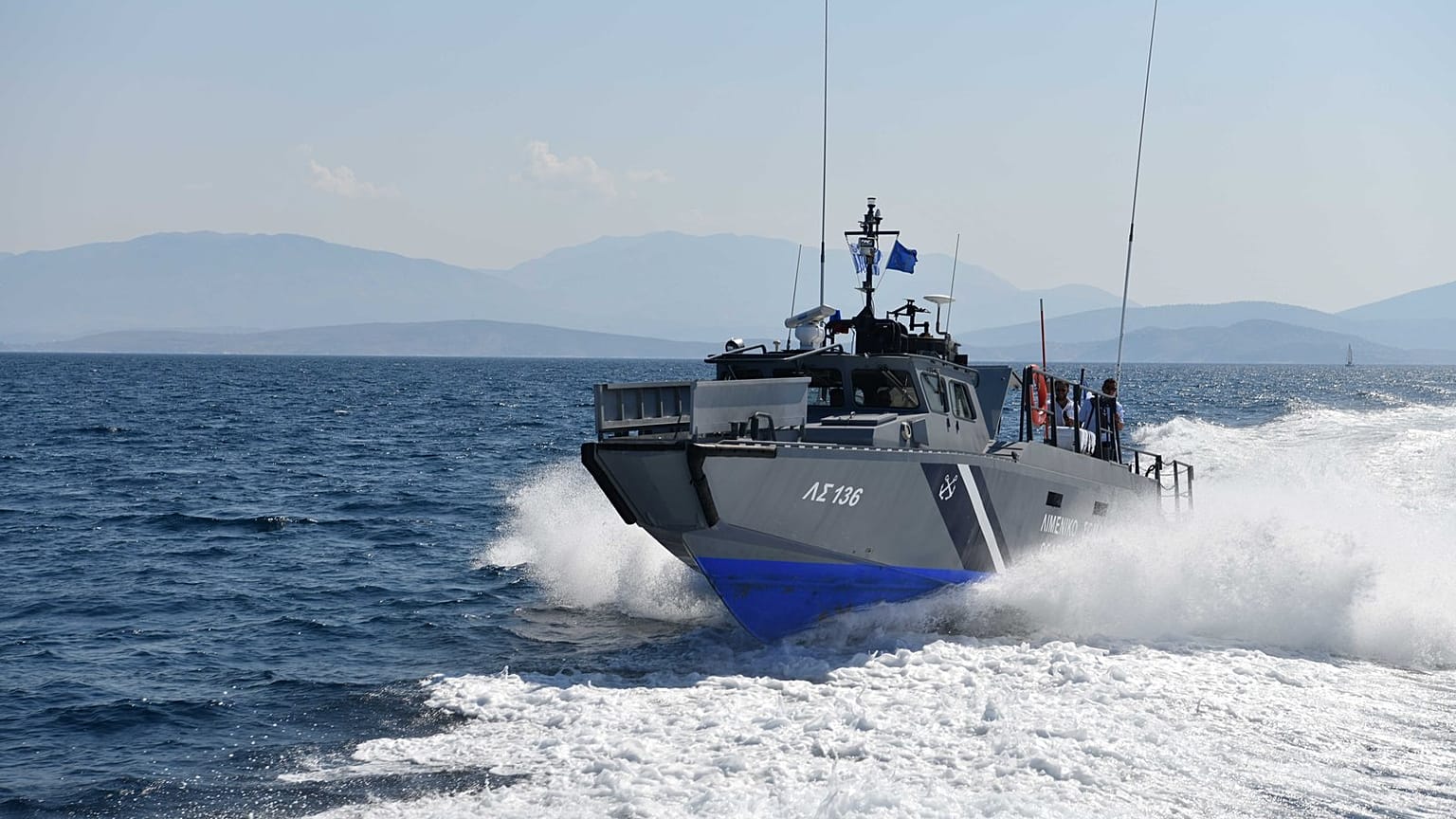
 

22 migrants die off the coast of Crete after six days at sea

PHOTO BY COAST GUARD https://www.hcg.gr
Copyright ΦΩΤΟΓΡΑΦΙΑ ΑΠΟ ΛΙΜΕΝΙΚΟ ΣΩΜΑ https://www.hcg.gr

By Malek Fouda with AFP
Published on 


Survivors say the bodies of those who had died during the difficult journey were thrown into the sea on the orders of one of the smugglers aboard the ship.

22 migrants hoping to reach Europe died off the coast of Greece, survivors told the Greek coastguard on Saturday. 26 others survived the ordeal and were rescued by a European border agency vessel near the island of Crete.

The survivors included a woman and a minor, officials said, adding that those in need of treatment were transferred to hospitals. 21 of the survivors were Bangladeshi citizens, four were from South Sudan and one was a Chadian national.

The boat had been at sea for six days after setting sail from Tobruk, a port city in eastern Libya seen by many migrants as the gateway for asylum into the European Union, on 21 March.

Survivors said the bodies of those who had died were thrown into the Mediterranean sea on the orders of one of the people smugglers aboard the ship.

"During the journey, the passengers lost their bearings and remained at sea for six days without food or water," the coastguard stated.

The bodies of those who died "were thrown into the sea on the orders of one of the smugglers," it added.

Greek authorities have arrested two South Sudanese men, aged 19 and 22, who they believe to be the smugglers. They are now under investigation for "illegal entry into the country" and "negligent homicide".

The boat carrying the group was 53 nautical miles south of Ierapetra, a town on southern Crete.

A coastguard spokesperson told new agency AFP that the vessel had endured "unfavourable meteorological conditions" during its journey.

That, coupled with a shortage of food and water, had "led to the deaths through exhaustion of 22 people," said the spokesperson.

The number of migrants who have died trying to reach EU soil more than doubled in the first two months of 2026, compared with last year, the EU border agency Frontex said earlier this month.

"These tragedies highlight once more the urgency to intensify the work with partner countries along the migratory routes and re-double efforts in the fight against migrant smugglers, who are the ones responsible for these tragedies," an EU commission spokesperson said on Saturday.

According to data from the International Organisation for Migration, 559 people died in the Mediterranean between January and February, compared with 287 for the same period last year.

In December, 17 migrants were found dead inside their boat, which was discovered partially deflated and filled with water southwest of Crete. Authorities say only two survivors were located, adding that another 15 had drowned, and their bodies were never recovered.

The European Parliament on Thursday endorsed a major tightening of the bloc’s migration policy in a bid to stem the crossings, approving the concept of “return hubs” – designed to send migrants to non-EU third countries, like the UK’s Rwanda initiative.

Those proposals have been criticised by rights groups as inhumane.


INVESTIGATION

Propaganda Machine: Inside Russia's drive to shift Chad from Western influence

Russian operatives worked in Chad in 2024 to pull the country closer to Moscow and away from Western influence, internal documents reviewed by an international media consortium reveal. The papers show efforts to build ties with Chadian authorities, spread anti-Western narratives and target opposition figure Succès Masra during a tense election year.


Issued on: 27/03/2026 - RFI

A composite image showing the Russian House in Chad, screenshots of pro-Russian articles in the Chadian press, and crowds waving Russian flags during a visit by Foreign Minister Sergey Lavrov in June 2024. © Photos AFP & RFI - Montage RFI

The documents were analysed as part of the investigative series Propaganda Machine, led by the pan-African outlet The Continent and the investigative network Forbidden Stories, with RFI among the participating media.

They come from Africa Politology, a Russian influence network set up by Wagner founder Yevgeny Prigozhin and later taken over by the Russian state.

On 21 September 2024, members of the Chadian press gathered at a two-storey house in the Farcha district of N’Djamena for the official opening of the Russian House in Chad.

The cultural project was backed by Rossotrudnichestvo, the Russian Foreign Ministry agency responsible for international cooperation and scholarships.

There were “canapés and music by Tchaikovsky”, RFI correspondent Carol Valade recalled. The event projected a soft, cultural image of Moscow’s growing presence.

Election intrigue


But security agents from Chad’s National Agency for State Security were quietly filming from above. Among the guests were two men presented as representatives of the Russian cultural network – Andrei Denisovich and Evgeny Tsarev.

Tsarev, who spoke fluent French and was known locally as “Eugène”, led most of the conversations.

According to internal documents reviewed by the consortium, Tsarev had been active since 2021 in Sudan, the Central African Republic and the Sahel, supporting Russian-linked operations, including the deployment of paramilitary forces. Denisovich, a Belarusian national, was described as a “political analyst”.

Moments after the ceremony ended and guests left, Chadian soldiers moved in and arrested both men.

Two days earlier, on 19 September, two other Russian operatives had already been detained on arrival at N’Djamena airport. They were Maxym Shugaley, a veteran of the Wagner-linked information network and head of the Foundation for the Protection of National Values, and Samir Seyfan.

Shugaley had visited Chad several times in 2024. Alongside Seyfan, he posed as an “investor” and sought meetings with officials ahead of the presidential election on 6 May.

In May, Shugaley posted videos from N’Djamena on Telegram and on African Initiative, a platform linked to Russian intelligence services. He documented meetings, including one with Hilal Abdelkader Abdramane, treasurer of Nouvelle Génération, a group supporting President Mahamat Idriss Déby.


A post by Maxym Shugaley on Telegram: 'Voting in the Chadian presidential election has concluded. The winner is now known. I had the honour of observing the work of Mahamat Déby’s campaign headquarters.'

During one meeting, the Russians gave Abdramane 20 polo shirts bearing Russian and Chadian flags. A photo of the encounter quickly spread online, fuelling speculation about Moscow’s growing role in the Sahel.

Under one of his posts, Shugaley wrote: “The vote [...] is over. The winner is clear, despite an attempt at American interference.” He also told Valade: “The Chadian people do not benefit from their relationship with France.”

Abdramane later told judicial authorities the episode had been exaggerated and was not coordinated with the president’s campaign. But internal documents suggest the actions formed part of a broader strategy.

Targeting Masra

A central part of that strategy was a sustained campaign against Prime Minister and opposition figure Succès Masra.

In the run-up to the election, Russian-linked operatives promoted the idea that tension, or “antagonism”, between President Déby and Masra was necessary. Their coexistence, they argued, reflected a “Western scenario”.

Masra, leader of Les Transformateurs, an opposition party, had returned from exile under a political agreement backed by Western embassies and was later appointed prime minister. He positioned himself as a “co-pilot” in the transition.

According to internal records, more than 120 publications were produced to undermine him.

The campaigns included false or misleading claims. They said the United States had drafted his political programme and sent advisers, that he had signed a security contract with the private consultancy firm Bancroft, and that he was linked to plans for an international investigation into the Chadian leadership.

Some narratives also alleged coordination between Western governments and rebel groups, including plots involving drone strikes.

Screenshot of a file titled “Examples of derogatory publications regarding the United States and Succes Masra”. © screenshot

Tog-Yeum Nagorngar, secretary-general of Les Transformateurs, told RFI he was not surprised by the tactics but was struck by their scale. “We had seen Mr Shugaley physically taking part in Mr Déby’s campaign, at public rallies,” he said.

He rejected the allegations against Masra. “Succès Masra has chosen the legal route for his struggle; he has nothing to do with the rebellions. His policy is justice, equality and dignity for all,” he said.

Researcher Remadjy Hoinathy of the Institute for Security Studies said Russian actors tend to align with those in power. “Succès Masra appeared to them as an obstacle,” he said. He added that Masra’s scepticism towards pro-Russian “Pan-Africanism” may also have played a role.

The Chadian government rejected the allegations, insisting that state institutions operate “with full sovereignty” and that the election process took place under favourable conditions.


Paid influence

Alongside political messaging, the investigation describes a wide network of sponsored content and media placements.

Internal documents include lists of articles allegedly placed in African media, with detailed payments attached, amounting to thousands of dollars. Many pieces promoted narratives of Western interference or conspiracies against President Déby, while criticising French media, including RFI.

Some media executives denied direct links to Russian operatives. One said sponsored content was submitted through standard advertising channels and published unless there was a “clear problem”. The articles were labelled “partner” and carried disclaimers.

However, discrepancies in pricing raised further questions. While outlets reported charging around 150 euros per sponsored article in 2024, internal documents suggested payments of 500 to 600 dollars, leaving an unexplained gap.
Screenshot of a file listing articles placed by Russian 'experts'. © Capture d'écran

Several journalists said they had accepted advertorials for fees ranging from 50,000 to 200,000 CFA francs, or roughly 75 to 300 euros.

Olivier Monodji, director of the Chadian news website Le Pays, said he had been misled. “They showed me a press card and mentioned advertorials; they spoke good French and seemed serious,” he said. “I feel like I’ve been duped, tricked. It’s a regret; it cost me four months in prison, a trauma.”

In 2025, seven people, including journalists and campaign affiliates, were detained on suspicion of collusion with a foreign power. They were later cleared after showing they had acted in good faith.

The case highlighted how vulnerable the media sector can be. Limited resources and weak oversight can leave newsrooms open to covert influence. Burkinabé fact-checker Harouna Drabo said editors are sometimes unaware of such practices until problems emerge.

Limited impact


At the heart of the operation was a clear objective, stated in internal documents: “Distancing Chad from the Western sphere of influence.”

The documents also referred to efforts to promote Chad’s integration into a pro-Russian geopolitical framework. Campaigns pointed to President Déby’s meeting with Vladimir Putin in January 2024 and a later visit by Russian Foreign Minister Sergey Lavrov.

Other narratives promoted the Alliance of Sahel States (AES) and BRICS, while also amplifying tensions with France. Legal proceedings against Déby in France were widely publicised, and regional security partnerships with Cameroon and the Central African Republic were emphasised.

The Russian House in N’Djamena was seen as a key tool, combining cultural outreach with political messaging.

These efforts coincided with shifts in Chad’s foreign policy. In April 2024, US special forces withdrew from the country. In December, Chad requested the departure of French troops, which took place shortly afterwards.

A screenshot of an article entitled 'Restoration of relations with Paris: Is Déby jeopardising Chad’s ties with the AES?' on the website journaldutchad.com written by a certain 'Drissa Traoré'. © Capture d'écran


Speculation grew about Chad joining the Alliance of Sahel States, with participation in regional events and high-level visits fuelling the narrative.

Yet the situation appears more complex. Within the Chadian leadership, views remain divided. Some officials favour new partnerships, while others worry about dependency and financial risks, particularly given France’s role in supporting Chad through international donors.

Hoinathy said Déby’s approach appeared cautious rather than ideological. “He wanted to see what was possible,” he said, adding that Russian commitments had not fully materialised.

Ties with France were never fully severed. By January 2026, Déby and Emmanuel Macron had publicly reaffirmed their relationship under a “refounded” partnership.

In this context, the arrest of the Russian operatives in September 2024 has been interpreted by some observers as a signal from Chadian authorities to avoid deeper involvement with external influence operations.

Similar concerns have emerged elsewhere. In Angola, two Africa Politology agents have been detained since August 2025 over alleged interference in the country’s next presidential election.

This story was adapted from the original version in French by François Mazet

►The Propaganda Machine investigation is based on 1,431 pages of internal Russian-language documents obtained anonymously and analysed by an international consortium including Forbidden Stories, The Continent, All Eyes On Wagner, Dossier Center, openDemocracy, iStories and others, later joined by RFI. The archives include strategic plans, operational reports and financial records covering disinformation campaigns from late 2023 to November 2024.


Russian court bans Oscar and BAFTA-winning documentary ‘Mr Nobody Against Putin’


By David Mouriquand
Published on 

‘Mr Nobody Against Putin’ is based on secretly recorded footage by school teacher Pavel Talankin, who exposes how the Putin administration aims to indoctrinate schoolchildren in the aftermath of Russia’s invasion of Ukraine. The film won the Oscar for Best Documentary earlier this month.

A Russian court has banned the distribution of the award-winning documentary Mr Nobody Against Putin, after authorities claimed the film promoted “negative attitudes” about the government and the war in Ukraine.

The ban on the documentary was issued by a Chelyabinsk court on Thursday after prosecutors said the film negatively portrayed Russia and promoted “extremism and terrorism”, according to AFP.

Directed by David Borenstein and Pavel Talankin, the film follows Talankin – a school teacher - at a school in Karavash in Chelyabinsk region. His footage, secretly recorded over two years, chronicles how the Putin administration attempts to control public perception of the ongoing war in Ukraine.

The powerful documentary shows how pro-war propaganda lessons and “patriotic displays” have been introduced in classrooms after the invasion of Ukraine in 2022.

Talankin gave the footage to Borenstein, an American filmmaker living in Denmark, in 2024 – the same year he fled Russia.

Mr Nobody Against Putin won the Special Jury Award at Sundance, where it premiered in January 2025, and went on to win both the BAFTA and the Academy Award for Best Documentary earlier this month.

After receiving his Oscar, Talankin said: “For four years we have looked at the sky for shooting stars to make a very important wish. But there are countries where, instead of shooting stars, bombs fall from the sky and drones fly. In the name of our future, in the name of all of our children, stop all of these wars now.”

“Mr Nobody Against Putin is about how you lose your country,” Borenstein said. “You lose it through countless small little acts of complicity. We all face a moral choice, but luckily even a nobody is more powerful than you think.”

Somewhat predictably, Russian news agency RIA Novosti left out the documentary category when it reported the Oscars results earlier this month.

The ruling by the Russian court prohibits the documentary’s distribution across the country, including on streaming platforms, “in the interests of an indefinite number of persons”.

Prosecutors also argued that schoolchildren had been filmed without parental consent.

Russia’s presidential human rights council said they would appeal to the Academy of Motion Picture Arts and Sciences and UNESCO to investigate the film’s production.

The Kremlin has continued to suppress opposition to the war. During a meeting with representatives of the culture council this week, Vladimir Putin bemoaned how Russian cinemas were showing "stupid and unnecessary" foreign films.

OPINION


Look who's cashing in on Trump's war

Ray Hartmann
March 27, 2026 
RAW STORY

Far be it from me to suggest that Russian President Vladimir Putin owns Donald Trump.

So let’s call this just a happy coincidence.

According to new reporting from the Telegraph in London, analysts estimate Putin is raking in roughly $760 million a day as the war in Iran drives global oil prices higher. That figure — drawn from analysis by the Kyiv School of Economics and maritime tracker Vortexa — points to something larger than another oil price spike.

It reveals a mechanism.

War in Iran disrupts shipping through the Strait of Hormuz. Oil prices jump. Then comes the part that should cause heads to spin.

The United States issues a “temporary” sanctions waiver on certain Russian oil shipments — initially described as a narrow allowance for cargo already at sea. But in global commodity markets, perception is reality.

The waiver doesn’t just move a few shipments. It changes the risk calculation across the entire market — effectively rehabilitating Russian crude from a sanctioned commodity back to something buyers can treat as ordinary market oil.

And that risk is everything.

As the reporting reveals, Russia was still selling oil for much of the past two years—but at a steep discount. Buyers were willing but cautious. Legal exposure, financial friction, and reputational cost all forced prices down. India, for example, was buying Russian crude at a $9-per-barrel haircut. China was taking a $15 discount.

Those discounts are now happily gone—or sharply reduced. According to KSE analyst Borys Dodonov, Russian oil is sometimes commanding a premium at Indian ports. Vortexa reports India has increased Russian oil imports by 72 percent since the war began.

One needn’t possess the chops of an international economist to understand the basic outcome here: Same barrels, same destinations, much higher price. All to the benefit of Trump’s benefactor.

The sanctions weren’t lifted. They were just made easier to ignore.

Kremlin oil and gas revenues are projected to nearly double this month alone. If the conflict drags into fall, annual Russian energy revenues could reach $386 billion — nearly triple pre-war projections.

As Simon Johnson, the Nobel laureate and former IMF chief economist, said, “It just increases what Russia can receive per barrel, by a lot, putting cash in the pocket of our enemies.”

There’s no diplomatic way to dress that up.


The waivers eased political pressure on gas prices at home—a short-term reprieve for an administration managing an unpopular war. The long-term invoice gets paid in the strengthening of a dictator’s war chest.

Everyone wins. Well, not quite everyone.

Americans paid for it at the pump. Putin banked it.

Just a happy coincidence.

Click here to subscribe to Ray Hartmann's Soapbox

Rubio slams Zelenskyy's Donbas comments and says US may divert Ukraine arms to Iran

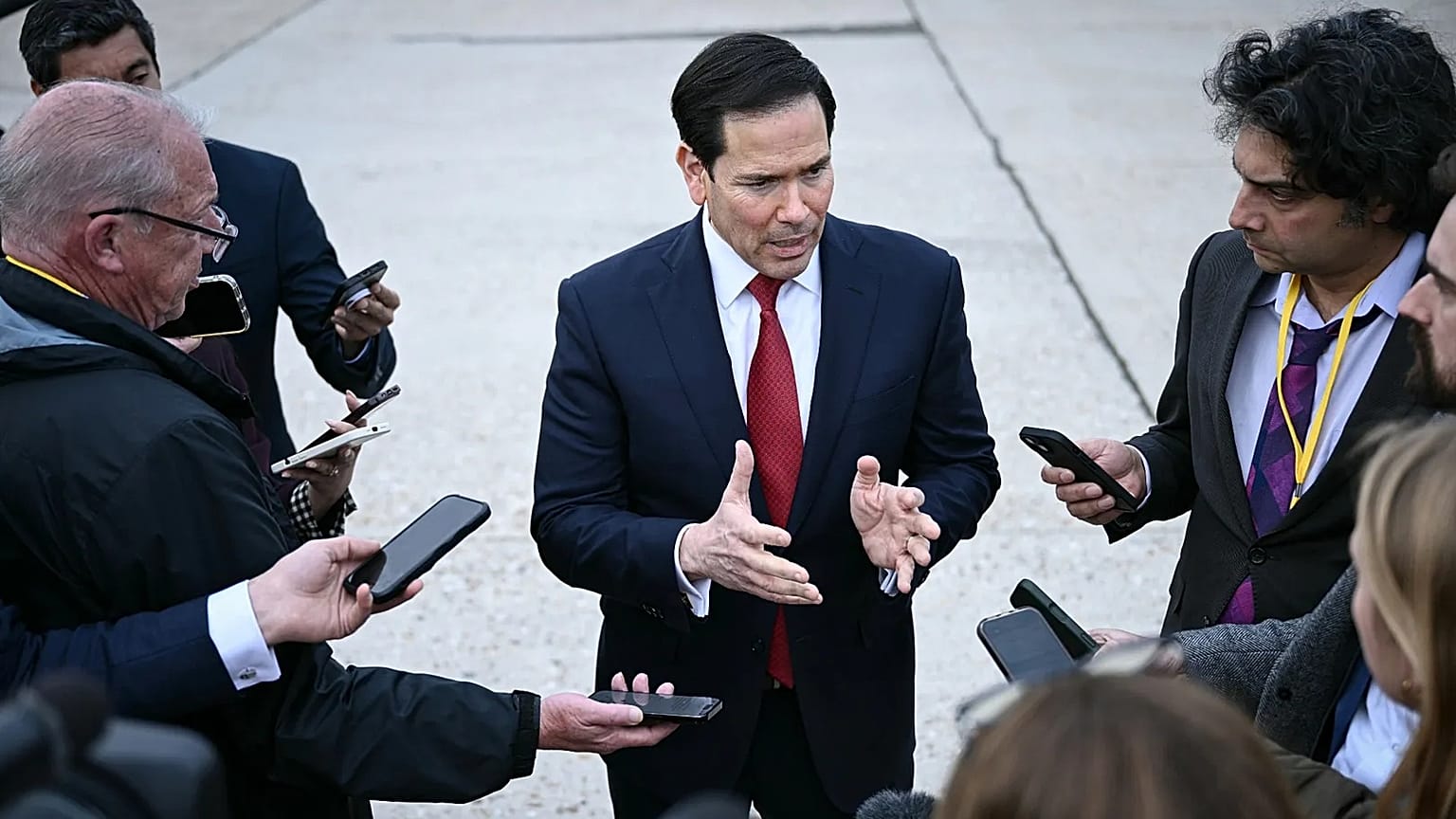
US Secretary of State Marco Rubio speaks to the press following a G7 Foreign Ministers' meeting outside Paris, 27 March, 2026
Copyright AP Photo

By Gavin Blackburn
Published on 

Zelenskyy had said in an interview that the United States was pressing Ukraine to cede the eastern Donbas region to Russia before finalising any post-war security guarantees.

Secretary of State Marco Rubio accused Ukrainian President Volodymyr Zelenskyy of lying over US demands on Friday and voiced an openness to divert weapons earmarked for Kyiv to support the war on Iran.

Zelenskyy had said in an interview that the United States was pressing Ukraine to cede the eastern Donbas region to Russia before finalising any post-war security guarantees.

"That's a lie," Rubio told reporters when asked about Zelenskyy's remarks.

"I saw him say that and it's unfortunate he would say that, because he knows that's not true," Rubio said in Paris after talks with the Group of Seven industrialised nations.

"What he was told is the obvious: security guarantees are not going to kick in until there's an end to a war, because otherwise you're getting yourself involved in the war," Rubio said.

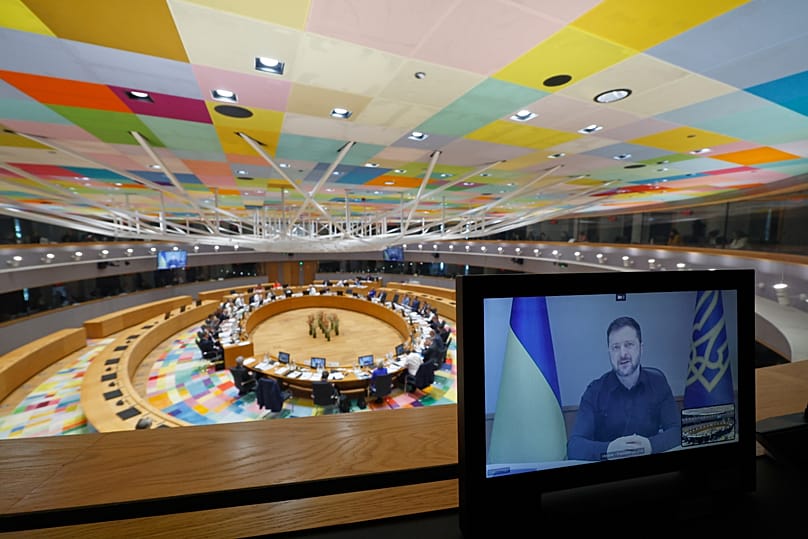
Ukraine's President Volodymyr Zelenskyy speaks to EU leaders via video link during a round table meeting at the EU summit in Brussels, 19 March, 2026 AP Photo

"That was not attached to, unless he gives up territory," Rubio said. "I don't know why he says these things. It's not true."

The attack on Zelenskyy was especially striking coming from Rubio, a former hawkish senator who has largely been seen as more supportive of the Ukrainian cause than some others in President Donald Trump's circle.

In a scene that went viral in February last year, Rubio sat sullenly in the Oval Office as Trump and Vice President JD Vance berated Zelenskyy, saying he was ungrateful for US assistance.

Recently, Trump has again criticised Zelenskyy, saying that he needs to accept compromises and comparing him unfavourably with Russian President Vladimir Putin.

Rubio said that the United States was open to shifting assistance to Ukraine after the United States and Israel attacked Iran

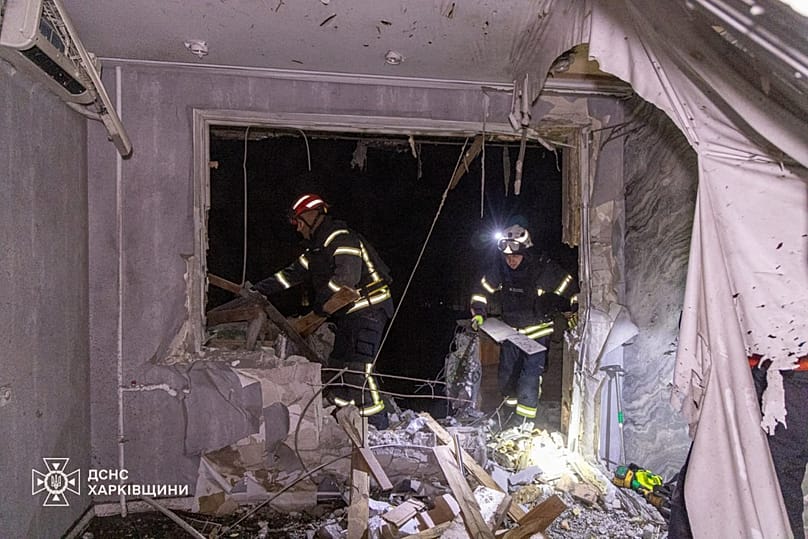
Firefighters put out a fire in a residential building following a Russian drone attack in Kharkiv, 27 March, 2026 AP/Ukrainian Emergency Service

"Nothing yet has been diverted, but it could," Rubio said.

"If we need something for America and it's American, we're going to keep it for America first."

But he said there had not yet been any change to the so-called Prioritised Ukraine Requirements List (PURL), a NATO initiative established after Trump's return in which European allies fund weapons requested by Ukraine that are purchased from the United States.


'The US must not divert weapons for Ukraine to Iran,' Finnish defence minister tells Euronews


By Shona Murray
Published on 

The Finnish defence minister said his country will check that weapons paid for by Europe for the Ukrainian army will reach their intended destination. European allies are concerned about depleting US military resources due to the Iran war and after media reports that the US might divert assets.

Finland’s Defence Minister Antti Häkkänen told Euronews he expects all weapons destined for Ukraine, purchased from the US by European countries, to be delivered.

Häkkänen said Helsinki would check to ensure Washington honours contracts signed with European NATO countries that have bought weapons for Ukraine from US military contractors.

The issue arises from a Washington Post report that the Pentagon is considering diverting crucial military equipment intended for the Ukrainian defence forces to the Iran war.

“Every time we are assessing how the money is being spent, and we are trusting that the mechanism is working. If there are problems of course, then we have to reassess that,” Häkkänen told Euronews' 12 Minutes With programme in an interview at the defence ministry in Helsinki.

The weapons reportedly include vital air defence systems needed to intercept Russian missiles and drones, purchased through NATO’s Prioritised Ukraine Requirements List or PURL system, which allows NATO countries to buy arms for Ukraine from the US.

NATO Secretary General Mark Rutte told journalists that essential equipment for Kyiv, including interceptors, “is continuing to flow into Ukraine.”

However, there are concerns that as the war grinds on and US military supplies deplete, a decision to divert assets to Iran will be made.

“PURL has now supplied around 75% of all missiles for Ukraine's Patriot batteries and 90% of the ammunition used in other air defence systems,” to Ukraine, Rutte told journalists at NATO HQ in Brussels on Thursday.

Helsinki is also adamant it would not be drawn into the US-Israeli intervention in Iran, despite comments from US Secretary of State Marco Rubio implying that Washington's support in Ukraine is at risk if European allies do not help the US secure the Strait of Hormuz.

In a thinly veiled threat to allies while en route to the G7 meeting of foreign ministers in Paris, Rubio said: “Ukraine is not America’s war, and yet we’ve contributed more to that fight than any other country in the world."

“So, it’ll be something to examine that the president will have to take into account down the road”, Rubio added.

But Häkkänen said redirecting security apparatus from Finland to the Gulf was something Helsinki could not do, given the 1350-kilometre border Finland shares with Russia.

“We're a small country neighbouring Russia,” he said. “All our resources are involved into our readiness in this area, so there's no options or potential” to participate, he said.

Meanwhile, Finnish President Alexander Stubb also doubled down on his country’s resistance to US calls for help.

The Iran war "not a NATO matter," he said on Thursday evening, as NATO is a defensive alliance.

Stubb was speaking at a press conference following a meeting of the leaders of the Joint Expeditionary Force (JEC), a multilateral defence cooperation among Nordic-Baltic NATO countries.

Zelenskiy seeks Gulf security ties as Middle East war reshapes Ukraine conflict

Zelenskiy seeks Gulf security ties as Middle East war reshapes Ukraine conflict
Zelenskiy seeks Gulf security ties as Middle East war reshapes Ukraine conflict. / bne IntelliNewsFacebook
By bne IntelliNews March 27, 2026

Ukrainian President Volodymyr Zelenskiy arrived in Saudi Arabia on March 26 for talks on regional security cooperation, offering Kyiv’s battlefield-honed drone defence expertise in exchange for military support, as the war in Iran reshapes the strategic landscape of Russia’s invasion of Ukraine, reported Ukraine Business News.

Zelenskiy said he expected “important meetings” and expressed gratitude to partners willing to deepen cooperation. Ukrainian officials, cited by AFP, said Kyiv is preparing to sign an air security agreement with Riyadh, reflecting growing demand in the Gulf for counter-drone capabilities after attacks on energy infrastructure linked to the Iran conflict.

Kyiv has already dispatched more than 200 military specialists to countries including the United Arab Emirates, Qatar and Saudi Arabia to help defend against drone strikes. Zelenskiy has proposed a barter arrangement, offering Ukraine’s combat experience in exchange for access to scarce Western systems, particularly US-made Patriot interceptor missiles critical for countering high-speed ballistic threats.

The diplomatic push comes as the Middle East war alters calculations in both Kyiv and Moscow. According to analysts, rising global energy prices triggered by the conflict have boosted Russian revenues, easing economic pressure that had begun to weigh on the Kremlin earlier this year.

Journalist Mikhail Zygar said President Vladimir Putin had been considering renewed peace talks in early 2026 amid weakening economic indicators, including discounted oil sales and tightening credit conditions. Plans for a government reshuffle and shifts in economic management were reportedly under discussion. However, the outbreak of war in Iran reversed that trajectory.

“In one fell swoop, the conditions for reconciliation were violated,” Zygar said, pointing to higher oil prices and growing divisions among Western allies. Analysts caution that the boost to Russia’s finances may prove temporary, but in the short term it reduces incentives for compromise.

At the same time, Ukraine faces renewed uncertainty over military supplies. US officials are weighing whether to redirect some weapons originally intended for Kyiv to the Middle East, including air defence interceptors procured under Nato’s PURL mechanism. While no final decision has been taken, European diplomats say concerns are growing that US stockpiles are being stretched.

President Donald Trump said Washington frequently reallocates weapons globally and emphasised that the United States continues to sell arms to allies, who can then transfer them to Ukraine. Nato Secretary General Mark Rutte sought to reassure Kyiv, stating that deliveries of air defence systems and ammunition would continue without interruption.

Peace diplomacy remains fragile. Talks between Ukrainian and US delegations in Miami were described as constructive, but no breakthrough has been achieved. Washington has reportedly floated security guarantees for Ukraine contingent on Kyiv relinquishing control of the Donbas region, a proposal Zelenskiy has warned could undermine long-term regional stability.

European leaders have also voiced concern. EU foreign policy chief Kaja Kallas said any peace settlement should not force Ukraine into territorial concessions, while Nato officials stressed that decisions on sovereignty must rest with Kyiv.