Saturday, March 28, 2026

'The world is watching': Analyst warns Trump against destroying American Dream ideals

Ewan Gleadow
March 28, 2026 
RAW STORY


FILE PHOTO: Donald Trump attends a press conference, the day after a guilty verdict in his criminal trial over charges that he falsified business records to conceal money paid to silence porn star Stormy Daniels in 2016, at Trump Tower in New York City, U.S., May 31, 2024. REUTERS/Brendan McDermid/File Photo

Donald Trump could be judged harshly by the world if he breaks a promise at the heart of the American Dream, an analyst has claimed.

The president and his administration have cracked down hard on immigration in a way that could undermine the "credibility" of the country, Brent McKenzie argued. The Hill columnist considered the crackdown on immigration as a move that could shatter the American Dream in the eyes of the world.

"The process might be long and complicated, but immigrants who followed the rules would eventually find opportunity," McKenzie wrote. "The U.S. was not only a place where people could succeed; it also openly welcomed those willing to work, contribute and build a life. Increasingly, people outside the U.S. are beginning to wonder whether that promise still holds."

McKenzie went on to argue that the "cultural confidence" of the United States depends on immigration, and that the Trump administration is actively undermining the future of the country.

He added, "But recent policy decisions are testing that narrative. When lawful permanent residents are excluded from government programs designed to help small businesses grow, or when people deep in the legal immigration process are suddenly caught in policy pauses and reversals, the message is larger than any single rule.

"In recent years, that confidence has eroded. Immigration has become a central point of political conflict. Today, immigration is no longer just a policy debate. It has become a cultural and political dividing line. And for people watching from outside the U.S., that shift is impossible to miss.

"The question facing the U.S. today is not whether immigration policy should evolve. Every country revises its policies over time. The question is whether the larger promise that once defined the American experience still holds."

Trump's changes to immigration policy in the US could, McKenzie argues, change the tide in countries across the world. This, he believes, is the reason there is such a close eye on the president.

"How the U.S. answers that question will shape not only immigration policy but the country’s place in the world," he wrote. "If the U.S. wants the next generation of innovators, entrepreneurs and builders to continue choosing America, it must do more than defend its borders.

"It must also defend the promise that’s drawn them here for generations. The world is watching to see whether that promise still stands."

'No going back' for next president as Trump makes US reversal 'impossible': analyst

Ewan Gleadow
March 28, 2026 
RAW STORY


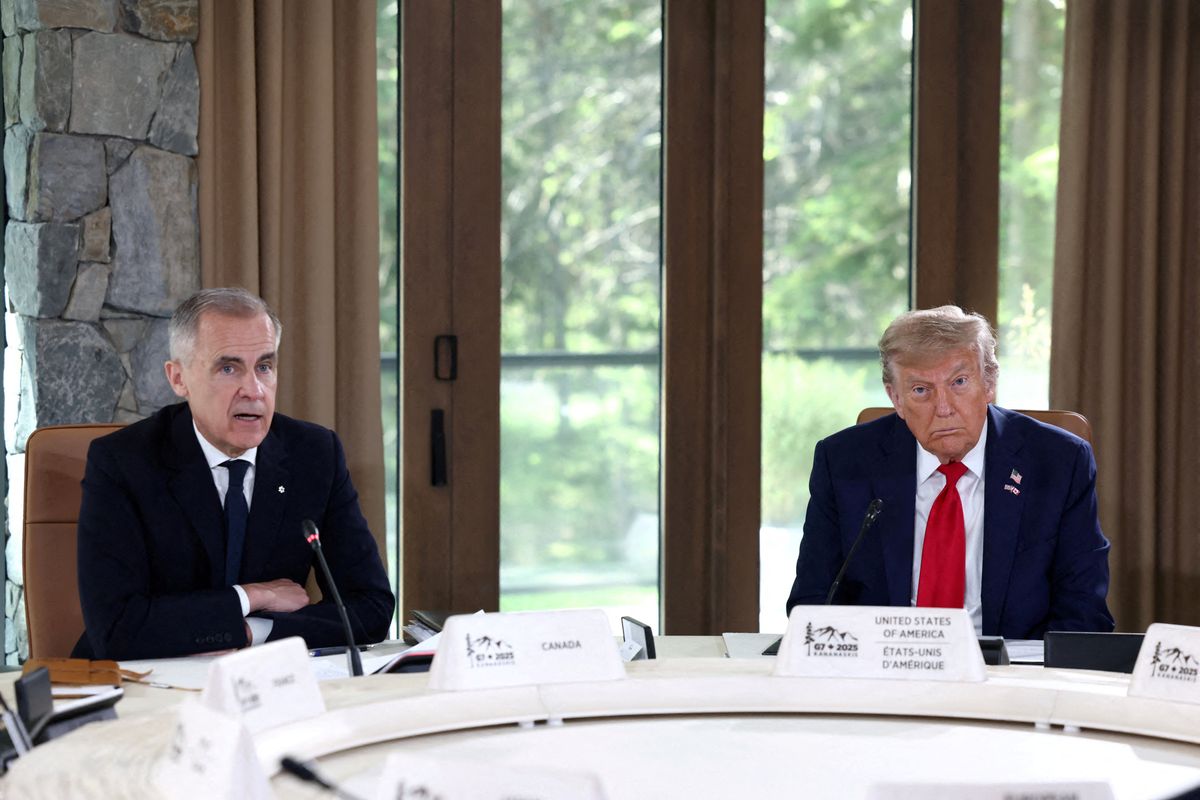
FILE PHOTO: U.S. President Donald Trump and Canadian Prime Minister Mark Carney attend a meeting with G7 leaders and guests, at the G7 summit in Kananaskis, Alberta, Canada, June 16, 2025. REUTERS/Kevin Lamarque/File Photo


Donald Trump has made life harder for his Oval Office successor with a series of changes that will likely be impossible to undo, an analyst claimed.

The president's tough stance on geopolitical relations during his second term has hindered the chance of reconciliation under the 48th President of the United States, Salon writer Mike Lofgren argued. The political analyst suggested that Trump's team was undermining steps taken by previous administrations to improve international relations.

Lofgren claims that Trump has pressed the US into a position where there is "no going back to the status quo ante" of previous administrations.

Actions taken against Venezuela and Iran, as well as a period of time where the president appeared set on subsuming Greenland into US territory has seemingly worn international relations thin.

This, Lofgren suggests, is a point of no return that a future president from either party would struggle to navigate.

He wrote, "Yet another future president might have retraced a path toward more balanced economic or security policies once the disadvantages of trade wars or diplomatic and military isolation became obvious.

"But Trump, in large part through his feral nastiness and adolescent vulgarity, has made that sort of reversal all but impossible. A hypothetical president might have distanced himself from NATO, but it’s inconceivable that he would covet an alliance partner’s territory to the point where that government made plans to blow up the airfields in the coveted territory in case of invasion."

Lofgren went on to suggest that longstanding treaties and decades-old friendships between the US and other countries had been ground down slowly, and that Trump had simply sped up the process of a breakdown.

"Trump hates reading, as his spotty education and lack of general knowledge testify," Lofgren wrote. "That reflects his profound lack of intellectual curiosity.

"He attempts to disguise this deficiency with endless boasting about himself and endless denigration of others. He is obsessed with popular media and showbiz and the shabby values they embody.

"It is almost certain, to this observer anyway, that after the last hanging chad in Florida, after the rubble of the World Trade Center had cooled, after the first improvised roadside bomb exploded in Iraq, and after Lehman Brothers collapsed, Trump, or someone like him, was inevitable."

The US Under Trump Is Demonstrably the Most Dangerous Nation in the World


Trump’s military aggression has displaced diplomacy and everyone on this planet is worse off for it.


John Ripton
Mar 28, 2026
Common Dreams

Donald Trump’s imperial ambitions and aggressive use of military power push the world toward a perilous future. At this moment in history, when the world actually needs cooperation among nations to confront existential environmental, technological and socioeconomic crises, diplomacy must promote international collaboration in achieving shared goals. Trump’s administration, however, has completely abandoned diplomacy as a primary means of resolving international concerns and conflict. Military power is swiftly displacing it as the arbiter of competing interests. In a hostile and militarized international political environment “might makes right” is the operative principle. The consequence of policy based on this principle is international chaos and war.

The Trump administration’s foreign policy sends multiple ominous signals to the world. Questions that would seem unthinkable little more than a year ago now are central concerns of the international community. Will the US retreat from the North Atlantic Treaty Organization (NATO)? Will the US actually attempt to destabilize the economy of its neighbor Canada? Will the US favor Russia over Ukraine? Is Greenland in imminent danger of a US invasion? Is destroying dozens of boats and killing scores of people onboard—all without evidence and due process—justified under international law? Are invasion of another nation and abduction of a head of state an assault on territorial sovereignty and the United Nations Charter? Will billion-dollar seats on a Board of Peace chaired by Trump and displacing UN peacekeeping authority improve the lives of Palestinians in Gaza? Will the US employ tariffs as a universal political tool despite their destabilizing consequences for global economic growth and market predictability?


The hubris and ruthlessness of a leader who forces such questions to the surface, particularly when that leader is the commander-in-chief of the world’s most powerful military force, are more than menacing. These leadership character flaws are nevertheless amplified by Trump and Secretary of Defense Hegseth’s bellicose and callous use of language concerning war. In discussing the sinking of Iran’s naval force, for example, Trump recalled with obvious satisfaction that a general told him that he preferred destroying ships to capturing them “because it’s more fun to sink them.” In remarks about Kharg Island, Iran’s oil export hub in the Persian Gulf, Trump warned “I’ll knock the hell out of it,” and he, too, would do it “just for fun.” Referring without evidence to alleged drug smuggling into the US on boats, he characterized the extrajudicial murders of the boats’ occupants as “an act of kindness.” He mocked Greenland’s military defense as “two dog sleds.” Trump offered this justification for invading Venezuela: “They took our oil rights...and we want it back.” And, regarding Cuba, Trump declared, “I think I can do anything I want with it.”

Further, Defense Secretary Pete Hegseth demands that he be called Secretary of War, chief of the Department of War. Hegseth obsessively refers to soldiers as warriors. He gushes over US exploits in the war with Iran. “What it takes to [wage war] with the precision that we do is world class. No one else can do it. And it’s world class Americans... the engine of what makes our country great.” His predatory instincts and disregard for human suffering are deeply alarming: “This was never meant to be a fair fight, and it is not a fair fight. We are punching them while they’re down, which is exactly how it should be.”

Elsewhere he describes the American military operation in Venezuela as “spectacularly executed,” claiming it “reestablish[ed] the deterrent effect of the US armed forces.” Equally frightening as brandishing missiles and proclaiming that the greatness of America is its use of military force is Hegseth’s predilection for religious crusade. In his 2020 book American Crusade echoes of ‘holy war’ ring sharply: “Do you enjoy Western civilization? Freedom? Equal justice? Thank a crusader,” he exhorts Americans. “ If not for the Crusades, there would have been no Protestant Reformation or Renaissance. There would be no Europe and no America.”

In Hegseth’s apocalyptic vision those who resist American military dominance are less than human. He casts Iranian leaders as vermin, “desperate and hiding, they’ve gone underground, cowering. That’s what rats do.” His Old Testament wrath and venomous attitude toward Iranians with whom the US was in diplomatic discussion just three weeks ago suggests that he may be at least as dangerous as those he purports to be America’s enemies.

In retrospect, regarding the current war with Iran, diplomacy appears to have been “a ruse,” according to Brett Bruen, a former official of the Obama State Department and National Security Council. His view is supported by comments of the Omani foreign minister Badr bin Hamad Al Busaidi who mediated the negotiations. Appearing on CBS “Face the Nation” just hours before the US-Israeli attack on Iran, he expressed confidence that “the peace deal is within our reach.” He further emphasized that an agreement could be achieved “if we just allow diplomacy the space it needs to get there. Because I don’t think any alternative to diplomacy is going to solve this problem.” Later in the interview Al Busaidi explained that there had been a breakthrough in the central issue of the negotiations: “the agreement that Iran will never, ever have nuclear material that will create a bomb.” He then clarified just what he meant. “I think that there is agreement now that this [the enriched uranium] will be down blended to the lowest level possible, to a neutral level, a natural level...and converted into fuel, and that fuel will be irreversible.” Then, after the first attacks, the Omani foreign minister wrote on social media that “I am dismayed. Active and serious negotiations have yet again been undermined.”

The determined move away from diplomacy to war reflects the idea that weaker nations need to bend to the will of the United States if military invasion is to be avoided. Secretary of State Marco Rubio is influential in crafting this volatile and repressive brand of foreign policy. Edward Wong and Michael Crowley, veteran NY Times international news reporters who travel with Rubio, contend that a core aim of this is to create client states of authoritarian regimes. “It is regime compliance rather than regime change, a doctrine of destroy and deal.” In addition to massive aerial invasion or introduction of ground troops, an overwhelming threat of imminent military invasion or limited military intervention may be enough to exact concessions. This doctrine forces nations into asymmetrical transactions, arrangements where the dominant party (US) dictates the terms. The military action against Venezuela, the abduction of its president and now the pressure to compel new leadership to facilitate favorable oil concessions illustrate how full-scale military invasion underway in Iran may not always be necessary to achieve Rubio’s and Trump’s desired results.

The Trump administration’s campaign against immigrants in the US and international migration in general and its commitment to the defense and spread of Western values and civilization drive the ever-present specter of war. They are now both the national and international agenda of the United States. A militarized crusade, as discussed above, is an integral element of American foreign policy. These imperialist and autocratic designs are organic outgrowths of Trump’s “America first” political objectives. Trump administration officials and right-wing ideologues court ultra-conservative, illiberal and fascist counterparts in Europe. These hyper-nationalistic, anti-immigrant forces are challenging and destabilizing liberal institutions throughout the continent. In this climate no one, not non-European nations nor traditional allies, can trust a US led by Trump.

The pronouncements and policies of his administration are ever poised for military conflict to advance distorted and politically deranged ideas. The US now is demonstrably the most dangerous nation in the world. Its destruction of Iran, its armed intervention in Venezuela, its threatening of neighbors and allies and its military backing of Israel in Gaza, Iraq, Lebanon and beyond are just the beginning of a future that will haunt the world and Americans for generations. To mitigate the horrendous suffering Trump’s administration is inflicting abroad as well as at home, to turn back his pursuit of authoritarian power and to salvage the humanity of this nation, US voters must overwhelmingly reject Trump’s political supporters seeking office in the 2026 elections.


Our work is licensed under Creative Commons (CC BY-NC-ND 3.0). Feel free to republish and share widely.


John Ripton
John Ripton writes political essays and research articles. He holds a Master in International Affairs and PhD in History. His dissertation explores the historical impact of global capitalism on Salvadoran peasants and how it contributed to the revolutionary struggle against authoritarian and dictatorial regimes. John's articles and essays have been published in journals, magazines, newspapers and other publications in North America, Latin America, Europe and Asia.
Full Bio >
Profiles in Cowardice: Our 4 Ex-Presidents Still Won’t Speak Out Against Trump!

These former presidents should mobilize the citizenry from the grassroots to the Capitol and take on the unpopular Tyrant Trump; instead, they are living luxurious lives and are largely AWOL.


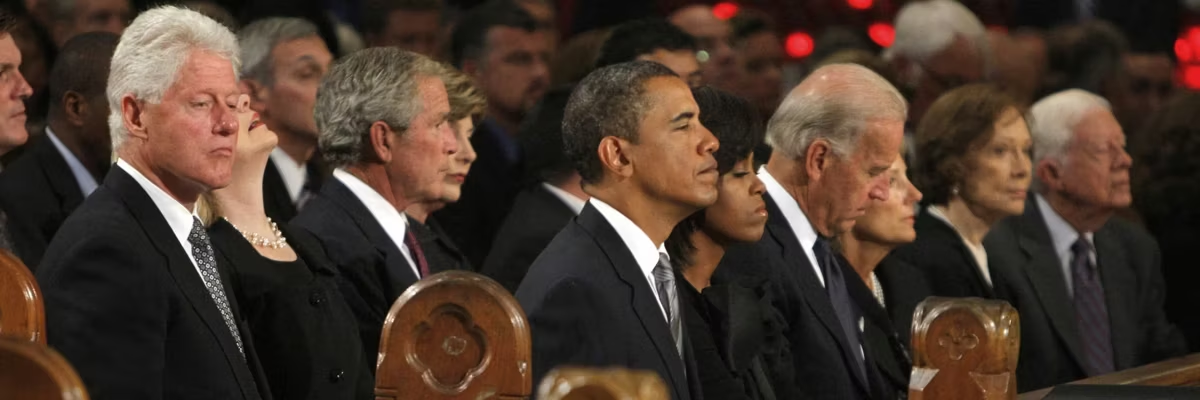
Former President Bill Clinton (L-R), then-Secretary of State Hillary Clinton, former President George W. Bush and his wife Barbara, then-President Barack Obama and first lady Michelle Obama, then-Vice President Joseph Biden and his wife Jill, former first lady Rosalynn Carter and former President Jimmy Carter wait for the funeral services for US Sen. Edward Kennedy at the Basilica of Our Lady of Perpetual Help in Boston, Massachusetts August 29, 2009.
(Photo by Brian Snyder/AFP via Getty Images)

Ralph Nader
Mar 28, 2026
Common Dreams

What should the American people, especially the hundreds of millions of their voters, expect Presidents Bill Clinton, George W. Bush, Barack Obama, and Joe Biden to do against the vicious, serial law-violating, violent, corrupt, agency-dismantling Donald Trump and the crony Trumpsters who are wrecking our government and our economy?

These former presidents should mobilize the citizenry from the grassroots to the Capitol and take on the unpopular Tyrant Trump. Having sworn to uphold the Constitution and “…take Care that the Laws be faithfully executed,” they should strongly uphold their patriotic duty to resist tyranny and save our Republic and our besieged democratic institutions, and stop the assault on our civil liberties and civil rights.

Our former presidents all get along with each other. They have the stature to:Get mass media;
Raise immediately large amounts of funds for strong IMPEACH TRUMP citizen groups in every congressional district to increase and expand the present majority of Americans wanting to FIRE TRUMP;
Stay the course as Trump keeps worsening his criminal dictatorship and destruction of our democracy; and
Highlight the many programs they initiated that Trump has illegally destroyed or is dismantling.

Instead, they are living luxurious lives and are largely AWOL from connecting with the existing but overwhelmed civic opposition to Trump. Bush is painting landscapes as Trump has destroyed his AIDS program in Africa, and the Bush wing of the Republican Party. Obama has campaigned for Abigail Spanberger and Mikie Sherrill as governors of Virginia and New Jersey, satirizing Trump in some of his speeches. His present passion, however, is the March Madness basketball championships. Clinton has left it up to Hillary, who wrote a guarded New York Times op-ed back on March 28, 2025, taking Trump to task for jeopardizing our national security and not “preparing for real fights with America’s adversaries.”

Then there is Joe Biden, who received then President-elect Trump and Melania on the morning of January 20, 2025, with the gracious “welcome home.” In return, Biden got that afternoon and every day since hundreds of foul epithets from Trump, scapegoating him for almost everything he could fabricate, including solar energy and wind power projects. Delaware Joe managed a few critical replies at a Democratic Party dinner in Nebraska on November 7, 2025. “Trump has taken a wrecking ball not only to the people’s house but to the Constitution, to the rule of law, to our very democracy.” Unfortunately, Biden has mostly been silent.

Credit these retired presidents with knowing the historic dangers and existing damages of the TRUMP DUMP in Washington and around the country. They also know their supporters would be very receptive to their organized, persistent leadership from them to send Trump back to Mar-a-Lago. Why are they AWOL?

First, they fear Trump’s retaliation, upsetting their comfortable lives. Trump is now deep in the QUICKSAND of the Middle East. He is being pilloried by a million stickers at gas pumps picturing Trump pointing to the booming price per gallon and saying, “I did that.” He is openly declaring there should be no elections in November and continues to send or keep his storm troopers in America’s cities. An expanding police state is not exactly a credible perch for effective profanity. Show a modest bit of moxie!

A second excuse is that they have done some of what Trump is doing:Bush’s mass murder in the illegal war on Iraq.
Clinton’s distracting raids abroad against innocents and his womanizing.
Obama’s “signature strikes,” killing over 300 mostly young men in places like Yemen.
Biden’s illegal co-belligerence with Israeli Prime Minister Benjamin Netanyahu’s genocide in Gaza, which has taken over 600,000 civilian lives.

True enough. But people live in the present and are most worried about what Dangerous Donald is doing NOW to their livelihoods, freedoms, health and safety, and the consequences in casualties and their tax dollars of another endless war.

Our former presidents have no excuses. They simply lack a modicum of courage. Remember Aristotle declared, “Courage is the first of human qualities because it is the quality which guarantees the others.”

The current political climate demands the powerful emergence of the four previous presidents of our country. The federal district courts are ruling heavily against Trump’s “Injustice Department,” though Trump retains a slightly weakening claim on six Supreme Court Injustices. People of all backgrounds are marching and demonstrating in huge numbers. This weekend, the “No Kings” rallies (he’s already a dictator) anticipate 10 million people nationwide.

The business community, particularly small businesses, are feeling serious harm from Trump’s tariffs, wars, cancelled contracts, and inflationary policies. The labor unions have never been under such attack (notably the federal employees’ union members whose contracts he has torn up), and they are simmering with anger. The universities are also under His illegal shakedown attacks.

What explains the mainstream media’s virtual ignoring of this ABDICATION by these ex-presidents? The reporters mostly despise Trump, who has slandered them (calling them “deranged and demented” for starters) and has extortionately sued news organizations and journalists for millions of dollars and coerced settlements.

The media have reported that some ex-agency officials under the former presidents have excoriated Trump, such as Samantha Power, for closing the major lifesaving Agency for International Development. The formidable Rohit Chopra, who directed the Consumer Financial Protection Bureau under Biden, is not reticent to verbally defend his nearly closed-down agency, which had saved consumers many billions of dollars.

However, they are not covering the abdication by BIG GUYS—our former presidents. I have tried in vain to find out why by calling reporters and editors. Maybe you’ll have better luck. Try calling these numbers: The Washington Post: 202-334-6000; The New York Times: 800-698-4637; Associated Press: 212-621-1500; NPR: 202-513-2000; The Wall Street Journal: 212-416-2000.

You may break through and help save our Republic!
Assault on Journalists Shows How Israeli Military Acts ‘In Service of The Settler Movement’: CNN Reporter

“Messiah complexes, talk of revenge, and the use of force against journalists are just symptoms of what’s been happening to the army over the past three years,” said one Israeli journalist.


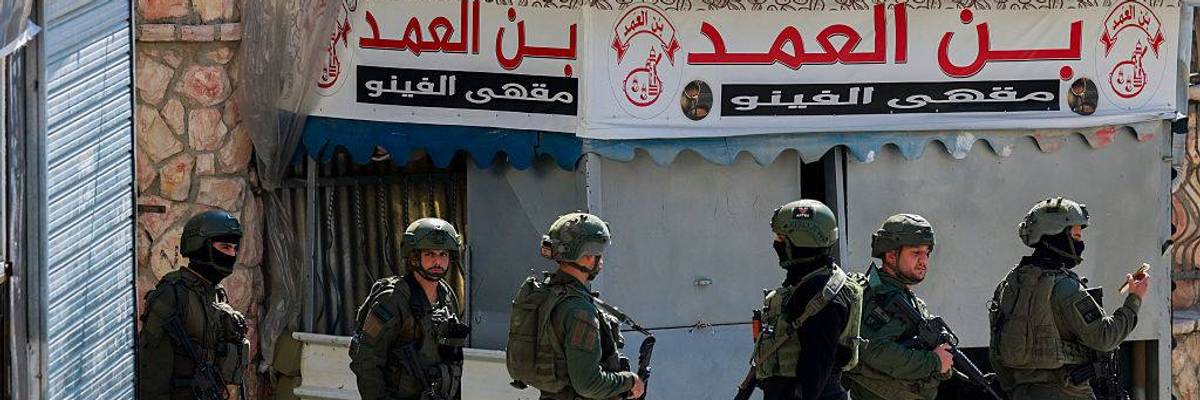
Israeli soldiers patrol a street during a military operation in the Askar refugee camp in eastern Nablus, Israeli-occupied West Bank, on March 2, 2026.
(Photo by Jaafar ASHTIYEH / AFP via Getty Images)


Brad Reed
Mar 28, 2026
COMMON DREAMS

Soldiers in the Israel Defense Forces on Friday were caught on camera assaulting and detaining a crew of CNN journalists while they were reporting from the occupied West Bank.

A video of the incident posted on social media by CNN Jerusalem correspondent Jeremy Diamond shows the CNN crew walking near the Palestinian village of Tayasir, which in recent days has come under assault from Israeli settlers who established an illegal outpost in the area.

The crew are then accosted by armed members of the IDF, who order them to sit down. After the crew complies with their commands, the soldiers come to seize the journalists’ cameras and phones that are being used to record the incident.

A soldier then puts CNN photojournalist Cyril Theophilos in a chokehold and forces him to the ground. Writing about the assault later, Theophilos said that the soldier “pushed and strangled me,” adding that this kind of violence “is just a symptom of the IDF’s actions in the West Bank.”

According to Diamond, the CNN crew were subsequently detained for two hours. During that time, Diamond wrote, it became clear that the ideology of the Israeli settlers movement was “motivating many of the soldiers who operate in the occupied West Bank” and that the Israeli military regularly acts “in service of the settler movement.”

For instance, one IDF soldier acknowledged during conversations with the CNN crew that the settler outpost near Tayasir was unlawful under both international and Israeli law, but insisted “this will be a legal settlement... slowly, slowly.”

The soldier also said he wanted to exact “revenge” on local Palestinians for the death of 18-year-old Israeli settler Yehuda Sherman, who was killed last week by a Palestinian driver. Palestinians who witnessed Sherman’s killing have said that the driver was trying to stop Sherman from stealing sheep.

The IDF issued an apology to CNN over the incident, insisting that “the actions and behavior of the soldiers in the incident are incompatible with what is expected of IDF soldiers.”

However, this apology was deemed insufficient by Barak Ravid, global affairs correspondent for Axios.

“Apologies are not enough,” he wrote on social media. “There is a need for clear accountability. 99.9% of the time there is zero accountability.”

The soldiers’ actions also drew condemnation from Haaretz reporter Bar Peleg, who argued that problems in the IDF have only grown worse under the far-right government led by Prime Minister Benjamin Netanyahu.

“Messiah complexes, talk of revenge, and the use of force against journalists are just symptoms of what’s been happening to the army over the past three years,” Peleg said. “The chief of staff and the commanding general can write another thousand letters and wave flags all they want, but the process already seems irreversible.”

Palestinian human rights activist Ihab Hassan argued that incidents like the one captured by CNN are all too common for the IDF.

“The Israeli army arrests and assaults journalists, while settlers who commit horrific crimes against Palestinian civilians enjoy total impunity,” he wrote. “This is state-backed terrorism.”
U.S. Nationwide General Strike Planned for May 1: No Kings Organizer

“No work, no school, no shopping. We’re going to show up and say we’re putting workers over billionaires and kings.”


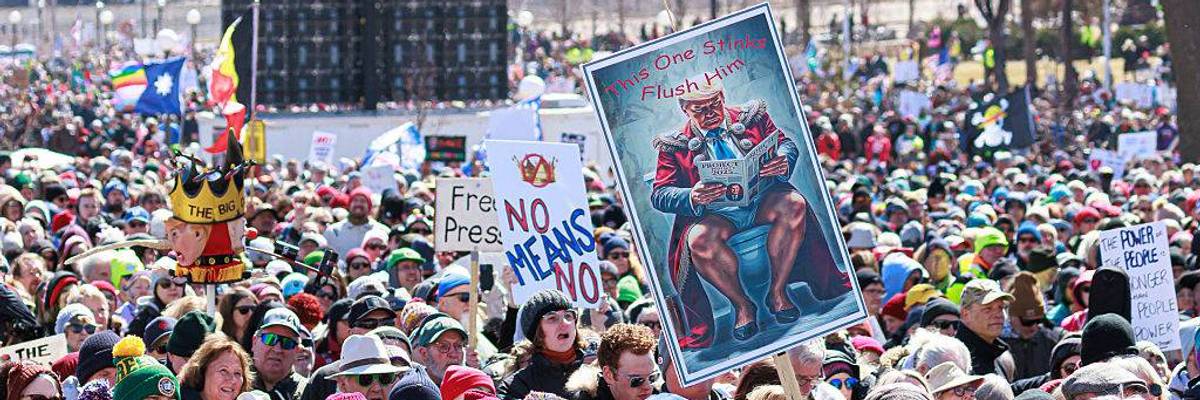
A large crowd of demonstrators gather outside the Minnesota State Capitol during the “No Kings” national day of protest in Saint Paul, Minnesota, on March 28, 2026.
(Photo by Kerem Yucel / AFP via Getty Images)


Brad Reed
Mar 28, 2026
COMMON DREAMS

Ezra Levin, co-founder of Indivisible, said on Saturday that a nationwide general strike is being planned for May 1 that will be modeled on the day of action residents of Minnesota organized in January against the brutality carried out by federal immigration enforcement officials.

Appearing at the flagship No Kings rally in Minneapolis, Levin praised the strength shown by the Minnesota protesters in the face of the US Immigration and Customs Enforcement (ICE) siege of their city this year, and said his organization wanted to replicate it across the country.

“The next major national action of this movement is not just going to be another protest,” Levin said. “It is a tactical escalation... It is an economic show of force, inspired by Minnesota’s own day of truth and action.”

Levin then outlined what the event would entail.


“On May 1, on May Day, we are saying, ‘No business as usual,’” he said. “No work, no school, no shopping. We’re going to show up and say we’re putting workers over billionaires and kings.”

Levin added that “we are going to build on that courage, that sacrifice” that Minnesota residents showed during their day of action in January, and vowed “to demonstrate that regular people are the greatest threat to fascism in this country.”

In an interview with Payday Report published Saturday, Indivisible co-founder Leah Greenberg said that the goal of the nationwide strike action would be to send “a clear message: we demand a government that invests in our communities, not one that enriches billionaires, fuels endless war, or deploys masked agents to intimidate our neighbors.”

The No Kings protests against President Donald Trump’s authoritarian government, which Indivisible has been central in organizing, have brought millions of Americans into the streets.

Polling analyst G. Elliott Morris estimated that the previous No Kings event, held in October, drew at least 5 million people nationwide, making it likely “the largest single-day political protest ever.”
Trump suffers worldwide embarrassment as No Kings explodes outside America

Ewan Gleadow
March 28, 2026 
RAW STORY


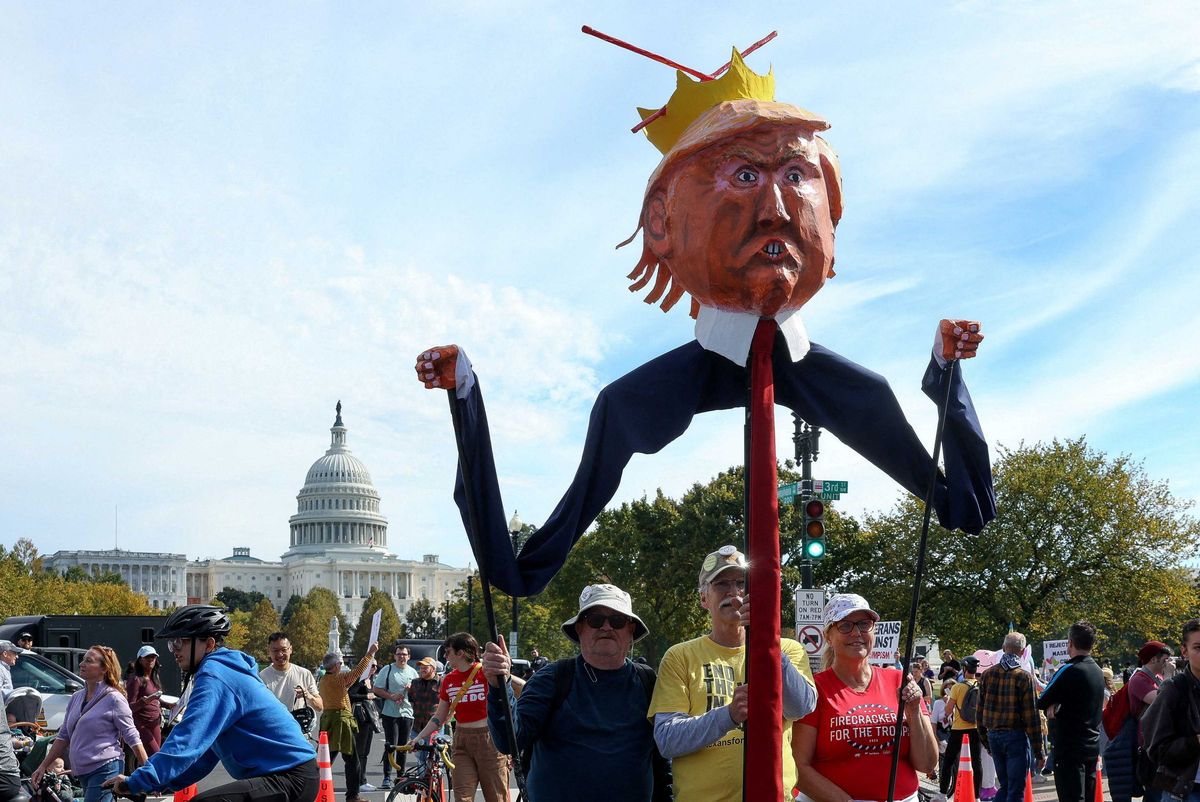
Demonstrators hold an effigy depicting U.S. President Donald Trump during a "No Kings" protest against U.S. President Donald Trump's policies, in Washington, D.C., U.S., October 18, 2025. REUTERS/Kylie Cooper

More than 3,000 No Kings protest events in the United States were bolstered by activists across the world opposing Donald Trump.

Rallies against the president were formed across the US, but also in Germany, Italy, and Australia. Protestors in Paris, France, were spotted holding up "Dump Trump" signs while those in the streets of Madrid, Spain, rallied around a sign reading, "Power to the people." A previous No Kings movement occurred on June 14, 2025, the same day as Trump's birthday. Further protests followed in October, and a third set of rallies across the world took place today (March 28).

Protestors in Amsterdam carried a placard reading, "WTF America," The Daily Beast reported. In Sydney, a man held up a sign that read “We can’t stand him either."

Naveed Shah, who founded the Common Defense group in 2016 to rally military veterans for the sake of progressive politics, spoke of the rapid No Kings growth.

He said, "When I stood at the first ‘No Kings’ rally, we were fighting to protect democracy at home and against federal agents and troops that were deployed on American streets, against a government that was manufacturing a crisis to justify using its power against its own people.

"Today, we’re still fighting that same fight, but now that manufactured crisis has gone global." MoveOn executive director Katie Bethell added their grassroots support to the No Kings protests.

"Our members will be turning out peacefully in the streets because they believe in a better future for this country, and they can’t sit by on the sidelines about what Trump and his administration are doing to our home," she said. "Let’s be clear, the Trump administration has become a threat to the American people at every level. They are waging violence at home and abroad."

An estimated 7 million people showed up to rally against the Trump administration in October — more than the 5 million or so who protested in June — and No Kings organizers are anticipating nearly 9 million people will take to the streets this weekend.
'Gutter racist': Outrage swamps Hegseth as news that he snubbed Black colonel spreads

Brett Wilkins,
 Common Dreams
March 28, 2026 


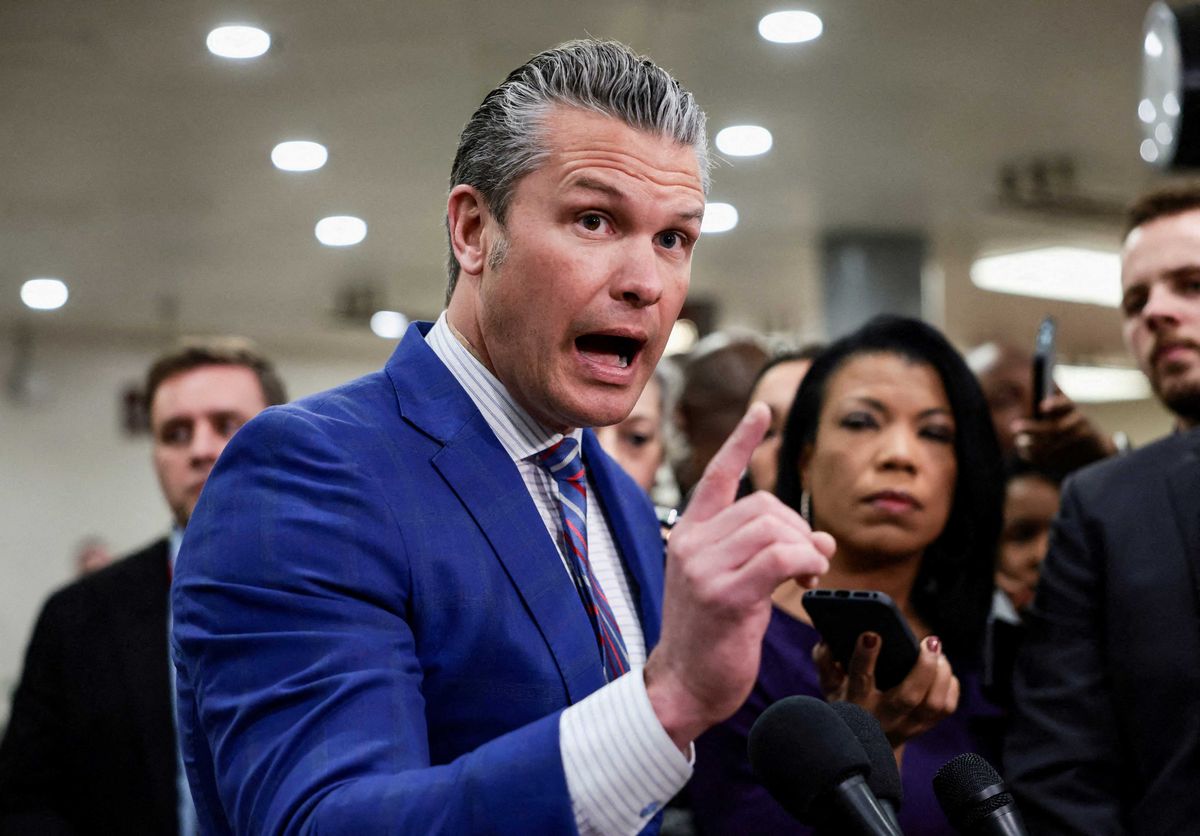
Defense Secretary Pete Hegseth gestures as he speaks to the media on the day of a briefing for the House of Representatives on the situation in Venezuela, on Capitol Hill in Washington, D.C on Jan. 7, 2026. REUTERS/Evelyn Hockstein

In what’s being called an “exceedingly rare” move, US Defense Secretary Pete Hegseth is blocking the promotion of two Black and two female colonels to one-star generals.

The New York Times reported Friday that some senior US military officials are questioning whether Hegseth acted out of animus toward Black people and women after the defense secretary blocked the promotion of the four officers despite the repeated objections of Army Secretary Daniel Driscoll, who touted what the Times called the colonels’ “decadeslong records of exemplary service.”

Military officials told the Times that Hegseth’s chief of staff, Lt. Col. Ricky Buria, got into a heated exchange with Driscoll last summer over the promotion of another officer, Maj. Gen. Antoinette Gant—a combat veteran of the US invasions and occupations of Afghanistan and Iraq—to command the Military District of Washington, DC.

Such a promotion would have placed Gant in charge of numerous events at which she would likely be seen publicly with President Donald Trump. According to multiple military officials, Buria told Driscoll that Trump would not want to stand next to a Black female officer.

A shocked Driscoll reportedly replied that “the president is not racist or sexist,” an assessment that flies in the face of countless racist and sexist statements by the president, both before and during both of his White House terms.

Buria called the officials’ account of his exchange with Driscoll “completely false.”

White House Press Secretary Karoline Leavitt declined to discuss the matter beyond saying that Hegseth is “doing a tremendous job restoring meritocracy throughout the ranks at the Pentagon, as President Trump directed him to do.”

Military officials told the Times that one of the Black colonels whose promotion was blocked by Hegseth wrote a paper nearly 15 years ago historically analyzing differences between Black and white soldiers’ roles in the Army. One of the female colonels, a logistics officer, was held back because she was deployed in Afghanistan during the US withdrawal whose foundation was laid by Trump during his first term. It is unclear why the two other colonels were denied promotions.

Although more than 40% of current active duty US troops are people of color, military leadership remains overwhelmingly comprised of white men. Hegseth, who declared a “frontal assault” on the “whores to wokesters” who he said rose up through the ranks during the Biden administrationtold an audience during a 250th anniversary ceremony for the US Navy that “your diversity is not your strength.”

Hegseth has argued that women should not serve in combat roles, although he later walked back his assertion amid pushback from senators during his confirmation process. Still, since Trump returned to office, every service branch chief and 9 of the military’s 10 combat commanders are white men.

Leaders of the Democratic Women’s Caucus and Congressional Black Caucus issued a joint statement Friday calling Hegseth’s blocking of the four colonels’ promotions “outrageous and wrong.”

“The claim that Hegseth’s chief of staff told the army secretary Trump would not want to stand next to a Black female officer at military events is racist, sexist, and extremely concerning,” wrote the lawmakers, Reps. Yvette Clarke (NY), Teresa Leger Fernández (NM), Emilia Sykes (Ohio), Hillary Scholten (Mich.), and Chrissy Houlahan (Pa.).

“Time and time again, Trump and his administration have shown us exactly who they are—attacking and undermining Black people and women in the military, public servants, and women in power,” the congressional leaders asserted. “It is clear they are trying to erase Black and women’s leadership and history.”

“Today’s news isn’t an anomaly, it is a part of a coordinated and sustained strategy to undermine and erase women and people of color,” their statement said.

“We’ve long known that Pete Hegseth is an unfit and unqualified secretary of defense appointed by Trump,” the lawmakers added. “So it is absurd, ironic, and beyond inappropriate that he of all people would deny these promotions to officers with records of exemplary service. America’s servicemembers deserve so much better.”

Sen. Jack Reed (D-RI), ranking member of the Senate Armed Services Committee, also issued a statement reading, “If these reports are accurate, Secretary Hegseth’s decision to remove four decorated officers from a promotion list after having been selected by their peers for their merit and performance is not only outrageous, it would be illegal.”

“Denying the promotions of individual officers based on their race or gender would betray every principle of merit-based service military officers uphold throughout their careers,” Reed added.

Several congressional colleagues weighed in, like Sen. Tammy Duckworth (D-Ill.), a decorated combat veteran who lost her legs when an Iraqi defending his homeland from US invasion shot down the Blackhawk helicopter she was piloting. Duckworth said on Bluesky: “He says he wants to bring meritocracy back to our military. He says he has our warfighters’ backs. But here he is, the most unqualified SecDef in history, denying troops a promotion that their fellow warfighters decided they’ve earned. Hegseth is a disgrace to our heroes.”

Other observers also condemned Hegseth’s move, with historian Virginia Scharff accusing him of “undermining national security with his racism and misogyny,” and City University of New York English Chair Jonathan Gray decrying the “gutter racist” who “should be hounded from public life for the damage he’s caused.”


Pentagon staffer stuns with: 'Trump wouldn't want to stand next to a Black female'

Travis Gettys
March 27, 2026
RAW STORY


U.S. President Donald Trump points on the day he addresses military families as U.S. first lady Melania Trump stands nearby during a visit at Fort Bragg, North Carolina, U.S., February 13, 2026. REUTERS/Elizabeth Frantz

Senior military officials are concerned that Defense Secretary Pete Hegseth is blocking the promotions of four Army officers because of their race or gender, according to a new report.

President Donald Trump's defense secretary has been pushing Army Secretary Daniel Driscoll and other senior Army leaders to remove the names of the officers, two of whom are Black and another two women, from a promotion list of about three dozen officers, most of whom are white men, senior military officials told the New York Times.

"Earlier this month, Mr. Hegseth broke the logjam by unilaterally striking the officers’ names from the list, though it is not clear he has the legal authority to do so," the Times reported. "The list is currently being reviewed by the White House, which is expected to send it to the Senate for final approval. A few female and Black officers remain on the list, military officials said."

"It is exceedingly rare that a one-star list draws such intense scrutiny from a defense secretary," the report added. "The battle highlights the bitter rifts opened by Mr. Hegseth’s campaign to reverse policies that he says are prejudiced against white officers."

Hegseth has pledged to change "woke" policies from previous administrations, but his heavy scrutiny of female and minority officers has eroded confidence that the promotion system is based on merit and distanced from politics, and the frustration with his approach sparked a heated exchange between his chief of staff Ricky Buria and Driscoll, the Army secretary.

"Mr. Buria chastised the Army secretary for selecting Maj. Gen. Antoinette R. Gant, a combat engineer who served in Iraq and Afghanistan, to take command of the Military District of Washington," the Times reported, based on accounts from three current and former defense and administration officials. "The command provides security and performs ceremonial duties in the nation’s capital, and its commander often appears alongside the president at Arlington National Cemetery."

"Mr. Buria told Mr. Driscoll that President Trump would not want to stand next to a Black female officer at military events," the report added, based on the officials' account.

Driscoll was shocked by his statement and insisted "the president is not a racist or sexist," the officials said, and he then raised the issue with a senior White House official who agreed with him about Trump. Hegseth's office eventually backed down and Gant began serving as the district commander last summer, and was promoted to two-star rank earlier this month.

"Senior officials in Mr. Hegseth’s office have been debating for months whether Mr. Hegseth has the legal authority to strike names from a one-star list before he sends it to the White House," military officials told the Times. "In his role as defense secretary, Mr. Hegseth is supposed to review and approve the list. But to protect the military’s officer corps from being politicized, he has only two options under military regulations, officials said. He can reject or accept the entire list."


Britain

No to antisemitism – no to all racism


Saturday 28 March 2026, by Anti*Capitalist Resistance


The arson attack on four ambulances in a North London synagogue car park was an antisemitic hate crime. ACR condemns this unequivocally. We call on others to do the same, regardless of the claimed motives of the attackers or the alleged views of some synagogue members. Israel’s genocidal war crimes in Palestine and across the Middle East offer no justification for an attack on a public service provided by the Jewish community in Britain.

At a time when racist attacks on all minority communities are increasing, and with the worrying growth of a far-right electoral challenge, we cannot brush aside any racist crime with whataboutery or indifference. Muslims and migrants are currently the principal targets of racist attacks in Britain, but this does not mean that we can ignore anti-Jewish racism.

Whoever carried out this attack, it is a racist crime which targets Jews in Britain for Israeli actions, while doing less than nothing to assist the victims of these actions. We don’t yet know who the arsonists are. Those asserting with absolute confidence, on the basis of amateur “forensic analysis” that this was a Mossad-led false flag, like those asserting with equally absolute confidence that it was an Iranian terrorist operation, are merely exposing their own racist preconceptions.

Socialists are tribunes of the oppressed who oppose all discrimination and social oppression. We stand for universal rights and freedoms; if the Jewish community is attacked by antisemites we oppose it as strongly as when a Mosque is attacked by Islamophobes.

ACR condemns this attack, and all those who justify or relativise it. We will be marching on 28 March to express our opposition to racism in all its forms, whether it targets Jews, Muslims, Black people, migrants, Palestinians or any other oppressed community.

An injury to one is an injury to all.

Footnotes

[1in the early hours of Monday 23 March.

[2in the early hours of Monday 23 March.


Venezuelan leftist: ‘Recuperating sovereignty and control over our resources is essential’


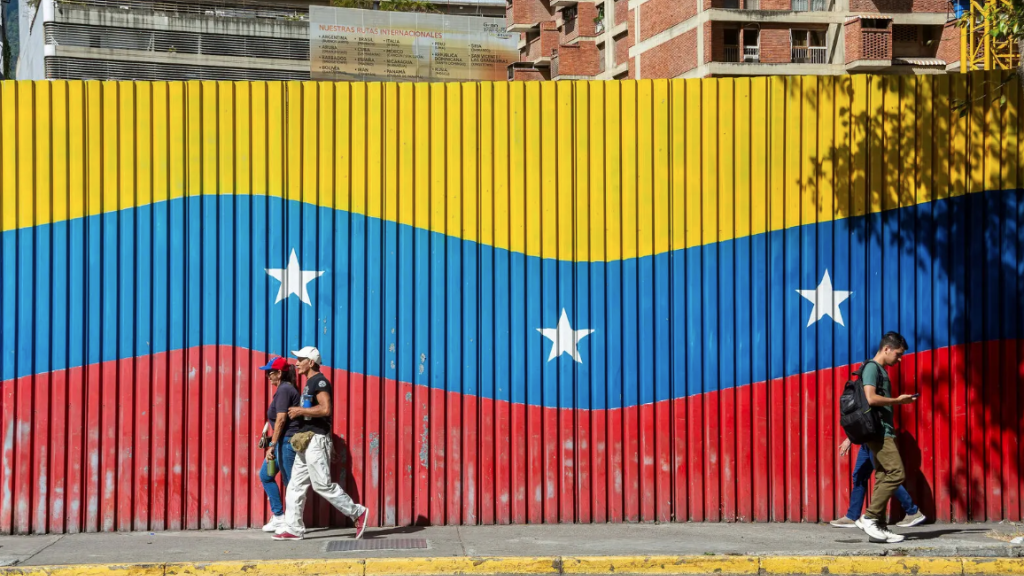
Venezuela flag

Confusion and concern have followed the rapid pace of events in Venezuela after the US military incursion on January 3. Since then, the Venezuelan government has started to open its oil and mineral industries to transnational corporations, while there has been a constant parade of US officials and military leaders through the country.

How should we interpret these events? Federico Fuentes, from LINKS International Journal of Socialist Renewal, spoke with Venezuelan leftist Luis Fernando Marquez, a National Agrarian Alliance founding organiser and Alliance for Sovereignty and Democracy activist, about developments in the country, the people’s reactions and challenges for the left.

What was behind the US military actions, which, after several months of deploying warships in the Caribbean, culminated in an assault on Venezuela and the kidnapping of then-president Nicolás Maduro and National Assembly deputy Cilia Flores? Was this simply to gain control of Venezuelan oil?

We are witnessing a realignment of spheres of influence on the international chessboard. In this context, US President Donald Trump has inaugurated a new way of doing politics, known as the “Donroe Doctrine”. This Trumpist project seeks to reclaim Latin America as the US’s backyard and halt China’s rising regional influence. The January 3 attack sent a message to Latin American countries that this is a new phase of Trump-style interventionism, with quick and decisive actions seeking a deterrent effect.

With Venezuela, oil is a crucial factor. The major US oil companies back Trump’s MAGA project. So, Trump was able to kill two birds with one stone: exert control in this sphere of ​​influence and seize vast reserves of crude oil and minerals, including gold and heavily coveted rare earth elements such as rhodium and coltan. Venezuela’s strategic position, located so close to the US, was a major motivation. 

Post January 3, the US administers Venezuela’s oil reserves. Our country is not even allowed to manage our oil revenues, which are sent to bank accounts in Qatar and the US. The US has also gained a market of 30 million consumers for its products, which are now being purchased under colonial conditions. So, there was an economic motivation as well as a geopolitical one.

Furthermore, Trump’s triumphalist message of resolving international conflicts in record time has helped strengthen his image at home. Trump’s approval rating slightly increased after the military intervention in Venezuela. This is not insignificant for Republican aspirations to win the November midterm elections, which could determine the course of US policy toward Venezuela.

I would, however, emphasise that Trump’s decision to militarily intervene in Venezuela is based on a long-term vision, not simply polls or elections. In his speeches, Trump has made clear his intention to reverse the oil nationalisation carried out in Venezuela in the 1970s and compensate oil companies nationalised during the Hugo Chávez government (1999-2013).

Another motivation is the presence of organisations in Venezuela that the US considers terrorists — specifically the National Liberation Army (ELN, from Colombia) — and countries such as Iran, Russia and Cuba. But this was a secondary consideration compared to the issue of inter-imperialist rivalry. As the highest stage of capitalism, imperialism requires imperial countries exerting power and control over their spheres of influence by converting periphery countries into areas of extraction or production while keeping out competitors. This is occurring now in Venezuela.

What was the reaction within Venezuela to the events of January 3 and since? What is the mood of the population?

Most people felt a mix of relief and surprise. For more than 10 years, Maduro presided over a dictatorship. During this time, there were countless episodes of violence, a deep economic crisis, and a strong repressive atmosphere, with people subject to police scrutiny and protests essentially illegal. With all outlets for social discontent blocked, such feelings in the first few days [after January 3] were understandable.

These feelings have begun to dissipate, and I believe will continue to dissipate — even if January 3 is still very fresh in our minds — because many realise that the regime is still in power. Moreover, they see that the US military incursion not only caused a loss of sovereignty but has imposed a protectorate, taking Venezuela back to its situation at the start of the 20th century.

Generally speaking, the situation is the same as before. The economy, in particular, remains the same. People’s expectations remain focused on improving their economic situation. They are less interested in democracy or a political solution to the crisis; those issues have been relegated to the bottom of people’s priorities, according to some polls. Essentially, they want better wages and salaries.

The Venezuelan people have paid a very high price for the neoliberal policies imposed by the Chávez and Maduro governments over more than two decades. High oil revenues created a kind of economic mirage, but today we see the consequences of this disastrous economic policy that resulted in meagre wages and salaries while destroying public services and infrastructure.

The price will be even more visible as full-throttle neoliberal policies pushing privatisations and precarious employment are implemented. The neoliberal logic will prevail, because it is something that Chavismo and the main sector of the opposition agree on. The most dramatic aspect of the situation is that the solution offered to us is not just to deepen this neoliberal model, but to also auction off our resources and national oil industry at rock-bottom prices.

But, for now, apart from sporadic and isolated opposition activities that have attracted few participants, there have been no mobilisations. The calls for mobilisation issued by certain political sectors have not yet connected with the people. I believe, however, we will gradually see more participation in such mobilisations. This will depend on the ability to come up with messages and slogans that resonate with the people, as well as the dictatorship’s ability to counter such calls with more repression and immediate economic relief to demobilise working-class sectors.

For now, the atmosphere on the street remains calm. To be honest, people hope that things will improve in the short term. It is somewhat paradoxical that people wonder when Trump will raise their salaries — which is both tragicomical and an insight into how people view our current situation. But, as the months go by and the economic situation remains unchanged, I am sure that perception will start to change.

Progressive and left-wing sectors face the enormous task of winning people over to a nationalist program. Recuperating sovereignty and control over the country’s resources is essential; without this, it will be impossible to develop the country’s productive forces. Instead, Trump is proposing an aggressive importation policy that will destroy what little remains of the productive apparatus. 

We are heading towards an economy and productive apparatus under US tutelage, which prioritises imports over national production. If Trump is successful, a monopoly of US products will be imposed, including in agribusiness, which in the US receives billions in subsidies. This will result in businesses in Venezuela’s countryside going bankrupt, and the nascent national agricultural industry will be dismantled.

I am convinced wages will improve in the short term, but this will not lead to stability due to the US’ policy of aggressive austerity and possible dollarisation of the economy. This will leave Venezuela’s state with little room to address the country’s pressing problems or economic development.

There was a lot of talk about possible regime change in Venezuela, but power remains with Delcy Rodríguez and others in power with Maduro. Why do you think that was the result?

The Trump administration closely studied the implications of carrying out a regime change by force in Venezuela. That is why the military operation in the Caribbean took so many months. Ultimately, Trump assessed that regime change would need a much larger intervention and cost more lives and resources. Instead, he opted for maximum pressure and dialogue with certain sectors in power to facilitate the operation they ultimately carried out.

The right-wing opposition initially took a triumphalist tone and embarked on a pre-electoral campaign, particularly targeting working-class and poor sectors. But more than two months after January 3, they are starting to realise their mistake. They are analysing the possibility that Delcy Rodríguez will attempt to stay in power for as long as possible.

Within Chavismo, there is a sense of shock and divisions that could deepen. That is why Chavismo is now talking about resistance in a bid to connect with its supporters and convince them to accept surrendering everything — oil, minerals, etc — in order to save what they call the “revolution”. Delcy and [National Assembly President] Jorge Rodríguez are hoping that this pragmatic, non-anti-imperialist and resistance-focused discourse can help galvanise their base.

Where does this leave the right-wing opposition, which the US has traditionally supported?

The US seems to be weighing its options. The transfer of power to Edmundo González — the real winner of the 2024 presidential elections — and opposition leader María Corina Machado was initially ruled out. Instead, there is a three-phase plan, the duration of which is still unclear. But this could easily change.

It is here that the opposition could play an important mobilising role. Public opinion is largely on the side of Venezuela’s right-wing opposition due to people's fatigue with the false left-wing discourse of the Maduro government. But the right-wing opposition is trapped by its electoral vices, having prematurely jumped into electoral campaigning. Machado continues to lead in opinion polls by a wide margin, with 78% support if elections were held today, according to Meganalisis. However, Machado is still outside the country.

That is perhaps why Chavismo is hoping to ride out the year, anticipating material conditions will improve and give them more room for manoeuvre when nominating a candidate with the best chance of winning any hypothetical presidential elections.

Progressive, and even nationalist, sectors need to put forward a discourse of sovereignty and democracy that can connect with the Venezuelan people, who still hold strong nationalist sentiments, even if it has been somewhat blunted. These sentiments will only get stronger as US tutelage is further imposed. Over time, we need to ensure that notions of homeland, sovereignty and genuine democracy gain priority over the immediate discontent that has led large sectors of people to entrust their vote to the right.

Ultimately, we must recover democracy as a sovereign nation; that should be the principle under which we unite the opposition. We must defeat the dictatorship. But we cannot ignore the issue of tutelage. Rather, both elements must be defeated. Only a democracy that respects minorities and political agreements can guarantee stability and defend the country's borders.

How can we define the new Rodríguez government and the ties being forged between the US and Venezuela today?

The new Rodríguez government — colloquially known as the “Rodrigato” [roughly translated as Rodrigvirate] — is a government under the tutelage of the Trump administration. It has converted Venezuela into a factory or protectorate within the US’s sphere of influence. You only need to look at the parade of high-ranking US officials through Caracas to realise the speed at which this is advancing.

This does not, however, preclude or contradict the idea of ​​regime change; ultimately it depends on what Trump believes can get him the maximum gain. That is why the government and the radical wing of the opposition are focused on gaining attention and favours from the new leader.

Do you agree with the idea that the government has no options but to obey Trump in the current situation?

We can say that the “Rodrigato” is in a situation reminiscent of the Treaty of Brest-Litovsk, despite differences in form and substance.

Then, [Russian revolutionary Vladimir] Lenin temporarily sacrificed Russian aspirations and capitulated to Germany, renouncing sovereignty over certain territories and any indemnity. This course was later proven correct, as Germany was defeated and the Soviet Union gradually recovered the lost territories.

Today, Chavismo seems to want to resist by surrendering everything and submitting to tutelage in order to ride out this period and wait for more favourable times. It is true that, today, the Delcy Rodríguez government has no other option but to obey the US. The government was militarily defeated by the world’s greatest power.

But the government could have taken a different path, if it took into consideration the country and the Venezuelan people instead of simply defending its own interests and disregarding the popular sovereignty expressed in the 2024 presidential elections. Those elections marked the point at which the government lost international legitimacy and gave the Trump administration the chance to restore Venezuela within its sphere of influence.

That said, we must understand that, today, inter-imperialist contradictions are primary compared to the contradiction democracy-dictatorship, even if the latter has not gone away.

Do you see any chances to resist Trump’s recolonisation plans or a return to democratic governance?

The most likely scenario is that economic dependence accelerates. Venezuela was already sending more than half a million barrels of oil daily to the US, and that will continue to rise.

The new hydrocarbons law, which was approved and sanctioned in 12 days, was an unprecedented event in the country’s legislative history. As a result, the country has been dealt a monumental setback, one that has taken us back to the Juan Vicente Gómez dictatorship era (1931–35) in terms of oil jurisprudence. During Gómez’s rule, US companies were granted large oil concessions at rock-bottom prices. Money from these concessions mostly went into the dictator’s pockets, with only a small percentage going to the state coffers.

It was not until 1936, with the first oil workers’ strike, that progress was made on a new hydrocarbons law that established the famous 50/50 royalties split. Then, after the 1976 nationalisation of the oil industry and creation of the state oil company, PDVSA, state revenues from oil sales increased and Venezuela joined OPEC.

Today, all this is at risk. Even Venezuela’s presence in OPEC is subject to discussion. Under the new law, the amount of state income is flexible: revenue collection can range between 0–30% depending on how successful transnational companies are in negotiating contracts.

The Venezuelan people have great capacity for resistance. We have endured so many years of profound crisis, emigration, pandemic and repression, which has helped strengthen many social organisations. At the same time, liberal thought has gained ground among the population; that is undeniable. This largely has to do with the false equating of Chavismo with Communism. Moreover, the inability of left-wing sectors opposing the regime to create an organic movement has left a political void in most poor and working class sectors.

How can the left respond?

The situation today presents us with an opportunity to form a broad, class-struggle opposition to tutelage and dictatorship, one that involves youth, working-class and urban sectors and differentiates itself from the extreme elements currently dominating the opposition. Building such a front will have to be a medium- and long-term process, which starts by speaking to people’s real needs.

Elections are important and, if held this year, will determine who is in government — though whoever that is will find it impossible to govern if they do not engage with all sectors of national life. We know, however, that US Secretary of State Marco Rubio’s three phase plan for Venezuela does not include elections this year.

It is important to highlight that Chavismo still represents almost 20% of the electorate. Any left-wing alternative must seek to channel the discontent within the PSUV ranks.

As time goes by, the contradiction between imperialism and sovereignty will become even more pronounced, leading to unity processes among previously rival or enemy sectors. Within this new reality, previously rival sectors could form political blocs. 

Of course, the contradiction between democracy and dictatorship remains. But we must reclaim the banners of national sovereignty and identity, and use these to reach out to the people to combat dictatorship and tutelage.

That is why we are promoting the National Agrarian Alliance, which we hope to extend to all rural sectors, including producers, farmworkers, ranchers and livestock breeders. We want to initiate a big national debate and declare a national food emergency. I am promoting this organisation, along with other initiatives such as the Alliance for Sovereignty and Democracy, to demonstrate that the Venezuelan countryside and popular sectors have something to say.

Venezuelan peasants have been among the hardest hit by the policies of the Maduro and now Delcy Rodríguez government. Inflation, fuel shortages, high input prices and the lack of credit over many years has bankrupted many farmers and peasants. Despite this, they produce a high percentage of the food consumed in the country. This could change as a result of the food import policy being imposed by Trump. Hence the need to bring all these sectors together to form what we have called the National Agrarian Alliance.