Tuesday, April 28, 2026


IMO Braces for a Tough Week as MEPC84 Resumes Net-Zero Debate
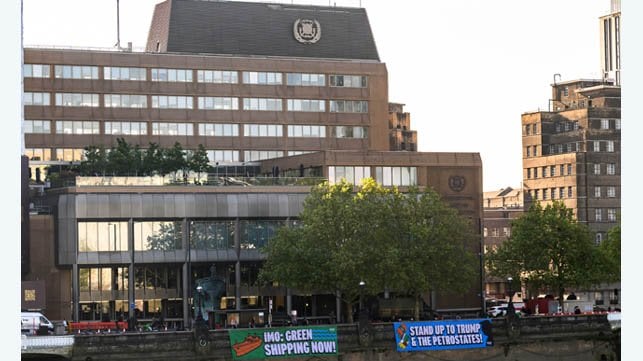
IMO HQ with protest
Protests in front of IMO HQ (Jack Hall/PA Media Assignments courtesy of Glasgow Teams)

Published Apr 27, 2026 6:39 PM by The Maritime Executive


The battle lines are being drawn, and the protestors are on the doorstep of the International Maritime Organization as it resumes the debate on its Net-Zero Framework. After a last-minute decision to table the debate for six months to save the proposal, the IMO is now expected to face more heated debate and obstructionist tactics despite the call of the Secretary-General, who said this week’s important task was to find convergence to make meaningful progress.

Everyone expects a “real fight,” writes The Financial Times, as the United States and the Trump administration lead the fight with the vow to derail efforts at carbon pricing. The Trump administration emerged solidly against the framework, saying the IMO was too focused on non-realistic alternative fuels and arguing against restrictions on traditional fuels. It says it favors a “more pragmatic approach, flexible, and incentive-based,” while calling carbon pricing a tax on American consumers and the industry.

Secretary-General Arsenio Dominguez tried to sound a more positive tone in his opening remarks on Monday, telling member states that progress had been made in the past six months. He said some member states had used the past six months “wisely and productively.”  He said the efforts demonstrated a “genuine commitment to address the concerns” raised at the last sessions and to move forward. Furthermore, he said the goal was to make progress towards consensus on mid-term greenhouse gas reduction measures.

He said the work of the subcommittees was providing a solid basis for further progress on the globally harmonized report. He, however, admitted large gaps on the economic elements, encouraging member states to work toward a shared understanding.

Critics have questioned the authority to run a global fund with the money from the carbon tax. In addition to the United States, there’s strong opposition from Saudi Arabia, and critics raise concern that powerful nations, such as Greece and Cyprus, that represent large blocks of shipowners and operators, are backing away from earlier agreements on the Net-Zero Framework. The position of Liberia and Panama as the largest flag states will also be critical.

“My request to you is that we engage in constructive and pragmatic exchanges,” said Secretary-General Dominguez in a not-so-veiled rebuke after last October’s tumultuous session. “Listen to one another, there is no need to argue. We are adult enough to agree to disagree. There is no reason to repeat what happened last October. There is no need for it.”

Despite the support of China and the Europeans, and the advocacy of small island nation states, it is unclear whether the effort can be revived and come to a consensus. Supporters argue that 60 nations are behind the program and will vote in favor. Many, however, have low expectations for the IMO this week.

Out front of the headquarters and along the River Thames, Lambeth Bridge, and the approaches to the IMO, protestors made their views known. They hung banners saying “Stand up to Trump” and “Deliver green shipping now.”

"The IMO Net-Zero Framework is not just a climate measure – it's a test of whether international cooperation can survive in an era of increasing geopolitical pressure,” said Em Fenton, Senior Director of Climate Diplomacy, at Opportunity Green. “A majority of the world's nations want this to succeed. Opposition may be loud, but that doesn’t mean it will drown out the voices for ambition and justice, many of whom come from communities most greatly affected by climate impacts.” 

The IMO session is scheduled to run through Friday, May 1. The Net-Zero Framework is the primary element of business, although there are also sections for ballast water management, biofouling, and marine plastic litter management on the agenda.


Everllence Warns of 50GW Gap in Meeting IMO’s GHG Strategy Goals
Everllence
Klaus Rasmussen – Project Sales Director, PrimeServ Denmark – Everllence

Published Apr 27, 2026 6:11 PM by The Maritime Executive


[By: Everllence]

Everllence has expressed concern over the current viability of the IMO’s 2023 GHG Strategy that aims for net?zero emissions from international shipping by or around 2050. Essentially, it believes that the NZF (Net-Zero Framework) is only achievable through combining ZNZ-fuelled newbuilds with large?scale engine conversions. 

Klaus Rasmussen – Project Sales Director, PrimeServ Denmark – Everllence, said: “The retrofit market is currently in the doldrums with shipowners backing off investment until clarity arrives regarding IMO rules. This leaves a huge gap in the attainability of the NZF. Without these retrofits, it will be close to impossible to meet GHG targets in time. Action is critical. We have to scale the conversion pathway and unlock the vessel volume required to meet the IMO’s strategy.”

Everllence’s own figures calculate that even with full ZNZ adoption by newbuilds by 2030 – meaning all newbuildings could operate on ZNZ fuels – 50 GW of existing two-stroke power would still need to be converted by 2050 to achieve the NZF.

This 50 GW corresponds to approximately 2,000 vessels of the largest containerships, bulkers and tankers capable of conversion to ZNZ-fuel operation. Today, the entire fleet of vessels over 5,000 GT encompasses 30,000 two-stroke engines. Of these, 5,300 are potentially convertible to ZNZ-fuel operation.

Rasmussen added: “Uncertainty around the rules has frozen commitment, pushing owners toward interim efficiency upgrades rather than full-fuel conversions and this hesitation risks creating costly capacity bottlenecks once NZF regulation finally kicks in. We urgently need action on retrofits.”

The products and services herein described in this press release are not endorsed by The Maritime Executive


Why Freight Decarbonization Must Become Network-Based
Port of Hamburg
iStock / Nikada

Published Apr 28, 2026 12:29 AM by Mikael Lind et al.


[By Mikael Lind, Sandra Haraldson, Wolfgang Lehmacher, Thomas Bjørdal, Valdemar Ehlers, Cecilia Gabrielii, Ida Kallmyr Lerheim, Kenneth Lind, Per Löfbom, Teemu Manderbacka, Lasse Pohjala, Marianne Ribes, Jon Bjorn Skulason, and Johan Östling]

Green corridors have been and are being enabled as the first phase towards clean transportation. The next frontier of freight decarbonization is not building more green corridors, but turning them into scalable, network-wide solutions that work for everyday logistics decisions. Across the global transport sector, green corridors have emerged as one of the most visible mechanisms for accelerating freight decarbonization. Governments, ports, shipping companies, and cargo owners have aligned around specific routes where low- and zero-emission solutions can be deployed through coordinated action. Since the launch of initiatives such as the Clydebank Declaration, corridor concepts have helped mobilize partnerships, concentrate investments, and demonstrate early pathways toward reducing emissions in maritime transport.

These efforts have been essential. They have provided a practical starting point for testing new fuels, building confidence across actors, and establishing early examples of what a decarbonized transport system might look like in practice.

As these initiatives mature, the question is no longer whether corridors can demonstrate change. It is whether they can enable scale. Corridors trigger transition; networks enable scale. Freight decarbonization will not scale through corridors alone; it will scale when low-emission transport becomes a competitive, repeatable, shipper-driven choice across interconnected networks.

Freight systems operate as networks - and scale through transport legs

Freight does not move through isolated routes. It moves through shared, interdependent networks of infrastructure, services, and decisions. To understand why, it is necessary to step back and look at how freight systems operate. Particularly in highly interconnected regions such as the Nordics, transport unfolds across networks of ports, rail segments, ferry services, terminals, and road distribution systems that simultaneously serve multiple industries and supply chains.

A ferry connection between two ports, for example, is rarely tied to a single predefined corridor. It carries a mix of cargo flows, supports different logistics configurations, and connects to multiple onward transport options. It is, in essence, a shared infrastructure component within a broader system.

This observation leads to a fundamental shift in perspective. Rather than viewing corridors as the primary unit of analysis, scalable freight systems need to be understood through two complementary perspectives.

On the supply side, the transport leg represents the key unit of analysis - a recurring connection between two logistics nodes, such as a ferry route, rail segment, or port or terminal connection. Transport legs are reusable and can support multiple supply chains and routing configurations.

On the demand side, the shipment becomes the relevant unit of analysis, reflecting how transport solutions are evaluated and selected in practice by transport buyers based on cost, time, and emissions.

From this perspective, scalable freight systems do not emerge from isolated corridors but from the ability to combine high-performing transport legs into repeatable, competitive network configurations. The same leg can support different routes, different industries, and different operational setups, depending on how it is integrated into the wider system.

What makes transport solutions scale in practice

However, not all transport legs can function as scalable components. The conditions that enable scaling are operational rather than conceptual, and they determine whether a leg can move beyond a pilot role and become part of a functioning system.

For a transport leg to move from pilot relevance to system relevance, three operating conditions matter most:

Volume - sufficient demand to justify stable operations and long-term investments in infrastructure and services

Frequency - service availability that allows integration into logistics planning and provides flexibility for transport buyers

Reliability - predictable and consistent performance across operations, enabling trust and reducing risk in supply chains

When these conditions are not met, even well-designed infrastructure remains underutilized. A corridor may exist on paper, and even in practice, but if its underlying transport legs do not meet these criteria, it will struggle to attract sustained use.

Infrastructure can make decarbonization possible, but only shippers make it real through procurement and routing decisions. Freight decisions are ultimately made by transport buyers - manufacturers, retailers, and logistics providers - who continuously evaluate transport alternatives based on performance.

In practice, this evaluation revolves around three interdependent dimensions:

- Cost - the total logistics cost, including transport, handling, inventory implications, and potential disruption-related costs

- Time - lead time, delivery performance, and predictability within supply chains, often tied to production schedules and customer expectations

- Emissions - the environmental footprint associated with the transport solution, increasingly important due to regulatory pressure and corporate sustainability commitments

In practice, shippers choose the option that best balances cost, time, and emissions within the constraints of their business model. This is why decarbonization becomes scalable only when sustainable transport performs not just environmentally, but operationally and commercially.

In simple terms, there is a difference between what can scale and what will scale. The first depends on infrastructure performance and transport service design, while the second depends on whether transport services meet shippers' expectations and constraints. Bridging this gap is essential for achieving system-wide transformation, as illustrated in Figure 1 through the alignment of infrastructure readiness and shipment adoption.
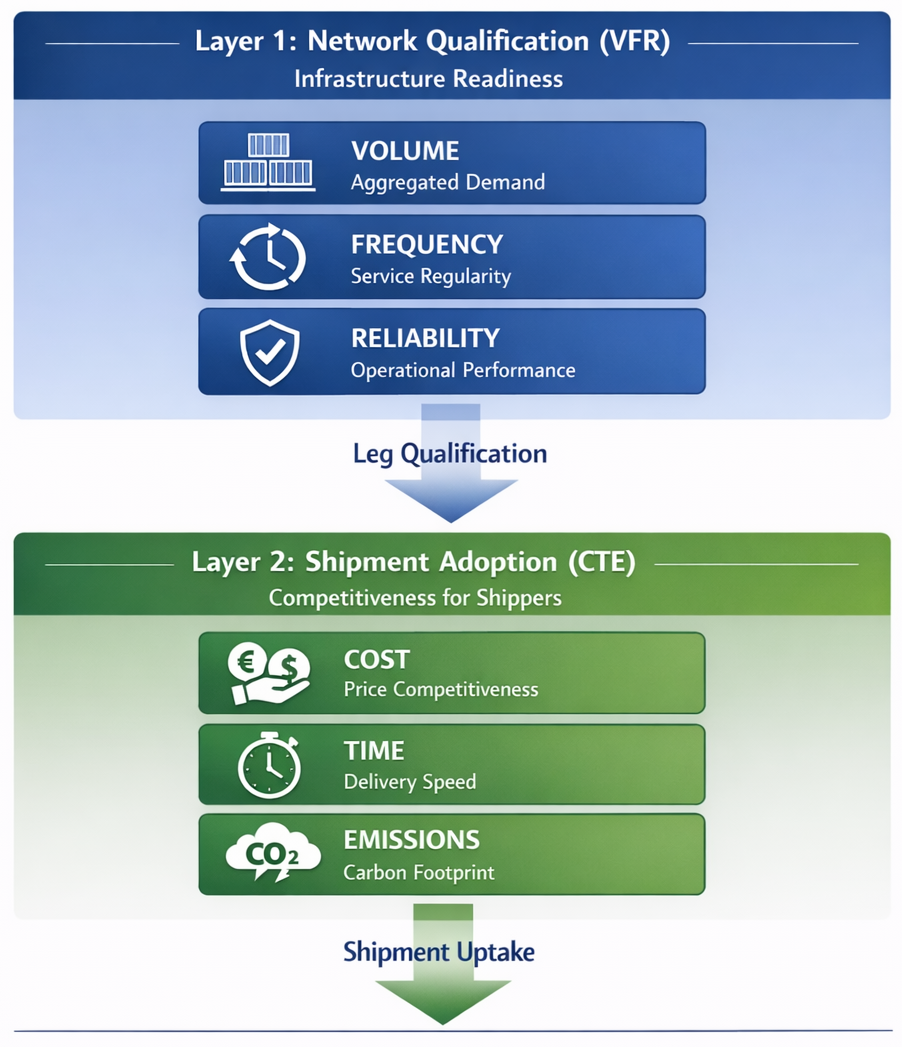
Figure 1: Dual-layer scaling framework for sustainable freight systems

This systems perspective is reflected in the newly released Nordic Innovation report From Green Corridor Pilots to Scalable Nordic Sustainable Transport Networks. The report does more than document corridor experimentation; it helps show why scaling depends on reusable network components, shared digital infrastructure, and solutions that work for transport buyers in practice.

Scaling requires coordination - and digital collaboration

If scaling is shipper-driven, coordination becomes the decisive capability. Freight systems are fragmented by design, with ports, carriers, rail operators, terminal operators, and logistics providers each optimizing different parts of the chain.

In a more multimodal, low-emission freight system, isolated optimization is no longer enough. Performance increasingly depends on whether actors can align decisions across assets, modes, and time horizons.

Digital collaboration is therefore not a support layer. It is part of the operating model of scalable sustainable freight.

Approaches such as end-to-end collaborative decision making enable actors to coordinate operations across transport legs and nodes, improving predictability, reducing inefficiencies, and enhancing resilience. By aligning planning and execution across multiple parties, such approaches help ensure that individual optimizations do not undermine system-wide performance.

One example is the Virtual Watch Tower concept, which explores how shared digital infrastructure can provide common situational awareness across logistics chains. By enabling actors to align their decisions, manage disruptions collectively, and access consistent emissions information, these capabilities directly improve reliability and transparency. In practice, this supports coordinated action around disruptions, delivery performance, and emissions transparency. That matters because visibility alone does not create resilience; coordinated action does.

Importantly, this type of infrastructure is not tied to individual corridors. It functions as a shared coordination layer across networks, supporting interoperability while allowing actors to retain control over their own operations.

From corridor pilots to network configurations

Practical experimentation reinforces the network-based perspective: the value of sustainable freight infrastructure is not fixed by corridor definition, but by how transport legs are combined across a network. In the “Green Node in a Green Corridor” initiative, researchers and industry partners have examined how alternative transport configurations perform using real shipment data and scenario-based analysis.

By comparing different combinations of transport legs across cost, delivery time, and emissions, the work demonstrates how the same underlying infrastructure can support multiple logistics solutions with varying performance outcomes.

A single ferry connection, for example, can enable a low-emission solution in one configuration and a time-efficient solution in another, depending on how it is combined with rail, road, or terminal operations. This illustrates that the value of a corridor is not fixed but emerges from how transport legs are combined and used within a network.

This insight has important implications. It suggests that the focus should shift from defining static routes to enabling flexible configurations that allow transport buyers to select solutions that meet their specific needs. In this sense, corridors become part of a broader system, rather than standalone solutions.

Connecting transport and energy systems

Sustainable freight is not only a transport challenge. It is also an energy system challenge and, increasingly, a value chain alignment challenge, as explored in the Nordic context.

Low- and zero-emission freight depends on the coordinated evolution of at least three interdependent systems: the energy value chain, the vehicle and vessel technology base, and the operational logistics chain. Hydrogen, ammonia, methanol, and electrification each require distinct production, storage, bunkering, charging, and asset-deployment models.

In the Nordic region, transport nodes - particularly ports - are increasingly becoming points where logistics systems and energy systems intersect. This creates both opportunities and dependencies. On the one hand, it enables coordinated development of infrastructure and services. On the other hand, it requires alignment between actors with different objectives, timelines, and investment cycles.

Scaling sustainable transport, therefore, requires a system-level perspective, where transport and energy system developments are coordinated rather than treated as separate domains.

The Nordic opportunity - and what comes next

The Nordic region offers more than a regional case. It functions as a living laboratory for the next phase of freight decarbonization. Highly interconnected cross-border freight systems, institutional trust, and ambitious sustainability goals make the Nordics unusually well suited to test how network-based scaling works in practice.

This matters beyond the region. The Nordic experience can help inform a broader global transition from corridor pilots to interoperable, shipper-relevant, digitally coordinated freight networks.

The Nordic perspective helps clarify what this transition requires:

- a shift from corridors to networks

- a focus on reusable transport legs

- a recognition that scaling is shipper-driven

- an emphasis on coordination across actors and systems

Freight decarbonization will not be achieved one corridor at a time. It will be reached when low-emission transport becomes part of a coordinated, commercially viable network that shippers can use repeatedly across supply chains.

The era of corridor pilots is giving way to one of network orchestration. The task now is not only to launch more green routes, but to align infrastructure, energy, data, and transport demand so that sustainable freight becomes the default logic of the system. The Nordic work offers an early blueprint for this shift.

Mikael Lind is the world’s first (adjunct) Professor of Maritime Informatics at Chalmers University of Technology and Research Institutes of Sweden (RISE). He is a widely published expert in international trade press, co-editor of the first two books on Maritime Informatics and Maritime Decarbonization. His work has directly shaped community-based digital collaboration initiatives, including the Virtual Watch Tower (VWT).

Sandra Haraldson is Senior Researcher at Research Institutes of Sweden (RISE) and has driven several initiatives on digital collaboration, multi-business innovation, and sustainable transport hubs, such as the concept of Collaborative Decision Making (e.g. e2eCDM (being the conceptual foundation for VWT), PortCDM, RailwayCDM, RRTCDM) enabling parties in transport ecosystems to become coordinated and synchronized by digital data sharing.

Wolfgang Lehmacher is a global supply chain logistics expert. The former director at the World Economic Forum and CEO Emeritus of GeoPost Intercontinental is an advisory board member of The Logistics and Supply Chain Management Society, an ambassador for F&L, and an advisor to Global:SF and RISE. He has also co-initiated the VWT initiative. He contributes to the knowledge base of Maritime Informatics and co-editor of the book Maritime Decarbonization.

Thomas Bjørdal is Cluster Manager of RENERGY, Renewable Energy Cluster, where he leads the overall strategic development of the cluster and its project portfolio. He has a background in business development and innovation within the energy and industrial sectors, and extensive experience with cluster development and public–private collaboration. Bjørdal works to connect industry, research and public stakeholders to develop and scale initiatives that support the green transition.

Valdemar Ehlers is Technical Director at Danish Maritime, with a background as Naval Architect and Master Mariner. He has extensive experience in maritime operations, regulation, and industry collaboration, serves on several boards advancing sustainable shipping, has acted as a visiting lecturer, and holds an advisory role in naval architecture education at the Technical University of Denmark.

Cecilia Gabrielii is a Senior Researcher at SINTEF Energy Research, Norway. She has driven several research projects related to decarbonisation of maritime transport and energy systems in port, and is part of SINTEFs strategic group working towards zero-emission transport systems.

Ida Kallmyr Lerheim is a project manager and EU-focused business developer at RENERGY, with a background in innovation, project development, and stakeholder collaboration. She leads large-scale energy initiatives such as NORHyWAY, working at the intersection of industry, policy, and innovation to accelerate green energy systems and sustainable value creation.

Kenneth Lind is a Research Leader at Research Institutes of Sweden (RISE) and has driven several research projects focusing on system architecture and software engineering challenges in the automotive and transport sector. He is the project leader of the VWT initiative. He holds a PhD in software engineering from Chalmers University of Technology and has 20 years of industrial experience as technical leader.  

Per Löfbom is an experienced and certified IT architect with a strong background in IoT, e?navigation, integrations, and platform strategy. He has extensive experiences as an architect, project manager, and IT manager across industry, logistics, maritime and public sector. Additionally skilled in standardization, system design, system development and complex integration environments.

Teemu Manderbacka leads VTT’s Marine Research Team and serves as Professor of Practice at Aalto University. Specializing in ship design, hydrodynamics, and maritime technology, he drives innovations for safe, energy-efficient shipping, collaborating closely with industry manufacturers, ship owners, and operators.

Lasse Pohjala works at the Vaasa Region Development Company on energy technology and maritime projects, with a strong focus on Nordic cooperation and networking. His background in the steel and heat treatment industries supports his role advising SMEs on business development and internationalization across the Vaasa region and global markets.

Marianne Ribes is Project Manager at Icelandic New Energy. She has experience in Project Management, EU-funded projects, and environmental initiatives, with a background spanning energy, consultancy, and NGO management, promoting sustainable solutions through collaboration and outreach.

Jón Björn Skúlason is General Manager of Icelandic New Energy, leading hydrogen and clean energy projects in Iceland and internationally. With over 25 years of experience, he drives the development of zero-emission solutions across transport sectors, connecting energy systems, industry, and innovation to support large-scale transition.

Johan Östling is a Senior Project Manager at RISE with extensive experience leading complex international programs across telecom, industrial, and defense-related sectors. As a former officer in the Swedish Armed Forces (Air Defense) and Major in the Army Reserves, he brings expertise in operations, security-sensitive environments, and large-scale system implementation.

The opinions expressed herein are the author's and not necessarily those of The Maritime Executive.

 

China Delivers Its Largest LNG Carrier as It Seeks to Rival Korean Builders

large LNG carrier newbuild
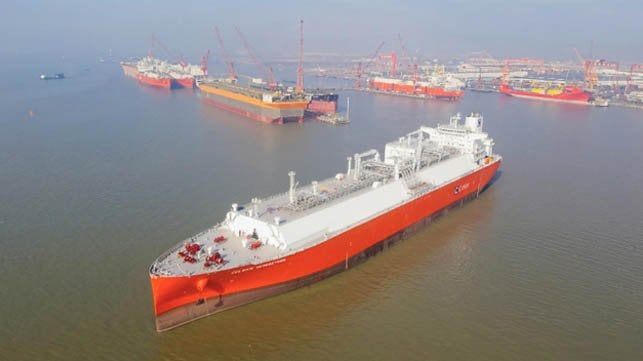
China delivered its first large LNG carrier newbuild representing a further challenge to Korean shipbuilding (China MSA)

Published Apr 27, 2026 7:38 PM by The Maritime Executive


China Merchants Heavy Industries completed the delivery of the country’s first 180,000 cbm LNG gas carrier. It marked a milestone in Chinese shipbuilding in a sector currently dominated by South Korea’s shipbuilders.

Named Celsius Georgetown, the vessel was part of an order placed in late 2022 for four ships, with an additional two plus two on the options. Work began in 2023, with Deltamarin contributing to the design. At 299 meters (981 feet), the ship is 96,000 dwt. She is registered in the Marshall Islands for Denmark’s Celsius Shipping.

Its LNG capacity is substantially larger than the vessels China has built to date. It also incorporates a dual-fuel, low-speed propulsion system with two MAN engines, and air lubrication for the hull. They report that the technology permits a low evaporation rate and high environmental performance.

The naming of the vessel took place on April 8 at the shipyard in Jiangsu, and delivery was completed on April 27. The yard worked with the authorities to complete the paperwork in time so that the ship could sail on the high tide. She is now underway to Singapore.

Chinese shipyards have been building LNG carriers, with the first from Hudong-Zhonghua Shipbuilding in 2008. Today, four yards, Jiangnan Shipyard, Dalian Shipbuilding Industry, Yangzijiang Shipbuilding, and China Merchants Heavy Industry (Jiangsu), are capable of building LNG carriers and accepting orders.

Officials, however, call the new ship a “significant breakthrough” due to its size and the complexity of the vessel. While China took approximately 70 percent of global shipbuilding orders last year, South Korea has maintained a virtual lock on the large LNG carrier. South Korea’s builders have maintained about a 70 percent market share for LNG carriers, but now they are worried that China is working to expand in this sector. High-value and complex ships have been one of the last strongholds for the Koreans in the competition with the Chinese yards.

China Merchants currently has five more of the large vessels under construction for Celsius, with the next ship expected to deliver in approximately three months.  The contract will continue into early 2027. Other Chinese yards have also accepted orders for the large class of LNG carriers.


MSC and Celestyal Cruise Ships Transits Suez After Escape from Persian Gulf

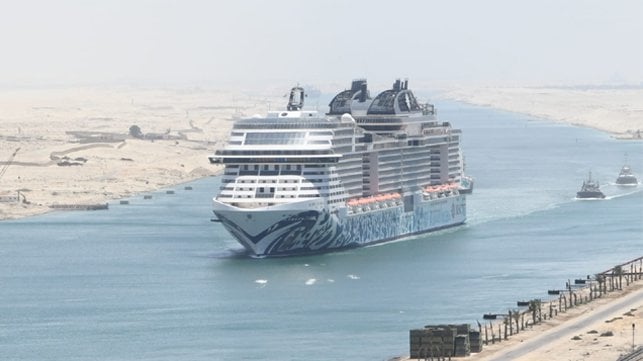
MSC cruise ship transiting the Suez Canal
MSC Euribia made her first transit of the Suez Canal as MSC rushes to get her back in position in Northern Europe (Suez Canal Authority)

Published Apr 27, 2026 2:30 PM by The Maritime Executive


After getting their cruise ships out of the Persian Gulf, two cruise lines elected to send their ships through the Suez Canal to speed their repositioning and return to commercial service. Most cruise ships, like other segments of commercial shipping, have been avoiding the Red Sea and Bab el-Mandeb due to the Houthis having menaced shipping and continuing safety concerns.

The Suez Canal Authority reported that MSC Cruises’ MSC Euribia (184,000 gross tons) made the northbound transit on Sunday, April 26. The LNG-fueled cruise ship sails under the flag of Malta. It was reported to be operating with a skeleton crew of just 192, versus a normal complement of approximately 1,700 crewmembers.

It was the cruise ship’s first transit of the Suez Canal. The ship is now underway in the central Mediterranean, bound for Malta, where she is due to arrive tomorrow, April 28. She is sailing to Kiel, Germany, where she will resume cruises on May 16, and Copenhagen on May 17.

The transit of the MSC Euribia also gave an indication of the continuing decline in transits at the Suez Canal. The authority reported she was one of 45 vessels to transit on Sunday, which in total represented about 1.7 million net tons. Before the attacks by the Houthis in the Red Sea, the Suez Canal typically had 60 or more ships in a day, and on two occasions in 2022 and 2023, handled more than 100 ships in a day.


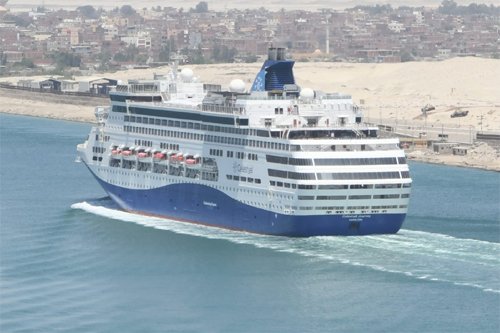
Celestyal Journey making the Suez Canal transit for her return to the Mediterranean (SCA)


MSC was following behind Celestyal Cruises, which also sent both of its cruise ships through the Suez on their return from the Persian Gulf. The company reported today, April 27, that both the Celestyal Discovery and then the Celestyal Journey had completed the Suez Canal transit. The Celestyal Discovery has completed a stop in Turkey and is bound for Greece, and will resume cruising on May 1. The Celestyal Journey is heading to Turkey and is scheduled to resume cruises on May 2.

The Saudi-owned cruise ship Aroya also transited the Bab el-Mandeb on her way to Jeddah, Saudi Arabia, where she will resume cruises. In June, she is scheduled to transit the Suez Canal to start cruises from Turkey.

The Aroya was the first cruise ship to make the Suez Canal transits after the Houthis disrupted operations. She went through the canal with passengers in September 2025 during a repositioning from Turkey to Saudi Arabia. She had previously made the transits in December 2024 and June 2025.

The Suez Canal Authority hopes to attract cruise ships back to the transit as part of its larger strategy to rebuild its operations. It reports that between 2021 and 2024, 69 cruise ships had transited the canal with approximately 38,000 passengers. They had generated approximately $15.8 million in revenues for the Suez Canal Authority.

The German cruise line Mein Schiff, however, elected to send its two cruise ships around South Africa after the escape from the Persian Gulf. The Mein Schiff 5 is due in Cape Town tomorrow, April 28, and will resume cruising on May 15 from Turkey. The Mein Schiff 4 is a day behind, due in Cape Town on April 29. She is scheduled to resume service on May 17 from Italy.


White House Weighs Iran's Proposal to Reopen Strait and Defer Nuclear Talks

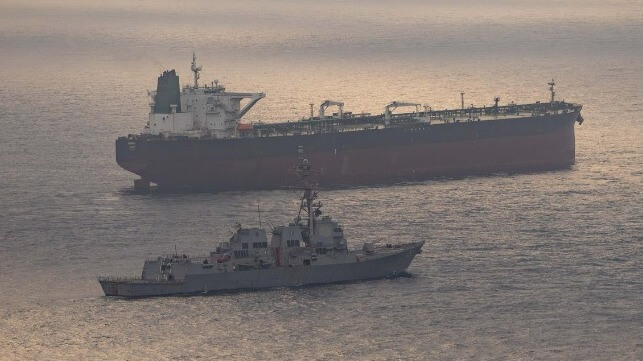
Guided-missile destroyer USS Rafael Peralta (DDG 115) enforces the U.S. blockade on Iranian ports against an Iranian-flagged ship attempting to sail to a port in Iran, April 24.
Guided-missile destroyer USS Rafael Peralta (DDG 115) intercepts an Iranian tanker, April 24 (USN)

Published Apr 27, 2026 8:02 PM by The Maritime Executive


Iran's negotiating delegation has presented the White House with an offer to end the war and reopen the Strait of Hormuz, but with a price: the offer would be conditional upon pushing back the talks on Iran's nuclear program to an unspecified future date. If the Trump administration accepted, it would perpetuate many of the activities that the White House hoped to eliminate, notably including the continuation of Iran's uranium enrichment. The president does not like the proposal, multiple officials told the New York Times late Monday. 

Under the plan, both Iran and the United States would relax their dueling blockades in the strait. That would allow commerce to flow freely to and from the Gulf states, restoring the world's access to Arabian oil - subject to the timelines needed for demining the waterway and rebooting shut-in oil wells. It would also allow Iran to fully resume oil sales to China, a vital source of foreign exchange revenue which underwrites its military, its ballistic missile program and its nuclear enrichment activities. 

Iran's foreign minister, Abbas Araghchi, went on a tour of regional capitals over the weekend to sell the plan. He flew to St. Petersburg to meet with Russian President Vladimir Putin, then to Islamabad, then on to Muscat, where (according to Al Jazeera) representatives from multiple foreign intelligence agencies were on hand to meet. 

The White House has not confirmed the details of Iran's proposal, and a spokesperson told media that the administration will not negotiate through the press. The other option under consideration is to continue the U.S. blockade of Iranian shipping, hoping that the lack of tanker export capacity will force Iran to begin shutting in wells - potentially damaging its long-term production. The looming prospect of shut-ins will apply pressure to Iranian leadership to make a deal, this line of thinking goes; but it comes at a cost, as Iran will also continue its blockade of the Gulf's tanker traffic, limiting the world's supply of oil and keeping energy prices high. And opinions differ - inside and outside the administration - on whether the economic pressure will bring Iran's leadership to accept U.S. demands.  

"The [U.S.] blockade was offered as a kind of silver bullet, but there is no such thing as a cost-free, purely economic solution to a fundamentally political and strategic problem the administration facing with Iran today," said Danny Citrinowicz, a former head of Israeli Defense Intelligence's Iran desk. "All the talk about numbers, export levels, reserves, enrichment capacity, ultimately means very little if it does not translate into a change in Iranian positions in the negotiations. And at this stage, there is little indication that Iran is moving in that direction."


Electrochemistry captures coffee’s taste, powering a more consistent cup


University of Oregon researchers find a way to measure the flavor profile of coffee


University of Oregon


It takes a surprising amount of work to keep coffee consistent cup to cup. An electrifying new approach from University of Oregon researchers could make the task easier. They’ve discovered a way to measure the flavor profile of a cup of coffee — by sending an electrical current through it.  

The advance could help cafes improve their quality control with a simple measurement. It also pins down something that’s long eluded food scientists: how to quantify and separate the factors that influence how something tastes.  

“It’s an objective way to make a statement about what people like in a cup of coffee,” UO chemist Christopher Hendon said. “The reason you have an enjoyable cup of coffee is almost certainly that you have selected a coffee of a particular roast color and extracted it to a desired strength. Until now we haven’t been able to separate those variables. Now we can diagnose what gives rise to that delicious cup.” 

Hendon’s team repurposed a lab tool that’s usually used to test batteries and fuel cells. In the new study, they found it could identify a chemical fingerprint of coffee, a way to quantify a flavor profile that a roaster and barista could then aim to replicate.  

They published their findings April 28 in the journal Nature Communications

Dozens of variables influence a good cup of coffee, including water temperature, grind size, the amount of beans and the beans themselves. Small changes in protocol can lead to big changes in flavor.  

Cafes that cater to coffee aficionados invest a lot of effort in consistency. They’re constantly adjusting parameters so a regular customer will find that a shot of their favorite espresso tastes the same today as it did yesterday.  

The industry standard to determine flavor profile is to measure the refractive index of the coffee. (Similar approaches are used in winemaking and other industries.) This measurement of how light bends as it moves through the liquid reflects the strength of the coffee. But strength alone doesn’t capture the cup’s flavor.  

Most of the flavor people detect in a cup of coffee comes from a combination of strength and darkness, which together make up what Hendon calls a coffee’s “roastiness.” 

People’s preferences are very individual, he emphasizes. So this isn’t about making a better cup of coffee, but rather a more consistent one that reflects someone’s individual tastes.  

The tool that Hendon’s team adopted, called a potentiostat, is commonly used in the field of electrochemistry. It controls voltage and current and tests the performance of batteries and fuel cells. The device is highly sensitive to the composition of the material that it measures.  

By repurposing the tool to examine the electrical response of coffee, in essence looking at how electricity interacts with the drink, it offers a more nuanced measurement of coffee’s flavor profile, Hendon’s research found. He and his team, including former doctoral students Robin Bumbaugh and Doran Pennington, identified distinct signatures from different kinds of beans prepared in different ways.  

That provides a target for a barista to replicate, one that reflects the flavor of the coffee more than strength alone.  

As a real-world test of their technique, they sourced four different samples from a roaster in England. The beans seemed identical to the naked eye, and the researchers didn’t know which was which. But their electrochemical approach accurately identified the sample in the group that had failed the roaster’s quality control.   

“In the short term, we hope this is something that will make a difference in coffee shops and in the coffee industry,” Hendon said.

And for the coffee nerds at home, he added, “this is the first step towards understanding why you enjoy coffee, at a molecular level of precision."

— By Laurel Hamers, University Communications 


Racism and socioeconomic stress may alter pregnancy biology, leaving black women nearly three times more likely to die


University of Cambridge
Researcher Grace Amedor, who led the study and is now a resident doctor 

image: 

Amedor wanted to investigate after reading that black women were much more likely to die in, or after pregnancy than white women. Although this disparity has been known for a long time, there was little research into the potential underlying biological reasons.

view more 

Credit: University of Cambridge


Stresses experienced by black women, such as socioeconomic inequalities, may alter key processes in the body that predispose them to worse pregnancy outcomes than white women, a study by the University of Cambridge has found.

These altered physiological processes may lead to higher rates of preeclampsia in black women, and higher rates of preterm birth and fetal growth restriction in black babies, compared to white women and their babies.

In a major review of published studies, the researchers looked at a range of processes that are vital in the body during pregnancy - including the control of inflammation, and blood flow to the developing fetus. They found these processes are often altered in ways linked to poorer pregnancy outcomes in black women, compared to white women.

These are not the result of genetic differences between black and white women. Instead, the results suggest that persistent socio-environmental stressors - known to have a measurable biological effect - may influence the body’s ability to function healthily during pregnancy.

Black women and their babies face significantly higher health risks during pregnancy and childbirth than white women. Black women in the UK are 2.7 times more likely to die during pregnancy compared with white women, and black babies are more than twice as likely to die before their first birthday as white babies.

Until now, the biological pathways that may help explain the link between socioeconomic inequalities and poorer pregnancy outcomes in black women have received little attention.

“Pregnancy and childbirth put great stress on a woman’s body. Black women may experience additional strain due to factors including systemic racism, socioeconomic disadvantage and environmental stressors. During pregnancy, this strain may affect key biological processes in ways that increase the risk of conditions such as pre-eclampsia,” said Grace Amedor, first author of the study, who conducted the work as part of her medical studies at the University of Cambridge.

Amedor, now a resident doctor, added: “I wanted to investigate after I read that black women were much more likely to die in, or just after, pregnancy than white women. As a black woman myself that was scary to hear. I was surprised that although this disparity had been known for a long time, there was little research into the potential underlying physiological reasons.”

Preeclampsia in pregnancy causes a woman to have very high blood pressure, which can lead to seizures and - in some cases - death. It can also lead to fetal growth restriction, when the baby doesn’t grow properly in the uterus, and pre-term birth, when a baby is born earlier than it should be.

The report is published today in the journal Trends in Endocrinology & Metabolism.

Three key physiological differences

The researchers identified three key physiological mechanisms that affect pregnancy outcomes, and show measurable differences between black and white women:

Increased uteroplacental vascular resistance: This is a tightening of blood vessels that can reduce blood flow to the placenta. Their review identified differences in biological markers linked to this process, which may help explain higher rates of pre‑eclampsia, maternal hypertension, fetal growth restriction and preterm birth in black women.

Higher oxidative stress: Oxidative stress occurs when damaging molecules called reactive oxygen species overwhelm the body’s antioxidant defences. The study found that black women often have higher levels of oxidative stress markers and lower levels of protective antioxidants. These imbalances can increase the risk of preterm birth, preeclampsia, and fetal growth restriction.

Greater inflammation: Healthy pregnancy requires a carefully regulated immune response. The study found that black women show higher levels of several inflammation-related markers. These changes have been associated with preterm birth and preeclampsia.

Driving change

The Cambridge team hope their findings could help guide new approaches to reducing the disparity in pregnancy outcomes between black and white women. But they stress that long‑term change depends on addressing the social conditions that give rise to these unequal outcomes.

“The significant disparity in pregnancy complications between black and white women is well known and has often been explained in terms of differences in medical care, alongside broader social and environmental inequalities. We’ve found these exposures can disproportionally affect black women’s bodies, making them less able to function healthily during pregnancy,” said Professor Dino Giussani, a scientist at the University of Cambridge’s Department of Physiology, Development and Neuroscience and senior author of the study.

“It’s important that we don’t stop trying to tackle the root causes that lead to worse pregnancy outcomes in black women, which are the socioeconomic disparities and the systemic racism they can experience throughout their lives,” said Amedor.


Scientists create first-ever ‘smell map’


A detailed diagram of smell receptors in the nose fills in missing details of how olfaction works


Harvard Medical School

'Smell Map' 

image: 

A microscope photo of a cross section of a mouse nose. The mouse was genetically modified to express green fluorescent protein in smell neurons. A small subset of dying neurons is labeled in red.

view more 

Credit: Image: Datta Lab


At a glance:

  • Scientists have created the first detailed map of smell receptors in the nose, catching up with similar achievements in sight, hearing, and touch.
  • The map reveals that smell receptors are highly organized into tight bands based on type.
  • The findings provide foundational knowledge needed to develop better therapies for loss of smell.

For most of us, the sense of smell is an integral part of everyday life; it plays a critical role in providing information about our surroundings, alerting us to potential dangers, enhancing our sense of taste, and evoking emotions and memories

Yet from a scientific perspective, “olfaction is super-mysterious,” said Sandeep (Robert) Datta, professor of neurobiology in the Blavatnik Institute at Harvard Medical School, with basic biological understanding lagging behind that of vision, hearing, and touch.

Working in mice, Datta and his team have now created the first detailed map of how the thousand-plus types of smell receptors in the nose are organized.

They discovered that unlike what scientists had long believed, the neurons expressing these receptors have a high degree of spatial organization: They form horizontal stripes based on receptor type from the top of the nose to the bottom.

“Our results bring order to a system that was previously thought to lack order, which changes conceptually how we think this works,” said Datta, senior author of the study.

Moreover, the researchers established that the receptor map in the nose matches up with smell maps in the olfactory bulb of the brain, providing clues about how information moves from the nose to the brain.

While the smell map is an exciting discovery in its own right, Datta said, it also provides foundational information that could help scientists develop therapies for loss of smell, which are currently lacking.

“We cannot fix smell without understanding how it works on a basic level,” he said.

The findings published April 28 in Cell.

A missing map

Maps have long existed that describe how receptors in the eye, ear, and skin are organized to capture and interpret auditory, visual, and touch information — and scientists have figured how these maps correspond with those inside the brain.

However, “olfaction has been the one exception; it’s the sense that has been missing a map for the longest time,” Datta said.

This is in part because it is more complicated than the other senses. Mice, for example, have around 20 million olfactory neurons that express more than a thousand types of smell receptors, compared with only three main types of visual receptors for color vision. Each type of smell receptor detects a unique subset of odor molecules. 

Scientists first began identifying smell receptor types in 1991. Over the next 35 years, researchers investigated whether there was a smell map in the nose. However, they could only observe that receptors tended to be expressed in one of a handful of zones in olfactory tissue. This led to the prevailing theory that receptor expression was largely random, meaning that smell was unlike the other senses.

Datta had been studying various aspects of olfaction, including what causes loss of smell in COVID-19 and how the brain organizes information about odors. As genetic techniques became more powerful, he and colleagues decided to revisit the idea of building a smell map.

An organizational structure, unveiled

In their new study, the researchers combined single-cell sequencing and spatial transcriptomics techniques to examine around 5.5 million neurons in more than 300 individual mice. The first technique allowed them to identify which smell receptors were expressed by neurons in the nose, and the second let them determine the locations of those receptors.

“This is now arguably the most sequenced neural tissue ever, but we needed that scale of data in order to understand the system,” Datta said.

They discovered that the neurons are organized into tight, overlapping, horizontal stripes from the top of the nose to the bottom based on the type of smell receptor they express. This highly organized receptor map was consistent across the mice and mirrored the organization of smell maps in the brain, just like researchers have observed in vision, hearing, and touch.

The researchers then investigated how the smell map in the nose forms and identified retinoic acid — a molecule that helps control gene activity — as a key driver. They found that a gradient of retinoic acid in the nose guided each neuron to express the correct type of smell receptor based on its spatial location. Adding or removing retinoic acid caused the receptor map to shift up or down.

“We show that development can achieve this feat of organizing a thousand different smell receptors into an incredibly precise map that’s consistent across animals,” Datta said.

A separate study led by the lab of Catherine Dulac, the Xander University Professor in the Department of Molecular and Cellular Biology at Harvard University, that published in the same issue of Cell had consistent findings.

Much-needed knowledge

Now, the researchers are exploring why the receptor stripes are in this specific order.

The team is also studying smell receptors in human tissue to understand to what degree the smell map is consistent across species. Such understanding will inform efforts to develop treatments — such as stem cell therapies or brain-computer interfaces — for loss of smell and its consequences, which include an increased risk of depression.

“Smell has a really profound and pervasive effect on human health, so restoring it is not just for pleasure and safety but also for psychological well-being,” Datta said. “Without understanding this map, we’re doomed to fail in developing new treatments.”

Authorship, funding, disclosures

Additional authors on the paper include David Brann, Tatsuya Tsukahara, Cyrus Tau, Dennis Kalloor, Rylin Lubash, Lakshanyaa Kannan, Nell Klimpert, Mihaly Kollo, Martin Escamilla-Del-Arenal, Bogdan Bintu, Andreas Schaefer, Alexander Fleischmann, and Thomas Bozza.

Funding for the research was provided by the National Institutes of Health (grants R01DC021669, R01DC021422, R01DC021965, and F31DC019017), the Yang Tan Collective at Harvard, and a National Science Foundation Graduate Research Fellowship.

'Smell Map' 

A map of the thousand types of smell receptors in the olfactory tissue of a mouse nose, labeled by a color gradient. The bottom inset shows the precise spatial positions of a tagged subset of receptors.

Credit

Image: Datta Lab