It’s possible that I shall make an ass of myself. But in that case one can always get out of it with a little dialectic. I have, of course, so worded my proposition as to be right either way (K.Marx, Letter to F.Engels on the Indian Mutiny)
Friday, May 15, 2026
U.S. Coast Guard Finalizes Five-Ship Icebreaker Order With Davie Defense
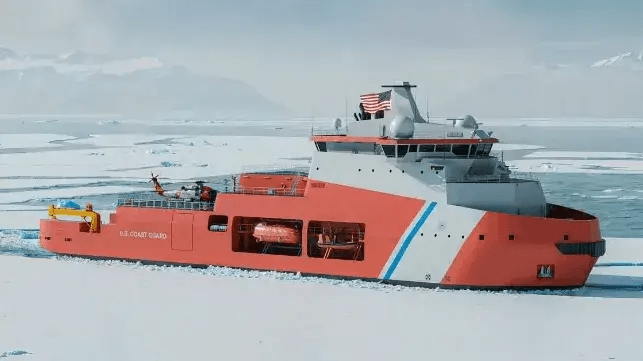
The U.S. Coast Guard has finalized its contract with UK-owned shipbuilder Davie Defense for the delivery of five Arctic Security Cutters, the new medium icebreakers that will complement the capabilities of the American-built Polar Security Cutter.
It is the first of three different Arctic Security Cutter contracts, and it builds on an initial contract with Davie announced earlier this year. The Arctic Security Cutter procurement is one program, but it is on track to order two vessel designs - much like the Coast Guard's twin-class Medium Range Cutter (WMEC) program or the Navy's twin-class Littoral Combat Ship (LCS).
"Finalizing this contract represents decisive action to guarantee American security in the Arctic," said Admiral Kevin Lunday, the commandant of the Coast Guard. "The Arctic Security Cutters will deliver the essential capability to uphold U.S. sovereignty against adversaries’ aggressive economic and military actions in the Arctic."
Davie's first hull is scheduled to deliver by 2028, within President Donald Trump's current term in office. The last of the series should deliver by early 2035. Two will be built at Helsinki Shipyard, and the other three will be constructed at the former Gulf Copper yards in Galveston and Port Arthur, where Davie says it plans to invest up to $1 billion in improvements.
The other two initial contracts went to Rauma Marine Constructions (for two hulls to be built in Finland) and Bollinger (for four hulls to be built to Rauma's design in Louisiana). Two more final contracts will be announced soon, the Coast Guard said in a statement, likely for these two yards. The overall procurement plan calls for a total of 11 vessels.
The Coast Guard is moving fast to commit to shipbuilding and infrastructure contracts. Its historic $25 billion budget boost from Trump's One Big Beautiful Bill Act will expire if unused by 2029. The service has already contracted for more than $13 billion in repair and recapitalization work.
USN’s Third and Fourth Ford Supercarriers Face Further Construction Delays
Mid-body for Enterprise was repositioned in late 2024 to permit Doris Miller to also start assembly (HII)
In a now all-too-common occurrence, the United States Navy is reportedly expecting further delays in the construction and delivery of the third and fourth carriers in the Ford class. USNI News broke the details, reporting that the Navy’s Fiscal Year 2027 budget presentation includes the schedule delays.
The third carrier of the class, named Enterprise, is now reportedly facing an additional eight-month delay, reports USNI News. Enterprise had been scheduled for delivery in March 2028 but had already seen its target date slipping. It had been moved to July 2030, and now the budget reflects the target date as March 2031.
Despite the delay, USNI writes that Enterprise would be completed in just 12 years. It points out that the second ship of the class, the carrier John F. Kennedy, will have taken about 16 years to build. Now, however, the fourth ship, the carrier Doris Miller, is likely to take 15 years, reports USNI.
Delivery of Doris Miller had been scheduled for February 2032. The new budget moves the date to February 2034, a full two-year delay.
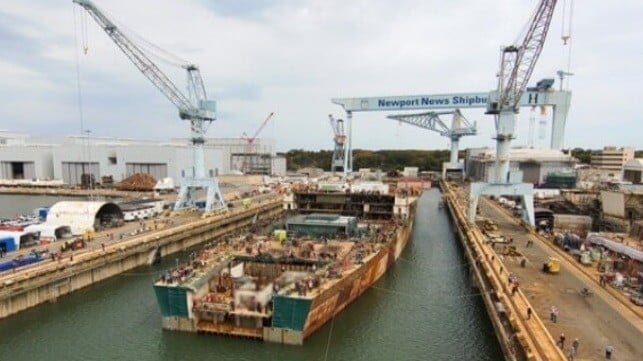
Currently, the U.S. only has one shipyard, HII’s Newport News Shipbuilding, that builds the nuclear carriers. In late 2024, the yard had highlighted that it was gearing up to have two of the carriers in assembly at the same time. The yard completed renovations to its dry dock and then repositioned the early-stage assembly for the hull of Enterprise. They highlighted for the first time that two supercarriers would be assembled in the same dry dock at the same time.
Now, according to USNI, the yard is still preparing for the keel laying of Doris Miller. The Navy reportedly cites as an explanation “construction footprint constraints,” which USNI says are limiting the ability to build modules for CVN-81, the future Doris Miller.
In a statement to the outlet, Newport News Shipbuilding reportedly highlighted that the components for the fourth carrier continue steel fabrication and outfitting. However, they told USNI that a cascading series of delays and supply chain issues are impacting the carriers. Delays with Enterprise due to the supply chain reportedly have spilled over to Doris Miller.
All the carriers in the Ford class have faced construction delays of varying lengths. Last year, the delivery of John F. Kennedy was pushed back from August 2025 to March 2027 so that additional modifications could be completed. The carrier has now completed its first sea trials and continues to move forward on schedule.
However, the delay for CNV-79 has placed pressure on the U.S. Navy, which is mandated by the U.S. Congress to maintain an 11-ship carrier fleet. The Navy had highlighted with fanfare that USS Nimitz was completing her final deployment and heading into retirement. Nimitz, however, was given a last-minute reprieve and will continue in active status until Kennedy is ready. Nimitz is currently circumnavigating South America before taking up her final homeport in Norfolk, Virginia.
At the same time, USS Gerald R. Ford is reportedly on her way home after what will be an 11-month deployment. The carrier is anticipated to go into an extended maintenance period that could last for a year or more after the record-setting deployment.
The Society of Naval Architects and Marine Engineers (SNAME) was founded in 1893 by 13 leaders from across the U.S. maritime sector. They were responding to the weakened state of American commercial and naval shipbuilding after the Civil War and created a forum to advance “practical and scientific knowledge” in shipbuilding, marine engineering, and allied professions.
Headquartered in Alexandria, Virginia, SNAME is an independent, nonprofit professional society for naval architects, marine and ocean engineers, and related specialists. Its community includes more than 4,000 members in 69 countries organized into 20 professional sections in five regions: International, Atlantic North, Atlantic South, Central & Gulf, and Pacific. Its membership is broad enough to be globally relevant, but it is its local focus that provides the unparallelled networking and learning opportunities.
SNAME is largely member-funded, with limited sponsorship from companies and government agencies. This independence helps create a noncompetitive space where industry, government, and academia can compare notes, test ideas, and document what works through committees, panels, and publications. The benefits ripple outward to shipyards, engineering firms, equipment makers, owners and operators, ports, and public agencies that rely on better designs and better technical decisions.
In 2026, SNAME’s agenda reads like a roadmap of the modern maritime industrial base: machine learning, robotics, additive manufacturing, digital twins, alternative fuels and power, ice strengthening, port interfaces, dual-use technologies, and secure supply chains. As policymakers press for a U.S. maritime resurgence through public and private investment, naval architects and marine engineers will be central—integrating emerging technologies into producible ships and systems that stay safe, reliable, and sustainable over decades at sea.
SNAME Alignment with U.S. Maritime Industrial Base Aspirations
A closer look at today’s maritime industrial base proposals makes one point clear: many of the hardest problems are engineering problems—and they map directly to the expertise inside SNAME’s membership and technical committees.
Proposals to establish a national maritime policy advisor and a maritime security board will only succeed if they are informed by technical reality. Designers and engineers, including many SNAME members, should help assess feasibility, set practical innovation priorities, and shape standards. A high-level policy mechanism should be able to draw on SNAME committees as a dependable source of real-world expertise.
Long-term, predictable funding for shipbuilding and maritime R&D is essential because ship design and engineering are multi-year endeavors. Stable demand strengthens the professional base—naval architecture, marine engineering, and detailed design—and SNAME supports those professionals through training, technical exchange, and forums that keep practice aligned with the state of the art.
R&D leadership has long been foundational to SNAME. Many members have built reputations as world-renowned subject-matter leaders through committee work, research, and publishing. Any transformation of the U.S. maritime industrial base will need that kind of organized, readily available technical leadership.
SNAME members also bridge the gap between commercial and military shipbuilding—an advantage as policymakers emphasize ships that are commercially efficient yet militarily useful. Designing for dual requirements adds complexity in hull form, propulsion, survivability, and lifecycle support; specialized naval architecture many SNAME members practice.
Talent development proposals—professional hubs, workforce pipelines, and knowledge transfer—align with long-running SNAME activities. University programs at maritime schools train future naval architects and marine engineers, and SNAME’s 49 student sections and engagement in continuing education and professional licensure place the Society at the center of recruiting and development.
As the U.S. maritime sector looks outward for proven practices, SNAME can make global knowledge transfer practical by facilitating professional exchanges that connect members and students with leading design and production approaches worldwide.
SNAME Technical and Research Program
SNAME recently restructured its Technical and Research (T&R) program to reflect new priorities, including themes highlighted in the Maritime Action Plan (MAP). One central question was: what types of vessels does it make sense to build in the United States? Two areas drew particular attention—maritime nuclear power and autonomous marine vehicles.
The T&R program now includes a Maritime Nuclear Power Committee (panels on nuclear-powered ships and floating nuclear power plants) and a new panel on Autonomous Marine Vehicles.
Ship Design
Less flashy—but just as consequential—is work on schedule and cost realism as projects move from concept to Front End Engineering Design, Final Investment Decision, and detailed design. Programs stumble when requirements and engineering maturity aren’t de-risked early; late changes then cascade into disputes, overruns, and delays. SNAME’s cross-sector experience, including lessons from offshore and energy projects, helps teams set achievable assumptions and share practices that improve execution.
Ship Production
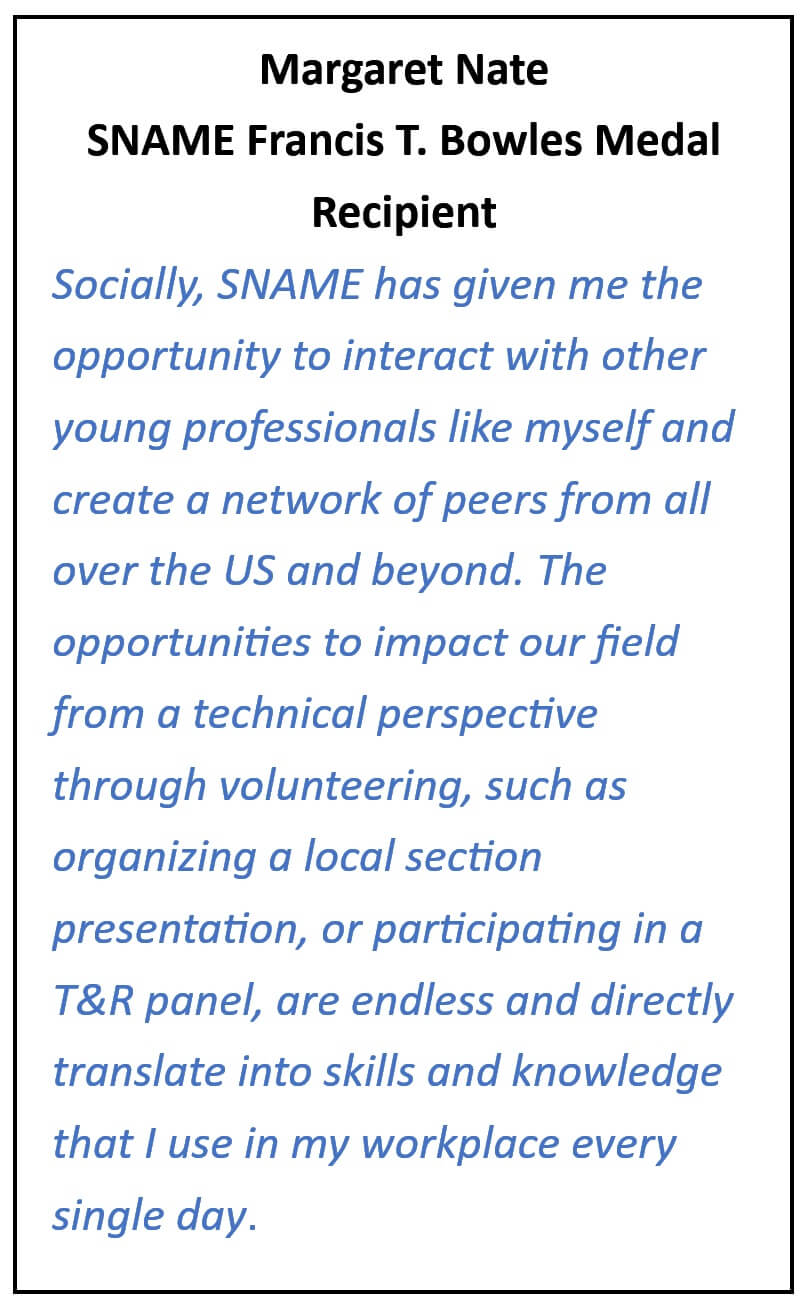
SNAME’s Ship Production Committee, working with the National Shipbuilding Research Program (NSRP), is leaning into modular construction, digitalization, and AI—while keeping focus on the fundamentals that determine whether yards can scale: workforce development and productivity. Modularization and distributed fabrication can also broaden the supplier base, supporting the MPZ concept by spreading skilled work across a region.
Together, these efforts position SNAME as a practical partner for rebuilding capacity: convening experts, translating lessons across sectors, and turning ambitious policy goals into designs, standards, and production methods that can be executed and sustained over a ship’s full life.
Maritime Prosperity Zones
The Maritime Action Plan proposes Maritime Prosperity Zones (MPZs) to link supply chains, workforce development, and financing to support new shipbuilding activity. Offshore floating wind is one example of a steel-intensive market where SNAME’s Offshore T&R Committee is positioned to contribute as projects scale.
Sharing Knowledge
A maritime resurgence will be built on shared knowledge as much as steel. That’s where SNAME’s publishing and convening roles matter: trusted technical content, peer review, and forums that let practitioners challenge assumptions and carry proven ideas back to yards, design teams, and fleets.
SNAME shares knowledge through several flagship channels, including:
- T&R Bulletins (guidelines, standards, white papers) produced by technical committees and panels
- Marine Technology magazine and peer-reviewed journals
- Books and reference texts (including Principles of Naval Architecture)
- Regional conferences, symposia, and the annual SNAME Maritime Convention (this year October 28-30th in Houston).
About the Authors
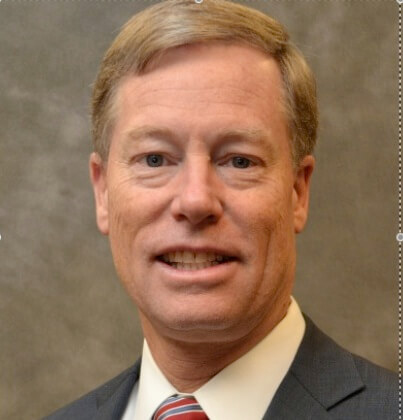
James Watson is a retired U.S. Coast Guard Rear Admiral and an independent maritime consultant. He is a co-author of Zero Point Four and a founding member of Maritime Accelerator for Resilience (MAR). He previously served as SVP at ABS Global Government Services and held senior safety and prevention-policy roles at the U.S. Department of the Interior and the U.S. Coast Guard. He is a proud SNAME member.
Elizabeth Bouchard is the Executive Director of SNAME. Prior this, Elizabeth served as SVP, Regulatory Administration for International Registries, Inc. and as Deputy Commissioner of Maritime Affairs for the Republic of the Marshall Islands Maritime Administrator. Her background is in maritime regulation and policy. She has served as a consultant for energy and shipping companies and as an advocate for the maritime industry in government.
 SNAME members also bridge the gap between commercial and military shipbuilding—an advantage as policymakers emphasize ships that are commercially efficient yet militarily useful. Designing for dual requirements adds complexity in hull form, propulsion, survivability, and lifecycle support; specialized naval architecture many SNAME members practice.
 Ship Production
 James Watson is a retired U.S. Coast Guard Rear Admiral and an independent maritime consultant. He is a co-author of Zero Point Four and a founding member of Maritime Accelerator for Resilience (MAR). He previously served as SVP at ABS Global Government Services and held senior safety and prevention-policy roles at the U.S. Department of the Interior and the U.S. Coast Guard. He is a proud SNAME member.
 Elizabeth Bouchard is the Executive Director of SNAME. Prior this, Elizabeth served as SVP, Regulatory Administration for International Registries, Inc. and as Deputy Commissioner of Maritime Affairs for the Republic of the Marshall Islands Maritime Administrator. Her background is in maritime regulation and policy. She has served as a consultant for energy and shipping companies and as an advocate for the maritime industry in government.
No comments:
Post a Comment