Wednesday, January 04, 2023

Was the Southwest Airlines Meltdown Impacted By the “Great Share-Buyback Scam”?


JANUARY 4, 2023

LONG READ
Facebook

Photograph Source: Colin Brown – CC BY 2.0

My radio/TV program and my daily Substack newsletter, Hartmann Report, together are a small business. The only way I can increase my income from that business is by increasing the advertising revenue to the show, getting more people signed up for the newsletter, or both.

Build the business, in other words. Do the hard work every day. Keep my “customers” informed and thus happy: add value through research and share what I learn along the way.

It used to be that way with big business as well — companies grew in value because of good management and continual reinvestment in people, facilities, and product — until Ronald Reagan adopted neoliberalism and rewrote the rules of business.

Southwest Airlines passengers, for example, are today lamenting lost time with loved ones, lost luggage, and lost money spent on hotels, airline reroutes, and rental cars.

They missed weddings and funerals, spending time with family, and some confronted life-threatening situations as luggage-packed medications went missing and dialysis appointments had to be skipped.

All, apparently, so senior executives at Southwest and their morbidly rich investor cronies could get billions richer.

Here’s how it works.

If you’re the CEO of Southwest Airlines, or most any publicly traded corporation, there are two main ways you can increase your own compensation.  They are:

1. Build the company: Invest in workers and technology. Open new routes. Provide better service to passengers. Upgrade your planes so people will want to fly with you. Pay your people better to build employee retention.

2. Use company profits to buy back and retire Southwest stock.

According to corporate watchdog Accountable.US, most of the evidence suggests the immediate predecessor to Southwest’s new CEO chose door number two as often as possible.

How the stock buyback scam works

But how and why does it happen that CEOs and senior executives make a pile of money when they direct their own corporation to buy back its stock out of the marketplace?

And how did this manipulation of stock prices ever get decriminalized after being illegal for a half-century?

Imagine you’re the CEO of Acme Airlines, a company valued at $10 billion. The company has issued a billion shares of stock that are currently trading at $10 a share ($10 x 1 billion shares = $10 billion).

As the CEO, you’re not only paid a salary, you also have the two typical forms of “stock incentives” modern corporations give their senior executives.

The first is “performance compensation,” meaning as the price of the stock goes up you get bonuses and/or an increase in your pay. The second is that you’re partly compensated with stock or stock options (the right to buy stock at a predetermined typically low price).

If you can increase the share price of Acme Airline’s stock, you not only get a big bonus for hitting your “performance” target, but the stock you hold or can buy at a fixed (lower) price also increases in value. You get rich(er)!

But let’s also say that you’re not interested in building Acme as a way of increasing the stock price: that’s a lot of work and takes years. You want big bucks fast.

So, you simply direct your company to go into the marketplace, to the stock exchange where Acme is traded, and buy up, say, a hundred million shares.

The company is still worth $10 billion, the value of all the planes, landing slots, goodwill, corporate buildings, and assets: none of that has changed.

You haven’t added a single customer or paid a single flight attendant, mechanic, gate agent, or pilot an extra penny. You haven’t improved service or widened the seats in the planes to get in new customers. All you’ve done is use $1 billion in company profits to buy a hundred million shares at $10 each and “retire” them.

But now that the company has bought and retired a hundred million shares, instead of there being a billion shares in circulation there are only 900 million, even though the company is still worth just $10 billion.

As a result of your directing Acme to do that “share buyback,” every share that still exists is worth roughly 10% more because there are 10% fewer of them.

Which means the piles of shares you’ve gotten in compensation are now worth 10% more, too. And because the stock price went up, you’ll be getting a nice “performance” bonus at the year’s end.

This was once a crime – and should be now

This used to be a crime called “stock price manipulation” and was one of President Franklin D. Roosevelt’s and Congress’ early targets when they went after the Wall Street crooks who brought us the Republican Great Depression of the 1930s.

Congress created the Securities and Exchange Commission (SEC) in 1934 and FDR put Joe Kennedy (JFK’s father) in charge of it; Kennedy ironically told my old friend the late Gloria Swanson that he was chosen because, she told me, FDR had wisecracked that, “It takes a crook to catch a crook.”

Kennedy, knowing how the game worked, outlawed stock buybacks as one of his first official acts.

But in 1982 President Reagan endorsed this very form of corporate corruption as part of his new neoliberal Reaganomics agenda, decriminalizing it for the first time in almost a half-century.

Lest you think it improbable that modern CEOs would do this, as it’s so obviously corrupt and harmful to the company itself, consider this headline from the corporate watchdog group Accountable.US:

“Southwest Cancellation Crisis Follows Execs’ Choice to Reward $5.6B to Shareholders Instead of Investing in Infrastructure”

As their press release lays out:

“Government watchdog Accountable.US called the airline’s cancellation crisis a problem of its own making after slashing its workforce by over 1,400 in 2021 and choosing to spend $5.6 billion on stock buybacks in the 3 years leading up to the pandemic rather than making investments in infrastructure to be better prepared for extreme weather events like this week…”

This Reaganomics neoliberalism scam has made America’s corporate CEOs and stock speculators among the wealthiest people in the world, while keeping down wages and benefits for everybody else. It’s hurt the competitiveness of American business.

It started with Reagan’s putting John Shad— the Vice Chairman of the monster investment house E.F. Hutton — in charge of the SEC, which regulates monster investment houses.

Shad wasted no time in deregulating stock buybacks, instituting in 1982 what’s now known as “Rule 10b-18” that made stock buybacks explicitly legal for the first time since 1934.

Since then, share buybacks have become the most personally profitable business scam CEOs and senior executives can run against their own employees, companies, and communities.

When Reagan and Shad made this change in 1982, the average compensation of CEOs was around 30 times that of their average employee.  CEO’s often lived in the same communities as their workers, or in a just slightly more upscale part of town.

Today CEO compensation is between 254 and 1000 times the average employee, depending on the industry, and CEOs live in palatial estates with servants’ quarters, yachts, and private jets; much of that increase in their annual income is the result of their companies’ repeatedly executing stock buybacks over the past 40 years.

Corporate CEOs call this “maximizing shareholder value” and claim it’s how capitalism is supposed to work.

As more and more CEOs got in on the scam since Reagan legalized it in the 1980s, it’s come to account for much of the 40-year explosion in the price of publicly traded stocks.

Investors don’t complain because they’re making out well, too (and 84 percent of all stock in America is owned by the top 10 percent).

How the share buyback scam hurts Americans

It’s also why so much of America’s corporate infrastructure is rotting, from leaking methane from oil rigs to toxic spills from chemical factories to industrial waste being discharged into our environment instead of being cleaned up.

After all, why spend money on improving the company — or even on routine maintenance and safety — when you can personally cash in just as effectively by simply using your company’s revenues to engineer a stock buyback scheme every year?

As William Lazonick wrote for The Hill in 2018:

“Most recently, from 2007 through 2016, stock repurchases by 461 companies listed on the S&P 500 totaled $4 trillion, equal to 54 percent of profits. … Indeed, top corporate executives are often willing to incur debt, lay off employees, cut wages, sell assets, and eat into cash reserves to ‘maximize shareholder value.’”

You’d think that if a company’s stock was going up in value that would indicate it is doing well and could even pay its employees better.

In fact, the CEOs of companies need cash to do these buybacks, and to get that cash they often lay off workers and even cut back on their main business just to enrich themselves and their senior executives.

As Emily Stewart wrote that same year for Vox:

“The thing is, when companies are investing in stock buybacks and dividends, they’re spending money they could use on something else.

“The Roosevelt Institute in May released a report estimating that Walmart, for example, could boost hourly wages to more than $15 an hour with the $20 billion it was using for a buyback. A separate study from the Roosevelt Institute released in July found that companies spent nearly 60 percent of net profits on buybacks from 2015 to 2017.

“It estimated that with the money allocated to buybacks, companies such as Lowes, CVS, and Home Depot could give each of their workers a raise of at least $18,000 a year [on top of their current income!].

“Harley-Davidson in February announced a nearly $700 million stock buyback plan just days after saying it would close a plant in Kansas City. Wells Fargo is spending $25 billion on buybacks and is at the same time laying off workers in multiple states.”

Share buybacks have replaced growing a business as the main way CEOs jack up their compensation to buy a new mega-yacht or ski chalet in Switzerland. And its just as much of a scam today, and just as destructive to working people and our nation, as it was in 1929 when it helped crash the market.

Senators Bernie Sanders and Elizabeth Warren have been shouting about this from the rooftops for decades. Hillary Clinton brought it up in her 2016 campaign for president, something that no doubt cost her some CEO support.

At the time, Financial Times US National Editor Ed Luce wrote, in an article titled Hillary’s War on Quarterly Capitalism:

“The case for reforming shareholder capitalism is strong. The level of US investment [in actual business activity] is at its lowest since 1947. Last year, according to Goldman Sachs, S&P 500 companies spent more than $500bn on share buybacks. This year it is expected to hit $600bn.”

That was in 2015. Just so far this year:

+ Macys bought back 28.9% of their shares spending $2 billion they could have otherwise used to expand the business or raise workers’ pay.

+ Chesapeake Energy bought back 20.6% using $2 billion.

+ Diamondback Energy spent $4 billion to buy back 17.9 percent of their own shares.

+ For Morgan Stanley it was 14.8% of shares at a cost to the company of $20 billion.

The entire list — hundreds of billions in share buybacks just this year — is on this Marketbeat site.

When the biggest oil companies in America reported record profits this year, ripping off American drivers with sky-high gas prices, Reuters reported on April 29:

“Exxon earlier this year more than doubled its projected buyback program to $30 billion through 2022 and 2023. Shell said it would buy back $6 billion in shares in the current quarter, while Chevron boosted its annual buyback plans to a range of $10 billion to $15 billion, up from $5 billion to $10 billion.

“Exxon shares rose 4.6% to $96.93. Chevron shares rose almost 9%, closing at $163.78.”

CNBC reports:

“Apple started to pay quarterly dividends and repurchase its shares in March 2012. Since then and through last summer, Apple has spent over $467 billion on buybacks, according to S&P Global Market Intelligence, which calls the iPhone maker the ‘poster child’ for share buybacks.”

Facebook, which apparently doesn’t have enough cash to hire people to keep Nazis off their platform, has made its top stockholder, Mark Zuckerberg, the richest millennial in America in part through share buybacks, announcing in their third quarter 2021 earnings report:

“We repurchased $14.37 billion of our Class A common stock in the third quarter and had $7.97 billion remaining on our prior share repurchase authorization as of September 30, 2021. We also announced today a $50 billion increase in our share repurchase authorization.”

Progressives Try to Stop the Scam

Democratic politicians have been working for years to try to end this corrosive practice. Senator Tammy Baldwin wrote in a 2015 letter to the SEC’s chair:

“Stock buybacks use profits to purchase a company’s own stock instead of investing in the worker training, research, or innovation necessary to promote long-term growth. … In the past, this money went to productive investments in the form of higher wages, research and development, training, or new equipment. Today, cash is being extracted from companies and placed on the sidelines. Buybacks are now undermining the stock market’s role in capital formation.”

Senator Elizabeth Warren noted:

“Buybacks create a sugar high for the corporations. It boosts prices in the short run, but the real way to boost the value of a corporation is to invest in the future, and they are not doing that.”

In 2019, Senators Bernie Sanders and Chuck Schumer co-authored an article for The New York Times in which they told America:

“Between 2008 and 2017, 466 of the S&P 500 companies spent around $4 trillion on stock buybacks, equal to 53 percent of profits. An additional 40 percent of corporate profits went to dividends. When more than 90 percent of corporate profits go to buybacks and dividends, there is reason to be concerned.

“First, stock buybacks don’t benefit the vast majority of Americans. That’s because large stockholders tend to be wealthier. Nearly 85 percent of all stocks owned by Americans belong to the wealthiest 10 percent of households. Of course, many corporate executives are compensated through stock-based pay. So when a company buys back its stock, boosting its value, the benefits go overwhelmingly to shareholders and executives, not workers.”

Pointing out that share buybacks inflate the wealth of the top 10% of Americans who own most of this nation’s stocks — increasing inequality — while generally screwing the people who work for those companies, they added:

“[W]hen corporations direct resources to buy back shares on this scale, they restrain their capacity to reinvest profits more meaningfully in the company in terms of R&D, equipment, higher wages, paid medical leave, retirement benefits and worker retraining.”

Small businesses like mine and millions of others across this nation can’t engage in this sort of manipulation to seemingly pull money out of thin air. Large businesses shouldn’t be able to, either.

It’s time to declare the 42-year Reagan Revolution’s neoliberal experiment a failure, and outlaw the share buybacks that are one of its most visible markers. Joe Kennedy knew what he was talking about when he criminalized them, even if he was a crook.

A first step toward restoring vitality to America’s business sector and providing much-needed funds to return America to our position as the world’s innovator — with the world’s most prosperous middle class, as we were before Reagan’s introduction of neoliberalism — is to once again outlaw stock buybacks.

Decolonize, de-Imperialize, and Restore Sovereignty

 
JANUARY 4, 2023
FacebookTwitter

Photograph by Nathaniel St. Clair

As a child of the 1950s and ‘60s I cannot help but see flashes of Vietnam in Empire’s latest – hopefully its final – military expedition(s).  Social media platforms and television propaganda maintain a persistent numbness.  Institutional and individual indifference breeds a hunger for bread and circuses, football, Disneyland, talk shows and star-spangled “influencers,” who excrete toxic slime from every crack and crevice.  The system now occupies every square inch of terrain.  Bureaucrats, bored out of their minds, nevertheless read the latest memo from Washington directing street operations programmed to steer the “hive mind” hither and yon, round and round, to a place called nowhere.

It’s hard aimless work averting eyeballs — already robbed of their gaze — day in, day out, away from the wretched, inhumane global slave quarters and killing zones where pillage of the last untrammeled forests, grasslands, and scenic vistas produce commodities and emerging, synthetic  “Green” markets needed to keep the insatiable machines, financial schemes and meaningless political simulations from totally melting down.  Down this road is one logical end: suicide.

Will this latest proxy war keep Western (vassal) societies in Europe and elsewhere under control as they face increasingly difficult hardships, a direct result of the suicidal policies of the U.S. government’s mannequin class.

I have questions.

Will 2023 witness further deceleration, decline and collapse of Western colonialism under papal rule?  Will the “Doctrine of (Christian) Discovery,” which began just over 500 years ago finally expire?  Will the Inter Caetera, a papal bull from Pope Alexander VI in 1493, be rescinded?

An excerpt:

Alexander, bishop, servant of the servants of God, to the illustrious sovereigns, our very dear son in Christ, Ferdinand, king, and our very dear daughter in Christ, Isabella, queen of Castile, Leon, Aragon, Sicily, and Granada, health and apostolic benediction. Among other works well pleasing to the Divine Majesty and cherished of our heart, this assuredly ranks highest, that in our times especially the Catholic faith and the Christian religion be exalted and be everywhere increased and spread, that the health of souls be cared for and that barbarous nations be overthrown and brought to the faith itself.   (Emphasis added)

What lies beyond war in Ukraine?  Will the PR firms, mainstream media and intelligence agencies be able to hold back the growing discontentment, and keep social, cultural and financial illusions from imploding?  How much more hardship can the Western middle class endure before the pitchforks come out hunting for oligarchs and billionaires who clearly understand the stakes if they cannot deliver a quality of life greater than today’s unpayable debts?

Retreat or liquidation/suicide?  Everyone knows who is to blame for the consequences of de-industrialized, hyper-financialized economies.  Can American Empire find a way to escape de-imperialization and de-colonization and a radical re-configuration and re-storation of sovereignty?  How quickly can popular revolt overthrow our dilapidated American oligarchy?

A transformation is always brewing, cycling.  It’s a good time to imagine and embrace with conviction a future with fewer lies and a whole lot less corruption, chaos and mass murder for fun and profit by, and for, the parasite class.

Global hierarchy and centralization have failed demonstrably.  People now see and feel the deep disfunction in once-trusted institutions. Masses of people struggling to survive are no longer fooled by the failed simulations, fake institutions and greedy tyrants who pushed “free-market” prosperity and gave back nothing but misery.  Hoarders of illegitimate wealth should be preparing for their long-awaited encounter with karma.

The meme for 2023 should read as follows: “De- comes before Re-.”  De-colonization, de-imperialization, de-centralization and de-molish slavery is the first order of business.

“That which is ready to fall, shall ye also push!”  – Friedrich Nietzsche

Imagine!  Create!  Rise from the ashes, imagine liberation from debt slavery and restoration of sovereignty and dignity to indigenous nations, communities, families, man (man and woman) and all of Mother Earth’s lifeforms.

Steve Kelly is a an artist and environmental activist. He lives in Bozeman, Montana.  

Rohingya Refugees Are Departing for Southeast Asia in Increasing Numbers

While some travel overland from Bangladesh to Thailand, others are embarking upon dangerous and often deadly ocean voyages.


By Rajeev Bhattacharyya
January 04, 2023

Rohingya children gather sticks at a refugee camp in Cox’s Bazar, Bangladesh, March 2018.
Credit: UN Women/Alison JoyceADVERTISEMENT

Rohingya refugees are increasingly embarking upon hazardous journeys to Southeast Asia to escape the dangers of an uncertain life in the refugee camps of eastern Bangladesh.

In early December, around 150 such refugees were stranded at sea off Thailand’s coast after their boat broke down. Rights activists suspect that many may have died and requested the country’s authorities to rescue the survivors.

The episode came on the heels of a number of similar incidents to have occurred intermittently over the past two years. Late in 2021, for instance, there was a standoff involving a boat carrying Rohingya refugees and the Indonesian navy, which ended after 18 hours with a rescue of the refugees by the navy.

The trail to Southeast Asia and the Middle East from refugee camps in Bangladesh and the Rohingya-inhabited region of Myanmar’s Rakhine State began decades ago, after the Myanmar military launched Operation Dragon King (Nagamin) against Rohingya in the late 1970s

Several more military operations followed in the decades thereafter, compelling hundreds of Rohingya to relocate to Bangladesh and other countries. The biggest exodus was in 2017, when the Myanmar military launched attacks that forced more than 700,000 people to cross the border into Bangladesh, where most now remain.

The Rohingyas, a Muslim minority group living predominantly in Rakhine State, are often described as the world’s most persecuted people. They have been at the receiving end of institutionalized discrimination and repression by Myanmar’s ethnic Bamar-dominated military.

Conversations over the telephone with three Rohingya refugees rehabilitated at different camps in Cox’s Bazar, Bangladesh, revealed details of the immigration to overseas destinations in Southeast Asia that could continue in the future.

“People are continuously escaping from the camps in Cox’s Bazar. The numbers keep on changing but it could be somewhere between 50 and 100 people every day who leave for Southeast Asia,” claimed a refugee in his early 30s. “It is likely that more people are exiting from the camps in Bangladesh than from the Rohingya inhabited zone in Myanmar’s Rakhine State.”ADVERTISEMENT


Emigration has picked up dramatically after the first wave of the COVID-19 pandemic began to recede around two years ago. The journey is arranged by a network of brokers who are active in a majority of the 34 refugee camps in Cox’s Bazar and the Rohingya region in Rakhine State. But only the families who can cough up the exorbitant rates demanded by the brokers can hope to depart for Southeast Asia.

According to the refugees, the current rate charged by the brokers is around $4,800- $5,800 per person. On many occasions, families sell all their belongings to obtain the necessary funds, which can also be paid in installments. But that is not the end of the story. Sometimes the brokers employ a range of tactics to extract more money from the families before they are allowed to depart.
One refugee recalled an instance in which a broker forcibly separated a child from his parents and detained him near Sittwe, the state capital of Rakhine State, for many days as he wanted more money. The family was allowed to proceed further in the journey only after his demands were fulfilled.

Brokers hand over every group to other brokers at specific destinations on the two routes through which the refugees are ferried. The overland route originates at Teknaf and passes through Maungdaw and Sittwe in Rakhine State and then onward to Thailand overland via Ayeyarwady Division.

Photographs that are in circulation at some camps in Cox’s Bazar reveal that refugees are usually herded beneath the merchandise in trucks that ply the route between Yangon and Ayeyarwady Division. On November 27, a truck transporting many refugees hidden beneath sacks of ginger skidded off the road near Yangon. A few days later, the bodies of 13 men, most of them teenagers, were found dumped near Ngwe Nanthar village in Hlegu township.

Many groups of Rohingya refugees have been detained in Ayeyarwady over the past several months. According to an estimate, more than 400 refugees were sent to prison in the region since the military coup in Myanmar early in 2021.

The other route is by sea on rickety boats to various countries in Southeast Asia. Most of the escapees prefer Malaysia to other countries owing to its government’s past leniency toward Rohingya refugees (though this may be changing). Harrowing tales had surfaced about the experiences of refugees after reaching Thailand, where they have been imprisoned or forced into bonded labor unless more funds are paid.

More than 1 million Rohingya refugees are lodged at the camps in Cox’s Bazar.] An uncertain future coupled with the squalid conditions in the camps here have prompted an increasing number of refugees to undertake hazardous journeys to Southeast Asia.

The refugees claimed that education and health facilities have been enhanced at all the camps with the active assistance of some NGOs but are still inadequate for the entire population in Cox’s Bazar. They lamented the lack of employment opportunities in Bangladesh, which has compelled more teenagers and young adults to escape from the camps in search of greener – and safer – pastures.
Drone advances in Ukraine could herald battlefield dawn of autonomous killer robots

Experts warn it’s likely only a matter of time before both sides take relatively small step of deploying even smarter lethal weapons, setting stage for profound change in warfare

By FRANK BAJAK and HANNA ARHIROVA
Today, 

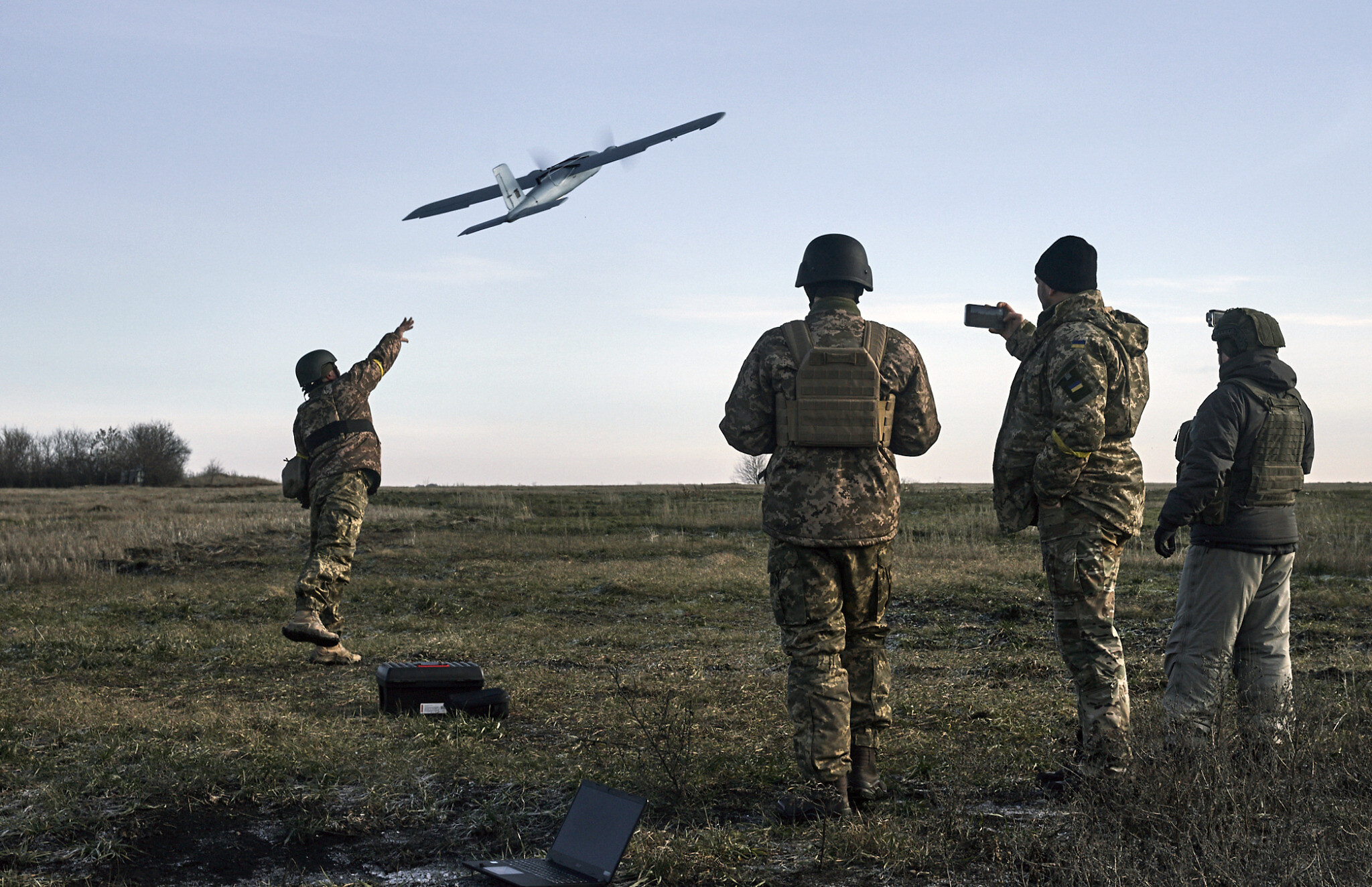
Ukrainian soldiers launch a drone at Russian positions near Bakhmut, Donetsk region, Ukraine, December 15, 2022. (LIBKOS/AP)


KYIV, Ukraine (AP) — Drone advances in Ukraine have accelerated a long-anticipated technology trend that could soon bring the world’s first fully autonomous fighting robots to the battlefield, inaugurating a new age of warfare.

The longer the war lasts, the more likely it becomes that drones will be used to identify, select and attack targets without help from humans, according to military analysts, combatants, and artificial intelligence researchers.

That would mark a revolution in military technology as profound as the introduction of the machine gun. Ukraine already has semi-autonomous attack drones and counter-drone weapons endowed with AI. Russia also claims to possess AI weaponry, though the claims are unproven. But there are no confirmed instances of a nation putting into combat robots that have killed entirely on their own.

Experts say it may be only a matter of time before either Russia or Ukraine, or both, deploy them.

“Many states are developing this technology,” said Zachary Kallenborn, a George Mason University weapons innovation analyst. “Clearly, it’s not all that difficult.”

The sense of inevitability extends to activists, who have tried for years to ban killer drones but now believe they must settle for trying to restrict the weapons’ offensive use.


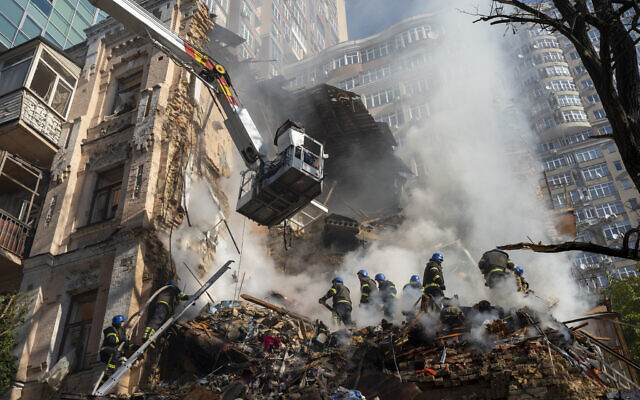
Firefighters work after a drone attack on buildings in Kyiv, Ukraine, October 17, 2022. (Roman Hrytsyna/AP)

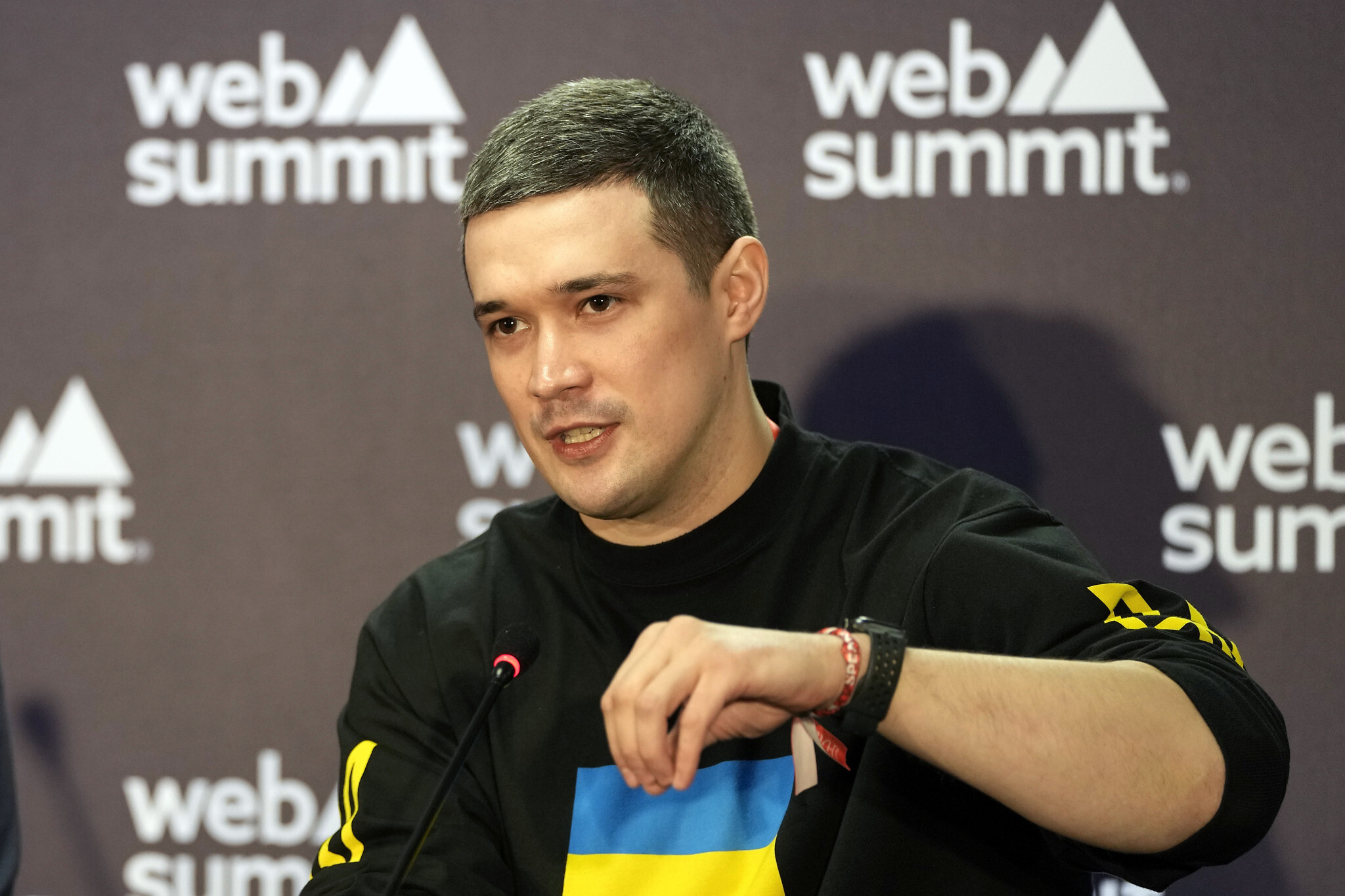
Ukraine’s digital transformation minister, Mykhailo Fedorov, agrees that fully autonomous killer drones are “a logical and inevitable next step” in weapons development. He said Ukraine has been doing “a lot of R&D in this direction.”

“I think that the potential for this is great in the next six months,” Fedorov told The Associated Press in a recent interview.

Ukrainian Lt. Col. Yaroslav Honchar, co-founder of the combat drone innovation nonprofit Aerorozvidka, said in a recent interview near the front that human war fighters simply cannot process information and make decisions as quickly as machines.

Ukrainian military leaders currently prohibit the use of fully independent lethal weapons, although that could change, he said.

“We have not crossed this line yet – and I say ‘yet’ because I don’t know what will happen in the future,” said Honchar, whose group has spearheaded drone innovation in Ukraine, converting cheap commercial drones into lethal weapons.

File: Ukraine’s Minister of Digital Transformation Mykhailo Fedorov at a news conference at the Web Summit technology conference in Lisbon, Portugal, Nov. 3, 2022 (AP Photo/Armando Franca, File)

Russia could obtain autonomous AI from Iran or elsewhere. The long-range Shahed-136 exploding drones supplied by Iran have crippled Ukrainian power plants and terrorized civilians but are not especially smart. Iran has other drones in its evolving arsenal that it says feature AI.

Without a great deal of trouble, Ukraine could make its semi-autonomous weaponized drones fully independent in order to better survive battlefield jamming, their Western manufacturers say.

Those drones include the US-made Switchblade 600 and the Polish Warmate, which both currently require a human to choose targets over a live video feed. AI finishes the job. The drones, technically known as “loitering munitions,” can hover for minutes over a target, awaiting a clean shot.

“The technology to achieve a fully autonomous mission with Switchblade pretty much exists today,” said Wahid Nawabi, CEO of AeroVironment, its maker. That will require a policy change — to remove the human from the decision-making loop — that he estimates is three years away.

Drones can already recognize targets such as armored vehicles using cataloged images. But there is disagreement over whether the technology is reliable enough to ensure that the machines don’t err and take the lives of non-combatants.


A drone is seen in the sky seconds before it hit a building in Kyiv, Ukraine, on October 17, 2022. (Efrem Lukatsky/AP)

The AP asked the defense ministries of Ukraine and Russia if they have used autonomous weapons offensively – and whether they would agree not to use them if the other side similarly agreed. Neither responded.

If either side were to go on the attack with full AI, it might not even be a first.

An inconclusive UN report suggested that killer robots debuted in Libya’s internecine conflict in 2020, when Turkish-made Kargu-2 drones in full-automatic mode killed an unspecified number of combatants.

A spokesman for STM, the manufacturer, said the report was based on “speculative, unverified” information and “should not be taken seriously.” He told the AP the Kargu-2 cannot attack a target until the operator tells it to do so.

Fully autonomous AI is already helping to defend Ukraine. Utah-based Fortem Technologies has supplied the Ukrainian military with drone-hunting systems that combine small radars and unmanned aerial vehicles, both powered by AI. The radars are designed to identify enemy drones, which the UAVs then disable by firing nets at them — all without human assistance.

The number of AI-endowed drones keeps growing. Israel has been exporting them for decades. Its radar-killing Harpy can hover over anti-aircraft radar for up to nine hours waiting for them to power up.

Other examples include Beijing’s Blowfish-3 unmanned weaponized helicopter. Russia has been working on a nuclear-tipped underwater AI drone called the Poseidon. The Dutch are currently testing a ground robot with a .50-caliber machine gun.


A Switchblade 600 loitering missile drone manufactured by AeroVironment is displayed at the Eurosatory arms show in Villepinte, north of Paris, on June 14, 2022. (Michel Euler/AP)

Honchar believes Russia, whose attacks on Ukrainian civilians have shown little regard for international law, would have used autonomous killer drones by now if the Kremlin had them.

“I don’t think they’d have any scruples,” agreed Adam Bartosiewicz, vice president of WB Group, which makes the Warmate.

AI is a priority for Russia. President Vladimir Putin said in 2017 that whoever dominates that technology will rule the world. In a December 21 speech, he expressed confidence in the Russian arms industry’s ability to embed AI in war machines, stressing that “the most effective weapons systems are those that operate quickly and practically in an automatic mode.”

Russian officials already claim their Lancet drone can operate with full autonomy.

“It’s not going to be easy to know if and when Russia crosses that line,” said Gregory C. Allen, former director of strategy and policy at the Pentagon’s Joint Artificial Intelligence Center.

Switching a drone from remote piloting to full autonomy might not be perceptible. To date, drones able to work in both modes have performed better when piloted by a human, Allen said.

The technology is not especially complicated, said University of California-Berkeley professor Stuart Russell, a top AI researcher. In the mid-2010s, colleagues he polled agreed that graduate students could, in a single term, produce an autonomous drone “capable of finding and killing an individual, let’s say, inside a building,” he said.

Ukrainian soldiers shoot at a drone that appears in the sky seconds before it hit a building in Kyiv, Ukraine, on October 17, 2022. (Vadym Sarakhan/AP)

An effort to lay international ground rules for military drones has so far been fruitless. Nine years of informal United Nations talks in Geneva made little headway, with major powers including the United States and Russia opposing a ban. The last session, in December, ended with no new round scheduled.

Washington policymakers say they won’t agree to a ban because rivals developing drones cannot be trusted to use them ethically.

Toby Walsh, an Australian academic who, like Russell, campaigns against killer robots, hopes to achieve a consensus on some limits, including a ban on systems that use facial recognition and other data to identify or attack individuals or categories of people.

“If we are not careful, they are going to proliferate much more easily than nuclear weapons,” said Walsh, author of “Machines Behaving Badly.” “If you can get a robot to kill one person, you can get it to kill a thousand.”

Scientists also worry about AI weapons being repurposed by terrorists. In one feared scenario, the US military spends hundreds of millions writing code to power killer drones. Then it gets stolen and copied, effectively giving terrorists the same weapon.

To date, the Pentagon has neither clearly defined “an AI-enabled autonomous weapon” nor authorized a single such weapon for use by US troops, said Allen, the former Defense Department official. Any proposed system must be approved by the chairman of the Joint Chiefs of Staff and two undersecretaries.

That’s not stopping the weapons from being developed across the US. Projects are underway at the Defense Advanced Research Projects Agency, military labs, academic institutions and in the private sector.

Then-Russian Prime Minister Vladimir Putin tests goggles with an electronic connection that allows him to see the view from an unmanned drone aircraft, during an exhibition of equipment displayed at Russia’s Civil Defense Academy in Moscow’s Khimki surburbs, November 12, 2010. (RIA Novosti, Alexei Nikolsky/AP)

The Pentagon has emphasized using AI to augment human warriors. The Air Force is studying ways to pair pilots with drone wingmen. A booster of the idea, former Deputy Defense Secretary Robert O. Work, said in a report last month that it “would be crazy not to go to an autonomous system” once AI-enabled systems outperform humans — a threshold that he said was crossed in 2015, when computer vision eclipsed that of humans.

Humans have already been pushed out in some defensive systems. Israel’s Iron Dome missile shield is authorized to open fire automatically, although it is said to be monitored by a person who can intervene if the system goes after the wrong target.

Multiple countries, and every branch of the US military, are developing drones that can attack in deadly synchronized swarms, according to Kallenborn, the George Mason researcher.

So will future wars become a fight to the last drone?

That’s what Putin predicted in a 2017 televised chat with engineering students: “When one party’s drones are destroyed by drones of another, it will have no other choice but to surrender.”
Kazakhstan among world's leading crypto producers

8 hangars in area of 15 hectares work 24/7 since 2019 with 55,000 computers to make Bitcoin

4/01/2023 Wednesday
AA


Kazakhstan stands among the world’s leading countries in Bitcoin production although there has been tax rises and limitation to the access of electricity toward cryptocurrency producers over the past year.


According to the latest report published by Cambridge University experts in January 2022, Kazakhstan, which ranks third after the US and China with a share of 13.22% in cryptocurrency mining, has about 300 crypto mines.


Anadolu Agency has displayed the data center of Enegix company, which has been operating in the country since 2019 and is among the largest crypto mines across the world.


To get to the huge facility near the city of Ekibastuz in the country’s northern region, it is necessary to travel about 300 kilometers (over 186.4 miles) from the capital Astana.


It is no coincidence that the facility is located in Ekibastuz as the cold climate of this place in winter and the mild climate in summer allow crypto computers that work continuously day and night to work regularly without heating up.


Built on a total area of 15 hectares in the middle of a wide steppe and where strict security measures are taken, there are eight large hangars where computers designed for cryptocurrency mining are placed.


As many as 55,000 computers are working there non-stop to earn Bitcoin, the most expensive cryptocurrency in the world, for its owners.


However, those who enter these hangars for the first time are greeted by a noise they are not used to. This buzz coming out of the machines is called by crypto miners the “sound of digital money.”


Yersayin Nurtoleuov, the director of the Hosting Department of Enegix Company, told Anadolu Agency that as a company, they hold a 1.3% share of global Bitcoin.


He said the facility has the power to provide customers with 180 megawatts of electricity per hour, saying: "We call our customers who have placed their device (computer) in our data center investors.”


“They only bring their devices here. We take care of the subsequent processes such as switching on the devices, connecting them to the internet, and providing access to the global crypto network power.


“In other words, our company hosts crypto mining devices in general and provides the basic infrastructure for their operation,” he stressed.


Noting that they have all kinds of opportunities at the facility for Bitcoin mining, the director mentioned that the most important of them is the uninterrupted provision of electricity and 24/7 supervision of devices.


He emphasized that they employ more than 100 people so that not a single computer is disabled.


"Usually young Information Technologies specialists work,” he said, adding that they train these employees themselves.


“Due to the fact that they work with a 15-day shift method, there is a dormitory and a dining hall within the boundaries of our facility,” he also said.


- Consuming 3.5 kilowatts of electricity per hour


The data centers of the facility, monitored by over 150 cameras, are also constantly monitored by system operators such as Ilya Fomin.


Fomin explained that his main task is to do his best to ensure that the Bitcoin devices in the data center are operational 24/7, saying: "If these devices work, the Bitcoin network also works and crypto production is carried out."


Expressing that the most important raw material for the operation of the Bitcoin devices is electricity, Fomin noted: "A Bitcoin device located in the data center in this hangar consumes 3.5 kilowatts of electricity per hour.


“So if there is no electricity, it means that there is no crypto money either,” he underlined.


He said the essence of Bitcoin mining consists of the direct transmission of transactions without any intermediaries.


"These devices with chips reveal a string of letters and numbers that are too long to be broken to create the necessary cache for Bitcoin or other cryptocurrencies.


“After all this, the data transaction is considered to have been successfully transferred, and the owner of the device receives a profit in the form of Bitcoin or other cryptocurrencies,” he underscored.


The authority of the facility, which was the world's second-largest crypto mine last year, stressed that they are working with imported electricity because of the crisis in Kazakhstan and the world, adding that they have limited their activities as Bitcoin has lost some of its value in the world.


Meanwhile, Nurtoleuov said that as a company, they see these as temporary problems and said: "If we look at the Bitcoin graph, we see that it is always fluctuating.”


“We are experiencing the 'crypto winter' this year,” he said, expressing that they expect a significant rise this year to “about $100,000.”


- Digital mining ‘licensed activity'


Sergey Putra, a member of the Kazakhstan Blockchain and Data Center Industry Association, pointed out that some of the disputes between the government and the industry are due to the lack of legal order.


Putra underlined that the main problem is crypto mines operating unregistered, saying: "A large number of crypto devices have been smuggled into the country by illegal means.”


“Now those who have obtained these devices are mining crypto money by hiding in places such as car washes, pizzerias.”


Criticizing that they are against it, he noted: “We support crypto mines that we call 'white miners' who pay taxes and have data centers.”


The draft law "On Digital Assets" that will legalize cryptocurrency mining is being discussed in the Kazakh parliament, Putra stressed, saying he also took part in the preparation of the draft law as an expert.


Putra explained that the process was difficult because a draft law had not been developed in such a sector in the country before, emphasizing: "With this draft law, digital mining will now be a licensed activity.”


“These licenses will be issued in two categories. The first category will cover the owners of data centers where mining equipment is placed, and the second will cover only the individual entrepreneur who has a mining computer,” he mentioned.


According to another article in the draft law, all mining devices to be brought to the country from now on will be marked and registered in a single system, Putra said, stressing that this is important for the transparency of the sector.


He also said electricity consumption below 1 megawatt will be prohibited in crypto mining, adding: "This is the lowest ceiling we have set to prevent those who mine unregistered cryptocurrency in a 1-megawatt home environment, garage, or other places."

CRIMINAL CAPITALI$M

Ex-GE employee sentenced for stealing trade secrets for China

Assistant Attorney General Matthew Olsen on Tuesday called the espionage case against Xiaoqing Zheng "textbook economic espionage."
UPI/Kevin Dietsch | License Photo


Jan. 3 (UPI) -- A U.S. federal judge has sentenced a former GE employee to two years' imprisonment for conspiring to steal trade secrets from his company for China, the latest U.S. conviction over Beijing corporate espionage.

U.S. District Judge Mae D'Agostino handed down the sentence to Xiaoqing Zheng, 59, of Niskayuna, N.Y., on Tuesday following a four-week trial that ended March 31

Zheng is also sentenced to pay a $7,500 fine and serve one year of supervised release.

Assistant Attorney General Matthew Olsen of the Justice Department's National Security Division described Zheng's case as a textbook example of economic espionage.

"Zheng exploited his position of trust, betrayed his employer and conspired with the government of China to steal innovative American technology," Olsen said in a statement following sentencing on Tuesday.

"The Justice Department will hold accountable those who threaten our national security by conniving to steal valuable trade secrets on behalf of a foreign power."

Zheng, a engineer specializing in sealing technology with GE, was charged in a 14-count indictment in April of 2019 along with Chinese national Zhaoxi Zhang, a relative of Zheng's and the majority owner of Liaoning Tianyi Aviation Technology.

According to the court documents, Zheng, who worked at GE Power & Water in Schenectady, N.Y., from 2008 until his arrest in the summer of 2018, also had an aviation parts supply business in China called Nanjing Tianyi Avi Tech Co. Ltd.

Prosecutors accused Zheng of using his position at GE to steal proprietary design models, engineering drawings, configuration files and material specifications in connection to GE gas and steam turbines, many of which he sent to Zhang in China.

The pair then used the stolen trade secrets to advance the business interests of their two companies that manufacture parts for turbines, court documents state.

Zheng was convicted by a jury in March of conspiring to commit economic espionage, but was acquitted on four counts, two counts each of economic espionage and trade secret theft. The jury also failed to reach a verdict on seven other counts.

The pair were charged during the Trump administration's now-shuttered China Initiative, which sought to clamp down on economic espionage stemming from the Asian nation

Though dozens of professors and professionals were charged under the program launched in 2018, some of those cases were subsequently dropped. And Olsen of the Biden administration's Justice Department announced the shuttering of the program in February under criticism it showed departmental bias.

However, the Justice Department continues to seek convictions over corporate espionage, and in November, Yanjun Xu, the first Chinese government intelligence officer to ever be extradited to the United States to stand trial, was sentenced to 20 years in prison after being convicted a year prior to several counts of economic espionage.

"American ingenuity is an integral part of the United States economic security -- it is what has guided the U.S. to become the global leader, even as China seeks to topple our sates. Xiaoqing was a Thousand Talents Program member and willingly stole proprietary technology and sent it back to the PRC," Assistant Director Alan Kohler Jr. of the FBI Counterintelligence Division said in a statement. The PRC is the initials of China's official name, the People's Republic of China.

"Let today's sentencing serve as a reminder that the FBI remains dedicated in our pursuit of those who collaborate with the People's Republic of China and steal American trade secrets."
DECRIMINALIZE DRUGS
Tons of cocaine are washing over the coasts of East and Southern Africa.

Cocaine Trade Grows in East and Southern Africa

BRAZIL/4 JAN 2023 BY ALESSANDRO FORDEN

As global cocaine markets continue to expand, a new investigation suggests countries across east and southern Africa are receiving much larger drug shipments from South America than was previously believed.

Drug market research in 16 countries has found both substantial local consumption and bulging transit flows to Europe and Australia, according to a Global Initiative against Transnational Organized Crime (GI-TOC) report.

These primarily travel by maritime container from Brazil’s port of Santos, though a steady stream of human carriers also flies smaller quantities from Sao Paulo’s Guarulhos Airport. Most of the cargos land in coastal states like South Africa, Mozambique, Kenya, and Tanzania, before either being transhipped to other continents or heading inland.


SEE ALSO: South Africa Raises Profile as Cocaine Trafficking Hub

The result is a blooming drug trade whose full scale is hidden by feeble interdiction capacities. West and North Africa are the continent’s more famous cocaine corridors, yet given their much higher enforcement profile -- with French naval carriers patrolling the Gulf of Guinea -- it is hard to compare based on seizure data alone.

Below, InSight Crime provides three key takeaways on cocaine’s push into east and southern Africa.
Cocaine retail prices across the region. Courtesy of Jason Eligh and the GI-TOC
Large-Scale Flows

Cocaine traffickers are despatching regular, large-scale consignments to various countries in the region. This occurs in three ways: in containerized shipments, in seagoing vessels, such as fishing boats, and in drug trafficking schemes from Latin America.

The investigation identifies several top reception ports, including Durban in South Africa, Pemba and Nacala in Mozambique, Dar es Salaam and Zanzibar in Tanzania, Mombasa in Kenya, and Walvis Bay in Namibia.

Meanwhile, ships land or drop off drugs “along the east and west coasts of South Africa, Mozambique’s northern coast between Angoche and Pemba, the coastal waters of Zanzibar and Madagascar, the Kenyan coast from Kilifi to Lamu, and the coastal waters of the Somalia-Kenya maritime area,” noted the report.

Microtrafficking schemes are the most diverse, both in smuggling method and destination. Generally involving cocaine loads of under 5 kilograms, these can travel by post, by human carriers on commercial flights, and in unaccompanied airline baggage collected by complicit airport staff.

Interception rates are very low, and human carriers travel easily across the region. Abundant flight connections mean Ethiopia’s Bole Airport in Addis Ababa and South Africa’s OR Tambo Airport in Johannesburg are the main transit hubs to Europe, the Middle East, and Asia.

Nigerian drug traffickers have long dominated maritime and aerial flows since establishing outposts in Brazil’s Sao Paulo in the late 2000s. By 2013, they organized up to 30% of the cocaine exports by ship or container from the local port of Santos, according to a report published that year by the United Nations Office on Drugs and Crime (UNODC).

Brazil's port of Santos.

Most recently, in December, police arrested an alleged Nigerian cocaine smuggler in São Paulo. He was accused of shipping 5 tons of cocaine in October 2021 from the port of Rio de Janeiro to Europe via Mozambique. However, this case aside, it is thought Nigerian actors have lost ground, said Jason Eligh, the report’s author and a senior expert at the GI-TOC.

“They play a role, particularly in the capacity of cocaine distribution regionally in east and southern Africa. How big that role is today -- compared to a decade ago, for example -- is a question mark,” he told InSight Crime.
Arrival of Brazil’s PCC

The meteoric rise of another group may have displaced the Nigerians: Brazil’s most notorious prison gang, the First Capital Command (Primeiro Comando da Capital – PCC). Since the mid-2010s, the São Paulo-based PCC has dominated drug trafficking from Brazil to Europe, turning the port of Santos into a world trade center for cocaine.

They have also begun directing increasing volumes of powder to Africa’s Atlantic coast in recent years to diversify transit to Europe and establish new markets in Africa and Asia. Linguistic, historical, and transport links have made Mozambique an important route, especially given its proximity to South Africa, the region’s primary cocaine hub.

“The country has become a regional transit node for the gang’s cocaine shipments from Santos port both to the regional market -- particularly South Africa -- and to Europe and beyond,” states the report
.
The Mozambican coast.

“With its mix of pliable local officials, moderately developed infrastructure, multi-modal transport connections to European markets, a shared language, and a habit of looking the other way when it comes to the movement of illicit goods such as heroin, the gang obviously sees Mozambique as a viable transit point for its cocaine flows,” the document concludes.

SEE ALSO: Mozambique Becoming Southern Africa’s Cocaine Platform

In 2020, international fugitive and Brazilian drug trafficker Gilberto Aparecido Dos Santos, alias “Fuminho,” was famously arrested alongside two Nigerian associates in Mozambique’s capital of Maputo, where he was reported to be arranging drug deals for the PCC. Brazilian press claimed he had already conducted business in several neighboring countries.

Since then, there have been no further arrests of PCC members in the region. Looking forward, however, it seems likely it will increase its targeting of southern Africa. The only question is whether the group will dispatch “baptized” gang members like Fuminho to organize shipments -- as it is allegedly doing in Portugal -- or merely rely on external brokers.
Surprisingly High Consumption

A principal finding of the report was that east and southern Africa’s cocaine markets are much more developed than expected. Both powder and crack were widely available across the area, with consumption calculated to be surprisingly high in several countries.

For example, a rough estimate concludes that South Africa’s 60 million people could consume up to 19 tons of cocaine annually. Per capita, it is comparable to Australia, one of the world’s top cocaine users. Its 25 million people consumed an estimated 5.6 tons of cocaine from 2019 to 2020, according to the country’s latest Illicit Drug Data Report.

Furthermore, purity is also relatively strong. The UNODC’s most recent available figure from 2017 placed the mean purity for a gram of cocaine powder in South Africa at 55%, compared to 60% in the United Kingdom that year, Europe’s biggest cocaine consumer.

Three grams of cocaine powder being divided in a coastal village in Kenya. 
(Courtesy of Jason Eligh).

And revenues are healthy. As of December 2022, a kilogram of cocaine powder wholesales in South Africa for around $26,000 to 29,000, said Jason Eligh. That is just below what it would fetch in parts of western Europe. Likewise, the report estimated the mean retail price per gram as being $38 in South Africa in 2021, which, while low in Europe, still turns a tidy profit.

Nor is the market confined to South Africa. Neighboring Eswatini and Lesotho consume a staggering quantity per capita, while Malawi is alleged to have eight times more cocaine than heroin users. Crack is widely smoked across Zambia, and Kenya’s cocaine trade is lucrative enough to spark violent competition between distributors.

“In short, the research found that the region should no longer be viewed as existing on the periphery of the global cocaine trade,” said Jason Eligh. “It is a major market destination.”
DECRIMINALIZE DRUGS
Philippines orders all top cops to resign, says alleged drug links ‘big problem’

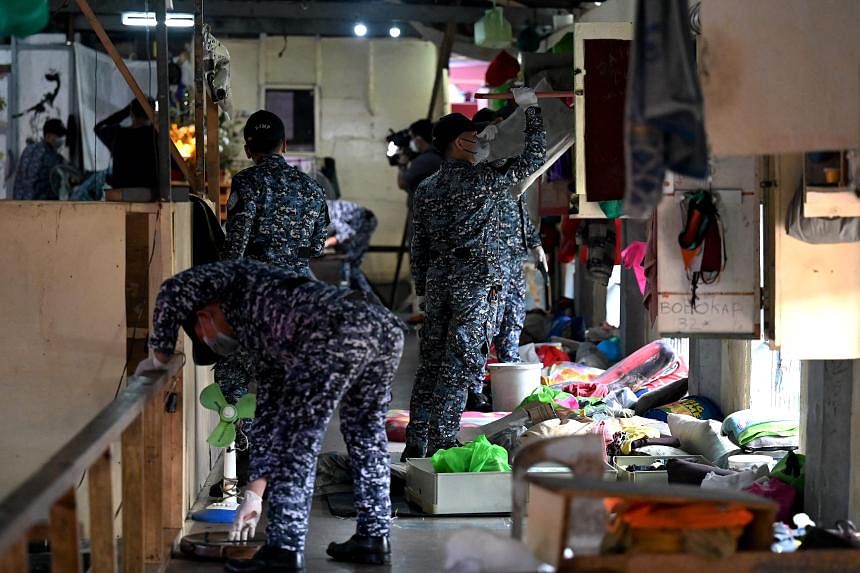
Police officers inspecting the belongings of prison inmates for contraband and illegal drugs in October 2022. PHOTO: AFP

Mara Cepeda
Philippines Correspondent
\

MANILA – The Philippines on Wednesday ordered all police colonels and generals to hand in their “courtesy” resignations, as the government moved to cleanse the police force of alleged links to the illegal drug trade.

Appointed government officials in the Philippines allegedly involved in wrongdoing have been asked to resign out of respect for the appointing authority. They will continue to perform their duties until their resignations are accepted.

Department of the Interior and Local Government Secretary Benhur Abalos said that only the resignations of police officers proven to have drug links would be accepted by President Ferdinand Marcos Jr, but he did not give a timeline.

This means the Philippine National Police (PNP) will be able to function even with the mass resignations expected in the coming weeks.

Mr Abalos said the resignations may be the “only way to make a fresh start” for the PNP, which gained international notoriety for carrying out former president Rodrigo Duterte’s bloody drug war.

“We have a big problem in our police force. We have generals and colonels involved in drugs. And based on the recommendation of our PNP chief and other officers, I am appealing to all colonels and generals to submit their courtesy resignation,” Mr Abalos said.

“It’s hard to fight in a war when your ally will be the one to shoot you in the back,” Mr Abalos said. “We need to cleanse our ranks. The people who trust us must trust us even more.”

Several high-ranking police officers have been linked to the drug trade in the Philippines.

Mr Duterte, who was president from 2016 to 2022, earlier named several generals supposedly embroiled in the illegal drug trade. Cases were filed against some of these so-called “narco-generals”. Some were sacked, but there have been no criminal convictions to date.

Mr Abalos said a committee will be formed to investigate PNP officers’ alleged involvement in illegal drugs, but he did not say who would be part of this body.

Thousands of drug suspects died in police operations under the Duterte government, which the International Criminal Court (ICC) is now seeking to investigate for crimes against humanity. The PNP denied the killings were executions and claimed the victims resisted arrest.

Mr Marcos has pivoted from Mr Duterte’s bloody approach to the drug menace.

He has said that his anti-illegal drugs campaign would focus more on prevention and rehabilitation. But his government has also sought to block the ICC probe on his ally, Mr Duterte.

The United Nations Human Rights Council said in October 2022 that justice remains elusive for victims of Mr Duterte’s drug war, as many of the cases remain unresolved.

Human rights groups criticised Mr Duterte’s anti-drug campaign as a “war against the poor”, as it failed to target high-level drug traffickers and instead targeted small-time drug users and pushers, who are often among the poorest of the poor in the Philippines.

Sixteen thousand Canadians amongst those whose private data is up for sale on Internet

Yesterday

At least five million people have had their online identities stolen and sold on bot markets for 8 CAD on average. Out of all the affected people, 16 thousand people are from Canada.

This data comes from research by the cybersecurity company NordVPN, which looked into three major bot markets.

The word “bot” in this situation refers to data-harvesting malware. Bot markets are online marketplaces hackers use to sell data they have stolen l from their victims’ devices with bot malware.

The data is sold in packets, which include logins, cookies, digital fingerprints, and other information — the entire digital identity of a compromised person.

“What makes bot markets different from other dark web markets is that they are able to get large amounts of data about one person in one place. And after the bot is sold, they guarantee the buyer that the victim’s information will be updated as long as their device is infected by the bot,” says Marijus Briedis, CTO at NordVPN.

A virus might take a snapshot of the user’s screen during a malicious attack. It can even take a picture with the user’s webcam.

When a virus attacks the user’s device, it may grab logins saved to their browser. The research found 26.6 million stolen logins on the analyzed markets. Among them were 720 thousand Google logins, 654 thousand Microsoft logins, and 647 thousand Facebook logins.

Cookies were also usually stolen from a user’s browser and helped criminals bypass two-factor authentication. The research found 667 million stolen cookies on the analyzed markets.

During the research, 81 thousand stolen digital fingerprints and 538 thousand autofill forms were found on the analyzed market.

“To protect yourself, use an antivirus at all times. Other measures that could help – a password manager and file encryptions tools to make sure that even if a criminal infects your device, there is very little for them to steal,” adds Marijus Briedis.

Shazia Nazir, Local Journalism Initiative Reporter, The Milton Reporter, Milton Reporter
RIP
Ruslan Khasbulatov, Whose 1993 Showdown With Yeltsin Led To Deadly Parliament Shelling, Dies Aged 80


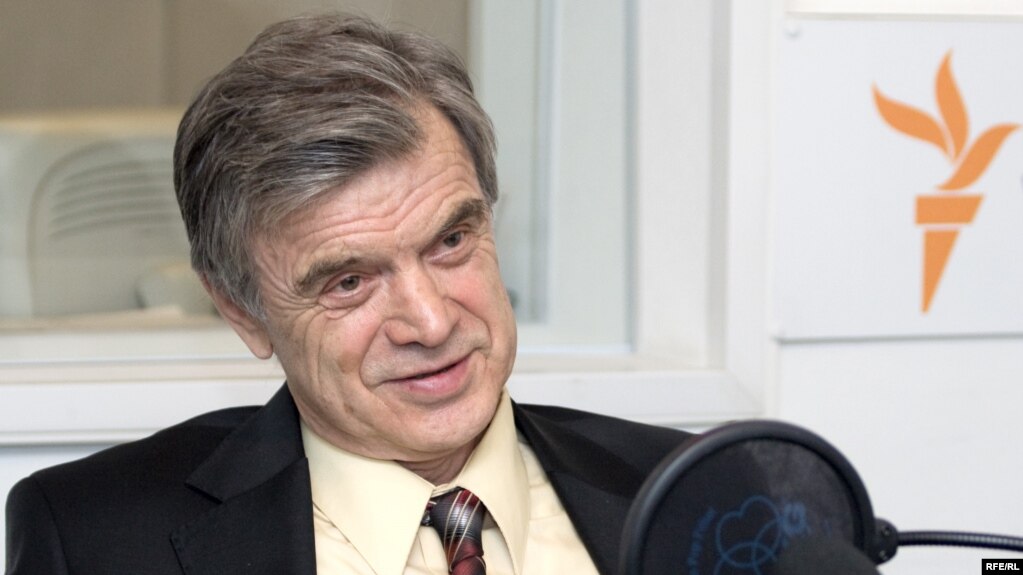
Former Supreme Soviet Chairman Ruslan Khasbulatov (file photo)

Ruslan Khasbulatov, a Russian politician whose dramatic standoff with then-President Boris Yeltsin in 1993 led to the deadly shelling of the parliament building in Moscow, an event that transformed post-Soviet Russia's political trajectory, has died at the age of 80, according to Russian state television.

Khasbulatov died at his home outside Moscow, state television reported on January 3, citing relatives.

Khasbulatov, an ethnic Chechen, was a close ally of Yeltsin in the last days of the Soviet Union in 1991. Both were elected in 1989 to the new Congress of People’s Deputies of the Soviet Union in which Yeltsin headed a faction that criticized then-Soviet President Mikhail Gorbachev’s reform program as not radical enough.

Yeltsin became president of the Russian Soviet Socialist Republic in June 1991 and appointed Khasbulatov speaker of the Russian parliament.

But Yeltsin and Khasbulatov became rivals, and Khasbulatov allied himself with Aleksandr Rutskoi, Yeltsin's vice president who attempted to remove the president in 1993 after Yeltsin’s decision to dissolve parliament. Their memorable showdown led to the shelling of the parliament building -- known as the White House -- by troops loyal to Yeltsin who stormed the building and placed Khasbulatov and Rutskoi under arrest. Both were jailed but later pardoned.

The events gave Yeltsin an opportunity to change the constitution to consolidate power in the presidency, something his successor, Vladimir Putin, would exploit to nearly erase any remnants of democracy.

Khasbulatov in a commentary written for RFE/RL 15 years later said the events in 1993 precipitated the destruction of parliamentary democracy in Russia and led to the adoption of a strong presidency.


Yeltsin Destroyed Parliamentary Democracy In Russia


Khasbulatov also played an important role in political developments in Chechnya between the August 1991 coup against Gorbachev and Yeltsin's decision in 1994 to dispatch troops to Chechnya to “restore constitutional order.”

This brought Khasbulatov into conflict with Dzhokhar Dudayev, who was elected chairman of an informal All-National Congress of the Chechen People in November 1990. Seven months later, on June 8, 1991, the Congress proclaimed an independent Chechen republic outside the Russian Soviet Socialist Republic and the U.S.S.R.

Khasbulatov traveled to Grozny in September 1991 as Yeltsin’s envoy with the intention of forcing Doku Zavgayev, then head of the Checheno-Ingush region committee of the Communist Party of the Soviet Union (CPSU), to resign. But he was outmaneuvered by Dudayev, who was elected president in late 1991 with 90 percent of the vote.

Five days later, Dudayev signed a decree reaffirming Chechnya’s independence from the crumbling Soviet Union, prompting Yeltsin to send Russian forces into Chechnya. The conflict ended in August 1996 with the recapture of Grozny by Chechen resistance forces and a formal peace agreement.

Khasbulatov later claimed that in the fall of 1994 it would have been possible to remove Dudayev “practically without firing a shot,” but that Moscow intervened rather than risk Khasbulatov succeeding him. Khasbulatov chronicled his role in a book titled How They Prevented Me From Stopping the War In Chechnya.

Khasbulatov continued to comment on developments in Chechnya. His analysis included insights into the psychological impact on Chechen society of the massive destruction of infrastructure and the republic’s economy.

Khasbulatov was born in the village of Tolstoi-Yurt, north of Grozny, on November 22, 1942, and grew up in Kazakhstan. He entered Moscow State University in 1962 and graduated with a degree in law. Following the family tradition, he went on to study for several higher degrees, focusing on the political, social, and economic development of capitalist countries.

Khasbulatov's political engagement began in the late 1980s at the time when Gorbachev, then still general-secretary of the Communist Party, decreed the first multicandidate elections in the history of the Soviet Union as part of his reformist agenda.

With reporting by former RFE/RL analyst Liz Fuller