Wednesday, June 10, 2026


Defying Russia: Poland and Germany plan massive offshore wind farms in the Baltic Sea
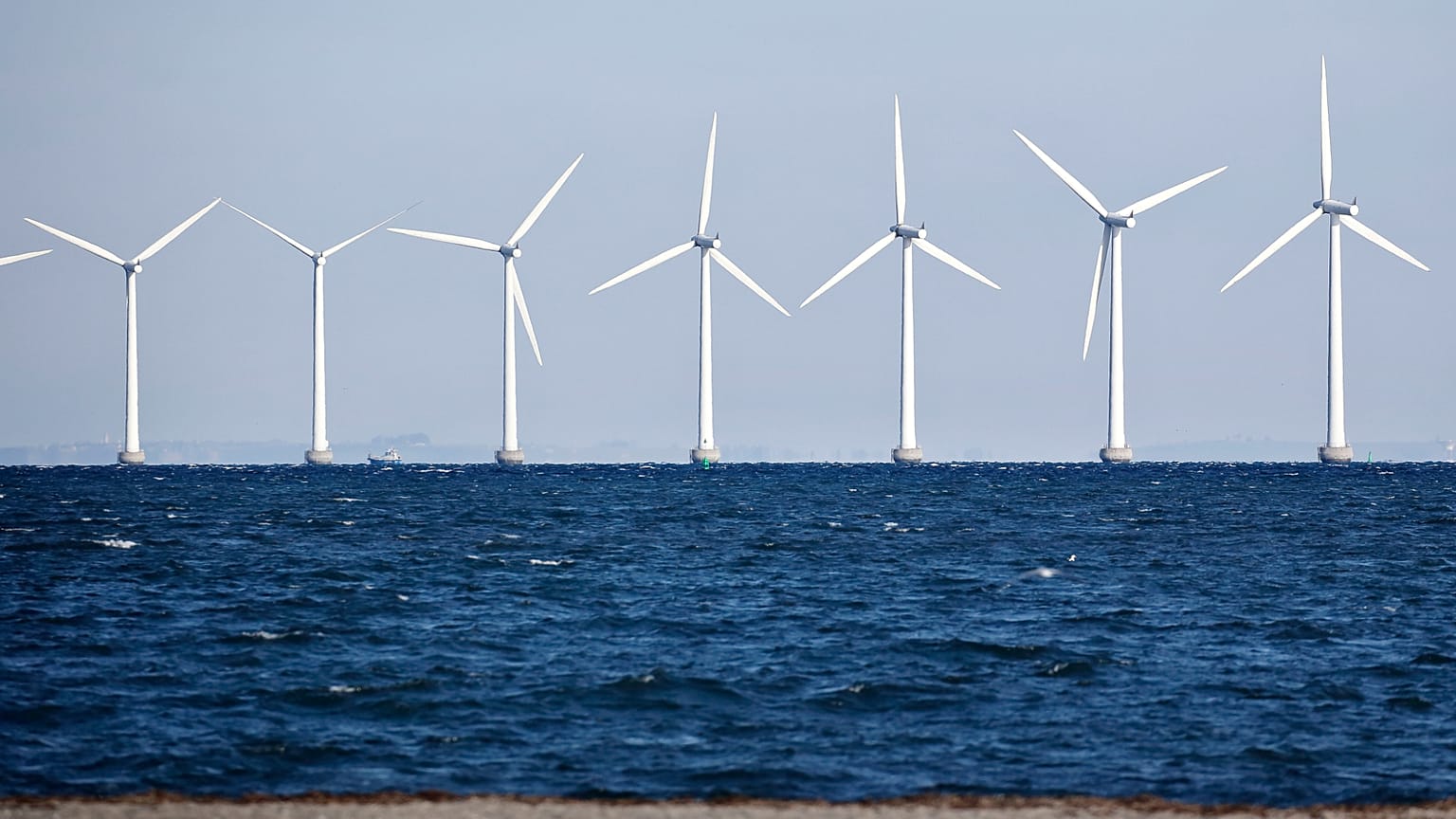
Defying Russia: Poland and Germany plan massive offshore wind farms in the Baltic Sea
Copyright Anadolu

By Diana Resnik
Published on

Despite hybrid attacks from Russia, Poland is betting on offshore wind power from the Baltic Sea. At a forum in Berlin, one message was clear: the region could become Europe’s next major energy hub. Will Europe seize this opportunity?

Germany's offshore wind energy expansion is progressing only slowly. Yet after phasing out nuclear power, the country has effectively put all its eggs in one basket. For too long, Germany remained dependent on imports of fossil fuels. However, Russia has now been ruled out as an energy supplier due to its full-scale war against Ukraine, while the conflict involving Iran and the disruption of shipping through the Strait of Hormuz have placed Germany's energy-dependent economy in an increasingly precarious position.

Jan Tombiński: 'A Good Crisis Should Not Be Wasted'

“A good crisis should not be wasted,” says Jan Tombiński, Poland’s ambassador to Germany. He cites a Chinese proverb that carries a powerful message: every crisis also presents an opportunity.

That opportunity was the focus of discussion on Tuesday at the 4th German-Polish Energy Transition Forum in Berlin. Diplomats and business leaders from Germany and Poland gathered at the Polish Embassy to explore joint solutions to emerging challenges.

According to Tombiński, Poland has now become an even more important economic partner for Germany than the United States. The economies of both countries are deeply interconnected. Closer German-Polish cooperation in offshore energy offers significant opportunities to strengthen Europe's overall energy sovereignty.

The Baltic Sea is the key area for this cooperation. Yet Germany has so far been hesitant to expand offshore installations there, potentially missing a major opportunity to increase energy independence through cross-border collaboration.

Warsaw has also recognized that it became overly dependent on energy imports. “We put ourselves in this position, and we must get ourselves out of it,” says Jacek Kostrzewa, President and CEO of the National Energy Conservation Agency (KAPE).

Poland’s economy is thriving. While many major European economies are stagnating, Poland has consistently grown faster than the EU average for years. Real GDP growth of approximately 3.3 to 3.5 percent is expected in 2026.

How Poland’s Strategy Works

Konrad Wojnarowski, State Secretary at Poland’s Ministry of Energy, explains the country's approach. Russia is no longer considered a reliable partner, while war continues to destabilize the Middle East. As a result, Poland is pursuing a strategy based on “diversification of energy sources.”

Onshore and offshore renewable energy must continue to expand, while energy storage infrastructure must be developed. At the same time, Poland intends to continue investing in nuclear power. “Strengthening security and ensuring supply” is the guiding principle.

The costs of inadequate preparation, Wojnarowski warns, would be enormous. “A nationwide blackout would cost Poland €9.5 billion per day.” Therefore, Poland’s objective is “as little dependence on Russia as possible.”

Poland has significantly accelerated the expansion of wind energy. The country's installed onshore wind capacity surpassed the 2,000-megawatt mark years ago and has now exceeded 11 gigawatts (11,000 megawatts), enough to supply approximately seven to ten million households annually.

Poland’s first offshore wind farm is already under active construction and is expected to become fully operational in the second half of 2026.

Which Direction Will Europe Take?

But where is Europe heading?

“Cross-border cooperation is extremely important,” says Piotr Wiśniewski, Deputy Chairman of the Board of the Polish Chamber of Renewable and Distributed Energy (PIGEOR) and Chairman of the Supervisory Board of EnercoNet.

“We need the right infrastructure. In twenty years, it will work very well,” Wiśniewski says.

Germany’s offshore wind activity in the Baltic Sea remains significantly smaller than in the North Sea. The Baltic 1 and Baltic 2 offshore wind farms off the coast of Mecklenburg-Western Pomerania feed electricity into the German grid but remain part of a relatively limited regional expansion effort.

By contrast, Poland is pursuing a much more dynamic development strategy in the Baltic Sea region and is rapidly expanding its capacity. In addition to Baltic Power, projects such as Baltic 3 and Baltic 9+ are currently under development. German companies are increasingly involved as suppliers and project developers.

Dr. Elmar Stracke, Strategy and Policy Advisor at the German Association of Energy and Water Industries (BDEW), confirms that Germany’s offshore wind sector faces challenges.

“Things are moving better in Poland than they are here,” Stracke says. Germany needs more efficient spatial planning and greater efficiency in achieving its offshore expansion targets.

According to Stracke, the future lies neither in Germany nor in Poland alone, but offshore—in the Baltic Sea and the North Sea.

“The sea is the space that matters, not the individual coastline,” he says.

However, this vision requires major investments in energy infrastructure. “The infrastructure of the energy system must be resilient enough not to throw us off course.”

Hybrid Threats in the Baltic Sea: Taking Responsibility

The Baltic Sea presents not only opportunities but also significant challenges.

The region has become a central stage for hybrid threats. Russia has increasingly relied on signal interference, sabotage, and provocations aimed at critical Western infrastructure and at increasing political pressure on European supporters of Ukraine.

Undersea telecommunications cables, data links, and gas pipelines face constant threats. At the same time, growing interference signals over the Baltic Sea are disrupting the navigation systems of both ships and aircraft

Wojnarowski’s response is straightforward: Europe must assume greater responsibility from both a military and an energy-security perspective.

Poland is the largest recipient of the European SAFE (Security Action for Europe) defence financing program. The initiative is helping modernize the country’s armed forces while strengthening its domestic defence industry, which also contributes to securing the Baltic Sea region.

Will Germany Unlock the Baltic Sea’s Potential?

Dr. Dirk Biermann, Chief Operating Officer of transmission system operator 50Hertz, emphasizes that the company feels a responsibility to make greater use of the Baltic Sea’s potential.

50Hertz operates the high-voltage electricity transmission grid in north-eastern Germany and is already making significant efforts to develop the region’s still largely untapped opportunities.

According to estimates by the European Commission from 2019, the technical offshore wind potential for all EU countries bordering the Baltic Sea exceeds 90 gigawatts.

The initiative also coincides with the upcoming 35th anniversary of the German-Polish Treaty of Good Neighbourship, providing a symbolic boost for future cooperation.

Several projects are already in development to advance this vision. Among them is the Bornholm Energy Island concept, designed as a central offshore energy hub in the Baltic Sea region.
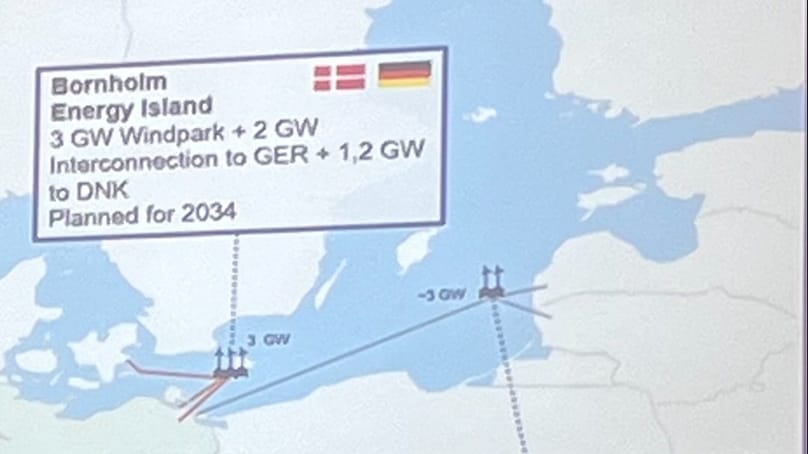
The Bornholm Energy Island Diana Resnik, Euronews


Additional plans include cross-border subsea cable connections linking offshore wind farms with power grids in Germany, Denmark, Poland, and the Baltic states, enabling the exchange of renewable electricity between countries.

A joint subsea interconnector between Lithuania, Latvia, and Germany—the Baltic-German PowerLink—is also under consideration. The project aims to strengthen cross-border electricity trade across the Baltic Sea region and facilitate the integration of up to 2 gigawatts of offshore wind capacity.
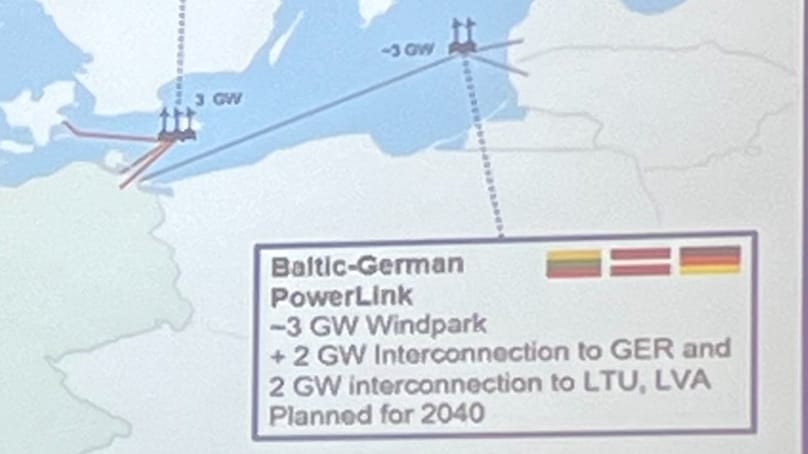
The Baltic-German PowerLink Diana Resnik, Euronews

Overall, the trend is clearly moving toward diversification and resilience—toward a more interconnected and integrated energy market in the Baltic Sea region.


 

‘Coal power has lost its status’: Solar power outstrips coal in US despite Trump's attacks

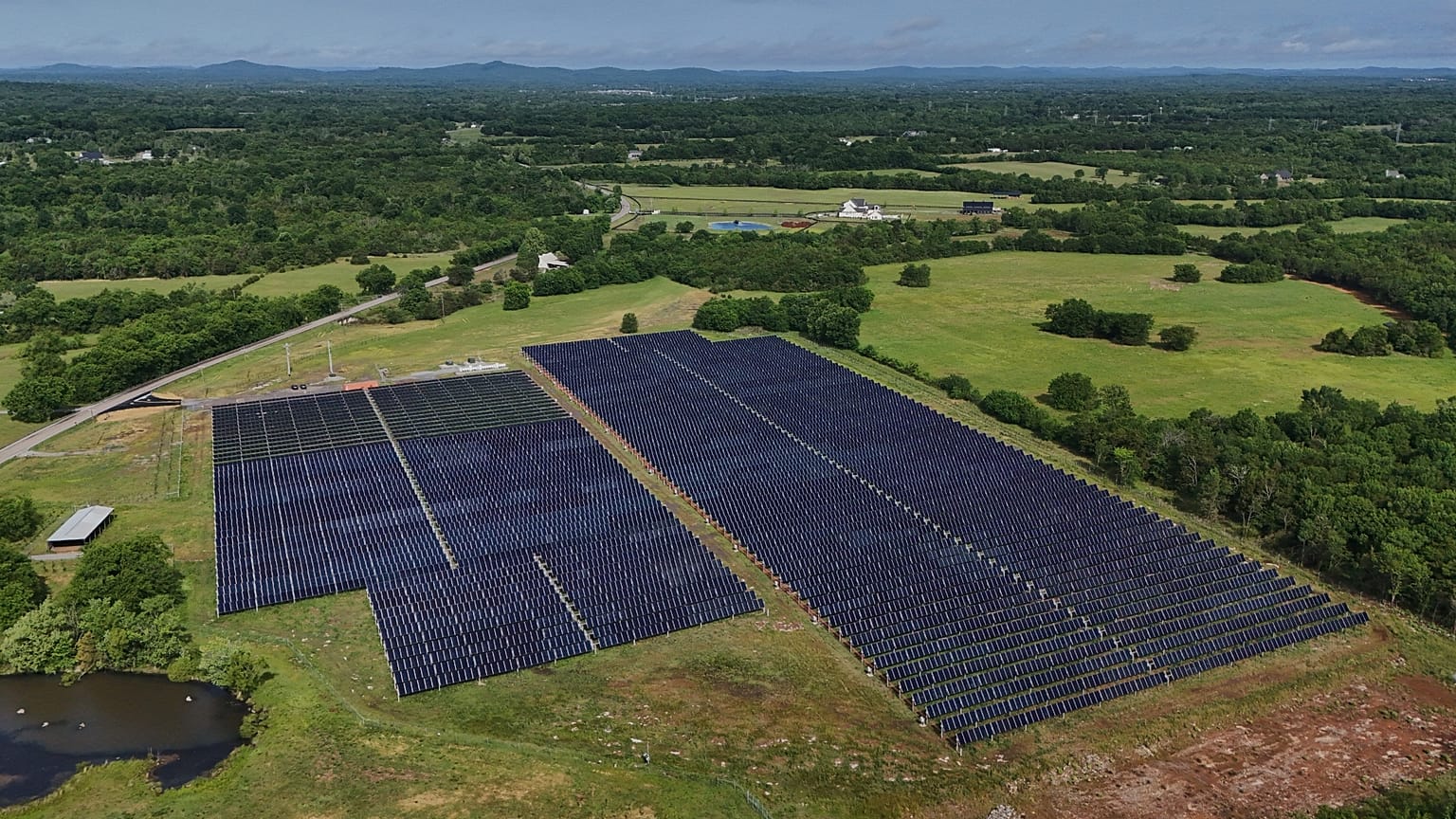
Solar panels operate on a farm with cattle Tuesday, April 28, 2026, in Christiana, Tenn.
Copyright AP Photo/Joshua A. Bickel

By Angela Symons with AP
Published on

States won by Trump in the 2024 election accounted for 74 per cent of all solar capacity installed in the first quarter of 2026.

Even as President Donald Trump boosts coal over clean energy, solar power is hitting new milestones in the US and remains the leading source of new power.

Data released on 10 June by global energy think tank Ember, along with a report by the Solar Energy Industries Association (SEIA) and analytics firm Wood Mackenzie, show the continued growth of solar and decline of coal in the US despite federal policy. In May, for the first time, solar supplied more of the nation’s electricity than coal, or 12.8 per cent, Ember said. Coal supplied 12.2 per cent, its fourth-lowest monthly share ever.

“For years solar power has risen in the US electricity mix," says Nicolas Fulghum, senior energy and data analyst at Ember. "At the same time, coal power has lost its status, first as the largest source in the US mix, and then gradually over the years has fallen even further.”

Solar also became the third-largest source of electricity in the US in May, behind natural gas and nuclear, Fulghum says. Coal generation hit an all-time monthly low in April and rebounded only modestly in May, allowing increasing solar generation to overtake coal, he adds.

US electricity demand is increasing

Electricity is produced by converting sources of energy – fossil fuels, renewable resources and nuclear – into electrical power. Burning coal, oil and natural gas for electricity emits carbon dioxide, trapping heat in the atmosphere and warming the planet. By contrast, solar, wind, geothermal, hydropower and nuclear are carbon-free.

After about two decades of essentially flat electricity consumption in the US, electricity demand is increasing to power artificial intelligence, grow domestic manufacturing and electrify transportation and heating. Fulghum says he expects to see more months where solar exceeds coal generation, before overtaking it on an annual basis in a few years.

These milestones signify that solar “has staying power” at a time where there's less support for renewable energy at the federal level, he adds.

Wind and solar combined have overtaken coal in the past, and wind power alone has outpaced coal during spring months when wind speeds pick up. Ember gets its hourly and monthly data from the US Energy Information Administration.

Globally, electricity generation from renewables is growing rapidly. Renewables will become the largest global energy source, used for almost 45 per cent of electricity generation by 2030, according to the International Energy Agency.

Trump helps the struggling US coal industry while curtailing solar and wind

Last week, Trump announced a plan to boost the struggling US coal industry by spending nearly $700 million (€606m) to support coal-fired power plants and coal exports. Trump said at a White House event that “coal’s a great business”, and that "in terms of power, there’s really nothing like it”.

Martin Pochtaruk, CEO and founder of Canadian-based solar panel manufacturer Heliene, says Trump can say that coal is coming back, but investors will invest their money in whatever brings the best return. And for power generation that is solar, making it the fastest-growing fuel, he adds.

A White House spokeswoman defended the administration's overall energy policies, saying they were geared toward strengthening the country's security.

“The President has reversed the Left’s devastating policies, saved the American coal industry, prevented the retirement of more than 17 gigawatts of power, and saved lives during heightened demand periods," Taylor Rogers said in a statement.

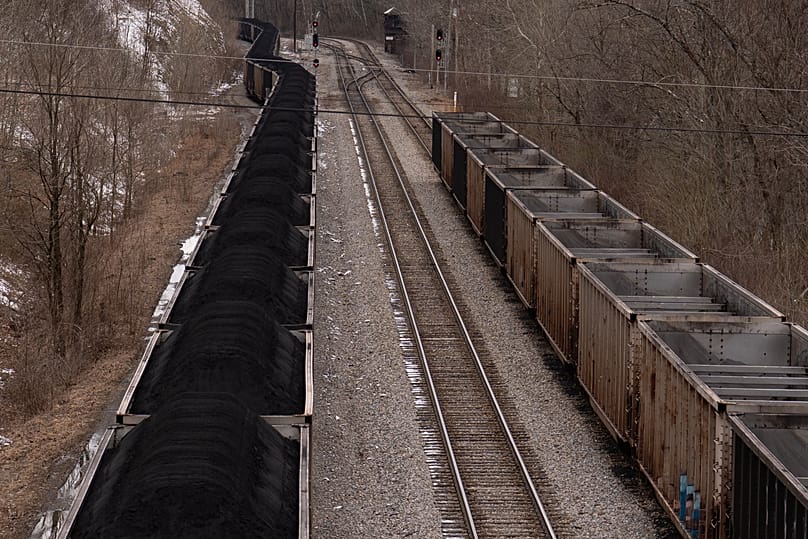
A train with coal pauses on the tracks in Grafton, W.Va., March 18, 2026. AP Photo/Carolyn Kaster, File

Solar remains the leading source of new power

While Trump is trying to reverse the coal industry's decline, solar has been the top source for new power for five years, SEIA says. SEIA and Wood Mackenzie say solar and battery storage were practically the only energy resources being built in the first quarter, making up 91 per cent of all new generating capacity.

The Trump administration has cancelled solar and wind projects, implemented policies that slowed clean energy permitting and development and terminated $7 billion (€6.06bn) in funding intended for affordable solar energy projects across the US.

“As power demand skyrockets, political and regulatory attacks are slowing down the exact resources we rely on,” Darren Van’t Hof, interim president and CEO of SEIA, says. “Impeding the only sector that is actively building new power is a reckless gamble that will only drive electricity bills higher.”

Several groups sued the Environmental Protection Agency over cancelling the Solar for All program. A district court dismissed the case last week citing lack of jurisdiction. The plaintiffs have another filing pending in the Court of Federal Claims.

In a ruling on Saturday (6 June), a federal judge struck down guidance from the Internal Revenue Service restricting tax credits for wind and solar projects.

Trump has blamed renewable energy sources such as wind and solar power for skyrocketing energy costs. But energy analysts say recent price hikes are based on growing demand, ageing infrastructure and increasingly extreme weather events that are exacerbated by climate change. Most recently, the war in Iran that Trump launched has also led to a spike in energy cost

Top states for solar voted for Trump

States won by Trump in the 2024 election accounted for 74 per cent of all solar capacity installed in the first quarter of 2026, with Texas, Florida, Ohio, Indiana, Michigan, Arizona and Mississippi ranking among the top 10 states for new solar additions, SEIA says. The US now exceeds a total of six million installations nationwide across all solar sectors, which includes large-scale solar arrays, commercial, community solar and residential or rooftop solar.

Johanna Neumann, at the Environment America Research and Policy Center, says it's “good news for our health and our planet that solar continues to grow”, and also, not surprising.

“Today we can harness solar more affordably than any other energy source. It’s scalable. And it’s also our most abundant renewable energy source,” says Neumann, senior director of the centre's campaign for 100 per cent renewable energy. “So I think it’s hard to keep the lid on a good idea, especially if the economics are tilting in your favour as well, which they are in the case of solar.”

Environment America's renewable energy dashboard shows that 32 US states generated at least 10 per cent of their retail electricity sales from solar, wind and geothermal energy last year, compared to 18 states in 2016. Clean energy in the South is booming, particularly in Florida, Arkansas and Mississippi, Neumann says.

“I think there is a misconception in the United States that clean energy is something for the coasts and liberal cities,” she says. “The true story of renewable energy is a 50-state story.”


World will cross 1.5°C warming limit by 2030 if emissions continue at current rate - report

FILE - Tourists use umbrellas to shelter against the sun outside Hagia Sophia mosque during a hot summer day in Istanbul, Aug. 12, 2025.
Copyright AP Photo/Francisco Seco, File

By Angela Symons
Published on

The rate of human-induced warming remains at an all-time high, according to the latest Indicators of Global Climate Change report.

The world is edging dangerously close to the Paris Agreement’s 1.5°C warming threshold, with human-induced warming reaching 1.37°C in 2025, a major new report warns.

If emissions continue at current levels, the 1.5°C limit will be crossed around 2030, according to the analysis by more than 70 scientists from 56 institutions across 17 countries.

The fourth edition of the Indicators of Global Climate Change (IGCC), published today (11 June) in the journal Earth System Science Data, tracks the key measurements that tell us how fast the climate is changing and why. It paints a clear picture: the Earth is warming at an accelerating rate, driven almost entirely by human activity.

“Our study shows greenhouse gas emissions are at an all-time high, mainly from the burning of fossil fuels,” says Dr. William Lamb, Senior Researcher at the Potsdam Institute for Climate Impact Research (PIK), Germany.

“The good news is that solutions are already available. By investing in renewables and electrification, governments can cut emissions while building cleaner, more reliable and more secure energy systems.”

World’s carbon budget will be exhausted in three years

The carbon budget – the total amount of CO2 that can still be emitted while keeping warming less than 1.5°C above pre-industrial levels – now stands at just 130 billion tonnes from the start of 2026. At current emissions levels, that will be exhausted in around three years.

The 1.5-degree limit is the cornerstone of the 2015 Paris Agreement, an international treaty designed to prevent the most catastrophic impacts of the climate crisis.

Global greenhouse gas emissions hit a record 56.8 billion tonnes of CO2 equivalent in 2024, driven mainly by the burning of fossil fuels. Concentrations of the three major greenhouse gases – carbon dioxide, methane and nitrous oxide – have all risen since 2019, with CO2 now at 425.6 parts per million.

The report also found that the Earth’s energy imbalance – the gap between the heat entering the planet and the heat escaping it – has more than doubled in recent decades and is now at a record high. This means the planet is storing heat faster than at any point in modern measurements.

“The Earth’s energy imbalance is growing fast, driving changes in every component of the climate system, including ocean and continental warming, permafrost thawing, ice loss, and sea level rise,” says Dr Karina Von Schuckmann from French research institute Mercator Ocean International.

Sea are rising and getting warmer

Global sea levels reached a new record in 2025 – 23cm of rise since 1901 – and the rate is accelerating. The oceans are absorbing much of the excess heat, with average sea surface temperatures hitting their second highest level on record last year.

A newly added indicator in this year’s report captures the scale of marine heatwaves: the number of days affected has more than tripled globally between 1991 and 2025. In 2025 alone, the world experienced 65 marine heatwave days, damaging ecosystems, threatening fish stocks and disrupting the ocean-atmosphere systems that regulate the Earth’s climate.

On land, the picture is just as bleak. Average maximum land temperatures over the last decade were nearly half a degree higher than the decade before – a shift that is pushing extreme heat to new levels around the globe.

“Nearly all of the warming over the last decade is driven by human activities,” says Dr Samantha Burgess of the Copernicus Climate Change Service. “The impacts on livelihoods and ecosystems are already being felt worldwide, and will accelerate as temperatures continue to increase.”

The scientists behind the report are also sounding the alarm about a less visible risk: the global datasets used to track these changes are themselves under threat. Funding cuts – including the Trump administration’s decision to scrap the US State Department’s global air quality monitoring programme last year – are creating dangerous gaps in the evidence base that climate science and policy depend on.

“Without this, future assessments will be much more difficult at a time when urgent climate action is needed,” warns Dr Chris Smith of the International Institute for Applied Systems Analysis.

World’s largest, deepest, oldest whale graveyard discovered in Indian Ocean


Chinese scientists have discovered a massive whale graveyard of around 500 skeletons, some dating back to more than 5 million years, at the bottom of the Indian Ocean west of Australia, according to research published in the journal Nature on Wednesday. The whale fall provides shelter and sustenance to a vibrant ecosystem of marine species, many believed to be new to science.


Issued on: 10/06/2026
By: FRANCE 24

Scientists said discovering a necropolis of this scale was completely unexpected. © AFP via Handout, Global TREnD, IDSSE


The world's largest whale graveyard has been discovered at the bottom of the Indian Ocean by Chinese scientists, who found that the vast expanse of both new and ancient carcasses supports huge communities of deep-sea life.

It is also the deepest and oldest known whale graveyard on Earth, according to research published in the journal Nature on Wednesday, with some fossils dating back 5.3 million years.

From inside a small submersible, the Chinese researchers saw an array of strange animals – many believed to be new to science – living off the whale carcasses.

A new, though extinct, species of whale was also identified among the nearly 500 skeletons found up to 7,000 metres deep along a 1,200 kilometre corridor of bones in the Indian Ocean west of Australia.

Lead study author Xiaotong Peng of the Chinese Academy of Sciences told AFP that the researchers were "astonished" when the scale of their discovery became clear.


A huge array of animals including sea anemones, sponges and sea stars were found living off of the whale carcasses. © AFP via Handout, Global TREnD, IDSSE

It was known that when whales die and drop to the seafloor, their sunken bodies – called "whale falls" – provide a source of food to bottom-dwelling creatures.

"But discovering a necropolis of this scale was completely unexpected: the size of distribution, the depth and the age range were far beyond anything we had imagined," Xiaotong Peng said.

The researchers had several theories for why so many whales died in this particular corridor, including that it is a popular foraging area and has a V-shaped trench that funnels carcasses to the ocean's floor.
'Truly incredible experience'

For the discovery, the Fendouzhe submersible carried out 32 dives in 2023 – though what it found was only revealed in Nature on Wednesday.

The sub took up to three people on the dives, collecting the fossil samples using robotic arms.

Study co-author Peng Zhou said witnessing the whale graveyard "was a truly incredible experience".

Fossil samples being collected by the robotic arm of the submersible. © AFP via Handout, Global TREnD, IDSSE

"The vibrant ecosystems we saw offered a completely different perspective on this otherwise dark and cold ocean floor."

Among the animals they discovered living off the carcasses were jellyfish, worms, snails, crustaceans, brittle stars and molluscs called bivalves.

Extrapolating from the number of bones they found, most of which were from beaked whales, the scientists estimated there could be more than 10 million carcasses across the area called the Diamantina Zone.

The soft tissue and lipids inside that many carcasses "translates to roughly 6.7 million tonnes of sequestered carbon", Xiaotong Peng said.

This provides an immense source of sustenance for animals, similar to how hydrothermal vents create their own ecosystems on the ocean floor.

Some of the animals seen by the scientists also live in hydrothermal vents and cold seeps, suggesting whale carcasses could help connect these deep-sea communities to each other.

While this is by far the largest whale graveyard yet found, fossils found during trawling suggest there could be others off South Africa, the Iberian peninsula and the Crozet islands, according to the study.

'More blockbusters to come'?

University of Hawaii oceanographer Craig Smith, who discovered the first whale fall in 1987 but was not involved in the new research, told AFP it was "extremely exciting".


The scientists catalogued nearly 500 skeletons up to 7,000 metres deep along a 1,200 kilometre corridor of bones. © AFP via Handout, Global TREnD, IDSSE

"The vast number of fossil whale falls documented, including a new species of beaked whale, is truly amazing and is of major importance to understanding whale evolution and whale distributions over geologic time," he said.

Whale fall researcher Amy Baco-Taylor at Florida State University told AFP the "remarkable discovery" would "likely provide many new insights".

"It does seem very strange" that so many whales died in this area, Baco-Taylor admitted, adding that "we don't know enough about whale consciousness".

US palaeontologist Stephen Godfrey compared the "truly unique discovery" to past major underwater finds, such as when scientists first identified hydrothermal vents teeming with life on the ocean floor in 1977.

He called for future submersible voyages to find more whale graveyards across the world.

This discovery "reminded me of a trailer for the first in a series of epic movies", Godfrey commented in a linked Nature paper.

"I hope that there will be many more of these blockbusters to come."

(FRANCE 24 with AFP)


S.Korea hits Coupang with record fine over e-commerce data leak


Seoul (AFP) – South Korea hit e-commerce giant Coupang with a record $408 million fine Thursday over a leak that allegedly exposed more than 30 million customers' data and has provoked the ire of US lawmakers.


Issued on: 11/06/2026 - RFI

Coupang's fine is by far the largest ever penalty for a data leak in South Korea
 © ANTHONY WALLACE / AFP

Coupang, the country's largest online retail platform, signalled in a statement that it would challenge the fine in court.

The government's move caps a months-long probe into Coupang, which is incorporated in the United States.

Allegations of a massive data leak first surfaced in November and have become an unexpected source of friction between Seoul and Washington.

Seoul's Personal Information Protection Commission said it would "impose a total of 624.68 billion won in fines... on Coupang for violating safety obligations and collecting personal data without legal grounds".

It is by far the largest ever penalty for a data leak in South Korea -- far exceeding the previous record of a $88 million fine imposed last year on mobile carrier SK Telecom.

"Inadequate basic safeguards, including poor management of authentication signing keys and lax access controls" caused the personal data of around 37.5 million users to be exposed, the commission said in a statement.

Coupang has maintained that only 3,000 customer records were involved.

Commission chair Song Kyung-hee told a press briefing Thursday that the retail giant should have notified affected individuals within 72 hours.

But Coupang "delayed breach notifications", she said. "As a result, those individuals were unaware of the breach and deprived of the opportunity to take steps to prevent secondary harm."

Coupang on Thursday apologised for causing concern to customers and the public, vowing to strengthen its data protection framework.

"However, we regret that proactive measures taken to prevent secondary damage and explanations based on clear facts regarding last year's data breach were not sufficiently reflected" in the commission's decision, it said.

"After receiving the commission's official ruling, we expect the facts to be clearly established through legal procedures," Coupang added.
US dispute

The commission also said Coupang had "unlawfully collected the online activity records of about 11.17 million users on third-party websites and apps, and stored them in a database in a state that allowed individual identification".

In April, South Korean lawmakers sent a joint letter raising concerns over "undue pressure" from US politicians regarding Seoul's investigation into the e-commerce giant.

The letter, co-signed by nearly 100 MPs, followed accusations by US Republicans that the probe into the US-listed company constituted "discriminatory regulatory actions" against American businesses.

The dispute has also reportedly affected high-level security talks between the two allies, according to local media.

Washington is said to have warned it would halt such talks unless the legal protections of Coupang chairman Kim Bom -- an American citizen also known as Kim Bom-suk -- were guaranteed.

The Coupang fine will "again draw backlash from the US" for its size, said Kim Dae-jong, professor of business at Sejong University in Seoul.

"Given it's far more than the previous high imposed on SK Telecom, Washington is expected to protest the move, with the view that it is an over-the-top measure," he said.

"Coupang is certain to challenge the move by taking it to court," Kim added.

© 2026 AFP


In ageing South Korea, AI dolls care for the elderly


Yongin (South Korea) (AFP) – In her tiny apartment in South Korea, where she lives alone, 78-year-old Bang Chun-ja spends her days with a childlike AI-powered doll she says she prefers to people.


Issued on: 11/06/2026 - RFI

Bang Chun-ja, a South Korean elderly woman living alone, holds Hyodol, an AI-powered healthcare doll designed for elderly people, during an interview with AFP at her home in Yongin © Jung Yeon-je / AFP
ADVERTISING

The doll greets Bang when she returns home, sings to her when she feels bored, reminds her not to skip meals or medication -- helping her maintain a routine -- and tells her it loves her.

Bang has limited contact with her grown-up daughter, and fell into severe depression after major back surgery, spending hours alone staring at the ceiling in pain.

After a difficult divorce and years of hard work as a hairdresser and single mother, Bang told AFP that "at this age, there is nothing harder than being hurt by people".

But "when I'm with Hyodol, I never get hurt", she said, holding the cuddly doll with pigtails and a pink gingham dress, provided by her local municipality.

The doll "only makes me laugh", she added.

79-year-old Kim Young-bun, a South Korean elderly woman living alone, says the AI-powered healthcare doll is a source of comfort © Jung Yeon-je / AFP

Bang is one of many South Koreans battling loneliness in a country where birth rates are among the world's lowest and almost half the population is 50 or older.

In 2024, South Korea recorded more than 3,920 "lonely deaths", people dying alone and remaining undiscovered for extended periods -- the highest since records began in 2017.

Around 42 percent of households in the Asian tech powerhouse are single-person, with social isolation affecting the country's vulnerable elderly in particular.
'By my side'

Authorities are providing AI care devices -- some designed to detect signs of lonely deaths -- to seniors living alone, including in districts of Seoul and in Yongin, south of the capital.

Hyodol's head Kim Ji-hee says Hyodol's character was designed to be dependent on its user, as many older Koreans have spent their lives enduring gruelling work to provide for their families © Jung Yeon-je / AFP

They also include a smiling robot made by the company Wonderful Platform, and similar cute dolls from the firm Mr. Mind.

In the United States, a lamp-like AI device called ElliQ offers similar companionship and safety-monitoring services.

Hyodol, the startup behind the dolls of the same name, says around 14,500 are in use in South Korea, whether owned by individuals, rented out by governments or used in nursing homes.

Bang, in Yongin, said her daughter lives far away and has health issues of her own, so "having Hyodol by my side is a huge help".

Developing the doll involved years of field research, said company head Kim Ji-hee.

Hyodol can converse using ChatGPT, but is also programmed with scripts based on Kim's real-life interviews.

People she met included a widow estranged from her adult children over financial woes, who stored piles of their belongings at their mother's home.


Hyodol, the startup behind the dolls of the same name, says around 14,500 are in use in South Korea, whether owned by individuals, rented out by governments or used in nursing homes © Jung Yeon-je / AFP

"She lived alone with four fridges and three washing machines," Kim, 49, told AFP.

The interviews revealed the "pain of having no one to tell when something upsetting happens, and no one to share with when something joyful happens", Kim said.
Warmest welcome

Hyodol has strict data security protocols, with voice recordings only used internally to train the doll's chatbot, Kim said.

Users give prior consent for certain health-related recordings, such as those related to sleep, mood, meals and pain levels, to be shared with their welfare workers.

Because many interviewees spoke fondly of parental or mentor figures, Hyodol was created as a grandchild-like companion designed to "love its users unconditionally," Kim said.

Made with soft, cushiony materials, the doll also makes spontaneous requests, asking users to pat its head, hold its hand or share snacks with it, although it cannot eat. © Jung Yeon-je / AFP

One of the earliest scripts she wrote was a greeting for users returning home, which she wanted to feel like the "warmest welcome in the whole wide world."

"Grandma, where have you been? I waited for you all day," it says. "Next time you go out, please take me with you!"

Made with soft, cushiony materials, the doll also makes spontaneous requests, asking users to pat its head, hold its hand or share snacks with it, although it cannot eat.
'Sense of emptiness'

Hyodol's character was designed to be dependent on its user, as many older Koreans have spent their lives enduring gruelling work to provide for their families, Kim said.

"When they begin to feel they are no longer needed, they experience a profound sense of emptiness."

Oh Sun-hwa, a nurse who recommended the doll to Bang, said she had seen it significantly ease depression among seniors living alone.

But she also worried the technology could further reduce human contact, with family members potentially visiting less if they felt AI devices were caring for their parents.

In her apartment, another user, 79-year-old Kim Young-bun, said the doll was a source of comfort.

Authorities are providing AI care devices -- some designed to detect signs of lonely deaths -- to seniors living alone, including in districts of Seoul and in Yongin, south of the capital © Jung Yeon-je / AFP

"I had no one to talk to all day -- to the point my mouth almost felt stale from not speaking. But then this little one came along and chatters with me all the time."

"I'm so grateful to be with you again today," the doll told Kim in a chirpy cartoon-like voice.

"So am I," Kim replied, doting on the doll.

"Thanks for being with me. I love you," the device said.

© 2026 AFP
AI robot cleaners leave the lab for China's living rooms

Beijing (AFP) – Beijing cleaner Lin Meiqiong found her work a little easier the day she was paired with an unlikely new colleague -- a tall, wheeled robot with AI-powered tidying skills.


Issued on: 11/06/2026 - RFI

The service is a baby step towards a future in which robots increasingly take over manual labour from humans © WANG Zhao / AFP

The 56-year-old and her white-and-silver partner, fitted with cameras and two mechanical claws, are part of a new human-robot cleaning service offered by Chinese household help platform 58.com.

It's a baby step towards a future espoused by tech evangelists in which robots increasingly take over manual labour from humans -- though at the moment, such services are largely a data-gathering exercise for companies and a novelty for curious customers.

The robot took several minutes to fold a pair of trousers © WANG Zhao / AFP

"It's definitely different," Lin told AFP in between cleaning the kitchen and wiping down windows.

"I used to have to do everything myself," she said. "It's reduced the workload a bit."

The cleaning service, a collaboration between 58.com and Chinese robotics company X Square, costs 149 yuan ($22) for three hours and is available in Beijing and tech hub Shenzhen.

Helped into the apartment by an X Square engineer, the AI-operated Quanta X1 Pro robot uses its cameras to identify areas it could spruce up.

As Lin scrubbed the floor on her knees, it picked up rubbish and folded clothes strewn across a sofa.

Helped into the apartment by an engineer, the robot uses its cameras to identify areas it could spruce up © WANG Zhao / AFP

Grasping a pair of dark grey trousers, it raised its upper body to stretch the fabric taut, before laying it flat and arranging it into neat halves.

The process took several minutes and resembled a child learning to fold clothes for the first time.

Future iterations of the robot will respond to voice commands and even be able to chat, said the engineer, Hu Bowen.
'Better than a lab'

Around 200 households have booked the service since it was rolled out in March.

Tan Pei, who works in advertising and booked the robot to clean her Beijing flat, said she had chosen the service because she was interested to "see what it could do".

China's robots still have limited performance in real-life settings © WANG Zhao / AFP

"Even though it's not that perfect, there are still parts of it that surprised me," such as folding a pair of trousers "quite well", she said.

China's robots have wowed audiences with fluid dancing and set-piece martial arts displays onstage, but their application and performance in real-life settings remains limited.

For companies like X Square, the logic of launching an imperfect service lies in data collection for so-called embodied artificial intelligence.

Unlike large language models trained on vast quantities of internet content, robots lack comparable real-world datasets.

Robot cleaners still can't match human dexterity, with experts saying their widespread deployment is still a long way off © Hector RETAMAL / AFP

"We don't have a robot internet yet," Christoforos Mavrogiannis from the University of Michigan told AFP.

"It is much more informative to put the robot out there and study what happens than staying forever in the lab."

X Square engineer Hu said he sends his robots to work in a "completely unfamiliar environment".

"That is very challenging, but this unfamiliar data is also very helpful for the robot's growth."

As investment into embodied AI booms, similar trials in China include robots directing traffic in cities like Hangzhou or working on factory floors.

Around 200 households have booked the human-robot cleaning service since it was rolled out in March © WANG Zhao / AFP

On the domestic help front, firm GigaAI also plans to deploy 100 humanoid robots into households in central Wuhan this autumn for free home-service trials.

Investors have poured more than 57.7 billion yuan ($8.5 billion) into China's embodied AI industry so far this year, already soaring past the total for last year as a whole, according to business database ITjuzi.
'Very elementary stage'

But a myriad of hurdles stand in the way of widespread deployment.

As the Quanta X1 Pro's clothes folding demonstrated, robots still can't match human dexterity.

"Even though many companies are working on building better hands and building autonomy for hands, we don't have that yet," the University of Michigan's Mavrogiannis said.

Privacy will become a big issue with AI-powered robots, as they have access to huge amounts of personal data © Hector RETAMAL / AFP

There are multiple regulatory issues even once the physical capability is there.

Privacy will become a big issue, as robots would have access to huge amounts of personal data.

"We don't know where that data is going, where it's located... who is looking at that information," said Valeria Alessandra Macalupu Chira from Queensland University of Technology.

The safety of clients and their homes is another unresolved issue.

"I think we are still at a very elementary stage," said Yang Jianfei from Singapore's Nanyang Technological University.

Investors have poured more than 57.7 billion yuan ($8.5 billion) into China's embodied AI industry so far this year © WANG Zhao / AFP

Robots currently require supervision by humans who can activate emergency stop functions, he noted, and there are not yet recognised industry-wide safety standards.

Experts agree broad adoption seems a long way off.

Asked whether she thought robots would revolutionise her industry, cleaner Lin did not seem too concerned.

"Compared with people, it's obviously still not quite there," she said. "After all, it's a robot."

© 2026 AFP