Wednesday, January 04, 2023

Opinion


I Know What Savage Fear Really Lies at the Heart of the American Dream

Costica Bradatan 
Wednesday, 4 January, 2023 - 

I wrote a book in praise of failure, which is like a fish praising water. I’ve been swimming in failure for as long as I can remember — even before that. Quite a lot of who we are, what we do and especially what we cannot do is determined well before we are born, by history, geography, the rise and fall of empires, that farcical god we call luck. I came into this world with failure in my blood and bones. Sometimes I wonder if there is anything else there.

I come from Romania, a country as insignificant as it seems cursed, a place that has been submerged in failure for as long as it has been in existence. Failure seems to be everywhere: in the air people breathe, in the water they drink, even in the language they speak. Especially in the language. Romanian is any linguist’s dream: Layer piles upon linguistic layer like geological strata, indicating the foreign armies and empires that have at one time or another colonized the place, exploited it at length or merely marched through it — raping it in haste: Greek, Roman, Byzantine, Ottoman, Hungarian, Russian, Austro-Hungarian, then Soviet.

As with the local cuisine, which is so rich because it combines all the neighboring culinary traditions but has no clear identity of its own, the Romanian language is a purely Babelian affair: a dozen tongues in one. There are countless words for “failure” in Romanian, of different origins and verbal constructions so exquisite that you want to fail only for the pleasure of putting your experience into words. Coming from such a place, how could I not write in praise of failure?

At the time I was born, in the 1970s, the country was in the middle of an intense affair with utopia. Nothing breeds more failure than an obsessive quest for purity. The closer you get to perfection, the more abject the failure. We were supposed to reach the communist paradise any day, even as people’s lives were becoming progressively more hellish. The state was supposed to wither away, per Friedrich Engels’s prophecy, yet it was becoming more and more oppressive. Everything was owned in common, even though there was nothing much to be owned. For good measure, the utopian experiment was run largely by a gang of thugs. That strikes me now as a logical arrangement. You had to be either an incurable idealist or rotten to the core to believe in utopia, and idealism was never a plant to grow roots in that part of the world.

The Romanian state did everything — from the repression and surveillance to the police beatings and windows broken in the middle of the night — in the name of the working class. The regime was called “the dictatorship of the proletariat,” but that must have been a grammatical error: It was most obviously a dictatorship over the proletariat. The workers were kept deep in misery, ignorance and poverty. They were treated like beasts of burden and told that they were lucky, that under capitalism, their lives would be so much worse. In school, many subjects were covered, but the discipline most widely taught was the art of cognitive dissonance: how to look at all of this and pretend to see none of it. If you mastered the craft, you could survive, even though you were left seriously broken inside. I lived in “1984,” knew it like the back of my hand, long before I discovered the book.

Books. It took me a while to discover them. For if there was one social class even worse off than the working class in the communist utopia, it was the peasant class.

I came into the world in a family of barely literate peasants, and there was not one book in the home where I grew up. Later in life, I would collect books compulsively, thousands of them, in an impossible effort to fill up the haunting emptiness of my bookless childhood and adolescence. You could, in principle, borrow books from the village’s library, but it was risky. You could get punished if you were caught reading. That was precious time stolen from productive work; child labor was routine in that quasi-paradise.

In the home in which I grew up, few words were spoken. The use of words was a too-demanding affair for people whose main job was sheer biological survival. An angry look, a jolt or the occasional beating were much more effective means of communication. Intellectual atrophy in that environment was a social epidemic. My early socialization was largely with the cows I attended. Later in life, I embraced the craft of words in a desperate effort to fix, retroactively, all that was wrong with my wordless childhood.


By the late 1980s, some of the thugs got bored with the communist experiment and realized that it would be more fun if they turned capitalist. That’s how the regime collapsed, under the weight of its own absurdity, catching us, the children of utopia, amid its ruins. Not that this hurt us (by that point, we were too damaged to be hurt by anything), but it left us with a privileged relationship with failure, an affinity for it, even a special flair for it. Once in utopia, you are doomed; you carry its nothingness in your bones wherever you go.

In Romania, with its masochistic history, a venerable tradition has taken root: You do everything you can to distance yourself from the country, to shed it like a serpent sheds its skin and adopt a new identity, any identity.

Apart from a remarkable gift for failing, Romanians have a knack for living in a state of painful separation, leaving a place and missing it unbearably. “Dor” (from the Latin “dolor,” or “pain”), the word used to express that state, is one of the most defining in the Romanian vocabulary. Many a folk song, countless poems and even works of philosophy have been built around this one word.

When my turn came to follow this tradition, it was a relatively simple decision. I would emigrate to the United States. For I knew right away that America’s noisy worshiping of success, its mania for ratings and rankings, the compulsive celebration of perfection in everything served only as a facade. Behind the optimistic veneer there lies an extraordinary fear of failure: the horror of going down and going under, of losing face and respectability, of exclusion and marginalization. It’s not success but failure — the savage fear of it — that lies at the heart of the American dream. The country is custom made for an aficionado of failure like me.

The New York Times


Costica Bradatan is a professor of humanities in the Honors College at Texas Tech University
2022’s Best Investigative Stories in Russian and Ukrainian

The full-scale Russian invasion of Ukraine on February 24, 2022 turned life in the region upside down. Many Ukrainian journalists have decided to defend their country with weapons while their colleagues support them on the information front, postponing other projects so they cover news on the front lines and in the rear. Using advanced online search techniques and working in the field, investigative journalists are identifying and finding war criminals and their commanders, tracking down sanctioned assets, and documenting war crimes for use in future court cases.

In Russia, the government increased its pressure against the few remaining independent media outlets. Where it previously labeled these sites as “foreign agents” and “undesirable organizations,” the Putin regime has now moved on to raids, arrests, and reprisals, including a new law dictating prison terms for those who dared to call the war a war. Journalists in that country were forced into a difficult choice between their homeland and profession, censoring themselves or trying to reach their audience from abroad.

Despite all these difficulties, journalists in the region continued to undertake watchdog reporting, offering inspiration to their colleagues abroad as well as compelling case studies in how to use investigative methods and tools. In our review of 2022 investigative stories, we follow the chronology of publications without prioritizing importance.

Behind the Export of Sanctioned Belarusian Oil to Estonia, Baltica (Latvia), Belarusian Investigative Center (Belarus), and Delfi.ee (Estonia)


Image: Screenshot, Re:Baltica

Journalists from Belarus, Latvia, and Estonia collaborated to tell how the export of Belarusian oil products to Estonia tripled between 2020 and 2021, despite supposedly tough EU sanctions on the Lukashenko regime. The joint team tracked the deals through a network of companies linked to a sanctioned Belarusian oligarch, whose nickname is “President Lukashenko’s energy wallet.” The journalists reported finding a clever trick by changing customs codes, which they say allowed the banned trade to continue unhindered.


Image: Screenshot, Proekt.

Proekt, an independent Russian media outlet, relocated in exile after the Russian Prosecutor General’s office declared it undesirable in July 2021. Less than a year later, its journalists released an investigation into one of the Kremlin’s most closely guarded secrets: the state of President Vladimir Putin’s health. An average of nine doctors accompany Putin on his travels, including a surgical oncologist specializing in thyroid cancer, according to Proekt. The team also reported that Putin relies on alternative medicine to prolong his life, including bathing in blood extracted from the antlers of Atlai Maral stags. Animal rights activists characterize the painful process of removing the severed antlers to torture, similar to pulling out a person’s fingernails.

Stolen Exports: Tracking Russian Confiscation of Grain from Ukraine, Texty.org.ua (Ukraine)


Satellite images of Sevastopol in April 2022 show the number of trucks (blue) and train wagons (red) increased dramatically from the year prior, and loaded cargo vessels (green) began to regularly depart from the port. Image: Screenshot, Texty.org.ua (Planet Inc.)

Comparing ship movements, satellite imagery, and trade information, a team from Ukrainian data newsroom Texty reported finding evidence that Russia steals Ukrainian grain and exports it through occupied Crimean ports. Despite widespread sanctions on Russian imports, Texty journalists reported that the total volume of grain sold by Russia in 2022 had not changed compared to 2021. In fact, the main importers of Russian grain — Turkey, Egypt, Iraq, and Saudi Arabia, among others — received more of these supplies. According to the report, the stolen grain is likely exported from Sevastopol on “gray ships” — vessels that leave port without indicating their destination and sail with their tracking beacons off. The BBC’s Ukrainian service also tracked overland routes of stolen grain. Working undercover and pretending to be an owner of the grain carriers, journalists phoned the carrier companies, which admitted that Ukrainian grain went to the occupied ports of Sevastopol and Berdyansk with Russian military escort.
Evidence of Russian War Crimes in a Stolen Cellphone, Slidstvo.Info (Ukraine), IStories (Russia)


This investigation started when Slidstvo.info obtained a cell phone stolen from a resident in the Ukrainian village of Andriyivka. Employing social media search, facial recognition software, interviews with eyewitnesses, and official documents, the Slidstvo team used images left on the phone by a Russian soldier to identify military personnel possibly involved in the looting and shooting of civilians in the village. Journalists from the Russian site IStories conducted their own investigation of the events in Andriyivka as well and, in a telephone interview, got a suspect from the Russian military to confess to his role in the murder of a civilian and accuse his commander of issuing illegal orders. The methods and tools applied in these investigations were shared by the journalists from Slidstvo and IStories during this GIJN webinar.

The Monaco Battalion: Tracking Down Elite Refugees on the Cote d’Azur, Ukrainska Pravda (Ukraine)


Image: Screenshot, Ukrainska Pravda (YouTube)

Based on a tip, journalists from online newspaper Ukrainska Pravda went to the Cote d’Azur (the French Riviera) and discovered numerous wealthy Ukrainians, who had been prohibited by martial law from leaving the country during the war, living a luxurious life in exile. Searching via the MarineTraffic app and visiting the marina, the team also discovered luxury yachts of wealthy “refugees” waiting out the war. Shortly after release of the story and a companion documentary, the State Bureau of Investigation opened criminal cases to clarify the circumstances under which each of the figures in the story went abroad. One of them has already been sought for extradition. Since then, Ukrayinska Pravda has continued digging into VIP refugees with follow-up reports Monaco Battalion-2, Vienna Battalion, and Vienna Battalion-2 (on YouTube with English subtitles).

The Remote Control Killers Behind Russia’s Cruise Missile Strikes on Ukraine, The Insider, Bellingcat, and Der Spiegel (Russia)


Russia’s Ministry of Defense building in Moscow. Image: Shutterstock

In this joint investigation, journalists from three outlets found a secret unit within the Main Computing Center of the Russian Armed Forces, and identified 30 military engineers who are responsible for targeting missiles at Ukrainian civilian infrastructure. This group was discovered through an open source analysis of thousands of graduates of Russian military universities, as well as phone call billing and other information obtained from the Russian data black market. The details behind this investigation are described on Bellingcat’s website. And here you can read more about the methods, as well as the ethical and legal nuances of journalists using data acquired from the black markets.

Russian FSB’s Role in Moldovan Politics and Russian Money for Moldovan Politicians, RISE Moldova (Moldova) and Dossier Center (Russia)


Image: Screenshot, RISE Moldova

In a joint investigation, journalists from RISE Moldova and the Dossier Center looked into the influence of Russian special services on Moldovan politicians. After studying document metadata, mobile phone bills, and flight information, the team reported finding that the election strategy of the Party of Socialists of Moldova, speeches by Moldovan ex-President Igor Dodon, and official domestic and foreign policies were all coordinated through Russian government officials. Going even further, the journalists named the identities of Russian FSB officers they said were meddling in Moldovan politics. In a follow-up, the team reported specific amounts of bribes that Moldovan politicians were alleged to receive for taking a pro-Russian stance.

Forest Brothers: How Wood from Belarus and Russia Gets to Europe Bypassing Sanctions, Kloop (Kyrgyzstan), BRC (Belarus), Siena (Lithuania), Vlast.kz (Kazakhstan), Re:Baltica (Latvia), Fundacja Reporterów (Poland), OCCRP


Image: Screenshot, OCCRP

An international team collaborated to find out how Central Asia, which has no forests of its own, suddenly became a major wood exporter to Europe. The journalists found several Kyrgyz and Belarusian companies that provided traders with false documents to export sanctioned lumber and other products to the European Union, in particular, to Lithuania, Poland, Germany, Denmark and Latvia. According to the Belarusian Investigative Center, schemes for the indirect re-export of Belarusian timber to the EU through Kyrgyzstan and Kazakhstan brought about 16 million euros to their organizers. After release of the story, one of the Lithuanian politicians was expelled from the party because of his role in a sanction evasion scheme.
Olga Simanovych, a native of Ukraine, is GIJN’s regional editor for Eastern Europe. She has more than 13 years of television experience as a journalist, screenwriter, and managing editor. Seven of those years were spent as a TV news reporter for the Vikna-Novyny program on STB, where she specialized in politics, environment, human rights, and medicine. She is bilingual in Ukrainian and Russian, and fluent in English and Greek.


Gazans Risk Death at Sea Dreaming of Life in Europe

Tuesday, 3 January, 2023 - 
The family of Yunis al-Shaer said he dreamed of opening a business and insisted on fleeing 
poverty-stricken Gaza for Europe. SAID KHATIB / AFP

Younis al-Shaer left Gaza dreaming of a better life in Europe, only to return to the Palestinian enclave in a coffin.


The 21-year-old was one of scores of Palestinians risking the perilous journey across the Mediterranean.


He drowned alongside seven other Gazans, whose bodies were returned home in December, adding to a toll of nearly 2,000 people recorded as dead or missing last year in the Mediterranean by the United Nations refugee agency (UNHCR).


The death hit his mother Samira al-Shaer like an "earthquake", she told AFP at the family home in Rafah, southern Gaza.


"I knew the dangers of emigrating, but at some point I gave up because of his insistence on leaving. Every day I waited for news of his death," she said.


Kissing a photo of her late son, she said it was a "lack of work and the poverty that pushed Younis to leave".


As many as two-thirds of the Gaza Strip's 2.3 million residents live in poverty, according to figures from the Palestinian Central Bureau of Statistics.


Shaer studied accountancy for two years before deciding to leave the Palestinian enclave, along with a group of relatives.


Gaza has been under an Israeli blockade since the militant group Hamas took power in 2007, meaning residents cannot leave by air or sea.


Shaer took the land crossing to Egypt last February, before traveling onwards to Libya which is a hub for unauthorized Mediterranean crossings.


He ultimately hoped to reach Belgium, and along the arduous route would call his mother.


"He said to me: 'Don't worry, God willing, we will arrive'," she said, adding that other relatives had previously made the journey successfully.


- 'Cruel and humiliating' -

Yet the plan soon began to unravel, his brother Mohammed al-Shaer told AFP.


Upon reaching Libya, the group had their money and belongings stolen.


They had to sleep in places "unfit even for animals", said his brother, 34.


The group were detained by one of Libya's many people trafficking gangs, which often kidnap migrants for ransom. His brother said the gang forced his family to pay $1,500.


Separately, the group initially paid to cross the Mediterranean but were tricked and there was "no boat, no shelter, no food," Shaer said.


"The trip was cruel and humiliating... all this was only torture and humiliation," he added.


They eventually boarded a rubber dinghy in October, but it encountered trouble and the boat never reached the Italian shore.


Younis al-Shaer's body and those of seven other Gazans were later recovered from the Tunisian coast, west of Libya.


- 'They lied to me' -

From Gaza, migrants now tread a dangerous path through Egypt and Libya before trying their luck at sea, along with fellow migrants fleeing poverty and violence in North Africa, Syria, sub-Saharan Africa and even further afield.


The number of people reaching Europe by the Mediterranean Sea has been on the rise over the past three years, UNHCR data show, reaching more than 146,000 in 2022.


For Samir Zaqout, deputy director of the Al-Mezan Center for Human Rights, a Gaza-based NGO, "unemployment, poverty and frustration are the most important drivers of youth migration from Gaza".


There are no official statistics on the number of people who have fled in recent years from the territory ruled by Hamas, which has been designated a "terrorist" entity by the United States, the European Union and Israel.


According to Masarat, a research institute based in Gaza, around 36,000 people have left the Strip in the past five years attempting to emigrate.


The journey can cost vast sums. Shaer estimated his brother's trip cost around $9,000 of which two-thirds went to smugglers.


The family went 20 days without hearing from him, before his brother contacted the smugglers on Facebook.


“They told me that everything was fine... but they lied to me," he said.


A desperate Shaer then reached out to some Tunisian activists, and partnered with them in trying to find Younis and the other Gazans.


"They found his passport wrapped in nylon among corpses washed up by the sea on the coast," sighed Shaer.


Younis's dreams cost him his life, said his family.


"Younis only wanted to ensure his future. He dreamed of being himself, of owning a house and a motorbike, and of opening a business from which he could live," said Shaer.

Natural Disasters Increase Displacement Rates to 34% in Yemen

Wednesday, 4 January, 2023 - 
Aid worker helps build camps for the displaced in Marib, Yemen (United Nations)

A majority of Yemen's internally displaced wish to return to their areas of origin, contrary to previous data from last year's beginning, according to recent data by the International Organization for Migration (IOM) and the United Nations Population Fund (UNFPA).


According to data in the second half of 2022, 41 percent of the families interviewed planned to remain in their current displacement sites despite widespread concerns about a lack of essential services, while 28 percent had yet to decide.


According to the data, plans to stay in the sites are often linked to security concerns, less than third of the families reported plans to return (31 percent), compared to seven percent in previous data.


-Livelihood concerns


Marib, Hodeidah, and Taiz recorded the highest levels of new displacement, showing that around 41 percent of all respondent households planned to stay in their current locations at the assessment time.


The families most commonly cited insecurity in places of origin (42 percent), followed by concerns about livelihood opportunities (35 percent).


As a secondary reason for staying, the questionnaire revealed that livelihood concerns ranked highest on the list (48 percent), followed by worries about shelter in places of origin (11 percent) and security concerns (11 percent).


In response to a request to identify three potential risks while staying in displacement sites, almost all households cited a lack of essential services, such as food, health, water, and education (98 percent).


About 15 percent cited insecurity as a risk in their current locations. Only 4 percent reported a risk of hostility from host communities outside the IDP sites.


The list of highest priority needs expected during the extended stay in the current IDP sites was mainly identified as food (95 percent), water (60 percent), shelter (57 percent), and health care (53 percent).


In addition, 12 percent of families indicated the need for security in IDP sites. More than two-thirds of respondents who intend to stay reported having plans to make a living in their current displacement sites (68 percent) in agriculture, construction, and other daily work activities.


- Disasters increased displacement


According to another UNFPA report, the six months truce led to a decrease fighting, which led to an 18 percent drop in the displacement rate over the past year, but warns that natural disasters, such as severe seasonal floods and drought, disrupted livelihoods, rescue missions, and services.


According to the UN response mechanism led by the Population Fund, 447,000 individuals were assisted during 2022. Among the newly displaced, 62 percent were displaced due to the conflict, while 38 percent were displaced due to heavy rains and floods.


In turn, IOM's Displacement Tracking Matrix assessed current intentions for the return of IDPs in 20 IDP sites in Aden.


New displacements to and within Aden were relatively uncommon in 2022, constituting two percent of all registered new removals.


Most families arrived from Hodeidah (75 percent), and 19 percent arrived from Taiz, which indicates that most migrated families from the west coast came to Aden.

ABOLISH THE DEATH PENALTY
Missouri carries out first US execution of a transgender person

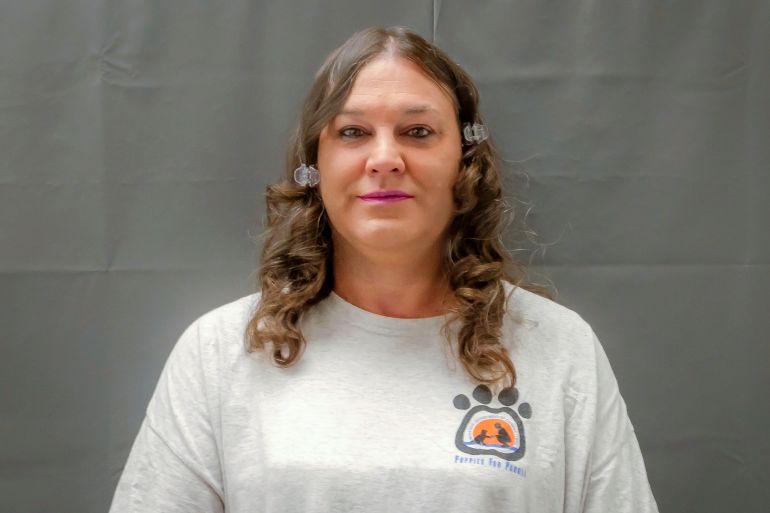
Amber McLaughlin, convicted of murder, was executed by lethal injection after being denied clemency.

McLaughlin was executed by lethal injection [File: Jeremy S Weis for the Federal Public Defender Office/AP Photo]

Published On 4 Jan 2023

A Missouri inmate was put to death on Tuesday for a 2003 killing in what is believed to be the first execution of a transgender person in the United States.

Amber McLaughlin, 49, was convicted of stalking and killing a former girlfriend, then dumping the body near the Mississippi River in St Louis.


McLaughlin’s fate was sealed earlier on Tuesday when Republican Governor Mike Parson declined a clemency request.

McLaughlin spoke with a spiritual adviser at her side as the fatal dose of pentobarbital was injected. She was pronounced dead a few minutes later,

In a final written statement, McLaughlin regretted her actions. “I am sorry for what I did,” she said. “I am a loving and caring person.”

A database on the website for the anti-execution Death Penalty Information Center shows that 1,558 people have been executed since the death penalty was reinstated in the mid-1970s. All but 17 of those put to death were men.

The centre said there are no known previous cases of an openly transgender inmate being executed.


McLaughlin began transitioning about three years ago at the state prison in Potosi.

The clemency petition cited McLaughlin’s traumatic childhood and mental health issues, which the jury never heard during her trial.

A foster parent rubbed faeces in her face when she was a toddler and her adoptive father used a stun gun on her, according to the petition. It cited severe depression that resulted in multiple suicide attempts, both as a child and as an adult.

The petition also included reports citing a diagnosis of gender dysphoria, a condition that causes anguish and other symptoms as a result of a disparity between a person’s gender identity and their assigned sex at birth.

But McLaughlin’s sexual identity was “not the main focus” of the clemency request, her lawyer, Larry Komp, said.

In 2003, long before transitioning, McLaughlin was in a relationship with Beverly Guenther. After they stopped dating, McLaughlin would show up at the suburban St Louis office where the 45-year-old Guenther worked, sometimes hiding inside the building, according to court records.

Guenther obtained a restraining order and police officers occasionally escorted her to her car after work.

Guenther’s neighbours called police the night of November 20, 2003, when she failed to return home. Officers went to the office building, where they found a broken knife handle near her car and a trail of blood.

A day later, McLaughlin led police to a location near the Mississippi River in St Louis, where the body had been dumped. Authorities said she had been raped and stabbed repeatedly with a steak knife.

McLaughlin was convicted of first-degree murder in 2006. A judge sentenced McLaughlin to death after a jury was deadlocked on the sentence. Komp said Missouri and Indiana are the only states that allow a judge to sentence someone to death.

A court in 2016 ordered a new sentencing hearing, but a federal appeals court panel reinstated the death penalty in 2021.

“McLaughlin terrorised Ms Guenther in the final years of her life, but we hope her family and loved ones may finally have some peace,” Parson said in a written statement after the execution.

KEEP READING
Sister Helen Prejean on abolishing the death penalty


SOURCE: AL JAZEERA AND NEWS AGENCIES


Opinions|Censorship

The US is inspiring education censorship elsewhere

The US likes to lecture others on democracy and free speech, but is now leading the way on classroom censorship.

Nadine Farid Johnson
Managing Director, PEN America Washington
Published On 4 Jan 2023


In school districts around the United States, book bans are spreading at an alarming rate. PEN America recently documented more than 2,500 book bans issued across 32 different states during the 2021-22 school year.

These bans are not isolated incidents, but part of a coordinated assault on public education that’s taking aim at the teaching of race, gender, LGBTQ+ identities and US history.end of list

While demands to ban books in schools in the US are not new, over the last year and a half, book banning has erupted into a national movement. Coordinated and highly organised activist groups have transformed school board meetings into political battlegrounds, threatening educators and undermining students’ freedom to learn.

These efforts to censor books are an affront to the core principles of free expression and open inquiry that US democracy swears by. But equally worrying is the fact that this pattern of attacks on public education in the US appears to be inspiring similar efforts in other countries, even though such censorship campaigns haven’t had as much success there yet.

In the United Kingdom, officials are raising the spectre of critical race theory in schools — an issue that was not previously a topic of debate or concern — to try and stop the teaching of histories that explore systemic racism. That’s part of what authors and others have described as a mood “shift” in the UK — a budding “culture war” that is leading to the censorship and removal of books from school shelves. Books being removed are often children’s books that look at institutional racism, diversity and LGBTQ+ identities.

Echoes of US-based group tactics are also manifesting in Canada, with parental groups asking school boards to ban certain books — again with LGBTQ+ content — and seeking to change curricular topics that they see as being part of the teaching of critical race theory. The movement is also gaining the attention of politicians. Australia’s Senate voted against the inclusion of critical race theory in the country’s school curriculum in 2021.

Of course, educational censorship laws and book bans, particularly those aimed at silencing certain peoples, religions, or viewpoints, are tactics that have long been used by governments.

For example, in apartheid South Africa, the notorious Publications Act of 1974 permitted the banning of any “undesirable” material. That could include anything from material that “offended” public morals and religious sensibilities to books that challenged the apartheid ideology or undermined state security.

But the US has always viewed itself as a beacon of democracy — even though it has often failed to live up to its self-declared values and principles. Now, the signs are ominous. In 2021, the International Institute for Democracy and Electoral Assistance classified the US as a backsliding democracy for the first time.

This year, a Tennessee school board removed “Maus” from classrooms; this Pulitzer Prize-winning graphic novel about the Holocaust has previously been banned in Russia. School districts in Florida and Pennsylvania have banned biographies of women, including at one point former First Lady Michelle Obama, Supreme Court Justice Sonia Sotomayor, and Nobel Laureate Malala Yousafzai. Others have carried out wholesale removals of books, often with LGBTQ+ protagonists, based on unsupported charges of “obscene” content.

These moves in the US have parallels with what’s happening in other countries Washington often lectures on human rights and liberal values.

Turkey has banned the sale of books such as Good Night Stories for Rebel Girls — which offers a series of inspiring stories about women in history — to children.

Hungary, meanwhile, has banned an entire academic discipline: In 2018, the government officially removed gender studies Master’s and PhD programmes from the list of accredited subjects in the country. Last year, the government of Prime Minister Viktor Orban passed a law banning LGBTQ+ content for minors in schools.

And recently, Russia enacted a sweeping anti-LGBTQ+ bill that expands its definition of “LGBTQ propaganda,” targeting books, films, online and public activity, and advertisements. The law was introduced in reaction to a YA novel with LGBTQ+ protagonists.

Brazil has waged similar campaigns against ‘indoctrination’ and ‘gender ideology’ in schools, with lawmakers at the federal, state, and municipal levels introducing more than 200 legislative proposals since 2014 to ban gender and sexuality education and ‘indoctrination’ in schools. Human Rights Watch has confirmed that at least 21 laws directly or indirectly banning gender and sexuality education remain in force in Brazil as of May 2022.

As in the US, these bans run afoul of constitutional principles, which allow comprehensive sexuality education in Brazil. Educators in South America’s largest nation have reported a chilling effect on their willingness to talk about gender and sexuality in classrooms. Many of them face harassment and intimidation for teaching these subjects.

Teachers in the US have described a similar chilling effect due to book bans and other forms of educational censorship, with many proactively removing books and lesson plans from their classrooms in order to avoid potential backlash.

These trends represent a concerning step backwards for democratic norms: Freedom of expression depends on access to literature and information, especially in our schools, where students are exposed to a wide range of ideas to prepare them for the challenges of democratic citizenship.

Students from historically marginalised communities around the world face the most harm when these narratives are removed from classrooms, as it sends the message that their experiences are not socially acceptable or suitable for school.

Book bans and legislative efforts to restrict academic freedom are anathema to healthy democracies at home and abroad. Fighting back against these coordinated movements is essential to protect free expression and other democratic values across the globe.

The views expressed in this article are the author’s own and do not necessarily reflect Al Jazeera’s editorial stance


Nadine Farid Johnson
Managing Director, PEN America Washington
Nadine Farid Johnson is managing director of PEN America Washington and Free Expression Programs.
Uzbeks without power, Tashkent imam: gas shortage comes from Allah

He incites the population to accept the situation and submit. Critics: he makes a living smuggling a false religion. For social users, bureaucrats and rulers are to blame for the crisis. Local clergy obey state directives.

Moscow (AsiaNews) - A serious energy crisis broke out in Uzbekistan in December. Throughout the country, electricity is rationed for a few hours a day and long queues of motorists are thronging at service stations. Faced with the growing tension among the population, the chief imam of the capital Tashkent, Rakhmatulla Sayfiddinov, who has long been known for his 'scandalous' statements, delivered a solemn speech in which he called on all believers to show gratitude and forbearance.

Sayfiddinov emphasised that 'our ancestors lived without gas and electricity, one must accept the will of Allah'. According to him, local Muslims must not become 'the shame of the world', animatedly raising the issue on all social media. The preacher warned that 'panic, riots and protests will not solve the problems', but these words only caused further upset among the socially active citizens.

Journalist Umid Soriev wrote on his Facebook page that "once again at the most sensitive moment, the campaign for gratitude and patience is being reintroduced, diverting citizens from actions in defence of their rights, and this campaign must be stopped immediately, one must have the courage to express one's discomfort'. In his opinion, the imam 'pushes simple people to live in slavery and subjugation."

Humanitarian activist Musannif Adkham stated in turn that 'blaming people who are shivering in the cold, who spend their nights waiting for their turn at petrol stations and wander in the dark, accusing them of ingratitude and inciting them to endure a situation that seems to have no end, all this is blasphemous, a way of making a living by smuggling a false religion'. The Telegram channel Platforma.uz wrote that today "politicians are turning into petulant and bigoted mullahs, while the servants of the cult devote themselves to geopolitics."

Users of social networks respond to Imam Sayfiddinov that it is not the people who should be criticised, but the bureaucrats and rulers who failed to take the necessary measures to prepare for the winter season last summer. The imam, who was appointed to the highest religious dignity in the capital last year, has long been stirring up heated discussions with his controversial lectures on various social issues.

Already in 2018, as imam of the 'MirzaYusuf' cathedral mosque, he had made a plea at Friday prayers to get rid of the 'shameful phenomenon' of male gynaecologists, and had lashed out against the evil influence of Turkey's TV dramas about the genocide of the Uzbeks. During his homily, he had also proclaimed that 'women who during the sexual act with their husbands have fantasies about other men, perhaps handsome actors, will end up producing gay children'.

The grand imam of Tashkent, by the way, is not the only spiritual leader in Uzbekistan to incite the population to submission and gratitude during the energy crisis, but he is in tune with most of his colleagues and brethren, and many believe that these are actually directives distributed by the State Administration for Religious Affairs, together with the Committee for Religion at the Council of Ministers. The Soviet inheritance, characteristic for all Central Asian countries, still considers religion as an 'instrumentum regni', and this also applies to Islam, assimilated more to the 'Byzantine symphony' than to the Mohammedan theocracy, forcing the local clergy to obey state directives.
MONOPOLY CAPITALI$M
Indian tribunal rejects Google's request to suspend antitrust ruling

In October, the Competition Commission of India (CCI) fined Alphabet Inc's Google $161 million for exploiting its dominant position in markets such as online search and the Android app store.

The Google logo pictured on the side of the Google India office building in Hyderabad
 (file)/ (Noah Seelam / AFP)

An Indian tribunal declined a request on Wednesday by Google to block an antitrust ruling that ordered the tech giant to change its approach to its Android platform, dealing the US firm a setback in a key growth market.

The CCI has also asked it to change curbs on smartphone makers related to pre-installing apps.

During the hearing, Google's counsel, Abhishek Manu Singhvi, repeatedly pushed for putting the decision on hold, or extending the date of implementation of CCI's directives beyond January 19. He said the CCI's decision will force the company to change its business model and harm consumer interest.

READ MORE: Google fined over $160M by Indian watchdog over market dominance

The tribunal did not agree. "We are of opinion that at the moment given the voluminous nature of the appeal, there is no need to pass any interim order," the two-member tribunal panel said.

Google told the tribunal in a legal filing that CCI's investigation unit copied parts of a European ruling against the US firm from a similar verdict on abuse of market dominance of its Android operating system, Reuters reported on Tuesday.

The CCI investigators "copy-pasted extensively from a European Commission decision, deploying evidence from Europe that was not examined in India", Google alleged.

The CCI has not responded yet to those allegations.
Sharjah satellite blasts off to space from Cape Canaveral
Sharjah Sat 1 taken to low-Earth orbit on a SpaceX Falcon 9 rocket


The Sharjah Sat 1 satellite about to launch on the SpaceX Falcon 9 rocket at Cape Canaveral, Florida. Photo: Wam

The National
Jan 04, 2023

Sheikh Sultan bin Ahmed Al Qasimi, Deputy Ruler of Sharjah, praised the launch of the Sharjah Sat 1 satellite that blasted off to space on Tuesday.

The miniature satellite, which weights less than 4kg, was carried by a SpaceX Falcon 9 rocket that lifted off from Cape Canaveral in Florida, state news agency Wam reported.

It has an expected life span of about three years during which it will conduct various scientific tasks such as studying the Sun, X-ray emissions and space weather during its mission in low-Earth orbit at an altitude of 550km.

It is equipped with sensors, camera and communication devices and will boost the University of Sharjah's capacity to handle larger projects.

Sheikh Sultan watched the launch at the Sharjah Academy for Astronomy, Space Sciences and Technology at the university. The satellite was built by teams from the academy and university, in co-operation with international partners.


Sheikh Sultan, who is president of the university, said it continues to work hard to establish scientific and research projects that serve humanity and enable students and researchers to develop their skills.

"We start our year by reaching space and we commend the efforts of the Sharjah Academy for Astronomy, Space Science and Technology, and we are proud of the Emirati cadres of engineers and researchers who worked on the completion of Sharjah Sat 1," he said.


Sheikh Sultan bin Ahmed Al Qasimi, Deputy Ruler of Sharjah, at the Sharjah Academy for Astronomy, Space Sciences and Technology for the launch. Photo: Wam

The launch comes in a busy year for the UAE space programme. The country's Rashid Moon rover blasted off in December on a journey that is expected to last five months before a lunar landing is attempted.

Sheikh Sultan congratulated Sheikh Dr Sultan bin Muhammad Al Qasimi, Ruler of Sharjah, and the UAE leadership on the launch of Sharjah satellite, saying that the UAE has taken successful and steady steps towards space exploration.

Dr Hamid Al Naimiy, chancellor of the University of Sharjah and director general of the academy, thanked the Ruler and Deputy Ruler for their great support. The event was also attended by officials from the university, teaching staff and a group of specialists, researchers and students.
Why Anti-Taliban Resistance Should be Supported


Taliban 2.0 has proven to be not much different from its previous version

Manish Rai | Ekurd.net
Posted on January 4, 2023 

Recently the Taliban have ordered an indefinite ban on university education for the country’s women, the ministry of higher education said in a letter issued to all government and private universities. Before this drastic decision last year, the Ministry of Women’s Affairs was dissolved. And the sinister Ministry for the Propagation of Virtue and the Prevention of Vice has been re-established. This clearly illustrates that the Taliban will carry on with its medieval conservative interpretation of Islam they are nothing more than an extremist group that has grabbed power. In addition to that, the Taliban is still nurturing global jihadi elements they just outrightly lie that they don’t have any global ambitions. This was clearly illustrated when in August last year a U.S. drone killed al Qaeda’s leader, Ayman al-Zawahiri, in a Kabul apartment reportedly owned by Taliban’s senior leader and interior minister Sirajuddin Haqqani. Afghanistan after the Taliban’s takeover has become a haven for global and regional terror outfits like-Al-Qaeda, Tehrik-i-Taliban Pakistan, which seeks the overthrow of the Pakistani state.

Taliban 2.0 has proven to be not much different from its previous version in terms of harboring an ultra-conservative ideology, policies, and practices. Hibatullah Akhundzada, the Taliban’s supreme leader, has in his speeches regularly emphasized that the struggle does not end in Afghanistan but goes beyond its borders to help all oppressed Muslims throughout the world. So, if the international community does not want Afghanistan turned into a hub for terrorism, the best option for it is to support the Anti-Taliban resistance groups which will also be a cheaper option than maintaining any form of armed presence. Around 40 Afghan warlords and exiled politicians convened a meeting and formed a High Council of National Resistance in Ankara in May 2022. To showcase that their respective anti-Taliban resistance can form a united front. The members include former Balkh province governor Atta Mohammad Noor, National Resistance Front (NRF) member Ahmad Wali Massoud, and Shia leader Mohammad Mohaqiq.

The most important group leading the resistance is the National Resistance Front (NRF) which is the biggest anti-Taliban armed group. It’s believed to have several thousand fighters and is led by Ahmad Massoud, the son of the late Northern Alliance commander Ahmad Shah Massoud. Despite the limited resources, the NRF is gaining ground mainly due to Talibans’ failings and their own successful operations. The killing of Mullah Zakir Qayyum, an important Taliban commander by NRF in September last year showcased this. It has become self-evident in Afghanistan that once an armed resistance group gains a foothold in an area it becomes hard to root out. This is more so if it is able to mobilize a degree of local support and operates in a geographically remote area. Since the takeover of Afghanistan by the Islamists, NRF appears to have achieved just that in the provinces of Panjshir, Baghlan, and Parwan in the country’s northeast. This has been done despite significant odds and without much outside support.

Ideologically, NRF embraces a moderate central Asian Islamic tradition espousing reason and cultural propagation. It advocates a decentralized political system in Afghanistan based on elections as well as promoting equality regardless of gender, ethnicity, sectarian or linguistic origin. The NRF has the potential to establish territorial enclaves if provided with money and armaments in its northeastern strongholds. With assistance from the United Nations, it could restore some public services as well. Most importantly it could bring back education for girls and provide refuge for those at immediate risk of persecution like Afghanistan’s Shia community. International humanitarian help in NRF-controlled areas might also offer a solution to the likely migration of millions of Afghans to neighboring regions and to Europe.

With domestic and outside support, perhaps the NRF could play its part not only in bringing down the Taliban but in establishing a more moderate and representative government to take its place. In a recent interview with Foreign Policy Research Institute Mr. Ali Nazari, the head of foreign relations of the National Resistance Front said that they are pursuing a resistance strategy divided into various phases. He said now they are in the first stage of gathering strength in the countryside while exhausting their enemy. The NRF hopes to move soon to the next stage of the insurgency by liberating selected regions of the country, which would allow them to gain the resources for the final stage of fighting to overthrow Taliban rule.

It’s a matter of fact that now NRF is the most liberal and democratic force that can be relied on as a counterterrorism ally in Afghanistan. Also, the United States and its allies should strengthen the NRF to fight other terrorist groups in Afghanistan. This approach is already successfully being used by the West in Syria and Iraq by supporting Kurdish fighters to fight against the Islamic State.

Manish Rai, is a columnist for Middle-East and Af-Pak region and Editor of geo-political news agency, Views Around and a contributing writer for Ekurd.net, see below.

The opinions are those of the writer and do not necessarily represent the views of Ekurd.net or its editors.

Copyright © 2023 Ekurd.net. All rights reserved