Wednesday, January 04, 2023

1st Tanker Carrying LNG From US Arrives in Germany


By The Associated Press
January 3, 2023Germany
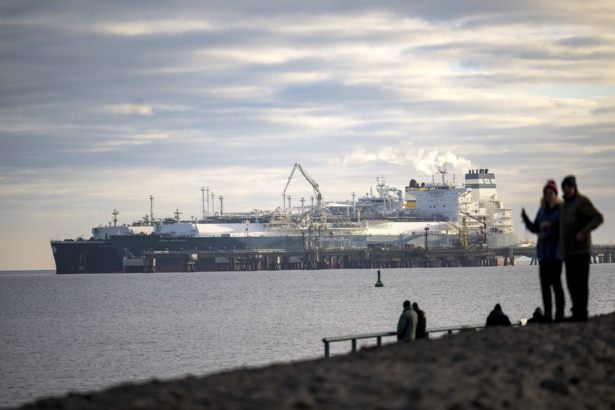
The tanker "Maria Energy", (R), loaded with liquefied natural gas, lies at the floating terminal, the special ship "Hoegh Esperanza", in Wilhelmshaven, Germany, on Jan. 3, 2023. (Sina Schuldt/dpa via AP)

BERLIN—The first regular shipment of liquefied natural gas from the United States arrived in Germany on Tuesday, part of a wide-reaching effort to help the country replace energy supplies it previously received from Russia.

The tanker vessel Maria Energy arrived at the North Sea port of Wilhelmshaven, where its shipment of LNG will be converted back into gas at a special floating terminal that was inaugurated last month by German Chancellor Olaf Scholz.

Germany has rushed to find a replacement for Russian gas supplies following Russia’s invasion of Ukraine. The facility in Wilhelmshaven is one of several such terminals being put in place to help avert an energy supply shortage.

The tanker “Maria Energy”, (L), loaded with liquefied natural gas, is moored at the floating terminal, the special ship “Hoegh Esperanza”, in Wilhelmshaven, Germany, on Jan. 3, 2023. (Sina Schuldt/dpa via AP)

Germany has also temporarily reactivated old oil- and coal-fired power stations and extended the life of its last three nuclear power plants until mid-April.

Environmental campaigners said they planned to protest the arrival of the Maria Energy, arguing Germany shouldn’t be importing fossil fuels, particularly gas obtained through fracking.

Reserves in Germany’s gas storage facilities rose above 90 percent at the start of the year as unseasonably warm temperatures across much of central Europe reduced heating demand.

US President Joe Biden Renominates Eric Garcetti As Envoy To India, Read All About Him

Former Los Angeles Mayor Eric Garcetti is a close ally of US President Joe Biden. His appointment as US Ambassador to India was stalled as he was embroiled in a sexual abuse scandal.

Eric Garcetti, US President Joe Biden's nominee for US Ambassador to India Twitter/Eric Garcetti

 04 JAN 2023 

US President Joe Biden has renominated former Los Angeles Mayor Eric Garcetti as the Ambassador of the United States to India.

The appointment of Garcetti, a close aide of Biden, has been stuck for over a year over of his name coming up in a sexual abuse scandal. He was first nominated in July 2021.

The United States has not had a full-time envoy in India since since early 2021 when the previous US envoy Kenneth I Juster completed his tenure. The current US head of mission in India is A Elizabeth Jones, who is serving as the ChargĂ© d’Affaires in the absence of a full-time envoy.

Following the US mid-term elections that has strengthened Biden's Democratic Party in the US Congress, Biden has now renominated Garcetti. The White House has exuded confidence that the former Mayor of Los Angeles would be confirmed by the Senate this time.

"Eric M Garcetti, of California, to be Ambassador Extraordinary and Plenipotentiary of the United States of America to the Republic of India," the White House said after sending the nomination to the Senate.

The move came as the White House began renominating candidates who were not confirmed in the last Congress.

"As Secretary (of State, Antony) Blinken said very recently, our relationship with India is crucial and it's consequential, so we see this as a very important nomination,” White House Press Secretary Karine Jean-Pierre told reporters on Tuesday at her daily news conference.
Who is Eric Garcetti, Biden's India envoy nominee?

Eric Garcetti is two-term Mayor of Los Angeles. He left office last month which he had held since 2013.

Garcetti is believed to be a close ally of Biden. At the beginning of Biden presidency, he was considered a contender for a Cabinet post.

Initially, Garcetti also considered a run for a presidential candidature in 2020 but later joined Biden’s inner circle.

Garcetti has travelled several times to India. In college, he spent a year studying Hindi and Urdu.

A Rhodes Scholar, Garcetti studied at Queen's College, Oxford and the London School of Economics and Political Science. He was selected as an inaugural Asia 21 Fellow of the Asia Society and taught at Occidental College's Department of Diplomacy and World Affairs as well as at the University of Southern California's School of International Relations.
Why was Eric Garcetti's appointment stalled?

Eric Garcetti's appointment to the post of US Ambassador to India was stalled over his name in a sexual abuse scandal.

It was alleged that Garcetti was aware of sexual misconduct of a senior aide but did not act on the allegations.

As ambassadors need to be confirmed by the US Congress, opposition by Republican Senator Chuck Grassley over the sex scandal stalled the appointment.

It was alleged that Garcetti was aware of sexual abuse accusations against his senior staffer Rick Jacobs and he did not act on those accusations.

A police officer who served as one of Garcetti’s bodyguards alleged that Jacobs made crude sexual comments and touched him inappropriately over many years. The officer alleged that Jacobs would extend his hand for a handshake but then pull him into a “long, tight hug” while simultaneously saying, “I love me my strong LAPD officers” or some other “inappropriate comment”, according to a lawsuit. It added that Jacobs once motioned for him to come over to him and “sit on his lap” at a bar.

This began around 2014 and continued until October 2019, according to the lawsuit filed by the officer.

The lawsuit further said, “Garcetti was present on approximately half of the occasions when Jacobs behaved in this way, and witnessed Jacobs’ conduct, but he took no action to correct Jacobs’ obviously harassing behaviour.”

Though the hold on his nomination had been lifted, Garcetti could not be confirmed by the last Congress. The White House is now confident that his nomination will now be cleared.
What has White House said?

White House Press Secretary Karine Jean-Pierre said, "We will continue to seek the confirmation of Mayor Garcetti, who has - who was voted out of committee unanimously and with strong bipartisan support to serve as ambassador to India.

"And that’s important, as we’re talking about bipartisanship, as we’re talking (about) how we’re going to move forward. And this is what you saw with his particular nomination.So, we see this as he is well qualified — Mayor Garcetti — to serve in this vital role. And we’re hopeful that the full Senate will confirm him promptly."

(With PTI inputs)

Where most aid to Ukraine comes from

Where most aid to Ukraine comes from
With a total spend of $50.9bn in March-November, the US has sent by far the most financial aid to Ukraine since the war began. / bne IntelliNews


By Anna Fleck for Statista January 4, 2023

The United States pledged $50.9bn in military, financial and humanitarian aid to Ukraine between the start of the Russian invasion in February 2022 and November 20. Data from the Ukraine Support Tracker shows that, as a single country, the US has provided by far the most aid to Ukraine, followed by EU institutions ($37.2bn), the UK ($7.5bn), Germany ($5.8bn) and Canada ($5.1bn), Statista reports.

According to the pioneers of the tracker at the Kiel Institute for the World Economy, where the US had initially committed nearly twice as much as all EU countries and institutions combined, a new 18-billion-euro Macro-Financial Assistance (MFA) package agreed by the EU for 2023 narrowed the gap. When all EU Institutions and countries are combined, their total pledged support now comes out at just under 52bn euros. In November, Christoph Trebesch, head of the team compiling the Ukraine Support Tracker, stated: "Until now, the EU's support to Ukraine since the start of the war has always lagged behind that of the United States. This has changed in recent weeks, as the total value of EU commitments now exceeds those of the US The large new EU pledges are a welcome development, given the major role of this war for European security."

When considering bilateral aid in terms of a percentage of GDP, several European countries come out on top with Estonia (1.1%), Latvia (0.9%) and Poland (0.5%) as the most generous donors. The US then ranks tenth, as it provides 0.2% of its G

McDonald’s revokes licence of Bosnian franchise after series of scandals


bne IntelliNews
By Denitsa Koseva in Sofia
January 3, 2023

McDonald’s has revoked the licence of its franchise in Bosnia & Herzegovina and all the local restaurants were closed at the beginning of January.

No official comment has been made on the reasons for the decision, but it follows a series of scandals. Unnamed Bosnian employees of the former franchisee, the company Gliese 581g, told local media that unpaid rents to Raiffeisen Bank and the company’s alleged involvement in a political campaign are behind the decision.

The revoking of the licence was confirmed by Edin Forto, governor of the Sarajevo Canton.

“The announced exit of McDonald’s from Bosnia is bad news for our economy,” Forto wrote on Twitter. He added that no country needs negative stories by investors.

At the end of 2022, Gliese 581g, owned by local businessman Haris Ihtijarevic, lost a case against Raiffeisen Bank’s Bosnian arm over unpaid rent. At the beginning of December 2022, the Cantonal Court in Sarajevo ordered the return of a space where one McDonald’s restaurant was located to Raiffeisen Bank due to unpaid rents, Indikator.ba reported. Although there was no official information on the accumulated debt, the Sarajevo Times reported that it amounted to €500,000.

Gliese 581g has claimed the rent was not paid as it had to make a significant investment in the renovation of the facility, although the contract had a clause that Gliese 581g would have to adapt the location at its own risk.

Avaz reported that the licence was taken due to Gliese 581g’s involvement in politics. The company allegedly provided marketing space to the main Bosniak party, SDA, during the election campaign ahead of the October 2 general election. If true, this would have violated McDonald’s policy of non-involvement in politics.

The first McDonald’s restaurant was opened in Bosnia in the beginning of 2011. However, it failed to expand — as seen in neighbouring countries — and had just five restaurants open by the end of 2020.

In Bosnia, the chain was competing with local brands as Cevapi. According to Sarajevo Times, McDonald’s was too expensive for the Bosnians.

Despite this, the Bosnian company has generated significant revenues. For 2022, revenues reached BAM17.75mn (€9.1mn), while for 2021 they stood at BAM11.53mn, the Bosnian daily Avaz reported. Profit stood at BAM2.32mn in 2022 versus BAM778,000 in 2021.

McDonald’s reported closure in Bosnia follows the shutdown of its outlets in first Russia and later Kazakhstan in 2022.

The fast food chain was among numerous international brands to leave Russia after sanctions were imposed following the invasion of Ukraine. McDonald’s initially announced the suspension of its operations in Russia, but kept paying the salaries of its 62,000 staff. Then in May 2022, McDonald’s sold its Russian assets to Russian licensee Alexander Guvnor.

Its successor on the Russian market is Vkusno – i Tochka, is understood to have hoped to enter Belarus as well. However, Belarus’ authoritarian President Aleksander Lukashenko is understood to have wanted a local rather than Russian successor to the fast food giant’s Belarusian operator, famously commenting: “we know how to cut a bun in half”.

In Kazakhstan, McDonald’s restaurants were temporarily shuttered in November due to supply issues. The general director of the Kazakh franchisee of McDonald's, Food Solutions KZ, Asset Mashanov, said in December that McDonald's plans to stay in Kazakhstan and the company is working on putting its restaurants back in operation.
Tanzania lifts 6-year ban on opposition political rallies

President Samia Suluhu Hassan revokes ban imposed in 2016 by her predecessor John Magufuli


Anadolu Agency Staff |04.01.2023


DAR ES SALAAM, Tanzania

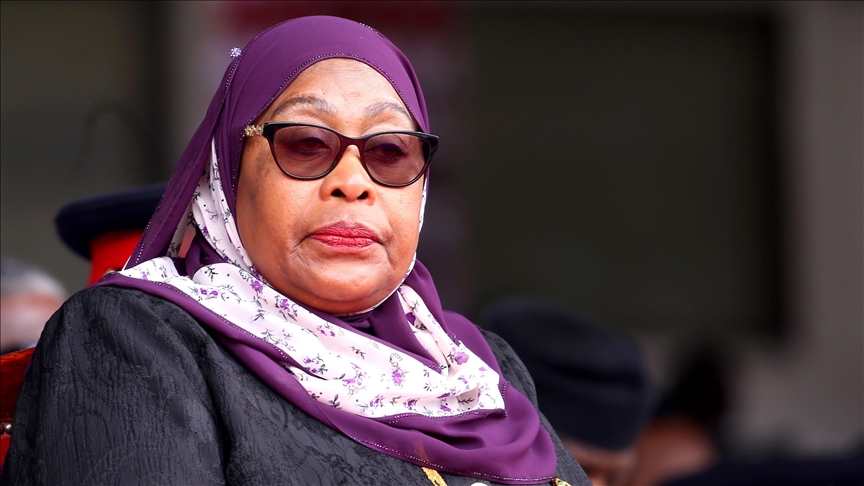
Tanzania’s President Samia Suluhu Hassan on Tuesday lifted a ban on rallies of opposition parties imposed in 2016 by her predecessor John Magufuli.

Hassan announced the decision in a televised address after meeting leaders of the ruling Chama Cha Mapinduzi (CCM) party and the main opposition CHADEMA in the commercial hub of Dar es Salaam.

“I have come here to allow those meetings. I have come to lift the ban on public political rallies and I am saying the ban is officially lifted,” she said.

She said opposition parties have the right to hold rallies and the government is fully prepared to provide security for their gatherings.

In a separate statement from the presidency, Hassan said any rallies will have to be held “in accordance with the law and existing regulations.”

She also urged political parties to criticize and advise the government in a civilized manner.

The ban on opposition rallies was just one of a raft of repressive laws enforced by Magufuli, who ruled from September 2015 until his death in March 2021.

Analysts say his regressive policies severely trampled on fundamental basic rights such as freedom of speech and assembly, and led to a sense of fear among citizens and politicians alike.

“I think this is a very important move which will obviously provide political mileage to the president, and also certainly iron out differences with foreign donors who were increasingly disturbed by actions that curtailed democracy in Tanzania,” Max Mmuya, a political scientist and former lecturer at the University of Dar es Salaam, told Anadolu Agency.

Mmuya said the government’s effort “to reverse the pattern of rights abuses and demonstrate a genuine commitment to the rights of freedom of expression, association, and peaceful assembly … is an impetus to democracy and development.”

Benedict’s Passing: No Tears for ‘God’s Rottweiler’


 JANUARY 4, 2023
Facebook

Photograph Source: Fabio Pozzebom/ABr – AgĂŞncia Brasil – CC BY 3.0br

The long-anticipated death of Josef Ratzinger—head of the Catholic Church between 2005 and 2013 as Pope Benedict XVI—has led to a deluge of the kind of vacuous eulogising that accompanies the passing of any leading pillar of the establishment. One can detect in some of the commentary the terms of a debate over Benedict’s legacy that has been underway for some time—particularly over his role in the crisis brought on by revelations of widespread sexual abuse within the Church. Given the deep political polarization in the top echelons of the Catholic hierarchy and the likely prospect of a bruising confrontation over Pope Francis’s successor in the very near future, Benedict’s embrace by an aggressive Catholic Right in recent years means that these controversies are bound to continue.

For now, however, mainstream pundits seem inclined (as they were following the recent death of the British monarch) to forgive Ratzinger’s worldly offenses, and focus instead on an ostensibly benign theological legacy. In many quarters he is credited with “finally facing up to” the problem of sexual abuse. Given the scale of his partisan involvement in the major battles within the Church over many years, this is an excessively generous approach that lends itself to apologetics or, worse, to cover-up. Confronted with soft platitudes and insipid eulogising on one side and a looming clash with a resurgent Catholic Far Right on the other, socialists need a sober and hard-headed appraisal of Benedict’s role.

Youth and Background

Ratzinger was born into a pious, middle-class family in Marktl am Inn, a Bavarian village along Germany’s border with Austria. Much has been made of his membership of the Hitler Youth movement in his teens, but this seems to have been obligatory: his family were moderately hostile to the Nazis, mainly because of the restrictions they imposed on German Catholicism. By the age of 12 he was enrolled in a junior seminary at Traunstein, and after the war entered a Catholic seminary in Freising, later attending university in Munich.

Ratzinger’s early reputation as a liberal within the German Church is well known, as is his support for Vatican II—the internal reforms initiated from Rome beginning in 1962—which called on a Church seen as distant and lifeless to “open the windows…so that we can see out and the people can see in”. Most accounts of his Munich years paint Ratzinger as a progressive who executed an about-face when confronted with the excesses of 1968, and while there is an element of truth here, the reality is that Ratzinger’s early enthusiasm was always conditional.

He took part in the Vatican II sessions at the age of 35 as an academic theologian who had little contact with lay Catholics. While one faction at Rome—the aggiornamento movement—pushed for embracing the modern world and “integrating the joys and hope, the grief and anguish, of humanity into what it means to be Christian”, Ratzinger leaned toward the backward-looking faction grouped around ressourcement—a ‘back to basics’ impulse that pushed for a return to early tradition. Still, his writings at the time “breathe[d] with the spirit of Vatican II,” one critic wrote, “the spirit that Ratzinger…would later denigrate”.

Vatican II represented a compromise between Church liberals and traditionalists—a fudge that makes it possible even to this day for both conservatives and a dwindling core of Church progressives to claim it as its own. Both Francis and his right-wing opponents, for example, declare themselves to be faithful inheritors of Vatican II.

Turning Point in 1968

Even given this ambiguity, there is no doubt that the effect of the social upheavals around 1968 drove Ratzinger toward a fundamental social and theological conservatism, and to a deep hostility against what he saw as the evil influences of secularism and modern life. This bedrock rejection of the sixties legacy has informed virtually every area of Ratzinger’s public role, from his appointment as cardinal of Munich in 1977 to his handling of the sexual abuse scandals in recent years.

In 1966 Ratzinger took up a teaching post at the University of Tubingen, then a “flagship of theological liberalism”. When student protests reached the campus in 1968, Ratzinger reacted with marked hostility, indignant that students would dare to challenge him in class, and shocked that his colleagues didn’t share this resentment. When protesting students disrupted the faculty senate, Ratzinger reportedly walked out rather than engage the students, as other faculty did. Stunned that the radicalisation had made inroads among even among Catholic staff, Ratzinger placed his faith in Protestant theological students to provide a ‘bulwark’ against the left, but even they let him down. Setting himself against the “fanatical ideologies” circulating across the world, he wrote dejectedly (if prematurely), “The Marxist idea has conquered the world”.

Simultaneously, conservatives within the Church scored a major victory in the internal conflict over the implications of Vatican II, when in the same year Pope Paul VI issued his encyclical Humanae vitae, reiterating Rome’s traditional ban on artificial contraception. The Church’s unwillingness to shift on the issue of birth control deflated not only many lay Catholics, but even a substantial layer of clergy, who had signalled support for the “rights of individual conscience” and who had assumed, naively perhaps, that the lofty rhetoric of Vatican II would be accompanied by deeds. The abrupt turn to the right was “even more disheartening” for many believers because it “followed a moment of such optimism and new life”.

The ban on contraception has to be seen in the context of a deeply conservative reaction against the sexual revolution of the 1960s, and Ratzinger was at the centre of the panic it induced among Church conservatives. He later recalled being repulsed by a movie billboard showing “two completely naked people in a close embrace”. Rejecting “all-out sexual freedom [which] no longer conceded any norms”, Ratzinger blamed the new permissiveness for a “mental collapse” across society, linking it to a new “propensity for violence” and—curiously—to the outbreak of fistfights during air travel. Eccentricities aside, this signalled the beginning of a major offensive to roll back sexual freedom, and in later iterations would include an obsessive targeting of LGBTQ rights.

John Paul II, The Challenge of Secularism and Liberation Theology

By the late 1970s Ratzinger had rejected even the tepid liberalism of his younger days, and it was this turn that brought him into collaboration with the Polish-born cardinal Karol WojtyĹ‚a, later Pope John Paul II. At the core of John Paul’s tenure in Rome was a sustained campaign to finish the hollowing out of Vatican II and consolidate conservative control over the global Church. His appointment as prefect for the Congregation for the Doctrine of the Faith made Ratzinger John Paul’s leading heresy-hunter, earning him a reputation as ‘God’s Rottweiler” for his role in a series of brutal purges—including of his own former close friends from Germany. The “freedom to explore, which Ratzinger had once demanded for theologians,” one biographer writes, “was now being rapidly eroded by his own hand”.

The rise of Liberation Theology in Latin America presented the most formidable challenge facing Rome in the early 1980s. In a desperately poor region where the Catholic hierarchy had consistently aligned itself with corrupt US-supported regional oligarchs—including right-wing military dictatorships reliant on torture—a challenge had begun to emerge in the late 1960s, led initially by grassroots missionaries among Jesuits and the other religious orders, including large numbers of women.  By the mid-1970s these had won wide influence among workers and the poor, organized into ‘base communities’ that operated outside the control of the upper levels of the hierarchy.

John Paul’s iconic finger-wagging at the poet-priest and Sandinista Minister of Culture Ernesto Cardenal on the airport tarmac at Managua in 1983 gave a clear indication of Rome’s attitude to ascendant left-wing Catholicism in Latin America. The campaign then underway was a comprehensive one, involving high-level collaboration between Rome and the Reagan administration at Washington, and included generous support from the CIA and the targeting of the religious orders for murder and assassination.

The scale of the purge can be seen in Brazil, where under a military regime Liberation Theology had sunk deep roots among a new generation of industrial workers, in the favelas and among the rural poor. There John Paul II replaced progressives with conservative religious leaders in nine of Brazil’s thirty-six archdioceses, a ‘dismantling’ that continued under Benedict’s reign. Rome oversaw a multi-faceted campaign against the Catholic Left, involving an intense centralization, bureaucratic high-handedness and tacit support for military repression. But it was Ratzinger who prosecuted the ideological campaign to recapture the Church for the Right.

Here John Paul’s rottweiler turned his theological training to rooting out the ‘heresy’ of the Liberationists’ “preferential option for the poor”. In 1984 he issued his Instruction on Certain Aspects of Theology of Liberation, which argued predictably that biblical refences to the poor referred to a ‘poverty of the spirit’ rather than material inequality. Wielding a ‘perverted’ concept of the poor and inciting envy of the rich, liberation theology represented in his eyes a “negation of the faith”.  Ratzinger countered with a ‘theology of reconciliation’, following the Pope’s admonition that “a more harmonious society” would “require both forgiveness from the poor, for past exploitation, and sacrifice from the rich”.

Ratzinger oversaw the purge of liberation theology’s leading exponents, including Brazilians Leonard Boff and the nun Ivone Gebara, whose work had  “linked liberation theology with environmental concerns” and who “defended poor women who had abortions in order not to endanger existing children”.  At the same time he drew close to right-wing organizations like Opus Dei and brought the Latin American bishops’ conference [CELAM] directly under Rome’s control. In the face of wide-ranging repression and a comprehensive purge led by Ratzinger, by the early 1990s liberation theology was in full-scale retreat.

Sexual Abuse, Homophobia and Misogyny

With this major confrontation behind him and the ‘liberal voice’ of the Church in retreat all along the line, Ratzinger was well-placed to take over when John Paul II died in 2005. By now a “consummate insider”, and with a curia mostly hand-picked by his predecessor, his ‘election’ as Pope Benedict XVI was in the bag before voting began. The “victories already achieved in the last decades of the 20th century [around] questions of sexual morality, clerical celibacy, the place of women and religious freedom [were] secure,” Peter Stanford writes, and his papacy represented “an extended postscript to the one that had gone before”.

There was one major complication that threatened to disturb Benedict’s rule: the revelation of widespread sexual abuse by clergy across the Church had been continually swept under the carpet by John Paul II—sometimes with Ratzinger’s support. Continuing the trend toward intense centralization, as prefect in 2001 he had ordered all reports of sexual abuse forwarded to Rome, with strict penalties against leaking—including the threat of excommunication. Investigations were to be carried out internally, behind closed doors, and any evidence was to be kept confidential for up to 10 years after victims reached adulthood. His clear priority was damage control for the Church’s reputation. Victims rightly characterized this as a “clear obstruction of justice”.

By the time he assumed the papacy in 2005 avoidance was no longer an option. A major scandal had erupted in 2002 when Cardinal Law of Boston—John Paul’s “favourite son in America”—was revealed to have “secretly shuffled abusers from one parish to another”. Similar revelations emerged in Ireland and Australia. Described by victims as “the poster child for covering up sexual abuse crimes against children”, Law not only avoided reprimand but was promoted to a $145,000 a year post in Rome. Obituaries have drawn attention to Benedict’s willingness to censure Marcial Maciel, the millionaire priest-founder of the powerful Legionnaires of Christ who had fathered multiple children and was accused of widespread abuse of minors. Maciel was untouchable under John Paul II, and Benedict’s mild censure was long overdue.

Media attention made it impossible for Benedict to dodge the issue any longer: clearly it was these pressures, and not any change of heart on his part, that compelled him to take limited action. Even minimal scrutiny, however, shows the same priorities—defence of the Church’s reputation and its finances— were evident in every aspect of Benedict’s response. His own carefully-crafted image as a credible mediator was severely tarnished when it was revealed that Ratzinger himself had been involved in covering up such crimes while a cardinal in Munich, and in 2022 he was compelled to admit to providing false information to an inquiry there.

More significant is the ideological content of Benedict’s attempt to rescue the Church. The problem of sexual abuse and its systematic coverup became, in Benedict’s hands, further confirmation of the depravity brought on by sexual permissiveness and, unsurprisingly, an opportunity to rail against the evils of homosexuality. There was little tolerance for a frank discussion of problems inherent in clerical celibacy, or of the costs of sexual repression more generally. Over and over again Benedict and his closest aides attempted to link the horrific abuse carried out under their watch to a specific inclination toward paedophilia they attributed to “homosexual cliques” and “gay lobbies”. This was the basis for his admission of “how much filth there is in the church [even among] the priesthood”, and it won Benedict the endorsement of the Catholic Right, who were relieved to return to the offensive after so long on the back foot. It was a despicable attempt to deflect the Vatican’s responsibility for crimes carried out under its watch.

The scapegoating of the LGBTQ community was rooted in a more general misogyny underpinning the Catholic Right’s response to even the most moderate demands by female congregants to assume a larger role in Church life. In 2003 Ratzinger had denounced civil partnerships for same-sex couples as “the legislation of evil”, and on the cusp of his papacy in 2004, his Letter on the Collaboration of Men and Women in the Church and in the World defined the role of women in terms of virginity followed by marriage, motherhood and support for the male head of family, citing Genesis 3:16: “Your desire shall be for your husband, and he shall rule over you.”

Under both popes, the Vatican became obsessed with policing dissent around its teachings on sex, and women have paid an especially high price. In Latin America the hierarchy welcomed a turn away from social and economic justice and toward a fixation with sexual morality and holding the line on abortion. In the US—apparently at the instigation of Cardinal Law—the Church carried out a clampdown on nuns accused of promoting “radical feminist themes incompatible with the Catholic faith”. Hailing from religious orders with experience in Latin America, they were charged with “‘corporate dissent’ on homosexuality and failure to speak out on abortion” and criticized for supporting socialized health care. Elsewhere a nun was excommunicated for supporting a pregnant woman whose doctors believed she would die if they did not terminate her pregnancy”. Priests were removed from teaching positions for questioning Church teaching on birth control.

Benedict’s Legacy: A Church in Freefall

Underneath the sound and fury, the whole period between the ascendancy of John Paul II and Francis’ papacy is marked more by continuity than rupture. Although the mood music has changed, there is no prospect of a fundamental change of direction, and despite the invective from the Catholic Right, the reality is that Francis has only tinkered at the edges of a deep, possibly existential crisis facing the Church. Ratzinger himself acknowledged that to hold fast to its dogma the Church might have to accept a sharp decline in numbers and influence, and this is clearly the preferred trajectory of the Catholic Right, who have made of Benedict’s orthodoxy “a kind of Tea Party Catholicism”: they wield considerable influence, and seem keen to purge all who dissent from its backward social teaching and its warped take on sexual morality.

They may not have a choice. In the traditional heartlands of Catholicism—notably Ireland and Spain in western Europe, but in urban immigrant neighbourhoods in the US as well—the Church is in freefall, with no signs of recovery. In Latin America, where it once enjoyed a religious monopoly—and across Asia and Africa—Benedict’s war on liberation theology opened the door to grassroots evangelicals and Protestant sects, who are growing by leaps and bounds among the dispossessed in places like Brazil. The deep inadequacy of its response to the sexual abuse scandal has shaken many religious believers and lifted the veil on the endemic sexism and authoritarianism at the heart of the Church, and in the US an especially deranged hierarchy has hitched its fortunes firmly to Trump, Bannon and the brutality of the far Right. Those hungry for the meaningful solidarity and full flowering of humanity that the Church promises—but is incapable of delivering—will have to seek solutions elsewhere.

A version of this essay first appeared on the Irish website Rebel News

Brian Kelly is an award-winning historian of race and labor in the post-emancipation United States.

Envisioning a World Without Nuclear Weapons


 JANUARY 4, 2023
Facebook

Photograph by Nathaniel St. Clair

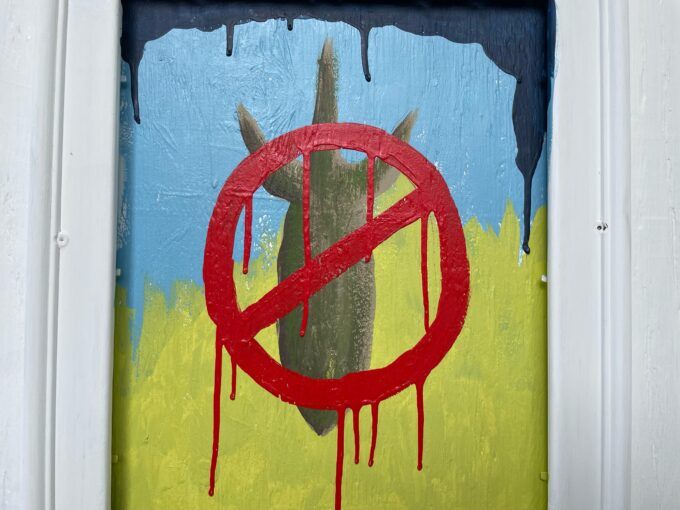
January 22 marks the second anniversary of the UN Treaty on the Prohibition of Nuclear Weapons, a global lifeboat supported by 70% of the world’s countries. Meanwhile, the US Department of Energy’s 2023 budget request for nuclear weapons’ upgrade is more than $21 billion and close to $8 billion for radioactive and chemical cleanup at nuclear weapon sites across the country. Stack this up against the same department’s 2023 budget for energy efficiency and renewable energy – $4 billion – and we see the future: weapons trump wind turbines; war worsens climate crisis.

Moreover, the government’s budget has no line items for the massive existential costs of nuclear weapons, three of which are described here:

* the dread that world-ending nuclear bombs provoke in humans (unless we have become “numb to… that culture of mass death”);

* the “forever” radioactive contamination that eludes cleanup to human and environmental safety standards, the estimated cost of just one site, Hanford, Washington, being $300 billion to $640 billion; and

* the theft and poisoning of indigenous peoples’ lands and culture for mining uranium, generating bomb-grade plutonium, and conducting above ground atomic bomb testing.

Hanford, Washington is the site of the largest plutonium-production reactors in the world from 1944 to 1987 (including for the bomb dropped on Nagasaki). The Hanford land, bordering the Columbia River, was effectively stolen from four Indigenous tribes and peasant farmers by the federal government and is now “arguably the most contaminated place on the planet,” according to Joshua Frank, author of Atomic Days.

The Hanford plutonium-making site has killed and contaminated fish, waterfowl and other biological life in the Columbia River and polluted two hundred square miles of the aquifer beneath. It contains 177 leaky underground storage tanks holding 53 million gallons of radioactive and chemically hazardous waste – an atomic wasteland which may never be remediated. The worst and very-real scenario for this site and its workers is a Chernobyl-like explosion from leaking hydrogen gas.

While nuclear weapons governments and their bomb-making industries are criminally sleepwalking into what could mean the end of our planet’s life, many others – scientists, high-level military, citizens and whole countries – are countering the weapons holders’ political idiocy with principled intelligence.

* At their 40th reunion in Los Alamos, New Mexico, 70 of 110 physicists who worked on the atomic bomb signed a statement supporting nuclear disarmament. When have the brightest scientists of their day ever admitted that their most notable work was a colossal mistake?

* On February 2, 1998 retired General George Butler, former Commander of US Strategic Air Command addressed the National Press Club: “The likely consequences of nuclear weapons have no…justification. They hold in their sway not just the fate of nations but the very meaning of civilization.” Sixty other retired generals and admirals joined him calling for nuclear weapons abolition.

* Against immense pressure from nuclear-armed states, most aggressively the United States, 122 countries agreed in July 2017 to ban nuclear weapons. At the heart of the United Nations Treaty on the Prohibition of Nuclear Weapons (TPNW) is an explicit ethical goal: to protect the world’s peoples from the humanitarian catastrophe that would ensue were nuclear weapons employed.

* By the end of 2022, 68 countries ratified the Treaty and 23 more are in the process.*At least 30 more countries have promised to join the Treaty.

* Since 2007, ICAN, an international organization with partners in over one hundred countries, has mobilized people throughout the world to convince their governments to support a ban on nuclear weapons.

Mayors for Peace from over 8,000 global cities call for the abolition of nuclear weapons.

The new UN Treaty prohibiting nuclear weapons bolsters the hope that the United States and the eight other nuclear giants will grow up into pragmatic, if not ethical adult governments and eliminate forever their genocidal weapons. One nation did so: South Africa developed nuclear weapons capability and then voluntarily dismantled its entire program in 1989.

The Road Less Taken

In 1963 President John Kennedy gave at American University’s commencement what has been deemed the most important speech by a US president – a speech on peace with the Soviet Union. But “what about the Russians?” everyone asked. Kennedy responded “What about us…Our attitude [toward peace] is as essential as theirs.” According to historian Jim Douglass, “John Kennedy’s strategy of peace penetrated the Soviet government’s defenses far more effectively than any missile could have done.” Promoted across the Soviet Union, Kennedy’s speech and his behind-the-scenes diplomacy with Khrushchev led toward de-fusing Cold War tension and planted the seed of a world without nuclear weapons and war. This seed awaits germination.

If the U.S. could once again replace its masculinist power with creative foreign policy and reach out to Russia and China with the purpose of dismantling nuclear weapons and ending war, life on Earth would have a heightened chance.

Patricia Hynes is a board member of the Traprock Center for Peace and Justice and active in the Women’s International League for Peace and Freedom and Nuclear Free Future. Her recent book, Hope, But Demand Justice (2022) is available in bookstores.

Russia risks causing IT worker flight with remote working law

ON JANUARY 4, 2023
By EU Reporter Correspondent


Russia’s IT sector is in a state of flux and could lose more workers due to planned legislation regarding remote working. Authorities are trying to attract back some of those tens of thousand who have left Russia without requiring them to end ties.

Because IT workers are mobile, they were prominent among those who fled Russia after Moscow sent its army to Ukraine on 24 February, and the hundreds of thousands that followed when a military order-up was issued in September.

According to the government, 100,000 IT professionals work for Russian companies abroad.

Legislation is currently being considered for this year, which could ban remote work in certain professions.

Fearful of Russian IT professionals working in NATO countries, and possibly sharing sensitive security information, Hawkish lawmakers have suggested banning Russian IT specialists from leaving Russia.

However, the Digital Ministry stated in December that a complete ban could make Russian IT companies less efficient and thus less competitive. "In the end, who can attract the best talent, even those from overseas, will win."

'NEGOTIATING with TERRORISTS'

Many young Russians are disillusioned and have moved to other countries like Georgia, Latvia or Armenia, where the Russian language can be easily understood. However, others have taken a greater leap to Argentina.

Roman Tulnov (36-year-old IT specialist) said that he didn't intend to return to Russia in any way.

"I wanted to go for a while. Everything became clear on February 24, 2012. He said that he understood that Russia was overpopulated. He credited mobilization for the chance to work in six different time zones and keep his job.

"Before mobilization, no one thought of giving the go-ahead to people to move to where-knows-where."

Vyacheslav Volodin (the powerful head of Russia's lower chamber of parliament, or State Duma), has stated that he would like to see higher taxes for those who have relocated abroad.

Yulia, 26, a product designer, estimated that 25% of her team would prefer to quit than return under duress to Russia.

She said: "Such an alternative choice is somewhat like negotiating with terrorists: 'Come back or we'll make you job impossible and for your company as well as your employees'."

Some Russian expatriates might be able to avoid paying taxes altogether. The personal income tax of 13% is automatically deducted from residents' employees, but it is not applicable to those who work in Russia-based companies.

Sasha, a professional online poker player, is also from Argentina and said that he has stopped paying Russian taxes.

He said: "When you pay taxes, you support the state's military expansion." "I don't pay taxes and I don't plan on."