It’s possible that I shall make an ass of myself. But in that case one can always get out of it with a little dialectic. I have, of course, so worded my proposition as to be right either way (K.Marx, Letter to F.Engels on the Indian Mutiny)
Monday, January 20, 2025
OPG to explore Wesleyville for potential new build
Thursday, 16 January 2025
World Nuclear News
The Ontario government has asked Ontario Power Generation to explore opportunities for new nuclear energy generation at a site in Port Hope, after the local municipality and Indigenous communities expressed their support.
The Wesleyville site, near Port Hope (Image: OPG)
The Ontario government said its request to Ontario Power Generation (OPG) follows expressions of interest from the Municipality of Port Hope and the Williams Treaties First Nations in the possibility of building nuclear capacity at its site at Wesleyville. "With energy demand in Ontario set to increase by 75 per cent by 2050, we are doing the early engagement and development work now that will ensure the province has options to meet that growing demand," Minister of Energy and Electrification Stephen Lecce said.
Wesleyville is one of three sites where OPG is exploring the potential for new generation with municipalities and Indigenous Nations. The 1,300 acre (over 5 square kilometres) site - where an oil-fired power station was partially built by OPG's predecessor company, Ontario Hydro, in the 1970s - has the potential to be an ideal site for new large nuclear in Ontario, OPG said. Located near existing transmission, road, and railway infrastructure, and already zoned for new electricity generation, early assessments by OPG suggest the site could host up to 10,000 MW of new nuclear generation, which could power the equivalent of 10 million homes. A new nuclear station at Wesleyville could generate important economic and associated benefits, including attracting co-industries to the site, the company said.
The Council of the Municipality of Port Hope unanimously passed a motion on 17 December endorsing continued engagement with OPG and the Ministry of Energy and Electrification on the potential for new energy generation at the site, the Government of Ontario said.
As a first step, OPG and the Province of Ontario have announced that they will provide funding so that the municipality and Indigenous Nations have the necessary resources and capacity funding to participate in a multi-year process to assess the site and help identify a suitable generation technology and complete a range of Impact Assessment activities. OPG is to provide the Williams Treaties First Nations with capacity funding and an opportunity for equity participation in any generation project, while the province is providing CAD1 million (USD695,000) for the Municipality of Port Hope to support early growth readiness, assessment of planning and infrastructure requirements, and to meet consultation requirements. The municipality could also access up to CAD300 million of further funding as part of a milestone-based process, leading toward the development of a Host Municipal Agreement, the government said.
The potential nuclear build would also allow local communities to benefit from additional co-located industry and supply chain spending. The Municipality of Port Hope would also benefit from increased municipal property taxes from the station, which according to the Conference Board of Canada are estimated to be $10.5 million annually.
"Ontario needs more affordable and reliable energy to meet soaring demand, and I am excited to work with our municipal and Indigenous leaders to explore how we meet that challenge, while creating new jobs and opportunities right here in Port Hope," said David Piccini, MPP for Northumberland-Peterborough South. "New energy generation represents an incredible opportunity for our region, and I am committed to working closely with Premier Ford and Minister Lecce to ensure our community is supported as this work advances – including immediate funding of $1 million for Port Hope."
In addition to Wesleyville, sites at Nanticoke in Haldimand County and Lambton in St Clair were also singled out last year by the Ontario government for discussions with Indigenous, community and municipal leaders. Both former coal generation sites, Nanticoke and Lambton are, like Wesleyville, already zoned for electricity generation, have proximity to transmission, and are located in regions experiencing significant growth.
According to the government, OPG will begin an impact assessment "as early as" this year to maintain the long-term optionality for the site.
"As we move ahead with site exploration, OPG will strive to listen to the priorities, concerns, and hopes of all stakeholders and rights holders involved," OPG CEO Nicolle Butcher said. "And we will only advance development with their express support.
"We commit to taking this same approach at our sites in Nanticoke and Lambton as we continue discussions with communities to determine their support for new generation opportunities there."
The UK Atomic Energy Authority's LIBRTI programme has announced a series of significant steps to advance fusion energy development. In addition to ordering a neutron source, it has also announced funding for 12 small-scale tritium breeding and digital simulation experiments.
The LIBRTI facility (Image: UKAEA)
Future fusion power plants will rely on two hydrogen isotopes – deuterium and tritium – to produce energy. Deuterium can be readily extracted from seawater. Tritium, however, is scarce in supply, necessitating the development of methods to produce it sustainably.
To address this challenge, tritium must be produced (or 'bred') in a lithium-containing blanket that surrounds the fusion reaction. This 'breeder blanket' will perform several tasks: producing tritium; absorbing heat; and acting as a radiation shield. By ensuring a continuous supply of tritium for the fusion machine's operations, the breeder blanket enables a self-sustaining fuel cycle.
The GBP200 million (USD244 million) LIBRTI (Lithium Breeding Tritium Innovation) programme - part of the broader Fusion Futures initiative - focuses on pioneering fusion fuel advancements and stimulating general industry capacity through international collaboration.
Over its four-year span, the programme aims to demonstrate controlled tritium breeding. As part of this effort, UKAEA intends to purchase a neutron source which will form the backbone of a first-of-a-kind testbed facility to be built at Culham Campus in Oxfordshire, England.
SHINE Technologies of Janesville, Wisconsin, USA, is to supply a 14 mega electron volt (MeV) deuterium-tritium fusion system to provide the LIBRTI neutron source in 2027.
"The neutron source selected shall provide neutrons of the same energy as those emitted from a fusion machine, enabling LIBRTI to experiment with a wide range of materials and engineering configurations to shape and advance the breeding models required for next step blanket designs," said John Norton, LIBRTI Director at UKAEA.
SHINE Technologies CEO Greg Piefer added: "These fusion spectrum neutrons are essential to validate tritium breeding materials critical for scalable fusion energy systems. We're excited to work with UKAEA to develop next-generation fusion solutions to help pave the way to clean, abundant energy."
Experiments
UKAEA will also provide GBP9 million funding for 12 small-scale tritium breeding and digital simulation experiments. Each of the experimental and digital projects is expected to run to March 2026.
The 12 winning bids in the LIBRTI procurement call are as follows: Amentum Clean Energy Limited (Development of a Liquid Lithium Digital Twin); Astral Neutronics Ltd (Studying the adequacy of 6LiD as a solid breeder material); Bangor University – Nuclear Futures Institute (TRIMAX (Tritium reactor integrated analysis experiment, multiphysics code)); IDOM UK Limited (Correlation of scaled mock-ups to full-scale using multiphysics); Kyoto Fusioneering (TRI-PRISM (tritium permeation real-time in-line sensor for monitoring)); Lancaster University (TriBreed (using High Flux neutron source facility at the University of Birmingham)); University of Manchester (Breeder Agnostic Tritium Inventory Digital Twin System); US university (Develop openTBB (Tritium Breeding Blanket) – multiphysics transport simulation); Oxford Sigma (VICE (Quantification of uncertainties in tritium breeding in ceramics, manufacturing and testing)); Tokamak Energy (Experimental programme including lithium impurity control, diagnostics and irradiation testing); University of Birmingham (Develop a small solid lithium ceramic breeder with in-line tritium detection capability for calibrated neutron sources); and University of Edinburgh (Tritium breeding in FLiBe).
Organisations also included in these projects are Canadian Nuclear Laboratories, Commonwealth Fusion Systems, DigiLab, ENI, University of Bristol, University of Cambridge University of California Berkeley, University of Illinois Urbana and University of Oxford.
Outcomes are expected to include new tritium transport models, the development of novel breeder materials and diagnostics, and digital platforms for the testbed facility.
UKAEA said a comprehensive digital strategy for the programme has been developed. The resultant digital platform includes a Building Information Management System that will work in tandem with a multi-physics simulation model. This digital platform will enable the programme to replicate performance and ensure accurate modelling and optimisation for future designs of tritium breeder blanket systems.
"We aim to move from a science experiment to providing the supply chain with the confidence needed to support future fusion power plants," said Amanda Quadling, Executive Director for Fusion Fundamental Research and Materials Science at UKAEA, and Senior Responsible Owner for LIBRTI. "The engineering scale experimental results combined with a robust digital platform offer powerful ways to design and substantiate future breeder systems for industrial use."
UKAEA - an executive non-departmental public body, sponsored by the Department for Energy Security and Net Zero - is the UK's national organisation responsible for the research and delivery of sustainable fusion energy.
US companies join forces to accelerate SMR deployment
Monday, 20 January 2025
A TVA-led coalition including BWRX-300 developer GE Hitachi Nuclear Energy is applying for federal funding to support the US deployment of small modular reactors. Subsidiaries of American Electric Power are also seeking funding for the early stages of SMR development at sites in Indiana and Virginia.
GE Vernova's vision of a BWRX-300 plant (Image: GE Vernova)
The TVA-led coalition has submitted an application for USD800 million in funding from the US Department of Energy's Generation III+ SMR programme. As well as the Tennessee Valley Authority (TVA), the coalition includes Bechtel, BWX Technologies, Duke Energy, Electric Power Research Institute, GE Hitachi Nuclear Energy (GEH), American Electric Power company Indiana Michigan Power, Oak Ridge Associated Universities, Sargent & Lundy, Scot Forge, other utilities and advanced nuclear project developers and the State of Tennessee.
"Nuclear power has a key role to play in reaching a cleaner and more secure energy future," Scott Strazik, CEO of GEH parent company GE Vernova, said. "Funding from this grant would play a critical role in the path forward," he added.
The Department of Energy (DOE) opened the applications for the grant funding to spur the first deployments of Gen III+ SMR in the USA last October. In the solicitation, a Gen III+ SMR is defined as a nuclear fission reactor that uses light water as a coolant and low-enriched uranium fuel, with a single-unit net electrical power output of 50-350 MWe, that maximises factory fabrication approaches, and the same or improved safety, security, and environmental benefits compared with current large nuclear power plant designs.
TVA is planning to deploy SMRs at Clinch River near Oak Ridge in Tennessee, for which it already has an early site permit. According to TVA President and CEO Jeff Lyash, this funding would accelerate construction of an SMR at Clinch River by two years, with commercial operation planned for 2033. By working with these partners, the funding would also help establish a domestic supply chain and support future deployments of advanced nuclear units in the USA and beyond, he noted.
"We believe advanced nuclear technologies will play a critical role in our region and nation's drive towards greater energy security," Lyash said. "Enabling and accelerating this technology will take innovation and partnership, as well as discipline and hard work. Nuclear is the most reliable and efficient energy the world has ever known, and TVA is uniquely positioned to help drive this forward. We are committed to working with partners and this grant would expedite our work as we invest in America's nuclear future."
Duke Energy President Harry Sideris said the company's participation in the grant reflects its commitment to nuclear energy's role in its long-term generation strategy. "Public-private partnerships such as this accelerate technology development and increase our access to industry learnings and best practices, so we can deliver the best value for our customers, communities and investors," he said.
The coalition would work as a collective group to assess risks and foster US heavy manufacturing and supply chain capabilities that could result in cost reductions and collaboration across deployments, and would also seek input from local communities, including those impacted by retired fossil plants, Duke Energy said.
As well as its role in the proposed coalition, Duke also announced that it has entered into an agreement with GEH to invest in activities to advance the standard design and licensing for the BWRX-300. "This agreement, along with participation in the potential US SMR coalition, will provide another avenue for Duke Energy to exchange valuable insight and best practices with TVA and other collaborators as they implement GE Hitachi's SMR technology. This work will help inform Duke Energy's near-term evaluation and early development activities for new nuclear, which supports the company's energy transition and will deliver value to its customers and communities," the company said.
Indiana site identified
In addition to the coalition funding application, American Electric Power (AEP)'s company Indiana Michigan Power (I&M) announced it is also applying for USD50 million of federal funds under the same DOE programme to begin the early stages of SMR development at Rockport in Indiana. Another AEP subsidiary Appalachian Power has submitted a separate grant proposal requesting USD35 million to offset the costs of the work necessary for an early site permit for a SMR project at Joshua Falls in Virginia.
I&M has applied for the funding as a subrecipient under TVA's application, with GEH as the reactor technology provider. If awarded the funds, I&M said it will conduct early site permit activities, as well as a Preliminary Safety Analysis Report, for the construction of a BWRX-300 at Rockport in Spencer County. Local and state officials have expressed their support for the project, and the Indiana Office of Energy Development in November issued a siting report performed by Purdue University which identifies Rockport as a suitable site.
“We are excited that Indiana Michigan Power is exploring SMR technology and is looking at its Rockport generation site in Spencer County as its home,” said Indiana State Representative Steve Bartels and Indiana State Senator Daryl Schmitt in a joint statement. “An SMR here would mean hundreds of great jobs for the area, provide local fiscal support to enhance the quality of life, local services, and create educational opportunities for our young people to help them build a career in energy production.”
Rockport is the second site identified by AEP for potential construction of a SMR: in November, Appalachian Power announced plans to begin the early site permit application process for an SMR project at Joshua Falls in Campbell County, Virginia, with plans to file an application with the Virginia State Corporation Commission this Spring. The company has now applied for a federal grant to support the early site permit process, but has not yet identified a technology provider for the Virginia project, saying it is evaluating technology providers "to determine what is commercially viable at the site and aligns with Virginia's energy needs".
The DOE opened applications for funding to support the initial domestic deployment of Generation III+ small modular reactor technologies last October, with up to USD800 million to go to two "first-mover" teams and USD100 million to address so-called gaps that have hindered plant deployments.
Russia discussing new nuclear energy units with Iran
Monday, 20 January 2025
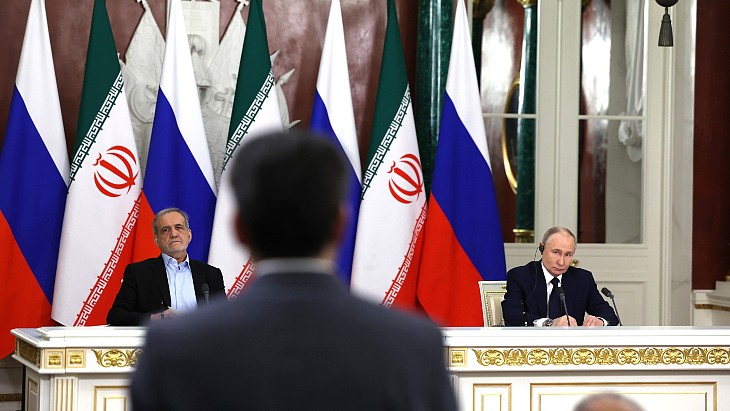
Russian President Vladimir Putin has said that progress on two reactors under construction is "going well" and the two countries are "now discussing the possibility of building additional units".
(Image: Kremlin)
The comments came during a joint press conference following talks with Iran's President Masoud Pezeshkian in Moscow and the signing of a Comprehensive Strategic Partnership treaty.
Putin said: "Energy remains a crucial area of Russian-Iranian cooperation. The flagship joint project for the construction of two new units of the Bushehr nuclear power plant by Rosatom is making strides. Once implemented, this project will undoubtedly make a weighty contribution to enhancing Iran’s energy security, spur national economic growth, and provide affordable and environmentally friendly electricity for Iranian households and industrial enterprises."
Later, when asked more generally about energy links and "challenges" faced, he referred to gas supply volumes, saying "we believe we should start small with up to two billion cubic metres, but with an option to eventually increase annual shipments to Iran to up to 55 billion cubic metres of gas. The oil sector also offers opportunities for cooperation. We operate a major nuclear project. One unit is operational and things are going well, and we are now discussing the possibility of building additional units. Indeed, we have to push certain deadlines back, mainly due to payment and settlement issues. This is no secret.
"Nevertheless, work is being done and progress is being made. Thousands of people are working on these sites, with approximately 80% of the construction being carried out by local contractors. It is a massive and major effort, and we are moving forward despite some issues that need our attention. This is precisely why we get together to address such issues."
In the transcript of the press conference published by the Kremlin, Iran's president does not directly mention cooperation on nuclear energy, but does say that the treaty would lead to "expanded opportunities for the advancement of our bilateral relations ... particularly in trade and economic interactions between Iran and Russia".
The first unit at the Bushehr plant, which was connected to the grid in 2011, has generated more than 70 billion kWh and according to Russia's official Tass news agency, Rosatom Director General Alexey Likhachev told reporters at the Kremlin event that construction of the second and third units continues "despite the sanctions and pressure" and, according to Iran's Islamic Republic News Agency (IRNA), he said negotiations for the construction of another nuclear power plant in Iran would begin "in the near future". He said there would also be cooperation on potential small modular reactors.
A Russian-designed VVER unit with a capacity of 915 MWe is already in operation at Bushehr, on the Persian Gulf coast. Two further units featuring VVER-1000 units are under construction - unit 2, which had first concrete poured in 2019 and the core catcher installed last year, had a scheduled installation of its reactor pressure vessel "30 months later", and physical start-up scheduled "55 months later", which would suggest 2029. That timeline was outlined by Iran at an event at the International Atomic Energy Agency's General Conference last September, when it as also said that the plan was for first concrete for unit 3 in the last quarter of 2024.
According to IRNA, the Head of the Atomic Energy Organisation of Iran, Mohammad Eslami, said last week that the country had a target of having 20 GW of nuclear capacity by 2041, and that they were now in the "construction and operational" phase of the project for the second and third units at Bushehr.
Westinghouse reaches agreement on IP with Korean companies
Friday, 17 January 2025
Westinghouse, Korea Hydro & Nuclear Power and Korea Electric Power Cooperation plan to collaborate on the deployment of new nuclear reactors around the world after agreeing to settle their intellectual property dispute.
A plant comprising two APR1400 reactors (Image: KHNP)
Westinghouse filed a case in October 2022 with the District Court for the District of Columbia seeking to prevent Korea Hydro & Nuclear Power (KHNP) and its parent company Korea Electric Power Corporation (KEPCO) from exporting the APR1400 reactor design without its permission. The suit claimed that the APR1400 design includes intellectual property licensed by Westinghouse and requires its permission before being transferred for use in other countries.
In response, KHNP filed countersuits calling for Westinghouse to withdraw the case. It claimed that the US Atomic Energy Act grants authority to enforce the law exclusively to the US Attorney General and not to entities as a means of claiming rights through litigation.
In September 2023, the District Court for the District of Columbia accepted KHNP's argument and dismissed the case. However, a final ruling by the arbitration panel is not expected until late 2025.
Westinghouse has now announced a global settlement agreement with KEPCO and KHNP to resolve their intellectual property dispute. While details regarding the terms of the settlement remain confidential, Westinghouse said it "will work with KEPCO and KHNP to dismiss all current legal actions".
"This agreement allows both parties to move forward with certainty in the pursuit and deployment of new nuclear reactors. The agreement also sets the stage for future cooperation between the parties to advance new nuclear projects globally," Westinghouse said.
"Westinghouse is pleased to reach an agreement with KEPCO and KHNP on this important issue," said Westinghouse President and CEO Patrick Fragman. "As the world demands more firm baseload power, we look forward to opportunities for cooperation to deploy nuclear power at even greater scale."
"The two sides restored their traditional 50-year ties through this agreement," said KEPCO CEO Kim Dong-cheol. "Based on this, KEPCO can now take part in securing overseas nuclear power plant contracts more actively as the settlement resolves uncertainties due to legal conflicts."
KHNP President Hwang Joo-ho added: "This agreement will serve as an opportunity to build a closer cooperative relationship between KHNP and Westinghouse."
Canada's Cameco, one of world's largest providers of nuclear fuel, acquired Westinghouse in 2023 in a strategic partnership with Brookfield Asset Management and its affiliate Brookfield Renewable Partners and institutional partners.
"This is a positive outcome for both parties, which we believe facilitates bringing world-leading reactor technology and related competencies in engineering, construction services, maintenance, fuel supply, and training to the global market," said Cameco President and CEO Tim Gitzel.
"With more than 30 countries and over 100 companies pledging to triple nuclear capacity by 2050, the demand for nuclear power is undeniable. This agreement strengthens the industry's ability to provide carbon-free, reliable, dispatchable baseload electricity to help achieve climate, energy and national security objectives."
The agreement comes days after the USA and South Korea signed an agreement covering exports of nuclear technology. The Memorandum of Understanding on Principles Concerning Nuclear Exports and Cooperation finalised a provisional understanding reached in November.
US Secretary of Energy Jennifer Granholm welcomed the agreement between Westinghouse, KEPCO and KHNP, saying it "marks an exceptional accomplishment which could pave the way for hundreds of billions of dollars in cooperative projects moving forward while creating and maintaining hundreds of thousands of jobs in the civil nuclear sector.
"US and Republic of Korea cooperation on civil nuclear energy can offer a highly competitive alternative on the global marketplace while upholding the highest non-proliferation standards. This commercial agreement, along with our signing last week of a government-to-government MoU on Principles Concerning Nuclear Exports and Cooperation, will promote civil nuclear energy cooperation as an exceptionally strong and enduring component of US–Republic of Korea relations."
In August 2024, Korea Hydro and Nuclear Power was selected by the Czech government as its preferred bidder to build up to four new nuclear power units in the country. South Korea's APR1000 nuclear power plant is based on original technology from Westinghouse.
French-Italian collaboration on SMR deployment
Friday, 17 January 2025
France's EDF, its Italian subsidiary Edison and Italy's nuclear research organisation ENEA have signed a Memorandum of Understanding to collaborate on the industrial applications of small modular reactors.
(Image: ENEA)
In particular, the collaboration will focus on the analysis of thermo-hydraulic systems and passive safety systems, new technologies, integral system operation and the opportunity to provide electricity and heat in cogeneration mode for industrial needs. The agreement also provides for training activities and exchange of know-how between researchers and PhD students.
"Thanks to our collaboration with ENEA, one of Italy's leading players in the field of new nuclear research, we are taking a further concrete step towards the use of new nuclear technologies to support the Italian industrial system, by pooling technical and scientific expertise, experience in the management of nuclear plants, and a forward-looking vision," said Edison Executive Vice President of Strategy, Corporate Development and Innovation Lorenzo Mottura.
Alessandro Dodaro, director of the nuclear department at ENEA - the Italian national agency for new technologies, energy and sustainable economic development - added: "The agreement with EDF and Edison will strengthen Italy's role in Europe in the development of innovative nuclear technologies, with the aim of supporting the Italian industry in penetrating the European SMR market and reinforcing ENEA's leadership in the field of innovative nuclear technologies, passive systems, and large-scale experimentation up to full-scale testing."
"This collaboration is a practical and effective way to overcome barriers to deploying small modular reactors in Europe," said EDF Group Chief Technical Officer and Head of EDF Research and Development Bernard Salha. "By leveraging our combined expertise and resources, we are committed to developing innovative solutions that will contribute to Europe's carbon neutrality goals. We look forward to working closely with ENEA and Edison to enable a decarbonised future for the industry."
In March 2023, EDF signed a Letter of Intent with Italy's Ansaldo Energia, Ansaldo Nucleare and Edison to assess potential industrial cooperation for the development of nuclear power in Europe, including in Italy, specifically in the field of SMRs. In particular, the companies plan to explore potential industrial cooperation, drawing on their respective skills.
In July last year, an MoU was signed between EDF, Edison, Federacciai, Ansaldo Energia and Ansaldo Nucleare aimed at promoting cooperation in the use of nuclear energy to boost the competitiveness and decarbonisation of the Italian steel industry. Through that MoU, the partners will consider co-investment opportunities in new nuclear energy and, in particular, in the construction of SMRs in Italy over the coming decade, making use of the SMR technology promoted by EDF, of Edison's expertise, and of the engineering and industrial capabilities of Ansaldo Energia and Ansaldo Nucleare.
Italy operated a total of four nuclear power plants starting in the early 1960s but decided to phase out nuclear power in a referendum that followed the 1986 Chernobyl accident. It closed its last two operating plants, Caorso and Trino Vercellese, in 1990.
In late March 2011, following the Fukushima Daiichi accident, the Italian government approved a moratorium of at least one year on construction of nuclear power plants in the country, which had been looking to restart its long-abandoned nuclear programme. In May 2023, the Italian Parliament approved a motion to urge the government to consider incorporating nuclear power into the country's energy mix. Italy's government included potential new nuclear capacity in its National Integrated Energy and Climate Plan, which was submitted to the European Commission on 1 July 2024.
New York State looks to advanced nuclear
Friday, 17 January 2025
As New York Governor Kathy Hochul announces a master plan for advanced nuclear development, the state's energy research and development authority has joined Constellation on a grant proposal to help it pursue an early site permit for advanced nuclear reactors at its Nine Mile Point Clean Energy Center.
Governor Hochul delivers the 2025 State of the State address (Image: Governor Kathy Hochul)
The creation of a Master Plan for Responsible Advanced Nuclear Development in New York is part of a USD1 billion proposal to achieve a "more sustainable and affordable future in New York State" was included in Hochuls' 14 January State of the State address. It will be guided by the newly published Blueprint for Consideration of Advanced Nuclear Energy Technologies from the New York State Energy Research and Development Authority (NYSERDA). The Blueprint - which was itself drawn up following public comments on a draft released at the Future Energy Economy Summit in September - envisages that the process to develop the Master Plan will take place over 2025 and 2026 and include opportunities for stakeholder involvement. A completed Master Plan is expected to be published by the end of 2026.
New York State will also co-lead a multi-state initiative facilitated by the National Association of State Energy Officials and the US Department of Energy (DOE) Office of Nuclear Energy Gateway for Accelerated Innovation in Nuclear (GAIN) on advanced nuclear energy, anticipated to launch in February 2025, and support Constellation Energy Corporation in pursuing federal planning grant funding to support the exploration of the addition of one or more new advanced nuclear reactors at Nine Mile Point, NYSERDA said.
NYSERDA’s cost-share funding is a critical first step in helping to determine whether new nuclear can become a reality in New York, Constellation said. If granted, the DOE funding would be used to seek an early site permit for Nine Mile Point, which would approve the site for future development of a nuclear power plant. The permit is valid for up to 20 years, and the company can apply for a construction and operating licence at any time during the permit period. Decisions from DOE on the awardees are expected in early summer.
Constellation’s president and CEO Joe Dominguez said the company appreciated Hochul's leadership and New York’s ongoing support for nuclear energy, which produces more than 20% of the state’s energy. "Constellation has previously worked with NYSERDA to develop leading clean hydrogen production and fuel cell technologies using nuclear power. Now, NYSERDA and Constellation are once again joining together with a commitment to explore advanced nuclear energy technologies and continue the meaningful progress toward New York’s clean energy and economic development goals," he said.
New York has already supported the continued operation of Constellation’s three so-called upstate nuclear facilities - Nine Mile Point, RE Ginna and James A Fitzpatrick - explicitly recognising the zero-carbon contribution of the plants in its 2016 Clean Energy Standard as critical in enabling it to meet its climate change targets. Nine Mile Point, in Oswego, is home to two operating boiling water reactors, where the company began operating a first-of-its-kind 1 MW demonstration scale, nuclear-powered clean hydrogen production facility in 2023.
Last year, NYSERDA released a Request for Information to gauge community interest in activities to develop advanced nuclear energy technologies in the state.
Investment agreement signed for Mongolian uranium project
Friday, 17 January 2025
The agreement between the Orano Group and the Mongolian government for the development and operation of the Zuuvch Ovoo uranium mine has been signed at a ceremony in Ulaanbaatar.
Representatives of the Mongolian and French governments as well as Orano CEO Nicolas Maes and Mining Business Unit Senior Executive Vice President Xavier Saint Martin Tillet witnessed the signature of the agreement on 17 January (Image: Orano)
Badrakh Energy, a joint venture between Orano and Mongolia's state-owned MonAtom Group, will be responsible for the industrial operation of the major Zuuvch Ovoo and Dulaan Uul/Umnut deposits, which Orano says have estimated uranium resources of close to 90,000 tonnes.
The agreement was signed following ratification by the Mongolian government.
Mongolia has substantial known uranium resources but there has been no uranium mining in the country since 1995, when mining of the Dornod deposit by a subsidiary of Russia's Priargunsky Industrial Mining & Chemical Union came to an end. Orano has been involved in uranium exploration in the Gobi Desert since 1997, which led to the discovery of the Dulaan Uul deposit in 2002 and the Zuuvch Ovoo deposit in 2010. The company says these deposits place Mongolia 12th in the world in terms of countries with the most uranium reserves.
The project will use in-situ leach (ISL, also known as in-situ recovery, or ISR) methods: pilot operations carried out at Zuuvch Ovoo over 2021-2022 have demonstrated the project's technical, economic and environmental feasibility. Development is planned to take 4 years. The project will have a nominal production capacity of around 2,500 tU per year over a 30-year estimated lifespan.
Initial investment will be around USD500 million before the project comes on stream, and a further USD1.6 billion will be invested over the mine's lifetime, Orano said. The mine is expected to create 1,600 direct and indirect jobs, and the project includes "significant investment" in the training of a qualified local workforce. Under the terms of the investment agreement, more than 51% of the direct benefits generated by the project, secured through taxes, dividends and royalties, will be received by the Mongolian state.
Orano CEO Nicolas Maes said the investment agreement lays the foundations for a mutually beneficial long-term relationship for Orano and its Mongolian partners. "Uranium production in Mongolia will contribute both to low-carbon electricity generation and security of supply for our customers," he said.
Prime Minister of Mongolia Oyun-Erdene Luvsannamsrai said the agreement supports economic growth and delivers on aims set out in the country's New Recovery Policy and Vision 2050. "This agreement is a significant step forward in boosting inward investment and employment opportunities for the Mongolian people," he said.
Zuuvch Ovoo is in Mongolia's southeastern Dornogovi province.
Brazil's INB gets approval for Caldas decommissioning
Friday, 17 January 2025
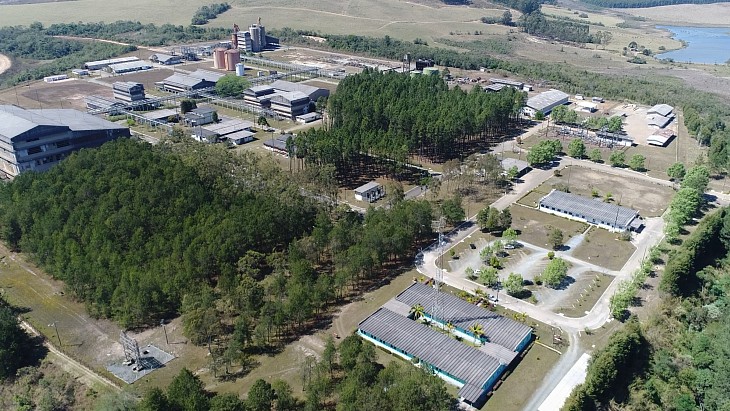
The first licence for the decommissioning of a uranium mine in Brazil has been issued to the Caldas Decommissioning Unit of Indústrias Nucleares do Brasil.
(Image: INB)
The licence has been issued by the Brazilian Institute for the Environment and Renewable Natural Resources (IBAMA), which is part of the country's environment ministry. Indústrias Nucleares do Brasil (INB) said the operating licence, issued on 14 January, followed in-depth analysis of the plans by specialists from the company and IBAMA.
Brazilian production of uranium began in 1982 in Caldas/Minas Gerais - it was the first ore extraction and processing unit in the country - and supplied the needs of the Angra 1 plant for 13 years before closing production in 1995 because of market conditions.
INB President Adauto Seixas said that obtaining the licence was "further evidence of our commitment to decommissioning, transparency and sustainable development" and ensures that the area of the unit in Caldas can be made available for other uses in the future.
INB said the next steps involve publishing the operating licence and "managing the requirements broken down into conditions in the license itself, to advance the decommissioning of the unit".
The Caldas Decommissioning Unit (UDC) covers an area of 1360 hectares. INB announced in September 2023 that the first stage of building demolition had been completed with 12 buildings demolished at the deactivated industrial plant, including offices, warehouse changing rooms, boiler control house and the water treatment plant control house. At that time, 500 tonnes of scrap metal had been disposed since 2019 during the decommissioning process.
The construction of Hinkley Point C and Sizewell C nuclear power plants is facing significant delays and cost overruns, jeopardizing the UK's energy security.
Sellafield Ltd's cybersecurity failings have raised concerns about the safety and security of the UK's nuclear industry.
The UK government's ambitious plans to expand nuclear power are facing criticism due to the high costs and potential impact on taxpayers.
As the U.K. government doubles down on plans to develop the country’s nuclear power industry following decades of neglect, severe delays and cost increases are hampering progress. Delays and rising costs at the Sizewell C and Hinkley C nuclear projects have drawn public criticism, while concerns over public safety have been brought into question due to cybersecurity failings by Sellafield Ltd. While public support for nuclear power is at its highest level in decades, these failings could hinder the development of a strong nuclear power industry in the U.K.
Hinkley Point C in Somerset, in the Southwest of England, is the first commercial nuclear power station to be constructed in the U.K. since the mid-1990s. The project started over a decade ago and, in that time, costs have risen over and over again, sending it over budget and causing delays. The project, being led by Électricité de France (EDF), is now expected to take several more years to complete. Around 11,000 workers are employed by EDF to get Hinkley up and running, and while operations were set to commence in 2027, EDF said in 2022, it now looks like 2030 or 2031 could be a more likely start date. This additional delay is expected to increase the cost of the plant by billions.
Sizewell C, which is being developed by EDF in Suffolk, in the East of England, has doubled in cost since initial 2020 plans, to almost $49 billion, according to claims in a recent report. This price increase is attributed to the rise in construction materials and inflation, among other factors. EDF is currently in discussions with the government about how to fund the additional project costs. A recent report from the court of auditors advises that EDF seek new investors for Hinkley C before it makes a final investment decision on Sizewell C.
The U.K. government and EDF currently plan to fund 40 percent of Sizewell C, which is expected to power as many as six million homes once operational. The government is seeking financing from private investors to fund the remaining 60 percent of the development. A final funding decision is expected to be made at the government’s review of public spending in June. At Hinkley, the agreement with the government states that EDF will only begin to earn revenue once the plant is operational, which has put greater financial constraints on the French firm. A different agreement is expected for Sizewell C to reduce this financial burden on EDF.
The Labour donor and green energy entrepreneur Dale Vince has criticised the government’s funding plan, stating, “If Hinkley Point C is anything to go by, Sizewell C really should have rigorous financial scrutiny.” Vince explained, “Originally priced at £18 billion ($22 billion), the cost of Hinkley has ballooned to £46 billion ($56 billion) and then there’s the delays. Back in 2007, the then EDF chief executive Vincent de Rivaz said that by Christmas 2017 we would be using electricity generated from atomic power at Hinkley. We’re now in Christmas 2024 and Hinkley isn’t due to be completed until 2031.”
Many are concerned about the U.K.’s lack of experience in nuclear power after decades of no new development. Nuclear power plants are extremely complex to build and due to the lack of development over the past 30 years, Britain no longer has the right skills and contractors to support construction.
Simon Taylor, a professor at the University of Cambridge’s Judge Business School believes that “The U.K. and the U.S. have, in a sense, forgotten how to build nuclear power stations.” Taylor explained, “We may rebuild that knowledge, but it will take a long time.”
The long delays faced at Hinkley are forcing four of the U.K.’s oldest nuclear power plants to continue running for over a decade longer than previously planned to help bridge the gap in delivering clean power. EDF has agreed to expand the lifespan of the reactors, once again, to “boost energy security and reduce dependence on imported gas”. The Heysham 2 nuclear reactor in Lancashire and the Torness nuclear plant in East Lothian, Scotland are now expected to continue operating for an extra two years to March 2030.
Meanwhile, Sellafield Ltd has been ordered to pay over $470,000 in criminal charges over years of cybersecurity failings at its nuclear site in Cumbria in the North of England. The company left information threatening national security exposed for four years, according to the industry regulator the Office for Nuclear Regulation (ONR). The ONR also found that 75 percent of Sellafield’s computer servers were vulnerable to cyber-attack. The company pled guilty to charges in October last year.
Despite ambitious U.K. government aims to provide abundant clean energy through the development of the country’s nuclear power sector, energy experts are concerned that the severe delays and cost increases on new nuclear projects could compromise the green transition and end up costing taxpayers billions in additional costs. Meanwhile, cybersecurity failings by Sellafield Ltd have cast a dark shadow on the industry, meaning the government must quickly reassure the public of the benefits of developing the U.K.’s nuclear power over the coming decades.
By Felicity Bradstock for Oilprice.com
Partnership to enhance UK-Canadian nuclear cooperation
Monday, 20 January 2025
The Advanced Nuclear Research Centre at the University of Strathclyde has signed a memorandum of understanding on cooperation with the Candu Owners Group and the University Network of Excellence in Nuclear Engineering.
(Image: COG)
The Advanced Nuclear Research Centre (ANRC) undertakes research and translation for industry-led projects and acts as a hub for all nuclear activities at the University of Strathclyde. The Candu Owners Group (COG) is a Toronto-based nuclear energy not-for-profit corporation whose members are nuclear operators who invest in achieving operational excellence through collaboration. The University Network of Excellence in Nuclear Engineering (UNENE) is a network of Canadian universities, industry, government and international institutions dedicated to excellence in nuclear science, technology and engineering.
Under the MoU, with a five-year renewable term, the three organisations will cooperate on nuclear engineering, science and technology initiatives in the areas of research and development, education and training, knowledge management, and nuclear operations support.
"International collaboration is key to building the capability and capacity to deliver the ambitious growth in nuclear energy that is essential to our energy security and net-zero imperatives," said ANRC Executive Director Daryl Landeg. "Canada and the UK are also uniquely well placed to play a leading role globally in the safe and secure exploitation of nuclear energy. This agreement will enable us to build lasting productive partnerships aligned with our shared goals to advance nuclear energy."
COG President and CEO Rachna Clavero added: "We are always seeking new opportunities to create value for our members, and this agreement supports advancement of industry-led projects while expanding our international network of expertise."
"UNENE sees great opportunity for each partner in this agreement as we have very strong common interests and objectives, and a history of successful collaboration," said UNENE President Jerry Hopwood. "Working together will bring tremendous scope for synergy and innovation, bringing UNENE universities together with industrial and academic partners."
Funding aims to scale-up medical use of UK nuclear 'waste'
Friday, 17 January 2025
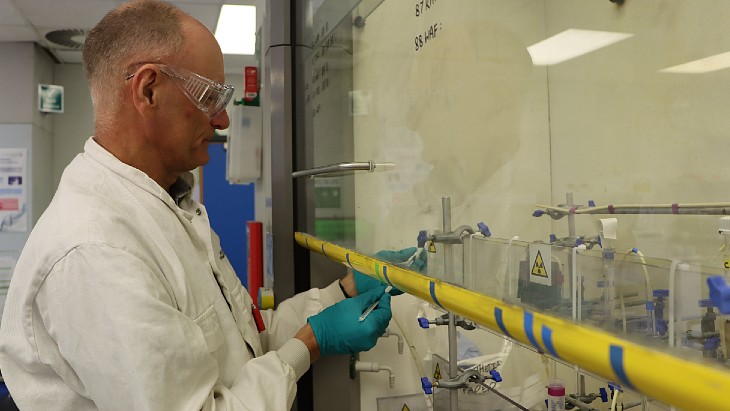
A project to develop the case for scaling-up the harvesting of lead-212 from reprocessed uranium for use in treating cancer has been selected for funding by UK Research and Innovation.
(Image: @UKNNL/X)
The UK's Medicines Discovery Catapult and UK National Nuclear Laboratory (UKNNL) will use the funding - they are among 15 projects sharing GBP1.3 million (USD1.6 million) - to "explore potential options for making the material available to researchers and drug development companies. The long-term aim is to enable commercial production and routine use within the NHS (National Health Service) for the benefit of patients and the development of a new community".
Targeted Alpha Therapy is an emerging form of high-precision targeted treatment which provides few side-effects, with particular interest in lead-212 which has a half-life of nearly 11 hours - as it decays its emissions can be used to target and destroy cancer cells without damaging the surrounding healthy tissue.
Professor Paul Howarth, UKNNL CEO, said: "For decades UKNNL has processed the uranium from our nuclear power plants, constantly developing new techniques and capabilities. The harvesting of lead-212 requires very specific chemistry and is the key focus of some of the scientists in our laboratory in Preston. To be able to use the skills and techniques that they have developed to save lives is an incredible legacy.
"This funding will help to clarify how lead-212 can progress to the next step, to provide life-saving therapies for cancers in patients in the UK and ensure that the next generation of scientists can continue this vital work. What is most remarkable is the fact that this uranium has already powered our homes, and it is now being reused to potentially save lives."
Professor Chris Molloy, CEO of Medicines Discovery Catapult (MDC), said: "Precision radiopharmaceuticals present a huge opportunity ... creating these new targeted treatments from toxic waste could transform patient outcomes and give the UK back its domestic radiochemical capacity to serve its patients. To do this, we must invest in the infrastructure necessary to produce the materials and run patient trials.
"Combining MDC’s specialised radiochemistry and drug discovery expertise with UKNNL’s nuclear prowess, this project will accelerate important research to secure a sustainable supply of radionuclides for medicines. Doing so will unlock the development of game-changing treatments for cancer and improve patient lives."
UKNNL has been collaborating with researchers to enable access to radionuclides for investigations into new treatments and diagnosis, including for cancer, Alzheimer's and complex heart conditions. Researchers are keen to get materials to test and develop new treatments, and scale-up treatments where trials have been successful.
There have been on-going discussions in the UK about how the valuable radioisotopes in the nuclear legacy material in the country can be recognised and influence future plans for the material.
This area of medical research and treatment is a rapidly growing area - in November Orano subsidiary Orano Med laid the foundations for its EUR250 million (USD264 million) Advanced Thorium Extraction Facility plant in western France, the world's first industrial plant dedicated to the production of thorium-228, a precursor of lead-212, for radioligand therapies. The aim is to supply all the ATLab (Alpha Therapy Laboratories) facilities set to manufacture lead-212-based drugs for patients worldwide.
You can hear more about UKNNL's work getting value from legacy nuclear material in last April's World Nuclear News podcast:
Global nuclear power leaders like Russia, China and the US are channelling investments into new nuclear technology, which might help Africa fulfil their future energy needs, writes Scott Firsing.
By 2050, global electricity usage is projected to surge by as much as 75 per cent, driven by technological advancements and population growth. With Africa’s population expected to reach 2.5 billion by the middle of the century, the continent requires an energy revolution to meet demand in which nuclear power could play a pivotal role.
However, the sole commercial nuclear power plant currently operational in Africa is the Koeberg Nuclear Power Station nestled just outside Cape Town, South Africa. Built in the 1970s by the French Consortium Framatome and Alstom, Koeberg’s two units were recently operationally extended for another 20 years, until 2044. The plant will continue to be a cornerstone of South Africa’s energy mix.
Globally, there are 440 nuclear reactors in 32 countries that are connected to electrical grids, providing a model for what’s possible. America leads with 94 reactors, followed by China (58), France (57), and Russia (36). These countries are not only managing their own energy needs but are also playing a pivotal role in exporting nuclear technology to Africa.
Who’s next in line in Africa to go nuclear?
The next taxis off the rank look set to be Egypt and Ghana, which are actively engaging with global nuclear leaders. In recent years, Russia and China have ramped up their involvement in Africa’s nuclear sector, especially in uranium mining. Russian company Rosatom hold about 70 per cent of the global market for building new nuclear plants, is at the forefront. They are financing and currently constructing Egypt’s El Dabaa Nuclear Power Plant located on the Mediterranean Sea, which will be Africa’s second operational nuclear facility. This £23.6 billion project featuring four VVER-1200 units, marks a significant step forward. In March 2024, work began on El Dabaa’s first tier of the inner containment building for the first unit. Construction is on track to see its first stage completed by 2028.
Meanwhile, Ghana has taken a different path, opting for US innovation over Russian giants. In August 2024, Ghana awarded the contract for its first nuclear power plant to the US company NuScale Power, introducing Africa to its first advanced commercial light water Small Modular Reactor. This move is part of a broader trend towards embracing advanced nuclear technologies that promise lower costs and more flexibility in powering remote or smaller-scale operations. Future challenges and opportunities
There are several other African countries currently in various stages of planning to incorporate nuclear power into their energy grids, but the realisation and scale of these projects remain uncertain.
Uganda serves as a notable example. In September 2019, Russia and Uganda signed an intergovernmental agreement on cooperation in the peaceful use of nuclear energy. However, in March 2023, Uganda announced plans to generate 1000MW from nuclear power by 2031 with assistance from China. Then in August 2023, Ugandan President Yoweri Museveni indicated a change in strategy, selecting Russia and South Korea to construct two nuclear power stations capable of generating over 15,000MW aiming to also export electricity to neighbouring countries. This plan was further confirmed in November 2024 when Foreign Minister Abubaker Jeje Odongo announced intentions to start negotiating with Russia for the construction of these facilities.
Across Africa, there’s a growing interest in nuclear energy, evidenced by almost monthly press releases and agreements. Zimbabwe has agreed to cooperate with Russia in building small nuclear reactors, as stated by Energy Minister Edgar Moyo. Burkina Faso, Mali, and South Africa have recently signed agreements with Russia for nuclear energy development.
Overall, the narrative around nuclear power has evolved over the last decade, with increased interest driven by both economic development and environmental considerations. The International Atomic Energy Agency has been instrumental with its support, recently providing legal assistance to Kenya and Uganda in their bids to become nuclear newcomers and in October 2024, focused on enhancing nuclear education in African universities to cultivate the next generation of nuclear scientists.
However, the financial aspect poses significant challenges. To put this into perspective, Rwanda’s entire annual GDP is £10 billion. Constructing a nuclear power plant of the size Egypt is planning would cost £24 billion.
With this said the introduction of SMRs could be particularly advantageous for Africa. There are options that can reduce the impact of initial capital costs. These reactors also offer scalable solutions that can be adapted to the diverse energy needs of African countries, whose geography and population distribution vary considerably.
We are seeing more and more government support for advanced nuclear technology like SMRs and ultra-compact nuclear microreactors, which designed to power remote locations like industrial sites and AI data centres or even small towns while providing power away from large grid systems.
The presence of substantial uranium resources in countries like Niger, South Africa, and Namibia further supports Africa’s nuclear development.
Despite these advancements, the hurdles of high costs, long construction periods, and the need for extensive human resources are substantial. In certain instances, nuclear energy may not represent the most viable solution for a particular African nation. Nevertheless, only time will reveal the extent to which energy generated by nuclear reactors will integrate into Africa’s electrical grids in the years ahead, although it is anticipated to surpass current levels. Photo credit: Mark H used with permission CC BY-NC-ND 2.0
About the author Scott Firsing Scott Firsing PhD is a US-Africa expert and a former International Relations Professor. He is the current President of Scott Sky Advisors, a global aviation and aerospace consultancy based in Austin, Texas USA. Dr Firsing is also a Senior Research Associate at the Institute for Global Dialogue in Pretoria South Africa associated with UNISA.
_74743.jpg)

_34667.jpg)
_80870.jpg)
_69729.jpg)
_24176.jpg)
_98827.jpg)
_20849.jpg)

_43068.jpg)