Saturday, March 28, 2026

POOR LIL' MARCO

Rubio snaps at diplomat who dared ask why US is soft on Russia — then denies it: report

Daniel Hampton
March 27, 2026 
RAW STORY
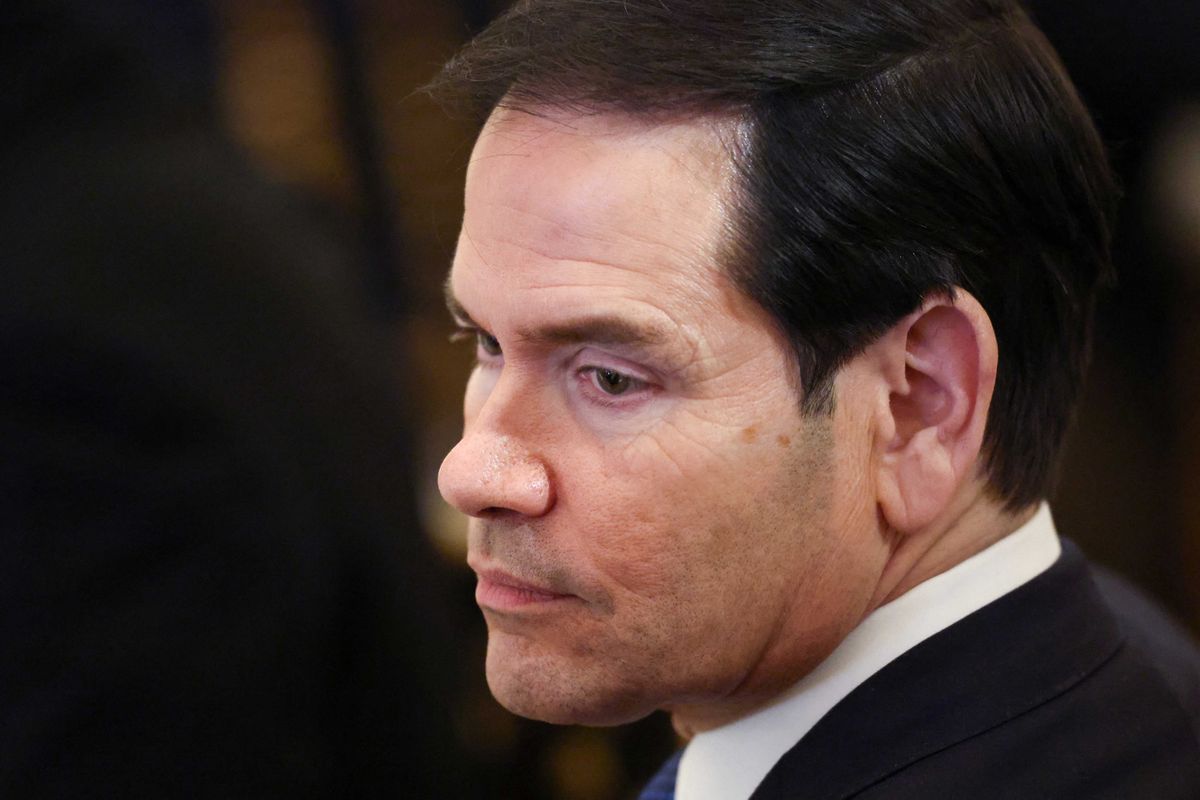

Secretary of State Marco Rubio attends a dinner for Japanese Prime Minister Sanae Takaichi at the White House in Washington, D.C., on March 19, 2026. REUTERS/Kevin Lamarque


Secretary of State Marco Rubio lost his cool at a G7 foreign ministers meeting Friday after the European Union's top diplomat publicly called him out over the Trump administration's failure to pressure Russia over Ukraine — then lied to reporters about it afterward, according to a report that cited sources who witnessed the exchange.

EU foreign policy chief Kaja Kallas, a prominent Russia hawk and former Estonian prime minister, turned to Rubio during a discussion of Ukraine and reminded him of a promise he had made at the same forum a year earlier that the U.S. would run out of patience and take stronger steps against Moscow if Russia obstructed peace efforts.

"A year has passed and Russia hasn't moved," Kallas told Rubio, according to three sources who attended the meeting. "When is your patience going to run out?"

Rubio, visibly annoyed, fired back.

"We are doing the best we can to end the war," he shot back, raising his voice. "If you think you can do it better, go ahead. We will step aside."

Several European ministers in the room intervened to urge the U.S. to stay engaged in Russia-Ukraine diplomacy. Rubio and Kallas later held a brief private conversation to cool tensions, two sources said.

Then Rubio walked out and told reporters none of it happened.

"These meetings are oftentimes about thanking America for the role we played... and appreciation for the mediating role we've tried to play in this war between Russia and Ukraine," he said. "No one there screams or raises their voices or says anything negative."

The State Department called it "a frank exchange of views."


Iran war is Asia's Ukraine moment, rapid green energy rollout will accelerate

Iran war is Asia's Ukraine moment, rapid green energy rollout will accelerate
Asia is the most exposed to the crisis following the closure of the Strait of Hormuz. It was heavily dependent on fossil fuel imports but after the crisis is over it will pivot rapidly towards building out its renewables generation capacity. / bne IntelliNewsFacebook
By Ben Aris in Berlin March 27, 2026

Three quarters of the world's population live in fossil importing countries and bleed out at least 3% of GDP every year to import oil to run their cars and power plants. However, the rollouts of green energy are so rapid and have become so cheap that just the new renewable green energy capacity built in 2025 could cut most countries' imports by 70% according to a new report by EMBER.

Net importers spent $1.7 trillion in 2024. If fuel prices rise, this number rises. For every $10 per barrel increase in oil prices, global net import costs rise by around $160bn per year, EMBER reports.

But clean energy offers a permanent solution.

By not only scaling “electrotech” – EVs, renewables and heat pumps – much of that fossil fuels use could be replaced in road transport, heating, and power. “It would enable importers to cut their fossil fuel imports by 70%.”

“The global fleet of electric vehicles avoided oil consumption equivalent to 70% of Iran’s exports in 2025. Global solar growth in 2025 alone could displace gas-fired electricity equivalent to all LNG exports through the Strait of Hormuz that year.”

Asia, which imports 40% of its oil through the Strait of Hormuz, is the most exposed. Asia is now facing the same reckoning Europe did in the 2022 energy crisis; 80% of the oil and 90% of the LNG that transits Hormuz was bound for Asian markets and has come to a stop.

Fossil dependency is widespread

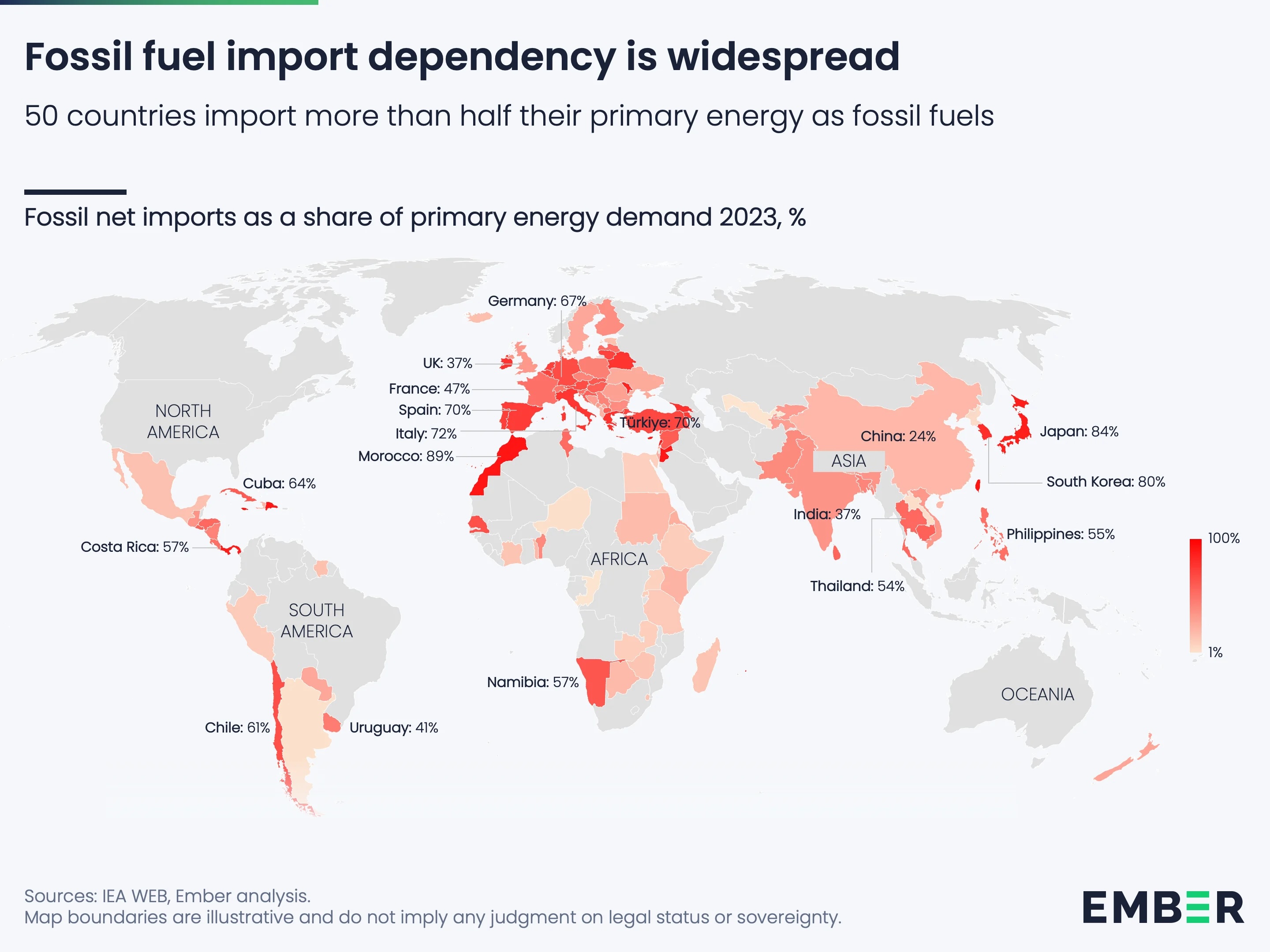
Three-quarters of the world’s population live in countries that are net importers of fossil fuels, according to analysis by Ember. Fifty countries import more than half of their primary energy in the form of fossil fuels, highlighting widespread dependence on external supply.

In Europe, Spain, Italy and Germany each import more than two-thirds of their energy needs. In Asia, reliance is even higher, with Japan and South Korea importing more than 80%. India imports 37%, while China imports about one-quarter of its energy.

The dependence leaves economies exposed when trade routes face disruption, particularly through key maritime chokepoints.

The financial cost is significant. Net fossil fuel importers spent $1.7tn on imports in 2024, reflecting the scale of global reliance on external energy sources.

Across 92 countries, representing two-fifths of the global population, net fossil fuel imports account for more than 3% of gross domestic product, underlining the economic burden associated with energy dependence.

LNG dependency is rising

At a global level, liquefied natural gas from the Gulf plays a smaller role than its oil exports. Gulf LNG accounts for less than 1% of global primary energy supply, compared with 9% for Gulf oil.

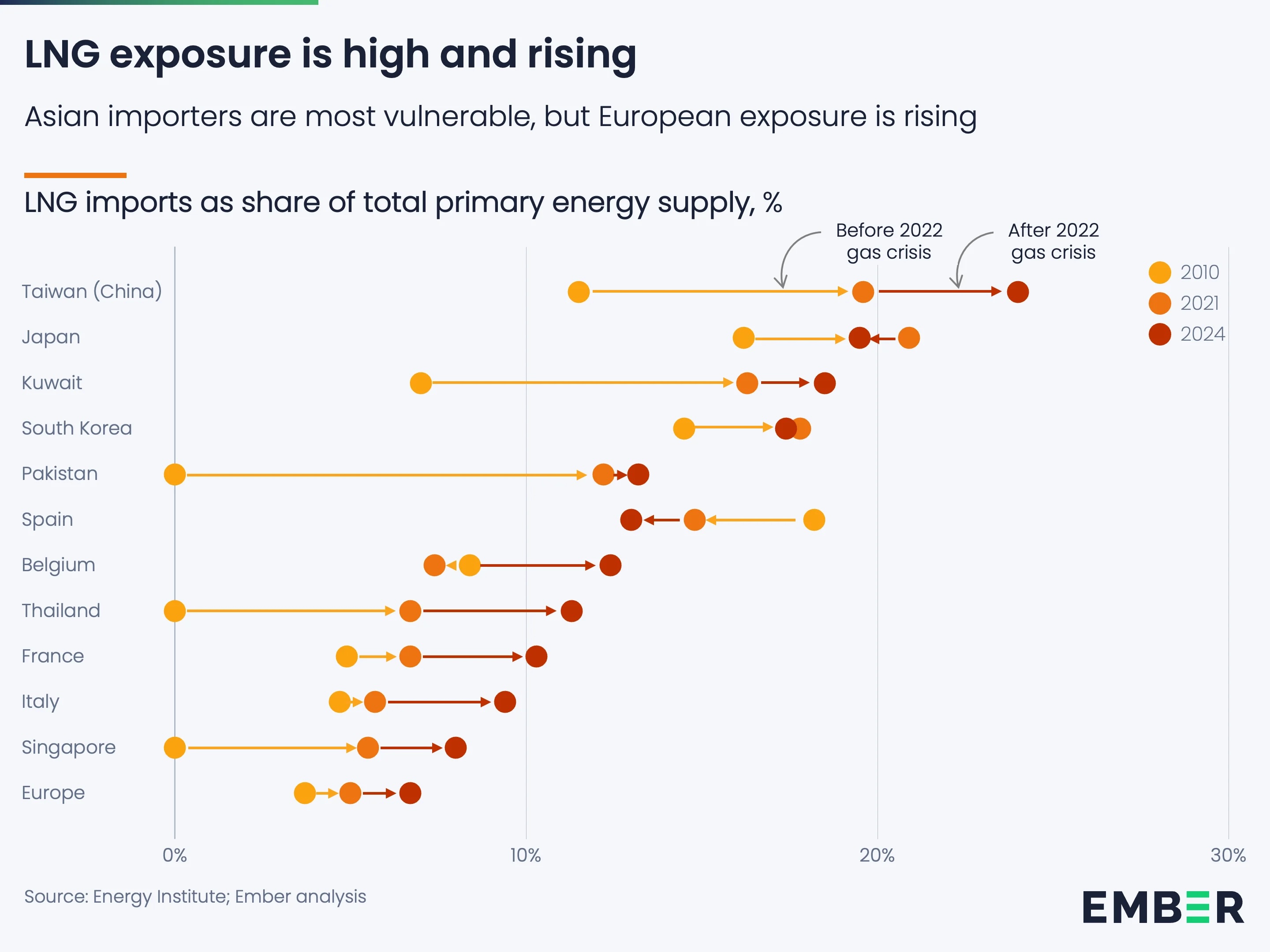
Exposure to LNG imports has, however, been increasing. Around 60% of the world’s population live in countries that are net importers of LNG, reflecting growing reliance on seaborne gas supplies.

In at least nine countries, LNG imports account for more than 10% of total energy supply. Taiwan is the most exposed, with LNG making up 24% of its energy mix, followed by Japan at 20% and South Korea at 17%.

In several markets, dependence on LNG increased following the Ukraine crisis, as countries sought to replace pipeline gas with imported supplies, heightening vulnerability to disruptions in key shipping routes such as the Strait of Hormuz.

Eletrotech solution

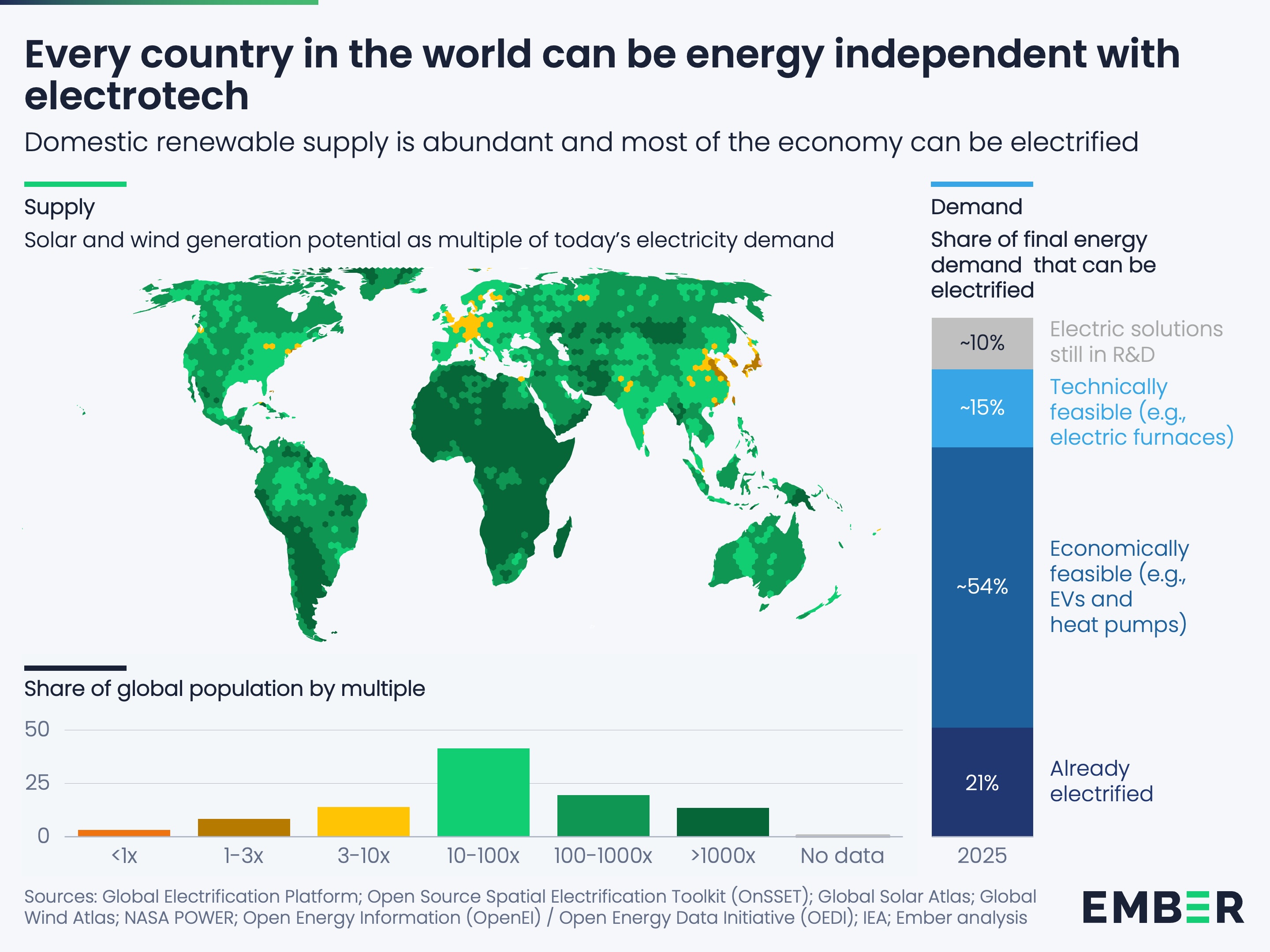
Electrification technologies could enable countries to significantly reduce dependence on imported fossil fuels, with proven solutions already available at scale. More than three-quarters of the global economy can be electrified using existing technologies, while all countries have sufficient wind and solar resources to meet that demand domestically.

“Three levers do the bulk of the work. Solar and wind replace imported fossil-fuelled power generation. Electric vehicles replace imported oil in road transport. Heat pumps replace imported gas and oil in heating. If all three were scaled to replace imported fossil fuels in their respective sectors, importers could reduce their bill by around 70%.”

Electric vehicles are already price-competitive with internal combustion engine cars and widely available. Replacing imported oil used in road transport with EVs could cut import bills by more than one-third, equivalent to around $600bn a year.

Solar technology costs have declined sharply. Panel prices have halved since 2022, while annual installations have nearly tripled over the past four years. Battery prices have fallen by 36%, and annual deployment of grid-scale batteries has increased sevenfold. The combined cost of dispatchable solar power — including panels and storage — has fallen to $76 per megawatt hour for countries importing equipment without tariffs.

“The growth in global solar generation in 2025 alone could displace gas-fired electricity equal to all LNG exported through the Strait of Hormuz that year. In 2025, 82mn tonnes of LNG went through the strait; used in gas power plants that could generate about 600 TWh of electricity. The IEA calculated that global solar generation rose by more than 600 TWh in 2025.”

Beyond the immediate shock, this crisis will reshape energy markets in three ways:

Asia’s Ukraine moment: Russia’s invasion of Ukraine that began in 2022 galvanised Europe into action to reduce its dependency on Russian fossil fuels. Four years later, the US-Israel war with Iran will inspire Asia to reduce its dependency on imported oil and gas.

LNG demand growth in Asia is over: there is a battle between gas and solar for the future of electricity generation in Asia. At a stroke, this war has dramatically weakened the case for LNG.

Peak oil sooner: A decade ago, IEA saw no oil peak demand before 2050 at all. Then it forecasted the late 2030s, and then 2030. Its latest forecast put it at 2029, at around 106mn barrels per day (mbpd), not much above 2025 levels of 104 mbpd.

Nepal arrests former prime minister and home minister over deadly 'Gen Z protests' crackdown

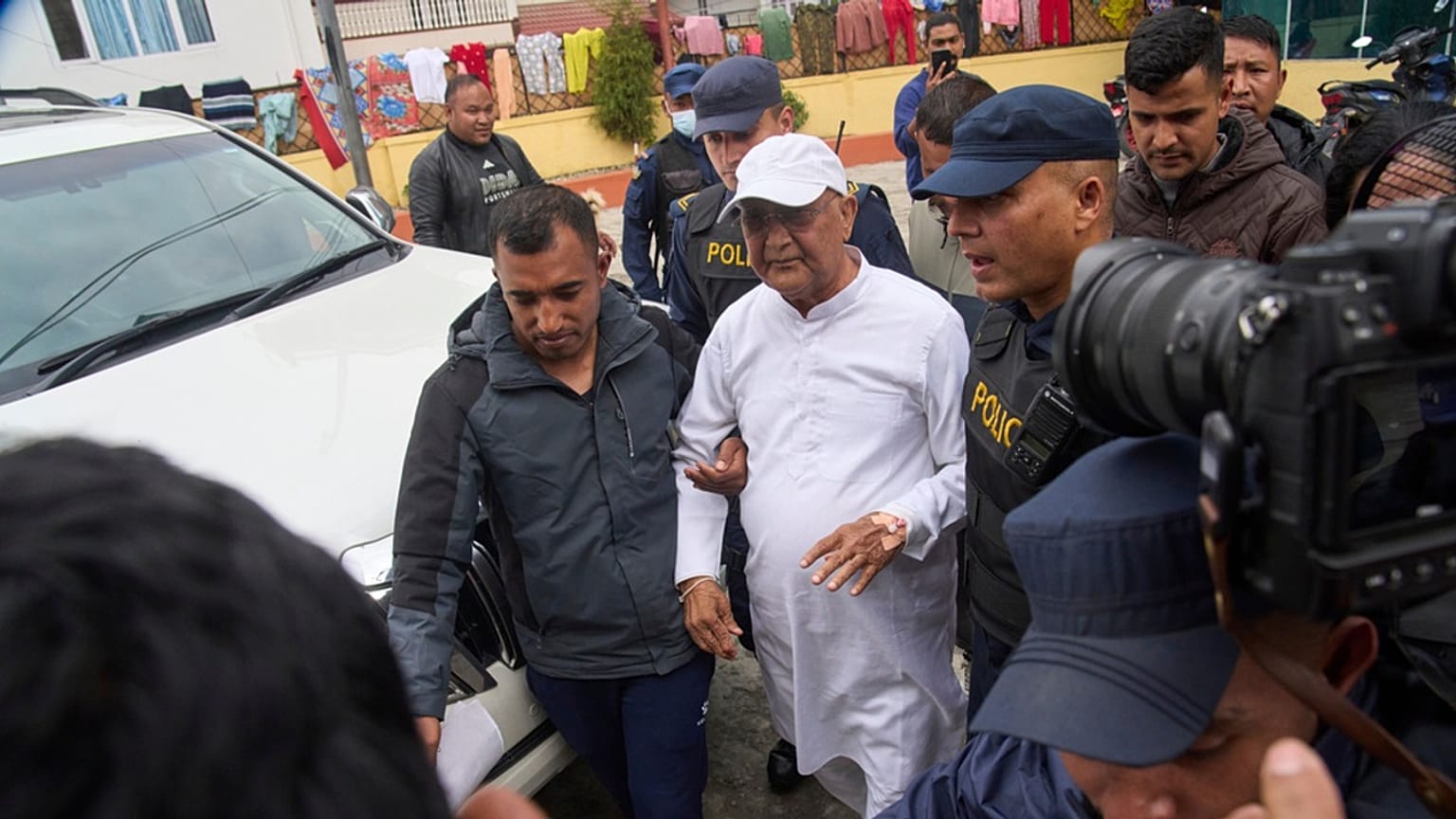
Former Prime Minister Khadga Prasad Oli is taken for procedural medical checkup after he was arrested by police in Kathmandu, Nepal, Saturday, March 28, 2026
Copyright AP Photo/Niranjan Shrestha

By Malek Fouda
Published on 

Hours after the country's youngest ever leader was sworn in, Nepal police have arrested the former prime minister and home minister over a deadly crackdown on protests in September last year, which killed 76 people and injured at least 2,300 others.

Police in Nepal have arrested former Prime Minister Khadga Prasad Sharma Oli early on Saturday over the deaths of dozens of people during violent protests that toppled his government and resulted in new elections.

Authorities arrested the powerful communist leader at his residence on the outskirts of the capital Kathmandu. They also arrested Ramesh Lekhak, the former home minister who has been accused of ordering authorities to fire on protesters.

Incumbent home minister Sudan Gurung announced the arrests on social media.

“No one is above the law. We have taken former Prime Minister KP Sharma Oli and former home minister Ramesh Lekhak under control,” Gurung said in a post on Facebook.

“This is not revenge against anyone, it is just the beginning of justice. I believe, now the country will take a new direction.”

An investigation by a commission set up by the government called for punishment of up to 10 years in prison for Oli, Lekhak and the chief of police at the time of the protests.

Several trucks of police officers in riot gear conducted the arrests at the men’s homes before taking them to the Kathmandu District Police office.

The arrests come a day after a new government headed by rapper-turned-politician Balendra Shah took office following a landslide win in parliamentary election earlier this month by his Rastriya Swatantra Party.

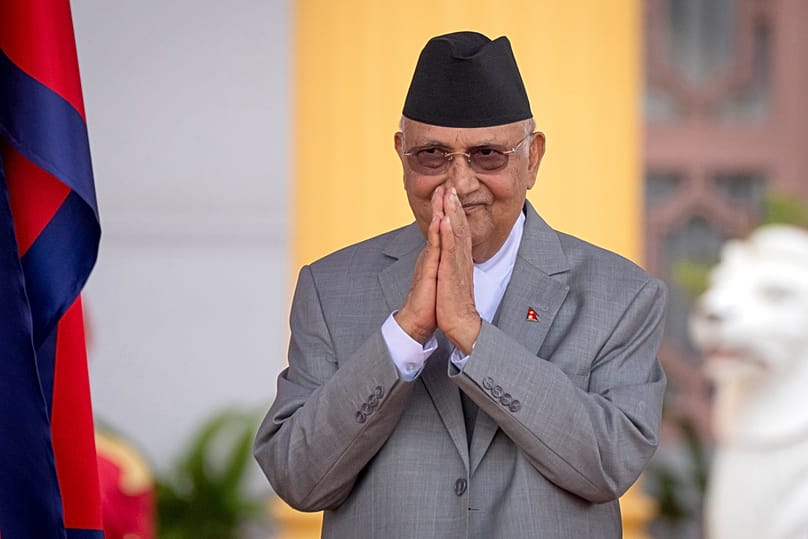
FILE -The then newly elected Prime Minister Khadga Prasad Oli greets after the oath of office in President residence in Kathmandu, Nepal, July 15, 2024 Niranjan Shrestha/Copyright 2024 The AP. All rights reserved.

Shah and Gurung have promised justice for those killed and wounded.

The election was the country’s first since the youth-led protests against corruption and poor governance on 8-9 September that left 76 people dead and more than 2,300 injured.

Angry mobs burned down the offices of the prime minister and president, police stations and the homes of top politicians who were forced to flee on army helicopters.

The demonstrations fuelled by “Gen Z” activists forced the 12 September appointment of Nepal’s first female prime minister, Sushila Karki, a retired Supreme Court judge who served during the transition leading up to the election.


A new era of quantum computing may pose threats closer than we think, Google warns

A golden quantum computer machine
Copyright Canva


By Roselyne Min
Published on 


Google says it is setting a timeline to migrate to post-quantum cryptography (PQC) by 2029, warning that action is needed before “a future quantum computer can break current encryption”.

A new era of quantum computing could challenge the foundations of online security sooner than many expect, Google says.

Cybersecurity experts have sounded the alarm for years about quantum computers becoming so powerful that they could break the public encryption systems that protect our online conversations, bank accounts, and most vital infrastructure, wreaking havoc on governments and businesses.

In a blog post, Google said that “quantum computers will pose a significant threat to current cryptographic standards, and specifically to encryption and digital signatures”.

Quantum computing is a technology that uses the principles of quantum mechanics to process information.

While it heralds unprecedented potential in improved performance for useful applications such as drug discovery, scientists have warned for decades that such immense computational power can also be used to break traditional encryption, which is central to keeping information confidential and secure on the Internet.

Google said it is setting a timeline to migrate to post-quantum cryptography (PQC) by 2029, urging other companies to follow suit. The company warns that action is needed before “a future quantum computer can break current encryption”.

“As a pioneer in both quantum and PQC, it’s our responsibility to lead by example and share an ambitious timeline. By doing this, we hope to provide the clarity and urgency needed to accelerate digital transitions not only for Google, but also across the industry.”

Today’s quantum computers are not yet capable of breaking encryption at scale. Their basic units, known as qubits, are still too unstable to handle large-scale decryption.

But Google warns that data being generated today could still be at risk in the future. One concern is a type of cyber attack known as “store now, decrypt later”, where attackers collect and store encrypted data now with the intention of decrypting it once powerful quantum computers become available.

Governments are increasingly urging companies to begin preparing for the shift, recognising that the transition will take time.

Countries including the United Kingdom, France, Germany, the Netherlands and the United States have all published strategies, guidelines or white papers outlining the risks and the need for action.

At the same time, the cryptographic community is developing new encryption methods designed to withstand quantum attacks, while countries are racing to build quantum network infrastructure, with China seen as one of the frontrunners.

The European Commission aims to have an operational pan-European quantum communication infrastructure in place by 2027 via its European Quantum Communication Infrastructure Initiative (EuroQCI).


Drought is fuelling antibiotic resistance worldwide, study finds

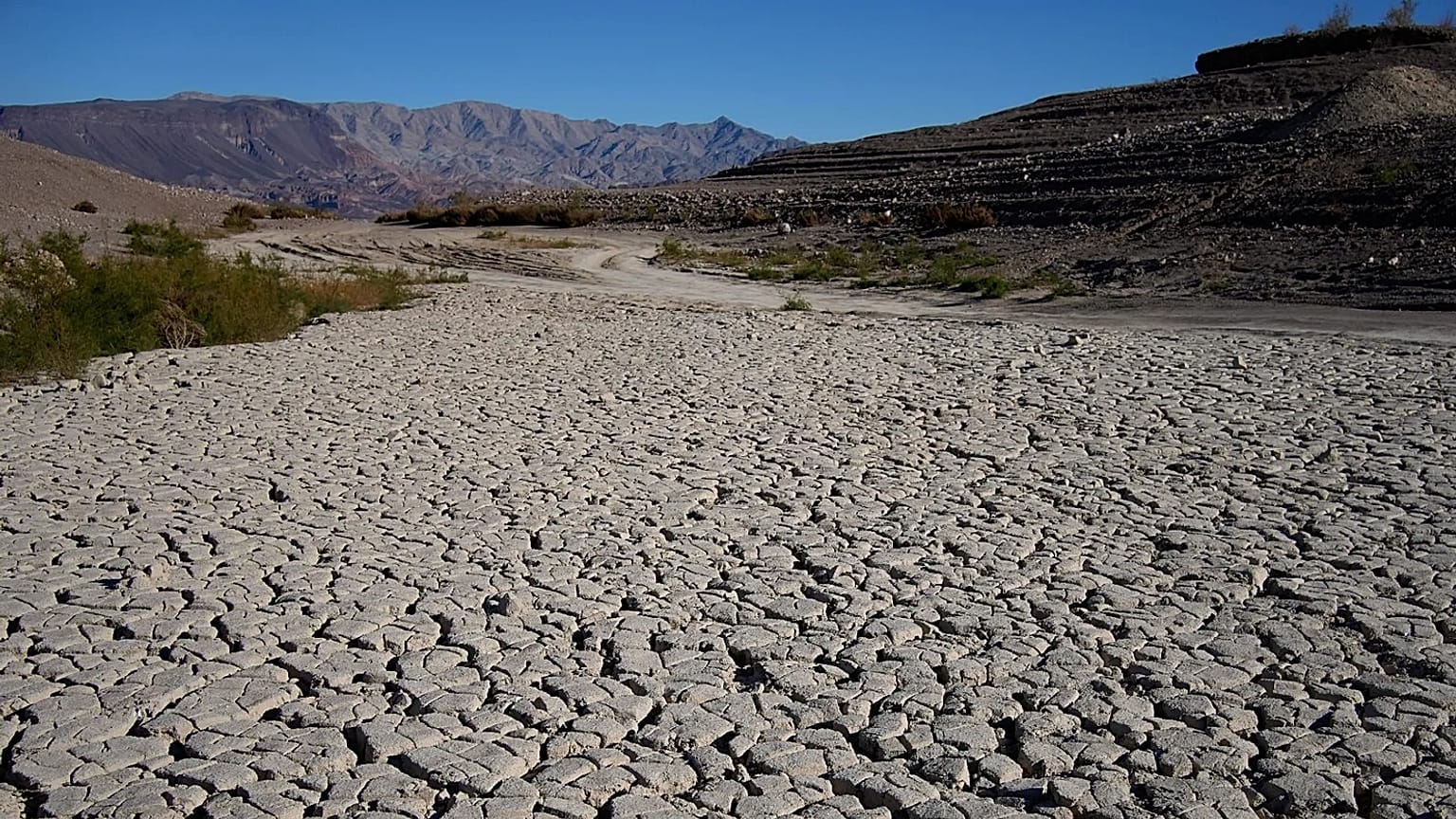
FILE - Cracked earth is visible in an area once under the water of Lake Mead
Copyright  Copyright 2023 The Associated Press. All rights reserved


By Marta Iraola Iribarren
Published on 

Drought concentrates antibiotic-resistant microorganisms in soil, raising concerns about the impact of climate change on public health, according to a new study.

Drought increases the concentration of antibiotic-resistant microorganisms in the soil, which can significantly impact public health, according to a new study.

The researchers at the California Institute of Technology (Caltech) in the United States wanted to answer one question: could changes to the natural environments where antibiotics originate be promoting resistance?

Their answer: regional aridity is strongly correlated with the prevalence of antibiotic resistance in clinical settings across more than 100 countries.

Antimicrobial resistance (AMR) is a growing threat responsible for more than 35,000 deaths every year in the European Union alone.

It occurs when bacteria, viruses, fungi, and parasites no longer respond to antimicrobial medicines. While it is a natural process that happens over time through genetic changes in pathogens, it is rapidly accelerating due to human activity, mainly the misuse and overuse of antimicrobials.

"Droughts are creating the same effects as overuse of antibiotics in the clinic: They both drive selection for antibiotic resistance," said Dianne Newman, professor of biology and geobiology at Caltech.

She added that the “striking correlation” discovered in the research motivates the development of better, faster diagnostics in clinical settings, as well as the development of novel therapeutic approaches.

Antibiotics were first discovered in experiments involving soil microorganisms as early as the 1940s, where natural products made by one soil organism were found to inhibit the growth of another, the authors noted.

While many of these natural products have since been modified and developed into the drugs that are prescribed today, soil remains one of the largest sources of new antibiotic producers — an environment so microbially rich that an estimated 99 percent of its microbial inhabitants cannot yet be cultured in a laboratory setting.

According to the researchers, although many antibiotics originate from soil microorganisms, how environmental changes to soil ecosystems might promote resistance is poorly understood.

Xiaoyu Shan, a postdoctoral scholar at Caltech and lead of the study, built a computational program to examine public datasets of microbial sequences in soil samples, looking for the genes that enable the production of diverse antibiotics.

Using clinical surveillance data from 116 countries and land datasets spanning the US, China, and Europe, and encompassing diverse land-use types – including cropland, grassland, forest, and wetland– the researchers found that the average frequency of hospital antibiotic resistance is strongly correlated with the local aridity index.

How does drought cause antibiotic resistance?

The study found that a key driving mechanism for resistance under drought is the concentrating effect: as soil dries out, the natural antibiotics present in it become more potent in the remaining moisture.

But drought also affects antibiotics in subtler ways. Research has shown that the physical stress placed on bacteria by dry conditions can alter how well antibiotics work against them.

Prolonged dry spells may also alter the degradation rates of certain antibiotics in soil, depending on the specific antibiotic; lower moisture levels can either slow down or speed up this process.

"We're interacting with soil all the time, whether it's recreational or simply by inhaling dust," Shan said.

"Importantly, bacteria are able to transfer genes to each other, and antibiotic-resistance genes are known to have a high rate of transfer. With trillions of bacteria in the environment, this is a substantial occurrence."

Why are these findings concerning?

Estimates are not optimistic regarding antimicrobial resistance and aridity worldwide.

“The strong correlation between aridity and clinical antibiotic resistance is concerning, given anticipated climatic changes,” the authors wrote.

Between 2025 and 2050, 39 million deaths are projected to be directly attributable to AMR, according to a 2024 study published in The Lancet.

At the same time, aridity projections suggest that as many as 5 billion people could inhabit drylands by the end of the century.

According to the researchers, the findings linking drought and AMR underline the importance of the One Health approach – the principle that guides health actions based on the interconnectivity of the health of humans, animals, plants, and the environment.

“As climate instability intensifies, such integrative approaches will be critical for anticipating and mitigating the global trajectory of antibiotic resistance,” the researchers noted.


Iran risks ‘going many years backward’ as environmental destruction threatens long-term health

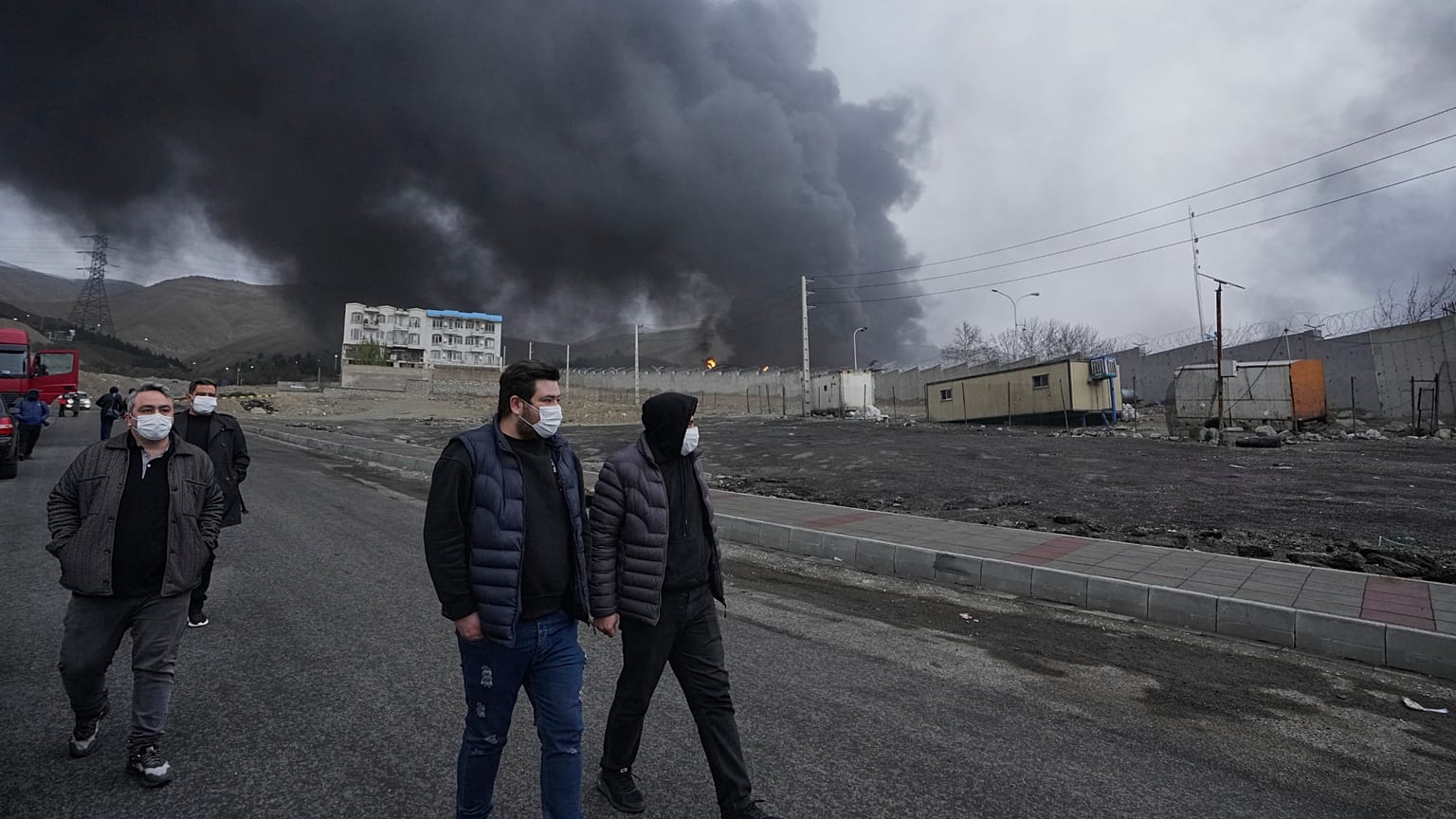
FILE - A thick plume of smoke rises March 8, 2026, from an oil storage facility struck overnight in Tehran, Iran.
Copyright AP Photo/Vahid Salemi, File


By Marta Iraola Iribarren with AP
Published on 

Attacks on gas fields, nuclear sites, and desalination plants are leaching toxic pollutants into air, soil, and water, that could impact health for decades, experts say.

Oil depots spewing black smoke. Debris is sinking in the Persian Gulf. Missiles are pounding military sites.

The Iran war has unleashed a toxic mix of chemicals, heavy metals, and other pollutants that threaten everything from agriculture to drinking water to people’s health – and will leave behind environmental damage and health risks that could persist for decades, experts said.

“All the burning of oil and gas fields in the coastal areas, all the ships that are there, the oil tankers that are being burned or [sunk] – all of these mean pollution,” said Kaveh Madani, an Iranian scientist and director of the United Nations University Institute for Water, Environment and Health.

“For someone like me who has fought for sustainability and protection of the environment in that region, this is like going many years backward,” he added.

Documenting the damage has proved daunting, with a full accounting impossible for now, noted Doug Weir, director of the Conflict and Environment Observatory, a United Kingdom-based nonprofit that monitors environmental harms from armed conflicts.

The group uses remote satellite sensing and open-source intelligence to identify damage and score environmental risks to people, ecosystems, and agricultural land.

So far, it has recorded more than 400 environmentally concerning incidents related to the war, though much is still unknown due to delays in satellite imagery and an internet blackout in Iran, Weir said.

The air pollution unleashed could lead to many health problems

Perhaps the most enduring images of the war are of darkened skies from oil infrastructure set ablaze by airstrikes, including two weeks ago when black rain fell near Tehran, Iran's capital.

Microscopic soot raises risks of lung and heart problems, while toxic chemicals pose long-term cancer risks, and heavy metals from the fallout could contaminate soil and water supplies, experts say.

Soot, ash, and toxic chemicals from strikes on fuel depots and a refinery combined with water droplets in the atmosphere and fell back to Earth as an oily, acidic rain that prompted warnings to stay indoors.

Debris and contamination from missiles, as well as potential strikes on manufacturing facilities and other infrastructure, also could unleash harmful pollution throughout the region, according to experts.

“If you hit an ammonia-producing plant for fertiliser or for food production... those release chemicals that are absolutely toxic and harmful if they spread,” said Mohammed Mahmoud, head of Middle East Climate and Water Policy with the United Nations University Institute of Water, Environment and Health, and founder of the Climate and Water Initiative.

Continued access to clean water is a big concern

Countries in the Persian Gulf region rely on hundreds of desalination plants for drinking water, raising health and security risks if plants are damaged or water is polluted, experts say.

People in the region "struggle with having access to clean drinking water, even at peace times," noted Madani, the Iranian scientist and UN official. “Any damage to water infrastructure can have long-lasting impacts.”

Iran has said a US airstrike damaged one of its desalination plants, while neighbouring Bahrain accused Iran of damaging one of its plants. Experts fear more could be targeted the longer the war goes on.

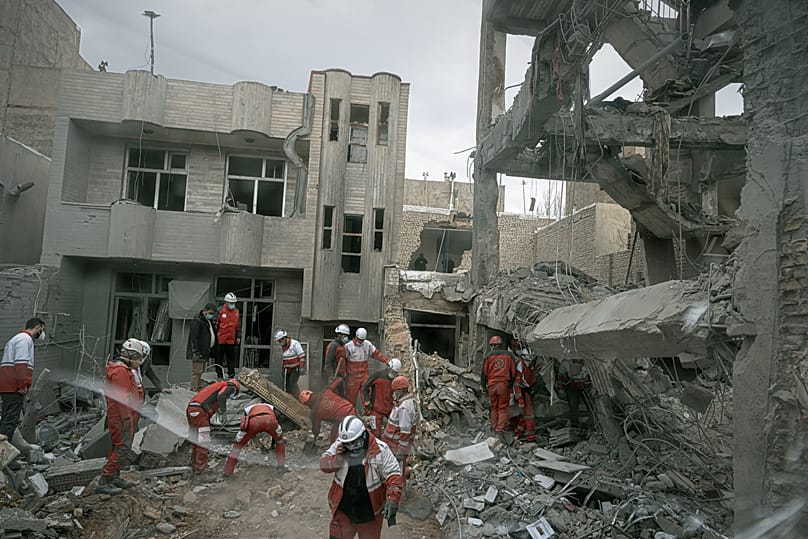
FILE - First responders inspect the remains of a residential building hit in an overnight strike during the U.S.-Israeli military campaign in Tabriz, Iran, March 24, 2026.
FILE - First responders inspect the remains of a residential building hit in an overnight strike during the U.S.-Israeli military campaign in Tabriz, Iran, March 24, 2026. AP Photo/Matin Hashemi, File

Addressing environmental damage could take decades

After the war, as Iran and other countries rebuild, environmental damage could be a low priority, experts say.

The focus will be on energy and water infrastructure, manufacturing plants, and food production facilities, according to Mahmoud. Some pollution, especially to the gulf or other waterways, “I doubt will be addressed soon, and in some cases, not at all.

In densely populated Tehran, for example, a huge number of strikes have hit not just oil infrastructure, but also buildings and residential areas, generating harmful contamination from pulverised building materials.

People are being exposed to dust and chemicals, which may continue for a long time after the war eventually ends and rebuilding begins.


Algeria continues to face questions over murder of French monks, 30 years on

Thirty years after seven French monks were kidnapped and killed in the Atlas mountains at the height of Algeria's civil war, a lawyer for the victims' relatives tells RFI an official investigation has yet to uncover the full truth.

Issued on: 27/03/2026 - RFI

An undated photo showing six of seven French Trappist monks who were kidnapped on the night of 26 March 1996 from a monastery in Tibhirine, some 100km south-west of Algiers. © AFP

On the night of 26 to 27 March 1996, seven monks were abducted from the monastery of Our Lady of Atlas in Tibhirine, south of Algiers, and later murdered. Only their heads were ever recovered.

The attack was claimed weeks later by the Armed Islamic Group (GIA), one of the main insurgent groups fighting the government at the time in the Algerian Civil War.

That remains the explanation accepted by Algerian authorities today. Yet families of the victims are not convinced all the facts have been laid bare.

"The Algerian authorities do not want the full truth to come to light," claims Patrick Baudouin, a lawyer representing the men's relatives.

"Algeria continues to stick to the version blaming the GIA, but the evidence casts doubt on the simplicity of that version."

Conspiracy theories

In the absence of inquiries in Algeria, relatives filed a civil claim in France, prompting Paris prosecutors to open a judicial investigation in 2004.

Since then, alternative theories have emerged.

One suggests a military blunder – that Algerian forces, tracking the kidnappers by helicopter, mistakenly killed the monks while they were being held hostage. Another posits that the GIA had been infiltrated by Algerian intelligence, and that the murders may have been orchestrated to discredit Islamist groups.

To date, however, no evidence has been uncovered that is strong enough to overturn the official account.

Stalled investigation

After resistance from the Algerian authorities, a team led by French anti-terrorism judge Marc Trévidic was finally allowed to travel to Algeria to pursue the investigation in 2013.

Via new samples collected from the monks' exhumed remains, forensic experts were able to establish that the men were decapitated after their deaths. A 2018 autopsy report stated that the monks died by having their throats cut, most likely in late April 1996.

Those findings have raised further questions, particularly as the monks’ bodies have never been found – a detail that continues to fuel suspicions of a possible cover-up.

Pope Francis meets Father Jean-Pierre Schumacher, the last survivor of the Tibhirine massacre, on 31 March 2019 in Rabat, Morocco. @ Alberto PIZZOLI / AFP

Today, the investigation remains open but is “largely at a standstill”, Baudouin says.

He is calling for more thorough investigations in Algeria, assisted by fuller cooperation from the authorities.

In the meantime, the Tibhirine monks have become a symbol of Christian sacrifice for the Catholic Church. In 2018, they were beatified near Oran alongside 12 other victims of the civil war.

In April, Pope Leo XIV is expected to visit Algeria for the first time and pay tribute to the 19 “blessed martyrs”.

This story has been adapted from the original in French by RFI's Sophiane Amazian.
Pope denounces widening gap between the rich and poor on Monaco visit

Pope Leo XIV on Saturday denounced the widening gap between the haves and have-nots as he visited Monaco, a millionaires' playground that is the surprise pick for the first western European trip of his papacy.


Issued on: 28/03/2026 - RFI

Pope Leo XIV (R) waves from the balcony next to Prince's Albert II of Monaco at the Prince's Palace of Monaco in Monte Carlo, Monaco, on March 28, 2026. 
AFP - VALERY 

Arriving by helicopter from Rome, the pope was greeted by Prince Albert II and Princess Charlene at Monaco's heliport.

The US-born pope, a former missionary critical of the wealthy elite, will start his trip at the Prince's Palace, the official residence of the Grimaldi dynasty.

Just after his arrival at the tiny principality on the French Riviera, Leo condemned what he termed the widening "chasms between the poor and the rich."

In an address in French from the balcony of the Prince's Palace, the American pope denounced "unjust configurations of power, structures of sin that dig chasms between poor and rich, between the privileged and the rejected, between friends and enemy."

He added wealth should serve "law and justice, especially at a historical moment when displays of force and the logic of omnipotence wound the world and jeopardise peace," in a clear reference to the growing number of conflicts across the globe.

Pope Leo XIV disembarks his helicopter upon arrival on the tarmac of Monaco Heliport in Monte Carlo, Monaco, on March 28, 2026. Pope Leo XIV heads to the Mediterranean principality of Monaco on the French Riviera that is the pontiff's surprise pick for the first western European trip of his papacy. AFP - GREGORIO BORGIA

Monaco is one of the few places in Europe where Catholicism remains the state religion, and it has long-standing diplomatic ties with the Holy See.

Though only around eight percent of citizens identify as practicing Catholics, church pews are one of the few places where billionaires, cleaning ladies and construction workers mingle.

In December last year, the pope visited Turkey, and according to the official Vatican News, the he will visit the African continent in April, where he will go to Algeria, Cameroon, Angola and Equatorial Guinea.

(With newswires)
Equatorial Guinea accused of docking wages to help fund Pope's visit

As Pope Leo XIV prepares to visit Equatorial Guinea next month, the country is reportedly relying on members of the public to help finance the trip – including by having money deducted from their salaries.


Issued on: 27/03/2026 - RFI

Pope Leo XIV celebrates mass during a visit to Beirut, Lebanon, on 2 December 2025.
 © Mohamed Azakir / Reuters

As part of his Africa tour in April, Leo will travel to Algeria, Cameroon, Angola and then Equatorial Guinea – a small Central African country of just 2 million people, most of whom are Christian.

With street cleaning and public works already underway, members of the public say they are being asked to contribute to the cost of both preparations and the two-day visit, which takes place from 21 to 23 April.

In February, civil servants and members of the armed forces say they saw their wages docked. Sums deducted range from 20,000 to 55,000 CFA francs (€30 to €75), depending on salaries, according to several testimonies gathered by French news agency AFP.

“I had 55,000 CFA francs (€84) taken from my salary of 250,000 (€381),” said a civil servant at the Ministry of Information, speaking on condition of anonymity. The source said that it had been justified as funding for the Pope’s visit.

“I do not know the Pope and I am not Catholic, his visit does not concern me (…) but 50,000 CFA francs (€75) was taken from me in February,” an army officer, also speaking anonymously, told AFP.

Pope lines up trips to Central Africa, Algeria, Spain, Monaco
Papal merchandise

Students are also under pressure to spend money.

The Pope is due to visit the new campus of the National University of Equatorial Guinea (UNGE) in Basùpù, which has been renamed “Pope Leo XIV University Campus” in his honour.

The university’s management issued a circular urging students and staff to pay 10,000 CFA francs (about €15) to obtain a full outfit bearing the pontiff’s image – including an umbrella, cap, handkerchief, bag and fan – to be worn obligatorily during his visit.

UNGE student Anatolie Edjang, 24, described the move as "deplorable" and said students should not be made to bear the burden of the government’s decision to invite the Pope.

“It is wrong to force students to buy these things,” said Kalaima Nchama, an 18-year-old first-year student.

Widespread poverty

Public criticism of the government is rare in Central African nation, which has been ruled since 1979 by authoritarian president Teodoro Obiang Nguema.

Despite having one of the highest per capita incomes in Africa, largely due to oil revenues, much of the population in Equatorial Guinea remains poor. More than half the population live on less than $8.30/day, according to the latest World Bank figures, and more than 8 percent are unemployed.

On the first day of the Pope's visit, which begins in the main city of Malabo, he will meet representatives from the cultural sector, staff at a psychiatric hospital and, in private, the country’s bishops.

He then travels to Mongomo, in the east of the country, to visit a training centre named after his predecessor, Pope Francis.

His trip ends in the economic capital of Bata on the Atlantic coast, where he'll meet prison inmates and pay tribute to more than 100 people killed in explosions in a military barracks on 7 March 2021.

Bata's local bishop has appealed for “material, logistical or financial” donations from members of the diocese ahead of Leo XIV’s visit.

(with newswires)
Opus Dei: Spain under influence of ultra-conservative Catholic movement
SECRET SOCIETY


27/03/2026 - 
12:31 min


The ultra-conservative Catholic organisation Opus Dei was founded a century ago in Spain. Today, it's an international movement with around 90,000 members. In its home country, it has managed to infiltrate all spheres of modern society, from schools to hospitals. Despite serious allegations against it, Opus Dei remains a powerful force in Spain. 
FRANCE 24's Maude Petit-Jové, Mathilde Lopinski, Emile Roger and Sarah Morris report.