Sunday, April 19, 2026

World Bank and IMF See Economic Slowdown Across Central Asia and the Caucasus

  • The World Bank and IMF both forecast slower growth across Central Asia and the Caucasus in the coming years.

  • Azerbaijan is expected to be the only country in the two regions to post slightly stronger growth.

  • Both institutions warn that the conflict involving Iran and broader geopolitical tensions could further damage the outlook.

The World Bank and International Monetary Fund are predicting growth rates to slow in the coming years across Central Asia and the Caucasus. Azerbaijan is projected to be the lone state in the two regions to buck the trend and register moderate growth.

The economic disruption created by the US-Israeli blitz on Iran is a wild-card factor affecting growth projections, according to the two banks’ most recent updates.

The World Bank’s Economic Update for the Europe and Central Asia region also cites geopolitical tensions and trade fragmentation as additional factors hindering economic growth. The longer the present uncertainty in the Gulf region lasts, the greater the pressure on the economies of Central Asian and Caucasian states.

“Heightened uncertainty would likely restrain investment, while weaker global demand would reduce exports,” the update states.

In the World Bank’s view, Kyrgyzstan is projected to experience the greatest dip, declining to a projected 5.8 percent rate in 2027 after achieving 11.1 percent growth last year. The average growth rate for Central Asia was 7 percent in 2025 and is estimated to slow to 5.2 percent this year and 4.7 percent the following. 

The picture is similarly muddled for the Caucasus. Georgia’s economy, long the region’s top economic performer, is losing its luster: after achieving 7.5 percent growth in 2025, the rate is expected to decline to 5.5 percent by 2027. Georgia’s dip continues a downward trend over the past five years: in 2022, Tbilisi registered an 11 percent growth rate. 

The bank predicts that Armenia’s economic performance will mimic Georgia’s, with the growth rate moving down from 7.2 percent last year to 5.1 percent in 2027.

Azerbaijan is the exception to the rule, according to the bank’s update. But that comes with a caveat: Baku at the same time is projected to have the lowest growth rate of any state in the Caucasus and Central Asia over the next two years. Azerbaijan achieved a modest growth rate of 1.4 percent in 2025. The rate is expected to rise to 2 percent in 2026 before settling back to 1.8 percent the following year.

The bank update says states in the ECA region can potentially mitigate factors impeding growth through the liberalization of private-sector business activity.  

“To achieve stronger growth in productivity and jobs, ECA countries would need to prioritize ambitious structural reforms that help modernize the business environment, catalyze entrepreneurship, and improve the quality of education,” the update states.

“Targeted industrial policies can help address some market failures, but they remain secondary to the transformative potential of broader structural reforms,” it adds. 

The IMF’s World Economic Outlook update generally concurs with the World Bank in foreseeing a downward growth trend for the Caucasus and Central Asia over the near term, while presenting a slightly rosier view on growth rates. For example, both banks show Kazakhstan registering 6.5 percent growth last year, but the World Bank predicts Kazakhstan’s rate to be 3.9 percent in 2027, while the IMF projects 4.4 percent growth for the year. Similarly, the IMF fixes Azerbaijan’s growth rate as slightly higher (2.2 percent in 2026; 2.5 percent in 2027) than the World Bank’s projections.

The IMF update, unlike the World Bank, contains projections for Turkmenistan. The country achieved 3.6 percent growth in 2025, and the rates are expected to decline to 2.6 percent this year and 2 percent next year.

The IMF update hedges its projections, emphasizing that lots of uncertainty clouds the global economic picture.

“Downside risks dominate the outlook,” the update states. “A longer or broader conflict [in the Persian Gulf], worsening geopolitical fragmentation, a reassessment of expectations surrounding artificial-intelligence-driven productivity, or renewed trade tensions could significantly weaken growth and destabilize financial markets.”

By Eurasianet

Li

Inside the Race to Control the World’s Lithium Supply

  • Global lithium production has surged nearly tenfold since 2015, driven by booming demand for EVs, energy storage, and digital infrastructure

  • China dominates both lithium production and refining, controlling a significant share of the global supply chain

  • Western countries are accelerating domestic mining and new technologies to reduce dependence and improve sustainability

The world is ramping up its lithium production in a bid to meet the growing global demand for critical minerals, being driven by renewable energy deployment and the higher uptake of electric vehicles (EVs) and other electronics. Lithium production from mining increased from 31,500 metric tonnes in 2015 to 82,500 tonnes in 2020 and 290,000 tonnes in 2025. While China remains the world’s biggest lithium producer, as production expands, several new players are entering the market, which is helping to diversify operations.

The global lithium-battery market exceeded a value of over $150 billion in 2025, marking a 20 percent increase compared to 2024. “Batteries are becoming a cornerstone of the automotive sector, a critical source of flexibility for power systems, and an increasingly important source of back-up power for digital infrastructure, including data centres and artificial intelligence,” according to the International Energy Agency (IEA). Lithium-ion batteries are also used for industrial and strategic applications, such as in defence.

South America is the most well-known region for lithium production and is home to the lithium triangle, an area with vast lithium reserves connecting Bolivia, Argentina, and Chile. The region holds approximately 53 percent of the world’s lithium reserves. The three countries, along with Peru, contain about 67 percent of proven lithium reserves and produce around half of the global supply, according to the U.S. Geological Survey.

China dominates global lithium production, having invested in some of the world’s largest mines, as well as increased its domestic production of the white gold. By 2027, China is expected to contribute around 32 percent of global lithium production from domestic projects and another 18 percent of production from overseas operations, giving Chinese companies control of around half of the global lithium market. However, China holds a much larger control of the lithium refining market and is expected to manage around 81 percent of lithium refining activities by 2027

Western powers are, therefore, highly dependent on China for their lithium supply. Its strong hold of the lithium market has also led China to dominate global lithium-ion battery production, which has bolstered its electronics industry. In January, the United States announced plans to boost self-sufficiency and reduce its reliance on China for its lithium by rapidly expanding domestic mining activities. 

In October, the U.S. Department of Energy took a 5 percent stake in Lithium Americas Corp and a separate 5 percent stake in the company’s Thacker Pass joint venture with General Motors, which is expected to be the largest lithium source in the Western Hemisphere.

At the time, the U.S. Energy Secretary Chris Wright stated, “Despite having some of the largest deposits, the United States produces less than 1% percent of the global supply of lithium. Thanks to President Trump’s bold leadership, American lithium production is going to skyrocket.” Wright added that the move is aimed at reducing U.S. dependence on foreign adversaries for critical minerals by strengthening domestic supply chains.

The United Kingdom is also looking to develop its domestic lithium production through the development of a mine in the south-west county of Cornwall, to be operated by Cornish Lithium. While traditional mining methods will be used to extract the lithium, such as drilling and blasting in a quarry, the project’s operators are adamant that environmental permits are very strict, meaning that the firm will be expected to be sustainable where possible and dispose of waste appropriately

Meanwhile, certain byproducts attained from the extraction process can be useful, such as silica for cement, sulphate of potash for fertiliser, and gypsum for plasterboard. The firm aims to develop more sustainable mining practices where possible, such as in the use of electric trucks. This is particularly important for the project’s success, as several other European lithium projects have faced backlash from locals and environmentalists concerned about the impact of mining on the environment, as seen in both Portugal and Serbia.

Canada also has its sights set on sustainable lithium mining. At present, Canada produces around 6,000 tonnes of lithium a year, compared to Australia’s 88,000. In Western Canada’s Alberta, which is well known for its oil production, researchers are hoping to use a new extraction method to produce lithium more sustainably. The direct lithium extraction (DLE) method does not require solar evaporation – which is used in South American lithium mining – to extract the lithium, instead, it relies on chemicals to extract the lithium directly.

Ngai Yin Yip, a professor of earth and environmental engineering at Columbia University, recently published a study about a solvent that researchers believe can be used to extract lithium from brine. So far, this method has only been practised in the lab, but the promising lab results have encouraged a company called Piepgrass to test the method at scale, in real-world conditions.

As the global lithium market continues to grow, several new players are entering the industry. Although China will likely maintain its market dominance, the United States is expected to make strides in lithium extraction and processing in the coming years, while some European companies develop smaller projects. In addition, a greater emphasis is expected to be placed on sustainable lithium production to help governments achieve decarbonisation aims in line with a green transition.

By Felicity Bradstock for Oilprice.com

Ni

Indonesia nickel smelter group says new ore pricing formula would hurt industry


Nickel pig iron plant in Indonesia. (Image from Nickel Mines Ltd.)

Indonesia’s nickel smelters group, FINI, said on Wednesday that a new formula to calculate nickel ore price will pile more pressure on the sector, which is already struggling to cope with rising production costs.

A new nickel ore pricing formula, which factors in the content of other minerals in the ore, took effect on Wednesday.

The new formula will “significantly” increase production costs for the production of nickel products for both metals and battery components, FINI said in a statement.


FINI estimated that production costs of mixed hydro precipitate, used in battery production, would increase by around $2,400-$2,600 per metric ton of nickel content due to the inclusion of cobalt content in the pricing formula.

Nickel processing costs using rotary kiln-electric furnace (RKEF) would increase by close to $600 per ton of nickel content, it said.

Nickel smelters are already facing higher production costs due to rising energy and sulphur prices, FINI said.

“The nickel processing and refining industry will potentially incur operational losses, especially when other components, particularly industrial fuels and sulphur raw materials, are also significantly increased,” FINI said.

(By Bernadette Christina Munthe and Fransiska Nangoy; Editing by David Stanway)

Mn

Manganese X receives US patent for purification technology


Credit: Manganese X Energy Corp.

Manganese X Energy (TSXV: MN) said on Wednesday it has been granted a US patent for the proprietary purification technology it has developed for processing manganese sulphate.

The US patent expands the company’s global intellectual property portfolio, following its recent patent acceptance in South Africa. Applications for patents in Canada, Mexico and Australia have also been submitted for its technology, the company said.


“This achievement reinforces the strength of our technology and our commitment to building a secure and scalable domestic supply chain,” CEO Martin Kepman said, noting the importance of high-purity manganese sulphate in the rapidly growing lithium-ion battery market.

Manganese sulphate is a cathode material used in the production of lithium-ion batteries for electric vehicles and stationary energy storage systems.

Issuance of the US patent adds further value to the development of its flagship Battery Hill project in New Brunswick, the company said. The project, covering over 12.2 sq. km and five distinct zones, is considered to be one of the largest manganese carbonate deposits in North America. Based on a historical report cited by the company, it has a mineral resource of 194 million tonnes.

A pre-feasibility study is currently underway to evaluate multiple processing pathways to optimize both technical performance and economics, Manganese X said.

Shares of Manganese X surged over 9% to C$0.12 by midday, taking the Canadian junior’s market capitalization to C$25.8 million ($18.9 million).

CO

Congo creates strategic cobalt reserve to influence supply and prices

Cobalt in the DRC (Image by Fairphone, Flickr).

Democratic Republic of Congo has established a strategic reserve for cobalt and other critical minerals, the national minerals regulator said on Thursday, strengthening its ability to stockpile unused export quotas and exert more control over global supplies.

Under a decree adopted by the cabinet on April 10, management of the strategic reserve has been handed to the markets regulator ARECOMS, which is now authorized to acquire, hold and market strategic minerals, the agency said in a statement.

Congo is the world’s largest producer of cobalt, a critical component of electric vehicle batteries, and accounted for about 70% of global supplies last year.

It imposed a months-long export ban early last year before moving to a quota regime in October, as it grappled with a price slump caused by oversupply.

Congo shipped about 48,800 metric tons of cobalt in the first quarter of this year, compared with roughly 123,000 tons in the same period last year, when exports were frontloaded before the four-month freeze on exports.

Under the quota framework, Congo said it would reserve 10% of national cobalt export volumes for strategic use by the state. For 2026, that amounted to 9,600 metric tons.

In March, Congo also warned miners that any export quota volumes that fail to ship within set deadlines would be transferred to the government’s strategic quota. Companies that did not export their allocated fourth-quarter 2025 quotas by April 30 and first-quarter 2026 quotas by end-June would lose them to the reserve, the regulator said.

The strategic reserve announced on Thursday will serve as the government’s vehicle for managing its quota volumes.

China’s CMOC and Glencore, the world’s top producers of cobalt, operate in Congo, alongside Eurasian Resources Group, Huayou and Chinese-controlled Sicomines, among other miners.

The strategic reserve gives the state an additional lever to intervene in global cobalt markets, complementing the quota policy aimed at rebalancing prices, ARECOMS said.

“It will allow the Congolese state to intervene in a targeted manner regarding the quantities of strategic mineral substances available in order to maintain the balance of the international market and contribute to strengthening its economic sovereignty.”

Congo designated cobalt, coltan and germanium as strategic minerals under a 2018 decree, effectively placing their production and export under enhanced state oversight.

(By Maxwell Akalaare Adombila; Editing by Edmund Klamann)

CU

Copper price within sight of all-time high as Chinese smelters hit record activity


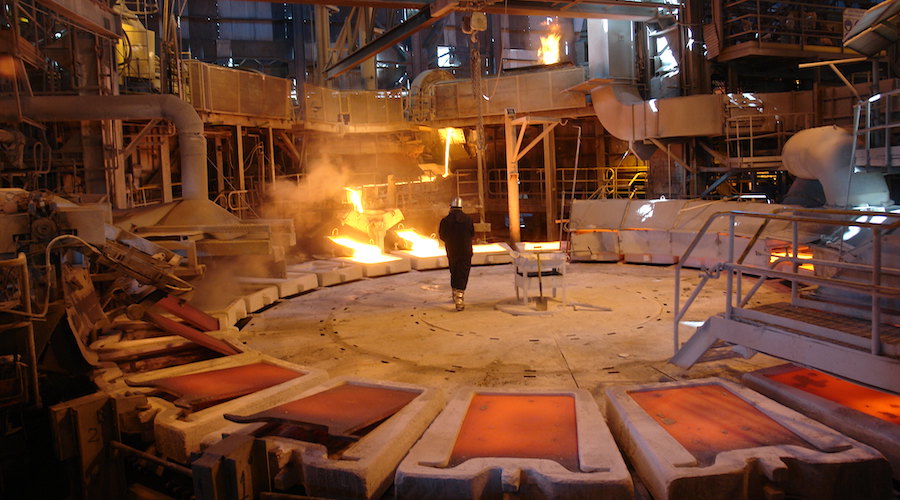
(Image courtesy of Glencore.)

Copper ended the week up more than 5% reaching a 10-week high at the close on Friday. At $6.11 per pound ($13,480 a tonne) in New York, May futures are back to within shouting distance of the all-time high closing price struck at the end of January, the day before the start of the Iran war.

The positive trend was underscored by new satellite data showing March smelter activity continuing to improve after hitting the lowest on record since tracking began nearly a decade ago in January this year.

Earth-i’s latest SAVANT Global Copper Smelting Index shows that 11.7% of global smelting capacity was inactive in March, down from 14.3% registered in January. Earth-i’s satellites cover some 95% of global capacity.

The increased activity was concentrated in China where the country-level inactive capacity sub-index fell by 1.1% to just 3.9%.

London-based Earth-i points out that together with the continuing build out of smelting capacity on the mainland, this resulted in an all-time high active capacity reading of 10.73 million tonnes, more than 775,000 tonnes higher than a year ago and 1.49 million tonnes above the 3-year average.

“This speaks to the improvement in downstream activity in recent weeks, as demand recovers following a ‘buyer’s strike’ in response to record high copper prices in January that has also seen imports from international market slump.”

Outside China, with the exception of Africa where the central copper belt showed strong operating performance, activity fell.

In Iran two smelters with combined capacity of 400,000 tonnes per annum (tpa) are offline (outside their historical routine maintenance schedules) and the ongoing outage at the 300,000-tpa Mount Isa smelter in Queensland, Australia, helped keep the Asia & Oceania regional inactivity sub index elevated at 18.7%, well above its 3-year average of only 5.7%.

According to Earth-i, inactivity did tick up modestly in Europe by 2.1%, but the region is still showing the lowest average percentage of idled capacity at 6.2%. Meanwhile smelting continues to be weakest in the western hemisphere, with the inactive capacity sub-index for North America rising by 10.3% in March to 32.3%, moving above that of South America at 27.4%.

Acid test

Chinese smelters’ willingness to buy concentrate increased further as sulfuric acid prices surged with FOB China at $210 per tonne in April, up 74% since January due to disruptions from the Iran war, according to a S&P Global Energy report.

This allows the country’s operators to secure short-term margins while putting additional pressure on TC/RCs (charges paid by miners to refiners). Spot TCRCs have plunged into deeply negative territory, with recent spot market tenders closing near –$78.50 per tonne and –7.85¢ per lb according to Platts, a unit of S&P Global Energy. That’s a swing from a positive $50 per tonne in January 2024.

The downward pressure on TC/RCs will remain, says S&P Global as the copper concentrate export permit for Indonesia’s Batu Hijau mine is set to expire at the end of April. In addition, the Democratic Republic of Congo’s Kamoa-Kakula 500,000-tpa capacity smelter began anode production at the end of 2025 which will consume domestically produced copper concentrate, further curbing exports.

The benchmark annual contract market has followed this collapse. Antofagasta’s 2026 benchmark agreement with a Chinese smelter settled at zero dollars, the lowest annual TC/RC terms ever recorded.


Codelco targets higher 2027 output to reclaim top copper spot


Chuquicamata smelter. (Image courtesy of Codelco | Flickr.)

Codelco is targeting a slight increase in copper output in 2027 as Chile’s state-owned miner looks to reclaim the mantle of world’s biggest supplier of the industrial metal.

Total production next year is budgeted at 1.5 million metric tons, according to people briefed on the projections. The amount includes Codelco’s share of output from mines it doesn’t operate but holds minority ownership in. Production from its own mines is targeted to rise to 1.37 million tons from 1.34 million tons this year, said the people, who asked not to be identified because 2027 guidance hasn’t yet been published.

The company is striving to reverse a prolonged decline in output while getting its aging mines and delayed expansion projects back on track. Chairman Maximo Pacheco is eying a return to pre-pandemic levels of 1.7 million tons by the end of the decade when the global market is expected to tighten.

Codelco has overhauled management and decentralized project leadership to counter falling ore grades, cost overruns and a heavy debt load. Bloomberg Intelligence says Codelco is on track to displace BHP Group as the top global producer. BHP operates Escondida in northern Chile, the world’s biggest single copper mine.


“If Codelco manages to squeeze out a few more tons and Escondida’s grade does decline according to the mine plan, Codelco could take top spot again,” BI analyst Grant Sporre said.

(By James Attwood)


Codelco, Anglo pursue twin environmental approvals for shared Chile copper pit


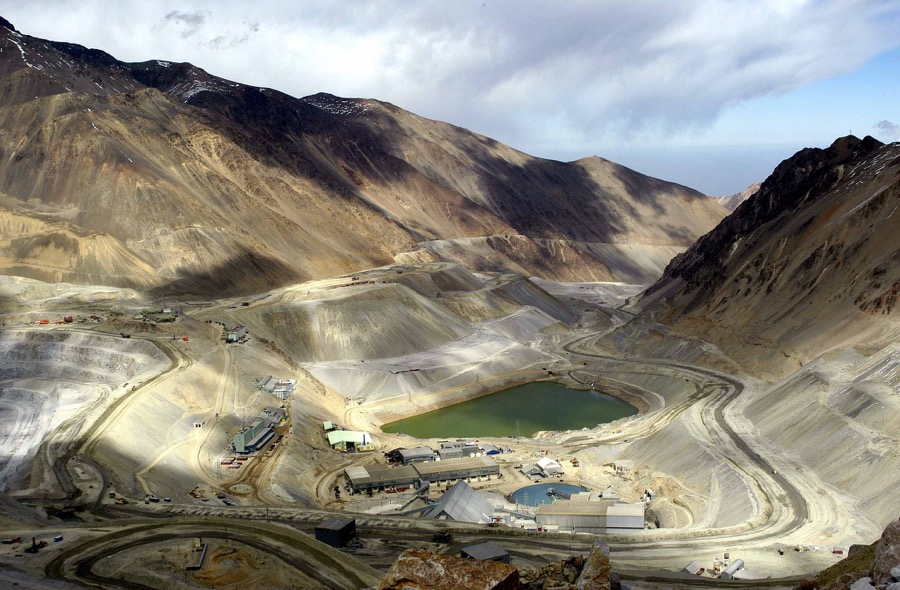
Los Bronces is Anglos’s flagship mine in Chile. (Image courtesy of Anglo American | Flickr)

Chilean copper producer Codelco and global miner Anglo American plan to submit separate environmental studies to regulators for their planned shared copper mine in Chile, documents seen by Reuters show, using what they called an “unprecedented” twin-track to streamline the approval process.

The previously unreported documents on the Andina-Los Bronces project, presented to environmental authorities in January, show the companies plan in December to file two largely identical applications for a pit where they would jointly extract copper in the world’s top producer of the red metal.

The model could serve as a blueprint for other major miners seeking to share infrastructure and operations to raise output amid an expected global supply crunch, while setting up Codelco and Anglo American to move faster and cut down on risks.

Codelco and Anglo finalized the deal in September, planning to add about 120,000 metric tons of copper per year from 2030 to 2051, generating at least $5 billion in pre-tax value.

Codelco chairman Maximo Pacheco, as well as a source at Anglo American, confirmed to Reuters that the firms plan to file the two applications at the end of the year.

‘Mirror’ applications

In areas where operations will overlap, the companies proposed applying identical environmental measures to each miner.

A single filing was not legally viable, they argued, because Chile’s constitution requires Codelco to retain ownership of its mining concessions, one presentation showed.

The companies also considered filing three applications: one from each miner to extend the useful life of their respective mines, and a third from a joint entity that would run the shared operation.

They ruled that out because it would require the firms to give up their existing open-pit environmental permits to make way for the combined mine.

The dual structure would also allow the mines to potentially return to independent operations in the future.

Work on the ground

The documents detailed plans to create a single pit over the existing pits.

Anglo American’s Los Bronces and Codelco’s Andina pits are adjacent, and the companies’ plan showed the rock barrier between them would also be mined, creating a single operating pit while keeping the project largely within the mines’ existing footprint.

Ore extracted from the shared pit would be sent interchangeably to Los Bronces’ and Andina’s processing plants, while waste rock would be deposited in each company’s own waste dumps, one document showed.

Changes to waste dumps, tailings facilities, pipelines and support infrastructure would still be needed for the two mines to operate as an integrated system.

Shared infrastructure would avoid duplicate facilities, cut freshwater use and reduce pressure on the surrounding area, the companies said.

Risks to sharing a mine

The companies also flagged significant risks, such as the need for close coordination with regulators, which could strain Chile’s already slow-moving environmental review system.

They highlighted the project’s “high public visibility” and the risk that environmentalists and affected communities could argue the two reviews obscure the scale of the impacts.

Los Bronces has faced years of scrutiny by residents, regulators and courts over alleged impacts on air quality, water use and glaciers in the high Andes where the mine operates.

While Codelco and Anglo argue the dual-track approach would reduce the risk of underestimating impacts, they acknowledged it could lead to duplicate or unnecessary environmental management measures.

The firms plan to begin outreach to local communities and other stakeholders in the second half of the year, one document showed.

(By Kylie Madry and Fabian Cambero; Editing by Daina Beth Solomon and Mark Potter)

KGHM seeks copper mines closer to home to reduce logistics costs


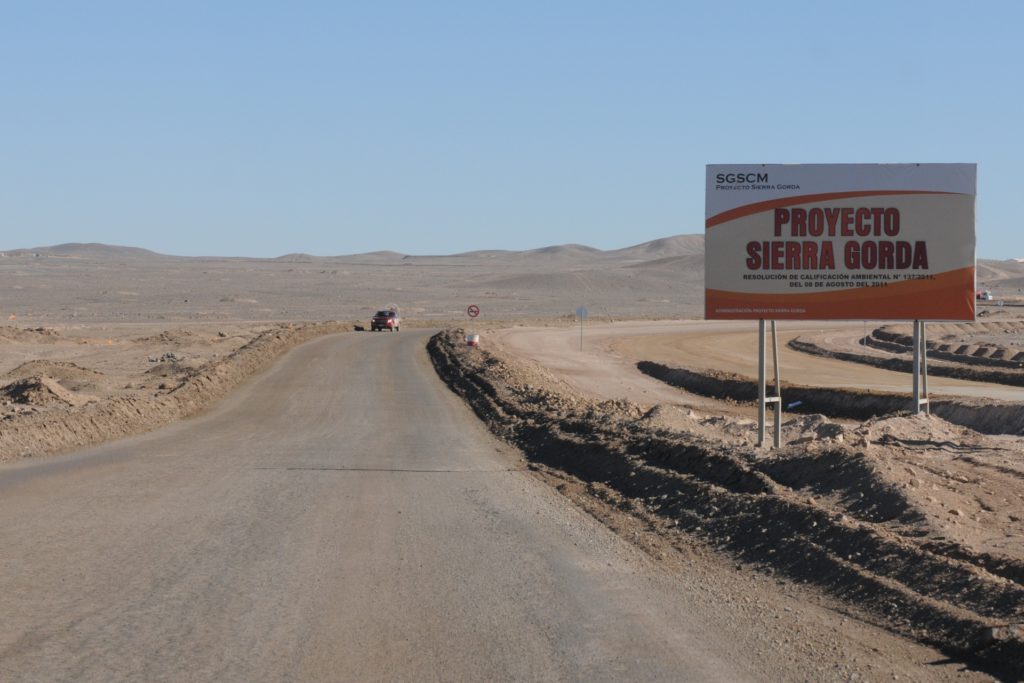
Sierra Gorda mine in Chile. Credit: KGHM

Copper producer KGHM is looking to invest in mines in Europe and Morocco to secure ore supplies closer to its smelting base in Poland and lower logistics costs, the company’s CEO said on Wednesday.

KGHM, which operates the Robinson mine in the US and holds 55% in Sierra Gorda in Chile on top of its Polish assets, last month signed a memorandum with Morocco’s National Office of Hydrocarbons and Mines and Moroccan mining firm Managem Group on cooperation in raw materials.

“We are looking for opportunities to have some resource closer to our smelting sites in Poland,” KGHM CEO Remigiusz Paszkiewicz told Reuters in an interview at the company’s Chile branch office in Santiago.

“Morocco is a good one. There is also at least one in Europe itself, an opportunity for us. We are now checking the chemistry of the deposit, let’s say,” he added, declining to identify which European company KGHM was looking at.

KGHM has dispatched geologists to Morocco and is waiting for an initial report from them, Paszkiewicz said, adding that the results could come in the next two weeks.

The Moroccan mine would serve as a source of supply to the global market as well as KGHM, he explained, as the company wants to remain active in concentrates trading. Just over half KGHM’s 710,000 metric tons of copper production in 2025 came from its own concentrates.

State-backed KGHM intends to maintain investment in Polish mining, even as it also looks at opportunities further afield in Chile and Argentina, Paszkiewicz said.

“But we see that the world is still changing,” he added, raising the possibility of switching KGHM’s Legnica copper smelter to a recycling plant.

“Probably it is … written down in the draft of our strategy that step by step we will be moving in the direction that Legnica is recycling and Glogow is our main smelting factory,” Paszkiewicz said.

KGHM will unveil its new strategy at the end of the quarter.

The company is also looking to extend its “production chain” in the United States, Paszkiewicz said, stressing that this did not necessarily mean building a copper smelter there.

(By Tom Daly; Editing by Lincoln Feast)


Codelco in talks with India’s HCL for Chile copper joint venture


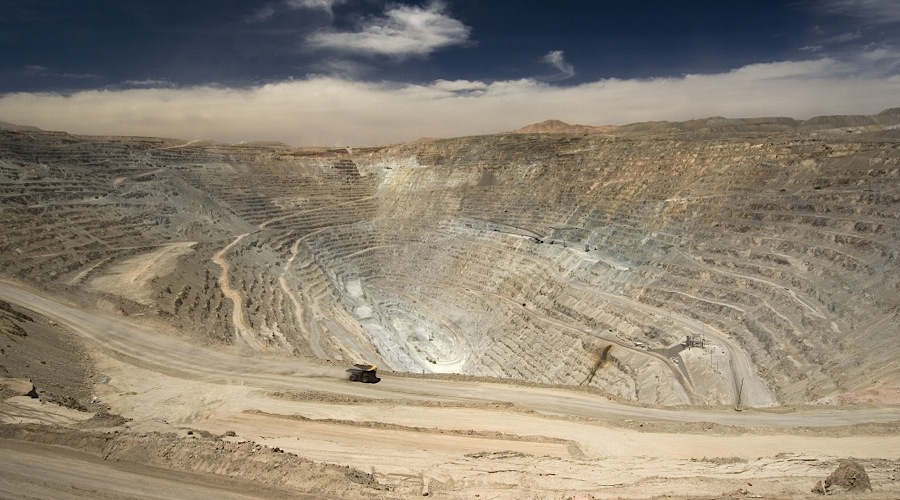
Chile’s Chuquicamata open pit copper mine moved underground last year. It was the world’s largest. (Image courtesy of Codelco via Flickr)

Codelco is negotiating a copper venture with India’s Hindustan Copper Ltd. as the Chilean state-owned miner turns to foreign partnerships to develop unexploited deposits, according to people familiar with the matter.

The deal under discussion is for a joint venture in which Codelco would put up one of its undeveloped deposits in Chile, with HCL taking on capital commitments, said the people, who asked not to be identified discussing ongoing confidential talks. Investments would exceed $1 billion, they said.

Codelco “maintains multiple conversations and negotiations” on potential partnerships to develop a portfolio of exploration projects, the Santiago-based company responded when asked about talks with HCL. HCL didn’t respond to a request for comment.

Codelco, one of the most indebted global miners, is teaming up with foreign firms — including BHP Group and Rio Tinto Group — in a bid to drill deposits without adding to its already heavy investment burden as new projects get trickier and pricier to develop. At the same time, Chile’s new government under President Jose Antonio Kast is cutting red-tape and easing regulation in a bid to unlock investments in mining.

Codelco is turning more to India as a buyer of its copper. Indian companies, meanwhile, are looking to Chile, which boasts the world’s biggest copper reserves, to secure supply, integrate upstream and stay competitive in a tightening global market.

The prospective Codelco-HCL deal comes a year after both state-owned companies signed a memorandum of understanding during former Chilean President Gabriel Boric’s visit to India. The MoU focuses on exchanging information to facilitate exploration, mining, and mineral processing, along with employee training and capacity building.

(By Carolina Gonzalez and James Attwood)

Ivanhoe holds ‘captive audience’ on Congo sulphuric acid market, CEO says

Credit: Ivanhoe Mines

Ivanhoe Mines has a “captive audience” for its sulphuric acid in the Democratic Republic of Congo, its CEO said on Wednesday, as prices for the chemical soar on limited supplies due to the Iran conflict.

Vancouver-based Ivanhoe this year started selling sulphuric acid as a byproduct of copper smelting at its Kamoa-Kakula project to other mine operators on the DRC copper belt, which need acid to dissolve copper from ore in a process known as leaching.

Supplies from the key Middle East region have struggled to reach world markets, raising fears of a global sulphuric acid squeeze. The DRC alone has an acid market of about 2 million metric tons per year, Ivanhoe CEO Marna Cloete told Reuters on the sidelines of a copper industry gathering in Santiago.

“We just produced just over 100,000 tons in the first quarter, but that’s going to the likes of Glencore, to ERG (Eurasian Resources Group) … so it’s local distribution,” she said, adding that annual acid output would reach 600,000 to 700,000 tons once its smelter was running at full capacity.

“The local market is more than sufficient for us to sell to,” she added, noting that restrictions on exporting sulphur from neighbouring Zambia had stopped DRC companies from making their own acid. “We’ve got a captive audience in terms of our distribution,” Cloete said.

Ivanhoe said in a statement on Monday the Kamoa-Kakula smelter had ramped up to 60% of capacity, with a further increase constrained by a lack of concentrate feed.

The company’s price for high-strength sulphuric acid was around $500 per ton in the first quarter, with spot prices generally increasing over the three months, Ivanhoe said.

(By Tom Daly; Editing by Rod Nickel)


CU/MO

Chinalco bets $700M on Peru mine turnaround


The Toromocho copper mine has been running for 36 years. (Image courtesy of Chinalco Peru.)

Aluminum Corp of China (Chinalco) is investing more than $700 million over the next three years to overhaul its Toromocho copper mine in Peru, adding molybdenum output to drive a long-awaited turnaround.

The plan, part of a $1.7 billion investment committed in 2018, includes updates to the mining scheme, new deposits and expanded stockpiling to improve efficiency and ensure operational continuity.

The total planned investment is being carried out in stages, with the core $1.35-billion expansion focused on lifting plant capacity and extending Toromocho’s development. That is being followed by additional technical modifications valued at about $350 million to optimize processing, recovery and supporting infrastructure.

Chinalco will expand a low-grade ore stockpile to the west and create a new stockpile within the existing pit, aiming to maximize existing infrastructure while staying within authorized limits. The company said the upgrade will improve processing performance and recoveries at the operation, where past technical challenges have weighed on output and costs. It also said the revamp will allow it to increase the plant’s capacity to 170,000 tonnes per day from the current 117,000-tonne-per-day capacity.

“This approval makes it possible to implement 28 projects, comprising 33 components over the next three years,” Chinalco executive Álvaro Barrenechea said in a statement.

Adding molybdenum

A key component of the overhaul is the introduction of molybdenum recovery, a metal previously not processed at Toromocho, supported by a new classification system that separates copper-only ore from copper-molybdenum material. The latter will be stockpiled for near-term processing, allowing more efficient resource use and diversified production. 

Chinalco said this approach will help secure early reserves and ensure continuous supply to the concentrator. The company also plans to stockpile ore in 2027 for processing in 2028, using existing pit roads and a new northern stockpile to maintain steady feed to the concentrator.

Peru’s Vice Minister of Mines Mayra Figueroa said copper and molybdenum are critical to the global economy, underscoring the project’s strategic importance as Peru remains the world’s second-largest copper producer and a key molybdenum supplier.

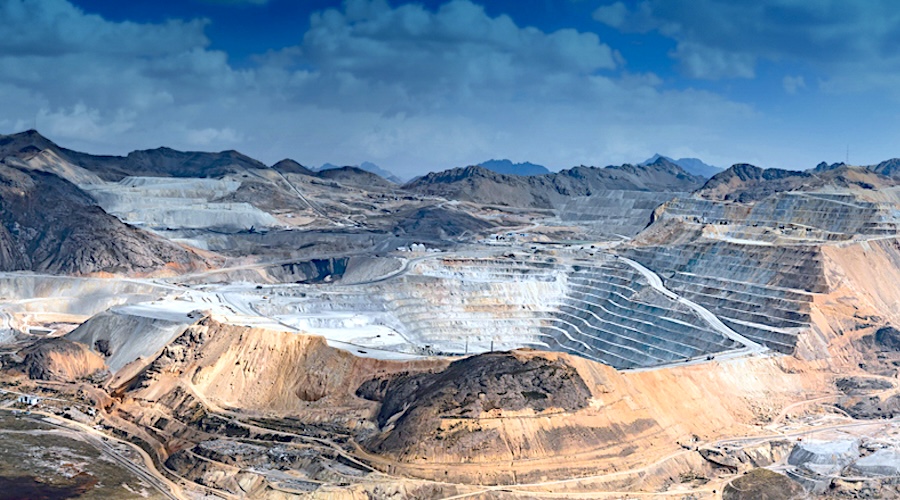
Toromocho, an open-pit mine in the Junín region, accounts for about 10% of Peru’s copper output and is expected to operate until 2042, highlighting the long-term significance of the upgrades. The operation sits 4,500 metres above sea level east of Lima and includes an open-pit mine and a processing plant. It produces about 250,000 tonnes of copper in concentrate annually and holds 1.53 million tonnes in reserves grading 0.48%, with a mine life of roughly 36 years since starting operations in 2013.

The company has also advanced its digital transformation at the site, launching an Integrated Operations Management Centre earlier this year and deploying an autonomous drilling and fleet management system developed with Huawei Peru to improve efficiency across the value chain.

Political landscape

Peru’s mining outlook now hinges on a June 7 presidential run-off between Keiko Fujimori and Rafael López Aliaga, with both candidates signalling policies that could reshape the sector.

Keiko, daughter of jailed former president Alberto Fujimori, has positioned herself as pro-US and investor-friendly, promising clearer rules to attract foreign capital while casting opponents as closer to Beijing. Her campaign has leaned on law-and-order messaging reminiscent of her father’s presidency. 

López Aliaga has struck a similar tone but warned unused mining permits could revert to the state, signalling a potential shake-up in one of Peru’s most important sectors.

The prospect of revoking unused mining concessions underscores rising political pressure on the country’s sector, raising the risk of disruption for major operators including Southern Copper (NYSE, LON: SCCO), MMG Ltd (HKG: 1208) and First Quantum Minerals (TSX: FM). 

The election outcome will shape billions in mining investment as Peru’s sector— which attracted about $6 billion last year and has driven roughly 3% annual economic growth since the pandemic—faces mounting political pressure and a surge in illegal mining.