Tuesday, April 28, 2026


Gold price could see $8,000 on de-dollarization, Deutsche Bank projects


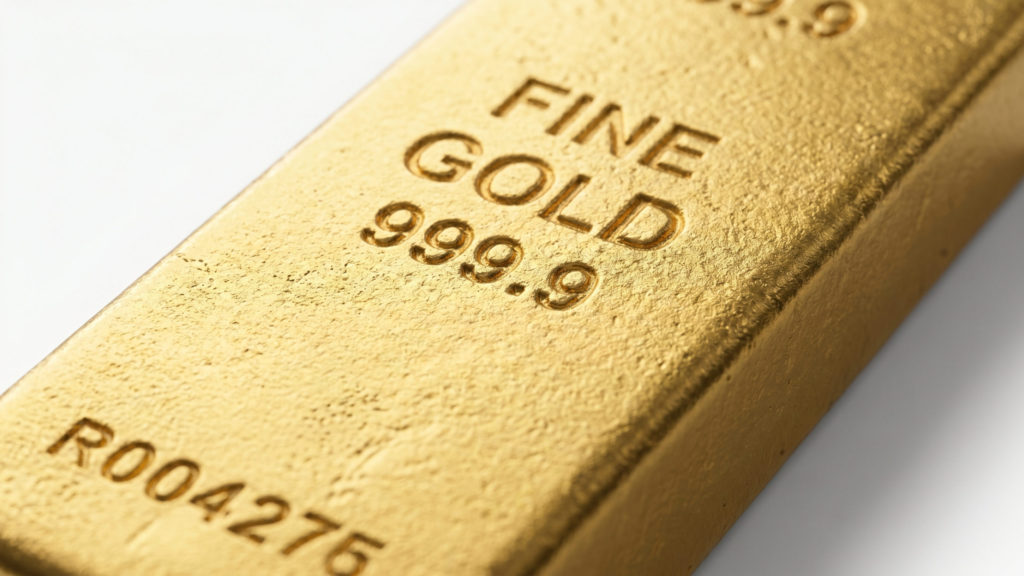
Stock image.

Gold is poised to benefit significantly from an increasingly fragmented world as nations continue to pivot into the metal and away from the US dollar as their go-to reserve asset, according to Deutsche Bank.

In a note published on Monday, the German investment bank said it sees a scenario where central banks, especially those in emerging economies, continue to increase their gold holdings as a financial safety net to protect themselves from Western sanctions.

The bank highlights that these central banks have added over 225 million ounces to their reserves since the 2008 financial crisis, while their holdings of US dollars have fallen from a peak of over 60% in the early 2000s to about 40% today.

It is not only the major holders — China, Russia, India and Turkey — that are buying up gold. As Deutsche Bank noted, the purchases are broadening to include countries like Kazakhstan, Saudi Arabia, Qatar, Egypt and the United Arab Emirates.

Should this trend continue, bullion’s share of global central bank reserves could realistically reach 40%, up from 30% currently, the bank predicts. At that allocation, Deutsche Bank ran a simulation that projects gold prices to hit $8,000 an ounce within five years — a near 80% rise on current levels.

While this price projection is conceptual in nature and not an official forecast, it aligns with the industry’s prevailing view that gold stands to be the biggest beneficiary of the global de-dollarization movement as trust in US assets continues to erode.

A survey last year by the World Gold Council revealed that central banks see economic and geopolitical uncertainty as a key factor influencing their decision to accumulate gold.


$3 billion Canadian deal is fast-tracking gold production in Guyana


Updated: 


G Mining Venture’s $3 billion acquisition catapults itself to become a significant immediate gold producer with one of the highest current gold profiles, says the company’s CEO.

The company announced an agreement to acquire G2 Goldfields on Tuesday.

The deal will see both the Canadian companies combine their two adjacent projects in Guyana, G2’s Oko-Ghanie Project and GMIN’s Oko West Project into a large-scale, low cost mining hub.

The combined Tier-1 Oko Project is expected to yield over 500,000 ounces of gold per year, says Louis-Pierre Gignac, CEO of G Mining Venture.

“I think there’s tremendous value for all shareholders given the very important synergies that come about with this transaction,” he said.


The transaction will result in GMIN and G2 shareholders holding roughly 80.1 per cent and 19.9 per cent of the combined company.

It also includes a high premium of 72 per cent premium, which Gignac says is justified by the high asset value and clear operational synergies of the acquired deposits.

“That was a premium that we were prepared to pay, and one that generates significant accretion for our shareholder shoulders on a Net Asset Value (NAV) per share basis,” says Gignac.

$1 billion in saved costs

The deal was a long time coming, says Gignac, noting that the two properties are across the fence from each other.

“We see approximately $1 billion in synergies, with a mix of CapEx synergies over the life of the mine and operating cost synergies as well,” says Gignac.

The deal will also create a total resource of seven million ounces, which will extend the life of the Oka West mine to over 15 years.

Support from Guyanese government.

The company has strong support from the Guyanese government and is already fully permitted for its current operations, says Gignac.

He says because its new project is an extension of existing work, it can update its current environment assessment and permits rather than starting a new application process.

He also says the transaction consolidates land around the Oka West project into a 362-square-kilometer, land package,


“This becomes district scale, allows for a lot of upside opportunities for us from an exploration point of view,” says Gignac.

“We’re quite excited about the combination that this creates.”

The company plans to conduct infill drilling to support an updated feasibility study targeted for 2027. This study will define the expanded project scope, with construction slated for 2028 and the expansion becoming operational in 2029, says Gignac.

He says the company is fully self funded with a $350 million undrawn credit facility and $255 million in post-transaction net cash from its Tocantinzinho mine in Brazil.

Anam Khan

Anam Khan

Opens in new window

Journalist, BNNBloomberg.ca

India launches investigation on some aluminum wire products from Malaysia

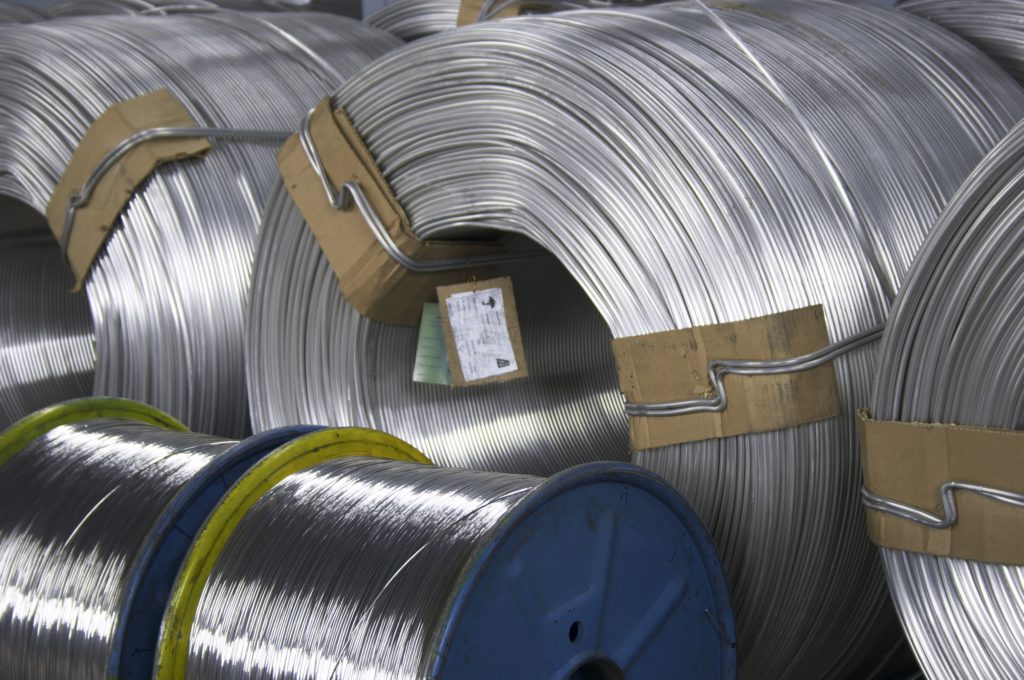
Stock image.

India has launched an investigation on some aluminum wire products from Malaysia in the backdrop of existing countervailing duties that are set to lapse in September, the government said late on Monday.

A group of companies including Hindalco Industries Limited, Vedanta Limited and Bharat Aluminium Company had filed an application for a review to ascertain if there is a need for an extension to the duties.

(By Kanjyik Ghosh and Neha Arora; Editing by Chris Reese)


Chile bill targets mining boost, cuts taxes, speeds permits

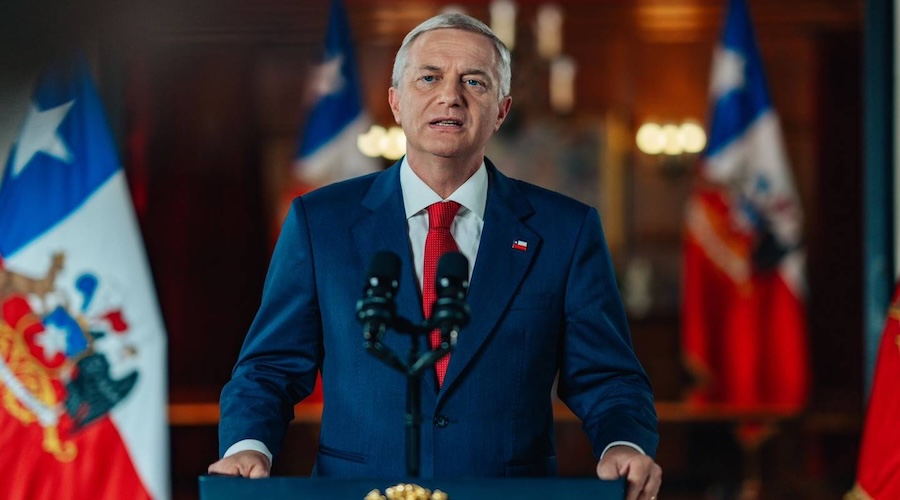
President Jose Antonio Kast. (Image courtesy of Chile’s Government.)

Chile has introduced sweeping legislation to revive growth and unlock mining investment through tax cuts, labour incentives and faster permitting.

The National Reconstruction and Economic Development Bill, presented to Congress on April 22, seeks to reverse years of sluggish expansion while positioning mining as a central pillar of recovery, with the government projecting GDP could rise 8.18% over a decade. 

President Jose Antonio Kast, who took office in March, framed the overhaul around restoring competitiveness, targeting high taxes, regulatory delays and legal uncertainty that have constrained investment.

At the core of the package is a phased reduction in corporate tax rates from 27% to 23% by 2029, alongside a cut for small and medium enterprises to 23% from 2030. The reforms also reinstate a fully integrated tax system, eliminating double taxation on distributed profits, and introduce a 25-year tax invariability regime for major projects, shielding investors from future royalty increases and new sector-specific levies.

The bill pairs tax reform with a $1.4 billion annual employment credit expected to support about 235,000 SMEs employing roughly four million workers, while offering incentives for capital repatriation and temporary VAT relief on new home sales. It also includes reconstruction funding for more than 1,000 homes destroyed by recent wildfires and measures to cut approval timelines for large projects that currently exceed 1,000 days.

“We did not come here to repeat the previous cycle; we came to break it,” Kast said, outlining targets of 4% annual GDP growth, unemployment of 6.5% and a return to structural fiscal balance by 2030.

Thousands of firms to benefit

The reforms land against a backdrop of modest growth — Chile expanded 2.5% in 2025 and is forecast to grow 2.2% in 2026 — while more than 800,000 people seek work and youth unemployment remains elevated. Inflation has eased to 2.4%, allowing the central bank to hold rates at 4.50%, and equities have rallied, with the IPSA (Selective Stock Price Index) reaching a record high following Kast’s inauguration.

Supporters argue the corporate tax cut will benefit about 150,000 companies that account for more than half of formal employment and 90% of investment, but critics say the plan favours the wealthy and risks eroding public revenues. 

The bill now heads to Congress, where the government lacks a majority and must secure backing from smaller parties to pass the legisl

“The bill directly addresses the structural barriers that have constrained mining investment in Chile for years,” Fiorella Ulloa, head of policy and regulatory affairs at Plusmining consultancy said.

Ulloa noted the 25-year invariability regime marks Chile’s most significant step toward restoring legal certainty since the repeal of DL 600, issued by the military government in 1974, placing it alongside Argentina’s RIGI and Peru’s stability agreements.

The framework would cap the effective tax burden at 35% for foreign investors while locking in royalties, mining patents and other levies. Combined with lower corporate taxes, it allows investors to secure a declining tax rate over time, strengthening Chile’s competitiveness in the region.

Pro-investment shift

The package signals a decisive shift toward pro-investment policy, with faster permitting, tax certainty and labour incentives aimed at restoring Chile’s position as a leading mining jurisdiction.

Still, Ulloa cautioned the impact of permitting reforms will depend on execution. Measures such as limits on environmental review rounds, caps on injunctions and deadlines for archaeological approvals address known bottlenecks, but past reforms have often been diluted in practice. Legal uncertainty around environmental litigation and gaps in the Biodiversity Service framework could continue to weigh on project timelines.

She said the bill is likely to pass but will face changes in Congress, particularly in the Senate. While adjustments are expected, the key risk for investors would be any weakening of the tax certainty framework, including shorter stabilization periods or changes to royalty coverage. Even with modifications, approval would be a positive signal, though delays in the legislative process could prolong uncertainty and slow investment decisions.

———

Latin America is heading into 2026 with resources at the centre of a growing global power struggle, as governments and investors focus on who controls critical minerals and the supply chains behind them. If the region matters to you, don’t miss MINING.COM’s new series tracking the geopolitical forces reshaping it and why markets are increasingly driven by global alliances as much as local politics.

Other countries in the series:
 

Funders commit $1.3 billion to Zambia critical minerals rail


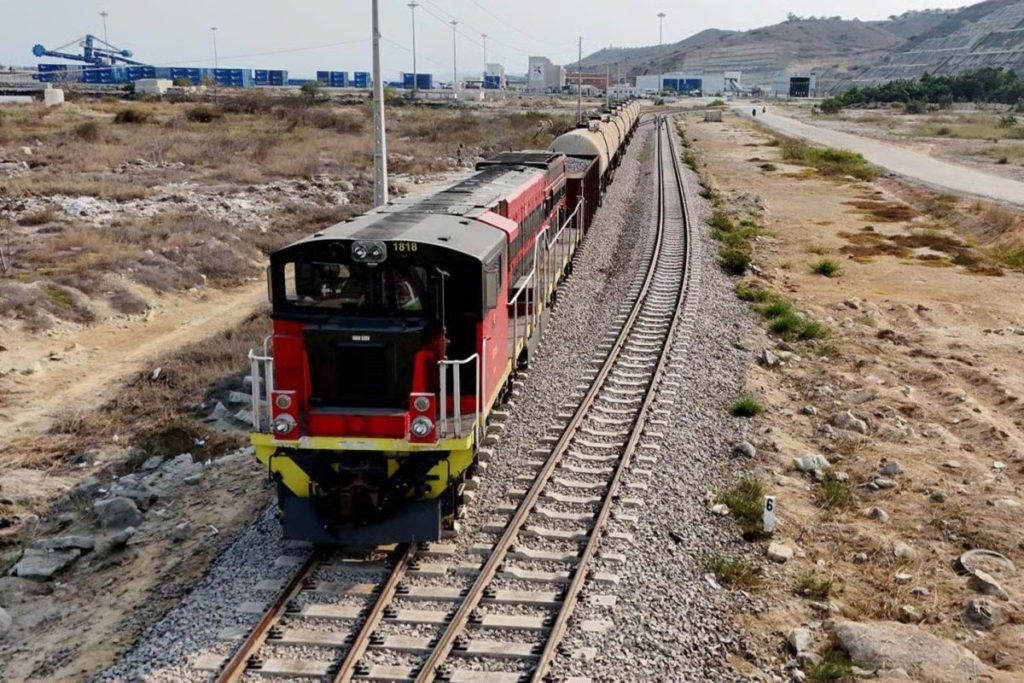
The Africa Finance Corp. and the African Development Bank committed $500 million each to a railway that will connect Zambia’s copper mines to global markets through the Angolan port of Lobito.

In addition, Italy will provide $320 million for the project, AFC executive director and chief investment officer Sameh Shenouda said at a conference in the Kenyan capital, Nairobi, on Thursday. The pan-African lender is lead developer and sponsor of the project.

The 830-kilometer (515-mile) railway will cost as much as $5 billion, with construction set to start this year and completion slated for 2030.

“For this project to be viable, we need offtakes of around 2.5 million to 3 million tons,” Shenouda said. “We already have commitments for a million tons and we have clear visibility to get to 5 million tons.”

The US and the European Union have cast the Lobito Corridor project as a flagship initiative to counter China’s growing influence in Africa, while securing access to metals critical to electric vehicle batteries as well as the defense and aerospace industries, including copper and cobalt.

The project has two main components: the refurbishment of an existing rail line linking the Atlantic port of Lobito to southern Democratic Republic of Congo, and the plan to build the new railway that extends into Zambia’s Northwestern province and Copperbelt provinces.

The Zambian spur will be the biggest new build in that country since the 1970s, when China helped finance and construct a line running eastward from the copper-mining region to an Indian Ocean port in Tanzania.

Nine engineering, procurement and construction contractors from different countries visited the Zambian railway project site two weeks ago, Shenouda said. The companies will submit bids in May and the evaluation process is expected to be completed later this year, he said.

“We will select the EPC contractor by July or August and we will break ground before the end of the year or maybe the first month of 2027,” Shenouda said.

Financial close is expected in the fourth quarter of 2027, according to the Lagos-based lender. Upon completion, it will cut cargo travel time to seven days from 16 days and have an economic impact of about $3 billion for Angola and Zambia, it said.

(By Eric Ombok)


Guinea bauxite output jumps 25% ahead of export curbs


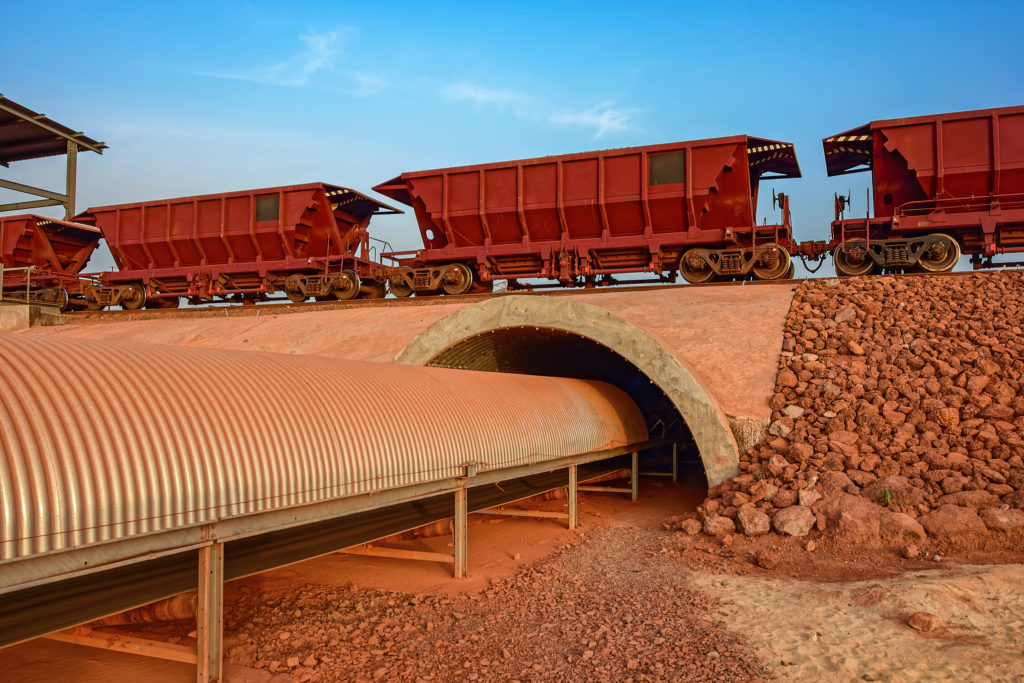
A freight train carrying bauxite in railway carriages for shipment. Stock image.

Guinea’s bauxite output jumped by 25% in the first quarter of 2026, driven largely by Chinese demand, official data showed on Tuesday, as the government plans export curbs to lift prices and protect smaller producers.

Guinea, the world’s largest exporter of bauxite, a key feedstock for aluminum, has seen strong output growth, reaching about 183 million metric tons in 2025.

Mines Minister Bouna Sylla told Reuters in March that the government plans export curbs by April to lift prices as weak demand had squeezed margins, particularly for smaller miners, raising the risk of bankruptcy and threatening jobs, government revenue and host communities.

More than 70% of Guinea’s bauxite is shipped to China, making the West African nation critical to Beijing’s aluminum supply chain.


Guinea’s bauxite exports reached about 60.9 million tons between January and March this year, up 25.3% from 48.6 million tons in the same period last year, according to the mines ministry data seen by Reuters.

Quarterly exports were driven mainly by Chinese-linked producers, according to the data, despite Beijing’s weak aluminum exports. Societe Miniere de Boke (SMB) led with 18 million tons while China’s state‑owned Chalco shipped 8 million tonnes, up 35%. Other major contributors included China’s Hongqiao‑controlled AGB2A/SDM, CBG and AMC, the data showed.

Guinea’s mines chamber did not immediately respond to a request for comment.

Prices at four-year low

Guinean free‑on‑board bauxite prices are at their lowest since March 2022, at about $32 to $38 per ton, said Anthony Everiss, analyst at consultancy CRU.

Shipments remain strong so far in April but CRU expects bauxite production growth to slow sharply later in 2026 as the government moves to curb exports, he said.

CRU also expects the government’s export curbs to slow production growth later in 2026 alongside seasonal disruptions, high fuel costs and cuts by some miners.

Guinea could also turn to tax changes, alongside export caps, to push miners to invest more in rail, ports and domestic refining capacity, Everiss added.

(By Maxwell Akalaare Adombila; Editing by Mark Porter)

SOUTH AFRICA

JPMorgan ups stake in Sibanye-Stillwater


Credit: Sibanye-Stillwater

JPMorgan (NYSE: JPM) has boosted its stake in Sibanye-Stillwater (JSE: SSW, NYSE: SBSW), cementing its status as one of the South African miner’s top shareholders.

According to a securities filing on Tuesday, Sibanye said JPMorgan has acquired an amount of ordinary shares that would bring its equity stake to 5.66%. It follows the US bank’s two share purchases last year (March and June) for undisclosed amounts.

JPMorgan joins South Africa’s Public Investment Corp. (PIC) and BlackRock Inc. (NYSE: BLK) as the latest major shareholder to boost holdings in recent months.

In October, PIC brought its shareholding to over 20%, while BlackRock took its stake above 5% earlier this year.

Shares of Sibanye-Stillwater, however, fell 5.5% to around $11.80 in New York, about half of its all-time high set in January following BlackRock’s purchase. The company has a market capitalization of $8.6 billion.

The decline comes amid further weakness in precious metals, which the company mines across five continents. Gold fell another 2% on Tuesday, while platinum and palladium declined 2.9% and 1.5%, respectively.


China’s Huayou reports first lithium salt exports from Zimbabwe


The Arcadia lithium mine, which began production in 2023. (Image courtesy of Huayou Cobalt.)

Zhejiang Huayou Cobalt has shipped Africa’s first consignment of lithium sulphate from its Zimbabwe mine, two months after the Southeast African country halted exports of lithium concentrates, alleging malpractice and leakages.

“This inaugural shipment represents the first lithium salt ever produced in Zimbabwe and across Africa, marking a major step forward in regional mineral beneficiation and industrialization,” Huayou’s Zimbabwe unit said in a statement posted on X late on Monday.


The Chinese company did not disclose the size of the consignment.

Huayou completed the $400 million plant in October 2025. It has the capacity to produce 50,000 metric tons annually of lithium sulphate, an intermediate product that can be refined into materials such as lithium hydroxide or lithium carbonate used in battery manufacturing.

Zimbabwe, Africa’s top lithium producer, has been pressing miners operating in the country to process more of the battery metal locally as it seeks to extract more economic benefit from the mineral. It has recently imposed a 10% tax on lithium concentrate exports. The export tax does not apply to lithium sulphate.

The country will ban lithium concentrate exports altogether from January 2027, but froze all exports of the concentrated mineral on February 25, saying it had noted “malpractices during the exportation of minerals”.

Zimbabwe introduced lithium concentrate export quotas in April and set conditions for the resumption of exports, including the mandatory publication of mines’ annual financial statements as well as labour, safety and environmental standards.


Huayou’s Zimbabwe unit was also granted a lithium concentrate export quota, an official said, without giving details.

Other Chinese miners operating in Zimbabwe, Sichuan Yahua, Chengxin Lithium and Sinomine, have also been allocated lithium concentrate export quotas by the authorities.


Chinese firms dominate Zimbabwe’s lithium mining sector, consolidating the Asian giant’s dominance of the global battery metal supply chain.

In 2025, Zimbabwe exported 1.13 million metric tons of lithium-bearing spodumene concentrate to China, accounting for about 15% of its lithium concentrate imports for the year.

(By Nelson Banya and Chris Takudzwa Muronzi; Editing by Kate Mayberry and Aurora Ellis)


Africa mining sector at centre of disinformation campaigns: Report


Loulo-Gounkoto gold mining complex. (Image: Barrick Gold.)

Disinformation campaigns targeting Africa’s critical minerals sector reached nearly 300 million users across six countries over the last year, according to a report released on Monday.

London-based Refute, an AI-powered intelligence platform, said Monday it identified 2,778 bot accounts responsible for more than 22 million engagements across 21 mining sites in the Democratic Republic of Congo, Niger, Mali, Rwanda, Guinea and Côte d’Ivoire.

The findings, published in the Africa Decoded report, show how small, coordinated networks can generate outsized influence by amplifying narratives tied to geopolitical developments and market-moving events.

Refute found bot activity closely tracks real-world triggers, including regulatory decisions, armed conflict and shifts in commodity markets. Spikes included a 114% increase in Mali after the junta revoked more than 90 foreign exploration permits in October 2025, and a 417% jump in early 2026 as Barrick Mining (TSX: ABX) (NYSE: B) restarted production at the Loulo-Gounkoto complex.

Gold-related narratives drew the highest activity overall, with 351 bot accounts engaging during periods of rising prices.

Quick spread

“Africa’s critical minerals are at the centre of the most consequential geopolitical contest of our time,” Refute CEO Tom Garnett said in the report. “The bot activity we track in the mining sector maps to commodity price spikes, regulatory decisions, and corporate disputes with disturbing precision.”

The report also highlights how disinformation campaigns cross borders rapidly, repurposing real incidents to influence opinion elsewhere. After a tailings dam collapse at a Chinese-owned copper mine in Zambia in February 2025, Refute detected a coordinated bot network operating out of Kenya that reframed the event to stir opposition to Chinese investment in another country within days.

Africa holds about 30% of global mineral reserves critical to the energy transition, placing the sector at the centre of competition among the US, China and Russia. Refute said its findings underscore growing operational and reputational risks for mining companies, as influence campaigns become more targeted, responsive and difficult to detect without advanced monitoring tools.


US not funding Congo’s $100 million mine guard, embassy says


Congolese soldiers. Stock image.

The United States said on Tuesday it is not funding any security units tasked with policing or guarding mines in Democratic Republic of Congo after Kinshasa announced plans to launch a paramilitary force to secure mining sites.

Congo’s General Inspectorate of Mines (IGM) said in a statement on Monday that the paramilitary guard would be funded by a $100 million budget and created under strategic partnerships with the US and the United Arab Emirates.

The US embassy said that Washington remained committed to advancing economic growth and stability in Congo through the strategic partnership, but it was not involved in funding mine security units.

“The US government is not currently funding any units to patrol or guard mines in the Congo,” it said in a statement.

Congo’s mining regulator also said on Tuesday that plans for the mining guard, while developed with multiple international partners, would not involve direct funding by any single country.

“Discussions are ongoing to structure a mechanism that is consistent with national priorities,” it said in a statement.

The central African nation has been battling a Rwanda‑backed rebellion in its mineral‑rich east and security support and investment form part of a minerals partnership it signed with the US to improve access to Congo’s vast copper, cobalt and lithium resources.

The new unit will be rolled out across mining regions nationwide and is expected to exceed 20,000 personnel by the end of 2028.

Congo, the world’s top cobalt supplier and second-largest copper producer, has said it is seeking to strengthen security around strategic mineral assets, part of wider efforts to attract investment and reduce armed group activity in mining regions.

The government last month signed a separate deal with China aimed at strengthening investments as geopolitical competition for its minerals deepens.

(By Ange Kasongo and Maxwell Akalaare Adombila; Editing by Tomasz Janowski)