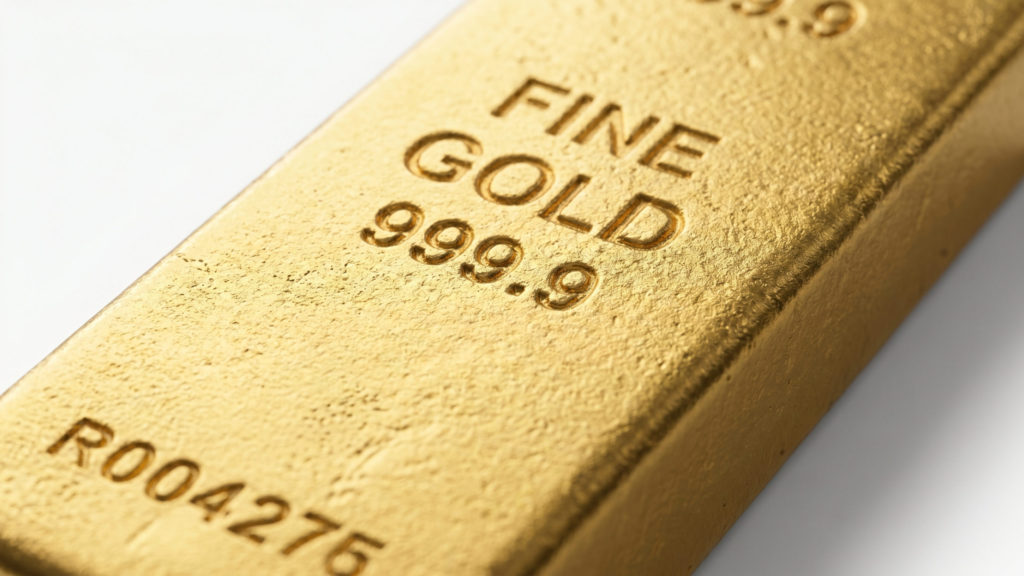
Stock image.
Gold is poised to benefit significantly from an increasingly fragmented world as nations continue to pivot into the metal and away from the US dollar as their go-to reserve asset, according to Deutsche Bank.
In a note published on Monday, the German investment bank said it sees a scenario where central banks, especially those in emerging economies, continue to increase their gold holdings as a financial safety net to protect themselves from Western sanctions.
The bank highlights that these central banks have added over 225 million ounces to their reserves since the 2008 financial crisis, while their holdings of US dollars have fallen from a peak of over 60% in the early 2000s to about 40% today.
It is not only the major holders — China, Russia, India and Turkey — that are buying up gold. As Deutsche Bank noted, the purchases are broadening to include countries like Kazakhstan, Saudi Arabia, Qatar, Egypt and the United Arab Emirates.
Should this trend continue, bullion’s share of global central bank reserves could realistically reach 40%, up from 30% currently, the bank predicts. At that allocation, Deutsche Bank ran a simulation that projects gold prices to hit $8,000 an ounce within five years — a near 80% rise on current levels.
While this price projection is conceptual in nature and not an official forecast, it aligns with the industry’s prevailing view that gold stands to be the biggest beneficiary of the global de-dollarization movement as trust in US assets continues to erode.
A survey last year by the World Gold Council revealed that central banks see economic and geopolitical uncertainty as a key factor influencing their decision to accumulate gold.
$3 billion Canadian deal is fast-tracking gold production in Guyana
G Mining Venture’s $3 billion acquisition catapults itself to become a significant immediate gold producer with one of the highest current gold profiles, says the company’s CEO.
The company announced an agreement to acquire G2 Goldfields on Tuesday.
The deal will see both the Canadian companies combine their two adjacent projects in Guyana, G2’s Oko-Ghanie Project and GMIN’s Oko West Project into a large-scale, low cost mining hub.
The combined Tier-1 Oko Project is expected to yield over 500,000 ounces of gold per year, says Louis-Pierre Gignac, CEO of G Mining Venture.
“I think there’s tremendous value for all shareholders given the very important synergies that come about with this transaction,” he said.
The transaction will result in GMIN and G2 shareholders holding roughly 80.1 per cent and 19.9 per cent of the combined company.
It also includes a high premium of 72 per cent premium, which Gignac says is justified by the high asset value and clear operational synergies of the acquired deposits.
“That was a premium that we were prepared to pay, and one that generates significant accretion for our shareholder shoulders on a Net Asset Value (NAV) per share basis,” says Gignac.
$1 billion in saved costs
The deal was a long time coming, says Gignac, noting that the two properties are across the fence from each other.
“We see approximately $1 billion in synergies, with a mix of CapEx synergies over the life of the mine and operating cost synergies as well,” says Gignac.
The deal will also create a total resource of seven million ounces, which will extend the life of the Oka West mine to over 15 years.
Support from Guyanese government.
The company has strong support from the Guyanese government and is already fully permitted for its current operations, says Gignac.
He says because its new project is an extension of existing work, it can update its current environment assessment and permits rather than starting a new application process.
He also says the transaction consolidates land around the Oka West project into a 362-square-kilometer, land package,
“This becomes district scale, allows for a lot of upside opportunities for us from an exploration point of view,” says Gignac.
“We’re quite excited about the combination that this creates.”
The company plans to conduct infill drilling to support an updated feasibility study targeted for 2027. This study will define the expanded project scope, with construction slated for 2028 and the expansion becoming operational in 2029, says Gignac.
He says the company is fully self funded with a $350 million undrawn credit facility and $255 million in post-transaction net cash from its Tocantinzinho mine in Brazil.



No comments:
Post a Comment