Tuesday, April 28, 2026

 Nuclear News

Triton Uranium fast-tracks Saskatchewan project in possible bid to secure US listing
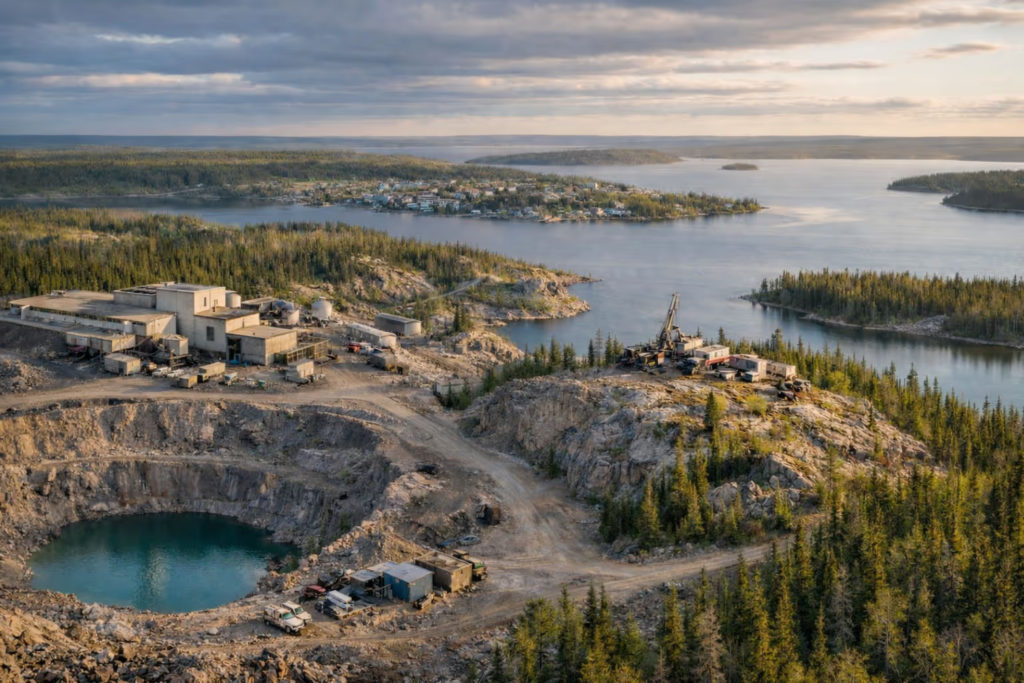

Private Canadian developer Triton Uranium has begun development activities at its Atlas project in Uranium City, Saskatchewan, marking a pivotal step toward establishing new domestic uranium supply as nuclear power is experiences the early stages of a nuclear resurgence across the United States.

“Speed is the missing piece in North America’s uranium supply,” Triton Uranium CEO Todd Montgomery said. “AI data centers and a renewed U.S. nuclear buildout are accelerating demand right now, but most uranium developments won’t come online for years. The Atlas project is built to change that, with our near-surface, infrastructure-ready model that we believe can be developed significantly faster than conventional uranium mines.”

According to a recent Reuters new report, Triton is considering pursuing a U.S. stock exchange listing through a special purpose acquisition company merger during 2026, President Scott Evans said. The company has secured nearly $16 million through private funding rounds, directing these resources toward exploration activities that will precede any potential public market debut.

Evans indicated the company remains open to future equity partnerships with either U.S. or Canadian government entities, acknowledging the increasing policy emphasis on securing critical mineral supply chains across North America. These policy shifts create opportunities for domestic uranium developers to attract strategic investment from public sector partners.

The timing of Triton’s potential public listing aligns with broader uranium market dynamics driven by artificial intelligence data centres and renewed nuclear power plant construction across the United States. These demand drivers have prompted utilities to secure long-term supply agreements, creating favourable conditions for uranium development companies seeking growth capital.

Advancing toward production

Evans outlined the significance of transitioning from planning to active development phases.

“With today’s announcement, the Atlas project takes a major step forward,” Evans said. “Beginning on-site work moves the project closer to advancing a future open-pit ore body and reinforces our commitment to creating value for the company, the community, and North America’s uranium supply.”

Market analysts are saying North America currently faces constrained uranium supply conditions, with limited domestic production forcing continued reliance on foreign-controlled sources and strategic inventories outside Western utility markets.

Development timeline

The upcoming drill program represents the next phase in advancing the Atlas project toward potential production. The company’s focus on near-surface mineralization and existing infrastructure aims to compress typical development timelines that often extend beyond a decade for conventional uranium projects.

Triton’s approach leverages historical mining activity in the region while applying modern extraction and processing technologies. The company anticipates that its infrastructure-ready model will enable faster permitting processes and reduced construction phases compared to remote greenfield developments.

The June 2026 drilling commencement will target four priority zones identified through historical data analysis and recent geological assessments. Results from this 10,000-metre program will inform resource estimation and preliminary economic assessments scheduled for later in 2026.


World Nuclear News


Mining operations start at Wyoming project


The start of uranium mining operations at Ur-Energy's second in-situ recovery uranium project marks the transition from development to initial operations.

Ion exchange columns inside the Shirley Basin plant (Image: Ur-Energy)

Ur-Energy made the decision to "build out" the fully permitted and licensed project in Carbon County, Wyoming, in March 2024: the company estimated it would take about 24 months to finalise designs, order materials and construct the satellite plant and initial wellfield. On 23 April, the company announced that uranium-bearing solution is now being captured from Mine Unit 1 at Shirley Basin after the successful completion of significant construction, wellfield installation, and permitting.

In-situ recovery - or ISR - is a method of mining uranium by dissolving and recovering it via wells. It is also known as in-situ leaching. At Shirley Basin, uranium is captured on ion exchange resin which Ur-Energy will then ship to its Lost Creek facility - also in Wyoming - for final processing, drying, and packaging. It expects to begin transporting uranium-loaded resin from Shirley Basin to Lost Creek this summer, subject to an additional regulatory inspection and approval.

Ur-Energy CEO and President Matt Gili said the launch of initial operations at Shirley Basin marks a pivotal achievement in the company's growth strategy and plan to expand US uranium production capacity. "Two years ago, we committed to building out this project. Today, we have successfully brought a historically significant uranium district back to life, demonstrating disciplined execution of our strategy. This accomplishment reflects the dedication and expertise of our teams, who have advanced Shirley Basin from development to operations. It is particularly meaningful as it supports the growing need for secure, domestic uranium supply and underscores our ability to move permitted projects toward production while strengthening our role in the US nuclear fuel cycle," he said.

Shirley Basin has a resource base of about 9.1 million pounds U3O8 (3500 tU) in the measured and indicated categories) at an average grade of 0.22%. With a licensed annual wellfield and toll processing capacity of up to 2.0 million pounds equivalent of U3O8, it has an anticipated mine life of about nine years across three shallow mining units. The combined total annual licensed production and toll processing capacity of Lost Creek and Shirley Basin is 4.2 million pounds U3O8.

Uranium was mined at Shirley Basin using conventional methods from the 1960s until low uranium prices prompted its closure in 1992. Ur Energy acquired the project as part of its acquisition of the Pathfinder Mines Corporation from an Areva affiliate in 2013.


Fuel loading begins for Bangladesh’s first nuclear power plant
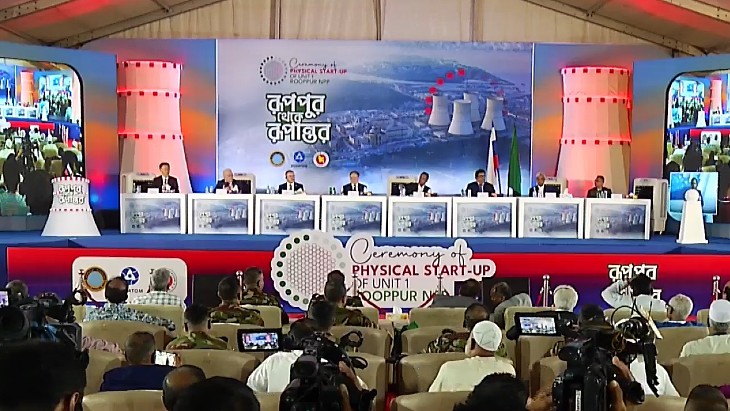


A ceremony has been held in Bangladesh to mark the start of the loading of 163 nuclear fuel assemblies into Rooppur Nuclear Power Plant’s first unit.
 
The ceremony to mark fuel loading was streamed live (Image: Screenshot Bangladesh Atomic Energy Commission)

Loading of nuclear fuel in a new reactor is a key moment in the construction of any new nuclear power reactor. It is the first stage of the unit's key startup phase and, according to reports in the Bangladesh press, will take about 45 days to complete.

The next step will see the reactor being brought to a minimum controllable power level, with checks and tests before the level is increased in stages.

Fakir Mahbub Anam, Minister of Science and Technology, said: "The peaceful use of nuclear energy will play a key role in ensuring national energy security, accelerating industrialisation, and promoting the development of a technology-based economy. The Rooppur Nuclear Power Plant project serves as a symbol of Bangladesh's scientific progress and demonstrates the country's willingness and ability to responsibly and effectively harness advanced technologies."
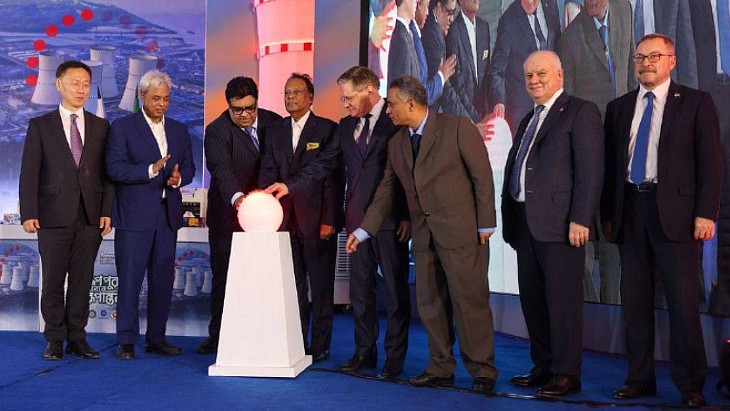

Initiating fuel loading at the event (Image: Rosatom)
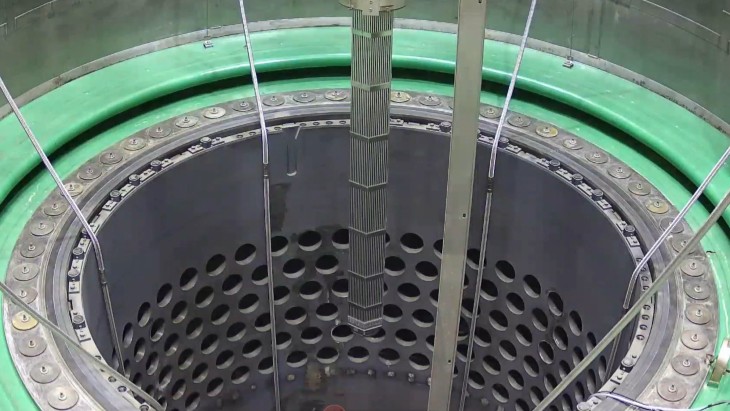

The first fuel being loaded (Image: Screenshot from Bangladesh Atomic Energy Commission live stream)

Rosatom Director General Alexei Likhachev, said: "Today, Bangladesh joined the club of countries using peaceful nuclear energy as a reliable source of sustainable development. The Rooppur Nuclear Power Plant will undoubtedly become a vital element of the country's energy system. For Rosatom, this project is another important step in the development of global nuclear energy and in strengthening friendly relations with our international partners."

Background

In February 2011 Russia's Rosatom signed an agreement for two reactors to be built at Rooppur, about 160 kilometres from the capital Dhaka, for the Bangladesh Atomic Energy Commission. The initial contract for the project, worth USD12.65 billion, was signed in December 2015. The Bangladesh Atomic Regulatory Authority issued the first site licence for the Rooppur plant in June 2016, allowing preliminary site works, including geological surveys, to begin.

Construction of the first unit began in November 2017. Construction of the second unit began in July 2018. They have an initial life-cycle of 60 years, with a further 20-year extension possible.

The first batch of nuclear fuel was delivered to the site in October 2023 - the moment that the site got its status as a nuclear facility. In March last year, Rooppur unit 1's turbine installation was completed, as were hydraulic tests to check the primary circuit systems and equipment, followed by hot functional tests. An operating licence was issued by the Bangladesh Nuclear Regulatory Authority on 16 April.

Hot tests completed at second San'ao unit


Tests that simulate the temperatures and pressures which the reactor systems will be subjected to during normal operation have been completed at unit 2 of the San'ao nuclear power plant in China's Zhejiang province. The unit is the second of six HPR1000s (Hualong Ones) planned at the site.
 
(Image: CGN)

Hot functional tests involve increasing the temperature of the reactor coolant system and carrying out comprehensive tests to ensure that coolant circuits and safety systems are operating as they should. Carried out before the loading of nuclear fuel, such testing simulates the thermal working conditions of the power plant and verifies that nuclear island and conventional equipment and systems meet design requirements.

China General Nuclear (CGN) announced that hot tests at San'ao unit 2 were successfully completed at 08:28 (local time) on Tuesday.

"The team fully drew on the experience feedback and best practices of unit 1 and previous projects, and worked together efficiently and with high quality to complete transient tests such as safety injection test, power switching test, and non-nuclear start-up test, as well as all tests required by the commissioning outline for this stage, achieving the goal of completing the hot commissioning in 51.9 months [since the pouring of first concrete for the nuclear island]," CGN noted.

Cold functional tests - which are carried out to confirm whether components and systems important to safety are properly installed and ready to operate in a cold condition - were completed at San'ao 2 in  October. The main purpose of those tests - which marked the first time the reactor systems were operated together with the auxiliary systems - was to verify the leak-tightness of the primary circuit.


The San'ao site (Image: CGN)

First concrete for unit 1 was poured in December 2020, with that for unit 2 following a year later. Unit 1 achieved first criticality in February this year and was connected to the grid in March. San'ao 2 is scheduled to begin supplying electricity in 2027.

The San'ao plant is the first nuclear power project in China's Yangtze River Delta region to adopt the Hualong One reactor design. A total of six Hualong One units are planned for the site.

The construction of two Hualong Ones as units 3 and 4 of the San'ao plant was among plans for 11 reactors approved by China's State Council in August 2024. The first concrete was poured for the nuclear island of unit 3 on 19 December last year. A further two Hualong One units are planned as units 5 and 6.

Upon completion, the project will provide more than 54 TWh of electricity annually to Zhejiang Province and the Yangtze River Delta region, reducing standard coal consumption by more than 16 million tonnes and carbon dioxide emissions by more than 51 million tonnes annually, CGN noted.

The San'ao project marks the first Chinese nuclear power project involving private capital, with Geely Technology Group taking a 2% stake in the plant. CGN holds 46% of the shares of the project company Cangnan Nuclear Power, with other state-owned enterprises holding the remainder.

Flushing of safety systems begins for Kudankulam unit 3
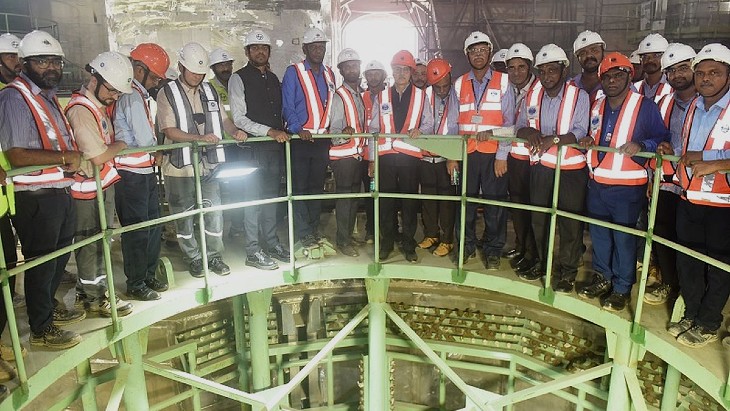
The flushing of safety systems at unit 3 of India’s Kudankulam Nuclear Power Plant is described as a key moment, signifying the beginning of the active commissioning phase.
 
(Image: Rosatom)

Nuclear Power Corporation of India Limited (NPCIL) called it "a significant stride in India's journey towards energy security and sustainability".

The flushing process, using demineralised water, is designed to check everything has been installed correctly and remove impurities from pipelines, check pump sets, process safety systems and normal operation systems. Samples of flush water have been collected and sent to a chemical laboratory for analysis.

"During the second stage, the active part, the safety system pumps are filled with water from the used fuel pool and then activated, pumping water into the open reactor. During the flushing operations, foreign objects that could enter the reactor vessel and damage its internal components during startup are removed from the pipelines connected to the primary circuit," Rosatom said.

Andrey Petrov, President of JSC Atomstroyexport, said: "The safety system testing phase is the final stage before reactor assembly. After this, testing of the primary circuit systems and equipment, as well as cold and hot runs, will begin. Our joint project with our Indian partners is proceeding according to plan and confirms the reliability and leadership of Russian nuclear technology. The commissioning of the second and third phases of the Kudankulam NPP will be a significant contribution to India's energy supply and will further strengthen the long-standing ties between our countries."

Background
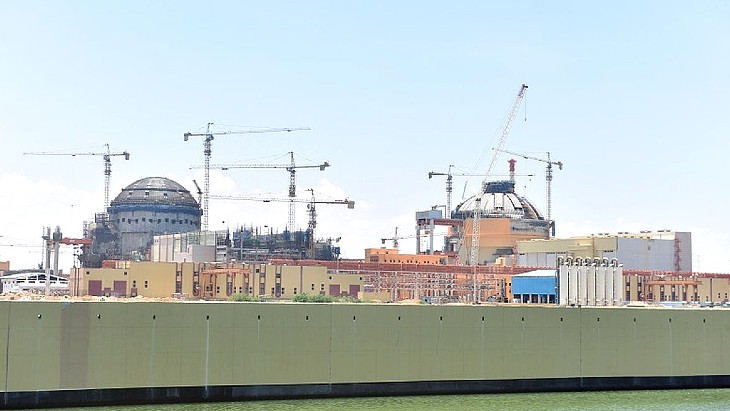

The Kudankulam site, about 100 kilometres from the port city of Tuticorin (Image: Rosatom)

The Kudankulam site, near the southern tip of India, is already home to two operating Russian VVER-1000 pressurised water reactors which have been in commercial operation since 2014 (Kudankulam unit 1) and 2017 (unit 2). Four more are currently under construction, in two phases: construction of units 3 and 4 began in 2017, with work on units 5 and 6 beginning in 2021. Two further units - Kudankulam 7 and 8, larger AES-2006 units with VVER-1200 reactors - have been proposed as a fourth phase of the plant.

The first nuclear fuel was delivered for unit 3 in December under a contract signed in 2024 which covers the fuel supply for units 3 and 4 for the entire operating life of the units.

French nuclear supply chain boosting capacity

Orano has inaugurated a new building dedicated to its engineering teams in Pierrelatte, in southern France, while EDF subsidiary Arabelle Solutions plans to build a new factory in Chalon-sur-Saône, in eastern France.
 
(Image: Orano)

Orano Projects, a subsidiary of Orano, inaugurated its new building on Friday. The ceremony took place in the presence of state representatives, local elected officials, institutional and economic stakeholders from the region, industrial partners, and employees.

"This event marks a key milestone in a major modernisation programme for the Pierrelatte site, launched in September 2024," Orano said. "This programme includes the construction of a new building, the complete renovation of a second building, and, by 2027, the renovation of a third building, ultimately providing a fully modernised engineering platform. Its capacity has been doubled, increasing from 300 to 600 employees."

Established in Pierrelatte since 1986, Orano's engineering department now benefits from a modernised site. Covering an area of ​​more than 5,600 square metres, it offers a functional working environment, organised into open-plan areas promoting collaboration between teams, quality of working life and fully meeting accessibility requirements.

Orano said the 'Le Gardon' building - named after its location - exemplifies the group's strong local ties. The EUR7 million (USD8.2 million) project, carried out between 2024 and early 2026, was awarded to local companies, contributing to the region's economic vitality.

"Safety was a top priority throughout the entire construction process, which was completed without incident," said Denis Lyonnet, Director of Orano's Southeast Engineering division. "We opted for a sustainable building, incorporating concrete solutions to reduce our environmental footprint: photovoltaic electricity generation panels, eco-mobility solutions, optimised energy consumption management, a permeable parking lot, and a rainwater harvesting system. It was designed by an architect from Pierrelatte and built with local companies. This project, developed collaboratively with our employees, is deeply rooted in its local community and supports a rapidly growing engineering division."

Guillaume Dureau, Director of Engineering, Innovation, R&D and New Business Activities at the Orano Group, added: "I am proud to inaugurate this new building in Pierrelatte today. It brings together teams that are currently working at the heart of the Group's major projects. To meet our challenges and support the growth of our activities, we are aiming for 600 new engineering hires in France by 2026."

The Pierrelatte site is part of a broader real estate investment programme undertaken by Orano to support the significant expansion of its engineering activities, linked to the revitalisation of the nuclear sector. This momentum supports the implementation of strategic projects such as the expansion of the Georges Besse II enrichment plant, the extension of the lifespan of the back-end fuel cycle plants, and their modernisation as part of the 'Future Back-Cycle' programme. This programme entails an unprecedented increase in skills: 500 engineers and technicians will be recruited each year, enabling the group to double its engineering workforce by 2030.

New heat exchanger factory

EDF has announced an investment of nearly EUR100 million by its subsidiary Arabelle Solutions to build a new 20,000-square-metre factory in Chalon-sur-Saône. The factory will manufacture heat exchangers for the future construction programme of six EPR2 reactors - and eight additional potential EPR2 reactors - in France, as well as for new build programmes abroad. This investment will result in the creation of about 160 local jobs by 2030.

The factory will manufacture key equipment designed to optimise heat exchange in the turbine hall of a nuclear power plant, where electricity is generated. This includes moisture separator reheaters, as well as high- and low-pressure heaters. The first equipment manufacturing is scheduled to begin in 2030. Arabelle Solutions in Chalon-sur-Saône will have the production capacity to supply, each year, all this equipment for a nuclear power plant.
 
This project forms part of the investment plan of Arabelle Solutions and builds on the investments announced in January for the site at Belfort, in eastern France. These investments will help ensure the equipment of future EPR2 nuclear power plants through a French production chain. Arabelle Solutions will be able to supply and integrate the full set of equipment for the turbine hall of a nuclear power plant.

"This investment marks a major milestone for the EDF Group and for the revival of nuclear power," said EDF CEO Bernard Fontana. "It strengthens the Group's industrial capabilities for the deployment of six EPR2 reactors and eight additional potential EPR2 reactors in France, as well as new reactors internationally. In Chalon-sur-Saône, Arabelle Solutions is developing key skills and production capacities for essential equipment in the turbine hall. This new factory helps structure an integrated value chain, serving competitive, sovereign and low‑carbon electricity - vital to the energy security of France and Europe."

In February 2022, French President Emmanuel Macron announced that the time was right for a nuclear renaissance in France, saying the operation of all existing reactors should be extended without compromising safety and unveiling a proposed programme for six new EPR2 reactors, with an option for a further eight EPR2 reactors to follow. The first three pairs of EPR2 reactors are proposed to be built, in order, at the Penly, Gravelines and Bugey sites. Construction is expected to start in 2027.

Stellaria, CEA to consider experimental MSR at Cadarache


French molten salt reactor developer Stellaria has signed a letter of intent with the Alternative Energies & Atomic Energy Commission for a feasibility study for constructing its Alvin experimental reactor at its Cadarache site in southern France.
 
A rendering of Alvin (Image: Stellaria)

The letter of intent concerns the establishment of an 'Alpha' Basic Nuclear Installation (INB) - an installation involved in the handling, processing, or storage of alpha-emitting radioactive materials - at the Alternative Energies & Atomic Energy Commission's (CEA's) Cadarache site. This installation will house a model, a fast-spectrum liquid-fueled (molten salt) demonstration reactor, and a salt production facility to supply the model and demonstration reactor. To this end, an area has been identified to study the feasibility of establishing the Alpha INB at the CEA Cadarache centre.

The Alpha nuclear facility will include not only the Alvin experimental reactor but also MegAlvin, Stellaria's 10 MWe prototype reactor.

The 100 kW Alvin experimental reactor, scheduled to start up in 2030, will carry out a test programme that will definitively validate the company's modelling and calculations of neutron-thermo-hydraulic coupling.

By 2032, after the end of Alvin's experimental programme, Stellaria plans to modify the facility to operate MegAlvin. The prototype reactor will be installed in the building that was used for the critical Alvin experiment, the main modification of which will consist of replacing some systems and the tank with another of a larger size (about 40-100cm).

MegAlvin's objectives are: to conduct endurance and qualification tests on the fuel; testing structural materials and systems specific to molten salt reactors; and to obtain sufficient and available feedback several years before the commissioning of Stellaria's first commercial reactor, the Stellarium, for 2035.

Stellaria - a start-up spun out of the CEA and Schneider Electric - submitted its application for the creation authorisation decree (DAC) for its Alpha INB to the French minister in charge of nuclear safety in December last year.

The CEA - a public research institution - says it plays a key role in nuclear innovation, notably by supporting the French industrial sector, major research programmes, and more recently, by assisting the winning projects of France 2030 in their development and industrialisation. The CEA Cadarache centre, located in Saint-Paul-Lez-Durance in the Bouches-du-Rhône region, is dedicated to research platforms and technological development in low-carbon energy (nuclear fission, nuclear fusion, solar, bioenergy, biotechnology and hydrogen). Contruction of the International Thermonuclear Experimental Reactor (ITER) is under way at Cadarache.

The Stellarium reactor proposed by Stellaria will be very compact (measuring 4 cubic metres) and will be able to use a diversified range of nuclear fuels (uranium, plutonium, mixed-oxide, minor actinides, even thorium). Stellaria says the reactor is "the world's first reactor to operate with a liquid fuel capable of destroying more waste than it produces".

In November 2025, Stellaria signed a pre-order agreement with California-headquartered data centre developer and operator Equinix. Under the agreement, Equinix has secured the first power capacity reservation on the Stellarium, the reactor that Stellaria plans to deploy starting in 2035.

Molten salt reactors (MSRs) use molten fluoride salts as primary coolant, at low pressure. They may operate with epithermal or fast neutron spectrums, and with a variety of fuels. Much of the interest today in reviving the MSR concept relates to using thorium (to breed fissile uranium-233), where an initial source of fissile material such as plutonium-239 needs to be provided. There are a number of different MSR design concepts, and a number of interesting challenges in the commercialisation of many, especially with thorium.

Barrick names North America team ahead of IPO

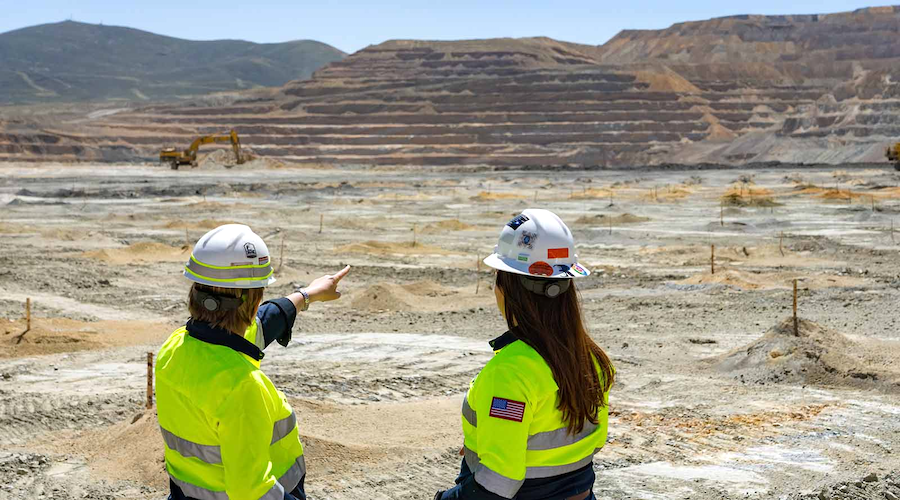
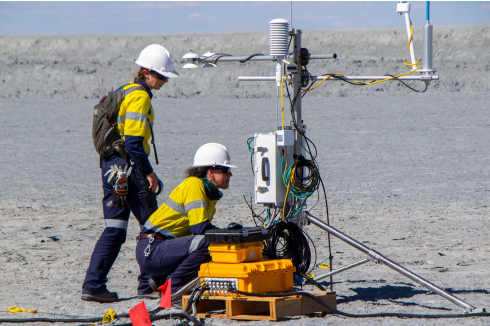
North American Barrick will hold the Nevada Gold Mines joint venture with Newmont. (Image courtesy of Barrick Mining.)

Barrick Mining (TSX:ABX) (NYSE:B) announced on Tuesday the members of the new executive leadership team for its North American operations as the miner advances plans to pursue an initial public offering for the business.

Wessel Hamman will serve as chief financial officer and Tim Cribb as chief operating officer, the company said.

The broader leadership team also includes Joe Heckendorn as chief legal officer and corporate secretary, Megan Tibbals as chief technical officer, Richard Barley as chief human resources officer, Javier Ortúzar as vice-president of exploration and Amanda Steensen as vice-president of sustainability.

The team reports to President and CEO Mark Hill, who was confirmed on his post in February.

The Toronto-based miner, the world’s third-largest gold producer, is pursuing the IPO to sharpen operational focus and unlock value from its North American portfolio. The assets produced about 2 million attributable ounces of gold in 2025 and will operate with standalone leadership and greater flexibility under the new structure.

Barrick plans to retain a significant controlling interest in the new company following the listing.

“This leadership team brings deep operational and financial expertise to the business,” Hill said in the statement. He added the IPO is expected to accelerate momentum by highlighting the attractiveness of the assets in a premier gold district.

North American Barrick

The new entity, to be called North American Barrick, will include the Carlin, Cortez and Turquoise Ridge operations within Nevada Gold Mines, the world’s largest gold-producing complex. It will also include the Fourmile project next to Nevada Gold Mines and the Pueblo Viejo mine in the Dominican Republic.

North American Barrick is expected to have its primary listing in New York, with a secondary listing in Toronto.

The IPO is targeted for completion by the end of 2026 and has been viewed by analysts as a potential catalyst to revive Barrick’s share performance after years of cost overruns and missed profit targets. 

The company said it is working with joint venture partner Newmont (NYSE: NEM) to align on the transaction and improve performance at Nevada Gold Mines.


Carbon Direct, Arca partner to bring industrial mineralization tech to market


Image from Arca.

Carbon Direct and Arca have announced a new collaboration to bring Arca’s proprietary Industrial Mineralization (IMin) carbon dioxide removal (CDR) credits to market.  

Arca’s technology is the first field‑scale system to accelerate carbon mineralization in mine waste, aiming to turn a major industry challenge into a scalable CDR solution, the company said. 

The technology has already attracted the attention of major buyers, including Frontier, who provided an early prepurchase agreement, and Microsoft, who entered a 10-year CDR offtake agreement with Arca for nearly 300,000 tonnes. 

The mining industry generates billions of tonnes of alkaline rock waste annually, requiring environmental management. At this scale, the industry also presents a substantial opportunity to remove CO2. 

Arca’s CDR pathway, known as Industrial Mineralization (IMin), deploys proprietary techniques that accelerate carbon mineralization in alkaline rock waste from heavy industries like mining and steelmaking. This pathway leverages industrial expertise and infrastructure to durably store CO₂ as stable minerals for over 10,000 years, making this a high-quality scalable CDR solution, it said. 

Arca says IMin offers a new paradigm for mining: one that would have improved economics and the potential for important environmental co-benefits such as tailings stabilization.  

The company said it has validated the technology under real-world operating conditions and is generating data to support further development, with the potential to remove millions of tonnes of CO₂ over the coming decade.  

After completing an 18-month pilot in partnership with BHP that removed net CO₂ at high efficiency at an active mining site in Australia, Arca is now laying groundwork to deploy the technology at additional locations.  

In Western Australia, Arca partnered with the Tjiwarl Aboriginal Corporation to develop projects in the Goldfields region.   

Carbon Direct will serve as co-developer with Arca on future IMin projects, contributing scientific expertise and carbon market knowledge to deliver credits with the highest standards for durability, measurement, and verification, Arca said.  

“We’re proud to collaborate with Arca to co-develop this unique solution that transforms one of the mining sector’s biggest environmental challenges into real climate action,” Carbon Direct’s vice president of supply Greg FitzGerald said in a news release.  

“Arca’s Industrial Mineralization pathway accelerates a natural process that would otherwise take thousands of years, turning mining waste from a liability into a climate asset.” 

With 16.5 billion tonnes of suitable legacy mining waste globally and 3 billion tonnes produced annually, Arca says its technology can scale alongside mining operations worldwide.  


After BHP, China’s CMRG close to iron ore deal with Fortescue

Iron ore mining site operating in Nanutarra, Western Australia. Credit: Fortescue

Fortescue Ltd is close to signing a supply agreement with China’s state-backed iron ore buyer, according to a person familiar with the matter, following a BHP Group deal that drew a line under months of talks.

Fortescue, currently in talks, is expected to finalize its long-term settlement with China Mineral Resources Group in the coming months, the person said, asking not to be named as the information is not public. Fortescue is currently operating under short-term agreements that have been extended while the negotiations continue, the person added.

CMRG and Fortescue did not immediately respond to emailed queries.

BHP — which has been locked in a months-long standoff with CMRG over iron ore sales — confirmed last week that it had struck a deal. The world’s largest miner did not provide details on terms and conditions, but the announcement has prompted traders and investors to look for other settlements.

On an analyst call on Friday, Fortescue executives said they had traveled to China earlier that week and met with CMRG. Asked how the miner’s relationship with CMRG might work after a long-term deal is reached, sales and marketing director Ben Kuchel said it was too early to specify the future routine for negotiations.

Bloomberg reported in December that Fortescue and Rio Tinto Group had agreed to extend existing supply agreements with CMRG.

Talks between miners and CMRG have hinged on key issues including pricing benchmarks. Fortescue has already shifted to using an average of China’s Mysteel index and the Argus Iron Ore Index for its products, while its higher-grade Iron Bridge concentrate is priced against the Platts 65% index, according to a presentation from the CMRG research institute in March.

China’s state iron ore buyer allows purchases of banned BHP portside cargoes


Photo courtesy of Pilbara Ports.

China’s state iron ore buyer has lifted its ban on purchases of certain BHP ore products that had piled up at ports, four sources with knowledge of the matter said on Tuesday.

BHP Group, the world’s third-largest iron ore supplier, and state buyer China Mineral Resources Group (CMRG) have concluded a contract negotiation that ended a months-long ban on purchases of the company’s iron ore, BHP said last week. 

The ban was lifted for mainly seaborne products and its removal followed a visit by BHP executives.

Steelmakers can now buy and take delivery from ports previously frozen BHP products such as Jimblebar fines – a type of medium iron ore – after submitting a report to CMRG, said the sources, speaking on condition of anonymity.

Traders also were notified that they could sell their Jimblebar fines at ports, said one of the sources.

The most-traded iron ore contract on China’s Dalian Commodity Exchange (DCE) ended morning trade down 1.02% at 779.5 yuan ($114.18) a metric ton.

Last September, CMRG banned purchases of BHP’s Jimblebar fines, followed by the miner’s Jinbao fines last November and Newman fines in March.

Jimblebar fines stocks at 15 major Chinese ports were 8.69 million tons as of April 22, 382% higher than in late September, two separate traders with knowledge of the matter said last week.

CMRG and BHP did not immediately respond to Reuters requests for comment.

($1 = 6.8271 yuan)

(Reporting by Reuters staff; Editing by Kim Coghill and Christian Schmollinger)


Nickel price rises to two-year high as supplies from Indonesia tighten


Stock image.

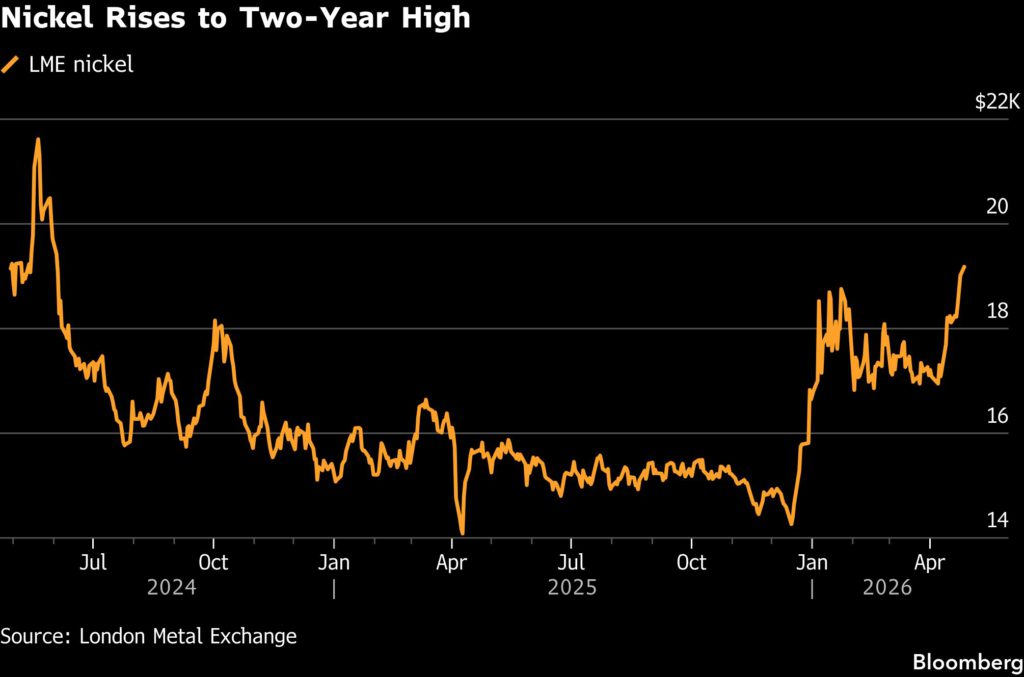
Nickel rose to the highest in almost two years, as reduced mining quotas in major producer Indonesia and a global sulfur shortage tighten the supply outlook for the battery metal.

Futures in London have risen about about 7% since the start of the Iran war, which is driving a surge in prices of sulfur — a key reagent used in processing — and fueling concerns over disruptions to global mining, including mixed-hydroxide precipitate production in Indonesia and copper leaching in Africa.

Nickel climbed as much as 2.8% on Monday, before giving up most of its gains. Other base metals were mixed, as efforts to resume peace talks between the US and Iran remained at an impasse, two months into a conflict that’s dented the outlook for global economic growth.

Nickel mining in Indonesia is already under pressure after the country slashed its production quota to revive prices for the metal. The Asian country accounts for well over half of global production, thanks to a wave of Chinese investment in smelters.

“Market sentiment on nickel remains positive as traders await further upside catalysts pointing to a substantial production cut in MHP,” Jinrui Futures Co. said in a note, referring to the mixed-hydroxide precipitate, an intermediate product containing nickel.

Nickel was up 0.7% at $19,155 a ton by 4:56 p.m. local time on the London Metal Exchange, after touching its highest level since June 2024. Copper fell 0.8%, while tin was down 2%.

Huayou cuts output at Indonesian nickel plant as sulphur costs surge


Indonesia Pomalaa Industrial Park. Credit: Huayou

Zhejiang Huayou Cobalt said on Tuesday that its Indonesian unit will temporarily halt some production lines from May 1, slashing about half of the plant’s output, after rising sulphur prices lifted costs at one of its key battery-nickel projects.

The Chinese nickel and cobalt maker said in a statement that the Huafei Nickel Cobalt plant would cut production because of the higher sulphur costs as well as maintenance required after a long period of producing at high capacity.

It did not state how long the outage would last.

Spot prices for sulphur delivered to Indonesia have risen above $800 a metric ton as the Iran war disrupted production and shipping of the key raw material from the Gulf. The region produces about a quarter of global sulphur supply and about 75% of Indonesia’s supply.

Reuters reported on April 14 that several Indonesian HPAL producers operated by Huayou, Lygend Resources and Tsingshan Group had trimmed output by at least 10% due to rising sulphur prices since March.

The outage at the Huafei plant is one of the clearest company-level signs yet that a global sulphur squeeze is hitting Indonesia’s high-pressure acid leach, or HPAL, nickel sector.

HPAL plants use sulphuric acid to process laterite ore into mixed hydroxide precipitate, an intermediate product used in electric vehicle batteries.

Huayou said it would speed up process upgrades to reduce sulphuric acid consumption and expand sulphur supply channels. It also said it would accelerate development of nickel, cobalt and lithium mining resources obtained through investment and equity stakes.

Huafei generated 14.50 billion yuan ($2.12 billion) in revenue in 2025, accounting for 17.89% of Huayou’s total revenue. It made 1.25 billion yuan in net profit, while Huayou’s share of attributable profit from the unit was 569 million yuan, or 9.32% of the company’s parent net profit.

($1 = 6.8372 Chinese yuan renminbi)

(By Dylan Duan and Lewis Jackson; Editing by Emelia Sithole-Matarise)


Sandvik strengthens investment in Papua New Guinea to support growing mining industry


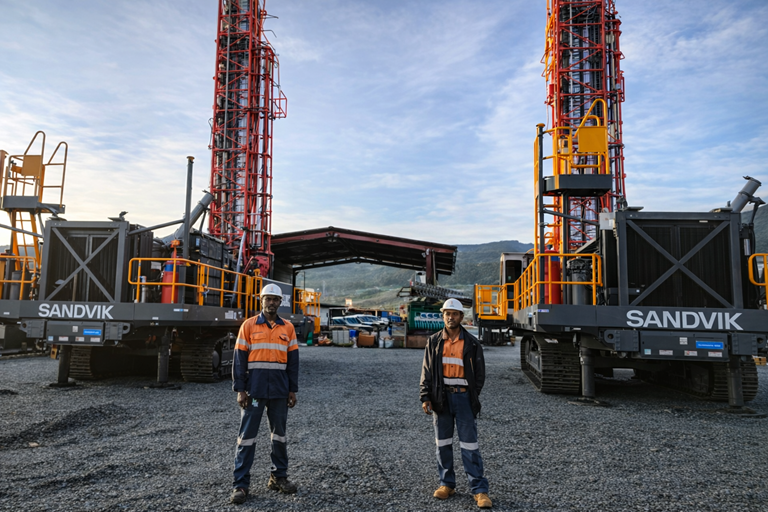
Image supplied by Sandvik.

Sandvik Mining is continuing to strengthen its presence in Papua New Guinea (PNG), reinforcing its long-term commitment to supporting the country’s growing mining industry through expanded facilities, increased operational capacity, enhanced logistics and continued investment in people and local capability.

Sandvik has operated a local entity in PNG for more than five years, providing equipment, parts, technical support and services to some of the country’s leading mining companies, such as New Porgera Limited, K92 Mining Ltd, Lihir Gold Limited, Monier Limited, Morobe Consolidated Goldfields Ltd, Quest Exploration Drilling (PNG) Ltd and Ok Tedi.

As the Sandvik fleet in PNG continues to grow, the company has expanded its facilities in Lae to improve service delivery, strengthen in-country support and create a more stable and efficient operating base for employees and customers.

Sandvik’s Customer Support Centre in Lae now plays an important role in supporting PNG customers through service coordination, major component repairs and future equipment rebuild cycles, while also improving working conditions for the local team.

Sandvik has delivered and is supporting more than 40 units of equipment in PNG across underground trucks, loaders, underground drills, surface drills and rotary drills. This growing installed base is supported through coordinated parts planning, local warehousing, component repair capability and in-country resourcing, helping ensure responsive and reliable support for customers across the country.

“Papua New Guinea is an important market for Sandvik, and our continued investment reflects both the growth we are seeing in-country and our commitment to supporting customers with reliable, local service and technical capability,” says Andy Chirita, head of parts & services in the Australia, New Zealand and PNG sales area.

The expanded Lae facilities and future plans improve Sandvik’s ability to support customers with parts availability, component repair capability and future equipment rebuild cycles, while also providing improved long-term stability and working conditions for employees. The site also supports coordinated parts planning between Lae and Brisbane, local warehousing and in-country resourcing.

Sandvik Mining in Papua New Guinea now employs 24 people across its Lae and Porgera operations. Alongside investing in its own Papua New Guinea workforce, Sandvik is also committed to helping upskill local Papua New Guinean talent more broadly through operator training, machine maintenance training and the transfer of technical knowledge to build long-term capability in country.

“Our investment is not only in Sandvik’s own people and facilities, but also in building capability in Papua New Guinea,” says Chirita. “By strengthening local support and helping develop skills in-country, we are building a stronger foundation for our customers, our employees and the long-term growth of the mining industry in PNG.”

Sandvik is also supporting customers in Papua New Guinea with its Remote Monitoring Service (RMS), which uses intelligent technology to help prevent and predict equipment breakdowns before they occur. This helps improve reliability, reduce downtime and support more proactive maintenance planning.

Sandvik’s progress in Papua New Guinea has included securing long-term facilities in Lae, expanding workshop and warehouse capability, developing a national workforce and strengthening the team supporting customers in country. These investments reflect Sandvik’s long-term commitment to Papua New Guinea and its ambition to be a trusted partner to the mining industry.


Ecuador signs $1.7 billion mining deal with China’s CMOC Group


Reference image: CMOC

Ecuador has signed a mining contract with the local subsidiary of China’s CMOC Group for the Los Cangrejos mining project, Ecuador’s energy ministry said on Monday, putting the total expected investment at more than $1.7 billion.

The project, located in the El Oro province and developed by subsidiary ODIN Mining del Ecuador, is projected to generate $4.39 billion in total revenue for the state through taxes, royalties, and other fees, the ministry said in a statement.

The agreement ensures the state retains a 50% share of the project’s value, the ministry said.

Ecuador will receive $54 million in advance royalties, with $34 million paid upon signing. The remaining payments are tied to construction milestones, including the start of the processing plant and the beginning of mining operations.

Development of Ecuador’s mining sector has frequently been slowed by community opposition, litigation and regulatory changes. The Fruta del Norte gold mine and the Mirador copper mine, both of which began production in 2019, remain the country’s only two large-scale mining operations currently in operation.

(By Alexandra Valencia; Editing by Brendan O’Boyle and Daina Beth Solomon)


Gold price could see $8,000 on de-dollarization, Deutsche Bank projects


Stock image.

Gold is poised to benefit significantly from an increasingly fragmented world as nations continue to pivot into the metal and away from the US dollar as their go-to reserve asset, according to Deutsche Bank.

In a note published on Monday, the German investment bank said it sees a scenario where central banks, especially those in emerging economies, continue to increase their gold holdings as a financial safety net to protect themselves from Western sanctions.

The bank highlights that these central banks have added over 225 million ounces to their reserves since the 2008 financial crisis, while their holdings of US dollars have fallen from a peak of over 60% in the early 2000s to about 40% today.

It is not only the major holders — China, Russia, India and Turkey — that are buying up gold. As Deutsche Bank noted, the purchases are broadening to include countries like Kazakhstan, Saudi Arabia, Qatar, Egypt and the United Arab Emirates.

Should this trend continue, bullion’s share of global central bank reserves could realistically reach 40%, up from 30% currently, the bank predicts. At that allocation, Deutsche Bank ran a simulation that projects gold prices to hit $8,000 an ounce within five years — a near 80% rise on current levels.

While this price projection is conceptual in nature and not an official forecast, it aligns with the industry’s prevailing view that gold stands to be the biggest beneficiary of the global de-dollarization movement as trust in US assets continues to erode.

A survey last year by the World Gold Council revealed that central banks see economic and geopolitical uncertainty as a key factor influencing their decision to accumulate gold.


$3 billion Canadian deal is fast-tracking gold production in Guyana


Updated: 


G Mining Venture’s $3 billion acquisition catapults itself to become a significant immediate gold producer with one of the highest current gold profiles, says the company’s CEO.

The company announced an agreement to acquire G2 Goldfields on Tuesday.

The deal will see both the Canadian companies combine their two adjacent projects in Guyana, G2’s Oko-Ghanie Project and GMIN’s Oko West Project into a large-scale, low cost mining hub.

The combined Tier-1 Oko Project is expected to yield over 500,000 ounces of gold per year, says Louis-Pierre Gignac, CEO of G Mining Venture.

“I think there’s tremendous value for all shareholders given the very important synergies that come about with this transaction,” he said.


The transaction will result in GMIN and G2 shareholders holding roughly 80.1 per cent and 19.9 per cent of the combined company.

It also includes a high premium of 72 per cent premium, which Gignac says is justified by the high asset value and clear operational synergies of the acquired deposits.

“That was a premium that we were prepared to pay, and one that generates significant accretion for our shareholder shoulders on a Net Asset Value (NAV) per share basis,” says Gignac.

$1 billion in saved costs

The deal was a long time coming, says Gignac, noting that the two properties are across the fence from each other.

“We see approximately $1 billion in synergies, with a mix of CapEx synergies over the life of the mine and operating cost synergies as well,” says Gignac.

The deal will also create a total resource of seven million ounces, which will extend the life of the Oka West mine to over 15 years.

Support from Guyanese government.

The company has strong support from the Guyanese government and is already fully permitted for its current operations, says Gignac.

He says because its new project is an extension of existing work, it can update its current environment assessment and permits rather than starting a new application process.

He also says the transaction consolidates land around the Oka West project into a 362-square-kilometer, land package,


“This becomes district scale, allows for a lot of upside opportunities for us from an exploration point of view,” says Gignac.

“We’re quite excited about the combination that this creates.”

The company plans to conduct infill drilling to support an updated feasibility study targeted for 2027. This study will define the expanded project scope, with construction slated for 2028 and the expansion becoming operational in 2029, says Gignac.

He says the company is fully self funded with a $350 million undrawn credit facility and $255 million in post-transaction net cash from its Tocantinzinho mine in Brazil.

Anam Khan

Anam Khan

Opens in new window

Journalist, BNNBloomberg.ca