Wednesday, June 03, 2026


How Long Can Demand Destruction Keep a Lid on Oil Prices?

  • Global oil stocks outside China are drawing down at nearly 1.7 million bpd -- and even China has started tapping its reserves, eroding the inventory buffer that has kept prices from spiking further.
  • China's oil demand has dropped 9%, or roughly 1.5 million bpd, as consumers shift to EVs; the key question for the market is how much of that demand comes back once the conflict ends.
  • U.S. consumers have paid an extra $40 billion for gasoline since the Iran war began March 1, with the SPR now days away from its lowest level since 1983.

In a somewhat puzzling market development, oil prices haven't spiked yet to record highs amid the worst supply disruption in history.

That's because the market still hopes for a quick resolution to the Strait of Hormuz crisis (for more than three months now), global inventories have offered a supply buffer, the world's top crude importer, China, is staying away from spot purchases, and last but not least, demand destruction is accelerating amid the high prices.

Beyond the near-term supply chaos and conflicting signals about the Middle East war, analysts are wondering how much of the current demand destruction will be permanently lost once the conflict is resolved.

Inventories Ease The Shock from Lost Supply, So Far

The oversupply with which the market faced the beginning of the Iran war has helped to ease the upward pressure on oil prices as the conflict enters its fourth month. But global stocks, except in China, are being depleted at a record pace, suggesting that the buffer is stretching thin and the true magnitude of the supply loss will hit the market very soon.

Excluding China, which has accumulated large buffer stocks of more than 1.2 billion barrels over the past year, the rest of the world has seen onshore stocks draw at an accelerating pace, according to Kpler.

Global stocks drew down at a pace of just over 1.5 million bpd in early May. This drawdown rate has now jumped to nearly 1.7 million bpd, Kpler's data showed, suggesting that further tightness could lie ahead.

As inventories started to fall and prices spiked to $100 per barrel and beyond, consumers reduced demand. Asian consumers have been forced to slash consumption amid soaring fuel prices and government measures to curb fuel use, including shorter work weeks and work-from-home schemes for civil servants. But consumers in Europe and the U.S. are also curbing demand amid high fuel prices and air fares.

In America, the cumulative increased costs for gasoline since the U.S. attacked Iran on March 1 for consumers is now $40 billion, with $400-$600 million that Americans are paying more for gasoline every day over the past three months, according to Patrick De Haan, Head of Petroleum Analysis at GasBuddy.

Moreover, the U.S. Strategic Petroleum Reserve (SPR) is less than 10 days away from falling to its lowest level since August 1983, a level not seen since the SPR's initial fill-up that began in 1977, De Haan said on Monday.

Demand Destruction Kicks In

As costs soar, consumers rethink spending on gasoline. As inventories crash, oil prices tend to spike.

But demand destruction has been so high so far that it has capped price spikes, alongside China's reluctance to tap the spot crude market for purchases as it has amassed inventories that would last it a few more months.

In China specifically, demand has slumped by 9%, or about 1.5 million barrels per day (bpd), "abruptly, unexpectedly, and with remarkably little visible disruption," JPMorgan oil strategists Natasha Kaneva, Lyuba Savinova, and Artem Fakhretdinov wrote in a note carried by Yahoo Finance.

"It looks like consumers have made a quiet economic choice," JPMorgan's analysts said, noting that Chinese consumers have shifted to electrified transportation.

Consumers outside China are also making the economic choice of spending less on much more expensive fuels. Electric vehicle sales are soaring in Asia and Europe. American consumers, while not rushing into EVs with zero federal incentives, are rethinking driving and are commuting more as the highest gasoline prices in four years are changing consumer behavior.

The biggest question for analysts and for the oil market in the medium to long term is: will demand return after this crisis settles? Or will governments and policymakers choose to permanently replace some oil and gas consumption with low-carbon alternatives such as EVs and solar and wind power to avoid being caught off-guard during the next geopolitical crisis that will cripple oil and gas supply?

"Put differently, could the world actually function with something like 9% less oil?," JPMorgan analysts asked in their recent note.

For now, the world doesn't seem to have much choice. With the Strait of Hormuz still closed, inventories are being drawn down to critically low levels, and people are seeking to replace road transportation fuels with EVs or simply drive and fly less.

The longer the Hormuz crisis lasts, the more severe the current supply disruption will be, prompting permanent, conscious efforts by governments to avoid ever again being so dependent on the Middle East's oil and gas.

Some of the demand destruction that started as a knee-jerk reaction to the crisis could become a permanent loss of consumption.

Separately, demand destruction is currently helping keep a lid on oil prices.

Demand destruction resulting from higher prices will somewhat soften the blow from physically tighter oil markets, Goldman Sachs commodity analysts said in a note earlier this week.

But the inventory buffer is nearly gone, even China started drawing down its stocks, and with an inevitable Chinese rebound in crude purchases in the coming months, oil prices are set to surge this summer, when actual shortages may start to appear.

By Tsvetana Paraskova for Oilprice.com


India’s financial crime agency searches Vedanta premises, ET says


Credit: Vedanta Resources

India’s financial crime-fighting agency on Tuesday searched premises linked to the Vedanta Group, the Economic Times reported, citing officials.

The Enforcement Directorate was conducting the searches as part of an investigation under India’s Foreign Exchange Management Act, the report said.

Details of the alleged violations were not immediately available.

The company is extending full cooperation to the authorities and is providing all information sought, a Vedanta spokesperson said to Reuters.

“The company remains committed to compliance with all applicable laws and regulations. As the matter is currently under regulatory process, we are unable to comment further at this stage,” the spokesperson added.

The Enforcement Directorate did not immediately respond to a Reuters request for comment.

(By Abhirami G; Editing by Nivedita Bhattacharjee)


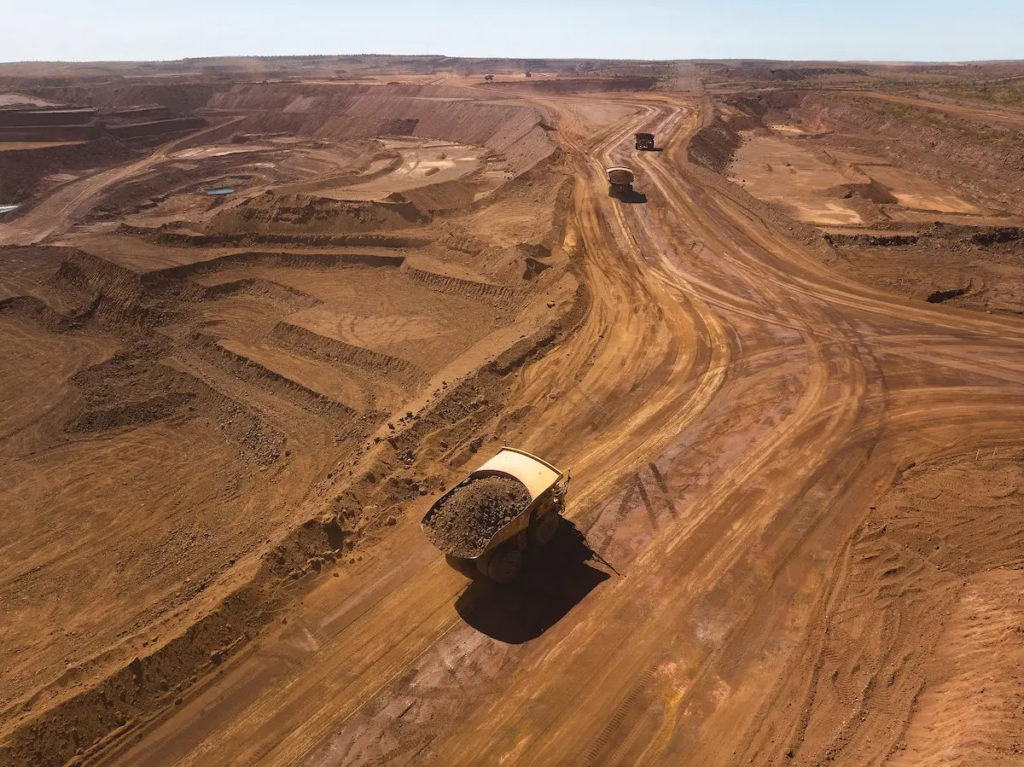
China tells steelmakers not to talk with Fortescue about new iron ore product


Credit: Fortescue

State iron ore buyer China Mineral Resources Group (CMRG) has told some domestic steelmakers not to engage in discussions with Australia’s Fortescue about a new iron ore product, two sources with knowledge of the matter said on Tuesday.

The demand has stoked speculation that CMRG could impose a purchasing ban on some Fortescue products as it did during protracted negotiations with BHP that concluded earlier this year

CMRG is in talks with Fortescue over a new term contract and the negotiations are not progressing well, said the sources, who requested anonymity due to the sensitivity of the matter.

CMRG did not immediately respond to a Reuters request for comment. A Fortescue spokesperson said the company continues to engage with CMRG and does not comment on confidential commercial discussions.

Last week Fortescue Metals CEO Dino Otranto characterized the negotiations as an “arm wrestle”. CMRG is looking for better terms for its steelmakers, which have very thin profit margins, while the world’s biggest iron ore miners boast profit margins of between 70% and 80%.

Fortescue has been planning to introduce a new lower-grade iron ore product, dubbed the Fortune Fines. The first shipments are scheduled in July, three separate trading sources said.

But even if a purchasing ban was introduced on this particular product, little impact is expected on prices as it has yet to be launched, traders and analysts said. Some traders said they had not even heard of the product until this week.


The most-active iron ore contract on the Dalian Commodity Exchange finished daytime trade up 0.77% on Tuesday. The benchmark July iron ore on the Singapore Exchange was 0.72% higher in late trade.

The increased scrutiny by CMRG over potential purchases of Fortescue’s new iron ore product steelmakers was first reported by Bloomberg News.

(By Melanie Burton and Helen Clark; Editing by Edwina Gibbs)


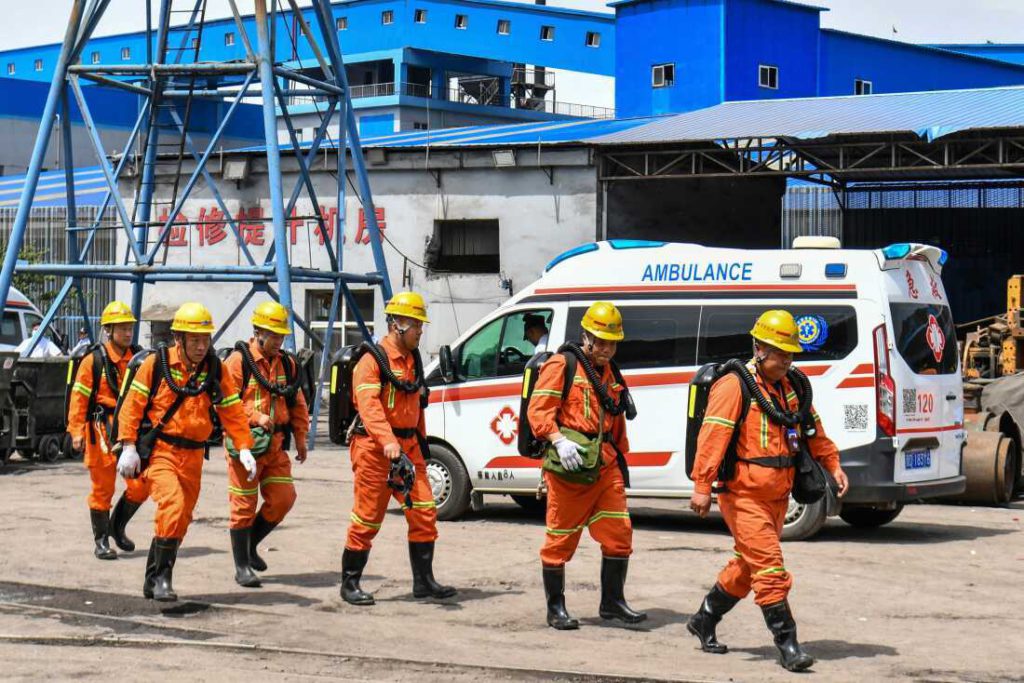
Local party chief probed after 82 killed in Chinese mining tragedy


Rescue efforts after mine explosion. Credit: Xinhua | Weibo

A party chief in the northern coal-rich Chinese ​province of Shanxi is ‌under investigation over “suspected serious violations of discipline and law”, the local ​anti-graft agency said on ​Tuesday, after a mining tragedy last ⁠month that killed at least ​82.

Zhao Yongjin, the top official ​of Qinyuan county, “is currently undergoing disciplinary review and a supervisory investigation by ​the provincial discipline inspection ​and supervision commission,” a statement showed.

An initial ‌probe ⁠into the deadliest mining accident in China since 2009 has uncovered concealed mining tunnels, ​falsified drawings ​and ⁠outsourced and unregistered miners, who had not been ​provided with required life-saving ​location ⁠trackers.

The government has pledged to leave no stone unturned in ⁠rooting ​out the cause ​of the incident.

(By Xiuhao Chen and ​Ryan Woo; Editing by Gareth Jones)


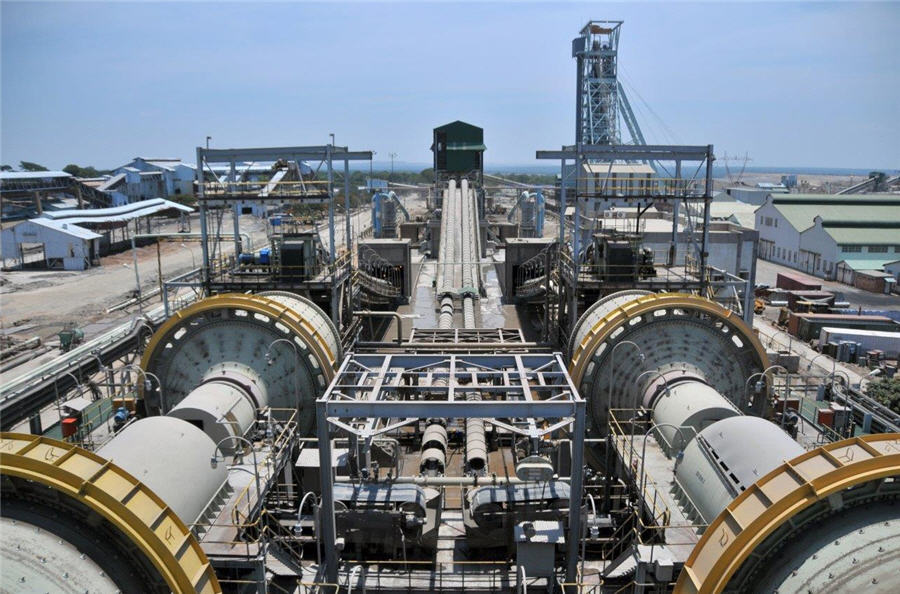
Vedanta’s Zambian unit shuts copper smelter for maintenance


Vedanta’s Konkola Copper Mines, Zambia. Image courtesy of Konkola Copper Mine Plc

Vedanta’s Konkola Copper Mines has started a 60-day shutdown of its Nchanga smelter in Zambia for maintenance and repairs, it said on Tuesday.

KCM said the repairs and maintenance are aimed at enhancing operational efficiency, reliability and long-term production performance.

The company produced 80,215 metric tons of copper in 2025, according to the mines ministry.

The scheduled shutdown is part of the company’s broader modernization strategy, designed to lift its output towards a target of 300,000 tons per year by 2030.

That fits within Zambia’s ambition to raise national output to 3 million tons by 2031 from 890,346 tons in 2025.

The Nchanga smelter shutdown means three of Zambia’s major processing plants will undergo extended maintenance between June and mid-September, with the Mopani and Chambishi plants also undergoing shutdowns.

That could tighten copper and sulphuric acid production at a time when the Iran war has also disrupted global supplies of sulphuric acid, critical in the processing of copper and cobalt.

KCM said it will continue supplying acid to its Nchanga tailings leach plant, which recovers copper from stockpiled waste, from external sources and its own 500 ton-per-day acid plant at Nchanga.

(By Chris Mfula; Editing by Nelson Banya and Jan Harvey)


Trump signs proclamation amending tariffs on steel, aluminum and copper imports


US President Donald Trump signing executive orders. Credit: Trump White House Archive

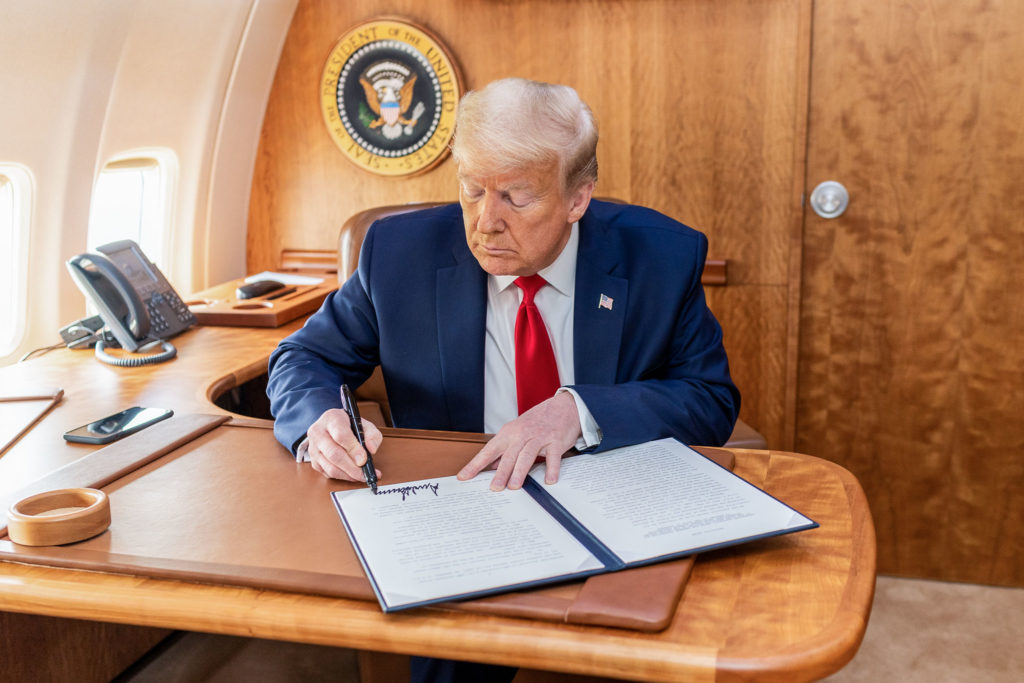
US President Donald Trump on Monday signed a proclamation amending his Section 232 national security tariffs on some aluminum, steel and copper imports, the White House said.

The proclamation lowers tariffs on some steel and aluminum derivative products, including certain types of agricultural machinery and residential heating, air conditioning and ventilation equipment to 15% from 25% previously.

It makes mobile industrial equipment, such as bulldozers and forklifts, subject to a 15% tariff “when imported from trade deal countries that are entitled to such treatment,” the White House said in a statement.

The order also allows foreign companies to qualify for a 10% tariff if “their capital equipment includes at least 85% US melted and poured or smelted and cast steel or aluminum by weight.”

The order adds two new categories of steel and aluminum derivative import products that will be subject to 25% duties: steel racks and aluminum lithographic plates.

The adjustments will become effective for goods imported or withdrawn from bonded warehouses after 12:01 a.m. EST (04:01 GMT) on June 8.

The changes will remain in place until December 31, 2027 “to spur near–term investments that will rebuild the Nation’s industrial base,” the White House said.

(By Christian Martinez and David Lawder; Editing by Caitlin Webber and Kate Mayberry)


Copper and aluminum power higher on global demand, war outlook


Stock image.

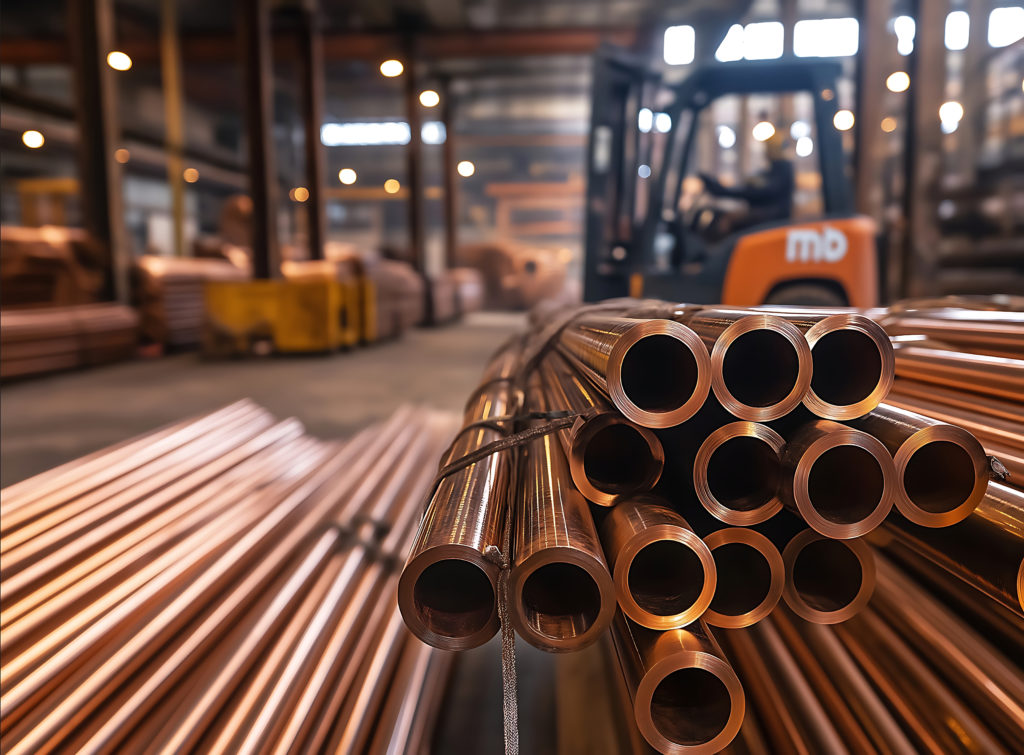
Copper topped $14,000 a ton and aluminum advanced to its highest in more than four years as optimism over demand and supply constraints outweighed concerns over the unresolved conflict in the Middle East.

Base metals have made a strong start to June, fueled by bets on tighter global supply. Aluminum availability is under pressure as the US struggles to resolve its war with Iran, while copper traders are bracing for a crunch tariff decision by the Trump administration.

Prices are also benefiting from bets on assets linked to artificial intelligence and the energy transition. Tin, used in soldering for electronics, jumped 2.3% to trade near a record high.

“Metals prices are generally in an upswing, driven by supply disruptions for some commodities due to the Middle East conflict and strong structural demand,” HSBC Holdings Plc analysts wrote in a note. Commodities were facing a “super-squeeze” with the Strait of Hormuz still blocked, they wrote.

The gains come after a flurry of bullish calls by some analysts. Goldman Sachs Group Inc. raised its end-of-year copper forecasts by more than 10% in a note earlier this week, while Citigroup Inc. last month said aluminum was facing its most bullish supply-demand conditions in at least half a century.

In a sign of tighter markets, cash aluminum contracts at one point Tuesday were as much as $116.50 a ton more expensive than three-month futures, the biggest premium since 2007. The price spread closed at $98.09.

Investors are still monitoring the latest developments in the Middle East. US President Donald Trump is still optimistic the US can reach an interim peace deal with Iran soon, after the Islamic Republic threatened to suspend talks because of Israel’s escalating attacks in Lebanon.

The ongoing war adds to questions over the future of aluminum supply from the region, which accounted for about a 10th of global output before the conflict began. Some copper output is also at risk of slowing if flows of sulphuric acid from the Middle East continue to be squeezed.

Aluminum rose 1% to settle at $3,752.50 a ton on the London Metal Exchange, marking an advance of more than 25% this year. Copper on the LME rose 1.5% to close at $14,040.50 a ton. New York’s Comex copper futures advanced 1.9% to settle at $6.6765 a pound.


ARLYX unveils autonomous solution for material handling in underground mines     

Adobe iStock image.

ARLYX Technologies has launched what it says is the first complete, fully electric autonomous solution purpose-built for material handling in underground mines.  

The ARLYX utility vehicle and AutoLatch module handle transport, loading, and unloading of up to 5,000 kg remotely and without interruption, even during blasting periods. 

Post-blast ventilation represents one of the most significant productivity losses in underground mining. ARLYX turns these interruptions into working hours by delivering consumables (rock bolts, pipes, concrete) while workers are evacuated. Materials are in place when crews return. 

By shifting material handling to blasting periods, ARLYX frees up the ramp during production shifts, allowing ore trucks to move without slowdown. The result, the company says, is one additional ore load per day, worth up to C$27M in estimated annual gains. 

“Ramp congestion is the bottleneck of every underground mine. Every day, hours and thousands of dollars are left on the table. ARLYX is the first to tackle the problem at its source by clearing the ramp,” ARLYX Technologies CEO Michael Simard said in a news release.  

As extraction goes deeper and conditions grow more demanding, underground mine automation reduces miners’ exposure to on-site hazards. An ARLYX autonomous vehicle helps reduce incidents and production downtime, as well as addressing labour shortages, as a single teleoperator can oversee up to ten ARLYX vehicles simultaneously. 

“We are proud to make the zero-entry mine a reality—one where technology takes the risks, not people,” Simard said. 

As the price of diesel fuel continues to rise, electric vehicles offer a clear economic advantage. Its zero emissions reduce the need for underground ventilation, the largest operating expense in a mine. Its simplified mechanics reduce maintenance needs while supporting decarbonization goals. 

ARLYX is a complete solution, integrating seamlessly into existing mine infrastructure (LTE, 5G, WiFi, or radio) in a fully agnostic manner. From connectivity and software to on-the-ground support, the solution is backed by specialists in both robotics and IoT. 

Multiple patents are pending for ARLYX’s autonomous transport solution, whose modular architecture is designed to evolve. The engineering team has begun work on additional modules: fire suppression, dust control, and ore transport. 

“Our vehicle wasn’t retrofitted to be mining-ready. It is designed for mines, their constraints and their realities,” Simard said. 

Developed over two years in Quebec and tested under real conditions at a Tier 1 mine, the innovation will be first showcased at Mining Transformed May 25–27 in Sudbury, Ontario. 

Tuesday, June 02, 2026


Central Asia Metals expands to Canada with $166M acquisition of Cygnus


The Chibougamau copper-gold project is located in central Québec, approximately 480 km due north of Montreal. Credit: Cygnus Metals

Central Asia Metals (AIM: CAML) is acquiring Cygnus Metals (ASX: CY5, TSXV: CYG) for approximately A$232 million ($166 million) in a move that expands its portfolio into both Canada and Australia.

On Tuesday, the London-listed base metals miner said it has entered a definitive agreement to buy all of Cygnus’ shares, offering 0.06 of newly issued shares for each Cygnus share acquired. This share exchange ratio values each Cygnus share at A$0.176, based on CAML’s closing price on June 1 and the Canadian-Australian currency exchange rates that day.

Following the announcement, CAML’s shares fell 1.2% in London, for a market capitalization of £262 million ($353 million). Cygnus Metals traded flat with a market capitalization of A$129 million ($92 million).

60% premium

The offer, CAML said, represents a 60% premium to Cygnus’ last closing price of A$0.11, and a 40% premium to its 20-day volume weighted average price. Upon closing, CAML shareholders would still own approximately 70% of the company’s share capital, while Cygnus shareholders would own the remaining 30%, it added.

A meeting is expected to be held in September for Cygnus shareholders to vote on the proposed deal, with 75% required for it to pass. Before that, CAML will also hold a shareholder meeting to approve the issuance of new shares and options in connection with the transaction.

As part of the acquisition, CAML intends to list its ordinary shares on the Toronto Stock Exchange or TSX Venture Exchange, a move that it says helps to broaden its investor base in North America.

Diversified portfolio

In acquiring Cygnus, CAML would add a development-stage copper-gold asset located in Québec, Canada, to its existing portfolio of producing assets.

The company currently owns and operates the Sasa underground zinc-lead mine in North Macedonia and the Kounrad copper operation in central Kazakhstan. Together, they are expected to produce 12,000-13,000 tonnes of copper cathode, 18,000-20,000 tonnes of zinc-in-concentrate and 26,000-28,000 tonnes of lead-in-concentrate this year.

The UK-based company has long been looking to grow its exposure to copper. Last year, it failed in its bid to acquire Australia’s New World Resources and its flagship asset in Arizona.

Cygnus’ Chibougamau project, CAML says, has the potential to “add meaningfully” to its copper-equivalent output and generate cash flows once in production while also helping the company to diversify its commodity and jurisdiction exposures.

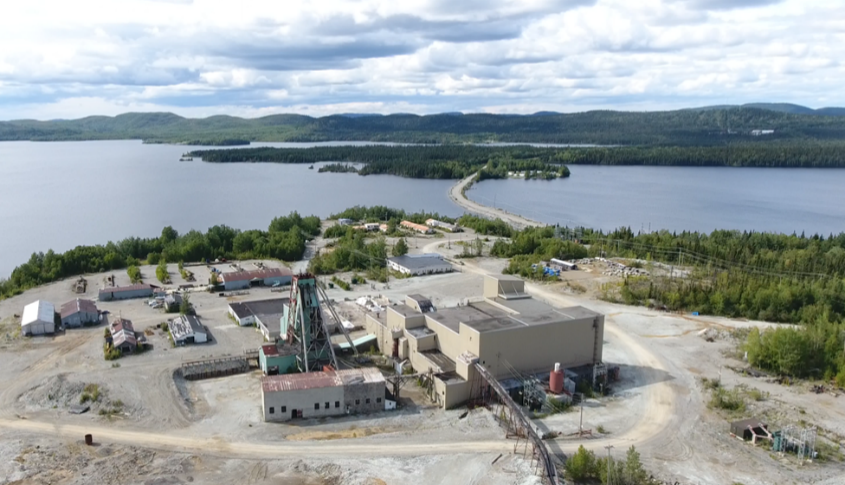
Acquired in 2024, the Chibougamau project is estimated to hold about 149,000 tonnes of copper and 167,000 ounces of gold in measured and indicated resources and 182,000 tonnes of copper and 454,000 oz. gold in inferred.

The resource was calculated by its previous owner Doré Copper Mining Corp. as part of a 2022 preliminary economic assessment. Upon closing the deal, CAML said it plans to complete an updated PEA and progress further feasibility studies, leveraging its own mine development expertise.

The site currently has infrastructure in place, including a historical 900,000-tonne-per-year processing facility.

‘Compelling’ copper opportunity

“We see this transaction as a compelling opportunity for CAML to add a high-grade copper-gold asset that fits well alongside our existing operations,” CAML’s non-executive chairman Nick Clarke said in a news release. “Bringing the Chibougamau project into the portfolio provides a clear pathway to near-term growth, with the potential to make a meaningful contribution to production and cash flow.”

This transaction is a “true win-win outcome,” Cygnus’ chairman David Southam said, noting that its shareholders can maintain their exposure to the Chibougamau project “while reaping the benefits of a highly respected base metals operating company that produces free cash flow and pays dividends.”

“CAML has all the necessary experience in underground mining, processing, dry stack tailings and concentrate production to deliver the Chibougamau project,” he added.

In addition to Chibougamau, Cygnus also holds lithium assets with exploration upside in the world-class James Bay district in Québec, as well as rare earth element and base metal projects in Western Australia.


USA Rare Earth selects South Carolina for rare earth metals and magnet plant


Round Top rare earths deposit in Texas. (Image courtesy of Texas Mineral Resources.)

USA Rare Earth (Nasdaq: USAR) announced Tuesday it will invest $1.2 billion in a new magnet manufacturing and refined metals operation in Cherokee County, South Carolina.  

The project is expected to significantly expand domestic production capacity for sintered neodymium-iron-boron (NdFeB) permanent magnets and the refined rare earth metals from which they are made, the company said.  

Located in the Bailey Industrial Park in Blacksburg, the build will be the company’s third in the US – it also has a facility in Stillwater, Oklahoma, which commissioned its first commercial production line in March, and a separation and processing facility in Wheat Ridge, Colorado.  

USA Rare Earth is betting on vertically integrated operations stretching from mining to magnet production will help position it as a cornerstone supplier to aerospace, defence, semiconductors, energy and data centre industries. 

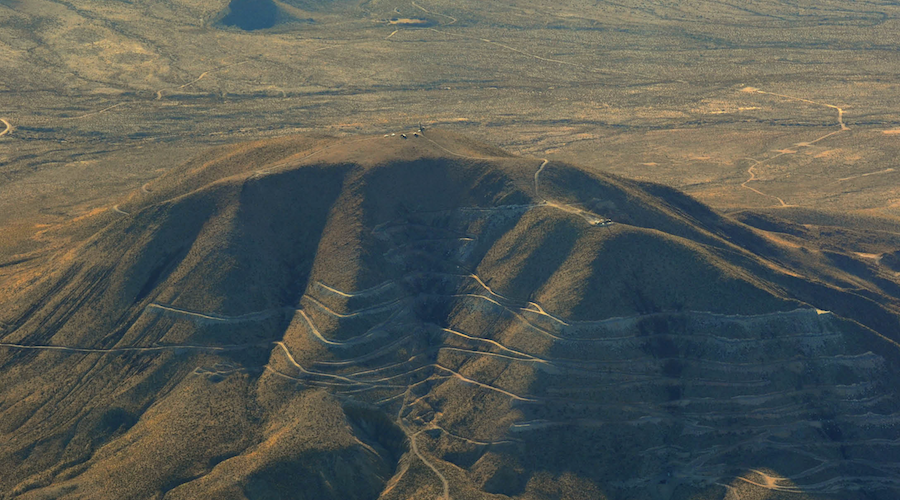
The Stillwater and Blacksburg operations will form the magnet manufacturing centerpiece of USA Rare Earth’s integrated, mine to magnet value chain, which spans the Round Top heavy rare earth mining and processing project in Sierra Blanca, Texas,   and the planned acquisition of the Serra Verde mining and processing operation in Goiás, Brazil; the LCM metal and alloy facility in Cheshire, United Kingdom; and a planned metallization and alloy facility in Lacq, France. 

Once online, the Blacksburg facility is targeting production capacity of 6,400 metric tons per annum (tpa) of NdFeB rare earth magnets and 5,000 tpa of strip-cast, metal and alloy. Combined with the planned expansion at the company’s Stillwater facility, USAR expects total domestic production capacity to reach 10,000 tpa of NdFeB rare earth magnets and 10,000 tpa of heavy rare earth strip-cast, metal and alloy.  

Engineering work and equipment procurement for the Blacksburg facility is underway, with site work expected to commence in the coming months and commissioning targeted to begin in 2028, the company said.  


“Cherokee County is the next critical link in the rare earth and magnet value chain we’re building across the United States, the United Kingdom, Europe and around the globe,” USA Rare Earth CEO Barbara Humpton said in a news release

“South Carolina offered the workforce, the infrastructure and the partners we needed to move quickly. With this investment, we’re bringing home the advanced manufacturing capabilities that America and its allies depend on, from the factory floor to the front lines,” Humpton said.  


China  dominates the global rare earth market, controlling the vast majority of extraction, processing, and manufacturing. Western governments consider this monopoly a significant national security and supply chain risk, and are actively subsidizing alternative projects to counter it. 

In May, the U.S. Department of Energy selected USA Rare Earth to receive up to $19.3 million for a pilot rare earth processing project aimed at boosting domestic supply chains. 

Under scrutiny  

Brazil’s antitrust watchdog has opened an investigation into the proposed Serra Verde buy, which would give USA Rare Earth control of Brazil’s only producing rare earth mine. The operation, which entered commercial production two years ago, is one of the few outside China capable of large-scale heavy rare earth production. Serra Verde has said the mine could account for half of global ex-China heavy rare earth output by next year. 

USAR has also faced scrutiny from U.S. lawmakers, who say the structure of Washington’s investment could give the government “highly concerning” leverage over the company while also boosting U.S. Commerce Secretary Howard Lutnick’s family-run investment firm. 

The Commerce Department’s CHIPS Program Office in January signed a non-binding letter of intent to provide up to $1.58 billion in funding to USA Rare Earth — including a $277 million grant and a $1.3 billion loan — in exchange for an equity stake of between 8% and 16%.

Last week, rival rare earth miner MP Materials (NYSE: MP) filed a lawsuit against USAR alleging that its rare earth mining rival stole its proprietary magnet technology through an ex-employee.  

USA Rare Earth denied the allegations, saying MP’s lawsuit “has misrepresented our company, our culture, and our people,” and that it would defend itself against the claims and respond “appropriately.”