Wednesday, June 03, 2026

Drone race: How Ukraine's defence tech redefined Russia's war
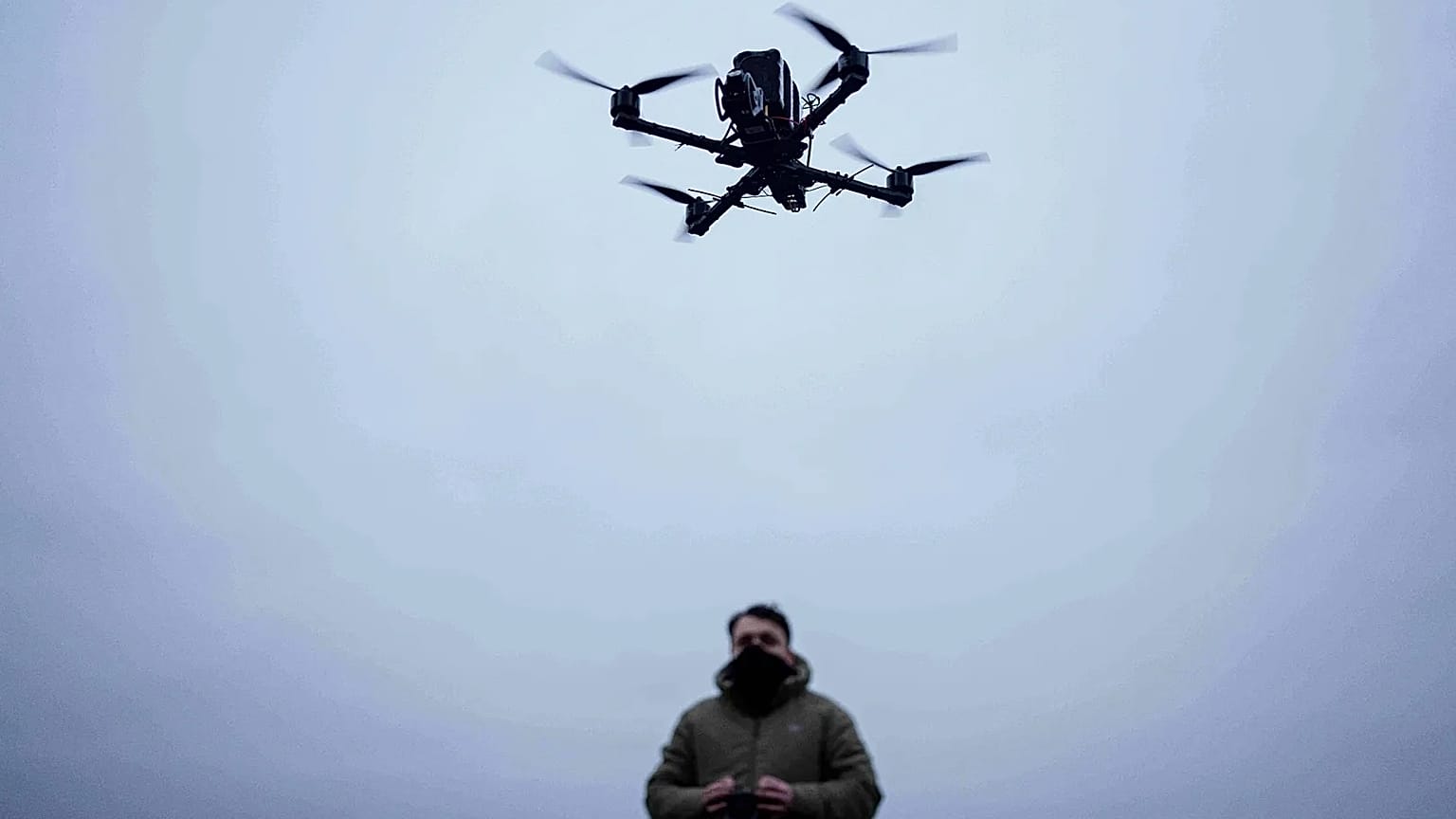
A serviceman controls an FPV drone of "General Cherry" company at the polygon in Ukraine, on Dec. 4, 2025
Copyright AP Photo

By Sasha Vakulina
Published on

In its most recent attacks against Ukraine, Russia hit the cities with dozens of ballistic missiles, knowing very well that this is one of the very few weapons Ukraine remains vulnerable to. As for the drones — this is where Kyiv mastered both defensive and offensive know-how.

Since the beginning of Russia’s full-scale invasion of Ukraine in early 2022, Moscow’s main military advantage has been its scale: a large standing force, extensive reserves, and the legacy of a Soviet-era military system that long made it one of the world’s biggest armies.

Yet more than four years into Moscow's war, that advantage has been increasingly challenged.

Ukraine’s forces have shown that sheer numbers alone no longer guarantee success on the battlefield, with drone technology helping to largely offset Russia’s demographic weight and reshape the dynamics of modern warfare not only in Ukraine.

Ukraine’s drone revolution

What started in 2022 as a desperate effort by Ukrainian soldiers and volunteers to adapt civilian “wedding drones” for military purposes culminated in history's first when an enemy position was taken over using robotic systems alone, forcing Russian soldiers to surrender.

Ukraine's President Volodymyr Zelenskyy said in April that in the first three months of 2026, ground robotic systems performed more than 22,000 missions on Ukraine’s front line.

“In other words, lives were saved more than 22,000 times when a robot went into the most dangerous areas instead of a warrior. This is about high technology protecting the highest value — human life,” Zelenskyy stated.

According to Kyiv officials, Russia now loses about 30,000–35,000 military personnel — killed and critically injured — every month. More to the point, “up to 90% of Russian losses are caused by Ukrainian drones,” Zelenskyy said.
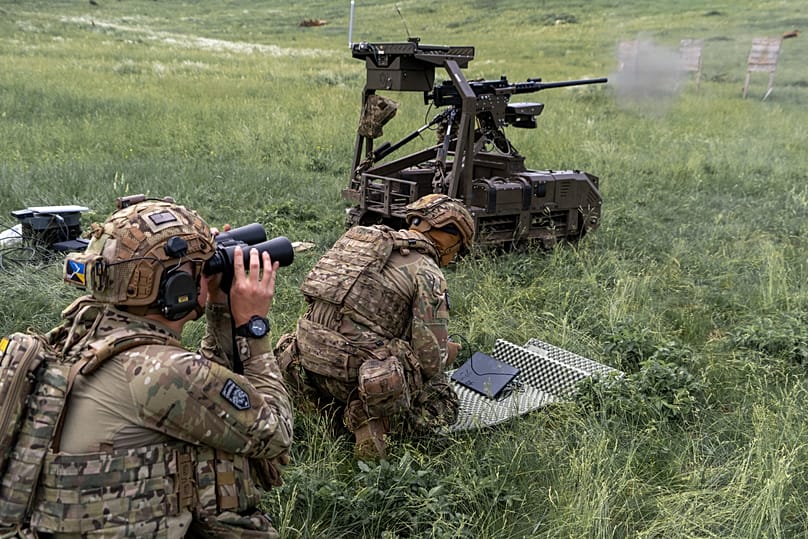
Ukrainian servicemen of the Cerberus Ground Unmanned Systems, Third Army Corps, conduct a drill with a combat ground drone in Kharkiv region, Ukraine, May 24, 2026. AP Photo

What drones does Kyiv use?

The crucial difference lies in an increasingly effective Ukrainian middle-strike campaign operating between 20 and 200 km from the frontline.

"The number of middle strikes has grown significantly," Zelenskyy admitted in early May.

"There are now twice as many strikes at distances of 20-plus kilometres compared with March, and four times as many compared with February. And there will be even more. This is a priority area."

Kyiv forces are specifically targeting ammunition and fuel depots and Russian command posts.

This way, Ukraine is forcing Moscow forces to move further from the front line, putting pressure on already strained Russian logistics and complicating command and control.

Ukraine's Defence Minister Mykhailo Fedorov said this "logistics lockdown" strategy aims to "increase pressure on the Russian military in the rear and deny the enemy the ability to conduct sustained offensive operations".

Together with Ukrainian long-range strikes on Russia’s oil infrastructure, Kyiv is causing a fuel crisis with far-reaching military consequences.

Operators of Ukraine's defense intelligence pilot missile drones against Russian in an undisclosed location in Ukraine late Thursday, May 28, 2026 AP Photo

Long-range strikes

Kyiv has significantly ramped up its strategy of deep strikes into Russia, targeting mostly Moscow’s oil infrastructure and reducing the Kremlin’s ability to benefit from surging oil prices in the wake of the Iran war.

On 17 May, Ukraine attacked Russia’s Moscow region, targeting military production sites and oil infrastructure.

"This time, Ukrainian long-range capabilities reached the Moscow region. We clearly tell the Russians: their state must end its war," Zelenskyy said, commenting on the raid.

The targets were located more than 500 km from Ukraine's border and overcame heavy concentrations of Russian air defences around Moscow, according to the Ukrainian president.

“Territory 1,500 to 2,000 km inside Russia is no longer a 'peaceful rear,'" Ukraine’s Unmanned Systems Forces commander Robert "Magyar" Brovdi said.

According to Zelenskyy, Ukraine's Defence Forces struck 15 Russian oil refineries between January and May, contributing to a growing fuel crisis in Russia.

As of May, nearly 40% of Russia's primary oil refining capacity has been disabled," Ukraine’s president said on Monday.
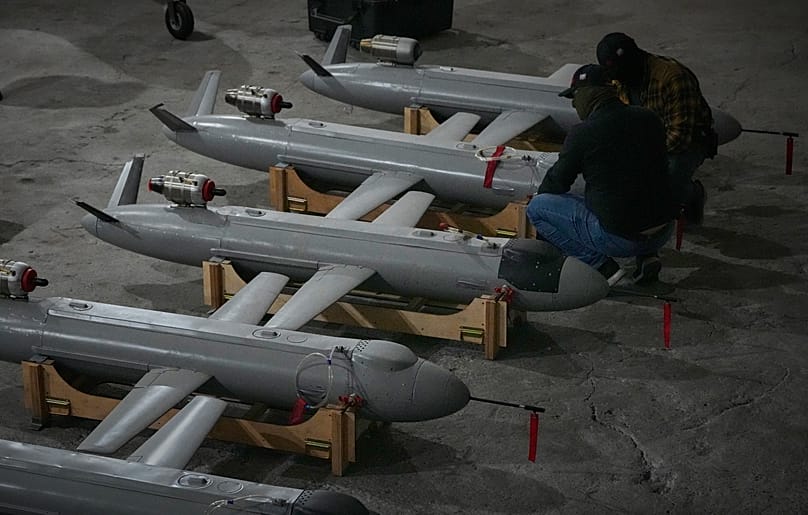
Servicemen of Ukraine's defense intelligence set up the Peklo (Hell) missile drones against Russian in an undisclosed location in Ukraine late Thursday, May 28, 2026 AP Photo

Ukraine’s interceptors

Soon after Russia went on its full-scale invasion of Ukraine in 2022, Moscow became heavily reliant on Iran-designed Shahed-type drones.

Launched in waves and coming at civilian and infrastructure targets in hundreds, these one-way attacks by UAVs — now made in Russia on the cheap based on Tehran's blueprints — have remained a major threat to Ukraine and quickly turned into Moscow’s weapon of choice.

As Russia’s all-out war entered its fifth year, Ukraine’s drone interception rate stands at around 90%, according to Kyiv.

Since 2022, Ukraine has developed a complex and multi-layered air defence system against Russian drones, which includes mobile fire groups, often using pickup trucks armed with heavy machine guns, various electronic warfare systems and Ukraine’s domestically developed interceptors.

According to Ukraine's defence ministry, as of 7 January, units of the Armed Forces now receive more than 1,500 specialised anti-Shahed interceptor drones per day.

Their widespread use helps preserve high-value surface-to-air missiles, which are costly and limited in supply in Ukraine’s case.

Ranging from €1,000 to €4,000, these interceptors are much cheaper than Shahed drones, which can cost between €25,000 and €50,000, making them Ukraine’s most in-demand drone today.

Since the beginning of the Iran war in late February, Kyiv has signed four “drone deals” with the Gulf states.

The price difference is stark compared to pricey yet sophisticated Patriot air defence systems used against Iran’s drone attacks in the region, where launching a single missile comes at a price of some €3.5 million.

Zelenskyy said nearly 20 countries are interested in a similar agreement as of May 2026, and Kyiv is also preparing “a major drone deal with the EU".

With Moscow's recent drone incursions in the Baltic states and Romania, where a Russian drone hit a residential building last week, there is even more interest in Ukraine’s interceptors.
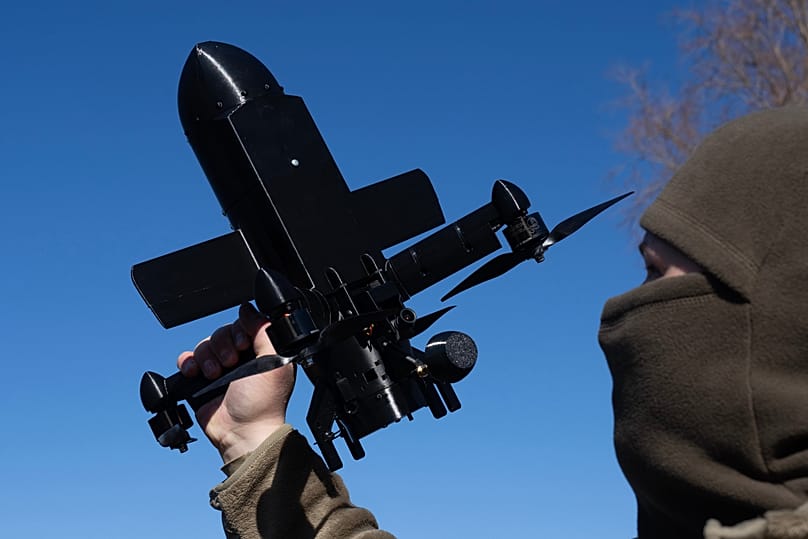
An instructor from the Ukrainian company General Cherry demonstrates the operation of an anti-air interceptor drone in Kyiv region, on March 11, 2026 AP Photo

Next chapter?

With the drone interceptor rate at around 90% and cruise missiles up to 80%, there is a glaring gap in Ukraine’s air defence: an anti-ballistic system.

So far, the US-made Patriot missile remains the only effective weapon to take down Russian ballistic missiles. With Washington's policy towards Ukraine and its war in Iran, the Patriots are in short supply.

Moscow knows it very well and attacks Ukraine with dozens of ballistic missiles within just a few hours.

“60–65 anti-ballistic missiles per month, compared to current challenges, is nothing,” Zelenskyy said on Sunday.

In an overnight attack on Tuesday, Russia launched 33 ballistic missiles at Ukraine.

Zelenskyy has recently asked the US President Donald Trump for a licence to produce Patriot interceptor missiles. Answering a question about whether he had received a response, Zelenskyy said he hoped to get one.

“Europe needs its own anti-ballistic defence so that this war can finally be brought to an end,” Zelenskyy said after at least 20 people had been killed and more than 100 others injured in one of Moscow’s largest attacks.


Four minutes to act—the new reality of Europe’s drone wars


By Jakub Janas
Published on

After last week’s Russian drone crash into a Romanian apartment block, Moscow offered no apologies. Now, the EU is scrambling to answer a critical question: how can Europeans defend themselves from drones?

After the crash, Russia's deputy Security Council chairman, Dmitry Medvedev, issued a chilling threat. He warned that because European governments supply weapons to Kyiv, "the citizens of EU states... will not be able to sleep peacefully".

The EU has an Action Plan on Drone Security, but a leaked document from last week reveals how member states actually plan to put it into practice, focusing on three key areas.

Number one is stricter identification. The bloc wants tighter registration rules so authorities can instantly tell a harmless civilian drone from a hostile threat.

Second, smarter detection. Member states want to use advanced sensors and artificial intelligence to spot incoming drones near critical infrastructure.

Lastly, intelligence sharing. Brussels wants to act as a central hub for coordinating data across the continent.

However, there is a problem. National governments insist this sharing must remain strictly voluntary to protect classified information and avoid duplicating NATO's efforts.

As for the drone case in Romania—the ministry of defence acknowledged it could not shoot down the drone due to its proximity to people's homes, and authorities had just four minutes to act.

As long as drone security remains primarily a national competence, European governments will operate in silos, and citizens will see the consequences.

The Baltic region was rattled by at least six suspected incursions in May alone. One incident in Lithuania even forced the president to take shelter underground.

Although the EU is trying to work together on securing its skies, one thing is certain: with threats from Russia, it must build a truly unified defence before it is too late.

Additional reporting by Luca Bertuzzi.

Watch the Euronews video  for the full story.


Romania wants to boost air defence after drone strike blamed on Russia

Paris (France) (AFP) – Romania's foreign minister said Wednesday her country needed to bolster its air defences with the help of its allies, days after two people were wounded in a drone strike on an apartment block close to the Ukraine border that was blamed on Russia.


Issued on: 03/06/2026 - FRANCE24


The drone strike was the first such to cause casualties in Romania © Daniel MIHAILESCU / AFP

Oana Toiu said there was no suggestion yet that Russia had intentionally targeted the 10-storey block in Galati on Friday last week, but Moscow bore "responsibility" for the strike over four years into the invasion of its neighbour.

"It is quite clear that we need to increase air monitoring and air defence capabilities throughout the eastern flank (of NATO)," she told reporters in Paris.

"But for us the pressure is even higher," she said, adding that NATO and EU member Romania had had a long border with Ukraine that stretched along the Danube river and out into the Black Sea.

Toiu said it would be one to two more years before new equipment arrived from Romania's own defence procurement.

But she added Bucharest was in talks with NATO on boosting its capabilities in the short term, as well as working with Kyiv on a joint anti-drone air defence project.

She said Romania had been aware of an incoming drone on May 29 but air force pilots decided not to shoot it down out of concern that an air defence missile could itself cause damage on the ground.

While this was the first such incident to cause casualties inside Romania, Toiu said there had been more than 40 instances of drone incursions inside Romanian territory.

"There is a common understanding that we need to have better air defence of the eastern flank and not just Romania," she said.

Romania's President Nicusor Dan at the weekend said that Bucharest had confirmed the drone in the strike was Geran-2, saying it was "of Russian origin".

Russian President Vladimir Putin said Friday that "no one" could determine the aircraft's origin with any authority until a thorough examination was carried out.

Toiu said Kyiv was "now stronger in holding the front line" and was ready for talks on a ceasefire in the conflict sparked by Russia's full-scale invasion in 2022.

But there needed to be "increased pressure" for Moscow to show an interest in diplomacy, she added.

There was now, she added, "no scenario" under which Russia could claim a "full win" in the war.

© 2026 AFP

 Ukraine targets St Petersburg as flagship economic forum opens in Russia


By Evelyn Ann-Marie Dom
Published on

The incident comes a day after Russia launched a massive drone and missile barrage at Ukraine, killing at least 23 people.

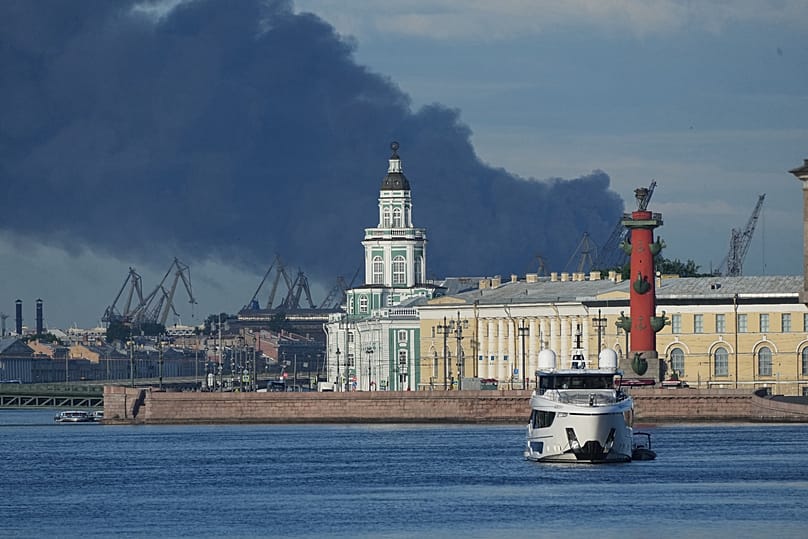
A grey plume of smoke was seen rising over St. Petersburg early on Wednesday, as officials gathered for Russia's annual economic forum, which Russian President Vladimir Putin will attend.

Ukrainian drones struck energy and military sites in the Russian port city, Russian and Ukrainian authorities reported.

The Ukrainian military struck the Petersburg Oil Terminal overnight, roughly 1,100 kilometres from the Ukrainian border, President Volodymyr Zelenskyy wrote on X.

"Purely military targets at the Kronstadt base were also hit," Zelenskyy added. "Another target was an enterprise in the Tambov region involved in the production of Russian weapons".

The city's governor, Alexander Beglov, wrote that several infrastructure facilities were struck in the Kronstadt, Kirovsky, and Krasnoselsky districts.

"Cleanup efforts are currently underway. Several people were injured. There were no fatalities," he wrote on Telegram.

A plumes of black smoke is seen over the port of St. Petersburg, Russia, Wednesday, June 3, 2026, after a Ukrainian drone attack. AP Photo

Meanwhile, in the Russian-occupied eastern Ukraine, at least seven people were killed and 11 wounded after a drone struck a passenger bus, Russian authorities said Wednesday.

The bus was travelling from Moscow to Simferopol in the Moscow-annexed Ukrainian peninsula of Crimea when it was struck in the Donetsk region.

"In Yenakiyevo, a UAV attacked a Moscow–Simferopol coach; according to preliminary reports, seven civilians were killed," Denis Pushilin, the head of the Russian-occupied part of Ukraine's Donetsk region said on Telegram.

"A further 11 people sustained injuries of varying severity, and all are receiving the necessary medical care," he added.

Large-scale Russian attack kills at least 23 people, Zelenskyy warns Moscow may launch another attack

It comes a day after Russia launched a massive drone and missile attack at Ukraine. The attack targeted Kyiv and other Ukrainian cities, killing at least 23 people and wounding 138 others, authorities said Tuesday evening.

Moscow is already preparing the next barrage, Ukrainian President Volodymyr Zelenskyy said on Tuesday evening in his regular daily address.

Zelenskyy called on Ukraine's allies to introduce tougher sanctions on Russia, underscoring that none of its drones or missiles can be introduced without components introduced from other countries.

He stated that Russia is still capable to produce its missiles and weapons due to large-scale schemes to circumvent sanctions.

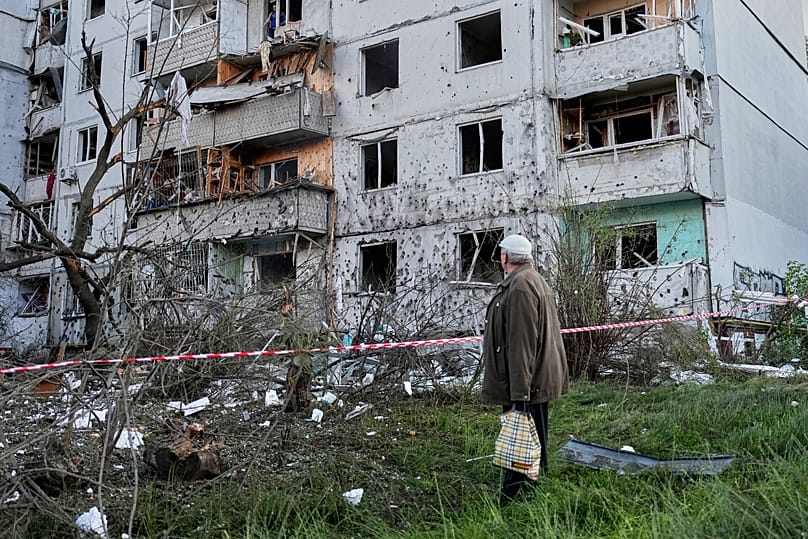
A resident looks at the site of a Russian missile strike that hit a residential building in Kyiv, Ukraine, Tuesday, June 2, 2026. AP Photo/Efrem Lukatsky


Zelenskyy also called on Europe to develop its own air defence system, while urging Washington to supply missiles for Patriot systems, which can intercept Russia's ballistic missiles.

Russian forces launched more than 70 missiles and 650 drones against Ukraine overnight on 2 June. Around 100 more drones were launched during the day.

But while Ukraine’s air defence intercepted most of drones, it is the ballistics missiles which pose the biggest threat.

Patriot air defence system remains the only surface-to-air missile system in Ukraine's arsenal capable of countering Moscow's ballistic missile threat.

But the joint US-Israeli war on Iran has depleted a third of the stockpiles of Patriot interceptors, with Gulf heavily relying on the system as well.


Ukraine drones hit St Petersburg oil terminal as Russia's SPIEF investment forum kicks off

Ukraine drones hit St Petersburg oil terminal as Russia's SPIEF investment forum kicks off
Ukrainian long-range drones targeted oil storage tanks in St Petersburg on the day Russia's flagship St Petersburg International Economic Forum (SPIEF) is due to start. / bne IntelliNewsFacebook
By Ben Aris in Berlin June 3, 2026

Ukraine hit St Petersburg oil terminals on the morning of June 3 just as Russia’s flagship St Petersburg International Economic Forum (SPIEF) kicks in a message designed to show that nowhere in Russia is safe from Ukraine’s long-range drones.

Ukraine drones flew over the city before diving into oil storage tanks on the Gulf of Finland only 17km from the conference centre where the event is due to begin today.

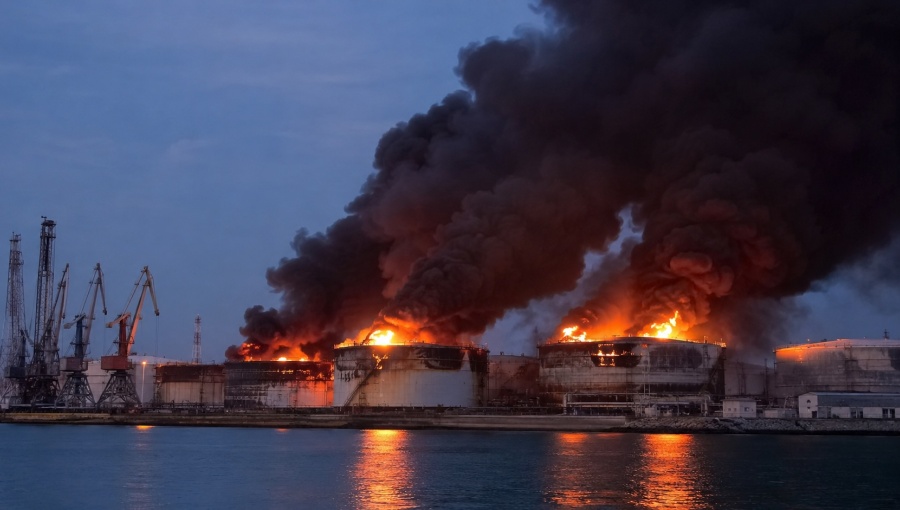
Residents posted photos and video footage of loud explosions and a massive fire after the city came under attack and black smoke rising over the St. Petersburg Oil Terminal, one of Russia's largest fuel storage and export facilities.


Authorities immediately shut down the air space over Russia’s former imperial capital making it impossible for any delegates who have not already arrived in St Petersburg to reach the city. Leningrad Oblast Governor Aleksandr Drozdenko reported that 50 drones had made the 500km journey from Ukraine and were shot down over the region on June 3 but did not comment on the fires at the port. Nearly 30 flights delayed for over two hours and nine others diverted to other airfields, according to the Russian state news outlet TASS.

This is the fifth summit since Russia’s invasion of Ukraine over four years ago. The attack is part of a sustained campaign by the Armed Forces of Ukraine (AFU) to cut Russia off from its main export revenues, which has reduced Russia’s exports of refined products, but has yet to affect the overall volume of oil exports or reduce the Kremlin’s income from oil taxes.

The strikes have bitten into Russia’s refined production and forced Moscow to turn to its friend Belarus to cover the shortfall, but production has not fallen enough to spark a fuel crisis yet. While the drone strikes do significant damage, as IntelliNews reported, the payload on the long-range drones is not big enough to destroy a refinery and typically the damage done can be repaired within a few weeks.

The St Petersburg facilities boast a reported throughput of 12.5mn tonnes per year and have been repeatedly targeted, culminating last month with a series of attacks on the Primorsk and Ust-Luga terminals – the two biggest oil terminals on Russia’s western coast.

Dignitaries from over 130 countries and territories of the world are in attendance to show solidarity with Russia and as part of Russian President Vladimir Putin’s plan to rebuild Russia’s international and trade relations with the members of the Global South.

Amongst those in attendance are Uzbek President Shavkat Mirziyoyev, President of Tanzania Samia Suluhu Hassan, actor Stephen Segal and YouTube star Andrew Tate, as well as China's vice president and Saudi Arabia's energy minister. A member of US President Donald Trump's administration is set to appear at the forum, the first known attendance at the event by an American official in several years.

Unusually, this year there is a large delegation of German businessmen in attendance as the resolve to keep the tough sanctions regime on Russia starts to crack and calls for restarting commercial relations with Russia slowly gather momentum.

Putin is due to give the keynote address on June 5. The new attack on St. Petersburg comes a day after Russia launched a devastating mass missile and drone strike against Kyiv, Dnipro, and other Ukrainian cities, killing at least 23 people, including two children, and injured over 100 others. The Kremlin said the strike was in retaliation for a Ukrainian drone strike on a student dormitory in the university town of Starobilsk on May 22 in occupied Luhansk Oblast in eastern Ukraine, which killed 21 students, injured 42 others and caused outrage in Russia.

Refinery throughput down

Repeated attacks on Russian oil infrastructure have reduced the throughput at Russia’s leading refineries and put domestic supplies of petrol and diesel under pressure.

Output is down by around 10% y/y according to official figures. Ukrainian attacks appear to have disabled most of the spare refining capacity that Russia traditionally maintained, according to Sergey Vakulenko, an independent energy analyst, and any more reduction in refining capacity will have a disproportional effect on supplies of fuel to the domestic market, say experts.

The Kremlin has expanded restrictions on fuel exports as a result, banning overseas sales of jet fuel in addition to earlier limits on gasoline exports. In occupied Crimea, Russian authorities have been forced to ration fuel due to shortages, limiting purchases to 20 litres and banning the filling of fuel canisters. Belgorod and Kursk regions, as well as in Ryazan and parts of the Moscow region, have also reportedly been affected by fuel shortages.

Due to the reduction of refined products, Russian oil companies have compensated by increasing the export of crude oil. Russian seaborne crude oil exports have climbed to their highest levels since the start of the war in Ukraine.

Average crude exports since the beginning of 2026 have reached 3.46mn barrels per day (b/d), about 120,000 bpd higher than in 2025 and above the previous post-invasion annual high of 3.36mn b/d recorded in 2023, according to Bloomberg's calculations. Seaborne exports averaged 3.64mn bpd in the four weeks to May 31, Bloomberg reported, citing tanker movement data.

The four-week average value of crude shipments stood at about $2.24bn per week in the period ending May 31, down slightly from $2.38bn in the previous four-week period because of lower oil prices.


Ukrainian Drones Hit Oil Terminal in St. Petersburg's Harbor

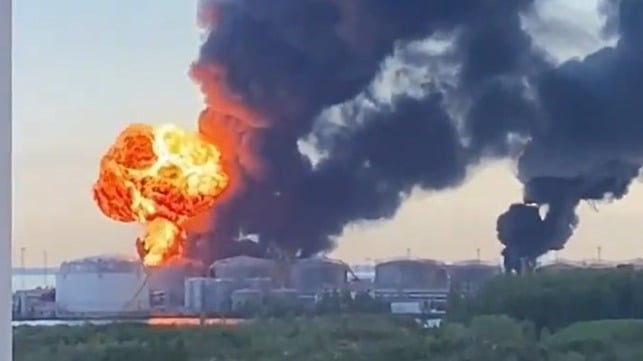
Flame and smoke billow from the St. Petersburg Oil Terminal (Russian social media)

Published Jun 2, 2026 10:14 PM by The Maritime Executive

On Wednesday morning, a flotilla of slow-moving Ukrainian drones penetrated Russian air defenses to attack the St. Petersburg Oil Terminal, a petroleum transshipment pier about five miles from the city center. 

Ukraine's ability to operate unmanned systems in Russian airspace has been growing for months, but Wednesday's strike - recorded extensively on Russian social media, despite strict criminal penalties - provided an unusually stark demonstration. Loud, slow-moving Ukrainian drones circled over the city's residential districts, unbothered by sporadic gunfire. At least three drones appear to have found targets in the tank farm at the oil terminal, and flame and smoke billowed from the site.

Targets in Kronstadt and Kransnoselsky districts were also hit, according to TASS. Several injuries have been reported, but no fatalities.

The attack arrived just hours before the opening of the St. Petersburg International Economic Forum (SPIEF), Russia's premier annual business conference. The event has historically been an important venue for Russian President Vladimir Putin to address the international community and his own constituents. Putin was scheduled to give a keynote speech at the conference's plenary session on June 5; given the security situation, it is as-yet unclear whether that appearance will go forward. 

Among the 20,000 expected attendees at this year's SPIEF gathering are representatives from Germany and the United States, both absent in recent years due to the ongoing invasion. Rodney Mims Cook, Jr., an architect and the head of the Trump administration's Commission of Fine Arts, is said to be leading the American delegation. 

The SPIEF forum attempts to find common economic ground with partner nations, and deemphasizes the "special military operation." But on Wednesday, smoke columns from the Ukrainian strike could not be missed in the background at the St. Petersburg Ekspoforum, the giant conference complex where SPIEF is held each year. Visitors who planned to fly into the nearby airport for the event are unable to do so, as authorities have shut down the region's airspace for security reasons. 

The strike follows a days-long series of deadly Russian ballistic missile strikes on Kyiv, Dnipro, Kharkiv and other cities; many of the missiles hit residential blocks. 22 Ukrainians died overnight Monday in Russian missile strikes on civilian areas, according to the BBC. 

Moscow Allows Then Kills Article Suggesting Russians Win At Home When They Lose Wars – Analysis

June 3, 2026 
By Paul Goble

As with any authoritarian leader, Russian President Vladimir Putin will claim any outcome he gets in his war against Ukraine as a victory. He will deploy his propaganda machine to ensure that most Russians accept that. It is increasingly obvious to all—ranging from war-weary Russians who want the war to end to supporters of the war who want him to fight on— that Putin is not going to achieve his long-insisted goals (see EDM, April 23, 27 [1], [2], May 6, 13). As a result, the Kremlin is currently trying to figure out how to present something that will be less than a triumph as exactly that. Moscow needs to do so in ways that will not spark a challenge to Putin’s rule.

An obvious example of that effort and how fraught with problems it is likely to be came last week when the Kremlin allowed an article to appear in a major Moscow newspaper—even if only for a short time—suggesting that military triumphs are overrated and even that Russia has benefited at home when it has suffered what others have described as a defeat abroad. Such a proposition, when presented so baldly and already associated with the Russian opposition in emigration, was too much. The Kremlin ordered it taken down, although the text remains available and is certain to be widely discussed by both those who favor peace now and those who want the war to continue.

On May 24, Moskovsky Komsomolets, one of the most widely read of the pro-Kremlin newspapers in the Russian Federation, published a 1,200-word article entitled “Amazing Defeats: When Geopolitical Losses Can Be More Useful than Brilliant Victories,” by Dmitry Krasnov, a lawyer and member of Moscow’s Public Chamber. The article focused on the distant past rather than current events, but it rapidly attracted attention from commentators as Aesopian language about Russia’s present situation abroad and at home (Telegram/@astrapress, May 27; Glavnoe in UA, May 28; Altyn-Orda, May 29).

Unsurprisingly, those reactions and their implications for Putin sparked alarm, and four days later, the article was removed, with those using its original URL being informed that the article did not exist (Moskovsky Komsomolets, May 24;Tema.Glavnoe, May 29). The article has remained available on the paper’s website and elsewhere, including in the PDF version of the entire issue of the paper for May 25 (Moskovsky Komsomolets, May 25; see an archived version here).

Krasnov begins his article with the proposition that Russians, like most peoples, are far more inclined “not to remember defeats.” He writes, “In Russia, it is precisely lost wars and humiliating truces that have regularly paved the way for new surges of progress, reforms, and—astonishingly enough—new victories.” He gives a series of examples of this phenomenon. The Mongol Yoke weakened the power of regional princes, united Russia, and opened the way for the ouster of that foreign power. Initial defeats by the Swedes allowed Russia to weather the Time of Troubles and then return to defeat the Swedes and open “a window on Europe.” The loss in the Crimean War led to the end of serfdom and to political reforms that opened the way for national integration and dramatic economic growth in the decades leading up to World War I. From these examples, he concludes that any military defeat, or “humiliating peace” in Russian history, led to reform that included “a stripping down of the elites and greater freedom for the people” and resulted in a “defeated nation would begin to rapidly regain its strength.”

Many Russian historians would agree with his analysis, at least as long as its lessons could be safely confined to the past. Krasnov, however, then discusses the issue in ways that make it clear he believes it remains relevant, even though he does not directly address Moscow’s current war against Ukraine. He argues, “The mechanism of the Russian historical trajectory—which transforms defeat into victory—lies in the insatiable drive of anyone who has acquired even a shred of power or wealth to expand their position.” This leads to the search for methods for combating greed and the lust for power. He explains, “In Russia, a cycle has emerged: the loosening of restrictions and the activation of social mobility—the formation of new elites—the halting of social mobility—the ossification of the elites—the stagnation of progress—defeat—and the launch of a new cycle.”

If other countries have developed various means to limit the power of elites without war, Russia has often had to rely on military defeat, he suggests. In Russia, those with power increasingly use force against their own people to continue to enrich themselves despite the costs that Russians and Russia itself have to pay. Krasnov points out, however, that “tightening the screws to the absolute limit invariably strips the threads, and the country is guaranteed to lose … to its own elites, who are ready to surrender both their Fatherland and their people just to prolong their own festivities.” He explains that once the country has gotten into a war and suffers a defeat, it could face “total disintegration, dangerous revanchism, or assimilation into a foreign culture as a dominion or colony.” He adds, “Fortunately, time and again—ever since the era of the Mongol yoke—Russia has chosen the path of salvation: reining in its unruly elites and granting greater freedom to the people.”

Krasnov continues, Peter I earned the title “the Great” because “he managed to make the right decision following a defeat in a single battle rather than waiting for the loss of an entire war.” As a result, he broke “the habitual Russian cycle by making reforms an immediate response to the very first setback.” He adds, “It is no easy feat for a nation’s leadership to decide to break this vicious cycle before defeat strikes.”


It is no surprise that the Kremlin took down this article. On May 28, Krasnov gave an even more critical interview to a Ukrainian outlet (Ukraina.ru, May 28). His statements are virtually a call to arms for Russia’s elites and masses to take action before it is too late. It is also an appeal to Putin himself. If Putin wants to be known as “the great” like his tsarist predecessor, he needs to recognize how Russian history works and change direction, however improbable that would be for a man who celebrates Russia’s past as largely an unbroken series of triumphs.


This article was published by The Jamestown Foundation


Mnangagwa Vs Chiwenga: The Existential Battle For Power In Zimbabwe – Analysis
By Charles A. Ray


2017: The Coup that Wasn’t


(FPRI) — The November 2017 military move in Zimbabwe that marked the end of Robert Mugabe’s 37-year rule opened a completely new phase in the southern African country’s troubled politics. Although the military leadership insisted that its intervention was not a coup, the events were clearly a military-led transfer of power. Soldiers moved into the capital city of Harare, seized the state’s broadcaster and other strategic points, and confined Mugabe to his residence while declaring that they were targeting “criminals” around him rather than the president himself. The operation, code-named Operation Restore Legacy, arose from a deep struggle within the ruling Zimbabwe African National Union–Patriotic Front (ZANU–PF) party over who would succeed the aging Mugabe and over the future direction of the liberation movement. At its core, it reflected a collision between competing factions, longstanding economic failure, and the growing political power of the security establishment.

Structural and immediate tensions were the root causes of the coup. By 2017, Zimbabwe had endured decades of economic decline, factional conflict, and public frustration with corruption and repression. Within ZANU–PF, the succession battle had sharpened between Emmerson Mnangagwa—a veteran of the liberation struggle who was backed by many military officials—and war veterans, as well as the G40 faction of the party—who were aligned with First Lady Grace Mugabe—and younger party elites. Many senior military officers saw Lady Mugabe’s rising influence as a threat not only to Mnangagwa but also to their own political and economic interests. The incident that sparked the coup occurred on November 6, 2017, when Mugabe fired Mnangagwa as vice president, apparently clearing the way for his wife to advance her claim to succeed him. Mnangagwa fled the country, and on November 13, General Constantino Chiwenga, the chief of the military’s general staff, publicly warned that the military would not stand idly by while liberation veterans were purged from the party and state.

Chiwenga’s warning was followed within a day by troop movements into Harare and a televised statement by Major General Sibusiso Moyo announcing that the army had intervened. Mugabe initially refused to resign, but events quickly moved against him. On November 18, massive street demonstrations in the capital and other cities showed broad public support for his ouster. The next day, ZANU-PF removed Mugabe as party leader, expelled Grace Mugabe and her allies, and installed Mnangagwa as the party leader. When Mugabe continued to resist, Parliament began impeachment proceedings on November 21. Before the impeachment process concluded, Mugabe, who had once proclaimed that “only God will remove me,” sent a resignation letter, bringing his 47-year reign to an end. In the immediate aftermath, Mnangagwa returned from exile and was sworn in as president on November 24, 2017. He promised economic revival, anti-corruption measures, and a “new democracy,” but the transition revealed the military’s central role in shaping political outcomes. Rather than a democratic rupture, the coup can best be understood, in hindsight, as an elite reconfiguration within ZANU–PF, in which military power decisively settled a succession struggle while preserving much of the existing political order.

A marriage of convenience begins to fall apart

Even though Mnangagwa and Chiwenga appeared to be allies in the ousting of Mugabe, there were immediate signs of tension in their relationship. Chiwenga took control of key state institutions, including the Zimbabwe Broadcasting Corporation, and positioned himself as the dominant figure in government, while Mnangagwa was sidelined. While publicly they presented a united front, it was thought from the outset that Chiwenga intended for Mnangagwa to serve only one term, with him taking over in 2023. But astute political moves by Mnangagwa, a serious illness that sidelined Chiwenga for several months, and the removal of several of his allies from key positions thwarted that goal.

Like Mugabe before him, the root of Mnangagwa’s possible downfall is his lust for power. Fissures in the Mnangagwa-Chiwenga relationship began to appear in the 2018 election campaign. On June 23, 2018, a grenade explosion in Bulawayo, at the end of a Mnangagwa campaign rally, was officially blamed on remnants of the G40 movement. But later, ZANU–PF officials publicly claimed that the attack came from “inside” the military, interpreted as a jab at Chiwenga and his supporters. No action was taken against them, though. In August of 2018, soldiers opened fire on civilian demonstrators, killing six, which embarrassed Mnangagwa and created the perception that Chiwenga and the military were acting without regard to political fallout.


It was in January 2019 that the relationship between these two political rivals became clear to all. Mnangagwa, just before leaving on a foreign trip, announced steep fuel price hikes, leading to countrywide protests. The chaos, with Chiwenga as acting president, fed rumors of an attempted coup against Mnangagwa and of Chiwenga doing nothing to quell it, in hopes of making Mnangagwa look weak and incompetent. If the regime were to be toppled, the rumors said, the military could once again step in and “restore order,” positioning Chiwenga as the natural choice to lead the country.

Upon his return to Zimbabwe, Mnangagwa reacted forcefully. He called the behavior of the security forces “unacceptable,” a direct rebuke of Chiwenga, and days later the army issued an internal order banning soldiers from wearing their uniforms in public for fear of civilian reprisals. On February 18, 2019, while Chiwenga was out of the country being treated for a serious and mysterious illness, Mnangagwa retired and reassigned four senior generals, including the commander of the Presidential Guard. These four, not coincidentally, were the core architects of the 2017 coup. When Chiwenga returned to Zimbabwe in late 2019, he found that the political landscape had shifted dramatically in Mnangagwa’s favor.

In 2020, Chiwenga was appointed minister of health, a move many saw as an attempt to politically sideline him. While the two men publicly projected unity during the COVID-19 pandemic, it was clear to those in the know that this was merely political theater and that their détente was as fragile as tissue paper. In 2021, Mnangagwa engineered constitutional amendments regarding the presidential running mate, meaning that Chiwenga would not be his automatic successor in 2023. In 2023, Mnangagwa was reelected with Chiwenga campaigning alongside him. When Mnangagwa supporters began chanting “2030!” at victory parties, signaling a push to extend his rule beyond the constitutional two-term limit, the uneasy détente turned into open hostility.

In October 2025, a leaked memo—allegedly written by Chiwenga—went public online. The memo accused Mnangagwa of repeating Mugabe’s mistakes and protecting corrupt businessmen. The government dismissed the memo as “treasonous nonsense,” but the rift between the two men was now public and, despite the government’s efforts to deny it, undeniable.


Whatever trust might have existed between the two men in 2017, when they allied to bring an end to Mugabe’s long rule, has now evaporated. All that is left is suspicion, purges, and leaked accusations. Mnangagwa controls the party and the intelligence networks, but Chiwenga still has significant support within the military and war veteran groups. According to sources within the Zimbabwean diaspora, who wish to remain anonymous to avoid possible retribution, Chiwenga also has the support of many traditional leaders in rural areas. Because Zimbabwe’s constitution gives the president the authority to appoint or remove traditional chiefs, this sets up another potential point of contention between Mnangagwa and Chiwenga.

Where things stand now, and where might they be headed?

According to the current constitution, Mnangagwa is due to step down in 2028 after serving two five-year terms, but the cabinet has drafted legislation to change the constitution. The change would extend presidential terms from five to seven years, allowing Mnangagwa to remain in office until 2030. The proposed changes would also have the president elected by parliament rather than through a direct popular vote.

This move has sparked protests within ZANU–PF, from opposition politicians, and from citizens’ groups. In 2023, over 25,000 Zimbabweans, including some in the diaspora, signed a petition that was submitted to the Southern African Development Community calling for the establishment of an inclusive transitional government. According to some activists, whose names are being withheld to protect against any reprisals, the situation in Zimbabwe is “tense and dangerous.” “Mnangagwa’s actions are fueling the crisis,” one said. “He doesn’t trust the army, and in his efforts to stay in power, he is treating the generals badly.” Furthermore, according to some in the diaspora, many in the army support a transitional government, creating conditions for an explosive confrontation between Mnangagwa and the intelligence establishment and the military. One activist said, “The situation is becoming increasingly deadly while we are busy preparing our interventionist National Transition Authority to avoid a repeat of 2017.”

Some think the crisis could reach its boiling point in a matter of days, while others are worried, but less sure. Predicting Zimbabwe’s future is difficult, but this is not just a quarrel over policy. It is an existential struggle over who will rule the country. There are a number of possible outcomes:Mnangagwa might move to expel, suspend, or sideline Chiwenga by stripping him of key party and/or state roles, charging him with breach of party discipline or constitutional violations, or even indicting him for treason.
Chiwenga supporters could leave ZANU–PF and align with the opposition, or establish “reform” factions to resist Mnangagwa’s dominance.
Mnangagwa might replace military, intelligence, police, and security officials loyal to Chiwenga. This could provoke backlash or “silent” resistance within the security ranks, leading to greater chaos.
Prosecutions or other legal actions against Chiwenga or those close to him. This could include charges of incitement, treason, or other serious offenses.
Because Chiwenga still has significant patronage networks within government, ministries or agencies sympathetic to him could slow or withhold services and cooperation, increasing distrust in the government writ large.

Public perceptions of government instability could heighten political tensions and lead to greater social unrest. Furthermore, the elimination of Chiwenga as a contender for succession could lead others to enter the fray, further increasing the potential for chaos. Regardless of which scenario, or combination of scenarios, unfolds, it spells trouble for Zimbabwe in the short and medium term. We’re looking at either an entrenched one-man rule, returning Zimbabwe to Mugabe-era authoritarian governance, or a fragmented, weakened country that threatens the stability of the region.


Like the citizens of Zimbabwe, the world can only wait and see at this point. The coming weeks will tell.


About the author: Charles A. Ray, a member of the Board of Trustees and Chair of the Africa Program at the Foreign Policy Research Institute, served as US Ambassador to the Kingdom of Cambodia and the Republic of Zimbabwe.

Source: This article was published by FPRI


Panama moves to shed its tax haven status, on its own terms

Panama moves to shed its tax haven status, on its own terms
Scandal-hit Panama has built a significant portion of its service economy around frictionless incorporation and territorial taxation.Facebook
By Alek Buttermann June 2, 2026

Panama has enacted legislation imposing a 15% levy on multinational entities that cannot demonstrate genuine economic activity within its borders. The measure is framed domestically as a modernisation of the tax framework. In practice, it is an exercise in damage control, driven almost entirely by the need to exit the European Union's blacklist of non-cooperative tax jurisdictions, where the country has sat since 2020.

The National Assembly last week passed Ley 641, known as the economic substance law, with near-unanimous support, 70 of 71 deputies voting in favour, and President José Raúl Mulino signed it promptly into law. It takes effect for fiscal year 2027. Entities unable to demonstrate qualified staff, adequate premises, genuine strategic decision-making, and real operating expenditure on Panamanian soil will face a flat 15% charge on net passive income derived from foreign sources.

Yet it remains unclear how much of Panama's offshore architecture this actually dismantles. On close reading of the legislation, in fact, relatively little. Companies that can demonstrate a meaningful physical presence retain the country's longstanding territorial exemption on foreign-sourced income entirely. The law targets the most egregious end of the spectrum: shell entities with no staff, no offices, and no commercial reality, booking foreign income through a Panamanian legal address. For the broader industry, the primary consequence is higher compliance costs, not a structural overhaul.

That precedent exists elsewhere. The Cayman Islands and British Virgin Islands both absorbed comparable economic substance requirements in recent years. Neither jurisdiction saw its offshore industry collapse. What followed instead was a consolidation toward better-capitalised, more professionally staffed structures, and increased demand for local legal and administrative services. Panama is likely to trace a similar path, with the reform functioning as a barrier to entry for the most artificial arrangements rather than a fundamental reorientation of the model.

Finance Minister Felipe Chapman was explicit during the parliamentary debate that this legislation is the single most important requirement for Panama's removal from the EU list. He pointed to October's scheduled review by EU finance ministers as the earliest realistic exit point, with February 2027 as the fallback. Panama is currently the only Latin American country on the list, which also includes Russia, Vietnam, and the US Virgin Islands. The EU last updated the list in February 2026, retaining Panama while removing Fiji, Samoa, and Trinidad and Tobago.

The Panama Papers scandal of 2016 is the origin of the country's reputational problem, but a decade on, the more relevant question is structural: Panama built a significant portion of its service economy around frictionless incorporation and territorial taxation. The economic substance law preserves the core of that proposition while excising its most indefensible features. Whether that is sufficient to satisfy Brussels is a political judgement the EU will make later this year. Whether it represents genuine reform, or a calibrated minimum concession to external pressure, is a question the legislation itself answers fairly clearly.

WAIT, WHAT?!

Iran seeks Japanese help in rebuilding war-damaged oil sector

Iran seeks Japanese help in rebuilding war-damaged oil sector
/ bne IntelliNewsFacebook
By bne IntelliNews June 2, 2026

Iranian President Masoud Pezeshkian has asked Japan to participate in reconstructing infrastructure damaged in recent US-Israeli attacks, including refineries, in exchange for efforts to restore normal shipping through the Strait of Hormuz, IRNA reported on June 1.

“Iran will do everything in its power to normalise maritime traffic through the Strait of Hormuz… and hopes that with the return of normal conditions, greater opportunities will emerge to utilise Japan’s technical and engineering capabilities in reconstruction and development projects for Iran’s damaged refineries, ports and economic infrastructure,” Pezeshkian said during a telephone conversation with Japanese Prime Minister Sanae Takaichi.

The Japanese government says around 40 Japan-linked vessels, including oil tankers, chemical carriers, LNG carriers and car carriers, have been stranded in the Persian Gulf since early March, when Iran almost shut the Strait of Hormuz to shipping a few days after the military assault launched against the country on February 28, a conflict that lasted 39 days.

So far, two oil tankers linked to Japanese energy companies have passed through the strait.

Disruptions to traffic through the strategic waterway, which carries around 20% of global oil and LNG supplies, pushed oil prices from around $70 a barrel to above $100 and triggered fuel and petrochemical shortages in energy-dependent Asian economies in the Persian Gulf region, including Japan.

Before the war, as many as 140 vessels crossed the maritime corridor each day on average. That figure later fell to below 10 ships daily, most of them linked to Iran.

Since last week, however, the Revolutionary Guards have allowed an average of 30 vessels per day to transit through a route designated by Iran, raising hopes of easing tensions, although hundreds of ships remain stranded around the strait.

Pezeshkian said Iran was fully prepared to facilitate maritime traffic and would seek to ensure that “the passage of Japanese vessels is made possible without problems and with greater ease”.

Whether Japan will assist in rebuilding Iran’s damaged infrastructure remains uncertain.

Before the United States reimposed sanctions on Iran in 2018, Japan was a major buyer of Iranian crude and an important trading partner. However, Tokyo swiftly scaled back commercial ties with Tehran after the sanctions were reinstated, citing the risk of US penalties and compliance with the restrictions.

As long as sanctions remain in place, Japan appears unlikely to take part in reconstruction projects in Iran.

In response to Pezeshkian’s request, Takaichi limited her remarks to expressing appreciation for Iran’s cooperation in facilitating the passage of Japanese vessels through the energy conduit.

In mid-March, Israel bombed gas processing facilities in Asaluyeh in Iran’s southern Bushehr province, knocking at least two refineries out of operation.

According to two Iranian lawmakers, the attack wiped out around 30% of Iran’s gas production capacity, equivalent to 300mn cubic metres per day, and caused about $4bn in damage to installations in the Asaluyeh energy hub.