Tuesday, June 09, 2026

The Ruin of Civilizations as the Measure of America’s Cold War Victory

Source: Originally published by Z. Feel free to share widely.

In the wake of the latest American strike against Iran, many commentators have once again revived familiar narratives about a supposed “clash between the West and Islam,” the eternal hostility of civilizations, and the alleged incompatibility of the Islamic world with modernity. In this context, it is worth revisiting a now-historic interview given in 1998 to the French magazine Le Nouvel Observateur by Zbigniew Brzezinski, former National Security Advisor to President Jimmy Carter and one of the most influential American geopolitical strategists of the Cold War era. In that interview, Brzezinski openly acknowledged that Washington had begun secretly supporting opponents of the pro-Soviet government in Kabul as early as 1979, fully aware that such a policy could provoke a Soviet intervention and turn Afghanistan into a trap for Moscow.

Particularly striking is the section of the interview in which Brzezinski rejects the notion of Islam as a single, monolithic entity. “Look at Islam in a rational manner, without demagoguery or emotionalism,” he argues, reminding readers that Saudi Arabia, Morocco, Egypt, Pakistan, and secular Central Asia represent profoundly different political and cultural realities. In itself, this is a difficult argument to dispute. Throughout its history, Islamic civilization has encompassed an immense spectrum of traditions, ranging from mystical poetry and philosophy to modernist and secular movements. The problem arises, however, when this perfectly reasonable observation is confronted with the actual practices of great-power politics.

For if Islam is not a uniform civilization – and it is notit – becomes difficult to ignore the fact that throughout the Cold War, Western powers repeatedly chose as their allies precisely those movements that were the most rigid, the most militant, and the most hostile to everything intellectually creative, culturally rich, and spiritually elevated within the Islamic tradition itself. Brzezinski asks us not to equate Islam with fanaticism—and in this he is correct. Yet he simultaneously expects us to forget that decades of geopolitical engineering provided money, weapons, legitimacy, and strategic space precisely to the most extreme Islamist currents, enabling them to achieve global visibility. As a result, this interview stands today not merely as a testimony to a particular era of American foreign policy, but as a reminder of a paradox that continues to shape the Middle East: the very people who understood better than anyone that Islam could not be reduced to fundamentalism were often those who invested most heavily in fundamentalists themselves.

What did the collapse of the Soviet Union bring to the countries of the former Yugoslavia, which after the Cold War experienced a bloody disintegration, rapid deindustrialization, and the transformation of entire societies into peripheral zones of global capital? It brought something else as well: the return of some of the darkest nationalist demons of the twentieth century, which moved from the political margins to the very center of newly constructed national mythologies. In place of socialist internationalism, however incomplete and contradictory it may have been, came an era in which wartime collaborators were increasingly recast as misunderstood patriots and freedom fighters. Members of the Ustaše movement, the fascist regime that ruled the Nazi-sponsored Independent State of Croatia during World War II; Chetnik commanders who collaborated at various stages of the war with Axis occupation forces and local fascist authorities; activists associated with the Young Muslims movement in Bosnia who viewed Hitler’s Germany as a potential ally against both Yugoslavia and communism; and numerous other collaborators with occupying powers began to reappear in public memory not as cautionary examples, but as tragic national heroes who had merely chosen the “wrong side” while pursuing the “right goal” for their people. Collaboration with Nazism thus ceased to be treated as a moral catastrophe and increasingly came to be presented as a form of geopolitical realism.

What did the post-Soviet transition bring to Ukraine, which travelled from the promises of market reform and democratic integration to one of the most devastating wars in Europe since 1945? There too, as in the Balkans, the collapse of the old order created political space for the rehabilitation of wartime collaborationist traditions. Rather than remaining within the realm of historical condemnation, alongside other forms of political barbarism that modern Europe once claimed to have overcome, collaboration with the Wehrmacht, ethnic violence, and aspects of the fascist legacy were partially repackaged as symbols of resistance, sacrifice, and national awakening. The result was a striking historical inversion: what Brzezinski celebrated as liberation often amounted, in practice, to the liberation of ideological forces that the antifascist generation of postwar Europe believed had been decisively defeated.

At the same time, economic peripheralization brought far more than material impoverishment, partially cushioned through debt, foreign credit, and dependence on external financial institutions. It also produced profound cultural consequences. Societies that lost control over their own development gradually lost confidence in their ability to generate original political, intellectual, and cultural projects of their own. As a result, visions of the future increasingly gave way to idealized visions of the past. Under such conditions, identity politics became a substitute for economic strategy, while historical revisionism, particularly regarding the Second World War, served as compensation for the absence of genuine political and economic sovereignty.

Paradoxically, the decision to arm the most rigid Islamist movements in order to weaken the Soviet Union marked the beginning of a much broader historical process: the return of political forces that many believed had been permanently defeated in 1945, even though they had survived in various forms within the Cold War order. From Afghanistan to the Balkans and Eastern Europe, the collapse of the Soviet system did not simply liberate nations. It also released a dormant political repertoire consisting of nationalist mythologies, historical revisionism, collaborationist cults, clerical extremism, and various forms of political messianism. What was celebrated during the 1990s as the triumph of liberal democracy often resulted in the rehabilitation of ideas that the antifascist generation of postwar Europe regarded as among the most dangerous legacies of the continent’s past.

And what, ultimately, did this “liberation” bring to Central Europe itself? Did it produce genuine political and economic emancipation, or did it gradually integrate the region into a security and economic architecture whose strategic priorities are increasingly defined elsewhere? This question has been raised by economist Michael Roberts in his analysis of Mario Draghi’s influential report on Europe’s future competitiveness. Roberts argues that the European Union today faces economic stagnation, declining productivity, increasing dependence on external energy and security arrangements, and growing pressure to devote resources to military competition. Even Draghi’s own report describes the financing of green transition policies, defence commitments, and economic modernization as an “existential challenge” for Europe. In a more recent analysis of global profitability, Roberts further notes that European capital now finds itself in a significantly weaker position than its American and Asian counterparts. While corporate profits in the United States and parts of East Asia have resumed a clear upward trajectory, Germany and Britain continue to show considerably weaker performance, highlighting the deeper problem of Europe’s declining relative weight within the global economy.

For this reason, Brzezinski’s question sounds considerably less triumphant today than it did in 1998. There is little dispute that the Soviet Union collapsed, not least because its own internal structures had become unsustainable. What remains open to debate is what emerged from its ruins. If the purpose of historical analysis is to soberly assess both gains and losses, then it is entirely legitimate to ask whether the peoples of Europe received genuine liberation or instead inherited the additional burdens of economic insecurity, military escalation, and an ever-deepening crisis of the European project.

From the perspective of historical anthropology and the materialist study of culture, civilizations do not decline because they adhere to the “wrong” religion, ethnic identity, or cultural pattern. As Eric Wolf argued in his landmark study Europe and the People Without History, no society can be understood as an isolated island of culture, since local identities, beliefs, and forms of political organization are always products of broader relationships of power, exchange, and economic integration. In other words, people do not create historical myths, particularly progressive and emancipatory ones, in a vacuum, but within concrete conditions of production, dependency, and political struggle. Societies begin to regress when they lose control over resources, production, institutions of knowledge, and the capacity to shape their own future.

At that point, the space for the rational articulation of genuine economic and social interests tends to contract, while symbolic struggles over identity, collective memory, and historical belonging assume ever greater importance. As societies lose meaningful control over the forces that determine their future, political energy is redirected toward interpreting the past. Questions of production, labour, technological development, and social reproduction give way to endless debates about national victimhood, historical betrayals, and mythologized moments of collective glory. What is falsely presented as a national awakening is often nothing more than a cultural expression of political and economic powerlessness.

Perhaps the most striking aspect of Brzezinski’s interview is that he does not speak as a cynic concealing his intentions, but as a man sincerely, and almost fanatically, convinced of the righteousness of his choices. That is precisely why this text remains so important. It allows us to glimpse the mindset of an entire generation of American strategists for whom entire peoples, cultures, and historical processes were little more than pieces on a geopolitical chessboard. From that perspective, the question was never what kind of society would emerge after the destruction of a particular order, nor what long-term consequences millions of people might face. The only question that mattered was whether the strategic objective had been achieved.

Therein lies the profound tragedy of the post-Cold War American order: the triumph of capital became more important than what was left in its wake. And when history is reduced to a sequence of geopolitical victories, pursued without any vision of the society that ought to emerge from them, it ultimately becomes clear that the greatest defeat has been suffered by the very idea of human progress itself. Equally exposed is another uncomfortable truth: freedom that is not freedom for all is, in both the short and the long term, a dangerous fiction.Email

Vuk Bačanović is a Sarajevo-based historian and a long-time journalist and editor. He is the author of numerous scholarly and journalistic articles. He generally advocates a historical-anthropological approach to the study of the past, particularly the phenomenon of ethnic identities. He is currently a doctoral candidate at the Faculty of Philosophy, University of Belgrade, and serves as an editor of the Podgorica-based political portal Žurnal.me.

Social murder: Pandemic profits and vaccine apartheid


Covid vaccine graphic

First published at Climate & Capitalism.

Amidst the worst pandemic in 100 years, with devastation globally, instead of a freely available public good, COVID technologies largely remain a commodity owned by companies, first sold to the rich — as if it is a luxury handbag!
Fatima Hassan, founder of the South African Health Justice Initiative1

In 2015, Turing Pharmaceuticals raised the price of a single pill of Daraprim, an antiparasitic drug used by cancer and HIV/AIDS patients, from $13.50 to $750.00. The drug was over 60 years old and Turing didn’t develop it; they had recently purchased the US rights. Responding to critics, CEO Martin Shrkeli said his only regret was not increasing the price even more.

My shareholders expect me to make the most profit. That’s the ugly, dirty truth. … No one wants to say it, no one’s proud of it, but this is a capitalist society, capitalist system and capitalist rules. My investors expect to me to maximize profits, not to minimize them, or go half, or go 70 percent, but to go to 100 percent of the profit curve.2

Shrkeli was subsequently convicted of unrelated securities frauds and anti-competitive activity — crimes against wealthy investors and competitors. He was not charged with profiteering at the expense of desperately ill people. As liberal pundit Robert Reich commented, prosecutors “couldn’t nail him for his escapades as a pharmaceutical executive, which were completely legal — although vile.”3

In fact, as Nick Dearden demonstrates in Pharmanomics, Shrkeli was unusual only in being so outspoken.

Shkreli’s activities are indeed pretty mainstream in an industry renowned for price gouging, for buying up the intellectual property of other people, for acquiring or shutting down competitors, for playing the financial markets, for making insignificant changes to existing drugs and pretending they have made something new and important, and for lobbying for an even more favorable regulatory environment.4

The fundamental contradiction that Karl Marx identified, between the use value of commodities and their exchange value — between their benefits and their prices — are particularly obvious and extreme in pharmaceuticals. Life-saving drugs, essential to the survival of people who have no alternatives, are produced only if they can generate profits that capitalists consider acceptable. The result is social murder — pharmaceutical companies have shown again and again that they will deny life-saving medicines to people who can’t pay.

COVID billionaires

During the COVID-19 pandemic, Big Pharma reaped unprecedented revenues and profits. In 2021-2022, Pfizer, BioNTech, Moderna, and Sinovac collectively made $90 billion in profits from COVID vaccines and medicines. Pfizer netted $35 billion, while BioNTech and Moderna took about $20 billion each.5 The People’s Vaccine Alliance and Oxfam calculated that in 2021, Pfizer, BioNTech, and Moderna had combined pre-tax profits of $65,000 every minute — over $1,000 a second.6

In 2021, COVID-19 vaccines sold by the seven largest private vaccine producers generated a revenue of USD 86 billion and a net profit of USD 50 billion. With a net profit margin of 57% in 2021, COVID-19 vaccines were beating business-as-usual high-profits, even for the lucrative pharmaceutical industry — which is among the world’s most profitable business sectors. Looking at four of the seven companies that made extraordinary profits, Pfizer, BionTech, Moderna and Sinovac, the net profit margins for 2021 are even in the range from 62% to 76%.7

Those profits in essence channeled public money into private pockets. As researchers at University College London write, “US drug companies turn taxpayer-funded innovation into astronomical profits.”

Years before the pandemic began, the US government was a major investor in what would become COVID-19 vaccines. It supplied nearly $350 million to build technologies crucial to mRNA vaccines. Later, as coronavirus infections surged, it spent some $2 billion to support vaccine clinical trials. Ultimately, the US government put more than $30 billion into research, development, and procurement of the vaccines.8

In addition, vaccine makers received at least $86.5 billion from the US government under Advanced Purchase Agreements which did not require them to return any money if they failed to produce vaccines.9

In April 2021, Forbes magazine published its annual list of the World’s Billionaires. Comparing it to the previous year’s list, Oxfam and the People’s Vaccine Alliance found nine new billionaires whose wealth came directly from COVID vaccines. They included the CEOs of Moderna and BioNTech, two of Moderna’s founding investors and the company’s chair, the CEO of a company that manufactured and packaged vaccine, and three founders of CanSino Biologics.

Between them, the nine new billionaires, have a combined net wealth of $19.3 billion, enough to fully vaccinate all people in low-income countries 1.3 times. … In addition, eight existing billionaires — who have extensive portfolios in the COVID-19 vaccine pharma corporations — have seen their combined wealth increase by $32.2 billion, enough to fully vaccinate everyone in India.10

Forbes itself, using a broader definition, reported that forty of the new billionaires on its list had “ties to companies battling the Covid-19 pandemic.”11

That corporate and individual wealth was a direct result of gross overcharging for essential medicine. Independent experts from Imperial College London calculated that mRNA COVID vaccines could be produced for as little as $1.18 per dose, but Big Pharma was selling them for four to twenty times as much.12

Who gets the medicine?

At the United Nations in September 2020, sixteen pharmaceutical corporations, including AstraZeneca, Johnson and Johnson, and Pfizer, signed an agreement to develop COVID-19 vaccines. They promised to “bring large quantities of safe and effective innovations to countries around the world for broad distribution as early as possible, no matter their income level” and “to make products we are developing or supporting affordable in lower-income countries.13

They lied.

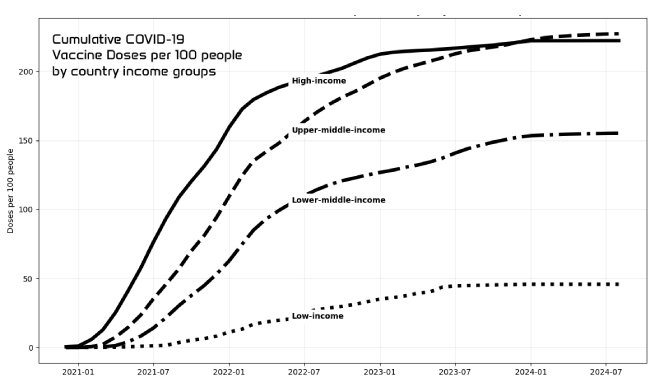
The first vaccines were delivered in December 2020, and from the beginning, profit drove distribution. As the graph below shows, high-income countries began vaccinating immediately, reaching 1 dose per 100 people within the first month. Low-income countries remained effectively at zero until March 2021, and did not reach 1 dose per 100 until June 2021.

Global COVID vaccinations per 100 people, 2021-2024. (Adapted from Our World in Data.)

COVAX, a public-private bulk-buying agency, had aimed to provide low-cost or free vaccines to poor countries, enough for one dose for 20% of every country’s population. It failed to reach half of that modest goal. The pharmaceutical industry sold most of the vaccines directly to rich countries, where the most profit could be made, leaving the people of poorer nations at the mercy of the virus.

As People’s Vaccine campaigners wrote:

The COVID-19 vaccines, funded largely by the public, have been privatized and monopolized leaving pharmaceutical corporations the power to set prices as they like. Some are charging wildly varying prices to different buyers that suggests there is no discernible relationship to the actual cost of production. And some rich country governments appear to have willingly paid higher prices than necessary to push their way to the front of the vaccine queue, thus contributing directly to vaccine scarcity in low- and middle-income countries.14

By September 2021, 60% of people in rich countries had received at least one dose, compared to 3% in the Global South.15 Nick Deardon identifies the cause of that gross inequality:

The bad news was that this vaccine technology was in the hands of just three corporations, all of them committed to turning a substantial profit. The reality was that, even by 2022, for every dose of mRNA vaccine delivered to low-income countries, fifty-six were being delivered to rich countries….

The general rule was clear: the richer you were, the more likely you were to have vaccines—and, at the top end of the wealth spectrum, you’d likely end up with many more than you required. This would be a problem not only for those countries at the lower end of the spectrum: it would make ending the pandemic much harder.16

It has been credibly estimated that equitable sharing of COVID vaccines “would have prevented 295.8 million infections and 1.3 million deaths worldwide (as a direct result of COVID-19) by the end of 2021.” Under a “full sharing scenario” there would have been more than 13% fewer COVID deaths worldwide.17

In addition, dealing with large unvaccinated populations forced governments to divert resources from other public health programs. According to the World Health Organization, the pandemic “reversed years of progress in providing essential TB [tuberculosis] services and reducing TB disease burden.” Globally, more than a million fewer people received tuberculosis treatment globally in 2020 than in the previous year. That led to 500,000 additional TB deaths, making the total second only to deaths caused directly by COVID.18

+ + + +

The British Medical Journal described the drug companies’ actions as vaccine apartheid and a violation of the Universal Declaration of Human Rights. Rich countries had more vaccines than they needed, poor countries had little or none.

Amid the worst pandemic in 100 years, instead of a freely available public good, vaccines remain a commodity owned by companies and sold to the rich. Instead of hoarding one billion ‘excess’ doses this year, rich nations could give them to Covax. While such ‘charitable donations’ are a first step, they are not enough. Donations are a vestige of colonial injustice and reparations are long overdue. The current ‘trickle down’ colonial charity model has failed….

Covid-19 global vaccine allocation is based on power, first mover advantage, and the ability to pay. This moral scandal, enabled by corporate and political permission of mass death, is tantamount to a crime against humanity….

Global vaccine inequity is toppling all our successes in rapid vaccine development and is needlessly prolonging the pandemic. Ongoing inequity is a direct consequence of commercial greed and political self-interest. Under the cover of serving humanity, and with a blind eye turned towards the innumerable deaths in disadvantaged nations, corporations aided by their political allies are once more doing what they do best: making a killing.19

There is no better term for that than social murder.

This is a draft chapter from Ian Angus’ next book, with the working title Social Murder: Capitalism’s Assault on Our Health and Survival.

  • 1

    Fatima Hassan, “Vaccine apartheid is racist and wrong,” PLOS Global Public Health, May 23, 2022

  • 2

    Quoted in Nick Dearden, Pharmanomics: How Big Pharma Destroys Global Health, Verso 2023, xii.

  • 3

    Robert Reich, “Martin Shkreli is just one example of excess in a rotten system,” Christian Science Monitor, December 23, 2015.

  • 4

    Nick Dearden, Pharmanomics, xiv.

  • 5

    Esther de Haan and Albert ten Kate, Pharma’s Pandemic Profits: Pharma profits from COVID-19 vaccines, SOMO Centre for Research on Multinational Corporations, February 2023, 4

  • 6

    “Pfizer, BioNTech and Moderna making $1,000 profit every second while world’s poorest countries remain largely unvaccinated,” Oxfam International / People’s Vaccine Alliance, 16 November 2021.

  • 7

    De Haan and ten Kate, Pharma’s Pandemic Profits, 4.

  • 8

    Travis Whitfill and Mariana Mazzucato, “ARPA-H Could Offer Taxpayers a Fairer Shake,” Issues in Science and Technology, Summer 2023.

  • 9

    De Haan and ten Kate, Pharma’s Pandemic Profits, 5.

  • 10

    Oxfam International, “COVID vaccines create 9 new billionaires with combined wealth greater than cost of vaccinating world’s poorest countries,” Press Release, May 20, 2021.

  • 11

    Giacomo Tognini, “Meet The 40 New Billionaires Who Got Rich Fighting Covid-19,” Forbes, April 7, 2021.

  • 12

    Zoltán Kis and Zain Rizvi, How to Make Enough Vaccine for the World in One Year, Public Citizen, May 26, 2021; Anna Marriott and Alex Maitland, The Great Vaccine Robbery, The People’s Vaccine, July 29, 2021.

  • 13

    “Life Science Companies and the Bill & Melinda Gates Foundation: Commitments to Expanded Global Access for COVID-19 Diagnostics, Therapeutics, and Vaccines,” Joint Communique, September 30, 2020.

  • 14

    Anna Marriott and Alex Maitland, The Great Vaccine Robbery, The People’s Vaccine, July 29, 2021.

  • 15

    De Haan and ten Kate, Pharma’s Pandemic Profits, 27

  • 16

    Dearden, Pharmanomics, 120-1, 124.

  • 17

    Sam Moore et al., “Retrospectively modeling the effects of increased global vaccine sharing on the COVID-19 pandemic,” Nature Medicine, October 27, 2023.

  • 18

    Global Tuberculosis Report 2021, World Health Organization, 2021.

  • 19

    “Profiteering from vaccine inequity: a crime against humanity?” Editorial, British Medical Journal, August 16 2021

INDIA

How A Village Market Became A Pathway To Women’s Economic Power In Bihar

Source: Resillience

In the floodplains of northern Bihar, where seasonal migration has long shaped village life and women rarely handled money beyond household survival, a quiet transformation has been unfolding around something deceptively ordinary: a rural market.

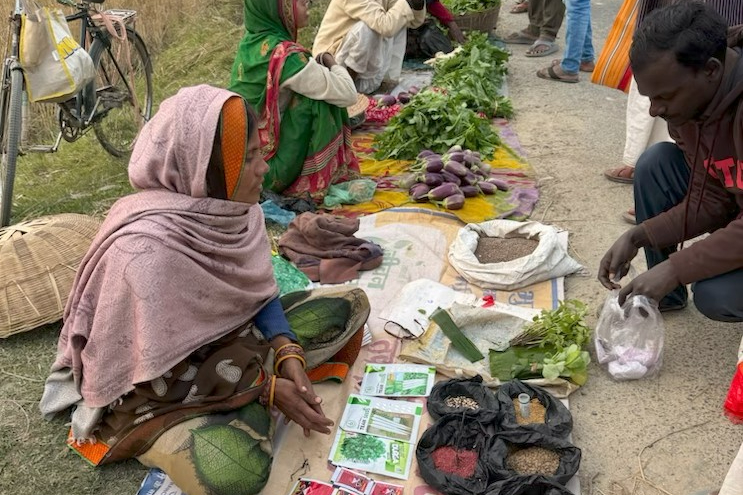
Every Thursday and Sunday afternoon, as the heat softens and narrow roads begin to fill with bicycles, handcarts, and women carrying woven baskets, the haat bazaar in Nawani Panchayat, Madhubani, Bihar, India, comes alive. Fresh gourds, mustard greens, finger millet flour, lemons, fish, bangles, snacks and homemade pickles spill across rows of temporary stalls. Women bargain loudly with customers, compare prices, discuss crop cycles and count the day’s earnings tucked into the edge of their saris.

A few years ago, many of these same women had never sold a product in a market.

The transformation did not begin with the market itself. It began with a deeper crisis of poverty, debt and invisibility.

When international development organization World Neighbors and its local partner RDT (Rural Development Trust) began work in the Madhubani-Jhanjharpur region, baseline surveys across the Mahadalit, Dalit, and minority communities revealed a pattern of chronic vulnerability. Household incomes were low and irregular, while expenses remained high. Families were trapped in cycles of debt to local moneylenders. Women had limited mobility, little exposure to self-employment, and almost no role in economic decision-making.

Many families spent between ₹3,000 and ₹5,000 every month simply purchasing vegetables and basic food items from distant markets. Nutrition levels were poor. Awareness around sanitation, menstrual hygiene, maternal health, climate risks and government services was extremely limited. Farming practices relied heavily on expensive external inputs, while agricultural knowledge remained fragmented and insecure amid changing weather patterns.

The first step in addressing this was not focused on agriculture. It was an organization.

Women were brought together into savings and credit groups of 15 to 30 members. In monthly meetings, they began saving small amounts collectively, discussing household needs, planning activities and accessing loans from their own pooled funds instead of relying on moneylenders. For many women, it was the first time they had spoken publicly in a group or handled financial decisions collectively.

Over time, the meetings evolved into platforms for learning and negotiation. Discussions expanded from savings into sanitation, education, nutrition, climate adaptation, reproductive health and farming practices. Women who once depended entirely on landlords, traders or male relatives began developing a sense of agency over their own households and livelihoods.

The next challenge was economic.

The program encouraged families to convert unused land around their homes into kitchen gardens. Women were trained in soil preparation, local seed preservation, composting and natural pest management. Within a year, many households were producing vegetables throughout the year according to Bihar’s agricultural calendar, dramatically reducing food expenses while improving dietary diversity.

Some women gradually moved from subsistence cultivation into commercial vegetable farming. What began with 54 women farmers expanded into more than 110 women cultivating vegetables for sale.

The shift toward local seeds and organic inputs proved crucial. Women learned to produce compost, bio-pesticides and natural growth solutions using cow dung, neem leaves, jaggery and other locally available materials. Production costs dropped significantly. Soil health improved. Yields increased. Vegetables remained fresh longer after harvest, allowing women more time to sell their produce without spoilage.

Climate adaptation became equally important in a region increasingly vulnerable to heatwaves, erratic rainfall and flooding. Women adopted low-cost trellis systems, mixed cropping techniques and millet cultivation that required less water and fewer chemical inputs. Finger millet cultivation alone brought food security for several weeks each year to participating households while reducing dependency on purchased grains.

But success in production exposed another problem: there was nowhere fair to sell surplus produce.

The nearest rural markets were seven to ten kilometers away. Markets operated only twice a week and were dominated by traders and middlemen. Women struggled with transport costs, safety concerns and lack of space to sell. During extreme heat or cold weather, many returned home early with unsold vegetables. Traders often dictated prices, leaving farmers with thin margins despite rising production.

Inside one monthly savings group meeting, women began discussing a question that would eventually reshape the local economy: What if they created their own market?

With support from field facilitators, the women identified a location near Nawani Panchayat Bhawan — a central point connecting three administrative blocks: Madhepur, Lakhnaur and Phulparas. The site was within roughly three kilometers of surrounding villages and accessible from multiple directions.

Community consultations followed. Local landowners supported the proposal, recognizing that a nearby market would benefit entire villages, especially women who otherwise spent money and time traveling long distances for basic purchases.

The market initially opened one day a week. Within a month, demand grew so quickly that the community added a second market day. Today, the haat bazaar functions not merely as a trading point but as a local economy in which women from numerous communities participate.

Its success rests on several subtle but powerful shifts.

The market is close enough for women to travel safely and independently. Because it specializes in fresh local produce grown through low-chemical or organic methods, customers actively seek it out. Women vendors no longer compete for marginal space under established traders. Middlemen have limited influence. Transportation costs have fallen sharply. Buyers from outside villages now stop regularly because the market sits along routes connecting multiple blocks.

Perhaps most importantly, the market operates around women’s realities rather than against them.

During periods of extreme heat, trading begins later in the day, after temperatures become manageable. Women vendors feel secure returning home after selling their products. Female customers similarly feel comfortable visiting the market, contributing to a distinct social atmosphere where commerce and community overlap.

Positive economic changes are increasingly visible. Forty-seven women now regularly sell vegetables, fruits, millet flour and oilseeds in the haat bazaar. Many earn between ₹4,000 and ₹8,000 a month from sales. Some cultivate crops specifically based on customer demand observed in the market.

Others have diversified into entirely new enterprises. Three women who had never previously operated businesses now run fast-food stalls during market days, earning up to ₹1,200 per haat. Two women sell tea and snacks. Another vendor sells bangles and cosmetics to women customers. Small food stalls selling puffed rice, fried snacks and local items have emerged as stable household income sources.

One of the more striking stories belongs to Vimli Devi. Using a loan from her savings and credit group, she began a small fish business, purchasing fish from nearby villages and storing them in a pit near her home before market days. As demand grew, customers started coming directly to her house to buy live fish. During the COVID-19 lockdown, when her husband and son returned from cities after losing migrant jobs, the family expanded the enterprise together. Today, her husband and son sell fish in the market while Vimli Devi manages sales from home.

The haat bazaar has also begun altering gender roles within households. Men increasingly assist women-led enterprises. Women who once hesitated to travel alone now negotiate prices, manage inventory and make investment decisions. Peer learning has encouraged minority community women to begin poultry rearing and goat farming, creating new streams of income from egg sales and livestock.

The market’s deeper achievement may not lie in the number of stalls or the volume of sales, but in the confidence it has generated. Women who once saw themselves only as laborers or dependents now speak of customers, profits, product quality and future expansion. They discuss market demand, climate risks and savings strategies with practical fluency. Economic participation has translated into public visibility.

In rural development conversations, markets are often discussed as infrastructure. In Nawani, the haat bazaar became something more intimate: a social space where women learn to occupy economic life openly and collectively.


This article was originally published by Resillience; please consider supporting the original publication, and read the original version at the link above.

Shein Bought Everlane. The Rest of Ethical Fashion May Follow.

Source: Originally published by Z. Feel free to share widely.

Two things happened this year that the fashion industry would prefer you didn’t connect. Shein bought Everlane — a $100 million acquisition of ethical fashion’s most recognisable name, the brand that built its identity on “radical transparency” and the promise that consumption could be made clean — and the EU quietly pushed its binding corporate accountability checks to 2029.

One was a business transaction. The other was a policy retreat. Together they are a single statement: the people who profit from the labour of 75 million garment workers have decided, again, that accountability can wait.

I’ve spent my career moving between the runway and the workshop floor — in the rooms where brands announce their ethical commitments to great applause, and in the factories where the women who make those commitments real earn wages that don’t survive the month.

The gap between those two rooms is the gap the industry has always exploited, and nobody ever seriously tried to close.

“Radical transparency” was always a story Western brands told about themselves. Everlane disclosed its markup. It did not disclose whether its workers could afford to send their children to school. The brand’s entire ethical proposition rested on what it chose not to say.

This is the structural dishonesty at the heart of ethical fashion: the brand takes the credit, the factory bears the cost, and the worker absorbs the risk. When Shein buys the brand, the credit transfers. The cost and the risk stay exactly where they were.

Everlane is not an isolated case. Mara Hoffman, one of sustainable fashion’s most recognisable names, closed in 2024, citing the impossibility of building a profitable business while maintaining genuine ethical standards. Allbirds, valued at $4 billion at its 2021 IPO on the back of its sustainability story, just sold its assets for $39 million. Most of the ethical fashion sector is private-equity backed, debt-laden, and operating on margins that were always too thin to survive a sustained price war with fast fashion.

The EU delay removes the one regulatory pressure that might have made genuine supply chain investment economically necessary. Without it, the choice for every conscious label is the same one Everlane faced: find a buyer, or fold. A movement liquidated, label by label, while the industry’s actual workforce watches Western consumers mourn their favourite guilt-free hoodie.

The cruelest part is that while this retreat was happening, workers in the Global South were already building what the brands never did.

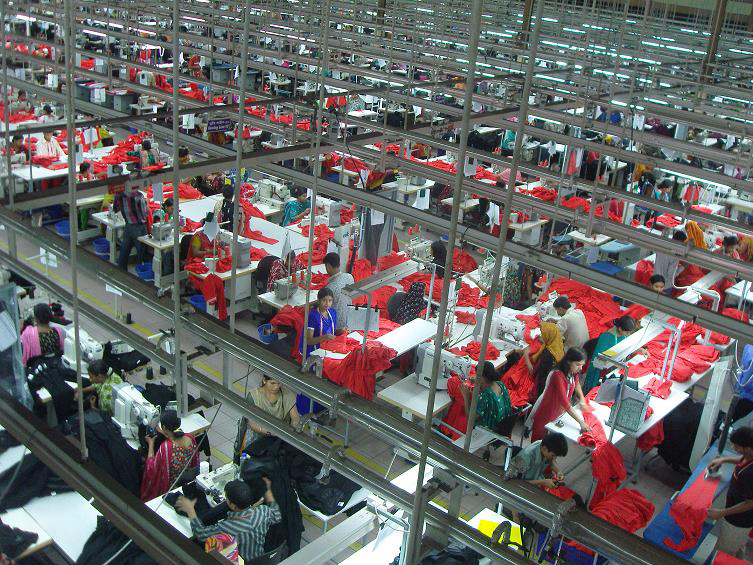
In Bangladesh — the country Western capitals have spent decades lecturing about standards — Youngone Corporation has embedded accountability into the physical architecture of its operations. Its Korean Export Processing Zone runs on one of Bangladesh’s largest rooftop solar installations, generating up to 40 megawatts of renewable electricity. In Vietnam, coal-fired boilers have been replaced with biomass systems fuelled by rice-husk pellets, part of a commitment to reach 100 megawatts of solar capacity across global production sites by 2030.

Youngone was also among the first manufacturers in Bangladesh to employ a predominantly female workforce at scale — at a time when women’s participation in industry was culturally contested. Its GEAR programme moves women from the factory floor into supervisory and managerial roles. Female workers are supported to study at the Asian University for Women on full scholarships, salaries maintained so their families don’t pay the price of their education.

This is precisely what Western trade policy cannot see — and will not reward. Only this week, the Trump administration proposed additional tariffs of up to 10% on Bangladesh — alongside 59 other economies — citing failures to prevent trade in goods made with forced labour. The message to every manufacturer who invested in doing the right thing is unambiguous: it does not matter. Progress and opacity receive identical treatment. That is not trade policy. It is an incentive to stop trying.

The answer is not better brands, and it is not blunter tariffs. It is enforcement that can actually see what has been built — legally binding, tied to the factory regardless of who owns the label. The model exists. After Rana Plaza killed 1,138 garment workers in 2013, unions won the Bangladesh Accord — legally binding, brand-signed, enforced by workers through independent arbitration. It now covers 2.5 million workers across hundreds of factories, and buildings are safer not because of a CEO’s pledge but because the rights belong to the people inside them.

Build the same architecture for wages and hours — and pair it with trade policy that rewards verified progress rather than punishing it — and the next acquisition is irrelevant.

Everlane’s sale is only a crisis if you thought the brand was ever protecting anyone. Across the industry, it never was. What protects workers is binding law, union enforcement, and rights that no acquisition can erase and no lobbying campaign can delay. The movement that spent a decade building ethical brands needs to spend the next one building that instead.