Tuesday, June 09, 2026

Chilling Effects of Trump’s War on Free Speech Extend Far Beyond Campus Walls and That’s the Point

 June 9, 2026

Photograph by Nathaniel St. Clair

Younger Americans have soured on the second Donald Trump presidency, but they are not protesting it.

Despite an unpopular Iran war and an even more unpopular Trump administration, college campus protests nationwide have gone silent. And at many schools, student activism is virtually nonexistent.

This silence comes in the wake of a relentless Trump administration war on campus speech that has involved lawsuits, arrests, deportations and expulsions.

Reports cite a range of complicated factors for the restraint, from apathy to technology-induced incapacity. But as public policy and law and social science experts, we believe students aren’t protesting for a very simple reason: They are afraid. They are self-censoring and disengaging from campaign activism to avoid punitive measures.

In law and social science, we call this impact a chilling effect – the behavioral tendency for people in face of a threat to self-censor and restrain their activities for self-protection.

It’s increasingly clear to us that these impacts are not incidental or ancillary to Trump administration policy. Rather, the chilling effects are the point. This is the closest thing to a consistent governing strategy in Trump’s second term.

The broader chill of Trump threats

Chilling effects can be subtle, but today they are everywhere. And it’s not just students who are chilled by Trump administration threats.

Professors are censoring themselves in lectures and rewriting syllabuses. Researchers are stripping grant applications of words that might attract federal scrutiny, or abandoning the topics entirely. Media outlets are modifying their news coverage to avoid Trump lawsuits or sanctions.

Law enforcement and regulatory agencies are refusing to investigate Trump-aligned actors inside or outside government, and major national law firms are declining cases challenging Trump administration policies.

Publishers are “stepping back” from LGBTQ+ books and other progressive subjects. Many in targeted immigrant communities are afraid to leave home to go to work or school.

In most cases, these people and institutions are not being specifically targeted or threatened by Trump. But they are afraid, and their fear is doing the administration’s work for it. They stay silent, avoid attention and confrontation, and look the other way. In other cases, they change their speech and behavior to accommodate or conform to the administration’s worldview.

Of course, there are counterexamples, such as the winter protests in Minneapolis in response to brutality by agents with U.S. Immigration and Customs Enforcement, and the recent “No Kings” rallies. But even here, the broader but less visible trend – chilling effects – is evident.

For instance, in recent reporting on the latest No Kings rallies, many media outlets observed that students were noticeably missing, despite the Trump administration’s unpopularity among younger Americans.

A persistent strategy

We believe none of this is by accident.

In a new book, “Chilling Effects: Repression, Conformity, and Power in the Digital Age,” one of us – Jon Penney – explains how law, technology, and state and corporate power are weaponized to chill and repress, and the dangers this poses for the United States and other democratic societies. The other – Bruce Schneier – has extensively studied the security infrastructure enabling this.

What we see isn’t gratuitous government cruelty, chaos or vengeance. Instead, we see a persistent strategy to maximize fear and chilling effects in ways that are corrosive to freedom and democracy.

Research suggests that surveillance, personal threats, uncertainty and abuse of power are key factors in doing so. The federal government has a clear and systematic pattern of employing these very mechanisms across a number of domains far beyond campuses.

They are evident in militarized raids by Immigration and Customs Enforcement and in journalists being arrested and indicted for reporting on protests. They are made clear in the long list of political enemies the Trump administration has investigated or threatened, including the Federal Reserve chairman. And they can also be seen in the weaponization of technology, including ramping up surveillance to target critics and protestors.

Corrosive to freedom and democracy

History offers some guidance on impacts.

During the McCarthy era, overreaching laws, surveillance, and public and private sector reprisals ostensibly targeted alleged communists. But the real aim was often to suppress progressive journalists, trade unions and political opposition.

In the 1960s, these same tactics were reused by Southern states to chill the Civil Rights Movement. Historians have written about how the widespread fear and conformity of these periods reshaped American society in enduring ways, including the destruction of progressive political movements and both delaying and muting the Civil Rights Movement itself.

When such state threats are systematized, they can foment a broader climate of fear, self-censorship and conformity. In that climate, dissenting speech, political opposition, democratic mobilization and other checks on power become increasingly difficult, even dangerous. It is no surprise, for instance, that Trump critics regularly admit to self-censorship, fearing for their safety.

Chilling effects are thus not only repressive – causing self-censorship – but productive. They produce conforming and compliant speech and behavior, which can have longer-term social impacts. They not only undermine protected rights and suppress accountability but can promote social change – even without a popular mandate to do so.

This latter point is often missed. It explains Trump’s assaults on universities and cultural institutions such as the Kennedy Center for the Arts and the Smithsonian. Often dismissed as peculiar Trump obsessions, they are fully consistent with Project 2025 – the sweeping policy blueprint for Trump’s second term authored by a coalition of conservative groups and its call to target the “institutions of American civil society” and “wield federal power” to “reverse” decades of progressive cultural advancements.

In the near term, this means an increasingly weakened democratic society, with the government and its patrons enjoying freedom to pursue their objectives. Over the long term, this can mean a changed society as more conformist and compliant speech and culture become more widely accepted and entrenched.

Not inevitable

In our view, this future is not inevitable, just as the McCarthy era “Red Scare” and violent civil rights era repression were not. In both cases, fear and chilling effects were resisted in law and civil society, as they can be today.

But the central mechanisms – surveillance, uncertainty, personal threats and abuse of power – would need to be addressed. For instance, new legislation could ensure justice for lawless government actors and constrain surveillance. Courts can block abuses of federal power, including illegal arrests, detentions and mass citizen databases.

The media, lawyers and civil society can hold the government accountable. And students, teachers, universities and cultural institutions can resist the tendency to self-censor and conform.

The citizen mobilization in Minnesota and the No Kings rallies are examples of that. But to resist chilling effects and their dangers over the long term, this would have to be the norm, not the exception.The Conversation

This article is republished from The Conversation under a Creative Commons license. Read the original article.

Bruce Schneier, Adjunct Lecturer in Public Policy, Harvard Kennedy School and Jon Penney, Fellow / Faculty Associate, Berkman Klein Center for Internet & Society, Harvard University; York University, Canada

The CIA Is up to No Good in Mexico

Source: Jacobin

The premise was something out of a B-grade thriller. At 2 a.m. on Sunday, April 19, a car plunged into a ravine in Chihuahua, the sprawling Mexico state that borders Texas and New Mexico, killing four. According to the initial information, two of the deceased belonged to the State Investigation Agency (AEI in Spanish), while the other two were something else entirely.

In a tweet later that day, US Ambassador Ronald Johnson asserted that they were “US Embassy Personnel” without specifying further, while press reports identified them as “training officers,” an enigmatic label that only served to deepen the mystery. The five-vehicle convoy the car had been a part of was ostensibly returning from locating a remote drug lab in the Sierra Tarahumara Mountains, despite the fact that both the constitution and the terms of Mexico’s National Security Law of 2020 prohibit foreign agents from participating in any such operation on Mexican soil. What exactly then was going on?

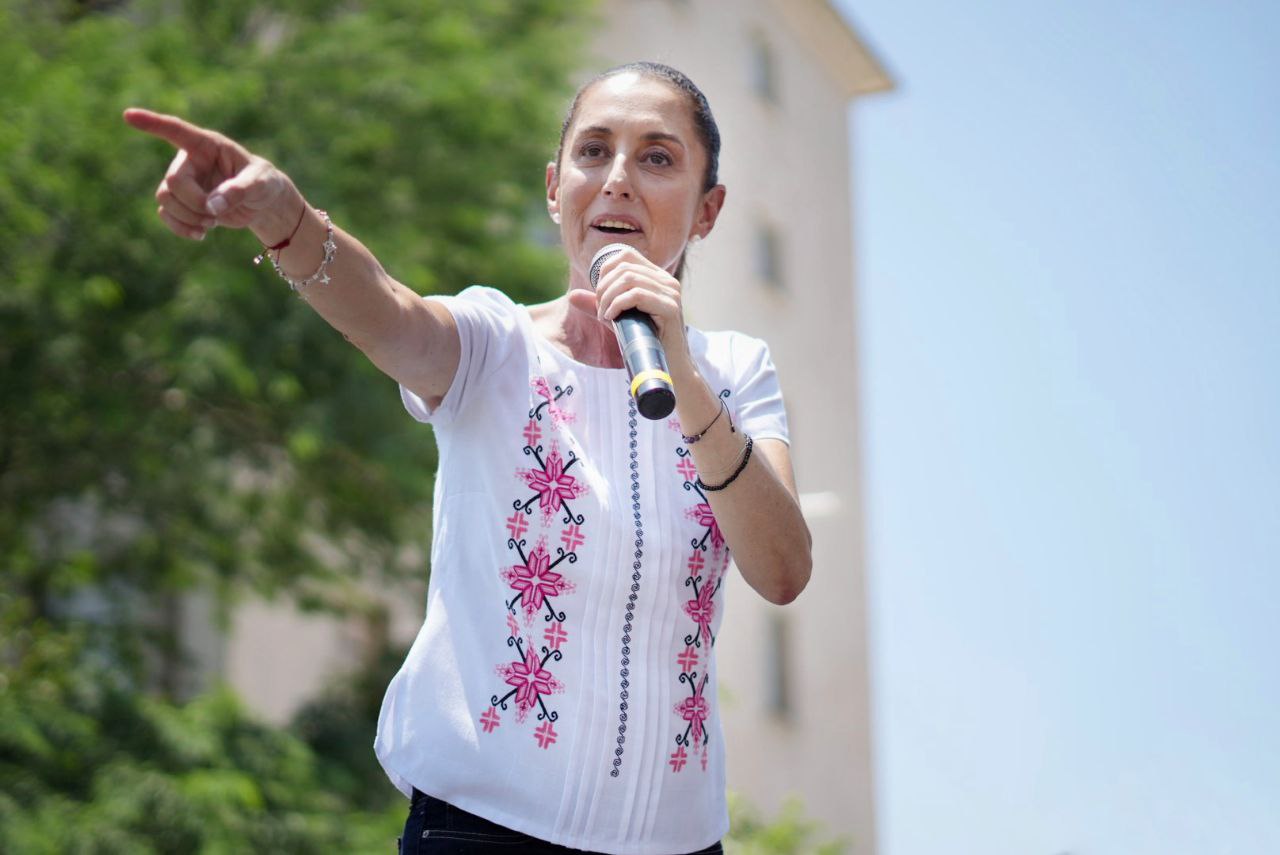
At her morning press conference the following Monday, President Claudia Sheinbaum was unambiguous: the federal government had been unaware of the operation, whatever it was. Beginning with condolences for the deceased agents (despite later claims by right-wing media and Donald Trump press secretary Karoline Leavitt that she had omitted them), Sheinbaum confirmed that her government was seeking clarifications from both the embassy and the state government headed by the opposition National Action Party (PAN) politician Maru Campos.

Following a day of fevered speculation, the Washington Post reported on Tuesday, April 21, that the US personnel in question were, in fact, Central Intelligence Agency (CIA) agents — a detail that Johnson, a former CIA agent himself, had conveniently left out. Two other CIA agents, it later emerged, were also part of the convoy and subsequently exited the country. Over the course of the week, Chihuahua’s Attorney General César Jáuregui desperately attempted to spin the revelations, with unwittingly hilarious results as the truth came to light. First, he said that the officers had been far away. Then, he conceded they had been on site but only for training purposes. Finally, he claimed that they had been performing drone training in a neighboring pueblo and conveniently asked to hitch a ride back to the airport.

All for naught: Jáuregui resigned on Monday April 27, the first casualty of a spreading political firestorm that, in real time, appeared to be confirming many Mexicans’ worst fears about US meddling dressed up as “anti-drug” coordination. And not just anywhere, but in an opposition-controlled border state.

On the face of it, the idea that the CIA would trundle down to Chihuahua to locate one (abandoned) meth lab is absurd on its face, especially in light of the over 2,300 labs dismantled by the Sheinbaum government so far. To begin with, drug interdiction is supposed to be a Drug Enforcement Agency (DEA) task — although in light of its scandal-ridden record of late, one can understand why it would be losing out in the perennial turf war among the three-letter agencies. Seizing its opportunity, the CIA is effectively cribbing the DEA’s brief in order to insert itself into Mexico and advance with its actual mission. What that is, as yet, is not completely clear: serve as an advance force for an eventual US invasion? Track down strategic mineral sites? Organize destabilization cells? Balkanize the border region?

Given the agency’s murderous record of coup-plotting up and down the continent, together with the Trump administration’s national security goals, none of the options are good.

The Empire Strikes Back

The affair, and Sheinbaum’s sovereignty-affirming response, provoked the ire of a Trump administration determined to exact payback. On April 23, a mere four days after the accident in Chihuahua, Johnson was dispatched to the State of Sinaloa to inaugurate a methanol plant. With high irony as the official representative of an administration drowning in misconduct, the ambassador began by praising the project only to turn to decrying the evils of government corruption. “That’s why [the United States–Mexico–Canada Agreement] requires our governments to criminalize bribery and corruption and enforce codes of conduct for public officials,” he said before concluding, ominously, with the following: “We may soon see significant action on this front. Stay tuned.”

It soon became clear what Johnson had been so unsubtly alluding to: not a week later, the Southern District of New York under Trump ally Jay Clayton unsealed drug-related indictments against ten officials from the Pacific Coast state of Sinaloa, including, notably, two elected officials from Sheinbaum’s own party: Governor Rubén Rocha Moya and Senator Enrique Inzunza. The DEA-backed charges centered, in Rocha’s case, around alleged participation by the Sinaloa Cartel in his 2021 gubernatorial campaign, which he was to have paid back by allowing them to “operate with impunity” in the state. Two of the ten — former state security minister Gerardo Mérida and former finance secretary Enrique Díaz Vega — soon appeared in US custody, with Mérida pleading not guilty.

Whether or not he is guilty of the specific charges made by the United States, Rocha — who has taken temporary leave from the governorship to address the charges — is no choirboy. But curiously, those very charges, which took the form of provisional arrest requests, have not been accompanied to date by any substantive evidence. This is something that, in her morning press conferences, President Sheinbaum has repeatedly pointed out:

There has to be evidence based on Mexican law, because otherwise it would mean that decisions are being made from abroad — especially when it comes to people elected by their own people — and it would be determined from abroad whether someone remains in office or not. So this is also a matter of sovereignty.

Of the 269 extradition requests Mexico has made of the United States since 2018, Sheinbaum has also pointed out, the US government has granted precisely zero. Not a single one.

Trump’s Total War on the Latin American Left

Sheinbaum’s insistence on “evidence based in Mexican law” is no accident. In the United States, prosecutors frequently build cases around cooperating witnesses cajoled into testifying in exchange for benefits, reduced sentences, or free tickets to witness protection programs. Attorneys general get their splashy headlines; justice may or may not be done. While such arrangements can produce valuable information, as dramatized by any number of self-glorifying shows and movies, they also create incentives for perjury that Mexican courts tend to view more skeptically.

Thus, Washington’s long-standing reluctance to extradite: the justice system has a strong institutional interest in keeping people within its own prosecutorial pipeline. This also helps to explain why it has refused to provide the evidence in the Rocha case that Sheinbaum has repeatedly requested. By rushing the indictments to distract from the Chihuahua CIA affair, it may not have had its full case together. It may simply not have the evidence at all, as in the 2020 case of former Defense Minister General Salvador Cienfuegos. Or it is basing its allegations on expected testimony from the Chapitos, the sons of former Sinaloa Cartel head Joaquín “El Chapo” Guzman extradited in 2023 and 2024, together, perhaps, with Mérida, Díaz Vega, and whoever else the United States decides to arrest or kidnap.

Whatever the case, and whatever its own flaws, Mexico’s legal system generally demands that allegations be supported by evidence that satisfies its legal standards. Ultimately, that is the standard against which any US extradition request will be judged.

Neither Chihuahua nor Sinaloa can be separated from the all-out Trumpian offensive against Latin America. In Argentina’s legislative elections, Trump dangled and then threatened to withdraw a bailout package to coerce voters into supporting the party of Javier Milei. In Honduras, he went as far as pardoning the former president — a convicted drug felon — Juan Orlando Hernández two days before the country’s presidential elections; indeed, the recent Hondurasgate recordings have revealed a plot to attack the region’s progressive governments through a coordinated disinformation campaign using Hernández’s operations and Milei’s money. In Brazil, the administration has just declared two organized-crime groups (Primeiro Comando da Capital and Comando Vermelho) as foreign terrorist organizations at the behest of right-wing presidential candidate Flávio Bolsonaro, in a clear bid to justify further interventionism ahead of October elections. In Colombia, it has wielded Ecuadorian president Daniel Noboa as a next-door proxy to destabilize the presidential campaign there, with Noboa bombing along the border between the two countries under the bogus pretext of attacking a drug camp. Recently, Trump endorsed far-right presidential candidate Abelardo de la Espriella, who shot to first in the initial round of elections, calling his opponent, Iván Cepeda, a “radical left Marxist.”

Venezuela continues to struggle with the bitter aftermath of the January 3 kidnapping of Nicolás Maduro. In Bolivia, the United States is openly propping up besieged president Rodrigo Paz while attempting to hunt down former president Evo Morales; according to Secretary of State Marco Rubio, the thousands protesting Paz’s neoliberal counter-reforms are “criminals and drug traffickers.” In Guatemala,it is pressing hard for joint military operations on national soil. And, of course, it is strangling Cuba with a murderous oil blockade while threatening to take it over “almost immediately” after finishing with Iran.

There is no need to sugarcoat things: through its “enlist and expand” strategy, the United States is attempting to stamp out every remaining progressive government in Latin America, replacing them not just with any old right-wing regime but the farthest-right lackeys, stooges, criminals, and sellouts. And it is not hiding the fact.

As for Governors Rocha and Campos, both were summoned by Mexico’s Federal Attorney General’s Office (FGR) to give their testimony. Rocha appeared on May 26 without much fanfare. Campos, however, chose the media-circus route, appearing the following day not to provide testimony but to lodge a complaint, surrounded by conservative figures and alleging she is the victim of “political persecution.” It is clear that Campos and the PAN are trying to parlay her ill-gained notoriety into a future presidential bid; absent a standard-bearer and wallowing at 11 percent in the polls ahead of next year’s midterms, one can understand the party’s desperation, even to the point of trying to convert a clear-cut case of treason into some perverse kind of folk heroism.

A vast majority of Mexican voters see things very differently.


This article was originally published by Jacobin; please consider supporting the original publication, and read the original version at the link above.Email

Kurt Hackbarth is a writer, playwright, freelance journalist, the cofounder of the independent media project “MexElects" and host of Soberanía: The Mexican Politics Podcast.

Honda Mexico Worker Wins Reinstatement After 15-Year Fight

Source: Labor Notes

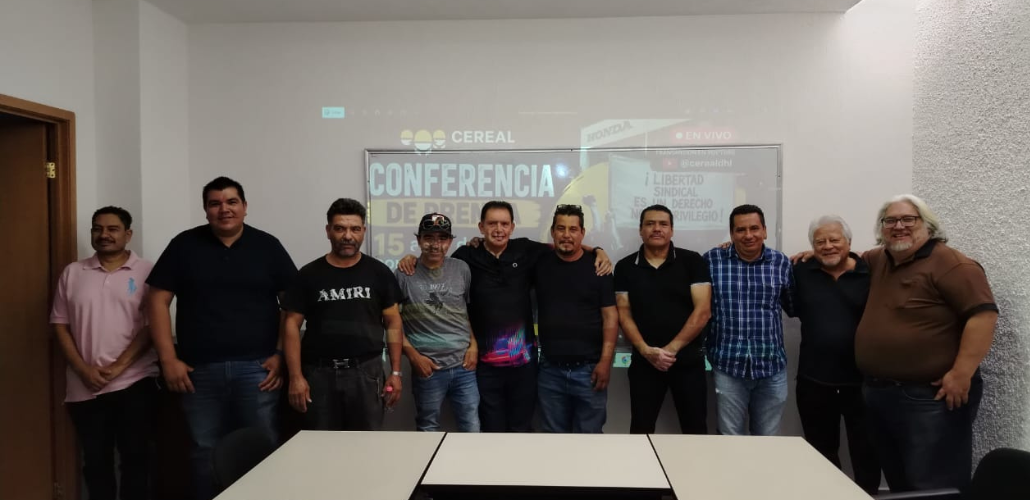
The leader of Mexico’s Honda workers’ union won reinstatement last week, in an important win for workers seeking to build real unions in the country’s massive auto sector. But it took 15 years for José Luis Solorio Alcalá, of the Union of United Honda Workers of Mexico (Sindicato de Trabajadores Unidos de Honda de México, STUHM), to get one step closer to justice.

Solorio Acalá was fired in 2010, months after a campaign to organize the plant went public—and just three days before Christmas. Within a year the entire organizing committee had been fired, he said. Some, like him, have held out for the slow wheels of justice to turn in their favor.

In June, Mexico’s Federal Board of Conciliation and Arbitration, which mediates labor disputes, finally ordered Solorio Acalá reinstated. But the victory was bittersweet, he said, because he suspected his long wait was far from over: Honda quickly filed an appeal.

A FAKE UNION

On paper, the Honda workers already had a union when Solorio Acalá and his co-workers began organizing. In practice, it was nothing of the sort.

“The only union rep we knew was the manager of human resources,” Solorio Acalá said.

The fake union was an affiliate of the notorious Confederation of Mexican Workers, or CTM, which has built a reputation for imposing pro-boss “protection contracts” that lock in low wages and prevent true union representation. The CTM affiliate still represents workers at the plant today.

“It’s a profitable business model,” said Elías Iván García Ríos, Director of the Center for Reflection and Labor Action (CEREAL), which has supported Honda workers in their fight for reinstatement.

“When I see the amount of collective bargaining agreements that the CTM has accumulated in Mexico, what I see is an incredible business,” García Ríos said. “It operates [to protect] companies, and has sold itself to many of them.”

Long before a true union was on the horizon, workers started acting like one. “We all helped each other out,” Solorio Acalá said: “If someone would fall behind, everyone would help them catch up.”

ORGANIZING ON THE (SECOND) JOB

In 2008, upon learning that their legally mandated profit-sharing checks would be far smaller than expected, Solorio Acalá and his co-workers marched on human resources, demanding to know why the payout was low when productivity had only increased. They won about 10,000 pesos (about $578 U.S.) more than expected, he said, plus nearly $300 in food vouchers.

Workers started to feel more confident after that fight, he said.

Where did this sense of camaraderie come from? One factor that certainly didn’t hurt: “In the 10 years I worked there, the majority of the workers, in addition to working at Honda, had second jobs because the wages were so low,” Solorio Acalá said. Many of them, including Solorio Acalá, worked as waiters, and would help each other land work where they could find it.

People had wanted to organize an independent union at the plant for many years, but would be fired shortly after word would get out, he said. But while working their shared side gigs, they could speak freely: “We’d arrive early, talk with our co-workers. And that’s how things got put in motion.”

‘AN ACT OF INTIMIDATION’

Solorio Acalá, still organizing despite his firing, was arrested in March 2012, while distributing union materials to his former co-workers. A Honda security guard stated that he had stolen a pen-shaped video camera, which Solorio denied. He was detained for 48 hours. A year later, the charges were dropped.

But in 2019, Solorio Acalá was arrested again for “false statements” pertaining to his 2010 dismissal. In the course of arbitration, Honda presented signed documents asserting that Solorio Acalá had not been fired, but had voluntarily resigned. Solorio Acalá maintained that it was not his signature. He was held on bail in a maximum security prison.

The worker-run tire factory cooperative Tradoc paid his bail, characterizing the detention as an act of intimidation against the union. Ultimately, a forensic expert paid for by the arbitration board determined that the signature wasn’t his, Solorio Acalá said, and the matter was dropped.

SLOW JUSTICE

Raúl Celestino Pallares Cardoza, recording secretary for the STUHM, was among those fired in 2010, but won reinstatement and returned to his job in November of 2014. But Pallares Cardoza was kept isolated from other workers, he said, and he was fired again four days after returning.

“They never assigned me to a specific work area, failed to register me with the IMSS [Mexican Social Security Institute], and never issued me a worker identification badge,” he told El Economista at the time.

The ruling is a reminder of the severe difficulties faced by workers who want to organize real, democratic unions in Mexico. “When a worker has been fighting for justice for 15 years, something is wrong,” said Jesús Torres Nuño, former leader of the Tradoc cooperative, at a press conference on Solorio Acala’s reinstatement. “We’ve had [different parties in power], and workers haven’t seen change.”

Mexico’s 2019 labor law reforms were meant to strengthen workers’ rights to form independent unions. “I think it’s completely in the hands of the companies, co-opted by [corrupt] union leadership,” said García Ríos. “The implementation of that justice is still far from being agile, democratic, and at reach for working people.”

Helping back up those reforms was a new tool under the USMCA trade agreement known as the rapid response mechanism, which allows unions and workers to bring complaints against employers who violate Mexican workers’ right to organize. If a facility is found to be violating workers’ rights, it faces sanctions and may ultimately lose access to the U.S. market.

But because the original violation took place before the reforms entered into effect, fired Honda workers do not have recourse to the rapid response mechanism, even though their rights continue to be violated. If Solorio Acalá is able to return to the plant and is fired again for his organizing, he would have recourse. So Honda has a significant incentive to continue to fight his reinstatement, which is why they were so quick to file an appeal, García Ríos said.

“I ask that you imagine the life of these fired workers,” said García Ríos. “Living so many years with the agony [of] not knowing how you will support your family.” Over time, he said, many have developed health issues as they age. “[It’s] something that could happen to you, or me, or anyone. We need models that [can deliver justice] faster.”

Over the past 15 years, Solorio Acalá has eked out a living as a waiter, Uber driver, and package courier. Much has changed at the Honda facility since. Back when he was on the job, the plant assembled the Accord, and later, the HRV. But in 2019, the facility stopped assembling cars and shifted to motorcycles and spare parts.

Solorio Acalá worries that by the time he’s allowed back on site, production practices at Honda will have changed significantly, and he’ll be on the back foot. But some things, he suspects, will be much as he left them: “Things haven’t changed within the facility. [From what I hear] from some workers, things are the same or worse.”

Also unchanged is his resolve: “Sometimes justice is slow. But when you have truth on your side, it’s worth it to keep fighting. It’s the right thing to do.”


This article was originally published by Labor Notes; please consider supporting the original publication, and read the original version at the link above.

The Ruin of Civilizations as the Measure of America’s Cold War Victory

Source: Originally published by Z. Feel free to share widely.

In the wake of the latest American strike against Iran, many commentators have once again revived familiar narratives about a supposed “clash between the West and Islam,” the eternal hostility of civilizations, and the alleged incompatibility of the Islamic world with modernity. In this context, it is worth revisiting a now-historic interview given in 1998 to the French magazine Le Nouvel Observateur by Zbigniew Brzezinski, former National Security Advisor to President Jimmy Carter and one of the most influential American geopolitical strategists of the Cold War era. In that interview, Brzezinski openly acknowledged that Washington had begun secretly supporting opponents of the pro-Soviet government in Kabul as early as 1979, fully aware that such a policy could provoke a Soviet intervention and turn Afghanistan into a trap for Moscow.

Particularly striking is the section of the interview in which Brzezinski rejects the notion of Islam as a single, monolithic entity. “Look at Islam in a rational manner, without demagoguery or emotionalism,” he argues, reminding readers that Saudi Arabia, Morocco, Egypt, Pakistan, and secular Central Asia represent profoundly different political and cultural realities. In itself, this is a difficult argument to dispute. Throughout its history, Islamic civilization has encompassed an immense spectrum of traditions, ranging from mystical poetry and philosophy to modernist and secular movements. The problem arises, however, when this perfectly reasonable observation is confronted with the actual practices of great-power politics.

For if Islam is not a uniform civilization – and it is notit – becomes difficult to ignore the fact that throughout the Cold War, Western powers repeatedly chose as their allies precisely those movements that were the most rigid, the most militant, and the most hostile to everything intellectually creative, culturally rich, and spiritually elevated within the Islamic tradition itself. Brzezinski asks us not to equate Islam with fanaticism—and in this he is correct. Yet he simultaneously expects us to forget that decades of geopolitical engineering provided money, weapons, legitimacy, and strategic space precisely to the most extreme Islamist currents, enabling them to achieve global visibility. As a result, this interview stands today not merely as a testimony to a particular era of American foreign policy, but as a reminder of a paradox that continues to shape the Middle East: the very people who understood better than anyone that Islam could not be reduced to fundamentalism were often those who invested most heavily in fundamentalists themselves.

What did the collapse of the Soviet Union bring to the countries of the former Yugoslavia, which after the Cold War experienced a bloody disintegration, rapid deindustrialization, and the transformation of entire societies into peripheral zones of global capital? It brought something else as well: the return of some of the darkest nationalist demons of the twentieth century, which moved from the political margins to the very center of newly constructed national mythologies. In place of socialist internationalism, however incomplete and contradictory it may have been, came an era in which wartime collaborators were increasingly recast as misunderstood patriots and freedom fighters. Members of the Ustaše movement, the fascist regime that ruled the Nazi-sponsored Independent State of Croatia during World War II; Chetnik commanders who collaborated at various stages of the war with Axis occupation forces and local fascist authorities; activists associated with the Young Muslims movement in Bosnia who viewed Hitler’s Germany as a potential ally against both Yugoslavia and communism; and numerous other collaborators with occupying powers began to reappear in public memory not as cautionary examples, but as tragic national heroes who had merely chosen the “wrong side” while pursuing the “right goal” for their people. Collaboration with Nazism thus ceased to be treated as a moral catastrophe and increasingly came to be presented as a form of geopolitical realism.

What did the post-Soviet transition bring to Ukraine, which travelled from the promises of market reform and democratic integration to one of the most devastating wars in Europe since 1945? There too, as in the Balkans, the collapse of the old order created political space for the rehabilitation of wartime collaborationist traditions. Rather than remaining within the realm of historical condemnation, alongside other forms of political barbarism that modern Europe once claimed to have overcome, collaboration with the Wehrmacht, ethnic violence, and aspects of the fascist legacy were partially repackaged as symbols of resistance, sacrifice, and national awakening. The result was a striking historical inversion: what Brzezinski celebrated as liberation often amounted, in practice, to the liberation of ideological forces that the antifascist generation of postwar Europe believed had been decisively defeated.

At the same time, economic peripheralization brought far more than material impoverishment, partially cushioned through debt, foreign credit, and dependence on external financial institutions. It also produced profound cultural consequences. Societies that lost control over their own development gradually lost confidence in their ability to generate original political, intellectual, and cultural projects of their own. As a result, visions of the future increasingly gave way to idealized visions of the past. Under such conditions, identity politics became a substitute for economic strategy, while historical revisionism, particularly regarding the Second World War, served as compensation for the absence of genuine political and economic sovereignty.

Paradoxically, the decision to arm the most rigid Islamist movements in order to weaken the Soviet Union marked the beginning of a much broader historical process: the return of political forces that many believed had been permanently defeated in 1945, even though they had survived in various forms within the Cold War order. From Afghanistan to the Balkans and Eastern Europe, the collapse of the Soviet system did not simply liberate nations. It also released a dormant political repertoire consisting of nationalist mythologies, historical revisionism, collaborationist cults, clerical extremism, and various forms of political messianism. What was celebrated during the 1990s as the triumph of liberal democracy often resulted in the rehabilitation of ideas that the antifascist generation of postwar Europe regarded as among the most dangerous legacies of the continent’s past.

And what, ultimately, did this “liberation” bring to Central Europe itself? Did it produce genuine political and economic emancipation, or did it gradually integrate the region into a security and economic architecture whose strategic priorities are increasingly defined elsewhere? This question has been raised by economist Michael Roberts in his analysis of Mario Draghi’s influential report on Europe’s future competitiveness. Roberts argues that the European Union today faces economic stagnation, declining productivity, increasing dependence on external energy and security arrangements, and growing pressure to devote resources to military competition. Even Draghi’s own report describes the financing of green transition policies, defence commitments, and economic modernization as an “existential challenge” for Europe. In a more recent analysis of global profitability, Roberts further notes that European capital now finds itself in a significantly weaker position than its American and Asian counterparts. While corporate profits in the United States and parts of East Asia have resumed a clear upward trajectory, Germany and Britain continue to show considerably weaker performance, highlighting the deeper problem of Europe’s declining relative weight within the global economy.

For this reason, Brzezinski’s question sounds considerably less triumphant today than it did in 1998. There is little dispute that the Soviet Union collapsed, not least because its own internal structures had become unsustainable. What remains open to debate is what emerged from its ruins. If the purpose of historical analysis is to soberly assess both gains and losses, then it is entirely legitimate to ask whether the peoples of Europe received genuine liberation or instead inherited the additional burdens of economic insecurity, military escalation, and an ever-deepening crisis of the European project.

From the perspective of historical anthropology and the materialist study of culture, civilizations do not decline because they adhere to the “wrong” religion, ethnic identity, or cultural pattern. As Eric Wolf argued in his landmark study Europe and the People Without History, no society can be understood as an isolated island of culture, since local identities, beliefs, and forms of political organization are always products of broader relationships of power, exchange, and economic integration. In other words, people do not create historical myths, particularly progressive and emancipatory ones, in a vacuum, but within concrete conditions of production, dependency, and political struggle. Societies begin to regress when they lose control over resources, production, institutions of knowledge, and the capacity to shape their own future.

At that point, the space for the rational articulation of genuine economic and social interests tends to contract, while symbolic struggles over identity, collective memory, and historical belonging assume ever greater importance. As societies lose meaningful control over the forces that determine their future, political energy is redirected toward interpreting the past. Questions of production, labour, technological development, and social reproduction give way to endless debates about national victimhood, historical betrayals, and mythologized moments of collective glory. What is falsely presented as a national awakening is often nothing more than a cultural expression of political and economic powerlessness.

Perhaps the most striking aspect of Brzezinski’s interview is that he does not speak as a cynic concealing his intentions, but as a man sincerely, and almost fanatically, convinced of the righteousness of his choices. That is precisely why this text remains so important. It allows us to glimpse the mindset of an entire generation of American strategists for whom entire peoples, cultures, and historical processes were little more than pieces on a geopolitical chessboard. From that perspective, the question was never what kind of society would emerge after the destruction of a particular order, nor what long-term consequences millions of people might face. The only question that mattered was whether the strategic objective had been achieved.

Therein lies the profound tragedy of the post-Cold War American order: the triumph of capital became more important than what was left in its wake. And when history is reduced to a sequence of geopolitical victories, pursued without any vision of the society that ought to emerge from them, it ultimately becomes clear that the greatest defeat has been suffered by the very idea of human progress itself. Equally exposed is another uncomfortable truth: freedom that is not freedom for all is, in both the short and the long term, a dangerous fiction.Email

Vuk Bačanović is a Sarajevo-based historian and a long-time journalist and editor. He is the author of numerous scholarly and journalistic articles. He generally advocates a historical-anthropological approach to the study of the past, particularly the phenomenon of ethnic identities. He is currently a doctoral candidate at the Faculty of Philosophy, University of Belgrade, and serves as an editor of the Podgorica-based political portal Žurnal.me.