Extreme heat will kill more people in poor countries than the rich
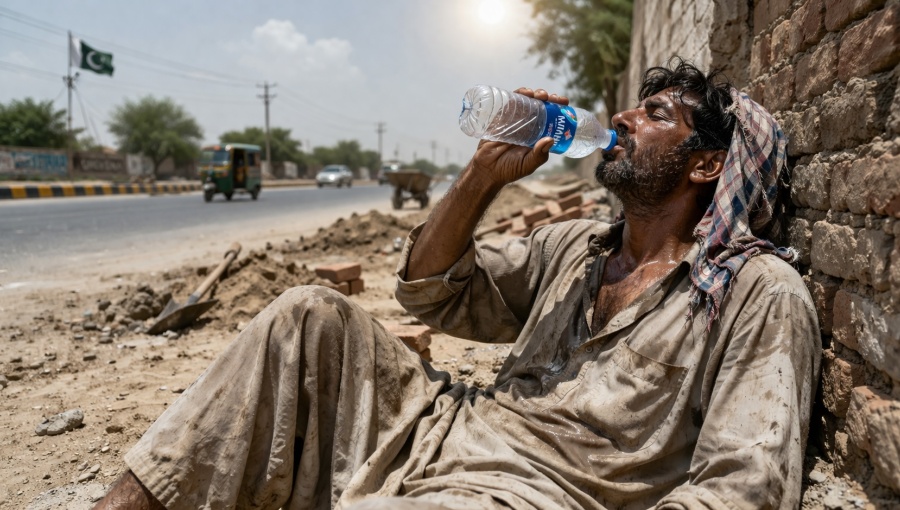
Poorer countries are projected to suffer sharply higher mortality from the increasing frequency of extreme heatwaves than wealthier nations, with death rates potentially rising by as much as tenfold, according to new analysis by Climate Impact Lab, Bloomberg reported on March 26.
The research, published on March 25, comes as record temperatures affect large parts of the US and as evidence mounts that global warming is accelerating. The last three years were the hottest in recorded history and the coming years are expected to get even hotter, according to climate scientists. As the Climate Crisis unfolds, a growing number of countries are expected to become uninhabitable for humans.
While rising temperatures are a global phenomenon, the health consequences vary significantly depending on income levels and access to adaptation measures, including air conditioning.
“I continue to be shaken by the inequality of climate change,” Michael Greenstone, University of Chicago economist and co-director of Climate Impact Lab told Bloomberg. “The extra deaths are all going to occur in places that contributed very little” to greenhouse gas emissions.
A band of heat-death extends across the middle of the world which also covers some of the poorest countries on the planet. Northern Africa, northern India, and Pakistan are particularly vulnerable to soaring temperatures. Extreme heat waves have already increased the number of excess deaths in these countries, however they have not reached the lethal wet-bulb level – 35°C with 100% humidity for six hours or more – which is outside the band of temperatures that humans can survive. Pakistan and UAE have both breached the wet bulb thresholds in recent years, but for less than the six hours needed to kill everyone caught outside.
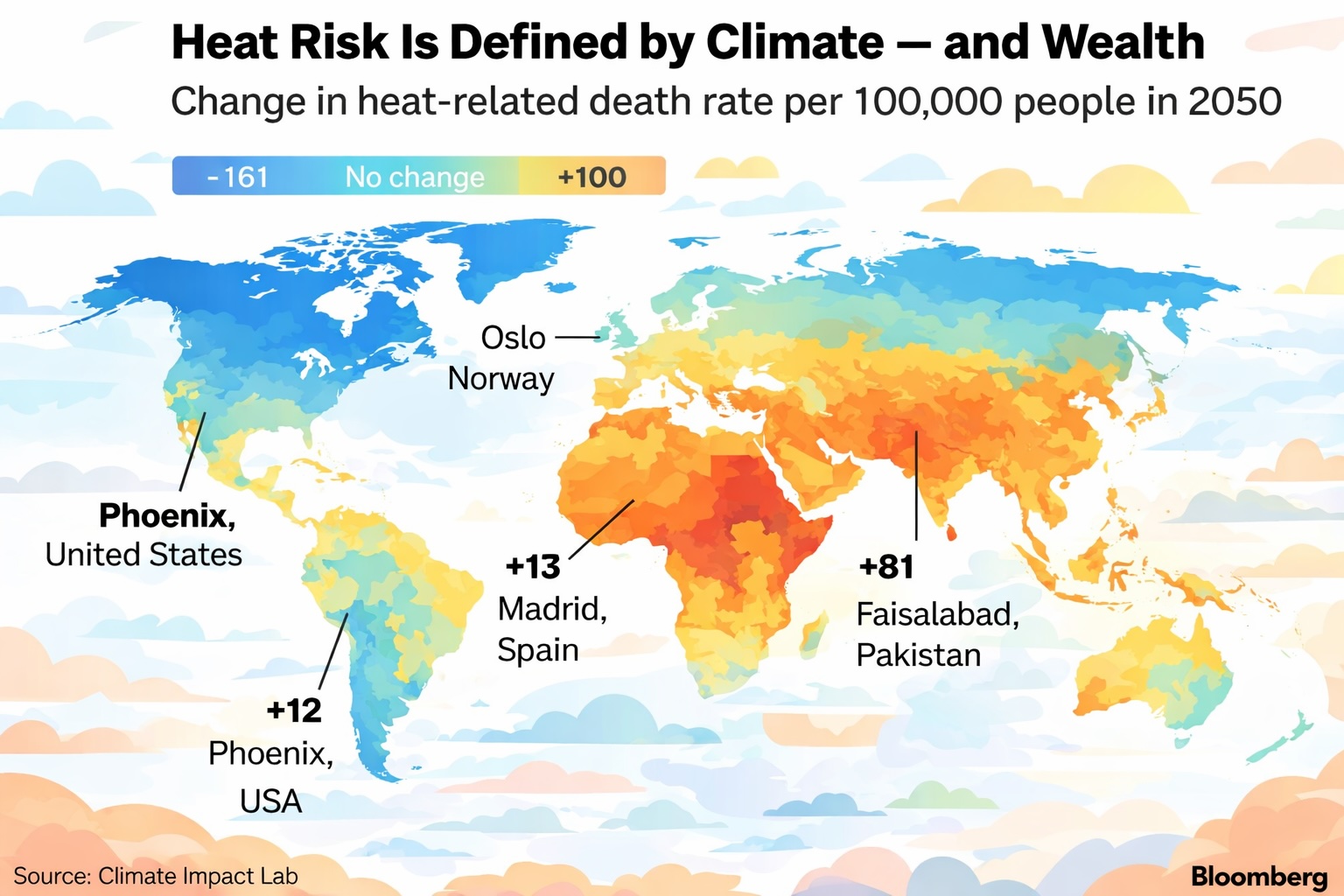
The study projects that by 2050, several lower-income countries could experience heat-related mortality comparable to existing major diseases, Bloomberg reports. In Niger and Burkina Faso, deaths could exceed 60 per 100,000 people annually, surpassing current malaria mortality rates in Africa. Djibouti may see heat-related deaths approach the country’s HIV/AIDS mortality rate of about 55 per 100,000, while southeastern Bolivia could record increases equivalent to current diabetes-related deaths.
Ironically, as the temperatures rise, countries in the Global North will see weather related deaths fall. In the northern regions extreme cold still kills more people than extreme heat. As global temperatures rise, the Global North will become more accommodating to human life for a few decades.
Northeastern Russia’s New Siberia Islands could see a decline of 161 deaths per 100,000 people, although the population there is small. Other higher-income areas, including parts of Alaska, Canada and Norway, are also projected to see reductions. All but two of the 20 countries with the largest improvements are high-income, while 16 of the 20 most affected are low-income.
The analysis divides the world into nearly 25,000 local regions, revealing sharp variations even within countries. Pakistan, for example, faces acute risks due to dense cities and reliance on outdoor labour following previous climate shocks such as the 2022 floods.

No comments:
Post a Comment