TRUMP HUFFED AND HE PUFFED
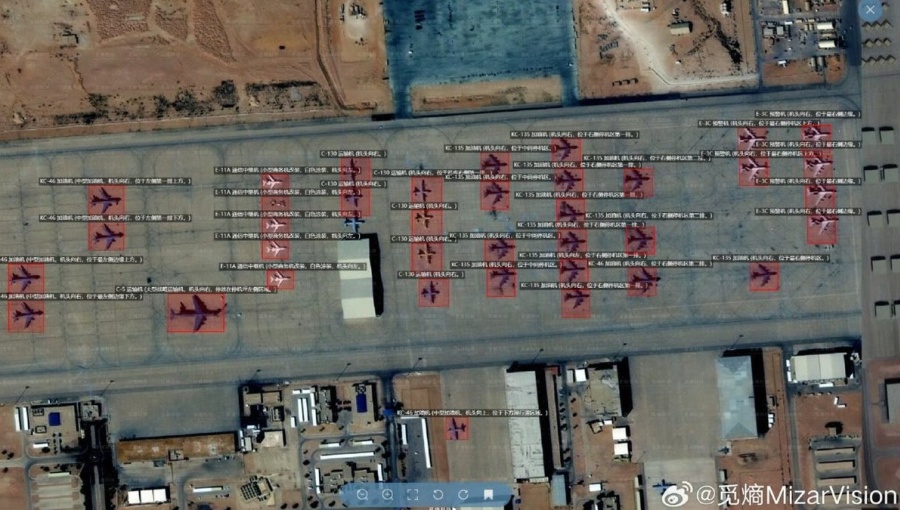
Iran has driven the US military out of all thirteen of its Gulf military bases, The New York Times (NYT) reported on March 25.
“Many of the 13 military bases in the region used by American troops are all but uninhabitable…” after Iran targeted them with its increasingly powerful missiles in an unexpected upset, reported NYT citing military personnel and US officials.
It is becoming increasingly clear that US President Donald Trump underestimated the power and sophistication of Iran's arms going into work has transpired be an asymmetrical war where Iran holds the cost-to-kill ratio advantage that has allowed it to deplete the US-Israeli coalition’s supply of defensive missiles and evade its air defence to do devastating damage to its forces.
At the same time Iran has been aided by its CRINK (China, Russia, Iran, and North Korea) allies who have been supplying Tehran with both military supplies and crucial satellite intelligence that has allowed it to accurately target US assets across the region.
In addition to its extensive stock of powerful drones, in the last week Tehran has also rolled out a range of never-seen-before weapons including a hypersonic missile – a technology even the US doesn’t have – and an IRBM with a 4,000km range that was fired at the US-UK military base on Diego Garcia in the Indian Ocean.
Facilities in Kuwait appear to have sustained some of the heaviest damage. Many of the 13 military bases in the region used by American troops are all but uninhabitable, with the ones in Kuwait, which is next door to Iran, suffering perhaps the most damage, the NYT reports. Six US service members were killed in a strike on Port Shuaiba that destroyed an Army tactical operations centre. Iranian drones and missiles also targeted Ali Al Salem Air Base, damaging aircraft structures and injuring personnel, and Camp Buehring, damaging maintenance and fuel facilities.
The US evacuated most of its personnel from the bases before the start of Operation Epic Fury on February 28, moving them to hotels in the capital cities, but Tehran warned before the conflict began that it knew which hotels were housing US military personnel and many of these up-market hotels have also been targeted by missiles strikes in the first days of the conflict.
The strikes have extended across key US installations in the region. In Qatar, Iran struck Al Udeid Air Base, the regional air headquarters of US Central Command, damaging an early-warning radar system. In Bahrain, a one-way Iranian attack drone struck communications equipment at the headquarters of the US Fifth Fleet. At Prince Sultan Air Base in Saudi Arabia, Iranian missiles and drones damaged communications equipment and several refuelling tankers.
Even more damaging, Iran used its most sophisticated missiles to take out all four of the US’ $1bn THAAD radar systems – half of America’s global inventory of the advanced air defence system – blinding military intelligence and making it hard for the US to detect inbound ballistic missiles effectively making the air defence system useless.
Operation Epic Fury has drained a third of the THAAD supply, and replenishment could take eight years, the Jerusalem Post reports, citing the Payne Institute. The US only makes a 100 THAAD missiles a year. While the 90% hit rate is high, every launch against Iran depletes the readiness needed for a potential conflict with China, the paper noted.
The campaign marks one of the most direct Iranian assaults on US military infrastructure in decades and reflects a sharp escalation linked to the ongoing US-Israeli war. Iran has bombed US bases across the Middle East in retaliation for the US-Israeli war, using high quality satellite intelligence resources provided by China’s BeiDou satellite navigation system and Russia.
The disruption has altered how US forces operate on the ground. So now much of the land-based military is, in essence, fighting the war while working remotely, with the exception of fighter pilots and crews operating and maintaining warplanes and conducting strikes, who are still based at what remains of the US bases.
Iran’s Islamic Revolutionary Guards Corps has urged people to report these new locations as it hunts down the increasingly dispersed troops. US military officials say that threat is not stopping the Pentagon from carrying out the war against Iran, which is in its fourth week.

No comments:
Post a Comment