Fighting for Our Lives: The Movement for Medicare for All
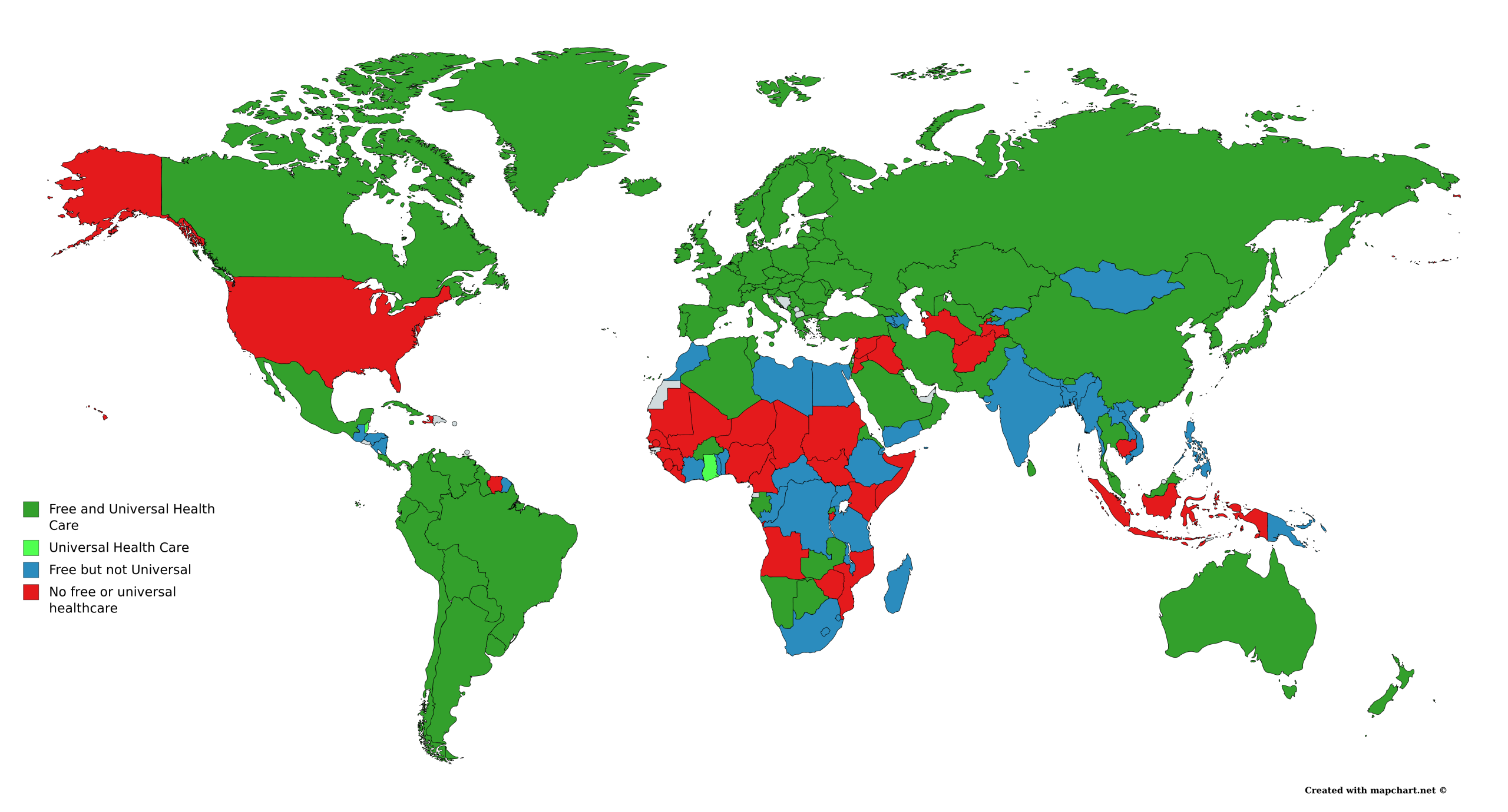
California voters are in the thick of a high-stakes governor’s race, in which single-payer health care, an issue that was once central to state politics, has been pushed to the sidelines. Of the top five candidates, only one unequivocally supports a health care model that would finally put California on par with the rest of the industrialized world.
Billionaire Tom Steyer, running as a Democrat, says single-payer is the only way to bring down spiraling health care costs. In 2020, Steyer ran for president on a platform touting a “public option,” and attacking Senator Bernie Sanders’s single-payer health care plan. Now, Steyer has reversed that position, earning the coveted endorsement of the California Nurses Association, one of the state’s most aggressive proponents of single-payer.
Sanders is widely credited with popularizing single-payer or “Medicare for All,” which would make health care a freely available and publicly funded resource much like public schools or libraries. In the face of federal intransigence, single-payer proponents have advocated for states to enact their own programs. Indeed, California has come close to enacting “CalCare,” its own version of single-payer, several times in recent years.
Steyer’s opponent and fellow Democrat Katie Porter has also said she supports single-payer but worries about its feasibility. In a public forum hosted by Politico last year, she said, “I don’t think it’s realistic in the next couple of years for the state to push forward on that,” adding that she believed it was more appropriate for the federal government to take it on instead.
Meanwhile, the current frontrunner, Xavier Becerra, has backed away from supporting single-payer. Becerra, who won the endorsement of a powerful, anti-single-payer lobby group called the California Medical Association, is running on a platform of preserving the status quo.
Meanwhile, the two Republicans polling well enough to potentially win a spot on the November ballot in California’s “free-for-all” primary are Steve Hilton and Chad Bianco. Hilton, a former Fox News host, and Bianco, who is Southern California’s Riverside County Sheriff, are both running on reducing access to state-funded health care, primarily for undocumented immigrants.
At a time when the cost of living in California continues to skyrocket, single-payer health care has been oddly low on the list of candidates’ talking points. Dr. Paul Song, a member of Physicians for a National Health Program and former co-chair of the Campaign for a Healthy California, said there’s good reason for that.
“The number of uninsured as a percent of our California population is at the lowest it’s been in a long time,” Song said in an interview on Rising Up With Sonali. That’s because Governor Gavin Newsom recently oversaw the expansion of insurance coverage to most Californians.
In 2018, then-candidate Newsom won the California Nurses Association’s endorsement for embracing single-payer. But his support for a system that would cover 100 percent of the population over time morphed into what he now calls “universal access to health care coverage.” While it might sound a lot like universal health care, this shift is a sleight of hand. Newsom’s chosen policy merely means almost everyone in the state has some form of private or public health insurance — but it doesn’t address the rising costs of premiums, co-pays, and high out-of-pocket charges.
“It’s easy to have become discouraged based on the false promises of Gavin Newsom when he ran and said he was going to run as a single-payer candidate,” said Song. Since 2018 there have been “numerous attempts where activists have tried to advance legislation only to see it just killed in Sacramento and not even be brought up for a vote,” he added.
Newsom has been accused of deliberately “slow-rolling” single-payer as governor. Song recalled a 2020 incident in which the governor caused a scandal by attending a dinner party at a high-end restaurant during the state’s strict COVID lockdown. “The person he was having dinner with was Dustin Corcoran from the CMA, the California Medical Association, who was one of the largest opponents of our single-payer system,” said Song. It’s the same organization that has backed Becerra for governor, a candidate who only recently surged in the polls after Congressional Rep. Eric Swalwell dropped out of the race.
Angered by Newsom’s backtracking, the California Nurses Association lambasted him in 2023 over his signing of SB 770, a bill that undercut single-payer efforts by expanding health coverage through private insurers. The union called it “a complete betrayal of nurses’ fight for a single-payer health care policy, a fight striving to achieve health justice for our patients and our communities.”
California Nurses Association President Michelle Gutierrez Vo, an adult family medicine nurse at Kaiser Fremont, explained why the union now supports Steyer in an emailed statement. “As a frontline nurse who cares for patients, I know Californians want a governor who supports CalCare.” According to Vo, her organization backs Steyer because he, “understands that we need to take on deep-rooted systematic failures in Sacramento, and that we cannot allow the next governor to repeat the political opportunism that has dominated this issue for too long.”
Song took a dim view of Becerra, saying, “There have been times where he said he was in favor of [single-payer], but you never saw him actively trying to propose anything to make that possible.” Becerra, who made history as the federal government’s first Latino Secretary of Health and Human Services during President Joe Biden’s administration, faced pressure from single-payer advocates to protect Medicare from privatization. According to Song, “What I saw under his watch was the even greater privatization of our health care system.”
Perhaps the largest reason why single-payer is no longer a key issue in the governor’s race is the supposed price tag of government funding for health care. Estimates range from more than $400 billion to $731 billion per year. Given that the state’s projected 2027 budget is on the order of $349 billion annually, single-payer opponents are quick to claim the state simply can’t afford it.
But Song says such estimates don’t account for the savings from switching to single-payer. “If you look at the total number of dollars that are spent on health care, and not to mention the amount of money that comes out of our pocket for co-pays or deductibles, or because we have an employee-sponsored plan, the number of dollars that we don’t get in our salary because the company has to deduct that to pay for health care, we are paying essentially for a universal health care system or a single-payer system, we just are not getting one,” he said.
Many studies have shown that single-payer would garner net savings for individuals. The trouble is that in order to enact it at the state level, state governments need permission from the federal government to divert Medicare and Medicaid funds toward a single-payer system — a request that is highly unlikely to be granted under the Trump administration. Newsom did not attempt to obtain a federal waiver under the Biden administration, although even if he had he would have been unlikely to succeed given that the Democratic president was also an opponent of single-payer.
Ironically, in 2017, Newsom declared on the social media platform X, “I’m tired of politicians saying they support single payer but that it’s too soon, too expensive or someone else’s problem.” Within a few years, he had become precisely such a politician.
Worse, Newsom’s touted substitute for single-payer — “universal access to healthcare coverage” — is about to come apart at the seams. In October 2025, his administration warned that health care costs were about to double thanks to congressional inaction, with insurance premiums for state insurance exchange plans potentially jumping by a whopping 97 percent. To make matters worse, Newsom just released a state budget that includes cuts to immigrants’ health care coverage — the same funding that helped achieve the near-universal health coverage of which he previously boasted.

The VA Is a Model for Public Health Care. We Need to Protect It.
Bruce Carruthers is a Vietnam veteran who served in the Army and now lives in Waynesville, North Carolina. At age 81, Carruthers could be spending more of his time with his three sons and grandchildren, traveling or focusing on the woodworking projects that he enjoys. Instead, for the last six years, he’s devoted hours each week to stop efforts to privatize the nation’s largest and only publicly funded health care system, run by the Department of Veterans Affairs (VA).
Carruthers has a long and deep connection to the Veterans Health Administration (VHA). For 30 years, from 1974 to 2002, he worked first in VHA’s Human Resources department and then in hospital administration at hospitals like the Rocky Mountain Regional VA Medical Center in Denver, Colorado.
Several years after his retirement, he became a VHA patient. He now drives 36 miles from his home to the Charles George VA Medical Center in Asheville, North Carolina, where, most recently, he’s received treatment for prostate cancer (most likely as result of his exposure to Agent Orange in Vietnam).
“I feel I’ve gotten not only excellent but incredibly responsive care at the VA,” he says. “One of the great things about it is if I have a question, I can email my primary care provider and get a response within hours. If I need one, they make an appointment for me.”
Several weeks ago, Carruthers noticed a bluish-purple mole on his neck and wrote his physician. The doctor responded immediately with a referral to a dermatologist, who quickly booked an appointment with Carruthers. “This would never happen in the private sector, at least not in rural America. I would have had to wait months to see a dermatologist in my area of the country.”
Like so many other veterans, he values a health care system designed specifically to meet the needs of veterans. Carruthers serves as President of the Veterans Healthcare Policy Institute (VHPI), a think tank that focuses on stopping VA privatization. He’s also a steering committee member of the Veterans For Peace Save Our VA Campaign (SOVA), which has the same goal.
“At 81, my time on this planet is obviously limited,” he says. “But I’m dedicated to making sure veterans, especially younger vets, receive the same kind of excellent care I’ve received at the VA.”
Over the past decade, a right-wing attack on the VHA has jeopardized the continued availability of this kind of care. Today, efforts to privatize the VA now threaten the very existence of the nation’s largest health care system. (Read my previous coverage on this issue for Barn Raiser here and here.)
In this first article of a multi-part series with Barn Raiser, I want to explain just what the VHA is and what it does, not only for rural veterans but all Americans. Subsequent articles will then describe the forces who have launched this assault against the VA, how veterans and rural Americans are organizing to protect the VA, and what you can do to protect this one-of-a-kind system.
The VHA is in fact, become the nation’s only socialized medicine system—albeit one that serves a small slice of the American population. Like the United Kingdom or Scandinavian health care systems, the government owns and operates all VA health care facilities, and all VA employees are on salary. VA physicians are not paid on a fee-for-service basis but are salaried and thus have no incentive to overtreat patients because they benefit financially from delivering unnecessary treatments or procedures. For example, studies have shown that the VA is the only health care system that follows standard of care for patients with low-risk prostate cancer, which is watchful waiting. Outside of VA, men with low-risk prostate cancer are far more likely to receive unnecessary surgery or invasive radiation treatment.
Although the VA is not a classic single-payer system, it is a national health system that both pays for and provides care, which makes it far easier to innovate within the system. VA innovations are legion, including medication barcoding, the integration of mental health and primary care, and widespread use of geriatric care for VA’s many older patients. As health care reform advocates search for models of high quality, accessible and affordable health care, they don’t have to look to Canada or the U.K. or other European countries, they can find it in every state in the nation.
The nation’s only genuine health care system
Since 1811, when Congress directed the Navy to establish the Naval Home in Philadelphia, the United States has offered former service members health care services to deal with their military related injuries.
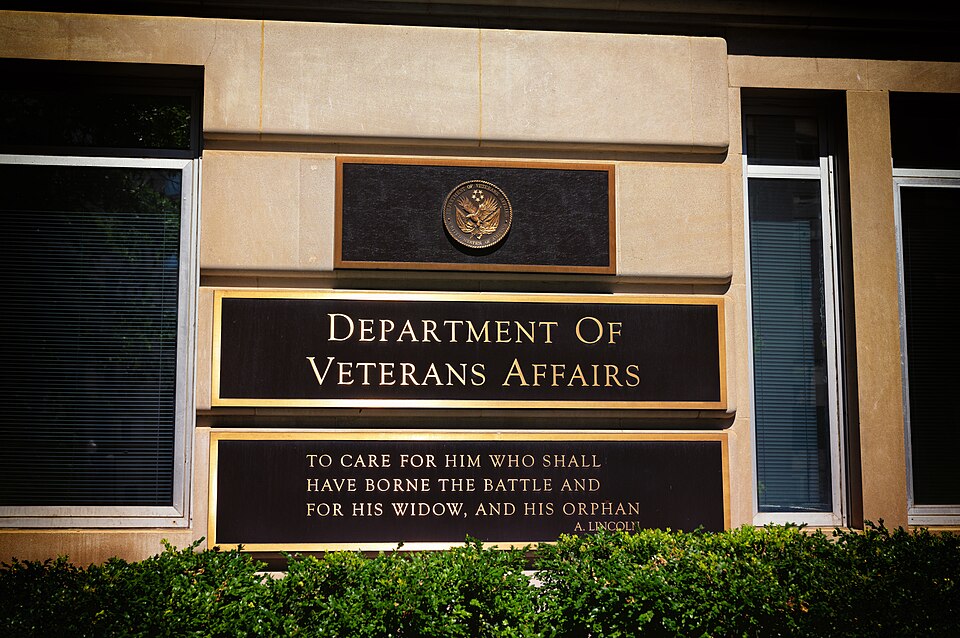
A month before the Civil War ended, on March 3, 1865, President Abraham Lincoln helped lay the foundation of what would become the Veteran’s Administration when he signed a law creating the National Asylum for Disabled Volunteer Soldiers to serve Union veterans. A day later, in his second Inaugural address, Lincoln famously pledged this care as both a literal and metaphorical means of healing the nation:
With malice toward none, with charity for all, with firmness in the right as God gives us to see the right, let us strive on to finish the work we are in, to bind up the nation’s wounds, to care for him who shall have borne the battle and for his widow and his orphan, to do all which may achieve and cherish a just and lasting peace among ourselves and with all nations.
By World War I, a variety of government agencies managed veterans’ health care and benefits. In 1930, President Herbert Hoover consolidated administration of veterans’ affairs into a single federal agency, the Veterans Administration. In 1988, President Ronald Reagan made that agency a cabinet level department, renaming it the Department of Veterans Affairs—still referred to as the VA. The Department includes the Veterans Health Administration (VHA) and Veterans Benefits Administration (VBA), which run the nation’s largest health care and benefits systems.
In 1994, the VA, still reeling from its failures to adequately care for veterans who suffered during the Vietnam War (as revealed in Ron Kovic’s 1976 memoir Born on the Fourth of July, later adapted as a movie in 1989 starring Tom Cruise) got a top to bottom makeover under the leadership of its new Under Secretary for Health Kenneth W. Kizer. Kizer, in what is known as the “Kizer revolution,” transformed a system that largely delivered hospital care of variable quality into the nation’s only comprehensive, fully integrated health care system.
While many largely market driven, increasingly corporate owned hospitals and clinics call themselves “health care systems,” they largely deliver fragmented medical treatment based on a fee-for-service, pay-as-you-go system. These “health care systems” are notorious for skimping on mental health care, and almost totally ignore social determinants of health like lack of housing, employment, occupational health and safety issues or legal problems. The VHA addresses all of these issues and more.
One common misconception about the VA is that anyone who has served in the military can access its health care system and benefits. That’s not true. Eligibility depends on a service member’s discharge status, their income, or their time in a combat zone, in our post-9/11 conflicts or whether they have a proven service-connected disability. More than half of America’s 17 million veterans probably qualify for VA health care; however, the system currently serves only nine million. An estimated 2.7 million, or about one third, of enrolled veterans live in rural areas.
The VA not only provides these veterans with a wide range of medical services—everything from primary care, to surgery, to geriatric care—it also has extensive mental and behavioral health programs. Major VA medical centers almost always include a full-service nursing home and residential rehabilitation treatment programs. The VA also has Blind Rehabilitation, Spinal Cord Injury and Polytrauma Treatment programs for veterans with serious vision loss, spinal cord injuries or who have suffered multiple traumatic injuries. The VA also addresses veteran homelessness, and employment and legal problems.
In 2014, the American Journal of Public Health lauded the VHA for its serious commitment, and action to achieve, health care equity, which it defines as providing timely, high quality, personalized, safe and effective health care regardless of geography, gender, race, age, culture or sexual orientation. This commitment to equity has supported rural veterans in particular, with the VA targeting programs and research initiatives focused on solving rural health disparities.
When it comes to serving rural veterans, who comprise about 25% of the total veteran population, the VA has made a serious and sustained commitment to meet their needs. VA has established almost 788 Community Based Outpatient Clinics (CBOCs) throughout the country, which means that most are within driving distance of a VA facility. Although some veterans who live in remote rural areas have to drive farther, most rural veterans are within a 44.5 mile range of a VA clinic.
Veterans benefit not only from a network of rural VHA clinics but also from well-established pathways to VHA facilities in metropolitan areas where they can receive more specialized care. In the cases of truly long travel, the VA often helps defray transportation and lodging costs and ensures coordination of care once veterans return to their local communities. A system of Fisher Houses also provides lodging for family members of veterans getting longer term treatment. In 2006, Congress also mandated that VHA create an an Office of Rural Health to study the needs and obstacles to access of rural veterans. The ORH also has developed regional Veterans Rural Health Resource Centers to delve more deeply into how to address the health care challenges of rural veterans.
VHA’s other missions include teaching, research and emergency preparedness. The VHA’s more than 12,000 hospitals and clinics are a key training ground for many of the nation’s future doctors, nurses and other clinicians. More than 1,800, or nearly 90%, of educational institutions partner with the VHA in this $900 million-a-year program. More than 70% of the nation’s physicians have received training in the VHA.
The VA also trains many other kinds of health care professionals. It’s the single largest employer of psychologists in the United States. According to the American Psychological Association (APA), “one in five doctoral interns in psychology is training at the VA. VA also hosts more than 50 percent of APA-accredited postdoctoral training programs in psychology.” In 2022, the American Association of Medical Colleges told Congress that the VHA played a role in medical education, training and research that is “irreplaceable.”
The VHA is also the nation’s largest research institution. Only the National Institutes of Health funds more research than the VHA. The VHA developed barcoding for medication administration, the first implantable cardiac pacemaker, the nicotine patch and the first Shingles vaccine. It has assembled the largest collection of brain tissue in the world in its Biorepository Brain Bank, established the connection between concussions in football and later development of Chronic Traumatic Encephalopathy, and its Million Veteran Program has assembled the largest genomic data bank in the world, allowing more than 600 researchers across VHA’s 80-plus projects to better understand and treat anxiety, heart disease, kidney disease, cancer, Parkinson’s Disease and other ailments.
The VHA is also mandated to address veteran homelessness. Its pioneering homeless programs, which include prevention services (Supportive Services for Veteran Families), outreach services (Health Care for Homeless Veterans and the National Call Center for Homeless Veterans), temporary housing and permanent housing services (Supportive Services for Veteran Families), have helped significantly reduce veteran homelessness as well as create models that have been emulated across the country to reduce a growing national epidemic. According to data from the Department of Housing and Urban Development, veteran homelessness hit a record low in January 2024 since measurement began in 2009.
Finally, the VHA serves as backup to the civilian health care system in times of war, terrorist attacks, natural disasters and other emergencies—from pandemics and mass shootings to hurricanes, tornados and wildfires. The VHA’s medical center in Puerto Rico, for instance, was the only functioning hospital on the island during and after Hurricane Maria. And it was open to non-veterans. At the height of the Covid-19 pandemic, VHA facilities cared for non-veteran patients in hot spots like New York, New Jersey and Louisiana. The VHA also has a memorandum of understanding with the Department of Defense to serve as a backup in times of war or terrorist attack.
Study after study has confirmed that the care VHA delivers to veterans not only equal to but very often superior to the care delivered by the private sector. Surveys of veterans also document that veterans highly approve of their dedicated health care system and want to see it improved and even expanded.
Unfortunately, neither the messages veterans are sending or those published in prestigious scientific journals have convinced Republican—and even too many Democratic—lawmakers to fully fund and staff the VHA. Over the past decade, a powerful movement funded by billionaire industrialists like the Koch Brothers and other dark money allies like Elon Musk—supported by the hospital, medical equipment and pharmaceutical industries—have launched a movement to privatize the VHA and even attack the benefits administered by the VBA.
Should this movement succeed, it will create serious problems not only for veterans but for all Americans. As I will explain in the next article, it will exacerbate an already catastrophic shortage of health care in rural America.

No comments:
Post a Comment