Tuesday, January 25, 2022

The last throes of Uganda's Lord's Resistance Army

After being driven out of Uganda, the Lord's Resistance Army ran riot in the Central African Republic, where it behaved more like a criminal gang than a terrorist militia. Now the LRA's days seem to be numbered.
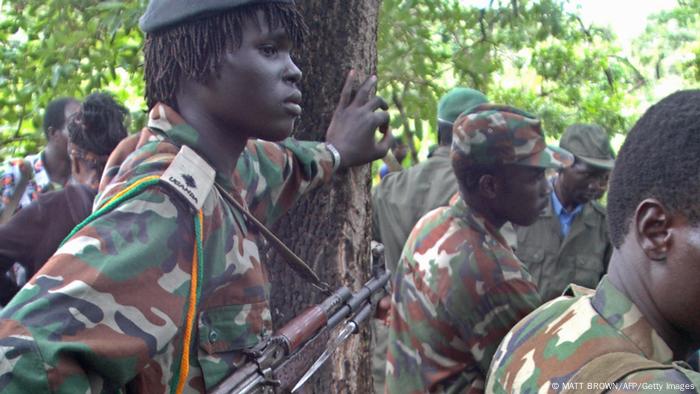


Ugandan Lord's Resistance Army fighters in a file photo of 2006

The Lord's Resistance Army (LRA) was founded in northern Uganda in 1987 to chase President Yoweri Museveni out of office and establish a Christian theocracy.

After being driven out of the country by the Ugandan military, LRA fighters instilled terror among the region's politically unstable neighbors — particularly in southern Sudan and present-day South Sudan, the northeastern Democratic Republic of Congo (DRC), and the southeastern Central African Republic (CAR).


"They came to the Central African Republic in 2008 and went on a rampage, especially in my home region of Haut Mbomou," recalled Ernest Mizedjo, who represents the country's far eastern communities in the parliament in the capital Bangui.

According to Mizedjo, the LRA committed many atrocities against civilians, especially in 2009, 2010 and 2011.

"They burned villages and tortured the inhabitants," he told DW. "Farmers could no longer cultivate their fields, hunters could no longer hunt and fishermen could no longer fish. They raped pregnant women and girls."

While the extent of atrocities committed by the LRA in the CAR is believed to be vast, he added, there are no official figures on the number of victims.
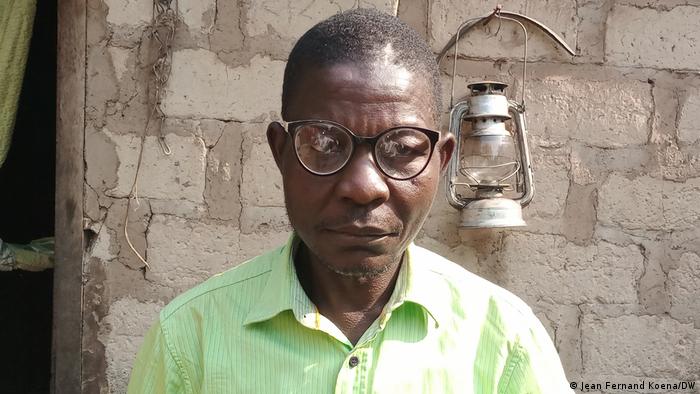

Aubin Kottokpinze was kidnapped and tortured by the LRA in 2008

According to the United Nations (UN), more than 100,000 people were killed by the LRA across several countries and regions. Between 60,000 and 100,000 children have been abducted, and many were misused as child soldiers. More than one million people were displaced as a direct consequence of the attacks.

52-year-old Aubin Kottokpinze, from Haut Mbomou is one of the victims. He told DW how he was captured by LRA fighters in 2008, at the age of 39.

"They kidnapped me, abused me and tortured me," he recalled. "It was a terrible experience, from which I never recovered. Look at me, I am only a shadow of my former self. I look much older today than I am."
Where is Joseph Kony?

The International Criminal Court (ICC), based in The Hague, issued an arrest warrant for the founder and leader of the LRA, Joseph Kony, in 2005.

Kony's whereabouts are currently unknown. For some time he was thought to be hiding in the border region of Kafia Kingi, between Sudan and South Sudan.

US agents, UN soldiers, an African Union task force and members of federal armies in countries where the LRA is active are all searching for the rebel leader. But so far, no one has managed to catch him. The Ugandan army did not even have a picture of Kony until 2000.
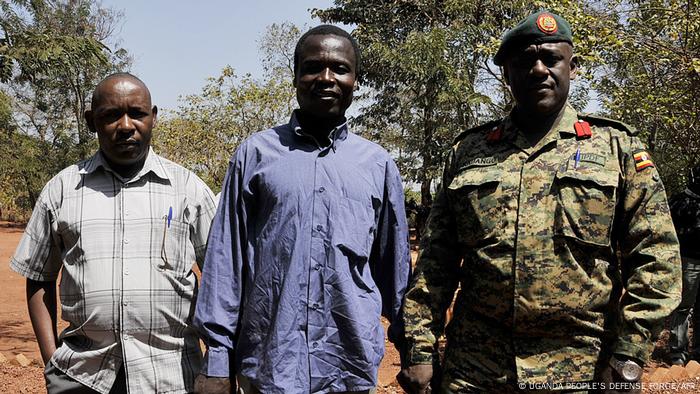

Detained in 2015 in the CAR, LRA leader Dominic Ongwen (center) was sentenced to 25 years by the ICC last year

"Nobody knows if Kony is still alive at all, or if the LRA fighters are still under his leadership, or whether the fighters are still held together by any kind of ideology," Adolphe Agenonga, an expert in geopolitics at the University of Kinsangani in DRC told DW. "What is certain is that the LRA is militarily very weak."

The former "army" now consists of splinter groups, he explained. The LRA is said to have only 200 to 1,000 fighters left in scattered groups, who presumably have no close contact with commander Kony.
From fighters to bandits

"The LRA of today is not to be compared with the notorious army that made headlines in the international media in 2012," Agenonga added, explaining that sporadic attacks nowadays are carried out primarily to guarantee the survival of its members.

Many fighters also go underground by mingling with the nomadic Mbororo herders in the region.

"Of course, nomadic herders themselves are also sometimes victims of kidnappings and hostage-taking by LRA fighters," Agenonga said.
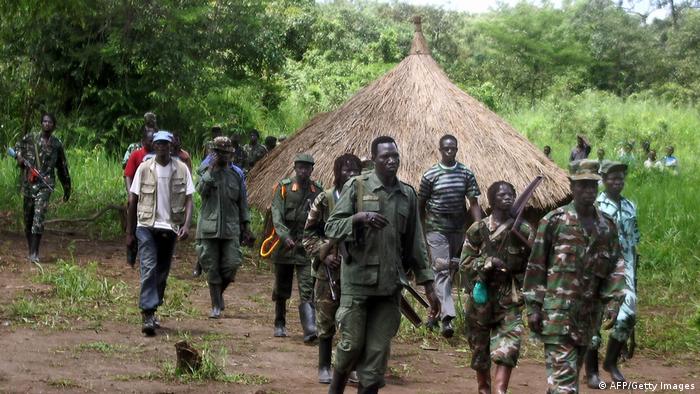

The LRA are now fighting for survival, not a cause

CAR MP Ernest Mizedjo agrees that the LRA fighters now behave more like a criminal gang that is trying to survive by staging raids and dealing in ivory.

"The LRA rebellion has turned into a business in recent years," he told DW. "They smuggle and trade arms across borders, supplying all sorts of other militias in northeastern DRC."

"They smuggle ivory and also trade in smuggled ivory from Sudan. So, the LRA has turned from a rebel group into a band of criminals doing illegal business. "
CAR citizenship for Joseph Kony?

But there are indications that the LRA fighters in the CAR are growing tired of their way of life.

There are reports that some fighters have presented themselves to authorities, as confirmed by Judes Ngayakon, governor of the Haut Mbomou region.

"I recently received a delegation from the LRA who told me they were ready to hand over their weapons," Ngayakon told DW.

But that's not all: In the capital Bangui, there are rumors that Joseph Kony is ready to negotiate a ceasefire agreement. In return, he would want to be involved in a possible peace process — and be given CAR citizenship. CAR's Minister of Humanitarian Action, Virginie Baikoua, confirmed this correspondence to DW.
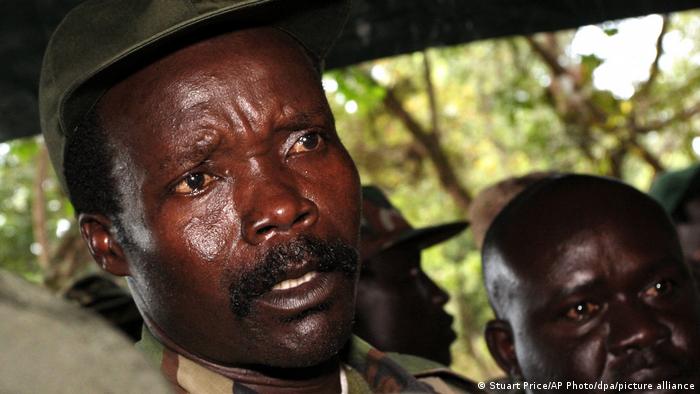

Rebel leader Joseph Kony is applying for CAR citizenship

What's behind it then? Ernest Mizedjo believes all the evidence indicates that the LRA fighters have grown tired.

"They've probably lost moral too, and maybe it's just that they don't have a leader anymore," he said. "In addition to this, they simply don't have any support. Every rebellion needs a certain amount of support from the population." Mizedjo hopes this means that the farmers who fled their lands can now return to their fields.

Aubin Kottokpinze, who has been at the forefront of the fight against the LRA in CAR since his kidnapping in 2008, agrees. Today, Kottokpinze is the President of the Association of LRA Victims and advocates for justice above all else.

"We welcome the fact that the Ugandan rebels are leaving our country and laying down their arms," he said. "Our concern is that our state and the international community meet their responsibilities and acknowledge our suffering."

"We also want the perpetrators brought to justice. We ask the CAR government to support us in our quest for justice before the International Criminal Court."

Jean-Fernand Koena contributed to this article adapted from German.
END BLASPHMEY LAWS
Bollywood star cleared of obscenity charges over 2007 Richard Gere kiss


Shilpa Shetty is perhaps best known outside of India for her appearance on British reality TV show Celebrity Big Brother in 2007 (AFP/Sujit Jaiswal) (Sujit Jaiswal)

Tue, January 25, 2022, 3:18 AM·2 min read


Indian actress Shilpa Shetty has been formally cleared of obscenity charges dating from when Hollywood star Richard Gere publicly kissed her at an AIDS awareness event 15 years ago.

The incident triggered a local firestorm at the time, with radical Hindu groups burning effigies of both celebrities to protest the perceived insult to Indian values.

A judge soon afterwards issued arrest warrants, with both accused of various counts of obscenity and indecency.


The charges against Gere were quickly shelved, allowing the actor -- one of the world's best-known Buddhists -- to return to India for a meeting with the Dalai Lama.

But the case against Shetty languished in India's glacial legal system for more than a decade until it was finally discharged in Mumbai last week.

In a court order made public on Tuesday, a judge said the charges against the actress were "groundless" and that she had been subject to an unwanted amorous advance from the Hollywood A-lister.

"It seems that... Shilpa Shetty is the victim of alleged act of accused No. 1 (Richard Gere)," the order said.

Footage of the 2007 incident shows Gere spontaneously kissing Shetty on the hand, before tightly hugging her and planting repeated kisses on her cheek, while both were onstage.

Shetty's lawyer said the entire case rested on the fact that "she did not protest when she was kissed by the co-accused".

"This by no stretch of imagination makes her a conspirator or perpetrator of any crime," the lawyer added.

Shetty, 46, has not yet issued a public statement in response to the court order.

Back in 2007 she had defended Gere's actions and blamed India's "lunatic fringe" for the uproar.

Gere later apologised for his exuberant display, apparently an attempt to demonstrate that kissing was a safe activity that did not spread AIDS.

Shetty is perhaps best known outside of India for her appearance on British reality TV show Celebrity Big Brother in 2007.

The series was engulfed by scandal after Shetty was subjected to racist bullying by other contestants.

ng/gle/axn
Gun control and firearms possession in Germany

School shootings are relatively rare in Germany, a country with some of the strictest gun laws in Europe. DW looks at Germany's gun ownership laws.


German gun owners need a special pass


The shooting at Heidelberg University has reawoken some interest in German gun control, which is regulated by the 2002 Weapons Act. In 2019 Germany's Bundestag agreed to new gun control regulations, including a controversial measure that would have everyone who owns a firearm regularly checked by the country's domestic intelligence agency (BfV).

According to the Weapons Act, you need a weapons possession card (Waffenbesitzkarte) to own or buy a firearm and a weapons license (Waffenschein) to use or carry a loaded firearm. This means collectors, for instance, only need the first, whereas hunters must have both.

A weapons possession card allows gun owners only to "transport" a firearm, rather than carry it. That means it must be unloaded and inside a locked case when taken out in public. But for those with a gun license, German law has no provision stipulating whether a gun must be concealed or loaded in public or not.

There is also a minor firearms certificate,(Kleiner Waffenschein) which is easier to obtain, and which is needed to carry lower-powered weapons, such as air guns, starting pistols, flare guns, or anything that can only shoot blanks or irritants.

Altogether, the costs for an application, including the required insurance, can run to around €500 ($540).
What kinds of guns are legal in Germany?

German law makes a distinction between weapons and war weapons, with the latter listed in the War Weapons Control Act.

In Germany, it is illegal to possess or use any war weapons. These include all fully automatic or semi-automatic rifles, machine guns (unless antiques from World War II or earlier), or barrels or breeches for such weapons. Pump-action shotguns are also banned under the Weapons Act.
Who is allowed to own guns in Germany?

Applicants for a German gun license must

1) be at least 18 years old,

2) have the necessary "reliability" and "personal aptitude,"

3) demonstrate the necessary "specialized knowledge,"

4) demonstrate a "need," and

5) have liability insurance for personal injury and property damage of at least €1 million ($1.1 million).
How do applicants demonstrate 'reliability' and 'personal aptitude'?

Local authorities are responsible for processing gun license applications, and therefore verifying reliability, personal aptitude, and need. Depending on where the applicant lives, the competent authority could be either the public order office (Ordnungsamt) or the police.

Amongst other criteria, the law says that applicants are deemed unreliable or lacking personal aptitude if:
They have been convicted of a crime in the last ten years
Their circumstances give reason to assume they will use weapons recklessly
They have been members of an organization that has been banned or deemed unconstitutional
They have in the last five years pursued or supported activities deemed a threat to Germany's foreign interests
They have been taken into preventive police custody more than once in the last five years
They are dependent on alcohol, drugs, or are mentally ill

In addition, anyone under 25 applying for their first gun license must provide a certificate of "mental aptitude" from a public health officer or psychologist.


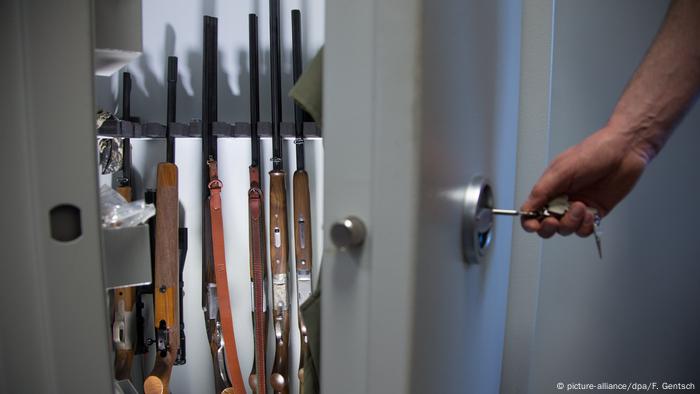
German gun laws also stipulate how guns can be stored
How do applicants demonstrate 'specialized knowledge'?

Applicants for a gun license must pass an examination or have undergone some training to acquire a gun. State examinations cover the legal and technical aspects of firearms, safe handling, and shooting skills.

Specialized knowledge can also be verified with other examinations, as long as they cover the same areas: these include hunting license examinations, gunsmith's trade examinations, or full-time employment in the gun or arms trade for three years.

The completion of certain training courses involving firearms, which conclude with an examination, are also recognized as specialized knowledge.

In addition, officially-recognized shooting associations can also carry out their own examinations.
How do applicants demonstrate 'need'?

The law states that gun license applicants must prove some need to obtain one, and defines this as "personal or economic interests meriting special recognition, above all as a hunter, marksman, traditional marksman, collector of weapons or ammunition, weapons or ammunition expert, endangered person, weapons manufacturer, weapons dealer or security firm."

People who show they are unusually likely to be the victim of a crime can also be deemed as having a need to own a firearm.

Members of shooting associations and clubs can also demonstrate the "need" for a gun license if they submit a certificate from an association of traditional marksmen confirming that they need these weapons in order to maintain a tradition.

Edited by Rina Goldenberg

This article was first published in 2020.

DW sends out a daily selection of hard news and quality feature journalism. Sign up here.
Japan orders probe of Vietnamese intern abuse case


Justice Minister Yoshihisa Furukawa said he had instructed 
the immigration agency to 'swiftly deal with' the case 
(AFP/Philip FONG) 

Tomohiro OSAKI
Tue, January 25, 2022, 3:13 AM·2 min read

Japan's justice minister on Tuesday ordered the immigration agency to investigate violent workplace abuse allegedly suffered by a Vietnamese intern in a case that has heightened scrutiny of a state-sponsored training programme.

A video appearing to show the man being punched, kicked and battered with a stick by his co-workers at a construction company sparked outrage after it was released by the 41-year-old's labour union and went viral this month.

The man who came to Japan in 2019 under the internship scheme has spoken out about his nearly two-year ordeal, saying he does not want other Vietnamese trainees in Japan to go through the same.


Justice Minister Yoshihisa Furukawa said he had instructed the immigration agency to "swiftly deal with" the case.

"Human rights violations against foreign technical interns, such as abuse, are absolutely unforgivable," he told reporters.

More than 350,000 trainees live in Japan under the state-sponsored scheme, which has been running for decades.

Its stated aim is to help workers from less developed economies gain skills in industries such as agriculture, construction and food processing.

But critics say some employers use the programme as a cheap source of labour that puts the interns at risk of exploitation and abuse.

The Vietnamese man described the alleged physical assaults as "so aggressive and so brutal" at an online news conference on Tuesday.

His name was withheld at the event, where he spoke through an interpreter alongside Mitsugu Muto, chair of the labour union that now shelters him.

Muto said persistent assaults against the trainee at the company in western Japan once involved his co-workers throwing a piece of equipment at him, resulting in his teeth being knocked out and his lip lacerated.

The trainee also separately suffered a rib fracture after a colleague kicked him with safety boots in the chest, he said, adding that the case is under police investigation.

Muto said the man's case was extreme, but stories of harassment, low wages and verbal abuse are all too common among foreign trainees.

"We believe it's rooted in a lack of human rights awareness... and there's an element of racism as well," he said.

A 2021 report by the US Department of State said foreign-based and domestic traffickers "continued to abuse the government-operated Technical Intern Training Program (TITP) to exploit foreign workers".

Japan's government "did not hold recruiters and employers accountable for abusive labour practices and forced labour crimes", the Trafficking in Persons Report said.

tmo/kaf/je
Cambodia: EU draws criticism over 'inaction' against opposition crackdown

Since the dissolution of the Cambodia National Rescue Party, PM Hun Sen's government has arrested hundreds of opposition activists. Analysts say Brussels has failed to exert pressure on the authoritarian regime.


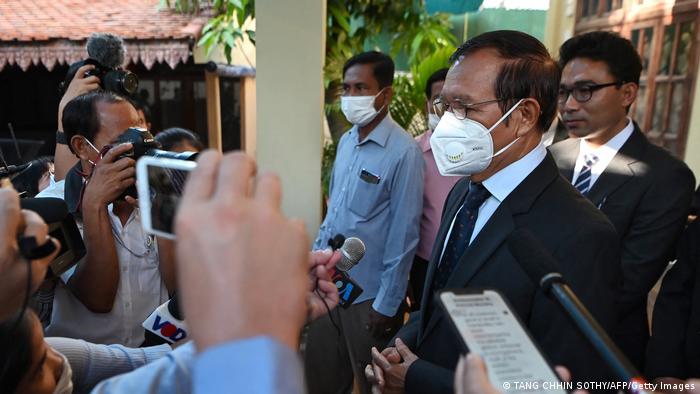
Opposition leader Kem Sokha faces 30 years in prison if found guilty

Cambodian opposition leader Kem Sokha returned to the courtroom on January 19 for a politically-motivated trial in which he is accused of treason.

Sokha, 68, was arrested in September 2017, just months before the forced dissolution of the Cambodia National Rescue Party (CNRP), the country's only viable opposition party which he co-founded and served as president.

Hundreds of CNRP-aligned individuals and activists have been arrested, jailed, or harassed by authorities since 2017. Many more have fled abroad, joining the party's elected politicians who left for exile after being stripped of their positions.

According to Human Rights Watch's estimates, there are currently 68 CNRP-affiliated individuals in prison, while another 90 have been released on bail pending charges, like Sokha. Three have reportedly died in custody.

Several CNRP-linked individuals have also been killed since 2017, including Sin Khon, who was murdered in Phnom Penh last November. The same month, at least 126 CNRP-affiliated individuals were summoned for a series of "politically-motivated mass trials," Amnesty International stated in its 2021 report.
'Fabricated conspiracy theories'

"Severe physical assaults of individuals affiliated with the CNRP continued, with no one arrested or investigated for any of the attacks," the UK-based human rights watchdog added.

Several exiled, senior CNRP leaders — including "acting-president" Sam Rainsy and its vice presidents — were last year sentenced in absentia to more than 20 years in prison for allegedly conspiring to foment a "color revolution."

Watch video 02:43EU mulls end to Cambodia deal

The Supreme Court, which outlawed the CNRP in 2017, claimed the party was plotting a US-backed coup, which US Ambassador to Phnom Penh, W. Patrick Murphy, has called "fabricated conspiracy theories."

Sokha faces 30 years in prison if found guilty. He was released to house arrest before his bail conditions were relaxed in late 2019. His trial began in January 2020, around 28 months after his arrest, but was then delayed because of the COVID-19 pandemic.

"There is absolutely no possibility of justice for Kem Sokha in Cambodia's highly politicized courts," said Phil Robertson, deputy Asia director of Human Rights Watch.

Transparency International's latest Corruption Perceptions Index ranks Cambodia the 20th worst country in the world for official graft, just two places ahead of Iraq. All areas of the state, including the judiciary, are now controlled by the ruling Cambodian People's Party (CPP), which has been in power since 1979.

Ky Tech, the government lawyer leading the prosecution against Sokha, is a member of the ruling party's decision-making Central Committee.
Possibility of a political settlement

"I would expect delays [to the trial] because the pattern has been to draw it out and milk it for all it's worth," Sophal Ear, associate dean and associate professor at the Thunderbird School of Global Management at Arizona State University, told DW.

Government spokesman Phay Siphan has repeatedly told local media in recent weeks that no politician can intervene in the trial proceedings, but he noted a political resolution could be found afterwards.

Ou Virak, president of the Phnom Penh-based Future Forum think tank, reckons the Phnom Penh Municipal Court could give Sokha a suspended sentence, sparing him a prison sentence even if he is convicted of treason.

Alternatively, he said, Prime Minister Hun Sen could arrange for Sokha to be given a royal pardon, which would also spare the opposition leader a prison term, but that would only come after "political negotiation" between Sokha and the Cambodian premier.
The end of opposition politics?

It is widely suspected that Hun Sen, one of the world's longest-ruling heads of government, wants to cajole Sokha into either resigning from politics or agreeing to lead a greatly defanged opposition party.

His goal, analysts told DW, is to cement a split between Sokha and Rainsy, who has been in exile in France since 2015.

Watch video 01:11 Road trip through Cambodia

Sokha co-founded the CNRP in 2012 after merging his political party, the Human Rights Party, with Rainsy's eponymous group.

The opposition pair has a tempestuous relationship, but their public shows of unity made the CNRP an electoral possibility. It won just 4% points less than the CPP in the 2013 general election.

Sokha and Rainsy maintained their public solidarity after their party's ban in 2017 but a spat began in late November last year when Sokha bemoaned Rainsy for using his name. Sokha's daughters, who play a leading role in his faction of the banned party, also accused Rainsy of "racism" and "sexism."

However, analysts say there is no indication yet that Sokha is prepared to agree to Hun Sen's demands, which could lead to a protracted court trial.

After the CNRP was dissolved, the ruling CPP went on to win all 125 seats in the National Assembly in the following year's general election.

Despite controlling a near monopoly of political offices in the country, the ruling party's authority still isn't absolute. Hun Sen last month solidified plans to hand over power to his eldest son, the de facto military leader Hun Manet, who was named the ruling party's next prime minister candidate.

A dynastic handover is expected sometime between the next two general elections, in 2023 and 2028, and it would run much more smoothly if there is no real opposition threat to contend with.
'Inefficient' EU response

Cambodia also faced a considerable backlash from the West because of its democratic deterioration.

The United States last month ordered a review of Cambodia's place in its preferential GSP scheme over human rights and political conditions in the country. In August 2020, the EU removed around a fifth of Cambodia's trade privileges, re-imposing tariffs on exports, for similar reasons.

Watch video 06:17 The EU and Cambodia -- free trade at risk

Cambodia's economy contracted by around 3% in 2020 and only grew by 2.2% last year, compared with highs of around 7% during the 2010s. Any further trade sanctions by the US or the EU, its main export markets, would severely hamper economic recovery efforts.

Cindy Cao, associate researcher at the European Institute for Asian Studies, described the EU's response to the deteriorating situation in Cambodia since 2017 as "unethical and inefficient."

The bloc's "economic coercion did not have any of the positive impacts Brussels publicly declared to aim for," she told DW, noting that Sokha has not been released nor the CNRP reinstated.

On top of that, the EU trade sanctions have exacerbated economic difficulties in the garment industry, affecting vulnerable workers, especially during the COVID pandemic.

Peter Stano, an EU spokesperson, says Brussels has been "closely monitoring" the trial of Kem Sokha and the resumption of court proceedings. He didn't respond to questions about possibly removing even more of Cambodia's trade privileges, adding that "these preferences could be fully restored if there is a substantial improvement on the issues of concern."

Edited by: Shamil Shams
Australia buys copyright to Aboriginal flag

The flag, designed by artist Harold Thomas, is now free to fly for Australians without permission or payment of fees. 

The deal ends a long-running dispute about the flag's public use.


The artist had given licenses to some companies to use the flag on their products.

The Australian government has acquired the copyright to the Aboriginal flag for US$14 million (€12.3 million), making it free to fly without the threat of legal action.

This marks the end to a long-term dispute which had restricted sporting teams and Aboriginal communities from reproducing the image.

The Aboriginal flag has been recognized as an official flag of Australia since 1995, flown from government buildings and embraced by sporting clubs.

Prime Minister Scott Morrison said the government had "freed the Aboriginal flag for Australians." He added it could now be used in apparel, on sports grounds, and in other medium "without having to ask for permission or pay a fee."

"Now that the Commonwealth holds the copyright, it belongs to everyone, and no one can take it away," said Minister for Indigenous Australians Ken Wyatt in a statement.

The announcement came on the eve of Australia Day, a national holiday.
Why was the Aboriginal flag disputed?

The flag was designed by Aboriginal artist Harold Thomas, and had become a symbol of demonstration and protest for Australia's Aboriginal people.

"I hope that this arrangement provides comfort to all Aboriginal people and Australians to use the flag, unaltered, proudly and without restrictions," said Thomas.

In the last 50 years, there had been intense debate about the flag's use after Thomas had given rights to companies to use the flag on their products. One of these companies, WAM Clothing, sent cease and desist letters to organizations such as the Australian Football League, for using the Aboriginal flag on clothing.

The government has now paid to terminate the licences held by the companies.

As part of the deal, a scholarship has been set up for Indigenous students for $100,000 in Thomas' name.


THE CONTROVERSY OVER AUSTRALIA DAY
January 26
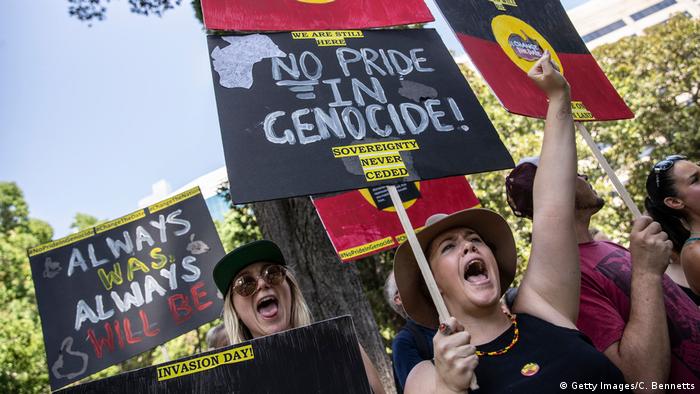
January 26 is Australia's national day. It marks the arrival of the First Fleet of British ships at Port Jackson in Sydney in 1788. The Australian government describes Australia Day as a day to "celebrate all the things we love about Australia." But for many Aboriginal and Torres Strait Islander people, January 26 marks the beginning of the loss of their culture, people and land.
12345


tg/rt (AFP, Reuters)


Free for all: Copyright for Aboriginal flag transferred to Australian public in $21m deal

Rob Harris08:41, Jan 25 2022

KATE GERAGHTY/SYDNEY MORNING HERALD
A man sits on a bench in front of a mural of the Aboriginal flag in Newtown, Sydney, New South Wales.

The Aboriginal flag will be transferred to public hands for the first time, freeing its use for Indigenous community groups and sporting codes after the Australian government reached a historic deal with its creator to permanently acquire copyright more than 50 years after it was first flown.

The A$20 million (NZ$21.3m) taxpayer-funded settlement will end a long-running legal controversy surrounding its use by allowing the ensign to be painted on sports grounds, used on apparel such as sports jerseys and shirts, on websites, in paintings and other artworks, digitally and in any other medium without having to ask for permission or pay a fee.

The flag – its upper black half representing the Aboriginal people, the lower red half the red ochre earth and its yellow circle the land and sun – had been entangled in a legal stoush between its designer and copyright holder, its licensees and dozens of community and sporting organisations. They had received cease-and-desist letters from a non-Indigenous company WAM Clothing, which was granted exclusive use by Luritja artist Harold Thomas in 2018.

Thomas said the flag was a deeply personal piece of artwork that was never intended to be a political platform.

“In the future, the flag will remain, not as a symbol of struggle but as a symbol of pride and unity,” he said.

Australia’s Prime Minister Scott Morrison said the finalisation of more than two years of delicate and sensitive negotiations between the Commonwealth and Thomas would free the Aboriginal flag for all Australians.

“Throughout the negotiations, we have sought to protect the integrity of the Aboriginal flag, in line with Harold Thomas’ wishes,” he said. “I thank everyone involved for reaching this outcome, putting the flag in public hands.”

More than two decades after Sydney Olympic golden girl Cathy Freeman wrapped herself in the emblem that had become symbolic of her people’s struggle, Morrison said the flag would now be managed in the same manner as the Australian flag, where its use is free but must be presented in a respectful and dignified way.

ALEX ELLINGHAUSEN/SYDNEY MORNING HERALD
The Australian flag, the Aboriginal flag and the Torres Strait Islander flag flying in Canberra.

The multi-million dollar settlement includes a payment to Thomas for the copyright and extinguishes the existing licences. As part of the transfer, Thomas will retain his moral rights over the flag and the Commonwealth has also agreed that all future royalties will be put towards the ongoing work of the National Aborigines and Islanders Day Observance Committee (NAIDOC).

The government will also provide an annual scholarship in Thomas’ honour worth A$100,000 for Aboriginal and Torres Strait Islanders students to further the development of Indigenous governance and leadership.

The National Indigenous Australians Agency will also create an online history and education portal for the flag. An original painting by Thomas recognising the flag’s 50th anniversary and the historic transfer of copyright will be donated to the Australian public and displayed in a prominent location.

Thomas, based in Alice Springs, will use A$2 million to establish an Australian Aboriginal Flag Legacy not-for-profit to make periodic disbursements aligned with the interests of Aboriginal Australians and the flag.

Now in his 70s, the man credited as the first Aboriginal person to graduate from an Australian art school has kept a low public profile since the largely social media-driven movement gained momentum in 2020.

DAVID HANCOCK/SYDNEY MORNING HERALD
The artist who created the flag Harold Thomas signing the Aboriginal flag agreement.


“I hope that this arrangement provides comfort to all Aboriginal people and Australians to use the flag, unaltered, proudly and without restriction,” Thomas said. “I am grateful that my art is appreciated by so many, and that it has come to represent something so powerful to so many.

“The flag represents the timeless history of our land and our people’s time on it. It is an introspection and appreciation of who we are. It draws from the history of our ancestors, our land, and our identity and will honour these well into the future.”

The AFL, one of the country’s most influential sporting organisations, became a main player in the “Free the Flag” campaign after it would not enter a commercial agreement to paint the flag on its playing arenas nor feature its design on its Indigenous-themed jumpers during its annual Sir Doug Nicholls round.

The code said at the time its own players did do not want the competition to pay to paint the flag on the ground or print it on club jumpers if other Indigenous Australians and groups were denied the opportunity because of the commercial terms sought by the licensee.

KATE GERAGHTY/SYDNEY MORNING HERALD
People walk past a mural with the Aboriginal flag that welcomes people to the Block on Eveleigh Street in Redfern, Sydney.

Several prominent Indigenous athletes, including Olympian Nova Peris and AFL greats Lance Franklin and Michael Long also gave voice to the campaign to free the flag for community use.

Spark Health, an Aboriginal-owned and run social enterprise that makes merchandise with the tagline ‘Clothing the Gap’, was among the first groups served with a cease and desist notice in 2019.

Under the negotiated agreement, Carroll and Richardson Flagworld will remain the exclusive licensed manufacturer and provider of Aboriginal flags and bunting to ensure the flags continue to be manufactured in Australia. While the ongoing arrangement covers commercial production, Flagworld will not restrict individuals from making their own flag for personal use.

Federal Minister for Indigenous Australians, Ken Wyatt, said securing the free use of the Aboriginal Flag was profoundly important for all Australians.

“Over the last 50 years we made Harold Thomas’ artwork our own – we marched under the Aboriginal flag, stood behind it, and flew it high as a point of pride,” he said.

“Now that the Commonwealth holds the copyright, it belongs to everyone, and no one can take it away.”

Sydney Morning Herald
Transparency International: Corruption watchdog says Germany has work to do

Transparency International's latest Corruption Perceptions Index has both good and bad news in the struggle against public sector corruption. Germany hasn't budged on the list.


Transparency International annually ranks all countries according to how corrupt they are perceived to be

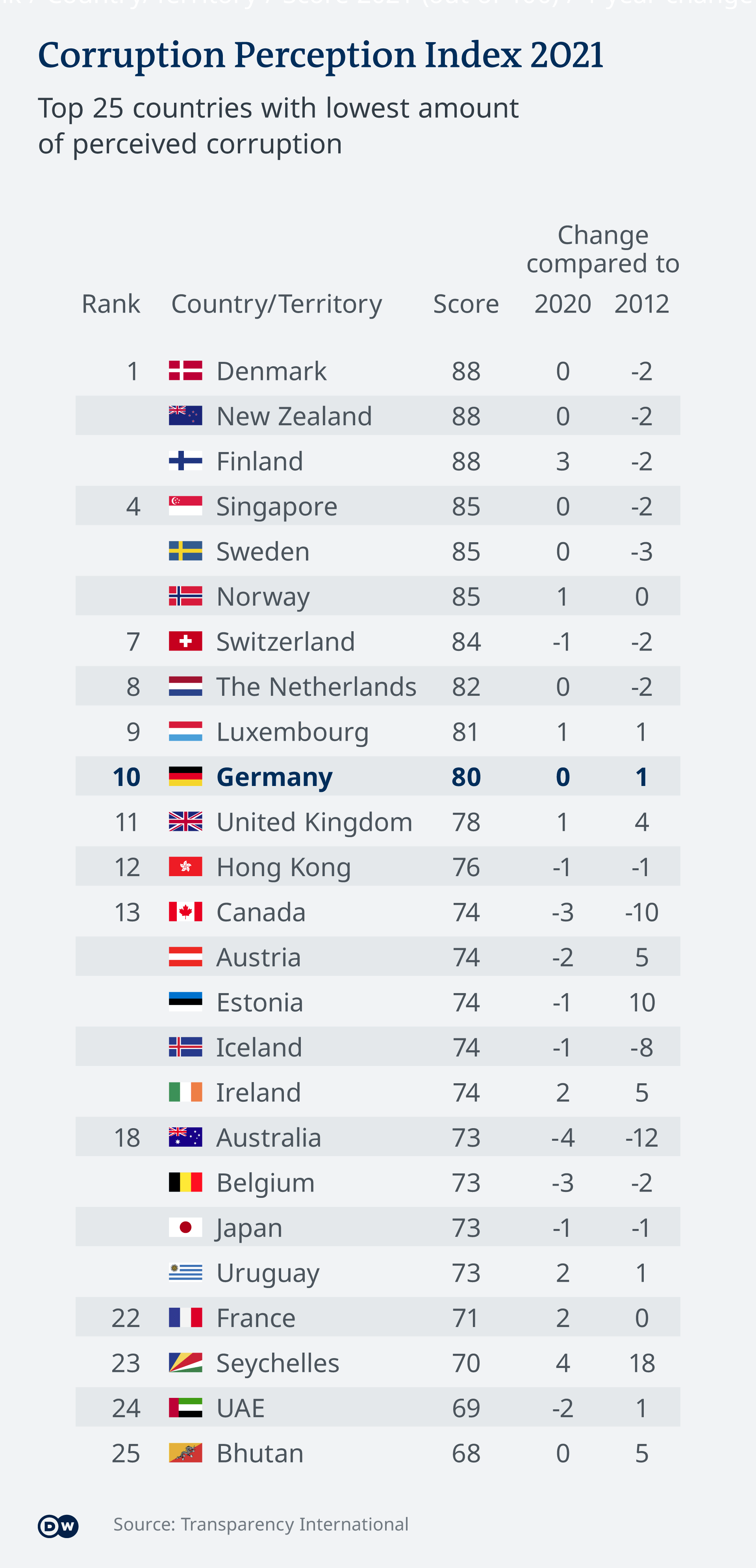
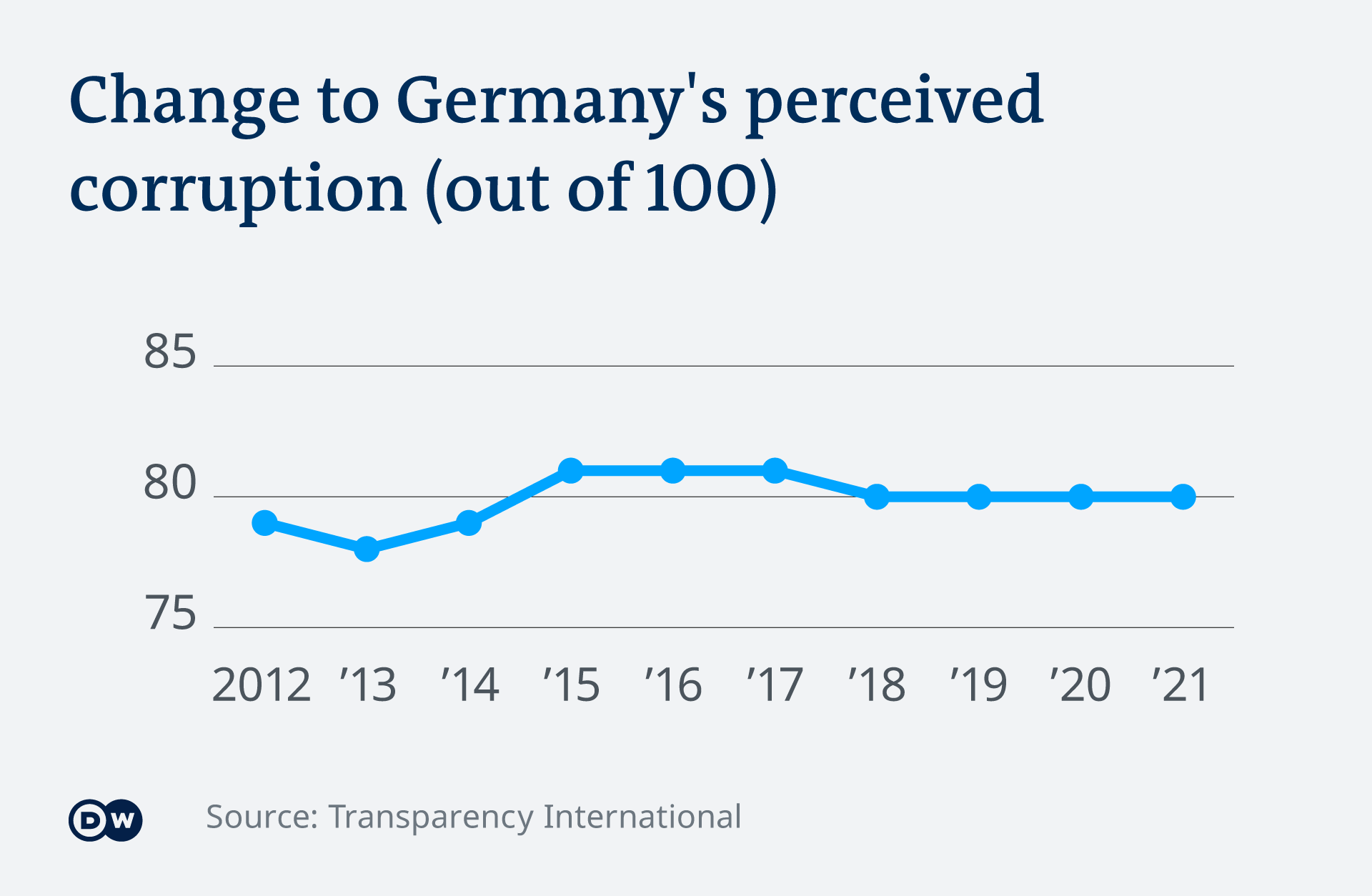
Germany is consistent: For the fourth year running, the country's public sector has scored the same in Transparency International's annual Corruption Perceptions Index (CPI).

With a score of 80 out of 100, Germany ranks 10th on the 2021 index, which was released today by the global NGO. Denmark, New Zealand, and Finland once again took the top spots as the countries perceived as the least corrupt, each with a score of 88. Syria, Sudan, and Somalia are at the bottom of the list, as the countries are perceived as the most corrupt.

See the full report here.

The authors note the score is a more important indicator than the rank, which can fluctuate simply based on how many countries and territories get evaluated. For 2021, 180 governments made the list.

What's in a score?

Germany's score suggests a fairly "clean" perception of corruption in its public sector, which covers elected officials, civil servants, and the extent to which laws and enforcement successfully combat corrupt acts like abuse of power, bribery and theft of public resources.

That is not unexpected for a major, established democracy with robust public institutions and a track record upholding the rule of law. Sixteen of the index's "cleanest" 25 countries are western democracies like Germany, which falls behind Scandinavian states but ahead of its French and Austrian neighbors.

With a score of 67, the United States ranks 27 on the list — behind Hong Kong, Uruguay, and the United Arab Emirates.

While staying put towards the top of the list is better than slipping — Australia dropped by four points since last year — it is also a sign that Germany has not made progress in addressing its weaker points.

"It shows that we haven't come very far in combatting corruption," Hartmut Bäumer, the chairman of Transparency Deutschland, said in a statement. "There are still massive deficits in all aspects of society."

TI's Germany chapter cited last year's so-called mask affair as a prime example of the kind of corruption that Germany remains vulnerable to. Two conservative lawmakers resigned after it was revealed they used their political connections to earn about two million euros ($2.3 million) in a public deal buying masks for the pandemic.

In November, a court in Munich found both not guilty, ruling that the accusations against them did not meet Germany's legal standard for corruption. The former MPs said the payments were the fee they earned as lawyers helping negotiate the deal.

"The law against graft for elected officials remains practically ineffective and is in urgent need of strengthening," Bäumer said. "It isn't OK that the current rules for civil servants are stronger than those for elected officials."

Transparency Deutschland also criticized the German public sector for a culture of secrecy, a lack of clear rules governing corporate criminal liability, and insufficient protections for whistleblowers.

New government's new pledges

In a statement to DW, a spokesperson for Germany's Justice Ministry said many of Germany's laws governing public corruption — including the one unsuccessfully applied to the MPs in the mask scandal — have been strengthened in the last several years, partially in response to demands from Transparency Deutschland.

Germany's new government, led by the Social Democrats with the support of the Greens and business-oriented Free Democrats, has made further promises to boost transparency and crack down on graft.

"The coalition agreement pledges to more effectively develop the criminal offense of bribery and corruption of elected officials. Within the coalition, we will discuss how we implement this agreement," Justice Ministry spokesperson, Rabea Bönnighausen, told DW.

Members of the government are facing recent transparency issues of their own. Last week, the state prosecutor in Berlin announced it wasinvestigating the Greens national board for "initial suspicion" of embezzlement. The party board members, which includes Foreign Minister Annalena Baerbock and Vice-Chancellor Robert Habeck, received payments in 2020 for pandemic-related costs that the party's own auditor said exceeded internal limits.

A Greens spokesperson confirmed the investigation and told German media that the payments had already been returned.


Limits of the Index

The CPI is a snapshot of how much a country is perceived as corrupt, not necessarily how corrupt it actually is, which the report's authors say is difficult to objectively measure. It also only takes the public sector into account, leaving out the black market and corporate malfeasance.

Major financial scandals like cum-ex tax evasion and the Wirecard probe (which has found Germany's former finance minister and current Chancellor Olaf Scholz at fault) have revealed that Germany's state and federal anti-corruption authorities are understaffed and poorly funded, which have made for spotty oversight and enforcement. They have been slow to react to corruption allegations and in some cases investigated accusers rather than those accused.

The CPI does not cover criminal acts like tax fraud and money laundering. In a 2020 ranking of financial secrecy by the Tax Justice Network, Germany placed 14th. That was an improvement over its 7th spot in 2018, but the network still considered Germany "moderately secretive" and a "large" market for offshore financial services that attract illegal behavior.

Germany's recent improvements on this front are partly due to new requirements by the European Union to combat money laundering, with which Germany has had to align. Still, Transparency Deutschland is looking for more from the government led by Olaf Scholz, a former finance minister who has faced questions about his role in recent scandals.

"Precisely in the areas of economy and finance we would have hoped for more," Adrian Nennich, a spokesperson for Transparency Deutschland, told DW.

Edited by Rina Goldenberg
Deniz Yücel: European court rules Turkey violated journalist's human rights

The Turkish-German writer and publisher was arrested and detained in Turkey for a year on trumped-up terrorism charges. The European Court of Human Rights said the pre-trial detention violated Yücel's rights.


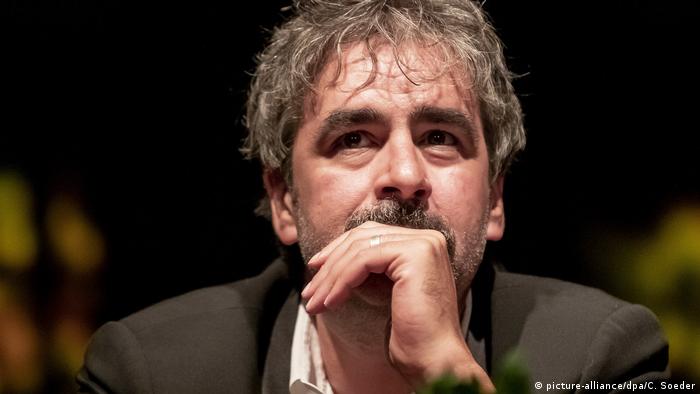
Deniz Yücel spent a year in pre-trial detention in Turkey

Nearly three years after German-Turkish journalist Deniz Yücel was released from prison in Istanbul, the European Court of Human Rights on Tuesday ruled that Turkey had violated his human rights.


The court ruled that Yücel's pre-trial detention violated his rights in three cases, including his right to liberty and security, right to compensation for unlawful detention, as well as freedom of expression.

Regarding a fourth accusation that Yücel's lawyers had brought of not being allowed to view all the evidence against him, the ECHR decided that the journalist's rights had not been violated.

In their judgement, the justices also found that the €3,700 ($4,179) compensation offer to Yücel was "manifestly insufficient in the light of the circumstances of the case."
What happened to Yücel?

Yücel, at the time a correspondent for German daily Die Welt, was imprisoned from 2017 to 2018. Prosecutors accused him of supporting terrorism and had sought an 18-year sentence.

Turkey: Journalists in Danger

Rights observers and activists pointed out, however, that Yücel was likely being targeted for his critical reporting of President Recep Tayyip Erdogan. After a failed coup attempt in 2016, tens of thousands of academics, writers, and government critics were arrested and held in prisons across Turkey, often without charges.

Yücel has said he was tortured while in Istanbul's infamous Silivri prison.

Following an international outcry, Yücel was released in 2018 and in 2019 the Constitutional Court of Turkey declared that his detention had been unlawful.

Erdogan's government continued to pursue charges against Yücel in absentia, and in July 2020 he was found guilty of supporting the banned Kurdish group the PKK and sentenced to two years and ten months in prison.

This is a developing story and will be updated.

es/rs (dpa, KNA)
Abortion films offer stark warning at Sundance festival
  
Actress Sigourney Weaver hopes "Call Jane" can engage the
 younger generation who have always had abortion rights in the
 United States (AFP/Frazer Harrison)

Andrew MARSZAL
Mon, January 24, 2022

With abortion rights under historic threat in the United States, directors brought three films to the Sundance festival that spotlight the grave dangers women face by undergoing or organizing illegal backstreet procedures.

Star-studded feature "Call Jane" and documentary "The Janes" portray the 1960s Chicago collective who helped connect pregnant women with underground doctors, while award-winning drama "Happening" follows a young woman who risked everything to procure an abortion in 1960s France.

"Having lived through that time -- believe me, we do not want to go back to that," said Sigourney Weaver, who stars in "Call Jane."

"I hope that we can engage the younger generation who have always had this and may have taken it for granted. Put the focus back on the woman herself," she added.

The festival has fallen on the 49th anniversary of Roe v. Wade, the landmark Supreme Court ruling establishing abortion rights in the US.

That constitutional right has come under steady attack as laws in a number of Republican-led states have made it increasingly difficult for women to obtain abortions.

Abortion rights advocates fear that the current Supreme Court, including three conservative justices named by former president Donald Trump, will further restrict or even eliminate that right.

Phyllis Nagy, director of "Call Jane," said she was "struck by the need to tell a story about women that gave women agency, that could do it with humor, with a light touch, and with some urgency."

"I think there are a number of films, because it is an important topic... These things are extremely necessary in order for our cherished right to choose not to disappear entirely," she said.

- 'We thought we won' -


The "Jane" collective emerged in the late 1960s, with roots in the civil rights and anti-war movements, and operated until abortion was legalized in 1973.

Volunteers -- mainly women -- set up telephone hotlines, offered up their apartments as makeshift clinics, drove their family cars to collect pregnant women before their procedures, and helped find money for those who could not afford to pay for illegal operations.

Some of the "Janes" even learned to carry out the procedure themselves.

"These are women without whom I wouldn't have had the freedoms that I have enjoyed for my entire life," said "Call Jane" star Elizabeth Banks.

More than a dozen members of the group are interviewed in documentary "The Janes" -- which premieres Monday, and will show on HBO and HBO Max later this year.

These include Heather Booth, who started the collective by finding a doctor for a friend's sister who was suffering suicidal thoughts after becoming pregnant.

"Even talking about performing an abortion was a conspiracy to commit a felony," recalls Booth.

By the time Roe v. Wade made their work redundant, several of the group had been arrested and charged.

"We were thrilled, and we thought it was over. Who knew what would follow? But we thought we won," said another member, named only as "Jeanne."

- 'Duty' -


"Happening," from French former journalist Audrey Diwan, shot to prominence at last year's Venice festival, where it won the top Golden Lion prize.

Based on Annie Ernaux's autobiographical novel, it captures not only the danger of arrest or even death for those risking illegal abortions, but also the rejection, loneliness and shame suffered by young pregnant girls at the time.

"My expectation is not only to show the movie to people who do agree with me, but to people that don't, and to see 'how do you react?'" Diwan told AFP.

"It is one thing to say 'I'm against abortion' -- but do you agree that a human would have to go through that whole journey?"

The film is playing at Sundance before its US release this spring by IFC Films.

"In the 60s in France, the law was really hard. Even trying to help someone get an abortion, you could end up in jail," said Diwan.

"And I mention it because I know unfortunately it's also the case nowadays in other countries."


Anamaria Vartolomei, the movie's star, said she "felt a certain duty I had because I'm a 22-year-old girl with rights, with freedom."

"It's meant to open discussion, so I hope it will... I'm glad to see where the discussion will be brought on this topic in the United States."

Sundance runs until January 30.

amz/hg/st
Success of US transgender woman swimmer sparks controversy


1/5
Success of US transgender woman swimmer sparks controversy
Lia Thomas, a transgender woman who swims for the University of Pennsylvania, has found herself at the center of a firestorm about her presence on the team (AFP/Joseph Prezioso)

2/5
Success of US transgender woman swimmer sparks controversy
Transgender woman swimmer Lia Thomas has said she initially put off her transition because she was unsure how it would affect her ability to swim competitively (AFP/Joseph Prezioso)


3/5

Success of US transgender woman swimmer sparks controversy
Former president Donald Trump hit out at transgender woman athletes during a political rally in Arizona (AFP/Robyn Beck)


4/5

Success of US transgender woman swimmer sparks controversy
Lia Thomas swam for the University of Pennsylvania's men's team before her transition; she now competes on the women's squad (AFP/Joseph Prezioso)


5/5

Success of US transgender woman swimmer sparks controversy
University of Pennsylvania swimmer Lia Thomas (C) warms up before a meet against Harvard in Cambridge, Massachusetts (AFP/Joseph Prezioso)

Joseph Prezioso, with Andrea Bambino in New York
Mon, January 24, 2022

Lia Thomas has made a splash in US collegiate women's swimming with her dominant performances for the University of Pennsylvania. But just a few years ago, she competed on the men's team.

The 22-year-old's runaway success in the pool this season has reignited debate about inclusivity in sports and the competition requirements for transgender athletes.

Thomas' case has already prompted the National Collegiate Athletic Association (NCAA) to amend its policies, and USA Swimming, which governs the sport at the elite level, is considering changes as well.

The debate has been complicated by an avalanche of right-wing outrage.

"Did you see the swimmer that's breaking records, like by 30 seconds?" former president Donald Trump said at a political rally in Arizona this month.

"We will ban men from participating in women's sports," he said, without naming Thomas, who joined UPenn's women's swim team in September 2021.

- 'Overperforming' or simply better? -


In one of only a few interviews given since the controversy ignited, Thomas said she realized she was transgender in the summer of 2018, but initially still wanted to compete on the men's team because of the uncertainty that awaited her with her transition.

"I didn't know what I would be able to do or (if I would) be able to keep swimming," she told SwimSwam magazine's podcast.

"That caused a lot of distress to me. I was struggling. (…) I wasn't able to focus on swimming or school or friendships as much as I wanted to."

Thomas said she began her transition in May 2019 with hormone replacement therapy -- a combination of estrogen and testosterone suppressants.

In her first season on the women's swim team, she is putting her opponents on notice.

In early December at a meet in Ohio, she notched the best times of the year in the 200m and 500m freestyle. Last weekend at a meet against Harvard, she won the 100m and 200m freestyle.

The NCAA already required transgender women to take testosterone suppressants for a year before becoming eligible to compete on women's teams, which Thomas did.

But now, transgender women are expected to be asked to meet certain testosterone thresholds set for each sport.

At issue is how testosterone, which helps young men develop muscle mass through puberty, affects athletic performance. Some say because Thomas went through puberty before transitioning, her muscular build gives her an unfair advantage.

"Lia is overperforming in women's events," the Women's Sports Policy Working Group -- an advocacy organization made up of former elite athletes and sports administrators -- said in a letter to the NCAA.

The group said while all transgender women including Thomas should be allowed to compete head-to-head in women's events, they should demonstrate that they have "rolled back the sport advantages that result from male puberty."

The group -- which counts US Olympic gold medal swimmers Nancy Hogshead-Makar and Donna De Varona as members -- cited a preliminary study showing that Thomas's results are "too close to her pre-transition bests in men's events."

- Discrimination -

But Thomas's backers say such analysis is not scientifically sound and only serves to perpetuate discrimination suffered by transgender athletes.

"Thomas is simply an athlete who loves her sport, trains hard, and followed all requirements to participate in swimming; Still, she has been the focus of violent and abusive rhetoric," advocacy group Athlete Ally said after the NCAA rule changes.

Several conservative-led US states, including Texas and Florida, have adopted laws barring transgender girls from competing in high school sports.

Weightlifter Laurel Hubbard made Olympic history at the Tokyo Games last year as the first transgender woman to compete, but the debate over inclusion rages on.

In November, the International Olympic Committee sent the ball back into the courts of each sport's governing body, saying there was "no scientific consensus on how testosterone affects performance across all sports."

And now the NCAA is planning to adopt a similar approach.

Since 2019, World Athletics has imposed testosterone limits by discipline, which is why transgender hurdles competitor CeCe Telfer was deemed ineligible last year to vie for a spot on the US Olympic team for Tokyo.

For its part, the University of Pennsylvania has voiced support for Thomas, in the run-up to the NCAA championships in March.

If Thomas qualifies, she could find herself competing against Izzi Henig, a transgender man who swims for Yale but decided not to begin hormone replacement therapy in order to remain on the women's team.

Earlier this month, in a head-to-head battle, Henig defeated Thomas.

arb/sst/rcw