Friday, June 10, 2022

Biden admin's 4th arms sales to Taiwan slammed, 'cannot pose threat to PLA, only makes island cash cow'

By GT staff reporters
Published: Jun 09, 2022 
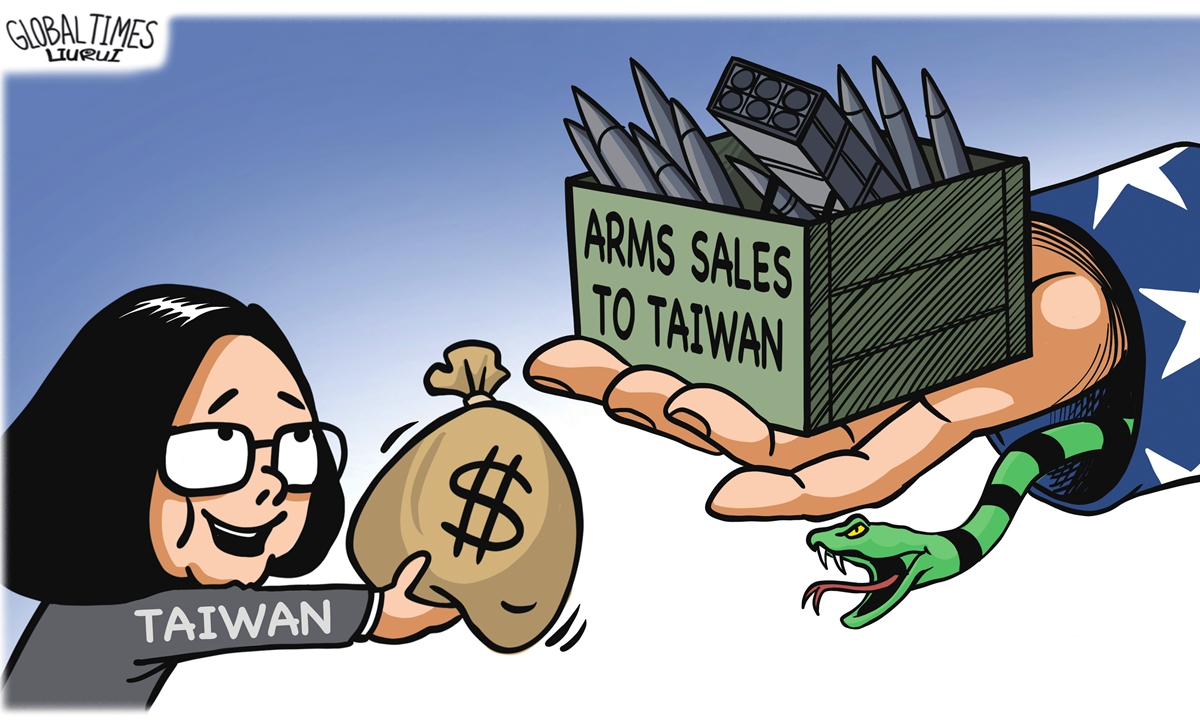

Illustration: Liu Rui/GT

China on Thursday slammed the US' approval of a possible sale of $120 million in naval equipment to the island of Taiwan, the latest move between the US and the island amid their growing exchanges, which observers from the mainland warned could only worsen the situation in the Taiwan Straits instead of enhancing the island's combat preparedness given the huge gap between the two sides across the Taiwan Straits.

The latest arms sales cannot pose a threat to the Chinese People's Liberation Army (PLA), and will only make the island of Taiwan a cash cow of the US, experts said.

China urged the US to abide by the one-China principle and the three China-US joint communiqués and cancel the arms sales to Taiwan and stop their military ties, Chinese Foreign Ministry spokesperson Zhao Lijian said during a routine press conference on Thursday. He said that China will continue to take firm and forceful measures to firmly safeguard its sovereignty and security interests.

Ma Xiaoguang, spokesperson for the Taiwan Affairs Office of the State Council, on the same day also refuted the sales, urging the US to stop playing with fire over the Taiwan question.

Zhao and Ma's remarks came after Taiwan's defense authority on Thursday announced the $120 million arms sale for "naval ship spare parts and related technical support." The department said that the sale is meant to help Taiwan keep its naval vessels properly equipped and replenished, and that the deal is expected to take effect next month.

This arms sale could contain a big category, which includes not only the replacement of hardware, but also the calibration of the relevant system and the training of personnel, Chinese mainland military expert and TV commentator Song Zhongping told the Global Times on Thursday.

The US will rake in enormous profits from the so-called maintenance, he said, noting that the island of Taiwan has purchased from the US second-hand military equipment whose performance was not good and whose maintenance cost will be very high.

Many of Taiwan's ships are old, and the main purpose of maintenance is to prolong their life, and there is no way to enhance their combat effectiveness, said Song. This means even after maintenance, they cannot pose a serious threat to the PLA, the expert pointed out.

It was reportedly the third arms sales by the US to the island this year as well as the fourth conducted by the Biden administration.

Given that the US has passed numerous bills, including the Taiwan Assurance Act, which calls for regular arms sales to Taiwan, this also shows that US arms sales to Taiwan region have been normalized, Song said.

As the situation across the Taiwan Straits continues to be tense, "Taiwan independence" forces and foreign forces are continuing their provocations, and regular arms sales can only create more uncertainty across the Straits, increasing the risk of a military conflict, Song warned.

US arms sales to the island of Taiwan are essentially used as the "Taiwan card" to contain the Chinese mainland, showing the US support to the separatist Democratic Progressive Party (DPP) authority in the island and aggravating tensions across the Taiwan Straits, which is a step of the US' "Indo-Pacific Strategy." Also, the US can cash in on the island through arms sales, and make the regional authority more dependent on it, Zhang Junshe, a senior research fellow at the Naval Research Academy of the PLA, told the Global Times on Thursday.

Zhang condemned the US, saying the country has claimed it adhered to the one-China policy but in fact has shown support for the separatist DPP in the island.

However, the gap in military strength between the island of Taiwan and the Chinese mainland is great, experts said, noting that US attempts to use the island to suppress the mainland by arming it is delusional.

Even if the sale was approved, how well it would progress is still in question, analysts said.

In May, the Taiwan defense authority announced that the first deal approved by the Biden administration in 2021 to sell $750 million worth of arms to Taiwan, including 40 155mm M109A6 medium self-propelled howitzers, had been halted by the US.

According to Taiwan news outlet udn.com, the pause in the howitzer sale means a complete cancelation, and the budget will be returned.

The latest arms sales plan came after the recent visit of US Senator Tammy Duckworth to the island, in which the island's regional leader Tsai Ing-wen said that a cooperation plan between the US National Guard and Taiwan's armed forces was in the works.

Around the time Duckworth left the Taiwan island, the PLA Eastern Theater Command on June 1 announced the third large-scale military exercise around the Taiwan in the past 30 days targeting the recent frequent US-Taiwan collusion.

Previously, a joint exercise surrounding the island of Taiwan from its east and southwest was announced on May 9, and a joint alert patrol plus a realistic combat drill in and above the waters around the island was announced on May 25.

The drills not only served as warnings to Taiwan secessionists and foreign interference forces, but also practically enhanced the PLA's capabilities in a potential reunification-by-force operation, analysts said.


Lightyear 0 is World’s First Solar Car, Deliveries Set to Begin as Soon as November

Lightyear 0 First Solar Car
After many years of design and testing, the Lightyear 0 is finally going into production this fall as the world’s first solar car. In optimal conditions, the vehicle is capable of freely traveling for up to seven months without having to be plugged into a household outlet or charging station.

Unlike standard EVs, the Lightyear 0 boasts five square meters of patented, double curved solar arrays, which enable the vehicle to charge itself while commuting or just parked outdoors. This means that it can power itself with 70 kilometers of range per day on top of its estimated 625 kilometers WLTP range. Power comes from a four electric motors that draw on a 60kWh battery pack generating 174 hp and 1,269 lb-ft of torque, or enough to hit 62mph in 10 seconds, while topping out at 100mph. Inside, you’ll find seats covered in plant-based leather, fabric accents made from recycled bottles, rattan palm wood trim, and a 10.1-inch center touchscreen running on Android Automotive. Production will be limited to 946 units worldwide, priced from €250,000. The closest competitor would be the Aptera 1,000-mile solar vehicle.


Lightyear 0 First Solar Car

Today is the day we’ve all been waiting for since us five co-founders sat in a kitchen sketching out our dream of building the most sustainable car on the planet. In 2016, we only had an idea; three years later, we had a prototype. Now, after six years of testing, iterating, (re)designing, and countless obstacles, Lightyear 0 is proof that the impossible is actually possible,” said Lex Hoefsloot, Lightyear’s Co-Founder and CEO.

Prince Charles ‘appalled’ over UK’s offshore detention deal

London: Prince Charles privately labelled the British government’s plan to send asylum seekers to Rwanda as “appalling”, The Times has reported, in a revelation that threatens to overshadow his appearance at a Commonwealth summit in the central African nation later this month.

The future king, who will represent the Queen at the Commonwealth Heads of Government meeting in Kigali, the capital of Rwanda, was said have criticised Boris Johnson’s refugee policy several times in private, while also expressing concerns it could be problematic ahead of the summit on June 23.

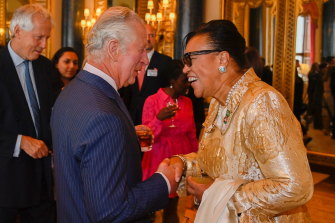
Prince Charles, seen here with Commonwealth Secretary General Patricia Scotland on June 9, 2022, will represent the Queen at the Commonwealth Heads of Government summit in Rwanda later this month.

Prince Charles, seen here with Commonwealth Secretary General Patricia Scotland on June 9, 2022, will represent the Queen at the Commonwealth Heads of Government summit in Rwanda later this month. Credit:Getty

Under new laws, migrants who arrive in Britain illegally face being deported to Rwanda under a deal struck by the government in April. The policy is loosely modelled on Australia’s offshore processing system for asylum seekers who arrive by boat, implement by successive governments almost a decade ago. While arrivals may claim asylum once they arrive in the UK under British laws, the new plan will send them to the central African nation while their claims are processed.

An initial legal challenge to the policy failed on Friday after a High Court judge ruled that the first flight - due to deport migrants on Tuesday - could go ahead.

The newspaper quoted a source saying Charles, 73, had said on numerous occasions he was “more than disappointed at the policy”.

“He said he thinks the government’s whole approach is appalling. It was clear he was not impressed with the government’s direction of travel,” the source said.

Clarence House had not denied that Charles was opposed to the policy but insisted that he had not tried to influence the government.

A spokesman told The Times: “We would not comment on supposed anonymous private conversations with the Prince of Wales, except to restate that he remains politically neutral. Matters of policy are decisions for government.“

Charles will likely be deeply embarrassed by the fact that his views on the policy of sending migrants to had been made public, not least because he will meet with Rwandan president Paul Kagame who signed off on the agreement.

Under the deal, Rwanda will be paid an initial £120 million ($209 million) to receive migrants who arrive illegally in the UK. The full details of the agreement have not been made publicly available.

The British government views the policy as crucial in deterring Channel crossings. More than 10,000 migrants have crossed this year, a figure that was not reached until August last year.

Loading

The Commonwealth meeting is the first since Charles was named as the next head of the group in 2018. He and his wife, Camilla, the Duchess of Cornwall, will become the first members of the royal family to visit Rwanda and will use their three-day tour to see a church where 10,000 Tutsis were massacred during the country’s genocide in 1994.

Charles has spoken out on a wide range of issues over the decades, particularly on the environment and climate.

In a reference to Russia’s annexation of Crimea in March 2014, he said: Charles said: “And now Putin is doing just about the same as Hitler.”

His remarks created a furore with the Russian president saying the comparison of him to Hitler was “unacceptable” and “wrong”, adding: “This is not what monarchs do.”

In 2005, he successfully sued a British newspaper after it published an extract from his private journals — written in 1997 when he attended the handover of Hong Kong to China — in which he called Chinese leaders “appalling old waxworks”.

A strong supporter of Tibet and its exiled spiritual leader, the Dalai Lama, he continued to express antipathy to the Beijing regime, boycotting banquets involving the Chinese in 1999 and 2005. He has more recently he has adopted a diplomatic stance towards China.

In a BBC documentary marking his 70th birthday in 2018, he said he would no longer make public interventions on such subjects once he was king, declaring: “I’m not that stupid.”

He told the program he would not be “able to do the same things I’ve done as heir” and as monarch would have to operate within “constitutional parameters”.

As Head of State, the Queen has to remain strictly neutral regarding political matters. By convention, she does not vote but does have ceremonial and formal roles relating to the government of the United Kingdom.

The Rwanda offshore detention issue is one of the most politically sensitive debates in the United Kingdom. A High Court challenge of the new policy was defeated last week.

The Rwanda offshore detention issue is one of the most politically sensitive debates in the United Kingdom. A High Court challenge of the new policy was defeated last week. Credit:AP

Vernon Bogdanor, professor of government at King’s College, London, told the paper that the prince was in a different position from the Queen and while criticising a policy position in private was not problematic he must not do or say anything involving party politics.

“The only constraint is that he must not say anything which would embarrass the Queen,” he told The Times.

LED COUP AGAINST EVO MORALES

Former Bolivian president sentenced to 10 years in prison

Former Bolivian interim President Jeanine Áñez has been sentenced to 10 years in prison on charges linked to her assumption of office in 2019 amid violent protests that led to the resignation and exile of her predecessor, Evo Morales

ByCarlos Valdez Associated Press
June 10, 2022, 
Jeanine Áñez, Jeanine Anez
FILE - Standing behind bars, Bolivia's former interim President Jeanine Anez speaks to an unidentified woman at a police station jailhouse, in La Paz, Bolivia, on March 13, 2021. Prosecutors have asked on Monday, June 6, 2022, for a sentence of 15 years of prison against Anez. (AP Photo/Juan Karita, File)
The Associated Press

LA PAZ, Bolivia -- Former Bolivian interim President Jeanine Áñez was sentenced to 10 years in prison Friday on charges linked to her assumption of office in 2019 amid violent protests that led to the resignation and exile of her predecessor, Evo Morales.

Áñez was convicted by the court of dereliction of duty and acting against the constitution when she proclaimed herself president in what Morales and his party have called a coup.

Áñez’s supporters deny it was a coup, saying Morales' alleged abuse of power triggered a legitimate uprising in the streets. The ouster of Bolivia's first Indigenous president and his vice president created a power vacuum that allowed Áñez to assume the interim presidency as second president of the Senate, they claim. The defense said she will appeal the decision.

“I did not lift a finger to become president, but I did what I had to do to pacify a country that Morales left convulsed as he fled,” Áñez said from the prison where she is being held.

Morales stepped down following nationwide protests over suspected vote-rigging in an Oct. 20 election, which he claimed to have won to gain a fourth term in office. Morales has denied there was fraud. The protests left 37 dead and forced Morales to take refuge in Mexico.

His party, known by its initials in Spanish MAS, returned to power in 2020 elections and Morales has since returned to Bolivia.

The trial sets a “historic precedent” against impunity, said MAS deputy Juan José Jáuregui.

The court also sentenced former Armed Forces commander Williams Kaliman and ex-police commander Vladimir Calderon to 10 years in prison. Four other former military chiefs received lesser sentences.

Outside the prison where she was being held about 50 people held posters protesting Áñez.

Written warning on every cigarette in Canadian world-first

‘Poison in every puff’ message proposed amid government concern photo warnings on tobacco packages have lost impact

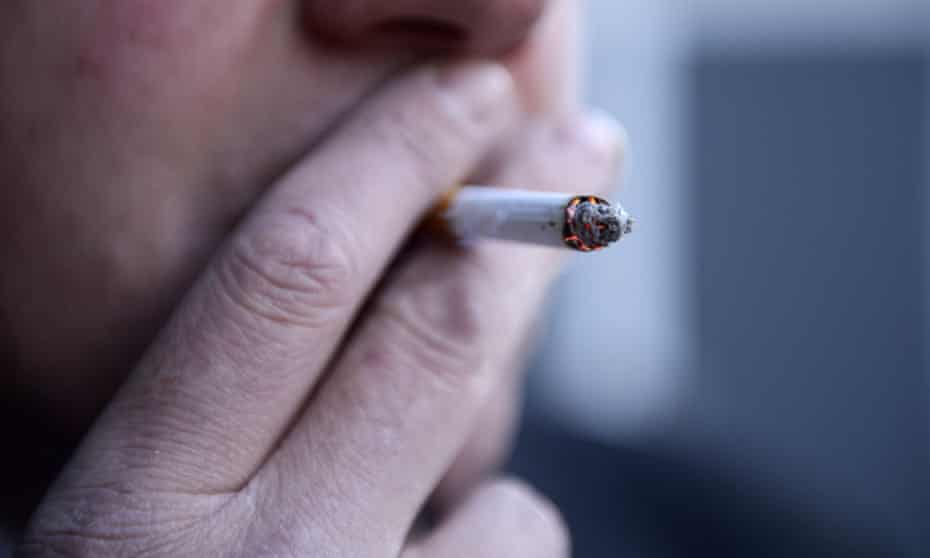
The Canadian government expects health warnings on each cigarette to be introduced in the latter half of next year. Photograph: Jonathan Brady/PA

Associated Press in Toronto
Sat 11 Jun 2022 03.25 BST

Canada is poised to become the first country in the world to require that a warning be printed on every cigarette.

The move builds on Canada’s mandate to include graphic photo warnings on tobacco products’ packaging, a policy that started an international trend when it was introduced two decades ago.

“We need to address the concern that these messages may have lost their novelty, and to an extent we worry that they may have lost their impact as well,” the minister of mental health and addictions, Carolyn Bennett, said at a news conference on Friday.


Smoking age in England should rise by a year each year, review says


“Adding health warnings on individual tobacco products will help ensure that these essential messages reach people including the youth, who often access cigarettes one at a time in social situations, sidestepping the information printed on a package.”
Advertisement

A consultation period for the proposed change was set to begin on Saturday, and the government anticipated the changes coming into force in the latter half of 2023.

While the exact messaging printed on cigarettes could change, Bennett said the current proposal is: “Poison in every puff.”

Bennett also revealed expanded warnings for cigarette packages that include a longer list of smoking’s health effects, including stomach cancer, colorectal cancer, diabetes and peripheral vascular disease.

Canada has required the photo warnings since the turn of the millennium, but the images haven’t been updated in a decade.

Rob Cunningham, a senior policy analyst with the Canadian Cancer Society, said he hoped the warnings printed directly on cigarettes became popular internationally, just as the package warnings did.


“This is going to set a world precedent,” he said, adding no other country had implemented such regulations. He was hopeful the warning would make a real difference.

“It’s a warning that you simply cannot ignore,” Cunningham said. “It’s going to reach every smoker, with every puff.”

The move also drew praise from Geoffrey Fong, a professor at the University of Waterloo and principal investigator with the International Tobacco Control Policy Evaluation Project.

“This is a really potentially powerful intervention that’s going to enhance the impact of health warnings,” Fong said.

Smoking rates have been steadily falling over the years. The latest data from Statistics Canada, released last month, shows 10% of Canadians reported smoking regularly. The government is seeking to cut that rate in half by 2035.

StatCan noted that roughly 11% Canadians 20 and older reported being current smokers, compared to just 4% of people aged 15 to 19.

Newly discovered Fast Radio Burst 190520 prompts more questions due to strange behavior

Peer-Reviewed Publication

WEST VIRGINIA UNIVERSITY

Newly discovered fast radio burst (FRB) 190520 shows unique behavior compared to other FRBs discovered so far.  This deviant cosmic burst was observed by an international team, co-led by researchers at West Virginia University and the Center for Gravitational Waves and Cosmology. Just when you think you understand the pattern, a strange outlier comes along and forces you to re-evaluate all that you know.  

Professor Sarah Burke-Spolaor along with Graduate Assistant Kshitij Aggarwal, both of the WVU Department of Physics and Astronomy and the Center for Gravitational Waves and Cosmology, published their findings in Nature.  In the paper, they describe observing the unique behavior of the fast radio burst called FRB 190520.

Additionally, West Virginia University Graduate Students Jessica Sydnor and Reshma Thomas both played critical roles in the discovery.

Thomas worked closely with Burke-Spolaor to obtain follow-up data on the FRB to better understand some of the interesting properties found by the initial discovery. Snyder aided Burke-Spolaor in imaging and image interpretation to cross check results seen by the FAST collaborators.

The odd one

FRBs are transient radio pulses caused by astrophysical sources located well beyond our galaxy, the Milky Way. While the origins of these millisecond duration, bright, extragalactic flashes are still not fully understood, researchers are closing in on the mystery with each new discovery. This FRB, FRB 190520, proved to be unique enough to be considered an outlier among all known FRBs. First, it was classified as a repeater. A repeater is an FRB that repeats its pulses randomly. Typically, FRBs are unpredictable, but repeaters are more reliable but are also rare.  With repeating behaviors, researchers can better focus and observe the data with relative precision and map out repeating bursts which assists in future observations.  FRB 190520 is one of the most active repeating FRBs to ever be observed. 

Furthermore, this is only the second localized FRB, out of over 20 localized FRBs, with a persistent radio source associated with it. Localization is when an FRB location is pinpointed to a very small area in space, connecting the FRB to a host galaxy near that location. Observations of host galaxy of FRB 190520 showed that it is much closer than expected. Overall, it was behaving very differently than other FRBs, prompting more questions from the team.  Why was this one different?  What was making it behave differently?  Is the behavior due to the actual FRB itself, or its host galaxy?  Could this host galaxy give astronomers more clues which could fill in more pieces of the cosmology puzzle?

Let’s begin to understand how the discovery unfolded. 

The first FRB was discovered in 2007 by West Virginia University Professor Duncan Lorimer, Professor Maura McLaughlin, and an undergraduate student working with Lorimer, D. Narkevic, while analyzing archival data recorded by the Parkes Observatory. This burst was originally dubbed the Lorimer Burst. This discovery opened the doors for a whole field of study around FRBs. FRB 190520 was discovered by researchers using the FAST (Five-hundred-meter Aperture Spherical radio Telescope) in 2019. In 2020, a team of researchers observed FRB 190520 using the VLA (Karl G. Jansky Very Large Array) observatory and found remarkable characteristics, very unique to this particular FRB.

Fast forward 14 years, FRB 190520 sparks a host of new questions.

How do you know the location of an FRB?

Quite like the Doppler effect, astronomers use what is called redshift, or the wavelength of the light that is stretched as sound waves move through space. Much like the sound an ambulance makes; it changes and peaks in pitch as it moves towards you and then drops in pitch as it moves away from you. Light waves move similarly. The light drifts towards the red side of the spectrum for objects that are far away and moving away from us and allows astronomers to measure and calculate the speed of a galaxy relative to Earth.

Combining all that they knew about the FRB, the team used the Realfast observing system at VLA to observe and collect data where they detected a persistent radio source (PRS) colocated with FRB 190520.  Using the position of the FRB with realfast, the team searched for the host galaxy and identified the host galaxy, a dwarf galaxy, at distance of ~0.2.  The team isn’t sure whether the PRS is related to the FRB, or something near the FRB in its environment.  Many theories around both scenarios exist. This is the beginning of a better understanding of repeaters that are also co-localized.

Trip Calculations using Dispersion Measure

Plasma occupying the “empty” space between stars and galaxies actually cause light to slow down, and this effect becomes more extreme at lower radio frequencies. This causes high-radio-frequency signals to arrive first and low-radio-frequency signals to arrive later, causing FRBs to demonstrate a descending “whistle” in the data. The duration of that descending tone can be used to calculate the amount of gas and matter it has passed through, giving them an idea of how far it originated from.The Dispersion Measure (DM) gives us a lot of information about our universe because it tells us about the electron distribution out in space. As the pulses from an FRB far away move through matter, like gas and plasma within the universe, the sounds of the pulses are bouncing off of electrons within the intergalactic medium (outside our own galaxy) causing changes in the pulse.  Astronomers can calculate the dispersion within the Milky Way, our own Galaxy.  Beyond the Milky Way, dispersion in the intergalactic medium is unknown, so researchers need to fill in the blanks with calculated estimates.  There may be lots of matter hiding within the intergalactic medium; another puzzle for another day.

DM of FRB 190520

When calculating its dispersion measure, the team discovered it was very large.  The dispersion measure (DM) is used to estimate how far the FRB could be, and based on the DM alone, it should have been very far away, but combined with the redshift, it wasn’t at all far away; just the opposite. It was very close.  Based on existing observations using the redshift/DM relationship, characteristics of this FRB proved to be vastly unique, even an outlier. This breakthrough calculation now challenges the DM-redshift relations that are routinely used in FRB analysis to determine the distances to FRBs.

The Outlier

FRB 190520 again had to prove its uniqueness.  Its DM was very large, which is typically used to estimate how far the FRB could be located.  Based on the DM alone, it should've been very far, but the redshift proved otherwise. It was actually very close to Earth.

If all FRBs behave the same way, then we can use them to serve as an average point. But if we have deviant FRBs, like FRB 190520, the averages aren’t as evenly presented.  In other words, it could cause the known average to be wider due to the obvious outliers in the mix.

According to Aggarwal, FRB 190520 could throw initial estimates and assumptions out the window.

FRB 190520 is proving to be a portal of continuous unknowns.  This outlier and its host galaxy has now opened more questions around the cosmic world of FRBs, intriguing researchers with more scientific curiosity.  Researchers have used these FRBs to draw important conclusions around other areas of research pertaining to the universe, like its evolution. “If you count up all the stars, gas, and other luminous things we can see, based on cosmological observations, there should be more missing matter accounted for, but we don’t fully have those direct measurements,” Burke Spolaor explains.  FRBs can probe the space between galaxies, helping to fill in those unknown details about the intergalactic medium including the hidden matter. 

Something is going on with FRB 190520, and we want to know more!  The host galaxy, or the environment around this FRB has something unique going on, which could contribute to such a high dispersion. Localization is the key to better understanding outliers like FRB 190520, by pinpointing the FRB to its parent galaxy and estimating its exact distance.

With every discovery, the puzzle becomes more complex, offering more answers to questions pertaining to the evolution of the universe and beyond.

While currently an anomaly, it's quite possible that in five or ten years, it could be considered normal as more details around repeating FRBs, like FRB 190520, are uncovered.

WAIT, WHAT?! 

Trinity scientists create luminescent gels with multitude of applications from counterfeiting to bio-sensing

Peer-Reviewed Publication

TRINITY COLLEGE DUBLIN

Trinity scientists create luminescent gels with multitude of applications from counterfeiting to bio-sensing

Scientists from Trinity College Dublin have taken inspiration from nature to create luminescent, self-healing gels with a suite of potential applications ranging from bank note counterfeiting to next-gen bio-sensing and imaging.

Crucially, the scientists have been able to introduce guanosine (a molecule that plays many important metabolic roles in our cells) into these gels, and add other molecules that can do exciting things from a materials and biological sciences perspective. One such addition to these gels is that of lanthanide ions, which possess unique properties including luminescence, magnetism and the ability to speed up specific reactions.  The study was published in the recent edition of the high-impact Cell Press journal Chem, [Wednesday, June 1st, 2022].


Guanosine gels exhibit chirality (left-handed helicity in this case) and the scientists focused on transferring that characteristic to the lanthanide elements of the gels once those ions had been added.


Although that may seem like just one more simple step in the chemical recipe, it is a leap that opens doors to a multitude of new applications as it means these gels can accurately signal varying intensities of whatever they are designed to sense.


From a medical perspective that could mean accurately detecting the presence—and amount—of a biomarker of interest, for example. But the possibilities are so plentiful that the team must now take time to assess which direction to take their research next.


Oxana Kotova, Research Fellow in Trinity’s School of Chemistry and AMBER, the SFI Centre for Advanced Materials and BioEngineering Research, is first author of the published study.


Dr Kotova, who is based in the School of Chemistry, located in the Trinity Biomedical Sciences Institute (TBSI), said:

“We are interested in developing supramolecular hydrogels like this as they open so many doors to new applications in various fields from biological to material sciences. By transferring chirality onto the lanthanide elements of this gel, we have been able to modify the chiral luminescence response of the latter, which can aid future understanding of recently discovered lanthanide biological functions as well as help the development of future generation sensors and imaging agents. We think it is fascinating that such options arise from a new material that was itself created by taking inspiration from biology.”


Thorfinnur Gunnlaugsson, Professor of Chemistry in Trinity’s School of Chemistry and AMBER, and based in TBSI, is the senior author of the research article. He added: “The idea that Oxana had here was to use bio-inspired DNA building blocks to generate luminescent responsive soft-material that not only is emissive under light irradiation, but also self-healing, which itself can lead to various applications, such as in responsive ink printing. Furthermore, the material presented in this Chem article, gives rise to the chiral-based emission upon irradiation of visible light. This means that using a technique called circular polarised luminescence (CPL), we can observe either the ‘right or the left handed’ (e.g. the polarised) emission from the material. The use of this spectroscopic technique is fast becoming apparent and its use in chemical and biological research is finding its niche. This has significant consequences for the potential applications of lanthanide based bio-inspired soft material, such as for monitoring biological processes, in live cellular imaging, and in drug delivery, to name just a few. The CPL technique is also important means of developing ‘responsive’ counterfeiting inks for use in printing of bank notes, labels, etc. Hence, the opportunities here are vast for future developments, and we are excited to be part of this important finding, which was only made possible with the coming together of leading research groups with strong expertise.”


This research was funded and supported through research funding from Science Foundation Ireland (SFI, Principal investigator funding) and through the SFI-funded AMBER Centre, which both lead authors are members of.


The work is an outcome of an on-going collaboration between research groups from different disciplines and universities initially started with the synthesis of organic ligand by Dr. Ciaran O’Reilly (Department of Clinical Medicine, School of Medicine, TBSI). This ligand was then used to functionalise guanosine hydrogels and bind to lanthanide elements by Dr. Oxana Kotova. While the principle luminescent properties were all studied in Trinity, the circularly polarised luminescence studies were performed by Dr. Lewis E. Mackenzie and Professor Robert Pal in the Department of Chemistry, Durham University, United Kingdom. The morphology of the gels was investigated by researchers within Professor Thorfinnur Gunnlaugsson’s group in the School of Chemistry and Advanced Microscopy Laboratories in Trinity. The rheological properties of these luminescent gels were then examined through collaboration with Dr. Sebastian T. Barwich and Prof. Matthias E. Möbius from the School of Physics in Trinity, who are also members of the SFI funded AMBER Centre.


The paper: Lanthanide luminescence from supramolecular hydrogels consisting of bio-conjugated picolinic-acid-based guanosine quadruplexes can be viewed here.


ENDS

New study links lactobacillus crispatus bacterium to lower risk of preterm birth

The study, published in mSystems, highlights racial disparities between Black and White women

Peer-Reviewed Publication

AMERICAN SOCIETY FOR MICROBIOLOGY

Washington, DC – June 10, 2022 – Globally, preterm birth complications are the leading cause of death for children under the age of 5. Not everyone faces the same risk, though: In the United States, roughly 10% of pregnancies lead to preterm birth, but for Black women, that likelihood is 14%. Recent studies suggest that the vaginal microbiome, which plays an important role in a woman’s reproductive health, may influence those outcomes.

Findings published in mSystems, an open-access journal of the American Society for Microbiology, support that idea. After analyzing data from a large study on pregnant women in North Carolina, researchers found that participants with a high abundance of Lactobacillus crispatus were less likely to have a preterm birth. The researchers also stratified their findings by race and found evidence for the protective effect of L. crispatus in both White and Black populations.

Lactobacillus bacteria are common in the vaginal microbiome, but the specific species that dominate may affect outcomes, said microbiologist and lead author Shan Sun, Ph.D., a researcher at the University of North Carolina Charlotte (UNCC).

“Some species are more or less protective,” Sun said, “but when the vaginal microbiome was dominated by species of L. crispatus, preterm birth was 40% less likely.” Sun and her colleagues also higher alpha-diversity, lower abundance of L. crispatus, and higher abundance of L. iners in the vaginal microbiome of Black women.

In the gut microbiome, greater diversity is often associated with better health. But the opposite seems to be true in the vaginal microbiome, said bioinformatics scientist Anthony Fodor, Ph.D., at UNCC. “If you have one dominant microbe, ok, that’s what you want.” Higher diversity may dampen the protective effects of L. crispatus in Black women, said Sun, but further evidence is needed to probe that hypothesis. Sun is a postdoctoral researcher in Fodor’s lab.

Previous studies have investigated connections between the vaginal microbiome and preterm births, Sun said, but have largely been limited by low numbers of participants. The new findings are based on data on 464 White women and 360 Black women enrolled in the Pregnancy, Infection, and Nutrition (PIN) Study, based at the University of North Carolina Chapel Hill. Between 1995 and 2000, the study enrolled more than 3,000 women and compiled data on a wide range of health, environmental, and social factors.

“We can pull in microbiome data to help us describe how all these determinants of health work together to produce outcomes,” said epidemiologist Stephanie Engel, Ph.D., at the University of North Carolina Chapel Hill. “We can get at the entire picture of a woman’s experience of pregnancy.” Engel is the current principal investigator of the PIN study. She and Fodor are senior authors of the new study.

What remains unclear, said Engel, is whether L. crispatus is itself protective or is a consequence of some other factor that lowers the risk for preterm birth. “We don’t know if having a specific vaginal microbiome creates a susceptibility for some other agent that’s actually the causal agent,” she said.

Engel said she also hopes researchers will use PIN data to probe the racial disparities in preterm outcomes. “Are we asking the right questions? Is it really race, or racism?” she asked. “There’s still quite a bit to be done to describe the nature of the microbiome during pregnancy and what influences outcomes.”

 ###

The American Society for Microbiology is one of the largest professional societies dedicated to the life sciences and is composed of 30,000 scientists and health practitioners. ASM's mission is to promote and advance the microbial sciences.

ASM advances the microbial sciences through conferences, publications, certifications, educational opportunities and advocacy efforts. It enhances laboratory capacity around the globe through training and resources. It provides a network for scientists in academia, industry and clinical settings. Additionally, ASM promotes a deeper understanding of the microbial sciences to diverse audiences.

Big issues, big answers

Emily Williams and Mark Turiansky receive the 2021-2022 Winifred and Louis Lancaster Dissertation Awards

Grant and Award Announcement

UNIVERSITY OF CALIFORNIA - SANTA BARBARA

Lancaster-awards-turiansky-williiams-2022-uc-santa-barbara 

IMAGE: MARK TURIANSKY AND EMILY WILLIAMS ARE THE RECIPIENTS OF THE 2021-2022 WINIFRED AND LOUIS LANCASTER DISSERTATION AWARDS view more 

CREDIT: PHOTO CREDIT: COURTESY IMAGE

(Santa Barbara, Calif.) — How can we better hold environmental polluters accountable? How can we enhance the efficiency of qubits? These questions, which loom large for the researchers who study them, are the type of big-issue topics that UC Santa Barbara graduate students are encouraged to tackle. And they’re the central themes of the dissertations that won the 2021-2022 Winifred and Louis Lancaster Dissertation Awards.

This year’s recipients are Emily Williams (geography) and Mark Turiansky (physics), selected by the awards committee for dissertations with “significant impact on the field in terms of methodological and substantive contributions.”

Climate Detective

As global temperatures rise and communities feel the effects of climate change, how do we as a global society address the “uneven distribution of harms and gains?” The tropics, for instance, are already bearing the brunt of sea level rise and ocean acidification, yet they are not the places that have generated the magnitude of carbon emissions that cause these events, nor do they benefit in a proportionate way from the activities that cause these emissions. Elsewhere around the world, weather events of disastrous proportions are increasing in severity and frequency, clearly caused by anthropogenic activity — yet who exactly do we hold accountable?

Inequalities and blind spots such as these are the type of thing that spark Emily Williams’ curiosity and activist drive. A lifelong environmentalist, she got her first taste of the discipline of environmental studies as an undergraduate at UCSB under the tutelage of the late Professor William Freudenburg.

“He opened my eyes to thinking about the causes of climate change,” Williams said. She became conscious of the strategies corporations use to justify their actions and their methods of deflection from their outsized contribution to the problem.

Around that time Typhoon Haiyan, then the most powerful typhoon on record, struck the central Philippines, becoming a strong and real reminder of global warming’s effects. But even more compelling for Williams — who had become part of a civil delegation to the UN Framework Convention on Climate Change (the international climate negotiations space) — was the maddening slowness to address these impacts.

Fast-forward several years, and Williams’ desire to illuminate the gaps in climate accountability resulted in her dissertation, “Interrogating the science of climate accountability: Allocating responsibility for climate impacts within a frame of climate justice.” In it, she builds a ‘best practices’ conceptual framework to identify responsibility for climate impacts. She then tests it using an empirical case study involving the drought in the greater Four Corners region and the Zuni people who live there.

“I had the opportunity to work with very diverse mentors, meaning I got to do the attribution science, engage ethnographic methods, organizational sociology and some science and technology studies-related work,” she said. “It’s certainly hard to do interdisciplinary work, but if you find a group of mentors that will support you in this effort, it’s fascinating.”

Among the things she uncovered in her research is the meteorological concept of vapor pressure deficit and its role on droughts, as a result of increased temperatures. By linking this fundamental principle to vegetation, Williams and her co-authors were able to estimate what the Four Corners region would look like without climate change, and identify the “human fingerprint” in this whodunit of global warming. This ability to definitively attribute effects to human activity can help build a case toward holding polluters accountable, advancing the field of climate justice. It’s also what earned Williams the Lancaster Award.

“Emily’s outstanding integration of theory with qualitative and quantitative methods and her passionate commitment to climate justice truly set her apart,” said her adviser, geography professor David López-Carr. “Her dissertation makes a significant contribution to the nascent climate accountability literature by being the first to identify the human contribution to regional climate change and to follow those climate change impacts on vulnerable populations at the local level. 

“Her work provides a framework for future researchers and practitioners to advance the important area of climate accountability,” he continued, “with real-world implications for holding those responsible for climate change emissions and for mitigating impacts on vulnerable populations.”

“I feel so honored and so humbled to have received this award,” said Williams, who plans to complete a “short post-doc” before moving into the nonprofit world for more advocacy work. “I know for certain that anyone who gets through a Ph.D. program, with all the challenges and opportunities the program presents, deserves such an award. I chose my dissertation topic because I believe so deeply in the importance of ensuring climate accountability work is done within principles of justice. I am just so happy that the selection committee thinks this topic is important too.”

Quantum Mechanic

The quantum world holds much potential for those who learn to wield it. This space of subatomic particles and their behaviors, interactions and emergent properties can open the door to new materials and technologies with capabilities we have yet to even dream of.

Mark Turiansky is among those at the forefront of this discipline at UCSB, joining some of the finest minds in the quantum sciences as a fellow at the NSF-supported UCSB Quantum Foundry

“The field of quantum information science is rapidly developing and has garnered a ton of interest,” said Turiansky, who developed an abiding interest in physics as a child. “In the past few years, billions of dollars of funding have been allocated to quantum information science.”

Enabled by relatively recent technologies that allow for the study of the universe at its smallest scales, quantum researchers like Turiansky are still just scratching the surface as they work to nail down the fundamentals of the strange yet powerful reality that is quantum physics.

At the heart of some of these investigations is the quantum defect — imperfections in a semiconductor crystal that can be harnessed for quantum information science. One common example is the nitrogen-vacancy center in a diamond: In an otherwise uniform crystalline carbon lattice, an NV center is a defect wherein one carbon atom is replaced with a nitrogen atom, and an adjacent spot in the lattice is vacant. These defects can be used for sensing, quantum networking and long-range entanglement.

The NV center is only one such type of quantum defect, and though well-studied, has its limitations. For Turiansky, this underlined the need to gain a better understanding of quantum defects and to find ways to predict and possibly generate more ideal defects.

These needs became the basis of his dissertation, “Quantum Defects from First Principles,” an investigation into the fundamental concepts of quantum defects, which could lead to the design of a more robust qubit — the basic unit of a quantum computer.

To explore his subject, Turiansky turned his attentions to hexagonal boron nitride.

“Hexagonal boron nitride is an interesting material because it is two-dimensional,” he explained, “which means that you can isolate a plane of the material that is just one atom thick.” By shining light on this material, it is possible to detect quantum defects called “single-photon emitters” by the bright spots that shine back. These single photons, he added, are “inherently quantum objects that can be used for quantum information science.”

“The main feat was identifying the defect that was responsible for single-photon emission,” Turiansky said. He accomplished it with computational methodologies that he worked to develop in his research.

“One methodology that I’ve worked on a lot is for nonradiative recombination,” he said, describing it in his paper as “fundamental to the understanding of quantum defects, dictating the efficiency and operation of a given qubit.” By applying his methodology, Turiansky was able to determine the origin of these single photon emitters — a topic of much debate in the community. It’s a feat that could be applied to examine other quantum defects, and one that was deemed worthy of the Lancaster Award.

“Mark’s work has moved the field forward by systematically identifying promising quantum defects, and providing an unambiguous identification of the microscopic nature of the most promising quantum emitter in hexagonal boron nitride,” remarked Turiansky’s adviser, materials professor Chris Van de Walle. “He accomplished this by creatively applying the computational approaches he developed and fruitfully collaborating with experimentalists.”

“It’s really an exceptional honor to receive such a prestigious award for my research efforts over the last five years,” Turiansky said. “It’s even more meaningful knowing the high quality of research turned out at UCSB and the fierce competition of my peers. I’m incredibly grateful to my adviser, group members, collaborators, friends and family who helped make this achievement possible.”

How mother-youth emotional climate helps adolescents cope with stress

Peer-Reviewed Publication

UNIVERSITY OF ILLINOIS COLLEGE OF AGRICULTURAL, CONSUMER AND ENVIRONMENTAL SCIENCES

Kelly Tu and Xiaomei Li 

IMAGE: KELLY TU (LEFT) AND XIAOMEI LI, DEPARTMENT OF HUMAN DEVELOPMENT AND FAMILY STUDIES AT THE UNIVERSITY OF ILLINOIS, LOOKED AT HOW EMOTIONAL ASPECTS OF PARENTING CAN HELP YOUTH COPE WITH PEER STRESS. view more 

CREDIT: COLLEGE OF ACES, UNIVERSITY OF ILLINOIS.

URBANA, Ill. – Transition to middle school can be a stressful time for adolescents. They must adjust to a new peer group and social environment while going through the developmental changes of puberty. A recent University of Illinois study looks at how emotional aspects of parenting can help youth better cope with peer stressors during this transitional period.

The researchers evaluated emotional closeness between fifth-graders and their mothers, gauging how it predicted the youths’ ability to deal with social challenges when they started middle school the following year. They combined observations of mother-youth interactions with measures of the youths’ biological stress response capacity.

The study is part of a larger, ongoing project in the research lab of Kelly Tu, examining the mental health and wellbeing of adolescents and the role of parental involvement. Tu is an associate professor in the Department of Human Development and Family Studies (HDFS) at U of I, and co-author on the paper.

“Adolescents often turn to their mothers to discuss peer problems. As mothers give advice, it’s not just what they tell adolescents that matter, but also how they are conveying those messages. Therefore, moving beyond mothers’ specific suggestions for coping, here we focus on the emotional climate of these conversations,” explains Xiaomei Li, doctoral candidate in HDFS and the paper’s lead author.

The researchers invited mothers and adolescents in the last semester of fifth grade to the research lab, asking them to spend five minutes talking about a peer problem the youth was facing. The youth also filled out questionnaires reporting on how they typically cope with peer stress, once during fifth grade and again after they started sixth grade the following school year. Being able to engage in active forms of coping—attempting to resolve the problem and managing one’s reactions—is typically considered more beneficial for youths’ successful adaptation to new environments, the researchers say.

During the five-minute conversation, trained observers rated maternal affect (such as smiles, physical and verbal affection, frustration or tension) and dyadic connection or cohesiveness (such as taking turns and communicating smoothly). The researchers also measured youths' biological response in the form of their respiratory sinus arrhythmia (RSA), gauging the baseline RSA at rest while they watched a slide show of nature images. RSA measures the variations in heart rate, and higher baseline RSA indicates greater capacity to respond to stressful situations by regulating the heart rate.

“Stress response is a multi-level mechanism which includes behavioral strategies and biological reactions. We wanted to observe how some common biological markers of the stress response system might inform how youth engage in behavioral strategies to cope with stress, in addition to how their mothers may support them,” Li says.

Youth who experienced more positive affect and greater cohesiveness during their conversations with mothers reported more active coping and advice seeking from parents in middle school. In comparison, youth whose mothers displayed less positive affect (or more criticism and lack of interest) and who were less cohesive with their children during the conversation were less able to actively cope with social stress when starting middle school. This was particularly noticeable for kids with lower baseline RSA.

“For some youth who may be biologically dispositioned to be vulnerable to stress, such as displaying lower baseline RSA, the mother’s positive, warm affect and a cohesive, collaborative conversation atmosphere appear to be especially important for the development and use of active coping,” Li says.

One takeaway from these findings is for parents to think about how to create a positive and supportive space to talk with their children about their problems, Tu explains.

“As a parent, you could be giving great advice. But what our study shows is that how parents talk with their children matters for how adolescents cope with stress. Conversations that are less warm and supportive could undermine parents’ efforts to help. And youth are less likely to seek parents’ advice in the future,” she adds.

Tu and Li say there may also be cultural differences in parental emotional closeness and how much it matters to youth. Study participants included a diverse sample of 57% White, 10% Black, 13% Hispanic/Latino, 6% Asian, and 14% other/mixed race. While the ethnic groups were too small to analyze separately, the researchers recognize the need to better understand cultural factors in future studies.

###

The Department of Human Development and Family Studies is in the College of Agricultural, Consumer and Environmental SciencesUniversity of Illinois.

The paper, “Interactive Contribution of Observed Mother-Youth Emotional Climate and Youth Physiology: A Biopsychosocial Approach to Understanding Youth Coping With Peer Stress,” is published in the Journal of Early Adolescence [https://doi.org/10.1177/02724316221096079]. Authors include Xiaomei Li, Kelly Tu, and Nancy McElwain.

Funding for the research was provided by the USDA National Institute of Food and Agriculture, Hatch project (ILLU-793-344).