Saturday, June 11, 2022

North Korea tries to cheer people up by ordering police to start being nice

Authorities fear that trying economic conditions could lead to dissent.
By Myung Chul Lee for RFA Korean
2022.06.10


North Korea tries to cheer people up by ordering police to start being niceNorth Korean leader Kim Jong Un poses as he inspects a civil police post in this file photo.
 KCNA via Reuters

North Korean police officers, who have a well-earned reputation for brutality, are being told to be nicer as the combination of a devastated economy and an outbreak of COVID cases raises fears of social unrest, sources in the country told RFA.

People in the isolated country have endured so much over the past few years that North Korean leaders are afraid pockets of resistance to the autocratic leadership might develop among people who are struggling the most.

Bullying and harassment, mainstays of North Korean law enforcement, could push frustrated citizens over the edge, hence the call for the new charm offensive.

“The internal directive calls for provincial, municipal, county, and regional security departments and agencies to strengthen internal discipline and work toward improving relations with residents,” a source connected to the judicial system in the northwestern province of North Pyongan told RFA’s Korean Service Wednesday on condition of anonymity for security reasons.

“They issued this directive because internal discipline has been lax, and the police are not giving up the idea that they have to dominate over the people, even as social dissatisfaction increases with the COVID-19 situation. If the tyranny of the police officers is left alone, public dissent will accelerate,” he said.

North Korea is in a state of “maximum emergency” due to an outbreak of the coronavirus that spread starting in April. The government was forced to acknowledge its first confirmed cases and deaths after denying it had even a single case since the beginning of the pandemic.

Efforts to keep the virus out included shutting down the Sino Korean border in January 2020 and suspending all trade, which effectively destroyed what was left of the economy already weakened by international nuclear sanctions.

Though rail freight eventually resumed in 2022, it was shut down again with a resurgence of the virus in China.

The police command structure is also being reorganized and each regional department is required to give daily, weekly and monthly progress reports to the Ministry of Social Security in Pyongyang, the source said.

 “The plan also calls for resolving conflicts with local residents and restoring the image of the police by making decisive improvements to the attitudes of the police officers and to the services they provide. This may go a long way towards addressing problems that arise within local jurisdictions,” the source said.

In the northeastern province of North Hamgyong, the provincial security bureau’s top brass went out to the various cities and districts to explain the directive to their subordinates, a source connected to the judicial system there told RFA.

“Social security officials are very nervous because how they execute this directive may determine the path of their future careers,” the second source said on condition of anonymity to speak freely.

The police in the area have had a noticeable change in attitude, according to the second source.

“They used to look down on the residents, even swearing at them and beating them up. Now they have become much gentler,” he said. “Even so, many residents are skeptical as to how long the trend will last.”

It is not the first time that the government has issued directives telling police to be nicer, so citizens remain wary that police brutality will soon become the norm again.

“In the past, directives from the central government would change how the police acted for a little while, but they would gradually become violent again over time,” he said.

Forcing the cops to be nice and friendly can only do so much at a time when so many people are desperate though.

 “If they really want to boost public sentiment, it’s important that the authorities realize that their most urgent task should be to provide a way for the residents to make a living,” said the source.

“The authorities have cooked up half-hearted measures like this to try to deal with the cold public sentiment caused by COVID-19.”

Though North Korea has acknowledged that the virus is spreading inside the country, it has only reported a handful of confirmed COVID-19 cases, which 38 North, a site that provides analysis on the country and is run by the U.S.-based Stimson Center think tank, attributed to insufficient testing capabilities.

The country is, however, keeping track of numbers of people who exhibit symptoms of COVID-19. The number of new daily cases peaked at around 754,800 on May 19, before sharply decreasing over the next week.

Wednesday marked the first day since May 19 that fewer than 100,000 new cases of fever were recorded.

The Seoul-based Daily NK news outlet reported Wednesday that the people do not trust the government’s figures and believe the coronavirus situations is much worse than they are being told.

Translated by Claire Lee and Leejin J. Chung. Written in English by Eugene Whong.

NASA Eyes First Launch From Commercial Site Outside US 

For the first time, NASA is looking to launch a research rocket from a commercial port not in the United States. Plus, we remember a legendary cosmonaut who died this week, and Blue Origin returns to the skies. VOA’s Arash Arabasadi brings us The Week in Space.

Epstein was 'murdered' says US whistleblower Chelsea Manning


James Rushton
INDY100

Chelsea Manning is in no doubt as to the fate of convicted sex-offender Jeffrey Epstein, and has used her own experiences of the American prison system to come to her conclusion.

Manning was speaking on the Jan 10th 'After Dark' episode of the H3H3 podcast to hosts Ethan and Hila Klein.

Prompted by Ethan, she was asked her opinion on the circumstances of Epstein's death based on her time as a fairly high-profile prisoner.

And Chelsea's answer was straight to the point.

"Murder, that's how a prison murder happens. I know. That stuff happens. Some of theses stories are in my book," said Manning in response.

"You wanna get rid of someone in prison? That's how you do it."

On August 10, 2019, Guards found Epstein unresponsive in his jail cell where he was awaiting a trail on sex-trafficking charges.

His death was ruled as suicide by hanging, but despite the official verdict, the incident has become a lightning-rod for conspiracy theories and a number of allegations, including Manning's.

Manning's answer was based on her experiences of the United States prison system, and in particularly the actions of guards.

"I just gotta' say, time and time again - the most violent people in the prison are the prison guards, every single time, just endless amounts of fear and anxiety of what a correctional guard of any variety was going to do. It haunts me to say, I don't associate the prison uniform with violence, but I see the CO uniform and it's different."

"I would say that there's the rule of thirds. There are guards who care, they think they are doing a service and they try to be fair - it's a fast turnover rate. Then there are the guards who look the other way, treat it as a paycheck. Then there's the sadistic ones, the ones who play games and lie and cheat and steal, and get away with it. The other third who look the other way, don't do anything."

Manning's currently untitled memoir will release later this year.
Insurers Geico ordered to pay woman who caught STD having sex in car $5.2m

Missouri appellate court rules Geico must cover ‘injuries and losses’ from disease after 2014 incident in Hyundai Genesis


Geico, best known for it’s gecko-based advertisements, could yet prevail in a related federal case. 
Photograph: Rafael Henrique/Sopa Images/Rex/Shutterstock


Ramon Antonio Vargas
THE GUARDIAN
Fri 10 Jun 2022 

The insurance giant Geico must give more than $5m to a woman who had sex with a motorist in his car and contracted a sexually transmitted disease, a Missouri appellate court ruled.

The ruling represents a preliminary legal victory for the plaintiff over the company best known for commercials starring an anthropomorphized gecko which speaks with a British accent.

Geico can still go to the state supreme court to seek a reprieve, and may get a more favorable ruling in a related federal case.

The plaintiff – identified in court records as “MO” – alleged that in 2017, during sexual encounters in a 2014 Hyundai Genesis, her boyfriend infected her with a virus that causes genital warts.

The woman accused the man of acting negligently and argued that the Geico policy which insured the car should cover her “injuries and losses” from the disease.


Geico denied coverage of the claim and rejected a settlement offer from the woman. Court filings say the woman and her boyfriend agreed to arbitrate her claims, the official overseeing that process determining the man “negligently infected MO” and awarding her $5.2m in damages.

The woman went to a state court in Jackson county, Missouri, and filed suit against Geico, aimed at confirming the arbitration award. That court ruled in her favor, prompting Geico to ask an appellate court to overturn the decision.

Attorneys for Geico argued that they never had a meaningful chance to contest the claim. The appellate court found Geico did get the chance, an opportunity it forfeited when it chose to simply deny coverage.

“We would note that [Geico] had every opportunity to enter a defense … but chose not to do so,” said the ruling, issued by judges Edward Ardini, Karen King Mitchell and Thomas Chapman. “Geico [has] no right to relitigate those issues.”

Geico and MO have a separate but related case pending in federal court. In that proceeding, the insurer contends that the policy in question “only applies to bodily injuries arising out of the ownership, maintenance or use” of the Hyundai Genesis.

“MO’s alleged damages have no nexus to the ownership, maintenance or covered use of the … Genesis,” Geico’s lawyers have argued in federal court filings. “Her injuries arose from … her failure to prevent transmission of [sexually transmitted diseases]” by engaging in sex with someone carrying the virus causing genital warts.


How Much Did Exxon Make Last Year? Biden Demands Oil Giant Pay Its Taxes

'Exxon Made More Money Than God'
ON 6/10/22 

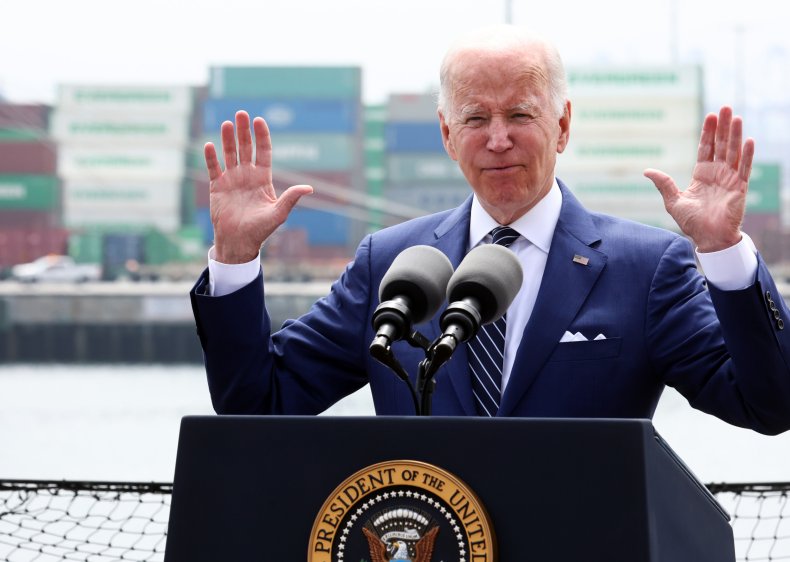
U.S. President Joe Biden on Friday called on ExxonMobil Corporation to start investing and paying more in taxes.

"Why don't you tell them what Exxon's profits were this year? This quarter? Exxon made more money than God this year," Biden said during an appearance at the Port of Los Angeles when asked about oil company profits.

On February 1, Exxon announced it had made $23 billion in earnings in 2021. Of that sum, $8.9 billion came from the fourth quarter. At the end of April, Exxon reported it had made $5.5 billion during the first quarter of 2022. That figure was reportedly double the earnings it made during the same period last year.

Biden's comments came after the Labor Department released data Friday morning that showed the consumer price index rose 1 percent last month and 8.6 percent in the 12-month stretch ending in May. The 8.6 increase is the largest 12-month rise since 1981.

Biden has addressed high inflation and pressed Congress to pass tax reform that would see large corporations pay more in taxes. On Friday, he named Exxon as one such company that he feels should face higher taxes.

"Exxon, start investing," Biden said. "Start paying your taxes."

U.S. President Joe Biden called on ExxonMobil to pay more taxes during remarks on Friday. In this photo, Biden is seen speaking aboard the Battleship USS Iowa Museum at the Port of Los Angeles on June 10.GETTY IMAGES

Biden also pushed for increased domestic drilling, noting there are currently more than "9,000 permits to drill." However, he said that oil companies "are not drilling."

"Why aren't they drilling? Because they make more money not producing more oil. The price goes up, number one," the president said. "Number two, the reason they are not drilling is they are buying back their own stock, [which] should be taxed quite frankly. Buying back their own stock and making no new investments."

Biden also took aim at foreign shipping companies. He said he has called on Congress to "crack down" on foreign-owned shipping companies that are raising prices despite still raking in $190 billion in profit.

"I have to admit to you, a lot of us elected officials have been in office for a while. Every once in a while, something you learn makes you viscerally angry. Like if you had the person in front of you, you'd want to pop them," Biden said. "No, I really mean it."

When Exxon announced its earnings for 2021, chairman and CEO Darren Woods credited the company's COVID-19 pandemic response and other business moves for its success.

"Our effective pandemic response, focused investments during the down-cycle, and structural cost savings positioned us to realize the full benefits of the market recovery in 2021," Woods said. "Our new streamlined business structure is another example of the actions we are taking to further strengthen our competitive advantages and grow shareholder value. We've made great progress in 2021 and our forward plans position us to lead in cash flow and earnings growth, operating performance, and the energy transition."

Newsweek reached out to ExxonMobil and the White House for comment.


China restaurant attack sparks outcry over violence against women

Footage of the incident widely circulated online shows a man placing his hand on a woman's back.
 PHOTOS: SCREENGRAB FROM WEIBO

BEIJING (AFP) - Eight people have been arrested for a vicious attack on a group of women at a restaurant in China, police said on Saturday (June 11), in a case that has sparked outrage over predatory sexual behaviour.

Footage of the incident widely circulated online shows a man placing his hand on a woman's back as she shares a meal with two companions at a barbecue restaurant in northern China's Hebei province.

After the woman pushes him away, the man strikes her before others drag her outside and deal a barrage of blows as she lies on the ground. Another woman is also knocked to the floor.

The video renewed an online debate about sexual harassment and gender-based violence in China where the conversation around women's rights has grown in recent years despite pressure from a patriarchal society, internet censorship and patchy legal support.

Campaigners say domestic abuse remains pervasive and under-reported while prominent feminists also face regular police harassment and detention.

Web censors blocked keywords linked to the #MeToo movement after a wave of women accused university professors of sexual harassment in 2018.

Police in Tangshan city on Saturday said they had arrested eight people on suspicion of violent assault and "provoking trouble", while a search for one other suspect was ongoing.

Two women treated at hospital following the incident were "in stable conditions and not in mortal danger", while two others sustained minor injuries, authorities said Friday.

The attack generated hundreds of millions of comments on social media, where users slammed predatory behaviour and urged authorities to crack down on violence against women.

"All of this could happen to me, could happen to any of us," said one commenter in a post liked over 100,000 times.

"How is this sort of thing still happening in 2022?" wrote another. "Please give them criminal sentences, and don't let any of them get away."

Last year, a Chinese man was sentenced to death for murdering his ex-wife as she live-streamed on social media, in a case that shocked the nation.

The man strikes the woman before others drag her outside and deal a barrage of blows as she lies on the ground.
 PHOTOS: SCREENGRABS FROM WEIBO


Brutal attack on Chinese woman sparks outrage and reignites debate over male violence


A group of men in Tangshan were caught on camera brutally beating a woman after she turned down unwanted attention from one of them. The assault has sparked furious demands to address misogyny in China.
Published June 10, 2022

Warning: Video shows a violent attack.

The security camera footage was appalling in its brutality. A young Chinese woman was at a restaurant in Tangshan, Hebei Province with three female friends when a middle-aged man approached her and put his hand on her back. She pushed him away, but the man refused to go back to his table. After the woman brushed away his hand again, he slapped her in the face, pulled her hair, and dragged her outside.

On the sidewalk, the man, joined by a group of male friends, repeatedly kicked the woman as she lay crumpled on the ground. Her friends tried to intervene, but the men beat them too.

As the violent scene unfolded, other customers at the restaurant stood by without helping. A female passerby seemed to want to come to the woman’s aid, but the man she was with quickly pulled her to the side and locked her in his arms to block her view.

Even at a time when male violence against women has regularly made headlines in China, the video — which appeared on the Chinese internet yesterday and instantly went viral — stuck a chord with many Chinese women. The sheer brazenness of the attack, combined with the seeming indifference of the bystanders, unleashed a renewed wave of fear and fury among them, prompting them to take to social media to call for an end to what they described as “an epidemic of gender-based violence” in the country.

“I couldn’t stop shaking when I watched the video. I’m in despair,” one woman fumed (in Chinese). “She was just hanging out with friends and didn’t want to be disturbed by some random guy. This is something that could happen to me one day.”

Further fueling the outrage was the delay of action by law enforcement authorities. According to sources close to the matter, local police were called to the scene when the incident happened on Thursday evening. When they arrived, the attackers had already left. In the following hours, little was done by the authorities while the woman and one of her friends were at a hospital recovering from serious injuries (in Chinese).

It wasn’t until the video blew up on social media that a police department in Tangshan issued (in Chinese) an announcement later Friday night, saying that it was “pulling out all the stops“ to find the group of men who attacked the women. As of the time of writing, two of the men have been detained (in Chinese) in connection with the assault.

Anger was also directed at several news outlets, which were accused of using vague and biased wording to manipulate public perceptions of the incident. In a now-deleted Weibo post (in Chinese) by the Beijing Youth Daily, the main attacker was described as “having a conversation with the women” before his friends “joined the battle to fight against them.” Some news organizations labeled the attack as “a physical conflict” and wrote that the trigger of the assault was the man “being turned down after hitting on a woman under the influence of alcohol.”

“Is a man entitled to touch a woman without her consent when he hits on her? Does the woman have no right to reject him? Is it okay to call it a fight when the lady defends herself in the face of violence? Is being drunk a valid excuse for the man’s horrendous behavior?” a Weibo user asked in a post (in Chinese), which has so far received over 167,000 likes.

In a rare display of public criticism over social issues, a host of Chinese celebrities also spoke up. “Next time an announcement is made, I want to see posthumous photos [of those men],” Mǎ Tiānyǔ 马天宇, a Chinese actor and singer, wrote to his 32 million followers on Weibo.

The incident has reminded many Chinese women of the constant threat they feel in public and the eternal vigilance required to stay safe, whether by carrying self-defense weapons wherever they go, using location-tracking apps, avoiding venturing out at night alone, adjusting outfits to cover up skin, or calculating what exact tone to use when responding to a stranger’s approach without provoking anger or inviting further conversation. Online, many Chinese women said they were exhausted by the burden of self-protection, arguing that it should be men’s responsibility to ​​stop harming women.

“I’m sick of society telling women how to protect themselves from violent men. It’s like you are a pedestrian and you follow traffic rules diligently. You always stop at the red light and wait for the green light to go. But one day when you are on a zebra crossing, you are hit by an asshole who’s drunk driving,” a Weibo user wrote (in Chinese). “How can anyone possibly prevent that? The only way to solve the root cause of the problem is to eliminate drunk driving, instead of telling those rule-abiding pedestrians to better protect themselves.”

The anger over the assault in Tangshan built on outrage that has intensified after a series of injuries and deaths caused by gender-based violence in the past few years. In 2018, two female passengers were murdered by their drivers in separate incidents in China while using ride-sharing services. Last year, a woman was yelled at and attacked with hot soup by a man in a hotpot restaurant in Chengdu after she asked him to stop smoking.

For many, home isn’t any safer. A 2020 report (in Chinese) by Beijing Equality showed that more than 900 women had died at the hands of their husband or partners since China’s anti-domestic-violence law came into effect in 2016. In one of the most high-profile and disturbing instances, Tibetan video influencer Lhamo 拉姆 died in 2020 after her ex-husband set her on fire during a livestream. In the years leading up to the incident, Lhamo had called the police multiple times when abuse occured, but her complaints weren’t taken seriously, and she never received the protection she sought.

Many observers, particularly women, said they hoped the Tangshan incident would be a tipping point forcing authorities to reflect on systemic misogyny within society. They called for officials to improve the criminal justice system to hold male perpetrators accountable for their behavior and create a men and boys’ strategy to reduce male violence in the first place. “We are in survival mode,” a woman wrote (in Chinese) on Weibo. “We’ve reached a point where radical social reform needs to happen.”
Society & Culture
Indie filmmakers in China — Q&A with Karen Ma


Karen Ma is a novelist and reporter whose most recent book profiles Chinese independent filmmakers who were born in the 1980s. We discussed the distinctive traits of this generation, censorship, and the evolution of moviemaking in China in the last few decades.

Jeremy Goldkorn 
Published June 10, 2022

Karen Ma — image by Nadya Yeh

LONG READ


Karen Ma’s passion for Chinese cinema started as a way to stay connected to her culture, as the daughter of Chinese immigrants living in Japan. She discovered indie Chinese filmmaking when she moved to Beijing in the 2000s and later noticed the lack of Western scholarship on recent Chinese cinema. So she wrote her own book, China’s Millennial Digital Generation: Conversations with Balinghou (Post-1980s) Indie Filmmakers, in which she presents seven moviemakers born in the 1980s and their films.

We chatted by video call on June 1. This is an abridged, edited transcript of our conversation, part of my Invited to Tea interview series.

—Jeremy Goldkorn

How did you go from writing a novel about two Chinese sisters — one raised in Cultural Revolution China and the other in Japan — to writing a book about China’s millennial, digital generation and independent filmmaking in China?

The two are kind of related.

Because of my novel project, I had to do a lot of research about Chinese culture, Chinese society. You see, I’m really a transplant, because I wasn’t raised in China. I felt like there were a lot of gaps and holes. I wanted to be accurate. I did a lot of research, and I was also a film critic when I was in Japan. So, it didn’t come from nowhere: I was going to screenings, and writing about films as my way of getting in touch with my parents’ roots. So I started noticing interesting things about indie Chinese films.

I had this opportunity to teach a film and culture course at the Beijing Center for Chinese Studies through UIBE, University of International Business and Economics. Teaching the course made me realize that there was a lot of English scholarship on filmmakers until the millennium. After that, there’s not much follow-up. I thought maybe somebody should write about this. And I decided that I would be the person.

Your book features seven Chinese indie filmmakers, all born in the 1980s — the bā líng hòu 八零后 or post-’80s.

The overriding impression of the book is that these people grew up in an audiovisual environment quite different from you and me, who are a little bit older. They are internet natives.

I remember when YouTube launched, around the time we first met in Beijing. I started making this YouTube program. It was very much based on a TV model — landscape screen, starting with theme music, and then opening credits and so on. Whereas these people grew up when that was already, not completely destroyed, as it is for the TikTok generation, but it was already crumbling. Their first film experiences were not necessarily in a cinema.

What’s the difference between people like that and us?

I think the distinction is more pronounced in China. The before and after groups. Let’s talk about the sixth-generation filmmakers. These are the ones who came of age and were active in the 1990s, and that was pre-internet. The number of films they viewed were limited and they were mostly trained by a handful of film academies. Whereas the post-’80s are the first generation to embrace all kinds of digital technology.

First off, they can view so many more films than the previous generations. More importantly, the digital technology advancement coupled with education reform, and the deregulation of the colleges and mushrooming of a large number of colleges that offer these film courses, which went from five schools to 120 in the space of five years, meant that they didn’t have to be limited by that handful of film official training grounds.

And the internet and digital cameras lowered the bar for filmmakers. They are really mostly viewers turned filmmakers who, through watching movies, learned to make them intuitively. They make movies for viewers their age and maybe a little bit younger. They can just watch and watch, and they watch like 20 movies if they want because it’s so easy.

And then they learn to make movies intuitively. They make movies for viewers, their age and maybe a little bit younger. The previous generations, fifth and sixth, did not understand the audience’s taste in the same way. This is what gives the edge to the post-’80s filmmakers.

Is that edge a good thing? There’s an independence of thinking, and aesthetics, and subject matter which wasn’t possible for previous generations. Cinema used to be an art form that required a certain time and money commitment. However, their generation grew up with almost infinite choice. How has this affected their filmmaking?

Well, like I said, the bar is much lower. So, that means a lot of films get made, and you’re going to have a lot of low-quality films. Although there are also those who take their artistry seriously and are true to their art form.

They have the option of pairing up with private studios, which came along after the year 2000. This allowed indie filmmakers to start making more commercial films. In other words, the indie filmmakers from the post-’80s age bracket have more choices, not just in terms of what kind of movies or what platforms are used, they also have the choice of working with private studios. Before that, it was all state owned.

After the year 2000, because of deregulation and some of the other reasons, there was a rise of private, nonprofit companies. They came about to help serious indie filmmakers to make art films. That’s something that was not available to the previous generations, who used to either have to go with the state-owned enterprises, be the mouthpiece for the government, or go underground and do renegade film if they wanted to stay true to their expression. The later generation had a lot more options available to them.

What are those options? How are they distributing their films? How are people seeing the films, and how are they making money out of the films?

In the beginning, they did what the sixth generation, the previous underground type of filmmakers, did: They took their art films to international festivals, and then tried to attract a foreign company to invest in their films. Later, when these private studios in China were burgeoning, the industry started to really need more talent.

That is when the commercial sectors started to try to lure the indie filmmakers to work with them. Because the indie filmmakers tended to spend more time working on their scripts, they often had better storylines and their voices were fresher.

You started seeing the commercial sector and the indie sector coming together. So you saw a peak rise of the Chinese film industry between 2006 and 2015. In that 10-year bracket, there was a double-digit increase in the market. During that time, a lot of the indie filmmakers also started to get attention, for better or for worse. Sometimes it’s good. A lot of times it’s not.

But those became the choices available to them as well. In the beginning, smaller studios worked with them, and then later, the bigger companies also came after them.

One thing in common among the people you profile in your book is that they are actually passionate about film. They’re not just in it for the money. They want to make films of meaning.

What are they and the younger cohorts doing now?

Until about five years ago, these indie filmmakers had grassroots film festival platforms to showcase their films as a testing ground, such as the China Independent Film Festival and the Beijing Independent Film Festival. These are the main ones, there are quite a few smaller ones. Or, of course, they could also go overseas to international film festivals.

But there’s a political change now, and the censorship came down quite hard. Things especially started happening in 2017 because of the new film law and then just got tighter and tighter. In 2018, the Propaganda Department of the CCP took over as the regulatory body, which made the censorship process tougher for a lot of the films. So long story short, if you are making a feature film, you really have to be prepared to spend a long time to work with the censors.

Especially after 2018, as there’s been a lot more flat rejection of film scripts, and not very much negotiation room anymore. Before, filmmakers could still negotiate, but after 2018, when the Propaganda Department took over, it certainly has become even tougher.

Since 2021, there has been a new set of guidelines for visual media, even tougher rules, on what can be shown. Now, even homosexual themes, and certainly smoking, drinking, and adultery, which all used to be in a gray area, are forbidden.

There is also the COVID impact and digital controls becoming much more widespread. So if you try to make a sensitive film, or with some sort of social commentary, you’re going to have a really hard time getting by the censors. I have one filmmaker who made the unfortunate choice of trying to do a very sensitive film, about a rape case.

He has been trying to negotiate with censors since 2017; it’s been years. Because this film was invested in by several studios, he does not want to stream it online. This certainly is one option available, but he says, “I cannot do that. I can never recoup the investment. So I’m going to sit on it. I’m going to see if after a few years when things are not so sensitive anymore, maybe I’ll get a call. Maybe I’ll get an okay.”

This is one approach. The other approach, depending on whether you’re making documentaries, which can be even more hard-hitting, would be to target a very niche market, and forget about trying to pass censorship. You can make the film outside China, work with a foreign company, and don’t count on coming back and showing your film in China. That certainly is another option.

They’re sort of stuck.

In the next few years, nothing would allow us to think that things might improve. We’re only seeing things are getting tougher.

You’re a global person who grew up in Japan, lived all over the world, Hong Kong, Beijing, the United States. How do you see China’s post-’80s filmmakers compared with their peers in other countries? What’s different about them to the equivalent person in America or Japan or India?

Well, let’s put it this way. The censorship is much tougher in China, that’s for sure. And there are a lot of topics you cannot talk about, even though…I have to add that the censorship process is not like things are always getting together. There’ll be a loosening, too.

During the ’80s, when the fifth-generation filmmakers came about, they had a very lucky time, because that’s when China was very open. And then you see the tightening after 1989. Things started loosening up again, in the mid-’90s. Then you see these tightening up and then things loosening up again.

This is something that the filmmakers, young filmmakers, have to reckon with. They have to always try to test the water. Back to the same filmmaker who made the unfortunate choice of producing a very sensitive film in 2017. He timed it wrong. But being able to time, or produce a film at a good timing is very important. And that’s one aspect that, say, American filmmakers wouldn’t have to worry about.

But having said that, I do think that America also has censorship of a different kind. You have the rating system and you have the political correctness issues. Filmmakers still have to follow rules, they can’t just go ahead and produce a film with any topic at any time.

It’s just that the Chinese filmmakers live with their reality and they have to do a better job of figuring out what is actually doable at a certain given time. Like this filmmaker, because he made a film about a sexual abuse case, and this topic would have been totally fine two years ago, before the film law came out. So there’s constant guessing. Things are changing. Who is the new leader coming out? What is this person like? So they have to do a lot of guesswork.

If you wanted to recommend one film for somebody who doesn’t know about this generation of Chinese filmmakers, would you be able to recommend one?

I would recommend two. I would say the first one, Lǐ Ruìjùn’s 李睿珺 Fly with the Crane (告訴他們,我乘白鶴去了). That one deals with death. Life and death. And from a very unusual perspective, an old man’s self-questioning.

If I have no say in how to come into this world, can I not have a say about how to exit the world? And it has to do with a Chinese local policy that bans burial. You have to do cremation.

In the countryside, older people have no qualms about talking about death. In fact, in the film, this particular old man used to be a coffin maker. And because of this new policy, he finds his business slowing down because nobody’s ordering coffins anymore. Yet he’s more concerned about facing his own death and has already reserved his own coffin. Now he’s realizing, “Maybe I’ll never get to use it because I’m going to end up getting cremated.” And that really upsets him. He feels that his soul would not be lifted. He will end up being a pile of ashes.

He’s really bothered by this, and his grandchildren are the only ones who have time to even talk to him.

The director uses interesting ways of contrasting the very active grandchildren’s play in their games and then this old man’s meditative thinking. And then in the end they together devise a plan, and the children will help their grandpa to exit the world.

What’s the second one?

The Coffin in the Mountain (心迷宫) by Xīn Yùkūn 忻钰坤. He’s heavily influenced by the Coen brothers. It’s set in a village in Hunan Province, where there are many families with secrets to hide. A murder takes place. We don’t really know what’s what because the timelines are scrambled.

So he created a brain teaser and the viewer has to figure out what happened. So he gets to make a social commentary about all the issues that are taking place in a sort of Wild West, a dark place in a Chinese village.

What Chinese films are you watching now?

Old ones. Not necessarily new ones. One of the films I have watched was made by a Taiwanese filmmaker in 2017 and is called Love Education (相爱相亲).

There’s a film called An Elephant Sitting Still (大象席地而坐), a very dark film, but by a very talented filmmaker called Hú Bō 胡波. Got all kinds of rave reviews. That’s on my list. I started watching it, not quite there yet.

But then the last one that came highly recommended is called The Wild Goose Lake (南方车站的聚会) by Diāo Yìnán 刁亦男. You may have heard of Diao Yinan, he also made Black Coal, Thin Ice (白日焰火). He’s a very talented, slightly older filmmaker, but he has this magic touch of combining the commercial element with social commentary, and also knowing what is allowable. So he has made very successful films, crime films, mystery films, and still managed to make money for the investors.


Jeremy Goldkorn worked in China for 20 years as an editor and entrepreneur. He is editor-in-chief of SupChina, and co-founder of the Sinica Podcast. Read more

Vladimir Putin's right-hand woman is Valentina Matviyenko, a Ukrainian-born politician who passionately supports his war

By Rebecca Armitage for the ABC

As Vladimir Putin's plan to invade Ukraine gained momentum in February this year, he called a surprise meeting of his inner circle.

LONG READ
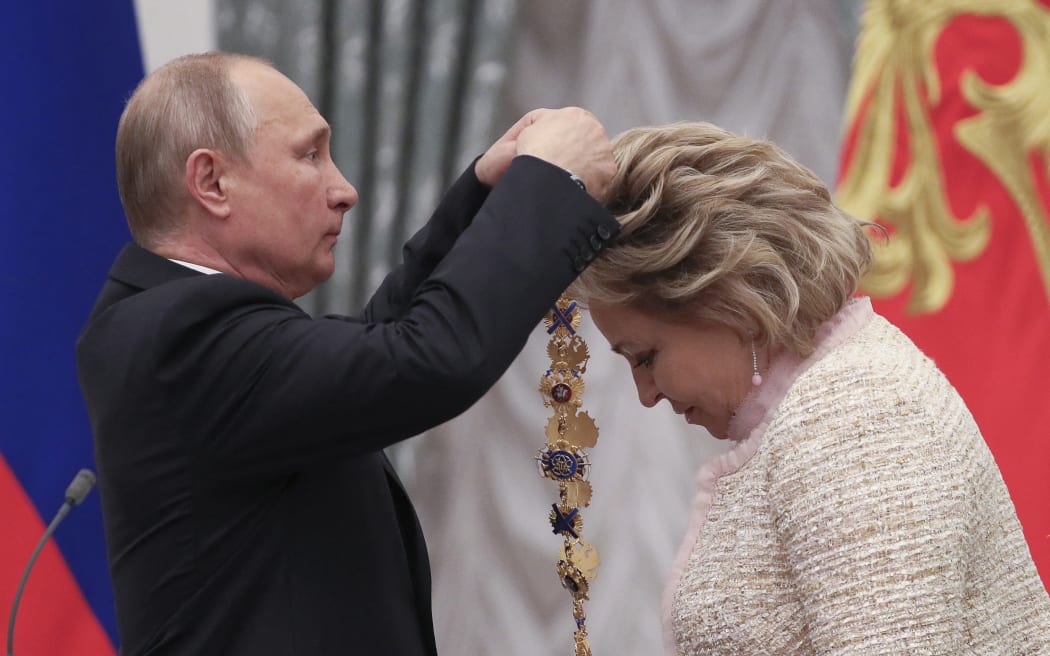
Russia's President Vladimir Putin awards the Order of St Andrew the Apostle to chairwoman of the Federation Council Valentina Matviyenko during a ceremony at the Kremlin in Moscow on 23 May 2019.

Russia's President Vladimir Putin awards the Order of St Andrew the Apostle to chairwoman of the Federation Council Valentina Matviyenko during a ceremony at the Kremlin in Moscow on 23 May 2019. Photo: AFP

The Russian President sat glowering behind a desk while members of his National Security Council squirmed on little chairs like schoolchildren.

One by one, Vladimir Putin demanded they come forward and tell him what they thought about his decision to send what he called "peacekeepers" into the separatist Ukrainian regions of Donetsk and Luhansk.

As the cameras rolled, they spoke. Some were enthusiastic. Others stammered as they tried to explain their position, prompting Putin to snap repeatedly: "Speak directly!"

But the sole woman in the room walked confidently to the lectern.

With her coiffed blonde bob and Chanel-inspired boucle skirt suit, Valentina Matviyenko has long been accustomed to standing out in meetings full of men.

But where some equivocated, the chairwoman of the Federation Council was strident.

"A humanitarian catastrophe has been unfolding before our eyes in the centre of Europe," she claimed without evidence.

She made baseless allegations that a "puppet" regime ruled Ukraine, responsible for "genocide" and mysteriously burned bodies in Odesa.

And borrowing one of Putin's favourite talking points, she said the West was "trying to pit the two Slavic fraternal nations against each other".

She concluded with a plea to Vladimir Putin.

"I believe it is time to make a decision," she said.

"It is simply immoral to continue discussing it to death and dragging it out while pretending that something is being done."

With the thanks of her president, Matviyenko returned to her chair.

At no point did she seem fazed that she was asking the president of Russia to invade her homeland.

Russian President Vladimir Putin at the reception to mark the New Year holiday at the Kremlin, seen with Federation Council Speaker Valentina Matviyenko on 27 December, 2017.

Russian President Vladimir Putin at the reception to mark the New Year holiday at the Kremlin, seen with Federation Council Speaker Valentina Matviyenko on 27 December, 2017. Photo: Sputnik via AFP

Valentina Matviyenko was born in Shepetivka, west of Kyiv, when Ukraine was still part of the Soviet Union.

But her decision to study chemistry as a young university student in Russia's historic imperial capital changed her life.

It put her right in the path of a young KGB agent-turned-politician who would help her become the most powerful woman in Russia since Catherine the Great.

In Putin's Russia, you're nobody unless you're from St Petersburg

Throughout his long reign, Vladimir Putin has projected an image of a solitary, almost monk-like figure who toils, as he puts it, "like a galley slave" for Russia.

Even his former wife, his children and his rumoured new partner never appear publicly by his side.

But in reality, he has surrounded himself with a close-knit group of allies, many of whom he has known since his 20s.

Like others in Putin's inner circle, Valentina Matviyenko got her start in politics in the 1970s in St Petersburg, back when it was known as Leningrad.

"I was not eager for politics," she admitted to Russian media in 2019.

From left: State Duma Speaker Vyacheslav Volodin, Russian President Vladimir Putin, Federation Council Speaker Valentina Matvienko and Presidential Envoy to North-East federal district Alexander Gutsan arrive for a meeting with members of Lawmakers Council in St.Petersburg, Russia on 24 April, 2019.

From left: State Duma Speaker Vyacheslav Volodin, Russian President Vladimir Putin, Federation Council Speaker Valentina Matvienko and Presidential Envoy to North-East federal district Alexander Gutsan arrive for a meeting with members of Lawmakers Council in St.Petersburg, Russia on 24 April, 2019. Photo: Sputnik via AFP

While studying to be a scientist, leaders of the youth division of St Petersburg's Soviet Communist Party asked her to join their organisation.

When she refused because she wanted to focus on her science career, they called the head of her graduate program.

"They said 'we do not need irresponsible people either in science or in graduate school'," she recalled.

By the time she met Vladimir Putin, Matviyenko was already a local political heavyweight, if perhaps a reluctant one.

At a time when Soviet women were there to be seen, not heard, she swiftly earned herself the nickname "Valka the glass" for her ability to drink her male comrades under the table.
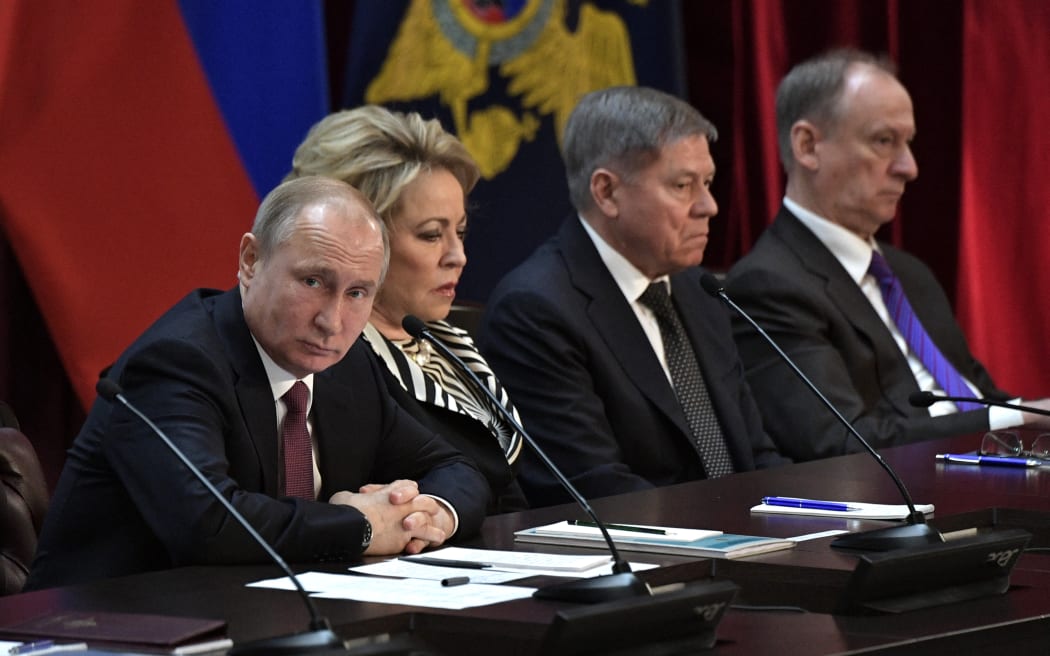
From left: Russian President Vladimir Putin, Chairperson of the Federation Council Valentina Matvienko, Chairman of the Supreme Court of the Russian Federation Vyacheslav Lebedev and Russia's Security Council Secretary Nikolai Patrushev at the annual expanded meeting of the Russian Interior Ministry Board on 28 February, 2019.

From left: Russian President Vladimir Putin, Chairperson of the Federation Council Valentina Matvienko, Chairman of the Supreme Court of the Russian Federation Vyacheslav Lebedev and Russia's Security Council Secretary Nikolai Patrushev at the annual expanded meeting of the Russian Interior Ministry Board on 28 February, 2019. Photo: Sputnik via AFP

Her career skyrocketed and she became the USSR's youngest female MP and the chairwoman of the Supreme Soviet Committee on Women, Families, Maternity and Childhood.

But when the Soviet Union collapsed in 1991, she had a tricky choice to make if she wanted to survive the ensuing decade of chaos and maintain her power.

As Russia's president Boris Yeltsin descended into alcoholism and deep unpopularity, there were two potential successors waiting in the wings.

One was Yeltsin's own prime minister, Yevgeny Primakov, an extremely popular politician, with whom Matviyenko was close.

The other was Vladimir Putin, then the director of the country's post-Soviet intelligence agency and virtually unknown to the Russian public.

What few knew at that stage was that Putin had been tapped by Yeltsin's family for mysterious reasons to be Russia's next leader.

Armed with a dossier of kompromat - the KGB term for damaging intelligence - Vladimir Putin was able to swiftly and quietly knock his rivals out of contention.
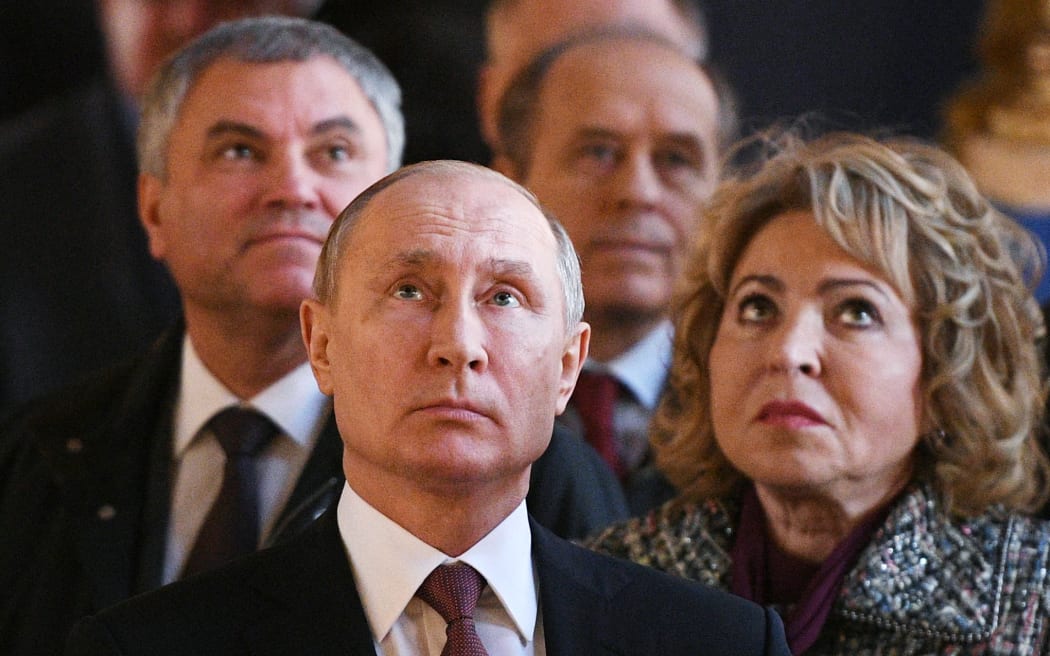
Russian President Vladimir Putin and Valentina Matviyenko visits the Church of Jesus Resurrection of Catherine Palace at the Tsarskoe Selo State Museum in Pushkin, near St. Petersburg, Russia on 10 April, 2019.

Russian President Vladimir Putin and Valentina Matviyenko visits the Church of Jesus Resurrection of Catherine Palace at the Tsarskoe Selo State Museum in Pushkin, near St. Petersburg, Russia on 10 April, 2019. Photo: Sputnik via AFP

While Valentina Matviyenko was encouraged to run for the presidency, she refused, instead switching her allegiance to Putin.

"I think she's a political animal," said Dr Sara Meger, a lecturer in International Relations in the School of Social and Political Sciences at Melbourne University.

"I think it's no secret that it's pretty dangerous to be an opponent to Putin during his long reign in power."

With Putin sweeping aside Soviet-era power players and replacing them with KGB colleagues and old friends from St Petersburg, Matviyenko's loyalty was quickly rewarded.

The most powerful Russian woman since Catherine the Great

With the endorsement of Putin, Valentina Matviyenko ran to be governor of their hometown in 2003.

Her rivals festooned the streets with banners claiming: "Being governor is no job for a woman."

But in the end, she won with a commanding majority.

Russian acting President Vladimir Putin (R) and Vice Premier Valentina Matviyenko (L) smile during the session of the trade unions general council, Moscow 16 February, 2000.

Russian acting President Vladimir Putin (R) and Vice Premier Valentina Matviyenko (L) smile during the session of the trade unions general council, Moscow 16 February, 2000. Photo: AFP

The girl from rural Ukraine who went to St Petersburg for a better life found herself ruling over the 300-year-old city.

Under her leadership, the dilapidated region flourished: New developments sprung up, the birthrate doubled for the first time since the collapse of the USSR and tourism increased.

Her critics claim that it was around this time she got rich - seriously rich.

An investigative group run by Vladimir Putin's arch rival, Alexei Navalny, linked a huge luxury villa sitting on Italy's east coast to her family.

"Where could a Russian official get the money for this?" the group's chief investigator, Maria Pevchikh, asked.

"That's the main secret of Putin's Russia: If you love Putin, money will flow on you like water."

But the biggest prize was yet to come.

In 2011, she ascended to heights not reached by a Russian woman since Empress Catherine the Great in 1762.
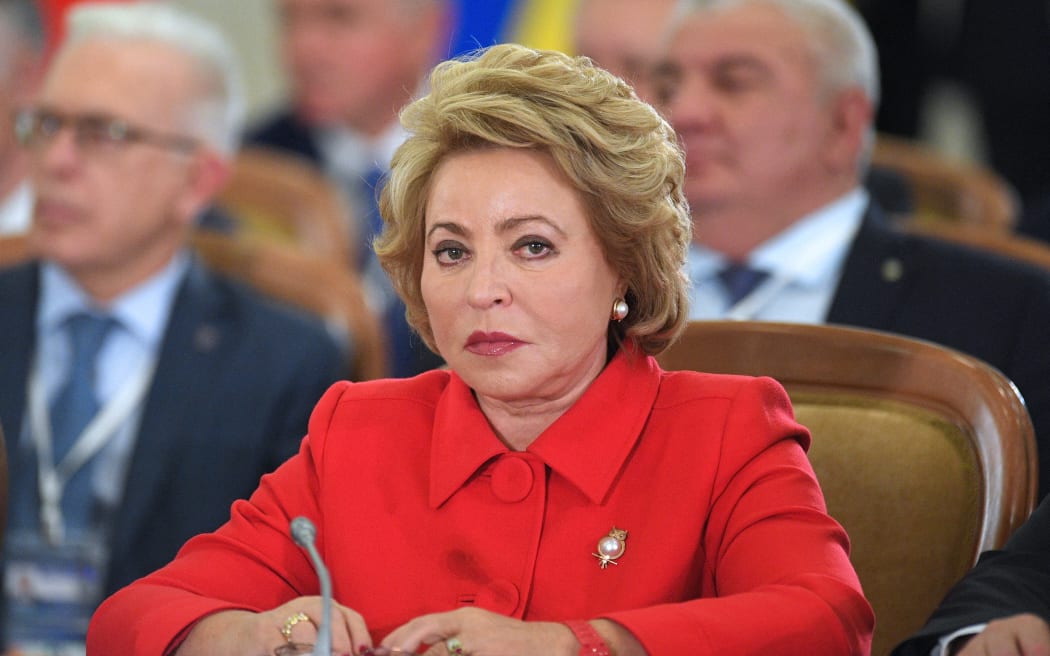
Speaker of the Federation Council of Russia Valentina Matviyenko at an expanded meeting of the CIS Council of Heads of State in Sochi on 11 October, 2017.

Speaker of the Federation Council of Russia Valentina Matviyenko at an expanded meeting of the CIS Council of Heads of State in Sochi on 11 October, 2017. Photo: Sputnik via AFP

She was made speaker of Russia's Federation Council, after winning a seat in the upper house of parliament.

That made Valentina Matviyenko the third most powerful person in Russia.

Her astounding landslide victory - with 95 percent of the vote - was dismissed as "100 percent fraud" by opposition leaders.

And it would be from these lofty heights that her connection to her humble past would be put to the ultimate test.

A possible successor to Vladimir Putin?

When Vladimir Putin sent troops into the country of her birth, Valentina Matviyenko was right by his side.

Sergey Naryshkin (R) Chairman of the State Duma and Valentina Matviyenko (L) the Chairwoman of the Federation Council of the Russian Federation stand next to the Russian President Vladimir Putin as he signs set of laws on reunification of Crimea, Sevastopol with Russia at Ekaterininsky in Kremlin, 21 March, 2014.

Sergey Naryshkin (R) Chairman of the State Duma and Valentina Matviyenko (L) the Chairwoman of the Federation Council of the Russian Federation stand next to the Russian President Vladimir Putin as he signs set of laws on reunification of Crimea, Sevastopol with Russia at Ekaterininsky in Kremlin, 21 March, 2014. Photo: AFP

For Dr Meger, it's not a surprising move for a woman of her generation.

"I think we could probably read into her politics and life trajectory as feeling more allegiance to the Soviet Union," she said.

"Older Ukrainians are a lot less optimistic than younger Ukrainians about independence and the turn towards Europe.

"There's a lot more Soviet nostalgia and a belief that things were better under the Soviet Union."

And, as a woman who has survived five decades in one of the most chaotic power structures in the world, Matviyenko has learned how to keep herself in the inner circle.

"She has long been tipped as perhaps the successor to Putin for the Russian presidency, or at least having some sort of major role in Russian politics," Dr Meger said.

"So to her, it's strategic to keep telling the Putin line."

Whether Russia could ever see a president Matviyenko is unclear, according to Dr Meger.

"I think that Russian society certainly would be open to it. I don't think the men of the inner sanctum would allow it," she said.

"She's the eldest of that inner circle. So I imagined that by the time Putin is retiring, or somehow ousted from power, there will be some significant, more youthful challenger."
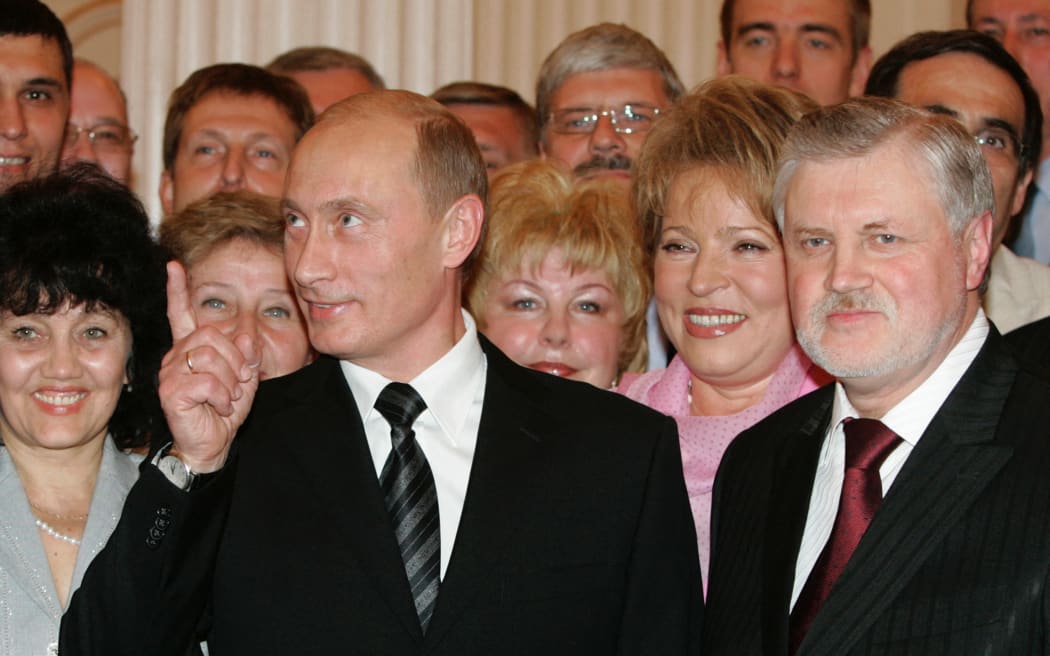
Russian President Vladimir Putin, Sergei Mironov, chairman of the Federation Council (from left to right, foreground) and St. Petersburg Governor Valentina Matviyenko (first right) after a ceremonial presenting of the certificate and badge of honorary citizen of St. Petersburg in the Mariinsky Palace in 2006.

Russian President Vladimir Putin, Sergei Mironov, chairman of the Federation Council (from left to right, foreground) and St. Petersburg Governor Valentina Matviyenko (first right) after a ceremonial presenting of the certificate and badge of honorary citizen of St. Petersburg in the Mariinsky Palace in 2006. Photo: Sputnik via AFP

Still, Valentina Matviyenko has spent her life being underestimated.

When speaking to the press, she regularly jokes that women are better suited to hold power than men.

"It seems that male politicians with their brutal style have not coped with managing the world. They allowed wars, conflicts, violence," she said in 2019.

"This is, of course, a joke. But, as we say in Russia, there is some truth in every joke."

Bangladesh Cancels Top Rights Group's Registration, Sparking Outrage

June 10, 2022 
Shaikh Azizur Rahman
Human rights group Odhikar activists and volunteers demonstrate against enforced disappearances, in Bangladesh's Khulna district, on International Human Rights Day, Dec. 10, 2021.

The Bangladeshi government canceled the registration of one of the country's top human rights organizations this week, triggering outrage across the international human rights community.

A June 5 order from the government canceled the registration, or operating license, of Bangladesh-based Odhikar. Founded in 1994, the organization is known for its regular documentation of human rights violations in the country, working closely with the United Nations, Human Rights Watch and other international rights groups.

The NGO Affairs Bureau, a wing of the Bangladeshi prime minister's office, issued the order, stating that "the activities of the organization are not satisfactory."

Odhikar "created various issues against Bangladesh by spreading propaganda against the state by publishing misleading information on its own website about various extrajudicial killings, including alleged disappearances and murders," the order said. It added that the organization “has seriously tarnished the image of the state to the world."

Accusations of rights violations

The security agencies in Bangladesh have long been accused of extrajudicial killings, enforced disappearances and other serious human rights violations.

In December 2021, the U.S. imposed sanctions on Rapid Action Battalion (RAB), an elite paramilitary force of Bangladesh, for its dismal human rights record. Odhikar regularly documented human rights violations by the RAB.


SEE ALSO:
Rights Activists Welcome US Sanctions on Bangladesh’s Elite Paramilitary Force


Since the beginning of this year, Odhikar has reported that the rights groups accusing RAB and other security agencies of rights violations were facing reprisals from the government.

For years, Odhikar has been facing persecution because of its work, Adilur Rahman Khan, the organization's secretary, told VOA.

"In 2014, we sought to renew the registration of Odhikar to receive foreign donations. But our application for renewal of the registration with the NGO Affairs Bureau has remained pending for eight years, critically hindering our ability to conduct human rights monitoring and reporting," said Khan, who has received several international human rights awards.

In 2019, Odhikar filed a writ petition to the High Court seeking renewal of its registration, and in May, the hearing on this matter resumed in the court, he said.

"Now, in the midst of the hearing, the NGO Affairs Bureau has arbitrarily canceled Odhikar's registration, bypassing the judicial process, in another attempt to stall our human rights work in the country."

Despite several attempts, VOA failed to get a comment from the NGO Affairs Bureau. The director of the bureau did not respond to queries from VOA.

Rights advocates see red flag

Rights advocates have condemned the action against Odhikar in strong terms.

Eleven human rights groups, including Amnesty International, Human Rights Watch and Robert F. Kennedy Human Rights, said in a statement June 9 that Bangladeshi authorities should immediately reverse their decision to deregister Odhikar.

Nur Khan Liton, a well-known rights activist in Bangladesh, called the cancellation of Odhikar's registration an "autocratic action" by the government.

"By canceling the registration of Odhikar, the government has aimed to warn individuals and groups against raising their voices against human rights violations in the country," Liton told VOA.

The arbitrary deregistration of Odhikar is a serious red flag, said Matthew Smith, CEO of the rights group Fortify Rights.

"The authorities can't improve the country's human rights record by arbitrarily deregistering its leading human rights organization," Smith told VOA.

The reprisal against Odhikar is "an egregious and shameless act to silence and intimidate human rights defenders" in Bangladesh, said Saad Hammadi, South Asia campaigner for Amnesty International.

"Odhikar's deregistration is a clear demonstration of the government's anger about the credibility the human rights organization enjoys internationally," Hammadi said.

Deregistration ‘outrageous, unacceptable’

Mohammad Ashrafuzzaman, liaison officer of the Hong Kong-based Asian Legal Resource Centre, noted that Odhikar is the most prominent Bangladesh-based human rights organization, and its deregistration was a big blow to the human rights community as well as to the victims.

"The Sheikh Hasina regime, which accuses rights group Odhikar of 'tarnishing the country's image,' has adopted the policy of using enforced disappearances, extrajudicial executions, and systemic torture under arbitrary detention as tools against the dissidents and political opponents," Ashrafuzzaman told VOA. Sheikh Hasina had served as the prime minister of Bangladesh from 1996 to 2001, and she assumed office again in 2009.

Calling the decision to deny the registration "outrageous and unacceptable," Phil Robertson, deputy director of Human Rights Watch's Asia Division, said that the government's action was "nothing less than a full-frontal assault" on human rights defenders such as Odhikar who dare to speak truth to power about the government's systematic rights violations.

"Ever since Hasina returned as prime minister, the authorities have subjected Odhikar staff to intrusive surveillance and harassment and made politically motivated attacks on the organization's work and findings," Robertson told VOA.

"The NGO Affairs Bureau under the PM's Office exists not to regulate or support civil society groups but rather to exercise control, violate freedom of association, and bar access to foreign funds, and Odhikar has borne the brunt of all this discriminatory government treatment over the years," Robertson said.

Dhaka-based diplomats, U.N. agencies, and the wider international community should pressure the Bangladesh government to immediately and unconditionally restore Odhikar's license to operate, Robertson added.

"The Bangladesh government uses misleading information all the time, so this accusation against Odhikar — that the organization is tarnishing the country's image — is a clear example of the pot calling the kettle black," he said.

Reporting on human rights violations is "not anti-government or anti-state," Amnesty's Hammadi noted. He said the government’s “decision to deregister Odhikar is akin to shooting the messenger.”