Saturday, June 11, 2022

Blinken dismisses evidence holding Israel accountable for Shireen Abu Akleh killing

Secretary of State Antony Blinken said the facts had 'not been established' in the killing of veteran Al Jazeera journalist


A photo taken on 19 May 2022 shows drawings at an art exhibit honouring slain Palestinian Al-Jazeera journalist Shireen Abu Akleh at the spot where she was killed (AFP)

By MEE staff
Published date: 8 June 2022 

US Secretary of State Antony Blinken refused to answer questions on why Israel has not been held accountable over the killing of Al Jazeera journalist Shireen Abu Akleh, despite eyewitness testimony, media investigations and her employer blaming Israeli forces for her death.

During a Summit of the Americas event in Los Angeles on Tuesday, Abby Martin, the host of the independent documentary and interview series The Empire Files, asked Blinken why there have been "absolutely no repercussions" for Israel over Abu Akleh's killing, or for Saudi Arabia for the killing of Middle East Eye columnist Jamal Khashoggi.

"Secretary Blinken, what about Shireen Abu Akleh?" asked Martin. "She was murdered by Israeli forces. CNN just agreed to this. These are our two greatest allies in the Middle East: Saudi Arabia and Israel. They have murdered American journalists and there have been absolutely no repercussions.

"Why is there no accountability for Israel or Saudi Arabia for murdering journalists?"

Blinken responded by saying: "I deplore the loss of Shireen. She was a remarkable journalist, an American citizen."

After Martin objected to Blinken's assertion that the evidence in the case was not yet clear, the secretary pushed back: "I'm sorry, with respect, [the facts] have not yet been established."

"We are looking for an independent, credible investigation. When that investigation happens, we will follow the facts, wherever they lead. It's as straightforward as that," he said.

The remarks effectively dismissed an investigation carried out by the Palestinian Authority (PA), which concluded last month that Abu Akleh had been deliberately targeted by Israeli troops.

Eyewitnesses and colleagues who were present at the time of the killing, including Middle East Eye correspondent Shatha Hanaysha, have all said that Abu Akleh was targeted by an Israeli sniper. Al Jazeera has said Abu Akleh was "assassinated in cold blood".

The CNN investigation that Martin referenced concluded that "there was no active combat, nor any Palestinian militants, near Abu Akleh in the moments leading up to her death” and that the evidence "suggests that Abu Akleh was shot dead in a targeted attack by Israeli forces".

The Associated Press has also carried out a reconstruction of Abu Akleh's killing and reported that their findings lend "support to assertions from both Palestinian authorities and Abu Akleh's colleagues that the bullet that cut her down came from an Israeli gun".


Shireen Abu Akleh: UN renames Palestinian media programme after slain journalist
Read More »

Calls have grown both in the US and internationally for an independent investigation into Abu Akleh's killing.

More than 50 US lawmakers signed a letter last month calling on the FBI and State Department to intervene and lead a probe.

On Monday, Republican Senator Mitt Romney, along with his Democratic colleague Senator Jon Ossoff, called on the Biden administration to conduct "a full and transparent investigation" into the killing.

The PA has refused to hand over the bullet to Israel, saying Israel could not be trusted to investigate the conduct of its military. Rights groups have also said Israel has a poor record of investigating the conduct of its forces in relation to Palestinian deaths.

Al Jazeera has referred the case to the International Criminal Court in the Hague and vowed to bring the killers to justice through all international legal platforms.

The ICC opens investigations in places where domestic authorities are unable or unwilling to look into allegations of abuse.

Israel, however, maintains that it is not subject to the court's mandate because it is not a signatory to the Rome Statute that established the tribunal, and that the ICC cannot investigate abuses in the Palestinian territories because Palestine is not a state.

Shireen Abu Akleh: US senators call for investigation into journalist's killing

Republican Mitt Romney and Democrat Jon Ossoff call on the Biden administration to ensure 'justice is served' over the killing of Palestinian-American journalist


Pro-Palestine activists call for justice for Shireen Abu Akleh
 at a Nakba Day rally in New York City, on 15 May 2022
(MEE/Azad Essa)

By MEE staff
Published date: 7 June 2022 

Two senior US senators have called on the Biden administration to conduct "a full and transparent investigation" into the killing of Al Jazeera journalist Shireen Abu Akleh.

Republican Senator Mitt Romney, along with his Democratic colleague Senator Jon Ossoff, called on the State Department on Monday to ensure that "justice is served", in a letter addressed to Secretary of State Antony Blinken.

"The killing of a US citizen and of a journalist engaged in the work of reporting in a conflict zone is unacceptable. All over the world, journalists pursue truth and accountability at great personal risk," the letter said.

"Press freedom is a core American value, and we cannot accept impunity when journalists are killed in the line of duty. We insist that the Administration ensure a full and transparent investigation is completed and that justice is served for Ms Akleh's death."

Abu Akleh, 51, was shot dead by Israeli forces on 11 May near the Jenin refugee camp in the occupied West Bank while covering an Israeli raid. Her colleague Ali al-Samoudi was also shot and injured.


Israel had initially said Palestinian gunmen may have been responsible for the death but then backtracked on its statement, saying it was still unclear what transpired.

Eyewitnesses, including MEE correspondent Shatha Hanaysha, said Abu Akleh was targeted by an Israeli sniper.

The bullet that killed Abu Akleh is in the possession of the Palestinian Authority (PA), which has refused a joint probe with the Israelis, saying Israel could not be trusted to investigate the conduct of its military.

Rights groups have also said this, saying Israel has a poor record of investigating the conduct of its forces in relation to Palestinian deaths.

The State Department did not respond to a request from Middle East Eye for comment on the letter or whether the Biden administration would launch an investigation into the killing of a US citizen.

Monday's letter comes just days after a bipartisan group of US lawmakers called for an independent investigation into Abu Akleh's killing. The letter was signed by 24 members of the House - 14 Democrats and 10 Republicans.

That letter was met with criticism from Palestinians and some Jewish groups, saying that it follows Israeli government viewpoints and calls the Palestinian Authority "obstinate" for not complying with Israel on an investigation.

Al Jazeera has referred the case to the International Criminal Court in the Hague and vowed to bring the killers to justice through all international legal platforms.

Shireen Abu Akleh: US lawmakers call for independent probe into journalist's killing

Letter marks the second effort by members of congress calling for investigation into the killing of Al Jazeera reporter


Protestors hold signs calling for justice for Shireen Abu Akleh in the Bay Ridge neighbourhood of the Brooklyn borough of New York City, on 15 May 2022 (AFP)

By MEE staff in
Washington
Published date: 3 June 2022 

A bipartisan group of US lawmakers is calling for an independent investigation into the killing of Palestinian-American journalist Shireen Abu Akleh, the second such congressional effort in the past two weeks.

The letter, obtained by Jewish Insider, has been signed by 24 members of the House - 14 Democrats and 10 Republicans - and is expected to be sent to US Secretary of State Antony Blinken on Friday.

"No journalist should face threats or violence for doing their job. As such, it is critical that we get to the bottom of what happened in the incident involving Ms Akleh," the letter said.

"Only an independent investigation can resolve this situation, and provide solace to the families and all parties."

The letter was met with criticism from Palestinians and some Jewish groups, saying that it follows Israeli government viewpoints and calls the Palestinian Authority “obstinate” for not complying with Israel on an investigation.

Abu Akleh, a 25-year veteran journalist for Al Jazeera Arabic, was shot dead by Israeli forces on 11 May while covering an Israeli raid into the Palestinian village of Jenin.

Israel had initially said Palestinian gunmen may have been responsible for the death but then backtracked on its statement, saying it was still unclear what transpired.

Eyewitnesses, including MEE correspondent Shatha Hanaysha, said Abu Akleh was targeted by an Israeli sniper.


Shireen Abu Akleh: Dozens of US lawmakers demand FBI probe into killing
Read More »

Last month, a larger group of 57 lawmakers signed another letter to Blinken demanding that the FBI and State Department investigate the murder of Abu Akleh.

However, a Biden administration official told The Times of Israel last week that it would not be carrying out its own probe of the incident, and would instead be assisting Israel. The official also said that the US hopes the PA will share its "evidence" with Israel when asked about the bullet.

The bullet that killed Abu Akleh is in the possession of the Palestinian Authority (PA), which has refused a joint probe with the Israelis, saying Israel could not be trusted to investigate the conduct of its military.

Rights groups have also said this, saying Israel has a poor record of investigating the conduct of its forces in relation to Palestinian deaths.

The lawmakers, however, accused the PA of prohibiting a proper investigation by refusing to hand over the bullet, saying that without giving the bullet to the Israelis, "it is impossible to determine all the facts".

However, a CNN investigation concluded that it was possible to investigate the killing without the bullet by "analysing the type of gunfire, the sound of the shots and the marks left by the bullets at the scene".

The PA, along with Al Jazeera and a consortium of international lawyers, have all called on the International Criminal Court to launch an investigation into the killing.

The ICC opens investigations in places where domestic authorities are unable or unwilling to look into allegations of abuse.

Israel, however, maintains that it is not subject to the court's mandate because it is not a signatory to the Rome Statute that established the tribunal, and that the ICC cannot investigate abuses in the Palestinian territories because Palestine is not a state.

Israel: Palestinian prisoner's health deteriorates after 100 days of hunger strike

Khalil Awawda is protesting against an Israeli administrative detention sentence issued against him in December 2021


Khalil Awawda, 40, has been told by the Israeli Prison Service he will be transferred to hospital only if he falls into a coma
(Screengrab)

By MEE staff
Published date: 10 June 2022

A rights group warned on Friday of the deteriorating health of a Palestinian political prisoner on hunger strike for 100 days in an Israeli jail.

Khalil Awawda was moved from Ramle prison, where he was detained, to an Israeli hospital after his health deteriorated this week, the Palestinian Prisoners' Club said in a statement.

Qaddoura Fares, the head of the Prisoners' Club, told local media that the Israel Prison Service (IPS) used to move Palestinian prisoners to hospitals on their 50th day on hunger strike. However, in the case of Awawda, the IPS refused to move him and told him that he would only be hospitalised if he fell into a coma.

"[Israel] is employing the aches and pains and the health condition to put more pressure on him," Fares said.

Awawda, 40, is from Hebron, south of the occupied West Bank. His laywer, Jawwad Boulous, visited him on Monday in Ramle prison and described his condition as "very critical".

"He was vomiting during my visit and had difficulty seeing me, and he complained of sharp pains all over his body, in particular his muscles and limbs," Boulous said.

Awawda has been striking in protest against an Israeli administrative sentence of six months, issued against him in December 2021, the month he was arrested. The sentence ends on 26 June, but Israeli authorities have the power to issue another administrative detention order against him without charge, or put him on trial.

He has been arrested five times since 2005 for political activism, and has been placed in administrative detention three times. He is married and a father of four daughters.

Administrative detentions, a highly controversial policy used by Israel almost exclusively against Palestinians, allow detention without charge or trial for renewable periods of three to six months, without the possibility of appeal or of knowing what accusations are being levelled against the detainee.

Currently, there are around 4,500 Palestinian prisoners in Israeli jails.
Israeli anti-torture body refers Israel to International Criminal Court

Public Committee Against Torture in Israel says after 30 years it has concluded Israeli authorities not interested and unable to stop abuse of Palestinians


Palestinians take part in a protest in solidarity with prisoners in Israeli jails, in front of the Erez Crossing in Beit Hanoun in the northern Gaza Strip (Reuters)

By Lubna Masarwa in Jerusalem
Published date: 10 June 2022 

An Israeli anti-torture body has referred its own country to the International Criminal Court (ICC) after concluding that Israel is “not interested and unable to stop the use of torture against Palestinians”.


The Public Committee Against Torture in Israel (PCATI) said on Friday it had demanded that Israelis involved in torture be tried as part of an investigation by the Hague-based ICC over suspected war crimes committed by Israel in the occupied Palestinian territories.

It said that after 30 years of fighting torture it had “reached the unfortunate conclusion” that Israel has no wish to end torture, honestly investigate victims' complaints and prosecute those responsible.

"For us, this is a necessary and obligatory step today in our struggle for the moral image of Israeli society, and for the sake of justice for the victims we represent," it said in a statement.

Established in 1990, the PCATI has represented and worked to protect Israelis, Palestinians, refugees and migrants who have suffered torture and inhuman or degrading treatment in detention.

'This is a necessary and obligatory step today in our struggle for the moral image of Israeli society, and for the sake of justice for the victims we represent'

- Public Committee Against Torture in Israel


The PCATI noted that over 1,300 complaints of torture victims had been filed with Israeli law enforcement authorities between 2001 and 2021 in the belief that the system will fulfil its duty, conduct fair and exhaustive investigations and do justice to the victims.

However, the group said, that led to zero indictments and just two criminal investigations - including in cases where “unequivocal evidence of serious violations of the law” has been collected.

“The law in Israel backs up the culture of falsehood and cover-up that still exists in the security system,” the PCATI said.

Tal Steiner, PCATI’s executive director, told Middle East Eye that appealing to the international court is a very radical step.

“We understood after 30 years that the system of Israeli courts is unwilling and unable to create change. They have a culture of immunity,” she said.

“We are the first Israeli organisation to take such a step and we expect very hard and difficult reactions.”

The PCATI appeal represents 17 clients who Steiner says “went through very severe physical torture”.

“All of their complaints were rejected in Israel. Maybe finally justice can be achieved for them in the international court,” she said.

Unlike the Palestinian Authority, Israel is not a signatory of the ICC’s Rome Statute, which the country says means the court has no jurisdiction there.

However, the ICC prosecutor in March 2021 formally began probing war crimes allegedly committed in the occupied Palestinian territories – by both Israel and Palestinian groups such as Hamas.


Lawyers to add Shireen Abu Akleh killing to Israel war crimes ICC case
Read More »

Then in April 2022, the International Federation of Journalists, the Palestinian Journalists Syndicate and the International Centre of Justice for Palestinians filed a complaint with the ICC alleging that Israel's "systematic targeting" of Palestinian journalists and its failure to investigate their killings amounts to war crimes.

When Israeli forces killed Al Jazeera journalist Shireen Abu Akleh in the occupied West Bank's Jenin last month, the Palestinian Authority asked the ICC to add her case to other alleged crimes being investigated.

Investigations are opened by the ICC in places where the domestic authorities are unable or unwilling to probe allegations of abuse. Israel has previously said it will not cooperate with any ICC investigation.

The PCATI application is submitted in cooperation with the International Federation for Human Rights (FIDH), an organisation that unites 192 human rights organisations from around the world.

"Israeli security agents and other state officials have systematically tortured, degraded, and inhumanely treated Palestinian individuals suspected of involvement in national security crimes," said Alice Mogwe, FIDH president.

"They have unlawfully deported them from the Palestinian territories into Israel for the purpose of such treatment. They have denied them the fundamental right to a fair trial."

The PCATI is not the first Israeli human rights organisation to conclude that the country's authorities are unwilling and unable to investigate abuses. In 2016, leading human rights group B'Tselem ceased submitting complaints to the Israeli army regarding the alleged mistreatment of Palestinians, complaining the system's real function was to cover up abuses.
Russia-Ukraine war: US quest to preserve global hegemony could be its downfall

Marco Carnelos
3 June 2022 

Washington, London and some eastern European capitals seem determined to fight for Russia's collapse, down to the last Ukrainian soldier and European consumer


US President Joe Biden speaks in Washington on 14 January 2022 (AFP)

When the doyen of foreign policy gurus, Henry Kissinger, is hinting that Ukraine should cede territory to Russia to help end the invasion, you know in your stomach that the West is about to make another major mistake.

At the World Economic Forum in Davos, Kissinger also urged western countries not to seek an embarrassing defeat for Russia in Ukraine, warning it could endanger Europe’s long-term stability. He seems to be focused on Europe-Russia relations in the longer term, considering that for four centuries, Russia has been an essential part of Europe and a factor in re-establishing its balance.

Just 50 years after former US President Richard Nixon’s historic trip to China, Kissinger’s ultimate concern is to avoid driving Moscow into a permanent alliance with Beijing. It is too late for that.

As for the Russian economy, it is certainly suffering, but - contrary to what was confidently predicted months ago - it has not collapsed

In an ideal world, Kissinger’s solemn warnings would sound alarm bells, prompting European chancelleries - which have followed a script on the Russia-Ukraine war that was hastily drafted in Washington and London - to at least review their overall strategy. They could ask themselves what “winning” looks like for Ukraine, rather than simply accepting Ukraine’s contention that all Russian forces must be pushed back to the lines of 24 February, which appears increasingly unlikely.

Instead, the EU has just approved its sixth package of sanctions, agreeing to reduce Russian oil supplies in a last-minute compromise that barely conceals the cracks surfacing within European resoluteness.

Nevertheless, the Nato-EU-G7 triad officially continues to believe that Ukraine’s unexpected resistance and the West’s unity in helping it, along with unprecedented sanctions against Russia, will determine Kyiv’s victory and Moscow’s economic collapse. Their “strategists” say more time is needed, and the West should hold its nerve. Italy’s prime minister has said that sanctions will really bite this summer. We’ll see.

Major economic test

Meanwhile, facts on the ground show that Russia, after initial serious military blunders, is slowly obtaining the upper hand in Donbas, and even media in the West are starting to admit that the situation is getting complicated. Ukrainians are losing up to 100 soldiers a day.

As for the Russian economy, it is certainly suffering, but - contrary to what was confidently predicted months ago - it has not collapsed. In the words of the International Monetary Fund’s managing director, the conflict in Ukraine is subjecting the global economy to perhaps its “biggest test since the Second World War”.

At the World Economic Forum in Davos, the stage was carefully set to reinforce the Ukrainian message, which essentially expels Russia from the “civilised world”. Yet, it remains unclear as to how this perspective has been welcomed by the world’s top business leaders, who have gathered for decades in the Swiss luxury resort under the motto “make money, not war”.

Panellists speak at an event on the sidelines of the World Economic Forum in Davos, Switzerland, on 25 May 2022 (AFP)

Davos has been the temple where globalisation and interconnectedness are preached and celebrated. Should we now believe that its participants agree that the right move is to cut a global commodities powerhouse off from the rest of the world economy?

Has any reliable economic simulation been conducted to assess the global impact of such a decision? Probably not. Are we thus once again watching the US-led bloc of western democracies sleepwalking towards another miscalculation of unknown proportions - similar to what we saw in western and central Asia over the last two decades?

Just a month into the conflict and the collateral damage of sanctions, I wondered who would crash first: Russia or the global economy, due to the underestimated knock-on consequences. While the jury is still out on this, the economic data appear worrisome.

Global trade war


Supply chain disruptions, food and energy insecurity, unprecedented inflation, and a major stock market collapse: this is the menu on offer, after two dramatic years of the Covid-19 pandemic. Famine could spur new refugee flows from Africa and the Middle East, a prospect of great concern to the EU.

BRICS and the so-called Global South have shown no desire to join the sanctions against Russia. Could secondary sanctions against them be adopted to force them to change their minds? Does the Nato-EU-G7 triad really want to inflict upon the whole world the bankrupt blueprint it unsuccessfully applied to Iran over the last four decades?


Russia-Ukraine war: The future of the world is being decided in Beijing
Read More »

Is the Davos crowd keen to move from a globalised and interconnected world to conflicting trading blocs, or even a global trade war? What would happen if, after Russia, the US goes after China, as Secretary of State Antony Blinken recently outlined in a comprehensive speech at the Asia Society?

American voters could soon be wondering why the Biden administration pushed Congress to approve, in a matter of months, $54bn in aid to Ukraine, while the US struggles to provide formula to its newborns amid soaring inflation. The Democratic Party risks being decimated in November’s midterm elections.

Nobody really knows what Washington’s endgame is in Ukraine. If it is Russia’s defeat, this sounds unrealistic. If it is denying President Vladimir Putin a sound victory, this is difficult to define. If it is creating facts on the ground to improve Kyiv’s negotiating leverage - as recently leaked US National Security Council documents indicate - this is possible, but with high costs and unpredictable outcomes.

Western double standards


The main problem is that the Nato-EU-G7 triad, in yet another moment of cognitive dissonance, has framed the war as an apocalyptic and existential struggle between democracy and autocracy.

BRICS and the Global South are not buying it, nor is the narrative fully shared among western public opinion. Contrary to the triad’s spin efforts, there is a growing feeling that the biggest threats to democracy are not China and Russia, but the western neoliberal model’s failure of governance and deep inequalities. Put simply, there have been broad inconsistencies between the words western democracies have uttered in recent decades, and the actions they have taken.

They ought to ask themselves what the US represents today; on what are they still placing their hopes?

Russia and China certainly represent a problem for the US-led rules-based world order. But this same order has progressively lost its credibility through endless wars and double standards, and by conveying the clear sense that such rules have always been valid for all but the US and its closest allies. The discourse about freedom and human rights sounds increasingly unconvincing when western allies violate it at will.

BRICS and the Global South are reluctant to accept that it is the West’s exclusive prerogative to make the rules around which a new world order is based. Unfortunately, US President Joe Biden and his close allies truly believe that this must be the case. In March, Biden said: “Now is a time when things are shifting. We’re going to - there’s going to be a new world order out there, and we’ve got to lead it.”

The bare truth is that Washington, regardless of its official rhetoric, rejects a multipolar world. It clings to its global hegemony, brazenly established by the so-called Wolfowitz Doctrine in the early 1990s. But in the last 30 years, the world has changed.
Expanding Nato

After the Trump era, European countries breathed a sigh of relief over Biden’s slogan, “America is back”. They ought to ask themselves what the US represents today; on what are they still placing their hopes?

One of the wisest American diplomats, Chas Freeman, recently noted: “[American] politics are polarised and dysfunctional, we are in a chronic fiscal deficit, our infrastructure is collapsing, our educational system is increasingly mediocre, our social fabric is fraying, our international prestige is declining, and we are more divided internally than at any time since our civil war. We appear to have achieved herd immunity to strategic reasoning.”

The topic of a possible new American civil war is no longer taboo. Judging from his claimed intentions of reforming his country, Biden might be good for the US; less so for the rest of the world. The facts, unfortunately, speak for themselves.

Ukrainian tank near the eastern city of Bakhmut on 15 May 2022 (AFP)

Having ignored caution and pushed for Nato’s eastward expansion, the US, through a process that has apparently been ongoing for the last eight years, has emboldened, supplied and effectively trained Ukraine’s armed forces. The net result was the failure of the Minsk II agreement, paving the way for the wretched and bloody Russian invasion.

The discomforting impression is that Washington, London and some eastern European capitals seem determined to fight for Russia’s collapse, down to the last Ukrainian soldier and European consumer. Washington has now even taken the escalatory measure of delivering long-range rockets to Ukraine, which could potentially allow it to strike Russian territory. Does this strategy really suit Europe’s interests?

Power at any cost


Washington also seems to be on a confrontation path with China. During a recent visit to Japan, Biden vowed to militarily defend Taiwan in the event of a Chinese threat. This is a guarantee that no US president has ever issued before, and one that undermines four decades of US-Chinese discourse on this delicate topic.

Blinken, in presenting the Biden administration’s strategy towards China, asserted that “even as President Putin’s war continues, we will remain focused on the most serious long-term challenge to the international order - and that’s posed by the People’s Republic of China”.

At the same time, the chances for a renewed nuclear deal with Iran appear to have almost disappeared. The US will not remove a symbolic listing of Iran’s Islamic Revolutionary Guard Corps from the State Department’s terrorist entities list, as requested by Tehran, even though the organisation would regardless still be sanctioned by the US Treasury. As a consequence, Iran could soon reach the nuclear threshold, with all the imaginable consequences.

The US seems determined to maintain its global hegemony at any cost, and to maintain or re-establish - on its own - the rules-based world order. This ambition may ultimately deliver its coup de grace.

The views expressed in this article belong to the author and do not necessarily reflect the editorial policy of Middle East Eye.


Marco Carnelos is a former Italian diplomat. He has been assigned to Somalia, Australia and the United Nations. He served in the foreign policy staff of three Italian prime ministers between 1995 and 2011. More recently he has been Middle East peace process coordinator special envoy for Syria for the Italian government and, until November 2017, Italy's ambassador to Iraq.
Russian-held Ukraine region scheming to sell grain to North America -RIA

Authorities in a part of Ukraine seized by Russia are using "cunning schemes" to avoid Western sanctions and sell grain to North America and other parts of the world, Russian state-run RIA news agency reported on Friday.

Reuters | Moscow | Created: 11-06-2022

Authorities in a part of Ukraine seized by Russia are using "cunning schemes" to avoid Western sanctions and sell grain to North America and other parts of the world, Russian state-run RIA news agency reported on Friday. Ukraine has accused Russia of stealing grain from the territories Moscow occupied since launching what it calls a special military operation in February. The war threatens to cause severe food shortages as Russia and Ukraine account for about 29% of global wheat exports

Vladimir Rogov, a member of the administration in the southeastern Zaporizhzhia region of Ukraine, was quoted by RIA as saying grain was also being sold to Middle Eastern and African nations. "They are afraid of sanctions but nevertheless buy our grain with joy - of course, through intermediaries and cunning schemes," RIA quoted Rogov as telling Russian television.

Rogov said there were 1.5 million tonnes of grain in the region, RIA added. He did not say whether any of the grain had been delivered to customers. Last week the Ukrainian embassy in Beirut said Russia had sent its ally Syria an estimated 100,000 tonnes of stolen wheat, describing the shipments as "criminal activity".

Russia and Ukraine are in a deadlock over grain exports from Ukrainian ports. Russia has seized large parts of Ukraine's coast, blocking farm exports and driving up the cost of grain. Moscow blames the food crisis on sanctions restricting its own grain exports.

Russia-Ukraine war: Turkey seeks 25 percent discount from Kyiv over grain deal


Grain would be transferred from the port of Odessa to Istanbul in a joint deal between Ankara, Kyiv and Moscow


Prior to Russia’s invasion in February, Ukraine was a major exporter of wheat and sunflower oil

By Ragip Soylu in Ankara
Published date: 7 June 2022 

Turkey is seeking a 25 percent discount on Ukrainian grain that would be transferred from the port of Odessa to Istanbul in a joint deal between Ankara, Kyiv and Moscow, senior Turkish officials said this week.

Vahit Kirisci, the Turkish agriculture minister, told journalists over the weekend that Ukraine had continued to voice its concerns over the demining of the port - in order to transfer around 25 million tonnes of grain - due to possible Russian naval attacks afterwards.

“However Ukraine agreed to give a 25 percent discount on the grain to us if the deal goes forwards,” said Kirisci.

The Turkish military has offered to remove the naval mines planted by Ukraine, as well as guard the grain ships off Odessa.

Anadolu, the Turkish public news agency, reported that a command centre in Istanbul would be established to oversee the grain operation.

However, Kyiv continues to be sceptical about Russian intentions.

A naval blockade by Moscow has disrupted the whole grain chain of exports and threatened global food security, with the United Nations voicing alarm.

Many Middle Eastern countries, including EgyptTunisiaAlgeria and Turkey, depend on Ukraine grain exports.
'We cannot trust Putin'

Sergei Lavrov, Russia's foreign minister, will visit Ankara on Wednesday to discuss the issue.

However, Volodymyr Zelensky, Ukraine's president, said on Monday that Kyiv had not been invited to the talks.

“Putin says he will not use trade routes to attack Odessa,” said Ukrainian Foreign Minister Dmytro Kuleba in a tweet on Monday.

“This is the same Putin who told German Chancellor Scholz and French President Macron he would not attack Ukraine - days before launching a full-scale invasion of our country. We cannot trust Putin, his words are empty.”

Turkish experts believe Ankara will not be unduly troubled even if the Ukrainian grain deal falls apart.

Ozkan Taspinar, the head of the national grain council, told Turkish media that 20 million tonne wheat crop yield is expected in Turkey, meeting overall Turkish needs.
Delicate balance

On Friday, during a news conference marking the 100th-day since the conflict began, Ukraine's ambassador to Turkey accused Russia of "stealing" Ukrainian grain and sending it abroad.

Russia is shamelessly stealing Ukrainian grains and getting it out from the invaded Crimea," Vasyl Bodnar told reporters in the Turkish capital.
Russia-Ukraine war: Turkey facilitating talks to establish safe corridor for grain exportsRead More »

"These grains are being shipped to foreign countries, including Turkey.

"We have made our appeal for Turkey to help us and, upon the suggestion of the Turkish side, are launching criminal cases regarding those stealing and selling the grains."

The Ukrainian embassy in Ankara later said the vessels involved in the stolen grain shipments were the Nadezhda, Finikia, Sormivskiy, Vera, and Mikhail Nenashev ships. Reuters was not able to independently verify the embassy's claims.

So far, Ankara has maintained a delicate balance between Kyiv and Moscow.

Turkey has delivered combat drones to Ukraine and has sought to act as a mediator in the conflict.

But it has also refrained from placing sanctions on Russia, which it relies on for grain and energy.

Russia-Ukraine: Ambassador accuses Moscow of exporting 'stolen' grain to Turkey 


Vasyl Bodnar said grain was being shipped out of Crimea and Kyiv was working with Ankara and Interpol to find the culprits


Before Russia’s invasion in February, Ukraine was a major exporter of wheat and sunflower oil (AFP)

By MEE and agencies
Published date: 4 June 2022 

Ukraine's ambassador to Turkey has accused Russia of "stealing" and sending Ukrainian grain abroad to countries that include Turkey, during a news conference marking the 100th-day since the conflict began.

Speaking in Ankara on Friday, Vasyl Bodnar said Russia was shipping the stolen grain out of Crimea, which it annexed in 2014, and added that Kyiv was working with Turkey and Interpol to find the culprits.

"Russia is shamelessly stealing Ukrainian grains and getting it out from the invaded Crimea. These grains are being shipped to foreign countries, including Turkey," he told reporters in the Turkish capital.

"We have made our appeal for Turkey to help us and, upon the suggestion of the Turkish side, are launching criminal cases regarding those stealing and selling the grains," he said.

The Ukrainian Embassy in Ankara later said the vessels involved in the stolen grain shipments were the Nadezhda, Finikia, Sormivskiy, Vera, and Mikhail Nenashev ships. Reuters was not able to independently verify the embassy's claims.

On Tuesday, Turkish Foreign Minister Mevlut Cavusoglu said Ankara was in talks with Moscow to establish a safe corridor for blocked Ukraine grain exports via Istanbul.
Putin floats Belarus solution

Before Russia's invasion in February, Ukraine was a major exporter of wheat and sunflower oil. However, Russia's army has seized much of the country's southern coastline and Russian warships control access to Ukraine's Black Sea ports.


Russia-Ukraine war: Turkey facilitating talks to establish safe corridor for grain exports    Read More »

More than 20 million tonnes of grain are now stuck in silos in Ukraine, which has had a knock-on effect on many countries in the Middle East and Africa that have suffered a shortage and a subsequent rise in food prices.

However, Russia’s President Vladimir Putin denied on Friday that Moscow was preventing Ukrainian ports from exporting grain, blaming rising food prices on the West.

Speaking on national television, Putin said: "We are now seeing attempts to shift the responsibility for what is happening on the world food market, the emerging problems in this market, onto Russia."

He said the best solution would be for western sanctions on Russian ally Belarus to be lifted and for Ukraine to export grain through that country.
Balancing act

So far, Ankara has maintained a delicate balance between Kyiv and Moscow.

Turkey has delivered combat drones to Ukraine and has sought to act as a mediator in the conflict. But it has also refrained from placing sanctions on Russia, which it relies on for grain and energy.

At the request of the United Nations, Ankara has offered to help secure maritime corridors for the export of Ukrainian grain.

The Russian foreign minister, Sergei Lavrov, will be in Turkey on Wednesday to discuss the issue.

Since the war began in February, thousands of people have died and millions have been uprooted from their homes.


The Return of Purple Straw, an Iconic Southern Wheat

It has a whole team of champions working on its comeback.


BY RACHEL KESTER
ATLASOBSCURA.COM
JUNE 10, 2022

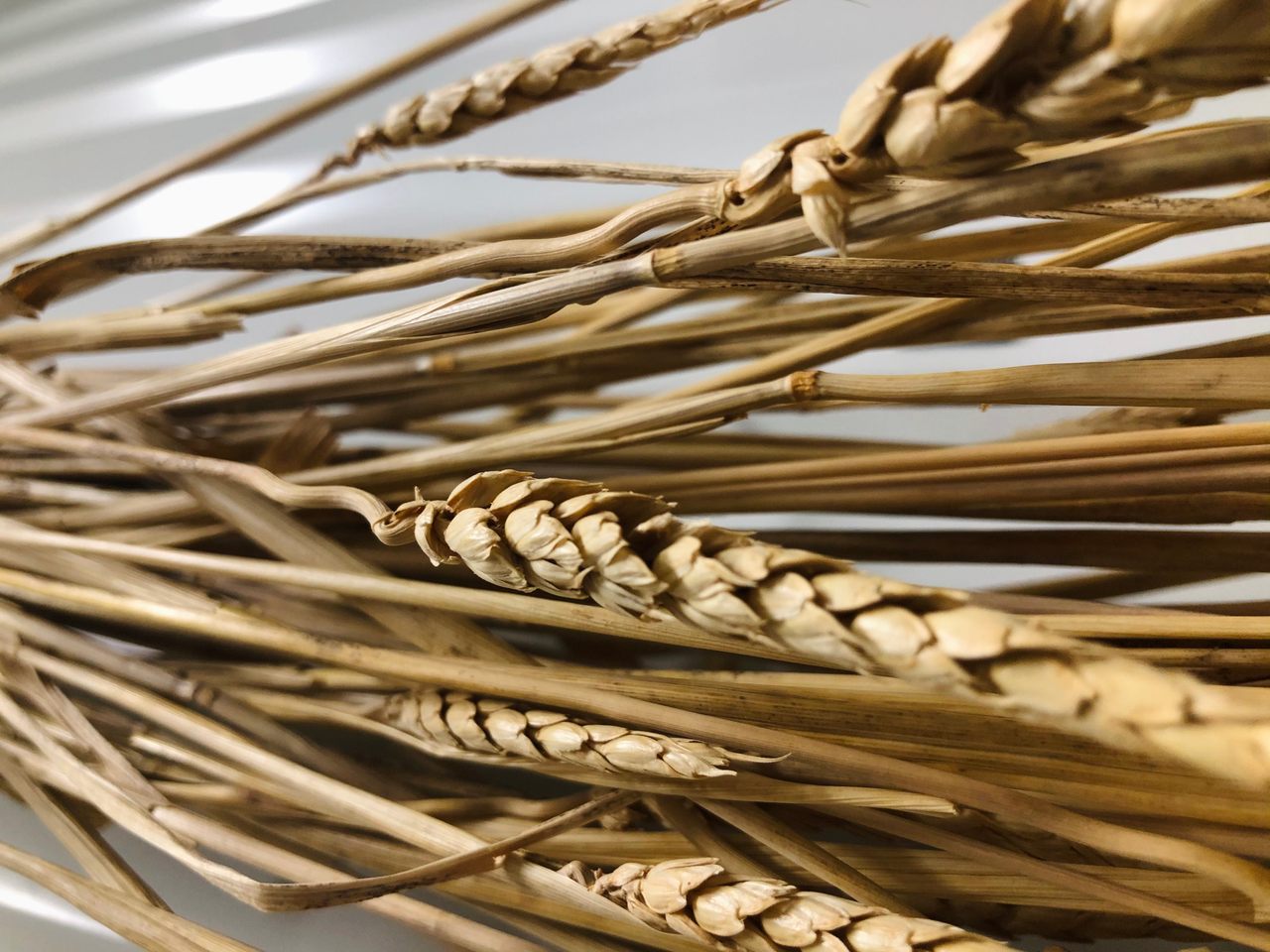
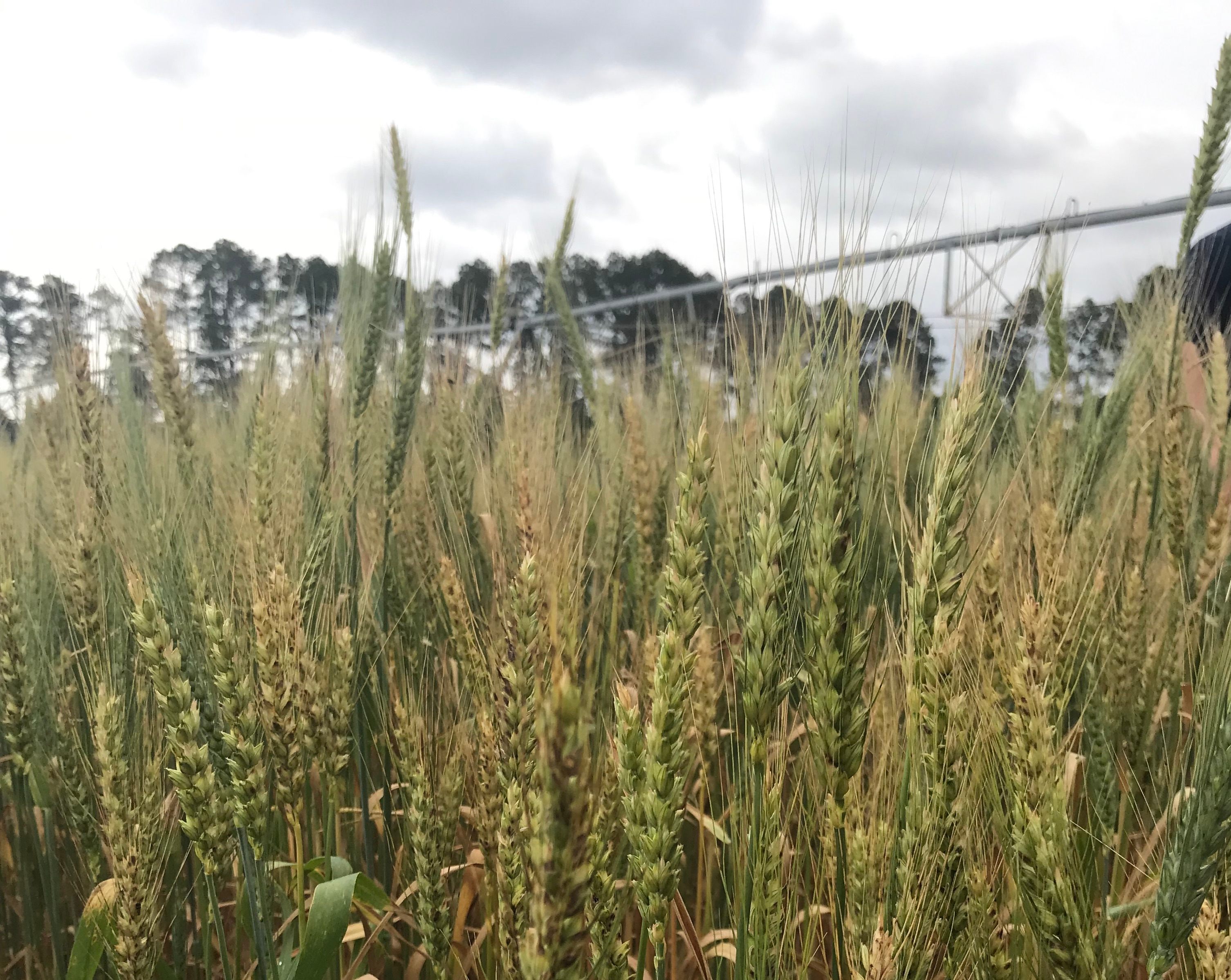
Purple straw turns golden as it matures. ALLISON KOVAR/BARTON SPRINGS MILL

AFTER THE AMERICAN REVOLUTION, THE newly-formed United States faced yet another battle. Goods on British ships harbored the notorious Hessian fly and rust disease. Both spread quickly, obliterating most East Coast wheats. At the same time, farmers began noticing that their soil had been exhausted from excessive tobacco and corn growth. But a certain strain of wheat came to the rescue: purple straw.

This grain, from the Virginia Piedmont region, was both pest-resistant and grew quickly, making it extremely reliable. According to Dr. David Shields, a Carolina Distinguished Professor and food historian, “purple straw was a wheat a farmer could trust year after year.” Many also found its honeyed, nutty taste to be perfect for whiskeys and pastries, especially biscuits. In fact, purple straw is believed to have been one of the first biscuit flours.

Until fairly recently, purple straw was a star Southern wheat, known far and wide for its stunning lavender-tinted stalks and delicious baking characteristics.

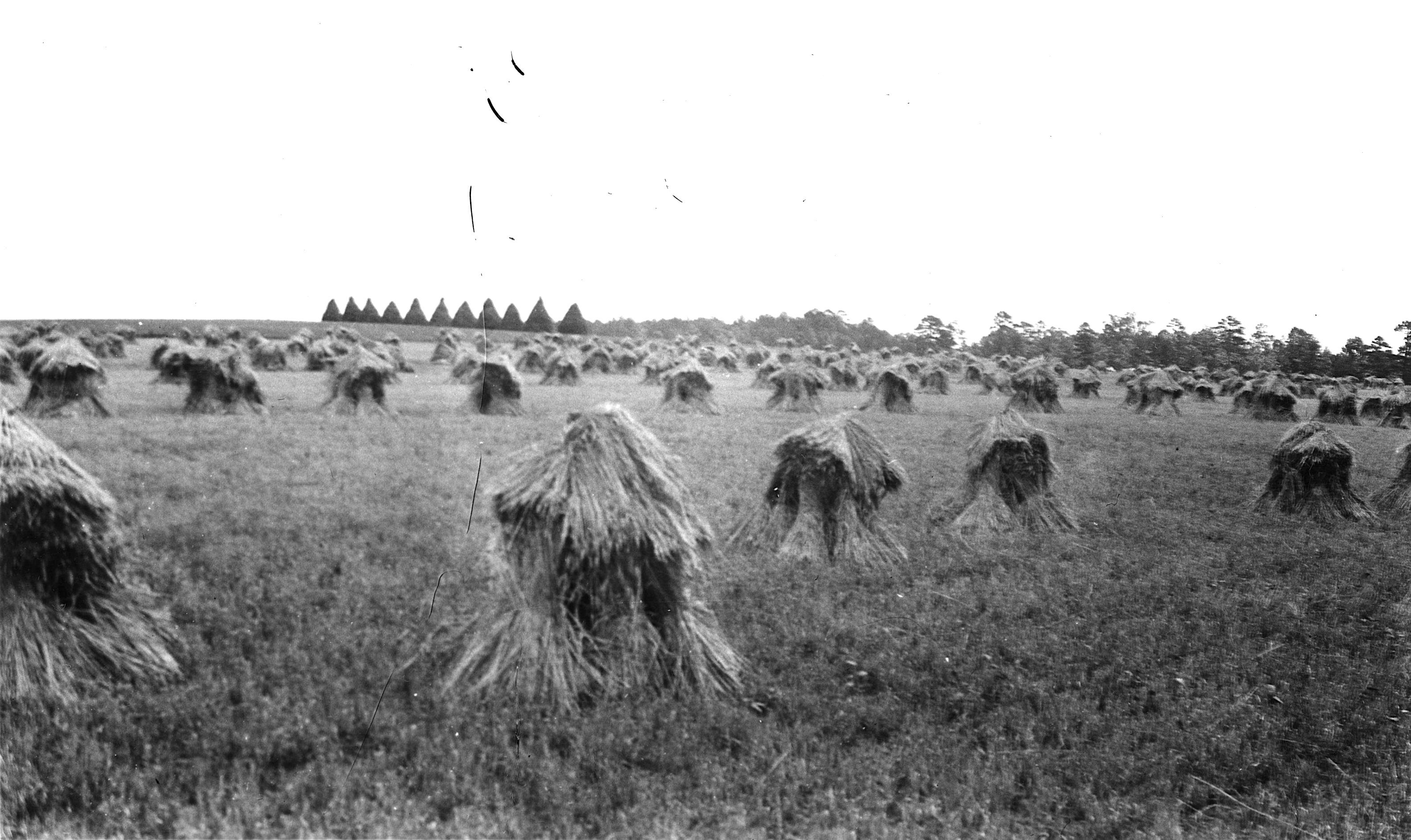
Carpenter Farm in North Carolina grew purple straw, as shown in this 1923 picture.

Carpenter Farm in North Carolina grew purple straw, as shown in this 1923 picture. COURTESY OF DAVID SHIELDS

But the farmers of yesterday would be astonished to learn that their precious grain has since become nothing more than culinary lore. This grain lost its flair during the 1970s when hybrids that promised to produce higher yields took over. While not fully extinct, purple straw became extremely hard to come by. That is, until Shields and Glenn Roberts, the founder of heirloom grain grower Anson Mills, set out to restore this precious purplish crop.

The duo had previously worked together to restore the once-famous Carolina Gold Rice to prominence, and decided to combine their knowledge of heirloom grains once more to locate this fascinating variety. Shields, who was researching traditional Southern biscuit flour when he first learned about purple straw, was particularly intrigued by it due to its historical longevity. “Purple straw was one of the longest enduring wheats and one of the only durable commodity grains that shaped the cuisine of a region,” he explains. “It was the standard for the longest period of time.”

During their search, they found a few Amish farms that had seeds stored away, but even the farmers only owned a minuscule amount of the grain. Their quest was also complicated by the fact that purple straw went by several different names depending on the region. In Alabama, it was called Alabama bluestem, whereas James Anderson, the 19th-century farm manager at George Washington’s Mount Vernon estate, called it “red straw.”

Their efforts finally led them to Idaho, where the U.S. National Plant Germplasm System (NPGS) had quietly stored away several purple straw seeds from the early 20th century. Some seeds were also acquired from California’s Sustainable Seed Company’s heirloom collection. In 2015, Shields and Roberts planted the seeds at South Carolina’s Clemson University, where they have been monitored ever since.

A field of purple straw, growing tall.
A field of purple straw, growing tall. COURTESY OF DAVID SHIELDS

One Clemson scientist rigorously testing purple straw is Richard Boyles, a plant breeder and geneticist. Boyles notes that purple straw was very resistant to 18th-century diseases but succumbs easily to a variety of modern issues, particularly leaf rust. By crossing it with soft winter red wheat cultivars that have similar traits, he’s hoping to provide purple straw with protection from these current problems.

Boyles explains that the five-foot stalks require little care once planted, but desperately needs one thing. “Vernalization is very important,” Boyles emphasizes. “There needs to be enough chilling hours.” The future may not be cold enough to give the seeds energy to produce flourishing blooms. And while purple straw will still grow if vernalization is unsuccessful, the stalks will end up looking like long grass blades and won’t produce any grain.

There’s a lot of interest in a successful purple grain industry, especially in the South. Some distilleries are hoping to blend the grain in their whiskeys, thanks to its low gluten content. And numerous chefs aspire to use the flour for pastries. One such chef is biscuit-making icon Scott Peacock, who has been captivated by the wheat’s potential since 2014.

Peacock, who also has a strong interest in horticulture, wanted to join the restoration effort. In 2015, Roberts entrusted three tablespoons of seed to him, a substantial quantity seeing that this was an almost vanished strain.

A precious seed sample of purple straw, from the USDA.
A precious seed sample of purple straw, from the USDA. COURTESY OF DAVID SHIELDS

Peacock planted about two teaspoons on a local organic farm near his home in Marion, Alabama, and harvested eight cups of grain to keep planting. Peacock fondly recalls the wheat having a fragrant, nutty aroma that drifted through the field each afternoon. He also observed that the birds oddly adored purple straw. During the first year, Peacock would see countless avians happily pecking away at the grain—so much so that he had to use cages and nets to protect it.

After three years of work, Peacock’s purple straw project came to a quick end after a neighboring farm spent a day crop-dusting their plants. The pesticides drifted over and within minutes, the toxins overwhelmed the delicate stalks. Peacock wasn’t deterred and tried planting the seeds once more in his backyard, only to get a phantom harvest—where the stalks appear to be bountiful but instead have empty heads without any grains.

Peacock has yet to try purple straw flour. His dream is to someday grow just enough to make at least one batch of biscuits with it. “Purple straw has shifted my appreciation for what it takes to have a cup of flour,” he says.

Demand is steadily rising, but you still won’t find purple straw in grocery stores. If you truly desire some, there’s limited 2.5-pound flour bags available from Barton Springs Mill in Texas, which has grown purple straw for the last three years. Only recently did Barton Springs begin producing enough seed to sell small batches of this Colonial-era flour. But both flour and the grain itself remain rare. “Seed availability is an issue,” explains Shields. “When there’s a commercial seed supplier, then purple straw will have a steady future.”

Barton Springs Mill is one of the few vendors actually selling purple-straw flour.
Barton Springs Mill is one of the few vendors actually selling purple-straw flour. ALLISON KOVAR/BARTON SPRINGS MILL

Justin Cherry, owner of Half Crown Bakehouse and Mount Vernon’s resident baker, is eager to use the flour once it’s widely available. “The milled flour has a lovely white color and the flavor tastes earthy and golden,” he says, also noting that its low gluten content and texture make purple straw perfect for cakes and 18th century-style shortbread. “When baked, there’s a very aromatic malty note released.”

There are even hopes that this heritage grain will grow at Mount Vernon once more. In 2021, with the help of Roberts of Anson Mills, Cherry and Mount Vernon’s horticultural staff planted a small plot of the wheat on the historical estate, maybe the first in over 200 years. The grain will likely be harvested this month and its seeds will be saved for future plantings.

As more become acquainted with the grain and its distinctive qualities, there’s hope that purple straw could make a comeback where it was once cherished the most. Considering how passionate its champions are, though, it’s only a matter of time. “It’s deeply rooted in Southern culture, but many just don’t know it,” says Peacock. “Everything about it is beautiful.”

NATO NATION BUILDING; DUAL POWER
Libya's capital sees fresh wave of violence following coup attempt

No casualties were reported but tensions remain high as rival political factions vie for power


Heavy gunfire and explosions were heard across the Libyan capital 
of Tripoli late on 10 June 2022 (AFP)

By MEE and agencies
Published date: 11 June 2022 

Violent clashes broke out between armed groups in the Libyan capital Tripoli late on Friday as the country continues to deal with the aftershocks of a failed coup attempt last month.

According to an AFP journalist, heavy exchanges of gunfire and explosions were heard across several districts of the city, while images broadcast by local press showed civilians fleeing some areas.

The intense fighting involved two influential militias from western Libya, local media reported.

No casualties or motives for the fighting were immediately apparent, but this outbreak is the latest violence to rock the country as two rival prime ministers vie for power.

Last month, politician Fathi Bashagha attempted to seize power by force, sparking pre-dawn clashes between armed groups supporting him and those backing the interim premier Abdulhamid Dbeibah.

Dbeibah was appointed early last year as part of the troubled UN-led peace process that was working towards elections in December 2021, but the vote was indefinitely postponed.


In February, the east-Libya-based parliament appointed Bashagha, a one-time interior minister, to take over, arguing that Dbeibah's mandate had ended.

But Dbeibah has insisted he will only relinquish power to an elected administration.
Rival governments

The renewed fighting has raised fears of a return to the chaos that followed the 2011 Nato-backed revolt that toppled long-time leader Muammar Gaddafi, and an all-out conflict that gripped the capital from 2019 to 2020.

In March this year, pro-Bashagha armed groups deployed on the edges of the capital, prompting concerns that a confrontation would end the fragile ceasefire that had been in place since October 2020.


Libya's Bashagha denies writing Times article condemning Russia
Read More »

Bashagha is backed by Khalifa Haftar, the eastern-based commander who led a failed bid to seize Tripoli in 2019-20, and who maintains control of several key oil installations.

Armed groups have vied for control over territory as a string of interim governments have come and gone.

Many such groups have been integrated into the state, partly in order to access a share of the country's vast oil wealth, and human rights organisations have often accused them of abuses.

The creation of two governments echoes Libya's troubled period of rival administrations between 2014 and 2021 when the oil-rich nation was ripped apart by civil war.

Oil production, the country's main source of income, has again been hit by political rifts recently with a wave of forced closures of oil terminals by groups aligned with the eastern camp, who demand that power that is transferred to Bashagha.
'Enough is enough' say thousands demanding new U.S. gun measures

Ashraf Khalil and Darlene Superville
Reuters
Updated June 11, 2022 

WASHINGTON -

Thousands of people rallied on the National Mall and across the United States on Saturday in a renewed push for gun control measures after recent deadly mass shootings from Uvalde, Texas, to Buffalo, New York, that activists say should compel Congress to act.

"Enough is enough," District of Columbia Mayor Muriel Bowser told the second March for Our Lives rally in her city. "I speak as a mayor, a mom, and I speak for millions of Americans and America's mayors who are demanding that Congress do its job. And its job is to protect us, to protect our children from gun violence."

Speaker after speaker in Washington called on senators, who are seen as a major impediment to legislation, to act or face being voted out of office, especially given the shock to the nation's conscience after 19 children and two teachers were killed May 24 at Robb Elementary School in Uvalde.

"If our government can't do anything to stop 19 kids from being killed and slaughtered in their own school, and decapitated, it's time to change who is in government," said David Hogg, a survivor of the 2018 shooting that killed 17 students and staff at Marjory Stoneman Douglas High School in Parkland, Florida.

A co-founder of the March For Our Lives organization that was created after that shooting and held its first rally in Washington not long afterward, Hogg led the crowd in chants of "Vote them out."

Another Parkland survivor and group co-founder, X Gonzalez, delivered an impassioned, profanity-laced plea to Congress for change. "We are being murdered," she screamed and implored Congress to "act your age, not your shoe size."

Added Yolanda King, granddaughter of Martin Luther King Jr.: "This time is different because this isn't about politics. It's about morality. Not right and left, but right and wrong, and that doesn't just mean thoughts and prayers. That means courage and action."

Manuel Oliver, whose son, Joaquin, was killed in the Parkland shooting, called on students "to avoid going back to school until our elected leaders stop avoiding the crisis of gun violence in America and start acting to save our lives."

Hundreds gathered at an amphitheater in Parkland, where Debra Hixon, whose husband, high school athletic director Chris Hixon, died in the shooting, said it is "all too easy" for young men to walk into stores and buy weapons.

"Going home to an empty bed and an empty seat at the table is a constant reminder that he is gone," said Hixon, who now serves as a school board member. "We weren't done making memories, sharing dreams and living life together. Gun violence ripped that away from my family."

President Joe Biden, who was in California when the Washington rally began, said his message to demonstrators was "keep marching" and added that he is "mildly optimistic" about legislative negotiations to address gun violence. Biden recently delivered an impassioned address to the nation in which he called for several steps, including raising the age limit for buying assault-style weapons.

In the Brooklyn borough of New York, Mayor Eric Adams, who campaigned on reining in violence in the nation's largest city, joined state Attorney General Letitia James, who is suing the National Rifle Association, in leading activists on a march toward the Brooklyn Bridge.

"Nothing happens in this country until young people stand up -- not politicians," James said.

Joining the call for change were hundreds of people who rallied in a park outside the courthouse in Portland, Maine, before they marched through the Old Port and gathered outside of City Hall. At one point, they chanted, "Hey, hey, hey, NRA, how many kids have to die today."

John Wuesthoff, a retired lawyer in Portland, said he was waving an American flag during the rally as a reminder that gun control is "not un-American."

"It's very American to have reasonable regulations to save the lives of our children," he said.

The passion that the issue stirs was clear in Washington when a young man jumped the barricade and tried to rush the stage before being intercepted by security. The incident caused a brief panic as people began to scatter.

Organizers hoped the second March for Our Lives rally would draw as many as 50,000 people to the Washington Monument, though the crowd seemed closer to 30,000. The 2018 event attracted more than 200,000 people, but the focus this time was on smaller marches at an estimated 300 locations.

The youth-led movement created after the Parkland shooting successfully pressured the Republican-dominated Florida state government to enact sweeping gun control changes. The group did not match that at the national level, but has persisted in advocating for gun restrictions since then, as well as participating in voter registration drives.

Survivors of mass shootings and other incidents of gun violence have lobbied legislators and testified on Capitol Hill this week. Among them was Miah Cerrillo, an 11-year-old girl who survived the shooting at Robb Elementary. She described for lawmakers how she covered herself with a dead classmate's blood to avoid being shot.

The House has passed bills to raise the age limit to buy semi-automatic weapons and establish federal "red flag" laws. A bipartisan group of senators had hoped to reach agreement this week on a framework for addressing the issue and held talks Friday, but no deal was announced.

------

Associated Press writers Jennifer Peltz in New York, David Sharp in Portland, Maine, and Chris Megerian in Los Angeles contributed to this report.


People arrive to attend the second March for Our Lives rally in support of gun control in front of the Washington Monument, Saturday, June 11, 2022, in Washington. (AP Photo/Manuel Balce Ceneta)


Workers set up for the March for Our Lives rally on the National Mall, near the White House, in Washington, Friday, June 10, 2022. The march is returning to Washington after four years. (AP Photo/Alex Brandon)

2:10  CTV National News: Unabated gun violence in U.S.


Thousands march on Washington DC to demand changes to US gun laws

Organisers hoped the second March For Our Lives rally would draw as many as 50,000 people to the Washington Monument in the US capital
People participate in the second March For Our Lives rally in support of gun control in Washington (AP)
SAT, 11 JUN, 2022 - 18:38
ASHRAF KHALIL, AP

Thousands of people have streamed to the US National Mall in Washington DC as part of country-wide demonstrations to demand greater gun control in America.

The high-profile effort to change the laws follow recent mass shootings in Uvalde, Texas, and Buffalo, New York, that activists say should compel US congress to act.

Organisers hoped the second March For Our Lives rally would draw as many as 50,000 people to the Washington Monument in the US capital.

While that would be far less than the original 2018 march that filled Washington with more than 200,000 people, activists have decided to focus on smaller marches at an estimated 300 locations across the US.

Despite wet weather in the US capital, scores of people turned out on the monument grounds well before the rally began, holding up signs, including one that said: “Children aren’t replaceable, senators are. Vote.”

A middle school-age girl carried a sign that read: “I want to feel safe at school”.

Daud Mumin, a co-chairman of the march’s board of directors and a recent graduate of Westminster College in Salt Lake City, said: “We want to make sure that this work is happening across the country.

Children participate in the second March For Our Lives rally (AP)

“This work is not just about (Washington) DC, it’s not just about senators.”

The first March For Our Lives was spurred by the killings of 14 students and three staff members by a former student at Marjory Stoneman Douglas High School in Parkland, Florida, on February 14 2018.

That massacre sparked the creation of the youth-led March For Our Lives movement, which successfully pressured the Republican-dominated Florida state government to enact sweeping gun control reforms.

The Parkland students then sought to change gun laws in other states and nationally, launching March For Our Lives and holding the big rally in Washington on March 24 2018.

The group did not match the Florida results at the national level, but it has persisted in advocating for gun restrictions since then, as well as participating in voter registration drives.

Now, with another string of mass shootings bringing gun control back into the national conversation in the US, organisers of this weekend’s events say the time is right to renew their push for a national overhaul.

“Right now we are angry,” said Mariah Cooley, a March For Our Lives board member and a senior at Washington’s Howard University.

“This will be a demonstration to show that us as Americans, we’re not stopping any time soon until congress does their jobs. And if not, we’ll be voting them out.”

Parkland survivor and activist David Hogg speaks to the crowd (AP)

The protest comes at a time of renewed political activity on guns and a crucial moment for possible action in US congress.

Survivors of mass shootings and other incidents of gun violence have lobbied legislators and testified on Capitol Hill this week.

Among them was Miah Cerrillo, an 11-year-old girl who survived the shooting at Robb Elementary School in Uvalde, Texas.

She described for members of congress how she covered herself with a dead classmate’s blood to avoid being shot.

On Tuesday, Hollywood star Matthew McConaughey appeared in the White House briefing room to press for gun legislation, and made highly personal remarks about the violence in his hometown of Uvalde.

The US house of representatives has passed bills that would raise the age limit to buy semi-automatic weapons and establish federal “red flag” laws.

But such initiatives have traditionally stalled or been heavily watered down in the US senate.

Actor Matthew McConaughey holds a picture or Alithia Ramirez, 10, who was killed in the mass shooting at an elementary school in Uvalde, Texas (AP)

Democratic and Republican senators had hoped to reach agreement this week on a framework for addressing the issue and discussed it on Friday, but they did not announce an accord.

Mr Mumin said the goal is to send a message to members of congress that public opinion on gun control is shifting under their feet.

“If they’re not on our side, there are going to be consequences — voting them out of office and making their lives a living hell when they’re in office,” he said.

Protesters rally against gun violence in Washington, across U.S


© Reuters/MARCO BELLO

By Joseph Ax and Ted Hesson

WASHINGTON (Reuters) - Thousands of demonstrators descended on Washington and across the United States on Saturday, calling on lawmakers to pass legislation aimed at curbing gun violence following last month's massacre at a Texas elementary school.


© Reuters/JONATHAN ERNSTPeople participate in the March for Our Lives, rally against gun violence, in Washinton

March for Our Lives (MFOL), the gun safety group founded by student survivors of the 2018 massacre at a Parkland, Florida, high school, said it has planned more than 450 rallies for Saturday, including in New York, Los Angeles and Chicago.


© Reuters/JONATHAN ERNSTPeople participate in the March for Our Lives, rally against gun violence, in Washington

In Washington, 40,000 people assembled at the National Mall near the Washington Monument under light rain, organizers said.

The organization's 2018 march on Washington, weeks after 17 people were killed at Marjory Stoneman Douglas High School in Parkland, brought hundreds of thousands of people to the nation's capital to pressure Congress to take legislative action, though Republican opposition has prevented any new limits on guns from passing the U.S. Senate.

U.S. President Joe Biden, a Democrat who earlier this month urged Congress to ban assault weapons, expand background checks and implement other gun control measures, said he supported Saturday's protests.

Courtney Haggerty, a 41-year-old research librarian from Lawrenceville, New Jersey, traveled to Washington for the rally with her 10-year-old daughter, Cate, and 7-year-old son, Graeme, to demand congressional action.

Haggerty said the December 2012 school shooting at Sandy Hook Elementary School in Newtown, Connecticut, in which a gunman killed 26 people, mostly six- and seven-year-olds, came one day after her daughter's first birthday.

"It left me raw," she said. "I can't believe she's going to be 11 and we're still doing this."

Cate, who is in the fourth grade, said she wanted to attend. "This is not what I would want my kids to have to be living with," she said.

PRESSURE ON POLITICIANS

This year's event in Washington has a simple message to political leaders, according to organizers: Your inaction is killing Americans.


© Reuters/JOSHUA ROBERTSPeople participate in the
 'March for Our Lives' rally against gun violence

"We are being murdered," said X Gonzalez, a Parkland survivor and co-founder of MFOL, in an emotional speech in which they appeared with survivors of other mass shootings. "You, Congress, have done nothing to prevent it."

A gunman in Uvalde, Texas, killed 19 children and two teachers on May 24, 10 days after another gunman murdered 10 Black people in a Buffalo, New York, grocery store in a racist attack.


© Reuters/JONATHAN ERNSTPeople participate in the March for Our Lives, rally against gun violence, in Washinton

The latest mass shootings have added new urgency to the country's ongoing debate over gun violence, though the prospects for federal legislation remain uncertain.

Among other policies, MFOL has called for an assault weapons ban, universal background checks for those trying to purchase guns and a national licensing system, which would register gun owners.

In recent weeks, a bipartisan group of Senate negotiators have vowed to hammer out a deal, though they have yet to reach an agreement. Their effort is focused on relatively modest changes, such as incentivizing states to pass "red flag" laws that allow authorities to keep guns from individuals deemed a danger to others.


© Reuters/TED HESSONProtesters gather in Washington for gun control rally

Speaking to journalists in Los Angeles, Biden said he had spoken several times with Senator Chris Murphy, who is leading the Senate talks, and that negotiators remained "mildly optimistic."


© Reuters/JOSHUA ROBERTSPeople participate in the 'March for Our Lives' rally against gun violence

The Democratic-controlled U.S. House of Representatives on Wednesday passed a sweeping set of gun safety measures, but the legislation has no chance of advancing in the Senate, where Republicans have opposed gun limits as infringing upon the U.S. Constitution's Second Amendment right to bear arms.


© Reuters/JEENAH MOON"March for Our Lives", rally against gun violence in New York City

Other speakers at the Washington rally included David Hogg, another Parkland survivor and co-founder of MFOL; Becky Pringle and Randi Weingarten, the presidents of the two largest U.S. teachers unions; and Muriel Bowser, the mayor of Washington, D.C. Members of MFOL have spent the week meeting with lawmakers in Washington to discuss gun violence.


© Reuters/ERIC COX
"March for Our Lives", rally against gun violence in New York City

Two high school students from the Washington suburb of Silver Spring, Maryland - Zena Phillip, 16, and Blain Sirak, 15 - said they had never joined a protest before but felt motivated by the shooting in Texas.

"Just knowing that there's a possibility that can happen in my own school terrifies me," Phillip said. "A lot of kids are getting numb to this to the point they feel hopeless."

Sirak said she backed more gun restrictions and that the issue extended beyond mass shootings to the daily toll of gun violence.

"People are able to get military-grade guns in America," she said. "It's absolutely absurd."


© Reuters/JOSHUA ROBERTS
People participate in the 'March for Our Lives' rally against gun violence

(Reporting by Joseph Ax and Ted Hesson; additional reporting by Trevor Hunnicutt in Los Angeles and Makini Brice; Editing by Aurora Ellis and Daniel Wallis)

MORE FOTOS