Saturday, April 27, 2024

Pro-Palestinian students have peacefully evacuated prestigious Paris university campus building
Associated Press
Sat, April 27, 2024 at 4:03 a.m. MDT·1 min read


Students blocking Sciences-Po university display Palestinian flags, in Paris Friday, April 26, 2024. Students in Paris inspired by Gaza solidarity encampments at campuses in the United States blocked access to a campus building at a prestigious French university Friday, prompting administrators to move all classes online. The pro-Palestinian protest at the Paris Institute of Political Studies, known as Sciences Po, came two days after police broke up a separate demonstration at one of the university's amphitheaters. 
(AP Photo/Michel Euler)

ASSOCIATED PRESSMore


PARIS (AP) — Students in Paris inspired by Gaza solidarity encampments at campuses in the United States peacefully evacuated a campus building at a prestigious French university late on Friday after days of tensions.

The head of the Paris Institute of Political Studies, known as Sciences Po, said an agreement was found Friday with students. Sciences Po counts President Emmanuel Macron and Prime Minister Gabriel Attal among its many famous alumni.

Tensions had break out on the campus as pro-Palestinian students sought to occupy an amphitheater earlier this week.

On Friday, pro-Palestinian and pro-Israeli demonstrators faced each other in a tense standoff in the street outside the school. Riot police stepped in to separate the opposing groups.

Students later agreed to leave the site.

Pro-Palestinian protester and Sciences Po student Wajih, who declined to give his last name for fear of disciplinary sanctions by the university, said “the occupation has paused for now. But we'll still support the Palestinian movement at large, we’ll support other universities, we’ll support all over the globe until Palestine is free.”

In an email to students, Sciences Po administrator Jean Bassères pledged Friday to hold a townhall meeting in the coming week and to suspend some disciplinary proceedings against students. In return, students “committed to no longer disrupting courses, examinations and all other activities of the institution,” the email said.

The university administration closed all university buildings and moved classes online Friday.

The Gaza war is sharply divisive in France, which has the largest populations of Muslims and Jews in western Europe. France initially sought to ban pro-Palestinian demonstrations after Hamas’ surprise Oct. 7 attack on Israel that sparked the war. Antisemitism has surged.


Students at prestigious Paris university occupy campus building in pro-Palestinian protest

JEFFREY SCHAFFER and JOHN LEICESTER
Updated Fri, April 26, 2024 


Students block the Sciences-Po university Friday, April 26, 2024 in Paris. Students at a prestigious university resumed pro-Palestinian protests on Friday, days after French police broke up a demonstration, inspired by Gaza solidarity encampments at campuses around the United States. Dozens of students the Sciences-Po university blocked an entrance to a campus building in central Paris with chairs and bikes.
 (AP Photo/Jeffrey Schaeffer)

PARIS (AP) — Students in Paris inspired by Gaza solidarity encampments at campuses in the United States blocked access to a campus building at a prestigious French university Friday, prompting administrators to move all classes online.

The pro-Palestinian protest kicked off a day of drama at the Paris Institute of Political Studies, known as Sciences Po, which counts President Emmanuel Macron and Prime Minister Gabriel Attal among its many famous alumni.

Protesters first occupied a central campus building and blocked its entrance with trash cans, wooden platforms and a bicycle. They also gathered at the building’s windows, chanting pro-Palestinian slogans, and hung out Palestinian flags and placards.

Later Friday, pro-Palestinian and pro-Israeli demonstrators faced each other in a tense standoff in the street outside the school. Riot police stepped in to separate the opposing groups.

As night fell, a dwindling group of pro-Palestinian protesters refused to budge, ignoring police orders to evacuate the street and warnings of possible arrests. Eventually, demonstrators came out of the building, carrying a large Palestinian flag, to cheers from the protesters who had been supporting them outside. They then started to stream peacefully away from the area, watched by police.

Among protester demands was that Sciences Po sever ties with Israeli schools. In an email to students, Sciences Po administrator Jean Bassères pledged to hold a townhall meeting in the coming week and to suspend some disciplinary proceedings against students. In return, students “committed to no longer disrupting courses, examinations and all other activities of the institution,” the email said.

The Gaza war is sharply divisive in France, which has the largest populations of Muslims and Jews in western Europe. France initially sought to ban pro-Palestinian demonstrations after Hamas’ surprise Oct. 7 attack on Israel that sparked the war. Antisemitism has surged.

On Wednesday evening, more than 100 pro-Palestinian protesters had also occupied a Sciences Po amphitheater. Most agreed to leave after discussions with management but a small group of students remained. They were removed by police later that night, according to French media reports.

The university administration closed all university buildings and moved classes online Friday. It said in a statement it “strongly condemns these student actions which prevent the proper functioning of the institution and penalize Sciences Po students, teachers and employees.”

Louise, a protester, said the students' actions were inspired by similar demonstrations at New York's Columbia University and other U.S. campuses.

“But our solidarity remains first and foremost with the Palestinian people,” she said. She spoke on condition that only her first name be used over concerns of repercussions.

Students protesting the Israel-Hamas war have been digging in at Columbia University, one of a number of demonstrations roiling campuses from California to Connecticut.

Hundreds of students and even some professors have been arrested across the U.S., sometimes amid struggles with police.

——

Barbara Surk contributed from Nice, France.



Students stage a sit in in front of Sciences-Po university in Paris Friday, April 26, 2024. Students in Paris inspired by Gaza solidarity encampments at campuses in the United States blocked access to a campus building at a prestigious French university Friday, prompting administrators to move all classes online. The pro-Palestinian protest at the Paris Institute of Political Studies, known as Sciences Po, came two days after police broke up a separate demonstration at one of the university's amphitheaters. (AP Photo/Michel Euler)

Bernie Sanders Unleashes Fiery Comeback To Netanyahu's Antisemitism Remarks

Sen. Bernie Sanders (I-Vt.) let loose a scathing statement this week in response to Israeli Prime Minister Benjamin Netanyahu’s accusation that protests at United States universities against Israel’s bombing campaign in Gaza are “antisemitic.”


Hilary Hanson
Sat, April 27, 2024


“Mr. Netanyahu, antisemitism is a vile and disgusting form of bigotry that has done unspeakable harm to many millions of people,′ Sanders said in a video posted to X on Thursday.


The senator implored the prime minister to “not insult the intelligence of the American people” in an attempt to “distract” them from Israel’s “immoral and illegal war policies.”

Israel’s offensive on Gaza, which began after militant group Hamas’ Oct. 7 attack killed at least 1,200 Israelis and took more than 100 people hostage, has now left an estimated 34,000 Palestinians dead. UN Women, the United Nations organization for gender equality, reported in February that 70% of Palestinians killed at that time were women and children.

The senator said it “is not antisemitic” to note that Israel’s military operation has left more than half the population of Gaza homeless, “obliterated” the Palestinian territory’s water and electric infrastructure and “annihilated” its health care system.

Sanders, who is Jewish, concluded, “It is not antisemitic to hold you accountable for your actions.”

The video and an accompanying written statement came the day after Netanyahu called the recent upswell of antiwar protests at American college campuses “horrific,” characterizing them as “antisemitic mobs.”

The student protesters are broadly calling for the U.S. to stop sending military aid to Israel and for educational institutions to divest financially from Israel.

Several instances of anti-Jewish remarks or inflammatory signs have gone viral amid the protests, though multiple student organizations behind the demonstrations have condemned such incidents.

“At universities across the nation, our movement is united in valuing every human life,” said a statement from one such group, Columbia University Apartheid Divest, per ABC News.


Months after they were promised, Ottawa still hasn't imposed sanctions on violent Israeli settlers

CBC
Sat, April 27, 2024 

Mourners cry after taking the last look at the body of Qusai Matan, 19, during his funeral in the West Bank village of Burqa, east of Ramallah, on Saturday, Aug. 5, 2023. The Palestinian Health Ministry said that armed Israeli settlers had entered the West Bank village of Burqa and shot and killed 19-year-old Qusai Matan. The Israeli military said it had received reports that Matan died as a result of settlers shooting toward Palestinians in the village and said it was investigating. (Nasser Nasser/Associated Press - image credit)

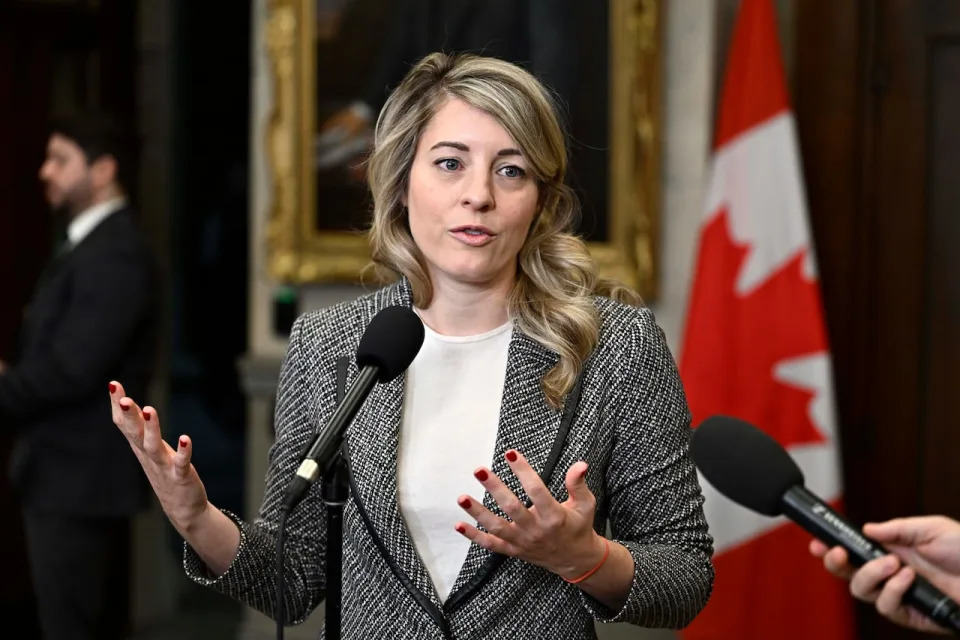
The Government of Canada has announced multiple rounds of sanctions against various parties in the Middle East since October 7. On Friday, Foreign Affairs Minister Mélanie Joly announced sanctions against Iran's minister of defence and its general staff.

On February 3, she announced that Canada would impose sanctions on both leaders of Hamas involved in the October 7 massacre and extremist Israeli settlers involved in violent attacks on Palestinian civilians in the West Bank.

But there's an important difference between the sanctions announced against Palestinians and Iranians and the ones announced against Israelis — the ones against Israelis have not been gazetted and therefore never took effect.


Joly was asked Friday afternoon why Global Affairs only proceeded with the sanctions against Palestinians.

"We will be imposing sanctions on Israeli settlers," she replied. "We've said it and we'll do it."

Asked for a timeline, she said only that "it will be coming."

Minister of Foreign Affairs Melanie Joly speaks about former prime minister Brian Mulroney, who died Thursday at the age of 84, in the Foyer of the House of Commons on Parliament Hill in Ottawa, on Friday, March 1, 2024. THE CANADIAN PRESS/Justin Tang

At the time the sanctions against extremist settlers were announced, Joly said her officials were "actively working on it."

"Settler violence in the West Bank is absolutely unacceptable and puts at risk peace [and] stability in the region, and the path toward the two-state solution that is absolutely essential," Prime Minister Justin Trudeau said at the time.

"We will be sanctioning extremist settlers and we will also bring new sanctions on Hamas leaders," Joly told CBC's Rosemary Barton Live. "I look forward to doing announcements soon."

The sanctions against 11 Palestinians had been gazetted the day before and had already taken effect, but the sanctions against Israelis were not and never moved past the announcement stage.

Playing catch-up

Canada was already playing catch-up with allies when it announced the sanctions. The Biden administration had already imposed a visa ban on some violent settlers two months earlier, as had the U.K.

The Trudeau government did not follow suit, despite a written request from the NDP to do so.


On February 1, the U.S. followed up with its first financial sanctions on settlers "directing or participating in acts or threats of violence against civilians, intimidation of civilians to cause them to leave their homes, destruction or seizure of property, or terrorist activity in the West Bank."

"Israel must do more to stop violence against civilians in the West Bank and hold accountable those responsible for it," the U.S. State Department warned.

Six weeks later, the U.S. imposed further sanctions against individuals and two notoriously violent settlements known as Moshe's Farm and Zvi's Farm.

A week ago, U.S. President Joe Biden's administration went further by sanctioning two groups that raise funds for illegal settlements and settler leader Ben-Zion Gopstein, leader of the so-called "anti-assimilation" Jewish supremacist group Lehava.

Lehava adovcates against mixed marriages and social contact between Arabs and Jews, which it calls "the dangerous cancer of coexistence."

Gopstein, whose salary has at times been paid by the Government of Israel, has led campaigns to urge Israeli businesses to employ only Jews and has issued "kosher certificates" to those that do. It also seeks to shame Jewish landlords who rent space to Arab tenants.

Gopstein is a friend and close adviser to Israel's National Security Minister Itamar Ben Gvir, who also has acted as Gopstein's lawyer. The sanctions against him were seen by some as a warning to the Netanyahu government that its most radical members could be next.

Last Sunday, the sanctions led to Gopstein's credit card being rejected at an Israeli gas station.

Sanctions lose their teeth


The American sanctions have been criticized by some, including former U.S. officials, as weak and ineffectual. They were further weakened at the end of March when, according to the Israeli newspaper Israel Hayom, the State Department backed down in the face of a threat by Israeli Finance Minister (and West Bank settler) Bezalel Smotrich to retaliate with actions against Palestinian banks.

"A great achievement for Israel," reported the paper. "The American folding comes in the wake of Finance Minister Bezalel Smotrich's threat to collapse the Palestinian economy."

The U.S. decision to allow the sanctioned settlers to use their bank accounts put an end to the substantive part of the sanctions against them.


Israeli Prime Minister Benjamin Netanyahu and Israeli Finance Minister Bezalel Smotrich hold a news conference at the prime minister's office in Jerusalem on Wednesday, Jan. 25, 2023. (Ronen Zvulun/The Associated Press)

The Biden administration also let it be known this month that it is drawing up plans to reverse a Trump-era policy that allowed goods made in West Bank settlements to be labelled "Made in Israel."

The Trudeau government, meanwhile, has overruled the Canadian Food Inspection Agency and has even gone to court to defend the right of Israeli settlements to label their products "Made in Israel."

Israel looks to legalize more settlements

Tensions between the U.S. and Israel over settlements seem likely to get worse as the Israeli cabinet weighs a demand by Smotrich to formalize the status of 68 settlements built without authorization and currently considered illegal by the Israeli government.

Many of the outposts are merely plywood shacks placed on hilltops by a radical fringe of the settler movement closely associated with two key cabinet ministers: Smotrich and Ben Gvir.

Their purpose is to establish facts on the ground that obstruct any move toward a two-state solution, and they often also serve to create a pretext for the IDF to declare security zones and confiscate Palestinian land around them.

U.S. State Department spokesperson Vedant Patel on Thursday described the proposal as "reckless and dangerous."

Ottawa has not commented on the proposal.

A steep escalation in attacks

The escalation in settler attacks, and in killings of Palestinians in the West Bank by Israeli soldiers and police, began several months before October 7, 2023 and dates back to the arrival in power of the current Netanyahu government the previous December.

In order to form a coalition, Israeli Prime Minister Benjamin Netanyahu joined with two extremist parties led by West Bank settlers Ben Gvir and Smotrich, who demanded key offices in exchange for their support.

The two men essentially control all Israeli operations in the West Bank except for those of the IDF, which is under Defence Minister Yoav Gallant. Smotrich demanded powers of decision and appointment previously held by the defence minister.


Israel's National Security Minister Itamar Ben-Gvir attends an event to deliver weapons to local volunteer security group members in Ashkelon, Israel, Friday, Oct. 27, 2023.

Israel's National Security Minister Itamar Ben-Gvir attends an event to deliver weapons to local volunteer security group members in Ashkelon, Israel on Friday, Oct. 27, 2023. (Tsafrir Abayov/The Associated Press)

The coalition agreement included the formation of a new Settlements Administration under Smotrich's control.

Former IDF chief Benny Gantz — a rival of Benjamin Netanyahu for the country's leadership — called the deal "a decision that will rip apart the chain of command, harm the security of Israeli citizens and our international standing."

"May every Hebrew mother know that the fate of her son and our security has been forfeited to irresponsible politicians," he warned.

Ben Gvir has also used his control of Israel's police and border police to assist settlers by helping them evade legal consequences and creating a special police unit to arrest Israeli and international rights activists who try to document attacks on Palestinians in the West Bank.

Last year was the deadliest year for Palestinians in the West Bank in two decades, with over 500 killed, compared to 151 in 2022.

A Palestinian woman sits outside her torched home, days after it was set on fire by Jewish settlers, in the West Bank town of Turmus Ayya, Saturday, June 24, 2023. Israeli settlers entered the town, setting fire to Palestinian cars and homes after four Israelis were killed by Palestinian gunmen in the northern West Bank on Tuesday.More

A Palestinian woman sits outside her torched home, days after it was set on fire by Jewish settlers, in the West Bank town of Turmus Ayya on Saturday, June 24, 2023. Israeli settlers entered the town, setting fire to Palestinian cars and homes after four Israelis were killed by Palestinian gunmen in the northern West Bank on Tuesday. (Mahmoud Illean/Associated Press)

Since its arrival in office in 2015, the Trudeau government has consistently voted against the annual UN motion that calls for the Fourth Geneva Convention to be upheld in the Occupied Territories and for settlement construction to cease.

The Trudeau government also has written to the International Criminal Court at The Hague saying that Canada, as one of the nations funding the court, wants it to reject all cases brought against Israel by Palestinians. The last of those letters was sent on February 14, 2020 in response to a request from Netanyahu.

In July 2023, as Israeli settler violence reached a boiling point, the Trudeau government also wrote to the International Court of Justice pressing it to refuse to issue "an advisory opinion on Israeli practices in the occupied territories," as requested by the UN General Assembly.

Canada's lawyers told the court it should reject the case because Israel did not recognize its jurisdiction, and because "Canada is concerned that the issuance of an advisory opinion on Israeli practices in the occupied territories may contribute to a polarization of positions."

The government also has allowed Israeli settlements to raise funds in Canada and claim Canadian tax refunds.

Orca calf swims out of lagoon after being trapped for a month


CBC
Fri, April 26, 2024 

A killer whale and its calf are shown in a lagoon near Zeballos, B.C. in a handout photo. (Jared Towers/Bay Cetology/The Canadian Press - image credit)


The Ehattesaht First Nation says a killer whale calf that had been trapped in a remote Vancouver Island lagoon for more than a month is now free after she swam out on her own early Friday morning.

The nation said kʷiisaḥiʔis, or Brave Little Hunter, swam over the sandbar and out into open water during high tide around 2:30 a.m. PT.

After a long night of feeding kʷiisaḥiʔis and watching the calf play in the lagoon, the nation said, a small group "stood as witnesses to watch her swim under the bridge and down the inlet."

"Today the community of Zeballos and people everywhere are waking up to some incredible news and what can only be described as pride for the strength this little orca has shown," said Chief Simon John in a release.

The two-year-old female transient killer whale had been stuck in the tidal lagoon near the village of Zeballos, B.C., since March 23, when her pregnant mother became trapped at low tide and died on a rocky beach.

For weeks, First Nation members, DFO marine mammal experts, whale scientists and boat and machine operators gathered in the small community of about 200 people to plan how to free the calf.

Those discussions resulted in multiple rescue missions — all of them unsuccessful. Rescuers attempted to catch the orca and transport her by sling; they used recorded killer whale vocalizations to coax her out of the lagoon; around 10 boats attempted to herd the orca by using oikomi pipes to create a loud noise underwater; and a violinist even tried to serenade the calf to freedom.

But in the end, kʷiisaḥiʔis was her own saviour.

Connecting calf with family

After kʷiisaḥiʔis swam free, John says the calf was later seen in Espinosa Inlet and a team followed her as she moved toward Esperanza Inlet and the open ocean.

The team, which includes members of Fisheries and Oceans Canada's Marine Mammal Response and Bay Cetology, is hopeful that once the calf is in the ocean, her calls will be heard by her family.

Martin Haulena, director of mammal health at the Vancouver Aquarium, says the calf has overcome some significant hurdles, but she still has a few challenges ahead.

Primarily, she needs to be reunited with her pod.

"She's a two-year old calf. Normally she would still be very dependent on mom and the family group," he said.

If she is able to find her pod, Haulena says he's "very sure" she will be adopted by her family members.

However, he says rescuers are also trying to limit their contact with the calf, including feedings, so she doesn't become habituated and dependent on their support.

John says officials and nation members are now putting protective measures in place to ensure there is no contact between kʷiisaḥiʔis and other people or boats.

They have asked the public to stay away from the area.

"With this part of the challenge solved by kʷiisaḥiʔis herself, every opportunity needs to be afforded to have her back with her family with as little human interaction as possible," he said.

Calf's mother couldn't be saved

While this chapter of kʷiisaḥiʔis' life has ended on a high note, it began with a tragedy.

Back in March, her 15-year-old mother became beached in the lagoon.

Video of the incident shows dozens of people trying to save the stranded orca, but she died.

Submitted by Florence Bruce

A necropsy later confirmed the mother was pregnant with another calf.

As the weeks continued and the rescues failed, there were concerns over the wellbeing of kʷiisaḥiʔis and whether the calf was getting enough food and fresh water.

The orca was examined by experts and veterinarian staff from the Vancouver Aquarium who said in mid-April that she appeared to be in good health and was swimming well.

Last week, the calf also ate seal meat for what was believed to be the first time, after members of the neighbouring Nuchatlaht First Nation tossed about 18 kilograms of seal meat into the water.

Orca's escape from B.C. lagoon will be talked about for 'generations,' say nations

The Canadian Press
Fri, April 26, 2024


ZEBALLOS, B.C. — An orphan killer whale calf escaped from a remote Vancouver Island tidal lagoon Friday where it had been trapped for more than a month, immediately swimming towards the open ocean and making calls for its extended family members, say overjoyed rescue officials.

The young orca's bid for freedom occurred at a high tide early Friday and involved swimming through a swift-moving, narrow channel and underneath a bridge, with Esperanza Inlet in the near distance.

"It's been a joyful day, a really joyful day," said Ehattesaht First Nation Chief Simon John at a news conference. "I'm very ecstatic how things happened today. There was a lot of anticipation for this moment for the past five weeks."

The orca has been the focus of intense rescue efforts since March 23, when her pregnant mother became stranded on a rocky beach and died near the bridge in the small inlet next to the community of Zeballos, B.C., more than 450 kilometres northwest of Victoria.

The calf chose a "clear and glass-calm, star-filled night" at about 2:30 a.m. to swim under the bridge and down the inlet, said a joint statement from the Ehattesaht and Nuchatlaht First Nations.

The young orca's behaviour changed almost at the moment she passed under the bridge and headed for the open ocean, said Paul Cottrell, a marine mammal co-ordinator with the Fisheries Department.

"We were just amazed at how quickly, and how the behaviour of this animal changed when it went from the shallow inlets, where it was restricted, to these wide-open inlets that are very deep," he said. "Her behaviour, her acoustics changed. She actually sped away from the boat and moved into Esperanza Inlet and really took off from the group."

Cottrell, who has been in Zeballos since last month working with area First Nations on a rescue plan, said he's confident the young orca will survive and find family.

"It was just a great feeling knowing we've given her a great chance," he said. "Now it's up to her and we're very confident that she will meet up with her pod."

Cottrell, who has worked on numerous whale rescues off B.C.'s coast, described Friday's events as "one of the best experiences" of his life.

The orca calf, estimated to be about two years old, was seen breaching and playing near the bridge end of the lagoon for much of Thursday evening, but only a few people were there to witness her escape as she swam under the bridge, John said in an interview.

"My daughter Ashley was there," said John. "She was really happy. It was like 3 in the morning by the time she had actually gone to the other side and they went to meet her on the other side in the Zodiac."

The calf the First Nations named kwiisahi?is, or Brave Little Hunter, started eating seal meat provided by the nations last week, giving rescuers hope they could entice her to follow a food trail out of the lagoon.

A large rescue team made up of Indigenous leaders, Fisheries Department marine mammal experts, Vancouver Aquarium veterinarians, commercial fishermen, divers and drone operators abruptly stopped a planned capture last week when the orca began eating seal meat thrown to her. She was also seen catching herring in the lagoon.

Four members of the Ehattesaht and the neighbouring Nuchatlaht First Nation — Rob John, Judea Smith, Victoria Wells and Ashley John — were in a small inflatable vessel Thursday night and early Friday and managed to entice the killer whale calf to exit the lagoon by tossing her sea lion meat.

Cottrell said there were concerns that the young whale could strand itself on the same rocky beach where her mother died during low tide, but the orca swam toward the bridge and left the lagoon.

"We watched her all night," he said. "We were worried last night that she may live strand. What an amazing adventure this has been. There's been lot of ups and downs and twists and turns, given the death of mom and the orphaned calf and figuring out the best way to approach the situation."

The team was planning last week to launch its second attempt to capture the calf with a large net, then place her in a sling for transport in a specially outfitted vehicle to the ocean where she could be released and potentially reunited with her extended family.

Earlier this month, an initial capture attempt was stopped when team members said the "very smart" orca was eluding their efforts.

The Fisheries Department will work with First Nations, whale watchers, researchers and boaters to monitor the location of the orca calf's extended Bigg's killer whale family, Cottrell said.

The last reported sighting of Bigg's killer whales was more than two weeks ago in the Barkley Sound area, southwest of Zeballos, near Ucluelet.

The rescue team will continue to monitor the young orca's whereabouts, her condition and if she has a chance to reunite with family, Cottrell said.

John said the rescue has now entered a new phase and patrol and protective measures will be taken in the area to ensure the young orca has no contact with boats or people.

Marine mammal experts and independent whale scientists have said the young orca's chances of survival in the open ocean and reuniting with extended family members are good.

The Ehattesaht said the orca's journey will become part of the fabric Indigenous people across Canada are telling and living in modern times, reinforcing their deep connections between the spirit world, the animal world and the people who have remained on the land and waters.

"Events like these have a deeper meaning and the timing of her departure will be thought about, talked about and felt for generations to come," said the Ehattesaht.

John said the orca's departure from the lagoon is bittersweet for him as it comes on the anniversary of his daughter Kayla's violent death 20 years ago.

"Really, for me, today is the anniversary of my daughter's death, so I'm just trying to maintain myself currently," he said. "It's been a tough process for me certainly with the whale thing coming after 20 years today. It's kind of significant to me. Nobody has to own it but me."

— By Dirk Meissner in Victoria

This report by The Canadian Press was first published April 26, 2024.

The Canadian Press


'There's no water': This duck hunter in Fort Smith, N.W.T., went out and found no ducks

CBC
Sat, April 27, 2024 
 
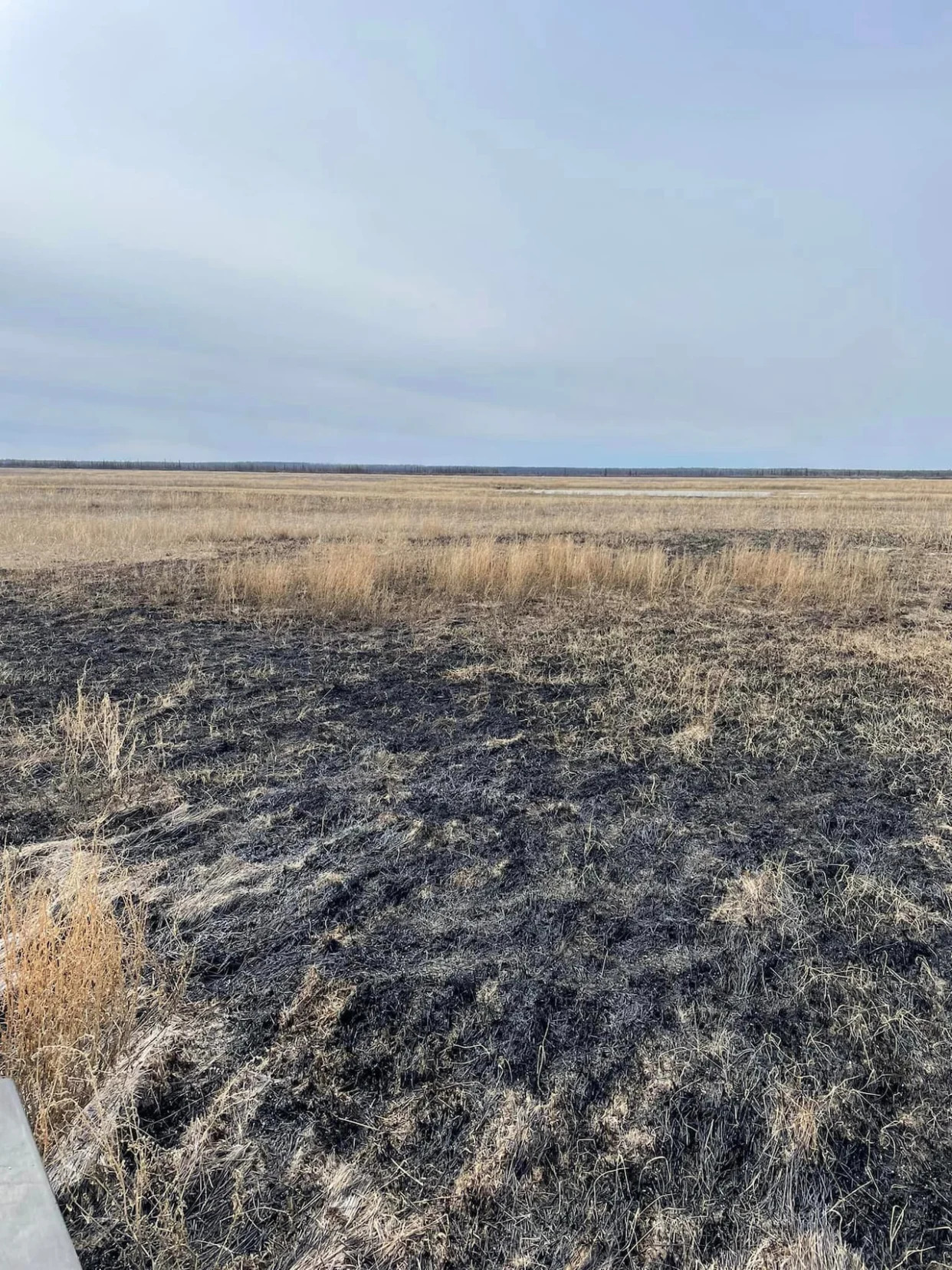
Earl Evans took this photo of the area near Fort Smith, N.W.T., where he normally hunts for ducks every spring. He had no luck this year, blaming the dry, burnt conditions. (Submitted by Earl Evans - image credit)


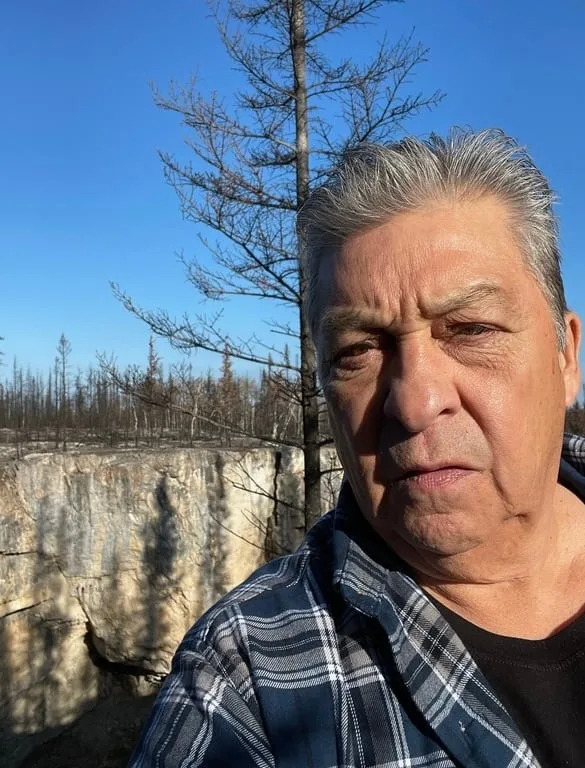
Earl Evans has been duck hunting in the springtime around Fort Smith, N.W.T., for 50 years.

This past week, he and a friend went out to their usual spot, about 15 kilometres west of the community in the Slave River wetlands. And for the first time, Evans returned home from that hunt without a single duck.

"We stopped and looked around and everything was just still, just dead," Evans said. "It felt like we were on the moon."


"That's the most devastating feeling in the world for a person that likes to go out in the bush."

Fort Smith was forced to evacuate for five weeks last summer as a wildfire threatened the community and burned much of the land around it.

Evans also lost two cabins in the fire.

Normally, Evans said, his hunting spot is "teeming with wildlife," with three feet of water in some places. Now, it's dried up, with burns still obvious on the trees and ground.

"We never saw a single thing," Evans said. "The only thing we saw there is burnt country."


Earl Evans, seen in this photo from last fall in Enterprise, N.W.T., says he's worried about future access to the land for young people after seeing the devastating effects of wildfire on the Fort Smith area. (Submitted by Earl Evans)

He and his friend normally go there to get ducks and geese for elders in the community and for their own families.

"There was not one single drop of water to be seen," he said.

"To see that, it's just gives you such a feeling of hopelessness and sadness for the wildlife and for the country and for the people that live in it."

Water levels historically low

The territory's spring water outlook, released by the territory's department of Environment and Climate Change, showed the Slave River is at a record low for this time of year. Snowpack on the river also ranged from extremely low to well below average.

Evans said spring is also a time when many people go upriver in their boats — but that's proving difficult this year.

"We can't access any of the rivers and any of the creeks. There's no water," he said.

"It just completely immobilizes us."

Evans said he also worries about what the future will look like for young people, especially when it comes to getting out on the land.

"We're losing that chance to take our kids out," he said.


Fort Smith resident Earl Evans said this area 15 kilometres outside the community is usually 'teeming with wildlife.'

Evans said this area 15 kilometres outside the community is usually 'teeming with wildlife.' (Submitted by Earl Evans )

Evans said some areas around the community are "severely, severely burnt," with tree roots sticking out of the ground and piles of ash.

Other areas, he said, had flash burns.

"Those areas will regenerate fairly quickly, but the huge amount of burn that took place is going to take a lifetime to recover — if it ever does," he said.


U.S. intelligence believes Putin probably didn't order Navalny to be killed - WSJ

BEGRUDGINGLY


Reuters
Updated Sat, April 27, 2024

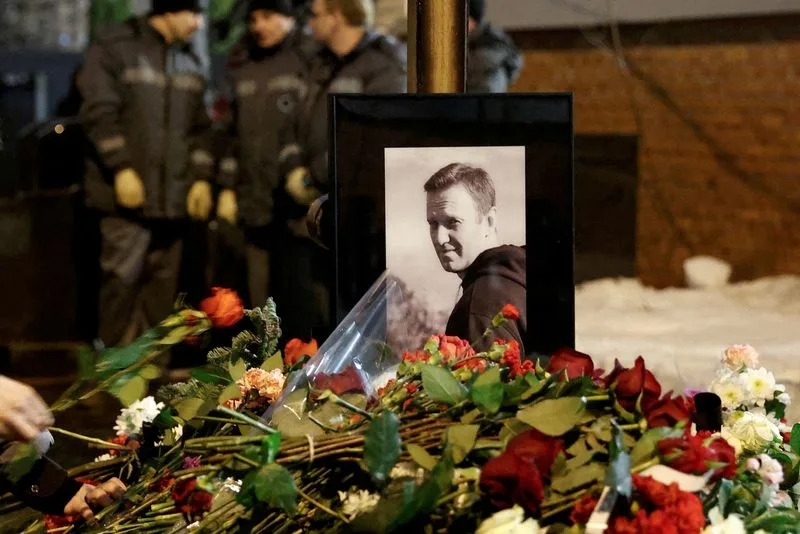
FILE PHOTO: Funeral of Russian opposition leader Alexei Navalny


LONDON (Reuters) -U.S. intelligence agencies have determined that Russian President Vladimir Putin probably didn't order opposition politician Alexei Navalny killed at an Arctic prison camp in February, the Wall Street Journal reported on Saturday.

Navalny, 47 when he died, was Putin's fiercest domestic critic. His allies, branded extremists by the authorities, accused Putin of having him murdered and have said they will provide proof to back their allegation.

The Kremlin has denied any state involvement. Last month, Putin called Navalny's demise "sad" and said he had been ready to hand the jailed politician over to the West in a prisoner exchange provided Navalny never return to Russia. Navalny's allies said such talks had been under way.

The Journal, citing unnamed people familiar with the matter, said on Saturday that U.S. intelligence agencies had concluded that Putin probably didn't order Navalny to be killed in February.

It said Washington had not absolved the Russian leader of overall responsibility for Navalny's death however, given the opposition politician had been targeted by Russian authorities for years, jailed on charges the West said were politically motivated, and had been poisoned in 2020 with a nerve agent.

The Kremlin denies state involvement in the 2020 poisoning.

Kremlin spokesman Dmitry Peskov said on Saturday he had seen the Journal's report, which he said contained "empty speculation".

"I've seen the material, I wouldn't say it's high quality material that deserves attention," Peskov told reporters when asked about the matter.

Reuters could not independently verify the Journal report, which cited sources as saying the finding had been "broadly accepted within the intelligence community and shared by several agencies, including the Central Intelligence Agency, the Office of the Director of National Intelligence, and the State Department’s intelligence unit."

The U.S. assessment was based on a range of information, including some classified intelligence, and an analysis of public facts, including the timing of Navalny's death and how it overshadowed Putin’s re-election in March, the paper cited some of its sources as saying.

It cited Leonid Volkov, a senior Navalny aide, as calling the U.S. findings naive and ridiculous.

(Reporting by Andrew OsbornEditing by Frances Kerry)                     

From comics kept under the bed to printed collections, a new publisher is saving N.L.'s illustrated past

CBC
Sat, April 27, 2024 

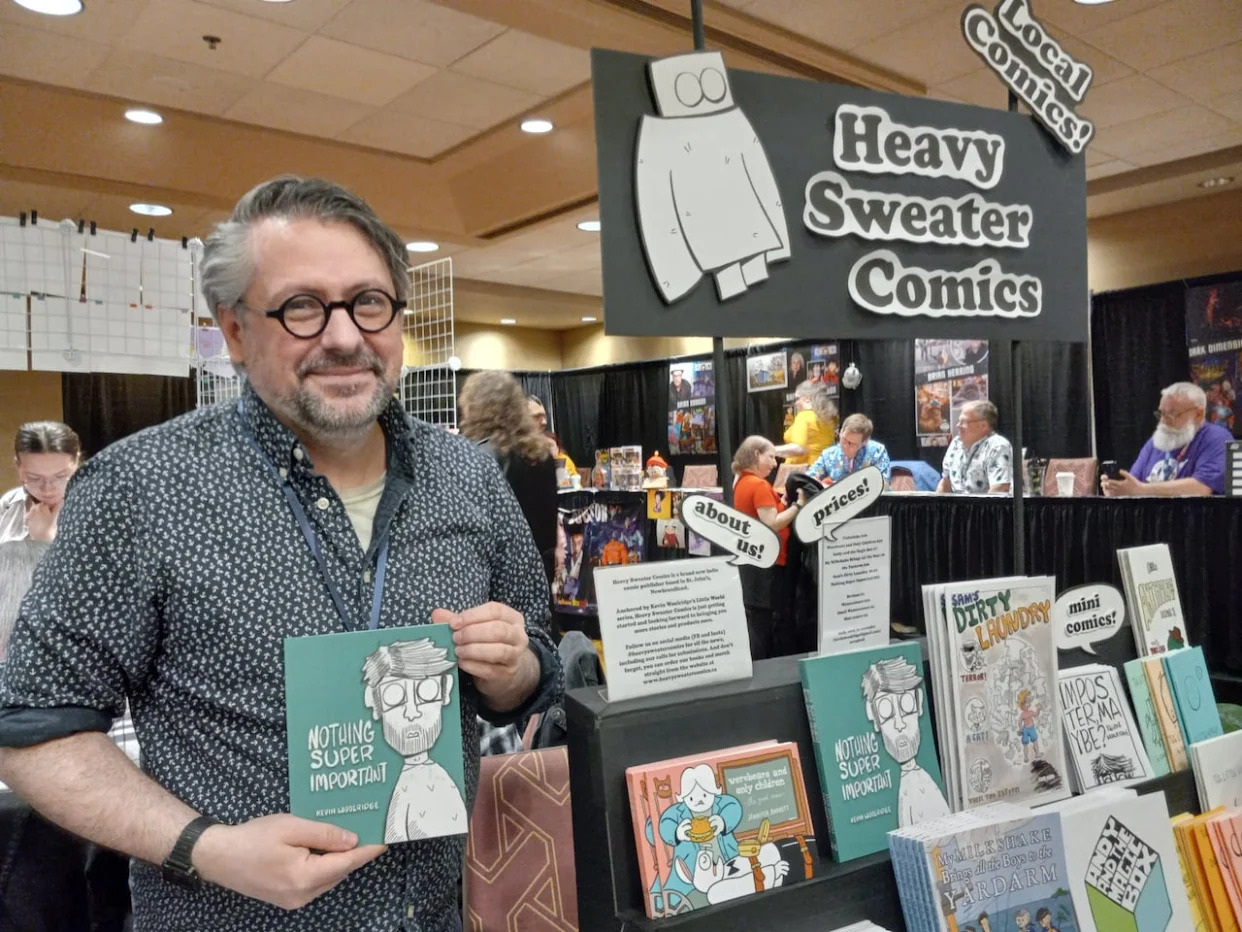
Kevin Woolridge launched Heavy Sweater Comics in November and he has already published seven titles. (Elizabeth Whitten/CBC - image credit)

Kevin Woolridge launched Heavy Sweater Comics in November. He has already published seven titles, including three of his own. (Elizabeth Whitten/CBC)

Newfoundland and Labrador's very own comic book publisher is introducing readers to comic books made in the province and wants to push local artists to get their work out there.

Kevin Woolridge, who launched Heavy Sweater Comics in November, marvels at how quickly it has grown since then, as he now has seven titles in print.


"It's built up very quickly," said Woolridge at his vendor table during last weekend's annual Sci-Fi on the Rock convention in downtown St. John's.

At his table was a sign proclaiming "Local Comics" and a display of the titles he has published, including Andrew Hawthorn's My Milkshake Brings All the Boys to the Yardarm and his own Fishsticks and Andy and the Magic Box, as well as buttons and watercolour prints.

When people hear there's a local comic book publishing company, he said, it grabs their attention.

"The local comic community, the cartooning community, are really excited about this work. Because in a way it's kind of lighting a fire underneath some of their butts, you know?" he told CBC News.

During the convention he also released three new titles: Jennifer Barrett's Werebears and Only Children: The Good Ones, Sam Dinn's Dirty Laundry and his own autobiographical comic Nothing Super Important.

An official launch party for the new comic books was scheduled for Friday at the LSPU Hall's Cox & Palmer Second Space, he said.

Heavy Sweater Comics is currently the only active comic book publisher in the province.

Woolridge previously told CBC News that prior to starting his company he had been self-publishing his comics under the name Little Grey Dog Comics and Games but he realized there was already a publisher with a similar name, so he had to select a new name for his company.

He said his friends started throwing out words they associated with him, and Woolridge happened to like heavy sweaters, and the name stuck.

Preserving the past

Woolridge said he has experience self-publishing his own comics so it wasn't a big leap to decide to start the company and publish the works of others.

"There are people here doing it, and it's just sitting underneath their bed in a box. Why not get that material out there to the public?" he said.

Many of the books he's published are collections of previously published works. That wasn't intentional initially, he said, but it's a way for people to read comics when they're no longer easy to find.

He pointed out Werebears and Only Children was initially published on a blog and then in the Scope, an alternative newspaper in St. John's that folded in 2013. Likewise, Hawthorn's book is a collection of his webcomic On the Bounty.

"That kind of material is kind of getting lost unless it's published, right? I think I'm doing a little bit of a service just to try to get this history of comic strips, especially, out there," said Woolridge.

Artists Dinn and Barrett were at the convention for book signings.


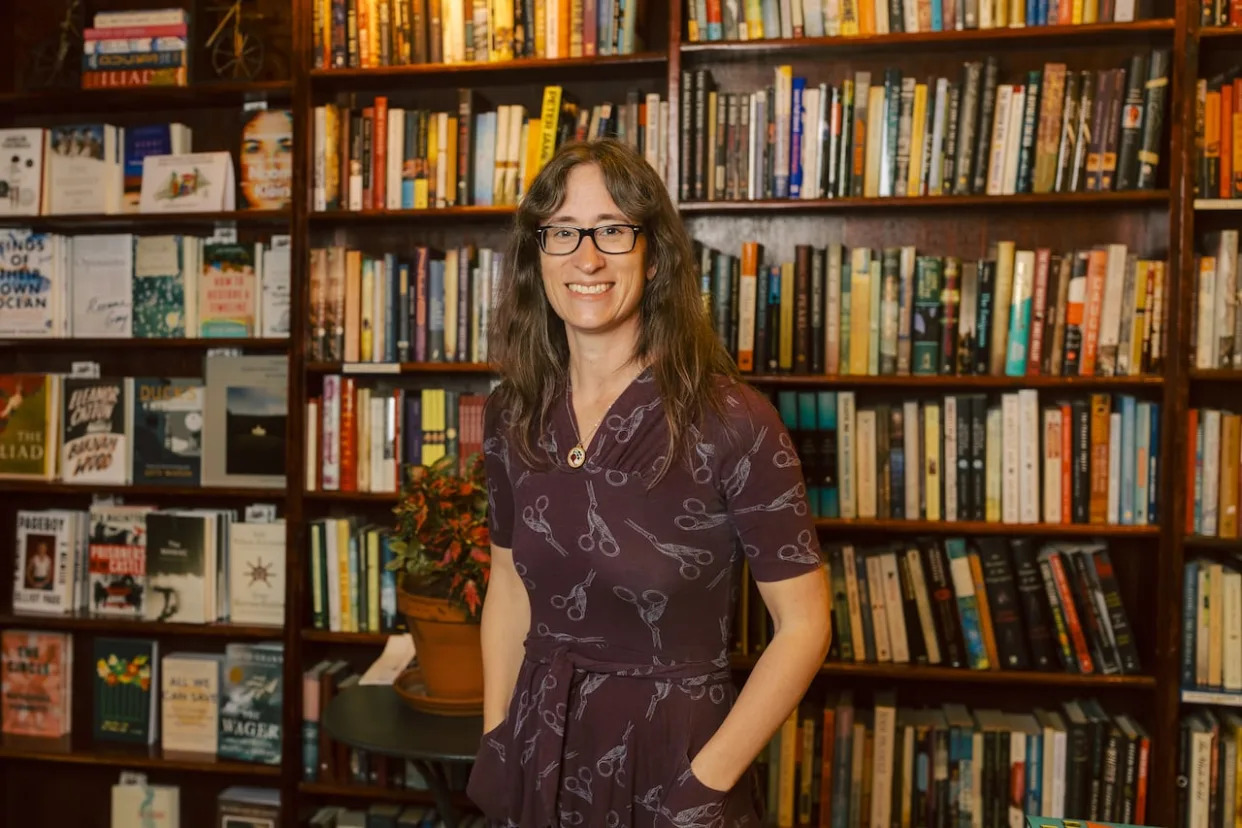
Jennifer Barrett says publishing her comic Werebears and Only Children through Heavy Sweater Comics is a dream come true. (Elizabeth Whitten/CBC)

Barrett said Werebears and Only Children started off as a "goofy webcomic" about two unnamed characters, beginning on her blog, then in the Scope, and then back online. But it had been years since she'd posted anything.

"I haven't been doing it consistently for almost 10 years, so it was nice to go back and revisit it," said Barrett.

Bringing her characters back in a collection was something that had been on her mind while she had been making her comic but never got around to, she said.

Then after a hole unexpectedly opened up in his publishing schedule, Woolridge reached out to Barrett, asking her if she wanted to put together a collection of her comics.

"I thought I should just take advantage of that because I already had all the work, the actual comics, made," said Barrett, adding that she pulled out the comics, scanned them, cleaned them up and added some new content like puzzles.

"It's just kind of like another little dream to come true after many years."

Having a local comic book publisher opens up possibilities for local artists, she said.

"What Kevin is doing is amazing, and there's a lot of great comic makers in the province already. So this is just another way to help expose that."

New titles coming

Woolridge said he has big announcements on future titles coming in the next few weeks, including a fantasy apocalyptic story and a coming of age story. He's also working on a children's book and a painted 200-page book, he said.

For the moment, Woolridge said, his focus is on publishing N.L. artists but he's been seeing submissions from across the country.

"Once I have the kind of distribution network in place, I'd like to be able to publish some more stuff — with a mandate of remaining mostly local."

Heavy Sweater Comics titles can be bought through the company's website, as well as local comic book shops Timemasters, Downtown Comics and Heroes & Hobbies, he said.
Exploration of lesbian fiction from the '50s, '60s asks how much has changed, really?

CBC
Sat, April 27, 2024 

Ann Bannon's first novel, Odd Girl Out, was one of many lesbian pulp-fiction books featured at the presentation at the Halifax Central Library on April 24. (Meig Campbell/CBC - image credit)


It was the 1950s when a desperate young woman, rejected by her family because of her sexuality, walked into a drugstore, intent on taking her own life that day.

Inside the shop, the woman spotted a book cover featuring two women — a novel by American author Ann Bannon, the so-called Queen of Lesbian Pulp Fiction whose salacious stories of forbidden love served as one of the few representations of homosexuality at the time.

The young woman purchased the book and read it in one sitting on a bench, she later recounted to Bannon, who asked what happened next. The woman said she went home, had dinner and decided to live.

"I mean, it still gets to me. It'll get to me forever," said Bannon, now 91, whose novels include Odd Girl Out and Journey to a Woman.

The struggles of the 2SLGBTQ+ community as viewed through the lens of lesbian pulp-fiction novels, including Bannon's works, were the subject of a recent event at the Halifax Central Library.

The presentation celebrated lesbian literature, but it also reflected on what these novels represented at the time and prompted questions about what, if anything, has changed for the 2SLGBTQ+ community since their publication.

Source of hope and solace

Lesbian pulp-fiction novels were mass-produced and often featured covers depicting two women in provocative poses, offering solace and inclusion at a time when homosexuality was still illegal in Canada. It was decriminalized in 1969.

While some of these novels punished their subjects by ending a torrid romance with tragedy, they also reflected the attitudes of the past that have persisted into the present.

"I think we like to read them and think we have moved forward, but I'm not sure we have," said Terrah Keener, an activist for the 2SLGBTQ+ community who helped lead the presentation last Wednesday.

One person attending the presentation described friends who, at the same time these novels were published, were institutionalized because of their sexuality.

Another, younger attendee said the familial desertion that characters in these novels endured due to their sexuality is still a reality for many young 2SLGBTQ+ people.

Denyse Rodrigues (left) and Terrah Keener (right) led a presentation about lesbian pulp fiction on Wednesday night at the Halifax Central Library.

Denyse Rodrigues, left, and Terrah Keener, right, recently led a presentation about lesbian pulp fiction at the Halifax Central Library. (Meig Campbell/CBC)

"Unfortunately, that is still a narrative of many people's lives," said Keener, who also works as an educator at the Nova Scotia Community College. "The statistics of homeless queer kids has not changed in decades."

A reflection of issues today

Keener and co-presenter Denyse Rodrigues said issues facing the 2SLGBTQ+ community today harken back to attitudes reflected in the pulp-fiction novels — attitudes that compelled people to suppress feelings and any desire to explore gender identity. They cited the number of 2SLGBTQ+ youth among Nova Scotia's homeless population, book bans on the rise in Canada and protests against 2SLGBTQ+ student rights in Halifax.

Rodrigues, a librarian at Mount Saint Vincent University, said the novels often hold answers to what life for 2SLGBTQ+ people was like in the '50s and '60s, and how the community can move forward.

"The same kind of reactions that were happening then are happening in Nova Scotia [today]," Rodrigues said. "That's why I'm so fascinated by hearing how they did then and can we learn from any of those things today?"

Nadia Champion and Phillip Gnemmi attended Wednesday's event and were looking at the many books presented on a table to the side.

Event attendees Nadia Champion and Phillip Gnemmi look at the many books on display at the presentation. (Meig Campbell/CBC)

Bannon, who produced six lesbian pulp-fiction novels from 1957 to 1962, said a lot has changed in the decades since she penned her stories. Still, she noted there are "many, many parts of the world" where people cannot be their authentic selves.

"My belief all my life has been that people ought to be allowed to be who they are," Bannon said from her home in California. "They live better lives if that can happen."
Local bookstores provide an experience the competition can't match, says retailer

I GREW UP IN LOCAL BOOKSTORES

CBC
Sat, April 27, 2024 

Charlotte Ashley owns Trident Booksellers and Café in downtown Halifax. (Mel Hattie - image credit)


Independent booksellers in Nova Scotia say community support has allowed them to thrive in the face of competition from online retailers.

Many independent bookstores in the province and around the country will mark Canadian Independent Bookstore Day on Saturday.

Charlotte Ashley of Trident Booksellers and Café in downtown Halifax has been in the business for 20 years.


She said many bookstores when out of business when Amazon came on the scene. But she said the public is now realizing that local bookstores offer an experience that the online giant can't match.

"Coming to a bookstore and looking at what's on the shelf and engaging with other people who are in the space gives you a much better … ability to kind of find interesting things," Ashley said.


Mike Hamm is manager and buyer for Bookmark on Spring Garden Road in Halifax

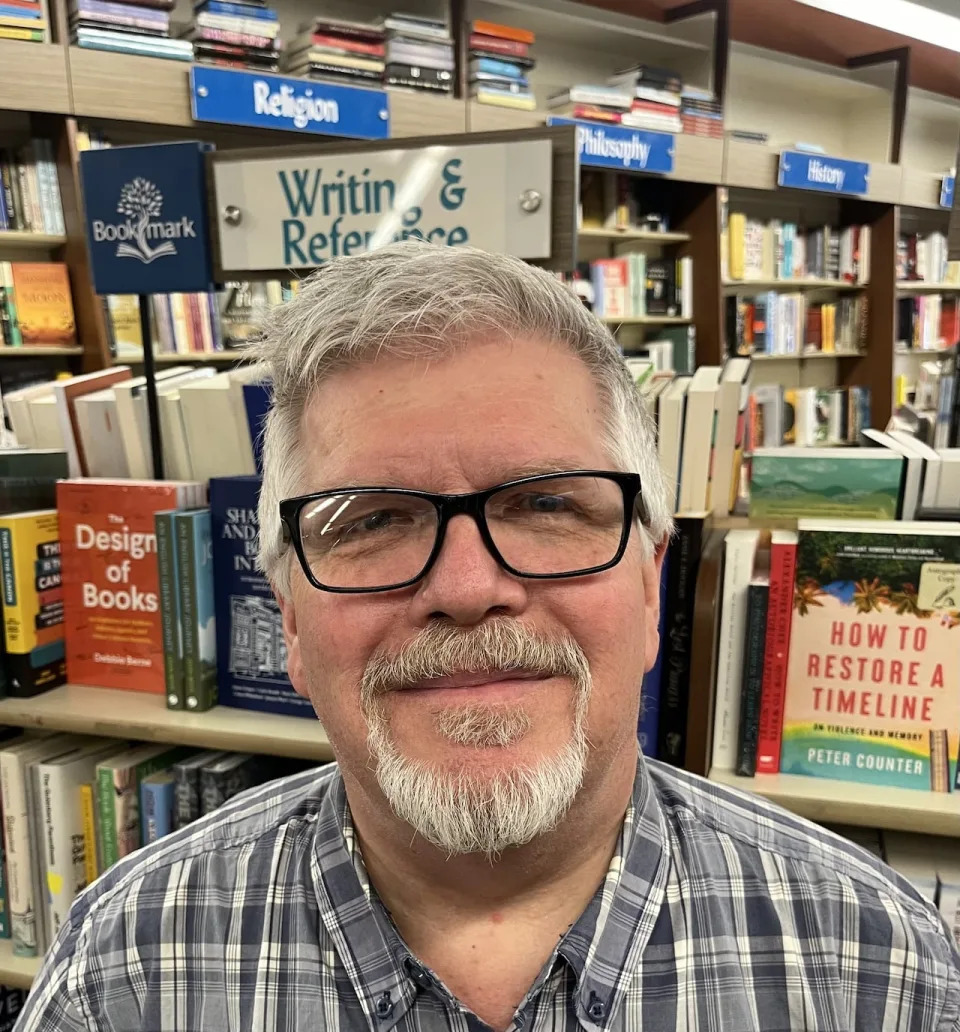
Mike Hamm is manager and buyer for Bookmark on Spring Garden Road in Halifax. (Caitlin Pilsworth)

She said she is able to provide people with recommendations and match them with a book that fits their needs. Local bookstores also allow people to explore ideas and interact with others to talk about them, she said.

Michael Hamm, the manager of Bookmark in downtown Halifax, said independent bookstore day is becoming more popular every year.

Hamm said Bookmark has built many relationships with readers over the years and is something like a neighbourhood bar.

He said people sometimes pop in just to say hello and ask what staff are reading.

"That's why people keep supporting independent bookstores," Hamm said. "They become cultural hubs in communities."


Global measles cases almost double in a year


Provisional global total of 321,582 cases for 2023 is almost double (88% higher) than 2022 figure of 171,153


\

EUROPEAN SOCIETY OF CLINICAL MICROBIOLOGY AND INFECTIOUS DISEASES


Measles outbreaks are still occurring and in some cases increasing, among a wide variety of countries, raising concerns of an acceleration similar to just before the COVID pandemic. Dr Patrick O’Connor, of WHO Headquarters, Geneva, Switzerland will give an overview of the global measles situation at this year’s ESCMID Global Congress (formerly ECCMID – Barcelona, 27-30 April), while Professor Hanna Nohynek of the Health Security Section, Finnish Institute for Health and Welfare, Helsinki, Finland will look at the path to elimination, including successful elimination in WHO’s America’s region.

Dr O’Connor will discuss how the total cases for 2024 so far look to be on track to at least match the 321,582 cases provisionally reported for 2023 (in 2024, some 94,481 have been reported up to early April, but reporting delays mean the true figure is probably much higher) (see slides 6 and extra years link). Of these 2024 cases, almost half (42,767 / 45%) have been in the WHO European Region. Yemen, Azerbaijan and Kyrgyzstan are the countries with the highest reported measles incidence in the world.

Dr O’Connor explains: “Over the last decade there has been significant progress towards measles and rubella elimination – the Regional Verification Commissions for Measles and Rubella Elimination (RVCs) from all of the WHO Regions will review all national measles and rubella 2023 reports in 2024.  The European Regional Verification Commission will review the elimination status from 10-12 September 2024 – and provide an assessment of the 53 Member States in the European Region – large outbreak and continuous transmissions of measles are always a concern and can making achieving and maintaining elimination challenging.”

While this coverage in the European Region for the first and second dose of measles and rubella containing vaccine has been relatively high as the national level, Dr O’Connor explains: “The measles virus is extremely infectious and any gaps in immunisation coverage are potential risk for outbreak. So, coverage needs to high but also uniform and equitable.”

Worryingly, the number of countries suffering large or disruptive measles outbreaks (defined as 20 cases/million population continuously over a 12 month period) has tripled from 17 to 51 - see slide 8, with the latest rolling 12 month period available as of April 2024 covering the months December 2022-November 2023.

And in absolute numbers the % of global measles cases is dominated by low and lower-middle income countries, that have seen their proportion of all global cases increase from 80% in 2017 to 94% in 2022, while high-income countries fell from 5% to 1% in the same period.  Total cases globally have fluctuated wildly in recent years: 2016: 180,015; 2017: 168,190; 2018: 276,157; 2019: 541,401; 2020: 93,840; 2021: 59,619; 2022: 171,153. The provisional figure for 2023, 321 582, although yet to be finalised, is an 88% increase on the 2022 numbers.  (see slide 6 and extra years link)

Prof Nohynek says: "Measles cases were high in 2019, with the majority seen in Africa, where measles vaccine coverage has been lowest in the world allowing for unprotected population and as consequence periodic outbreaks. During the COVID-19 pandemic with closure of the society and limiting the number of human contacts, the transmission of all airborne viruses was reduced, including measles. During the pandemic, many children remained unvaccinated, and catchup vaccinations have not reached them. Therefore we now see cases increasing again in various regions of the world."

Dr O’Connor will also look at the huge amount achieved globally by measles vaccination: an estimated 57 million deaths have been avoided globally with measles vaccination from 2000 to 2022, with 1.5 million of these in the European region where there has been a 98% reduction in annual measles deaths from 3,584 in 2000 to 70 in 2022.

He concludes: “Over the last 20 years, there has been significant progress toward achieving measles and rubella elimination – in order to solidify and maintain those gains, we need to ensure high, uniform and equitable routine immunization coverage; and robust outreach and rapid outbreak response.”

Professor Nohynek will discuss the success of WHO’s Americas region, where in 2016 measles was the 5th vaccine-preventable disease to be eliminated from the Americas, after the regional eradication of smallpox in 1971, elimination of poliomyelitis in 1994, and rubella and congenital rubella syndrome in 2015.

This successful strategy involved a one-time national campaign to bring children between 1 and 14 years of age up to date with measles vaccination; strengthening routine vaccination to reach a minimum of 95% of children every year; and undertaking massive follow-up campaigns every four years, to reach a minimum of 95% of children aged 1 to 4 with a second dose of vaccine. Good technical support, laboratory capacity, social and political will all played their part.

She will raise the alarm regarding lower-than needed vaccination rates, explaining that, by 2022, global measles first dose (MCV1) coverage was 3% below the pre-pandemic peak of 86%– she will explain that even then 86% was itself too low to prevent the epidemics of 2019. In 2022, 33 million children that should have received a routine MCV dose did not (22 million first dose and 11 million second dose children).

Prof Nohynek says: “Countries should use measles cases and outbreaks as a tracer to identify weaknesses in immunisation programs, and to guide programmatic planning in identifying and addressing these weaknesses.”

She adds: “Vaccine hesitancy is only one component that can contribute to lower coverage – misinformation about vaccines, access to immunisation services, and on-time vaccination cause immunisation gaps.”

The Immunization Agenda 2030* (the Global strategy endorsed by the World Health Assembly to maximise the lifesaving impact of vaccines) has the goal of preventing 50 million deaths from 2021-2030 using vaccination. Prof Nohynek explains this will not be possible without measles vaccines, saying that measles vaccination will account for 37% of deaths to be averted by childhood vaccination against 14 different pathogens from 2021-2030; and will deliver 75% of the economic benefits of vaccines for 25% of costs.

She concludes: “Innovations are needed to increase coverage, enable campaign integration, improve emergency response, reduce waste, and prevent errors. One such innovation is Measles Rubella MAPS (MR MAPS) – measles and rubella vaccine microarray patches that do not require a needle and syringe.”