Tuesday, March 11, 2025


New research reveals psychological ‘booster shots’ can strengthen resistance to misinformation over time


A PERFECT VACCINE IS RAW; ROBERT ANTON WILSON 


University of Oxford


A new study has found that targeted psychological interventions can significantly enhance long-term resistance to misinformation. Dubbed “psychological booster shots,” these interventions improve memory retention and help individuals recognize and resist misleading information more effectively over time.

The study, published in Nature Communications, explores how different approaches, including text-based messages, videos, and online games, can inoculate people against misinformation. The researchers from the Universities of Oxford, Cambridge, Bristol, Potsdam and King’s College London conducted five large-scale experiments with over 11,000 participants to examine the durability of these interventions and identify ways to strengthen their effects.

The research team tested three types of misinformation-prevention methods:

  • Text-based interventions, where participants read pre-emptive messages explaining common misinformation tactics.
  • Video-based interventions, short educational clips that expose the emotional manipulation techniques used in misleading content.
  • Gamified interventions, an interactive game that teaches people to spot misinformation tactics by having them create their own (fictional) fake news stories in a safe, controlled environment.

Participants were then exposed to misinformation and evaluated on their ability to detect and resist it over time. The study found that while all three interventions were effective, their effects diminished quickly over time, prompting questions about their long-term impact. However, providing memory-enhancing “booster” interventions, such as a follow-up reminder or reinforcement message, helped maintain misinformation resistance for a significantly longer period.

The study found that the longevity of misinformation resistance was primarily driven by how well participants remembered the original intervention. Follow-up reminders or memory-enhancing exercises were also found to significantly extend the effectiveness of the initial intervention, much like medical booster vaccines.

By contrast, the researchers found that boosters that did not focus on memory, but rather focused on increasing participants’ motivation to defend themselves by reminding people of the looming threat of misinformation, did not have any measurable benefits for the longevity of the effects.

Lead researcher Dr. Rakoen Maertens from the University of Oxford’s Department of Experimental Psychology, said: “Misinformation is a persistent global challenge, influencing everything from climate change debates to vaccine hesitancy. Our research shows that just as medical booster shots enhance immunity, psychological booster shots can strengthen people’s resistance to misinformation over time. By integrating memory-boosting techniques into public education and digital literacy programs, we can help people retain these critical skills for much longer.”

Professor Stephan Lewandowsky, Chair in Cognitive Psychology at the University of Bristol and a co-author of the study, emphasised the generality of the findings. He said: “It is important that the effects of the inoculation interventions were nearly the same for videos, games, and text-based material. This makes it much easier to roll out inoculation at scale and in a broad range of contexts to boost people’s skills in recognizing when they are being misled.”

The study highlights the urgent need for scalable and more durable misinformation interventions and highlights the importance of collaboration between researchers, policymakers, and social media platforms to integrate these insights into public information campaigns.

ENDS


Notes to editors

The study ‘Psychological Booster Shots Targeting Memory Increase Long-Term Resistance Against Misinformation’ will be published in Nature Communications at 10:00 GMT / 06:00 ET Tuesday 11 March 2025. It will be available online when the embargo lifts at DOI https://doi.org/10.1038/s41467-025-57205-x  

To view a copy of the paper before this under embargo, contact rakoen.maertens@psy.ox.ac.uk


For further information or interviews with the researchers, please contact:
Chris McIntyre
Communications Manager (Research & Innovation)
University of Oxford 
tel (direct): 01865 270 046
tel (News Office): 01865 280528
Christopher.mcintyre@admin.ox.ac.uk


About the University of Oxford 

Oxford University has been placed number 1 in the Times Higher Education World University Rankings for the ninth year running, and number 3 in the QS World Rankings 2024. At the heart of this success are the twin-pillars of our ground-breaking research and innovation and our distinctive educational offer. 

Oxford is world-famous for research and teaching excellence and home to some of the most talented people from across the globe. Our work helps the lives of millions, solving real-world problems through a huge network of partnerships and collaborations. The breadth and interdisciplinary nature of our research alongside our personalised approach to teaching sparks imaginative and inventive insights and solutions. 

Through its research commercialisation arm, Oxford University Innovation, Oxford is the highest university patent filer in the UK and is ranked first in the UK for university spinouts, having created more than 300 new companies since 1988. Over a third of these companies have been created in the past five years. The university is a catalyst for prosperity in Oxfordshire and the United Kingdom, contributing £15.7 billion to the UK economy in 2018/19, and supports more than 28,000 full time jobs. 

Arctic sea ice loss drives drier weather over California and wetter over Spain and Portugal


A new modelling study isolates the effect of Arctic sea ice melting from other factors


Barcelona Institute for Global Health (ISGlobal)


A study led by researchers from the Barcelona Institute for Global Health (ISGlobal), a centre supported by the "la Caixa" Foundation, has used a novel approach to unravel the influence of the loss of Arctic sea ice on the planet's climate, isolating it from other factors related to climate change.

The study, published in the journal Communications Earth and Environment, shows that on decadal timescales, the loss of Arctic ice favours the climate of the south-west of the United States - and California in particular - becoming drier on average, especially in winter. This phenomenon would also affect the climate of Spain and Portugal, favouring conditions of higher humidity in winter, although in this case the observed effect is weaker.

'There is much scientific disagreement about the remote effects of Arctic sea ice loss. So far, many studies have focused on the long-term effects, on a scale of centuries. Others have investigated the response to sea ice loss with modelling setups that artificially impose heat to melt the sea ice, potentially affecting the simulated response. Some studies have been changing Antarctic and Arctic sea ice cover at the same time, making it difficult to discern their individual contributions. In our study, we have developed a methodology to assess the impact of Arctic ice loss without adding any heat fluxes, and we focused on the impacts developing within a few decades,' explains Ivana Cvijanovic, ISGlobal researcher and lead author of the study.

To reach these conclusions, the team used three models of varying complexity. In each of them, they ran two sets of simulations, one with the historical amount of sea ice in the Arctic and one with substantially decreased sea ice cover.

The disappearance of sea ice changes the surface albedo, i.e. the reflectivity of the Arctic Ocean, but also removes the insulation between the atmosphere and the ocean surface and affects salinity profiles. These local changes in turn drive a variety of atmospheric and oceanic teleconnections that can propagate far from the Arctic.

'It should be made clear that the conclusion is not necessarily that it will rain less in California and more in the Western Mediterranean in the coming years. In addition to the ice cover loss in the Arctic, there are many other factors responding to greenhouse gas emissions and affecting the climate (atmospheric and oceanic feedbacks and circulation changes, Antarctic sea ice loss, vegetation feedbacks, etc.). In any case, understanding the influence of this phenomenon separately will help us to refine global predictions,' says Desislava Petrova, ISGlobal researcher and last author of the study.

Despite all the different influences in our planet's climate system, it is interesting to note that the anomalies in the atmospheric circulation patterns of the last few decades show some striking similarities to the patterns simulated in our study - especially events such as the Californian drought of 2012-2016,' observes Ivana Cvijanovic.
 

Reference

Ivana Cvijanovic, Amelie Simon, Xavier Levine, Rachel White, Pablo Ortega, Markus Donat, Donald D. Lucas, John C. H. Chiang, Anne Seidenglanz, Dragana Bojovic, Arthur Ramos Amaral, Vladimir Lapin, Francisco Doblas-Reyes, Desislava Petrova, Arctic sea-ice loss drives a strong regional atmospheric response over the North Pacific and North Atlantic on decadal scales, Communications Earth Environment, 2025. https://doi.org/10.1038/s43247-025-02059-w 

SHARED TECHNOLOGY

First burials: Neanderthal and Homo sapiens interactions in the Mid-Middle Palaeolithic Levant


The Hebrew University of Jerusalem
Exposed section of archaeological sediments dated to to 110 thousand years ago at Tinshemet cave 

image: 

Exposed section of archaeological sediments dated to to 110 thousand years ago at Tinshemet cave

view more 

Credit: Credit- Yossi Zaidner


The first-ever published research on Tinshemet Cave reveals that Neanderthals and Homo sapiens in the mid-Middle Paleolithic Levant not only coexisted but actively interacted, sharing technology, lifestyles, and burial customs. These interactions fostered cultural exchange, social complexity, and behavioral innovations, such as formal burial practices and the symbolic use of ochre for decoration. The findings suggest that human connections, rather than isolation, were key drivers of technological and cultural advancements, highlighting the Levant as a crucial crossroads in early human history.

Link to the images: 

https://drive.google.com/drive/folders/19p__omKCSSPkGBI3b8beF1QXqeRahGk1?usp=drive_link

A new discovery at Tinshemet Cave in central Israel is reshaping our understanding of human interactions during the Middle Palaeolithic (MP) period in the Near East. The cave, remarkable for its wealth of archaeological and anthropological findings, has revealed several human burials—the first mid-MP burials unearthed in over fifty years.

This research, published in Nature Human Behaviour, marks the first publication on Tinshemet Cave and presents compelling evidence that Neanderthals and Homo sapiens in the region not only coexisted but also shared aspects of daily life, technology, and burial customs. These findings underscore the complexity of their interactions and hint at a more intertwined relationship than previously assumed.

The excavation of Tinshemet Cave, led by Prof. Yossi Zaidner of the Hebrew University of Jerusalem, Prof. Israel Hershkovitz of Tel Aviv University, and Dr. Marion Prévost of the Hebrew University of Jerusalem, has been ongoing since 2017. A primary goal of the research team is to determine the nature of Homo sapiens–Neanderthal relationships in the mid-Middle Palaeolithic Levant. Were they rivals competing for resources, peaceful neighbours, or even collaborators?

By integrating data from four key fields—stone tool production, hunting strategies, symbolic behaviour, and social complexity—the study argues that different human groups, including Neanderthals, pre-Neanderthals, and Homo sapiens, engaged in meaningful interactions. These exchanges facilitated knowledge transmission and led to the gradual cultural homogenization of populations. The research suggests that these interactions spurred social complexity and behavioural innovations. For instance, formal burial customs began to appear around 110,000 years ago in Israel for the first time worldwide, likely as a result of intensified social interactions. A striking discovery at Tinshemet Cave is the extensive use of mineral pigments, particularly ochre, which may have been used for body decoration. This practice could have served to define social identities and distinctions among groups.

The clustering of human burials at Tinshemet Cave raises intriguing questions about its role in MP society. Could the site have functioned as a dedicated burial ground or even a cemetery? If so, this would suggest the presence of shared rituals and strong communal bonds. The placement of significant artifacts—such as stone tools, animal bones, and ochre chunks—within the burial pits may further indicate early beliefs in the afterlife.

Prof. Zaidner describes Israel as a "melting pot" where different human groups met, interacted, and evolved together. “Our data show that human connections and population interactions have been fundamental in driving cultural and technological innovations throughout history,” he explains.

Dr. Prévost highlights the unique geographic position of the region at the crossroads of human dispersals. “During the mid-MP, climatic improvements increased the region’s carrying capacity, leading to demographic expansion and intensified contact between different Homo taxa.”

Prof. Hershkovitz adds that the interconnectedness of lifestyles among various human groups in the Levant suggests deep relationships and shared adaptation strategies. “These findings paint a picture of dynamic interactions shaped by both cooperation and competition.”

The discoveries at Tinshemet Cave offer a fascinating glimpse into the social structures, symbolic behaviours, and daily lives of early human groups. They reveal a period of profound demographic and cultural transformations, shedding new light on the complex web of interactions that shaped our ancestors’ world. As excavations continue, Tinshemet Cave promises to provide even deeper insights into the origins of human society.

BRINGING THE WAR HOME

Moscow hit by largest drone attack in three years, officials claim


By Tamsin Paternoster
Published EURONEWS

Russia and Ukraine traded fire ahead of crunch talks on ending Moscow's war between Ukrainian and US officials in Saudi Arabia.

At least three people have been killed — two in Moscow and one in the Donetsk region — and multiple injured as Russia and Ukraine traded fire ahead of talks on ending the war in Saudi Arabia.

Ukraine launched a "massive" drone attack on Moscow overnight, according to local officials.

The governor of the Moscow region, Andrei Vorobyov, said two people — including a 50-year-old man — were killed near the Russian capital in the attack.

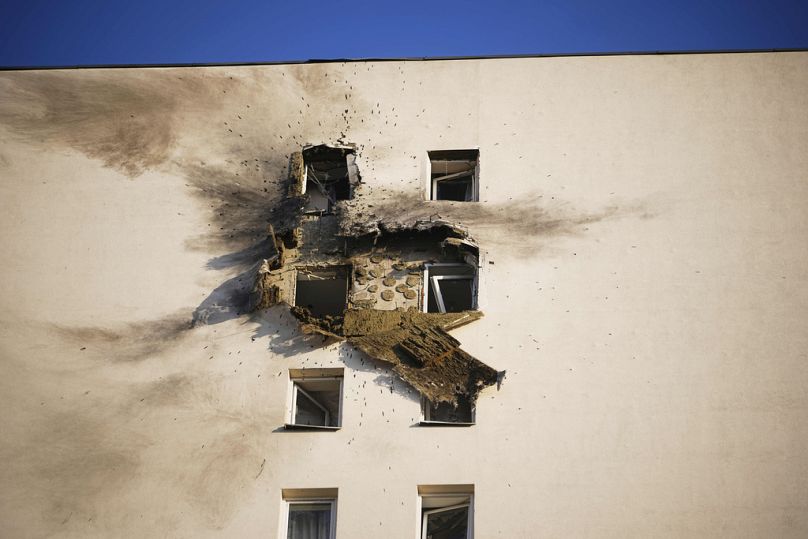
He said the casualties were in the towns of Vidnoye and Domodedovo, located just outside the capital. Seven apartments were also damaged.

In a post on social media, Vorobyov posted pictures allegedly showing one of the damaged apartments alongside burnt vehicles in a car park. He added that over a dozen — including children — had to be evacuated.

Moscow's Mayor Sergei Sobyanin said over 70 drones were shot down as they flew towards the Russian capital.

The roof of a building in Moscow also sustained damage in what Sobyanin said was the largest Ukrainian drone attack on the city in the three years of war between Russia and Ukraine.

In total, the Russian military said air defences shot down at least 91 drones over the Moscow region. At least 337 Ukrainian drones were shot down over 10 Russian regions in total, the majority over Kursk.

Flights have been restricted in all four of Moscow's airports, and two other airports in regions east of Moscow were closed. Traffic was halted through the Domodedovo railway station.

This photo shows an apartment building where the downed Ukrainian drone fell at an area in Sapronovo village outside Moscow, Russia, on Tuesday, March 11, 2025.   AP/Copyright 2025 The AP. All rights reserved.

The governors of Ryazan, southeast of Moscow, and Belgorod on the border in Ukraine also said their regions came under attack, with Belgorod's regional governor saying several settlements lost power.

Euronews could not independently verify these claims.

US to ask Kyiv for concessions?

Ukraine also came under Russian attack overnight, with authorities saying one person was killed and four wounded in Russian attacks on the frontline towns of Pokrovsk and Kostyantynivka.

A 40-year-old cyclist was also injured in the city of Kherson after being targeted by a Russian drone in the morning, whilst one was injured and five residential homes damaged after the northern Sumy region was targeted by Russian drones.

Several buildings caught fire, including a fuel tank, a residential house and a warehouse of children's toys, according to local authorities in Odesa.

Overnight, Ukraine's air force posted on Telegram that it shot down an Iskander-M ballistic missile and at least 79 drones in various regions across Ukraine, including Kyiv.

The attacks come as representatives from the US and Ukraine meet in Saudi Arabia for crunch talks focused on ending the war between Russia and Ukraine.

Two senior Ukrainian officials told AP on Monday that the Ukrainian delegation would propose a ceasefire covering the Black Sea and long-range missile strikes, as well as the release of Ukrainian prisoners held in Russia.

US Secretary of State, Marco Rubio, who will be present at the talks, said ahead of discussions that the US would be taking stock of Ukraine's proposals.

“I’m not going to set any conditions on what they have to or need to do. I think we want to listen to see how far they’re willing to go and then compare that to what the Russians want and see how far apart we truly are,” Rubio told reporters ahead of his arrival.

"It’s hard in the aftermath of something like that to even talk about concessions, but that’s the only way this is going to end and prevent more suffering,” Rubio said, implying that Kyiv would have to consider making concessions on its peace plan, which involves Russian troops withdrawing from all of its territory.

The US has cut off military support to Ukraine as well as paused the flow of intelligence, although on Monday White House special envoy Steve Witkoff confirmed to Fox News that the pause did not impact information necessary for Ukraine's defence.

“We never shut off intelligence for ... anything defensive that the Ukrainians need,” Witkoff said.

The Ukrainian delegation will be represented by Ukrainian President Volodymyr Zelenskyy's head of office, Andriy Yermak, the country's national security advisers and several defence and foreign ministers.

Rubio will head the US delegation alongside Witkoff and National Security Adviser Mike Waltz.


Moscow targeted by 'massive' Ukrainian drone attack

Moscow (AFP) – Ukraine targeted Moscow in a "massive" overnight drone attack, authorities said Tuesday, with Russia's defense ministry claiming it shot down 337 UAVs across the country.


Issued on: 11/03/2025 - FRANCE24

A damaged apartment building in a residential complex following the Moscow drone attack © TATYANA MAKEYEVA / AFP


"The Defense Ministry's air defense continues to repel a massive attack by enemy drones on Moscow," mayor Sergei Sobyanin said on Telegram early Tuesday.

Russia's military shot down 91 drones around the capital, the defense ministry said in a statement, adding it downed another 126 over the Kursk region bordering Ukraine.

At least one person was killed and three more wounded in the southern suburbs of Moscow, according to the region's governor, Andrei Vorobyov.

He added that drone debris damaged at least seven units in a residential building in another suburb in the southeast.


The attack on the Russian capital, hundreds of kilometres from the Ukraine border, comes ahead of an expected meeting Tuesday between top US and Ukrainian officials in Saudi Arabia.

Ukraine is set to present the United States with a plan for a partial ceasefire with Russia, hoping to restore support from its key benefactor, which under President Donald Trump has demanded concessions to end the three-year war.

The talks in Saudi Arabia will be the most senior since a disastrous White House meeting last month, when Trump berated Ukraine's President Volodymyr Zelensky for purported ingratitude.

Since Trump's dressing down of Zelensky, Washington has suspended military aid to Ukraine as well as intelligence sharing and access to satellite imagery in a bid to force it to the negotiating table.

© 2025 AFP

‘War has come’: Russians shaken by Ukrainian drone barrage


By AFP


PublishedMarch 11, 2025


For many Russians, Moscow's three-year campaign on Ukraine has felt distant. - Copyright AFP Andrey BORODULIN

As a drone smashed into the side of her apartment block early on Tuesday, Russia’s full-scale offensive on Ukraine literally came home to Svetlana in a suburb southeast of Moscow.

Like for most Russians, Moscow’s three-year military campaign had until then felt distant — mostly constrained to television screens.

Despite militaristic propaganda and a mass recruitment of soldiers, authorities have tried to keep society at arm’s length from the conflict’s death and destruction — especially in and around the capital.

“You understand that it is war, but you don’t realise it properly,” Svetlana, wearing a winter coat with a fur collar, said. “But now, yes, it has come.”

In her town of Ramenskoye, around 40 kilometres (25 miles) southeast of central Moscow, police had cordoned off an area where a drone hit.

The attack shattered the sense of comfort that Svetlana — a supporter of the Kremlin’s offensive — had.

“Yes, we were weaving camouflage nets, collecting humanitarian aid, accompanying fighters there, but we still didn’t realise it. Now it has come,” Svetlana said.

“I’m scared for the children,” said Andrei, an electrician who lives on the 12th floor of a building that was hit.

He was sweeping up broken glass from his car, which was hit by falling shrapnel after the drone crashed into the 18th-22nd floors.

“My six-year-old daughter was sleeping with me, she woke up crying from the noise,” he told AFP.


– ‘Fear in their eyes’ –


Kyiv said it wants the attack — which involved more than 300 drones — to convince Russian President Vladimir Putin to agree to an aerial ceasefire.

The Kremlin has previously ruled that out.

Ukraine says the strikes are just a taste of what Russia has subjected its citizens to over the last three years, with Moscow having fired near daily bomb, missile and drone attacks across the country.

“There is not even any thought that tonight will be peaceful. It’s scary,” said Olga, a 21-year old who works in IT and lives in the adjacent building to one hit.

She ran out to the street after being woken at 5 am (0200 GMT) by the rumbling.

“People just have fear in their eyes,” she told AFP, the ground around her covered with shrapnel.

Unlike in Ukraine — where air alerts ring out practically every night in almost every city — there was no such warning of an incoming attack in the Russian capital or its suburbs.

“We don’t understand what to do in such situations,” said Olga.


– ‘I don’t believe in peace’ –


“The news says that more and more drones are being shot down. It’s scary to even go to sleep after such a thing,” she added. “It could have been us.”

The idea of peace — previously seen as within reach amid US President Donald Trump’s rapprochement with Moscow — now felt far away in Ramenskoye.

“In my opinion, this attack won’t be the last,” said retiree Sergei, criticising Ukraine’s “bloodthirsty” European backers who were supplying it with arms.

For 75-year-old Yulia, who lives next to the building that was hit, there was just frustration.

“My heart is bad. I don’t believe there will be peace,” she told AFP.

“Why can’t they agree? Why not? What are they thinking about?,” she said, through tears. “It’s terrible.”

afptv-bur/jm