Wednesday, August 27, 2025

Dutch doctors file complaint against Snapchat over sale of illegal vapes


Copyright Matt Slocum/Copyright 2023 The AP. All rights reserved

By Cynthia Kroet
Published on 27/08/2025 

The Netherlands has banned the sale of flavoured vapes, and sales to minors is also prohibited.

Dutch doctors have filed a regulatory complaint against media company Snap, which owns messaging application Snapchat, for failure to take measures to ban the sale of illegal electronic cigarettes, or vapes, which they claim is in breach of the EU’s online platform rules.

A spokesperson for ACM - Authority for Consumers and Markets (ACM), which is in charge of overseeing online platforms’ compliance with the Digital Services (DSA) in the Netherlands - confirmed that the regulator received the complaint.

"At this stage, we cannot comment on any further steps we may take; we will first review the enforcement request," the spokesperson said.

If the ACM takes up the case, it will have to refer the case to the European Commission.

Since Snap is considered one of the 25 Very Large Online Platforms (VLOP) under the DSA – those with more than 45 million monthly average users in Europe – the Commission is in charge of enforcement.

Snap, which was founded in 2011, has its EU headquarters in Amsterdam.

The doctors, united through the group Stichting Rookpreventie Jeugd (SRPJ), claim that young users of Snapchat can still buy illegal nicotine products, despite promises from the platform to stop the sale of vapes.

They say they have been in touch with Snap regarding the issue, asking for improvements to the company’s policy, but that their investigation found that youngsters could easily continue to buy the products.

A spokesperson for Snap told Euronews that "We share their commitment to helping keep young people safe, and we have invested immense resources to stop bad actors from abusing our platform and to educate Snapchatters."

"Unfortunately, there is no single safety feature or policy that can eliminate every threat online or in the world around us. This is why we continuously adapt our strategies as bad actors change their tactics, and actively work with trusted third parties to improve our systems," the spokesperson added.

Under the DSA, which became applicable to the biggest platforms in 2023, all online platforms are obliged to detect, flag and remove illegal content.

The Netherlands introduced a ban on the sale of flavoured vapes – often marked as a safer alternative to traditional cigarettes - in January 2024, and sales to minors is also prohibited. According to figures of the Dutch Health Ministry, 25% of 12 to 16-year-olds in the country have used electronic cigarettes.

In November 2023, the Commission sent formal requests for information under the DSA to Snap on the protection of minors, as well as on the design of their recommender systems. A Commission spokesperson could previously only confirm that Snapchat has replied to the questions.

France to sue video platform Kick for 'negligence' after streamer's death


Copyright Thomas Padilla/Copyright 2024 The AP. All rights reserved.

By Kieran Guilbert
Published on 27/08/2025 

Paris is suing the Australian platform for alleged negligence following the death of streamer Raphaël Graven, also known as Jean Pormanove, while on air.


The French government will sue the Australian video platform Kick for alleged negligence after the death of a user who livestreamed videos of himself being subjected to violence.

Raphaël Graven, 46, also known as Jean Pormanove, died earlier this month in Nice during a broadcast on Kick that had been running for more than 12 days.

Graven was known for streaming extreme challenges, and footage shared on social media showed him being slapped, punched and strangled — among other forms of abuse — by several men during the broadcast. The videos could not be independently verified by Euronews.

French media reported that the broadcast was interrupted soon after Graven's co-streamers found him unconscious on a bed. A postmortem carried out last Thursday found that Graven's death was not the result of trauma or the actions of a third party.

Clara Chappaz, France's digital affairs and artificial intelligence (AI) minister, said on Tuesday that Kick had failed to block "dangerous content" and accused the platform of breaking a 2004 law regulating online content.

"I have been fighting to bring order to the digital Wild West. Kick is my battle, and I am taking the platform to court," she said.

Separately on Tuesday, Paris prosecutors announced that they had launched an investigation into Kick. The probe will examine whether the platform knowingly broadcast "videos of deliberate attacks on personal integrity", the prosecutors said.

It will also look into whether Kick complied with the European Union's Digital Services Act, which requires platforms to report any risk of danger to life or personal safety.

In a statement released last week, Kick said it was deeply saddened by Graven's death and offered its condolences to his family, friends and community.

"We are committed to cooperating fully with the authorities in this process. We are undertaking a comprehensive review of our French-language content," it said. The platform has not publicly commented about Tuesday's developments in Paris.

Kick is a video streaming platform similar to Amazon's Twitch, but with a much more permissive moderation policy that allows gambling activities, sexually suggestive content or content involving humiliation or violence to be broadcast without automatic sanctions.


Anthropic settles AI copyright lawsuit with book authors


Copyright AP Photo/Richard Drew, File

By Euronews & AP
Published on 27/08/2025 

A settlement is coming next week in a class action copyright lawsuit of book authors against artificial intelligence company Anthropic.

Artificial intelligence company Anthropic and a group of book authors settled a copyright infringement lawsuit.

Justin Nelson, the lawyer representing the book authors, said it is a "historic settlement [that] will benefit all class members".

The terms of the proposed class settlement will be finalised next week, according to a federal appeals court ruling filed on Tuesday. Anthropic declined to comment on the deal.

US District Judge William Alsup ruled in June that Anthropic didn’t break the law by training its chatbot Claude on millions of copyrighted books.


Related Meta and Anthropic win key verdicts in US AI copyright cases

However, the company was scheduled to go to trial over how it acquired those books by downloading them from online “shadow libraries” of pirated copies.


Alsup said in the June ruling that the AI system’s distilling of thousands of written works to be able to produce its own passages of text qualified as “fair use” under US copyright law because it was “quintessentially transformative”.

“Like any reader aspiring to be a writer, Anthropic’s (AI large language models) trained upon works not to race ahead and replicate or supplant them — but to turn a hard corner and create something different,” Alsup wrote.

Anthropic is facing other copyright-related legal challenges, including from Universal Music Group. It alleges that Anthropic illegally trained its AI programs on copyrighted lyrics.
France's far-left firebrand Melenchon calls for Macron's impeachment once more


Copyright Thomas Padilla/Copyright 2024 The AP. All rights reserved.

By Euronews with agences
Published on 26/08/2025 -

Jean-Luc Mélenchon, leader of far-left party France Unbowed, said he will introduce a new motion to demand Emmanuel Macron's impeachment.


Are the French government's days numbered?

Following Prime Minister François Bayrou's surprise announcement that he will seek a vote of confidence from the National Assembly on 8 September over his budget plan, far-left firebrand Jean-Luc Mélenchon has his sights set on President Emmanuel Macron.

"One year ago, we submitted a motion to demand Emmanuel Macron’s impeachment," the leader of France Unbowed said on Tuesday.

"We will do it again on 23 September. Alongside a motion of no-confidence – which may no longer be necessary if the government has already fallen – we will introduce an impeachment motion," he added.

Bayrou's minority government is set to collapse if he loses the vote, and several opposition parties have already stated they will not back him, including the far-right National Rally, the Greens, the Socialist Party and France Unbowed.

Related

French PM Bayrou risks cabinet collapse with confidence vote on major budget cuts

If the government falls, Macron could ask Bayrou to remain as head of a caretaker administration, name a new prime minister straight away, or call another snap election.

Bayrou's predecessor Michel Barnier lost a no-confidence vote over the budget in December last year, forcing him to resign after just three months in office.

In an interview with France Inter, Melenchon said he wanted to prevent Macron from appointing a third prime minister "who would pursue the same policy".

"Macron his chaos," he said. "The issue is Macron. He must go."

The confidence vote is set to take place on two days before protests planned largely by leftist organisations and trade unions.

Melenchon also expressed his backing for the upcoming "Bloquons Tout" ("Let’s Block Everything") grassroots movement. He called for the mobilisation to proceed no matter what the outcome of the confidence vote.

"We are at a historic crossroads for France, and we are participants in this pivotal moment," he said.

The protest movement is supported by two out of three French people, according to a poll for RTL.


Tourists in Malta are supporting climate change research by sharing holiday photos of the coast


Copyright materiały prasowe CoastSnap.com

By Jan Bolanowski
Published on 26/08/2025 - 
EURONEWS

The CoastSnap project helps track how climate change is impacting coastlines through community photo contributions.

During your summer holiday in Malta this year, you can enjoy the sun and sea, and help scientists with just a single photo taken on your smartphone.

Thanks to the international CoastSnap initiative, visitors to Malta’s popular Riviera Bay (Għajn Tuffieħa) can help scientists study the effects of climate change on the island’s coastline.

Originally launched in Australia, CoastSnap now operates on over 220 beaches across 21 countries. This year, Malta joined the global network, with plans to expand to more locations around the island.

Originally launched in Australia, CoastSnap now operates on over 220 beaches across 21 countries. This year, Malta joined the global network, with plans to expand to more locations around the island.


How can you take part?

Beachgoers can take part by visiting the CoastSnap point at Riviera Bay, located at the beach entrance. Place your phone in the special holder, which automatically frames the shot, then scan the QR code on the holder. After taking your photo, simply upload it following the instructions provided.

The collected photographs go into a special system that analyses changes in the beach landscape. The more photos - from different seasons and weather conditions - the more accurate the data for the scientists.

The CoastSnap project in Europe is most developed in France, Spain and the UK. Poland's participation in the project is symbolic and limited to a few amateur photos from beaches in Gdynia and Rewa.

A map of the locations of CoastSnap network points around the world can be found at this link.


‘Hope always endured’: Ukrainian women released from Russian prison speak out


KYIV – Large-scale prisoner exchanges have been the only tangible result of three rounds of talks between Russia and Ukraine, between May and July – with the most recent taking place on Sunday. Three civilian women from the Donetsk region who were released on 14 August testified to the torture they endured in Russian prisons over six years of captivity.


Issued on: 25/08/2025 - RFI

Yuliia Panina, Maryna Berezniatska and Svitlana Holovan at a press conference in Kyiv. © Emmanuelle Chaze/RFI

Yuliia Panina, Maryna Berezniatska and Svitlana Holovan made their way to the stage to loud applause from the audience of a few dozen, gathered for a press conference in Kyiv on Friday.

The three women were introduced by Liudmila Huseynova, director of the NGO Numo Sisters and herself a survivor of Russian prisons, having endured three years of torture in the illegal Izolyatsia detention centre.

She told the audience: "Not long before joining us, [these women] wondered if they would ever be able to speak Ukrainian again, after being forced to speak Russian throughout their captivity."

In Russian detention centres, prisoners are forbidden from speaking their own language, under threat of torture.

'Tears and joy are all mixed together'

The three women, all civilians, were arrested in 2019 in their respective cities, facing unfounded charges of espionage, extremism and terrorism.

Yuliia Panina was abducted by Russian security services while taking her 13-year-old daughter to school in the city of Donetsk.

She was the first to speak, sharing her first impressions after her release: "When we crossed the border and arrived in the Chernihiv region, we saw Ukrainian flags. People were waving at us. It was wonderful to see that – a huge relief."

Yuliia too was held at Izolyatsia, a former cultural centre in the city of Donetsk, now used as a prison – a place where Russian guards commit atrocities against Ukrainian prisoners of war.

"For us, it was a miracle, and we are here. But back there, in detention, there are still women, at least six, who have been held for a long time," she said.

Svitlana Holavan, a worker in a fish-curing factory in Novoazovsk, a town on the Russian border a few kilometres from Mariupol, on the shores of the Sea of Azov, was arrested at her home – because some of her relatives live in independent Ukraine.

This was enough to mark her as suspicious in the eyes of the illegal occupation authorities.

France accuses Russia of stalling peace efforts as massive strikes hit Ukraine

"I still can't believe that this hell, which has ruled my life for six years, is over. When I saw all the people who welcomed us when we arrived by bus, I felt positive emotions that I hadn't felt in six years," she said.

"I prayed so hard for this to happen, and my ordeal is finally over. We waited a very long time for this moment, survived torture, but hope always endured. Soon, I will be able to see my children again, who have grown so much, which is why my emotions – tears and joy – are all mixed together."

Svitlana's daughters, Anna and Sofia, first found refuge in Mariupol then in the west of the country and finally in Germany, where they are still living. A family reunion is planned for the coming days
.
Interrogations, isolation and sexual abuse

Maryna Berezniatska, who was the director of a dog shelter, was arrested on suspicion of cooperating with Ukrainian secret services.

She said: "I'm still trying to come to terms with everything that happened. When I was released, I couldn't express my feelings, and I still can't. It's hard to immediately understand that it's true, that it's all over, that a new life is beginning, that all of that is behind us. The worst part was the suffering of our families while they waited. We were all strong, but it was difficult."

All three spoke in hushed tones about the torture they endured – although without going into detail.

What they were unable to put into words, others – including Liudmyla – have spoken about before: endless daily interrogations, isolation, humiliation, physical and sexual abuse, mock executions, and deprivation of the most basic rights such as access to water, food, hygiene and medicine.

French researcher imprisoned in Russia faces new charges of espionage

They also testified as to what they need now – and what is lacking.

Liudmyla highlighted the urgent practical support required for the three women, and many other former detainees.

"You have to build yourself up psychologically and physically. I remember that for the first six months after my release, I still had adrenaline rushes. You feel strong, you think you can overcome it on your own, but after a few months, all the physical and mental health problems start, and they overwhelm you," she said.

"Psychologists help us, and I'm grateful for that, but when you have nowhere to sleep, it doesn't help... People have been coming back from captivity for 11 years and this problem still hasn't been solved."

From the audience, representatives of various organisations supporting former prisoners promised help, while Viktor Missak, the representative of the attorney general, took the floor to assure the women that justice will be done.

"We are doing everything we can to record and bring to justice all those responsible. Many people have committed war crimes, including Russian soldiers and the directors of illegal detention centres," he said.

"We are identifying them and charging them in absentia, and one day they will sit in the dock before a Ukrainian or international court and be tried."
'Russia appears to have abandoned the rulebook'

Since 2022, more than 60 prisoner exchanges have taken place between Russia and Ukraine.

The most recent exchange saw "146 Russian servicemen" and "146 prisoners of war of the Ukrainian Armed Forces" transferred on Sunday, according to the Russian defence ministry – although Kyiv did not confirm any figures for the release.

But while Ukraine has opened the doors of its detention centres to international institutions, including the International Committee of the Red Cross, to show that the human rights of prisoners are being respected, in accordance with international conventions, the fate of thousands of Ukrainian prisoners – men and women, civilians and military personnel – in Russia remains extremely precarious.

Russia has been accused of systematically torturing civilians in occupied regions of Ukraine.

The United Nations Special Rapporteur on Torture, Alice Jill Edwards, last week sent a dossier of torture allegations to Russia – highlighting in particular the use of sexualised torture and detailing the cases of 10 Ukrainian civilians abused in occupied regions of Ukraine.

The cases involved rape, threats of rape, and electric shocks administered to the genitals. The 10 civilians – four women and six men – were also beaten, kicked, blindfolded and subjected to simulated drownings and mock executions.

Russia and Ukraine exchange POWs, civilians

"They represent however only a small snapshot of a wider, well-documented pattern of risks of torture to civilians in occupied areas," Edwards said in a statement.

"A rudimentary rule of international warfare is that civilians are to be protected. Russia appears to have abandoned the rulebook entirely. It is high time that they were held to account for these unlawful practices and more pressure brought to bear by all States with influence over them."

Edwards also noted that arbitrary arrests and detentions and enforced disappearances were being used in Ukraine's occupied territories – particularly in Kherson, Kharkiv and Zaporizhia.

One of the women concerned remains detained in Russia and an appeal for her urgent release has been launched, according to the statement.

Ukraine is demanding the return of all its prisoners, but so far Russia has not agreed to an "all for all" exchange. For now, Yuliia, Svitlana and Maryna are among the lucky ones.

(with newswires, and adapted from this story and this story by RFI's French service)


Ukraine knocks out 17% of Russia's oil refining capacity, creating shortages and disrupting exports

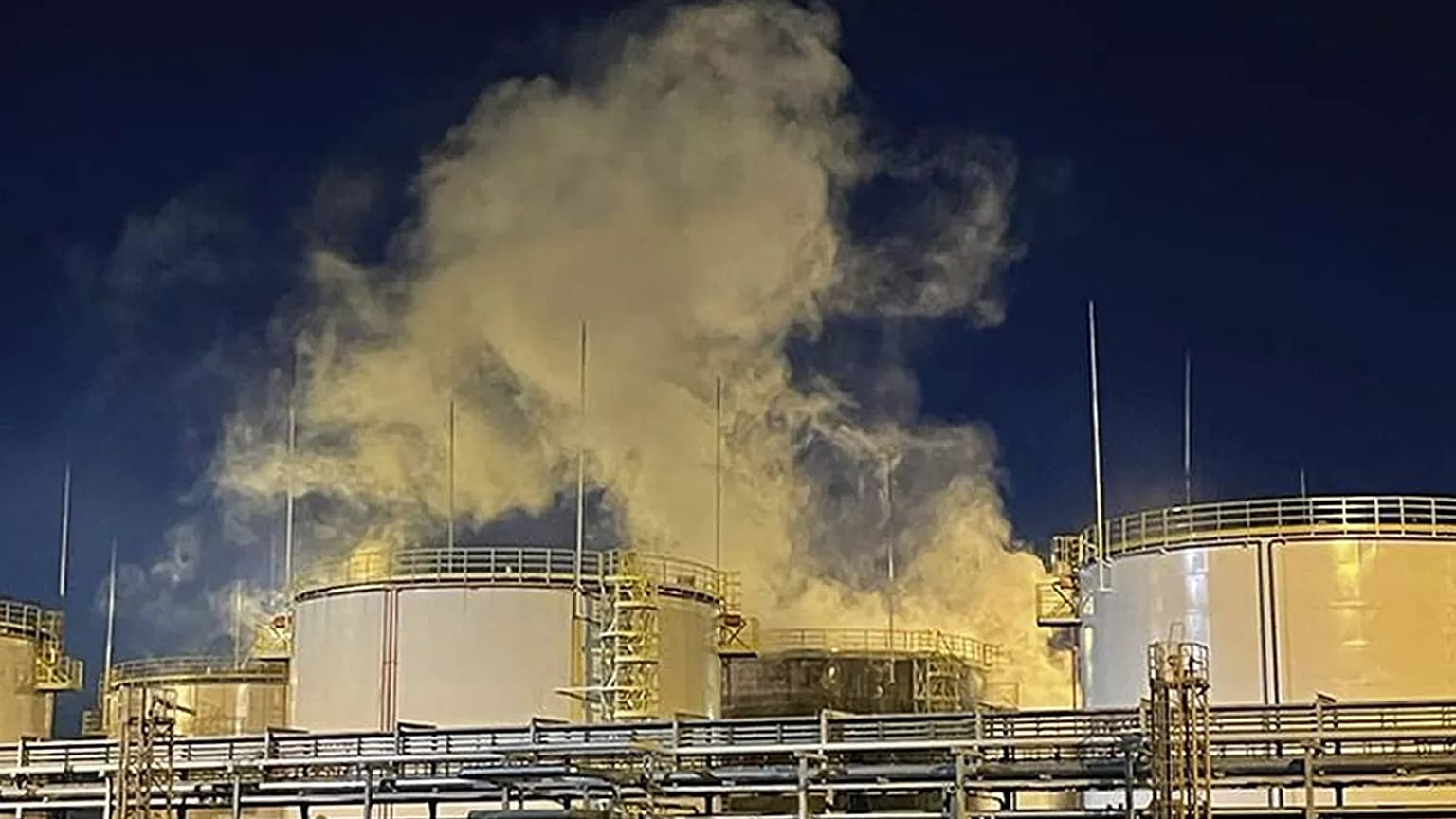
 smoke rises from the side of the Ilsky Oil Refinery manufacturing complex in the Krasnodar region in southern Russia.
Copyright AP/Krasnodar Gov. Veniamin Kondratyev Telegram channel

By Sasha Vakulina
Published on 

Ukraine has significantly intensified its attacks against Russia's energy sector over the past few weeks, managing to disrupt oil refining capacity, weakening Moscow’s war economy.

Ukraine has significantly intensified its attacks against Russia's energy sector over the past few weeks, inflicting significant losses on the primary source of financing of Moscow’s war machine.

Kyiv’s recent strikes on 10 Russian oil refineries have reportedly disrupted at least 17% of all of Russia’s refining capacity, an equivalent of 1.1 million barrels per day.

Ukraine’s targeted campaign is focused on refineries, oil depots and military-industrial sites. This way Kyiv disrupted Moscow’s ability to process and export oil. Ukraine’s campaign also created shortages in some Russian regions and in Moscow-annexed Crimea.

On Sunday, Kyiv targeted a gas terminal in the Leningrad region and an oil refinery in Samara

A source in Ukraine's Security Service (SBU) confirmed to The Kyiv Independent news outlet that the SBU was behind the attack on the liquefied natural gas terminal.

"Russia trades oil and gas through this terminal with the help of a 'shadow fleet'. Drone sanctions from the SBU reduce the inflow of foreign currency that Russia needs to wage war," the source said.

The General Staff of Ukraine's Armed Forces also confirmed that Military Intelligence (HUR), the Unmanned Systems Forces and other defence agencies were behind the strike on the Syzran oil refinery in Samara, which "specialises in the production of gasoline, diesel fuel, jet fuel, and other petroleum supplied to the Russian troops."

"The Syzran refinery has a design capacity of up to 8.5 million tons of crude oil per year, accounting for around 3.08% of Russia's total oil refining volume," General Staff wrote on Telegram.

Earlier this month, Ukraine also targeted the Lukoil refinery in Volgograd, the largest in southern Russia, as well as large refineries in the Saratov and Rostov regions.

The refinery hits come as Russia's seasonal demand for gasoline from tourists and farmers peaks.

Russia had already tightened its gasoline export ban in July to deal with a spike in domestic demand, even before Kyiv intensified its attacks.

There were shortages of gasoline in some areas of Russia-occupied regions of Ukraine, southern Russia and even the Far East.

In some areas there are huge queues at petrol stations and a system of coupons has been introduced recently. There are also reports in the Russian media that petrol is increasingly being sold only to organisations and businesses.

COMMENT: Can Russia weather Ukrainian drone attack fuel crisis?

COMMENT: Can Russia weather Ukrainian drone attack fuel crisis?
Ukraine has changed its game and is now targeting Russia’s oil refineries deep inside Russian territory with devasting effect. Some 13% of refining capacity has been taken off line in the last month, sparking a fuel crisis. It’s not Russia's first fuel shortage, and it can cope for now. / bne IntelliNews
By bne IntelliNews August 27, 2025

Russia is once again navigating a familiar crisis: surging gasoline prices, empty fuel pumps, and mounting pressure on its domestic supply system. This is not the first time Russia has faced a fuel crisis. They have been relatively common in the past, but unlike previous shortages, this year’s disruption may have more serious and lasting consequences. The difference, argues Sergey Vakulenko in a note for the Carnegie Endowment for International Peace, is the war.

“The drone attacks that began on August 2, 2025, have been different,” Vakulenko writes. “Ukraine clearly has more drones now and can send out attack swarms numerous enough to overwhelm Russia’s air defences.”

The Kremlin admitted that the attacks are starting to hurt this week. Ukrainian drone strikes have taken out 13-17% of Russia's oil refining capacity, resulting in a daily loss of about 1.1mn barrels that can be processed into gasoline and diesel, according to the Wall Street Journal.

This has compelled Russia to increase oil exports, while the US continues to exert pressure on China and India to reduce their Russian oil imports. The situation is further worsened by Western sanctions, which have been in place since 2022, hindering infrastructure repairs and maintenance. Over the past month, Ukraine has targeted more than ten Russian oil refineries. The fire at the Novoshakhtinsky refinery was finally extinguished six days after the attack on August 21 and major damage was done by another strike on the Ust Luga oil export terminal in the Baltic Sea last week. Eight refineries were hit in just August, some of them multiple times and the crucial Druzhba oil pipeline that transports oil from Siberia to Budapest was hit three times in two weeks, and is now out of action for at least a week.

At the same time, the conflict is increasingly fought with missiles. Russia is producing some 1,200 highly sophisticated missiles a year and has quadrupled its drone and missile salvos against Ukrainian targets this year, but Ukraine has in the last month rolled out its first Flamingo cruise missile and updated its Neptune missile, both of which are much more powerful and both of which can now hit targets deep inside Russian territory, without seeking permission from Ukraine’s western allies – the constriction previously placed on Nato-supplied missiles.

These upgraded strikes are doing far more damage than in the earlier stages when drone war first broke out, Vakulenko notes. They are a game changer. Kyiv has changed tactics and while the fighting was almost exclusively contained to Ukrainian soil for most of the last three years, now the Armed Forces of Ukraine (AFU) is taking the fight into Russia, aiming to cause “maximum damage—up to and including shutdowns” at Russian refineries.

By mid-August, Ukraine had succeeded in damaging key facilities including the Ukhta, Ryazan, Saratov, and Volgograd refineries, along with the Samara group of plants. While some of these supply lower-demand or export-oriented regions, refineries in the arc from Ryazan to Volgograd serve a populous area that includes agricultural zones and vacation destinations. On August 26, Russian media reported that fuel supplies to the island of Sakhalin have completely run out and almost every Russian region is running short of petrol.

This escalation coincides with the seasonal strain of Russia’s peak driving season. “This year [the attacks] began in August: a time when the oil market’s systemic problems traditionally come to the fore,” Vakulenko notes. Harvests drive agricultural demand, while summer holidays increase car use. Compounding the issue, regular maintenance has taken some refinery capacity offline, while the sky high interest rates have made it unprofitable to stockpile fuel in advance.

Russia’s long-standing efforts to control retail fuel prices—via formal mechanisms like dampener payments and informal bans on sharp price increases—are now blunting the market’s natural capacity to adapt. “This policy reduces the effectiveness of market signals and discourages producers from increasing supplies or stockpiling,” Vakulenko writes.

Wholesale gasoline prices surged in spring and hit new records in June. Since early August, prices have continued to climb, exceeding the all-time highs of the last fuel shortage in 2023.

Retail prices, constrained by regulation, have risen more slowly but steadily. “In the week beginning August 18, the wholesale price… approached the retail price,” Vakulenko notes, warning of pressure on company margins.

Yet the situation, while tense, is not yet critical. Most damaged refineries are still operating at reduced capacity, and deficits have been partially offset by rerouting supplies and drawing from state reserves. Vakulenko emphasises that “a lot of Russian vehicles and military equipment run on diesel, not gasoline,” and the country maintains a surplus in diesel.

With annual gasoline production exceeding domestic demand by up to 20%, and diesel output more than double, Russia still has room to manoeuvre, says Vakulenko.

Even if the attacked refineries—representing roughly 20% of refining capacity—shut down completely, the deficit could be filled through imports, particularly from Belarus, although Minsk is currently selling its refined oil products to Asia where the prices are higher. Although Ukrainian strikes targeted the Druzhba pipeline, Vakulenko notes that “repairs were swift,” and expects Druzhba to be fully functional again “within days.”

However, should the crisis deepen, more drastic interventions may be required. Spread over a vast territory, Russian air defences are clearly lagging the escalation. The government could abandon price controls, Vakulenko suggests, or temporarily permit lower-quality motor fuels to be sold. “If the worst comes to the worst, a crisis measure would be gasoline rationing.”

At present, these measures remain hypothetical. But the resilience of Russia’s fuel infrastructure, and the government’s willingness to adapt its policies, may soon be tested. “There is still a long way to go before the transport, agriculture, and industrial sectors—or, most importantly, the army—experience any significant fuel shortages,” Vakulenko concludes.

Ukraine unveils upgraded Neptune missile with extended range capabilities

Ukraine unveils upgraded Neptune missile with extended range capabilities
/ bne IntelliNews
By Ben Aris in Belrin August 26, 2025

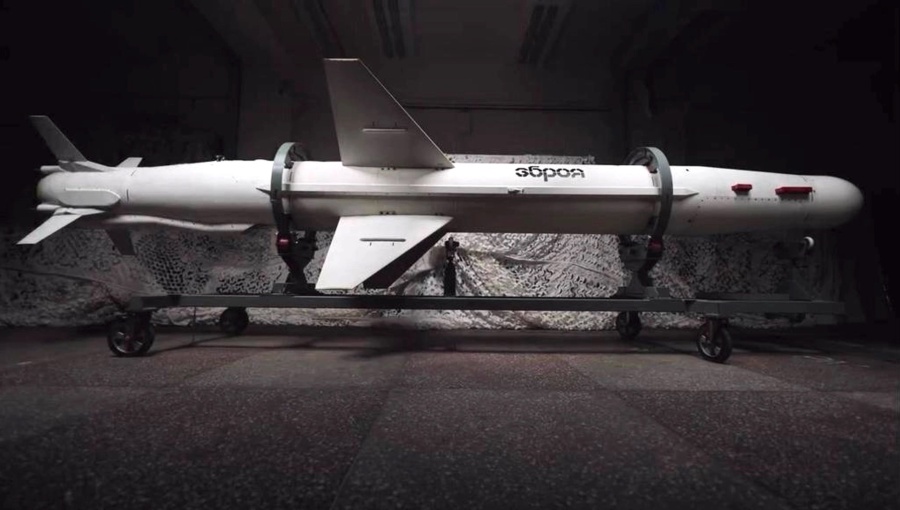
Ukraine has unveiled a new version of its domestically produced Neptune missile, the same weapon used to sink Russia’s Black Sea fleet flagship, the Moskva in April 2022, with a redesigned airframe, a significantly expanded range of up to 1,000 km and a bigger payload.

The updated missile was shown for the first time in a promotional video released by Ukrainian defence manufacturer Zbroya on August 25 to mark the country’s Independence Day. Displayed alongside other indigenous systems including the Bohdana howitzer and naval drones, the full-body footage reveals a visibly enlarged design compared to the original Neptune, The Kyiv Post reports.

Ukraine has rapidly upgraded its missile capacities this year as the drone war gives way to a missile war with Russia. Drones have dominated the fighting since the start of 2023, but recently Russia has increased its barrage of Ukraine using missiles four-fold. Ukraine has responded by developing its first long-range cruise missile, the Flamingo that has a range of 3,000km and carries around 1,250kg of explosive – ten-times more than regular drones. Currently, Ukraine is producing a reported seven Flamingos a month, approximately a tenth of Russia’s missile output.

Previously, Kyiv developed and tested its the Palyanytsia cruise missile that has a range of approximately 600-700 km, allowing it to target Russian military airfields. The Palyanytsia is a hybrid between a missile and a drone, which makes it unique and hard for Russian defences to counter but carries a much smaller payload. Despite the hype surrounding its introduction, the Palyanytsia does not seem to be in serial production and has not played an important role on the battlefield.

The Flamingo, on the other hand, could significantly shift the balance of power in Ukraine’s favour. Kyiv’s allies have been reluctant to supply Ukraine with powerful long-range missiles for fear of provoking a direct conflict between Nato and Russia. Last week, US Secretary for Defence Pete Hegseth introduced new restrictions on Ukraine’s use of US-supplied missiles, which all rely on US satellite data for navigation. However, there are no such restrictions on the use of Ukraine’s home-made missiles, which Kyiv has been using to target Russian refineries in particular and has caused a growing fuel crisis in Russia after refining throughput has been reduced by an estimated 10% in recent months.

Neptune specs

According to Ukrainian defence news outlet Militarnyi, the updated Neptune's larger body likely houses a bigger warhead and additional fuel capacity, giving it an extended operational range. “The missile shown in the video has a larger body, which would explain the updated missile’s stated range of 1,000 km,” Militarnyi reported.

Ukrainian President Volodymyr Zelenskiy confirmed in March 2025 that the Neptune upgrade had increased the system’s range from the 300km listed in a 2020 brochure to 1,000 km, The Kyiv Post reports. The missile was likely used in a long-range Ukrainian strike on the Russian naval base at Novorossiysk in May, a target located over 750km from launch points in Ukraine.

Ukraine has struck at least eight Russian refineries in August alone as well as the Druzhba oil pipeline that carries Russian oil from Siberia to Budapest and is now out of action for at least five days.

Defence analysts cited by Militarnyi suggest the enhancements may also include a new guidance system or terminal-phase targeting features such as an infrared homing sensor. Upgrade plans dating from 2023 included proposals to boost the warhead size from 150 kg to 350 kg, though the final specifications have not been disclosed, The Kyiv Post reports. The revised design also features larger stabilising fins, which may improve both range and in-flight manoeuvrability.

Initially developed as an anti-ship missile, the Neptune has since been adapted for land-attack missions, as Ukraine starts to expand its missile capabilities.


Will Ukraine’s new long-range Flamingo cruise missile put Russia on red alert?


Copyright Efrem Lukatsky/Copyright 2025 The AP. All rights reserved.

By Johanna Urbancik
Published on 26/08/2025

Ukraine unveiled the FP-5 “Flamingo,” a domestically made long-range cruise missile. Could it significantly impact Russia's war with its powerful capabilities?

As Russia continues to unleash a major wave of airstrikes across Ukraine, Kyiv revealed a domestically made long-range cruise missile that could prove a game-changer in the war.

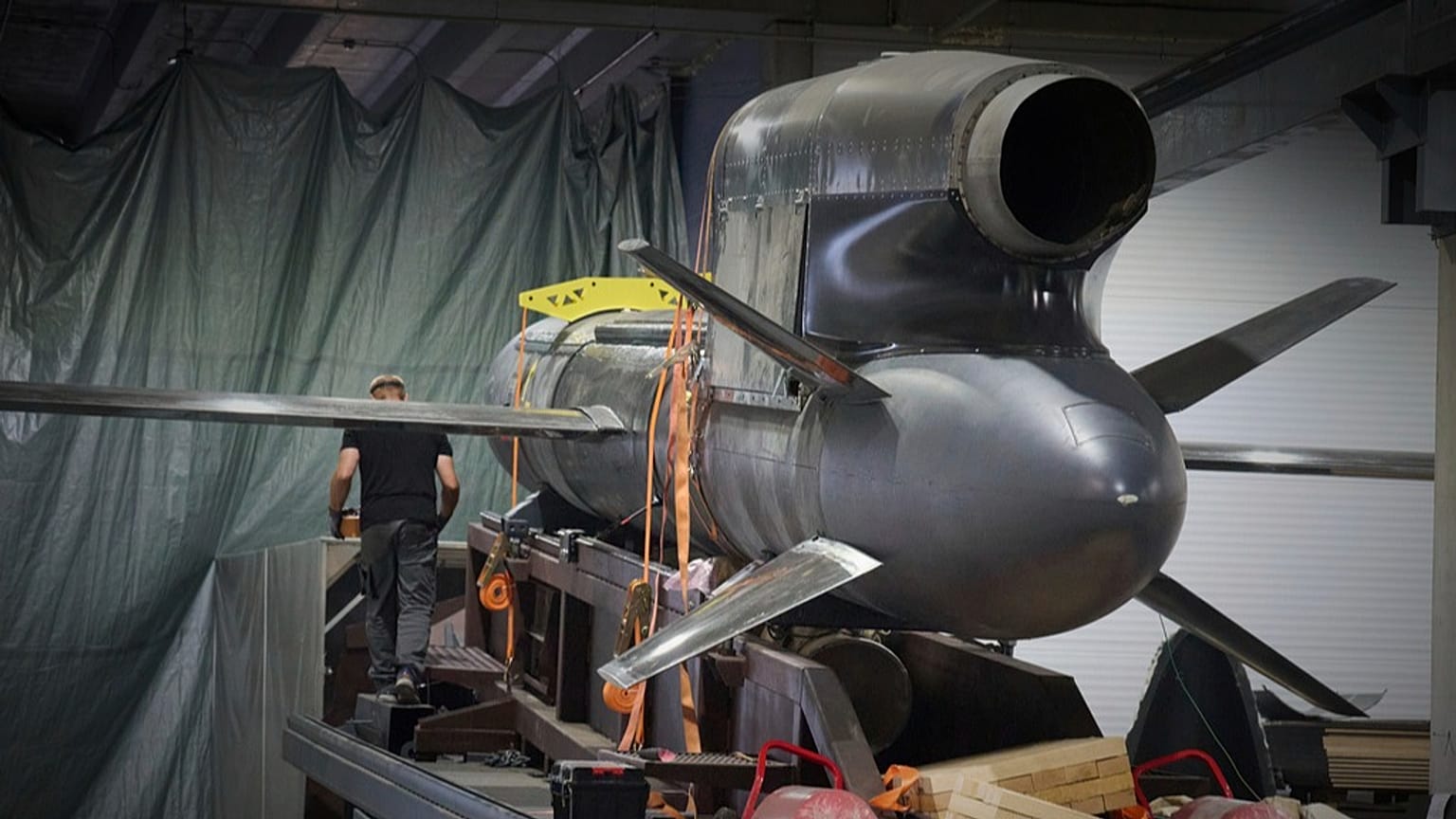
The FP-5 “Flamingo” missile is capable of travelling 3,000km and delivering a payload of 1,150kg, according to its maker, the Ukrainian defence start-up Fire Point.

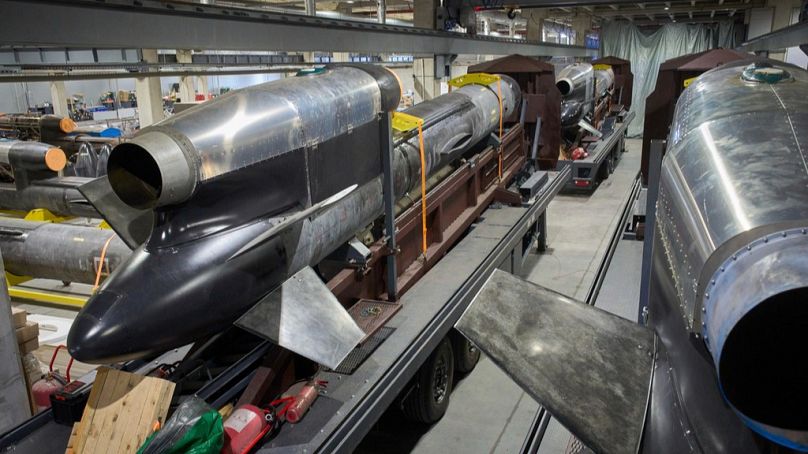
The firm said it is producing roughly one Flamingo per day, and hoped to build capacity to make seven per day by October. That would equate to more than 200 missiles each month, or some 2,500 a year.

Ukrainian President Volodymyr Zelenskyy said last week that the Flamingo had undergone successful testing and should go into mass production by February at the latest.

"The missile has undergone successful tests. It is currently our most successful missile," he told reporters.

"By December, we’ll have more of them,” Zelenskyy told reporters. “And by the end of December or in January–February, mass production should begin.”

Flamingo missiles are seen at Fire Point's secret factory in Ukraine on Monday, Aug. 18, 2025. Efrem Lukatsky/Copyright 2025 The AP. All rights reserved.

The Flamingo’s explosive capabilities greatly outweigh the long-range drones and mini-cruise missiles Ukraine currently employs, according to Fabian Hoffmann, a doctoral research fellow and missile expert at the University of Oslo in Norway.

The missile’s high terminal velocity, in combination with its heavy weight, means that the warhead penetrates deeper into the target before exploding, which significantly increases the destructive power, he wrote last week in his Substack entitled Missile Matters.

Second, the Flamingo’s large payload capacity produces a much wider lethal radius than existing Ukrainian missiles and drones, according to Hoffmann.

“Even achieving a steady monthly output of 30-50 missiles would give Ukraine a substantial supply of heavy cruise missiles that would likely have tangible effects on the war,” he wrote.

The unveiling of the Flamingo comes amid reports that the Pentagon has blocked Kyiv from using US-supplied long-range missiles to hit targets inside Russia, as US President Donald Trump tries to get his Russian counterpart Vladimir Putin to join peace talks.

Washington has stopped Ukraine from deploying the Army Tactical Missile Systems (ATACMS) against targets in Russia for several months, the Wall Street Journal reported on Saturday.

Speaking at a press conference the following day, Zelenskyy said that Ukraine could hit targets deep inside Russia without the need for coordination with Washington.

“As of today, we are using our domestically produced long-range weapons. And to be honest, we haven't been discussing such matters with the US lately," he said.
Controversy over Germany’s Taurus

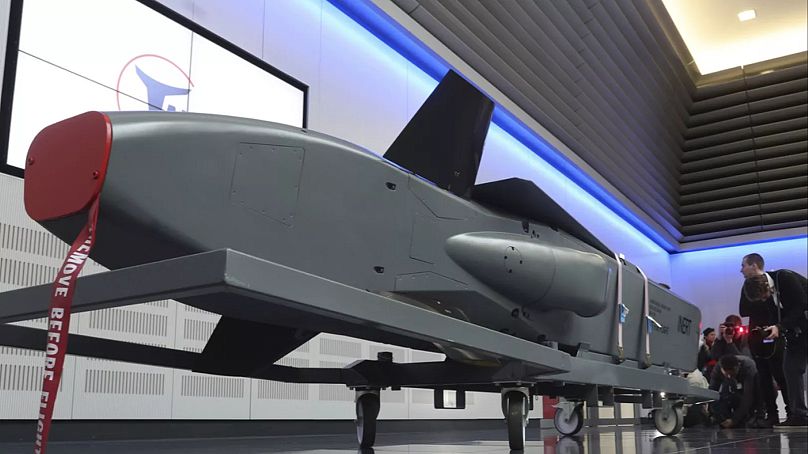
Zelenskyy’s remarks about the Flamingo followed months of speculation over whether Ukraine would receive the arms it has long sought: Germany’s Taurus cruise missiles.

Equipped with stealth technology, the Taurus has a range of up to 500km, which would be able to reach targets deep in Russia from Ukrainian soil.

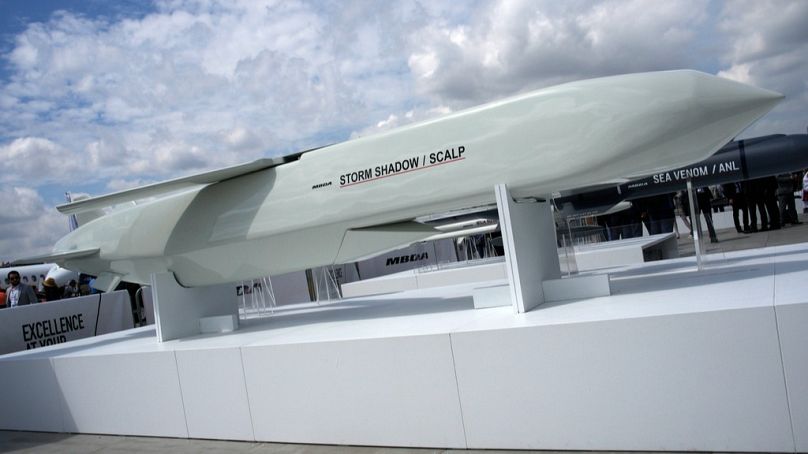
Ukraine has been asking Germany for the missiles to complement the long-range Storm Shadow missiles sent by the UK and France’s nearly identical Scalp cruise missiles.

The Storm Shadow cruise missile is on display during the Paris Air Show in Le Bourget, north of Paris, France, Monday, June 19, 2023 Lewis Joly/Copyright 2023 The AP. All rights reserved.

Germany is the second biggest provider of military aid to Ukraine after the US and has pledged this year to further ramp up its support.

However, ex-Chancellor Olaf Scholz refused to supply Ukraine with Taurus missiles because he did not want Germany to be directly involved in the war.

Austrian military expert Gustav Gressel told Euronews he believed the discussion around the Taurus in Germany was “a little absurd”.

Gressel pointed out that Scholz had said that the risk of escalation was significant, as were the training costs involved, even though the Ukrainians had already used the UK’s Storm Shadow “without it being the end of the world”.

‘Ukraine’s strongest security guarantee’


During the German election campaign, the country’s now-Chancellor Friedrich Merz signalled his intention to supply Ukraine with the Taurus missiles if he was elected.

In early July, Merz said that decision was still under consideration.

A fortnight later, German Defence Minister Boris Pistorius told the Financial Times that the country would not supply Ukraine with the Taurus missiles.

During Merz’s first official visit to Kyiv back in May, he said that the German government would stop disclosing details about military aid for Ukraine. The reason for this was “strategic ambiguity”, so that Russia would not know in advance which weapons were being supplied.

This was followed by an announcement that Berlin and Kyiv would work together to develop the industrial production of long-range missiles.

“Germany will finance the future production of long-range weapons systems in Ukraine,” the defence ministry said in a press release on 28 May.

"A considerable number of long-range weapons systems are to be produced in 2025. The weapon systems will be available to the Ukrainian armed forces quickly — the first ones can be deployed in just a few weeks.”

A Taurus KEPD 350 cruise missile during a visit by Bavarian Minister-President Markus Söder, March 5, 2024 AP Photo

It is unclear whether the German government has co-financed the Flamingo cruise missile.

In response to a question from Euronews, a spokesperson for Germany’s defence ministry said that “for reasons of military security, no questions can be answered about individual weapons systems or support for individual commercial enterprises”.

Gressel — the military expert — said that although the Taurus is more difficult to detect on radar and more manoeuvrable than the Flamingo, the latter “has a far greater range and warhead, so it has a far greater effect on the target”.

Whether or not the Flamingo will ultimately change the nature of the war in Ukraine depends on the intel that Kyiv has about its targets, according to Gressel.

"Is the target strongly defended? Are there gaps in the Russian air defence? Where and when are Russian fighter patrols in the air that could intercept the missile? The more precisely you know this, the better you can plan missions," he explained.

For Hoffmann of the University of Oslo, the mass production of the Flamingo does not only have major implications for Russia’s ongoing war, but also Ukraine’s post-war deterrence.

“That is Ukraine’s strongest security guarantee,” Hoffmann said in a post on X. “If it can field 3,000 to 5,000 of these (and similar) missiles, ready within 24 to 48 hours to destroy upward of 25% of Russia’s economic output, further Russian aggression becomes untenable.”

CATHOLIC NATIONALIST

Polish President Nawrocki vetoes bill aiding Ukrainian refugees, financing Starlink access

Polish President Nawrocki vetoes bill aiding Ukrainian refugees, financing Starlink access
President Karol Nawrocki blocked an aid bill aiming to extend support for Ukrainian refugees in Poland. / prezydent.pl


By Wojciech Kosc in Warsaw August 26, 2025

Ukraine may lose access to Elon Musk’s Starlink internet system after Polish President Karol Nawrocki blocked an aid bill aiming to extend support for Ukrainian refugees in Poland on August 25, Deputy Prime Minister and Digital Affairs Minister Krzysztof Gawkowski said. 

Poland currently covers the cost of Starlink services, which provide essential communications for Ukraine’s military and civilians during the war with Russia. Warsaw has paid over PLN300mn (€70mn) to secure Kyiv’s access to Starlink until the end of 2024.

Nawrocki vetoed legislation that would have extended state support for Ukrainians living in Poland beyond the current cutoff date of September 30. The president, in office only since August 6, also outlined plans to limit Ukrainians’ future entitlement to child allowances and healthcare, which, he said, the vetoed bill extended at the expense of Poles.

Gawkowski said the rejected bill also contained the legal basis for financing Starlink. “This is the end of Starlink internet,” Gawkowski wrote on X. A spokesperson for his ministry said payments could not continue after October 1 without new legislation.

Nawrocki said the Starlink arrangement could be restored if parliament adopts a bill he proposed by the end of September. The current majority in the parliament is, however, opposed to the president, considering his vetoes a way to undermine the Donald Tusk government before the next general election in 2027.

Meanwhile, Ukraine’s digital affairs ministry told public broadcaster Suspilne that discussions with Poland on Starlink funding were already underway, Reuters reported.

Poland has been one of Kyiv’s strongest allies since Russia’s 2022 invasion. While both the Tusk government and Nawrocki support Ukraine’s defence, they have also fomented a shift in public sentiment amid the costs of hosting some 1.5mn refugees. 

Economic reports say, however, that Poland, grappling with labour shortage, has gained much more thanks to Ukrainians than it has spent on them.

During his election campaign Nawrocki pledged to put “Poles first” and restrict rights for foreigners. Ukrainian families are currently eligible for PLN800 (€187) per child if their children attend Polish schools.

“I believe that child benefit should only be granted to those Ukrainians who make the effort to work in Poland, the same with healthcare,” Nawrocki told a press briefing.

Nawrocki on August 25 also announced plans to tighten criminal law by banning the promotion of Ukrainian national hero Stepan Bandera and his insurgent army, equating their symbols with those of Nazism and communism. 

Publicly promoting Nazi, fascist or communist ideas is punishable in Poland by up to three years in prison.

“I believe this bill should clearly address Bandera and equate the Bandera symbol in the criminal code with symbols corresponding to German National Socialism, commonly known as Nazism, and Soviet communism,” Nawrocki said.

Many Ukrainians honour Bandera as part of their independence struggle, while in Poland he is associated with massacres of civilians during World War 2.

A Ukrainian diplomatic source warned that “any politicised decisions to equate Ukrainian symbols with Nazi and communist symbols could provoke negative sentiments in Ukrainian society and require a response from the Ukrainian side,” according to Reuters.

UKRAINIAN NATIONALIST ARMY OUN–UPA AND THE NAZI GENOCIDE

Archaeology student finds 1200-year-old gold in his first excavation


Copyright Newcastle Üniversitesi

By Cagla Uren
Published on 26/08/2025 -

Dating to the 800s, the object is about four centimetres long and has a decorative ornament on one end.

An archaeology student from the US state of Florida has discovered a rare 9th-century gold object during her first excavation in the UK.

The student, Yara Souza, unearthed a gold medallion from the medieval period in about 90 minutes during work carried out by Newcastle University in the Redesdale area of Northumberland in July.

"I couldn't believe I found something so fast on my first dig, it was quite an exciting and slightly overwhelming experience," Souza told the Daily Mail.

According to the university, the object, which dates back to the 800s, is about four centimetres long and has a decorative ornament on one end. The piece was found close to the route of Dere Street, an important road connecting York and Edinburgh during the Roman Empire.

Related
Lions vs Gladiators? Archaeologists find gruesome evidence of ancient Roman bloodsports in York

This road continued to be used after the fall of Rome and became part of the A68 motorway, which today runs from Edinburgh, the Scottish capital, to the north-east of England.

According to experts, the gold object may have had a religious or ceremonial function. Gold was a high-status material used by the elite of the period, and Dere Street connected two major religious centres.

James Gerrard, Professor of Roman Archaeology at Newcastle University and Souza's supervisor, said: "This is an exciting discovery of exceptional quality. I am delighted for Yara that she has made such a find so early in her career."

Gerrard also pointed out that Dere Street was an important route in the post-Roman period, saying: "This object shows that high-status people continued to use the road. It may have been deliberately buried," he added.

Souza is studying archaeology at Newcastle University. Recalling that she was unable to take part in the excavations of the Roman fortress at Birdoswald last year due to illness, she said: "It was incredible to find something that had not seen the light of day for over a thousand years after waiting a year. I literally passed out," he said.
EU Commission labels alleged Libyan attack on NGO ship 'worrying development'


Copyright Alessandro Garofalo/LaPresse via AP

By Eleonora Vasques
Published on 26/08/2025  
EURONEWS


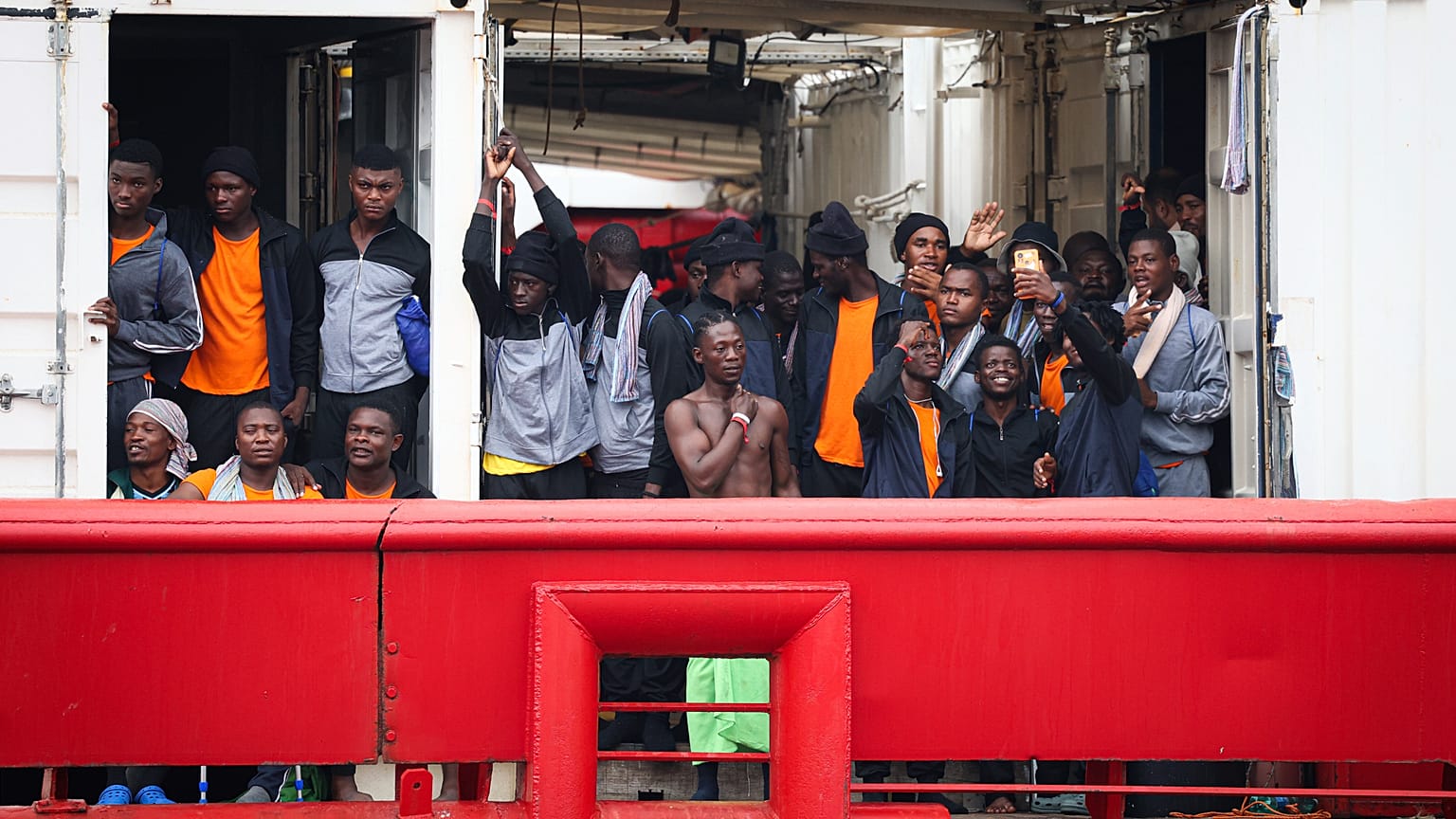
The European Commission considers an alleged Libyan coast guard shooting on the NGO boat Ocean Viking, which occurred on Sunday, a “worrying development”. This is one of several documented occasions on which the Libyan coast guard has apparently fired at rescue vessels from an EU-funded boat.

The European Commission is “establishing the facts” and talking to all sides about an alleged shooting by the Libyan coast guard at crew and survivors of the humanitarian NGO boat Ocean Viking, which occurred on Sunday in international waters.


“We have seen the press reports, we have reached out to the relevant Libyan authorities regarding this reported incident to clarify the facts. It is for the relevant Libyan authorities to now urgently shed light on what happened,” European Commission spokesperson Markus Lammert told journalists on Tuesday.

“It is obviously a worrying development that does not leave us indifferent. We are establishing the facts on that basis and will assess the situation and consider any possible action,” spokesperson Paula Pinho added.

The attack was conducted from a Corrubia-Class patrol vessel made in Italy and funded by the EU, according to the NGO, which previously came under attack from a similar patrol vessel in July 2023.


Two Corrubia-class patrol vessels were donated with EU funds to the Libyan coast guard during a ceremony held at the end of June 2023 in the southern Italian city of Messina. The donation was part of the EU–Libya cooperation framework on migration management.

However, documented attacks towards humanitarian and fishing vessels by the Libyan coast guard have aggravated cooperation between Brussels and the north African country.

For example, on 7 July 2023, one of the two patrol vessels donated in Messina were used by the Libyans to fire at the Ocean Viking while it was conducting a rescue in international waters.

On Tuesday, journalists asked whether after the facts of 2023, the European Commission took any action as a consequence of the shooting. However, the European Commission was unable to answer during the daily press conference.

“We have to come back to this. I'm not aware of this incident which happened a couple of years back, I'm afraid,” Lammert said.

“All these search and rescue operations need to operate with the required diligence and in full respect of international law and international maritime law,” he added.

Since the fall of dictator Muammar Gaddafi in 2011, Libya has been in a state of civil war, with rival governments and different areas controlled by thousands of local militias.

In the meantime, the country has become a transit hub for migrants coming from Africa, the Middle East, and Central Asia.

Militias involved in trafficking and smuggling have been documented committing abuses and torture against migrants over the years.

Despite these facts, the EU continues to cooperate with Libyan authorities to halt migrants from reaching European coasts.
Incident took place in international waters

Sunday's incident took place roughly 40 nautical miles off the northern Libyan coast. The Ocean Viking was approached by a patrol vessel operated by the Libyan coast guard, which asked the private vessel to leave the area, the NGO said.

The Libyan coastguard would have no authority to compel the NGO to move from international waters. The NGO claims that due to the threat and the track record of dangerous behaviour of the coast guard, it agreed to leave the area.

It then claims that while it was turning the engine to leave, two men started shooting at the Ocean Viking at head height for roughly 20 minutes.

No crew members and survivors were killed or wounded, but the NGO boat was heavily damaged.

“The attack caused bullet holes at head height, the destruction of multiple antennas, and four broken windows on the bridge, and several bullets struck and damaged the three rescue boats, along with other rescue equipment,” the NGO stated in a press release.

After the incident, the Ocean Viking issued a distress call, without receiving any assistance from nearby vessels, the NGO said.

Under international law, any boat in the area of another vessel in distress asking for assistance must respond and provide help.

Libya's authorities has been approached for comment.
WATER WARS

Pakistan blows up dam embankment as it braces for flood surge

Lahore (Pakistan) (AFP) – Pakistan authorities blew up an embankment next to a monsoon-engorged dam on Wednesday as flooding submerged one of the world's holiest Sikh sites.


Issued on: 27/08/2025 

Pakistan authorities blew up an embankment next to a flood-swollen dam during a brutal monsoon season, with a holy Sikh site submerged by floodwater © Syed Murtaza Ali / AFP

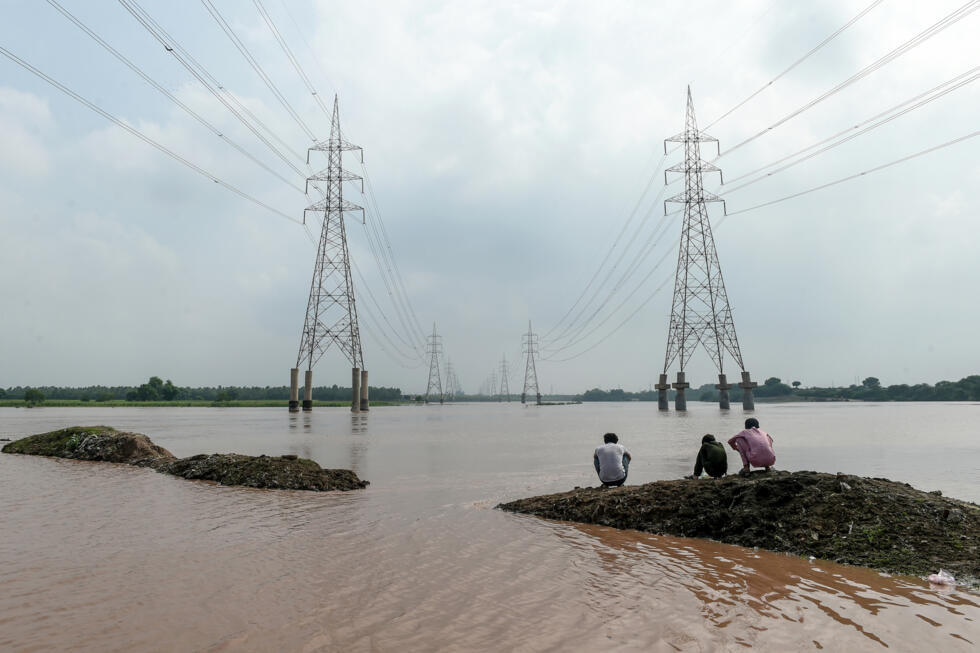
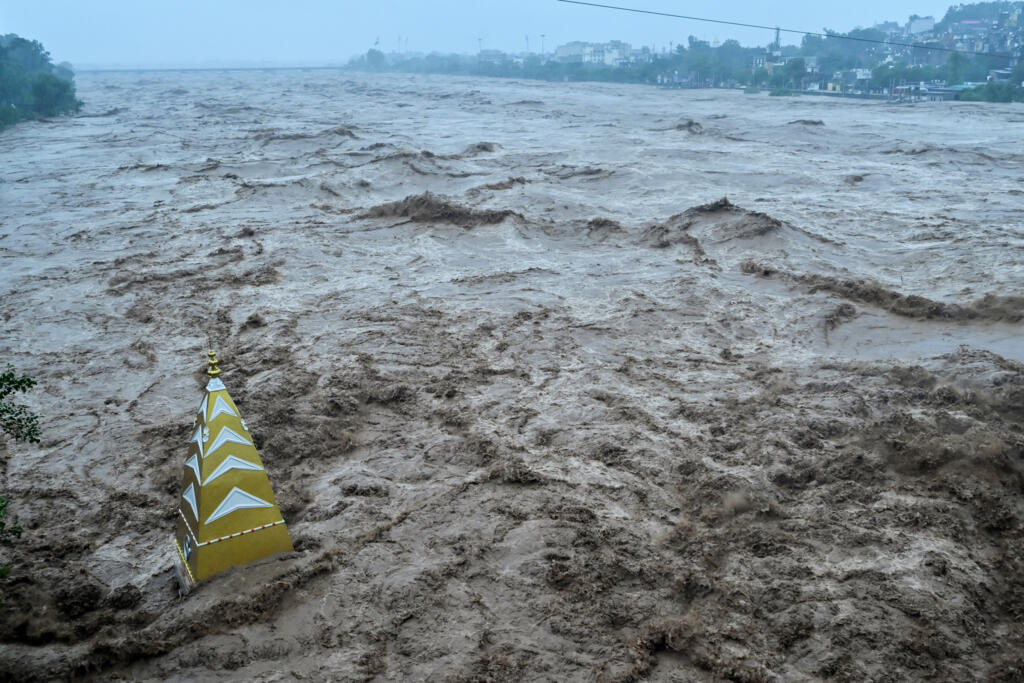
Three transboundary rivers in the east of the country have swollen to exceptionally high levels as a result of heavy rains across the border in India.

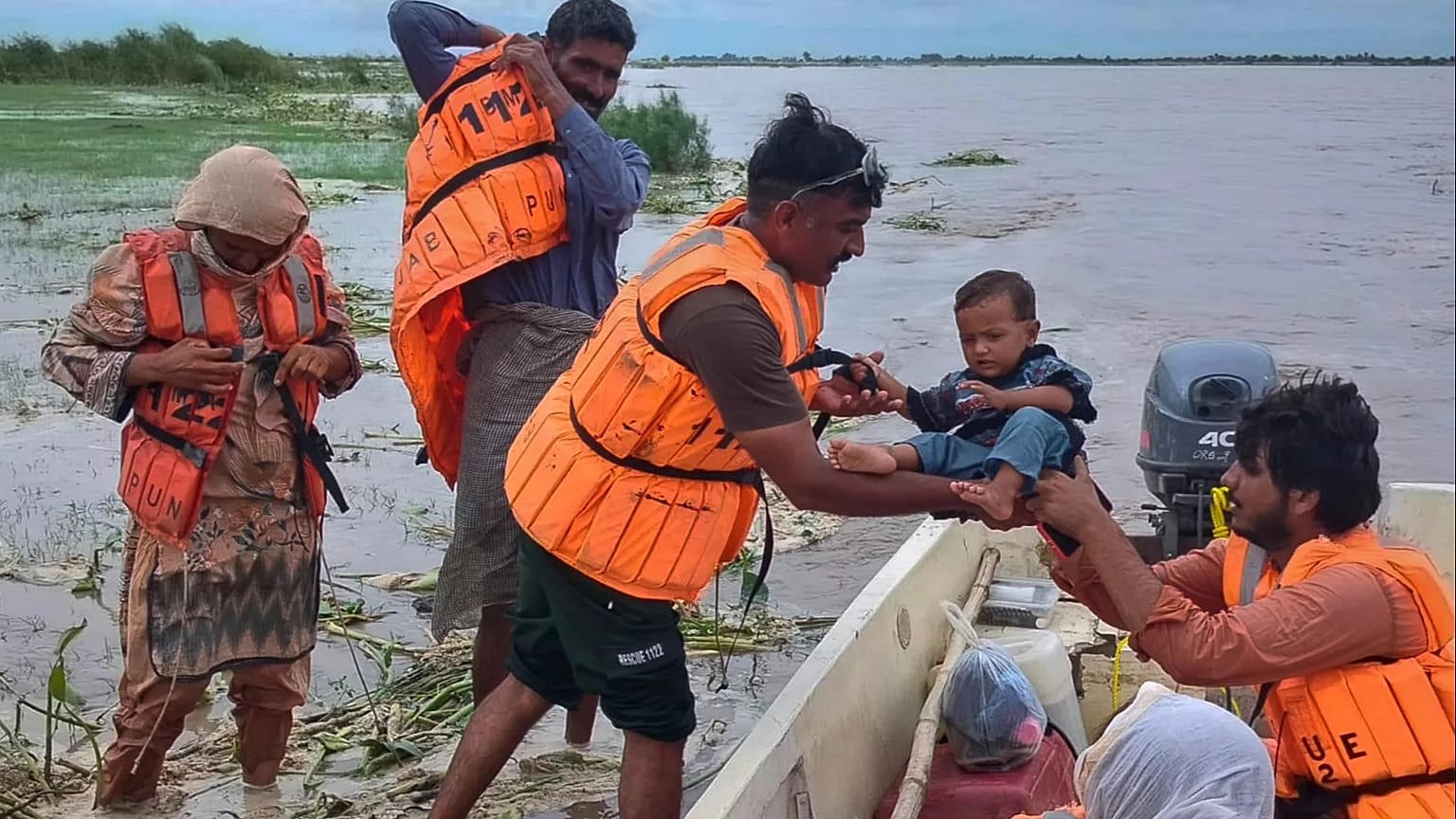
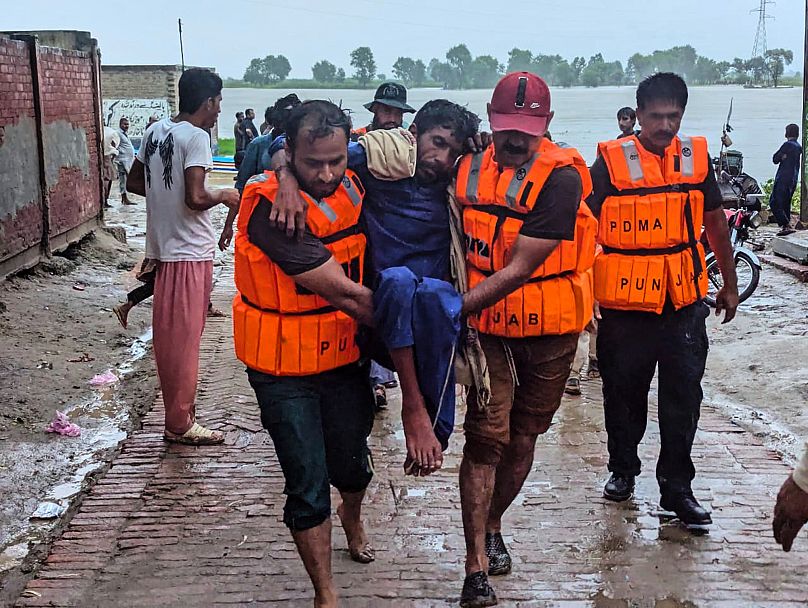
It has triggered flood alerts throughout Punjab province, home to nearly half of Pakistan's 255 million people. The army was also deployed to help evacuate tens of thousands of people and livestock near the Chenab, Ravi and Sutlej rivers.

Authorities carried out a controlled explosion of an embankment at Qadirabad dam on the Chenab River on Wednesday as the water levels rose.

"To save the structure, we have breached the right marginal embankment so that the flow of the water reduces," said Mazhar Hussain, the spokesperson for Punjab's disaster management agency.

The Kartarpur temple, where the founder of the Sikh faith Guru Nanak died in 1539, was submerged by floodwater near the border with India.

Five boats were sent to the sprawling site to rescue around 100 people left stranded.

Pakistan authorities said neighbouring India had released water from upstream dams on its side of the border, further increasing the volume of water reaching Pakistan.

Islamabad's foreign ministry said New Delhi had given advanced notice through diplomatic channels ahead of opening the dam spillways.

Indian government officials have not commented.

Disaster officials in Pakistan issued emergency alerts and advised those living near three flood-swollen rivers in Pakistan's Punjab province to move to safer locations during a brutal monsoon season © Syed Murtaza Ali / AFP

The disaster management authority issued emergency alerts and advised those living near the Chenab, Ravi, and Sutlej rivers to "immediately move to safe locations".

"I urge the public to evacuate the floodplains along the Ravi River, as the water flow is the highest since 1988," provincial disaster chief Irfan Ali said.

The flood surge "is expected to pass through Lahore tonight and tomorrow morning", he said of the Punjab capital.

Pakistan has been battered by a brutal monsoon season this year, with landslides and floods triggered by torrential rain killing more than 800 people since June.

© 2025 AFP


Floods, landslides kill at least 30 in India's Jammu region


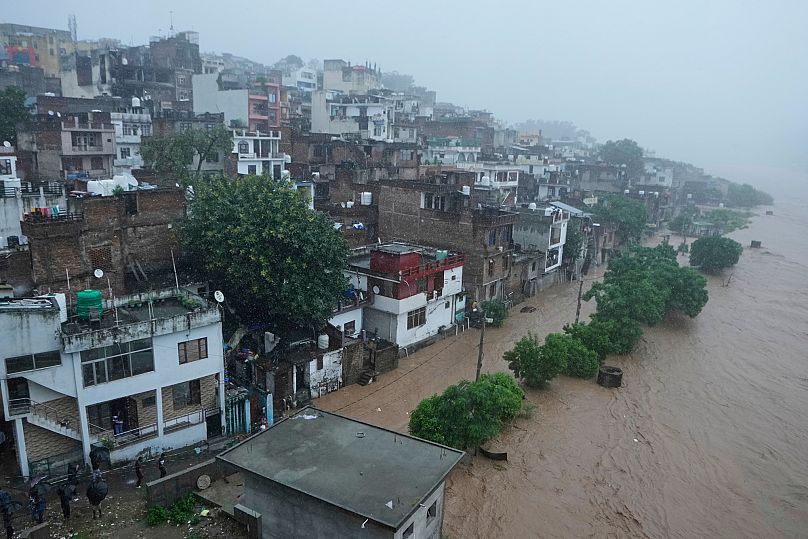
Srinagar (India) (AFP) – Floods and landslides triggered by heavy rains have killed at least 30 people in India's Himalayan region of Jammu and Kashmir, officials and local media said Wednesday.


Issued on: 27/08/2025 - 

Intense monsoon rainstorm in Indian-administered Jammu and Kashmir has caused widespread chaos © - / AFP

An intense monsoon rainstorm in the Indian-administered territory has caused widespread chaos with raging water smashing into bridges and swamping homes.

A landslide on the route to the famous Hindu shrine Vaishno Devi killed at least 30 people, a local disaster official told AFP.

Prime Minister Narendra Modi said the loss of lives was "saddening".

Floods and landslides are common during the June-September monsoon season, but experts say climate change, coupled with poorly planned development, is increasing their frequency, severity and impact.

Climate experts from the Himalayan focused International Centre for Integrated Mountain Development (ICIMOD) warn that a spate of disasters illustrates the dangers when extreme rain combines with mountain slopes weakened by melting permafrost -- and building development in flood-prone valleys.

ICIMOD warned in a statement this month that the wider Hindu Kush Himalaya region is suffering "accelerated glacier melt, shifting weather patterns, and an increasing frequency of disaster events" including floods.

Floods and landslides are common during the monsoon season, but experts say climate change is increasing their frequency and severity © - / AFP

The local administration said Wednesday that thousands had been forced to flee in the Jammu region.

Schools have been shut in the area, with the region's Chief Minister Omar Abdullah saying officials were struggling with "almost nonexistent communication".

The main Jhelum river in the Kashmir valley has also risen above the danger mark with authorities sounding flood alerts, including for the key city of Srinagar.

On August 14, powerful torrents driven by intense rain smashed into Chisoti village in Indian-administered Kashmir, killing at least 65 people with another 33 missing.

Floods on August 5 overwhelmed the Himalayan town of Dharali in India's Uttarakhand state and buried it in mud. The likely death toll from that disaster is more than 70 but has not been confirmed.

© 2025 AFP

Evacuations under way in eastern Pakistan as India releases water from swollen rivers


Copyright AP Photo


By Gavin Blackburn
Published on 26/08/2025
EURONEWS

The move came a day after New Delhi alerted Islamabad about possible cross-border flooding, marking the first public diplomatic contact between the two nuclear-armed rivals in months.

Pakistan has evacuated tens of thousands of people to safer areas after neighbouring India released water from overflowing dams and swollen rivers into low-lying border regions, officials said on Tuesday.

The move came a day after New Delhi alerted Islamabad about possible cross-border flooding, marking the first public diplomatic contact between the two nuclear-armed rivals in months.

Pakistan’s National Disaster Management Authority (NDMA) said it had issued an advance alert to its Punjabi counterparts about a surge in the Sutlej River and the risk of flooding and that evacuations from various districts in the eastern Punjab province were underway.

In a statement, it said rescuers evacuated more than 14,000 people from Kasur, a district in Punjab province, while over 89,000 were moved to safer ground from the city of Bahawalnagar, near the Indian border.

The NDMA said authorities have urged residents to stay away from rivers, streams and low-lying areas, avoid unnecessary travel and follow alerts issued through the media, mobile phones and the NDMA's disaster alert app.

Rescue workers evacuate villagers from a low-lying area due to rising water level in the Sutlej River in Pakistan's Punjab province, 26 August, 2025 AP Photo

The latest flood alert and evacuation drive by Pakistan comes as heavy monsoon rains continue to batter both South Asian countries.

In Pakistan’s northwest, many residents complained this month that they had received no warning before flash floods struck the district of Buner, killing more than 300 people.

Officials have said the devastation was caused by a sudden cloudburst, which could not have been predicted, and that many of the victims were living along natural water pathways.

Nationwide, floods triggered by seasonal rains have killed more than 800 people in Pakistan since 26 June.

In Kashmir, which is split between India and Pakistan and claimed by both in its entirety, at least 65 have also died and hundreds have been displaced in the Indian-administered Jammu area.

Many of the region's rivers and tributaries eventually flow into Pakistan and the part of Kashmir it controls.

On Tuesday, Indian officials said most rivers and streams were overflowing, with muddy waters inundating homes in several places and damaging roads and bridges. Water levels in multiple rivers continued to rise in the region.

People watch a swelling River Tawi from the roof of their houses in Jammu, 26 August, 2025 AP Photo

According to the Indian Meteorological Department, rains should persist until late Tuesday.

In recent months, Pakistan has witnessed multiple cloudburst floods and higher than normal rainfall. Pakistan’s annual monsoon season runs from July to September.

Scientists and weather forecasters have blamed climate change for heavier rains in recent years in the region.

This year's heavy rains have raised fears of a repeat of the 2022 downpour that inundated a third of the country and killed 1,739 people.

Additional sources AP

Pakistan’s monsoon misery: nature’s fury, man’s mistake


By AFP
August 26, 2025


People wade through a flooded street after heavy rainfall in Karachi 
- Copyright AFP Hector RETAMAL


Shrouq TARIQ, Juliette MANSOUR, with Sameer MANDHRO in Karachi

Floodwaters gushing through mountain villages, cities rendered swamps, mourners gathered at fresh graves — as Pakistan’s monsoon season once again delivers scenes of calamity, it also lays bare woeful preparedness.

Without better regulation of construction and sewer maintenance, the annual downpours that have left hundreds dead in recent months will continue to kill, experts say.

Even Prime Minister Shehbaz Sharif appeared to agree as he toured flood-stricken northwestern Khyber Pakhtunkhwa province last week, where landslides killed more than 450 people.

“Natural disasters are acts of God, but we cannot ignore the human blunders,” he said.

“If we keep letting influence-peddling and corruption control building permits, neither the people nor the governments will be forgiven.”

Pakistan is among the countries most vulnerable to climate change, with limited resources for adaptation.

In the devastated mountain villages the prime minister visited, and beyond, residential areas are erected near riverbeds, blocking “natural storm drains,” former climate change minister Sherry Rehman told AFP.

Entrepreneur Fazal Khan now recognises the “mistake” of building too close to the river.

His home in the Swat Valley was destroyed first by 2010 floods and then again in the 2022 inundation that affected nearly four million Pakistanis.

“On August 15, once again, the floodwater surged through the channel and entered our home,” the 43-year-old father said.

– Man-made mistakes –


Since it began in June, this year’s monsoon has killed around 800 people and damaged more than 7,000 homes, with further downpours expected through September.

While South Asia’s seasonal monsoon brings rainfall that farmers depend on, climate change is making the phenomenon more erratic, unpredictable and deadly across the region.

By the middle of this month, Pakistan had already received 50 percent more rainfall than this time last year, according to disaster authorities, while in neighbouring India, flash floods and sudden storms have killed hundreds.

Extractive practices have also compounded the climate-related disasters, with cash-strapped but mineral-rich Pakistan eager to meet growing American and Chinese demand.

Rehman, the former minister, said mining and logging have altered the natural watershed.

“When a flood comes down, especially in mountainous terrain, a dense forest is very often able to check the speed, scale and ferocity of the water, but Pakistan now only has five percent forest coverage, the lowest in South Asia,” she said.

Urban infrastructure, too, has faltered.

Days after villages were swept away in the north, a spell of rain in the south brought Pakistan’s financial capital, Karachi, to a standstill.

The coastal megacity — home to more than 20 million people — recorded 10 deaths last week, with victims electrocuted or crushed by collapsing roofs.

A Human Rights Commission of Pakistan (HRCP) report said brown water inundating streets is not only the result of rain but “clogged drains, inadequate solid waste disposal, poor infrastructure, encroachments, elitist housing societies… and so on.”

Published in the wake of 2020’s deadly floods, the report still rings true today.

– ‘Negligence’ –

According to the commission, the problems are “inherently political” as various parties use building permits to fuel their patronage networks — often disregarding the risks of constructing on top of drainage canals.

In some areas, “the drain has become so narrow that when high tide occurs and it rains simultaneously, instead of the water flowing into the sea, it flows back into the river,” urban planning expert Arif Hasan said in an interview after the 2022 floods.

In the sprawling, rapidly swelling city, the various authorities, both civil and military, have failed to coordinate urban planning, according to the rights commission.

As a result, what infrastructure does get built can solve one problem while creating others.

“Karachi isn’t being destroyed by rain, but by years of negligence,” said Taha Ahmed Khan, an opposition lawmaker in the Sindh provincial assembly.

“Illegal construction and encroachments on stormwater drains, along with substandard roads… have only worsened the crisis,” he added.

Karachi Mayor Murtaza Wahab says he has been asking Islamabad every year for help financing the revamping of drainage canals, to no avail.

“It’s easy to suggest that drainage capacity should be enhanced, but the cost is so high that it might require spending almost the entire national budget,” he told AFP.

Yet during June’s budget vote, the opposition accused the city of having spent only 10 percent of funds earmarked for a massive development project.

The five-year plan, designed with international donors, was supposed to end the city’s monsoon suffering by the end of 2024.

But nearly a year later, there is no respite.