It’s possible that I shall make an ass of myself. But in that case one can always get out of it with a little dialectic. I have, of course, so worded my proposition as to be right either way (K.Marx, Letter to F.Engels on the Indian Mutiny)
Wednesday, August 27, 2025
ANTISEMITISM
Macron warns Netanyahu 'the fight against anti-Semitism cannot be exploited'
In a letter to the Israeli prime minister published on Tuesday, French President Emmanuel Macron has rejected Benjamin Netanyahu's accusation that France is fuelling anti-Semitism through its planned recognition of the Palestinian state.
Issued on: 27/08/2025
Benjamin Netanyahu and Emmanuel Macron at a joint press conference in Jerusalem, 24 October, 2023. AP - Christophe Ena
In the letter, published by French newspaper Le Monde, Macron said Netanyahu's claims of French inaction against anti-Semitism were "unacceptable and offensive to France as a whole", and warned Israel’s leader against a "murderous headlong rush" in Gaza.
He added that: "The fight against anti-Semitism must not be exploited for political ends."
The row was sparked when Netanyahu wrote to Macron on 17 August, expressing his concern over "the alarming rise of anti-Semitism in France" and accused the French president of "feeding the fire" by signalling his intention to recognise Palestinian statehood.
The Israeli leader argued that anti-Semitic incidents in France had risen since Macron’s statements about Palestine and accused the French government of a "lack of decisive action".
The Élysée swiftly rejected the claims, and in his letter published yesterday Macron underlined France’s record in combating anti-Semitism – which he said had historically been fuelled by the far right but today also came from segments of the far left.
He stressed: “I remain, and will remain, the guarantor of the imperative need to fight this abomination, everywhere and always.”
Figures from France’s interior ministry show there have been 504 anti-Semitic incidents recorded between January and May this year – a decline of 24 percent compared to 2024, although still more than double the level of 2023.
The issue is particularly sensitive in France, which is home to both the largest Jewish community in Western Europe – at around half a million people – and a sizeable Arab-Muslim population.
While Macron initially stood firmly with Israel following the Hamas attacks on 7 October 2023, he has since sharpened his criticism of Netanyahu’s Gaza strategy.
In his letter, he urged the prime minister to end "the illegal and unjustifiable recolonisation of the West Bank" and embrace international efforts for "peace, security and prosperity".
Recognising a Palestinian state, Macron insisted, was not an endorsement of Hamas but instead the "only way to eradicate" the group and to spare young Israelis a future of endless war.
"The Palestinian state must constitute the end of Hamas," he wrote.
Washington too has entered the diplomatic row, with the United States ambassador to France Charles Kushner – father of President Donald Trump's son-in-law Jared Kushner – sending Macron a letter echoing Netanyahu’s arguments.
He was summoned to the French foreign ministry on Monday.
Former player comes out as bisexual in Australian Rules Football first Sydney (AFP) – A former Australian Rules star on Wednesday came out as the first openly bisexual or gay man in the sport's long history, a move hailed as "breaking decades of silence".
Australian Rules traces its roots back to 1858 and is the country's most popular spectator sport, but it has long been scarred by homophobia and racism.
Mitch Brown, who played 94 games for the Perth-based West Coast Eagles between 2007 and 2016, said his bisexuality was a "huge factor" in his retirement aged 28.
No current or former AFL player has previously said publicly that they were gay or bisexual, local media and LGBTQ advocates said.
Brown hopes others will now feel emboldened to follow his lead.
"I played in the AFL for 10 years for the West Coast Eagles, and I'm a bisexual man," Brown, now 36, told youth-focused publication The Daily Aus.
Australian Rules, a dynamic kicking and passing game similar to Gaelic football, is played in a "hyper-masculine environment", Brown said.
Adelaide's Izak Rankine was hit with a four-match ban last week for a homophobic slur against an opponent.
Brown said he became good at hiding parts of himself, not just his sexuality but also "my anxiety, my worries in life, I could bury them so deep".
"It was never once an opportunity to speak openly or explore your feelings or questions in a safe way," he added.
The former player said he had often seen or heard homophobic remarks but had not spoken up for fear of "people thinking that I was gay or bisexual".
He said: "I remember two people having a conversation around how they would feel having a shower next to a gay man, and one of the players said, 'I'd rather be in a cage full of lions than have a shower next to a gay man'."
"I don't believe that this is about me," Brown said.
"It's not about Mitch Brown being the first at all. For me, it's about sharing my experience so others can feel seen."
'Opens the door'
Brown's comments drew praise from gay rights groups as well as Australian Rules clubs and officials.
Australian LGBTQ advocacy group Health Equity Matters hailed his "strength and honesty".
"For over a century of AFL competition, no male player has identified as openly bisexual or gay," said chief executive Dash Heath-Paynter.
"Mitch's announcement breaks through decades of silence and opens the door for others who may be on their own journey."
He added: "The AFL must do some deep thinking about the measures needed to make the code safe and inclusive for players, officials and volunteers."
The AFL players' union last week called for a "more effective and united approach" in tackling homophobia following Rankine's suspension.
He was the sixth player banned for similar incidents in the past 16 months.
The AFL, the governing body, has acknowledged that more work needs to be done to tackle the problem, without spelling out what was planned.
AFL chief executive Andrew Dillon praised Brown's "great courage today".
"This is an important moment for him, and for our entire game," he said.
West Coast Eagles called their former defender "courageous".
"His honesty about his experiences reminds us that we all have work to do in creating truly inclusive and welcoming spaces within our game across the country," the club said.
It added: "Thanks Mitch, we are incredibly proud to call you one of our own."
Nigerian firm revolutionises the world of prosthetics with bionic arms
Issued on:
And finally, a prosthetics firm in Nigeria has created a breakthrough that's changing the lives of amputees -- bionic arms. In the state of Aqua Ibom, the company's humanoid bionic arms are not only functional and humanlike to match Nigerians' skin tones, but the prosthetics work with the signals sent from the brain to different hand muscles. They hope to make their products accessible and inclusive to amputees worldwide. Story by Emily Boyle.
War-torn Sudan is in the grips of one of its worst cholera outbreaks in years. More than 100,000 people have been infected by the disease and over 2,400 lives lost since the outbreak was declared last year. The war has been fuelling the crisis, forcing mass displacement and as people move, so does the disease. Cholera has now crossed into neighbouring Chad, where thousands have sought refuge. In the east of the country, at least 68 deaths have been reported in just one month. Aid agencies are warning that if urgent action isn't taken, the region could be pushed to the brink of a wider epidemic. One of those NGOs is Solidarités International. Its executive director Kevin Goldberg spoke to us in Perspective.
This week, France in Focus is shining a spotlight on the father of modernist architecture, on the 60th anniversary of his death. Franco-Swiss master Le Corbusier laid the foundations for a new epoch, with his revolutionary 1923 book "Towards an Architecture" acting as a blueprint for architects to this day.
Le Corbusier is best known for his avant-garde urban housing projects, like the Cité Radieuse building in Marseille. The UNESCO World Heritage site attracts over 70,000 visitors a year.
Outside of France, he created large-scale cities like Chandigarh in India, and inspired renowned architects Oscar Niemeyer and Lucio Costa when building the new Brazilian capital Brasilia.
But his architectural aesthetic was not always showered with praise, with critics calling his urban housing projects soulless. Over the last decade, evidence has also surfaced showing that Le Corbusier had alleged ties to fascist groups and spent time with the French collaborationist regime in Vichy during World War II.
FRANCE 24's Jennifer Ben Brahim looks at what made Le Corbusier one of the most revered but also reviled architects of the 20th century.
‘We are painted as targets’: How a secret Israeli unit puts Gaza journalists in the crosshairs
Israel’s army is using a secret unit to shape narratives around Gaza, portraying Palestinian journalists as Hamas operatives to justify strikes. Analysts say the tactic silences reporters and controls the story in one of the world's deadliest conflicts for journalists.
Israel’s war in Gaza has not only been fought with drones, tanks and air strikes. It has also been waged with words, videos and carefully crafted narratives. At the heart of that effort is the army’s shadowy "Legitimisation Cell", a communications unit tasked with shaping international perceptions of the conflict.
According to the independent Israeli media outlet +972 Magazine, its mission is clear: to scour the lives of dead and living journalists for any trace of Hamas links, however tenuous, to justify killing them.
More than a dozen journalists have been killed in Israeli air strikes in Gaza in recent weeks, highlighting what analysts describe as a deliberate military strategy to criminalise Palestinian reporting.
"The key task of the 'Legitimisation Cell' is to undermine the work done by Palestinian journalists and provide the excuse to kill them," said political scientist Ahron Bregman.
The Legitimisation Cell monitors reports from Gaza and pushes out counter-narratives on social media and international airwaves. In practice, it often portrays Palestinian reporters as Hamas operatives – claims that press advocates and analysts say are flimsy at best.
"The links Israel establishes between Palestinian journalists and Hamas are often weak, but in Israel’s Hasbara war [the public diplomacy of Israel voiced by the IDF or the PM's office] it is good enough to justify their killing," Bregman explained.
A war of narratives
The pattern has been evident in multiple high-profile cases. In early August, Al Jazeera correspondent Anas al-Sharif was killed alongside four of his colleagues in a strike outside Gaza City’s Shifa Hospital. The Israeli army quickly circulated documents claiming he had been a Hamas operative since 2013. Yet even if taken at face value, the files showed his last contact with Hamas was in 2017 – years before the current war.
Al-Sharif, 28, had spent months covering northern Gaza, reporting on starvation and relentless air strikes. "I never hesitated for a single day to convey the truth as it is, without distortion or falsification," he wrote in a message prepared before his death.
A similar tactic followed the killing of journalist Ismail al-Ghoul in July 2024, along with his cameraman. Weeks later, the army described him as a "Nukhba terrorist", a Hamas special forces branch, citing a 2021 document allegedly retrieved from a Hamas computer. But the same document listed him as receiving his rank in 2007 – when al-Ghoul was just ten years old.
An anonymous journalist working in Gaza told FRANCE 24 the Legitimisation Cell’s tactics are "alarming", saying they put reporters’ lives at risk by linking them to armed groups.
“We already work under constant fear – air strikes, losing colleagues, being silenced. Now the threat is also reputational, stripping us of international support and protection,” the journalist said. “It’s a systematic effort to delegitimise our voices and block the truth about Gaza from reaching the world. We are painted as targets, not professionals reporting the facts.”
In 2024, the organisation Forbidden Stories, which brings together journalists from around the world, investigated the killing of nearly a hundred Palestinian reporters by the Israeli army as part of its Gaza Project.
"The Israeli army participates in disinformation around journalists to suggest that all journalists operating in Gaza are Hamas agents," Executive Director Laurent Richard told Radio France.
"The reality is far more nuanced and complex…It usually starts with rumours and articles on sites close to the Israeli government, claiming a particular journalist is in fact a terrorist. Then, weeks or months later, that journalist is targeted by a drone." 'The worst conflict for reporters'
On Monday, Israel struck southern Gaza’s main hospital twice, killing at least 20 people, including five journalists, according to medical officials. Reporters Without Borders (RSF) condemned the strikes as part of Israel’s "progressive elimination of information in Gaza" and called for an emergency UN Security Council meeting.
Multiple journalists killed by Israeli strikes on Gaza hospital
"How far will the Israeli armed forces go in their efforts to gradually eliminate information in Gaza? How long will they continue to defy international humanitarian law?" said RSF Director Thibaut Bruttin.
Media watchdogs estimate that around 200 journalists have been killed in nearly two years of fighting between Israel and Hamas, making Gaza the deadliest conflict for journalists in modern history. In April, Brown University’s Watson Institute described it as "quite simply, the worst ever conflict for reporters".
In this family handout photo, Riyad Dagga, center, and other relatives pray over the body of his daughter, freelance journalist Mariam Dagga, 33, during her funeral after she was killed in a double Israeli strike on Nasser Hospital in Khan Younis, southern Gaza Strip, on August 25, 2025. AP
"Israel kills Palestinian journalists as if they were flies," Bregman said. "The Israeli method is simple: they allow into the Gaza Strip journalists and influencers they believe will support the Israeli narrative, and silence – often with bullets – those who contradict the Israeli narrative." Controlling the story
Aside from the case of al-Sharif, Israel maintains that its operations do not intentionally target journalists, asserting that air strikes are aimed solely at militants and military infrastructure. The IDF did not immediately respond to requests for comment on the existence or activities of the Legitimisation Cell.
Following the latest hospital strike, the army’s chief of staff ordered a preliminary inquiry, stressing that the IDF "does not in any way target journalists as such".
But press freedom groups say the pattern is clear: reporters smeared as militants, then killed in strikes justified by those same allegations. For Bregman, the logic is about information control, not battlefield necessity.
"This is all about Hasbara and controlling the narrative Israel wants the world to believe in. It has nothing to do with security and military operations," he said.
Israel extends its control over the Gaza narrative beyond the conflict zone, strictly regulating foreign reporting by allowing access only to journalists embedded with its forces
"This is one of the rare times in modern history when a conflict of this scale cannot be covered by journalists who wish to report from the ground," Richard said. "When a country refuses access to foreign journalists in a war zone, it poses a major democratic problem regarding access to information."
The Legitimisation Cell is more than a PR tool. It embodies the militarisation of information, where every word, image, or report is scrutinised as a potential threat. In this framework, journalists are not just messengers but become targets themselves.
"Being a journalist doesn't mean being a target, but unfortunately the Israeli army tries to label us as such, traumatizing both the public and reporters themselves,” the anonymous reporter said.
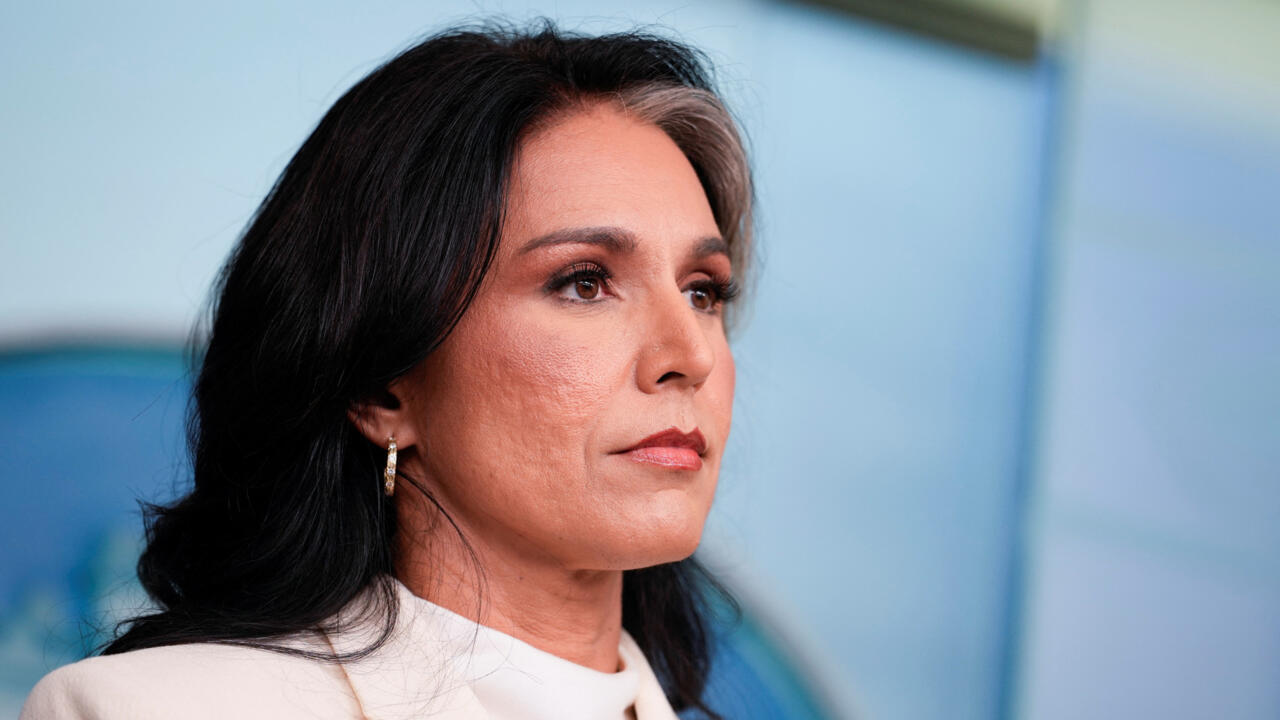
Has the US shut its ‘Five Eyes’ allies out of intelligence on Ukraine-Russia peace talks?
US media has accused Director of National Intelligence Tulsi Gabbard of refusing to share information from Ukraine-Russia peace negotiations with Washington’s closest allies – to the potential benefit of Russian President Vladimir Putin. Are cracks appearing in the West's longstanding anglosphere “Five Eyes” intelligence alliance?
Are US intelligence services withholding information from their closest allies on peace negotiations with Russia and Ukraine?
According to anonymous intelligence officials, a memo issued by Gabbard weeks ago explicitly ordered that all information on Russia-Ukraine peace negotiations be withheld from US allies, US news channel CBS reported on August 22.
In the memo, the talks were reportedly classed as “NOFORN” by US intelligence, meaning no foreign dissemination. That included withholding intel from members of the “Five Eyes” alliance – a traditionally tight-knit intelligence network linking the US, UK, Canada, Australia and New Zealand.
The alliance has been one of the world’s best organised intelligence-sharing groups since it was founded in 1946. Since the end of World War II its members have been the US’s closest security allies, and a potential move by Washington to distance itself from Five Eyes has worried intelligence experts. Leaving Five Eyes in the dark?
The day after CBS published its findings, Gabbard’s office sought to defuse the situation, calling its reporting “completely false”.
“US intelligence sharing relationships with our allies have never been stronger,” wrote Gabbard’s spokesperson, Olivia Coleman, on social media. She accused CBS of creating “manufactured outrage by manipulating classified information” – but gave no further details on the specifics of the intelligence shared following US negotiations with Russia and Ukraine.
CBS backed its reporting, on the base of the “NOFORN” classification specified in the memo that, it said, multiple officials had confirmed.
“In theory, that means that information should be kept within the United States. It should not be shared with any other intelligence services or any foreign countries and it should not be seen by any individuals of foreign countries,” said Dr Luca Trenta, associate professor of international relations at Swansea University and specialist in US foreign policy.
If true, it would not be the first time that the secret service in the US, or any other country, has decided to keep intelligence for itself.
“All intelligence capable nations will have intelligence – raw and analysed information – and techniques and capabilities that they hold back” even from their closest allies, said Robert Dover, professor of intelligence and international security at the University of Hull, UK.
For example, should US spies penetrate Russia’s internal or foreign intelligence service, “they won’t routinely circulate data over the Five Eyes caveat. Hostile counterespionage penetrations will very often stay sovereign”, said Philip Davies, director of the Brunel Centre for Intelligence and Security Studies in London.
But the Five Eyes alliance has a reputation for having a highly advanced, almost automated, intelligence-sharing system. A decision from Washington to formally exclude its old allies from intel sends a much stronger signal than quietly not passing on certain intelligence.
It is possible that Five Eyes "is being normalised by the US”, to the hold same status as other countries, said Richard J. Aldrich, professor of international security at the University of Warwick, UK.
A victory for Russia?
In the history of the alliance, the US has been known to have side-lined individual members of Five Eyes.
During the Cold War, “moments of friction were primarily related to the fact that the United States considered some of the countries that were members of the Five Eyes to be too close or somewhat ambiguous towards the Soviet Union”, Trenta said.
The idea that Washington would now privilege a confidential relationship with Putin over its longstanding allies is striking.
“There has never been a precedent in which the United States had stopped sharing intelligence or has given a precedence to its main other adversary as opposed to Five Eyes,” Trenta added. “But here we have a case in which the United States is openly favouring an authoritarian regime against its traditional, historical democratic allies.”
So how much is Russia set to gain from a potential new intelligence dynamic?
In a context where US President Donald Trump and his Russian counterpart Vladimir Putin held an unusual and unaccompanied drive in the US president’s limousine during their July meeting in Alaska, security experts are “deeply concerned about the lack of European and Five Eyes ears on this intelligence”, said Dover.
Trump has often been accused of pandering to Putin, and Tulsi Gabbard “has long been a Putin supporter”, says Trenta. “This was one of the main concerns that many commentators had when they saw both the Trump administration being re-elected and the people that were then selected to lead the US intelligence community.”
Leaving the Five Eyes countries and other Ukrainian allies out of intel on peace negotiations weakens Kyiv’s position. “Anything that marginalizes alliance support for Ukraine is bad for the negotiation,” Davies said.
Many analysts assume Trump is keeping Ukraine's allies at arm’s length so that he can “negotiate away some fundamental element of Ukrainian sovereignty or security guarantees”, added Dover.
“A necessary part of being able to do this is to keep information about negotiations and Russian disposition away from other allies," he added. "That the Ukraine negotiations have been allegedly put in a bunker suggests that the US see this negotiation as theirs and theirs alone."
‘America first’
While the US may choose to withhold information about Russia-Ukraine peace negotiations, other related intelligence could still be made available.
“Just because they don't want to share diplomatic intelligence doesn't mean they will shut down and stop sharing information monitoring military matters, like Russian movements in Kaliningrad for nuclear purposes,” Davies said.
Gabbard’s reported decision would also not prevent any exchange of intel on other unrelated security topics. “The Five Eyes alliance is compartmentalising by subject,” added Aldrich. “They still exchange stuff freely on China, but intelligence-sharing about Putin is much trickier.”
Current friction with traditional allies over sharing intel on Russia and Ukraine “is consistent with the [Trump] administration's posture”, said Trenta. “The American first policy axiomatically places any alliance relationship on a back burner.”
This could pose problems for the US in the longer term. “It is very much an own goal because while the US is the largest single source of capabilities inside Five Eyes, they benefit an awful lot from a geographical division of labour and the sharing of expertise,” Trenta added. “It's probably not going to play out in their best interest in the long run.
Denmark summons US envoy over reported covert influence operations in Greenland Europe
Denmark summoned the US chargé d'affaires over state media reports that US officials with connections to President Donald Trump have been carrying out covert influence operations in the Danish autonomous territory of Greenland. Trump has repeatedly stated that he wants the US to annex the resource-rich island – even by force.
Denmark summoned the US chargé d'affaires for talks Wednesday after reports of attempted interference in Greenland, a Danish autonomous territory that US President Donald Trump wants to control.
Since returning to the White House in January, Trump has repeatedly said that America needs the strategically located, resource-rich island for security reasons, and has refused to rule out the use of force to secure it.
The vast majority of Greenland's 57,000 people want to become independent from Denmark, but do not wish to become part of the United States, according to a January opinion poll.
Public broadcaster DR reported Wednesday that government and security sources, which it didn’t name, as well as unidentified sources in Greenland and the US, believe that at least three Americans with connections to Trump have been carrying out covert influence operations in the territory.
It said its story was based on information from a total of eight sources, who believe the goal is to weaken relations with Denmark from within Greenlandic society.
The three US officials close to Trump were recently observed trying to gather information on past issues that have created tension between Greenland and Denmark, including the forced removal of Greenlandic children from their families and a forced contraception scandal, the report said.
Greenland, breaking the silence: The scandal of Denmark's forced contraception campaign
DR said it had been unable to clarify whether the Americans were working at their own initiative or on orders from someone else.
"We are aware that foreign actors continue to show an interest in Greenland and its position in the Kingdom of Denmark. It is therefore not surprising if we experience outside attempts to influence the future of the Kingdom in the time ahead," Foreign Minister Lars Lokke Rasmussen said in a statement.
"Any attempt to interfere in the internal affairs of the kingdom will of course be unacceptable," he said, adding that he had "asked the ministry of foreign affairs to summon the US chargé d'affaires for a meeting at the ministry".
(FRANCE 24 with AFP and AP)
Summer 2025 ranks among Spain's hottest ever after historic August heatwave
Copyright Copyright 2025 The Associated Press. All rights reserved. By Jesús Maturana Published on 26/08/2025 - 1
Extended periods of high temperatures this summer have significantly increased wildfire risks and put vulnerable communities on alert across Spain. Summer 2025 is on track to be one of the two hottest ever recorded in Spain, nearly matching 2022.
A historic August heatwave set a new record for intensity, with a temperature anomaly of 4.6°C, according to the national meteorological agency AEMET.
Based on observed data and forecasts through 31 August, summer 2025 is almost certain to be one of the two hottest summers on record. It is nearly tied with summer 2022, currently the warmest on record, and both clearly surpass the historic summer of 2003.
During 2025, warm spells have vastly outnumbered cold ones. While March was notably cold and May was close to average, all other months have been warm, very warm, or extremely warm.
As a result, 2025 ranks as the second warmest year on record from January to August, just behind 2024, in what is effectively a four-way tie among the past four years, all well ahead of previous years in the historical record.
This summer’s temperature pattern has been marked by a prolonged period of above-average heat in June and early July, a cooler spell at the end of July, and then the most intense heatwave ever recorded in Spain, which hit in August.
The most intense heatwave in history
The recent August heatwave was the most intense ever recorded in Spain, exceeding the 2022 event with a temperature anomaly of 4.6°C, according to provisional data from AEMET. It surpasses the previous record set in July 2022, which had an anomaly of 4.5°C.
The heatwave lasted sixteen days, making the first twenty days of August the warmest such period (1–20 August) in Spain since at least 1961. More specifically, the stretch from 8 to 17 August was the hottest ten-day period ever recorded in the country, dating back to at least 1950.
The scale of this event becomes clear when looking at historical data: five of the 20 warmest periods on record are from the recent heatwave, and 15 have occurred since 2022. Based on observed data and forecasts through 31 August, this month is likely to rank among the four warmest Augusts in the historical series. This continues a pattern in which four of the five hottest Augusts have taken place within the past four years.
Following the end of the heat wave on 18 August, Spain has seen a period of cooler-than-normal temperatures for the season. However, temperatures are expected to rise again in the coming days, with a possible further drop before the end of the month.
Climate change as a root cause
The average temperature in Spain has risen by 1.69°C between 1961 and 2024, leading to more frequent episodes of above-normal temperatures. When these occur in summer, they often result in longer and more intense heatwaves.
Scientific evidence shows that heatwaves in Spain are becoming longer, more widespread, and stronger. Although the county has always experienced hot summers, recent years have seen more frequent episodes of very high daytime and nighttime temperatures.
Climate change is driving this rise in temperatures and the increasing occurrence of extreme heat events, as confirmed by the IPCC’s analysis of global temperature trends.
Climate projections suggest that by the middle of the 21st century, typical summers in the Mediterranean region, including Spain, could be around 2°C warmer than between 1981 and 2020. Alarmingly, the summers of 2022 and 2025 are already comparable to those expected in mid-century conditions.
The fact that four of the five most intense heatwaves have taken place since 2019 is no coincidence. While not every summer will be hotter than the last, the overall trend towards more extreme summers is clear and undeniable.
In light of this reality, the focus must be on both adapting to and mitigating climate change, recognising that today’s summers are warmer than those of past decades, even though very hot summers have also occurred in earlier years.
The new treatment option comes amid a rise in HIV cases in parts of Europe.
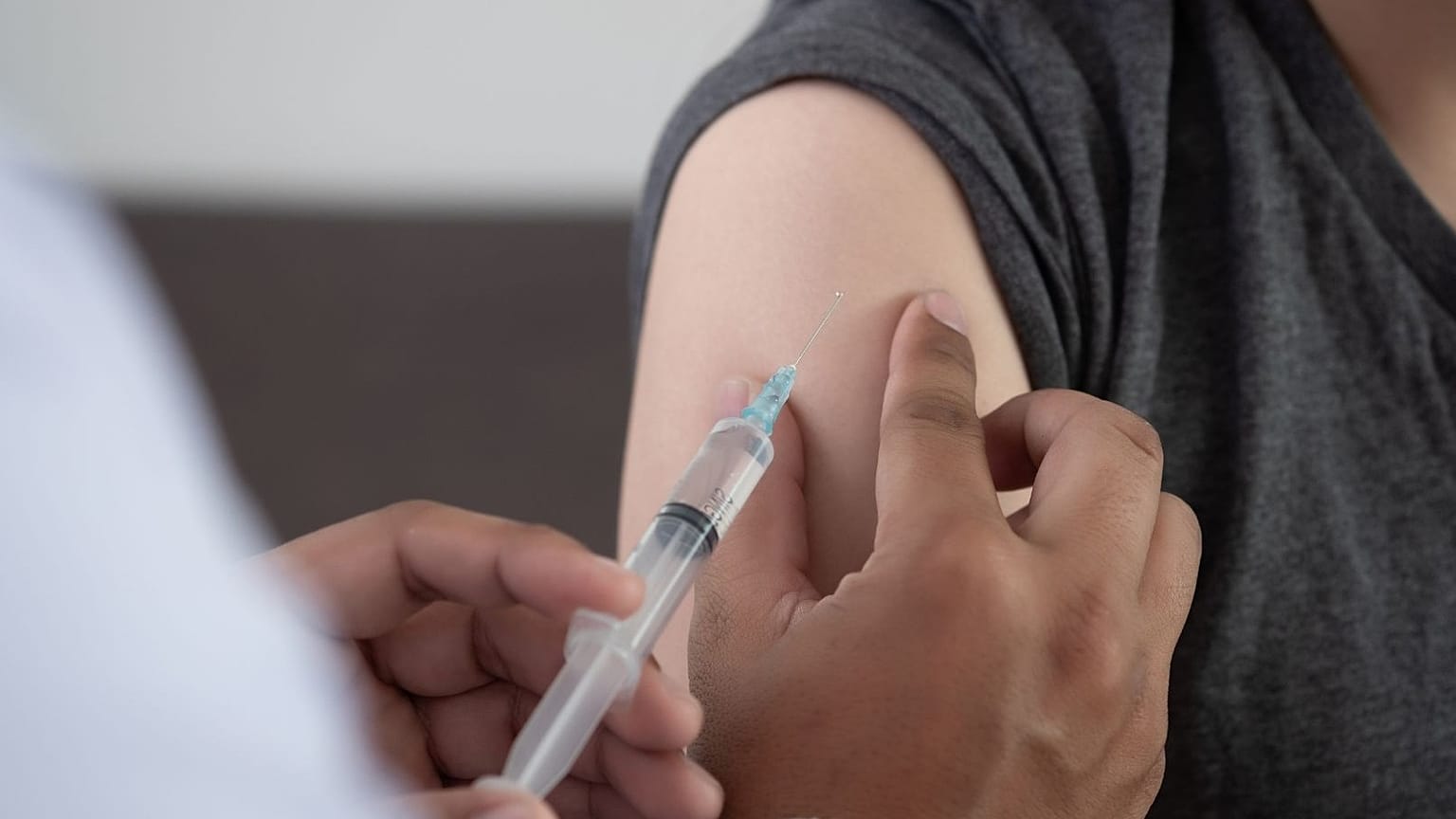
The European Commission has formally approved a twice-yearly injection to prevent HIV, clearing the way for the jab to be rolled out across the European Union, according to drugmaker Gilead.
The decision comes one month after regulators from the European Medicines Agency (EMA) recommended the first-of-its-kind medicine, which has been hailed as a game-changer in the course of the HIV epidemic.
The drug, called lenacapavir, is a form of pre-exposure prophylaxis (PrEP), which works by preventing the virus from replicating and spreading within the body. It reduces the risk of acquiring HIV among both adults and adolescents.
In clinical studies, the jab was 100 per cent effective at preventing the virus, prompting experts to call it one of the biggest medical breakthroughs of 2024.
The drug will be sold as Yeytuo in the European Union, Norway, Iceland, and Liechtenstein. It will be the first twice-yearly PrEP option available, replacing the need for daily pills.
Dr Dietmar Berger, Gilead Sciences’ chief medical officer, said in a statement that the Commission’s quick approval underscores the “transformative potential of Yeytuo to help address the urgent unmet need in HIV prevention across Europe”.
The new treatment comes amid a rise in HIV cases. In 2023, there were more than 24,700 new HIV diagnoses in the EU, Iceland, Liechtenstein, and Norway, up 11.8 per cent from 2022.
Gilead said it is also seeking approval for lenacapavir in Australia, Brazil, Canada, South Africa, and Switzerland, and that it will soon add Argentina, Mexico, and Peru to the list.
The company has also agreed to sell generic versions of the drug in 120 lower-income countries with high HIV rates. But it is not yet clear how widely available it will be after the United States, which has traditionally been a major global health donor, slashed funding earlier this year.
HIV affects about 40.8 million people worldwide. An estimated 630,000 people died from AIDS-related illnesses last year.