Monday, October 06, 2025

US and Japanese scientists win 2025 Nobel Prize in medicine for immune tolerance research

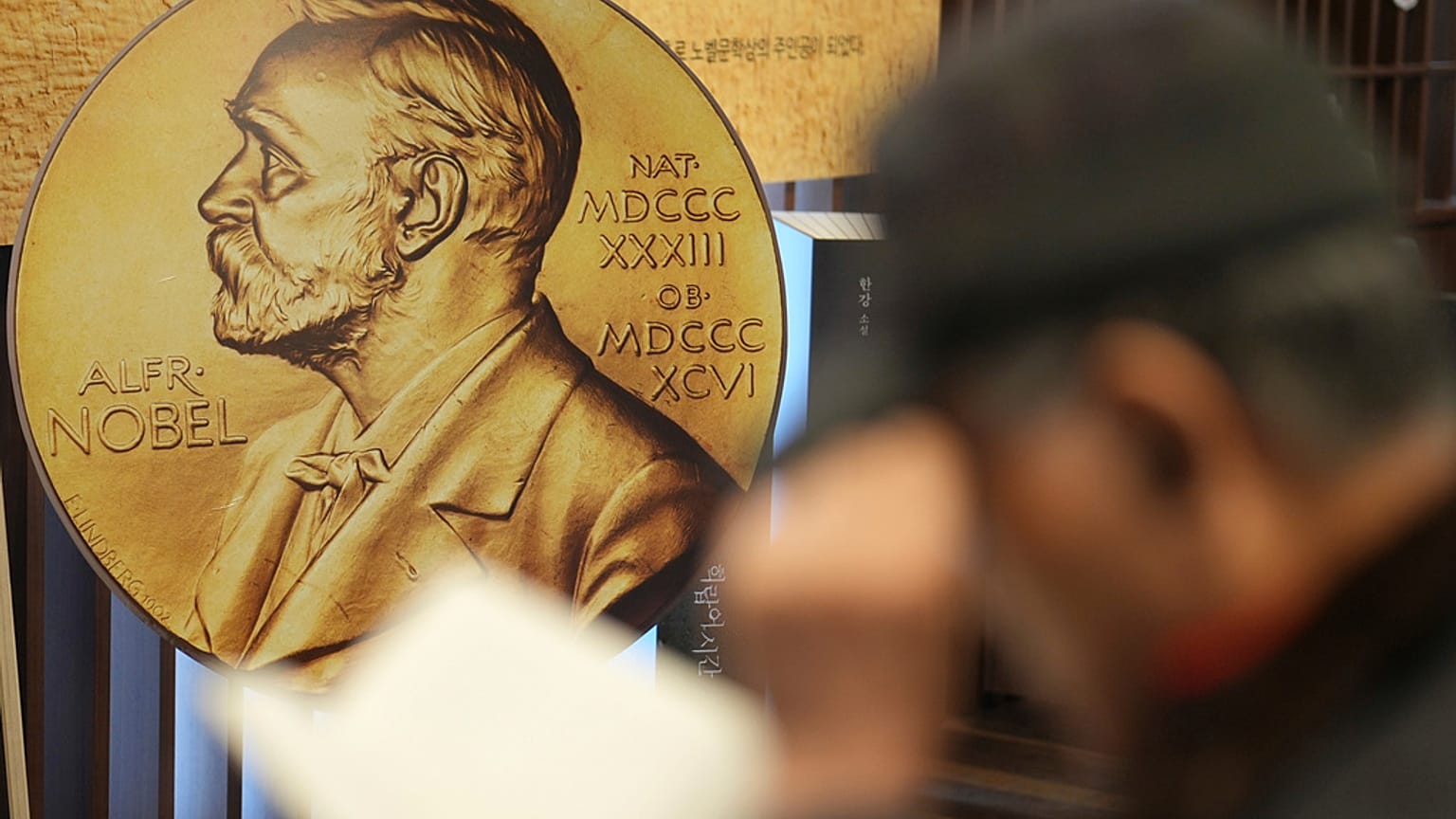
FILE - A visitor reads a book written by South Korean author Han Kang, this year's winner of the Nobel Prize in Literature, in Seoul, 10 December 2024
Copyright AP Photo


By Euronews
Published on 

Mary E Brunkow, Fred Ramsdell, and Shimon Sakaguchi won the 2025 Nobel Prize in medicine for their discoveries in peripheral immune tolerance, the Nobel Assembly at Karolinska Institutet announced on Monday.

Two US-based scientists and their Japanese peer, Mary E Brunkow, Fred Ramsdell and Shimon Sakaguchi, won the 2025 Nobel Prize in medicine, the Nobel Assembly at Karolinska Institutet announced on Monday.

The three were awarded for "their groundbreaking discoveries concerning peripheral immune tolerance that prevents the immune system from harming the body," the institute said in a statement.

Officially known as the Nobel Prize in Physiology or Medicine, the honour has been awarded 115 times to 229 Nobel Prize laureates between 1901 and 2024.

Last year's prize was shared by two US scientists, Victor Ambros and Gary Ruvkun, for their discovery of microRNA, tiny bits of genetic material that serve as on and off switches inside cells that help control what the cells do and when they do it.

Nobel Prize announcements continue with physics on Tuesday, chemistry on Wednesday, and literature on Thursday.

The Nobel Peace Prize will be announced on Friday, and the Nobel Memorial Prize in economics next Monday.

The award ceremony will be held on 10 December, the anniversary of the death of Alfred Nobel, a wealthy Swedish industrialist and the inventor of dynamite who founded the prizes. He died in 1896.

Additional sources • AP


Nobel Prize in medecine awarded to three


scientists for immune system research


Science


Scientists Mary Brunkow, Fred Ramsdell and Shimon Sakaguchi won the 2025 Nobel Prize in Physiology or Medicine for their discoveries concerning peripheral immune tolerance, the award-giving body said on Monday.


Issued on: 06/10/2025 - 
By: FRANCE 24

Mary E. Brunkow, Fred Ramsdell and Shimon Sakaguchi have won the Nobel Prize in medicine for their discoveries concerning peripheral immune tolerance. © Nobel Prize

Mary E. Brunkow, Fred Ramsdell and Dr. Shimon Sakaguchi won the Nobel Prize in medicine on Monday for their discoveries concerning peripheral immune tolerance.

Brunkow, 64, is a senior program manager at the Institute for Systems Biology in Seattle. Ramsdell, 64, is a scientific adviser for Sonoma Biotherapeutics in San Francisco. Sakaguchi, 74, is a distinguished professor at the Immunology Frontier Research Center at Osaka University in Japan.

The immune system has many overlapping systems to detect and fight bacteria, viruses and other bad actors. Key immune warriors such as T cells get trained on how to spot bad actors. If some instead go awry in a way that might trigger autoimmune diseases, they’re supposed to be eliminated in the thymus – a process called central tolerance.

The Nobel winners unraveled an additional way the body keeps the system in check.

The Nobel Prize's post on X on October 6, 2025. © The Nobel Prize, X


The Nobel Committee said it started with Sakaguchi’s discovery in 1995 of a previously unknown T cell subtype now known as regulatory T cells or T-regs.

Then in 2001, Brunkow and Ramsdell discovered a culprit mutation in a gene named Foxp3, a gene that also plays a role in a rare human autoimmune disease.

The Nobel Committee said two years later, Sakaguchi linked the discoveries to show that the Foxp3 gene controls the development of those T-regs – which in turn act as a security guard to find and curb other forms of T cells that overreact.

The work opened a new field of immunology, said Karolinska Institute rheumatology professor Marie Wahren-Herlenius. Researchers around the world now are working to use regulatory T cells to develop treatments for autoimmune diseases and cancer.

“Their discoveries have been decisive for our understanding of how the immune system functions and why we do not all develop serious autoimmune diseases,” said Olle Kämpe, chair of the Nobel Committee.

Thomas Perlmann, Secretary-General of the Nobel Committee, said he was only able to reach Sakaguchi by phone Monday morning.

“I got hold of him at his lab and he sounded incredibly grateful, expressed that it was a fantastic honor. He was quite taken by the news,” Perlmann said. He added that he left voicemails for Brunkow and Ramsdell.

The award is the first of the 2025 Nobel Prize announcements and was announced by a panel at the Karolinska Institute in Stockholm.

Nobel announcements continue with the physics prize on Tuesday, chemistry on Wednesday and literature on Thursday. The Nobel Peace Prize will be announced Friday and the Nobel Memorial Prize in economics Oct. 13.

The award ceremony will be held Dec. 10, the anniversary of the death of Alfred Nobel, who founded the prizes. Nobel was a wealthy Swedish industrialist and the inventor of dynamite. He died in 1896.

The trio will share the prize money of 11 million Swedish kronor (nearly $1.2 million).

(FRANCE 24 with AP)
Drug-Resistant Salmonella Rife In Uganda’s Poorest Region


A Tepeth girl at home in Karamoja, north-eastern Uganda. Following a study in the region, experts are calling for urgent action to protect children and wider community from contaminated food and water. 
Copyright: Rod Waddington (CC BY-SA 2.0)

October 6, 2025 
By Titilope Fadare

In the dry, isolated area of Karamoja in northeastern Uganda – the country’s poorest sub-region – children have long suffered from malnutrition and water shortages.

Now a study has shown that nearly half the food and water consumed by under-fives in the region is contaminated with drug-resistant Salmonella, further limiting their chances of survival.

The peer-reviewed study, published in BioMed Central, found contamination in samples of both raw and cooked foods, as well as in community and household water.

More than 90 per cent of the Salmonella enterica strains identified by researchers were resistant to azithromycin, one of the most common antibiotics, while more than a third were resistant to multiple drugs.

Ronald Mpagi, the study’s lead author and a microbiology researcher at Uganda’s Gulu University, told SciDev.Net he was driven to investigate persistent malnutrition in Karamoja after years of government and donor programmes showed little progress.

A semi-arid area, Karamoja suffers chronic water scarcity, leaving families without reliable safe drinking water. Most households are nomadic pastoralists living in manyattas, enclosed homesteads where cattle are kept close to people.

Toilets missing

Over 60 per cent of the population practices open defecation, overwhelming limited sanitation systems.

“The available toilets cannot really accommodate the growing population of the Karamoja people,” Mpagi told SciDev.Net.

“Most of the toilets are built in designated places, but because many families are nomadic, they move with their animals and cannot return to use these facilities before continuing their journey.”

These conditions create a cycle where human waste, livestock, food and water intersect, spilling contamination into children’s meals. Diarrhoea, a common outcome, is among the five leading causes of under-five mortality.

Repeated diarrhoeal illness prevents children from absorbing nutrients, leaving them weak and vulnerable.

Bwambale Benard, a Ugandan public health nutritionist and food systems specialist, says that once first-line antibiotics fail, children stay sick longer, malnutrition worsens, and mortality rises.

Whole community hit

But Benard points out that children are not the only ones at risk. Infections also affect pregnant women, the elderly, and whole households, leaving families unproductive and draining limited incomes.

“So we are going to have a community that is ill, sickly, that cannot be productive, and so they are not contributing productively to the GDP of a country, or even they are not able to sustain their families,” he told SciDev.Net.

A USAID-funded project in 2017 projected malnutrition will cost Uganda an estimated 19 trillion Ugandan Shillings (US$7.7 billion) in lost productivity by 2025.

Benard believes that if left unchecked, drug-resistant Salmonella could also undermine Uganda’s development targets.

He stressed the need for safer food handling to prevent recontamination, adding that ending open defecation requires tackling both cultural and practical barriers.

Tracking resistance

Andrew Kambugu, executive director of the Infectious Diseases Institute at Makerere University, Uganda, says the country has developed systems to detect antimicrobial resistance before it escalates.

In partnership with Uganda’s Ministry of Health, his team runs a surveillance network supported by the UK Aid–funded Fleming Fund.

Operating in seven referral hospitals across the country, the system monitors resistance patterns and provides early warnings.

“With the surveillance system, it means that if we see what we call clusters of patients that present diarrhoea due to Salmonella, we will be able to see that because we are collecting the data – and it will act as an early warning system to tell us that in that hospital there is a problem,” Kambugu told SciDev.Net.

He says hospitals are tracked closely and while clusters do not always confirm diarrhoea outbreaks, they prompt further investigation and guide the Ministry of Health’s response.

Kambugu said the recent findings from Karamoja were striking.

“In the regions that have been [by his institute], we do not have this high rate. I think it is unusual,” he said, adding that the cultural practices and access to water issues in Karamoja could be responsible for the situation.

Improving outcomes


Daniel Kyabayinze, director of public health at Uganda’s Ministry of Health, told SciDev.Net the government was reinforcing hygiene education in Karamoja and training farmers on safer post-harvest handling.

He linked these measures to Uganda’s National Action Plan on Antimicrobial Resistance, now in its fifth year and aligned with the WHO Global Action Plan.

Under the plan, referral hospitals feed lab data into antibiograms – laboratory reports that show which antibiotics are effective against different bacteria – which shape procurement and treatment decisions.

Kyabayinze said the study revealed an important opportunity to improve outcomes. While widely used drugs like azithromycin and ciprofloxacin showed high resistance, older and cheaper medicines such as co-trimoxazole still had very low resistance.

“So we can roll out the cheaper and more friendly drugs, especially in regions like Karamoja,” he said.

This piece was produced by SciDev.Net’s Sub-Saharan Africa English desk.

Titilope Fadare writes for SciDev.Net
What Does Nicaea Mean For Relations With Judaism And Islam?


The Council of Nicaea in 325 as depicted in a fresco in Salone Sistino at the Vatican. | Credit: Giovanni Guerra (1544-1618), Cesare Nebbia (1534-1614) 
e aiuti, Public domain, via Wikimedia Commons

October 6, 2025 
By Eurasia Review


Two-part international conference on the first ecumenical council 1,700 years ago is to resume in Münster on 15 October – What does the Council of Nicaea mean for ecumenism and relations with Judaism and Islam? – Invited by Professor of Dogmatics Michael Seewald, researchers from nine countries will focus on the Council and its varied reception over the centuries – Involved are the disciplines of theology, philosophy, history, Jewish studies and Islamic studies – University of Münster in cooperation with Pontifical Gregorian University

Organised jointly by the University of Münster and the Pontifical Gregorian University in Rome, an international conference in Mid-October will focus on the Council of Nicaea 1,700 years ago and its ecumenical, interreligious and intercultural significance.

‘The creed established by the first ecumenical council in history is still of fundamental importance to the Catholic Church, as well as to Orthodox and most Protestant churches today. Nicaea has raised complex questions from an interreligious perspective, especially with regard to Jewish-Christian and Christian-Islamic relations – it is these question that the interdisciplinary conference will address’, says Professor of Dogmatics Michael Seewald from Münster, who is organising the conference together with Philipp G. Renczes SJ, Dean of the Faculty of Theology at the Gregorian University. ‘While the first part of the conference in Rome in February focused on historical, philological and philosophical questions, the second part in Münster will see researchers from nine countries discuss Nicaea’s impact on the internal diversity of Christianity, as well on its relations with Judaism and Islam’.

The conference from 15 to 17 October 2025 will feature researchers from the fields of theology, philosophy, history, Jewish studies and Islamic studies, including the Secretary General of the International Theological Commission, Piero Coda (Italy), Jewish studies scholar Alfred Bodenheimer (Switzerland), Islamic studies scholar Nadine Abbas (Lebanon), Anglican theologian Ben Quash (Great Britain), Protestant theologian Friederike Nüssel from Heidelberg, and French philosopher of religion Vincent Holzer.

Entitled ‘The Confession of the Council of Nicaea: History and Theology’, the two-part conference combines new research on the Council as a political event with research from the perspective of systematic theology.
Transcultural, ecumenical and interreligious questions concerning Nicaea

A dispute over the relationship between God the Father and Jesus Christ divided the young Christian Church in the Roman Empire, which is why Emperor Constantine convened the largest assembly of bishops up to that point in Nicaea, now Iznik in Turkey, in 325. The Council set out to establish a binding creed that would settle the dispute and bring about unity.

As Seewald explains, the assembly ruled that Jesus Christ was ‘of the same substance as God the Father’ and thus in the fullest sense God. The conference in Münster will examine how the creed has been interpreted in Christianity, including in Protestant and Anglican contexts, and what intercultural and postcolonial issues it raises with regard to non-European cultures where Christianity took root.

Research will also be presented on how the Nicene Creed was and is read from a Jewish and Islamic perspective. ‘The idea that God has a son who is equal to him in all things and is therefore himself God – this is unacceptable from both a Jewish and an Islamic perspective. The conference will therefore seek to clarify how the Council of Nicaea situates Christianity within monotheism and what the other two major monotheistic religions, Judaism and Islam, have to say about this’.

The current Pope Leo XIV announced in May that he would travel to Iznik and Istanbul in November for the ecumenical commemoration of Nicaea. His predecessor, Pope Francis, who died in April, had also intended to travel to Turkey and had invited the participants of the Nicaea conference to a personal discussion on 1 March 2025. The meeting had to be cancelled, though, due to his illness.
‘What church members actually believe today is a different matter’

As for the cooperation between the Pontifical Gregorian University, which is run by the Jesuit Order, and the theology department at the state university in Münster, Michael Seewald says: ‘Italian theology is alive and marked by a deep interest in history and a joy in theological-speculative thinking. We have similar areas of interest in Münster’.

Both institutions, the Gregoriana and the Faculty of Catholic Theology in Münster, have a long tradition in the history of theology and dogma, and address contemporary questions of faith in various regional, linguistic and cultural contexts. The Gregoriana is renowned worldwide for Catholic theology, while the Faculty of Catholic Theology in Münster is the largest theological faculty at a state university in the world. The multilingual conference in the Castle’s aula magna is organised by the University of Münster’s Chair of Dogmatics and History of Dogma and the Cluster of Excellence ‘Religion and Politics’.

On the significance of the Council for people today, Seewald says: ‘The major Christian churches all recognise the Nicene Creed with some later additions. But what the members of these churches actually believe is a different matter. Most believers today cannot be mapped onto the theological landscape of the 4th century. While the conflicting groups at that time agreed that Jesus Christ was not merely a simple human being, many Christians today believe that Jesus was a remarkable person who was only (and perhaps exaggeratedly) deified retrospectively’. This view only began to have an impact on Christian theology in the 18th century. ‘The theology of the ancient church, on the other hand, cultivated a Christology that was highly developed speculatively’.


Eurasia Review is an independent Journal that provides a venue for analysts and experts to publish content on a wide-range of subjects that are often overlooked or under-represented by Western dominated media.


Researchers At University Of Agder Call For Better Protection Of Europe’s Last Flat Oysters


Flat oysters. Photo Credit: University of Agder

By 

Researchers at UiA warn that Europe’s last healthy populations of flat oysters are at risk. They are now calling for better protection to safeguard these stocks.

“Flat oysters form reefs that serve as vital habitats for other species. In Europe, these reefs have nearly vanished. We still have intact populations in Agder and Rogaland, so we must protect them better,” says UiA doctoral candidate Molly Reamon.


Alongside Johanna Marcussen and Professor Ane Timenes Laugen from UiA, Reamon has submitted their consultative response to the Directorate of Fisheries’ proposal to protect flat oysters in Norway. The researchers stress that Norway and Sweden are home to Europe’s last healthy populations, so Norway has a unique international responsibility to conserve them.

Survey shows unique oyster findings

UiA researchers conducted the first major survey of flat oysters in Norway from 2020 to 2022, looking at 373 locations. Flat oysters were found at just one in three sites, and only one per cent of locations had dense populations.

Reamon explains that these findings show that dense populations are rare and vulnerable.

“Although flat oysters were reclassified from ‘near threatened’ to ‘least concern’ on the Norwegian red list in 2021, strong protection is needed. Particularly because the classification is based on weak data. We believe the precautionary principle should apply,” she says.

Researchers recommend temporary harvesting ban

UiA researchers suggest a national or regional harvesting ban for three to ten years. This should be coupled with research monitoring flat oyster populations. They emphasise the potential risk of unregulated recreational fishing. Flat oysters are also being harvested for restoration projects in Europe.

Johanna Marcussen researches recreational fishing. She explains that flat oysters are often mistakenly collected when people clear Pacific oysters.

“This shows that we need stricter rules and more knowledge,” she says.


Protection must be strengthened – not weakened

The researchers explain that a fishing ban in the Oslofjord is an essential first step in protecting vulnerable ecosystems, such as flat oyster beds. However, they find the Directorate of Fisheries’ proposal for Agder and Rogaland too weak.

“A partial ban in two small areas isn’t enough. It doesn’t ensure connectivity between populations in Agder and Rogaland. The researchers also warn that the proposal might actually weaken current protections in Sørlandsleia,” says Ane Timenes Laugen, professor of marine ecology at UiA.

“As stewards of Europe’s last healthy populations, increasing harvesting now would be a step in the wrong direction,” she adds.

Need for better cooperation

The researchers call for closer cooperation between the Directorate of Fisheries, the Norwegian Environment Agency and other authorities to ensure holistic management of coastal ecosystems. Under the OSPAR agreement, Norway has pledged to protect flat oyster beds.

“Strengthened protection is crucial for keeping flat oysters as a key species in Norwegian coastal areas and for safeguarding Europe’s last disease-free populations for the future,” says Timenes Laugen.


Why The West Fights Against China’s Green Technology – OpEd

sustainable sustainability nature climate

By 


“This ‘climate change,’ it’s the greatest con job ever perpetrated on the world, in my opinion,”  — US President Donald Trump, UN General Assembly speech, September 23, 2025


Western commentators often point to what they claim to be the key, if not foundational, role that Western nations have played in setting up a new green-based world order. ​This is because the post-WWII international system has been dominated by institutions like the UN, World Bank, and IMF, which were largely designed by Western powers. Although not initially “green,” these institutions have been the main vehicles through which global environmental and climate governance has developed.

It is also indisputable that the West is primarily responsible for the environmental and climate change challenges found in the world. The development and dominance of the West was built on systems of exploitation of natural resources and raw materials following the advent of the Industrial Revolution in the mid nineteenth century. This in turn ushered in the new era of colonialism which exploited the land, natural resources and labour of the South in Asia, Africa and Latin America.

Today we have to deal with the aftermath of this continuing epoch of resource exploitation and environmental degradation; and its impact on ecosystems and human society. These repercussions manifest as habitat destruction and air and water pollution, while their global reach can be seen in climate change effects including sea level rise, the retreat of glaciers and ice caps, and increased natural disasters. 

The West’s progress and prosperity built on carbon-intensive development and the unprecedented enhanced exploitation of other countries means that they have a moral and historical obligation to lead the transition to a green order. 

But there is also no dispute that the transition to a truly “green world order” has to be a global collective challenge and action problem that requires the full commitment of all nations including emerging economic powers.


West Rebuffs China’s Green Technology 

Among countries in the global South seen as key to the emergence of the new green world order,  China has received special attention due to its position as the second largest economy by nominal GDP and largest by purchasing power parity (PPP), making it a major player in industry, trade and innovation. The fact that China is a major contributor to global warming as well as a world leader in manufacturing and deploying green technology like solar panels, wind turbines, and electric vehicles is undeniable. 

However, its positive contributions continue to be framed negatively or downplayed in Western media and political discourse. .

These are the geopolitical reasons why China’s green technology contribution is not highlighted and appreciated :

  • Strategic Competition and Rivalry: The overarching context is the US-China strategic competition. In this framework, technology leadership is not just an economic issue but perceived as a core national security interest.
  • Zero-Sum Game Perception: The West, led by the US, often views technological dominance as a zero-sum game. If China leads in green tech, it means the West is falling behind. Acknowledging China’s success is seen as conceding a critical strategic advantage in the industry of the future.
  • Control over Supply Chains: Green technology is essential for energy independence. Relying on China for solar panels, batteries, and critical minerals is seen as a vulnerability. Highlighting China’s dominance underscores this dependency, which is a politically defeatist narrative for Western policymakers.
  • National Security Threat: Chinese technology, particularly from companies like Huawei and DJI, is often labeled a security risk. This attempt to “securitization” of technology taints the entire sector, making it difficult to separate legitimate security concerns from competitive economic advantages.
  •  “Overcapacity” Narrative:  The US and EU have accused China of creating “overcapacity” in green tech, arguing that massive state subsidies lead to overproduction. They claim this floods global markets with cheap products, unfairly undermining and bankrupting Western companies. This framing paints China not as a contributor but as a market disruptor even though state policies of support to industries have been pioneered by the West and continue to be ongoing. 

China as Alternative to Western Ideological Model 

What is also evident in the new green world order is that China’s success challenges the Western ideological model.

  • State Capitalism vs. Free Markets: China’s model, which involves significant state planning, subsidies, and support for national champions, is viewed as antithetical to the Western ideal of free-market competition, though the latter is only practiced in rhetoric. Acknowledging that this model can produce world-leading, innovative technology would legitimize it, which is ideologically unpalatable to many Western leaders.
  • The “China Threat” Narrative: For decades, a powerful narrative has portrayed China as an authoritarian, and now existential, threat. It is cognitively dissonant to simultaneously portray a country as a threat and a positive contributor to a global public good like climate change. The “threat” narrative is so deeply entrenched that it erases the “contributor” narrative.

Control of Global Media and Narrative Platforms

The institutions that shape global public opinion are largely Western-dominated.

  • Agenda-Setting by Western Media: Major global news agencies (Reuters, AP), newspapers (NYT, FT, The Guardian), and broadcasters (BBC, CNN) are based in the West. Their reporting reflects Western perspectives, priorities, and geopolitical bias. Stories about China’s green tech are often framed through the lens of job losses in the West, alleged intellectual property theft, or overcapacity, rather than its net positive impact on climate change cvand global decarbonization.
  • Think Tanks and Academia: While not monolithic, influential think tanks in Washington D.C., Brussels, and elsewhere are often funded by and focused on Western interests. Their reports and policy briefs emphasize the challenges and threats posed by China’s rise, which filters into media and political discourse.

Conclusion

The under-highlighting of China’s green technology contribution is not an oversight. It is an outcome of the current geopolitical landscape as defined by the West. It is a classic case where objective facts (China’s massive production and deployment of green tech) are filtered through a powerful subjective lens of strategic competition, ideological difference, and narrative control.

For the West, acknowledging China’s achievements in this critical field would mean conceding to a rival’s superior strategy, legitimizing a different governance model, and admitting a loss of technological leadership. All of these are politically unacceptable.  Hence, the narrative focuses on the threat posed by China’s green tech dominance rather than its contribution to the global struggle to ensure a more sustainable world through a new green world order.  


Lim Teck Ghee

Lim Teck Ghee PhD is a Malaysian economic historian, policy analyst and public intellectual whose career has straddled academia, civil society organisations and international development agencies. He has a regular column, Another Take, in The Sun, a Malaysian daily; and is author of Challenging the Status Quo in Malaysia.

China’s Occupation Of Tibet Is Not Just Illegal: It’s An Environmental And Security Catastrophe In The Making – OpEd

Tibet Buddhist Monk Buddhism Meditation Enlightenment

By 

As 7 October marks seventy-five years since China’s invasion of Tibet, the consequences of that act of aggression continue to unfold across Asia. What began in 1950 as Mao Zedong’s military conquest has hardened into a decades-long occupation—one that threatens not only the cultural survival of the Tibetan people, but also the region’s strategic stability and fragile Himalayan ecology.


In October 1950, the People’s Liberation Army crossed the Jinsha River under Mao’s command, claiming to “liberate” Tibet from feudalism. In reality, it was the beginning of an illegal annexation that dismantled a sovereign nation, redrew South Asia’s strategic geography, and set off environmental changes whose effects now extend far beyond the plateau.

However, relations soured, and by 1954, discontent among Tibetans grew, leading to armed resistance. A brutal crackdown by Chinese forces followed the uprising in 1959, resulting in significant human rights abuses, including the destruction of monasteries and forced relocation of Tibetans. The Chinese government’s efforts to modernise Tibet involved substantial infrastructural changes, yet these often benefited Han Chinese settlers disproportionately, leaving many native Tibetans in poverty.

The geopolitical significance of Tibet, particularly regarding its proximity to sensitive areas like Sinkiang and India, influenced China’s actions. The resistance to Chinese rule persisted, highlighted by the Dalai Lama’s exile and international condemnation of China’s policies in Tibet. The Tibetan struggle has drawn global attention, emphasising issues of cultural preservation, human rights, and environmental impact.

The forceful incorporation of Tibet by the People’s Republic of China (PRC) violated international norms against the use of force for territorial acquisition. The invasion ended Tibet’s decades of de facto independence and subjugated its government through a treaty signed under duress.

The invasion directly violated the fundamental international norm that prohibits the use of force against another state. While China claims historical ties to the region, most international legal scholars agree that Tibet had the status of a sovereign state in 1950, making the military takeover an act of aggression.


After capturing eastern Tibet, the PRC forced Tibetan delegates to sign the Seventeen-Point Agreement in Beijing in May 1951. This agreement officially made Tibet a part of China. However, many scholars and the Tibetan government-in-exile consider the treaty invalid because it was signed under duress, and the Tibetan delegates lacked the authority to sign it. The Dalai Lama later repudiated the agreement.

The annexation also ran contrary to the principles of the newly formed United Nations. The UN Charter, established in 1945, bans the use or threat of force by member states for territorial gain. By invading Tibet in 1950, the PRC committed an internationally wrongful act from which no rights could be derived.

The PRC has long referred to the events of 1950–1951 as the “Peaceful Liberation of Tibet,” framed as a reclamation of its rightful territory and an effort to free Tibetans from a feudal system. This narrative is heavily contested, especially in light of the invasion of eastern Tibet and the human rights abuses that followed. China justifies its claim by citing historical relationships between ancient Chinese and Tibetan rulers.

While many in the international community reacted with shock to the invasion, Tibet was largely diplomatically isolated and received little foreign support. The global context of the Cold War and a desire by nations like India and the United States not to jeopardize relations with China limited official responses.

The UN General Assembly discussed the issue in the late 1950s and 1960s, passing resolutions condemning China’s human rights violations.

The International Commission of Jurists (ICJ) found that China had violated the terms of the Seventeen-Point Agreement and committed human rights abuses.

Following a brutal crackdown on a 1959 Tibetan uprising, the 14th Dalai Lama and tens of thousands of Tibetans fled into exile. The Tibetan government-in-exile continues to maintain that Tibet is an independent state under illegal occupation.

This illegal occupation of the Tibet Autonomous Region (TAR) has also led to rapid militarisation of the region. A major aspect of this militarization is the expansion of dual-use infrastructure and troop deployment, which enhance China’s strategic capabilities. China’s military build-up is primarily seen as a threat to India, particularly along the disputed Himalayan border known as the Line of Actual Control (LAC).

India has still not forgotten the 1962 humiliation. But it has given a bloody nose to the PLA whenever it has indulged in any misadventure. In 1967 India and the PLA soldiers clashed in Nathu La and Cho La along the Sikkim-Tibet border. Triggered by India’s attempt to demarcate the border with a barbed wire fence, the conflict escalated into artillery duels and intense machine gun fire, resulting in significant casualties on both sides. India ultimately prevailed, inflicting heavy losses on the Chinese forces and establishing a period of peace in the region for a long period.    

Again in 2020, the armies of the two countries clashed on Galwan Valley in Ladakh, where both sides suffered heavy casualties. The clashes intensified China’s determination to strengthen its military control over high-altitude areas and infrastructure. In response, India has also expanded its own military infrastructure in the region.

Beijing’s 14th Five-Year Plan includes an $11.2 billion investment in TAR infrastructure by 2035, with major strategic implications for India. Construction of new and upgraded airports, including military and dual-use facilities, with some located close to the India-China border. Expansion of all-weather road and rail networks is happening to facilitate the rapid movement of troops and heavy equipment.

China’s military construction and infrastructure development threaten the Himalayan glaciers that feed major rivers in South and Southeast Asia, raising concerns about future water shortages for downstream populations. The construction of dams on rivers like the Yarlung Tsangpo (Brahmaputra) could also threaten India and other riparian states.

Threats to the local environment

In August 2025, the Institute for Security and Development Policy (ISDP) released a report on the ecological damage caused by China’s military expansion in Tibet. Military construction and movement of troops are accelerating the thawing of permafrost on the Tibetan Plateau, which contains vast amounts of sequestered carbon. This process releases greenhouse gases and disrupts the region’s hydrological systems.

The report noted that extensive construction of roads, airstrips, and bases has led to land degradation and damage to glaciers. This disrupts local biodiversity and affects water resources.

China’s illegal occupation of Tibet is not only a threat to regional security but also to the ecology. Unless the international community intervenes and puts pressure on China to stop the anarchy and environmental destruction in Tibet, there will be destruction of unimaginable proportions. A region with almost half of the world’s population can’t afford destruction of such dangerous proportions.

Ashu Mann

Ashu Mann is an Associate Fellow at the Centre for Land Warfare Studies. He was awarded the Vice Chief of the Army Staff Commendation card on Army Day 2025. He is pursuing a PhD from Amity University, Noida, in Defence and Strategic Studies. His research focuses include the India-China territorial dispute, great power rivalry, and Chinese foreign policy.