Monday, February 02, 2026


Manslaughter Conviction of Captain for Seafarer’s Death in Stena Allision
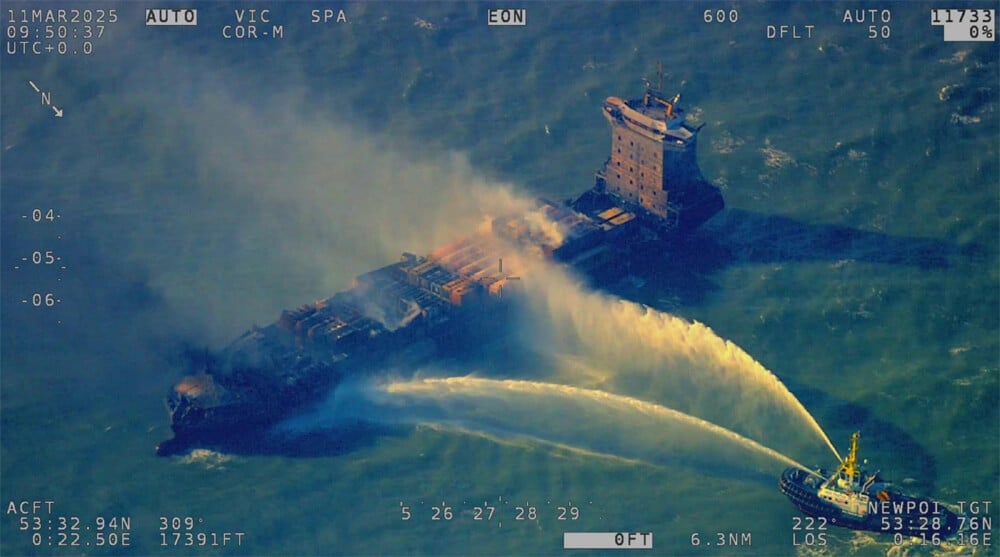
containership fire
One crewmember died on the Solong, which would burn for days (HM Coastguard)

Published Feb 2, 2026 1:20 PM by The Maritime Executive


The captain of the containership Solong was convicted on Monday, February 2, of gross negligent manslaughter by a court in the UK for the death of a seafarer when the Solong hit the anchored tanker Stena Immaculate. The case had gone to the jury on Friday, and they returned the verdict after approximately eight hours of deliberation in the trial that began three weeks ago.

After the verdict was read out, Detective Chief Superintendent Craig Nicholson told the Press Association it was a “simple, senseless tragedy.” The prosecution had told the court that the Solong was operating normally when it hit the tanker at a speed of nearly 16 knots on March 10, 2025. They said the only thing not working on the ship was the captain, Vladimir Motin, age 59, of Russia.

Media reports indicate the sentencing will be on Thursday, February 5. In the UK, reports are that gross negligence manslaughter carries a maximum sentence of life imprisonment, with sentencing guidelines outlining a range from one to over 18 years depending on the level of culpability. Reports suggest Motin is facing up to seven years in jail.

One crewmember on the Solong, Mark Angelo Pernia, age 38 of the Philippines, was working near the bow of the containership and presumed to have died from the impact and subsequent fire. His body was never found. The other 12 crewmembers from the Solong were rescued along with the 23 crew from the Stena Immaculate. Prosecutors said it was luck that more were not injured or killed, including saying one crewmember on the Stena Immaculate was up a mast changing a light when the impact occurred. Others were near the point of impact.

Prosecutors argued that Motin waited too long to react to the ship, which was visible on radar. They contended he had over 30 minutes but waited until they were one nautical mile apart. Motin had said on the stand that he initially thought the tanker was slow-moving and not at anchor.

They also argued that Motin was alone on the bridge and had turned off the system that required someone to press a button every 30 minutes or else an alarm would have sounded on the ship due to inactivity on the bridge. He asserted in court that he did not fall asleep or leave the bridge after taking the watch at 0800 that morning. He claimed good visibility, meaning that a lookout was not required.

The prosecution said he had not attempted to slow the containership or summon help as they approached the Stena Immaculate. They further said he did not sound an alarm when the allision became apparent or attempt a crash stop. 

Motin told the court he thought the steering gear was malfunctioning because he had recently been warned of a similar problem on a sister ship. He attempted to turn off and reset the steering gear. When it became evident that they were going to hit the tanker, he said his concern was to avoid the accommodation block for fear of more casualties. 

In court, the captain admitted he now realizes he made a mistake and pressed the wrong button, not turning off the autopilot. He said new stickers had been applied to the controls while he was on vacation, and he found them confusing. The prosecution argued the mistake would have been immediately evident, and he should have been able to correct his mistake.

The Solong would burn for eight days after hitting the tanker and was a total loss, sold for scrap. The Stena Immaculate, because of the actions of its crew, survived with only one tank punctured and was later offloaded. Stena sold the vessel late last year, reporting the buyer intended to repair the ship.

 

Ukraine Catches Russian Mole Inside of its Sea Drone Program

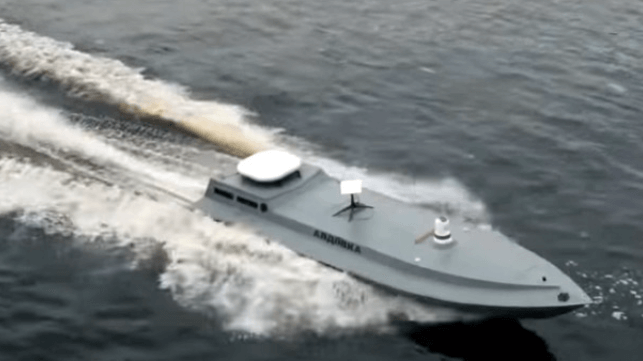
Sea Baby
An early model of the Ukrainian "Sea Baby" bomb boat (SBU)

Published Jan 29, 2026 3:13 PM by The Maritime Executive


The Security Service of Ukraine, the nation's main counterintelligence division, has arrested a servicemember who was allegedly planning to pass information on Ukrainian sea drone operating locations to Russia for use in targeting. 

Ukraine's drone forces have played a major role in the war, securing maritime lines of communication in the Black Sea by driving Russian naval assets out of range. Facing a real risk of damage or loss, the subs and surface combatants of the Russian Black Sea Fleet have withdrawn to the relative safety of Novorossiysk, in the far northeastern corner of the sea - too far away to be a threat to Ukraine's sea lanes. This has not fully eradicated the hazard to shipping - Russia still conducts regular drone strikes on Ukrainian civilian port infrastructure, occasionally damaging vessels and killing seafarers - but it has enabled the flow of commerce, including Ukrainian grain exports. 

A comprehensive strike on Ukraine's sea drone operations would be a significant blow, and a win for Russia. According to the SSU, Russian intelligence had recruited a mole working inside the Ukrainian naval drone program - a servicemember who happened to have an acquaintance with ties to Russia. He was employed in the Navy's UAV division, and was gathering up coordinates of the Ukrainian facilities where the sea drones are stored and prepared, including both the "Sea Baby" and "Magura" models. He was also intending to hand over information on the routes that the drones use to reach Russian targets, the SSU claims. 

The agency said that it documented the mole's activities in advance before intervening. Agents seized a phone in his possession which had been used to exchange messages with Russian intelligence. The phone also contained classified Ukrainian information, the SSU said. 

At the same time as the bust, the Ukrainian armed forces took measures to increase security at the affected locations. The discovery and arrest of the mole prevented an airstrike on operating drone bases, the SSU said. 


The suspect is in detention and faces trial on charges of leaking information about Ukrainian military movements. 


Canada Approves Construction of an Arctic Mineral Port on Baffin Island

GRID Arendal
Baffin Island (GRID-Arendal / CC BY SA 2.0)

Published Feb 1, 2026 2:46 PM by The Maritime Executive


At a time when Canada is prioritizing development of Arctic infrastructure, a new port and railway project in Baffin Island has received construction approval. The project, Steensby Railway, is a critical component of expanding production in the Mary River iron ore mine in the northern Baffin Island. The iron ore mine is one of the most northern mines in the world. Notably, Mary River is known as the world’s highest-grade direct ship (run-of-mine) iron ore development.

Last week, the operator of the Mary River mine, Baffinland, announced that consultations with the local community of Inuit had been completed. The Inuit supported the issuance of key regulatory licenses required for the Steensby project to begin.

“With over a decade of experience in operating the High Arctic, we are moving ahead with the Steensby component,” said Jowdat Waheed, acting CEO of Baffinland. “Negotiations for the financing package are at a very advanced stage, and as soon as it is complete, construction will commence.”

The Steensby project was originally approved by the Nunavut Impact Review Board back in 2012. However, the project was shelved as Baffinland preferred to expand the current transport route - from the mine north to Milne Inlet. At the time, the company considered the option as less costly. But in 2022, the federal government rejected the mine expansion plans following fierce protests by the Inuit groups. The community members feared that the expansion plans could have effects on the habitats of key marine mammals, including narwhal, which is an important food source for the Inuit people.

After this opposition, Baffinland decided to focus on the Steensby project, which is a southern route from the mine. The proposal is to transport the iron ore via rail south to a new deep-water port at Steensby Inlet. This will eliminate the long haul trucking to Milne port, which Baffinland said would lower production costs and environmental impacts.

Baffinland wants to build a 149-kilometer railway, connecting the Mary River mine to Steensby port. The federal government has expressed support for the project as it aligns with the vision to develop Canada’s northern economy and supply of critical minerals. The project construction is expected to begin later in 2026 and take three years to complete. The project is estimated to cost around $3 billion.

Once completed, the Steensby component will enable production at Mary River to increase from about 4.2 million tonnes per annum to 22 million tonnes per annum in four years.

Top image: GRID-Arendal / CC BY SA 2.0

  SPACE/COSMOS

India’s new space race economy

India’s new space race economy
/ Indian Space Research Organisation
By bno Chennai Office February 2, 2026

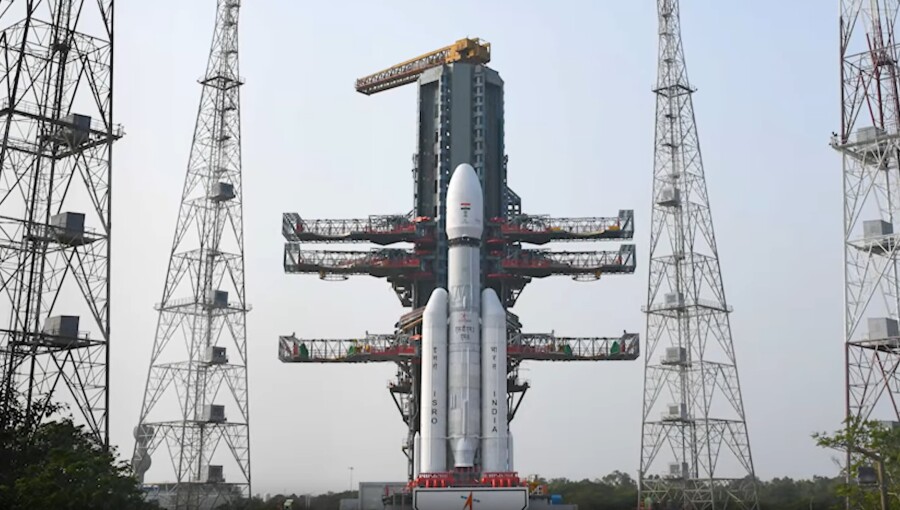
For decades, India’s presence in space was defined by a single, formidable institution. The Indian Space Research Organisation(ISRO) which designed, built and flew the country’s rockets, satellites and deep space missions, earning global respect for reliability and frugal engineering.

Yet in the past few years, a quieter but potentially transformative shift has been under way. A new generation of private companies is attempting something once unthinkable in India, building and launching their own rockets for commercial customers.

This change has not happened by accident. It is the result of policy reform, global market pressures and a cohort of engineers who grew up inspired by ISRO’s successes but eager to operate beyond the confines of a state monopoly. Together, they are giving India its first taste of a NewSpace era.

The turning point came in 2020, when the Indian government announced wide ranging reforms to open the space sector to private enterprise. New bodies were created to regulate and promote commercial activity, most notably the Indian National Space Promotion and Authorisation Centre, known as IN-SPACe. State owned assets, including launch facilities and testing infrastructure, were made accessible to startups. The message was clear, space was no longer the exclusive preserve of the government.

According to a report by Carnegie India, at the heart of this shift lies a global opportunity. The rapid growth of small satellites, driven by Earth observation, communications and research, has created demand for dedicated, low cost launch services. These satellites are often too small to justify rides on large rockets, yet too valuable to risk indefinite delays.

Companies around the world are racing to fill this niche, and Indian entrepreneurs believe they can compete on price, responsiveness and engineering talent. Two firms have emerged as flag bearers of India’s private launch ambitions. Skyroot Aerospace, based in Hyderabad, and Agnikul Cosmos, headquartered in Chennai, are both developing small satellite launch vehicles designed to carry a few hundred kilograms to low Earth orbit.

Their approaches differ, but their goals are strikingly similar, frequent launches, rapid turnaround and commercial customers from around the world. Skyroot made history in November 2022 with the suborbital launch of Vikram-S, the first privately built rocket to fly from Indian soil. Named after Vikram Sarabhai, the founder of India’s space programme, the mission was largely symbolic, carrying no satellites into orbit.

Yet it demonstrated that a private company could design, integrate and launch a rocket using ISRO’s facilities, marking a psychological breakthrough for the sector. Since then, Skyroot has focused on its orbital vehicle, Vikram-1, which it hopes will offer a dedicated launch option for small satellites. The company has emphasised rapid manufacturing and has drawn heavily on engineers with experience inside ISRO.

Its pitch is straightforward, Indian launch costs combined with global service standards. Agnikul Cosmos has taken a slightly different path. In May 2024, it successfully conducted a suborbital flight of its Agnibaan SOrTeD rocket from a newly built private launch pedestal at Sriharikota, India’s main spaceport.

The mission tested Agnikul’s semi cryogenic engine, Agnilet, which uses liquid oxygen and kerosene and is fully 3D printed. The company argues that such technologies will reduce production time and allow faster iteration. Perhaps most striking is the degree of cooperation between these startups and the state. Rather than competing with ISRO in a traditional sense, private firms are deeply intertwined with the national programme.

They rely on ISRO for range safety, tracking and access to launch sites, while ISRO increasingly positions itself as a facilitator and mentor rather than sole operator. Officials have repeatedly described the relationship as complementary, with the agency focusing on heavy lift missions and exploration, while private players handle commercial small satellite launches.

This model reflects a broader rethinking of India’s space economy. Government policymakers see private launch vehicles as a way to capture a share of the global market, which is currently dominated by American, European and Chinese firms. They also view the sector as a driver of high skilled employment and advanced manufacturing, with spillover benefits for other industries.

Challenges remain significant. Developing a reliable orbital rocket is notoriously difficult, and even established players worldwide have suffered costly failures. Indian startups operate with far less capital than some of their international rivals, and delays are common. Regulatory clarity, while improved, continues to evolve, and insurance and liability frameworks are still being tested. There is also the question of scale. India’s domestic demand for small satellite launches is limited, meaning companies must attract foreign customers to survive.

That, in turn, requires not just low prices but consistent reliability, something that can only be proven over time. Yet optimism persists. India’s reputation for engineering talent, combined with relatively low costs and growing political support, gives its private launch sector a credible foundation. The sight of privately built rockets rising from Sriharikota, once the exclusive domain of ISRO, has already altered perceptions at home and abroad.

In the coming years, success will be measured less by symbolic firsts and more by cadence, how often Indian private rockets fly, how reliably they perform and how many customers they serve. If even one of these companies manages to establish a steady launch rhythm, it could mark a profound shift in how India participates in the global space economy.

For a country that once prided itself on doing more with less in space, the NewSpace era offers a chance to do something different, to turn ingenuity into industry, and launches into a lasting commercial presence.

Taxonomic classification of 80 near-Earth asteroids reveals key insights into their origins, evolution and planetary defense significance


Beijing Zhongke Journal Publising Co. Ltd.
Distribution of Near-Earth Asteroids of Different Taxonomic Complexes 

image: 

January 27, 2026: Distribution of Near-Earth Asteroids of different taxonomic complexes in the Solar System, where red represents S-complex Near-Earth Asteroids, green represents C-complex ones, and blue represents X-complex ones.

view more 

Credit: Beijing Zhongke Journal Publising Co. Ltd.


Near-Earth asteroids (NEAs) are celestial bodies whose orbits intersect with Earth’s, holding great significance for studying Solar System formation and evolution while posing potential collision hazards to humanity. However, classifying small, newly discovered NEAs remains challenging due to limited observational windows.


Led by researchers from the Purple Mountain Observatory, Chinese Academy of Sciences, the international team conducted a one-year observational campaign from October 2023 to October 2024. Using the Johnson-Cousins BVRI broadband photometric system, they collected data from two telescopes: the Purple Mountain Observatory Yaoan High Precision Telescope (YAHPT, IAU code O49) in China and the Kottamia Astronomical Observatory 1.88 m telescope (IAU code 088) in Egypt. After rigorous data reduction and analysis, the team successfully obtained photometric color indices for 84 NEAs and completed taxonomic classification for 80 of them.


The results show that nearly half (46.3%) of the sampled asteroids belong to the S-complex, 26.3% to the C-complex, 15.0% to the X-complex, and 6% to the D-complex, with the remaining classified as A-type or V-type. Statistical analysis revealed that C/X-complex asteroids are more abundant among smaller NEAs (absolute magnitude H > 17.0), accounting for nearly twice the proportion of larger ones. Additionally, X-complex asteroids tend to have sub-kilometer diameters, while C- and S-complex asteroids show similar distributions across different size ranges.


Orbital parameter analysis indicated that C/D-complex asteroids dominate NEAs with a Jovian Tisserand parameter TJ < 3.1, suggesting a potential cometary origin. Notably, NEA (385268) exhibits spectral and dynamical properties consistent with Jupiter-family comets, likely originating from the Themis family via Jupiter’s 2:1 mean-motion resonance. Among 13 potentially hazardous asteroids (PHAs) identified in the sample, C-complex and S-complex asteroids each account for 5, a finding that challenges previous assumptions and highlights new considerations for planetary defense, as C-complex asteroids are more porous, which may reduce the effectiveness of kinetic impact deflection strategies commonly used in planetary defense.


The research provides valuable data for understanding NEA origin and evolution mechanisms, while offering practical guidance for planetary defense planning. Future studies will expand the sample size, focus on fainter NEAs, and incorporate infrared observations to improve classification accuracy.

See the article:

Taxonomic classification of 80 near-Earth asteroids

http://dx.doi.org/10.26464/epp2025080

How brick-building bacteria react to toxic chemical in Martian soil


Indian Institute of Science (IISc)
Microscopy image of Sporosarcina pasteurii 

image: 

 Microscopy image of Sporosarcina pasteurii

view more 

Credit: Aloke Lab, IISc


Bacteria that thrive on Earth may not make it in the alien lands of Mars. A potential deterrent is perchlorate, a toxic chlorine-containing chemical discovered in Martian soil during various space missions.

Researchers at the Indian Institute of Science (IISc) recently investigated how bacteria that can mould Martian soil into brick-like structures fare in the presence of this chemical. They find that although perchlorate slows down bacterial growth, it also surprisingly leads to the formation of stronger bricks.

“Mars is an alien environment,” says Aloke Kumar, Associate Professor in the Department of Mechanical Engineering and corresponding author of the study published in PLOS One. “What is going to be the effect of this new alien environment on Earth organisms is a very, very important scientific question that we have to answer.

In previous studies, the researchers used the soil bacterium Sporosarcina pasteurii to build “space bricks” from lunar or Martian soil that can potentially be used to set up extraterrestrial habitats. When added to synthetic Martian or lunar soil along with urea and calcium, the bacterium produces calcium carbonate crystals (precipitates), which help glue the soil particles together into bricks, in a process called biocementation. The process also requires the natural adhesive guar gum, a powdery polymer extracted from guar beans.

In the current study, the authors used a more robust, native strain of the bacterium that they discovered in the soils of Bengaluru.

After first establishing its precipitate-forming skills, the researchers were curious to see if this strain can survive in the presence of perchlorate, which can be found at levels of up to 1% in Martian soils. In collaboration with Punyasloke Bhadury, Professor at the Indian Institute of Science Education and Research (IISER), Kolkata, the team found that the bacterial cells become stressed in its presence – they grow slowly, become more circular in shape, and start clumping together into multicellular-like structures. The stressed bacterial cells also release more proteins and molecules in the form of extracellular matrix (ECM) into the environment. Using electron microscopy, the researchers found that more calcium chloride-like precipitates were formed, and that the ECM formed little “microbridges” between the bacterial cells and the precipitates.

Synthetic Martian soils do not usually contain perchlorate because it is flammable, but to test its effects on biocementation, the researchers carefully added the chemical to the soil simulant in the lab. To their surprise, they found that the presence of perchlorate made the bacteria better at gluing the soil together, but only if guar gum – essential for bacterial survival – and the catalyst nickel chloride are also present.

“When the effect of perchlorate on just the bacteria is studied in isolation, it is a stressful factor,” says Swati Dubey, currently a PhD student at the University of Florida and first author of the study. “But in the bricks, with the right ingredients in the mixture, perchlorate is helping.”

Dubey thinks that the ECM microbridges could be enhancing the bacteria’s biocementation skills by funneling nutrients to the stressed cells – a theory that the team wants to explore in future studies. They also want to test the isolate’s biocementation abilities in a more Mars-like high CO2 atmosphere, which they plan to simulate in the lab.

Ultimately, the team’s goal is to deploy this method as an alternative, sustainable building strategy, to rely less on carbon-intensive cement-based processes – both on Earth and Mars. Such technologies can also help make future Mars landing missions smoother – by helping build better roads, launch pads, and rover landing sites, says co-author Shubhanshu Shukla, ISRO astronaut who is pursuing his Master’s degree with Kumar at IISc. The uneven topography of the moon’s surface, for instance, has caused some landers to topple over, he adds.

“The idea is to do in situ resource utilisation as much as possible,” Shukla says. “We don’t have to carry anything from here; in situ, we can use those resources and make those structures, which will make it a lot easier to navigate and do sustained missions over a period of time.”