Friday, March 06, 2026


US reaches out to Iran’s Kurds, but will they also be ‘hung out to dry’?


ANALYSIS


The US has made an outreach to Iranian Kurdish dissident groups as "Operation Epic Fury" rattles the pieces of the Middle East geostrategic chess game. The Kurds in other countries have a history of being pawns in Washington’s games and have at times used their leverage to their advantage. But under the Trump administration, Iran’s Kurds face colossal challenges.


Issued on: 05/03/2026 
FRANCE24
By: Leela JACINTO

File photo of a Kurdistan Freedom Party (PAK) fighter during a training exercise at a base near Erbil, Iraq, taken February 12, 2026. © Thaier Al-Sudani, Reuters

A day before the US and Israel launched their aerial attack on Iran, Reza Pahlavi, the US-based son of the former shah, posted a message on social media seeking to amend his earlier castigation of an Iranian Kurdish coalition as “separatists” with a “contemptible” agenda.

His effort backfired, unleashing a stream of satirical ripostes that underscored the challenges of leading a country with no history of genuine representative democracy.

The public wrangle kicked off last month after five dissident Iranian Kurdish parties announced the formation of a coalition against the Islamic regime in Tehran. Pahlavi slammed the initiative as a threat to Iran’s territorial integrity, raising alarm bells among Kurds seeking democratic rights denied to them under the Islamic and Pahlavi regimes.

Eager to redress the messaging mishap, Pahlavi then proceeded to post a video featuring him at the centre of a group of mostly unknown men, described as “members of the great family of Iran”, looking on silently as he declared his commitment to ending “all discrimination”.

His attempt was dismissed in many circles of Iran’s fractured opposition, with some social media posts superimposing clown figures on the gathering while others offered cartoons of the Pahlavi “red line” rhetoric.

Screengrab of a cartoon on X depicting Reza Pahlavi, the former Iranian shah's son. © Screengrab X

That was before “Operation Epic Fury” plunged the Middle East into colossal uncertainty as the US scrambles to articulate a day-after plan for Iran.

By Day Four of the war, Iran’s Kurds were receiving an outreach with far more serious implications.

On Tuesday, President Donald Trump had a phone call with the head of the Democratic Party of Iranian Kurdistan (KDPI), the largest of the five parties in the Kurdish coalition, according to news reports. Two days earlier, Trump spoke to Iraqi Kurdish leaders in the semi-autonomous region, where Iranian Kurdish armed groups have peshmerga fighters along the Iran-Iraq border. The CIA was also working to arm Kurdish forces with the aim of fomenting a popular uprising in Iran, CNN reported.

Mobilised, armed and with cohesive leadership structures, Iran’s once-overlooked Kurdish minority are in the spotlight as the country’s future hangs in the balance. The Kurds of the Middle East have been wooed by Washington at different times, on different sides of borders that separate them, with different results. Some have been disastrous. The question now for Iran’s Kurds is whether history is set to be repeated or if its lessons will be heeded.

Armed, mobilised, ready to deploy


From their mountainous heartland in Iran’s northwestern border region, the Kurds – who make up between 10 to 17% of the country’s 93 million population – have a long history of resisting Tehran. Their opposition to the current regime dates back to the 1979 revolution, when the predominantly Sunni community launched an armed uprising against the Shiite Islamist regime.

Over the course of nearly half-a-century, Kurdish parties with different acronyms and ideologies, many with armed wings based on the Iraqi side of the border, have managed to withstand Tehran’s efforts to decimate any political opposition.

“The difference between Iranian Kurdistan and rest of the country is the connection between these parties and the people. If you look at the Kurdish region of Iran, the majority of families have lost at least one member in the war against the Islamic regime. So they are already part of this movement,” explained Shukriya Bradost, a Middle East security expert who has studied the history of Iran’s Kurds.

The effectiveness of Kurdish mobilisation was visible during the December-January protests, when the streets of Iran’s cities, towns and villages turned into bloodbaths as the regime unleashed a crackdown on an unprecedented scale.

As waves of unorganised demonstrators got mowed down by military grade weapons, seven Kurdish political parties came together to issue a joint call for a general strike on January 8. Other ethnic minority provinces joined the strike call, grinding the economy to a halt and keeping their communities off the streets.

READ MORE‘Persian cities feel the pain of the Kurdish regions’

The Kurdish mobilisation maintained momentum in the following weeks and months, with party leaders holding coalition talks. By the time Trump’s military “armada” had deployed to the region, five of the seven Kurdish parties that organised the January 8 strike managed to form a coalition with a political platform and agenda.

The Coalition of Political Forces of Iranian Kurdistan, launched on February 22, incorporates the largest Kurdish party, the Democratic Party of Iranian Kurdistan (KDPI) and the Kurdistan Freedom Party (PAK), whose fighters took part in battles in Iraq against the Islamic State (IS) group.

It also includes the Kurdistan Free Life Party (PJAK), an armed group that joined the Syrian Kurdish YPG (People’s Defence Units) linked to the Turkey-based Kurdistan Workers’ Party (PKK) that joined the US-backed Syrian Democratic Forces (SDF) fight against the IS group in Syria.

Their history of dealing with the US and negotiating majority communities seeking centralised states have taught the Kurds valuable lessons. But in the Iran theatre today, the challenges are enormous, and with Israel seeking to redraw the map of the Middle East, the outcomes are far from certain.
‘Tactical activation, not a strategic partnership’

Trump’s outreach to the Iranian Kurdish opposition based in Iraqi Kurdistan began on Sunday, a day after the launch of Operation Epic Fury, with a phone call to the leaders of the two main Kurdish factions in Iraq — Masoud Barzani and Bafel Talabani, according to reports. It was followed by a conversation the next day with KDPI chief Mustafa Hijri, CNN reported.

While the phone calls made headlines, experts were keeping expectations in check. “It looks like a tactical activation, not a strategic partnership,” said Guney Yildiz, senior adviser on geopolitics and strategic insights at the Anthesis-Wallbrook Group.

“The CIA went through everyone else first – MEK [the dissident Mojahedin e-Khalq], monarchists, diaspora groups – and none of them have serious organisational reach inside the country. The Kurds and the Baloch do. So, this is what's left after every other option was eliminated,” he added. "The problem is that tactical activations end when the tactical need ends."

A vast, multi-ethnic country, Iran shares land borders with seven other countries, with minority groups located in the border areas. The majority ethnic Persians, comprising more than 50% of the population, are predominantly based in the central region while the Azeris (around 24%) and Kurds have heartlands in the north. Other minorities include the Lurs (around 17%) and Arabs (2%) in southwestern Iran, including the oil-rich Khuzestan province bordering Iraq. The Baloch (2%) are another important group in the Sistan-Baluchestan province bordering Pakistan.
Iran has 31 provinces with some bordering seven countries. © Screengrab, X, Maps of India

“At least four of them have armed groups – the Kurds, the Baloch, the Arabs and the Lurs. And you're seeing very clearly among these various ethnic minorities, the thinking, if not preparation, for a situation in which Iran further destabilises,” said James Dorsey, adjunct senior fellow at the Singapore-based S. Rajaratnam School of International Studies.
Crackdown by a weakened regime starts

For Iran’s Kurds, the US-Israeli war against the Islamist regime could be a pivotal moment in their history. “They've been waiting for this moment for four decades. But they also have concerns about the future of the war and what will happen after the death of [Ayatollah Ali] Khamenei,” said Bradost.

The most immediate concern is a vicious crackdown in the Kurdish areas if the regime, battered but not beaten, reverts to standard operating procedures. “If the Iranian regime has a retaliation against any part of the country, the Kurdish region will be the first,” Bradost explained.

That scenario was already unfolding within the first week of the war. On Thursday, the Iranian military said it targeted headquarters of Kurdish forces in Iraqi Kurdistan following strikes on Kurdish regions in both Iran and Iraq, according to Iranian state media.

It could all go horribly wrong for the Kurds, which is why their leaders in Iraqi Kurdistan have pushed the Trump administration for guarantees, explained Dorsey. “Iranian Kurds said, among other things, we want you to have boots on the ground. But even more importantly, we want a no-fly zone. We want to see commitment, because there's been enough Kurdish experience with the US and Israeli support that ended with the Kurds being hung out to dry,” he said.

The ​Iranian intelligence ministry, in its statement on regime operations in the Kurdish areas on Thursday, said Iranian forces were cooperating with "noble Kurds" to thwart the "Israeli-American" ⁠plan to attack Iranian soil and fracture the nation.

The statement underscores the attempts, from inside and outside Iran, to fracture communities and a populace that has repeatedly risen up to demand basic rights and liberties within a representative democratic framework.
The ‘arithmetic’ of tactical ties

As the US-Israeli military operation grinds on without a day-after plan for Iran, the country faces the risk of fracturing along ethnic fault lines, experts note.

“As a matter of principle, any outcome in Iran – whether that is the fragmentation of Iran as a nation state, whether that is the toppling of the regime, or change from within the regime – that produces a government that's less threatening, as far as Israel is concerned, is a victory,” said Dorsey. “As a matter of principle, Israel encourages fragmentation, but that's not the only outcome that they would find acceptable. And the same is true for elements in the United States.”

The Kurds, in their long struggle against majoritarianism, have realised the dangers of demanding an independent state. Across the border in Turkey, the PKK has abandoned its separatist goals and is focused instead on more autonomy and greater Kurdish rights. Considered a terrorist group by Ankara, Washington and several European capitals, the PKK today is engaged in a long drawn-out peace process with Turkish authorities.

But that didn’t stop Turkey from backing the Syrian government’s recent military campaign to push out Kurdish SDF forces from northern Syria. Trump’s special envoy to Syria, Tom Barrack, even declared the SDF’s purpose had "largely expired", crushing Syrian Kurdish hopes of establishing a semi-autonomous zone, which the US helped establish in Iraq.

The Syrian experience hangs over the calculations of Iranian Kurdish groups today, making them more “hard-nosed”, according to Yildiz. “They understand why America made the choices it made in Syria, even if they disagree. They're not operating on hope. They're looking at a regime that's been decapitated three times in nine months and deciding they can't afford to sit this out. Their options are: work with an unreliable partner, or watch the most consequential moment in their political lifetime pass without acting. That's not trust — that's arithmetic,” he said.

The key variable in coming weeks and months, he noted, is whether the Iranian security apparatus holds together or fractures. The US outreach to the Kurds could end "when the tactical need ends. If this shifts to a diplomatic track or the regime stabilises, Kurdish utility to Washington drops fast”.

In which case, the Kurds of Iran will once again embrace the age-old adage that the Kurds have no friends but the mountains. As Israel increases its influence across the region, unchecked this time by the White House, Iran’s Kurds are likely to add new lessons on frenemies, in keeping with the times.


To avoid 'US boots on the ground', Washington considers enlisting separatists in Iran

Issued on: 06/03/2026 - FRANCE24


Top US officials, including the defence secretary, have said that sending US troops into Iran could not be ruled out. But given public opinion in the US, such a move would come with political consequences for US President Donald Trump and the Republicans, especially with the midterm elections approaching in November. However, there are reports that the White House is looking to enlist and even arm separatist groups in the region to accomplish having “boots on the ground”.

Video by: 
Monte FRANCIS


US, Mexico to hold talks ahead of USMCA trade pact review as Trump tariffs loom

The United States and Mexico said Thursday that their negotiators will hold bilateral talks this month ahead of a joint review of the United States–Mexico–Canada Agreement as tariff pressure from US President Donald Trump adds urgency to discussions. The first meeting is set for the week of March 16, with further sessions planned before the pact’s July review.


Issued on: 06/03/2026 -
By: FRANCE 24

The flags of Mexico, Canada and the United States photographed on February 3, 2025. © Paul Sancya, AP

The United States and Mexico said Thursday that negotiators will hold bilateral talks this month ahead of a joint review of the US-Mexico-Canada trade pact, in discussions that come amid tariff pressure from President Donald Trump.

Negotiators are set to hold their first meeting the week of March 16 and convene regularly thereafter, the US Trade Representative's office said.

Under the originally agreed terms, the US-Mexico-Canada Agreement (USMCA) is due to be reviewed in July.

Trump signed and praised the pact during his first presidency, but has reportedly weighed ditching the agreement entirely as tensions with Canada mount.

Since returning to the White House, he has also threatened allies and competitors with fast-changing and sweeping tariffs, although he has created carveouts for a swath of Mexican and Canadian imports entering his country.

For now, Dominic LeBlanc, Ottawa's minister for Canada-US trade, has voiced optimism over the future of the agreement.

LeBlanc is due to be in Washington on Friday where he is set to meet US Trade Representative Jamieson Greer.

"They will discuss the upcoming trilateral review of the (USMCA), as well as bilateral concerns," LeBlanc's spokesperson said.

For the US-Mexico talks, Greer and Mexican Secretary of Economy Marcelo Ebrard have instructed negotiators to "begin a scoping discussion" on needed measures to ensure that benefits of the agreement "accrue primarily to the parties".

This includes "reducing dependence on imports from outside the region, strengthening rules of origin, and enhancing the security of North American supply chains," the USTR's office said in a statement.

LeBlanc last week said that he believed Washington was ready to be specific about their desired USMCA adjustments.

He also indicated in remarks that Trump's dismissive rhetoric about the USMCA does not match his trade team's posture.

(FRANCE 24 with AFP)

 MSF files defamation complaint against


British far-right group

Aid group Médecins Sans Frontières (Doctors Without Borders, or MSF) has filed a complaint for defamation against a British far-right group after one of its teams was verbally attacked in northern France last year while returning from an assignment to assist migrants.


Issued on: 05/03/2026 - RFI

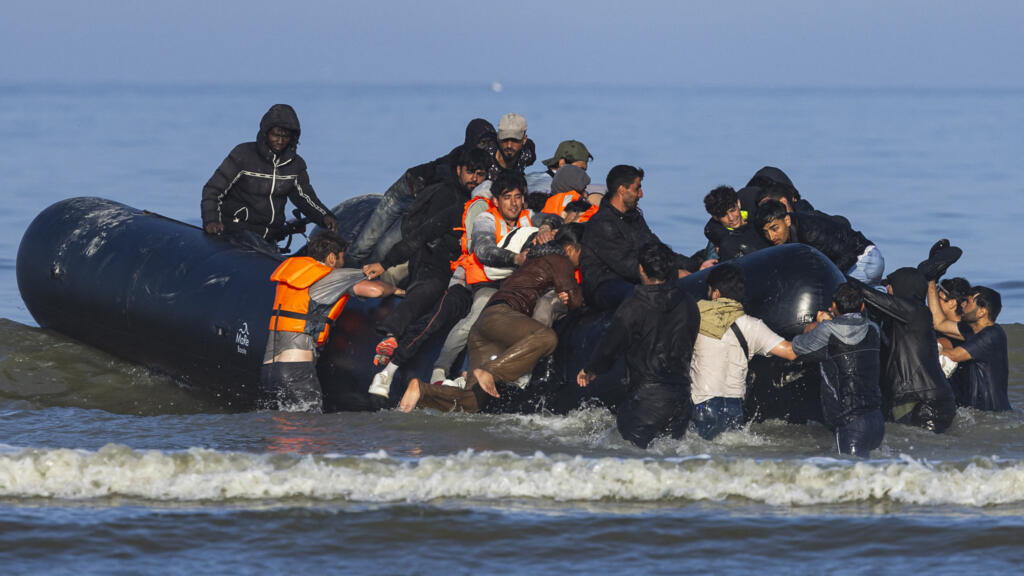
Aid group MSF claims their workers were insulted in northern France last year after giving medical care to people who had survived crossing the English Channel in a boat. 
AFP - SAMEER AL-DOUMY


The organisation said the incident happened on 5 December near Grand-Fort-Philippe as staff were returning from a medical outreach mission to people who had survived attempts to cross the English Channel.

MSF said three activists claiming to belong to the British far-right movement Raise The Colours approached the team and shouted insults.

“These individuals approached the MSF team members in a threatening manner, shouting insults and making defamatory and false statements about the organisation,” MSF said.

Video posted online

The confrontation was filmed by the activists and posted on the group’s social media accounts.

“These images sparked numerous hate messages and threats targeting exiles and humanitarian workers,” MSF said. The organisation added it had filed a complaint with a court in Paris.

French authorities have also opened inquiries into the activities of Raise The Colours.

On 23 January, police chiefs in northern France banned a rally organised by the group’s activists. Police said their actions were part of a xenophobic and anti-immigration ideology and posed a risk to public order.

In mid January, British police banned 10 activists from the movement from entering France.


Climate of hostility

Camille Niel, head of MSF’s mission in France, said the incident reflected a wider climate around migration.

“The repetition of these acts is rooted in a climate of impunity fuelled by rhetoric and migration policies that promote stigmatisation, rejection and hatred, to the detriment of the physical and psychological health of exiled people,” Niel said.


MSF was set up in Paris in December 1971 to provide humanitarian medical care.

In 2019, the charity was active in 70 countries with more than 35,000 staff, mostly local doctors, nurses and other medical professionals.

Logistics technicians, water and sanitation engineers and administrators also work for the group, which receives most of its funding from private donors.

In January, Israel confirmed it would suspend the licences of 37 international humanitarian organisations, including MSF, that operated in the Gaza Strip.

Israeli authorities accused the groups of failing to provide lists of their employees’ names, which are required for security reasons.

MSF called the demand a “scandalous intrusion”. Israel said the measure was needed to stop jihadists infiltrating humanitarian organisations.


UK halts study visas from four countries to stop students claiming asylum

The British government has imposed an "emergency brake" on visas for students from Afghanistan, Cameroon, Myanmar and Sudan, in response to what it said was a surge of requests for asylum from people arriving in the United Kingdom to study.

Issued on: 04/03/2026 - RFI

Medical students from Afghanistan at the University of Glasgow in Scotland on 13 September 2024. The UK is halting all student visas for people from Afghanistan and three other countries. © Andy Buchanan / AFP

In a change to immigration rules announced on Tuesday, the UK will also cease granting work visas to Afghan nationals.

Home Secretary Shabana Mahmood said the ban – the first of its kind – was designed to close a back-door route to claiming asylum.

"Britain will always provide refuge to people fleeing war and persecution, but our visa system must not be abused," she said in a statement.

"That is why I am taking the unprecedented decision to refuse visas for those nationals seeking to exploit our generosity."

The changes are the centre-left government's latest effort to harden its immigration and asylum rules as its rivals on the right use the issue to rally support.

Student visa statistics

The new policy will apply from 26 March.

According to the Home Office, the number of people claiming asylum after arriving in the UK with a valid visa or other permit has more than trebled in the past five years. Around 39,000 such claims were filed last year, bringing the total to 133,760 since 2021.

People from Afghanistan, Cameroon, Myanmar and Sudan make up "an above average proportion" of asylum seekers accommodated at public expense, the ministry said, reporting that claims by students from the four countries had spiked.

Official figures from 2025 show that the top five nationalities with the largest number of people claiming asylum were Pakistan, Eritrea, Iran, Afghanistan and Bangladesh.

The government has reported an increase in the number of applications from Pakistan and Bangladesh in particular, with over 80 percent of claimants from these countries requesting asylum after arriving in the UK on a work, study or other permit. In contrast, 83 percent of Afghan claimants arrived without documents.

A total of 12,578 people claimed asylum last year after coming to the UK on student visas, the government's statistics show. A higher number – 13,557 – applied while on a work visa.


Asylum overhaul

The UK's previous right-wing government also cracked down on student visas, raising financial requirements and barring undergraduates from bringing dependent family members with them to the UK.

Prime Minister Keir Starmer's Labour government has continued the drive to bring down immigration and asylum numbers, especially as polls show rising support for hard-right populist party Reform UK.

Under changes introduced this week, the government made protection for refugees temporary and subject to review every 30 months, after Home Secretary Mahmood argued the UK's system was too generous compared to other countries in Europe.

In November, the UK threatened to block all visas for Angola, Namibia and the Democratic Republic of Congo unless their governments agreed to take back migrants denied permission to stay.

The Home Office has since signed agreements with all three countries to allow Britain to deport people to their territory.


ANTI-MIGRANT REACTIONARY ALLIANCE

Five EU countries team up to build return hubs outside Europe

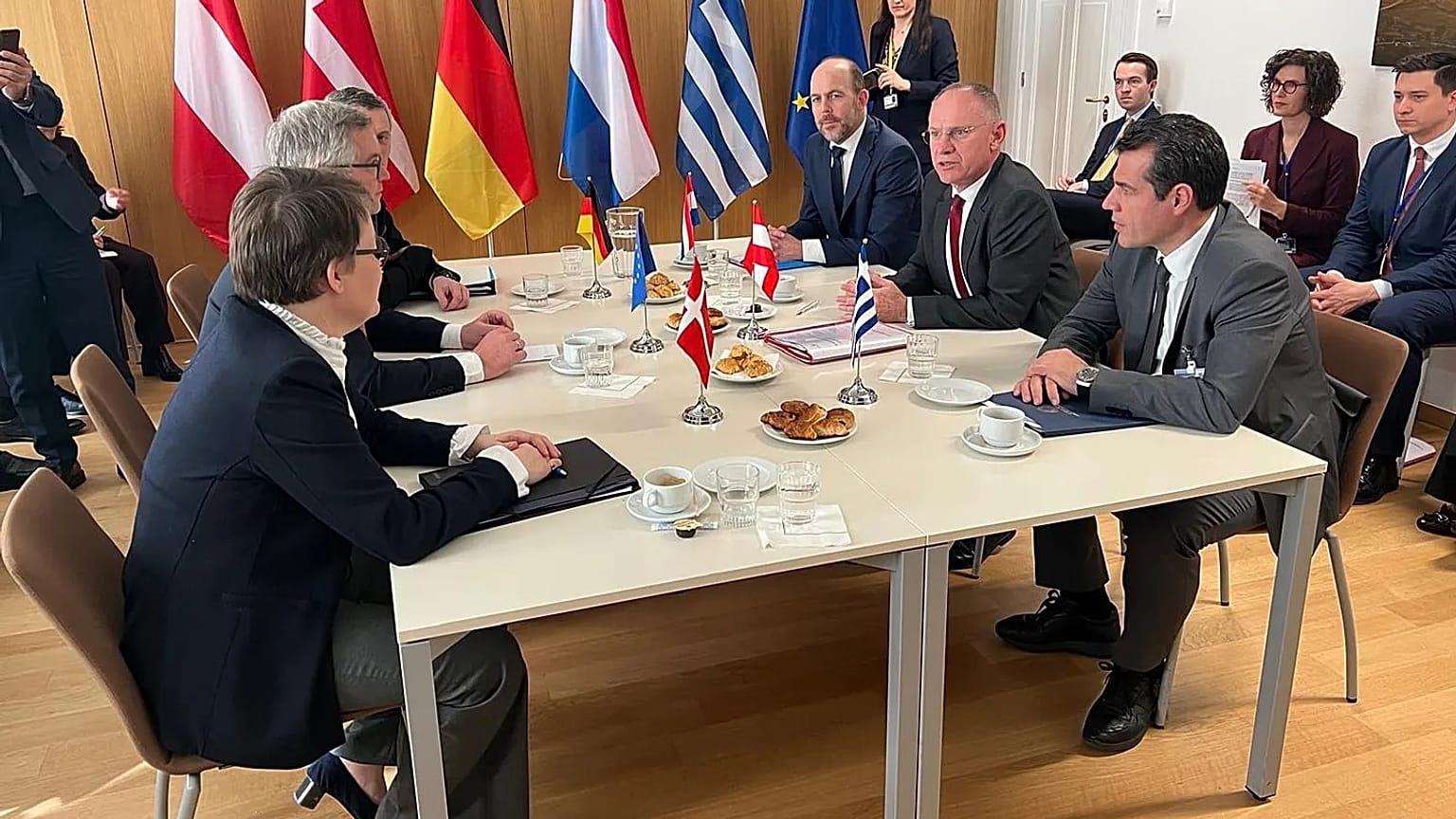
Commissioner Brunner with the minister of Germany, The Netherlands, Greece, Denmark and Austria
Copyright Austrian Interior Minister


By Vincenzo Genovese & Jorge Liboreiro
Published on 

Germany, the Netherlands, Austria, Denmark and Greece are working together to build so-called facilities outside Europe to host irregular migrants who arrive in their territory, a sign of growing momentum for a contentious project.

Germany, the Netherlands, Austria, Denmark and Greece have teamed up to build deportation centres outside Europe, marking the first time a group of EU member states has been established to make the controversial project a reality on the ground.

The extraterritorial camps, also known as return hubs, are meant to host rejected asylum seekers as they wait to be returned to their countries of origin.

Interior ministers from the five countries gathered on Thursday on the margins of a meeting in Brussels. Magnus Brunner, the European Commissioner for Internal Affairs and Migration, took part in the discussions as a guest.

"Returns are an essential part of a well-functioning migration management system [...] and we are very much committed to working together with the Member States on identifying innovative solutions", Brunner said in a press conference after the meeting.

Less than one-third of the people who are ordered to leave the EU are effectively returned to their countries of origin, according to Eurostat.

The coalition aims to "go into concrete implementation" of the deportation centres, Austrian Minister Gerhard Karner told journalists upon his arrival in Brussels.

The joint push from Germany, the Netherlands, Austria, Denmark and Greece builds upon a new regulation that will allow member states to outsource their migration policy by building centres outside the bloc. The hubs are meant to host asylum-seekers whose applications for protection have been turned down in Europe.

The regulation was agreed by EU countries last December and is now being discussed by the European Parliament.

When approved, it will enable governments to deport irregular migrants to third countries unrelated to them, as long as they have bilateral agreements in place. The centres can be either places of transit or locations where a person is expected to stay.

In the meantime, countries are exploring ways to seal partnerships with third countries available to host the migrants they have rejected.

Destination unclear

Germany, the Netherlands, Austria, Denmark and Greece believe that moving ahead in smaller groups is the best way to achieve effective results and prove the contentious model can work in practice, according to diplomats familiar with their thinking.

The coalition already has concrete ideas on how to move ahead, but prefers to keep quiet on any potential destination to avoid spoiling its chances. Any country that might agree to host the return hubs would be offered incentives in exchange.

For Greece, it is important to be the only Southern European country participating in this initiative, government sources told Efsyn newspaper, as the move also sends a deterrent message regarding migration flows.

Other countries are also moving on the topic.

Finland has discussed a similar project with other Nordic countries and is already in talks with non-EU governments, the country's Interior Minister Mari Rantanen told Euronews.

Italy is operating a de facto return hub in Albania, with two centres in Shengjin and Gjader hosting dozens of migrants waiting to be deported.

Still, the idea remains highly controversial. Humanitarian organisations have repeatedly warned that such facilities could result in migrants being held in prison-like conditions, and stressed there is a grave risk of rampant human rights violations.

NGOs have urged the European Parliament to block the regulation, which is due to be voted on by the Civil Liberties Committee on Monday. If approved, it has to be endorsed by the whole Parliament before negotiations with member states can begin.


Multitude: war and democracy in the Age of Empire /. Michael Hardt and Antonio Negri. p. cm. Sequel to: Empire. Includes index. ISBN 1-59420-024-6. 1 ...

If for no other reason Empire deserves, in my view, the international success it is enjoying. Antonio Negri Thank you. The fact remains that now, alongside ...

Empire / Michael Hardt and Antonio Negri. p. cm. Includes ... missions of Empire will be constituent assemblies of the multitude, social ...


THE EPSTEIN CLASS


'Operation Epstein Distraction': Sexual assault allegations against Trump emerge


Issued on: 06/03/2026 


Play (06:31 min)

PRESS REVIEW – Friday, March 6: International papers discuss US President Donald Trump's "warrior transformation" and speculate about how the new war in the Middle East could benefit Russia. Also: the US Department of Justice publishes an interview that outlines sexual assault allegations against Trump. Finally, is the US president trying to distract attention from the Epstein files with the new war? This question has inspired quite a few cartoons.

Papers from across the world are following the war in the Middle East. Spanish daily El País writes that "two out of three Spaniards oppose the war against Iran". However, "61 percent support sending a frigate to Cyprus in response to the Iranian attacks" and as a commitment to defend the European Union.

French newspaper La Croix headlines with "Trump's warrior transformation". The attack on Iran shows a dramatic turnaround by the US president, who was once opposed to "endless wars". Lebanese newspaper L'Orient-Le Jour headlines with "an entire population forced to flee", showing a scared child on the street and massive traffic jams after Israeli forces ordered the evacuation of Beirut's southern suburbs.

Israeli papers are not always on the same page. An analysis in the left-wing paper Haaretz says that "Trump's fantasies for Iran go beyond regime change". It says that the joint US-Israeli war is a "bid to consolidate a new regional order in the Middle East". Trump's vision for this order is not democratic values, human rights or international law, says the analysis. The paper reminds us that his central partners in the Gulf states are authoritarian monarchies where the ultra-rich employ poor migrants from the Global South. Therefore, the new emerging order is driven by economic interests: defence technologies, AI, crypto, real estate and finance, where the Gulf is a "haven for capital," not limited by the "perils of democracy". An analysis in the right-wing paper The Times of Israel says that the Gulf states are living "their worst nightmare", because they've spent decades trying to avoid direct conflict with Iran. The article says that Iran hopes that inflicting enough pain on its neighbours will pressure Trump to end the war. But this strategy might end up backfiring: the Gulf states are cooperating even more closely with Israel, opening pathways to new alliances.

The Washington Post writes that "Russia could benefit from the new war", as Trump's attention may be totally diverted with weapons rerouted to the Middle East. Russian oil might be put back on the table amid surging oil prices. The Ukrainian paper The Kyiv Independent writes that "in the Middle East, chaos is Putin's new ally". The opinion piece says that people shouldn't be worried that Putin will intervene on behalf of Iran; he will instead try to exploit the new war.

Meanwhile, Politico reports that the US Department of Justice has published documents that outline sexual assault allegations against Donald Trump. It's a trio of FBI interviews with a woman who says that Trump sexually assaulted her when she was a young teenager, between the ages of 13 and 15. She was introduced to him by the late sex offender Jeffrey Epstein. Her central allegation is that the president forced her to perform oral sex on him – she says she then bit his private parts to defend herself, after which he punched her. These files come as Democrats have been investigating whether the US Justice Department deliberately withheld material that includes sexual assault allegations against Trump.

Finally, we take a look at some cartoons that imply Trump attacked Iran only to divert global attention from the Epstein files. "Operation Epstein Distraction" was renamed to "Operation Epic Fury" so that's it's not too obvious, says one of the cartoons wryly.


#METOO REDUX
In France, women accusing Al-Fayed seek answers over trafficking claims


Paris (AFP) – Mohamed Al-Fayed traded on the glamour of owning Harrods, the Paris Ritz and luxury yachts, but he and his brother were also at the centre of a dark web of alleged abuse, say French lawyers for women who liken him to US sexual predator Jeffrey Epstein.


Issued on: 04/03/2026 - RFI


Mohamed Al-Fayed, who died in September 2023, is accused by at least 37 women of rape and sexual assault. © AP - Kamil Zihnioglu

French authorities began investigating the late Egyptian businessman and his brother Salah last year amid allegations of a vast system of sex trafficking and abuse on French soil.

"Every time I met Mohamed Al-Fayed, he tried to assault me," his former personal assistant Kristina Svensson told French police of her two years working at the Ritz.

Her testimony is all too familiar.

The alleged crimes of Mohamed Al-Fayed, who died in 2023 aged 94, first came to light in a BBC investigation in September 2024. In it, several young women who worked at his upmarket London department store Harrods accused him of rape and sexual assault.

Late Harrods owner Al-Fayed accused of rape: BBC

British police told AFP that 154 victims have so far come forward to say the former owner of Premier League club Fulham abused them.

His brother Salah, who died in 2010, is also accused.

More than 400 people come forward over Al-Fayed sexual abuse claims

But frustrated by London Metropolitan Police's investigation of the alleged crimes, which span more than 35 years, some victims have turned to France in the hope of finding justice.

"In England they're ignoring the trafficking... They just want to make it about Al-Fayed and Harrods," said Rachael Louw, a former Al-Fayed employee, speaking for the first time about her ordeal.

The French investigation, however, is handled by "a unit specialised in human trafficking", she told AFP.

It is "a relief that our cases are actually being recognised as trafficking".

Mohamed Al-Fayed, outsider shunned by British high society


Consumed 'like meat'


Louw was 23 when her bosses sent her to Salah Fayed's yacht on the French Riviera. Now after 31 years she was able to testify about what happened there to French investigators on February 10.

Louw told AFP she was first "spotted" by Mohamed Al-Fayed in 1993 while working as a sales assistant at Harrods. Shortly after, she was placed on a management training scheme, which required her to submit to a medical exam by a Harley Street doctor before being employed by the chairman's office in the summer of 1994.

Rachael Louw, a former employee of late Salah Fayed, brother of late Egyptian businessman Mohamed Al-Fayed, here during a photo session in Paris on 9 February, 2026, was 23 when her bosses sent her to Salah Fayed's yacht on the French Riviera. AFP - JOEL SAGET


The medical appointment went far beyond a standard checkup, with a pelvic exam and "thorough breast exam", smear and HIV tests.

And the results were not kept confidential.

The report, seen by AFP, was handed over to Harrods, and described Louw's personal life: her parents' separation when she was young, her father living in the United States and the death of her mother and grandmother.

The doctor also noted that she took a birth control pill, had a boyfriend and was in "excellent" health.

The doctor "sent confidential information to arm the rapist", said French lawyer Eva Joly, who is representing Louw and another former Al-Fayed assistant.

"These young women were like meat, and they wanted to know if they were fit to consume," said Caroline Joly, another member of the legal team.

Several encounters were arranged between Louw and Salah Fayed at his home in London's glitzy Park Lane, where Louw said she was drugged with "a crack cocaine mix".

Louw was then offered a job as an assistant to Salah in France and she was sent there by private jet.

She said she refused further drugs, "and because he didn't push anymore, I thought it was okay".

"I had no reason not to trust this man... this was my first job from university."

'I didn't feel safe'

Staff confiscated her passport as she flew from London's Luton airport to his yacht. And once she arrived, "nothing" resembled the job she signed up for.

"I thought I was supposed to be filing paperwork, making arrangements, organising office work," she said.

Instead "there was no office, no normal working hours, no time off. I was expected to just be with him", she said.

Louw recalled appearing alongside Salah Fayed at dinners attended by elderly, wealthy men with "young girls and lots of touching".

When she managed to call her boyfriend, who worked at Harrods, he was fired.

One night, Louw woke up to find Salah in her bed, claiming he was lonely, she said.

"I went ramrod straight and the rest of the night I was awake just lying there petrified," she said, fearing any movement would be an invitation for him to touch her.

"I didn't know what he would do to me... I didn't feel safe."

She saw other young women in the Fayeds' orbit.

On a trip to Saint Tropez she encountered a red-headed "young girl", possibly younger than herself, sunbathing on Mohamed Al-Fayed's yacht that was moored just off his villa.

"Mohamed starts rubbing lotion all over this girl, she's wearing a bathing suit and then he started to kiss her," Louw told AFP.

"I don't remember anything else" of that day, she said, "so I don't know if there were drugs, I can't say for sure whether I was drugged that afternoon," she added.

What jolted her to escape was the prospect of being trapped alone with Salah after he bought a speedboat with only one bedroom, telling her "that he would take me to sail around the Italian coast".

"I knew that if I went on that boat nothing good would happen," she said.

Panicked, she booked the first Air France flight out and worked up the courage to ask for her passport back, which she received although it was clear Salah "was very angry".

Home again, "I had blocked out" the details of what happened, she said. "I didn't want to remember."

For decades she feared she was bound by a confidentiality agreement she had signed at her interview, but seeing other victims speak out against Al-Fayed in 2024, she reconsidered.

"How can I be silent? There has to be a cost to what the perpetrators did. Because if they go unpunished, it emboldens the next man.

"If we women do not speak up we become complicit in our own oppression... powerful men will never change a system that benefits them."

Alleged victims Gemma, Lindsay and Jen after a press conference held by the legal team featured in "Al-Fayed: Predator at Harrods", in London on 31 October, 2024, after barristers provided an update on their investigation into Harrods corporate failure to provide a safe system of work for its employees. AFP - BENJAMIN CREMEL

'Organised system'

Despite the deaths of the brothers, the women hope investigators can still track down who enabled the trafficking network.

"There is no such thing as a small piece of information. Every element is useful for the investigation," Al-Fayed assistant Svensson said, calling on victims and witnesses to speak to police.

The Swedish woman arrived in France in 1993 and was placed by a temp agency at the Ritz in 1998, then owned by Mohamed Al-Fayed, as his assistant.

Svensson, aged 30 at the time, was to help him manage his affairs after the death of his son Dodi with Princess Diana in a Paris car crash, perceived as a prestigious assignment.

Mohamed-al Fayed's spokeswoman, Katharine Witty, speaks after the inquest verdict is announced into the deaths of Princess Diana and Dodi-al-Fayed at the High Court in London 7 April, 2008. (Photo : Reuters)

During her interview with the Ritz management, the questions posed were "focused" on her appearance and her personal background, she said, even pointing out that she was the "spitting image" of Al-Fayed's wife.

The Ritz then sent her to Harrods in London for an interview with Al-Fayed himself, and organised accommodation for her at a luxury residence he owned.

"I had brought my CV. He wasn't interested in that. He only asked me personal questions."

What followed was a regular pattern of meetings with Al-Fayed. Svensson said she was left in a room alone for hours with no instruction, until he eventually arrived and she would endure sexual assault and attempted rape during which "he'd laugh".

"I hoped that in time he would see that I wasn't interested in him and that he would take me seriously," Svensson told police.

"I was a foreigner, with no family or network in the country, no knowledge of French labour law, and no one to lean on financially if I quit."

In retrospect, Svensson compares herself to a closely watched "luxury product", which Al-Fayed wanted to possess, "a doll on a shelf".

Al-Fayed was born Mohamed Fayed in Alexandria, but later changed his surname to the grander Al-Fayed, while his brother kept the original family name.
London investigation 'continues'

At the Ritz, she recalls that staff warned her that there were "microphones and cameras in every corner". And at a villa in Saint Tropez, she said a housekeeper suggested that she block her bedroom door at night.

The Ritz Paris told AFP in a statement that it was "deeply saddened by the testimonies and the allegations of abuse" and that it is "ready to fully cooperate with the judicial authorities. Our teams do not tolerate any form of inappropriate behaviour, which would be a serious breach of our code of conduct.

"We want to express our deepest respect to the women who spoke out," it added.

Harrods said it "continues to support the bravery of all women in coming forward. Their claims point to the breadth of abuse by Mohamed Fayed and again raise serious allegations against his brother, Salah Fayed. The picture that has emerged suggests that this pattern of abusive behaviour took place wherever they operated."

They said more than 180 survivors had already received counselling support through its independent advocate. The store also urged survivors to claim compensation through the Harrods Redress Scheme.

London's Metropolitan police said its "investigation into those who could have facilitated or enabled Mohamed Al-Fayed's offending continues" and urged victims to come forward.

"The way the Met works has moved on immeasurably, and our teams have transformed the way we investigate rape and sexual offences."

Lawyers for the two women say their testimony helps sketch the outlines of a "powerful system" of trafficking which resembles the one established during the same period by Epstein.

"As with Epstein, with the Al-Fayeds there is a frenzied consumption of young women and an organised system to procure them," said lawyer Eva Joly, who is also a former judge and European parliament member.

"The pattern is the same: selecting vulnerable young women, transport, accommodation, isolation and money, which is used to intimidate or corrupt," she said.

And as with the Epstein case, while the statute of limitations may have expired, an investigation into the Al-Fayeds can still establish the facts and identify any victims whose cases could be still prosecuted.

"We are only at the beginning of piecing the puzzle together in France," Joly insisted.
2026 WORLD CUP

Conflict and controversy hang over World Cup as 100-day countdown kicks off


Tuesday marks 100 days until the start of the 2026 World Cup in the United States, Mexico and Canada. Iran's participation in the tournament is in doubt after American and Israeli armed forces launched strikes on the country, while controversy over ticket prices, drug wars in Mexico and travel bans imposed by United States President Donald Trump are also casting shadows over preparations.


Issued on: 03/03/2026 - RFI


Forty-eight teams will compete for the 2026 World Cup which takes place between 11 June and 19 July in the United States, Canada and Mexico. 
AFP - ULISES RUIZ

Iran's soccer chief Mehdi Taj said he and senior government officials would assess whether the squad should take part in the competition, which begins on 11 June.

"It's not possible to say exactly, but there will certainly be a response," Taj said during a panel discussion on Iran's IRIB Channel 3.

"This will surely be studied by the country's high-ranking sports officials and there will be a decision on what's going to happen. But what we can say now is that due to this attack and its viciousness, it is far from our expectations that we can look at the World Cup with hope."

Iran booked a place in the tournament at their fourth successive finals last year, by topping Group A in the third round of Asian qualifying.

They are scheduled to play in Group G with Belgium, Egypt and New Zealand, with their matches taking place in Los Angeles and Seattle.

If they were to finish their pool in second place and the US also finish the group stages as runners-up, the sides could meet in the last-32 knockout round.

If Iran were to withdraw, a replacement team would likely come from the Asian Football Confederation.

Criticism of ticket prices

Questions over Iran's participation follow doubts over the suitability of hosts Mexico, after the death on 23 February of drug lord Nemesio Oseguera Cervantes following a Mexican special forces operation. The attack led to more than 60 deaths around Mexico in a series of reprisals.

Following assurances last week from Fifa boss Gianni Infantino, Mexican president Claudia Scheinbaum also assured fans they would not be at risk when attending matches in Mexico City, Monterrey and Guadalajara.

In addition, the price of tickets is causing controversy. The cheapest range from €103 to €228 for group-stage games that do not involve co-hosts.

England's Football Association shared pricing information with the England Supporters Travel Club showing that if a fan bought a ticket for every game through to the final it would cost just over €7,000.

Fifa has reduced some prices in the wake of criticism. Fan organisation Football Supporters Europe welcomed this move but said the revisions did not go far enough – and highlighted the absence of a pricing structure for disabled fans or complementary companion tickets.

Nigeria and Tunisia bosses ignore World Cup fortunes for Cup of Nations clash

It said: "For the moment we are looking at the Fifa announcement as nothing more than an appeasement tactic due to the global negative backlash. We call upon Fifa to engage in a proper dialogue to arrive at a solution that respects the contribution of fans, and the dignity of fans with disabilities."

Fifa says nearly 2 million tickets have been sold in the first two sales phases. Residents of the three host countries drove the most purchases, followed by fans in France, England, Germany, Brazil, Colombia, Spain and Argentina.

One month before the 2022 World Cup in Qatar, Fifa said 2.89 million tickets had been sold for 64 matches in eight stadiums. Overall, 3,182,406 tournament tickets were sold, harvesting nearly €700 million in revenue.

Travel bans

US travel and visa restrictions could also limit the number of supporters at matches on American soil.

Senegal and Côte d’Ivoire are among dozens of countries whose citizens now face new entry restrictions under a policy introduced by President Donald Trump on national security grounds. Iran and Haiti are subject to broader suspensions.

The measures do not apply to players, coaches, officials or accredited staff, who will be allowed to enter the United States for the tournament. But for many ordinary supporters, obtaining a tourist visa is now likely to prove difficult.

Fan groups have warned that the restrictions risk excluding thousands of supporters from the expanded 48-team competition, much of which will be staged in US cities.
The race for the title

On the pitch, defending champions Argentina will begin their campaign on 26 June in Group J. The South Americans open against Algeria in Kansas City before further group matches against Austria and Jordan.

France, beaten on penalties by Argentina in the 2022 final in Doha, begin what is set to be Didier Deschamps’ final tournament as head coach against Senegal on 16 June. They will also face a team from the intercontinental play-offs before concluding the group stage against Norway.

The final will take place on 19 July at the Meadowlands Sports Complex in New Jersey.


Greek court upholds convictions of neo-Nazi Golden Dawn leaders

A Greek appeals court on Wednesday upheld the convictions of leaders of the neo-Nazi Golden Dawn party for running a criminal organisation, in a landmark ruling linked to violent attacks during the country’s economic crisis.


Issued on: 04/03/2026 - RFI

A supporter holds a Golden Dawn flag during a demonstration on 29 November 2019. Yannis Behrakis/Reuters

The court confirmed earlier guilty verdicts against dozens of party members over crimes including the murder of anti-fascist rapper Pavlos Fyssas in 2013 and attacks on migrant workers and trade unionists.

More than 40 defendants face possible sentences of up to 15 years in prison, with the presiding judge expected to announce the punishments later on Wednesday.

Golden Dawn rose to prominence during the 2012 debt crisis, when 18 of its members were elected to parliament.

The group became known for violent anti-migrant rhetoric and for so-called “assault battalions” that targeted left-wing activists and minorities.

The turning point came in 2013, when anti-fascist rapper Pavlos Fyssas was stabbed to death by party member Giorgos Roupakias.


Reviewing verdicts

In 2020, after a five-year trial, a court convicted party leaders including Nikos Michaloliakos of running a criminal organisation. Members were also found guilty over the attempted murder of Egyptian fishermen in Perama and attacks on trade unionists.

The appeals court is now reviewing those verdicts. The prosecutor has recommended that the convictions be upheld in full and has called for harsher sentences for senior figures including Ilias Kasidiaris and Ioannis Lagos.

The court also confirmed the murder conviction of Giorgos Roupakias for killing Fyssas.

Tension had been building ahead of the decision, with victims’ families led by Fyssas’s mother Magda calling for closure.

More than 200 people gathered outside the Athens court in support of Fyssas during the hearing.


Strike and rallies


The public sector union Adedy has called a strike in the Attica region until 11am. It has urged workers to gather outside the appeals court at 8.30am.

In a statement, the union called for the "Nazi murderers to receive the harshest possible penalties" adding that the "labor movement fights against fascism and the system that breeds it".

The Piraeus Labor Center also urged workers and young people to join the rally. "Only through organised struggle can we crush fascism," it said.

The left-wing opposition party Syriza called for mass participation, saying that "the presence of every democratic citizen is necessary."

In its statement, the party warned of a resurgence of the far-right across Europe and urged citizens to honour the memory of victims including Pavlos Fyssas and migrant worker Sahzat Lukman.

Golden Dawn was once Greece’s third-biggest party, gaining around 400,000 votes at the height of its influence before losing its parliamentary representation in 2019.

(with newswires)
Landslide at DR Congo coltan mine kills more than 200, including children

More than 200 people were killed on Tuesday in a landslide triggered by heavy rains at the Rubaya coltan mine in eastern Democratic Republic of Congo, the country's mining ministry said late Wednesday.


Issued on: 05/03/2026 - RFI

Survivors of a landslide at an open pit coltan mine in Rubaya are seen at home on 30 January, 2026. © AFP


The government of the Democratic Republic of Congo (DRC) reported more than 200 deaths, including those of around 70 children, in a statement released on Wednesday evening by the Ministry of Mines.


The landslide occurred on Tuesday afternoon, according to witnesses.

"The provisional death toll stands at more than 200 Congolese citizens, including approximately 70 child miners, and numerous injured who have been evacuated to medical facilities in Goma," the statement read.

These figures could not be confirmed with independent sources by news agencies AFP and Reuters.

The mine is in a remote region, approximately 70 kilometres west of Goma, the capital of the troubled North Kivu province in eastern DRC, to which humanitarian organisations do not have access and where there are no large-scale health facilities. Telecommunications are regularly cut off.

Rebel control


A senior figure from the AFC/M23 rebel group, which controls the mine, had earlier told Reuters that only five or six people had been killed.

Since its resurgence in late 2021, the anti-government group M23 – with the support of Kigali and the Rwandan army – has seized vast swathes of territory in eastern DRC, a region rich in natural resources and ravaged by conflict for three decades.

The Rubaya mine has been under the control of AFC/M23 since 2024, and DRC authorities have not been present since then.

"The damaged site is one of those where continued operation had been discouraged pending the securing of the area and the implementation of protective measures for miners. The incident is due to the heavy rains of the last few days," according to a second senior AFC/M23 figure.

The mine was recently added to a shortlist of mining assets being offered by the DRC's government to the United States under a minerals cooperation framework.

Precarious conditions

Rubaya produces between 15 and 30 percent of the world's coltan, a strategic mineral for the electronics industry.

Coltan is processed into tantalum, a heat-resistant metal that is in high demand for makers of mobile phones, computers, aerospace components and gas turbines.

It is widely mined in the DRC, which is estimated to hold at least 60 percent of the world's reserves.

Spotlight on Africa: the race for Africa's critical minerals

Thousands of miners work daily in the Rubaya mines, in precarious conditions and without safety measures, most often equipped with only shovels and a pair of rubber boots.

The landslide came a month after another disaster at the site at the end of January which killed "several" people according to an M23 official, but more than 200 according to the authorities in Kinshasa.

In recent days, fighting had intensified near the mining site, in a region where government forces have conducted attacks against the rebel group, including drone strikes.

(with newswires)

Mine collapses in eastern Congo, with official death toll disputed by M23 rebels