It’s possible that I shall make an ass of myself. But in that case one can always get out of it with a little dialectic. I have, of course, so worded my proposition as to be right either way (K.Marx, Letter to F.Engels on the Indian Mutiny)
Friday, March 06, 2026
First Nations Coalition says Indigenous equity key to faster mining approvals in Canada
Indigenous ownership in major mining and resource projects could help accelerate permitting timelines in Canada while improving economic outcomes for First Nations, according to the First Nations Major Projects Coalition (FNMPC).
The national non-profit, which represents 186 First Nations across the country, works with Indigenous communities to help them participate in large-scale developments ranging from mining and energy to transmission infrastructure.
“We’re a capacity service group. We help Nations get to the table,” FNMPC CEO Mark Podlasly said in an interview with MINING.COMthe week of the PDAC 2026 global mining convention in Toronto.
Podlasly is of the Nlaka’pamux Nation (NNTC), whose traditional territory is in the southern interior of British Columbia and extends into the state of Washington. NNTC is actively involved in protecting Nlaka’pamux traditional cultural properties related to the Seattle City Light Hydro Project.
Coalition origins
Founded 11 years ago in British Columbia, the Coalition emerged after a group of First Nations missed out on a major investment opportunity tied to a C$5 billion natural gas pipeline project. Eleven Nations had negotiated a 30% equity stake, but when they approached banks for financing they were treated as high-risk borrowers.
“First Nations went to the bank to finance their equity and discovered they had no collateral,” Podlasly said. “They were offered credit-card level interest rates — 30% or 35%.”
Unable to secure affordable financing, the Nations lost the investment opportunity — an inflection point that led to the creation of the Coalition to help Indigenous communities overcome structural barriers to capital and commercial participation in resource projects.
Today the Coalition provides technical support to its members project economics and commodity markets, environmental assessments and regulatory processes. The organization employs about 35 staff across Canada, roughly 70% of whom are Indigenous, including economists, lawyers and finance specialists.
“You can’t make an informed decision unless you have the information,” Podlasly said. “That’s what we do — technical, regulatory and financial.”
From consultation to ownership
For decades, Indigenous participation in major projects largely focused on consultation and impact-benefit agreements. But the Coalition says the landscape is shifting toward direct equity ownership.
“It’s not nations asking for grants anymore,” Podlasly said. “Nations want to co-invest.”
Equity participation can give communities a long-term revenue stream while aligning their interests with project developers, Podlasly said. “If you bring a First Nation in as a partner, they bring capital and they bring rights that will have to be addressed anyway.”
The Coalition has advised on or supported several projects that include Indigenous ownership.
In Ontario, First Nations have secured about 50% equity stakes in electricity transmission projects. In British Columbia, multiple Coalition members collectively hold a 10% stake in the Coastal GasLink pipeline, a 670-km natural gas pipeline connecting Dawson Creek to the LNG Canada facility in Kitimat.
Other initiatives include the North Coast transmission line project in northern British Columbia, where First Nations are expected to hold roughly 50% equity, and a 100% Indigenous-owned geothermal project in Fort Nelson, Podlasly said.
The Coalition has also begun advising on mining projects, including an early-stage lithium development in northern Ontario. Some projects listed on the Coalition’s website remain confidential while negotiations are ongoing.
Source: FNMPC
Partnership and permitting
As global demand for critical minerals grows and governments move to secure domestic supply chains, Canada has increasingly focused on accelerating project approvals. Federal officials have pledged to shorten timelines for major developments in mining and energy.
At PDAC this week Energy and Natural Resources Minister Tim Hodgson said Canada will lead the Group of 20 nations with the fastest permits as the government’s Major Projects Office (MPO) advances projects to production within two years.
The Coalition says Indigenous participation could be key to making that happen.
“If you have an Indigenous partner with an economic stake who wants the project to succeed, are they going to oppose it?” Podlasly said. “Probably not.” In that sense, equity partnerships can help reduce regulatory delays, Podlasly pointed out. “Indigenous ownership can actually shorten permitting timelines,” he said.
But the Coalition also cautions that projects imposed without Indigenous participation could still face strong opposition.
“If projects are dropped in the way they were done in the past, Nations will fight,” he said.
Instead, the Coalition advocates what it calls “smart projects” — developments that incorporate Indigenous environmental values, economic participation and community consent.
“As long as Indigenous environmental and economic interests are built into the project — and the nation wants it — we support it,” Podlasly said.
National competitiveness
The Coalition says the conversation around Indigenous participation in major projects has evolved significantly over the past decade.
“It’s not just an Indigenous issue anymore,” Podlasly said. “It’s about national economic competitiveness.”
With Canada seeking to develop critical minerals and energy infrastructure in an increasingly uncertain geopolitical environment, collaboration between Indigenous communities, governments and industry will be essential, the Coalition says.
Indigenous ownership could also reshape the relationship between communities and resource development.
Rather than being seen solely as stakeholders or rights holders, Podlasly said First Nations can become partners in projects that take place on their territories.
“Indigenous people are Canadians. We’re going to sink or swim together.”
The 9th annual First Nations Major Projects Coalition Conference will take place April 29 to May 1 at the Sheraton Centre Toronto. Information is here.
Peru taps fuel reserves to combat worst energy crunch in two decades
Peru will draw on fuel reserves to safeguard domestic supply, Prime Minister Denisse Miralles said on Friday, after a gas pipeline rupture triggered the most severe energy crisis in two decades.
The government will urge public and private‑sector employees to work remotely while shifting schools to online learning, she added.
The emergency measures follow suspension of natural gas exports on Thursday as Peru scrambles to contain the fallout from the gas‑pipeline rupture on Sunday that choked energy supplies and triggered a major power crunch.
“The reduction in the gas supply has been tremendous… only 10% is being delivered,” Energy and Mines Minister Angelo Alfaro told Congress on Thursday.
The National Chamber of Mining, Oil and Energy (SNMPE) on Friday said its members were working to minimize the impact on the population and are looking to import an LPG shipment in “record time.”
Peru is the world’s second-largest copper producer, making the mining sector a critical pillar of its economy and a major consumer of its domestic energy supply.
Operator Transportadora de Gas del Peru (TGP) shut down a section of the pipeline in the Megantoni district to isolate the leak. The company implemented temporary restrictions on gas supplies to industrial and electricity sector users to prioritize residential and essential services.
The outage forced energy firm Pluspetrol to suspend production of liquefied petroleum gas (LPG) at its Pisco fractionation plant, which accounts for approximately 70% of Peru’s LPG consumption.
(Reporting by Marco Aquino, Editing by Daina Beth Solomon and David Gregorio)
BAN DEEP SEA MINING
Deep-sea mining debate reaches critical global moment
Ocean governance is entering a decisive moment as governments weigh whether to allow deep sea mining in international waters or impose a global moratorium while science and regulations catch up.
The debate is intensifying ahead of a key meeting of the International Seabed Authority (ISA), the UN-established body that manages mineral-related activities in the deep sea. Governments will gather in Kingston, Jamaica, from March 9 to 20 to continue negotiations on a proposed mining code that could open the door to commercial seabed mining.
Experts warn that decisions made in the coming months could determine whether the deep ocean remains protected as humanity’s shared heritage or becomes the next frontier of industrial extraction.
At a media and policy briefing Wednesday, Samantha Robb, a senior associate with Ocean Vision Legal, outlined the legal risks of mining outside the ISA system. She said the United Nations Convention on the Law of the Sea (UNCLOS) establishes the ISA as the sole authority to regulate mining in seabed areas beyond national jurisdiction, yet some companies and governments are exploring ways to proceed independently.
Robb pointed to recent developments in the US, where a new domestic regulatory pathway created by President Donald Trump could authorize mining in international waters. Such actions, she said, would conflict with UNCLOS provisions that designate the deep seabed and its resources as the “common heritage of humankind,” meaning activities must benefit all people, including future generations.
Unilateral mining, she warned, would bypass mechanisms designed to ensure equitable distribution of financial benefits and environmental protections. It could also destabilize international governance structures built on multilateral cooperation.
Support for restraint has grown. As of December 2025, about 40 countries back a moratorium on deep-seabed mining, citing environmental uncertainty and governance gaps. Scientific studies have added weight to those concerns, including trials showing steep declines in seabed animal abundance and diversity following disturbance. Several governments have slowed or halted plans, with Norway pausing its deep-sea mining ambitions amid domestic and international opposition.
David Willima, the Deep Sea Conservation Coalition’s Africa regional lead, said the deep-sea mining debate also intersects with the new High Seas Treaty, formally known as the BBNJ Agreement on biodiversity beyond national jurisdiction.
The treaty entered into force on Jan. 17 and aims to strengthen conservation and sustainable use of marine biodiversity in international waters.
Allowing deep sea mining now, Willima said, could undermine the treaty before it is fully implemented. The agreement emphasizes precaution, biodiversity protection and equitable benefit sharing, particularly for developing countries.
“Mining could threaten fragile ecosystems, disrupt food webs and damage habitats that hold valuable marine genetic resources,” he said.
Scientists believe these resources could lead to medical and scientific breakthroughs, yet many of the ecosystems that contain them overlap with areas targeted for mineral extraction, including hydrothermal vents and seamounts, Willima noted.
He also highlighted concerns from African countries about potential economic and environmental impacts. An influx of seabed minerals could oversupply global markets and destabilize terrestrial mining sectors that many developing economies depend on.
Key issues unresolved
Emma Wilson, policy lead at the Deep Sea Conservation Coalition, said the ISA faces growing pressure to finalize its mining regulations even though the proposed mining code remains incomplete.
Dozens of key issues remain unresolved, including environmental protections, benefit-sharing rules and the rights of Indigenous peoples, she said.
Wilson also raised concerns about the ISA secretariat advocating rapid adoption of the mining code in response to unilateral mining threats. Accelerating the process, she said, risks weakening governance rather than strengthening it.
A moratorium would not halt negotiations or scientific research, Wilson said, but would give governments time to resolve legal and technical questions while insulating the process from industry pressure.
She added that ISA member states can also limit unilateral mining efforts by denying access to global investment, partnerships and markets for companies attempting to bypass the international regime.
Increased interest
Interest in deep-sea mining has grown over the past two years. Some companies, including US defence giant Lockheed Martin (NYSE: LMT), have resumed Pacific seabed mining plans through a UK subsidiary, despite ongoing regulatory uncertainty.
Deep Sea Minerals Corp. (CSE: SEAS) (FRA: X45), joined last month the US Defense Industrial Base Consortium (DIBC), a Department of War-backed consortium that connects government, private industry, and academia under a flexible contracting framework to rapidly develop and deliver advanced technologies and strengthen the US defence industrial base.
The company also announced this week that it is on track to proceed with its license application in accordance with the National Oceanic and Atmospheric Administration (NOAA) regulatory requirements.
California-based Impossible Metals has already applied for exploration rights both under US law and through the ISA, targeting the Clarion-Clipperton Zone (CCZ) in the Pacific, which holds nodules rich in copper, nickel, manganese and other metals vital for electric vehicles.
As the United States races to secure supplies of critical minerals, much of the policy discussion has focused on opening new mines. But industry leaders say the bigger bottleneck lies further down the value chain: refining, processing and manufacturing.
In Oklahoma, state officials believe they have found an opportunity in that gap.
Rather than positioning itself as a mining jurisdiction, the state is building a strategy around processing critical minerals into usable industrial materials — aluminum, rare earth magnets and batteries essential to aerospace, defense and advanced manufacturing.
A series of early-stage proposed investments and federal funding programs are now converging around that vision.
The goal is to plug Oklahoma into the middle of the domestic supply chain as the United States works to reduce dependence on overseas processing from China.
“Here in Oklahoma we’re not actually doing the mining of these minerals,” Jay Shidler, Advanced Technology Project Manager at the Oklahoma Department of Commerce told MINING.com in an interview. “It’s around the refining and the production side — being part of the supply chain that turns these materials into finished products.”
“One of the things we’re really focused on is strengthening domestic supply chains and not being dependent on other countries for these materials,” Shidler said.
The “missing middle” of the supply chain
For decades, the US gradually ceded much of the world’s mineral processing capacity to other countries. China built a dominant position refining rare earths and producing permanent magnets, key components used in everything from electric vehicles to defense systems.
As geopolitical tensions have grown and supply chain vulnerabilities have become more apparent, Washington has shifted its attention toward rebuilding domestic capacity.
Federal incentives, including funding tied to the CHIPS and Science Act and other industrial policy initiatives, have begun encouraging companies to establish processing and manufacturing facilities inside the US.
Industry analysts increasingly describe this stage of the value chain as the “missing middle” — the industrial infrastructure that connects raw materials to finished products.
Oklahoma’s pitch to investors centers on filling that gap.
The state’s strategy emphasizes refining, magnet manufacturing, recycling and smelting rather than primary mineral extraction.
Shidler said the approach aligns with broader national priorities around onshoring supply chains and supporting defense manufacturing.
A $4 billion aluminum bet
The most prominent project tied to Oklahoma’s emerging strategy is a proposed aluminum smelter from Emirates Global Aluminium.
The company announced plans to invest roughly $4 billion in a facility near Tulsa at the Port of Inola, a logistics hub that offers barge access for bulk materials moving through the U.S. inland waterway system.
Construction has been forecast to begin as early as 2026.
If completed, the plant would represent one of the largest aluminum investments in the US in decades.
Aluminum remains a critical industrial metal for aerospace, defense and transportation applications. However, the number of operating U.S. smelters has declined significantly over the past several decades due to high energy costs and global competition.
Power and location advantages
In Oklahoma, the combination of wind generation and natural gas resources gives the state a structural advantage, Shidler said.
The State produces roughly 65% more energy than it consumes, according to state figures, with a significant portion of that supply coming from wind power. It’s also a major producer of natural gas.
Those energy resources translate into relatively low electricity costs — a critical consideration for aluminum smelting and other heavy industrial processes.
Location also plays a role in the state’s pitch.
The Port of Inola, where the proposed EGA smelter would be located, is often described as the furthest inland ice-free port in the United States. Through the McClellan–Kerr Arkansas River Navigation System, the port connects to the Mississippi River and eventually the Gulf of Mexico, allowing raw materials to move inland by barge.
Combined with Oklahoma’s central location in the United States, the infrastructure allows materials to move relatively efficiently to manufacturing hubs across the country.
Rare earth magnets and national security
Another pillar of Oklahoma’s critical minerals strategy involves rare earth magnets — a technology that has become increasingly important for defense systems and advanced manufacturing.
USA Rare Earth is developing a vertically integrated rare earth magnet manufacturing facility in the State. The company is building a magnet manufacturing facility in Stillwater, a project that has received roughly $1.6 billion in funding from the Department of Commerce and from the private sector.
Permanent magnets made from rare earth elements such as neodymium and praseodymium are essential components in electric motors, precision guidance systems, wind turbines and a range of other technologies.
Yet global magnet production remains heavily concentrated in China.
The United States currently has limited domestic capacity to manufacture these magnets at scale, making them a key focus of industrial policy efforts.
Building that capability inside the country is seen as an important step toward securing supply chains for both civilian industries and defense systems.
Stardust Power (NASDAQ: SDST) in February joined the Cornerstone Consortium to Support U.S. Critical Minerals and Industrial Base Resilience.
Stardust is advancing development of its lithium refinery in Muskogee, with major engineering work completed and key permits secured, Stardust Managing Director, Oklahoma, John Riesenberg told MINING.com.
The project has secured a major offtake agreement with Sumitomo, and established multiple feedstock supply partnerships, Riesenberg said, adding that construction is expected to lead to commercial production roughly 24 months after initial construction begins.
said they are actively working to attract companies across the supply chain — from refining and recycling to component manufacturing.
Defense and aerospace demand
Another reason Oklahoma believes it can sustain such a cluster lies in its existing aerospace and defense industries, Oklahoma Department of Commerce officials said.
Aerospace and defense is already the state’s second-largest and fastest-growing industrial sector. Oklahoma hosts five military installations, including Tinker Air Force Base near Oklahoma City.
Tinker is widely considered the largest maintenance, repair and overhaul facility in the world, supporting aircraft and equipment used by the U.S. military.
The broader context for Oklahoma’s efforts is the evolution of the United States’ critical minerals strategy, Shidler noted.
Five years ago, much of the discussion centered on restarting domestic mining operations after decades of decline, but that conversation has expanded rapidly.
Policy makers increasingly recognize that mining alone cannot solve supply chain vulnerabilities. Without refining, processing and manufacturing capacity, raw materials must still be sent overseas to become usable products.
That realization has shifted attention toward building industrial capacity across the entire value chain.
Whether Oklahoma ultimately becomes a major processing hub remains to be seen. But the projects now being proposed suggest that the next phase of America’s critical minerals strategy may be less about digging new mines — and more about rebuilding the industrial infrastructure needed to turn those minerals into finished materials.
CRIMINAL CAPITALI$M
DOJ probes US fertilizer market for possible price fixing
The Justice Department has been investigating whether several leading producers of commercial fertilizers colluded to raise prices, according to people familiar with the matter.
The companies whose conduct is under scrutiny include phosphate and potash suppliers Nutrien Ltd. and Mosaic Co., as well as CF Industries Holdings Inc., Koch Inc. and Norway’s Yara International ASA, said the people, who asked not to be identified discussing a confidential investigation. CF Industries, Koch, Yara and Nutrien control most of the nitrogen-based fertilizer sold in the US.
The probe is examining companies’ pricing practices for possible civil and criminal antitrust violations, the people said. The investigation is in the early stages and is being run out of the DOJ antitrust division’s Chicago office, they said.
Only a handful of companies control the supply of most fertilizer in the US, which has raised concern among farmers and government officials. The Biden administration also expressed concerns about high fertilizer prices due to market concentration and the impact of the war in Ukraine.
The companies haven’t been accused of wrongdoing by antitrust officials, and investigations don’t necessarily lead to charges or lawsuits.
Nutrien didn’t have an immediate comment. The other companies and the Justice Department didn’t respond to requests for comment. A US Department of Agriculture spokesperson referred to DOJ for comment.
Mosaic shares fell as much as 4.3% to the lowest price since mid-January. CF Industries dropped as much as 5.5%, the most since November, while Nutrien shares were down as much as 2.9%.
Key priority
The investigation reflects a key priority of both political parties to police conduct that increases costs for farmers and consumers. Addressing high food costs has been a goal of the Trump administration’s response to Americans’ growing dissatisfaction on the rising cost of living, which propelled Democrats to victories over Republicans in several key elections in November.
Potash and phosphate fertilizer prices have eased since last fall after spiking as a result of President Donald Trump’s trade war. Still, prices remain historically elevated, and the escalating conflict in the Middle East is reigniting worries about reliance on foreign fertilizers. Disruptions in the Gulf are already pushing prices higher for urea, a form of nitrogen fertilizer widely used for corn and other crops. The higher fertilizer costs have put a strain on US farmers struggling with low crop prices and shrinking markets.
Nutrien and Mosaic control about 90% of the production capacity of both potash and phosphate fertilizers, according to agriculture industry watchdog Farm Action. Nutrien, CF Industries, Koch and Yara control about 82% of nitrogen-based fertilizers, Farm Action says.
Meanwhile, USDA Deputy Secretary Stephen Vaden has accused Nutrien and Mosaic of colluding to limit US fertilizer supply and control prices. In January public comments to the National Agricultural Law Center, Vaden called the two companies a “duopoly” and said the administration will “do everything it can” to ensure affordable fertilizer prices for farmers.
Joint venture
Vaden cited a Canadian joint venture between Mosaic and Nutrien, Canpotex Ltd., as an example of how the companies “collude to control prices up there.” While such a venture doesn’t exist in the US, Vaden said the companies have constrained supply, “driving up the price that farmers pay.”
Vaden didn’t mention the antitrust probe and it’s unclear if the dynamics he referenced are part of the Justice Department’s investigation.
While the first Trump and Biden administrations increased antitrust enforcement in the tech sector, the agriculture industry has seen less action, despite a rise in concentration.
That has left just four companies in control of more than half of all beef, poultry and pork processed in the US, while a different quartet of firms controls majorities of soybean and corn seeds, according to Farm Action.
The Trump administration has made a series of moves to boost competition in the sector. In September, the Justice Department and Agriculture Department signed an agreement to police competition in agriculture markets. About a month later, Trump ordered a federal investigation into the meatpacking industry, blaming “majority foreign-owned” companies for soaring beef prices.
In December, Trump issued a directive for the DOJ and the Federal Trade Commission to investigate the US food supply chain for potential price fixing and other anti-competitive behavior that drives up costs of goods such as meat, seeds and fertilizer.
The Justice Department is also investigating pricing practices among the largest US egg suppliers.
Executive order
Trump in February signed an executive order to protect domestic supplies of elemental phosphorus and glyphosate-based herbicides, noting that there is only one domestic producer of both materials.
Mosaic is the top US fertilizer producer and makes almost half of the phosphate-based crop nutrients used by US farmers. The company in 2023 asked the Commerce Department to investigate phosphate fertilizers from Morocco, which led to added duties on those imports that are still currently in place.
Early in February, corn farmer groups in Iowa and Texas both pressed Attorney General Pam Bondi for an update on the DOJ’s work in the fertilizer market.
“The current state of the farm economy is dire,” Hagen Hunt, president of the Texas Corn Producers Association, wrote in a letter to Bondi. “While the prices farmers receive for their crops has softened, the costs of the essential nutrients needed to grow them remain artificially inflated.”
(By Josh Sisco and Ilena Peng)
LME fines PAC Global Services Spain for warehouse violations
The London Metal Exchange fined warehouse operator PAC Global Services Spain (PGS) 250,000 pounds ($334,175) in a disciplinary action due to breaches of its rules, the LME said on Wednesday.
The exchange, the world’s oldest and largest market for industrial metals, listed eight violations of its warehouse agreement by PGS in a members’ notice.
The most serious violation was found during an investigation of a PGS warehouse in Taiwan, where it found copper stored in an open yard outside the facility.
“The storage of metal on warrant outside of an LME approved shed is an egregious breach of the warehouse agreement … and as such the financial penalty reflects this,” the notice said.
PGS runs 39 LME-registered warehouses in Europe and Asia, according to the LME website.
The LME is owned by Hong Kong Exchanges and Clearing Ltd.
($1 = 0.7481 pounds)
(By Eric Onstad; Editing by Sharon Singleton and Mark Potter)
RANKED: Top 20 automakers by battery metals spending
The global passenger EV market, including plug-in and conventional hybrids, fell short of 30 million units last year, but still showed robust growth of 18% year over year. In combined battery capacity deployed – a better indicator of battery materials demand than unit sales alone – the electric car market expanded by 22%.
According to data from Toronto-based EV supply chain advisory Adamas Intelligence, 2025 was the first calendar year battery capacity deployment topped 1 TWh. To put that in perspective, for calendar 2021, the total was 286 GWh, meaning the global market measured in GWh has nearly quadrupled in just four years and is ten times larger than in 2019 – powering through the pandemic.
Turnaround
The EV Metal Index pairs metals demand with prices in the EV battery supply chain. That paints a very different picture of the battery metals market and shows just how deep the slump of the last few years has been for raw material suppliers to the industry.
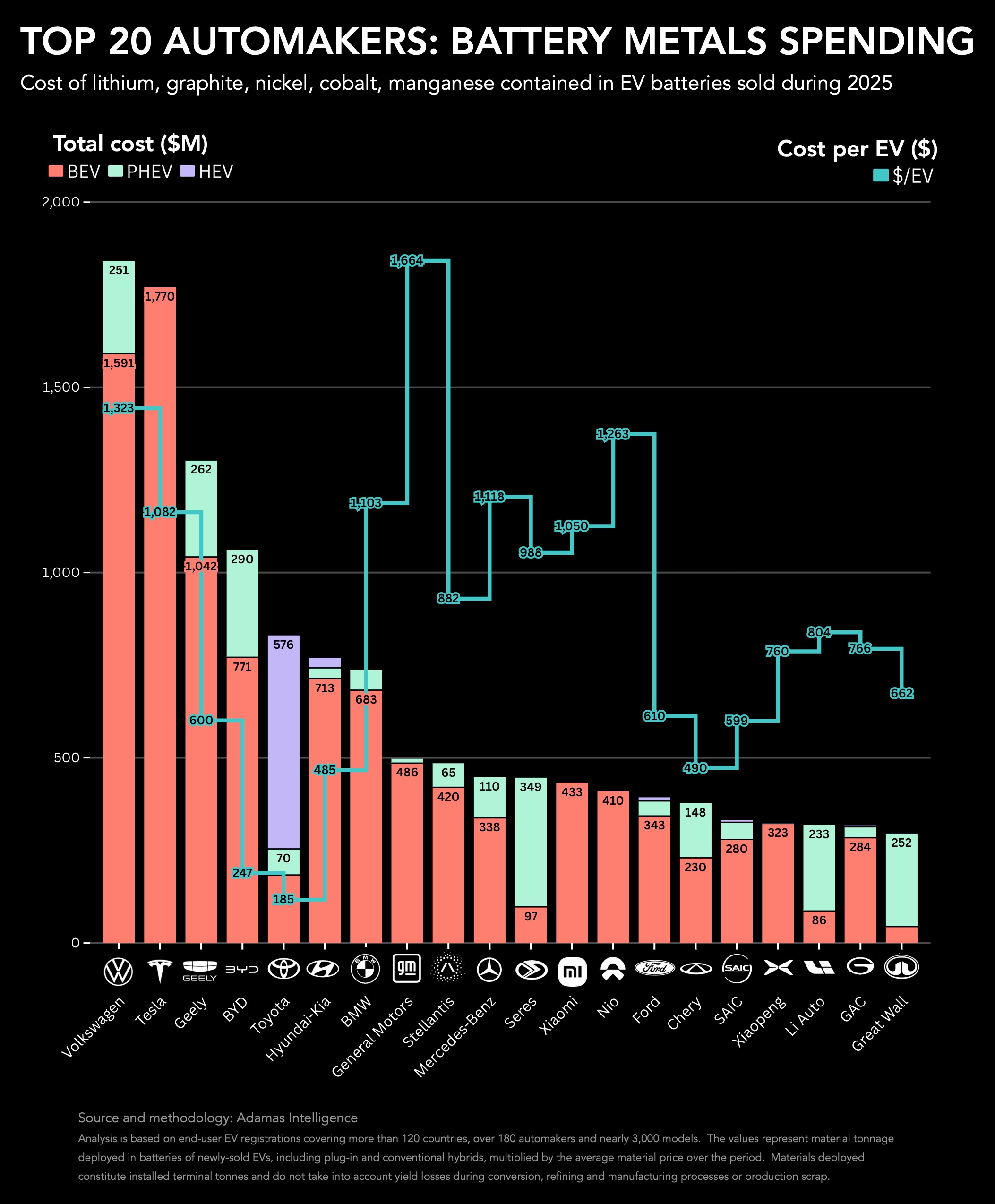
But even by this measure, the outlook has become much brighter. The raw material bill for the contained lithium, graphite, nickel, cobalt and manganese in the batteries of EV sold over the course of 2025 climbed to $15.6 billion, an 11% gain over the year before.
If $15.6 billion sounds modest, the installed tonnage does not take into account any losses during processing, chemical conversion or battery production scrap (where yield losses often go well into double digit percentages and at much higher rates during startup) so required tonnes and revenues are meaningfully higher at supply chain entry points.
Granted, that’s still almost half of the extraordinary level reached in 2022, but 2026 is already shaping up to be another year of strong growth as rising lithium and nickel prices continue to work through the supply chain and cobalt prices stay on the boil.
The right chemistry
While lithium and graphite represents a relative constant in the EV industry, the demand for nickel and cobalt have been impacted by ongoing thrifting of the latter by automakers in NCM (nickel-cobalt-manganese) and NCA (nickel-cobalt-aluminum) batteries and both by ever faster adoption of LFP (lithium-iron-phosphate) cathode chemistries.
In 2025 LFP packs accounted for nearly half of the total in battery capacity deployed terms, despite a limited presence outside China (where it now commands 70% and growing share of the market).
Some of the negative effects of LFP’s intrusion in markets in North America and Europe are being blunted by a parallel trend towards higher nickel content NCM batteries (60%-plus nickel content and more often 80% and above) which remains the go-to chemistry outside China.
Volkswagen picks up speed
Drilling down from the overall figure shows vast differences between automakers in terms of battery metals usage and costs.
Despite selling nearly 500,00 more full electric vehicles last year than Tesla (and 2.2 plug-in hybrids), BYD’s bill of materials was $710 million below that of its Texas-based rival. BYD’s in-house manufactured batteries cost the Chinese company $1.1 billion in 2025, about the same as in 2024 despite selling 230,000 more BEVs and PHEVs than the year before.
BYD’s all lithium-iron-phosphate (LFP) battery-powered model line-up concentrated at the lower end of the market and a sales mix that is now majority plug-in hybrids kept sales-weighted average material costs per EV to just $247 versus $1,082 for every Tesla model sold.
Even when considering only fully electric vehicles, BYD’s spending on raw materials is way below the average at $366 per BEV. LFP-powered Models 3 and Y manufactured in China are a big part of Tesla’s sales but the slow buildout of LFP cell factories outside China means these nickel cobalt and manganese free powerpacks are largely absent from Western automakers’ lineups.
The comparable number for the Volkswagen stable which includes Audi, Porsche, Skoda and others – is $1,624 per BEV. EV sales by Volkswagen – for the first time the world’s biggest spender on battery metals – is split 70:30 for BEV:PHEV which accounts for some of its high-spending but the bulk of Wolfsburg’s budget went to battery nickel and cobalt. Volkswagen’s Powerco has commissioned an LFP battery plant in Germany and is building one in Spain targeting production some time next year.
Generally expensive
From Volkswagen, there’s another big step up to General Motors which has to contend with an average battery metals bill of a hefty $1,664 even after a rise of 17.6% year on year thanks to increasing use of nickel, cobalt and manganese prices and a 20 rise in EV shipments thanks the popular Equinox SUV and Silverado pickup.
On a GWh basis, 85% of GM’s batteries came from its venture with LG Energy Solution called Ultium. GM is overhauling this strategy after poaching a Tesla battery executive in 2024 and is moving away from its heavy and beefy one-size-fits-all packs. GM has been going in a different direction with the adoption of NCMA batteries, but the cost savings associated with LFP is just too compelling and the company is now retrofitting its Tennessee NCMA plant to produce LFP batteries.
On the other side of the spectrum is Toyota, which spent on average just $185 per EV sold in 2025 for a total of $830 million, up 7.2% year on year. That’s because of the Japanese giant’s focus on conventional hybrids or HEVs where battery capacity rarely exceeds 2kWh.
Last year nine out of every ten Toyota (including Lexus) electrified vehicles sold were HEVs fitted with mostly nickel-metal-hydride batteries which also shows that the old-school Prius and its ilk are still a meaningful source of battery nickel demand (with a good dose of rare earths thrown in).
For a fuller analysis of the battery metals market check out the latest issue of The Northern Miner print and digital editions.
* Frik Els is Editor at Large for MINING.COM and Head of Adamas Inside, providing news and analysis based on Adamas Intelligence data.
North Korea Tests New Destroyer Ahead of Commissioning
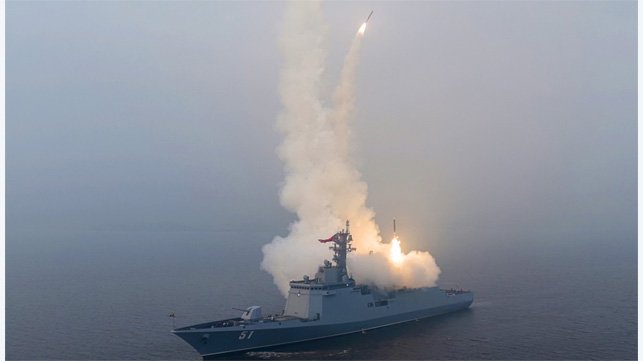
New destroyer tested it missile system (Korean State TV)
North Korean state media is hailing the successful tests of the first ship in a new generation of destroyers ahead of the vessel’s commissioning. Leader Kim Jong Un attended two days of testing, including maneuverability and the launch of cruise missiles, saying the country was proceeding towards having a “powerful offensive force” and that progress on the nuclear armament of the navy is being “carried out satisfactorily.”
The 5,000-ton missile destroyer named Choe Hyon was launched last year at the Nampo Shipyard and is reported to be undergoing sail testing to evaluate its capabilities. State media reported that Kim was at the shipyard on March 3 and 4 to personally inspect the combat and political training and the ongoing operational capability evaluation test process, all of which was pronounced successful.
During the two days, media reports said Kim announced, “I will build the most powerful navy.” In the past, he has said that North Korea would have a fleet of blue ocean vessels capable of long-distance operations.
At least four missiles were test fired (KCNA)
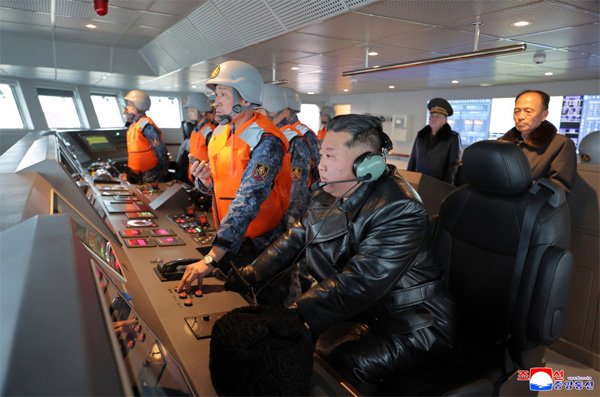
Pictures released by the Korean Central News Agency showed Kim boarding the vessel and touring the ship, including its bridge controls. During the first day, KCNA said the ship’s maneuverability was tested, with Kim pronouncing that it met its requirements.
The highlight of the tests came on the second day with the test firing of the missile system. The vessel was positioned in the harbor, with Kim reported to be watching from shore. Images on Korean television showed at least four missiles being launched in rapid succession.
At the conclusion of the two days, Kim is reported to have said, “The operational evaluation tests of the new destroyer, which will become a symbol of our nation’s maritime defense capabilities, are proceeding smoothly as planned.”
During the visit to the Nampo Shipyard, he also inspected the third ship of the class, which is currently under construction. He praised the workers and their efficiency.
Kim inspecting the controls for the new destroyer (KCNA)
“We must build two warships of this class or higher each year during the new five-year plan period and accurately implement the plan for building a massive warship force,” Kim is reported to have said.
It was noted that the second ship of the class, which is being built at a different shipyard in the east, has not been mentioned by state media. The ship famously fell over during its launch in the spring of 2025 while Kim watched on, which led to a massive effort to clear the embarrassment. The ship was hauled back onto the slipway and launched a month later, with the media asserting that it had only suffered minor damage. Speculation over the lack of mention of the vessel centered on the likelihood that the Koreans are currently repairing the damage from the failed launch.
Media reports said Kim has instructed the shipyard that it must launch the third vessel before October 10. That day is celebrated as Party Foundation Day, which laid the groundwork for the start of the modern Korean dictatorship.
Anemoi Calls for Alignment in Wind Propulsion Performance Verification
Luke McEwen, Technical Director, Anemoi Marine Technologies Ltd.
Anemoi Marine Technologies Ltd (Anemoi) and Lloyd’s Register (LR) have published a new paper encouraging closer alignment between existing methodologies used to verify the performance of wind-assisted propulsion systems (WAPS). The research highlights how complementary frameworks can be brought together to strengthen consistency, transparency and industry confidence.
The paper builds on LR’s earlier verification of Anemoi’s new in-service performance and forecasting model calibration methodology, designed specifically for WAPS. The new research assesses how that method fits alongside two existing frameworks: the International Towing Tank Conference’s (ITTC) guidelines for sea trials and supporting performance prediction and DNV’s recommended practice for in-service testing.
Currently WAPS users and providers are applying a range of different approaches to performance analysis, making it difficult to compare results like-for-like and build a robust business case for decision makers to commit to WAPS installation on their vessels.
The analysis shows that the three methodologies are complementary. While ITTC guidelines provide a short-term verification of predictions under controlled conditions and DNV’s recommended practice offers long-term in-service assessment, Anemoi’s verification method provides the bridge between in-service measurements and actionable fuel-saving predictions.
The findings suggest that by selectively combining these strengths, an integrated and standardised approach would give ship operators’ an invaluable tool for maximising the cost-saving potential of WAPS installations. This work would simplify comparison between solutions and strengthen confidence in reported savings at a time when more and more vessel operators are considering wind propulsion technologies.
Anemoi’s process, verified by LR in 2025, involves measuring vessel data when the wind-assisted propulsion system is turned on and off while encountering various conditions during regular operation. The data is then used to calibrate predictions on forces generated by the rotor sail system and their impact on the vessel, which can be used to predict voyage fuel savings with high levels of confidence. The process is technology agnostic and can be applied on all vessel types.
The new paper was presented at the Royal Institute of Naval Architects’ RINA Wind Propulsion 2026 conference on February 17.
“Accurate measurement and prediction of the real savings made by vessels using WAPS is essential for giving confidence to ship owners and operators who want to harness wind energy in order to reduce environmental impact and fuel costs. With our verification process and our new efforts pointing to the potential convergence of methodologies, Anemoi is helping to guide the standardisation efforts that are needed to ensure this market flourishes.” - Luke McEwen, Technical Director, Anemoi Marine Technologies Ltd.
“Verification of performance assessment methodologies is a core part of LR’s mission to assure both safety and efficiency standards for maritime stakeholders—and particularly important in emerging sectors where processes have yet to be fully standardised. We are therefore delighted to partner with Anemoi once more to advance understanding of performance verification as the WAPS market matures.” - Dr. Santiago Suarez de la Fuente, Ship Performance Manager, Lloyd’s Register Advisory
The products and services herein described in this press release are not endorsed by The Maritime Executive.
Fragmented Compliance Systems Increase Sanctions Risk Across Shipping
The report “The Fragmentation Problem in Maritime Compliance"
Maritime companies face rising sanctions and compliance complexity as regulators increasingly expect risks to be detected before violations occur, according to a new report published by Marcura.
The report “The Fragmentation Problem in Maritime Compliance” points to divergence between US, EU and other sanctions regimes. Secondary sanctions have expanded, and a growing shadow fleet continues to obscure ownership, insurance and trading histories. Together, these factors increase exposure for global operators at a time when compliance processes remain fragmented across organisations.
Survey findings from Marcura show that 82% of maritime executives say compliance demands are growing. 86% express concern about undetected compliance risk. Onboarding and KYC now cost $1,500–$3,500 per counterparty, driven largely by duplicated manual checks across multiple systems; a burden that compounds quickly in markets where counterparties change frequently.
Despite increased investment in sanctions screening and automation, the problem is not lack of effort. It is structural. Organisations routinely run multiple screening platforms that return different results on the same counterparty. The compliance function becomes the manual integration layer, piecing together a risk picture from conflicting outputs. The same verification work is repeated across organisations, while intelligence gathered by one remains inaccessible to others facing identical decisions.
The problem extends beyond sanctions. Payment fraud targeting maritime runs three to five times higher than traditional banking when adjusted for transaction volume. ESG and supply chain obligations are expanding the scope of supplier vetting. Anti-bribery controls remain inconsistent across a sector where, according to the Maritime Anti-Corruption Network, over 65,000 corruption-related reports have been documented across more than 1,000 ports in 150 countries. Each risk vector demands its own processes, with little infrastructure connecting them.
Commenting on the challenges identified in the report, Andrei Grigoras, SVP, Compliance Solutions at Marcura, said: “The compliance function carries a question that never fully goes away: did we miss something? Fragmentation makes that question harder to answer. When the same counterparty produces different results across different systems, the noise drowns out the signals that actually matter.”
The report sets out a direction of travel toward compliance functioning as shared infrastructure, where verification is performed once, recognised across workflows, and reinforced by collective intelligence. Rather than every organisation bearing the full cost of counterparty verification in isolation, a networked model would allow screening outcomes to travel with the counterparty across participating organisations.
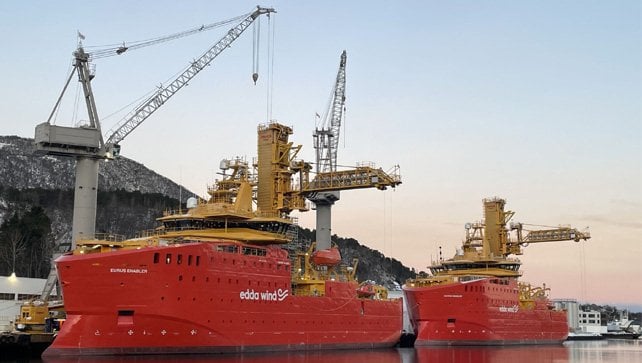
Edda Wind, which had been launched as an early service provider dedicated to the emerging offshore wind sector, has entered into agreements for the potential sale of its fleet. News of the potential sale of the company’s ships came via an Oslo Stock Exchange filing by Wilh. Wilhelmsen, one of the investors, signals a further consolidation in the market.
The company was started in 2015 by Østensjø Group, an offshore provider, and announced plans for building a dedicated fleet of Service Operation Vessels (SOV) and Commissioning Service Operation vessels (CSOV). Wilhelmsen joined as an investor in 2020 and was later joined by Geveran Trading Co., which is controlled by John Fredriksen, and another company associated with Idan Ofer.
Edda Wind reported strong growth, but in 2025, the three lead investors said it was facing challenges in its current public company format. They decided to take the company private, reporting it would aid in future investment and growth. Currently, the company has a fleet of seven vessels, consisting of one SOV and six CSOVs. Additionally, Edda Wind has three CSOVs currently under construction. In December, it agreed to sell two SOVs to Esvagt, which were under long-term contracts to Vestas and Ocean Breeze.
According to the stock filing, the potential sale will see Edda Wind’s fleet split between the UK-based North Star, which was acquired several years ago by investors the Partners Group, and to an affiliate of Navigare Capital Partners. The filing says the sale is conditional upon inspections being completed and certain unspecified conditions.
The sale would represent a further consolidation of the offshore services sector. North Star reports it has over 47 purpose-designed vessels, including Platform Supply Vessels, Emergency Response and Rescue Vessels, Multi-Role Vessels, and our growing Wind Farm Support fleet. It has contracts with leading companies, including RWE, and has two newbuild SOVs on order with Vard. Navigate Capital entered the sector in 2022 with a majority investment in Norway’s Norwind Offshore. Norwind took delivery from Vard in January of its sixth vessel, and it has two additional vessels, a CSOV and an EVC, due for delivery in 2027.
The investors in Edda Wind have not commented publicly on the sale and their reasons for exiting the sector.
 Oil pipeline. Stock image by serikbaib.