Sunday, March 29, 2026

Hungarians' growing anger at living in EU's 'most corrupt state'

Vienna (AFP) – Hungarian leader Viktor Orban's officially declared wealth is fairly modest: some savings and a jointly owned villa in Budapest. But voters in what Transparency International deems the EU's most corrupt country believe otherwise.


Issued on: 29/03/2026 - RFI

A billboard featuring Hungarian Prime Minister Viktor Orban reading “Let’s get together against the war” stands beside a poster depicting Ukraine’s President Volodymyr Zelensky labelled “Hazard”, in Budapest on 27 March 2026, ahead of Hungary’s general election on 12 April. AFP - ATTILA KISBENEDEK

They may make Orban pay in a general election on 12 April that could spell an end to his 16-year rule.

The wealth amassed by Orban's inner circle is fuelling the increasingly palpable frustration of a population grappling with sluggish growth, high inflation and worsening public services.

"The government's communication machine worked well as long as our economic situation remained relatively good," Zoltan Ranschburg, a political analyst at the Republikon think tank, told the French news agency AFP.

But it has not been good for years, he added.

"It's our money, not theirs. But they are spending it as if they were the sole owners," Gabor Szebenyi, an 81‑year‑old retired history teacher told AFP at an opposition rally.

He denounced what he called "feudalism" that has taken root in the Central European country of nearly 10 million people.

Independent lawmaker Akos Hadhazy, one of Hungary's leading anti‑corruption crusaders, said graft has drained the equivalent of €2.84 billion from state coffers every year since 2016.

Police guard an entrance to the sprawling Hatvanpuszta manor owned by Hungarian Prime Minister Viktor Orban's father near Budapest © Attila KISBENEDEK / AFP

'The frontman'

"These are not isolated cases – this is simply the way the system is functioning," Hadhazy told AFP.

While Orban claims to live modestly, several members of his family have grown spectacularly rich since his return to power in 2010.

His father Gyozo Orban, who is 85, owns several building material companies as well as the historic Hatvanpuszta estate he had rebuilt into a luxurious manor worth hundreds of millions of dollars.

Protected by high walls, the sprawling domain close to the premier's home village has two swimming pools and its own wildlife park, as well as extensive outbuildings, according to drone footage published by independent media.

EU summit fails to rally Orban behind stalled Ukraine loan

"In reality, the father is merely Viktor Orban's frontman," Hadhazy said.

Orban's son-in-law Istvan Tiborcz has become one of Hungary's most influential entrepreneurs through public lighting contracts won by his former company Elios. The deals were partly financed by the EU – until the EU anti-fraud office OLAF found serious irregularities.

Tiborcz has since switched to real estate and tourism.

Orban's childhood friend Lorinc Meszaros, a former plumber, has become Hungary's wealthiest man worth $4.8 billion according to Forbes magazine, with an empire of construction, energy, banking and media firms thriving on public contracts.

Fat of the land: Hungarians are furious at how Prime Minister Viktor Orban's family have grown rich © Alexander NEMENOV / POOL/AFP

Frozen EU funds

"On paper there is competition (for public contracts), but in fact the winner is always known in advance," a construction contractor told AFP on condition of anonymity at a site near Budapest.

Working in the sector for three decades, the man said public tenders are often decided in advance.

"Those at the bottom of the chain do the work and get paid last – sometimes months later," he said, adding he was ready to throw in the towel and sell his machinery.

"I'm so angry," he said, adding that while those in power lead "luxurious lives" and travel by private jets, small businesses "are struggling to survive".

The anti-corruption watchdog Transparency International has labelled Hungary as the EU's most corrupt country alongside Bulgaria in its Corruption Perceptions Index.

It highlighted systemic risks in public procurement and limited competition for the largest contracts which make up five percent of Hungary's GDP.

The government rejected the ranking and insists Hungarian procurement rules comply with EU standards.

But the EU has frozen €19 billion in funds destined for Hungary over persistent concerns about corruption and respect for the rule of law.

Opposition leader Peter Magyar, Orban's top rival in the upcoming vote, has pledged to recover the funds if elected and to investigate how the current leaders and their families have grown so rich.

Shocking Hungarian documentary alleges ruling party uses mafia-style intimidation to buy votes and coerce voters

Shocking Hungarian documentary alleges ruling party uses mafia-style intimidation to buy votes and coerce voters
/ YouTube/De!AkciokozossegFacebook
By bne IntelliNews March 29, 2026

An independent investigative group, DE Action Community, has released a shocking documentary alleging systematic vote-buying in Hungary's poorest settlements, involving local mayors and criminal figures. The film claims the ruling Fidesz operates a coordinated network to exert pressure on vulnerable voters, Hvg.hu writes.

The "Price of a Vote", released on March 26, is based on more than 60 interviews conducted with residents, local officials, and former policemen, many of whom spoke on condition of anonymity for fear of retaliation.

The documentary, which has garnered 1.4mn views in just 72 hours, has reignited debates over the integrity of elections in Hungary. Fidesz is trailing by as much as 20pp in some polls, but many analysts have warned that these forecasts have not factored in wide-scale vote-buying, which could involve as many as 500,000 people, or 6-7% of eligible voters.

According to the investigative journalists behind the project, the film initially aimed to examine instances of vote-buying, commonly reported by independent media around elections, but it evolved into a deeper investigation exposing a broader structure of organised coercion and systemic manipulation targeting Hungary’s most vulnerable populations.

The documentary sheds light not only on extreme poverty in Hungary's northeastern regions but also on a quasi-feudal system that exploits the marginalised communities. It unravels a system designed both to mobilise voters and punish those who refuse to comply.

At the film's premiere, one of the filmmakers noted that the system used by Fidesz is no longer confined to a single ethnic group, namely the Roma population, but to a wider group of those living in horrific conditions. "Vote-buying is just the icing on the cake," Aron Timar said, according to 444.hu.

A former participant in the operation, speaking anonymously, provided an insider account of the network, highlighting the role of underworld figures in orchestrating vote collection.

According to multiple accounts, voters were targeted in various ways: alcohol was used to intoxicate alcoholics, drugs were offered to substance users, and food packages or small cash sums were provided.

Families were sometimes threatened with intervention from child protection authorities, the documentary said. In some cases, families were monitored or escorted to polling stations to ensure their votes supported the ruling coalition. Those who openly opposed Fidesz were reportedly punished through the withdrawal of public services, including heating, water, or access to public work programmes.

The documentary suggests the system could secure 500,000-600,000 votes, primarily in northeastern counties. According to sources featured in the film, local MPs these districts supply funds to local operatives, who distribute payments through mayors, criminal intermediaries, and other actors.

One local man told the journalists that Fidesz reportedly spent HUF150mn (€390,000) to buy votes in a single district in northeastern Hungary during a 2025 mayoral by-election, which had to be repeated twice amid allegations of electoral fraud. Days after the vote, the local tobacco shop had to ask for help to provide change, as it was flooded with HUF20,000 notes, the highest denomination.

The report also claims that drug dealers actively participate in mobilising voters, with many casting ballots in exchange for a single dose of drugs or cash payments ranging from HUF10,000 to HUF20,000. 

Early morning hours reportedly see the highest concentration of irregularities, when organisers transport voters to polling stations. In some cases, voters are accompanied into booths under the pretext of needing "assistance", with operatives even marking ballots on their behalf.

Coordinators managing transport and paying voters may receive millions of forints, while local polling station organisers reportedly earn between HUF35,000-70,000 for a couple of days of "work".

One fixer interviewed boasted he had received HUF12mn, enough to purchase a luxury home in a rural, less developed area. He added that the scale of voter mobilisation in 2026 will be twice that in 2018, with higher stakes, more money, and greater logistical resources involved.

Tisza Party chief Peter Magyar said at a recent press conference that Fidesz is planning to pay HUF50,000 per vote this time and that several billion had been earmarked for the purpose. 

During filming, the journalists said they faced threats from a local enforcer associated with the mayor. A former police officer later explained that in these small settlements, mayors are often quickly informed whenever investigative journalists are present and asking questions around the community. Data is often transmitted to local police or intelligence agencies. 

The documentary closes with a cautionary message from a former coordinator, warning journalists to exercise care when investigating the criminals behind the operation: "You have no idea what they are capable of."

DE Action Community has announced plans to recruit election-day "watchers" to monitor and report suspected irregularities at polling stations. Volunteers would observe from early morning and relay information via live streams on the group's YouTube channel. Participants will receive training and guidance on legal procedures for addressing electoral violations.

Nick Thorpe, the BBC's senior Central and Eastern Europe correspondent for Hungary since 1998, also covered the documentary upon its release and contacted government officials, ministers, and the police for comment. Minister of Regional Development and Public Administration Tibor Navracsics was the only cabinet member to respond, stating that if any irregularities occur, the Interior Ministry should address them, while declining to comment on specific claims.

Thorpe, who speaks the language, recalled remarks made by Prime Minister Viktor Orban in January. Addressing local mayors, he stated, "The outcome of this election depends on your willingness to step up. If you do, we win; if not, we will not win, even if I put my soul into it." Local analysts have suggested that the prime minister was referring to vote quotas set by Fidesz's central headquarters for each constituency leader.

The maritime passages with a chokehold on the global economy

The war in the Middle East has put the Strait of Hormuz in the spotlight. It is one of the world's maritime "choke points" – narrow passages on which global trade depends, putting them at the centre of geopolitical tensions.


Issued on: 29/03/2026 - RFI


A cargo ship pictured in the Strait of Hormuz on 25 February. © AFP - Giuseppe Cacace
01:36


The Strait of Hormuz is a narrow passage between Iran and the Musandam Governorate, an exclave of Oman, around 40 kilometres wide with just two navigable channels. And yet, a fifth of the world’s oil passes through it, coming from the Gulf states and Iran.

Iran partially closed it in response to Israeli-American aggression, but in a letter sent to the International Maritime Organization on 25 March, Tehran announced that "non-hostile" vessels may now use it, provided they comply with safety regulations.
The Marinetraffic website shows commercial traffic around the Strait of Hormuz near the Iranian coast, on 4 March. © AFP - Julien de Rosa

The immediate consequences of its closure were stranded oil tankers, and a global economy under strain.

Speaking to UK newspaper The Guardian, former US defence secretary Leon Panetta lambasted US President Donald Trump’s handling of the situation.

“This is not rocket science to understand that if you’re going to conduct a war with Iran, one of the great vulnerabilities is the strait of Hormuz, and [it] could create an immense oil crisis that could drive the price of fuel sky-high," he said.

“In every national security council I’ve been a part of where we’ve talked about Iran, that subject always came up. For some reason, either they didn’t consider that could be a consequence or they thought the war would end quickly and they wouldn’t have to worry about that.”

He continued: "The problem is he can declare victory all he wants but, if he doesn’t get the ceasefire, he’s got nothing. And he’s not going to get a ceasefire as long as Iran is holding the gun of the strait of Hormuz against his head.”

Iran's foreign minister said on Wednesday that the country was not currently negotiating with the US to end the war and "does not intend" to do so.

Meanwhile, the economic repercussions are already evident: rising energy prices, heightened risks of inflation and extremely volatile financial markets, with the fragility of the dependence on maritime trade laid bare.

Choke points

Additionally, there is the risk of closure of another strategic maritime passage – the Strait of Mandeb on the other side of the Arabian Peninsula, between Yemen and Africa. There, the Houthis – backed by Iran – control the Yemeni coastline, and have already demonstrated their ability to disrupt shipping in the area.

Bab el-Mandeb is a vital artery for trade between Asia and Europe. Given a double blockade, of Hormuz and Mandeb, the global economy would falter.

This passage also leads to yet another crucial point: the Suez Canal, in Egypt.

In 2021, when the container ship Ever Given became stuck there, blocking hundreds of ships, global trade ground to a standstill for several days.

Finally, there is the Strait of Malacca, between Malaysia and Indonesia, which sees 80,000 ships a year pass through it. Like the other choke points, it is difficult to secure and incredibly easy to disrupt – with a drone attack, a mine, even a simple accident.

This article was adapted from the original version in French by Sami Boukhelifa.

Forty new migratory species win international protection: UN body


Rio de Janeiro (Brazil) (AFP) – The UN Convention on the Conservation of Migratory Species of Wild Animals (CMS) on Sunday approved the listing of 40 new species for international protection, including the snowy owl featured in the Harry Potter saga.


Issued on: 30/03/2026 - RFI


The Hudsonian godwit is one of 40 species newly listed for international protection 
© Luke Seitz / Cornell Lab of Ornithology/AFP/File

The decision came at the conclusion of the COP15 summit on migratory species in Campo Verde, Brazil, which brought together representatives from 132 countries and the European Union.

It is one of the world's most important global meetings for wildlife conservation.

Also on the new list for protection along with the snowy owl (Bubo scandiacus) are the Hudsonian godwit (Limosa haemastica) -- a long-beaked shorebird threatened with extinction -- and the great hammerhead shark (Sphyrna mokarran).

The new list featured land mammals like the striped hyena (Hyaena hyaena) and other aquatic wildlife such as the giant otter (Pteronura brasiliensis).

The countries that are party to the CMS are legally obliged to protect species listed as at risk of extinction, conserve and restore their habitats, prevent obstacles to migration and cooperate with other range states.

Campo Verde is in Brazil's biodiversity-rich Pantanal wetlands, in the southern Amazon.

According to a report released ahead of the summit, nearly half (49 percent) of all species catalogued by the CMS are showing signs of declining numbers, and nearly one in four are threatened with extinction on a worldwide scale.

Another major UN assessment, published on Tuesday as the summit opened, warned that migratory freshwater fish populations crucial to river health and sustaining the livelihoods of millions of people are in freefall and risk collapse.

Habitat destruction, overfishing and water pollution from the Amazon to the Danube threaten the very survival of hundreds of species whose epic voyages along the world's great rivers go largely unnoticed.

Last November, Brazil hosted the COP30 climate summit in the Amazonian city of Belem.

© 2026 AFP


A new way to measure poverty shows the US falling behind Europe

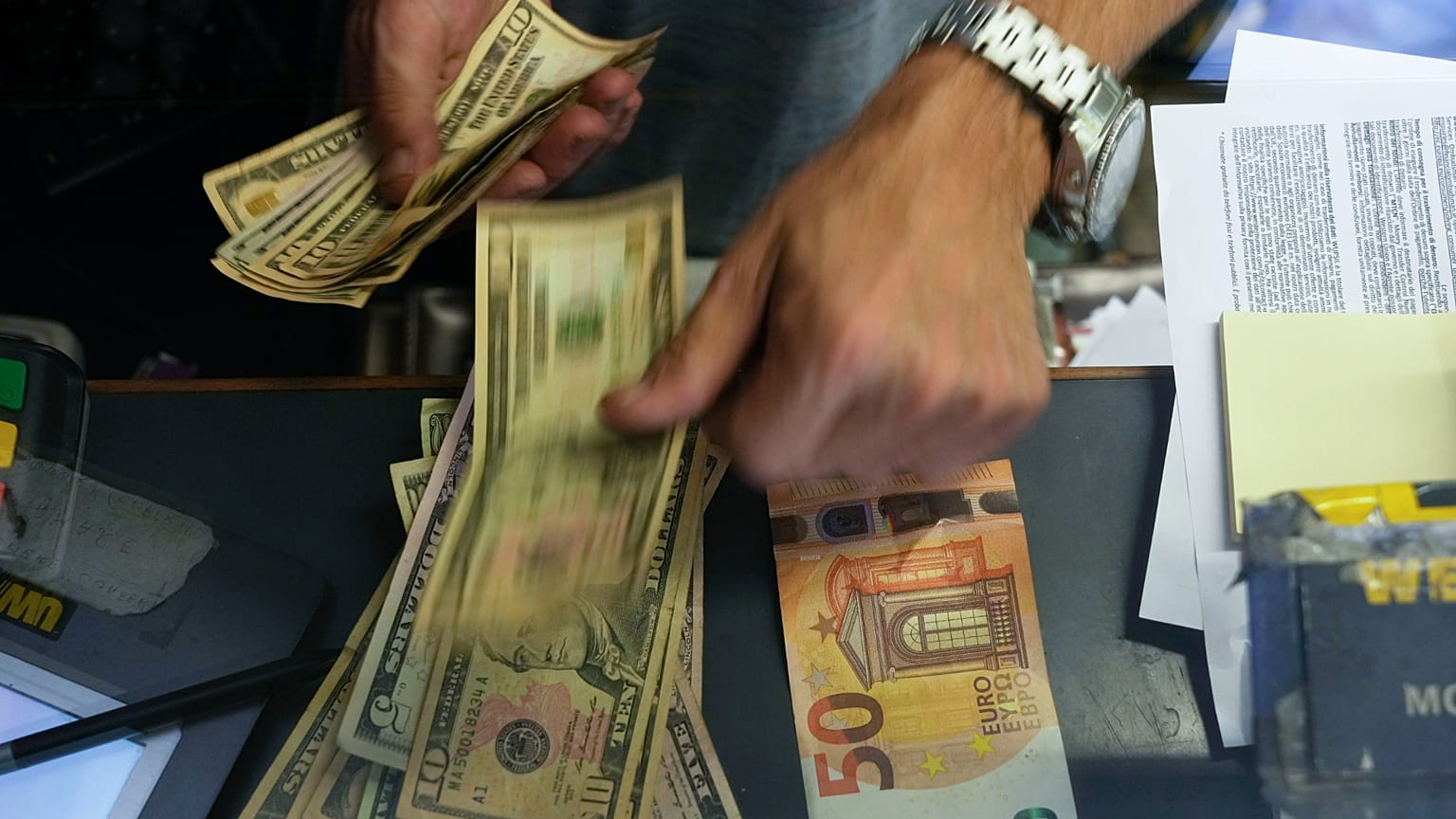
A cashier changes a 50 Euro banknote with US dollars at an exchange counter in Rome, Wednesday, July 13, 2022.
Copyright Copyright 2022 The Associated Press. All rights reserved.

By Servet Yanatma
Published on 

The time needed to get $1 in international dollars is 63 minutes in the US. This is about twice the average in Germany, France and the UK according to an Oxford University researcher. This suggests that average poverty is significantly higher in the US.

Comparing economies and poverty is challenging, as different measures can lead to different results. Olivier Sterck, an Associate Professor of Economics at the University of Oxford, has developed a new way to measure poverty, which he calls “average poverty”.

He finds that “average poverty is substantially higher in the US, even though average incomes are higher than in most Western European countries”.

When Gross Domestic Product (GDP) per capita is compared between the US and Europe, the figures suggest a striking result: the poorest US state rivals Germany.

In the third quarter of 2024, Mississippi, the poorest US state, had a GDP per capita of €49,780 ($53,872). In Germany, it was €51,304 in 2024 — a gap of only about €1,500.

In purchasing power parity (PPP) terms, the US is in a significantly stronger position than most EU countries, except for Luxembourg and Ireland, as a Euronews Business article shows.

What is ‘average poverty’?

However, Olivier Sterck emphasises that viewing poverty as a spectrum changes the conversation. It reveals what poverty lines miss and why inequality matters so much.

According to Sterck’s research, published on SSRN, an online repository for academic work, “average poverty” is defined as the average time needed to earn $1. “The measure is inclusive, distribution-sensitive, decomposable, and aligns with how both experts and the public conceptualise poverty,” he says.

The $1 is measured in international dollars. This means it buys the same amount of goods and services in any country as a US dollar does in the United States. It is often used alongside purchasing power parity (PPP) data. The “time” refers to a day of life for anyone, at any age and in any circumstance — not just the hours worked by someone with a job.

Time needed to earn $1 in international dollars

As of 2025, the time needed to earn $1 is 63 minutes in the US. This is about twice the average across Germany, France and the UK.

In Germany, Europe’s largest economy, it takes 26 minutes. In France, the figure is 31 minutes, while in the UK it rises slightly to 34 minutes.

These figures suggest that average poverty in the US is about twice that of these three countries.

Using this metric, Sterck finds that global poverty has declined by 55% since 1990. The time needed to earn $1 has fallen from about half a day to five hours.

Average poverty rises in the US, declines in Europe

The new measure also shows that average poverty in the US has increased almost continuously since 1990, despite strong growth in average incomes. In contrast, it has declined over time in most other high-income countries.

For example, in 1990, it took 43 minutes to earn $1 in the US. This was almost the same as in France (42 minutes) and shorter than in the UK (51 minutes). Germany had the lowest time at 34 minutes.

“Take two individuals randomly from the populations of these countries: the expected ratio of their incomes is above 4 in the US, but only about 1.5 in the three European countries. This shows how income levels are much more dispersed in the US.

As a result, there is a higher proportion of individuals with low incomes in the US, and they take more time to earn $1,” Olivier Sterck told Euronews Business.

Growth in average income vs average inequality

According to this metric, the time needed to earn $1 has risen by 20 minutes, or 47%, in the US over the past 35 years. All three European economies recorded declines, with the UK seeing the largest drop.

Why is that? He points out that, in all four countries, average incomes have grown by a little over 1% per year over recent decades, according to World Bank PIP data. However, in the US, average inequality has increased by about 2.2% per year, outpacing income growth.

“This explains why average poverty increased in the US: average inequality grew faster than average income,” he says.

By contrast, in the UK, France and Germany, inequality remained relatively stable, so income growth translated into a reduction in average poverty.

How growing economies become poorer

“How can a rich country’s economy grow and yet become poorer?” Sterck asks, referring to the US in his article for The Conversation.

His answer is simple: inequality.

He notes that poverty can change for two main reasons: incomes rise or fall, or income distribution becomes more or less unequal.

In the US case, average poverty increases even in a growing economy because inequality rises faster than incomes grow.

“And the US has one of the most unequal economies in the world, and by far the most unequal among rich countries. Across all 50 states, inequality has risen sharply since 1990, regardless of political orientation, demographic composition or economic structure,” he writes.

Income inequality, measured by the Gini coefficient, is higher in the US than in major European economies. Higher values indicate greater inequality.


Israeli police prevent Jerusalem's Latin Patriarch from celebrating Palm Sunday Mass

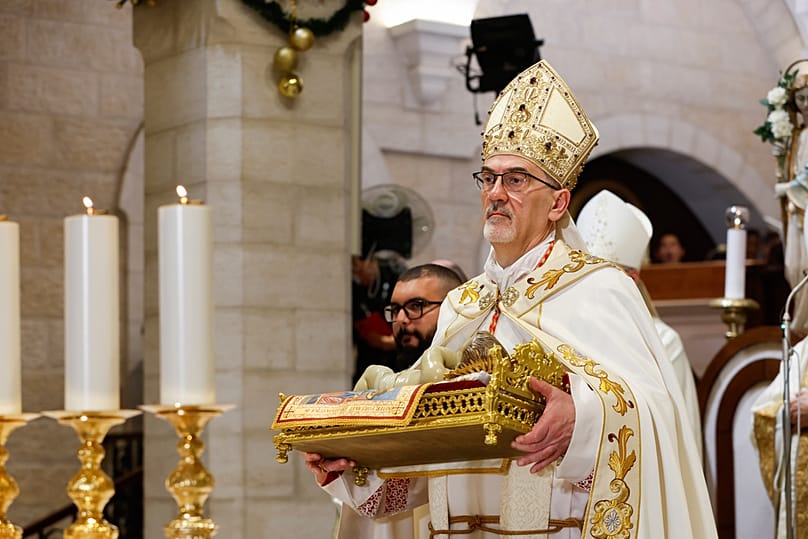
Latin Patriarch of Jerusalem Pierbattista Pizzaballa leads Christmas Eve Mass at the Church of the Nativity in Bethlehem, Israeli-occupied West Bank, Wednesday, Dec. 24, 2025
Latin Patriarch of Jerusalem Pierbattista Pizzaballa leads Christmas Eve Mass at the Church of the Nativity in Bethlehem, Israeli-occupied West Bank, Wednesday, Dec. 24, 2025 Mussa Qawasma/AP


By Aadel Haleem & Orestes Georgiou Daniel
Published on 

Jerusalem's Latin Patriarch and the Custos of the Holy Land were prevented by Israeli police from entering the Church of the Holy Sepulchre on Palm Sunday. It was the "first time in centuries" the Heads of Church were prevented from attending.

The Latin Patriarch of Jerusalem Cardinal Pierbattista Pizzaballa was prevented from entering the Church of the Holy Sepulchre to celebrate Palm Sunday Mass for the "first time in centuries" after being turned away by Israeli police.

The Latin Patriarchate of Jerusalem denounced a "grave precedent", in which both Cardinal Pierbattista Pizzaballa and the Custos of the Holy Land Father Francesco Ielpo were turned away by authorities.

The incident "disregards the sensibilities of billions of people around the world," the statement read. It said the two were stopped while proceeding privately without any characteristics of a procession or ceremonial act, and had to turn back.

"For the first time in centuries, church leaders were prevented from celebrating Palm Sunday Mass in the Church of the Holy Sepulchre," the statement read.

The Israeli government subsequently released a statement saying that it had issued instructions for all holy sites of all religions that mass gatherings would not be possible due to the risk of Iranian airstrikes landing in the area.

Since US-Israeli strikes on Iran sparked the Iran war on 28 February, Israeli authorities have banned large gatherings, including at synagogues, churches and mosques.

Israeli President Isaac Herzog later repeated the government's explanation that its approach to the situation "stemmed from security concerns". Herzog added however that he had spoken to Cardinal Pizzaballa to express his "great sorrow over this morning's unfortunate incident" and that Israel is committed to "upholding the status quo at the holy sites of Jerusalem".

European leaders react

The incident sparked outrage across Europe and the Catholic world.

EU foreign policy chief Kaja Kallas denounced it as a "violation of religious freedom and long-standing protections governing holy sites".

"Freedom of worship in Jerusalem must be fully guaranteed, without exception, for all faiths. Jerusalem's multi-religious character must be protected," she added in a social media post.

Italian Prime Minister Giorgia Meloni criticised the Israeli police's actions, saying the incident was "an offence not only to the faithful but to any community that respects religious freedom".

Italy's Foreign Minister Antonio Tajani separately said on X he had summoned Israel's ambassador over the incident.

French President Emmanuel Macron called it "alarming" and offered his full support to the Catholic figures. "I condemn this decision by the Israeli police, which adds to the alarming proliferation of violations of the status quo of Jerusalem’s Holy Sites," he wrote in a post on X.

Palm Sunday, which opens Holy Week for Christians, marks Christ's final entry into Jerusalem, days before his crucifixion and resurrection, according to the Gospels.

Public gatherings, as per Israeli restrictions, are capped at around 50 people.

The Latin Patriarchate of Jerusalem and the Custody of the Holy Land expressed its deep sorrow and apologies to the Christian faithful around the world that the prayer, on one of the holiest days of the Christian calendar, has been prevented in this way.


Latin Patriarch to get immediate access to Holy Sepulchre: Netanyahu

Jerusalem (AFP) – Israeli Prime Minister Benjamin Netanyahu said Monday the Latin Patriarch would get "full and immediate access" to the Church of the Holy Sepulchre, after police denied him entry on Palm Sunday.


Issued on: 30/03/2026 - RFI

Members of the clergy and faithfuls attend a prayer service in the Church of All Nations held by Latin Patriarch of Jerusalem, Cardinal Pierbattista Pizzaballa, to mark Palm Sunday in Jerusalem © Ammar Awad / POOL/AFP

"I have instructed the relevant authorities that Cardinal Pierbattista Pizzaballa, the Latin Patriarch, be granted full and immediate access to the Church of the Holy Sepulchre in Jerusalem," Netanyahu tweeted on X.

Israeli police had prevented the senior Catholic cleric from entering Christianity's most sacred site to celebrate Palm Sunday mass over what Netanyahu had said were security concerns, provoking protests from the European Union and several European countries.

Netanyahu elaborated on Israel's security concerns in his post.

"Over the past several days, Iran has repeatedly targeted the holy sites of all three monotheistic religions in Jerusalem with ballistic missiles," he wrote.

"In one strike, missile fragments crashed meters from the Church of the Holy Sepulchre."

It was to protect worshippers that Israel had asked people of all faiths to "temporarily abstain" from worshipping at all the holy sites in Jerusalem's Old City, he added.

© 2026 AFP
Choirboy, Gamer, Waiter… Spy? Alleged Serb Provocateur Surfaces In Moscow – Analysis
Momcilo Gajic, far left, white sweater,  attending a liturgy at the Serbian Orthodox Church in Moscow in January 2026. Photo: Representation of the Serbian Orthodox Church in Moscow.

March 29, 2026 
Balkan Insight


By Jelena Zoric, Milos Katic and Gordana Andric

BIRN has located one of the alleged ringleaders of a group of Serbs accused of staging stunts in Paris and Berlin to whip up social tensions on behalf of Russia.

In late January, members of the Serb community in Moscow gathered in a church in the Russian capital to remember St. Sava, the first archbishop of the Serbian Orthodox Church in the early 13th Century.

Among the silent worshippers was a 29-year-old man called Momcilo Gajic, pictured tall and solemn next to the Church’s most senior representative in Russia, the head of the Church of Peter and Paul, Bishop Stefan.

Such a prominent position is a sign of Gajic’s standing in the church community, as is a decision by the church – reported on its website – to bestow upon him the honour of ‘hosting’ next year’s St. Sava Day celebration alongside the church.

However, in the eyes of European law enforcement agencies, Gajic is not so virtuous.

According to court verdicts obtained by BIRN, he and another unidentified individual codenamed ‘Hunter’ are suspected of staging a string of stunts in France and Germany on the orders of Russian intelligence services, all with the aim of inciting religious and ethnic hatred.

They formed a group of at least 13 people, mostly men, who travelled to Paris and Berlin in spring and autumn last year.

The group is suspected of placing hundreds of stickers referring to the World War One mass killing of Orthodox Christian Armenians by Ottoman Turks all over the French capital’s 18th arrondissement, home to a large Muslim community; of tossing green paint – a colour associated with Islam – over Jewish religious sites in Paris, the Holocaust Museum and Jewish restaurants; of placing pig heads outside mosques across Paris, scribbled with the names of French politicians and the date ‘September 10’, when mass protests had been called against austerity measures; and, in Berlin, placing five plastic skeletons in plastic containers in front of the Brandenburg Gate, near the city’s Holocaust Memorial, bearing the words ‘I’m still waiting for my pension. Thank you, Merz’.

In September last year, acting on warrants issued by the High Prosecution Office in the Serbian town of Smederevo, Serbian police arrested 11 alleged members of the group, but not Gajic or the person known as Hunter. A police statement at the time said a suspect it identified by the initials M.G. was “on the run” and suspected of “acting on behalf of a foreign service”.

In December, three of the 11 agreed plea deals and were convicted by the High Court in Smederevo of espionage, membership of a criminal organisation and racial and other discrimination.

In the three verdicts, issued on December 22 and 24 and obtained by BIRN, the court states that Gajic and ‘Hunter’ “received orders, instructions and financial funds from the Russian Federation’s intelligence service”. The verdicts were first reported on by Radio Free Europe.

It is unclear how Gajic evaded arrest. BIRN could not reach him for comment but tracked him to Moscow using Open-Source Intelligence tools. Asked to confirm whether a warrant had been issued for his arrest, the court in Smederevo referred BIRN to the prosecution, which did not respond.

The Russian Foreign Ministry did not respond to requests for comment. The Foreign Intelligence Service, SVR, merely referred BIRN to its “current commentary on international affairs” on its website, but there is no reference there to the case involving Gajic.

In Moscow, Gajic has some powerful friends. Bishop Stefan, who studied in the Russian capital in the 2000s, was previously head of the St. Sava Temple in Belgrade and personally received Vladimir Putin during the Russian president’s last visit to Serbia in November 2019.

‘Destabilisation operations’

The stunts Gajic is accused of staging bear all the hallmarks of what European law enforcement agencies say has been a string of Kremlin-sponsored vandalism operations in recent years.

In 2023, in the wake of the October 7 attack on Israel by the Palestinian militant group Hamas, around 250 blue Stars of David were stencilled on walls across Paris; Moldovan businessman Anatolii Prizenko claimed responsibility, but media reports pinned it on the Russian intelligence service GRU. The European Union said it had a “significant destabilising effect in the context of the conflict between Israel and Hamas” in Gaza, where Israel unleashed a massive military operation in which more than 72,000 Gazans were killed.

In May 2024, a Bulgarian group painted red handprints on the Paris Holocaust Memorial and several other buildings. Four men were later jailed in a verdict that linked the vandalism to Russia. One of them was Mircho Angelov.

As BIRN has previously reported, both Prizenko and Angelov have been involved in Russian operations in Serbia and Bosnia, including camps run by Russian operatives that Moldovan authorities say were used to train Moldovans in destabilisation techniques ahead of Moldovan elections in 2024 and 2025. Prizenko is currently on trial in Moldova for his role in the camps; Angelov is accused in Moldova of acts of vandalism and was convicted in absentia in France for his role in the red handprints stint. He is currently on the run.

Politico quoted Moldovan investigators as saying the camps were part of “a coordinated Russia-backed effort to recruit operatives for destabilisation operations as far away as France and Germany”.

He delegated recruitment to a man identified as Bogdan Djinovic, who found most of the most recruits in his hometown of Velika Plana, a town of some 15,000 people roughly 90 kilometres southeast of Belgrade and directly south of Smederevo. They included a local waiter and friend of Djinovic called Aleksandar Savic, who was later among the three who struck plea bargains.

Djinovic and two other members of the group were arrested in France on June 2. The Tribunal de Paris, which is handling the investigating, did not respond to requests for comment regarding the status of the case.

Savic was sentenced to 18 months in prison for espionage, membership of a criminal organisation and racial and other discrimination. The other two – Filip Petrovic and Nemanja Cevap – were sentenced to house arrest for a year and six months respectively, on the same charges.

The verdicts repeatedly state that Gajic and Hunter worked on the orders of and with funding from Russian intelligence services. The aim in Paris, the court found, was to “incite religious and ethnic intolerance and to destabilise the situation in Paris and the French Republic”.

Church-run rehab

Gajic’s connections to the Serbian Orthodox Church go back years.

In an interview on YouTube, Gajic says he was sent as a 15-year-old to a church-affiliated rehabilitation centre called Land of the Living near his hometown of Novi Sad, northern Serbia, because of an addiction to internet gaming. The centre is run by an NGO, whose legal representatives are listed as Serbian Patriarch Porfirije and a priest called Branko Curcin.

Gajic spent eight months at the centre. In 2017, he told a film crew that, before entering rehab, he was mixing in criminal circles and decided to seek help after he was shot out. He denied any personal involvement in crime and said he sang in a church choir.

After rehab, Gajic found work as a nightclub waiter. In 2015, a former Novi Sad city councillor registered an NGO on Gajic’s behalf. Gajic remained at the helm of the NGO, called Ravnicar, until 2018, when he was replaced by a man called Sava Curcin. It is unclear whether Sava is related to priest Branko Curcin, but social media posts suggest the priest has been engaged with the NGO and in February he blessed one of its initiatives that aim to safeguard Serbian traditions.

Since 2017, the NGO has received at least 36,000 euros in funding for a variety of projects from the City of Novi Sad.

In 2023, Gajic served as host of the Feast of the Ascension in Novi Sad’s church Temple of the Ascension, a role he will again play in Moscow on January 27 next year for St. Sava’s Day.


Balkan Insight

The Balkan Insight (formerly the Balkin Investigative Reporting Network, BIRN) is a close group of editors and trainers that enables journalists in the region to produce in-depth analytical and investigative journalism on complex political, economic and social themes. BIRN emerged from the Balkan programme of the Institute for War & Peace Reporting, IWPR, in 2005. The original IWPR Balkans team was mandated to localise that programme and make it sustainable, in light of changing realities in the region and the maturity of the IWPR intervention. Since then, its work in publishing, media training and public debate activities has become synonymous with quality, reliability and impartiality. A fully-independent and local network, it is now developing as an efficient and self-sustainable regional institution to enhance the capacity for journalism that pushes for public debate on European-oriented political and economic reform.


Background To Iran’s Missile Power – OpEd

March 30, 2026 
By P. K. Balachandran

While Iran was concentrating on building missile and drone capability to fight an asymmetric war, the US and Israel were concentrating on a less important thing, Iran’s (non-existent) nuclear weapons programme. They were flummoxed when Iranian missiles and drones rained on them.

Iran has surprised or shocked the world by the display of missile and drone power against the US and Israel when the latter thought that their airpower would crush Iran, which has no air force worth the name. The air escalation that the US and Israel resorted to only resulted in a greater and stronger retaliation by Iran with an endless supply of missiles and drones.

While Iran was concentrating on building missile and drone capability to fight an asymmetric war, the US and Israel were concentrating on a less important thing, Iran’s (non-existent) nuclear weapons programme, and were flummoxed when Iranian missiles and drones rained on them.

Unnoticed or poorly evaluated by the US and Israel, Iran had been preparing for missile and drone warfare for decades with innovative procurement, manufacturing and locational techniques that conventional militaries did not think about and plan for.

All that the US and Israel were aware of was that Iran’s arsenal of missiles was hidden underground. What was not so well known was the way the arsenal was built up and was being maintained.


The Iranians built their ballistic missiles by putting together smaller pieces that could be more easily smuggled and reassembled, making the task of finding them more difficult. The Israelis got an inkling of this when they found that Iran had largely renewed its ballistic missile project after the 12-day war in June 2025.

The Israelis were shocked to find that Iran had developed different types of ballistic missiles, which followed an “arcing path” high into the atmosphere and then used gravity to reach velocities many times faster than the speed of sound, pointed out John Ismay in The New York Times.

Iran’s longest-range ballistic missile can strike targets about 1,200 miles away. In 2019, the Defence Intelligence Agency said that Iran possessed “the largest and most diverse ballistic missile arsenal in the Middle East.”

Iran has built an arsenal of ballistic missiles categorised as “close-range” that can hit targets from about 30 to 190 miles away, “short-range” weapons that fly 190 to 620 miles, and “medium-range” missiles that have a maximum range of about 1,240 miles, Ismay says.

Both the Americans and the Israelis realised that powerful bombs had not dented Iran’s missile launching capability, and concluded that a ground invasion with special forces would shock and awe the Iranians, forcing them to surrender. Since this would lead to colossal human casualties, an alternative was mulled – negotiating peace with the support of other powers using the global energy crisis as the excuse. The bid for a peaceful end is currently in motion with Pakistan, Turkiye and Saudi Arabia lending a helping hand to the US.

But the preconditions placed by Iran and the US/Israel make bridging the gulf almost impossible. Both sides are not in a position to dilute their demands, Iran because its very existence is threatened and the US because President Trump’s bloated ego and Israeli Prime Netanyahu’s insecurities will not allow going halfway.

Therefore, while the US and Israel will continue to pound Iran and possibly try to take Kharg Island, Iran will continue enhancing its missile production and retaliatory capabilities.

Iran’s Missiles Production

As pointed out earlier, Iran maintains its weapons production through a combination of domestic self-sufficiency, underground location and global procurement networks.

The main planks of Iran’s missile/drone production and storage systems are as follows:

(1) Indigenisation – Iran produces roughly 90% of its own weapons. Due to decades of sanctions, it has mastered the art of “adaptive innovation”.
(2) Reverse Engineering – According to the US, Iran uses “corporate espionage and intellectual theft” to create local copies of Western and Soviet equipment.
(3) Using dual-use components – For its famed “Shahed” drones, Iran sources off-the-shelf commercial components that are difficult to track or sanction.
(4) Building “Missile Cities” and Underground Facilities – To protect production from airstrikes, Iran has built vast underground “missile cities”. These facilities are carved deep into mountains and reinforced with concrete.
(5) Mobile Launchers – Some facilities use rail tracks to move missiles rapidly to concealed launch hatches, ensuring the arsenal remains operational even during active conflict.
(6) Global Production and Supply Networks – Iran has expanded its manufacturing footprint beyond its borders, establishing drone and weapons assembly plants in countries like Tajikistan, Russia, Ethiopia, and Venezuela.
(7) Axis of Resistance: Iran has formed an axis of resistance, which provides the technology and training for its regional allies (Hezbollah in Lebanon and the Houthis in Yemen) to manufacture their own drones and missiles locally, creating a self-sustaining decentralised network.
(8) Strategic Partnerships – Despite sanctions, Iran continues to receive critical materials and advanced systems (like trainer jets and armoured vehicles) from Russia and imports specialised missile components, like solid fuel mixers, from China.
(9) High-Volume, Low-Cost Strategy – Iran focuses on a “cost-imposition” strategy, producing massive quantities of inexpensive weapons to overwhelm advanced and expensive defences.
(10) Exploiting Asymmetric Advantage – Iran produces and deploys low-cost loitering munitions (drones) that allow Iran to maintain a credible deterrent at a fraction of the cost of traditional air forces.


Recent estimates suggest Iran can produce over 100 missiles per month, far outstripping the production rate of the expensive interceptors used to stop them.
Russian and Chinese Help

China and Russia are helping Iran through weapons delivery, supply chains and satellite intelligence. Iran, China and Russia form what The Atlantic Council calls an “Axis of Evasion.” The axis helps evade US sanctions.

China enables Russia and Iran by importing their sanctioned oil and selling them sophisticated dual-use technology in turn. Russia’s shadow fleet of oil tankers, as well as on alternative payment systems, and barter trade play a part in breaking US sanctions.

There is an integrated supply chain among the three. Trade and technology transfer between China, Russia, and Iran—and the associated supply chains—are the result of geography as well as significant Western economic pressure. Due to restrictive export controls and sanctions, these states cannot easily access Western technology and components directly from the US and other Western countries. Because trade among the Axis of Evasion occurs outside of the Western financial system and, therefore, the reach of Western economic restrictions, these integrated supply chains are more resistant to sanctions and export controls enforcement, the Atlantic Council says.

Iranian UAVs, such as the Shahed series, rely on an ecosystem of imported electronics, engines, navigation components, batteries, and semiconductors. While many of these parts originate in the US, Europe and Japan, procurement networks frequently get them through Chinese distributors or trading companies before they reach Iranian manufacturers. Chinese dual-use exports to Iran spiked in January 2024.

Since 2022, Moscow and Tehran have exchanged drone technology and production know-how, allowing both countries to expand manufacturing capacity. As part of a deal, Iran transferred 600 disassembled Shahed-16 drones, components for 1,300 drones, training, and technical expertise to Russia to assist in its war in Ukraine.
 
Navigation systems

Chinese electronics markets and distributors play a critical role in this process. Components originally manufactured for civilian applications—such as inertial sensors or satellite navigation modules—can be purchased through Chinese intermediaries and integrated into Iranian weapons systems. Russia’s experience adapting commercial electronics also feeds into this innovation ecosystem.

Some experts believe that Iranian drones and missiles incorporate Chinese satellite navigation systems to target US and Israeli military assets. In November 2025, a separate network connected to Iran’s Aircraft Manufacturing Industrial Company was accused of using shell firms to acquire Chinese sensors and navigation equipment.

In 2021, China gave Iran access to BeiDou, the global positioning satellite system owned and operated by the China National Space Administration. Since the start of the war with the United States and Israel, Iran has used BeiDou to produce decoy signals to confuse threat analysis and conceal actual Iranian military movements.

Chemical precursors

Iran’s ability to sustain missile and explosives production depends on access to chemical precursors and industrial materials. Although these substances are subject to Western export controls, enforcement is more difficult when production is distributed across multiple jurisdictions, the Atlantic Council says.
The Post-American Climate Order: Power, Policy, And The Vacuum Ahead – OpEd


March 30, 2026
By Anchal Mathur


Recently, US President Donald Trump threw yet another bombshell by revoking the ‘Endangerment Finding’ clause under the Clean Air Act 2002, that can further cripple America’s environmental protection. The ‘endangerment finding’ was drafted by America’s Environmental Protection Agency (EPA) in 2009. In 2007, in Massachusetts vs. EPA case, the federal court ordered EPA to confirm if greenhouse gases (GHG), that warm the Earth, are also pollutants that can potentially harm public health. It was in response to Federal court’s direction that the EPA issued this finding claiming that six GHGs- carbon dioxide, methane, nitrous oxide, hydrofluorocarbons (HFCs), perfluorocarbons (PFCs), and sulphur hexafluoride in the atmosphere threaten the public health and welfare of current and future generations. This endangerment finding was included in America’s Clean Air Act, giving legal authority to the federal government to curb carbon emissions especially from vehicular sector and fossil-fuel based power plants.

However, unlike his recent measures that came as a shock to the world, this move is not out of the blue. President Trump has been one of the most vocal critics of climate change, denying its existence altogether. His climate scepticism stems from the fear of losing revenue and markets for the oil industry as well as the automobile sector. Trump justifies his move by arguing that this clause had put greater burden on the automobile companies to raise their anti-pollution standards, raising the cost of vehicles and burdening the consumers with higher prices. Clearly his climate scepticism is nothing but a mercantilist attitude prioritising profits over the planet.

This move has been hailed by his MAGA crowd in anticipation of lower vehicular prices. In the short term, such moves can help garner public support. But in the long run, denial of climate realities can cost a bomb. America, in recent times, has seen one of the worst disasters, unprecedented in scale. There is ample scientific evidence proving that climate change has the potential to derail developmental progress, development that the Trump regime is working hard for. Data from National Centers for Environmental Information (NCEI) shows that frequency and cost of disasters have increased in the USA over the last century. In 2024 alone, USA witnessed 27 climate disaster events with losses amounting to $1 billion.

Moreover, disasters in his own constituencies like Pennsylvania’s flash floods and North Carolina’s hurricane helene are a grim reminder of worsening of the crisis waiting for acknowledgement. In fact, as per The U.S. Climate Vulnerability Index, states such as Kentucky and South Carolina are some of the most vulnerable states which have shockingly been Trump loyalists in each of his three campaigns. However, the Trump regime has been audacious enough to leave his own support base in peril. He has called for repealing the Federal Emergency Management Agency (FEMA) that looks after hazard and disaster management in the USA, even though 50% of FEMA funding from 2015 to 2024 went to states that voted for Trump in 2024 [3].

In face of dwindling support from America for the climate cause, the world should now prepare itself for a post-American climate order. Such a system shall be less dependent on America for climate action. Instead, it must be led by serious actors like India. India’s curation of the International Solar Alliance (ISA) can be seen as an effort to move away from America-led environmental institutions. Further, climate multilateralism needs to be more issue-specific rather than generic, making climate action precise, targeted and effective. The climate crisis is multifaceted and so are its solutions. With generic framework and overarching goals, little can be achieved. The world must identify the priority areas and create separate institutional structure for each. For instance, India launched the Global Biofuel Alliance (GBA) in 2023 to decarbonise the transportation sector by popularising use of alternate cleaner fuels and given that the transportation sector contributes a massive 14% of annual GHG emissions, this initiative can indeed be a way towards greener mobility.

One relatively reassuring aspect about America’s climate politics is that Trump will not remain in office indefinitely, leaving room for hope that new leadership can recalibrate the country’s climate foreign policy. However, the concern is that America’s foreign climate posture has often dwindled, failing to exhibit sincerity in dealing with climate challenges. Even during the Kyoto negotiations, the US remained reluctant to commit to binding targets and accept the responsibility of having caused climate change in the first place. It did not ratify the protocol and insisted on binding promises from India and China like countries that were neither responsible for the cause nor had the capacity to commit to emissions reduction, given the need for development and poverty alleviation. Such hypocritical behaviour has remained almost consistent in America’s foreign climate policy.

The subnational governments such as California, on the contrary, are working earnestly to follow a low-carbon economic model and minimize the country’s reputational damage due to federal inaction. However, subnational diplomacy has its limitations. Despite best efforts, they cannot represent their nations as federal governments can. And therefore, the world should prepare for a new climate order that is less dependent on America for climate resources, where partnering with America is a choice and not compulsion and where promises translate into action


Anchal Mathur

Anchal Mathur is a doctoral candidate at the Jindal School of International Affairs, with research interests centred on climate diplomacy and international climate governance. She holds a Master’s degree in International Relations, Security and Strategy from JSIA.