Sunday, April 05, 2026


AI porn isn’t regulated. What does that mean for depictions of queer bodies?


A robot hand reaching out to a rainbow body.

Design by Sophie Holland via Uncloseted media. Used with permission.

By Emma Paidra

This story is part of Global Voices’ April 2026 Spotlight series, “Human perspectives on AI.” This series will offer insight into how AI is being used in global majority countries, how its use and implementation are affecting individual communities, what this AI experiment might mean for future generations, and more. The story is from Uncloseted Media and GAY TIMES was first published on March 14, 2026. It is republished here as part of a content-sharing partnership with Global Voices.

When Pornhub released its most-watched categories of 2025, queer-themed content held the top two spots: “Lesbian” was the most viewed category, and “Transgender” was the second most viewed, up five spots from 2024.

The global appetite for LGBTQ+ adult content is increasing in tandem with the explosion of AI porn. Over the last year, Google searches for “AI porn generators” have steadily climbed, with one site receiving 8.57 million visitors in January. But unlike porn made up of real people, AI porn is largely unregulated, opening the door for the exploitation of queer bodies.
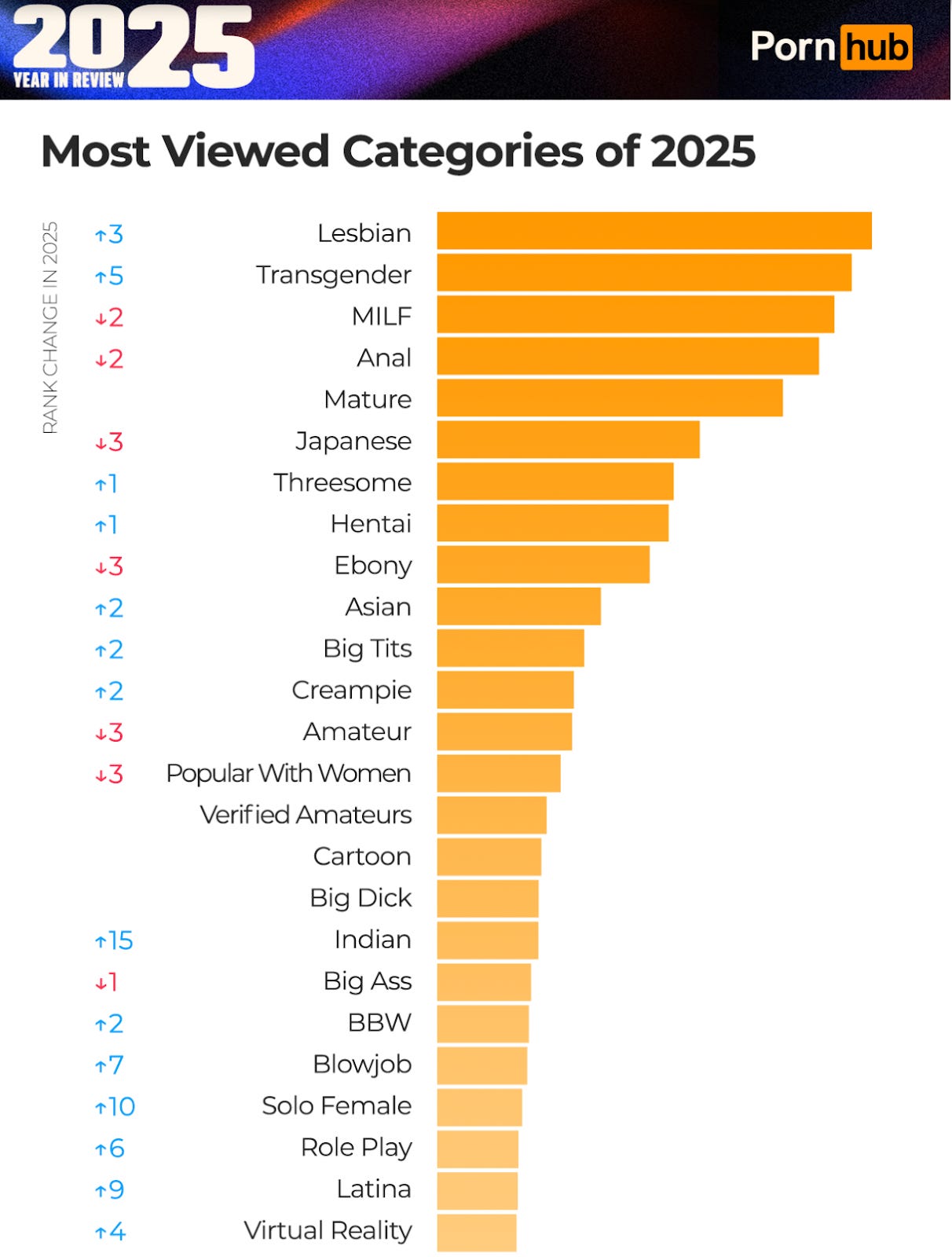
A ranking of the most viewed categories of 2025 according to PornHub. Screenshot from PornHub

A ranking of the most viewed categories of 2025 according to PornHub. Screenshot from PornHub 

“More often than not, AI-generated pornography falls under this umbrella of ‘non photo-realistic media,’ or ‘non hyper-realistic adult content,’ not unlike illustration,” AurĂ©lie Petit, a postdoctoral researcher at the Quebec research chair on French-language artificial intelligence and digital technologies, told Uncloseted Media and GAY TIMES. “And the moment you don’t know how to address this kind of content, then you don’t know what to do with a big part of AI adult productions.”

Though there have been steps taken to regulate the AI porn industry, there is still a long way to go. Last year, the U.S. Congress passed the TAKE IT DOWN Act, which bans the publication of intimate, non-consensual images in the U.S., including AI-generated images. And the sharing of these images, known as deepfakes, is now a felony in Tennessee.

But much of AI porn isn’t based on one person’s likeness. Rather, it’s generated from a vast database of preexisting content used to teach the AI model. So any user who wants to create porn can simply ask an AI model to create their dream scenario, and — in a matter of minutes — a video to their liking depicting realistic people is created.

“There’s a very real concern that some of the worst types of content on the internet — hateful content, non-consensual content of children … those exist on the internet, and we cannot verify that data sets [used to power AI algorithms] don’t include those images,” says Miranda Wei, postdoctoral fellow at Princeton University’s Center for Information Technology Policy.

Outside of deepfakes, U.S. laws leave AI-generated porn in a legal gray area, often varying by state or municipality. In California, Governor Gavin Newsom signed a bill cracking down on deepfakes and requiring AI-generated content to be watermarked. But there is yet to be a consistent policy across the board on how to legislate AI porn.

“When you have real people, or images that look like real people, we understand harm,” says Petit. “But most platforms do not know what to do. … It’s really a legal blur, a policy blur.”

Depictions of trans women

Because transphobic people make up a significant chunk of porn consumers, mainstream trans porn is often designed in a way that leans into prejudice. Videos using slurs or harmful tropes perform well on porn websites, and Google trends show that searches for “tranny porn” and “shemale porn” remain high. On Reddit, the largest trans-related subreddit is r/traps, a porn-sharing group named after a derogatory term that describes trans women as “traps” for cis men.

“[The internet] is still often reflecting a very heteronormative mindset. … Those preexisting biases for what kinds of content exists on the internet informs the data that is fed into those AI models,” Wei told Uncloseted Media and GAY TIMES.

A quick search for “AI trans porn” produces countless generated images of hyper-feminine trans women with unrealistically large penises, often the same length as their torsos. Other videos show trans women being penetrated by men with penises so large that, in real life, they would inevitably cause physical harm.

“When they say trans, you need to really understand it’s trans women, and a trans woman who still has a penis … it’s really a fetishization of trans women pre-operation,” Petit says.

One of Google’s first search results for “AI trans porn” is for CreateAIShemale. On the site, users can build a trans woman from a wide variety of options. They can choose her age, the size of her breasts, butt, and penis, and select from nearly 70 modifiers including “bimbo,” “spanked, hand print,” “impregnation,” and “pony cock.” The site also lists 42 options for “race,” with strange inclusions such as “goblin” and “green skin.”

On a separate but similar site, the owners write: “Your fantasy, your rules. With Trans AI customization, you can design every detail of your AI companion — from physical characteristics and outfits to voice tone and personality traits. … Our shemale AI models can generate images and videos on demand, making your interactions more vivid and exciting. … Shemale AI makes it possible instantly.”

Brandon Robinson, associate professor of Gender and Sexuality Studies at the University of California, Riverside, says these infinite customization options are concerning: “[It] can further the objectification of trans women, as it treats them as just sex objects that can be changed and customized to one’s own likes and desires,” they say. “It also erases that trans women are real, actual human beings, with their own wants, needs, and desires.”

Beyond the fetishization lies a celebration of violence against trans women. A quick search yields videos with headlines that include “AI Generated Shemale Getting Destroyed by a Massive Dick.”

Robinson says these depictions exacerbate preexisting stereotypes. “A lot of men come into dating or hooking up with trans women with these stereotypes.”

A ranking of the most searched for “gay terms,” according to PornHub. Screenshot from PornHub.

A ranking of the most searched for “gay terms,” according to PornHub. Screenshot from PornHub.

Depictions of gay men

While deepfake laws in the U.S. now offer some protection, AI porn that isn’t based on one person’s likeness is harder to prosecute. And that’s concerning when you look at the global appetite for gay porn. In 2025, Pornhub reported that “femboy” and “twink” were the site’s two most searched for gay terms. And “Femboy Fixation” was one of the top five trends that defined 2025, with searches for “cute femboy” and “sexy femboy” up 79 percent and 93 percent, respectively.

What’s concerning is that AI has the ability to produce depictions of categories — which are code words for skinny, younger men — that take it to the next level. Many AI-generated depictions of these men show very thin, often emaciated, bodies. “It’s giving very unrealistic body ideas,” Robinson told Uncloseted Media and GAY TIMES. “And we know that there’s a history of eating disorders and body dysmorphia within the gay community.”
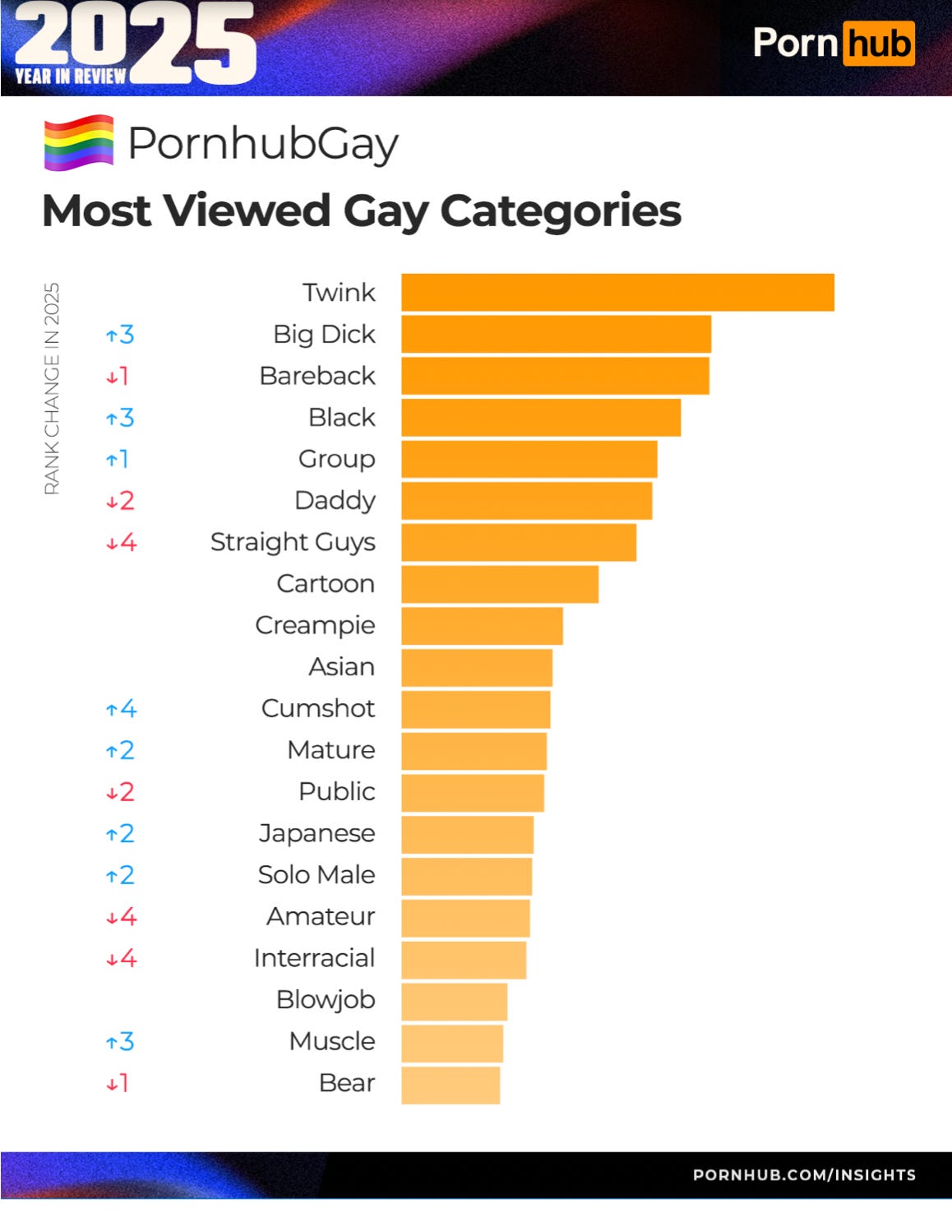
A ranking of the most searched for “gay categories,” according to PornHub. Screenshot from PornHub

A ranking of the most searched for “gay categories,” according to PornHub. Screenshot from PornHub

Depictions of children in AI porn are another space that has opened the door for bad-faith actors. A 2026 issue brief from UNICEF found that across 11 countries, at least 1.2 million children reported having had their images manipulated into sexually explicit deepfakes through AI tools in the past year. And while there have been regulations on deepfakes, groups devoted to creating twink and femboy AI porn can create videos that depict youthful, small bodies, potentially making content that blurs the lines between adult content and child pornography.

While some may find it hard to believe that something as sinister and criminalized as child pornography could be informing AI models, Wei says it’s happening. “Using Child Sexual Abuse Material (CSAM) is definitely not legal. It is awful. But lots of illegal things still happen,” she says. “People do use generative AI to generate AI CSAM, because the models have probably ingested CSAM before.”

Lesbian porn and AI

Unrealistic depictions of lesbian sex are also popping up in AI porn. One AI-generated lesbian porn video shows a woman licking semen out of another woman’s vagina — inserting an invisible male presence into sex between women.

Another disturbing part of AI’s representation of lesbians has to do with how it often makes women look identical. In one AI-generated image, two lesbians in matching black bikinis sit on the beach. Their haircuts, facial features, and bodies are the same. Through these kinds of images, AI risks encouraging viewers to overlook women’s individuality or — worse — lean into the fetish of incest.

In addition, many of the AI-generated depictions of women are feminine, extremely thin, white, and often have unrealistically large breasts and butts. While these attributes are already sought after in conventional porn, AI generators have the ability to produce depictions of women with impossible body proportions.

“[AI porn] maintains unrealistic beauty standards that most people can’t conform or live up to, but also it pushes most people out of being seen as desirable and beautiful,” says Robinson.

The impact on the viewer

AI-generated porn can be harmful for those who watch it, especially for young people: Pornography is already highly addictive, with one study finding a 91 percent increase in pornography consumption since 2000. Another study found that between 17 and 24 percent of adolescents have experienced a dependency on AI.

Wei finds this troubling because much of how AI porn is generated is a black box. “​From a consumer standpoint, you don’t really have the ability to audit how this tool was made,” she says.

Because of this, users may unknowingly consume media that is based on abusive imagery or even child pornography. This is because the massive amount of data that tech companies use to feed their AI models is gathered from across the internet, making it impossible for individuals to vet each piece of information. “It feels more risky to use it when you don’t know who created [the AI porn], what their intentions were, or how they collected the data that was used to make it.”

Wei says what is most concerning is that the data that tech companies use to feed their AI models is not always publicly available. “Large tech companies can be very protective of where they get their data. That is part of their business,” she says. “The scale at which these data sets are being collected means that you cannot have a human manually go through and verify that every piece collected was consensual [or] that a queer person was accurately depicted.”

What can be done?

Some popular generative AI models say there are safety regulations in place. ChatGPT’s website states that the model cannot be used for the creation of “illicit activities” or “sexual violence.” But Petit says that bad-faith actors may still succeed in skirting regulation. “There’s so many AI generators, and there’s people whose entire game is to break the generation,” she says. “You can tweak it more and more and can make the AI do something it doesn’t want.”

In one Reddit thread, a user of Elon Musk’s Grok expressed frustration about newly implemented moderation methods making it harder to generate explicit images. In response, another user seemingly confirmed they were able to find a workaround: “Right now I’m generating realistic videos of completely naked men with tentacles and fluids and non-con sex talk and moans and it works great,” the user wrote.

The potential for nefarious uses of AI came to light when it was revealed that, starting in December 2025, Grok produced and shared upwards of 1.8 million sexualized images of women over the course of nine days. “As we’ve seen with Grok and the numerous scandals over the past few years, the ability to stop an AI model from creating explicit imagery of someone is … unsolved,” Wei says.

Wei doesn’t have a bulletproof solution. “I’m not necessarily aware of a universal technique that could prevent, 100 percent of the time, the creation of images of other people,” she says.

There are, however, strategies that help safeguard AI models. For example, red teaming, which consists of prompting an AI model to generate illicit content, is an ethical tool companies can use to spot regulatory weaknesses. “[It’s] a way to adversarially test, to attack a model and see if it can do harmful things which you are trying to prevent it from doing,” says Wei.

With some companies like Google employing hackers to red team in hopes of identifying security concerns, Wei thinks other AI companies should do the same.

Another approach lies in public model cards, which are small files accompanying AI models that provide information about the data the model was trained on, as well as the AI’s intended use and limitations. Both of these methods are in pursuit of transparency, which Wei sees as necessary to safer AI use. “There should be a way to make technologies safe when people want to use them. … Transparency is needed in order to make progress on safety issues, but that’s again, ongoing.”

In the meantime, Wei says that “tech companies and lawmakers need to step up” and implement greater regulation around AI porn. “Effective regulation also needs the input of people who already have lived experience with pornography, like sex workers and adult actors, and anyone who would be depicted in this imagery.”

Additional reporting by Spencer Macnaughton and Hope Pisoni.


DRC: Urban trees are natural CO₂ stores that merit closer attention

Overview of Bunia. Screenshot from the video “By early 2026, the city of Bunia will have a modern airport built in international standards” on the Today TV YouTube channel

Overview of Bunia. Screenshot from the video “By early 2026, the city of Bunia will have a modern airport built in international standards” from the HK Today TV YouTube channel.

This article was first published on March 8, 2026, on www.greenafia.com. Global Voices republished the article as part of a partnership agreement with GreenAfia.

Trees planted in large cities are an integral part of the solution to climate change. Although traditionally considered less important than old-growth forests, an October 2025 study shows that they can play a major role in conservation efforts, sparking interest among scientists in the Democratic Republic of the Congo (DRC).

scientific study conducted in the Ituri Province of Bunia, northeastern DRC, proved that urban trees are not just landscaping features. They are natural carbon sinks, capable of offsetting a substantial proportion of human activity-related carbon dioxide (CO₂) emissions.

Cities as Carbon sinks

Unlike the much-studied natural forests, African urban areas are largely absent from climate policies, due to a lack of reliable data. To address this shortage, researchers from the University of Bunia inventoried 2,311 trees across 21 one-hectare plots in three communes of Bunia: Mbunya, Nyakasanza, and Shari.

Using non-destructive methods based on tree diameter, height, and wood density, the team estimated the aboveground biomass and carbon stock without felling a single tree.

Figures from this study speak for themselves: 1,759 tons of aboveground biomass stored by urban trees in Bunia; 8,795 tons of carbon sequestered, which is equivalent to 2,374 tons of CO₂ removed from the atmosphere.

On average, one urban tree in Bunia stores 380 kilograms of carbon, which is equivalent to approximately 124 kg of CO₂ absorbed. In one urban hectare, the average carbon stock is 47.6 tons, a figure comparable to that of some degraded forest areas.

In Bunia, if an urban tree can offset up to 124 kg of CO₂, it gains a carbon value of USD 1 to 4 on the voluntary carbon market (a carbon credit trading mechanism that enables businesses and individuals to offset their carbon footprint voluntarily), proving that DR Congolese cities can transform their trees into effective climate assets.

Not all species play the same role

One of the study’s major contributions was identifying the most effective species for carbon sequestration: Eucalyptus globulus: 61 percent of the stored carbon; Mangifera indica (mango trees): 14 percent; Persea americana (avocado trees): 9 percent; Grevillea robusta: 7 percent; and Senna siamea: 5 percent.

These findings show that the choice of species is important. Some species, due to their wood density and rapid growth, play a disproportionate climatic role in relation to their number.

This study changes a great deal, especially in urban policy development, where DR Congolese cities can now include urban trees as climate infrastructure, alongside roads and drainage systems. Planting or preserving some trees, therefore, becomes a measurable climate mitigation strategy.

In terms of land use and reforestation, this study provides a scientific basis for selecting the species to prioritize, avoiding decorative plantings with low carbon impact, and focusing urban greening programs on species with a strong climate performance.

Bunia could also attract the attention of policymakers within the climate funding framework. With local data, cities like Bunia can pursue urban carbon-credit pilot projects, climate-adaptation and mitigation funding, and improved ecological management of their green spaces.

This study shows how the fight against climate change isn’t solely in the great forests of the Congo Basin, but also in the streets, fields, schools, and urban districts where every tree counts. But most importantly, every species selection, every preservation or destruction policy has a measurable climate cost.

BURMA/MYANMAR

Rohingya council condemns Min Aung Hlaing's presidency as illegitimate


05/04/2026, Sunday
TRT/AA

File photo
The Arakan Rohingya National Council has condemned the appointment of former junta leader Min Aung Hlaing as Myanmar's president, calling the election process fundamentally illegitimate. The Rohingya group accused the new president of responsibility for mass killings and forced displacement during the 2016–2017 crackdown. It urged governments to refuse recognition and support accountability efforts at the International Criminal Court.

The Arakan Rohingya National Council (ARNC) has issued a sharp condemnation of Min Aung Hlaing's appointment as Myanmar's 11th president, describing the move as an attempt to legitimize military rule under a democratic facade. The former junta chief secured the presidency on Friday after receiving more than half the votes in a parliament widely seen as dominated by the armed forces. According to official results, Min garnered 429 votes out of 584 lawmakers present in the bicameral legislature, which has a total of 664 seats.

ARNC: Election process 'fundamentally illegitimate'

In an official statement, the ARNC declared that the process elevating Min Aung Hlaing lacks any democratic legitimacy, pointing to a military-controlled parliament and an election that the United Nations and other international observers have condemned as neither free nor fair. The Rohingya group accused the newly installed president of direct responsibility for atrocities committed against the Rohingya minority, including mass killings, widespread sexual violence, and the forced displacement of hundreds of thousands during the 2016–2017 military crackdown in Rakhine State.

Ongoing international legal proceedings

The ARNC noted that Min Aung Hlaing is already the subject of multiple international legal efforts. Proceedings are ongoing at the International Criminal Court (ICC), and arrest warrants have been issued under universal jurisdiction by courts in Argentina. The group also highlighted the broader human rights catastrophe unfolding in Myanmar since the 2021 military coup, which has left thousands dead and millions internally displaced as the junta battles armed resistance movements across the country.

Call for global action and non-recognition

The Rohingya council urged governments worldwide to refuse recognition of the new presidency, to increase pressure on Myanmar's military leadership, and to support all accountability mechanisms aimed at ending what it described as ongoing repression and impunity. The ARNC specifically called for stronger sanctions against the junta and for the international community to prioritize the Rohingya's right to justice, return, and citizenship. TĂ¼rkiye has consistently been one of the most vocal advocates for the Rohingya people, providing humanitarian aid and pressing for accountability for crimes committed against the Muslim minority in Myanmar.
Detention of Kurdish poet extended in Turkey amid probe over Kurdish-language writing


Hengaw — Sunday, April 5, 2026

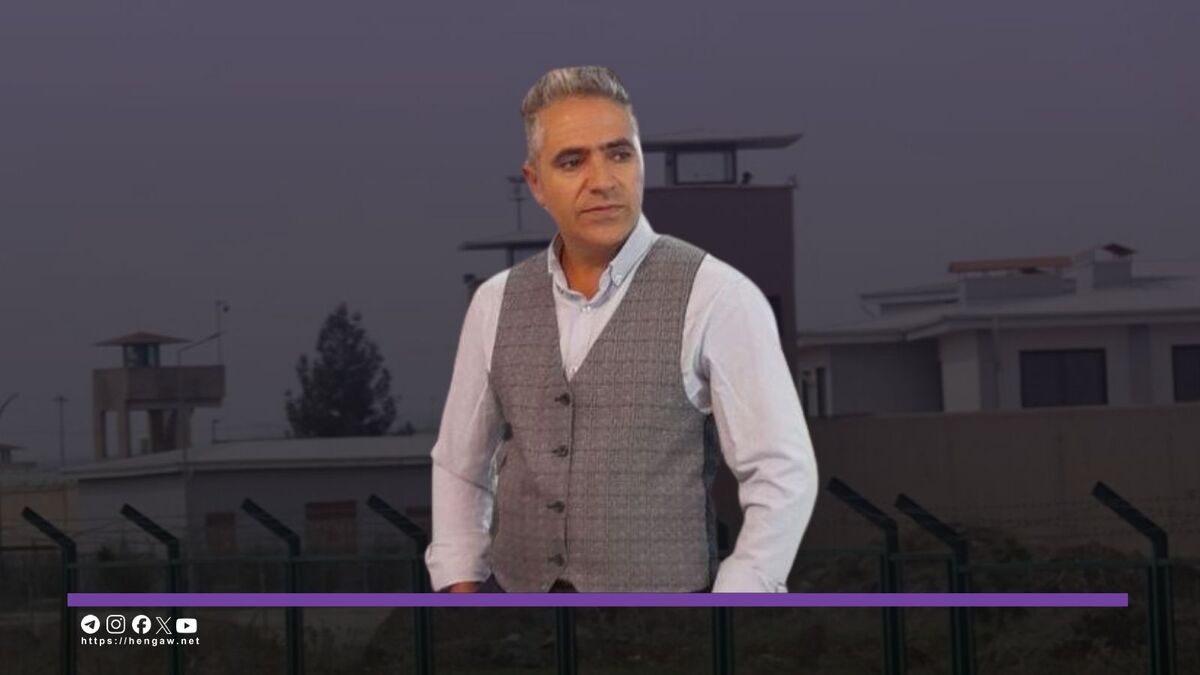
Turkish authorities have extended the pretrial detention of Kurdish poet and civil activist Behrouz Shojaei for another month, more than 40 days after his arrest, according to information obtained by the Hengaw Organization for Human Rights.

Shojaei, 43, from Qatur, West Azerbaijan (Urmia) province, Iran, and a member of the cultural association “Surawa,” was detained by Turkey’s National Intelligence Organization (MIT) and is being investigated over his literary activities, including writing and publishing poetry in Kurdish.

A Turkish court ordered the extension of his detention for an additional 30 days on Saturday, April 4, 2026.

Shojaei, a father of three, was arrested on January 31, 2026, after crossing into Turkey through the Razi border crossing while traveling to Kayseri for work.

A source familiar with the case said he has been held in a detention facility in the city of Van, where he has undergone intensive interrogations over the past 40 days.

Authorities have cited his Kurdish-language poetry and its publication online as the basis for the charges against him.

Source: Hengaw

Chicago protest denounces Israeli law on execution of Palestinian prisoners

Washington, April 5 (SANA) Demonstrators gathered in Chicago on Saturday to protest an Israeli law allowing the execution of Palestinian prisoners, according to media reports.

The Palestinian news agency WAFA said activists and supporters of the Palestinian cause took part in the protest, raising slogans condemning the legislation as a serious escalation and a violation of human rights.

Protesters called on the international community to take action against the law and urged increased political and media pressure, including through social media campaigns.

They also called on the U.S. public to contact members of Congress to oppose the measure.

The legislation allows the imposition of the death penalty on Palestinian prisoners and has prompted criticism from governments and human rights organizations over concerns about due process and potential misuse.

On March 30, Israel’s parliament, the Knesset, passed the law, drawing condemnation from Arab countries and international groups.

IZ/A

In Lebanon, more than 50 medics have been killed by Israel. Some say they're targeted

April 5, 2026
NPR
Heard on Weekend Edition Sunday

By  
Lauren Frayer
Jawad Rizkallah
Claire Harbage


Mourners hold a portrait of Youssef Assaf, a Lebanese Red Cross volunteer paramedic who was killed during a rescue mission in southern Lebanon, at his funeral in Tyre on March 11.Kawnat Haju/AFP via Getty Images

BEIRUT, Lebanon — Dozens of paramedics in bright red uniforms shuffle around a coffin. The victim is one of their own.

Youssef Assaf, a volunteer paramedic with the Lebanese Red Cross, was killed by an Israeli airstrike on March 9, while on a rescue mission in Majdal Zoun, southern Lebanon. His funeral drew hundreds of first responders, marching in a seaside procession in the Mediterranean city of Tyre, his mother's cries heard over the shuffle.

Lebanon's government says at least 54 health workers are among more than 1,400 people killed by Israel during the current invasion. Some human rights groups say first responders are being targeted — something Israel denies.

Notifying Israel

Whenever Red Cross ambulances rush to the scene of any attack, they send their coordinates to United Nations peacekeepers, who then notify Israel.

They followed that protocol on March 9, when Assaf got out of his ambulance at the scene of an airstrike to assist the wounded — and was hit by another attack. After his killing, the Red Cross' director of emergency medical services, Alexy Nehme, says he sent a message back through that same mechanism to Israel, "as a complaint and a question. Why? Why us?"


Red Cross director of emergency medical services Alexy Nehme has asked United Nations peacekeepers and Israeli officials why volunteer paramedic Assaf was killed.Claire Harbage/NPR

Nehme says he never got a reply.

The Israeli military tells NPR it targeted a "Hezbollah military-use building" that day, and that "some people" arrived in the area "in the seconds between when the munitions were fired and the moment of impact," but were not intentionally targeted. Israeli troops "were unaware of the presence of Red Cross personnel in the area and certainly did not intend to strike them," the military said.

But Lebanese officials and human rights groups say this is a pattern.
A pattern of attacks on medics

"It's very clear that there is targeting of healthcare personnel, first responders and healthcare facilities," Dr. Firass Abiad, Lebanon's former minister of public health, tells NPR's Morning Edition. "When you have 10 first responders killed within a period of almost 24 hours, it's very difficult to say this is an accident."

On the weekend of March 28-29, 10 health workers were killed in a 24-hour period by Israeli attacks on Lebanon, according to the Lebanese government and the World Health Organization. Lebanon's current minister of public health, Rakan Nassereddine, said he has initiated the process of filing a complaint to the U.N. Security Council.

Human Rights Watch says it's too soon to draw conclusions about the current war. But HRW researcher Ramzi Kaiss says Israel has intentionally targeted health workers in the past, in Gaza and Lebanon. In 2024, his group documented three attacks: on paramedics at a civil defense center in Beirut, and on an ambulance and a hospital in southern Lebanon, killing 14 paramedics.

"We found that these attacks amount to apparent war crimes," Kaiss says. "Health workers are protected under the laws of war. In the attacks we investigated, we did not find evidence that the facilities and ambulances were being used for military purposes."

Amnesty International also says Israel is using the "same deadly playbook" to carry out "unlawful attacks on health facilities and health workers" without "any accountability or redress."

The World Health Organization's Director-General Dr. Tedros Adhanom Ghebreyesus says "attacks on health facilities must cease immediately."

"This cannot become the norm," he posted on social media.

What Israel says


A truck and ambulance burn after Israeli airstrikes hit a group of paramedics outside a hospital in Marjayoun, southern Lebanon on Oct. 4, 2024.AP

The Israeli military told NPR it abides by the law, but revokes legal protections for health workers when "misuse" occurs. Israel accuses Hezbollah of exploiting medical teams and facilities, transporting weapons in ambulances, as part of a broader pattern of "systematic exploitation of civilian infrastructure," it said.

The majority of first responders killed in this war have been with units run by Islamic political groups, including Hezbollah, which has its own ambulance service. Unlike the Red Cross, it does not notify Israel of its movements.

In an interview at the site of a Beirut building felled by a recent Israeli airstrike, Mohammed Farhat, operations director for the Islamic Health Authority, which includes Hezbollah's ambulance service, described working under the threat of so-called "double-tap" strikes. He says Israel will often strike a Hezbollah operative, then wait for Hezbollah's own first responders to arrive on the scene, and then hit them too.


Mohammed Farhat is the operations director for the Islamic Health Authority, which includes Hezbollah's ambulance service. He stands at the site of an Israeli strike in a central part of Beirut.Claire Harbage/NPR

The Israeli military denies any such policy. But it told NPR it does sometimes conduct an additional strike "when the objective of the initial strike was not achieved.

Farhat says first responders have changed their behavior. "We wait a bit," he says. But it's hard.

"You have the mind and the heart. When you hear someone crying or screaming — especially children — you don't really think. You just run towards them," Farhat says. "But we try to work in a way that doesn't increase the risk to the team. Instead of sending in 10 or 20 people into the heart of a targeted building in the first four or five minutes, we send three or four to get close, go in, and assess."

He denies transporting weapons, and says he's lost many colleagues, whom he says deserved legal protection as a health workers, regardless of their political affiliation.

Dispatching colleagues into harm's way


George Ghafary is the lead ambulance dispatcher for the Red Cross in southern Beirut.Claire Harbage/NPR

At the Lebanese Red Cross' control room in southern Beirut, ambulance dispatchers field some 1,500 calls a day. Some of them are gripping.

"After a recent airstrike, a woman called, saying she and her children were injured. They were clearly suffering from severe trauma," recalls George Ghafary, the lead dispatcher. "We stayed on the phone with them the whole time, until the ambulance reached them."

They survived, he says.

Calls like that weigh on him, Ghafary says. So does this war's toll on his profession. "These are my colleagues, my friends," he says. "I can't show the team my worry and anxiety, but deep down, it's there."

When he dispatches colleagues out into harm's way, he tracks them by GPS and stays on the line with them as well, by phone and walkie-talkie.

He hopes the line doesn't fall silent.


People work at the Red Cross dispatch center in southern Beirut.Claire Harbage/NPR
Canada launches advanced icebreaker to bolster its control in the Arctic

Canada strengthens its economic security in the Arctic


Last updated: 05/04/2026 
Medhat Elsheikh- News Editor


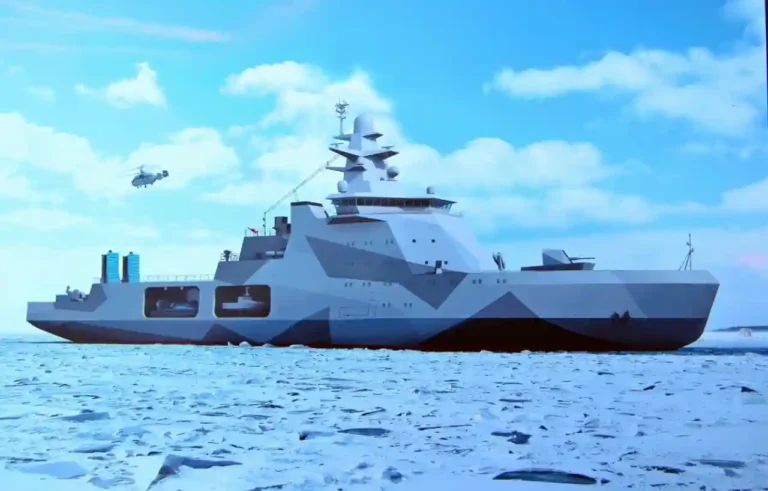
Advanced icebreaker (Photo/Archive)

Ottawa, Canada – Canada has begun developing a new, state-of-the-art icebreaker to bolster its maritime capabilities in the Arctic, a move aimed at supporting safe navigation and protecting the country’s economic and environmental interests.

The Canadian Department of National Defence stated that the new icebreaker features advanced technologies that allow it to operate in harsh icy conditions, while reducing fuel consumption and increasing operational efficiency. This will enhance Canada’s ability to monitor shipping lanes and respond to emergencies in the Arctic.

Officials explained that the project is part of a broader Canadian strategy to modernize its maritime fleet, including research and rescue vessels, to keep pace with climate change and the ever-increasing volume of shipping traffic through the Northern Sea Route.

This development comes at a time of growing international interest in Arctic marine resources, as major powers seek to strengthen their presence to secure their economic and security interests in the region.
US investor with ties to Trump family looks to Murmansk

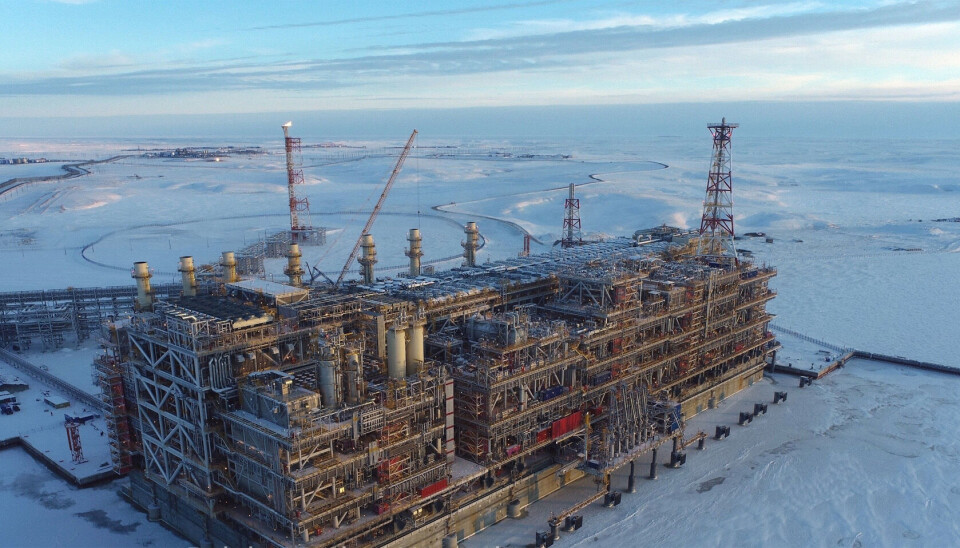
Texas businessman Gentry Beach says he has signed an agreement to use a movable liquefied natural gas (LNG) plant currently under construction in Russia’s Murmansk region

The plan is to deploy the plant on Alaska’s North Slope, one of the world’s most gas-rich regions.


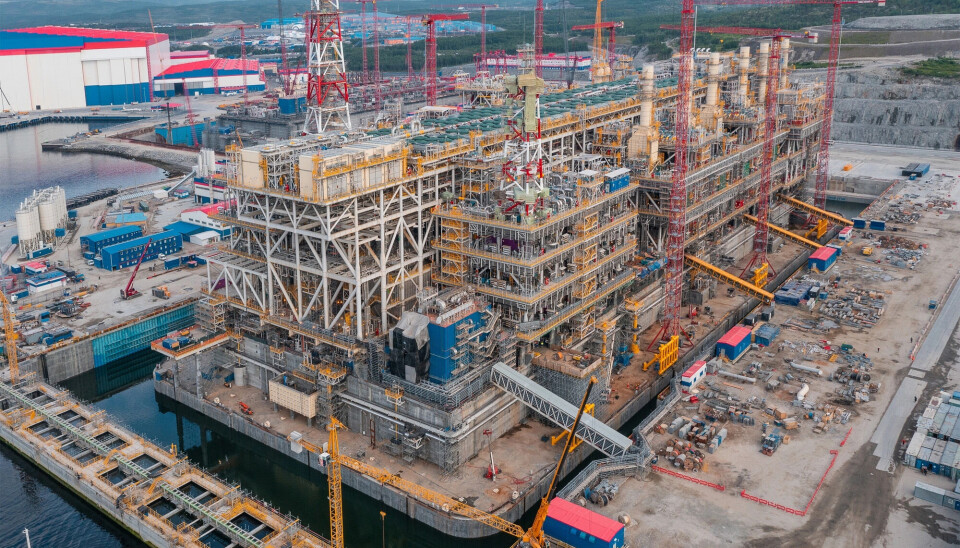
The LNG Construction Centre in Belokamenka builds so-called gravity-based structures. Photo: vk.com/belokamenka51
.
Atle Staalesen
23 February 2026 
THE BARENTS OBSERVER


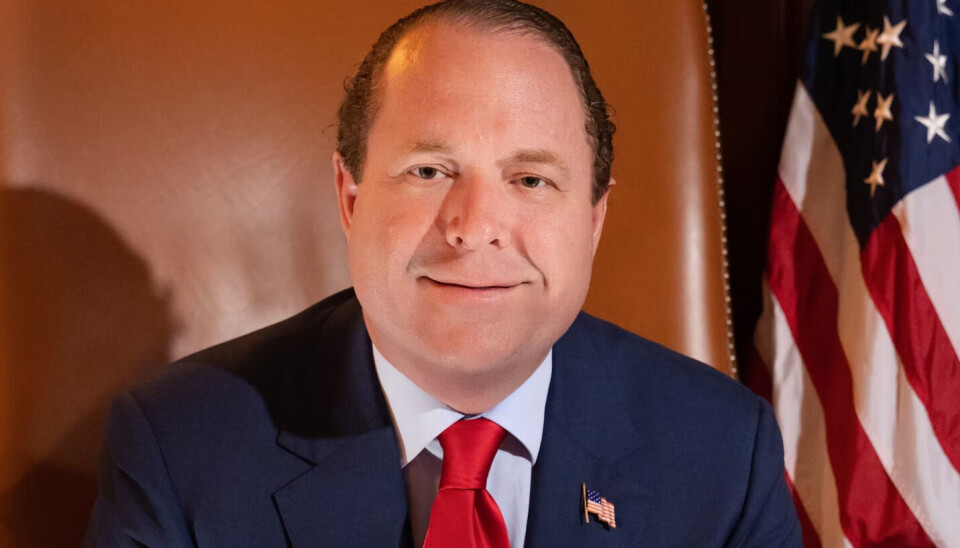
Beach, who is reported to be a friend of President Donald Trump’s eldest son, told the New York Times that he had signed a cooperation agreement with Russian gas producer Novatek. The deal envisages using a movable LNG plant being built at Novatek’s construction centre in the Murmansk region.


The plan is to deploy the plant on Alaska’s North Slope, one of the world’s most gas-rich regions.

The agreement comes as the Trump administration continues to cosy up with leading representatives of the Kremlin dictatorship.


Gentry Beach is a US investor with links to the Trump family. 
Photo: Americafirstglobal.com

According to Beach, the deal was negotiated with Novatek CEO and co-owner Leonid Mikhelson during meetings in Dubai and Europe last fall.

Beach stressed that his relationship with the Trump family played no role in securing the agreement, but acknowledged to the New York Times that “this project is known about at the highest levels” in both Moscow and Washington.

“It’s time for all of us to work together,” Beach told the newspaper. He described Mikhelson as “very pro-American.”

Novatek has several years of experience building so-called gravity-based structures — massive movable platforms designed for LNG production at remote sites.

Two such structures were built at the company’s LNG Construction Centre in Belokamenka, across the Kola Bay from Murmansk. Both were later towed to Utrenny on the Gydan Peninsula, where Novatek is developing its Arctic LNG 2 project.


Novatek has two floating production units in Gydan as part of its Arctic LNG 2 project. Photo: Belokamenka51 on VK

Construction of a third structure was launched but later halted as international sanctions against Novatek’s subsidiaries intensified.

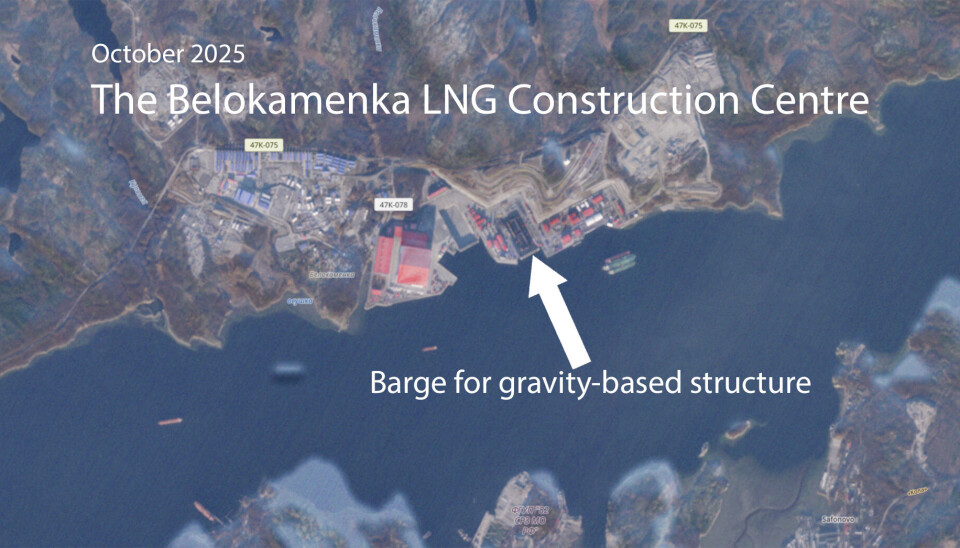
This is most likely the movable LNG plant referred to by Beach. Its current stage of completion is unclear, but satellite images from October 2025 show the barge in one of the two dry docks at the Belokamenka facility.


Satellite image from October 2025 of the LNG Construction Centre in Belokamenka, Kola Peninsula. Map by Barents Observer/Copernicus Sentitel 2

Virtually all entities involved in the Arctic LNG 2 project are under sanctions imposed by the United States, the United Kingdom and several other countries. These include the Arctic LNG 2 operating company, Novatek Murmansk, as well as many of the vessels involved in transportation of LNG.

The United States has been a leading force behind sanctions targeting Russia’s energy sector.

In November 2023, the US Treasury imposed sanctions on the Arctic LNG 2 project. Earlier, the Saam, a 400-meter-long vessel intended to serve as a transshipment hub, had also been sanctioned. In May 2024, the Treasury expanded its measures to include several heavy-lift carriers essential for transporting key project components.

The measures were intended to “limit Russia’s future energy revenues and impede Russia’s development of future energy projects,” the Treasury said at the time.

Two years later, the tone from Washington toward Moscow has shifted radically. The sanctions, however, remain in place — for now.
“They decided to come after us. Almost like in 1937”

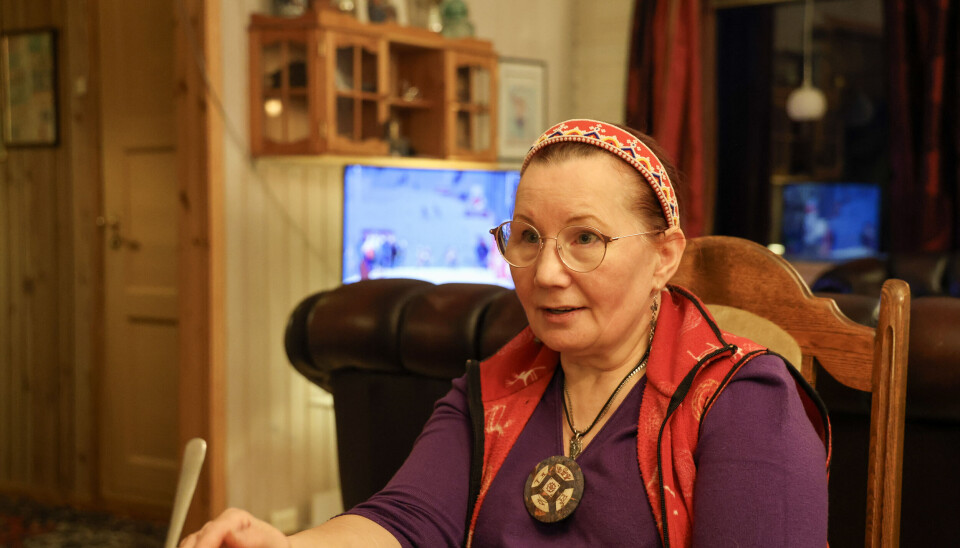
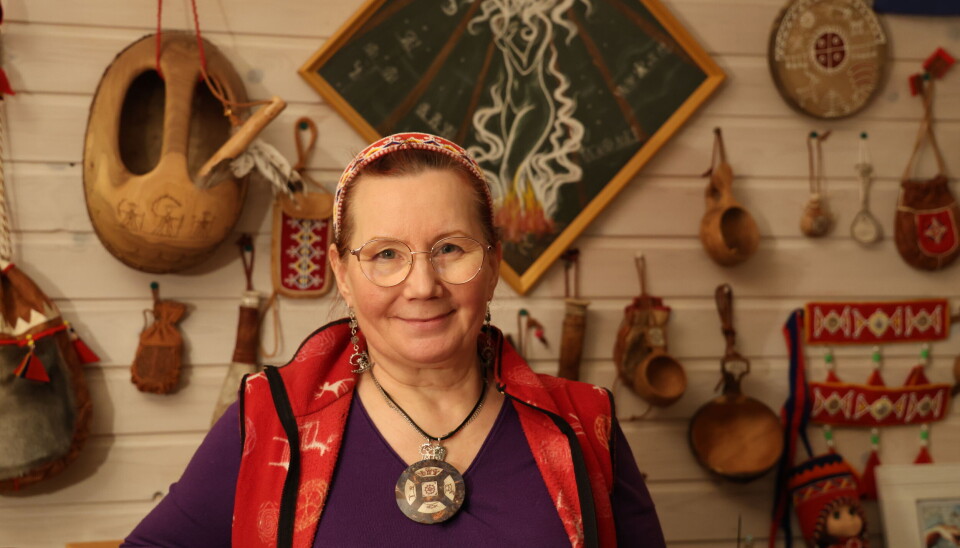
SĂ¡mi activist Valentina Sovkina, originally from the town of Lovozero in Russia’s Murmansk region, was forced to leave the country after a wave of searches targeting indigenous rights activists.


SĂ¡mi activist in exile. Valentina Sovkina had to flee from the Kola Peninsula. 
Photo: Sebastian Lerpold


LONG READ


Olesia Krivtsova journalist
Sebastian Lerpold journalist
11 March 2026 - 
THE BARENTS OBSERVER

Because of her work defending the rights of her people, Sovkina has faced bans on events, sustained harassment on social media, discrimination and even physical violence. The Barents Observer tells the story of her life — and her struggle to defend the right to be SĂ¡mi in Russia today.

A “search operation”

On December 19, 2025, the 62-year-old crossed the familiar border between Russia and Norway for what she believes may be the last time.

This time it did not feel like one of her usual trips abroad. There were no plans to meet relatives, no conferences on indigenous rights to attend. Sovkina was leaving Russia for the foreseeable future.

Two days earlier, on December 17, officers from Russian security services arrived at her flat in Lovozero. On the same day, the Federal Security Service (FSB) carried out searches at the homes of at least sixteen other people.

Security officers were looking for activists linked to the Aborigen Forum, a network of experts, civic leaders and organisations representing indigenous peoples of the North, Siberia and the Far East.

Sovkina woke up to a knock on the door and at first assumed it was her son, who had forgotten his keys. Instead, armed security officers forced their way into the apartment.

“I asked them several times directly: ‘Is this a search?’” she recalls. “They replied: ‘No, it’s an inspection as part of a search operation.’”


Fled to Norway. Valentina relocated to the Norwegian East Finnmark region. Photo: Sebastian Lerpold

They explained that if it had been an official search, it would have looked very different.

“They said: ‘We would have burst in, thrown you to the floor, put you in handcuffs and turned everything upside down.’”

For four hours one officer carefully recorded the serial numbers of electronic devices, while another repeatedly demanded the passwords to her phone and computer.

Sovkina refused.

“So you have something to hide?” one of the officers asked.

“Yes,” she replied. “Photos of me in lingerie that I send to my husband.”

She remembers one of the officers commenting that her husband was “quite elderly”.

“Well, I’m not exactly young either,” she answered. “Do you think people stop having a life when they get older?”

During the visit she tried to unsettle the officers by speaking about omens and shamanism. On one officer’s wrist she noticed a bracelet made of shungite, a mineral often believed to promote physical well-being.

“You won’t have good health,” she told him, pointing at the supposed talisman.

That same day similar visits took place at the homes of other activists. Indigenous rights defender Daria Yegerova was later arrested by the Basmanny Court in Moscow and accused of involvement in the Aborigen Forum, which Russian authorities have designated a “terrorist organisation”.
Treated as “second-class”

Valentina Sovkina was born and raised in Lovozero, a SĂ¡mi town in the Murmansk region.

Much of her story revolves around the tundra and family life — and her childhood in a boarding school for disadvantaged children, which profoundly shaped her life.

She was sent there because of instability at home. Her parents struggled with alcohol.

“I don’t judge them,” she says. “Everything that brought them to that point was rooted in hardship. They simply weren’t needed by society.”

“What does a dysfunctional family mean? It means there are no separate beds, no desks, no school supplies. Everything is shared. We all slept in one bed — if there was a bed. Often we slept on skins.”

Their extended family lived together. Her grandparents spent much of their time in the tundra.

It was in the boarding school that she first experienced discrimination.

“The staff and visitors often treated us SĂ¡mi as if we were dirty,” she recalls.

They would say we smelled bad and look at us with disgust. They treated us like second-class people, as if we were somehow unworthy.”

Her family’s diet consisted largely of reindeer meat, fish and berries.

“That was simply the food we knew. Our homes smelled of the stove, of skins and of work. When you sew leather, scrape hides — there’s a specific smell, and it stays in the house.”

At the same time, that upbringing shaped her identity.


Valentina Sovkina. Photo: Sebastian Lerpold

“That’s when I began to understand who I was. We had our own food, our own way of life. Reindeer stood nearby, our grandfather would arrive and we would ride them. We wore traditional clothing, the malitsa.”

She remembers waking up to her grandmother singing luvvts — traditional improvised songs.

“My tundra, my tundra, how I miss you.”
“Waving the flag”


Valentina Sovkina began researching her family roots in the early 1990s, when she found herself in hospital. In the ward with her was another woman from Lovozero who unexpectedly said: “Did you know we are related?”

Sovkina recalls how she began sketching out a family tree by hand — drawing little squares, names and connections.

“That sheet of paper became the starting point of my journey back to myself,” she says.

Later, when she entered politics, people began referring to her as someone who was always “waving the flag”.

“I had the flag everywhere,” she says. “On my computer, on my phone, a badge on my cap. I was constantly showing it — saying: here I am, I’m here, I exist.”
“They came to our land”

For many years Sovkina represented the SĂ¡mi — an indigenous people of the Kola Peninsula — in dialogue with government authorities, industrial companies and international institutions.

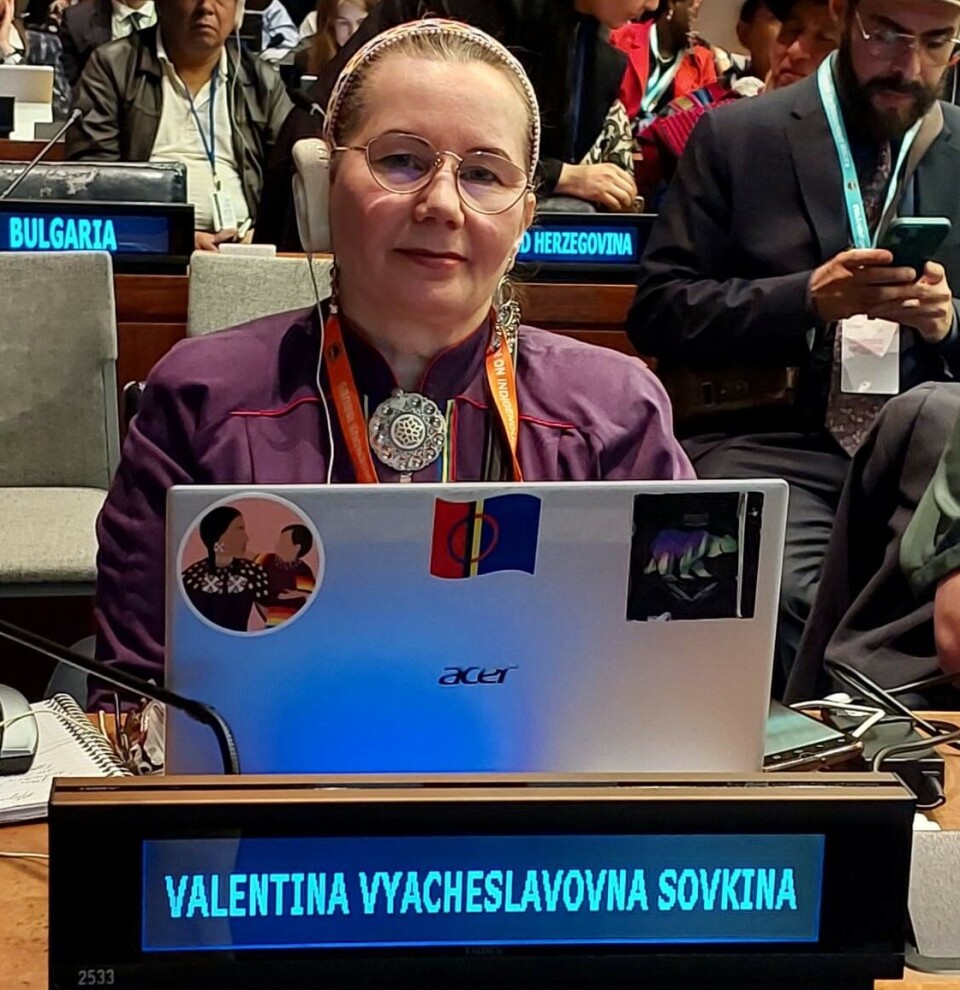
In 2022 she was appointed a member of the UN Permanent Forum on Indigenous Issues, an advisory body to the United Nations.

Much of her advocacy has focused on opposing industrial projects affecting traditional SĂ¡mi lands.


Sovkina is a member of the UN Permanent Forum on Indigenous Issues. Photo: private

She has also criticised what she calls the “decorativisation” of the SĂ¡mi — when authorities and tourism projects use SĂ¡mi culture as a picturesque backdrop while ignoring the real problems faced by communities.

Many of her speeches have addressed the rapid industrial development of northern territories.

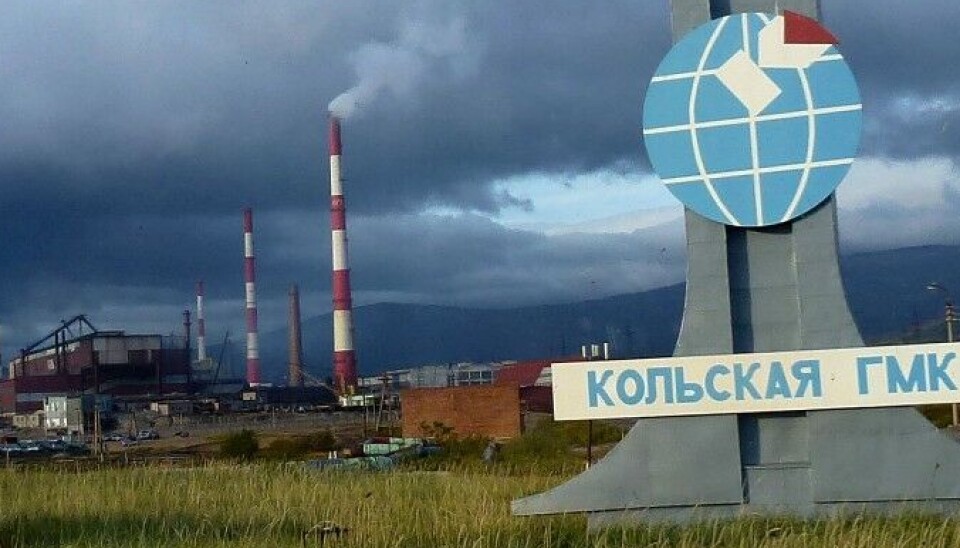
In the Murmansk region a key actor is the mining giant Norilsk Nickel, whose subsidiaries operate across the Kola Peninsula.

According to activists, industrial expansion is destroying lands traditionally used by SĂ¡mi communities.

In recent years the Kola Peninsula has also become one of Russia’s key sites for the extraction of rare earth metals. Alongside nickel and palladium, attention has increasingly turned to lithium.


The Kola MMC is a regional subsidiary of Norilsk Nickel. 
Photo: Atle Staalesen

The Kolmozerskoye deposit, located near SĂ¡mi settlements and reindeer pastures in the Lovozero district, is considered Russia’s largest lithium project and a cornerstone of future battery production.

Expanding mining activity is pushing out traditional reindeer herding.

Compensation payments offered by companies, SĂ¡mi representatives say, fail to offset the long-term losses suffered by communities.

“I oppose Norilsk Nickel,” Sovkina says.

They came to our home. They want to take our land — the land where our reindeer graze. My grandfather is buried there, on an island in Lake Kolmozero.

“I understand the country needs lithium and other resources. But there are other places where extraction could happen. I don’t want them coming to our territory.”

According to Sovkina, state interests and corporate interests consistently override indigenous rights.

She points to the Association of Kola SĂ¡mi, which signed a cooperation agreement with Norilsk Nickel and receives funding from the company.

“Local indigenous leaders are often appointed from above and do not represent their communities,” she says.

“They are forced into partnerships with major corporations, which makes them dependent.”

In 2022, while crossing the border, Russian border guards took her aside for questioning.

FSB officers asked about her views on the Russian state, US policy — and finally about Norilsk Nickel.

“Ah, so that’s what this is about,” she replied. “You should have started with that.”
"To attack someone who wouldn't hurt a fly"

In 2014 Sovkina was travelling from Lovozero to the Norwegian town of Kirkenes, where she was due to catch a flight to New York for the World Conference on Indigenous Peoples.

That morning they discovered the tyres of their car had been slashed.

After finding another vehicle they set off, but police stopped them repeatedly along the road, searching the car and delaying them without formal documentation.


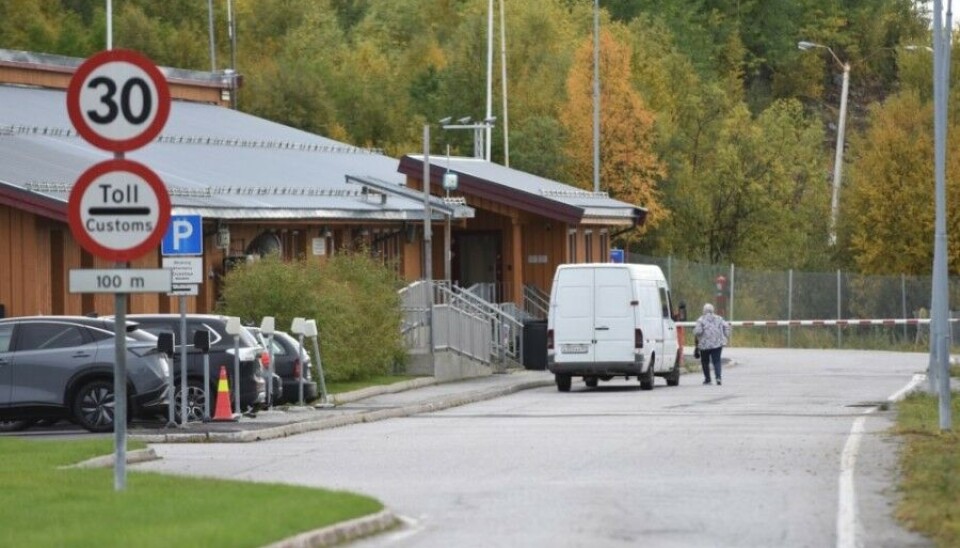
Border-crossing. Storskog is the only border-crossing point between Norway and Russia. Photo: Thomas Nilsen

“The reasons kept changing,” Sovkina recalls.

“At first they said it was a routine check. Then they said it was because of Ukraine — maybe we were transporting weapons.”

Near the town of Zapolyarny the car was stopped again.

As Sovkina spoke on the phone about what to do, a young man suddenly appeared and tried to snatch her bag containing documents and her phone.

“He started pulling at the bag. I held on — he pulled harder. Then he knocked me down and began dragging me.”

She fought back, kicking and shouting.

Meanwhile the driver was being held inside a police vehicle.

When he ran out to intervene, the police detained him — not the attacker.

“They grabbed the driver, not the attacker. The man simply ran away,” she says.

“It looked like a staged performance. A circus.”

The case was never properly investigated.

During later interrogations, one investigator suggested the officers had merely been following orders.

“I asked: whose orders? He said nothing. And I realised — even if they had killed me, it would still have been an order.”

It was after this, says Sovkina, that her attitude towards the state changed completely.

Now I am absolutely certain that I am not safe. You have shown that you can attack someone who wouldn't hurt a fly. You have completely changed my inner compass. I believed that the state was capable of protecting me."

She did fly to New York after all — a day late. She still has her passport. Other Russian participants in the conference were less fortunate: some of them were unable to leave, and some had their documents confiscated at the airports.
“The authorities don’t want us to be independent”

Pressure on SĂ¡mi activists long preceded the recent criminal cases under “extremism” and “terrorism” laws.

Sovkina says the first signs appeared when authorities began systematically obstructing attempts to organise meetings.

Whenever she arranged seminars or discussions in Lovozero, venues suddenly became unavailable.


Valentina Sovkina in Norway. Photo: Sebastian Lerpold

“They would say there were fire safety problems, or a burst pipe — always something.”

Eventually she concluded it was pointless to request space in public buildings.

“People who wanted to help were warned they might face consequences — that they could lose subsidies.”

She is convinced the FSB was behind the pressure.

Sovkina recalls how an unknown man came to an open event in Lovozero and asked permission to participate. He introduced himself as a ‘physical education teacher,’ but, as Valentina says, ‘it was immediately clear from his bearing that he was a security officer.’

"I told him, 'Sit down. We have no secrets. You can write everything down. We won't even speak in SĂ¡mi — we'll speak in Russian so that you can understand everything."

For two days, climate and oceanography experts discussed climate change, risks to the territory, long-term and short-term planning for Lovozero, and measures to be taken by the administration in the event of avalanche danger and other threats. After the meeting, the ‘physical education teacher’ approached Sovkina and asked a question:

"I still don't understand — what are you doing here that's so dangerous?"
Fighting the governor

Until 2010, SĂ¡mi Day, celebrated on February 6, was marked by the raising of the flag near the Murmansk regional administration building. However, activists later began to encounter problems.

Sovkina recalls how, in 2010, activists planned to raise the flag at the administration building. The governor did not appreciate the idea. "They went so far as to cut down the flagpoles so that we couldn't raise the flag near the building," says Sovkina, "so that there would be no topic for discussion. It turns out that even the government discussed it...

"How can we allow the flag to be raised? What if LGBT people come and demand the same thing?"

The SĂ¡mi responded with a protest: they came to the Murmansk administration building with drums and horns. Valentina was offered a compromise: "You raise the flag for half an hour, then take it down." She agreed, and the flag hung for a whole week.

It is not in their interest for us to be independent, it is not in their interest for us to be financially secure. We always talk about our territories, about the ancestral nature of these territories. We do not live in four districts. We live throughout the Murmansk region and have always lived here."

In the autumn of 2024, the authorities added the Free Nations of Postrussia Forum to the list of “terrorist structures" and declared 172 other initiatives to be its ‘structural subdivisions.’ The list included anti-war and decolonial projects, as well as movements for regional autonomy.

In addition, the Ministry of Justice recognised the ‘Anti-Russian Separatist Movement’ as extremist — an organisation that the ministry essentially invented itself by analogy with the ‘International LGBT Movement’ and the ‘International Satanist Movement.’
"This story is as old as the world itself"

Since 18 December 2025, Daria Yegereva, whose home was searched at the same time as Sovkina's, has been in custody. The indigenous rights activist and representative of the Selkup people is accused of ‘aiding terrorist activities.’

Sovkina condemned the persecution of activists.

"It is particularly outrageous that the Russian authorities are accusing activists of terrorism, for which people who have not committed and never called for violence are now being given monstrous prison sentences of 15 or 20 years in Russia. These sentences are not intended to “combat terrorism” but to intimidate. They have targeted those who have led and continue to lead a traditional way of life for centuries, herding reindeer, fishing, hunting and gathering wild plants on their own land. They preserve their knowledge, their knowledge of nature, bit by bit."

We must call a spade a spade: this is not a fight against terrorism, it is political revenge."

This is direct punishment by the state for the fact that representatives of Indigenous Peoples dare to appeal to the UN, speak about violations of their rights, participate in the work of international bodies and tell the truth about what is happening in Russia. The Russian authorities are deliberately criminalising the very idea of cooperation with the United Nations.

"This story is as old as the world itself — accusations of separatism, unwillingness to allow indigenous peoples to participate in decision-making, and the desire to maintain control over territories. This is exactly how colonial policy manifests itself," says Valentina's husband, Bjarne Store-Jacobsen.

Bjarne remembers the day of the search at Sovkina's house well — he watched what was happening from his home in the municipality of Nesseby, 100 kilometres from Kirkenes. Barents Observer journalists met with Valentina there.


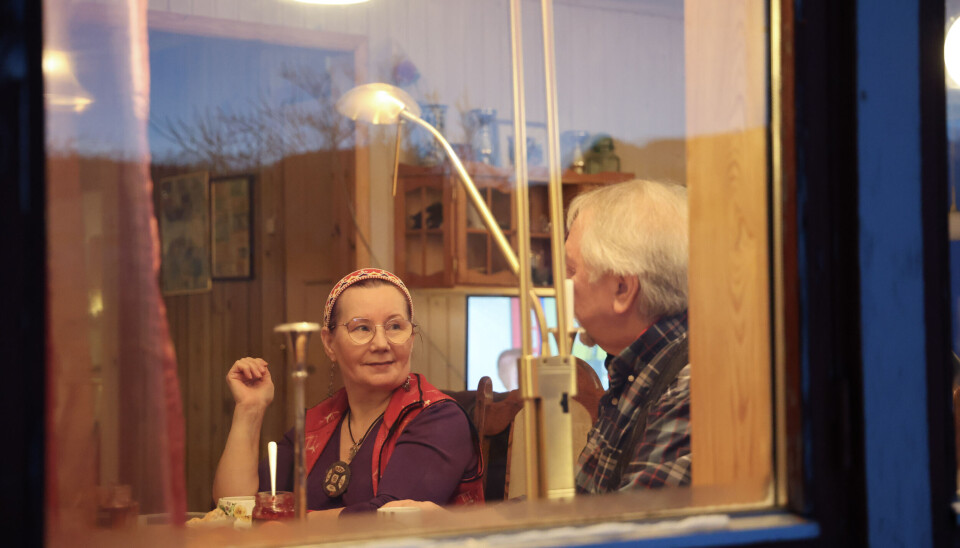
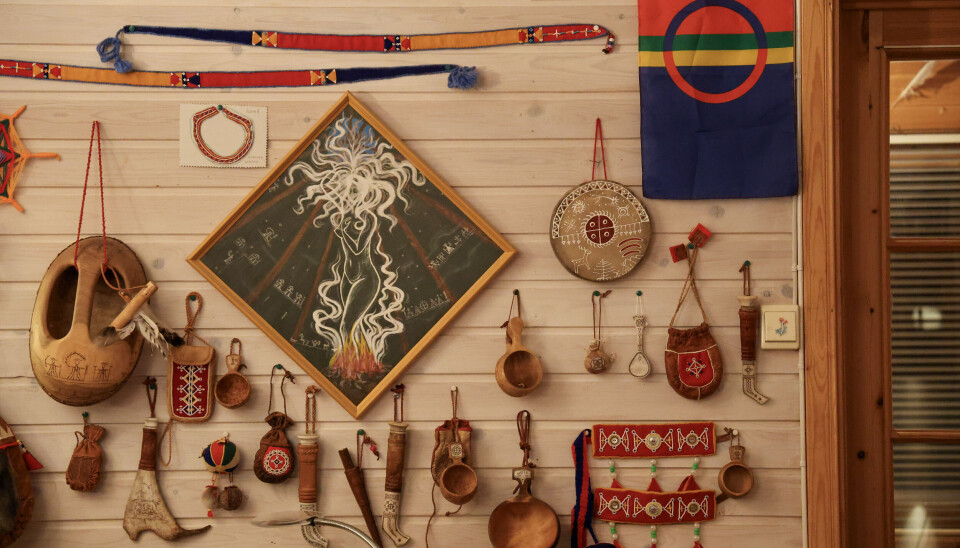
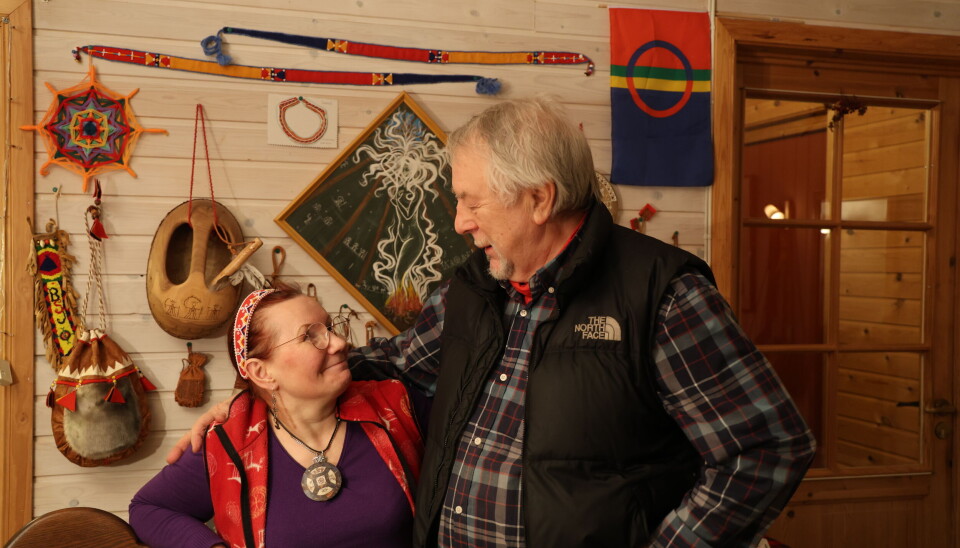
The atmosphere at Valentina's home in Nesseby, Norway. Some of the work was done by her students. Photo: Sebastian Lerpold

Like Sovkina, Store-Jakobsen is a well-known SĂ¡mi activist. At the beginning of his political career, he became one of the key figures in the SĂ¡mi rights movement, in particular opposing the construction of a hydroelectric power plant in Alta, northern Norway.

Despite their similar political backgrounds on opposite sides of the Russian-Norwegian border, the activists did not meet until they were older. In Norway, Store-Jakobsen worked as a journalist throughout the 1980s and 1990s, and in 2005 he was elected to the SĂ¡mi Parliament of Norway. Three years after returning to politics, the parliament sent him to represent the SĂ¡mi in international Arctic cross-border cooperation.

The council was established in 1993. Thirty years later, in 2023, Russia was removed from participation in this cooperation after launching a full-scale invasion of Ukraine. Despite living on different sides of the border, Sovkina and Store-Jakobsen maintained their relationship, meeting regularly. In 2020, they got married.

"She had a few days to leave the country. Otherwise, she would have been arrested," believes Bjarne Store-Jakobsen.


Valentina Sovkina and Bjarne Store-Jakobsen married in 2020. Photo: Sebastian Lerpold

The decision to leave Russia was difficult for Valentina, and she sometimes thinks about returning. But the possibility of ‘terrorism’ charges and the concern of her loved ones pushed her to take this step.

"It seems that my departure is an escape. But that's not in my nature. Sometimes I think I'm ready to drop everything and go back — and let everything burn. I want to know what's going on in my family. But if I'm deprived of the opportunity to speak, it won't do anyone any good."

Sovkina is currently awaiting a decision from the Norwegian Directorate of Immigration (UDI), to which she has applied for a residence permit on the grounds of family reunification. The UDI documents hang on the wall of her office.

Despite the fact that she now lives a normal life, Sovkina cannot shake the thought of returning to Russia. Even the understanding of the possible consequences — including imprisonment — does not deter her.
Echoes of Stalin’s terror

Today Sovkina draws a direct historical line between the repression of indigenous activists and events remembered by the SĂ¡mi as the “SĂ¡mi conspiracy”.

During Stalin’s purges in 1937–1938, Soviet authorities accused SĂ¡mi intellectuals and community leaders of forming a “counter-revolutionary nationalist organisation.”

They were charged with espionage, ties to Norway and Finland, and plans to separate the Kola Peninsula from the Soviet Union.

Among those arrested was Vasily Alymov, director of the Murmansk Regional Museum of Local History. About thirty other people were also repressed along with him. Most of them did not return: 15 people were shot, and 13 were sentenced to 10 years in prison.

When asked how often she herself was accused of separatism, Sovkina replies, ‘Practically all the time.’ After one of her speeches at the UN, a pro-government media outlet published an article in which accusations of separatism appeared on every other line.

"I read it and thought: my God, it's 1937 all over again. Another “conspiracy”, another search for enemies where people are simply talking about their rights."

"In essence, they have now decided to take us “under their wing”. The “SĂ¡mi conspiracy” involved doctors and scientists. And all because they were preserving their knowledge. What power that must be! That's why I have no moral right to give up."

"But I have an inner feeling that this will all end quickly. I believe in that."

Top four on Forbes Russia billionaires list made their fortunes in the Arctic

The number of Russian billionaires is growing for the fourth year in a row despite the war and international sanctions. Only five of the 155 people on the Forbes Russia list are women.


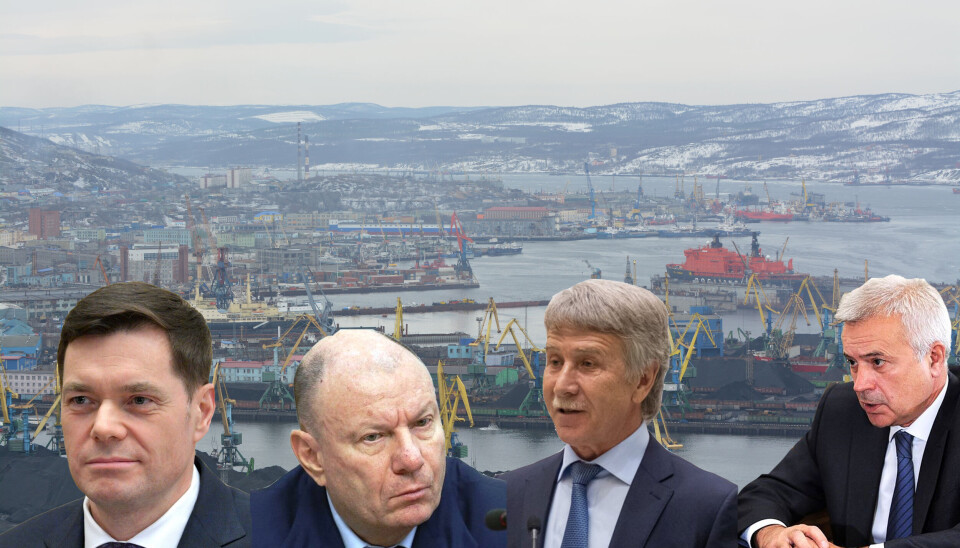
The Murmansk region and its Arctic shipping hub are important for Russia's billionaires. From the left: Alexey Mordashov, Vladimir Potanin, Leonid Mikhelson and Vagit Alekperov. Photos: Thomas Nilsen / the Kremlin / Federation Council

Thomas Nilsen
11 March 2026 - 
THE BARENTS OBSERVER

If the Forbes list published on Wednesday is any indication of how businesses are developing in Russia’s Arctic region, the outlook is not entirely bleak. The reality is, of course, more complex, but the list nevertheless highlights how vital Arctic resources remain to the country’s economy.

Steel tycoon Aleksey Mordashov and his family top the ranking for 2026, with a net worth of $37 billion — up $8.4 billion from 2025. Mordashov is co-owner of Severstal, Russia’s leading steel and iron-ore mining company. The Olenegorsk Mining and Processing Plant (Olkon) on the Kola Peninsula produces iron-ore concentrate for Severstal’s steel operations.

According to Forbes, Mordashov became the first Russian billionaire whose fortune exceeded $30 billion.

In February–March 2022, the European Union and the United Kingdom added Mordashov to their sanctions lists. In June 2022, the businessman and members of his family were also sanctioned by the United States.

Number two on the list is well known to readers of the Barents Observer: mega-polluter Vladimir Potanin.

Potanin built his wealth by operating the Norilsk Nickel mining and metallurgical combine, a company with operations in Zapolyarny and Monchegorsk on the Kola Peninsula as well as in Talnakh and Norilsk on the Taymyr Peninsula in Siberia. The factories are the biggest air polluters in the Arctic, with massive emissions of sulphur dioxide and heavy metals over the fragile taiga and tundra environment.

By the start of 2026, Vladimir Potanin had a net worth of $29.7 billion, up $5.5 billion from last year. The increase alone means his wealth grew by about $627,854 every hour throughout the year.

Potanin has been sanctioned by the United Kingdom, the United States, Canada and Australia. In 2024, the Barents Observer reported that Potanin planned to move part of his copper smelting operation from Norilsk to China in order to circumvent sanctions.


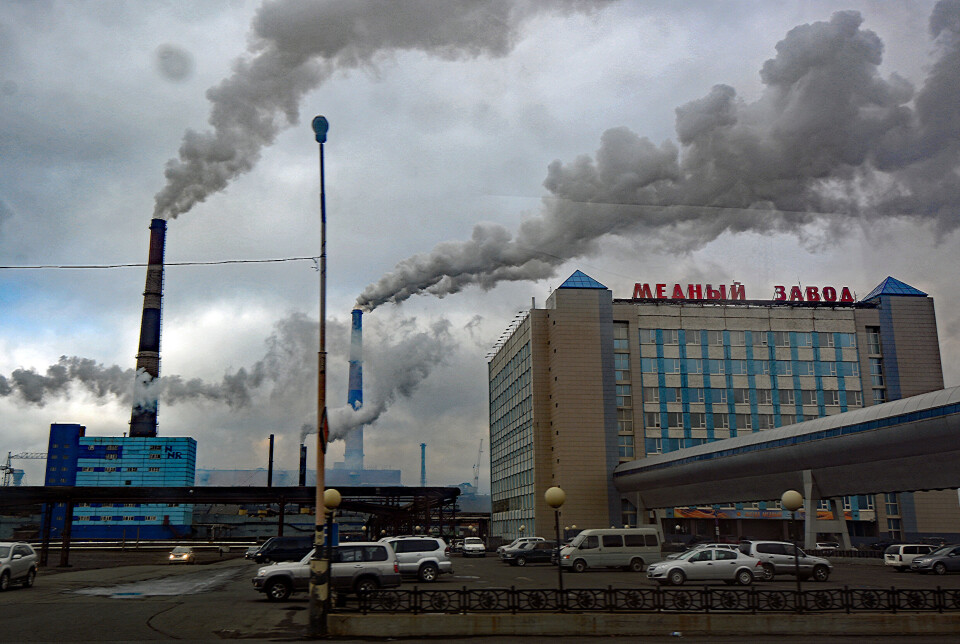
The Medny Zavod (Copper Plant) is a major metallurgical enterprise in Norilsk. Photo:Thomas Nilsen

Vagit Alekperov ranks third on the Forbes Russia list with a net worth of $29.5 billion. Alekperov founded what later became Russia’s largest private oil company, Lukoil. However, he resigned as president of Lukoil only a few days after the United Kingdom imposed sanctions on him in 2022.

In the Arctic, Lukoil operates several oil fields on the tundra in the Nenets Autonomous Okrug and the Komi Republic, including the oil refinery in Ukhta that was hit by Ukrainian drones in mid-February.

Fourth on the list are Leonid Mikhelson and his family. He owns about 25 per cent of Russia’s largest private natural gas producer, Novatek. The company operates Yamal LNG, supplying liquefied natural gas to global markets with tankers sailing both east and west along the Northern Sea Route.

Novatek has also built the Kola Yard north of Murmansk, a huge barge construction site aimed at supplying the company’s Arctic LNG projects in Gydan on the coast of the Taymyr Peninsula. However, the plant stopped production after the United States imposed sanctions on it in November 2024.

Seventy-year-old Mikhelson and his family have a net worth of $28.3 billion.

Several other people among Russia’s 155 billionaires have also earned large portions of their wealth from businesses in the Arctic.

Gennady Timchenko also holds a stake in Novatek, as well as in other oil and gas producers. Timchenko is listed as number seven with a net worth of $24.2 billion, up $1 billion from 2025.

Number eight on the Forbes Russia list is Andrey Melnichenko and his family. Melnichenko owns coal mines, infrastructure and mineral fertiliser plants in the Arctic. His company EuroChem operates the mine and processing plant in Kovdor on the Kola Peninsula.

This oligarch is considered one of the most influential businesspeople in Vladimir Putin’s circle and was sanctioned by the European Union in 2022. His company, however, continues to trade with international partners, including some in the EU.

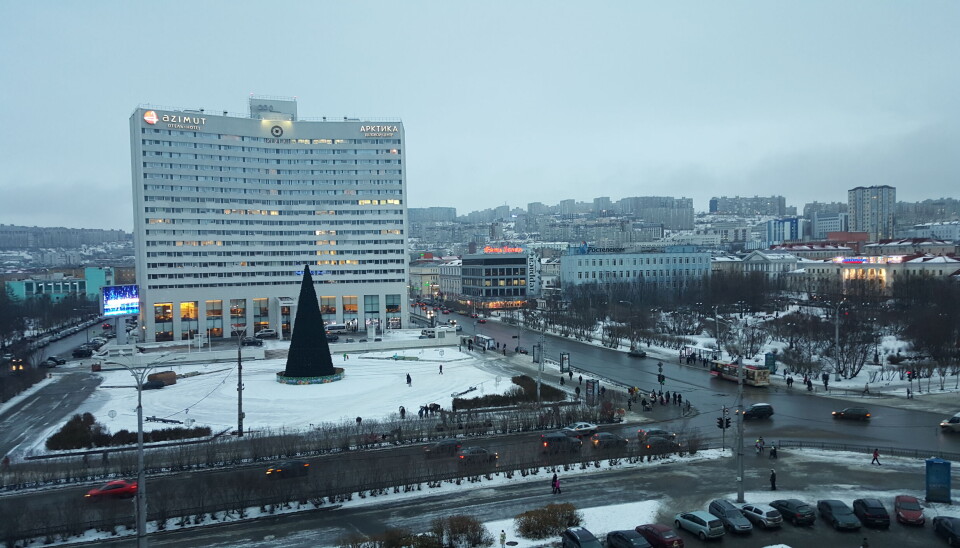
Melnichenko is also known as the owner of the world’s largest sailing yacht, the eight-deck “A”. The yacht’s masts are taller than the Hotel Azimut (Arktika), the tallest building in Murmansk. The yacht, though, is no longer in available for him since Italian police confiscated the vessel in 2022 as part of the Western crackdown on wealthy oligarchs linked to dictator Vladimir Putin’s invasion of Ukraine.


Hotel Azimut (Arktika) is the tallest building in Murmansk. The 19-floor hotel is 72 metres high, 19 metres shorter than the 91-metre-tall mid-mast on board the sailing yacht “A”. Photo: Thomas Nilsen

The combined net worth of all 155 Russian billionaires was estimated by Forbes at $695.5 billion. Only five on the list are women:

Tatyana Kim – founder of the Wildberries e-commerce platform; the richest woman in Russia with several billion dollars.

Elena Baturina – founder of Inteco, She was for a long time the richest Russian woman.

Lyudmila Kogan – shareholder in Uralsib bank.

Ekaterina Fedun – shareholder connected to the oil company Lukoil.

Tatiana Volodina – owner of cosmetics retailer networks L’Etoile and Podruka.