CU
Column: Copper braces for another round of US tariff roulette
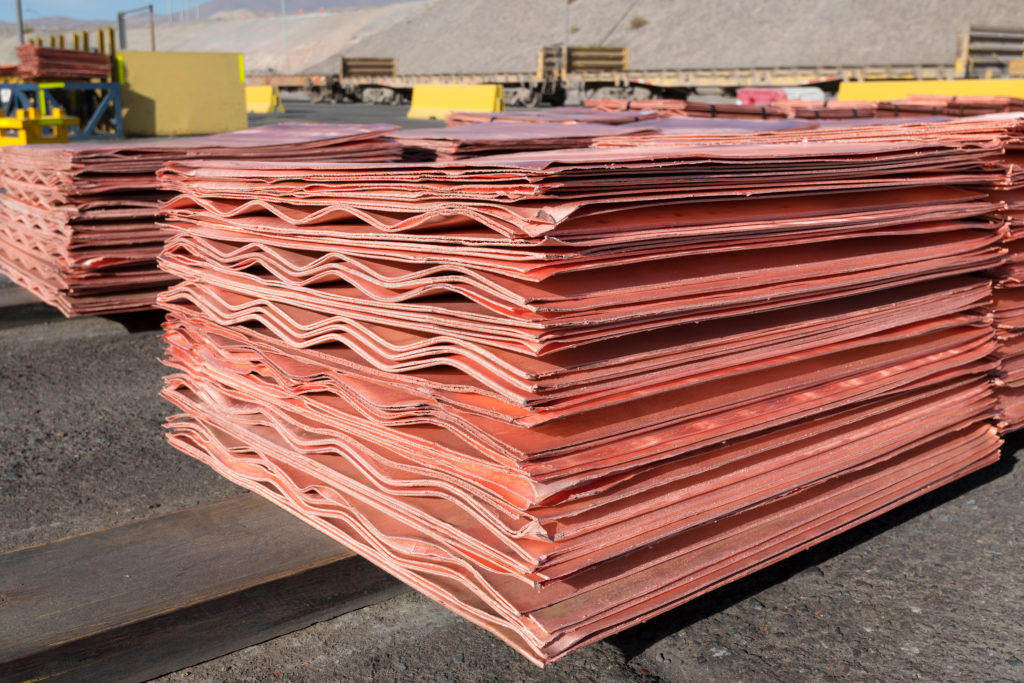
(The opinions expressed here are those of Andy Home, a columnist for Reuters.)

Here we go again.
The deadline for a US decision on whether to impose tariffs on refined copper imports is looming at the end of next month.
The market reaction is a widening in the arbitrage between the CME’s US duty-paid copper contract and the London Metal Exchange’s (LME) international price .
The rising premium for US delivery is drawing more metal into the United States, tightening up availability everywhere else.
If all this sounds familiar, it’s because the copper market was in exactly the same state of nervous anticipation this time last year.
US President Donald Trump ended up confounding expectations by imposing tariffs on copper products but not on refined metal.
Left on the table was the option of phasing in refined copper tariffs from next year. A decision is due by the end of June.

Minding the volatile gap
The CME premium over the LME price is smaller than this time last year, because back then traders were pricing in import tariffs of 50% to match those already imposed on aluminum and steel.
Trump’s July decision to exempt refined metal upended the trade. The CME premium imploded and the arbitrage eventually inverted, with LME even commanding a premium in the early months of 2026.
Now, the CME premium is back and widening once again.
The spot premium is a modest 3% of the LME price. But the March 2027 forward premium is close to $1,000 per metric ton, equivalent to 7% of the LME price.
Given the US administration has flagged the potential for phased tariffs of 15% from the start of 2027 and 30% from the start of 2028, there is clearly further upside to the CME premium.

Renewed tariff pull
Not that it matters too much for physical traders. The differential on the forward months is more than enough to cover the costs of shipping to the United States.
US imports dropped sharply in the closing months of 2025 as the tariff trade unwound.
But they’ve bounced back strongly so far in 2026. Inbound shipments more than doubled year-on-year to 533,000 tons in the first quarter, according to the World Bureau of Metal Statistics, which collects data from official customs figures.
More is on its way, judging by the renewed upward momentum in CME stocks, which now total 577,385 tons, accounting for 44% of global exchange inventory.
Even that tells only part of the story. LME copper stocks have also been migrating to the United States with 222,000 tons sitting at US ports in a combination of registered and off-warrant inventory.
Last week’s cancellation of 33,275 tons at New Orleans suggests metal is being prepared for customs clearance as the arbitrage yawns wider again.

Strategics stockpile
The US has over the last year or so built up its own strategic copper reserve thanks to the on-again, off-again threat of tariffs.
Including metal that is being stored off exchange, the stockpile is now likely over 1 million tons, not as large as that held by China’s state stockpile manager but bigger than any other country’s reserves.
Does the US need any more?
Probably not, but it’s not clear how the stock build will figure in Commerce Secretary Howard Lutnick’s thinking when he reports back to Trump at the end of June.
As with other metals tariffs, the stated aim is to reinvigorate US production capacity and in that regard the country still has only two primary copper smelters with no signs of that changing any time soon.
Thanks to last year’s import surge, the country’s import dependency rose to 57% from 45% in 2024, according to the United States Geological Survey.
On those metrics the case for tariffs looks strong given the parameters of the Section 232 national security investigation.
But as the copper market has found out to its cost, second-guessing the Trump administration is a hazardous business.
(Editing by Marguerita Choy)
Copper’s giant tariff trade is back and squeezing global market
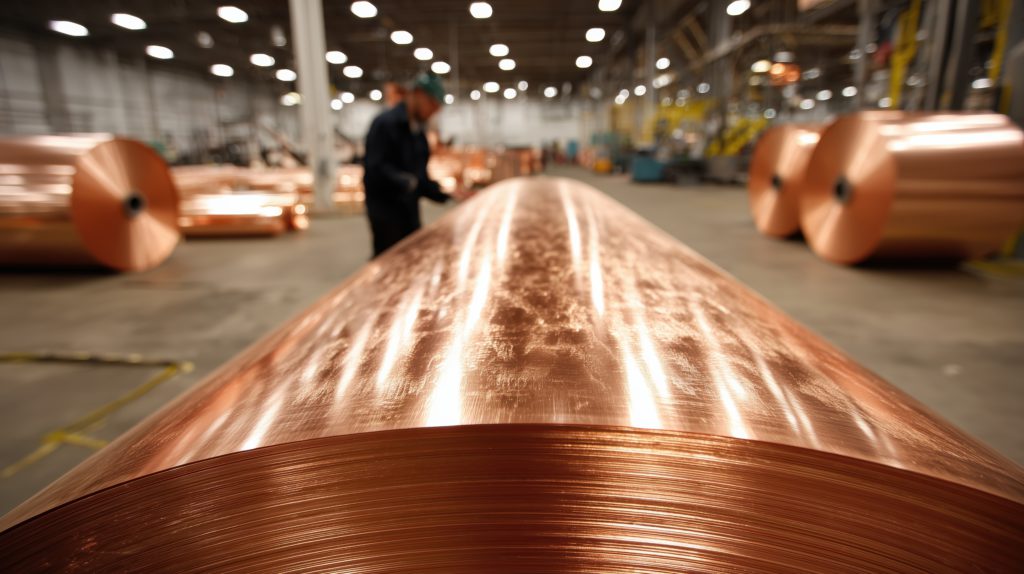
Copper traders are once again scouring the world for metal to send to the US, as renewed speculation about import tariffs revives a trade that’s upended the $300 billion-a-year market.
The on-off threat of import tariffs from President Donald Trump has dominated the copper market over the past year, often driving prices on New York’s Comex above global benchmarks and creating a massive opportunity for traders to profit by shipping metal to the US.
In recent months, US copper imports had slowed after softer Comex prices made shipments unprofitable. But a pick-up in the spread between Comex and the London Metal Exchange in the past few weeks means that traders are now shipping every spare ton to the US, according to several executives, who predicted that imports could bounce back to historically elevated rates of 150,000 to 200,000 tons a month.
“There’s a bit of déjà vu. We’re in the same situation as last year, where all tons are being directed to the US,” said Henry Van, head of industrial metals analysis at Trafigura Group. “It’s very conceivable that we go back to imports of 200,000 tons a month in the near future.”
Front-month Comex contracts have risen to more than $500 a ton above cash prices on the LME for the first time since last autumn.
The outperformance is being driven by renewed investor enthusiasm for copper as well as speculation that the Trump administration will impose import tariffs on refined metal as part of its effort to protect US industry. The commerce secretary has a June 30 deadline to deliver an update on the US copper market that could pave the way for duties starting January 2027.
Trafigura last week moved to withdraw hundreds of millions of dollars of copper from LME warehouses, which was at least in part an attempt to capture premium prices on Comex, according to people familiar with the matter. The orders to withdraw were the largest the LME has seen since 2013.

The renewed rush to ship to the US is adding to a bullish cocktail of factors that traders say could drive prices to fresh highs, after copper climbed to a record above $14,500 a ton in late-January.
While the copper tariff trade is reviving, getting metal into the US is becoming harder. Shipping South American copper to major US ports is taking much longer than usual as disruptions tied to the Iran war ripple through global freight markets and intensify congestion at the Panama Canal.
The mere threat of future duties is enough to sustain inflows, said Gerardo Tarricone, managing director of London-based Arion Investment Management Ltd. “We are going to see momentum heading into the US, which is going to make the copper story even more interesting.”
Copper is already trading at historically elevated levels. It reached as high as $13,746 a ton in London on Wednesday, up about 43% in the past year. Enthusiasm about artificial intelligence has helped lift investor positioning on Comex to the most bullish since December 2020. And buyers in China, which had stepped back from the market when prices rallied earlier this year, have returned since the Chinese New Year holiday.
Should Trump decide to impose tariffs on refined copper, the impact could be to squeeze supplies on the LME, traders said. That would be reinforced if the US follows through on the Commerce Department’s recommendation last year that a tariff of 15% should be imposed from January 2027. That could potentially open a window in the second half of the year when there would be a huge incentive for traders to ship copper to the US.
The copper market outside of the US is in deficit, with inventories already starting to be drawn down in China, said Nicholas Snowdon, chief metals economist at Mercuria Energy Group.
“The focal point of that deficit should move to the LME. It’s a matter of time,” he said. “If you get a decision for tariffs from the start of next year, the drawdown of LME stocks would be very strong in the third and fourth quarter.”
(By James Attwood, Yvonne Yue Li, Jack Ryan, Annie Lee and Jack Farchy)
Codelco’s profit surges as strong copper prices offset output drop
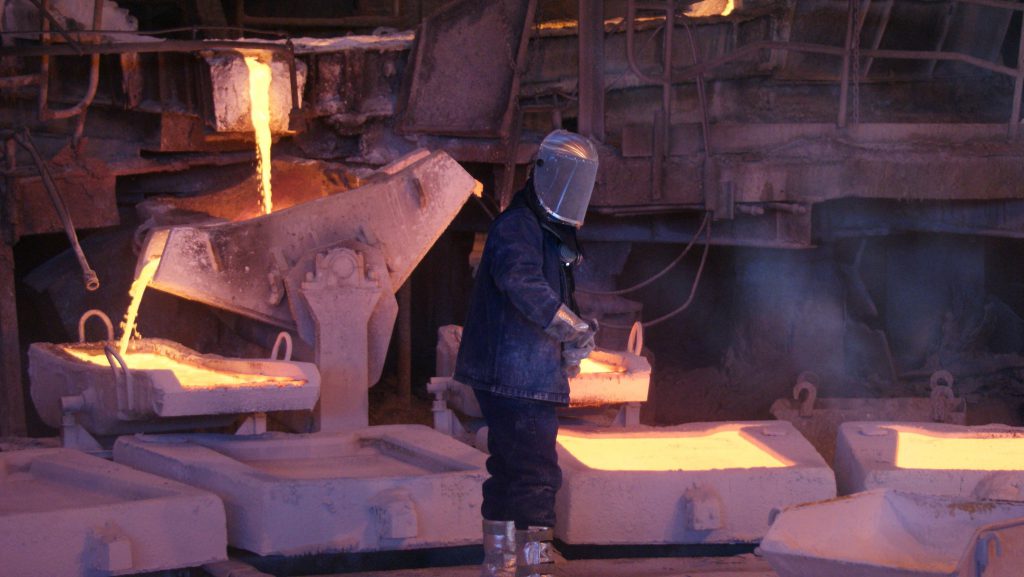
Strong global copper prices helped Chile’s Codelco nearly quadruple its pre-tax profit in the first quarter of 2026, even as output declined at most of the state-run mining company’s operations.
Codelco, one of the world’s largest copper producers, on Friday reported a pre-tax profit of $825 million compared with $213 million in the same quarter last year. The company’s own copper production totaled 272,000 metric tons in the January-March period, down 8% from the year-earlier period.
The company benefited from higher global prices for copper and by-products like molybdenum, CEO Ruben Alvarado said.
Output, however, was weak at its major El Teniente and Chuquicamata mines, as well as at the smaller Ministro Hales, Gabriela Mistral and Andina operations.
Operations at El Teniente, where output fell 26%, remain limited after a collapse last year that killed six workers. Chuquicamata, where production was down 18% in the most recent quarter, experienced lower ore availability.
“These results reflect an operationally demanding quarter, in which the company had to face production constraints, lower ore grades and higher costs,” Alvarado said in a statement.
Production, however, increased at Codelco’s Radomiro Tomic mine due to better grades in oxidized ores and higher sulphide shipments. Output also grew in the company’s Salvador division due to the ramp-up of the Rajo Inca project.
Codelco did not announce any adjustments to its 2026 output forecast, which stands at 1.33 million to 1.36 million tons.
Fallout from 2025 production irregularities
Codelco also continues to deal with the fallout from production irregularities last year that were discovered by an internal audit. The matter led to the dismissal of one executive, other internal disciplinary actions, and a review by Chilean prosecutors.
Reuters reported in March that industry insiders raised concerns about discrepancies in the production figures Codelco reported at the end of last year and whether inventories had been used to help support performance targets.
The controversy has raised political pressure on Codelco as Chile’s new government reshapes the company’s leadership.
Earlier this month, President Jose Antonio Kast appointed Bernardo Fontaine, an economist and business executive, to replace Maximo Pacheco as head of Codelco, while ordering a broader investigation and external audit of the recent production problems.
Codelco is trying to rebound from its poor performance in 2022 and 2023, when copper production fell to two-decade lows. It hopes to produce 1.7 million metric tons per year by 2030.
(By Fabian Cambrero, Iñigo Alexander, Daina Beth Solomon and Kylie Madry; Editing by Natalia Siniawski and Paul Simao)
Fresh leadership at Codelco orders audit of 2024-2025 production figures
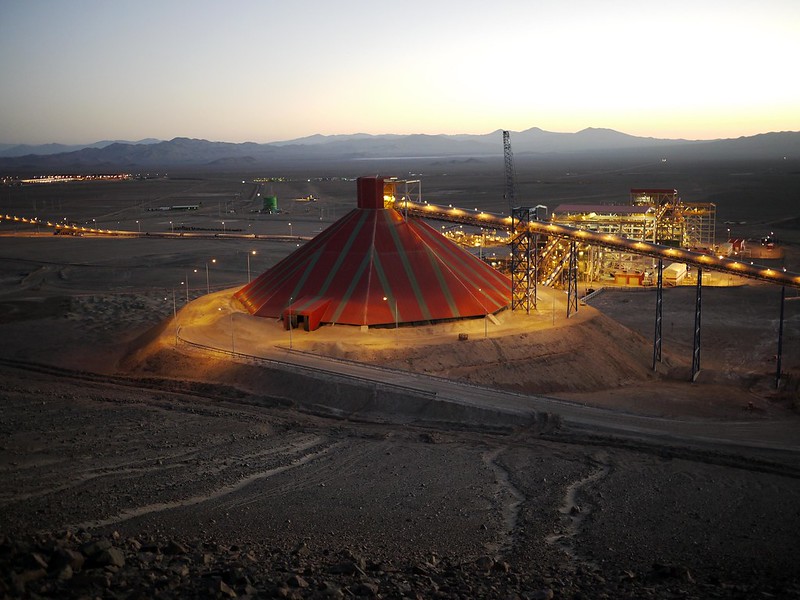
Chilean state copper miner Codelco will order an external audit of production figures for 2024 and 2025, the firm said on Thursday, as its new chairman opened his first board meeting by pledging to restore trust and maximize returns without increasing debt.
The move marks an early attempt by chairman Bernardo Fontaine to tighten oversight at one of the world’s largest copper producers as it faces mounting scrutiny over production reporting and spending.
An internal audit, first reported by local media, found irregularities in production recorded in 2025. The matter led to the dismissal of one executive and internal disciplinary actions, and is also being reviewed by Chilean prosecutors.
Reuters reported in March that industry insiders had raised concerns about discrepancies in Codelco’s production figures and whether inventories had been used to help support performance targets.
Codelco’s audit, compensation and ethics committee will order an external audit of the 2024 and 2025 numbers, as well as costs tied to the renovation of the company’s headquarters, the firm said in a statement on Thursday.
Fontaine said he aimed to help Codelco “recover trust” and said the company’s priorities would be safety, maximizing contributions to the state without adding more debt and restoring order with transparency.
The firm has long relied on debt to fund much of its investment program, as the state miner turns over substantial profits to the treasury and has limited ability to retain earnings.
Codelco also created a safety committee to oversee issues related to the deadly collapse at its El Teniente mine last year.
The miner is set to report first-quarter results on Friday.
(By Kylie Madry; Editing by Jacqueline Wong and Jamie Freed)
Trafigura awarded $92 million in arbitration with Zambia’s ZCCM
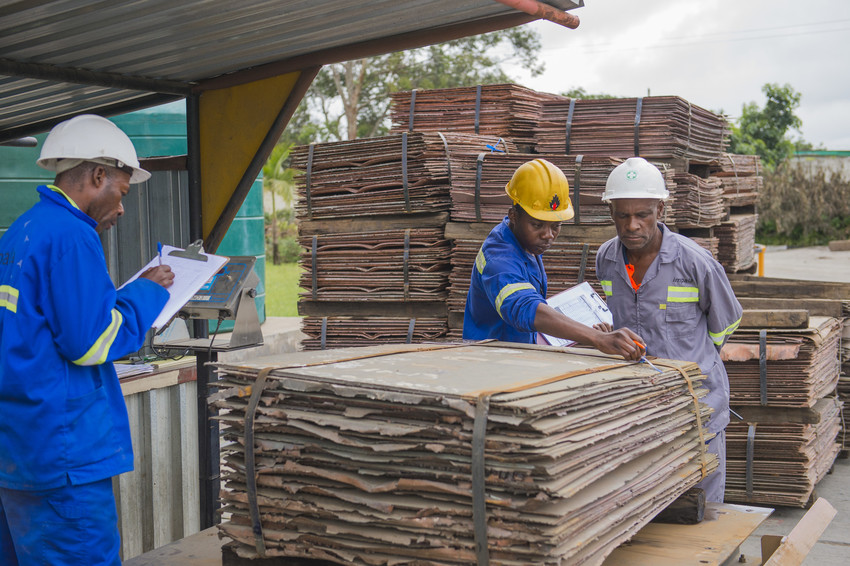
A London arbitration tribunal ordered Zambia’s majority state-owned investment company, ZCCM Investments Holdings Plc, to pay Trafigura about $92 million in a long-running dispute over a prepayment agreement between the commodity trader and Konkola Copper Mines.
The award comprises $69.3 million in principal and $19.7 million in interest, plus arbitration costs and Trafigura’s legal fees, ZCCM said in a statement published on the Lusaka Securities Exchange.
ZCCM is evaluating its legal options regarding the final award, it said.
Trafigura initiated the case two years ago over a prepayment agreement with Konkola Copper Mines, which was operated at the time by ZCCM-IH.
(By Matthew Hill)
Copper startup in IPO talks ahead of Peru mining expansion
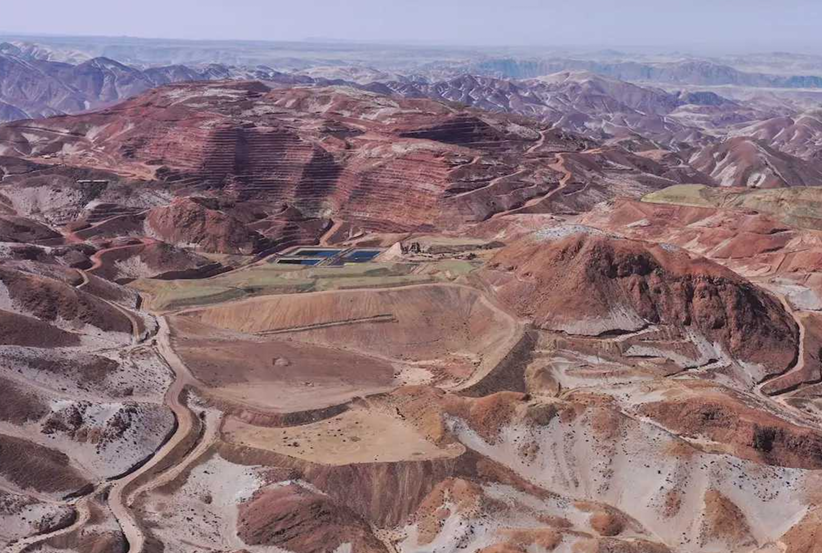
Copper startup Quilla Resources Inc. is in discussions with prospective advisers about listing shares in Toronto as it weighs expansion plans in Peru.
The company led by veteran Peruvian mining executive Victor Gobitz is considering an initial public offering next year after restarting the idled Chapi mine in southern Peru, Gobitz said.
“In Toronto there is an ecosystem specialized in mining,” he said, referring to the preference for a Canadian listing. “If Quilla continues growing, hopefully we will graduate to New York in a few years.”
Gobitz, the former boss of a mine owned by BHP Group and Glencore Plc, is pitching investors on a project that builds on an existing operation rather than a greenfield development. That means it can be expanded faster and at lower cost as miners struggle to bring on new supply for the energy transition and data centers. His team is also watching for other opportunities that may arise in Peru.
For now, the focus remains on restarting Chapi and advancing exploration across the broader land package near a major Freeport-McMoRan Inc. mine to determine whether a much larger deposit lies beneath the current operation. Quilla is arranging a new capital raise ahead of its anticipated IPO.
Chapi began ramping up in February and is expected to reach full capacity in the fourth quarter. Eventually, Gobitz wants to raise annual output to 30,000 metric tons, a plan that would require an investment of $200 million to $300 million. Tapping the deposit’s full potential could mean a new owner with deeper pockets, he said.
(By James Attwood and Carla Samon Ros)

No comments:
Post a Comment