Navigating Eco-Anxiety and the Climate Crisis
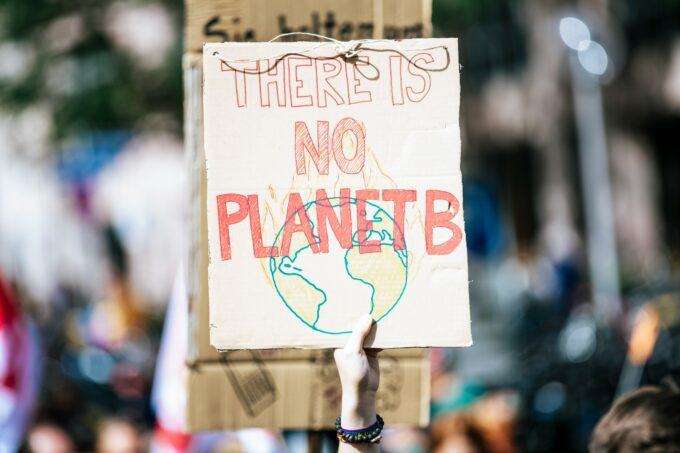
Image by Markus Spiske.
The following is an excerpt from Tori Tsui’s fantastic and insightful book, It’s Not Just You: How to Navigate Eco-Anxiety and the Climate Crisis, which will be released by The New Press in the United States this month. Check out our interview with Tori on CounterPunch Radio. – Joshua Frank
+++
It’s Not Just You is a simple yet powerful statement that underpins how I have come to explore some of the intricacies between mental health and climate change. It is a statement that traverses many themes, as neither climate change nor mental health exist in siloes, nor are they limited in scope. A fundamental motif of this book is ‘eco-anxiety’, more loosely defined as a chronic fear of environmental doom and a popularised catch-all term for those whose mental health is being impacted by climate change. But it would be remiss of me to say this book is strictly about my relationship with eco-anxiety, or the eco-anxious experience as a whole. Nor is it a prescriptive step-by-step guide on how to deal with feelings of eco-anxiety, so if that is what you’re after, it’s best to look elsewhere (better yet, skip to the recommended reading!). Rather, the titular use of how to is a trojan horse of sorts, inviting us to navigate mental health and climate change through experiences like eco-anxiety by asking big-picture questions and expanding beyond popularised viewpoints. It is a space to explore what we as people fighting for climate justice need in order for our communities and environments to survive, but more importantly, to thrive.
In the modern world many people have been left dangling in a state of disconnect, from themselves, their purpose, their surroundings and their community. In this we may succumb to feeling entirely alone, mentally, physically and spiritually, especially in a time such as now, characterised by political instability, a global pandemic and a worsening climate crisis. Despite this profound isolation, the reality is that our experiences are being mimicked across the fabric of society with an endowed belief that this alienated existence is inevitable. This can be hard to challenge, but simple reminders can spur on the need to seek connectivity. At its most fundamental level, the first tenet of It’s Not Just You is a reassurance that You are not alone.
Whether or not your existential hardship identifies as ecoanxiety, that reassurance reminds us that our reactions are part of being human and that communal solidarity is a primal need in times of struggle. But solidarity is built upon the understanding that a global community is made up of many people, all complex and unique in their livelihoods. And solidarity, in the context of climate change, requires that we recognise that this issue encapsulates many injustices with striations of harm that see certain communities being hardest hit. I am of the opinion that we cannot understand the sheer scale and complexity of climate change without understanding how inseparable it is from other justice issues. The intentional disadvantaging of certain communities impacts how they experience climate change, but also, it is these ‘systems of oppression’ which have created a crisis of the climate in the first place. If it weren’t for the fact that the word ‘climate’ has become the face of this multifaceted issue, I’d choose to call it the ‘result-of-ALL-systems-of-oppression’ crisis, but ‘climate’ crisis has a better ring to it. Perhaps the term climate crisis may be a Eurocentric deflection from understanding the interweaving of these different justice issues, even if the facts and figures of carbon parts per million are incredibly alarming and need to be rapidly addressed. While addressing emissions is of utmost importance, so is making sure that we’re not further subjugating other people and environments in the process, as it is exploitation and long-term injustice which have led us to where we are now.
This is precisely why climate justice is a fundamental aspect of this book, especially when interrogating the realms of the eco-anxious discourse. To me, being a climate justice activist requires an understanding of the inseparable interconnectedness of systems, and the necessity for inclusive, restorative and long-lasting change. It also demands introspection and flexibility without compromising one’s core values. It’s a nuanced practice that campaigns for the liberation of all marginalised communities and environments while questioning the structures of harm and knowledge systems that have created a crisis of the climate.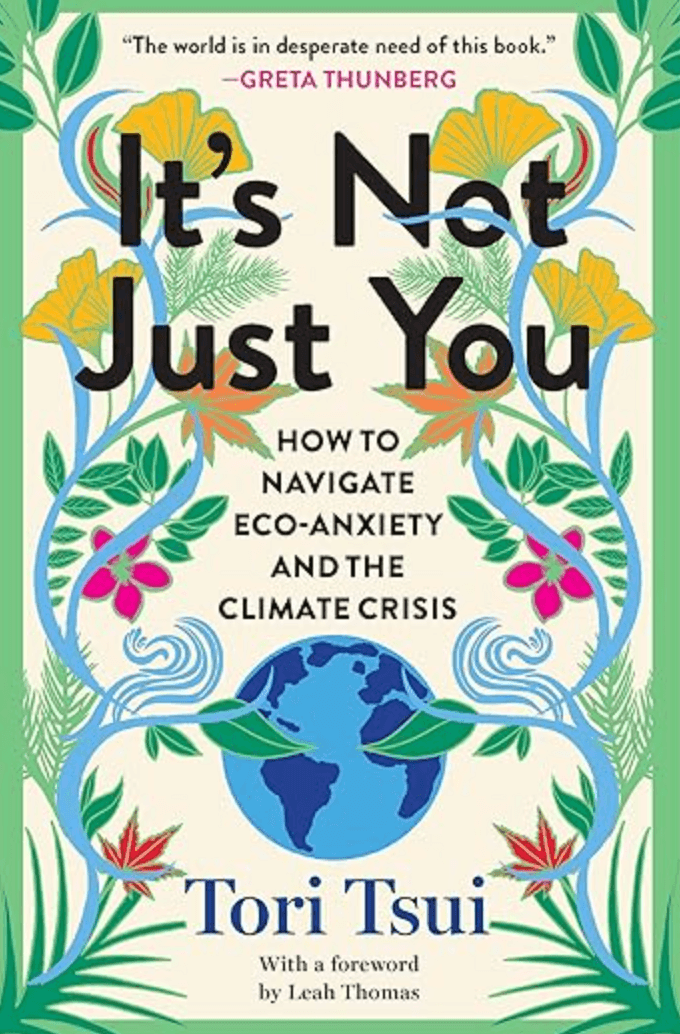
As a testament to the intricacies of climate justice, this book draws on the perspectives of campaigners across the globe as well as my own. As an individual, I recognise that my experiences as an activist cannot be extrapolated universally to represent a complete understanding of how climate change and other interacting oppressive forces harm people and their mental health. Nor the diversity in mental health definitions, conditions and experiences that we may be born with, or endure, that ultimately play into how we experience the world in a time of climate change. But it is my lived reality which allows me to bridge the gap between theory and praxis and to unpack the importance of shared struggle, all while acknowledging that we, as unique individuals with complex livelihoods, exist as part of a larger network. The first chapter therefore explores my personal relationship with mental health and climate change, as a foundation for appreciating the ways in which these experiences transcend the individual in question.
As a ‘public-facing’ figure, I often draw from the wonder of fungi as an apt analogy for the intricacies of activist movements. Many think of fungi only as the fruiting body – the visual fleshy mass above the ground or substrate. But fungi are actually much more complex, made up of a network of filaments called mycelium, breaking down detritus, interlinking, transmitting signals and communicating information further than the eye can see. The fruiting body, or mushroom, is merely the visible part, erupting spontaneously in the right conditions, while below the surface millions of thread-like hyphae interact with one another. Like fungi, activist movements ebb and flow in their capacities and growth, with each individual occupying a unique role as part of the collective. In my context, I do not want to be an individualised mushroom without recognising that I am part of something bigger, working towards a common goal. And in this the whole is greater than the sum of its parts.
In this instance, the second tenet of It’s Not Just You reminds us that individual perspectives alone do not speak for everyone. And that as a network of change-makers, we have a duty to recognise the multifarious ways of being beneath the surface. Rather it is a call to arms for intersectionality – the understanding that there are interconnected, cumulative social and political identities which inform how communities experience discrimination. It encourages us to be allies through active listening and ongoing commitments to (un)learning. Intersectionality is an essential component to climate justice, the relationship between mental health and climate change, and thus navigating experiences like eco-anxiety.
The eco-anxious dialogue warrants an intersectional approach. Every environmental space I encounter never fails to mention eco-anxiety to some degree. And more and more decision-making spaces and media outlets are including eco-anxiety in their discussions, even gracing the front cover of a recent edition of Men’s Health magazine or as a talking point in a major Vogue campaign. Eco-anxiety as a concept and lived reality is undeniably going mainstream, which is no doubt reaffirming for those who have been experiencing these feelings for a while. At the same time, as I will discuss, this also reveals that there is still much to understand and more work to be done in the public conscience.
It’s Not Just You calls into question the popularisation of mainstream understandings of mental health and climate change as eco-anxiety. In this regard, it is a commentary on the manifestation of dominant environmental narratives more broadly. Eco-anxiety is too often seen as a response to our faltering physical environments as opposed to the social injustices that shape the world. It is an invitation to understand that, much like eco-anxiety, climate change has far deeper roots than what meets the eye. It’s Not Just You hones in on the specificity of western understandings of eco-anxiety to make broader statements about the social and political standing of our world and asks whether it even encapsulates the entirety of living in a time of climate breakdown.
Far too often my experiences of despair about what is happening to our planet have been relegated as eco-anxiety. I don’t deny people the usage of such labels, nor do I deny its terrifying existence, but it’s not as simple as ‘being anxious about climate change’. As such, I often tiptoe around the term for fear of homogenising that which I believe to be much more complex. For example, too many conversations around eco-anxiety fixate on broad speculations for the future as opposed to that which has been lost, ultimately reflecting a geopolitical disparity in who it represents. Most of the time, conversations around eco-anxiety do not focus on those within the movements, nor frontline defenders, who have been experiencing emotional hardship for generations. So often is eco-anxiety a commentary on the individual as opposed to the system we live in. Too many times have I witnessed conversations around remedying eco-anxiety being steered towards individualised pursuits as though to slap a metaphorical Band-Aid on the wound without understanding that there is something much graver below the surface.
If we really want to work towards addressing eco-anxiety through the lens of climate justice, we have to start acting in a way that is intersectional. This is a direct ask to be cognisant of the discriminatory structures that impose division and subjugation of marginalised bodies and minds, and begin to unpack them through understanding that they are fictitious by design. That’s not to say that differences don’t exist among us, but that our differences are not reasons to ascribe anecdotes of worth and power. And in order to deconstruct these systems of oppression, we must act radically. To be radical means to address the issue at the core as derived from the Latin radic – meaning root. I believe that an approach that spans timescales, emotions, environments and justice issues will allow us to tackle things at the root and better understand the emergence of eco-anxiety as an intersectional climate justice issue. Otherwise we run the risk of creating a world in which key voices are excluded.
Unfortunately, too many spaces of change have limited themselves to a narrow scope of understanding, often excluding, casting aside and erasing society’s most marginalised. These are often characterised by the compartmentalisation of class, race, gender, sexuality, disability and more as tools for oppression. What comes to mind immediately are the archaic yet prevailing brands of girl boss and white feminism that dominate the mainstream. Reni Eddo Lodge summarises this succinctly: ‘I fear that, although white feminism is palatable to those in power, when it has won, things will look very much the same. Injustice will thrive, but there will be more women in charge of it.’ Much like the aforementioned, there have been many so-called fights for equality that are shrouded in a self-serving guise that ‘liberates’ the already fortunate few. As though gaining a seat at the table that was created to banish others is the ultimate goal. And so, these fights often replicate the conditions that were designed to oppress people in the first place. Counterintuitively, many forget that it is the liberation and wellbeing of the most vulnerable, marginalised communities that benefits us all. Iterations of ‘no one is free until we are all free’ have been espoused by many thinkers over the years from Emma Lazarus to Martin Luther King to Maya Angelou, and still hold true to this day.
Could it be that, without an intersectional lens rooted in climate justice, eco-anxiety could be replicating harmful patterns? Eco-anxiety and western environmentalism more broadly could be championing liberatory politics that are rooted in selectivity; certainly this is reflected in the mainstream, where some voices are prioritised over those on the frontlines. It’s Not Just You serves as a tender reminder that there are countless others who experience mental health injustice, often at the hands of ill-adapted systems and structures designed to harm them. And that it is imperative we understand just how much these oppressive forces influence how people have come to experience a plethora of mental health struggles which interact and conspire with climate change.
Yet, despite the compounding effects of systemic oppression, no individual is immune to mental struggle in the system that we live in, even those who fall into the elemental categorisation of being privileged. It makes me think of the ever-brilliant What White People Can Do Next, where Emma Dabiri remarks that one can still feel ‘. . . overworked, underpaid, exhausted and quite possibly spiritually bereft’ despite the denotations of a privileged identity. This very remark prompts a deeper exploration of how we live in systems that lull us into a rat race of disillusionment and categorise us in ways that forego the complexities of the human experience. It makes me think of how a sense of climate community and care saved me from my darkest days, even when I was on the dole. But yet, during the period where I was clothed, housed, fed and financially stable, I was incredibly isolated and mentally unwell. There is so much to be unpacked here, and it is worth creating space for the subtleties involved.
But do not let defying privileges dissuade you from speaking about mental health as that which is highly interlinked with the same systems that have given rise to climate change. Individual experiences alone do not necessarily underpin the systemic inequalities that occur within the realms of mental health, and they may continue to uphold power structures which harm marginalised people. How we have experienced this world can allow for the compassion needed to build bridges with one another and strive towards a more just future for all. In this context, we are united under the same struggle by recognising that these systems are making us all sick to varying degrees. Thus warranting a broader analysis beyond eco anxiety, and instead inviting us to look at mental health as a whole.
If we can understand this, we can begin to understand the third tenet of It’s Not Just You – that You alone are not the only responsible actor in whatever crises, struggles and hardships it is you and your community may face. It is an interrogation of the dominant knowledge and socio-economic systems at play. It spells out clearly that the same systems that have created a crisis of the climate, and thus eco-anxiety, are those which have led to profound suffering in people’s wellbeing.
It’s Not Just You reminds us that the frequency with which ill mental health occurs these days cannot be attributed to the individual alone. Instead, we need to ask how mental health has been influenced by the current state of this world, the injustices that underpin it and the worldviews it perpetuates. It has become apparent to me that the world wasn’t designed (emphasis on intentionality here) to favour all people and environments equally. Especially not those who have been deemed enemies of the state by virtue of trying to dismantle them, nor people who have long been dehumanised by particular doctrines. I find this to be particularly true for those who work in the advocacy realm. I have seen too many activists left feeling weary and devoid of vitality on the daily from relentless campaigning, many of whom have little choice in the matter. All the while the undercurrent of an intensifying climate crisis amidst a backdrop of neoliberal capitalism is magnifying the effects of people’s predispositions to mental struggle.
There undeniably already exists a disparity in the way certain communities experience mental health and whether they can access resources that improve one’s wellbeing. With passing time and grave inaction, the divide only becomes larger and larger. I believe it is imperative to address these inequalities, as the already deepened chasm of disparity is widening. Perhaps by understanding that It’s Not Just You, we can begin to critique the limitations of individualism, upheld by neoliberal capitalist ideologies, which has led many to feel entirely alone and responsible for their own struggle. And so, the fourth tenet encourages us to seek solutions to these problems by opting for collective remedies, for both the benefit of people and the planet, as an antithesis to the systems that have long harmed us. Much like the teachings of radical mycology, it invites us to recognise that there is power in the collective, and that a healthy ecosystem is one that relies on collaboration.
But in a time when we have been led to believe that we cannot care for one another, It’s Not Just You encourages us not to operate with an attitude of scarcity, and instead implores us to adopt the belief that we can care for ourselves and for others. It is a testament to abundance and community care from the teachings of frontline communities who challenge the western, heteronormative and patriarchal values of kinship and hierarchical thinking. These are broad and community-centred responses to the issues pertaining to mental health and climate change, informed by the resilience of those who have long had to advocate for radical change.
These four tenets of It’s Not Just You are how I have chosen to navigate eco-anxiety, and mental health more broadly, in a time of climate change. Each covers an array of topics that build atop one another with each chapter, allowing for the reader to understand why we must go beyond the paradigms of popularised environmentalism. And through understanding these tenets, I hope you feel equipped to navigate and act on complex topics with reassurance, ease and urgency.
And so, to reiterate the first tenet – I want you to understand and feel reassured that It’s Not Just You who is struggling, and that you are not alone in feeling averse to the world around you. At the same time, the second tenet reminds us that our perspectives don’t speak for everyone, thereby inviting us to employ an intersectional understanding on mental health and climate change. The latter then sets the scene for us to understand the direct role of knowledge and socioeconomic systems in poor mental health, specifically critiquing how neoliberal capitalism and climate change interact. Finally, the fourth tenet of It’s Not Just You motivates us to dismantle individualism (especially within our movements), seek community structures of care and harness radical imaginative practices to create a better world.
I hope this book becomes a companion and a literary soundboard of sorts, to take what you need (and what you don’t) in order to unpack the aforementioned. It’s Not Just You attests to being part of a global community, enduring a multitude of struggles, underpinned by structures and systems of harm. But knowing is not the same as acting, and so I hope this book implores you to take to the ground, cultivating mycelial networks of change with fellow advocates, change-makers and organisers such that we may create a more (environ)mentally resilient future for all.
China’s Coal, U.S. CO2 Stoke Global Warming
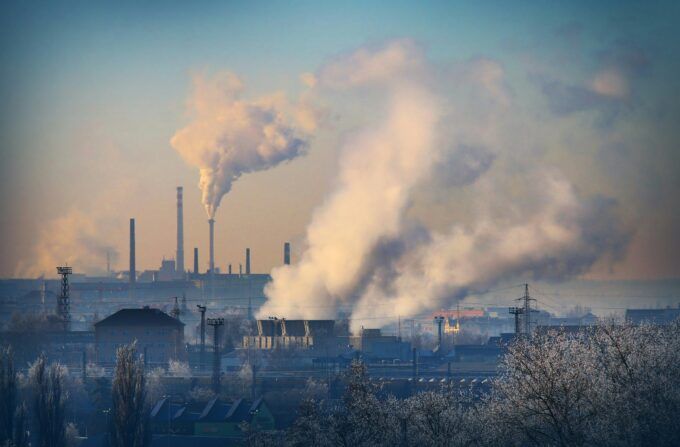
Image by Getty and Unsplash+.
Global carbon dioxide (CO2) emissions from fossil fuels and industry totaled 38.11 billion metric tons (GtCO₂) in 2025, hitting a record high, versus 25.51 GtCO2 in 2000. Moreover, the rate of global warming more than doubled for the first time in human history, in only one decade. Scientists are stunned: The Rate of Global Warming has Accelerated More in the Past Decade Than Ever Before, LiveScience, d/d March 7, 2026. According to NASA, 97% of publishing scientists in the world agree that excessive CO2 emissions cause excessive global warming as well as aberrant climate change.

Following a surge in permitting and construction, more than 50 large coal-fired power plants were commissioned in China last year. Source: CREA / Global Energy Monitor. Yale Environment 360 /
China loves coal, but it still should be awarded a gold medal for renewable installations in 2025. No other country came close to installation of 300 gigawatts of solar and 100 gigawatts of wind power in 2025. These installations set a record. Paradoxically, China also wins a tarnished medal for biggest emitter of greenhouse gases at roughly 32% of the world total. If this seems contradictory, yes, it is. But it takes a lot of energy for 1.4B people. After all, the scorecard shows China consumed 40% more coal in 2025 than the rest of the world combined.
China also installed more solar and wind power in 2025 than the rest of the world combined. It is the first country to exceed 1,000 GW of solar capacity. China’s investments in clean energy exceed the combined efforts of the U.S., EU, and UK. Another 300 GW of wind and solar is currently under construction. China’s total clean energy investment in 2025 was $630B.
Still, “Xi Jinping’s promise to reduce China’s carbon intensity by 65 per cent below 2005 levels by 2030 is severely off track. Planners could have compensated with renewed ambition in the 15th Five-Year Plan. Instead, they changed the way they calculate energy intensity, perhaps to disguise the failure to meet Xi’s target, and set a looser ambition for the next five years.” (Isabel Hilton, As It Boosts Renewables, China Still Can’t Break Its Coal Addiction, YaleEnvironment360, March 26, 2026)
US Emissions Turn Up
Meantime, United States greenhouse gas emissions increased for the first time in 24 months: The Rhodium Group’s preliminary 2025 U.S. greenhouse gas emissions analysis reports that after two years of declining emissions, the U.S. produced 2.4% more planet-warming CO2 pollution last year. More concerning was emissions growing faster than the economy, which expanded just 1.9%, reversing three years of successfully decoupling economic growth from carbon output.
Earth’s Tipsy Climate Losing Balance – Worst in History
Climate balance/imbalance is the key gauge of a healthy system. According to the World Meteorological Organization (WMO): “The Earth’s climate is more out of balance than at any time in observed history, as greenhouse gas concentrations drive continued warming of the atmosphere and ocean and melting of ice, These rapid and large-scale changes have occurred within a few decades but will have harmful repercussions for hundreds – and potentially thousands of years.” (Earth’s Climate Swings Increasingly Out of Balance, World Meteorological Organization, March 23, 2026)
Within the past 12 months, Dr. James Hansen (Earth Institute, Columbia) publicly stated: The pace of global heating has been significantly underestimated and the international “2C target is dead.” Buckle up.
US Loses $61 Billion In Clean Energy Projects in Only One Year
“A new report indicates that Trump administration policies led to billions of dollars in canceled investment and tens of thousands of lost jobs… industries also lost an estimated 48,000 potential jobs.” (Grist)
A more comprehensive report, according to Climate Power, nearly 173,000 clean energy jobs have been lost, put on the chopping block, or delayed since Trump took office. The job losses stem from 354 canceled or delayed projects, representing more than $61 billion in investments, which would have powered more than 14 million homes. Clean energy as a priority is gone for this administration, over cliff’s edge, in a tailspin.
Clearly, the United States is intentionally harming the world climate system by pushing fossil fuel use over renewable energy, but that’s only the most obvious of intentional abuses. The US has become public enemy number one of climate change with worldwide impact. For example, “The White House also terminated funding for the US Global Change Research Program, the federal body responsible for producing the nation’s most comprehensive climate reports on the impacts of rising global temperatures. It also shut down climate.gov, NOAA’s primary public-facing website for climate science, and axed NOAA’s Billion Dollar Weather and Climate Disaster dataset, which has provided vital information for first responders, the insurance industry, and researchers to plan recovery efforts and assess weather-related risks… The cuts extended to international climate efforts as well. In February, the administration pulled the US out of global discussions regarding an upcoming global climate change assessment carried out by the Intergovernmental Panel on Climate Change (IPCC). President Trump also ordered federal scientists at NOAA and the US Global Change Research Program to cease all work related to IPCC climate assessments, effectively ending US involvement in one of the world’s most critical climate evaluation efforts.” (for a comprehensive list of cuts: Earth.org)
The United States is knee-deep in a massive strategy of global disengagement, ‘isolationism’ pure and simple, America First, regardless of decades of building global interrelationships that have molded the world order. That world order is gone, in crash mode. Along the way, climate change mitigation is low-hanging fruit, easily ignored because of a soft constituency, making it doubly vulnerable with very little ‘pocket money’ payback and crushed by fossil fuel moneyed interests.
At the heart of the problem climate change is an extremely complex global issue that requires worldwide cooperation, the antithesis of isolationism.
Nobody wants to accept it, but a worst-case climate scenario may be taking center stage, flooded coastal cities and bone-dry farmlands as two potential scenarios for failure to acknowledge and mitigate climate change. There is nothing positive about the current direction of seemingly endless fossil fuel energy production. According to scientists, the atmosphere is very close to ‘full-up’ of CO2 emissions based upon guesstimates of limits to keep global temperatures under the dreaded 2C. Then, the whole climate system spins out of control in chaotic fashion.
Isolationism by the world’s leading economy in a complex world with a flagging climate system leads to big trouble for life-supporting ecosystems. But nobody wants to deal with it seriously enough, soon enough to make a big difference; only a couple of countries, out of 195 signatories, are tracking Paris 2015 commitments to cut CO2 emissions by 2030. This is disgustingly outrageous as these same 195 countries were in full agreement that the ‘shit would hit the fan’ unless they cut fossil fuel emissions by 2030 to hold global mean temperature to 1.5°C pre-industrial, which they’ve subsequently moved up to 2°C as 1.5°C looks to ‘be in the bag.’ Clearly, the climate system is outpacing any and all commitments to tame it, but it goes without saying, it’s acting a lot like a wild stallion.
Alas, it is only too obvious that climate change is not a high priority, even as it turns chaotic and destructive enough to crush homeowners’ insurance in some regions of America. Only a few years ago, nobody suggested climate change would end up crushing the property insurance market: How Climate Risks Are Putting Home Insurance Out of Reach, YaleEnviroment360, d/d Sept. 15. 2025.
“After years underestimating the risks posed by climate-fueled disasters, the U.S. home insurance industry is in turmoil. In vulnerable areas, rising insurance costs are upending housing markets and communities, as homeowners scramble to try to find insurance they can afford,” Ibid.
OMG- What happens to property insurance at 2C?

.jpg)