Sunday, April 19, 2026

Iran Says It Won’t Negotiate With ‘Erratic’ Trump After Genocidal Threat to ‘Blow Up’ Whole Country

“Our assessment is that Trump effectively lacks both a coherent plan and the capacity to secure even a temporary agreement,” an Iranian official said.
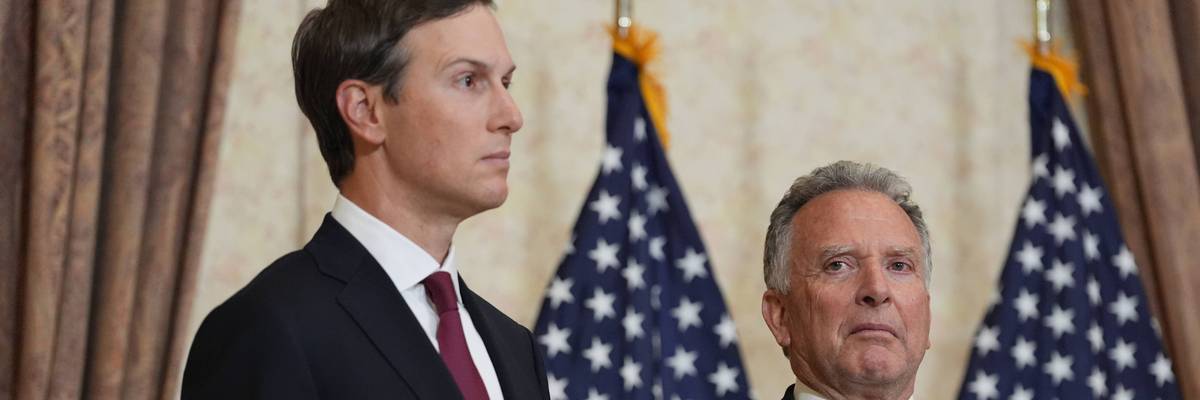

Jared Kushner and Special Envoy for Peace Missions Steve Witkoff listen as Vice President JD Vance speaks during a news conference after meeting with representatives from Pakistan and Iran, April 12, 2026, in Islamabad, Pakistan.
(Photo by Jacquelyn Martin/Pool/Getty Images)

Stephen Prager
Apr 19, 2026
COMMON DREAMS

Iran says it has no plans to negotiate with the US after President Donald Trump said Sunday that “the whole country is going to get blown up” if Iran refuses to make a deal.

Trump claimed that Iranian officials were heading to Islamabad for another round of talks Monday with Vice President JD Vance, his son-in-law Jared Kushner, and Middle East envoy Steve Witkoff.

But Iran’s official IRNA news agency later reported that claims Iran was coming to negotiate were “not true” and described the announcement as “a media game and part of the blame game to pressure Iran.”


The Tasnim News Agency, which is linked to Iran’s Islamic Revolutionary Guard Corps, reiterated the government’s previous position that it would not negotiate unless Trump lifts his blockade of Iranian ports, which Tehran considers a violation of the ceasefire between the US and Iran.

After Trump said the blockade would continue, Iran again shut down travel through the Strait of Hormuz on Saturday, following a brief reopening Friday following the announcement of a ceasefire between Lebanon and Israel.

IRNA added that negotiators decided not to return because of “Washington’s excessive demands, unrealistic expectations, constant shifts in stance, repeated contradictions, and the ongoing naval blockade.”

An unnamed Iranian official familiar with Tehran’s internal deliberations told Drop Site News on Sunday that Tehran is prepared for a long war.

He said negotiators would prefer to make a deal with the US that would give Iran the right to enrich uranium, provide sanctions relief, and establish a long-term non-aggression framework.

But the official said Trump’s erratic behavior and maximalist demands—including that Iran surrender all its enriched uranium—are causing Iranian officials to sour on the idea that he could ever be a trustworthy negotiating partner.

“Our assessment is that Trump effectively lacks both a coherent plan and the capacity to secure even a temporary agreement,” the official said. “His decision-making appears to be grounded in Israeli political and security assessments, conveyed to him on a daily basis.”


Trump has expressed a desire to find an off-ramp from the war, which has caused economic upheaval and further tanked his already grim approval rating.

But he has also stood by Israel as it has repeatedly undermined negotiations by continuing its attacks on Lebanon, including after a 10-day ceasefire that began Friday. Iran has portrayed ending these attacks as key to a durable ceasefire agreement with the US.

The official said that during the previous round of talks in Islamabad, which resulted in a two-week ceasefire earlier this month, Iran “clearly stated” to Vance that “public threats” like the one Trump issued to wipe out all of “Iranian civilization” would not be tolerated again.

Even before Trump made more such threats Sunday morning, Iran had not yet agreed to another round of talks. The official said that Iranian negotiators are still open to further discussions, but added that they “need to be meaningful, and their framework should be defined in advance.”

“The Islamabad negotiations provided President Trump with an appropriate opportunity to exit the war,” the official added. “Should [Trump] nevertheless choose to continue the conflict, Iran will, for a prolonged period, suspend diplomatic channels and will seek, within the context of the conflict, to impose significantly greater costs on United States interests.”

Mohammed Sani, a political analyst based in Tehran, told Drop Site News that Iran appears prepared to inflict more pain on the US should Trump choose violence.

“We see that the Americans have been bringing in more troops and equipment to prepare to attack, but the Iranians have also not been resting during these two weeks of ceasefire,” he said. “They have been preparing, repairing the underground missile cities, bringing in new air defenses, missiles, and drones. Iran is at a high standard of readiness right now. If there is another round of negotiations sometime later in the future, after another round of American attacks against Iran fail, the Iranian conditions for peace will be much tougher.”


Trita Parsi, executive vice president of the Quincy Institute for Responsible Statecraft, said Sunday that Trump’s apparent belief that he can use threats of mass violence to bully Iran into a favorable deal is pushing Tehran further from the negotiating table.

“Due to poor discipline, Trump ends up prioritizing the optics of victory over actually getting a deal,” Parsi said. “Instead of using deescalatory signals from Iran to get closer to a deal, he declares victory and seeks Iran’s humiliation, and by that, he undermines his own diplomacy.”


‘The Whole Country’s Going to Get Blown Up’: Trump Renews Genocidal Threats to Iran as Ceasefire Collapses


“Whether he means it or not, his saying it is an indelible moral stain on our country,” said one law professor.


Stephen Prager
Apr 19, 2026
COMMON DREAMS


President Donald Trump on Sunday renewed his threat to carry out a genocidal attack on Iran, pledging to “blow up” the “whole country” of over 90 million people and to demolish critical civilian infrastructure if it does not sign a peace deal by Wednesday.

“If they don’t sign the deal, then the whole country is going to get blown up,” Trump said, according to Fox News correspondent Trey Yingst, who relayed the comments on air Sunday morning.
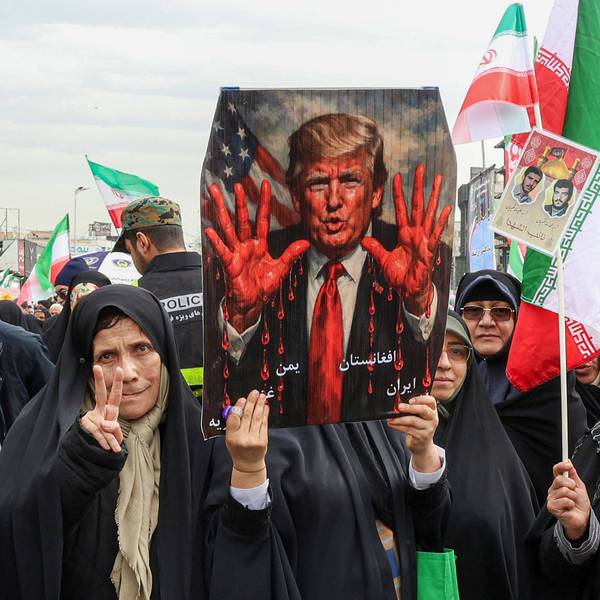


Trump also reportedly said that the US was “preparing to hit [Iran] harder than any country has ever been hit before because you cannot let them have a nuclear weapon.”


The comments came after Iran once again closed the Strait of Hormuz on Saturday in response to the continued US blockade of Iranian ports, which Iranian officials said violated the terms of the agreement reached between the two countries.

After renewing the blockade, Iranian gunboats fired upon a pair of Indian-flagged ships attempting to travel through the strait Saturday.

In response, Trump issued a furious post on Truth Social Sunday morning, saying that he would send a team of negotiators—Vice President JD Vance, his son-in-law Jared Kushner, and special envoy to the Middle East Steve Witkoff—to Islamabad on Monday for another round of negotiations.

“We’re offering a very fair and reasonable DEAL, and I hope they take it because, if they don’t, the United States is going to knock out every single Power Plant, and every single Bridge, in Iran,” Trump wrote. “NO MORE MR. NICE GUY!”

“They’ll come down fast, they’ll come down easy and, if they don’t take the DEAL, it will be my Honor to do what has to be done, which should have been done to Iran, by other Presidents, for the last 47 years,” he continued.

It echoed the similarly genocidal threat made by Trump earlier in April that “a whole civilization will die... never to be brought back again,” if Iran did not agree to a deal, which drew worldwide condemnation and sparked efforts by some members of Congress to pursue impeachment or push for Trump’s cabinet to remove him via the 25th Amendment.


Trump has appeared eager to end the war with Iran after it caused economic upheaval and pushed his already dire approval rating even lower. But he has also backed Israel when it sought to undermine key points of the agreement, prompting retaliation from Iran.

The ceasefire announced earlier this month between the US and Iran initially included a halt to the hostilities between Israel and Lebanon. But within hours, Israel unleashed its most punishing set of attacks against Lebanon since the war began in March. Trump then backed Israeli Prime Minister Benjamin Netanyahu when he claimed that Lebanon was never part of the deal.

Iran only agreed to open the Strait of Hormuz on Friday after Israel and Lebanon appeared to agree to a 10-day ceasefire. But Israel has already violated that agreement several times, continuing to raze Lebanese villages and fire upon people approaching its newly imposed “yellow line.”

In addition to calling for the reopening of the Strait of Hormuz, which was open before he launched the war in late February, Trump has demanded that Iran make a deal to hand over all of its enriched uranium, which he refers to as “nuclear dust.”

A spokesperson for Iran’s Islamic Revolutionary Guard Corps (IRGC) has said such a proposal would violate Iran’s sovereignty: “Iran’s uranium is Iran’s asset. It is our responsibility, our energy, our sovereign right.”

An end to the attacks against Lebanon has been described as another central demand from Iran, although officials said the decision to close the strait again on Saturday was in response to Trump’s continued blockade of Iranian ports.


International law strictly prohibits indiscriminate attacks on civilian infrastructure with no military objective, including bridges and power plants that are critical to human life.

Trump’s previous threats to bomb Iran “back to the Stone Ages” suggest that the latest threats are less about accomplishing a specific military objective than about inflicting suffering on Iranian society as leverage.

Last time Trump made such a threat, a coalition of more than 200 groups, including Amnesty InternationalHuman Rights Watch, Refugees International, and Oxfam America, wrote in an urgent letter stating that if carried out, such attacks would constitute “a grave atrocity” and that “a threat to wipe out ‘a whole civilization’ may amount to a threat of genocide.”

Human Rights Watch said that, if acted upon, “the statement could be indicative of criminal intent if Trump were ever prosecuted by the International Criminal Court.

The last time Trump threatened to unleash an apocalyptic attack on Iran, the threat preceded a deal that, at least in principle, involved the US agreeing to negotiate based on a set of terms laid out by the Iranians. This led many observers to characterize the threats as bluster meant to save face before capitulation rather than a sincere pledge to annihilate Iran.

However, Adil Haque, a law professor at Rutgers and the executive editor at Just Security, said that, “Whether he means it or not, his saying it is an indelible moral stain on our country.”
Trump 'incapable' of accepting US has lost the war with Iran: Nobel laureate

Ewan Gleadow
April 18, 2026 
RAW STORY


President Donald Trump looks on after disembarking Air Force One as he arrives at Joint Base Andrews in Maryland, on April 12, 2026. REUTERS/Kevin Lamarque

President Donald Trump has lost the war with Iran but is refusing to accept it, according to a Nobel Prize winner.

Paul Krugman believes that Trump is flat out unable to deal with the fallout of the war in Iran, and that it has not yet set in that the United States' intervention in the Middle East has failed. Writing in his Substack earlier Saturday, Krugman claimed, "It’s been clear for a while that the United States has basically lost this war.

"The goal was to achieve regime change, possibly to take Iran’s uranium. Neither of those is going to happen. The Iranian regime is a harder line than it was before. Iran has ended up strengthened because it’s demonstrated its ability to shut off traffic through the Strait of Hormuz.

"Well, as best I can tell, and this is all speculation now, I don’t think that Trump has taken on board, maybe he’s emotionally incapable of taking on board the reality that he screwed up, that he took us to war and lost, that he, in his mind, still thinks that America has the upper hand and that the Iranians are cowering in fear over the might of the U.S. military, and that he doesn’t need to make any concessions."

The Strait of Hormuz had briefly been opened by Iran but was again closed over a US blockade. A new closure of the Strait of Hormuz was confirmed by Iranian military operational command, Khatam Al Anbiya, with a statement accusing the US of "maritime piracy and theft".

The statement reads, "For this reason, control of the Strait of Hormuz has reverted to its previous state, and this strategic waterway is under the strict management and control of the armed forces."

"Until the US restores the complete freedom of navigation for vessels from an Iranian origin to a destination, and from a destination back to Iran, the situation in the Strait of Hormuz will remain strictly controlled and in its previous state."

President Trump previously imposed a naval blockade of the Strait of Hormuz as part of his escalating Iran war strategy, declaring he would "immediately eliminate" Iranian Navy vessels attempting to breach it.


The dirty secret Europe's far right doesn't want Trump to know


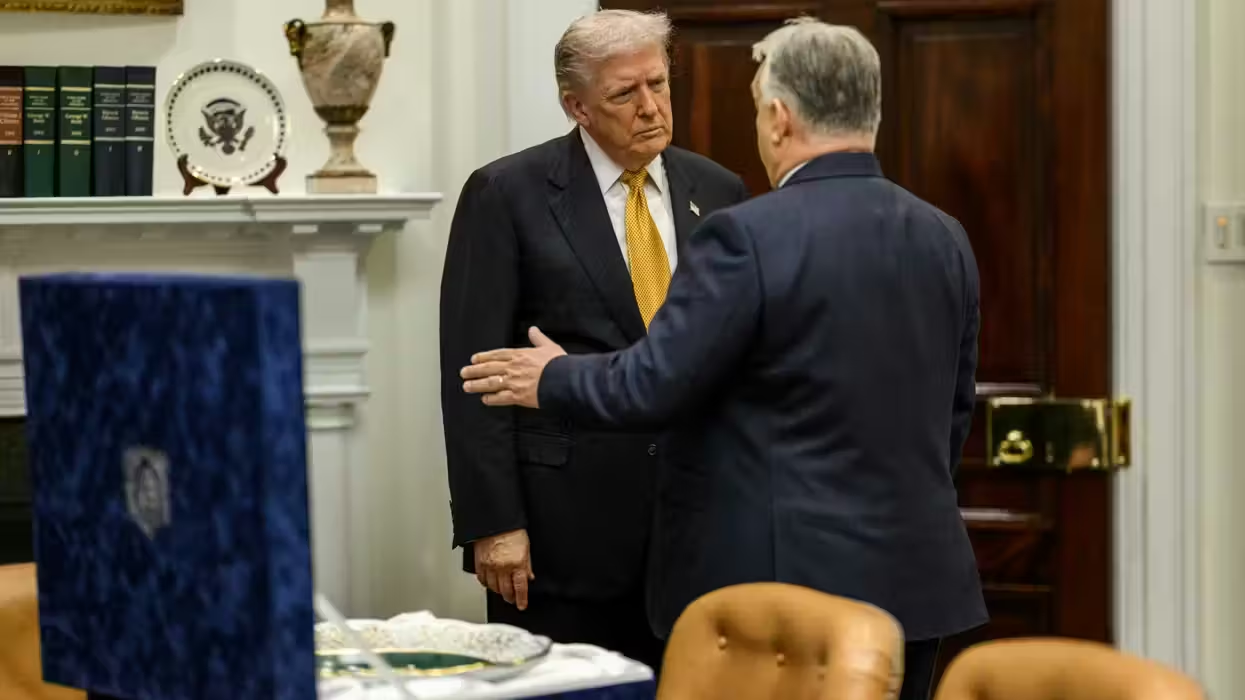
U.S. President Donald Trump with Hungarian Prime Minister Viktor Orbán in the White House on November 7, 2025 (Official White House Photo by Daniel Torok/Flickr)

April 19, 2026 
ALTERNET


President Donald Trump has done his best to curry the favor of Europe’s far right, but after seeing Hungarian Prime Minister Viktor Orbán go down to humiliating defeat despite Trump’s support, the far right now wants to put daylight between itself and America’s leader.

“President Donald Trump’s offensive behavior toward Christians and his unnecessary and unpopular war in Iran isn’t just splitting his political base at home — it’s also alienating his allies abroad,” wrote MS NOW’s Zeeshan Aleem on Sunday. “Right-wing nationalists in Europe are becoming more and more wary of association with Trump and growing inclined to keep him at a distance to protect their own political projects. The trend marks a blow to Trump’s aspirations of creating an international bloc of right-wing nationalist states that work in concert to quash the left.”

Aleem ticked off a number of prominent Italian conservatives who are denouncing Trump including Italian Prime Minister Giorgia Meloni, a number of German lawmakers from the far-right Alternative for Germany party, Romania’s European Parliament member Diana Sosoaca and French far-right leader Marine Le Pen. Their criticisms have ranged from his meddling in European domestic politics, his invasion of Iran and his attacks on Pope Leo XIV.


“Those bold criticisms speak to how incredibly damaging Trump’s war on Iran has been for his standing within his movement,” Aleem observed. “The surge in global oil prices is politically radioactive; far-right leaders and parties in Europe affiliated with Trump risk becoming associated with the energy crisis unless they take steps to create distance from him.”

Indeed, as recently as last week, the United Kingdom’s Brexit champion Nigel Farage downplayed his relationship with Trump, who he once said was ushering in “the beginning of a golden age,” by instead saying “I happen to know him, but that’s by the by.”


Overall, this pattern speaks to how Trump’s brash approach to governance has alienated America’s European allies.

“Trump, for so many people, epitomizes the ugly American — somebody who is bumptious and vulgar and ignorant about foreign cultures,” former Time Magazine editor Rick Stengel said in a recent podcast appearance on The Bulwark with former Daily Beast editor-in-chief John Avlon on Sunday. “So I think people sort of have come to the end of their patience with America.”

Ironically, Trump has aggressively courted the European far right as his natural ideological allies. Trump appointee Susan B. Rogers was selected as Under Secretary of State for Public Diplomacy and Public Affairs in large part to ingratiate herself to the far right, such as by describing German migrants as “barbarian rapist hordes,” falsely claiming Sweden’s immigration policy has caused sexual violence (“If your government cared about ‘women’s safety,’ it would have a different migration policy”) and incorrectly stating that “advocates of unlimited third world immigration have long controlled a disproportionate share of official knowledge production.”

Rogers even met with members of the Alternative für Deutschland (AfD) Party, which espouses an ideology widely perceived as neo-Nazi.

MAGA's 'self-appointed crusade' in Europe falls flat as Vance left reeling: analysis

Ewan Gleadow
April 19, 2026 
RAW STORY


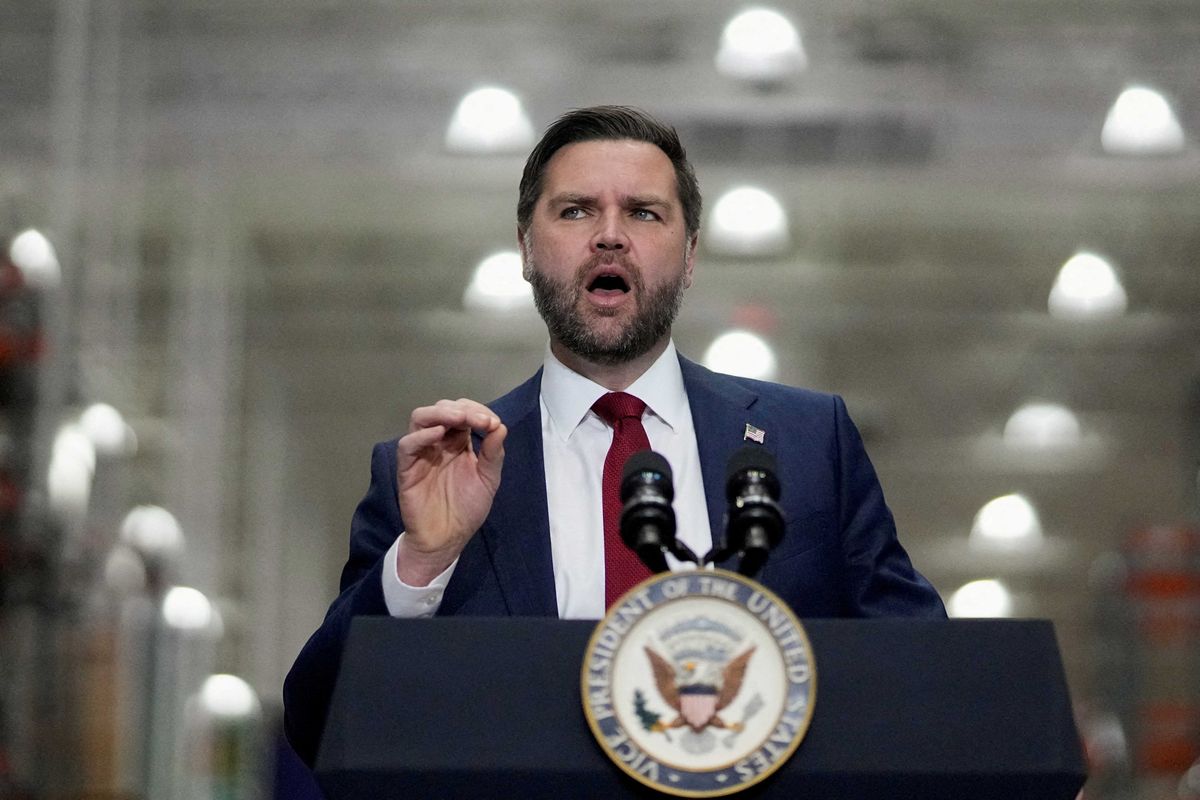
Vice President JD Vance delivers remarks at Uline Inc., in Alburtis, Pennsylvania on Dec. 16, 2025. REUTERS/Eduardo Munoz

MAGA supporters were dealt a devastating blow earlier this week and will struggle to recover from it, a political analyst has claimed.

Hungarian Prime Minister Viktor Orban, a far-right autocrat who has led the country for 16 years, conceded defeat in April 2026 to opposition leader Peter Magyar, marking a stunning rebuke to Trump-backed authoritarianism in Europe. Endorsement from Vice President JD Vance was not enough to win Orban the election, marking an embarrassing moment for Donald Trump's administration and the MAGA movement.

Salon columnist Andrew O'Hehir believes Orban's election loss will set the MAGA movement back, but not stop them from attempting to pool their resources in Europe. He wrote, "It wasn't a great week for the far right’s self-appointed crusade to reconquer Europe as a fairytale paradise of whiteness and Christianity.

"Maybe that’s because that whole idea is vaporware, rooted in a nonsensical social and historical vision and devoted to a losing battle against economic and demographic reality. But that quality of noble, doomed struggle toward impossible goals is both the far-right movement’s fundamental weakness and the source of its power and danger."

O'Hehir went on to suggest that MAGA's backing of Orban and the subsequent election loss highlighted an undermining of Trump's own support during his second term in the Oval Office.

He wrote, "Viktor Orbán, the pudgy poster boy for 'illiberal democracy' and object of a mysterious man-crush by legions of American conservatives, suffered a catastrophic electoral defeat in Hungary that felt, at least for a day or two, like the global MAGA movement’s Waterloo moment.

"As for Donald Trump, what is there to say? The entire world is over him, big time, and it’s the unique curse of America’s narcissistic self-regard that we’re still stuck with him, dominating the headlines day after day with his empty, contradictory and randomly-punctuated blather.

"Trump heads into the latter stages of his presidency as a damaged and toxic figure, a human AI-meme desperately trying to spin his way past the massive humiliation of the Iran war he chose to fight and the global energy crisis he single-handedly created.

"As for the ambitious schemes to reshape Europe’s political map variously proposed by JD Vance, Stephen Miller, Steve Bannon and Elon Musk, among others, to this point none have amounted to more than flatulent rhetoric."

Trump handed 'historic indictment' as economy in worst shape since Eisenhower: analyst

Ewan Gleadow
April 19, 2026
RAW STORY


President Donald Trump has been handed a grim reality check with a poll suggesting his administration's economy is the worst in 74 years.

Political analyst Pat Ford, during an appearance on the David Pakman Show, highlighted how the economy had sunk to its lowest point in decades under Trump's watch. A 74-year low puts the Trump economy on the same footing as Dwight D. Eisenhower's economic forecast in the early 1950s.

Ford said, "American consumers have delivered their verdict. They feel this economy under Trump is the worst in 74 years. The results are a historic indictment of the current administration."

The University of Michigan’s Consumer Sentiment Index fell to 47.6 in preliminary April 2026, a drop of 10.7% from March 2026. It is also the lowest reading in the history of the Consumer Sentiment poll. The prior record low came under Joe Biden's administration in 2022, which Ford explained was during a time when the United States had only just begun to recover from the Coronavirus pandemic.

Ford added, "There was also the start of the Russia-Ukraine war. This is immeasurably tied to Trump's decision to attack Iran because last month Trump was at 53.3, several points higher, now it's dropped 10.7%."

The results, Ford argues, put the US economy in a "more desperate light than even the 2008 financial crisis," but noted it does not mean the economy is "inherently worse" than 2008.

"It does mean that consumers feel the most dejected, that they feel the least confident this time since 1952. I think it is important to point out, especially because this has to do with how the public is feeling and we're only seven or so months away from the 2026 midterms, and people are going to be voting with their wallets.

"They're going to be voting based on how the economy is doing. And if Americans are saying that the economy is worse at this point than it has been at any point over the last 74 years, that's not going to be good for Trump, and that's not going to be good for Republicans. So you better believe that this economic sentiment is going to show up in the midterm elections."


Trump considered awarding self Medal of
Honor amid Iran war chaos: insiders

Alexander Willis
April 19, 2026
RAW STORY

Amid the ongoing U.S. war against Iran, President Donald Trump considered awarding himself the Medal of Honor, the most prestigious military award issued by the U.S. government, White House insiders claimed in a report published Saturday evening in the Wall Street Journal.

Citing a “senior administration official” and people who have “spoken” with the president, the Journal’s report revealed that Trump had privately panicked in early April after learning of the downed U.S. fighter jet over Iran.

“Trump screamed at aides for hours. The Europeans aren’t helping, he said repeatedly. Gas prices averaged $4.09,” the Journal’s report reads. “Images of the 1979 Iranian hostage crisis – one of the biggest international policy failures of a presidency in recent times – had been looming large in his mind, people who have spoken to him said.”

According to a senior administration official, Trump had demanded that the pilots of the downed fighter jet be rescued immediately, though discussions grew adversarial due to the president’s “impatience.”

“Aides kept the president out of the room as they got minute-by-minute updates because they believed his impatience wouldn’t be helpful, instead updating him at meaningful moments, a senior administration official said,” the Journal’s report reads.

Amid the chaos, which according to the insiders also involved Trump “sometimes” losing focus and attempting to pivot to topics unrelated to the U.S. war against Iran such as his White House ballroom, the president also actively considered awarding himself the highest military decoration in the United States’ history.

“He has made risky pronouncements without input from his national security team – including his post about plans to destroy the Iranian civilization – saying seeming unstable could help spur the Iranians to negotiate,” the Journal’s report reads.

“At one point he even mused he should award himself the nation’s highest military honor, the Medal of Honor.”
Trump's cognitive decline just dragged US into a 'really dangerous' situation: analyst


Robert Davis
April 19, 2026 
RAW STORY

President Donald Trump has dragged the U.S. into a "really dangerous" situation that he can't get out of, according to one analyst.

David Pakman, a liberal YouTuber and host of "The David Pakman Show," argued in a recent reaction video that Trump's efforts to reinstate the terms of the Obama administration's Iran Nuclear Deal, which Trump tore up in 2018, have put the U.S. in a bad situation. On the one hand, it has given Iran some leverage in the negotiations to end the war. On the other hand, it has also soured the relationship between the U.S. and its European allies, Pakman argued.

"We are now getting a president saying out loud, 'I'm trying to get us back to where we were,'" Pakman said. "He can barely speak now, in comparison, with fragmented sentences and all of it. And the reason I'm referring to the cognitive stuff is that Trump wasn't even coherent enough to realize in 2018 that this deal was not bad."

"Now with another seven and a half to eight years of decline behind us, it is even less likely that he is going to be able to put something together," he added.

"So, as Trump tries to dissolve the problems that he created and solve issues that are of his own doing, allies around the world are saying, 'That is not something we want to be a part of.' And that's a really dangerous thing," he continued.

UK

As oil giants reap super-profits from war on Iran, public support for Windfall Tax grows


Politicians calling for an end to the Windfall Tax should listen to the public, say campaigners, after new polling from Survation that found voters back the Windfall Tax by a margin of more than two to one, with support crossing party lines and stretching across all areas of the country.

Over half of the population say that ending the Windfall Tax now would be the wrong thing to do. Only 22% felt that it should be ended. And 41% of the public support the Windfall Tax on energy firms, compared to just 17% opposing it. 

Nearly two-thirds of the public believe that the energy industry is profiteering from the conflict in Iran and 47% believe that windfall taxes should be extended to more companies within the energy industry.

Meanwhile, 83% of the public are worried about rising energy costs as a result of the conflict with Iran, and 44% say they would be unable to afford the expected £228 annual increase in energy bills. A quarter of these respondents claim they would be “completely unable to pay my energy bill” if costs rose to this level.

Oil giants have said that they would consider investing more in the North Sea, which is now an ultra-mature and high cost basin, if the government removes the additional levy. However, recent history suggests oil companies will instead just give the extra profits to their shareholders rather than investing in more drilling.

The oil and gas industry has been engaged in a significant lobbying effort to have the current windfall tax – the Energy Profits Levy – repealed or ended early, securing support from some high profile politicians and parties. Both Reform UK and the Conservative Party have repeatedly called for it to be scrapped.

But support for the Windfall Tax continues among voters from all parties, according to the data from Survation.

Among those intending to vote for Reform UK in the next general election, 39% support the Tax with just 24% opposing it. For those thinking of voting Conservative, 44% still support it and 19% oppose it. 

Among Labour, Green and Liberal Democrat voters, support is even stronger – as is support for extending the taxes to other sections of the industry.

Backing for the Windfall Tax was also strong in all areas of the country, with people in Wales polling the strongest support for the levy. Earlier detailed polling in Scotland had shown 41% backing the Tax with 19% opposing it, but the new data suggests that this support has deepened with 44% now in favour of the Levy.

Recent figures have shown that the energy industry made £125bn in profits on their UK operations in the last 5 years and in the month since the conflict in the Middle East began, the share prices of energy companies have soared adding over £233bn to the market capitalisation of firms and resulting in a boost in the wealth of energy firm bosses. 

Simon Francis, End Fuel Poverty Coalition coordinator said: “This is not the moment to hand a tax break to the oil and gas industry and Ministers must hold firm with the Windfall Tax, while also examining any profiteering from the conflict among other sectors of the energy sector.

“Trump’s attacks on Iran, the damage to Qatari gas production and the disruption to supplies has led to spikes in the costs of heating oil and gas.

“But while households will feel the effects of this for months to come, the energy industry will continue to benefit from increased prices and a fresh wave of excess profits.” 

Robert Palmer, deputy director of Uplift said: “Politicians calling for an end to the Windfall Tax just as the oil and gas giants are about to make billions in bumper profits are tone deaf. Instead of siding with the profiteering oil industry, political parties should be standing up for billpayers who are facing a steep Trump Tax on everything from their energy bills, to petrol and food.

“Last time, when Russia invaded Ukraine, oil companies didn’t invest their windfall profits in more drilling, instead executives and shareholders got windfall payouts. The government needs to tune out the barrage of special pleading by the oil firms and their political cheerleaders, and focus on real solutions to this crisis. 

“The only way to bring down energy costs over the long term is to get off our reliance on oil and gas, and invest as fast as we can in renewables. More North Sea drilling will not take a penny off our bills, only boost the profits of fossil fuel companies.”

Labour MP Nadia Whittome agreed: “Drilling in the North Sea won’t make energy cheaper, despite what Badenoch or Farage say, because the price of gas is set by international markets. Expanding our clean energy supplies, on the other hand, would reduce our dependence on expensive fossil fuels and therefore lower bills. A Labour government must hold firm on our climate commitments and double down on renewables.”

Big profits for energy executives from Iran war

Drilling down into the figures, it’s clear that the bosses of some of Britain’s biggest energy companies have seen their personal fortunes surge by millions of pounds as a result of the conflict in the Middle East.

Analysis of shareholdings declared in annual reports and share price movements between 26th February and 27th March 2026 shows how energy chiefs may have benefited from the crisis, even as millions of households brace for a sharp rise in bills.

Among them, Harbour Energy’s Linda Z Cook saw the value of her shareholding rise by more than £4 million to £26 million. Harbour accounts for around 15% of the UK’s domestic oil and gas output and has been led by American Cook since 2021.

Meanwhile Shell’s Wael Sawan added nearly £1.8 million to take his stake to £13.2 million. At Centrica, Chris O’Shea saw the value of his shares rise by over £300,000, even as the British Gas owner’s boss told the BBC this month that higher household bills were “inescapable” and had previously said that it was “impossible to justify” his salary and rewards package.

At BP, interim boss Carol Howle saw her shares grow by over £500,000 during the period. Departed chief executive Murray Auchincloss, who held more than 1.8 million shares at the time of his departure, could have seen his stake rise to £10.6 million at current prices.

The picture is even more dramatic among the global giants whose share prices have been supercharged by the Middle East conflict. Chevron chief executive Michael Wirth saw the value of his near two-million-share stake rise by more than £44 million in a single month, taking his total holding to more than £312 million.

ExxonMobil’s Darren Woods added over £5 million to sit at more than £40 million, and TotalEnergies chief Patrick Pouyanné’s stake now stands at £39 million. Equinor, the Norwegian state-backed firm that supplies much of the gas the UK depends on, saw its shares rise more than 45%, adding nearly £700,000 to the personal stake of chief executive Anders Opedal.

Simon Francis again: “There are very few winners from the conflict in the Middle East, and most of those are the wealthy oil and gas bosses who help set the prices we all pay for our energy. Politicians must show whose side they are on: the households struggling with energy bills, or the millionaires calling for an early end to the Windfall Tax on North Sea profits.”

The figures come as wholesale gas prices remain at levels not seen since 2023. Average household energy bills are forecast to rise to £1,929 from 1st July 2026, an 18% increase on the current cap.

Separate End Fuel Poverty Coalition data shows that energy firms have already made more than £125 billion in profits on their UK operations since 2020. At current energy prices, the Government stands to collect substantial additional tax revenue via the Energy Profits Levy.

Caitlin Boswell, interim Deputy Director at Tax Justice UK said: “Different parts of the economy are set to make eye-watering paydays as they spot opportunities for profiteering from the US-Israeli war on Iran and immense human suffering, while ordinary people see their energy bills sky-rocket.  That’s why the Chancellor should urgently implement excess profits taxes on energy, defence and banking sectors – called for by wider civil society – to send a clear message that the UK won’t accept profiteering from war and crisis.

“This needs to be coupled with tax system reform that ensures the massive asset price rises, like stocks in energy companies, are taxed fairly. Failing to do so will see stock price explosions channel enormous sums of money to the pockets of the super-rich, while millions in the UK are made more vulnerable to the cost of living crisis.”

The full data also shows that 12 of the world’s biggest energy companies added more than £233 billion in combined market value in a single month. In the EU, a report commissioned by Greenpeace Germany suggests that oil companies are making €81.4 million in extra profits every day from skyrocketing fuel prices since the start of the war on Iran, or around €2.5 billion in additional profits for March alone.

Jonathan Bean, Fuel Poverty Action spokesperson, said: “The Government must act urgently to stop more obscene energy profiteering from war, which will leave millions unable to afford the essential energy they need.  Windfall Tax loopholes must be removed and fair wealth taxes introduced.”

The ceasefire won’t bring down bills

Oil share prices fell with the announcement this week of a ceasefire in the conflict – because a ceasefire is bad for profits. But could the fragile ceasefire bring domestic energy bills back down? Simon Francis was pessimistic: “The damage to household energy bills has been done. All households will feel the pain from 1st July when the next Ofgem price cap period starts. For as long as our energy system is hooked on oil and gas prices, history will keep repeating itself and our bills will be at the mercy of decisions taken by Trump, Putin and Gulf States.”

Prime Minister Keir Starmer said this week that he was “fed up with the fact that families across the country see their bills go up and down on energy, businesses’ bills go up and down on energy because of the actions of Putin or Trump across the world.”

But others suggested this was a cop-out. Labour peer Prem Sikka pointed out that energy costs were high even before invasions by Putin and Trump and that the “Ofgem pricing formula guarantees exorbitant corporate profits.” He added: “It can all be ended by nationalization.”

Sign the petition to demand higher taxes on companies profiteering from the crisis here.

Image: https://milestonemagazine.com/3-global-businesses-that-have-thrived-during-the-pandemic/ Licence: Attribution-ShareAlike 3.0 Unported CC BY-SA 3.0 Deed

The Western Australia Playbook: How to Win and Keep Power

APRIL 14, 2026

What lessons might the UK’s beleaguered Labour Party be able to learn from its Australian counterpart? Peter White draws on his experiences in last year’s Western Australia state elections.

How does Western Australia keep bucking the trend and returning progressive Labor governments in the face of an onslaught from the hard right, billionaire-backed campaigns and the bot-driven noise of the internet? The answer is simple. A relentless, positive campaign that clearly and consistently demonstrates the benefits of Labor, while exposing the inadequacies of the opposition.

The number one issue on the doorstep, no matter which electorate you were campaigning in, was the cost of living. It cut across every demographic and community in Western Australia.

Before diving deeper, it is worth a quick primer on Australian politics. Voting is compulsory, with turnout typically around 90 percent, and election day looks very different to the UK. The world famous “democracy sausage” is an Australian rite of passage, a fundraising staple run by local schools and community groups at polling booths.

While, like the UK, Australia has multiple levels of government, the Constitution clearly delineates responsibilities between the Commonwealth and the states. All Australians share the same Prime Minister, but each state has its own Premier. Crucially, only the Federal Government can levy income tax, while the states are funded through a redistribution of Goods and Services Tax revenue, creating a system where some states contribute more than they receive and others rely more heavily on that distribution.

This is where the Western Australian model becomes instructive. Labor did not simply acknowledge cost of living pressures, it owned the issue and responded with clear, tangible measures that voters could understand and feel. Power bill credits worth thousands of dollars, free public transport for school students, free Technical and Further Education courses, and direct payments to families were not abstract policy ideas: they were practical interventions that landed in people’s daily lives.

Crucially, these were not presented as one-off giveaways, but as part of a broader narrative of economic competence. The Cook Labor Government consistently reinforced that strong financial management was what made this support possible. In contrast to the chaos often seen in other jurisdictions, the message was simple and disciplined: a strong economy under Labor allows government to ease pressure on working people.

That message was then localised with precision. Campaigns were not run in the abstract; they were grounded in community outcomes. In South Perth, for example, investment in schools, upgrades to local infrastructure, and funding for new indoor sporting facilities were front and centre. These are not headline-grabbing national policies, but they are exactly the kinds of commitments that voters see, use and remember.

This is perhaps the most important lesson for UK Labour supporters. Electoral success is not built on a single national message alone. It is built on thousands of local conversations where voters can clearly connect a Labor government to improvements in their own lives. Whether it is a new school upgrade, safer streets, or better access to sport and community facilities, the campaign constantly answered the question voters ask: what has Labor done for me and my community?

At the same time, Labor did not shy away from contrast. The opposition was framed not just as an alternative, but as a risk. On issues such as community safety, the campaign highlighted both investment under Labor and the potential rollback under a Liberal National government. Again, the messaging was simple, disciplined and repeated relentlessly: Labor delivers, the opposition cuts.

There was also a strong sense of future optimism embedded throughout the campaign. Investment in renewable energy, housing supply, and job creation was not treated as a distant ambition, but as part of a credible pathway forward. This balance between immediate relief and long-term vision is critical. Voters need to feel both supported today and confident about tomorrow.

Perhaps most importantly, the tone of the campaign remained overwhelmingly positive. This does not mean soft. It means disciplined. While the right leaned heavily into negativity, culture wars and online noise, Labor focused on delivery, stability, and community outcomes. The contrast worked because it aligned with voter priorities. When people are worried about their bills, their jobs, and their families, they are not looking for outrage, they are looking for competence.

For UK progressives, the lesson is clear. Electoral success is not accidental, and it is not purely ideological. It is built on clarity, discipline and delivery. You win by understanding what matters to voters, responding with real policies and communicating those policies in a way that is simple, local, and repeated endlessly.

Western Australia did not buck the trend by chance. It did so by running a campaign that was focused, grounded, and relentlessly connected to the everyday lives of voters. That is what electoral success looks like.

Peter White was the Campaign Director for Western Australia Labor in the seat of South Perth at the 2025 State Election. First won during the COVID landslide that saw WA Labor secure 53 of the 59 seats in Parliament in 2021, South Perth became the number one target for the Liberal Party. Despite sustained opposition focus and significant external pressure, the seat was retained by Labor on a margin of 1.4 percent.

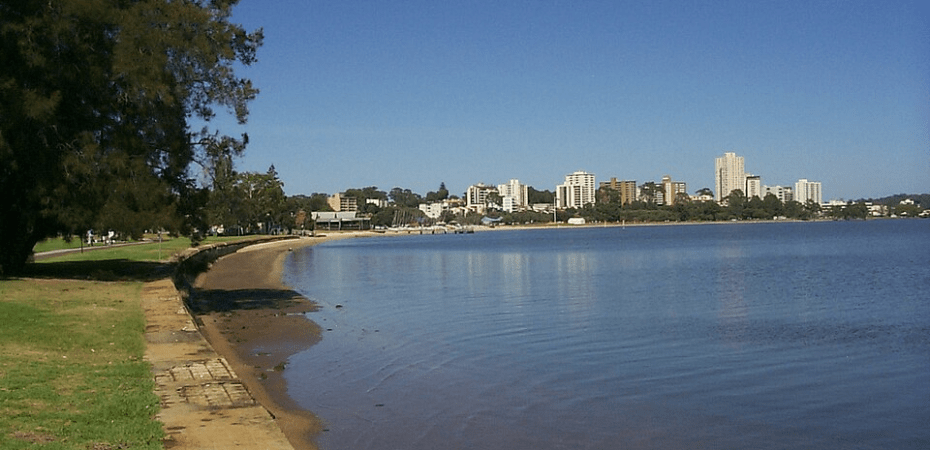
Image: https://commons.wikimedia.org/wiki/File:South_Perth_Western_Australia_5.jpg South Perth Western Australia. Source: Flickr. Author: Chris Johnson. Reviewer: Andre Engels, licensed under the Creative Commons Attribution 2.0 Generic license.


Israel’s war on children: a month in a Gaza hospital


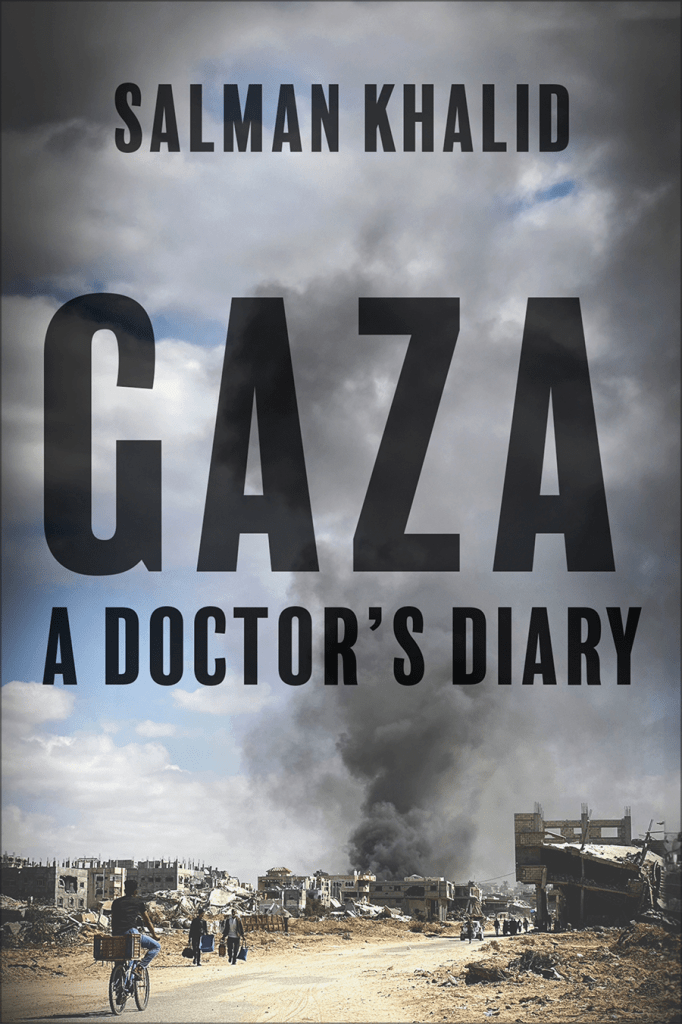
Mike Phipps reviews Gaza: A Doctor’s Diary, by Salman Khalid, published by Pluto.

APRIL 16, 2026

The author of the Foreword of this book, Dr. Fozia Alvi, had worked with the survivors of genocide before, bringing medical aid to the Rohingya refugees. But nothing prepared him for what he found in Gaza: “the heart-wrenching reality of encountering so many children— innocent lives shattered with shrapnel and bullet wounds. I witnessed a generation of amputees, children robbed of their childhood and broken in unmendable ways. I saw mothers consumed with grief, unsure of which of their children to mourn—the ones killed, the ones clinging to life, or the ones left broken, with limbs torn away.”

The journal he introduces was written by Dr. Salman Khalid during his 29-day deployment at Al Aqsa Martyrs Hospital: “no other physician has so thoroughly documented the personal and medical toll of this genocide.”

In August 2024, Emergency Physician Salman Khalid left Canada, his wife and three children to work in Gaza as part of an international team. Crossing into Gaza, “all one could see was miles and miles of ash-coloured, bullet-riddled, crumbled buildings.”

Once he begins work, the stories are heart-breaking. One of his first patients was “a four-year-old boy, who was the size of my two-year-old daughter. His home in the designated humanitarian safe zone was bombed today.” He showed signs of severe brain injury and impending brain death but  the overwhelmed staff were unable to place him on oxygen or a cardiac monitor. Gaza has only one-third of the medical residents it had before October 2023.

The next day at 4am, an Apache helicopter fires three missiles into the tents inside the hospital grounds killing four people, 100 metres from where Khalid is sleeping. This was despite the IDF having marked this as a safe humanitarian zone.

Another injured family is brought in; the woman dies. “I found myself imagining how this man would feel when he wakes up to realize that he is missing a leg, his son will have to defecate in a bag for potentially his entire life, and his wife and mother of his child is dead. If I was in Canada, this shift would rank among the most difficult of my entire career, but it seems like this will be just another day in Gaza.”

A few days later he and his colleagues spend over two hours trying – unsuccessfully – to resuscitate a nine-year-old boy, with a blast injury to the head and chest, whose father, an ER nurse, is assisting in the process. Other children come in with shrapnel embedded over their entire skin like tiny razor blades, or horrific burns. Khalid’s anger gives way to exhaustion.

Khalid describes the ER at Al Aqsa Hospital as “absolute chaos. It is a zoo, a madhouse.” It treats between 1,000 and 1,200 patients per day, in an area that is less than half of his ER’s size back home, which treats between 150 and 250 patients per day. There is no sterility, no air conditioning and the room is crowded with patients and relatives. Tensions between staff, the intrusive media and family members sometimes escalate into brawls.

“There are patients everywhere in the hospital. Rooms are full. Patients are laying on small mattresses they brought from home in hallways, stairwells, lobbies, outside administrative offices… pretty much anywhere there is open floor space.”

What is most distressing in this account is the sheer number of child victims. Khalid reminds us that half of the 2 million people in Gaza are children, so every time the Israelis bomb, half the victims are likely be children. It feels, he says, like killing just for the sake of killing – pointless, cruel torture.

Day 24: “Another 4am bombing of the Nuseirat camp brought mass casualties to our door… Around 1:30pm, we received another wave of casualties from an airstrike at Al-Shati camp.” Most cases Khalid describes in medical detail, but some arrive already taking their final breaths. Others die because of lack of functioning equipment -replacements are refused entry into Gaza by the Israeli authorities.

The following day, wave after wave of casualties arrive. “Of the patients with critical, life-threatening and catastrophic injuries today, half were children… Just when we thought we had things sort of under control, a fresh pile of bodies was dropped to the Red Zone floor with a crowd of more than 20 people trying to figure out who had the most immediately life-threatening injuries in all the chaos.” Yet despite this being Khalid’s worst day so far, other staff tell him that this is barely 30 percent of what they were experiencing just a few months earlier.

There are uplifting moments – but not many. The sheer misery of the situation is deeply affecting. Alongside the new trauma cases, there are patients with massive bed sores, the smell of vomit and necrotic flesh and malnourished patients, particularly children, who appear to be three to four years younger than their actual age. Khalid notes that he’s seen more amputees at this hospital in a single day than he has in his entire career.

As he prepares to leave, Khalid asks a 26-year old colleague what message he should take k to people back home. His answer is shockingly direct: “Don’t worry about us; we have one test and that is to be patient. You have many tests that you have to overcome: greed, free time, and all of your privilege in the West that has caused you to be lazy about fighting for justice. Don’t worry about us. Fix yourselves first.”

Khalid draws a similar conclusion at the end of his stay: “The only difference between September 3rd and today is that on September 3rd I thought the world was still watching, but today I know that no one is.”

Salman Khalid was not obliged to go to Gaza. As he says, “I have no Palestinian blood coursing through my veins.” But, as many who have boarded flotillas to break the siege of Gaza or taken other direct action to help the Palestinian people would understand, he adds: “I believe it is a litmus test for all of us who live in the West. Do we really stand for human rights for all people, or only a select few?” It’s as simple as that.

Not everyone can be an emergency physician in a war-ravaged hospital. But they can speak out, be careful of whose products they buy, write letters and sign petitions, donate.

With the Middle East war ever-widening and the Israeli barbarities in Gaza increasingly rendered acceptable by a complacent media, the plight of the Palestinians is in danger of slipping down the news agenda. Israel’s ‘ceasefire’ in Gaza appears increasingly to be a branding exercise crafted for international opinion: meanwhile, the war crimes continue.

Lat month, United Nations human rights experts highlighted the case of Dr. Hussam Abu Safiya, a Palestinian physician and hospital director who has been imprisoned for more than 450 days and reportedly tortured by his captors.

There is more first-hand testimony from Gaza surgeons available to Western readers. Bleak though this reading may be, it is vital first-hand material that reminds us that the majority of the victims of the indiscriminate carnage unleashed by Israel have no ideology or involvement in the conflict. This war on the innocent must never be normalised.

Mike Phipps’ book Don’t Stop Thinking About Tomorrow: The Labour Party after Jeremy Corbyn (OR Books, 2022) can be ordered here.


UK

We need to end the hostile environment, not create a moral panic against LGBT asylum seekers


17 April, 2026 
Left Foot Forward


Government policies are creating the conditions through which unethical actors can profit


Alex Powell is associate professor of law at the University of Warwick

During the course of this week, the BBC has run a series of articles, shows and podcasts detailing an “undercover investigation” into the UK asylum system. The reporting has given the impression of widespread practices of falsification. However, as a researcher focused on the UK asylum system, my research documents a far more complicated and concerning reality.

The framing of the piece, which is based on a very small number of encounters, presents asylum claims on the basis of someone being LGBTIQA+ as simple. It does this by uncritically repeating the line of an “adviser” to Worcester LGBT captured in the BBC’s video that ‘There is no check-up to find out if the person is gay’. However, my research has documented the reality of claiming asylum in the UK on the basis of being LGBTIQA+.

While the BBC gives the impression that LGBTIQA+ claims are a loophole in the UK asylum system that is widely exploited, such as by linking LGBTIQA+ claims to increased numbers of people who arrived in the UK lawfully claiming asylum, the reality is that of all asylum claims made in 2023 only 2% included reference to sexual orientation.

As such, far from revealing a widespread practice, the BBC’s framing can be seen to perpetuate further moral panic regarding the UK immigration system in a manner that does not accurately represent the realities of that system. Giving an impression of a significant ‘loophole’ where, in reality, even their own piece was unable to document a single confirmed example of someone who had actually succeeded in claiming asylum in the UK on the basis of a false LGBTIQA+ claim. For example, one individual they spoke to had returned to Pakistan after failing to secure status following eight years in the UK.

Within their ‘investigation’ the BBC argues that there exists a ‘fake asylum industry‘. They offer some compelling examples of unethical and unlawful conduct by individuals and organisations. However, misconduct by a small number of advisers is a regulatory issue, not evidence of an “industry”, and it is notable that by engaging in this way and failing to speak to actual refugees the BBC has not focussed on institutional failings and instead fixed public attention on to already vulnerable people and legitimate legal practitioners caught in the crossfire from this report.

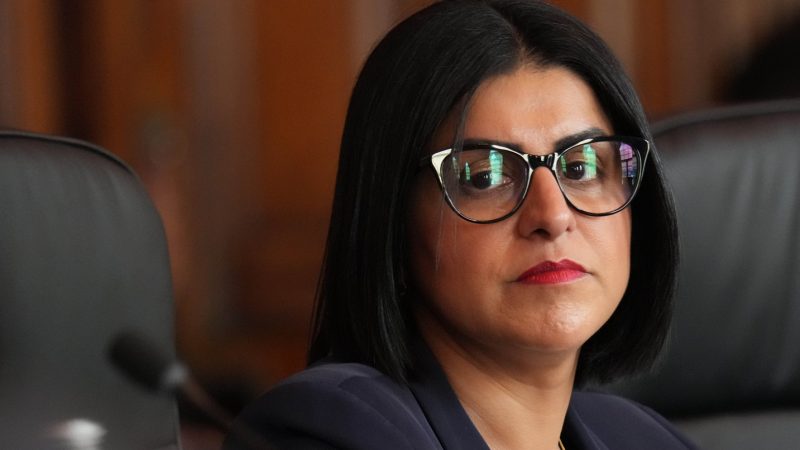
Over recent years, organisations such as the Immigration Law Practitioner’s Association have flagged concerns regarding a “climate of hostility” towards immigration practitioners and judges. With the Home Secretary Shabana Mahmood responding to the BBC’s reporting by claiming that ‘Sham lawyers’ will ‘face the full force of the law‘, there is a real risk that this framing of the poor practice of a small few will contribute to further hostility.

Rather than focusing on isolated examples of poor practice, these investigations should give pause for reflection regarding the structural conditions which push people into seeking the support of unethical advisers. Specifically, in recent years legal aid shortages, extensive delays, visa restrictions and the approach of the UK to refugee status determination have exacerbated the conditions within which a small number of people have been able to profit from the precarity of people seeking asylum.

For example, academic researchers have documented the extremely limited availability of legal aid for asylum in the UK. This includes the existence of “legal aid deserts” where securing legal assistance can be extremely difficult. The impact of this can be that people seeking asylum often end up facing complex legal processes without appropriate legal support. This, in turn, can mean that advisers like those from the BBC’s investigation end up being the only sources of support to which people seeking asylum are able to turn. As such, rather than framing this as evidence of a lucrative industry, an honest assessment would focus on how elements of government policy, such as the hollowing out of legal aid, have created the conditions within which unethical actors are able to profit. This should not, of course, detract from the outstanding work that many other third sector organisations do to support the human beings harmed by the government’s hostile approach to asylum.

Similarly, the BBC’s reporting details claims of “coaching” on LGBTIQA+ narratives. However, as my research has documented, the current approach to refugee status determination in LGBTIQA+ claims focuses strongly on the ability of people seeking asylum to describe their “emotional journey” towards developing an identity in a coherent manner which is supported by their social engagements with a broader LGBTIQA+ community. As such, the issue here is not fake or illegitimate claims, but rather the state’s narrow understanding of LGBTIQA+ identities and the current demands of the asylum system for highly particular narratives that produces the conditions where such ‘coaching’ can take place.

While there are reasons to be concerned about the practices reported by the BBC, this moment is not the time for another moral panic led “crackdown”. Rather, this should give pause for thought about how the practices documented are facilitated by hostile government policies which create the conditions within which unethical actors can profit.

Image credit: James Whatling / Parsons Media – Creative Commons


New report exposes asylum brutality


APRIL 14, 2026

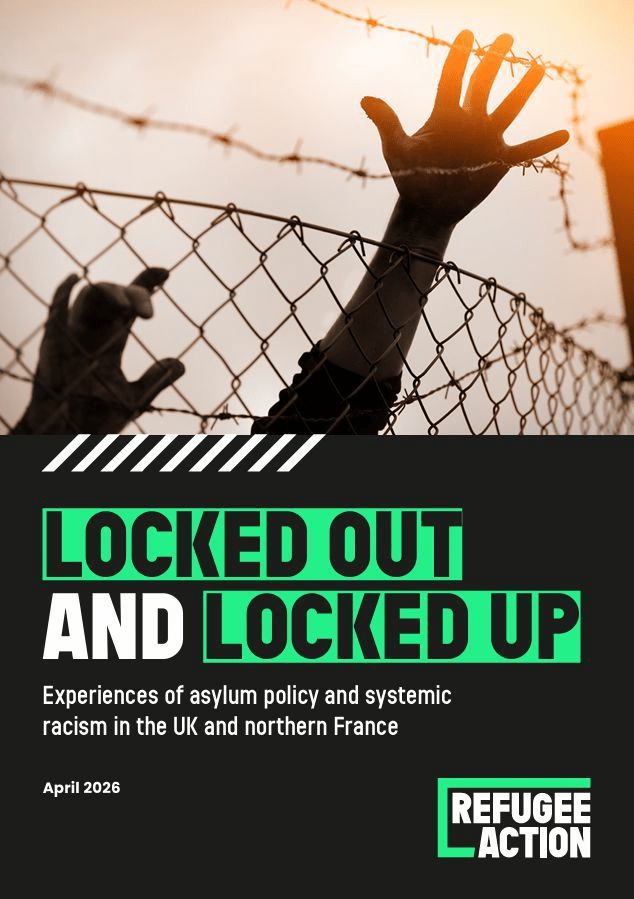
Refugee Action have launched a new report: Locked Out and Locked Up: Experiences of asylum policy and systemic racism in the UK and northern France.

Based on a year of research, co-led by people with lived experience, and with interviews with 32 people across UK asylum hotels and northern France, it exposes how current UK asylum policies are impacting people’s lives and driving systemic racism.

In northern France, people are forced to survive in brutal conditions. Police raids happen every 48 hours. Tents are destroyed. Belongings are taken. Teargas is used. Not even children and babies are kept safe.

And when people reach the UK, they face more hostility. Policies like the “one in, one out” scheme and temporary refugee status continue to deny people’s safety, stability and dignity.

These policies disproportionately target people of colour from countries across Africa, Asia and the Middle East. People fleeing war and persecution are treated with suspicion, criminalised for seeking safety, and subjected to harsher conditions and longer uncertainty. At the same time, safer and faster routes have historically been made more accessible to others.

The findings are stark:

• People are “locked out” of safe routes in northern France, facing violence, deprivation and racial profiling.

• Those who reach the UK are often “locked up” in de facto detention, unable to work, living in poor conditions and stuck in limbo. In the words of one participant, they are in an “open prison”.

• Political rhetoric and media narratives around “small boats” are fuelling dehumanisation and racial injustice.

Participants describe feeling treated “like animals” and being denied basic dignity on both sides of the Channel.

The report calls for:

– The government to immediately end its cruel “one in, one out” policy, and instead fund safe routes for people to arrive in the UK and seek asylum.

– The government to immediately end its new policy of limiting refugee status to thirty months.

– The Independent Chief Inspector of Borders and Immigration (ICIBI) to urgently launch an inspection focused on racial disparities in the treatment and outcomes for people arriving in the UK.

– Politicians of all parties and media outlets to cease referring to people seeking asylum in the UK as “illegal”. Seeking asylum is a legal right under the 1951 Refugee Convention and its 1967 Protocol, regardless of the route a person takes to reach the UK.

For more information, see here.

Send an e-postcard to your MP asking them to take action.