Tuesday, April 28, 2026

7 takeaways for Canadians from PM Carney’s spring economic update


Published: 2026 

OTTAWA - While emphasizing the “resilience” of Canada’s economy, the federal government’s newly tabled spring economic update includes few new line items geared toward Canadians’ pocketbooks.

“I think ordinary Canadians who are looking for pocketbook savings will be disappointed with this spring economic update,” said Fred O’Riordan, the national leader for tax policy at EY, in an interview with CTV News.

Despite the inflation rate hovering around the Bank of Canada’s target two per cent figure for nearly two years, two key areas on the affordability front — fuel and groceries — are seeing major spikes.

Pointing to a “rapidly changing and increasingly fragmented world,” the spring economic update repeats the Liberals’ oft-touted intention to focus on what Canada “can control.”

For example, it highlights new affordability measures the government has announced since the November budget, namely eliminating the fuel excise tax and extending the groceries and essentials benefit. And, it restates the pre-promised streamlining of access to the Canada Disability Benefit and the Canada Student Loan Forgiveness Program, but the overall package offers little new beyond that.

Still, from skills training to sports funding, pension changes and employment insurance extensions for some, there are a few measures included in the document geared toward increasing affordability.

CTV News has reviewed the 167-page spring economic update. Here are some of the line items that could impact the average Canadian.

Spending billions on skills training

The spring economic update lays out the government’s plan ­— dubbed Team Canada Strong — to spend $5.9 billion over five years to recruit, train and hire between 80,000 and 100,000 new Red Seal skilled trades workers by 2030-31.

Despite an entrenched trade war with the U.S., overall unemployment in Canada is holding steady. But, there is a gap across generational lines, with youth unemployment more than double the national average.

In the November budget, the Liberal government announced new funding for its summer jobs program, among other measures. Now, the spring economic update’s skills training measures are the largest line item when it comes to new spending.

“Team Canada Strong will provide a simple and seamless way to learn about and enter into the trades and link up with employers,” the spring economic update states. “Young people will start with paid, job ready placements that lead directly into registered apprenticeships—earning income, gaining experience, and contributing immediately to major housing, infrastructure, and defence projects.”

Part of the plan also includes funding for apprenticeships by way of wage subsidies for employers. It also includes income top-ups for apprentices and one-time bonuses for apprentices obtaining certification in a Red Seal trade.

The spring economic update lists other affordability measures for tradespeople as well, including funding to help ease labour mobility costs. The document proposes, for example, to increase the limit on temporary relocation expenses that eligible tradespeople can deduct on their taxes.

Significant sports funding

The spring economic update is proposing what it’s framing as “generational investment” in Canadian sports and athletes.

Dubbing it “from playground to podium” funding, the federal government is earmarking $755 million over five years, starting in 2026-27, and $118 million ongoing, to Canadian Heritage to support Canada’s sport system to:

  • “Bring more world-class sporting events to Canada;
  • Help our athletes train, compete, and perform, including support for better mental health;
  • And see new and existing community infrastructure … fully used and enjoyed by a new generation of athletes.”

Reducing CPP contribution rate

The spring economic statement also aims to keep more money in Canadians’ wallets by reducing the amount they have to contribute to the Canada Pension Plan.

Starting in January, the CPP contribution rate will be reduced from 9.9 per cent to 9.5 per cent.

According to O’Riordan, the change likely indicates the CPP fund is actuarily sound and performing well, allowing the federal government to pass along some of the surplus from it to Canadians.

“This change would maintain a prudent financial buffer to protect the CPP against future economic and demographic risks, while providing meaningful contribution relief,” the spring economic update reads.

“A 40-basis point reduction in the CPP contribution would translate into annual savings of about $133 for an employee earning $70,000 a year, with equivalent savings for their employer,” it also projects.

Clearing air travel complaints backlog

The federal government wants to change the resolution process for air travel complaints in order to reduce the backlog.

Firstly, it’s proposing to transfer responsibilities for those complaints from the Canadian Transportation Agency to the Minister of Transport, which it claims will “enhance transparency of the complaints process and enforcement of passenger rights regulations.”

The spring economic update doesn’t put a number to the current backlog, but does categorize it as “significant.”

It also states “the government’s intention to clear the backlog of air travel complaints by engaging a neutral, third-party dispute resolution organisation based on a proven model in the (United Kingdom) and the (European Union).”

“Beyond the backlog, the government also intends to develop a simpler and more effective regulatory regime, so that rules are clearer and passengers are fairly and more quickly compensated when air travel does not go as planned,” the spring economic update states.

Extending EI for some seasonal workers

The federal government is proposing to extend the employment insurance benefits for seasonal workers in some key regions in Canada.

The spending is a continuation of rules that were introduced in 2018, according to the spring economic statement, to provide up to five extra weeks of employment insurance for eligible workers in 13 specific regions.

The measure was set to expire this October, but the federal government is opting to extend it through to 2028.

Some measures for homebuyers

Another previously announced or existing measure the federal government is proposing to extend is the grace period during which homeowners are not required to start repaying their Home Buyers’ Plan withdrawals.

According to the spring economic update, the measure already applies for those who made a withdrawal to their Home Buyers’ Plan between 2022 to 2025, but the grace people will now also extend to those making their first withdrawal up to the end of 2028.

“This will provide cash flow relief of up to $4,000 (1/15 of $60,000) per individual per year for the three years over which they are not required to repay the amount into their RRSP,” the document estimates.

Health benefits to Indigenous communities

The spring economic update also allocates some new funding to Indigenous health initiatives.

Namely, it earmarks $794 million this year to support the Non-Insured Health Benefits Program, “which provides First Nations and Inuit with coverage for a range of health products and services such as medical travel, pharmaceuticals, and mental health counselling.”

With files from CTV News’ Rachel Aiello and Brennan MacDonald

Spencer Van Dyk

Spencer Van Dyk

Opens in new window

Writer & Producer, Ottawa News Bureau, CTV 


Carney Liberals launching new skilled training strategy, deficit projected at $65.3B


Updated: 

OTTAWA — In its first-ever spring economic update, Prime Minister Mark Carney’s newly minted majority government is promising to spend billions on a strategy to train more skilled workers to help deliver on its plans to build big.

The revised fiscal outlook also shows that while the federal deficit is $11.

4 billion lower in the current fiscal year than what was projected in the 2025 federal budget, the deficit is tracking to only decline nominally in the years ahead.

For example, in the coming 2026-27 fiscal year, the deficit is projected to be $65.3 billion, down just slightly from the $65.4 billion estimated in the 2025 federal budget.

The document — clocking in at 167 pages cover to cover and titled “Canada Strong For All” — is illustrative of how the government is gearing up to execute on Carney’s ambitious agenda, while steering the country through geopolitical headwinds and uncertainty.


Though after promising to emphasize how their economic plan will benefit all Canadians, the government’s spring statement offers few new line items geared towards consumers’ pocketbooks.

In total, there is $37.5 billion in net new spending in the spring economic update.

That number grows to $54.5 billion when including measures announced since the last federal budget.

“Canada is resilient... Canadians are resourceful people,” Finance Minister Francois-Philippe Champagne is poised to tell parliamentarians, according to his prepared House of Commons remarks, provided to reporters ahead of time.

“Together we can chart a path forward through the fog of uncertainty because Canada has what the world wants and increasingly needs.”

More money for workers and athletes

The biggest new commitment contained in the government’s economic update is a new nationwide recruitment and training effort that would see between 80,000 to 100,000 new skilled trade workers hired by 2030-31.

The government says this would create “new opportunities for Canadians” and attract the workers needed “to build more homes and major projects at speed and at scale.”

For this “Team Canada Strong” plan, the Liberals are allocating $5.9 billion over five years, combining initiatives such as wage subsidies, apprenticeship training grants, labour mobility tax credits, training bonuses, and employer incentives.


As Carney alluded to on Monday, the marquee macroeconomic pledge within the spring economic statement is the creation of a national sovereign wealth fund that will give Canadians a stake in major projects. Relatedly, the Liberals plan to make the Employee Ownership Trust Tax Exemption permanent “to empower workers to participate directly in building Canada strong.”

The update also includes a new commitment to invest in sport in Canada “from playground to podium.” Earmarking $755 million for this initiative, the government says its aim is to expand access to sport, better utilize existing and new infrastructure, and better support Canadian athletes.

On the defence front, the billions in major new spending anticipated in the years ahead are not yet being accounted for as costs have yet to be pinned down on future procurement.

But the Liberals are spending $103.8 million to establish the Defence Investment Agency as a standalone entity. Another $2 billion is being committed to continue Canada’s support for Ukraine through Operation UNIFIER.

The document also details costs and commitments connected to a series of pre-announced initiatives including the Major Projects Office, the automotive and nature strategies, as well as extending alcohol excise duty relief for Canadian breweries, distilleries and wineries.

Pension rate relief, little else for pocketbooks

In terms of affordability measures for everyday Canadians, this spring economic statement — which the Liberals have stressed is not a mini-budget — offers little that’s new.

The Liberals have chosen, however, to highlight a few pre-announced commitments such as the enhanced groceries benefit going to 12 million Canadians as of June 5, the temporary excise tax holiday saving Canadians up to 10 cents/L on gasoline, and capping non-sufficient fund fees at $10.

There is one new move that could offer a small degree of savings for workers. The government has announced that effective Jan. 1 of next year, it intends to reduce the Canada Pension Plan contribution rate from 9.9 per cent to 9.5 per cent.

The Liberals estimate this will translate into annual savings of approximately $133 for an employee earning $70,000 a year, with comparable savings for their employer.

On housing, the only measure that may directly benefit homeowners or prospective homebuyers is a commitment to extend the grace period for repaying Home Buyers’ Plan withdrawals from their Registered Retirement Savings Plan (RRSP) from two years to five years, for participants making a first withdrawal between Jan. 1, 2026 and Dec. 31, 2028.

Short-lived deficit decline

Taking all of this into account, economists CTV News spoke with were quick to note that while federal coffers have been buoyed by higher oil prices and other economic factors, the Liberals are opting to largely channel increased revenues and savings into new spending, rather than paying down the deficit more concertedly.

The 2025 federal budget presented last fall — framed as an “investment budget” — went big on capital spending and projected the deficit to be $78.3 billion in 2025-26. Now, the deficit for this fiscal year is projected to be $66.9 billion.

Over the five-year horizon, the deficit is not forecast to decrease to a comparable degree. In 2026-27, the deficit is projected to be $65.3 billion, in 2027-28, the deficit is tracking to decline slightly to $63.1 billion, continuing on a downward trajectory in the two years following, but still far from balance, sitting at $53.2 billion by 2030-31.

“Beyond 2025-26 the deficit track is essentially the same as what we have seen in the budget,” said Mostafa Askari, chief economist with the Institute of Fiscal Studies and Democracy. “The first thing I noticed was that the debt-to-GDP ratio is much lower than what they had at the time of the budget.”

Fred O’Riordan, national leader of tax policy at EY Canada, seized on the fact that debt-servicing charges are tracking to increase to $81 billion by 2030.

“That’s pretty significant when you consider that that $81 billion is revenue that has to be spent to service the debt, as opposed to revenue that’s available to deliver services and so on to Canadians,” O’Riordan said.

Ahead of the update, Carney was confident the document would demonstrate the government’s “good” fiscal management.

“We also remain firmly on track to balance day-to-day operating spending with revenues by 2028–29,” Champagne is poised to tell MPs this hour.

“We are maintaining a strong fiscal position,” he said. “We are on track to meet our fiscal anchors.”

No update on public service job cuts

Carney’s first budget also promised to rein in operational costs to the tune of $60 billion over five years. A major plank of that plan committed to shedding 28,000 public service jobs by 2028-29.

Tuesday’s fiscal refresh provided no meaningful update on the expenditure review effort. Though, the government does note it’s committing to reduce spending on external management and other consulting services by 20 per cent over the next three years.

This crackdown and pivot to rely on existing public service expertise is estimated to save $450 million in 2027-28, and $900 million annually from 2028-29 onwards.

The document does state that “results of other reviews” — such as the public service reduction efforts — “will be reported in Budget 2026.”

To get a sense of the lack of focus on public service cuts in this document — despite it being a preoccupying concern for many federal workers — the phrase “public service” only appears seven times in the entire spring economic statement.

In contrast, “oil” is mentioned 130 times, the word “defence” gets used 85 times, the word “gas” appears 77 times, and the descriptor “resilient” is referenced 28 times.

The Canada-United States-Mexico Agreement (CUSMA), a pact that could cause considerable economic shockwaves if dramatically renegotiated, comes up just six times.

Awaiting reaction, poised to pass

Sources told CTV News ahead of the embargoed reading of the spring economic statement that Champagne met with opposition parties in the lead up to Tuesday.

Though, while previous Liberal governments have had to make pre-budget consultations more of an earnest effort, given the need to secure opposition votes to pass any proposal, their current majority posture has eliminated that need.

As a result, all motions and legislation approving the spending within the spring economic statement, are expected to pass with ease, once debate concludes.

Once the finance minister finishes his presentation of the document in the House of Commons, it’s expected that opposition parties will react.

This is a developing story, check back for updates…

Rachel Aiello

Rachel Aiello

Opens in new window

National Correspondent, CTV News


Canada and Alberta close in on carbon price agreement, Reuters sources say


ByReuters
Published: April 28, 2026

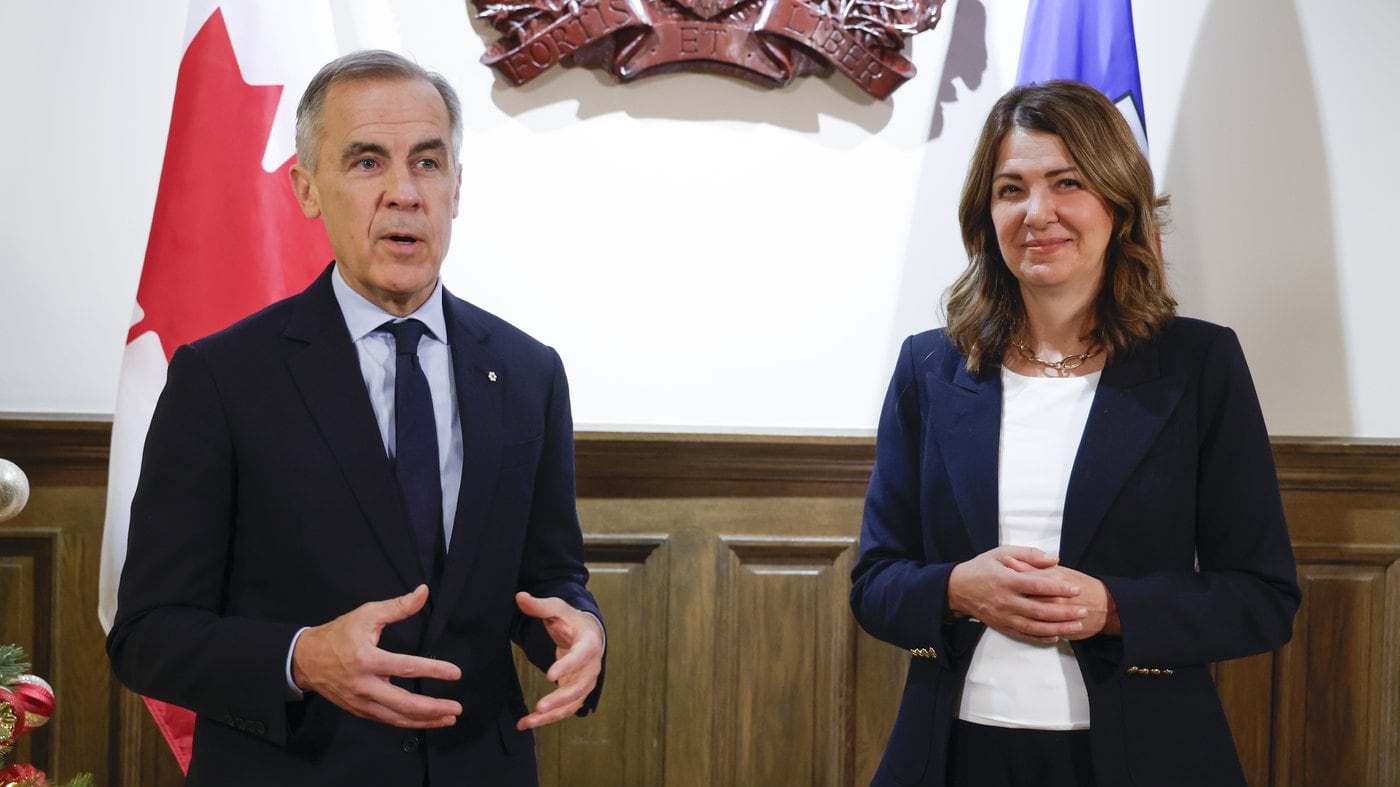
Prime Minister Mark Carney, left, meets with Alberta Premier Danielle Smith in Calgary, Alta., Thursday, Nov. 27, 2025. THE CANADIAN PRESS/Jeff McIntosh

CALGARY -- Canada and Alberta are expected to strike a deal in the next two weeks that will increase the price on carbon for the province’s industrial emitters, two sources with knowledge of the talks said, but a broader agreement to tackle oil sands greenhouse gases and green-light a new crude oil export pipeline remains elusive.

Canada’s federal government and its main oil-producing province have been in talks since November, when both parties agreed to work together to boost investment in energy production.

Prime Minister Mark Carney has rolled back climate rules in order to help the oil-and-gas sector as part of an effort to make Canada’s economy more resilient against U.S. President Donald Trump’s tariffs. He has said he is willing to get behind the construction of a new oil pipeline to the West Coast if Alberta agrees to strengthen its pollution pricing scheme and if Canada’s biggest oil sands companies will sign on to the giant $16.5 billion (US$12.1 billion) Pathways carbon capture and storage project.

But getting all of those moving parts to snap into place that address Canada’s twin goals of boosting economic growth and tackling climate change is proving to be thorny, and it is unclear whether a pricing agreement will increase the chances that the other negotiations are ultimately successful. The three parties recently missed a self-imposed April 1 deadline on divvying up the costs of the larger carbon-capture project.

The two sources said a carbon pricing agreement that would increase the effective credit cost in the province’s carbon market to $130 a metric ton is very close to being finalized. Alberta froze its headline industrial carbon price in May of last year. Credits currently trade between $20 and $40 a metric ton - too low to incentivize polluters to invest in emissions reduction technology, experts said.


The sources did not say what year the deal will require the target to be reached.
Greenhouse gases and pipelines

Experts say a carbon pricing deal is necessary first to make the economics of the Pathways project work. Pathways, first proposed by the companies in 2022, would be one of the world’s largest such projects, with the potential to significantly reduce emissions from the oil sands, Canada’s largest source of greenhouse gases.

At the same time, Canada’s oil industry is keen to grow production, and Alberta is working on a proposal for a new one-million-barrel-per-day crude oil pipeline to British Columbia’s northwest coast, hoping to entice a private company to build the line.

An Alberta government source said the province remains committed to presenting its pipeline proposal by July 1, and wants an agreement before then with Canada’s oil sands companies that commits them to building the carbon capture and storage project. Carney has said any pipeline project must be built in tandem with that project.

Critics said all of the interlocking pieces must come together in order for Canada to meet its twin goals of climate action and economic growth, which is why it is concerning that the April 1 deadline has come and gone with only partial progress.

“If they (the oil sands) don’t move forward with Pathways now, there is no way a pipeline could move ahead concurrently,” said Janetta McKenzie, director of oil and gas at the Pembina Institute, a clean energy think-tank.

Representatives for both Alberta Premier Danielle Smith and the Oil Sands Alliance, which represents the five largest Canadian oil sands companies, said negotiations are ongoing. The prime minister’s office did not respond to a request for comment.

(Reporting by Amanda Stephenson in Calgary; Editing by Caroline Stauffer and David Gaffen)
Blockbuster $22B Shell-ARC deal bodes well for expansion to LNG Canada, experts say

ByThe Canadian Press

Published: April 28, 2026

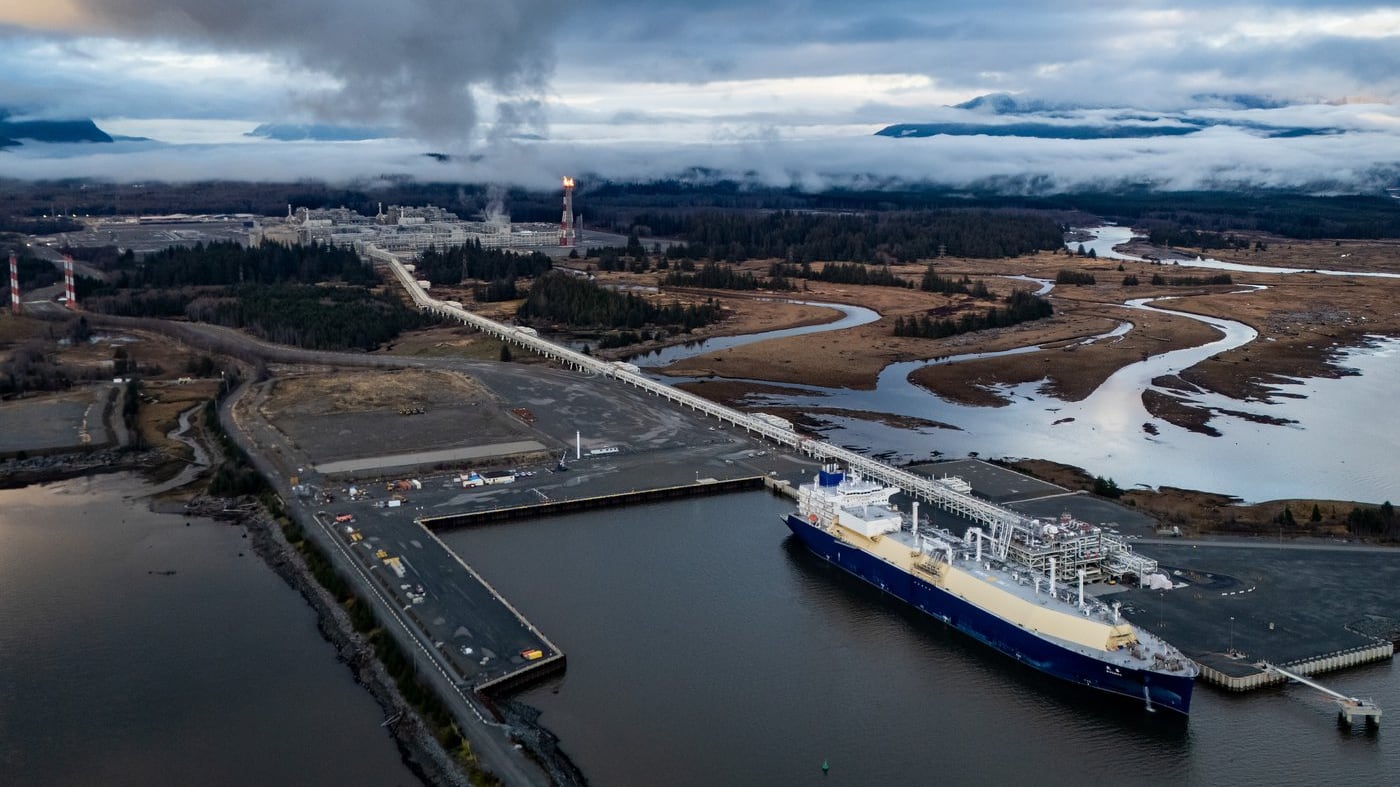
Wudang, a liquefied natural gas (LNG) tanker, fills up at an LNG Canada facility, in an aerial view, in Kitimat, B.C., on Thursday, Nov. 13, 2025. THE CANADIAN PRESS/Ethan Cairns

CALGARY — Global energy heavyweight Shell PLC's plan to buy one of Canada's biggest natural gas producers bolsters the likelihood an expansion of the LNG Canada plant will move ahead, industry experts say.

The deal to buy Calgary-based ARC Resources Ltd. is valued at $22 billion, accounting for the target company's debt. It gets Shell access to ARC's holdings in the prolific Montney shale formation that last year produced 374,000 barrels of oil equivalent per day.

And that means a steady supply to feed into the LNG Canada facility in Kitimat, B.C., where gas piped from northern B.C. and Alberta is chilled into a liquid state, loaded onto specialized tankers and sent to high-demand Asian markets.

"It's a good signal for the second phase of that LNG project that the government is looking to speed-track," said Tom Pavic, president of Sayer Energy Advisers in Calgary, calling the Montney a "world-class" resource with attractive economics.

Shell owns 40 per cent of LNG Canada alongside Japanese, Malaysian, Chinese and South Korean partners. The first phase of the project — the first of its kind in Canada — started up last summer. The consortium is contemplating doubling its capacity in a second phase, but a final investment decision has not yet been taken.


Phase 2 of LNG Canada has been referred to the federal major projects office, which was set up last year to speed along approvals for projects deemed in Canada's national interest. A project description on the office's website says an expansion would make LNG Canada the largest facility of its kind in the world and bring in $33 billion in private-sector capital to Canada.

Prime Minister Mark Carney called Shell's deal for ARC a "vote of confidence in Canada" as he headed to a cabinet meeting on Tuesday morning.

However, environmental advocates have decried the federal government's focus on fossil fuels in its push for "nation building" infrastructure.

The acquisition would elevate Shell from the seventh-biggest producer in the Montney to the No. 2 spot, behind Denver-based Ovintiv Inc., Andrew Dittmar, principal analyst at Enverus Intelligence Research, wrote in a report.

Ovintiv itself bulked up in the Montney earlier this year, closing its $3.8-billion acquisition of NuVista Energy Ltd.

Shell's interest in LNG Canada is an "important strategic component of the deal" as it would help get more Montney gas to global markets that would pay a premium price, wrote Dittmar.

"LNG Canada is geographically advantaged for shipping LNG to Asian markets that gives it a competitive edge over U.S. Gulf Coast competitors," he wrote.

The deal comes as the war in the Middle East rattles global energy markets. The fighting has knocked out production from Qatar, one of the world's biggest LNG players, and countries in Asia and Europe have seen massive natural gas price spikes as a result.

Analysts at CIBC World Markets wrote in a report last week that "Canadian LNG projects look increasingly attractive" amid the war, given this country's relatively low geopolitical risk.

Sanctioning of LNG Canada Phase 2, and the Ksi Lisims LNG plant proposed further up the West Coast near the Alaska border, have a "high likelihood" this year, the CIBC report said.

"The conflict in the Middle East highlights the advantages of Canadian LNG projects as reliable providers of liquefied natural gas from a stable jurisdiction with proximity to Asia."


This report by The Canadian Press was first published April 28, 2026.

Companies in this story: (TSX:ARX)

Lauren Krugel, The Canadian Press
Quebec premier touted supply management while meeting top U.S. trade negotiator

ByThe Canadian Press
Published: April 28, 2026 

Quebec Premier Christine Fréchette makes a funding announcement at the Rosemont-Maisonneuve Hospital in Montreal on Thursday, April 23, 2026. THE CANADIAN PRESS/Christopher Katsarov

WASHINGTON — Quebec Premier Christine Fréchette says she touted the importance of Canada’s supply management system for the dairy industry while meeting with a top U.S. official.

Fréchette met with Jamieson Greer, the top trade negotiator for President Donald Trump, in Washington on Monday.

Her trip to the U.S. capital comes ahead of negotiations between Canada, the U.S. and Mexico on the continental free-trade pact, scheduled to begin July 1.

American officials have repeatedly called for Canada to abandon its supply management system, which protects dairy and egg producers in Canada by restricting imports.

The U.S. has also listed Quebec’s language laws, which requires companies to translate labels into French, as a trade barrier.


After a day of meetings, Fréchette told reporters on Monday she defended the benefits of free trade and Quebec’s positions on the French language.

Fréchette said Greer did not push back about Canada’s supply management system.

“He didn’t press that point. Does that mean he agrees with me? I wouldn’t go that far, but he didn’t press the issue,” Fréchette said.

This report by The Canadian Press was first published April 28, 2026.

Canadian manufacturers call for tariffs on global imports of wood products


Updated: 


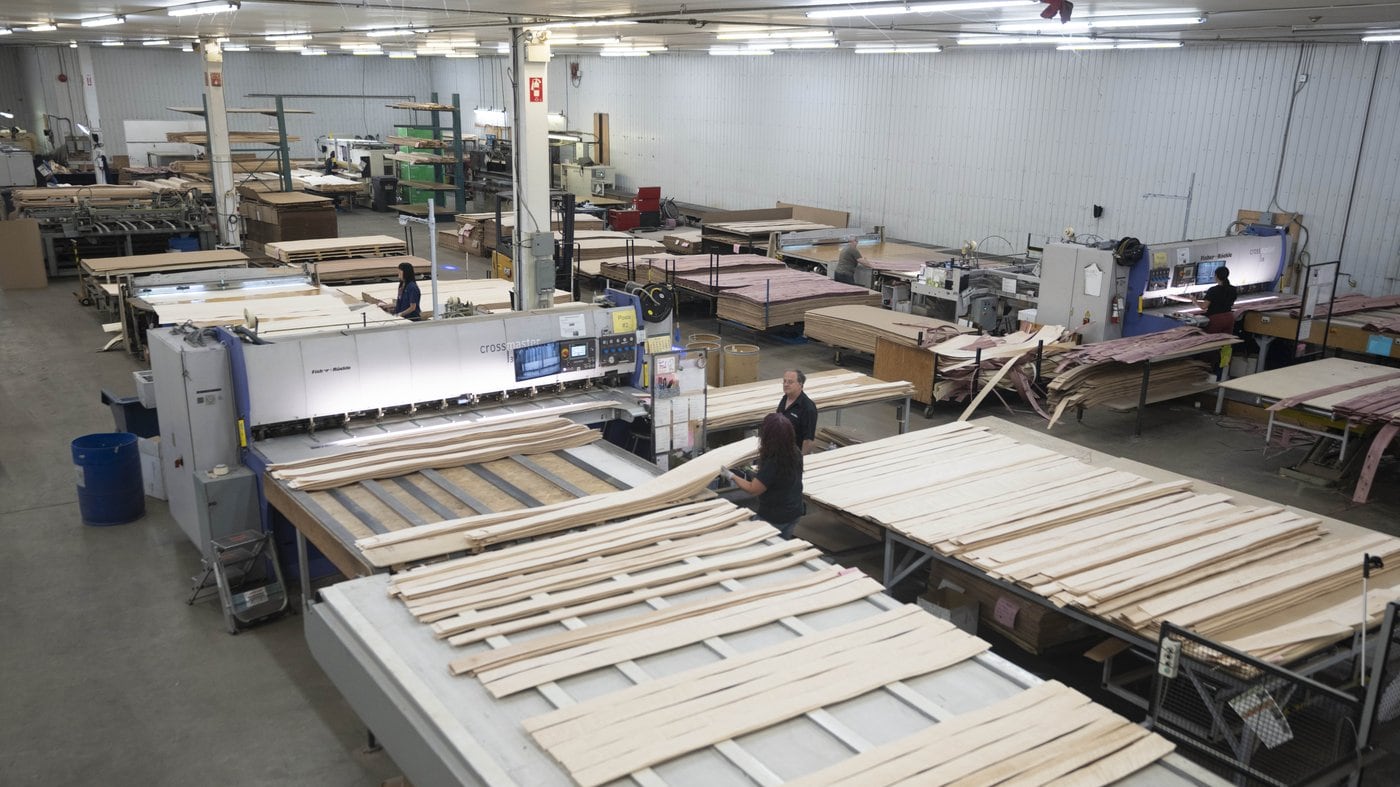
Flitches of wood are sorted to create sheets of veneer at Industrie Ergie Inc., a company that specializes in veneer face manufacturing and distributing on Friday, May 12, 2023 in Victoriaville, Quebec.

OTTAWA — Canadian wood manufacturers are welcoming a trade inquiry into wood imports but say the investigation needs to be followed by immediate provisional tariffs on foreign-made goods entering the country.

Earlier this month, Finance Minister François-Philippe Champagne said the government had directed the Canadian International Trade Tribunal to launch an inquiry into global imports of wood cabinets and vanities, hardwood flooring and storage furniture.

He said the tribunal would have 270 days to decide if increased imports of the products are causing or threatening to cause serious injury to Canadian wood product manufacturers, and to make recommendations to the government on next steps.

The Canadian Wood Products Alliance says it appreciates the government’s “swift recognition” of the situation but says it won’t be enough to provide the stability and relief the industry needs unless it’s followed by tariffs.

It says there are tens of thousands of Canadians who depend on the industry.

The alliance says there have been job losses and business closures already, and more will follow if tariffs aren’t implemented immediately.

This report by The Canadian Press was first published April 27, 2026.

Catherine Morrison, The Canadian Press

USA completes final deliveries for ITER's central solenoid

 SCI-FI-TEK  70YRS IN THE MAKING


US ITER has completed final deliveries for the central solenoid magnet for the International Thermonuclear Experimental Reactor under construction in Cadarache, southern France.
 
Five of the central solenoid's six modules have so far been stacked (Image: ITER Organization)

The most recent deliveries included busbars and leads for electrical connections between the modules; earlier, all magnet modules, support structures, and tooling components had been delivered.

The central solenoid magnet consists of six individual sections, or modules, each wound from about 6 kilometres of niobium-tin superconducting cable and weighing more than 122.5 tonnes. Each module required more than two years to fabricate, followed by testing, and then shipment to France. As part of ITER's strategy to build redundancy into mission-critical systems, a full spare module was manufactured to reduce technical and schedule risk. It will be deployed only if a problem emerges with one of the six modules already on site. The 15-year project to produce the modules was completed inside General Atomics' Magnet Technologies Center in Poway, California.

The 18-metre-tall, 4.25-metre-wide magnet is now under assembly at the ITER site. Five of six modules are stacked, with the final module - delivered in September - to be added later this year. Assembly is the responsibility of the ITER Organization, with additional technical support provided through an agreement with the US ITER project team based at Oak Ridge National Laboratory.

Once all six modules are in place, a compression structure, tasked with applying downward precompression on the module stack, will be put in place. The completed central solenoid will then remain on its platform in the Assembly Hall until all nine vacuum vessel sector modules are installed, and then will be moved into the centre of the tokamak pit.

US ITER has also delivered the 'exoskeleton' support structure that will enable the central solenoid to withstand the extreme forces it will generate. The exoskeleton is comprised of more than 9000 individual parts, manufactured by eight US suppliers.

ITER's central solenoid will generate most of the magnetic flux charge of the plasma, initiating the initial plasma current and contributing to its maintenance.

"The completion of the central solenoid magnet highlights the capability of the United States to design and deliver the world's most complex fusion systems," said Kevin Freudenberg, US ITER Interim Project Director. "Congratulations to the entire team who contributed, including those here at Oak Ridge National Laboratory who led the work, and our suppliers who fabricated critical components."

ITER's magnetic system consists of toroidal and poloidal magnetic field coils, correction coils, and the central solenoid. This is the largest superconducting system ever created. The fully assembled pulsed magnetic system will weigh almost 3000 tonnes.

ITER is a major international project to build a tokamak fusion device designed to prove the feasibility of fusion as a large-scale and carbon-free source of energy. The goal of ITER is to operate at 500 MW (for at least 400 seconds continuously) with 50 MW of plasma heating power input. It appears that an additional 300 MWe of electricity input may be required in operation. No electricity will be generated at ITER.

Thirty-five nations are collaborating to build ITER - the European Union is contributing almost half of the cost of its construction, while the other six members (China, India, Japan, South Korea, Russia and the USA) are contributing equally to the rest. Construction began in 2010 and the original 2018 first plasma target date was put back to 2025 by the ITER council in 2016. However, in June 2024, a revamped project plan was announced which aims for "a scientifically and technically robust initial phase of operations, including deuterium-deuterium fusion operation in 2035 followed by full magnetic energy and plasma current operation".

China’s Data Center Boom Could Double Power Demand by 2030

  • China’s data center capacity is expected to nearly double by 2030, driving power consumption to 289 TWh and 2.3% of total demand.

  • AI and high-performance computing are significantly increasing energy intensity, with demand growing at a 19% annual rate through 2030.

  • Operators are rapidly integrating renewables and storage to meet strict efficiency and sustainability targets while ensuring reliable power supply.

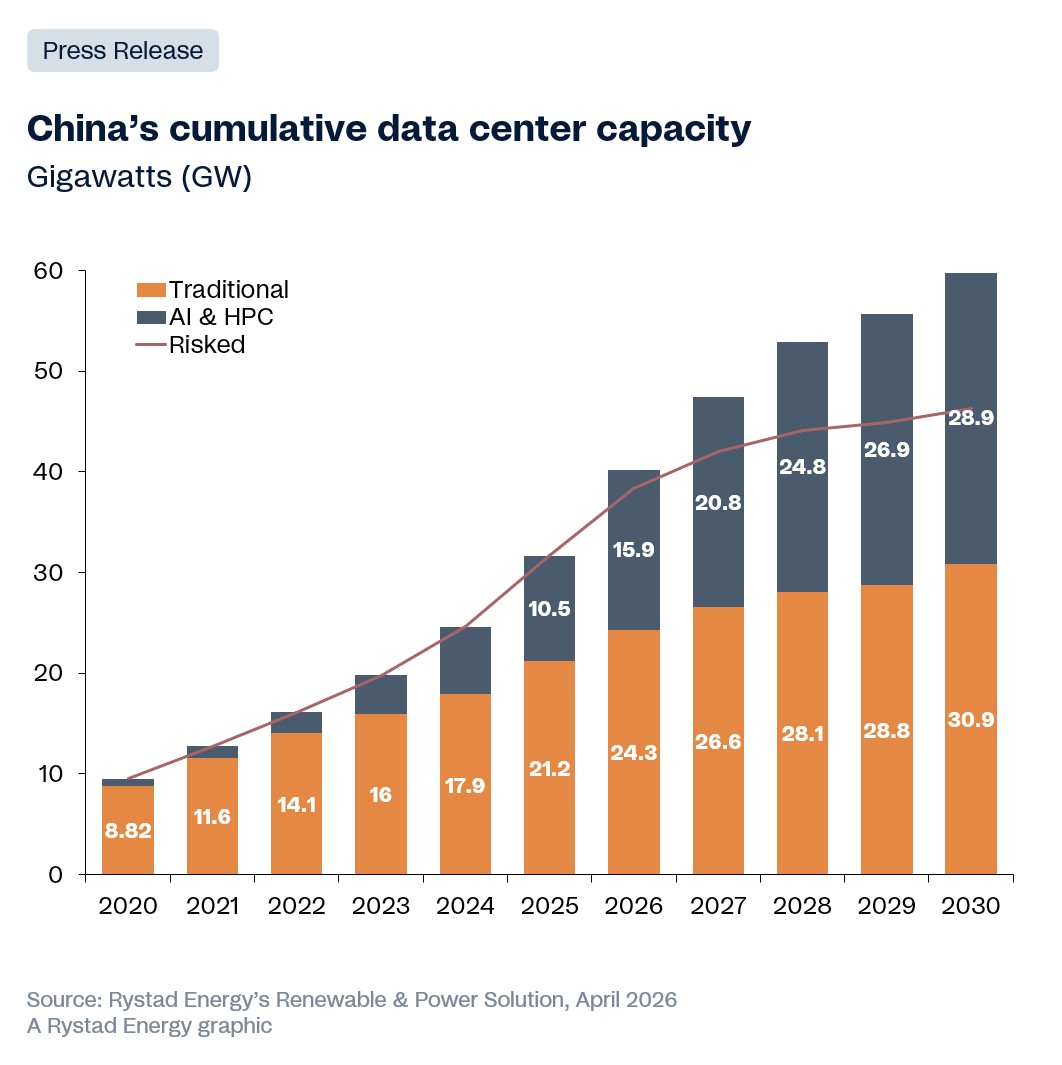
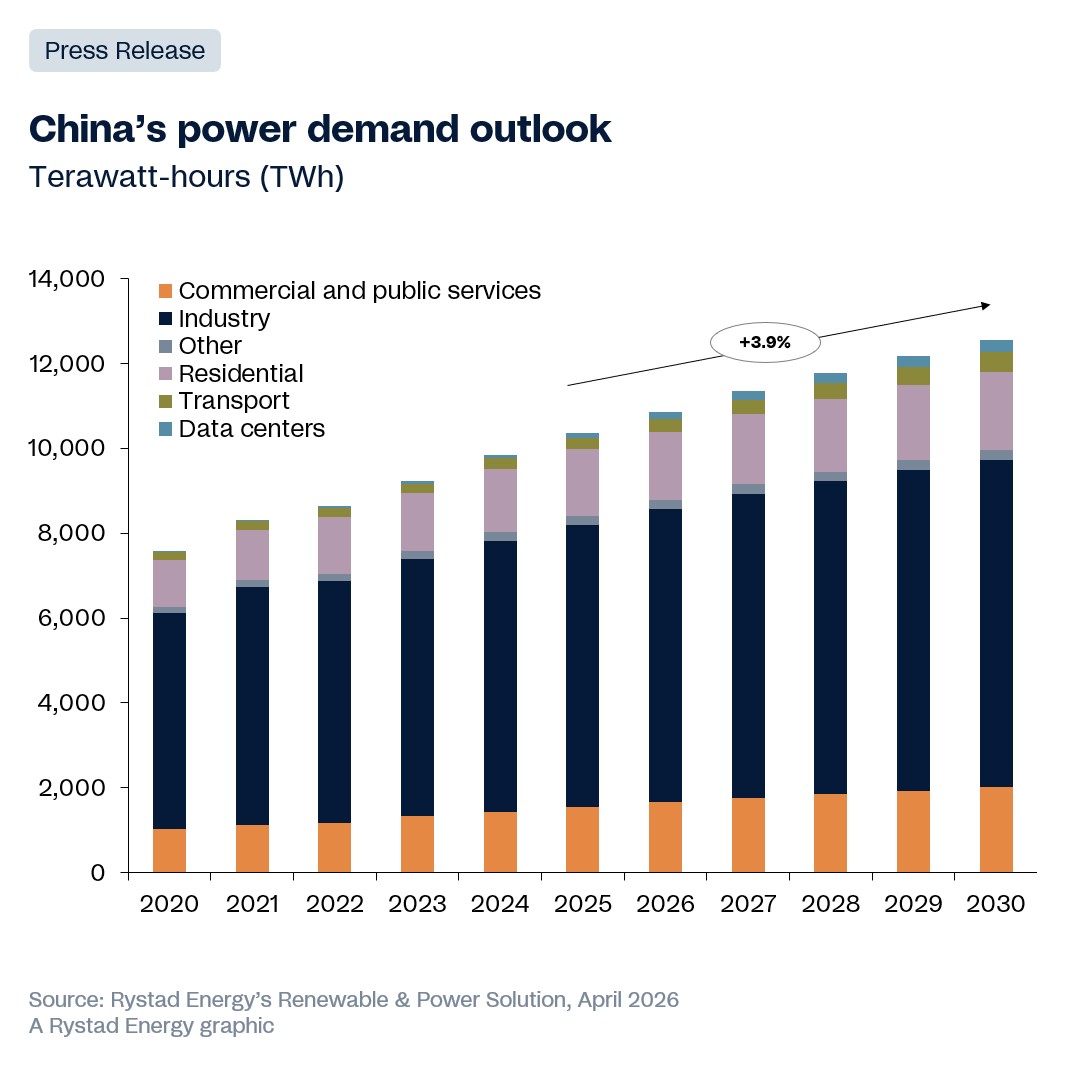
China is on course to nearly double its data center capacity within five years, with 28 gigawatts (GW) of new projects expected to come online by 2030, adding to the 32 GW already installed as of the end of last year, according to new analysis from Rystad Energy. Based on currently announced projects, with additional capacity likely to follow, this expansion is expected to lift data center power consumption to 289 terawatt-hours (TWh) by 2030. That is more than double levels seen last year and would account for around 2.3% of China’s total electricity demand. Data centers are also set to be the fastest-growing source of power demand in the country, with consumption rising at an annual rate of 19% between 2025 and 2030, driven by rapid growth in artificial intelligence (AI) and high-performance computing (HPC).

Installed capacity is projected to reach 40 GW by the end of this year, up from 32 GW at the end of 2025, reflecting the speed of buildout across the sector. AI and HPC facilities are playing a growing role, accounting for 39% of installed capacity this year and expected to rise to 48% by 2030. Unlike traditional data centers built for general-purpose computing, these facilities are significantly more energy-intensive, reshaping both the scale and geographic distribution of China’s digital infrastructure. The shift has been reinforced by the ‘East Data West Computing’ strategy launched in 2022, which established eight major computing hubs to ease pressure on land and energy in the east, with clusters emerging in regions such as Ulanqab in Inner Mongolia, where companies including 21Vianet, Huawei and ByteDance have secured around 10 GW of projects.

China's data center sector is no longer a peripheral part of the country's power system. It is becoming a structural driver of demand in its own right. What sets this buildout apart is the speed of the AI-driven shift, which is compressing timelines for both infrastructure deployment and energy procurement. Operators are not waiting for policy incentives or mandates to integrate renewables. They are increasingly combining different power sources, such as wind, solar and battery storage because reliable electricity and lower-carbon supply have become business priorities. This is most visible in western computing hubs, where abundant renewable resources can support growing AI demand,

Simeng Deng, Senior Analyst, Renewables & Power Research at Rystad Energy

Data center capacity

Rystad Energy expects China’s power demand to grow at a compound annual growth rate (CAGR) of 3.9% through 2030 as efficiency improves and the demand mix shifts, down from 6.5% during the 14th Five-Year Plan, when consumption exceeded 10,000 TWh last year. Within that slowing aggregate, the contrast between sectors is stark. Industrial demand growth is projected to decelerate from a 5.4% CAGR between 2021 and 2025 to 3% between this year and 2030. On the other hand, data centers, which accounted for just 1.2% of total power demand last year, posted a 38% CAGR over the past five years and are forecast to maintain a 19% CAGR through 2030, lifting their share of national consumption to 2.3% by the end of the decade.

Furthermore, China has made data center development a strategic priority in its 2026 to 2030 15th Five-Year Plan, with a dual focus on efficiency and renewable integration. A key metric is power usage effectiveness (PUE), which measures how efficiently a data center uses power. Targets introduced in 2024 call for at least 60% data center capacity utilization nationwide and an average PUE below 1.5 by the end of last year, with a world-leading average targeted by 2030. New large and mega data centers must already achieve a PUE of 1.25 or lower, while projects in national computing hubs face a stricter 1.2 threshold. For context, top global facilities have achieved PUE levels as low as 1.04 to 1.07 under favorable climate conditions.

Power demand outlook

Chinese operators mainly rely on grid power to support uninterrupted operations, due to China’s reliable power system, with sufficient baseload from coal and resilient grid networks to accommodate surging data center loads. The scale of China's data center buildout also offers the chance to boost the country's renewable energy consumption. All new data center projects within the eight national computing hubs are required to source at least 80% of their power from renewable energy under the 2025 action plan for green data centers, and operators are responding with diversified procurement strategies to enhance their renewable power consumption. Green electricity certificate (GEC) procurement remains the most widely used method, offering flexibility without requiring physical access to renewable infrastructure, but green power trading, direct connection to offsite wind or solar farms, and onsite generation are all in active use, with many operators layering multiple approaches to meet both renewable targets and reliability requirements.

The integration of wind, solar and battery energy storage is emerging as a key model for the sector’s next phase besides grid connection. Several projects reflect this approach, including Zhongjin’s Ulanqab computing base, which is connected to 200 MW of wind, 100 MW of solar and 45 MW/180 megawatt-hours (MWh) of battery storage, making it one of China’s first zero-carbon computing projects. China Mobile’s Qaidam Green microgrid operates with 122 MW-peak of rooftop solar and 75 MW/300 MWh of on-site battery storage. Tencent has also combined rooftop solar, GEC procurement and green power trading at its Qingyuan cloud computing center.

By Rystad Energy

Iran Reactivates Derelict Tanker as Kharg Island Nears Storage Limit

  • Kharg Island, which processes around 90% of Iran's energy exports, has roughly 13 million barrels of spare onshore storage remaining at current inflow rates of 1.0-1.1 million bpd -- putting saturation in late April to early May.

  • Iran has reactivated the M/T Nasha, a 30-year-old crude carrier, as floating storage, adding roughly 2 million barrels of additional capacity -- described by analysts as 'not much.'

  • JP Morgan estimates Iran has 20-26 days of total capacity remaining before oil field shutdowns become necessary, a scenario that could cause permanent, difficult-to-reverse well damage.

Trump's blockade is having a predictable effect on Iran's economy and oil industry, with reports that the regime is scrambling to repurpose old and rusty tankers as floating storage.  Kharg Island is hitting capacity and the results could lead to disaster for Iran's oil wells. 

The regime is reportedly moving to expand crude storage at the island, where around 90% of their energy exports are processed, by reactivating a 30-year-old crude carrier called M/T Nasha.  It's a bad sign for Iran, indicating that the country’s main oil hub is nearing its onshore storage limit.  Maritime analysts say the vessel, which had been anchored empty for years, is being repositioned as floating storage to absorb crude that still has to move out of the system. 

To prepare for the possibility of running out of oil storage space at Kharg Island, Iran has brought NASHA (9079107) out of retirement. She's a 30yo VLCC that's been anchored empty for the past few years; currently spending 4 days on a trip that should take 1.5–2 days. #OOTT pic.twitter.com/jFhq2xP0mU

— TankerTrackers.com, Inc. (@TankerTrackers) April 23, 2026

But how much time will decommissioned tankers buy Iran?  Current estimates indicate Kharg Island has roughly 13 million barrels of spare onshore storage remaining at the terminal, while net inflows are running at about 1.0 million to 1.1 million barrels per day.  At that pace, storage could be filled in about 12 to 13 days, which places the saturation point in late April to early May if current flows hold.  A large tanker gives them another potential 2 million barrels of capacity.  In other words, not much. 

This data is a near match to JP Morgan's recent assessment that Iran has between 20 - 26 days of capacity (including emergency measures) before they hit the wall and are forced to shut down their oil fields. 

Trump's assertion on Sunday that Iran's oil infrastructure may "explode in three days" due to the blockade might be a bit optimistic, but with the threat of overcapacity it is likely that the Iranians will be forced to the negotiating table in the near term.

The regime's only other option is to divert the oil away from Kharg to the Jask Oil Terminal at Kooh Mobarak using the Goreh-Jask pipeline.  But this storage is limited and may already be full.

There are also limited reports that Iran is increasing "flaring" at wells to burn off excess.  To keep wells operating safely (avoiding sudden shutdowns that can cause permanent geological issues), operators are flaring off excess associated gas (and possibly some liquid byproducts) at a heightened rate.

If wells are forced to shut down due to lack of storage, this could cause permanent damage and render the wells unusable in the future.  Recovery is expensive and difficult. 

If the current data is accurate, then Iran has approximately two more weeks before their economy is destroyed.  Loss of $430 million per day in export revenues aside, permanent damage to their oil fields would result in a long term economic disaster. 

The danger of well shutdowns is probably the reason why the regime has offered new proposals every few days to open the Strait of Hormuz, though, they continue to call for a separate negotiation on their estimated 970 pounds of enriched Uranium stockpile. 

There is little incentive for Trump to lift the blockade at this time, given the amount of leverage he will have over the Iranian economy if he maintains restrictions on their oil exports for another two weeks.  The regime is trapped between a rock and a hard place, and will have to decide soon if their oil wells are more important to them than their Uranium.    

By Zerohedge 

UK Borrowing Costs Hit Highest Since 2008 as Oil Tops $111

  • UK 10-year gilt yields topped 5% for the third time since the Iran war started, after Brent crude climbed above $111 following the breakdown of ceasefire talks between the U.S. and Iran.

  • Britain's government borrowing costs have risen more than any other developed economy over the past two months, with the two-year gilt up over a full percentage point since the start of March.

  • Analysts warn the UK is uniquely exposed to the energy shock given its dependence on oil and gas imports and a decade of above-target inflation, with the UK-U.S. yield spread now at 70 basis points.

The government’s borrowing costs have risen to their joint highest level since the 2008 financial crisis, after a sharp jump in the oil price prompted a sell-off in UK debt because of concerns over inflation.

The yield on the 10-year gilt – the main benchmark for any government’s long-term ability to borrow – climbed back above five per cent for only the third time since the Iran war broke out on Tuesday, laying bare the extent to which Britain is almost uniquely exposed to the ongoing energy shock.

The UK’s government borrowing costs have risen the most of any developed economy in the past two months, with moves particularly pronounced at the shorter end of the yield curve, which closely tracks the interest rate path

The yield on the two-year gilt has risen by more than a full percentage point since the start of March, as traders were forced aggressively to pare back earlier bets on the number Bank of England rate cuts they forecast this year.

But as the war has dragged on, the sell-off has spread to the government’s longer-dated coupons, as fears the country will struggle to insulate itself from future crosscurrents will compound bond markets’ reservations over the country’s growth prospects and grasp on the public finances.

Analysts have warned that a succession of policy errors and the UK’s reliance on oil and gas imports mean the British economy is particularly vulnerable to external shocks because of the knock-on effect that higher energy imports will have on already elevated prices.

And the path has exaggerated the pre-existing difference – known as the spread – between the UK’s borrowing costs and those charged to the US. The spread between the 10-year gilt yield and the US Treasury’s interest rate has now reached 70 basis points for only the second time since late 2025.

‘Policy mistakes’ blamed for sky-high borrowing costs

“Over the past decade, the UK economy has suffered a succession of policy mistakes and resulting rates of inflation which have consistently exceeded the prevailing trends across other major economies,” Kallum Pickering, chief economist at Peel Hunt, wrote in a note. “Unsurprisingly, it no longer takes much to spook UK government debt markets.”

The Bank of England has struggled to bring price rises to heel as successfully as rival central banks ever since since Russia’s full-scale invasion of Ukraine and Liz Truss’s fateful mini-Budget combined to push inflation into double digits in 2022. Stubborn inflation is a major bugbear of bond investors, as price rises eat into the real returns one generates from bond over the course of its maturity.

Before the war, price rises had been forecast to mollify, after three years of stubbornly sticking above the Bank’s two per cent target. And a succession of positive government borrowing figures – boosted by record tax receipts – had helped alleviate traders’ concerns over the government’s grasp on the public finances.

But those positive developments, which had helped bring down borrowing costs over the first three months of the year, were knocked off course by the Iran war and its effect on the oil price. On Tuesday, Brent crude was trading at over $111, its highest price since the war began on 28 February, after ceasefire talks between the US and Iran broke down.

Kathleen Brooks, research director at XTB, said: “Yields are likely to creep higher as we lead up to the key central bank meetings this week, and as we wait to hear what happens next in the Strait of Hormuz.”

By City AM