.JPG)
The UK media’s shocking role in Britain’s anti-trans movement
Through sustained media attention, political opportunism and well-funded campaigning networks, trans people have been elevated from a small minority seeking equal treatment into a symbolic battleground in Britain's culture wars.
“I was just quietly getting on with my life and then the roof fell in. I just want to get back to how things were,” remarked a trans person following the Supreme Court case ruling in April 2025, that the legal definition of a woman is based on biological sex.
The comment captures the reality many transgender people in Britain now face. For years, trans people lived largely outside the spotlight, navigating ordinary lives while seeking acceptance, healthcare and legal recognition. Today, however, they find themselves at the centre of one of the most fiercely contested political and cultural battles in the country.
Trans people represent a tiny fraction of the UK population, yet they occupy a remarkable amount of media and political attention. More often than not, that attention is not generated by trans people themselves, but by politicians, campaign groups and commentators, who frame transgender lives as a problem to be solved, sometimes even as some kind of threat to be dealt with.
A major new report from Amnesty International UK suggests this is no accident.
The report the media barely noticed
On 21 May, Amnesty International UK published Like a Snowball:The Growth and Impact of the Gender Critical Movement in the UK, an extensive analysis of the rise of anti-trans campaigning and its influence on public discussion.
The research found that between January 2020 and April 2025, five of Britain’s largest newspapers, the Times, Sunday Times, Telegraph, Guardian and the Sun, published approximately 17,000 articles on trans-related issues.
That amounts to an average of 264 articles every month, or roughly nine every day.
The analysis showed that trans people themselves were largely absent from this coverage. Instead, politicians, commentators and anti-trans campaigners dominated the conversation, and, when trans people did appear, it was mostly as criminals or murder victims.
The Times and Sunday Times produced the highest volume of coverage, averaging more than 83 articles per month. While the Sun, which published the least, averaged 38 articles monthly.
This level of attention is extraordinary when viewed against the size of the population being discussed. According to the 2021 Census, approximately 262,000 people in England and Wales identified as transgender or had a gender identity different from their sex registered at birth, around 0.5% of the population.
Yet you’d struggle to find another issue affecting such a small minority that receives anything like comparable media attention.
A debate the public isn’t asking for
The intensity of coverage is also grossly disproportionate when you consider public priorities.
Ahead of the 2024 general election, issues relating to trans rights, gender identity and sex didn’t feature among voters’ top 16 concerns.
Nevertheless, media analysis found that questions of sex, gender and sexuality dominated reporting on so-called “culture war” topics in the weeks before the election.
So, while the public was primarily concerned with paying bills and accessing public services, much of the media and political class remained fixated on trans people.
As Amnesty’s gender justice programme director, Chiara Capraro, notes:
“There is nothing balanced about the way trans people’s lives are reported. Anti-trans narratives dominate coverage and are often presented as fact, while trans people themselves are pushed to the margins or erased entirely.”
Capraro argues that this isn’t an organic development but the product of coordinated efforts to reshape public opinion and influence policy.
“The consequences are real, affecting trans people’s equality, safety and wellbeing across the UK.
“Trans people have become a lightning rod in wider culture wars, with harmful narratives amplified across powerful platforms, shaping public perceptions.”
How Britain’s anti-trans media campaign took shape
Amnesty argues that while transphobia predated today’s ‘gender critical’ (GC) movement, the movement itself can be traced back to 2017-2018, during public consultations by the Scottish and Westminster governments on reforming the Gender Recognition Act 2004 (GRA).
Shortly before the Westminster consultation closed, the GC group Fair Play for Women took out a full-page advert in the Metro urging readers to oppose the reforms and providing a pre-filled consultation response. According to the government’s own analysis, more than 18,000 submissions used this template, accounting for around 18% of all responses.
Earlier research by trans rights activist MimmyMum also identifies 2017 as a turning point in British media coverage of transgender issues. Anti-trans reporting accelerated during debates over GRA reform, with particular focus on the role of the Times, especially through opinion columns by Janice Turner and reporting by Andrew Gilligan.
The pattern quickly spread across much of the national press, including the Telegraph and Daily Mail. Stories questioning trans rights increasingly became a reliable source of engagement, clicks and controversy. Even the traditionally liberal Guardian and Observer adopted a more trans-hostile tone, sparking internal staff disputes and contributing to the resignation of columnist Suzanne Moore in 2020 after she defended the view that biological sex is real and that stating so is not transphobic.
MimmyMum further argues that the BBC followed a similar path, claiming that BBC News coverage was influenced by senior gender-critical figures within the corporation.
What began as a niche policy debate soon became a recurring media obsession, creating the impression of a major national crisis despite the relatively small number of people directly affected.
Critics of this shift argue that it was never simply a spontaneous public debate. Trade unions themselves have long warned that transgender rights were being weaponised for political purposes. In 2020, the TUC Congress passed a motion stating that “a majority Conservative government is using trans rights as a wedge issue to divide working class people,” and “myths and tropes about trans and non-binary people are regularly being promoted in the Murdoch papers.”
Inevitably too, the issues became caught up in the deep state/free speech narratives, most famously when Father Ted’s co-creator Graham Linehan was arrested on suspicion of inciting violence against transgender people on social media. Totally predictably, Nigel Farage and Elon Musk piled in, seeing the arrest as yet more evidence of denying people the right to say whatever they liked. Eventually the police apologised to Linehan on the grounds of insufficient evidence of the incitement to violence charge.
The organisations behind the movement
Amnesty’s report also places the rise of anti-trans activism within a broader network of organisations campaigning against abortion rights, LGBTQ+ equality and gender equality.
Previous Amnesty research identified 65 organisations operating in this space, three-quarters of which are registered charities. Together, 32 of these organisations spent more than £106 million between 2019 and 2023.
Amnesty’s mapping found that out of more than 50 organisations campaigning to restrict the rights of trans people, only three existed prior to 2017, confirming the rapid growth of the movement in recent years.
The report also highlights the increasing influence of international networks, particularly those linked to the United States.
Among them is the UK branch of Alliance Defending Freedom (ADF), who’s spending rose by 258% between 2019 and 2024.
ADF is best known for its role in legal campaigns that helped overturn Roe v. Wade in the United States and has supported efforts to restrict LGBTQ+ rights around the world.
Amnesty notes that the largest category of ‘gender critical’ organisations consists of employee networks across sectors including the civil service, education, healthcare and retail. Many of these groups are affiliated with the Sex Equality and Equity Network (SEEN), which states that it exists to support staff with gender-critical views and promote “sex equality” based on the belief that biological sex should not be conflated with gender identity.
Rather than emerging organically, opposition to trans rights was built through increasingly organised networks backed by substantial financial resources and political influence.
Real-life consequences
As anti-trans sentiment has intensified in Britain’s media, transphobic hate crime has continued to rise.
Home Office statistics show a marked rise in recorded transgender hate crimes after 2017, with the largest jump occurring between 2021 and 2022, when these crimes rose by 56% in a single year.

The official Home Office report explicitly states:
“Transgender hate crimes had been rising before the fall seen in the last year, and now account for 3% of all hate crimes recorded, up from 1% a decade ago (year ending March 2014).”
The most high-profile case was the murder of 16-year-old transgender girl Brianna Ghey in February 2023. Although her killing was not initially treated as a hate crime, evidence suggested transphobia played a role in motivating her attackers.
Journalist and legal researcher Jess O’Thomson argues that Britain’s media landscape has helped fuel a hostile environment for trans people.
“The media over here is also incredibly transphobic,” she said. “There’s a reason we’re referred to as TERF Island, and even the left-wing press has massive problems when it comes to trans inclusion.”
On the reporting of Brianna Grey, O’Thomson said she was struck by the gap between what emerged in court and how the case was covered.
“During the trial, sitting there in court and then reading the reporting of the people next to me, I felt like I was being gaslit. Because I was in court hearing this incredibly transphobic material, with none of it being reported on as transphobia during the trial, or even after the verdict.
She argues that the press “deliberately obscured” the role of transphobia in this case, masking the wider impact of anti-trans prejudice in British society.
The report the media barely mentioned
And on media downplaying, what I noticed when writing this week’s RWW, is how little attention Amnesty UK’s report received from the British media. A study examining the role of media in amplifying anti-trans narratives was itself largely ignored by the very institutions it scrutinised.
One of the few outlets to cover the report was UnHerd, through an article by freelance journalist Janet Murray. Murray is well known for her gender-critical views, having penned a piece in the Telegraph in April, headlined ‘Even mentioning JK Rowling’s name gets you cancelled by the pro-trans mob.’
Murray argues that Amnesty’s findings represent a decline in the organisation’s credibility, suggesting that the report resembled “a dossier on a dangerous extremist network” rather than an investigation into a movement campaigning against trans rights.
She criticised Amnesty’s conclusion that journalists should platform more trans voices, produce more positive stories about trans people and avoid sensationalist “gotcha” questions. For Murray, this was evidence of activism masquerading as human rights research.
Yet this response arguably illustrates Amnesty’s concerns rather than refuting them.
When weighed against the discrimination, harassment, hate crimes and violence experienced by many trans people, claims that gender-critical campaigners have suffered reputational damage for expressing their views are surely comparatively minor.
A minority turned into a scapegoat
Regardless of where individuals stand on the legal questions involved, one fact remains difficult to ignore: trans people have become a lightning rod for wider cultural anxieties.
A population representing less than one per cent of society has been transformed into a national obsession.
Through sustained media attention, political opportunism and well-funded campaigning networks, trans people have been elevated from a small minority seeking equal treatment into a symbolic battleground in Britain’s culture wars.
The transgender person who said they wanted life to return to normal was expressing a sentiment that many would recognise. Most people don’t want to be at the centre of a national debate. They simply want to live their lives. The tragedy is that much of Britain’s media seems unwilling to let them.
Through sustained media attention, political opportunism and well-funded campaigning networks, trans people have been elevated from a small minority seeking equal treatment into a symbolic battleground in Britain's culture wars.
Left Foot Forward
Jun 6, 2026
“I was just quietly getting on with my life and then the roof fell in. I just want to get back to how things were,” remarked a trans person following the Supreme Court case ruling in April 2025, that the legal definition of a woman is based on biological sex.
The comment captures the reality many transgender people in Britain now face. For years, trans people lived largely outside the spotlight, navigating ordinary lives while seeking acceptance, healthcare and legal recognition. Today, however, they find themselves at the centre of one of the most fiercely contested political and cultural battles in the country.
Trans people represent a tiny fraction of the UK population, yet they occupy a remarkable amount of media and political attention. More often than not, that attention is not generated by trans people themselves, but by politicians, campaign groups and commentators, who frame transgender lives as a problem to be solved, sometimes even as some kind of threat to be dealt with.
A major new report from Amnesty International UK suggests this is no accident.
The report the media barely noticed
On 21 May, Amnesty International UK published Like a Snowball:The Growth and Impact of the Gender Critical Movement in the UK, an extensive analysis of the rise of anti-trans campaigning and its influence on public discussion.
The research found that between January 2020 and April 2025, five of Britain’s largest newspapers, the Times, Sunday Times, Telegraph, Guardian and the Sun, published approximately 17,000 articles on trans-related issues.
That amounts to an average of 264 articles every month, or roughly nine every day.
The analysis showed that trans people themselves were largely absent from this coverage. Instead, politicians, commentators and anti-trans campaigners dominated the conversation, and, when trans people did appear, it was mostly as criminals or murder victims.
The Times and Sunday Times produced the highest volume of coverage, averaging more than 83 articles per month. While the Sun, which published the least, averaged 38 articles monthly.
This level of attention is extraordinary when viewed against the size of the population being discussed. According to the 2021 Census, approximately 262,000 people in England and Wales identified as transgender or had a gender identity different from their sex registered at birth, around 0.5% of the population.
Yet you’d struggle to find another issue affecting such a small minority that receives anything like comparable media attention.
A debate the public isn’t asking for
The intensity of coverage is also grossly disproportionate when you consider public priorities.
Ahead of the 2024 general election, issues relating to trans rights, gender identity and sex didn’t feature among voters’ top 16 concerns.
Nevertheless, media analysis found that questions of sex, gender and sexuality dominated reporting on so-called “culture war” topics in the weeks before the election.
So, while the public was primarily concerned with paying bills and accessing public services, much of the media and political class remained fixated on trans people.
As Amnesty’s gender justice programme director, Chiara Capraro, notes:
“There is nothing balanced about the way trans people’s lives are reported. Anti-trans narratives dominate coverage and are often presented as fact, while trans people themselves are pushed to the margins or erased entirely.”
Capraro argues that this isn’t an organic development but the product of coordinated efforts to reshape public opinion and influence policy.
“The consequences are real, affecting trans people’s equality, safety and wellbeing across the UK.
“Trans people have become a lightning rod in wider culture wars, with harmful narratives amplified across powerful platforms, shaping public perceptions.”
How Britain’s anti-trans media campaign took shape
Amnesty argues that while transphobia predated today’s ‘gender critical’ (GC) movement, the movement itself can be traced back to 2017-2018, during public consultations by the Scottish and Westminster governments on reforming the Gender Recognition Act 2004 (GRA).
Shortly before the Westminster consultation closed, the GC group Fair Play for Women took out a full-page advert in the Metro urging readers to oppose the reforms and providing a pre-filled consultation response. According to the government’s own analysis, more than 18,000 submissions used this template, accounting for around 18% of all responses.
Earlier research by trans rights activist MimmyMum also identifies 2017 as a turning point in British media coverage of transgender issues. Anti-trans reporting accelerated during debates over GRA reform, with particular focus on the role of the Times, especially through opinion columns by Janice Turner and reporting by Andrew Gilligan.
The pattern quickly spread across much of the national press, including the Telegraph and Daily Mail. Stories questioning trans rights increasingly became a reliable source of engagement, clicks and controversy. Even the traditionally liberal Guardian and Observer adopted a more trans-hostile tone, sparking internal staff disputes and contributing to the resignation of columnist Suzanne Moore in 2020 after she defended the view that biological sex is real and that stating so is not transphobic.
MimmyMum further argues that the BBC followed a similar path, claiming that BBC News coverage was influenced by senior gender-critical figures within the corporation.
What began as a niche policy debate soon became a recurring media obsession, creating the impression of a major national crisis despite the relatively small number of people directly affected.
Critics of this shift argue that it was never simply a spontaneous public debate. Trade unions themselves have long warned that transgender rights were being weaponised for political purposes. In 2020, the TUC Congress passed a motion stating that “a majority Conservative government is using trans rights as a wedge issue to divide working class people,” and “myths and tropes about trans and non-binary people are regularly being promoted in the Murdoch papers.”
Inevitably too, the issues became caught up in the deep state/free speech narratives, most famously when Father Ted’s co-creator Graham Linehan was arrested on suspicion of inciting violence against transgender people on social media. Totally predictably, Nigel Farage and Elon Musk piled in, seeing the arrest as yet more evidence of denying people the right to say whatever they liked. Eventually the police apologised to Linehan on the grounds of insufficient evidence of the incitement to violence charge.
The organisations behind the movement
Amnesty’s report also places the rise of anti-trans activism within a broader network of organisations campaigning against abortion rights, LGBTQ+ equality and gender equality.
Previous Amnesty research identified 65 organisations operating in this space, three-quarters of which are registered charities. Together, 32 of these organisations spent more than £106 million between 2019 and 2023.
Amnesty’s mapping found that out of more than 50 organisations campaigning to restrict the rights of trans people, only three existed prior to 2017, confirming the rapid growth of the movement in recent years.
The report also highlights the increasing influence of international networks, particularly those linked to the United States.
Among them is the UK branch of Alliance Defending Freedom (ADF), who’s spending rose by 258% between 2019 and 2024.
ADF is best known for its role in legal campaigns that helped overturn Roe v. Wade in the United States and has supported efforts to restrict LGBTQ+ rights around the world.
Amnesty notes that the largest category of ‘gender critical’ organisations consists of employee networks across sectors including the civil service, education, healthcare and retail. Many of these groups are affiliated with the Sex Equality and Equity Network (SEEN), which states that it exists to support staff with gender-critical views and promote “sex equality” based on the belief that biological sex should not be conflated with gender identity.
Rather than emerging organically, opposition to trans rights was built through increasingly organised networks backed by substantial financial resources and political influence.
Real-life consequences
As anti-trans sentiment has intensified in Britain’s media, transphobic hate crime has continued to rise.
Home Office statistics show a marked rise in recorded transgender hate crimes after 2017, with the largest jump occurring between 2021 and 2022, when these crimes rose by 56% in a single year.
The official Home Office report explicitly states:
“Transgender hate crimes had been rising before the fall seen in the last year, and now account for 3% of all hate crimes recorded, up from 1% a decade ago (year ending March 2014).”
The most high-profile case was the murder of 16-year-old transgender girl Brianna Ghey in February 2023. Although her killing was not initially treated as a hate crime, evidence suggested transphobia played a role in motivating her attackers.
Journalist and legal researcher Jess O’Thomson argues that Britain’s media landscape has helped fuel a hostile environment for trans people.
“The media over here is also incredibly transphobic,” she said. “There’s a reason we’re referred to as TERF Island, and even the left-wing press has massive problems when it comes to trans inclusion.”
On the reporting of Brianna Grey, O’Thomson said she was struck by the gap between what emerged in court and how the case was covered.
“During the trial, sitting there in court and then reading the reporting of the people next to me, I felt like I was being gaslit. Because I was in court hearing this incredibly transphobic material, with none of it being reported on as transphobia during the trial, or even after the verdict.
She argues that the press “deliberately obscured” the role of transphobia in this case, masking the wider impact of anti-trans prejudice in British society.
The report the media barely mentioned
And on media downplaying, what I noticed when writing this week’s RWW, is how little attention Amnesty UK’s report received from the British media. A study examining the role of media in amplifying anti-trans narratives was itself largely ignored by the very institutions it scrutinised.
One of the few outlets to cover the report was UnHerd, through an article by freelance journalist Janet Murray. Murray is well known for her gender-critical views, having penned a piece in the Telegraph in April, headlined ‘Even mentioning JK Rowling’s name gets you cancelled by the pro-trans mob.’
Murray argues that Amnesty’s findings represent a decline in the organisation’s credibility, suggesting that the report resembled “a dossier on a dangerous extremist network” rather than an investigation into a movement campaigning against trans rights.
She criticised Amnesty’s conclusion that journalists should platform more trans voices, produce more positive stories about trans people and avoid sensationalist “gotcha” questions. For Murray, this was evidence of activism masquerading as human rights research.
Yet this response arguably illustrates Amnesty’s concerns rather than refuting them.
When weighed against the discrimination, harassment, hate crimes and violence experienced by many trans people, claims that gender-critical campaigners have suffered reputational damage for expressing their views are surely comparatively minor.
A minority turned into a scapegoat
Regardless of where individuals stand on the legal questions involved, one fact remains difficult to ignore: trans people have become a lightning rod for wider cultural anxieties.
A population representing less than one per cent of society has been transformed into a national obsession.
Through sustained media attention, political opportunism and well-funded campaigning networks, trans people have been elevated from a small minority seeking equal treatment into a symbolic battleground in Britain’s culture wars.
The transgender person who said they wanted life to return to normal was expressing a sentiment that many would recognise. Most people don’t want to be at the centre of a national debate. They simply want to live their lives. The tragedy is that much of Britain’s media seems unwilling to let them.
Is the NFL actually distancing itself from Pride Month, or is GB News selectively presenting evidence to fit a preferred political narrative?
Left Foot Forward
Jun 6, 2026
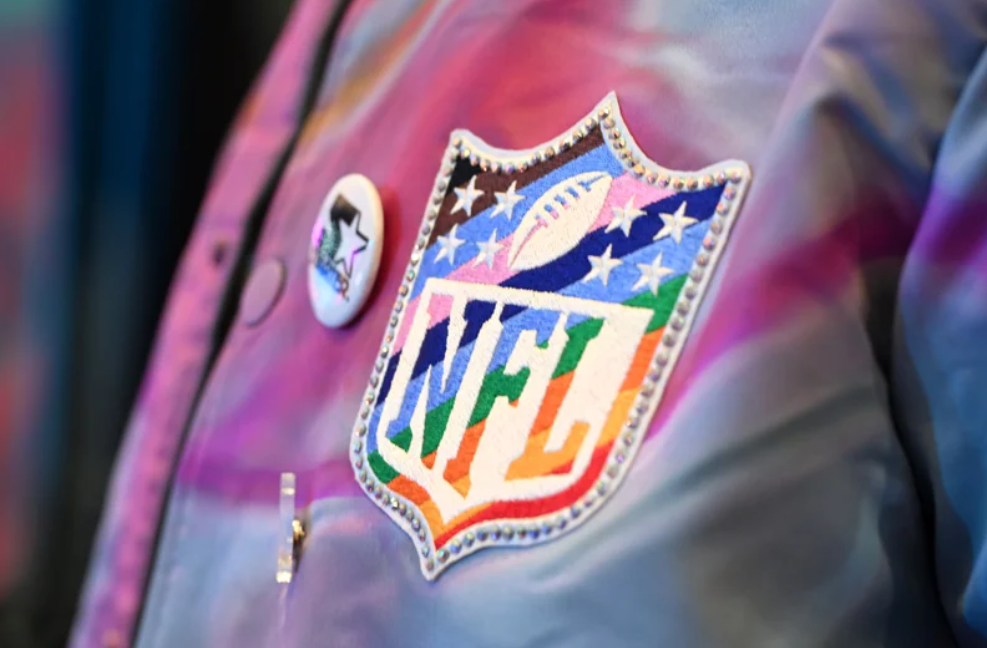
Pride Month is underway, but rather than recognising the annual global observance celebrating LGBTQ+ history, visibility and the ongoing struggle for equality, GB Newschose to celebrate the National Football League’s (NFL) apparent decision to distance itself from the event.
In a triumphant report, the broadcaster heralded what it described as the “latest corporate heel-turn on woke culture in America,” pointing to how the NFL’s official X and Instagram accounts, which collectively reach almost 70 million followers, did not publish dedicated Pride Month messages on June 1.
The article gloats that how, in previous years, the league had posted messages such as “Football is for everyone” and wished followers a “Happy Pride,” and how this year, nine of the NFL’s 32 teams also refrained from making Pride-related posts on the opening day of the month.
Yet moments later, the right-wing outlet acknowledges that the NFL’s official X account actively reposted Pride Month messages from several franchises, including the New York Giants, Seattle Seahawks, Los Angeles Chargers, San Francisco 49ers, Buffalo Bills, Tampa Bay Buccaneers, Houston Texans and Carolina Panthers.
So, is the NFL actually distancing itself from Pride Month, or is GB News selectively presenting evidence to fit a preferred political narrative?
The article goes on to note that the NFL still maintains a Pride section on its official website, though it emphasises that the page appears not to have been updated for several years.
The channel is also forced to concede that other major American sports organisations have continued to mark Pride Month publicly. Major League Baseball, the National Basketball Association and the National Hockey League all issued Pride-related messages on social media.
But even that is not where the story ends, as the report turns its attention to Donald Trump.
Readers are reminded that Trump has repeatedly called on sports teams to reverse changes made during the social and political upheavals of 2020, including urging the NFL’s Washington Commanders to restore their former name, the Redskins.
The franchise abandoned the name during the Black Lives Matter protests, initially rebranding as the Washington Football Team before adopting the Commanders identity in 2022.
The article notes Trump’s threat to block the team’s proposed stadium deal unless it reverted to its former name. What it doesn’t dwell on is the fact that the stadium agreement ultimately proceeded without any name change.
Nevertheless, Trump emerges as the unmistakable protagonist of the piece. The headline itself leaves little doubt about how readers are expected to interpret events: “NFL teams shun Pride Month as tide turns on woke under Donald Trump.”
Gabrielle Pickard-Whitehead is author of Right-Wing Watch


No comments:
Post a Comment