Sunday, May 24, 2026


U.S. Coast Guard Commissions 62nd Fast Response Cutter Honoring 9/11 Hero
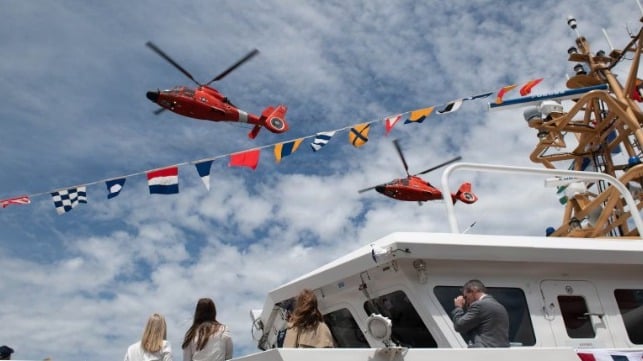
USCG commission cutter

Published May 23, 2026 12:58 PM by The Maritime Executive


[By U.S. Coast Guard Forces Micronesia]

The U.S. Coast Guard commissioned its newest Fast Response Cutter, USCGC Vincent Danz (WPC 1162), for official entry into its service fleet during a ceremony held in New York City on Friday.

The Vice Commandant of the Coast Guard, Vice Adm. Thomas Allan, presided over the ceremony. Members of the Danz family were also in attendance, including the cutter's sponsor, Ms. Angela Donohue, widow of the late Vincent Danz.

“Vincent Danz’s legacy will live on not only through his family and his brothers and sisters in the NYPD, but through the Coast Guard crew who will breathe life into this cutter today,” said Adm. Tom Allan. “The Coast Guard Cutter Vincent Danz will perform the Coast Guard's vital work across Oceania—projecting U.S. presence, countering illicit maritime activity, and strengthening our international partnerships.”

The Vincent Danz is the 62nd Sentinel-class Fast Response Cutter in the service and the fourth of five FRCs to be homeported in Guam with U.S. Coast Guard Forces Micronesia/Sector Guam. The crew of the Vincent Danz will primarily serve U.S. and mutual interests in Oceania with an emphasis on the Micronesia and Melanesian sub-regions, conducting maritime security operations, combating illegal activity, supporting search and rescue missions, and strengthening partnerships with Pacific Island nations and Allies. The cutter is a multi-mission platform.

The cutter’s namesake, Vincent Danz, was serving in the New York City Police Department, Emergency Services Unit, ESU Truck 3, when he responded to the World Trade Center as part of a massive emergency response and was killed when the World Trade Center collapsed. He was posthumously awarded the New York City Police Department’s Medal of Honor for his heroic deeds. He was a veteran of the United States Marine Corps and joined the New York City Police Department in 1987, while continuing to serve in the U.S. Coast Guard Reserve as a Port Security Specialist 2nd Class.

As a U.S. Coast Guard reservist, Danz understood the meaning of service to country and community. His courage in the face of unimaginable danger and his dedication to saving others made him a hero not only to New York City but to the nation. This cutter honors his memory and the legacy of all first responders who gave their lives on Sept. 11, 2001.

The Vincent Danz will join the Myrtle Hazard (WPC 1139), Oliver Henry (WPC 1140), and Frederick Hatch (WPC 1143), all of which were commissioned in Guam. Since their 2021 commissioning, Guam's FRC crews have distinguished themselves across the region, most recently responding to the impacts of Super Typhoon Sinlaku on communities in the Marianas. USCGC Myrtle Hazard’s crew became the first to operationalize the bilateral maritime law enforcement agreement with Papua New Guinea, conducting joint patrols and boardings in 2023. USCGC Oliver Henry’s crew saved around a dozen mariners in the Federated States of Micronesia, delivered humanitarian assistance during the Yap drought, and towed the 500-ton yacht Black Pearl to the Republic of Palau, rescuing 11 people in 2024. USCGC Frederick Hatch became the first FRC to visit several Pacific ports, including Tacloban, Philippines, for the 80th anniversary of the Battle of Leyte Gulf, and the crew operationalized the enhanced bilateral agreement with Palau in 2024.

The U.S. Coast Guard ordered a series of new FRCs to replace the 1980s-era Island-class 110-foot patrol boats. Using the $25 billion provided by the historic Fiscal Year 2025 budget reconciliation, which includes $1 billion for additional FRCs, the Coast Guard has already ordered over $13 billion in new fleet assets and capabilities. This rapid investment demonstrates the Coast Guard’s commitment to modernizing acquisition, delivering next-generation technology, and revitalizing American shipbuilding.

The FRCs feature advanced command, control, communications, computers, intelligence, surveillance, and reconnaissance equipment, as well as over-the-horizon cutter boat deployment capability, enhancing the Service’s ability to control, secure, and defend U.S. borders and maritime approaches. These new assets and capabilities continue the U.S. Coast Guard's modernization, through which the Service is transforming into a more agile, capable, and responsive fighting force.

The commissioning ceremony is a traditional milestone in a cutter's life, marking its entry into active service and signifying its readiness to conduct operations.
 

The products and services herein described in this press release are not endorsed by The Maritime Executive.

U.S. Navy Commissions its Very Last Littoral Combat Ship

The Independence-class finished delivering last year, and with the commissioning of Freedom-class USS Cleveland, the procurement program is complete

USS Cleveland
The commissioning ceremony for USS Cleveland, the 16th and last Freedom-class LCS (USN)

Published May 19, 2026 5:39 PM by The Maritime Executive


After 18 years, the U.S. Navy has commissioned the last Freedom-class Littoral Combat Ship, a lightweight, high-speed surface combatant designed by a prominent aerospace contractor during the Global War on Terror.

In discussing the twin LCS classes, Navy officials have focused not on their capabilities or problems, but on celebrating the tireless efforts of crewmembers to make their ships as effective as possible. That emphasis was present at Cleveland's commissioning ceremony as well. "Today we celebrate the sailors who breathe life into this ship," said acting Navy Secretary Hung Cao, who spoke at the commissioning ceremony in Cleveland. "To the officers and crew of USS Cleveland, today is your day."

"You are not simply serving aboard this ship. You are writing the first chapter of her history. You are forging a legacy that will endure long after all of us have left these decks," emphasized CO Cmdr. Bruce Hallett.

Cleveland is the 16th and last hull in the series. Along the way, the Freedom-class has encountered many issues - an absent sonar capability, high contractor maintenance costs, high crew workload, and a class-wide propulsion vulnerability. These issues culminated in a request from then-CNO Adm. Mike Gilday to decommission the first nine hulls in 2022; at the time, the youngest on the list was just three years old. Five early examples were ultimately taken out of commission, but the Navy continued to take deliveries of additional new hulls for the next four years. With Cleveland's commissioning on Saturday, her builder is ready to move on to future projects. 

The Freedom-class was designed for high speeds and shallow draft, allowing for swift counterinsurgency and SOF operations near shore. An unusually high speed requirement meant engineering tradeoffs for armor and armament, and the ships were not designed to Navy standards for resistance to shock. As early as 2016, official concerns were raised about whether they could survive in high-end combat.

In service, the Freedom-class developed a reputation for mechanical issues, particularly a faulty gearbox design in the propulsion system (later resolved with a retrofit solution). Even when all systems were functioning, the Freedom-class vessels were "noisy as an aircraft carrier," and that created challenges for their core anti-submarine warfare mission, according to then-CNO Adm. Mike Gilday. The sonar system (part of the ASW "mission package" ) failed to mature, and the Navy canceled it in 2021, leaving the Freedom-class without a designated mission set. They have seen success in recent years as host platforms for U.S. Coast Guard law enforcement detachments, operating in coordination with the Coast Guard's cutters in the Eastern Pacific and Caribbean. 

The other LCS "variant," the aluminum trimaran Independence-class, completed its final delivery last year; it has begun to deploy with a mine countermeasures mission package. Some of the first operationally-ready hulls with that capability are now in the Central Command area of operations, part of the fleet tasked with resolving the Strait of Hormuz dilemma.

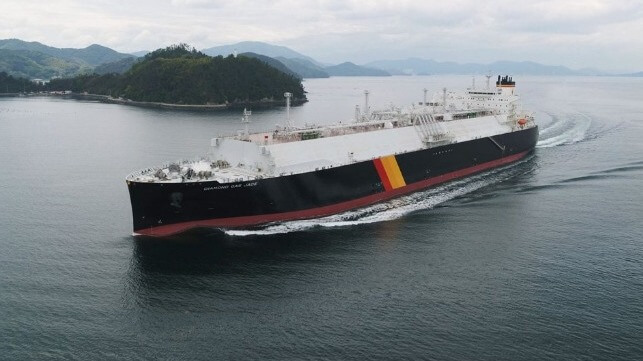
 

U-Ming Names First LNG Carrier as Diversification and Expansion Continue

U-Ming's first LNG gas carrier on trials
U-Ming's first LNG carrier on trials and it was named yesterday ahead of its upcoming delivery (U-Ming)

Published May 20, 2026 6:54 PM by The Maritime Executive


Taiwanese shipping company Un-Ming reports that it is continuing its business growth and diversification strategy with the naming of its first LNG carrier. According to the company, the commissioning of its first LNG carrier symbolizes its entry into the energy transport sector, building on its current operations of Very Large Crude Carriers.

The naming ceremony for the new vessel, Diamond Gas Jade, took place on May 19 at Samsung Heavy Industries’ Geoje Shipyard in South Korea. The yard is known as one of the leaders in building gas carriers and has applied the latest technologies to the new vessel.

It will have a capacity of 174,000 cbm of LNG. The ship measures 290 meters (951 feet). It uses the latest energy-saving technologies and has a dual-fuel ME-GA propulsion system. The vessel will have a speed of 19.5 knots.

U-Ming reports that when the ship is delivered in August, it will launch a new joint venture to expand operations into LNG transport. It will be involved in international trade.

The ship is the latest in a growth and diversification strategy for the carrier, which traces its origins to 1968, when it started as Yumin Transportation Company to operate truck transportation. It was reorganized in 1984 to specialize in maritime transport.

U-Ming Shipping currently operates a fleet of 71 vessels, with 13 more under construction, bringing the total fleet size to 84 vessels and a total deadweight tonnage of 9.96 million tons. Its operations are mostly focused on bulkers, including Capesize, Panamax, Post Panamax, and Ultramax, as well as cement carriers. It has expanded with Very Large Ore Carriers and four VLCCs for crude transport. Most recently, it has expanded into offshore wind support with personnel carriers and service maintenance vessels. 

It has been moving into alternative energy sectors. It has been operating LNG-fueled ships for the past four years, and last year it began adding wind rotors to some of its large bulkers.

Its board has approved the construction of four 210,000-ton Capesize and four 64,000-ton Ultramax bulk carriers, moving towards the "dual growth" strategic goal of exceeding 100 vessels and a total deadweight tonnage of over 10 million tons.


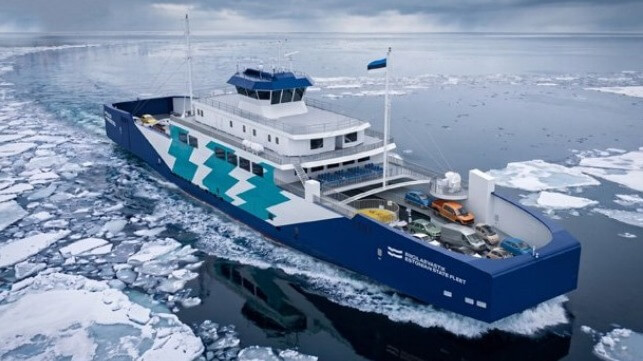
Estonia Contracts to Design and Build Its First Fully Electric Ferry

Estonia first full electric ferry
Estonia has ordered its first fully electric ferry (LMG Marin)

Published May 21, 2026 8:09 PM by The Maritime Executive


Estonian State Fleet signed a design and shipbuilding contract with the Polish shipyard CRIST for the construction of its first fully electric passenger ferry. Designed to operate primarily on shore-charged green electricity and for year-round service in demanding Nordic conditions, including winter ice operations, Estonia State Fleet reports the ferry will mark a major step in the decarbonization of ferry transport in the Baltic Sea region.

“Ferry connections are vital for Estonia and especially for our island communities,” said Estonian Minister of Infrastructure, Kuldar Leis. “They support everyday life, local businesses, and access to essential services. This new fully electric ferry will make that connection more reliable, modern, and environmentally friendly.”

The vessel will be built by Polish shipyard CRIST using a design from LGM Marin. At approximately 100 meters (328 feet) in length, the ferry will accommodate up to 110 passenger vehicles or eight freight trucks, with capacity for up to 380 passengers. As Estonia’s first vessel powered 100 percent by green electricity, the new ferry is expected to be up to 64 percent more energy-efficient than Estonia’s existing reference vessel, Regula, which is powered by traditional diesel generators.

“Investing in next-generation vessels is essential for ensuring reliable island connectivity while reducing environmental impact and long-term operating costs,” said Andres Laasma, Director General of Estonian State Fleet. He notes the project, which has a total value of €49.93 million ($58 million) and is supported by €28 million ($32.5 million) from the European Union Modernisation Fund, with additional financing secured through Estonia’s CO2 funding mechanisms. 

The new ferry’s primary power source will be shore-charged electricity stored in a 3 MWh battery system, enabling fully electric operation on the main island's Virtsu–Kuivastu route. For extended range, severe weather, and emergency operations, the vessel will also be equipped with biodiesel generators, providing an operating range of at least 1,000 nautical miles without refueling. This hybrid redundancy, Estonia notes, also makes the vessel technically suitable for additional longer routes.
 
The ferry will be built to ice class 1B, enabling operation in ice up to 60 cm (nearly 24 inches) thick and maintaining standard operational speeds in lighter ice conditions. To improve maneuverability and energy efficiency, the vessel will be equipped with next-generation azimuth thrusters at both ends. The thrusters’ designed output exceeds the minimum requirements for ice class 1B, providing additional power for vessel operation in heavy ice. Onboard amenities will include a kitchen and restaurant area serving hot meals, as well as accommodation and recreational facilities for crew members. Special attention will be given to accessibility for passengers. 

Under the contract, CRIST will deliver the vessel within 30 months of contract signing, with entry into service expected in late 2028. Estonia notes that CRIST has previously delivered several advanced low-emission vessels, including the fully electric ice-class ferries Altera and Elektra operating in Finland.

The ferry will be designed by naval architecture company LMG Marin, which points out it is an extension of a collaboration with Estonia that includes, 12 years ago, the designs for the vessels currently in operation.

LMG Marin says this project further strengthens LMG Marin’s position as a leader in the design of low- and zero-emission ferries and RoPax vessels.  It highlights that over the last 12 months, 14 ferries and RoPax vessels based on LMG Marin designs, ranging from 50 to 170 meters, have been contracted, and they all integrate large battery systems to significantly reduce their environmental footprint.


EdUHK study finds digital literacy a moving shield against cyberbullying


The Education University of Hong Kong

Changes in cyberaggression, digital literacy, and cybervictimisation over time 

image: 

Students’ cyberaggression, digital literacy, and cybervictimization remained fairly stable over time. Higher digital literacy was linked to less cyberaggression and fewer later experiences of cybervictimization, while prior cybervictimization appeared to push some students to strengthen their digital skills one year later  

view more 

Credit: EdUHK


A new longitudinal study by the Education University of Hong Kong (EdUHK) has uncovered a nuanced relationship between digital literacy1 and cyberbullying among local adolescents.  The findings show that teens with lower levels of digital literacy are more vulnerable to cyberaggression, and those who make the least progress over time are at heightened risk of becoming victims of cyberbullying.  In contrast, adolescents who experience cyberbullying early on often develop stronger digital literacy skills, likely because they learn to navigate threats, avoid attacks and protect themselves in an increasingly aggressive online environment.  

Led by Dr Tao Sisi, Assistant Professor from the Department of Early Childhood Education at EdUHK, in collaboration with Dr Frank Reichert and Professor Nancy Law at the University of Hong Kong, the study tracked 679 adolescents (average age 15) across two time points during 2018/19 and 2020/21 school years. It examined the bidirectional relationship between digital literacy and cyberbullying, including both cyberaggression and cybervictimisation.  

Findings show that: 
•    Adolescents with higher digital literacy - defined as the confident, critical, and responsible use of digital technologies for learning, work, and social participation, were less likely to engage in later cyberaggression.  
•    Those who had engaged in cyberaggression earlier demonstrated lower subsequent digital literacy. 
•    Adolescents who had experienced cybervictimization tended to show higher later digital literacy, suggesting that some students respond to online harm by building skills to protect themselves and navigate digital environments more effectively.

Further analysis revealed a critical pattern: adolescents whose digital literacy improved the least over time were more likely to become new victims of cyberbullying, while those who moved out of victimization showed stronger digital literacy growth. This indicates that digital literacy is not a fixed trait, but an ability that must continually develop as adolescents’ online lives change. 

The study, recently published in published in Humanities and Social Sciences Communications, used a performance-based assessment of digital literacy rather than relying solely on self-reports, thereby strengthening the evidence on how adolescents’ actual digital competence relates to their online experiences.

The findings also challenge the assumption that once acquired, digital skills continue to provide lasting protection. Instead, the study underscores the need for sustained development of digital literacy, supported by schools, families, and policymakers. 

“Effective education should extend beyond technical know-how to include digital ethics, online communication, privacy protection, problem-solving, and cyber-resilience,” Dr Tao said. “Prevention efforts should not only stop harmful behaviour after it occurs, but also build students’ long-term capacity to respond to shifting online risks.”

Next, Dr Tao will further examine how risky online behaviours such as cyberbullying develop in young children, and how they can be effectively prevented and addressed through digital literacy education at the family, school, and community levels. 

-Ends-

1. Digital literacy  is  the  ability  to  access,  manage,  understand,  integrate,  communicate,  evaluate  and  create information   safely   and   appropriately   through   digital   technologies   for   employment,   decent   jobs   and entrepreneurship.  It  includes  competences  that  are  variously  referred  to  as  computer  literacy,  ICT  literacy, information literacy and media literacy. When assessing people’s digital literacy skills, it contains five competence areas: information search, evaluation and management; communication and collaboration; content creation; safety, wellbeing and responsible use of digital technologies ; problem identification and solving.  (UNESCO working paper)  


Study reveals overlooked breadth of chimpanzee culture


A long-term study suggests chimpanzee culture includes many everyday behaviors essential for survival


Max Planck Institute of Animal Behavior

Peering 

image: 

Infant chimpanzee (left) peering at the hands of a juvenile (right) engaging in ectoparasite inspection with a leaf.

view more 

Credit: Nora Slania


Scientists have identified dozens of previously overlooked cultural behaviors in wild chimpanzees, suggesting that the great ape’s culture extends far beyond complex skills like tool use. In a single community, they found nearly 70 behaviors that chimpanzees appear to learn from one another—almost doubling previous estimates of cultural behaviors across African chimpanzee populations.

Researchers spent several years observing wild chimpanzees in the Ugandan rainforest to document the range of skills that chimpanzees learn by observing others. They discovered that chimpanzees culturally learn a wide array of “basic” skills including foraging, grooming, playing, and wound care, many of which are essential for survival.

“Animal culture doesn’t have to be rare or complex. It can include basic skills used every day, like finding food and knowing how to eat it,” says first author Nora Slania from the Max Planck Institute of Animal Behavior.

Chimpanzees possess the largest known culture in the animal kingdom. Historically, chimpanzee cultural research has focused on striking behaviors such as using sticks to fish for termites, first famously documented by Jane Goodall in Gombe National Park. These behaviors were considered clear examples of culture, because neither genetic nor environmental factors could explain why some chimpanzee communities showed them and others did not. “Excluding genetic and environmental causes of behavioral variation was an important first methodological step to demonstrate social transmission and as such the existence of animal culture,” adds Slania.

Using this approach, previous research had identified 39 chimpanzee behaviors as cultural. But the new study suggests these earlier numbers may have greatly underestimated the true cultural breadth of chimpanzees. The researchers propose that cultural transmission can be shown through directly studying behaviors that are part of this process, irrespective of genetic and environmental influences.

“In humans, our everyday lives are full of culture, including the way we speak, dress, or eat. We don’t require behaviors to be especially remarkable or independent of our environment,” says Dr. Caroline Schuppli, senior author of the study. “Animals, however, have long been held to stricter standards. By adopting a more inclusive view of culture—and standards more comparable to those applied to humans—future research may reveal that many animals possess richer cultures than previously recognized.”

The team of international researchers focused on peering, which is when one animal watches the behavior of another closely and attentively. Peering is particularly well studied in orangutans and capuchin monkeys as a method of learning. In chimpanzees, peering had previously been shown to help individuals acquire complex skills such as using tools, but it has never been studied as a way for assessing the full scope of chimpanzee cultural learning.

For over two years, the research team followed 28 wild chimpanzees of all ages, from infants to older adults, at the Budongo Conservation Field Station in Uganda. From morning to late afternoon, they observed the daily lives of the apes in detail, recording the behavior of focal individuals as well as others within five meters. This allowed them to track what and whom chimpanzees observed closely.

The team accumulated over 1,000 hours of observations, finding 366 instances of peering. While they could not directly test whether peering caused learning, several patterns strongly suggest it plays a key role in knowledge acquisition. Chimpanzees peered during development, when they need to acquire their skill sets. Young chimpanzees paid special attention to learning-intensive behaviors, such as very rare and complex skills, and peered only at experienced chimpanzees, often their mothers but also – whenever they had the chance – at other group members.

When the researchers analyzed the behaviors that were the focus of peering, they identified 69 distinct actions. Only two of these – using leaves for wound care and to inspect parasites – had been recognized as cultural in earlier research. While some of the behaviors were rare, most observations comprised everyday activities such as exploring, playing, grooming, and feeding. Strikingly, the majority of behaviors— around 60%—were related to identifying, processing, or consuming food, including fruits, leaves, and other plant materials.

“The fact that so much of a chimpanzee’s diet is socially learned highlights how important social learning is for their development,” says Schuppli, a group leader at MPI-AB. “While some behaviors may be simple and learned quickly, acquiring the full range of their culture still takes young chimpanzees many years,” she adds.

The authors say that recognizing these broader cultural elements is important not only for understanding animal minds and how closely they resemble those of humans, but also for conservation efforts. In future, the team would like to extend this approach to other populations of chimpanzees and primates.

“Behavior allows animals to respond flexibly to the world around them, and cultural transmission offers a fast way to learn new behaviors. Ultimately, understanding the full scope of animal culture will help us protect the diverse ways these species adapt to changing environments,” adds Slania.


Social mammals live longer – but bigger groups don’t add many extra years


University of Southern Denmark


A new study, published in Ecology and Evolution, shows that social living is associated with longer lifespan, but also that the benefits of sociality level off once animals move beyond living in pairs.

The researchers behind the study combined large databases of life-history traits, using records of maximum lifespan for each species alongside information on body mass and social organisation. Species were broadly grouped as solitary, pair-living, or group-living.

Lead author of the study is population biologist and Associate Professor Owen R. Jones from Department of Biology at University of Southern Denmark. Co-authors are Kevin Healy from National University of Ireland, Galway and Julia A. Jones, who was at University of Southern Denmark, when the work was done. The study can be found here.

Across mammals, both pair-living and group-living species live longer than solitary ones. However, there is little difference between species with populations organized around a single breeding pair and those living in groups of multiple breeding adults.

According to lead author Owen R. Jones, social organisation should be seen as an added layer on top of well-known patterns like body size. “Bigger animals live longer than small,” he says, “but being social seems to pull species upward from the average lifespan expected for their body size.”

Bigger animals live longer because they generally face lower predation risk, allowing natural selection to favor allocation of more resources to maintenance and repair, thereby extending their lifespans.

The study’s findings point to a balance of benefits and costs associated with living with others. One major advantage is protection against predators.

“The big one is defence against predation,” Jones says, “Social species – whether pairs or groups – benefit from increased vigilance. If you watch deer in a field, there’s almost always at least one individual with its head up, scanning for danger. There is also the dilution effect, where the chance of being caught decreases when there are multiple targets.”

But group-living also comes with downsides. Chief among them is a higher risk of infectious diseases spreading between individuals – a cost that may offset the longevity benefits of multi-adult social structures.

“The larger the group is, the higher risk of pathogen transmission,” he says.

This trade-off may help explain why group-living species do not show further increases in lifespan compared with pair-living species.

The study also explored other factors, such as whether animals are active during the day or night, but found only weak or uncertain effects on lifespan compared with body size and social organisation.

The longevity data used in the analysis come from maximum recorded ages for each species, based on a mix of observations from wild populations and animals under human care.

By showing that social behavior is linked to lifespan across species, the study highlights how behavior, physiology and evolution are deeply intertwined.

“We often think of ageing as pure biology at the cellular level,” Jones says. “But we show that behavior and social life matter too. Over evolutionary time, living together changes how species allocate energy to maintenance, disease resistance and reproduction – and those changes become built into their physiology.”

In their article, the authors conclude, that their results “contribute to a growing understanding of sociality as a key life-history trait that, alongside body size and ecological specialisations, shapes the extraordinary diversity of ageing and longevity strategies across mammals”.

The findings may also resonate beyond mammals.

“In humans, social connections are strongly linked to health and longevity,” Jones says. “Understanding how social organisation shapes lifespan in other animals helps us understand ageing as not just a medical phenomenon.”


“Social Organisation Predicts Lifespan in Mammals”, Ecology and Evolution. Owen R. Jones, Kevin Healy, Julia A. Jones. April 13, 2026. https://onlinelibrary.wiley.com/doi/epdf/10.1002/ece3.73587


Bacterial STIs reach record highs in Europe, and congenital syphilis cases nearly double


Without decisive action, current trends are likely to continue, increasing negative health consequences


European Centre for Disease Prevention and Control (ECDC)

Neisseria gonorrhoeae bacteria 

image: 

In 2024 the number of recorded  gonorrhoea cases reached 106 331 across the European Union and European Economic Area - a 303% increase since 2015.

view more 

Credit: National Institute of Allergy and Infectious Diseases, National Institutes of Health


The latest Annual Epidemiological Reports from ECDC indicate a surge in bacterial sexually transmitted infections (STIs) across Europe. In 2024, notifications of gonorrhoea and syphilis, alongside congenital syphilis, reached their highest levels in over a decade, reflecting sustained transmission across multiple countries.

The data for 2024 show that gonorrhoea cases reached 106 331, representing a 303% increase since 2015. Syphilis cases more than doubled over the same period to 45 577 cases. Chlamydia remains the most frequently reported STI with 213 443 cases. Lymphogranuloma venereum (LGV) also continued to see ongoing transmission, with 3 490 reported cases.

Sexually transmitted infections have been on the rise for 10 years and reached record high levels in 2024. Untreated, these infections can cause severe complications, such as chronic pain and infertility and, in the case of syphilis, problems with the heart or nervous system. Most distressingly, between 2023 and 2024, we have seen a near doubling of congenital syphilis, where infections pass directly to newborns, leading to potentially lifelong complications’, says Bruno Ciancio, Head of Unit, Directly Transmitted and Vaccine-Preventable Diseases. 'Protecting your sexual health remains straightforward. Use condoms with new or multiple partners, and get tested if you have symptoms, such as pain, discharge or an ulcer’.

Transmission trends vary significantly across different population groups. Men who have sex with men remain the most disproportionately affected group, with the steepest long‑term increases in gonorrhoea and syphilis. Among heterosexual populations, syphilis is rising, particularly among women of reproductive age, the consequences of which are a near doubling of congenital syphilis cases from 78 in 2023 to 140 in 2024 across 14 countries reporting data.

These figures align with findings from ECDC’s monitoring report on congenital syphilis, which highlights missed prevention opportunities, such as gaps in antenatal screening, lack of follow-up and repeat testing, and treatment. The monitoring report also identified broader hurdles to testing and prevention that require action. Thirteen of 29 reporting countries still charge out-of-pocket costs for basic STI tests. Uneven implementation of services and outdated national strategies limit the impact of proven interventions, as many national prevention strategies fail to account for post-pandemic behavioural changes. ECDC recommends that European countries improve antenatal screening protocols to ensure that syphilis is diagnosed and treated promptly and correctly according to the stage of infection, to prevent transmission to the foetus during pregnancy.

In addition, in January 2026, ECDC provided specific guidance on the use of doxycycline for post-exposure prophylaxis (doxy-PEP) to support STI prevention efforts. People facing higher exposure risks should consult their doctor or other healthcare provider about tailored prevention options. ECDC does not recommend widespread use of doxy-PEP for gonorrhoea due to high levels of antimicrobial resistance and the risk for further acceleration of resistance development.

Reversing increasing trends in STI cases requires accessible prevention services, easier access to testing, faster treatment, and stronger partner notification to stop onward transmission. ECDC urges public health authorities to urgently update national STI strategies and strengthen surveillance systems to better monitor the impact of prevention efforts. Without decisive action, current trends are likely to continue, increasing negative health consequences and widening inequalities in access to care.

Resources:
ECDC Annual Epidemiological Reports for 2024

Congenital syphilis: https://www.ecdc.europa.eu/en/publications-data/congenital-syphilis-annual-epidemiological-report-2024

Syphilis: https://www.ecdc.europa.eu/en/publications-data/syphilis-annual-epidemiological-report-2024

Gonorrhoea: https://www.ecdc.europa.eu/en/publications-data/gonorrhoea-annual-epidemiological-report-2024

Chlamydia: https://www.ecdc.europa.eu/en/publications-data/chlamydia-annual-epidemiological-report-2024 

Lymphogranuloma venereum:  https://www.ecdc.europa.eu/en/publications-data/lymphogranuloma-venereum-annual-epidemiological-report-2024