Tuesday, May 26, 2026

Charges Against Kilmar Ábrego García Thrown Out After Judge Finds Vindictive Prosecution

“Our client... is freed of these outrageous, vindictive charges,” said an attorney representing Ábrego García. “It’s a good day.”
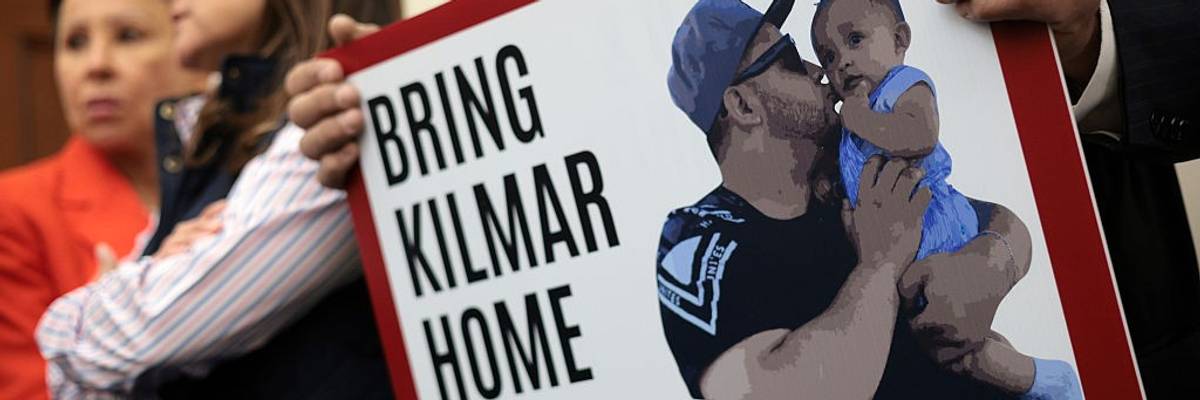

A member of the Congressional Hispanic Caucus holds a picture of Kilmar Ábrego García during a news conference on April 9, 2025 in Washington, DC.
(Photo by Alex Wong/Getty Images)

Brad Reed
May 22, 2026
COMMON DREAMS

A federal judge on Friday dismissed criminal charges against Kilmar Ábrego García, the man whom the Trump administration unlawfully deported to El Salvador last year.

Judge Waverly Crenshaw of the United States District Court for the Middle District of Tennessee ruled that the US Department of Justice’s (DOJ) case against Ábrego García should be thrown out on grounds of selective and vindictive prosecution.

In his ruling, Crenshaw likened the President Donald Trump’s DOJ to a prosecutor who picked “the person first and the crime second” when it indicted Ábrego García on human smuggling charges last year.

Crenshaw, an appointee of former President Barack Obama, zeroed in on the fact that the DOJ reopened a three-year-old investigation into a Ábrego García mere days after the US Supreme Court unanimously ordered the Trump administration to facilitate his return to the US, arguing that the timing and other evidence established “likeliness of vindictiveness” of the government’s case.

While the government provided arguments attempting to rebut claims of vindictive prosecution, Crenshaw ultimately found them unpersuasive and argued that the “new evidence” the government used to justify reopening the case was something that prosecutors should have discovered before with due diligence.

After an examination of the government’s claims, Crenshaw found that its case against Ábrego García was reverse engineered to justify his unlawful removal to El Salvador—where he was imprisoned at the notorious Terrorism Confinement Center (CECOT).

“The objective evidence here shows that, absent Ábrego’s successful lawsuit challenging his removal to El Salvador, the government would not have brought this prosecution,” Crenshaw wrote in his conclusion. “The executive branch closed its investigation on the November 2022 traffic stop. Only after Ábrego succeeded in vindicating his rights did the executive branch reopen that investigation.”

Sean Hecker, an attorney representing Ábrego García, celebrated the judge’s ruling shortly after it was issued.

“We are going to savor this one,” Hecker wrote in a social media post. “Our client, Kilmar Ábrego García, is freed of these outrageous, vindictive charges. It’s a good day.”

Aaron Reichlin-Melnick, senior fellow at the American Immigration Council, warned that Ábrego García is not yet out of the woods given that the Trump administration is still trying to deport him to Uganda even though he has said he would accept being deported to Costa Rica.

Reichlin-Melnick nevertheless said that this was a major victory against the Trump administration.

“It is extremely hard to win a vindictive prosecution motion,” he wrote, “but here the evidence was so strong that the judge had almost no choice but to grant it.”

New York University law professor Ryan Goodman described Crenshaw’s ruling as an “extraordinary rebuke” of the Trump DOJ, and noted that it highlighted the role played by acting US Attorney General Todd Blanche in the vindictive prosecution “nearly 30 times.”

Journalist Nathan Newman said that Ábrego García deserved praise for standing firm in the face of relentless pressure by the federal government and fighting back.

“When history is written,” wrote Newman, “the bravery and tenacity of Kilmar Ábrego García in defiance of the Trump administration will deserve a hefty credit for building the resistance to Trump’s evil. A good day.”


‘Biggest Wealth Divide in Modern History’: Graphic Shows Shocking Reality of US Economy

Data released by the University of Michigan and Gallup this week showed US consumer sentiment cratering even as stock markets hit record highs.


New York Stock Exchange (NYSE) at Wall Street on January 12, 2021 in New York City.
(Photo by Angela Weiss / AFP via Getty Images)

Brad Reed
May 23, 2026
COMMON DREAMS

Multiple polls and surveys released in recent days have shown US consumer sentiment cratering—and all the while, the US stock market keeps hitting record highs.

The Kobeissi Letter, a financial newsletter, posted a graphic Saturday that matched consumer sentiment as measured by the University of Michigan’s Surveys of Consumers with the performance of the S&P 500 stock index over a 30-year span.

The graphic shows that, up until around 2020, consumer sentiment matched stock market performance closely, although there was a large divergence between the two leading up to the 2008 financial crisis, where stocks briefly outperformed consumer sentiment before crashing downward as the housing bubble burst.

But throughout the last six years, the graphic shows, the S&P 500 has produced an almost continuous upward surge even as consumer sentiment spirals downward.


“Absolutely incredible,” commented Kobeissi Letter. “Over the last six years, the S&P 500 has risen +130% while US Consumer Sentiment has collapsed by -55%, to its lowest since data began in 1952. We are witnessing the formation of the biggest wealth divide in modern history.”

Kobeissi Letter produced the graphic one day after the University of Michigan’s latest survey found consumer sentiment hitting the lowest level on record.

Joanne Hsu, director of the survey, observed that “the cost of living continues to be a first-order concern, with 57% of consumers spontaneously mentioning that high prices were eroding their personal finances, up from 50% last month.”

On the same day, Gallup published new data showing that Americans’ economic confidence has fallen to its lowest level since October 2022, with just 16% of Americans rating the economy as excellent or good, and nearly half describing it as poor.

Axios reported on Saturday that even Republicans have been growing sour on the US economy, citing a recent poll from The Associated Press showing GOP approval of President Donald Trump on the economy to be at around 60%, down from 80% just three months ago.

“The growing GOP gloom could hardly come at a worse time for Trump and the party,” Axios noted, “less than six months out from a midterm election that’s likely to turn on the economy.”

The gap between overall consumer sentiment and stock market performance also lines up with recent consumer spending trends. Data published by The Financial Times earlier this year showed that the top 10% of earners in the US now account for nearly half of all consumer spending, while the bottom 80% of earners now account for less than 40% of all consumer spending.

A February report from TD Economics economist Ksenia Bushmeneva noted that “the economic divide between America’s households at the top of the income spectrum and everyone else continued to widen last year,” as “upper-income households benefited from the still-robust wage growth, strong gains in equity markets, and better access to consumer credit.”
Report Exposes How Trump Administration Has ‘Mowed Down’ Regulators Overseeing Prediction Markets

The Trump administration last week sued Minnesota after it passed a law banning prediction markets from operating in the state.


In this photo illustration, a Polymarket logo seen displayed on a smartphone.
(Photo Illustration by Mateusz Slodkowski/SOPA Images/LightRocket via Getty Images)


Brad Reed
May 24, 2026
COMMON DREAMS

A Sunday report in The New York Times revealed how the Trump administration is using a key government agency to shut down any efforts to regulate online betting markets such as Kalshi and Polymarket.

According to the Times, the administration has stacked the Commodity Futures Trading Commission (CFTC) with industry insiders who have systematically “mowed down” staffers at the agency who have expressed interest in providing oversight on prediction markets.

Among other things, the report documented how multiple officials at CTFC have been put on leave simply for asking questions about the betting markets’ ties to members of President Donald Trump’s family or for having past experience enforcing regulations related to cryptocurrencies.

What’s more, the Times found that even being an industry insider isn’t enough to guarantee good standing in the agency. Brian Quintenz, who was tapped by Trump to lead CTFC last year, saw his nomination withdrawn after he drew the ire of Cameron and Tyler Winklevoss for refusing to support their cryptocurrency exchange’s complaint against the agency.

Revelations about industry insiders rolling over regulators at CTFC come as the Trump administration is fighting any attempts by states to regulate prediction markets.

As explained in a Thursday report from CNBC, the Trump administration is “fighting a multi-front battle to stop the state actions and assert its regulatory authority,” with CTFC arguing that it is “the only entity that can regulate” betting platforms.

16 different states are engaged in legal proceedings against the platforms, and Minnesota last week passed a law to ban them outright, which immediately drew a lawsuit from the administration.

The new Minnesota law, which is scheduled to take effect in August, bans prediction markets “from hosting, creating or advertising in the state,” according to ABC News.

In an interview with ABC, Minnesota state Rep. Emma Greenman (D-63B) said she authored the legislation because she has grown increasingly concerned about young people in the state seeing their finances drained from placing online bets.

“We’re seeing studies come out that say [the companies] are targeting 18- to 21-year-olds,” said Greenman, “and we are seeing gambling starting younger and younger.”

CFTC Chair Michael Selig last month warned states against trying to regulate prediction markets, which he said would “circumvent the clear directive of Congress.”

“Our message to Wisconsin is the same as to New York, Arizona, and others,” said Selig. “If you interfere with the operation of federal law in regulating financial markets, we will sue you.”
‘Hondurasgate’: A Symptom of Deeper Crises in Honduras and a Warning for Latin America

If no-holds-barred measures were deployed in the Honduran elections, they might be anticipated on a much bigger scale, again with little restraint, when the prizes could be Latin America’s biggest economies.


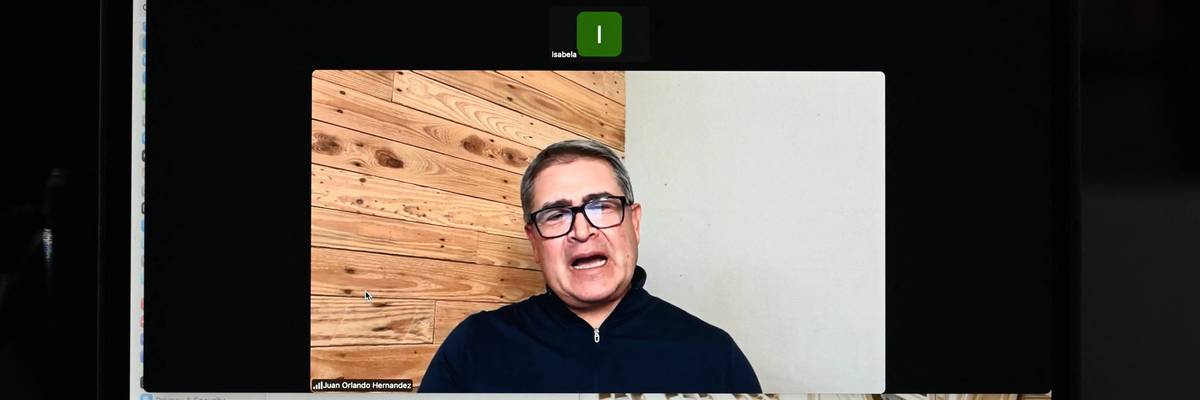
Former Honduras’ President Juan Orlando Hernandez speaks via video call during a press conference hosted by his wife Ana Garcia de Hernandez (unseen) in Tegucigalpa on April 8, 2026.
(Photo by Orlando Sierra / AFP via Getty Images)
Roger D. Harris
May 25, 2026
Common Dreams


Governance in Honduras shifted sharply to the extreme right within months of National Party’s Nasry Asfura taking office on January 27, succeeding the Libre party’s progressive Xiomara Castro. In November 30 elections, the National Party was trailing a poor third before US President Donald Trump threatened to end all aid to Honduras unless Asfura won. Even then, Asfura had only a wafer-thin plurality, which might well have disappeared had the electoral council not broken its mandate by halting the count before all the votes had been tallied.

Compounding this blatant interference, Trump announced just two days before the election that he was pardoning former Honduran President and National Party stalwart, Juan Orlando Hernández, who had been extradited to the US and was serving a 45-year sentence for narco-trafficking. Corporate media treated Trump’s pardon as just a typically blatant political maneuver. Yet they have since largely ignored what appears to be a much bigger element of the same plot.

The Emerging Regional Offensive

The wider conspiracy has been revealed in a trove of leaked audio recordings, now dubbed “Hondurasgate.” The 37 recordings appear to show that Hernández—still in the US—is preparing a return to Honduran politics and, in league with Republican Party officials, is actively producing propaganda directed against progressive governments across Latin America.

Claims by Hondurasgate investigators that the recordings have been independently verified now appear to be at least partially substantiated by a separate investigation commissioned by Drop Site News. BBC Mundo recently interviewed Hernández and asked for his response to the controversy, but received no response.

The blatant US intervention exemplified by Hondurasgate may be an ominous foreshadowing of likely interference in the upcoming elections in Colombia (this month), Brazil (October), and Mexico (2030), all currently governed by progressives.

Shocking as the revelations are, Hondurasgate is symptomatic of a much more ambitious project to exploit Honduras and impose the “Donroe Doctrine” across the region. Whether or not the recordings are all genuine, the wider project is very much alive.

Power Consolidation Through Lawfare and Repression

Since taking office, Asfura wasted no time consolidating control over Honduran institutions. The elections left the Libre party with fewer than one-third of the seats in the National Congress, reverting to the historic pattern in Honduras in which the National and the Liberal parties—both neoliberal and subservient to Washington—swap power. This has enabled Asfura to move quickly against his enemies.

Marlon Ochoa, Libre’s representative on the electoral council and the first official to call out the electoral fraud, was impeached by Congress on fabricated charges, received death threats, and fled the country.

The sitting attorney general, also from Libre, was dismissed. The Supreme Court president was forced to resign, while other leading congressional members were impeached. Many of those kicked out of their jobs also had their US visas revoked.

“It is a political lawfare operation in which Honduran institutions are acting against the country’s own legal framework to eliminate political opponents,” wrote Diario RED. Carmen Haydeé López, Libre’s press officer, describes the moves as “state capture” by the ruling National Party.

Worse may follow: “If we have to kill people so we can have peace of mind, we’ll do it,” Hernández says in the Hondurasgate audios. Further, “If we have to resort to repression to control the country, we’ll do it.”

Far-right operative Roger Stone—a Trump associate said to have orchestrated Hernández’s pardon—even called for the US to kidnap Xiomara Castro and her husband, former president “Mel” Zelaya, “like they did with Maduro.”

Return to the Narco-State


These developments signal Honduras’ return to the corrupt and criminal neoliberal order that prevailed after the 2009 military coup and lasted until Xiomara Castro’s presidency in January 2022.

For most of this earlier period, Juan Orlando Hernández dominated politics, transforming Honduras into a “narco-state.” Over the years, he facilitated the trafficking to the US of at least 400 tons of cocaine, accepted huge bribes (including $1 million from Sinaloa cartel leader Joaquín “El Chapo” Guzmán), and ran a regime marked by extreme violence.

The leaked recordings show Hernández expects a reconfigured judiciary to clear him of outstanding charges in Honduras. This would pave the way for his return and even to make a run for president again in 2029.

Rolling Back Social Gains and Imposing Austerity

In the meantime, Asfura has moved rapidly to dismantle the Libre government’s modest achievements. Castro had begun to invest heavily in a public health service that fell apart during the Covid-19 pandemic. Asfura halted construction of three hospitals her administration had partially completed. He also withdrew a popular subsidy for electricity bills benefiting 600,000 low-income families.

In the last few weeks, Honduras has witnessed widespread protests against the weakening of workers’ rights, a march organized by 30 campesino movements against legislation that strengthens the hands of big landowners, and student demonstrations over cuts in university budgets.

Another worrying hint of a return to the narc-ostate has been a sharp increase in homicides, extortions, kidnappings, and femicides. Violence peaked on May 21, with 24 violent deaths in two incidents: 19 peasant farmers murdered in a land conflict and five people killed in a gang assault on a police vehicle.

Cuts in public spending and attacks on the rights of the 60% of Hondurans living in poverty constitute Asfura’s austerity program. But Asfura’s and Hernández’s aims are for a much wider transformation of the country.

One of Castro’s reforms was to declare illegal the private model cities or “ZEDEs,” which Hernández and his predecessor initiated in the face of community protests. Asfura has reversed her decisions, thus neutralizing huge pending lawsuits filed against Honduras by the libertarian investors in two ZEDEs, Próspera and Morazán. US investor and billionaire Trump adviser Peter Thiel is a key figure behind Próspera. The congress is now exploring how to promote more of these libertarian “states within a state” that ride roughshod over the rights of local communities.

Militarization and Reassertion of US Hegemony

Another payoff for Trump in return for Hernández’s pardon is the promise of a second US military base in Honduras. Because of its strategic position in Central America, the US already has the huge Soto Cano base, which Castro threatened to close. Soon, according to Marlon Ochoa, the US will install another base on the island of Roatán, further strengthening Washington’s naval domination of the Caribbean.

If built, it will be part of a wave of US militarization in the region, with a strengthened base in El Salvador and US troops newly deployed in Panama.

Another dramatic change is the restoration of close ties with Israel. During Castro’s presidency, Honduras (along with Colombia and Nicaragua) was one of Latin America’s fiercest critics of the Gaza genocide. Hernández, when president, had close links with Israel’s Prime Minister Benjamin Netanyahu, who (according to the Hondurasgate recordings) had “everything to do” with Hernández’s pardon.

This month, Israeli President Issac Herzog embarked on a diplomatic tour of Central America, stopping in Panama and attending the inauguration of Costa Rica’s new President, Laura Fernández. While in San Jose, Herzog met Chile’s new right-wing President José Antonio Kast and Honduras’s Nasry Asfura who, despite his Palestinian ancestry, identifies as a Christian Zionist. Asfura’s administration is part of a broader regional trend in which Trump-aligned governments (such as Bolivia’s) restore ties with Israel that were severed by their predecessors.

Asfura is reportedly planning legislation to encourage investment by US and Israeli AI firms. Honduras’s abundant water resources and renewable energy infrastructure would be central to such projects. Yet several of these developments have proven highly controversial with rural communities, including the notorious hydro project which led to the murder of Berta Cáceres.

Testing Ground for the “Donroe Doctrine”

Gerardo Torres Zelaya says that “Honduras is not an isolated case: It is a testing ground for a new offensive against our democracies.” Torres Zelaya, a former vice minister in Castro’s administration, believes that what is at stake is not just the outcome of an election, but progressive Latin American governments being subjected to offensives that “no longer operate according to traditional rules.”

He adds that the region now faces hybrid warfare, strategically combining disinformation, economic coercion, criminal networks and, if required, military force. Trump’s intervention in Honduras raised the stakes further when compared with previous electoral interference. Yet even that was soon surpassed by the kidnapping of Venezuelan President Nicolás Maduro.

In March, Trump assembled his regional allies in pursuing his “Donroe Doctrine” to create the “Shield of the Americas.” Nasry Asfura was there, of course, along with his opposite numbers in El Salvador, Costa Rica, and Panama.

The blatant US intervention exemplified by Hondurasgate may be an ominous foreshadowing of likely interference in the upcoming elections in Colombia (this month), Brazil (October), and Mexico (2030), all currently governed by progressives. If no-holds-barred measures were deployed in the Honduran elections, they might be anticipated on a much bigger scale, again with little restraint, when the prizes could be Latin America’s biggest economies. Hondurasgate signals that Trump will not act alone; his accomplices will be the 12 members of his “Shield of the Americas.”


Our work is licensed under Creative Commons (CC BY-NC-ND 3.0). Feel free to republish and share widely.


John Perry
Nicaragua-based journalist John Perry writes for the London Review of Books, FAIR, Antiwar.com, and Covert Action.
Full Bio >

Roger D. Harris
Roger D. Harris is with the Task Force on the Americas and the US Peace Council.
Full Bio >
Guess Who Won’t See a Refund for Trump’s Illegal Tariffs? You

Consumers won’t see a dime from the refunded tariffs—and in all likelihood they’ll keep paying for them


A Trader Joe’s in Miami Beach, Florida advertises “French Classics.”
(Photo by Jeffrey Greenberg/Universal Images Group via Getty Images)


Alex Jacquez
May 25, 2026
OtherWords

The Trump administration collected $166 billion in tariff payments before the Supreme Court struck them down. Refunds have already started hitting the bank accounts of US importers—and more could be owed soon.

As more than 300,000 companies scramble to get their money back, one large group is getting stiffed: American consumers.


After President Donald Trump imposed sweeping, indiscriminate tariffs on so-called “Liberation Day” last year, companies moved swiftly to pass on their higher prices to consumers. Consumers, already facing an affordability crisis—and reporting historic dissatisfaction with the economy—paid those higher prices at the grocery store, hardware store, and clothing store.

Instead of focusing on strategic sectors where American manufacturers were being undercut or where we’re developing new technologies, Trump imposed tariffs seemingly on a whim—hitting inputs that drove up costs for manufacturers and goods (like bananas or coffee) that are not made in the mainland United States and never will be.

With corporate profits at record highs, Congress should step in to ensure that consumers see some relief.

The results were as expected.

New data from the Federal Reserve found that businesses were able to pass through tariffs almost completely, raising core goods inflation by 3.1%. The Harvard Pricing Lab finds that retail prices for imported goods are up 5.4% compared with pre-Liberation Day trends.

Furthermore, the shock and confusion of the Liberation Day tariffs and dozens of subsequent adjustments allowed companies to take advantage of the pricing environment, raising prices even if they were not directly affected. Some even bragged about it on calls with their investors.

Unsurprisingly, consumers think this arraignment is unfair.

Polling from my organization, Groundwork Collaborative, found that 44% of Americans think refunds should go to consumers—and 34% believe that refunds should go to consumers and businesses.

Just 7% say that only businesses should get their money back. But that’s what’s happening.

Consumers won’t see a dime from the refunded tariffs—and in all likelihood they’ll keep paying for them. Prices, as retail experts like to say, are like “rockets and feathers.” When they go up, they go up quickly. But when costs fall, prices come down slowly—if they come down at all.

Big corporations that were able to pass through the price increases will now get a windfall, with no plans to pass on those savings. Costco made news by announcing they planned to use their sizable refund to lower prices, but almost no other corporations have followed their lead.

In addition to hurting consumers, the benefits of tariff refunds are unequally distributed between big and large corporations. Some 56% of small businesses reported that tariffs negatively impacted their operations, and many have shared difficulties and confusion with navigating the tariff refund portal.

Larger companies have used their size and market power to negotiate with suppliers and push costs onto consumers, but many small businesses had to pay whopping bills or risk going under. Some even sold the rights to their future refunds to Wall Street for pennies on the dollar to get cash up front to weather the storm, and now companies like Commerce Secretary Howard Lutnik’s old firm are profiting.

Families are hurting in this economy. They’re facing rising prices at the pump—up 50% because of Trump’s war in Iran—along with runaway utility bills and further uncertainty as Trump’s latest round of tariffs wind their way through the courts.

Meanwhile, the Trump administration hasn’t lifted a finger to ensure that corporations pass their savings through to consumers. In fact, Trump has even asked businesses not to claim the refunds at all, telling them he’ll “remember” companies that opt out.

With corporate profits at record highs, Congress should step in to ensure that consumers see some relief. Americans already paid these tariffs once—they shouldn’t have to pay again while corporations cash the checks.


This column was distributed by OtherWords.


Alex Jacquez
Alex Jacquez is the chief of policy and advocacy at Groundwork Collaborative.
Full Bio >
A Memorial Day Reminder: Not One Post-9/11 War Has Been Worth It

Our leaders continue to spend money on wars they think will make the United States the undisputed power in the world—wars that instead kill millions of people abroad, endanger US troops, and make life harder at home.


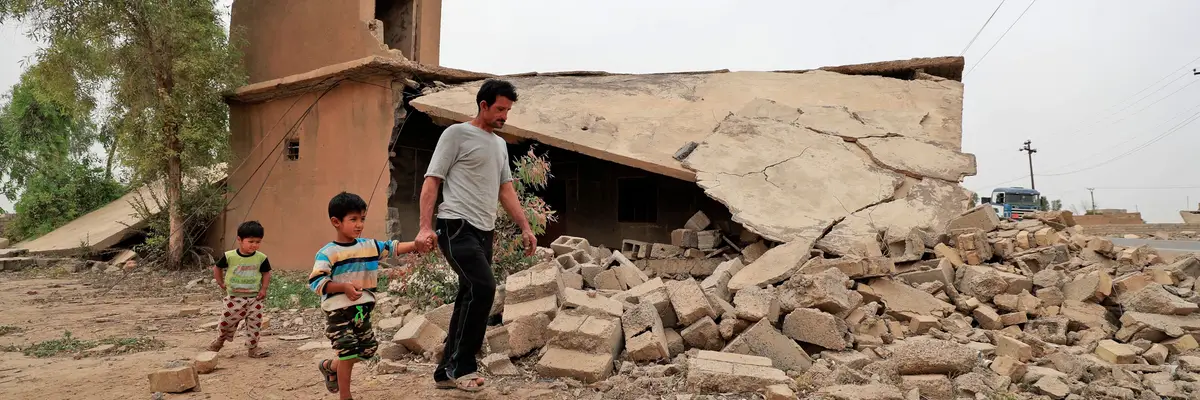
Iraqi father-of-five Issa al-Zamzoum walks past a destroyed house in the war-ravaged village of Habash, some 180 kilometers north of Iraq’s capital Baghdad, on April 25, 2022.
(Photo by Ahmad Al-Rubaye / AFP via Getty Images)

Phyllis Bennis
May 25, 2026
Common Dreams

As Memorial Day approached, polls showed nearly two-thirds of US voters oppose the war against Iran. They’re right. After decades of war since 9/11, Americans now largely agree: War isn’t worth it.

The Iran war has killed thousands of Iranians and Lebanese and displaced hundreds of thousands more. People in poor countries around the world are facing fuel shortages, power outages, and food insecurity, with much worse to come.

Here in the United States, the war has already cost more than $50 billion, and the cost is only going up—not just at the gas pump but in opportunity. For that $50 billion, we could have paid for healthcare for 3 million people in this country and gotten about 1.5 million kids into Head Start, according to the Institute for Policy Studies National Priorities Project.

Which makes us safer?

For the $16 trillion the US had spent on the military after 9/11 before the Iran war, we could have made transformative investments in healthcare, education, and renewable energy.

President Donald Trump would like us to believe that no price is too high to stop Iran’s “nuclear threat.” But Iran isn’t a nuclear threat. Year after year, including 2026, US intelligence agencies agreed that Iran is not building nuclear weapons.

In 2015, Iran agreed to cut its stockpile of enriched uranium, reduce its reactors, and submit to unprecedentedly intrusive United Nations inspections. The United States, in return, agreed to end many of the sanctions that were crippling Iran’s economy.

It worked. Intelligence agencies around the world, including in the United States, agreed that Iran was complying. UN inspectors kept a watchful eye on Iran’s reactors, traffic through the Strait of Hormuz flowed freely, and Iran was still not trying to build a nuclear weapon, maintaining that a bomb would violate Islamic law.

However, Trump tore up the agreement in 2018. He didn’t pretend Iran was violating it; he just claimed he could “get a better deal.” He couldn’t.

Instead, Trump joined Israeli Prime Minister Benjamin Netanyahu and ratcheted up threats against Iran. Eventually, those threats turned into reality—first in a short-term bombing campaign in June 2025 and then a full-scale US-Israeli war this year.

Despite repeated ceasefire declarations and claims from the White House that “we’ve won,” the war continues months later. Thousands are dead, gas prices are shockingly high, and the Strait of Hormuz (which was running fine before Trump trampled the nuclear deal) remains largely closed.

It’s easy to say that diplomacy works and war does not. That’s not just a statement of principle—it’s the truth.

Diplomacy is the only strategy that’s ever worked to change Iran’s behavior. It wasn’t because the US asked nicely. It was because the US negotiated seriously; changed its own aggressive behavior; and stopped using its economic, political, and strategic power as acts of war against Iran.

Is this war worth the human, economic, or environmental costs? Clearly not. You could say the same of Trump’s other second-term conflicts—including his support for Israel’s genocide in Gaza and his attacks on Somalia, Yemen, Venezuela, and Nigeria.

In fact, today most Americans would agree that none of the major wars in this country’s recent memory have been worthwhile—not in Vietnam, Central America, Iraq, Afghanistan, or Iraq again.

For the $16 trillion the US had spent on the military after 9/11 before the Iran war, we could have made transformative investments in healthcare, education, and renewable energy. We could have erased student debt and virtually wiped out child poverty at home and globally.

Instead, our leaders continue to spend money on wars they think will make the United States the undisputed power in the world—wars that instead kill millions of people abroad, endanger US troops, and make life harder at home.

Veterans know this. “The US has been at war in one form or another since my deployment in the Persian Gulf, 36 years ago,” said Michael McPhearson, executive director of Veterans for Peace.

“Trillions of tax dollars spent, thousands of US military service members dead, and tens of thousands wounded. The toll on the rest of the world is even more staggering, while warmongers and those who send us to war get richer,” he added.

“It’s time to invest in people and life and stop spending money on death and destruction,” McPhearson said.

I agree—and so do most Americans.

This piece was originally published in DC Journal.


Our work is licensed under Creative Commons (CC BY-NC-ND 3.0). Feel free to republish and share widely.


Phyllis Bennis
Phyllis Bennis is a fellow of the Institute for Policy Studies and serves on the national board of Jewish Voice for Peace. Her most recent book is "Understanding Palestine and Israel" (2025). Her other books include: "Understanding the US-Iran Crisis: A Primer" (2008) and "Challenging Empire: How People, Governments, and the UN Defy US Power" (2005).
Full Bio >
Bolivia Lawmakers Overturn Limits on ‘Martial Law’ as Mass Uprising Demands Ouster of President

“They call us all bandits and thugs,” said protesters, who have been met with a police crackdown. “We are democracy.”


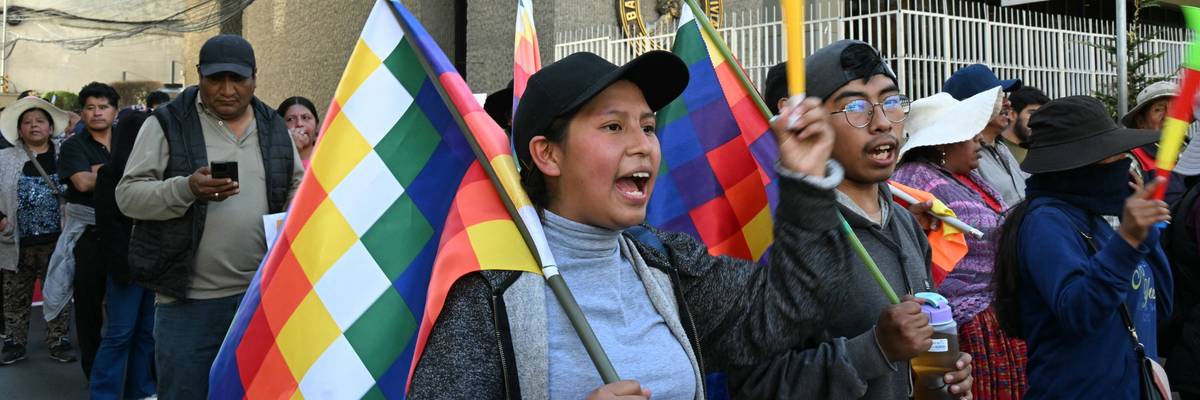
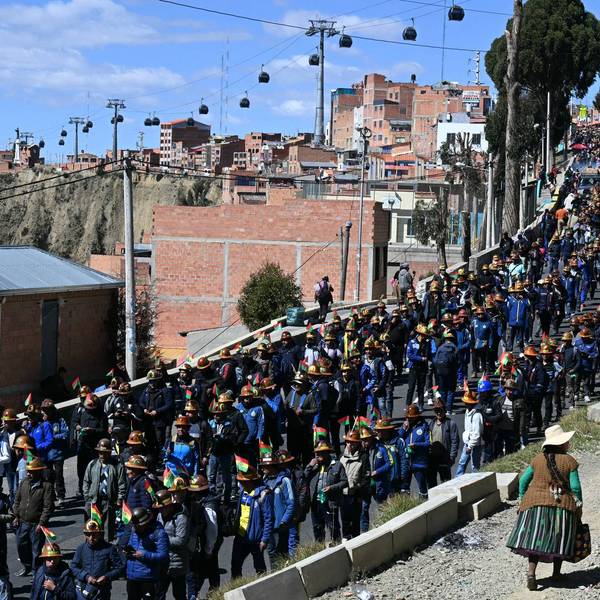
Farmers protest with Wiphala flags in demand of the resignation of Bolivia’s President Rodrigo Paz in La Paz, on May 20, 2026.
(Photo by Aizar Raldes/AFP via Getty Images)

Julia Conley
May 25, 2026
COMMON DREAMS

Bolivian President Rodrigo Paz, who is facing calls for his resignation as Indigenous and labor organizers lead protests across the country, could declare a “state of exception”—described by local reporters as “essentially martial law”—as soon as Monday night after the country’s Senate overwhelmingly voted to overturn a law regulating the government’s ability to crack down on protests.

According to Bolivian reports, the Chamber of Senators on Sunday overturned Law 1341, which since 2020 had imposed strict time limits on emergency measures, ensured certain violable rights could not be suspended under a state of exception, required legislative oversight, and made the president criminally liable for exceeding the law’s perimeters.
RECOMMENDED...


Bolivian Government Charges Labor Leader With Terrorism as Police Crack Down on Protests


Miles and Miles of Protest in Bolivia as Miners and Unions March Against Privatization and Low Wages

“Abrogating Law 1341 does not remove the state of exception from Bolivia’s legal architecture,” according to The Rio Times. “It removes the apparatus that prevented that constitutional clause from being exercised at the executive’s sole discretion.”

Joseph Bouchard, who has reported for Drop Site News and The Intercept from Latin America, said far-right groups linked to the 2019 coup in Bolivia have demanded “a return to martial law, to use lethal force against opposition with impunity, and crack down on opposition as much as possible.”

“Many of these groups are openly fascist and white supremacist,” said Bouchard.

The law was overturned about three weeks into nationwide protests against Paz, who took office about six months ago. Protesters allied with former President Evo Morales have expressed anger over the administration’s decision to end a fuel subsidy that was essential for working people amid an economic crisis. The demonstrators—comprised of a broad coalition which includes Indigenous groups, labor unions, and farmworkers—have demanded higher wages and an end to privatization and the broader neoliberal project under Paz.


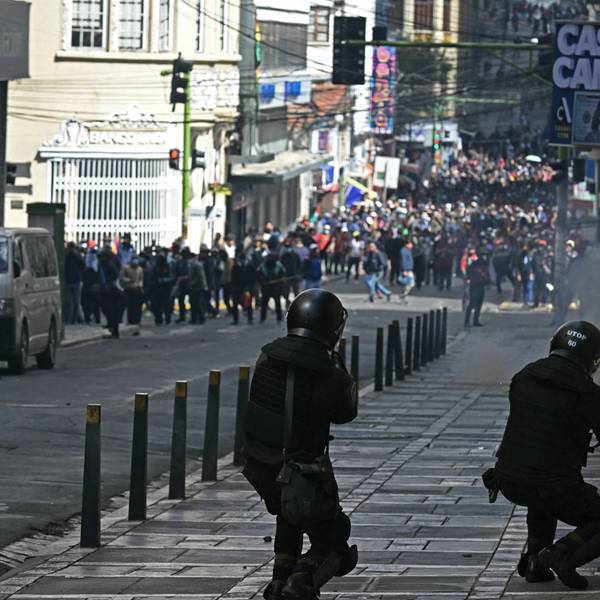
The protests have been met with a crackdown by police, in La Paz and at the sites of dozens of road blockades around the country.

Last week, the country’s public prosecutor issued arrest warrants for at least two organizers, including Mario Argollo, executive secretary of the top Bolivian labor union, Central Obrera Boliviana (COB).

On Monday, TeleSUR reported that COB refused to engage in talks with Paz’s government until the charges against Argollo are dropped.

Bouchard reported that if Paz’s government implements a state of exception, “the measures would mean security forces could arrest anyone, for any reason, and use extraordinary measures against all opposition.”

The overturning of Law 1341 struck down limits on “the use of lethal force by the security forces,” he said.

Only three senators aligned with Vice President Edmand Lara voted against repealing the law.

According to The Rio Times, Lara “has been politically distancing himself from Paz almost since inauguration.”


“No measure can stand above human life,” said Lara, expressing “profound concern and indignation” over the Senate vote.

Monday, May 25, 2026

MS NOW host left 'bereft of words' after watching GOP lawmaker's ad about being white

Tom Boggioni
May 23, 2026
RAW STORY


Jonatthan Capehart (MS NOW screenshot)

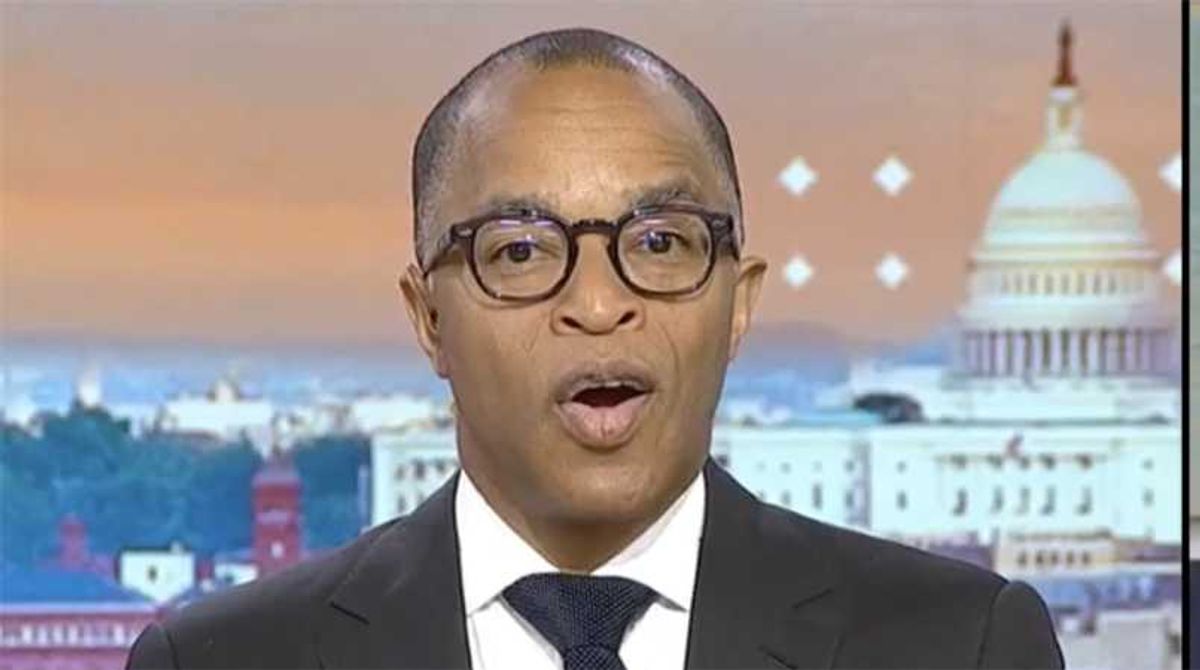
As part of an interview with Kentucky Democrat Charles Booker, who is running for the seat now held by retiring Sen. Mitch McConnell (R), MS NOW host Jonathan Capehart was left, as he put it, “bereft of words,” after watching a flagrantly racist ad being run by GOP nominee Andy Barr.

Capehart told his guest, “Well, Mr. Booker, in order to win, you're going to have to beat Republican Congressman Andy Barr. He's got — he's getting a lot of backlash for a campaign ad where he tells Kentuckians, quote, ‘it's not a sin to be white.’”

In the ad, a smirking Barr tells Kentucky voters, “You know what DEI really stands for? Dumb evil indoctrination. Woke liberals spew it. Corporate losers fall for it. But thanks to Trump, America is rejecting that trash and I'm leading the fight to end it for good.”

“I'm Andy Barr and it's not a sin to be white. It's not against the law to be male. And it shouldn't be disqualifying to be a Christian. I'm Andy Barr, and I approve this message to give woke liberals something else to cry about,” he added.

After the clip ran, Capehart sat with his mouth open before admitting, “Okay, that was my first time seeing that ad in full. My breath has been taken away. I am bereft of words. Your reaction to that?”

“Well, well, good lord, he knows enough to be ashamed of himself, but he doesn't care enough to do anything different because he sold out,” Booker offered. “He's trying to get close to a man in Donald Trump who cares only about himself. And he's weaponizing hate, racism. The playbook — we're tired of that bs. People see through it and they're laughing at them because they know he's a fraud.”


Trump biographer flags 'suspect' pattern in White House stock trades

Matthew Chapman
May 22, 2026 
RAW STORY

Trump biographer Tim O'Brien made clear on MS NOW Friday that he doesn't remotely buy the Trump administration's excuse for the recent series of suspiciously timed stock trades coming from within the White House that profited off major government decisions before they happened.

"Tim, let's start there," said anchor Antonia Hylton, quoting a statement from the White House: "'Neither President Trump, his family, nor the Trump Organization plays any role in selecting, directing, or approving specific investments.' So end of story. No more questions needed, right?"

O'Brien noted that even accepting that claim, the "curious reality" remains that "while those trades were being made, there were policy decisions coming out of Washington and the White House that directly affected the profitability and the prospects of the companies whose stocks the Trump family was trading."

For example, he noted, massive trading around oil happened before the capture of Venezuelan leader Nicolas Maduro, and before the invasion of Iran, "which all hinged on people having access to information from the Trump White House." Vice President JD Vance, he noted, blew off questioning on this when he "said, come on, do you think Donald Trump sits ... in the White House with a computer and is just trading stocks thousands of trades a day? He probably isn't. That's what he pays other people to do."

"He's on Truth Social," said Hylton.

"He's on Truth Social," agreed O'Brien. "And often he's tweeting things that affect the value of the stocks he's trading or his representatives are trading. So no one is saying that he's on Vanguard or any other app trading stocks for the fun of it and for his own, you know, financial gain. He's obviously doing it through advisers. But the timing of these trades, the stocks involved and the policy decisions happening in Washington had a confluence that makes it very suspect and should be examined."

The sad reality, however, he continued, is that any government officials who would investigate this, like the Securities and Exchange Commission, report to Trump and take orders from him — making a real reckoning almost impossible.

"I've been a business journalist for decades," said O'Brien. "I don't own individual stocks for the simple reason that I don't want someone to say, I edited a story or wrote a story about a business because I had a financial interest. My colleagues do the same thing. You know, if Barack Obama had picked up $5 on a street corner, the Republicans would have investigated him the next day. And why aren't they raising alarms about all of this stuff?"

The bottom line, O'Brien concluded, is that "from the Reflecting Pool to the jet to his trades, to his cryptocurrency dealings ... Donald Trump has made more money in two years in the White House over a two-year span than he ever did in decades as a real estate developer, because he's grifting off of his position in the White House."


'Don't hurt him!' Trump taunts crowd as he's repeatedly interrupted by protesters

David Edwards
May 22, 2026 
RAW STORY


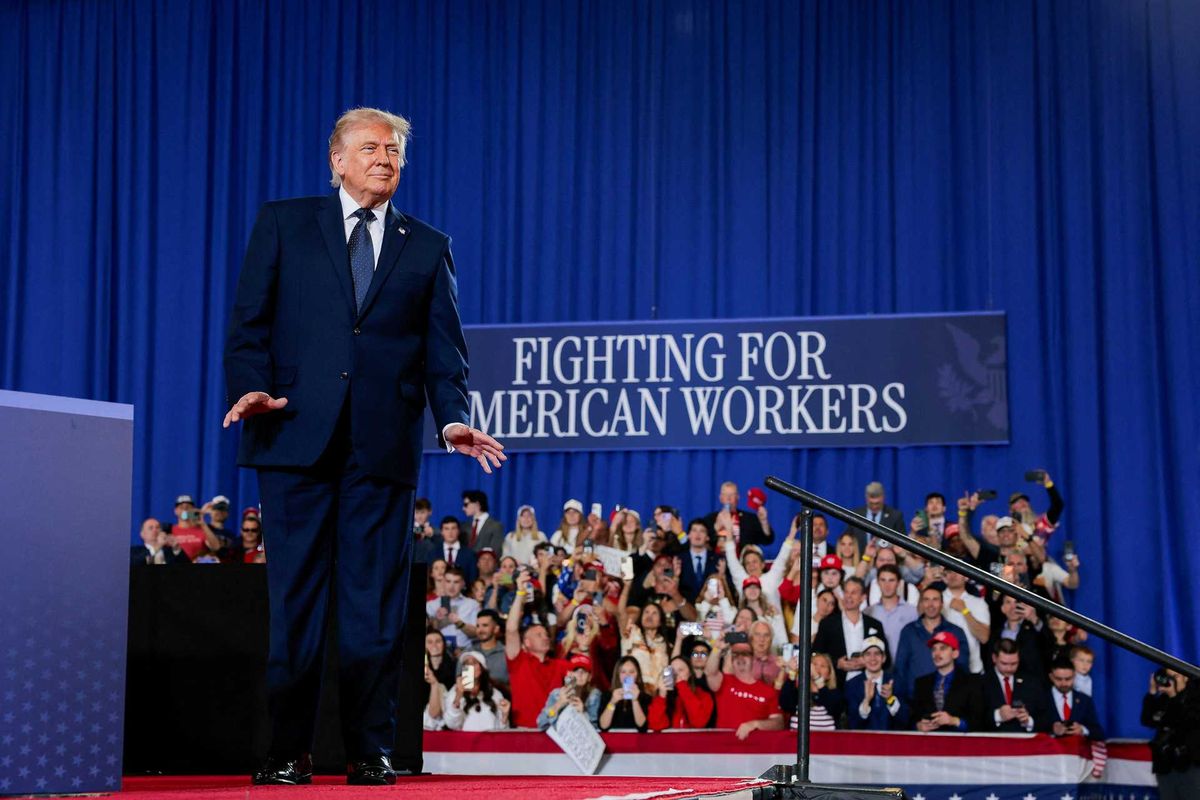
U.S. President Donald Trump arrives to deliver remarks at Rockland Community College in Suffern, New York, U.S., May 22, 2026. REUTERS/Kylie Cooper

Donald Trump was interrupted three times by protesters on Friday during a campaign-style rally in Rockland County, New York, held to boost one of the GOP's most vulnerable House incumbents heading into the 2026 midterms.

The first protester was swiftly removed by police as Trump introduced Rep. Mike Lawler (R-NY) — caught on video but without audio — before Trump had barely gotten started.

The second interruption came mid-speech as Trump was ranting about transgender athletes in women's sports, spinning one of his signature stories about a female swimmer dwarfed by a transgender competitor. As the protester was removed, Trump turned it into a punchline.

"Go home to mom. Go home to mom. Go home to mom," Trump told the crowd. "Take him home to mommy. He's gonna be in trouble."

He then added: "I say his mom's watching on television right now and she's loving it."

The third protester struck while Trump was hammering Democrats on immigration, ticking through a list of Democratic votes he claimed proved the party supports "open borders" and "men in women's sports."

"We have another little disturbance back there," Trump said, barely breaking stride. "Hello. Hello, everybody. That's OK. It's already cleared up."

He then mocked the speed of the removal. "The guy raises his hand, starts screaming something, and within about two seconds, it's over."

Trump closed the bit with his standard legal disclaimer: "Don't hurt him. Don't hurt him. Don't hurt him. I do that for legal reasons — do not hurt him under any circumstances. And now I can say I'm innocent."

The Suffern event marked the first presidential visit to Rockland County since Gerald Ford in 1976. Trump skipped the U.S. Naval Academy graduation to attend.